


















Climate change disproportionately affects women and girls due to existing vulnerabilities, yet addressing gender equity simultaneously advances climate solutions; the climate crisis requires systemic change beyond individual actions, including transitioning away from fossil fuels, industrial agriculture, and extractive capitalism while centering heart-based wisdom and collective action.
Climate Crisis Solutions: A Conversation with Dr. Katharine Wilkinson
Added:Basic understanding of the greenhouse effect, global warming, and the primary anthropogenic drivers of the current climate crisis.
Familiarity with the concept of intersectionality, specifically how social factors like gender, race, and class influence vulnerability to climate change impacts.
An introduction to 'Project Drawdown' and the general scientific framework of climate mitigation versus adaptation strategies.
Awareness of the psychological concepts of 'climate anxiety' and 'eco-grief' to better contextualize the discussion on 'actionable hope'.
In-depth study of feminist climate leadership and how collaborative, nurturing approaches differ from traditional top-down power structures in environmental governance.
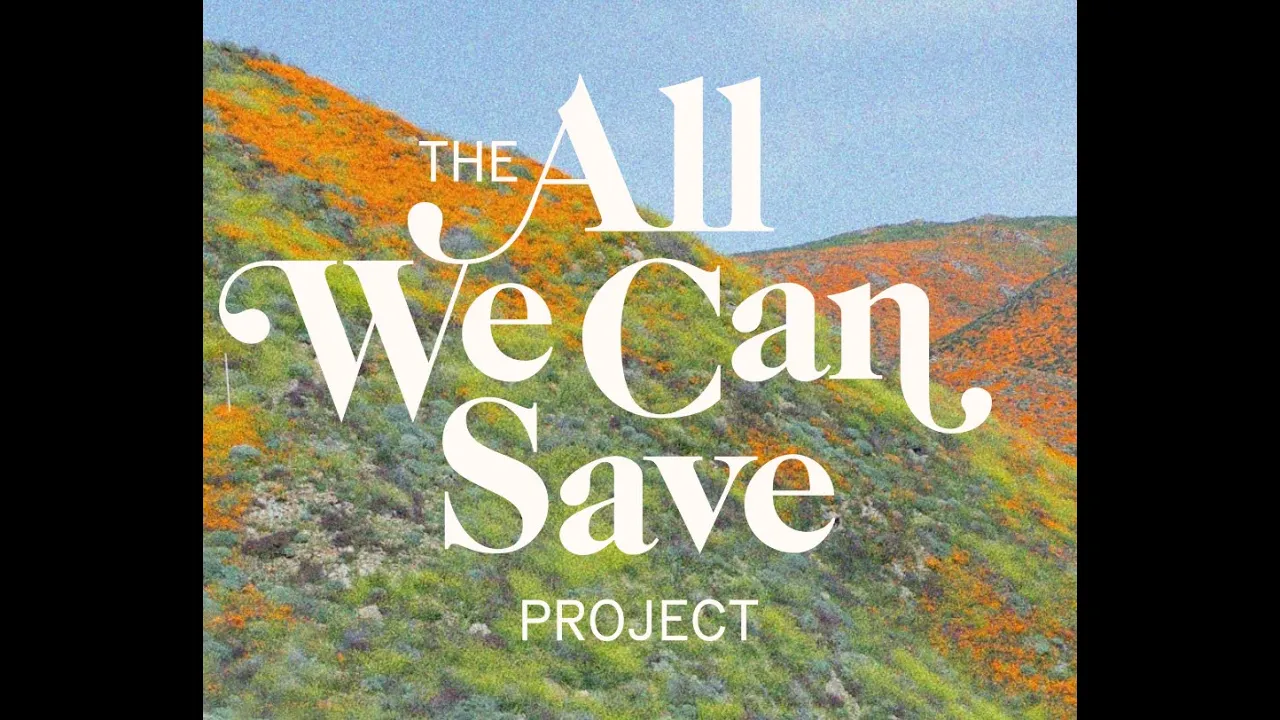
Exploration of the specific climate solutions highlighted in the 'All We Can Save' anthology, particularly those focused on biodiversity, land conservation, and food systems.
Analysis of environmental justice frameworks to design and support community-led, equitable climate adaptation plans.
Methods for translating climate communication and advocacy into concrete policy lobbying and grassroots organizing.
152 views12likes57:19Original Release: 2021-08-04
We can feel the connections between us.
We can feel the brokenness and the closing window to heal it.
This earth, our home, is telling us that a better way of being must emerge and fast.
In my experience, to have eyes wide open is to hold a broken heart every day.
It's a grief that I rarely speak, though my work calls on the power of voice.
I remind myself that the heart can simply break, or it can break open.
A broken open heart is awake and alive and calls for action.
It is regenerative, like nature, reclaiming ruined ground, growing anew.
Life moves inexorably toward more life, toward healing, toward wholeness.
That's a fundamental ecological truth.
And we, all of us, we are life force.
On the face of it, the primary link between women, girls, and a warming world is not life, but death.
Awareness is growing that climate impacts hit women and girls hardest given existing vulnerabilities.
There is greater risk of displacement, higher odds of being injured or killed during a natural disaster.
Prolonged drought can precipitate early marriage as families contend with scarcity.
Floods can force last resort prostitution as women struggle to make ends meet. The list goes on and goes wide.
These dynamics are most acute under conditions of poverty, from New Orleans to Nairobi.
Too often the story ends here.
But not today.
Another empowering truth begs to be seen. If we gain ground on gender equity, we also gain ground on addressing global warming.
I'm Sarah Kendzior, the author of the bestselling books The View from Flyover Country and Hiding in Plain Sight. I'm Andrea Chalupa, a journalist and filmmaker, and the writer and producer of the journalistic thriller Mr. Jones.
And this is Gaslit Nation, a podcast covering corruption in the United States and rising autocracy around the world.
And we are going to talk about the ominous horror film that we're all currently living, which is the growing crisis of climate change. It's here.
It's too late to do anything to stop it except for bracing for impact and preventing it from getting exponentially worse.
I know this is a horrific topic. People don't want to confront it, but luckily, luckily, we have a brilliant guest who has written a gorgeous book, which is a meditation on the climate crisis. It's told through incre- a diversity of incredible activists and experts who are on the front lines of confronting the climate crisis. And this book is called All We Can Save. The paperback is now available. This is a book that will absolutely heal your soul and help get you centered and grounded for this time that humanity is facing. I strongly recommend it. It's going to awaken and touch your soul in in beautiful ways, and it was intended to do that cuz it's just so thoughtfully put together. So, on the show today as part of the Gaslit Nation summer reading series, we're featuring the co-editor of All We Can Save. Uh her name is Dr. Katharine Wilkinson. She's an author, strategist, and teacher working to heal the planet we call home.
Her books on climate include the best-selling anthology All We Can Save, The Drawdown Review, the New York Times best-seller Drawdown, the most comprehensive plan ever proposed to reverse global warming, and Between God and Green, which the Boston Globe dubbed a vitally important, even subversive story. Dr. Wilkinson co-founded and leads the All We Can Save Project with Dr. Ayana Elizabeth Johnson, a scientist who developed um the uh Blue New Deal.
It's a green new deal, but for our oceans.
Um so in in support of women leading on climate, she also co-hosts the podcast A Matter of Degrees telling stories for the climate curious with Dr. Leah Stokes.
Previously, Dr. Wilkinson was the principal writer and editor-in-chief at Project Drawdown, where she led the organization's work to share climate solutions with audiences around the world. She speaks widely, including at National Geographic and the United Nations. Her TED Talk, which we featured at the start of the show, um on climate and gender equality, has more than 1.9 million views. A homegrown Atlantan, Dr. Wilkinson holds a doctorate in geography and environment from Oxford, where she was a Rhodes Scholar, and a BA in religion from Sewanee, where she is now a visiting professor.
Formative months spent in the Southern Appalachians as a student at the Outdoor Academy shaped her path. Time magazine featured Dr. Wilkinson as one of 15 women who will save the world, and Apolitical named her one of the 100 most influential people in gender policy. You can find her on Twitter at Dr. K.
Wilkinson, and the bio I just read was from her website, where you can check out her clips and books and more.
Welcome to the show, Dr. Katharine Wilkinson.
Andrea, thank you so much. I feel like uh quite pink-cheeked at this point in the bio reading. So, thank you for that.
Yes, so it's an honor. All right, so everybody's hearing all sorts of things on the climate crisis. Could you give us a rundown on where things currently stand? Sure. Um so, I think one of the things that is surprising to people is that the ways in which we have already changed the atmosphere of this planet, the excess greenhouse gases that we have sent up largely through the burning of fossil fuels and industrial agriculture means that the human species is now living in conditions that it has never experienced in the whole sweep of human history.
Quite literally, we have never lived on a planet like this one. And I think sometimes that gets lost in the, you know, what degrees warming have we had and what's the parts per million? Um but the bottom line is we are in uncharted territory for the human species and we're continuing on a trajectory that doesn't show any signs of departing that that uncharted territory.
We have um we're sitting at just about 1° C of warming since the start of the Industrial Revolution.
Um and the big question is how much further that's going to go up on the global thermometer, which has huge implications for, of course, sea level rise, for extreme weather patterns of all different stripes, for our capacity to grow food, um our ability to continue living where human societies have set up um as we've lived the last 10,000 years in this kind of Goldilocks period of not too hot, not too cold, um, just about right for thriving. So, we've got a lot of change already on our doorstep, um, and we also have an incredible toolbox of solutions. And one of the big questions we face now is will we move those solutions forward quickly enough and at sufficient scale to turn away from the brink and away from sort of the the worst possible scenarios that we could face. So, your book, All We Can Save, holds up the leadership of women who are often overlooked in the story of climate change. They're the early warning system in so many ways as as as All We Can Save shows. And you're an expert in the climate crisis who also happens to be a woman. So, we're going to elevate your expertise and your advice for us. So, let's say all the nations of the world, all the corporations just bow down to you. And it's like, all right, Katharine Wilkinson and and your whole coalition that put together All We Can Save, what is our checklist? What should what should this planet do in order to save ourselves?
So, I think at the sort of the highest level, the task is really about coming back into balance as best we can with the planet's living systems. And I say we, but I mean dominant society, global extractive capitalism.
Coming back into balance with a planet that is finite, while we have an economic system that has been founded on the fundamental sort of insane belief of infinity, right?
Um, we could just keep growing and growing and growing and growing without end. I think sometimes the climate crisis is the planet's way of kind of grabbing a megaphone and saying, "Hey, hey y'all, this is not working."
Um this was never going to work and it's now really, really not working. And so, how do we do that? How do we come back into balance? Well, I I mentioned the kind of the the toolbox of solutions. Um but we can think about them in some big clusters. So, the first thing is that we have to stop burning fossil fuels, which means we need to be able to heat and cool buildings, we need to be able to access mobility, we need to be able to manufacture the things that we need, all without relying on coal or gas or oil.
Um and there's a whole bunch of different technologies and practices that can help us get there, including also just better design of spaces and places and cities. What we eat and how we grow it is a big piece of the puzzle.
So, I I mentioned industrial agriculture.
It is right up there with with fossil fuels in terms of the damage that it has caused. Um and so, we need to be migrating, particularly in parts of the world like ours, where people consume enormous amounts of animal protein, there's enormous amounts of unnecessary food waste. Shifting those things, but also growing our food in ways that is regenerative to the soil. Which um when soil is healthy, it's actually an incredible uh storehouse of of carbon.
We need to be protecting and restoring ecosystems, which help in so many ways, including being really critical parts of the carbon cycle.
So, when we think about electricity, mobility, buildings, infrastructure, food, um and ecosystems, that covers a lot of what we need to do.
And that's obviously not a simple recipe. And for folks who are keen to dig deeper in that, um in a prior life, I was at uh Andreas, you mentioned Project Drawdown. And the Drawdown Review is an amazing free resource that we published last year.
And it's available in English and French and Spanish at drawdown.org. And it's a really great kind of overview of what the sources of the climate problem are and what the solutions look like globally.
This Gaslit Nation episode is sponsored by Ground News. The media landscape is fundamentally broken. The press is financially incentivized to push divisive content to generate clicks.
Social media further divides people into information silos, fanning the flames of polarization. This is one of the biggest issues of our time. Ground News is working to solve it. Ground News is a news comparison app designed to rebuild a shared sense of reality.
Founded by a former NASA engineer, the app shows readers how a single story is being covered across the political spectrum, giving you more context and a comprehensive view of the issue.
Ground has an immense library of sources, featuring over 50,000 outlets from across the world and the political spectrum, so you can see every side and draw your own conclusions.
Ground is shedding light on the present in order to create a better future. It's easy to use, well-rounded, and consistent, no matter your politics. Try it for yourself by clicking on the link in the description to download the free Ground News app.
In terms of where we are in this current moment of time, all of these claims that corporations are making that all vehicles are going to be electric by 2035, for some reason the year 2035 is a year that conventional wisdom that what which you know the powers that be are most comfortable 2035.
By the time we get there, isn't it going to be too late?
In some ways the answer is it's already too late, right? Depending on who you are and where you live. So, in so many ways now the question is too late for whom and also how do we cope with the too lateness that's already in the system. You know, the fossil fuel industry has known since the late 70s where we were headed by virtue of the very things they were digging out of the ground.
And yet here we are. So, would it have been better if we had started this effort with gusto in the 80s?
Absolutely.
Do we need to kind of put the proverbial electric vehicle pedal to the to the metal now? Yeah, yeah we do. Um electric vehicles definitely have a role to play. They are not a silver bullet. Um and that's actually one of the things that you see in the drawdown review that um bikeable walkable cities are really critical that better access to alternative transportation is really critical and more critical actually than electric vehicles, but they are going to be a really important piece particularly in a place like the United States where we have so many communities, so many cities that are not set up for people to be be to to move around, um, without access to to a car, to a vehicle of of some kind.
So, I would say, you know, I'm heartened by the shift that we're seeing and yeah, and and I also just am constantly I don't know what the right word is, disappointed, heartbroken by the delaying, by the bystanding, and the courage that seems to finally be showing up at least from some parts of the corporate world. Yeah, it just feels, um, it feels like not enough and not soon enough. I guess better late than never.
Right. We have a whole show about that pain.
Um, so, as you're saying, it's an overwhelming topic. It's apocalyptic.
Climate news is always ominous.
Everything seems to be getting worse.
The planet is always seems to be heating faster, accelerating the crisis. Uh, what advice do you have for people who don't have the emotional energy to confront the climate emergency?
So, I think the first thing is just to name that, to have eyes wide open to what is unfolding on the planet will make you anxious. It will break your heart. It will make you angry. It will make you want to scream and cry, um, and finding the space to do that, I think, is really important. Audre Lorde wrote about our feelings as our most powerful sources of knowledge, and I think they can also be incredibly potent fuel for action, um, if we actually let ourselves go there, right? And kind of don't keep a lid on it. So, whether that is having, you know, friends or people who also get it, who can hold that space with you, whether it is a climate-aware therapist, um whether it is All We Can Save reading circle, whatever the the case may be, finding that space to express and have support, I think is really important kind of surrendering so that we can rise back into the work. And I think especially for folks like me who are white, recognizing that this is perhaps the first kind of truly global existential threat, but it is certainly not the first existential threat. And for many people, this is kind of one more layer of anxiety, of fear, um of rage that is layering on top of or or interweaving with other pieces of oppression and injustice and and their own experiences in their lives. So, I think that's just really important to note as well. Sarah Jaquette Ray is a scholar and looks at climate anxiety and other kind of psychological dimensions of this, and she just recently wrote a really striking and important piece about the whiteness of climate anxiety, and ensuring that that anxiety doesn't translate into kind of fascist impulses, um is going to be a really important piece of the work as well.
Tell us about your anthology All We Can Save. How did that come about? Sure.
So, Ayana Elizabeth Johnson, my co-editor and general co-conspirator in in good trouble of various kinds, um we met, and a few months later found ourselves at a gathering in Aspen that was a climate summit. We were there to co-facilitate a round table and we were just struck anew by the voices that were present, the voices that were not present, um the voices that were present but maybe sort of you know, early in the morning or off to the side and and not just what it meant about sort of the fairness or unfairness of that, but that because so much of the climate movement and the climate conversation has historically been shaped by predominantly white men, it means that we haven't had sort of a proper kaleidoscope for understanding the crisis and certainly not for thinking about what are the root causes and what are the genuine solutions. And so we skipped out on an afternoon session and we went on what we've come to call a rage hike along the Roaring Fork River in Aspen and I sort of had a notion of an anthology simmering and we talked about it and felt like as two recovering academics and word nerds that this could be a contribution that that we could help to to bring to life and there's so much more that needs doing, there's so much more that is being done, but this could be kind of one intersession into that imbalance in terms of if not climate leadership itself, at least the climate leadership that is visible and so often the recipient of microphones and dollars and all the rest of those things that you need to have influence and be able to make change.
And we jumped on it pretty quickly, and we were so lucky to get to do this book with the incredible imprint One World, uh which is led by Chris Jackson, and 9 months from kicking off curation to publication, All We Can Save was born, and the title takes its inspiration from a poem by Adrienne Rich called Natural Resources, and the last stanza of the poem says, "My heart is moved by all I cannot save. So much has been destroyed.
I have to cast my lot with those who age after age perversely with no extraordinary power reconstitute the world."
And our hearts are also moved by all we cannot save at this point. Um right? The ice that's already been melted, the communities that have already been lost to more intense storms, um the farmers who have already lost their livelihoods because of drought and other changing weather patterns, and on and on. Um but our hearts are also moved by all that we still can save if we think about building the biggest, strongest we possible.
And we think that we has to be centered in the work and wisdom of women um in a way that that it has not been to date.
And why is that important?
So one of the contributors to the anthology, Sherri Mitchell, is just an incredible author, teacher, indigenous leader, uh attorney, who has taught me a a lot about this, and about the ways in which we have this interplay between the masculine and the feminine, which of course exists within all of us regardless of our gender identity.
Um but the teachings that have been passed down to her are that the feminine is the holder of heart-based wisdom.
And the masculine is the energy of sort of taking action in the world.
And when you think about like what has gone sideways with the climate crisis, a whole lot of action in the world in the absence of heart-based wisdom, I think pretty well sums it up.
This kind of extract, aggregate, consume that has lost a sense of balance and what is enough.
So, I think that is one piece of it about sort of writing that imbalance in the world. I also think it is about bringing a certain kind of humanness to this topic that has often been reduced to simply a matter of science and technology and policy.
And it absolutely is those things, but at the end of the day, it is really a question about what it means to be human on this planet and what our responsibility is to this earth that we call home and to one another and all of the beings who share it. Um and that has often, I think, been kind of kicked to the side as like, "Well, that sounds nice, you know, that's like that's sort of a nice extra kind of feel-good sort of conversation um as opposed to being actually the heart of the matter that then gets translated into the ways in which we move in the world and build things in the world. So, I think it's about coming back to those critical dimensions of compassion, care, connection, creativity, community, and a really fierce commitment to justice. Because not only is climate change an incredible injustice in the present and an incredible intergenerational and interspecies injustice, um but it is also an opportunity to try to embed justice in the way that we solve the crisis, right?
Electric vehicles rolling out doesn't tell us anything about whether the future is going to be more livable and more just for more people in more places. It simply says we might cut down the top of emissions a little bit, and that doesn't actually set us up for a thriving and resilient future.
What's really interesting um in the book All We Can Save is how you hear from an indigenous leaders sharing this uh philosophy and prophecy on how all is connected. We're all connected. All living things are connected. And then you have um people women in the hard sciences writing essays backing up indigenous uh principles by saying, "Yes, the science has shown us that in forestry, for instance, trees build community."
And in those communities of trees, you have certain trees that arise as like the grandfather grandmother tree that helps the other the caretaker trees that helps the community flourish and kind of is is networked in such a way that that keeps an eye on the larger community in helping it grow. And that was the prevailing belief in forestry for a very long time until the post-war period when we had this military industrial complex take over. And we entered the nuclear race and everything became so individualistic and it became totally taboo in part because of the Cold War and because of this hyper capitalism that that America was entering into to to promote any ideas that were were communistic or about community and the and the collective good. Like being a hippie, being a peacenik, being a red essentially. Like you know, and being a target of McCarthyism and the and the government at the time. And so then you had then forestry got overtaken by this new perverted narrative of trees being in competition with each other and predatory. And it was very much like the American white patriarchy took over, projected its own worldview onto nature. And its understanding of nature certainly in the forestry example as as seen in your book. We're now forced to confront that and get back to that and and understand that there is this inherent wisdom that's been long neglected in indigenous leadership and and and principles. We need to get back to that because the hard science has backed it up.
Yeah, I love that essay by Janine Benyus Reciprocity in the opening section of the anthology and I I agree. I mean it is very deliberately placed to be in conversation with Sherri Mitchell's piece on indigenous prophecy and Mother Earth and it is remarkable, right? The ways in which the world's wisdom traditions and increasingly scientific findings are in alignment, right? And reminding us of this great oneness that we are a part of, that we are inextricably linked. Um, and I think that's one of the examples, sort of one of the threads of the disconnection from heart-based wisdom, right? Something that people and cultures have known and handed down for eons. And yet somehow we went marching down this path of individualism, which comes up short so profoundly in not just the basics of the facts, right?
But also in terms of purpose and true solutions and joy. Um, and I think finding our way back into that more truly collective perspective, um, is also a big part of the work beyond the solar panels and wind turbines and veggie burgers.
It's an internal shift needs to take place and on how we see ourselves and how we see each other and and our collective place in in the world. Yeah.
I've talked earlier about kind of solutions at scale, which we need, but we also need solutions at depth, um, which is how I think about these more kind of values-based, um, ways of knowing based shifts that that also need to happen.
And what's really unfair is this whole tension between the pressure being on the individual to make changes. For instance, um, fast food restaurants now offering vegan menus, that's coming from individual choices. That's That's individuals essentially creating green jobs by demanding vegan items on on major fast food restaurant chains. You know, that's that's pretty huge in in terms of of I've seen how individual choices can move markets, but at the same time we're born into these systems currently that are actively working against us and our children's future and it and polluting our water, poisoning our oceans, and taking away species we'll never get to know. And it's and we we're ingesting all this poison. We're consuming it and we're putting it out there and then it comes back to us and it's creating this really demented perverted circle of death. Yeah. You know, circle of life, now there's a circle of death. So, it's completely unfair and abusive in terms of being born into these systems and um and having so much pressure on our own shoulders to try to make changes to force change on a on a on a higher level. Could you talk a bit about that pressure, the individual versus the systems?
Absolutely. And it's such a it's such an important point um because I think for folks who don't spend their days thinking about climate change, a a lot of what they hear about in terms of what the solutions are um are things that are directed at them, right? At us as individuals. Um change our light bulbs and don't eat hamburgers and ride a bike and put out the recycling um and you know, all of these things have a role to play, but it is a tiny role compared to making the kind of systemic change that's needed. I have a condo.
Even if I could afford solar panels, I couldn't put them on my roof. Well, my electricity emissions are a critical piece, right? Electricity emissions globally are roughly a quarter of the emissions that we're creating um as a human society globally.
Well, to change that, we need our electric grids to shift. We need utilities to stop creating fossil gas plants and invest in solar farms and wind farms.
Um we need cities to design themselves differently, right? Um so that we can move about without being so reliant on cars. Like so many of the choices that even if we wanted to make them, we couldn't make them because they are actually outside of our control. And there have been really deliberate efforts to put the onus on individuals.
The whole concept of a carbon footprint became so popular because BP funded a huge campaign to make it so, right? Why would they do that? Because it's incredibly helpful if we're all feeling like we're the problem, right? If we're stuck in guilt and shame rather than linking arms and thinking about how powerful we can be as collectives.
Shame is incredibly disempowering.
And it also puts people in the place of thinking that well, maybe the solutions are actually worse than the problem. Um and so even if we are sort of awake to the climate crisis, we may be less inclined to engage in in moving solutions forward. So I think reframing the conversation as largely about power, right? And not power in the sense of electricity um or or or or energy more broadly, but power in terms of who is making the calls about how our society is structured and who is making the calls about pushing back on the solutions that are already proven, that already exist, that can not just reduce emissions, but improve public health and create good jobs because we have these incredibly entrenched interests that are serving a very small few. And so, if we are not thinking about the climate crisis as a fundamentally collective challenge requiring deep systemic change, um then we just will never get where we need to go.
Yeah, no without question. And it seems like even um there's just not that many companies, like like around a hundred or so I believe, that are responsible for the crisis in the first place, right? Yeah, it's a hundred companies that are responsible for 71% of global emissions since 1988.
Which you just think about even just think about just the number of people that have served on the boards of directors of those companies since 1988, and you get a sense of actually what a small cadre of people we're talking about. And we're in this moment of incredible tension where, okay, we're finally seeing banks make net zero commitments about their own emissions from their own operations, but they're still financing new fossil fuel infrastructure.
Right? Um and these are the kinds of tensions that somehow still make sense in the kind of status quo power structures that out one side of your mouth you can say, you know, we're committed to being climate positive and out the other side you can be a law firm that is doing the litigation bidding of Exxon. And this is just the cognitive dissonance of this moment is either so profound or it's just utter BS and I'm not sure. I'm not sure which one it is.
It's just the gaslighting for blood money. It's just the same old Um we talk a lot on this show cuz it we're we're solely we're first and foremost a show about the threat of authoritarianism in the US and around the world and a lot of the dictatorships that are causing a lot of problems around the world today are gas station dictatorships.
Yeah.
Yeah. And it's sort of like the sooner we can come to like a post-oil planet, Russia's going to have to evolve in a very big way and stop holding the mind of its people hostage cuz they need to come up with new solutions, new markets, new ways to live sustainably in a post-oil world. So for us this has such major repercussions across so many levels. It's almost like a silver bullet. If you focused on the climate crisis, you could confront, like you said earlier, issues of gender equity and racial inequality cuz those are some of the most vulnerable people to the climate crisis. And authoritarianism, you could you could confront those regimes like Saudi Arabia and others. And so Uh so for us it's really inspiring to talk to you, feature you on this show, and to tell everybody like your book that with Ayana um is All We Can Save is the place to start because it's a meditation. It's something like It's like an intellectual ayahuasca trip where you hold our hand going down this rabbit hole of the meaning of existence and and and in such a profound way and and it I've never seen anybody handle the climate crisis this way and for me it's like it's definitely what I needed to reignite my own passion for for where we are because I think Sarah and I have been feeling like this trauma that we've all gone through with the pandemic and the threat of fascism under Trump and then the violent coup attempt and and all the gaslighting that has come with it and so it's very hard to stay centered and to find your ground and to stake your claim in this world and and build a world that you want to live in and and preserve a world for your children so they can grow up safe and not have to risk their lives by speaking their truth.
And so I think your book was very much a reset for me in terms of of getting in touch with my soul again and just feeling that greater connection to all things.
Andrea that just means more than more than I can can communicate on this little audio device.
You know I in so many ways I and I don't want this to sound too like hippie dippy but I think that the spirit of the earth Gaia whatever you want to call it is finding cracks in the system to share a different story a different truth and I think that the pieces of art in this book by Madeleine Jubilee Saito the poems the essays the interstitial quotes in in so many ways I think of each of them kind of as a crack in the system that is letting some of that truth break through. And I hope that it lands for so many more people the way that it did for you as not shying away from the truth, but sharing it in a way that feels grounding rather than something that makes you want to put your head in the sand.
Um I think because we are so connected with the planet's living systems, of course we feel this, right? Of course we feel how much pain is unfolding on the planet, and that's not a bad thing. It's a good thing. Not that I wish pain on anyone, but if we couldn't feel it, that's actually what's scary, right?
That speaks to this sort of such profound disconnection.
And this is also part of why it's not just a book of essays. It is a book of of poetry, um as well, because we need space to breathe and to feel the kind of inundation of facts, which is often the primary kind of encounter people have with climate communication, is a really hard place to be without, I think, that space to to be still and to breathe, um and to know that we're not alone.
Yeah, no, absolutely.
Ah, and I think in terms of history, your book introduces a lot of interesting history. Tell us about the scientist Eunice Newton Foote, and why does she matter?
Yeah.
I love this story, and this story makes my blood boil. Um so, Eunice Newton Foote was, as far as we know, the first woman in climate science, and she's a name that I had never or of despite studying this topic starting in high school um until just a few years ago because she had largely been written out of the history books. In 1856, she published a paper about some research that she had done. Very simple experiment. She was not a professor. She was not part of a university or research institution. As far as I know, she did this experiment in her backyard with an air pump and thermometers and glass cylinders that she used to test the difference between what she called common air and carbonic acid gas, which is what carbon dioxide was called in her day.
And what she found was that the jar that had carbon dioxide in it got hotter and retained that heat longer.
And she kind of theorized on the basis of this experiment that um an atmosphere with more carbon dioxide in it would result in a hotter planet.
This was 1856.
And she published that research. About 3 years later, the Irish physicist John Tyndall, um who was a university professor and uh kind of had all of the resources that come with that, did kind of a more sophisticated set of experiments on the same topic.
And it's his work that is credited as the foundation of climate science. I did my graduate work, my PhD at Oxford, and there's a Tyndall research center. We don't even have a photograph of Eunice Newton Foote.
And yet, um Tyndall had had a paper on color blindness in the same issue of the same journal that Eunice published her research in and so we don't know for sure if he knew about that work but as we write in the beginning of all we can save we could imagine Eunice saying to herself I literally just said that.
Um which I think so many of us have had that experience.
Um and the really interesting thing about Eunice Newton Foote is that she was also involved in the early movement for women's suffrage in the United States. So she was an attendee of the Seneca Falls convention and signed the manifesto that was created there as did her husband interestingly enough John Tyndall opposed women's suffrage so you just like you kind of yay women get suffrage who am I going to steal my ideas from?
Yeah like this would be very bad.
This would be very bad. Um so we don't know a ton about her but we do know that she was faithful to science and to using science to understand our planet and she was committed to gender equality of some stripe. So we like to think about her as perhaps the first climate feminist. Wow.
Well if you want to learn about that and more please check out all we can save.
This book is helping me so much right now and I know it will help you. And so two more questions and then we will release you back to do your all important superhero work.
Back to the wild.
Yes.
And um so what advice do you have for people living in rural areas especially people stuck in what we call voter suppression hostage states quote unquote red states where their governments actively working to poison them through climate crisis denial. What advice do you have for rural-based folks on addressing this issue? What power they have in their hands to help make a difference? Sure.
Well, I'll say this as a life-long Georgian. So, I feel like I was living in in one such hostage state until very recently, obviously.
Looking forward to hopefully a a shift in terms of our governorship in our next election.
We will see how that goes. And so, I guess, you know, my advice is very much based on what we have experienced here, which is that organizing can make impossible things possible. And in particular, the organizing that is led by black women. So, if you've got time, give time. If you've got money, give money. But know that that is is the pathway.
I think the other thing that is uniquely possible and exciting in rural communities as the places where so much of our food is grown is that there's a whole movement around conservation agriculture, regenerative agriculture.
And the thing that to me is really exciting about that is it's not just about growing our food in ways that's better for the planet, but it's also a way to create more resilient food systems and thus more resilient livelihoods for farmers and for communities where a lot of what's happening is is agricultural in nature. And there seem to be cool things cropping up in almost every state. So, I would say maybe check out some of those. Um, I think there's incredible power there and incredibly important work to be done.
What about folks living in cities? I know there's a big effort uh, for um, in New York State where I live, for buildings to go green and become more energy efficient. So that makes co-ops and condo boards, which are usually a bastion of authoritarian personalities acting out their Gestapo fantasies. But that makes suddenly co-ops and condo boards uh, community organizing volunteer positions, cuz they can not only green their building, but create a powerful network effect by inspiring their friends and neighbors to live a more conscious lifestyle. So could you talk about that specifically if you if you have any resources for condo co-op board folks and people living in condos generally and just city folks in general, like what should we all be focusing our energy on?
Sure. It's funny you asked that. One of my big victories a couple years ago was getting my HOA to do compost pick up for our whole community, which was a remarkably long battle for something that resulted in two small black bins.
Needless needless battle. And and yeah, I mean, the thing is a lot of the decisions being made about buildings and transportation are being made at the city level. Um, so that means who serves on our city council really matters. Having climate champions at that level really matters and often times those are campaigns that you can get involved with um, and have make a huge difference, right? In a way that you might just be like one tiny little minion um, helping on a presidential or senatorial campaign. So I think that's a big one. I think your point about um, about condo boards and HOAs, like anywhere where there are decisions being made for more than one household, just getting that click further along is powerful. And that's where we can think about things like better insulation, and is it actually possible to have on-site solar panels, for example. We can think about cool roofs or green roofs. Um, there are lots of these decisions that that end up having a real monetary payoff for the folks who own or or live in residences. So, that can be a a great one, as well. Um, and thinking about, you know, the way that I've approached that is just like, all right, we are going to put a new roof on these condos. So, this is a good time to bring up a conversation about that roof being a cool roof, because we've got more extreme heat coming in the the lifetime of this roof. So, kind of thinking about the rhythms of things that are going to happen anyway, um, and trying to sort of nudge those solutions conversations forward there.
And when you say cool roof, are you referring to a green roof?
Great question. A green roof, um, is what it sounds like. You've got, at minimum, some kind of, you know, short sort of turf-like plant, or maybe an entire garden. A cool roof is just shingles that have more reflective capacity, so that instead of absorbing a bunch of heat, um, and letting that soak into the top floors of a building, it's actually bouncing more of that off. So, pretty simple stuff, and yet makes a big difference.
Wow. Well, all the solutions you outlined today, including, uh, the stories and the arts in your book All We Can Save, all together make a very big difference. And I thank you for all your work. And as we always say on Gaslit Nation, make art cuz there's a power in making art. It does present a big energy shift and there's a reason why all we can save has so much beautiful, powerful art in it cuz it does reset your soul in a way that we we all need right now.
Totally. And as you said, you know, it is hard to imagine a different kind of future. Um and there's actually a really great essay in the anthology by Kendra Pierre-Louis called Wakanda doesn't have suburbs and she talks about sort of the abundance of apocalyptic film and TV narratives, but that other than Black Panther we have almost none that show what it looks like to get it right. Um and I think any of the ways that get us tapped into our radical imaginations um is incredibly important and incredibly powerful.
Thank you so much.
Gaslit Nation like to thank our supporters at the producer level and higher on Patreon. If you recently joined at this level and do not hear your name, look out for it starting mid-August when we're back with our regular episodes following our summer series and we'll be sure to give you extra time in the credits for waiting.
Thank you so much.
We want to encourage you to donate to your local food bank which is experiencing a spike in demand. We also encourage you to donate to Oil Change International, an advocacy group supported with a generous donation from the Greta Thunberg Foundation that exposes the true costs of fossil fuels and facilitates the ongoing transition to clean energy.
We also encourage you to donate to the International Rescue Committee, a humanitarian relief organization helping refugees from Syria. Donate at rescue.org. And if you want to help critically endangered orangutans, already under pressure from the palm oil industry, donate to the Orangutan Project at the orangutanproject.org.
And if you want to see confirm the fact that orangutan is pronounced correctly, go to the Merriam-Webster dictionary.
Gaslit Nation is produced by Sarah Kendzior and Andrea Chalupa. If you like what we do, leave us a review on iTunes.
It helps us reach more listeners. And check out our Patreon. It keeps us going. And you can also subscribe to us on YouTube. Our production managers are Nicholas Torres and Carling Dagle. Our episodes are edited by Nicholas Torres and our Patreon exclusive content is edited by Carling Dagle.
Original music in Gaslit Nation is produced by David Whitehead, Martin Bissenberg, Nick Farr, Damian Arriaga, and Carling Dagle. Our logo design was donated to us by Hamish Smith of the New York-based firm Order. Thank you so much, Hamish.
Gaslit Nation would like to thank our supporters at the producer level on Patreon and higher.
Megan McNerney Sean Rubin Ton S.
Perlstein Pat Kenny Maine John Schonthaler Frank Jacquette Ellen McGurt Joel Ferron Larry Gasson Erica Moore Karen A. Deal Nico Phillips Brian E. Caster Lex Reed Andrea Scalzo Melissia Hallen Jordan Sanders Ann Bertino Rachel Winder T.R. Dunston John Millett Chris Ash David East Shannon Nasey Ida Chris Bello Dodi Pop Kristen Bredemus Ben Weaton Joseph Mara Jr. Rich Halcomb Thomas Scheibe Kelsey Malsom Julie Matthews Meganopolis Mark Mark Matthew Womack Sean Berg Kristen Custer Tracy Ash Benjamin Galoobza Kai Gillis Sharon Hatrick Herb Robinson Keith Gottschalk William Barry Reeves Richard Smith Emmy Kevin Gannon Sandra Cullens Katie Maseras John Laughlin Jeff Thompson James D. Leonard Evan Rosemore Leo Chalupa Carol Golstad Michael Wooldridge Kramer, no kramering.
The best Jason Benke Joe Darcy Ann Marshall Jeremy Lewis Big Bay Christine M Diel Singfield Nicole Speer Brian To Judan Christie Vitali Maureen Murphy Michelle Dash Jens Alstrup Rasmussen Dorothy Kammerick Victoria Olson Alabama Z W Lisa Laflamme Jason Bainbridge Katherine Anderson Karina Sarah Gray Mike Tripicco Diana Gallagher John Ripley Ethan Mann Jennifer Slavik Piet Yitsma David Porter Kate Cotton Kim Mellon Leah Campbell Lynn Schneider Jared Lombardo Karen Humphreys Giles Buckett Arena Guardia Eric Kaplan Sonya Bogdanovich And Tanya Chalupa. Thank you all for your support of the show. We could not make Gastronaut Nation without you.
Up Next

144:41
Sustainable Commercial Landscaping: Non-Functional Turf Alternatives
@Valleywater
199 views•2025-03-11

26:22
Walking in the City: Urban Rituals and the Flâneur in Contemporary India
@PSBTIndia
1.9K views•2016-08-02

9:49
FastAPI vs Flask vs Django: Choosing the Right Python Web Framework
@TechWithTim
302.5K views•2024-05-26

1:42
Game of Thrones Opening Credits: A Cinematic Analysis
@gameofthrones
46.3M views•2011-04-18
Related Study Plans & Knowledge Roadmaps
Structured learning paths in General & Interdisciplinary Studies
general-studies
Artificial Light: History, Tech & Human Impact
01The Pre-Electric Era: Fire, Oil, and Gas Lighting
02The Incandescent Revolution and Grid Electrification
03Gas Discharge and Fluorescent Illumination
+ 3 more learning modules
14h6 modules
Explore Roadmap
general-studies
Elevator Engineering: History, Physics & Cities
01From Hoists to Safety Brakes: The Dawn of Vertical Lift
02Hydraulic vs. Traction: The Engineering Physics of Elevators
03Modern Speed, Safety, and Algorithms
+ 2 more learning modules
12h5 modules
Explore Roadmap
general-studies
Rubber: Material Science, History & Geopolitics
01Origins of Natural Rubber & Mesoamerican History
02The Chemistry of Natural Rubber & Vulcanization
03The Geopolitics of the Rubber Boom & Colonization
+ 2 more learning modules
12h5 modules
Explore Roadmap
general-studies
Containerization: Evolution, Logistics & Trade
01Ancient Trade & Bulk Cargo: Amphorae to Barrels
02The Industrial Revolution & Cardboard Packaging
03The Containerization Revolution: Malcom McLean
+ 2 more learning modules
12h5 modules
Explore Roadmap