











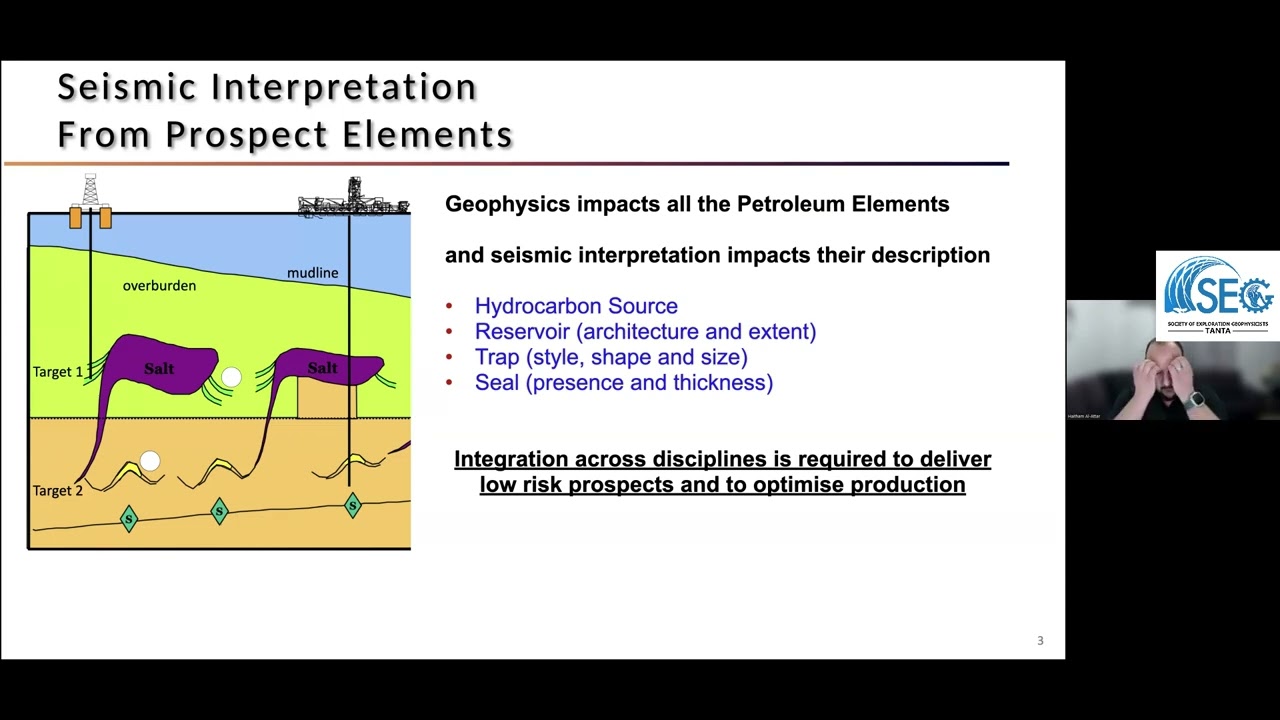





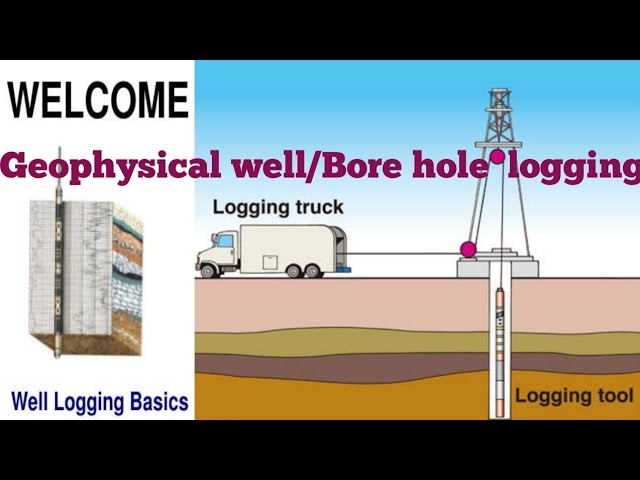


Geophysics is the scientific discipline that uses physical methods to investigate the Earth's subsurface when direct access to rocks is impossible, employing techniques such as seismology (analyzing seismic wave propagation), electrical methods (well logging), and radioactive methods to estimate geological conditions and identify economically significant anomalies like oil and gas reservoirs, with the critical understanding that geophysics produces data requiring expert interpretation rather than direct geological observation.
Geophysics Lecture 1: Introduction to Geophysics
Added:Basic physics principles, particularly classical mechanics and introductory wave properties such as wavelength, frequency, and amplitude.
Introductory physical geology, including familiarity with the Earth's internal layers (crust, mantle, core) and basic rock types.
Foundational college-level mathematics, specifically algebra, trigonometry, and basic calculus concepts to interpret wave equations.
A general understanding of fossil fuels and how hydrocarbons are trapped in subsurface sedimentary basins.
Advanced seismic reflection and refraction methods, exploring how elastic waves behave at geological boundaries.
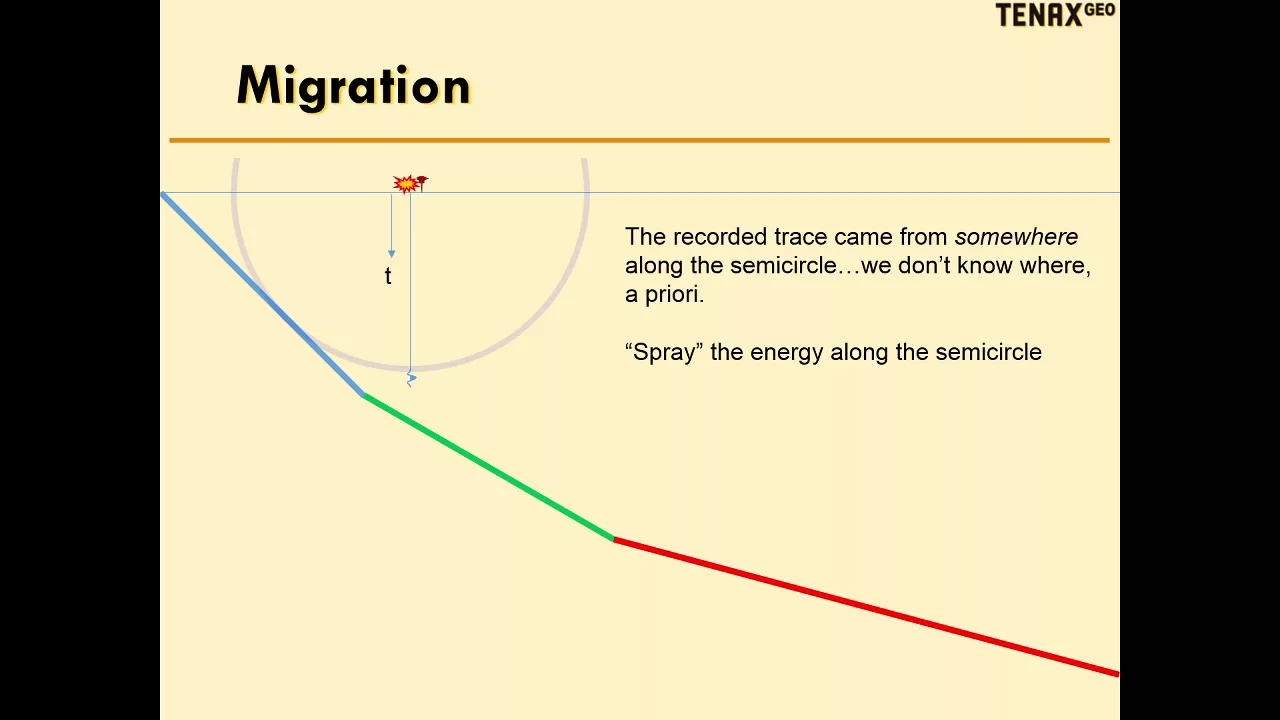
Seismic data acquisition, processing, and migration techniques used to construct 2D and 3D images of the subsurface.
Non-seismic geophysical methods, including gravity, magnetic, and electromagnetic surveying techniques.
Borehole geophysics and well logging techniques to calibrate surface geophysical data with physical rock formations.
19.4K views300likes43:09Original Release: 2016-05-16
we'll see what happens um anyway so let me get this fired up here and then we can get started and I'm aware of the transition when you go from one person to another is always a difficult thing so we'll try to make your life as painless as possible as if that's going to happen Okay so we got your s body in front of you let's turn this on turn this off and start getting started shall we now this is a 50-minute class and I have to admit I don't have many 50-minute classes anymore I like the um Tuesday Thursday sequences CU they have an hour and 15 minutes which is brilliant because I can go on and on and on and on and on and on and on and on and I can get most of the stuff done with 50 minutes I'm going to run out of time I guarantee you so probably starting with today's lecture anyway this is um part two of the geophysics course you're done with Connors now as far as assessment is concerned okay so the rest of the course is basically my baby at the end of the year what will happen is he will give me grades for you guys I will add them to the grades that you get in my component of the course and that will be the final grade that you get word of warning I tend to be more of a bastard in terms of marking things than he does okay especially when it comes to tests and if you've had me for tests before which as most of you you know I really do things critically as far as testing is concerned so when it comes time for assessment make sure you do the best job you can in the labs that's going to be critical and no matter what you might think about coloring coloring is important in geophysics at least my aspect of geophysics so get yourself a decent set of colored crayon pencil crayons of some sort you are going to need them and by the way when the time comes that I start hearing you bitching and complaining I've got three or four email messages from people who did this course a year or two ago and are now working either in geology or are doing graduate work in geophysics all of them say the same thing thank you for teaching us good coloring skills I'm not kidding by the way okay stop this all right so let's get started now here's what we're going to be doing for today it's going to be an easygoing lecture for the most part at least until we get to the start of wave theory um I want to go over a little bit of the physics that are going to be necessary for my part of the course um first all we're going to start talking about class policy Etc so you know where you stand in terms of this course it's basically talking about the syllabus and then I'll give you a uh pretty standard introduction to geophysics which I'm almost certain is exactly what Connors gave you originally CU I stole his slides a couple years ago so you'll see the same thing again but it's it's important that we have a recap here so you know where we're going on this all right first of all um where to find me this is not a bad semester for me certainly not compared to the fall of 2009 which was a uh so you can find me um in my office downstairs in room 49 um most of you have been down there at least once or twice before you know that my office is actually in the back of my lab so if you show up there knock loudly and wait at least a minute for me to get to where you are okay cuz it takes me about a good if I on a good day if I'm waiting for you it take me 30 seconds to get there if I'm on doing something on the computer it might take me a minute to shut it down and stuff like that all right so my office hours and ones that are most uh important for you guys will be just before this class from 9 to um 10:00 I have a break in between here uh which I'll probably be kind of drinking coffee hiding from you guys but if you track me down you can get me there as well okay I'm also taking a course my own an art course so um my afternoons on Monday Wednesday and Friday are a little bit more difficult to track me down and all all right come find me if you need me this will be particularly important when you start doing the geophysical interpretations because a lot of the stuff you're going to be doing here is basically you're on your own so you got to make the interpretations and if you have an idea if you need some support or some uh input about how to do a core come see me um I don't think there's anybody who's had geophysics before that's still around which is a real issue in terms of trying to find somebody who's actually a um um a TA with some experience in this area of thing so I think we're going to be on our own this time around but I'll ask around and see if anybody is capable of doing that uh as far as the syllabus goes you have me now for the next uh I guess it's 8 n weeks something like that um the actual material we're going to be covering is spef specified on the syllabus this is just a portion of the syllabus I want to let you know that we have um there's some references here to Chapters if you did buy the book and it was not required for this this course but it's a very good book a very cheap book for what you want to get if you are planning going into petroleum that's an absolute requirement because what we're going to be doing here at least in my part of the course is just touching on Basics when you get to a field where you're using real geophysics you're going to be referring to that on a regular basis so go ahead and buy it now if you do have it this will give some chapter references for what we're going to be doing here as as I said though you don't really need it my part of the course is um what we try to when we setting this up the history of geophysics goes back many many years actually it started off with uh me and David Allison teaching it um oh God it must have been about six seven years ago I guess was the last time that that we did that together and then once uh Dr Allison got caught up in teaching all those GIS courses became very difficult for him to actually be able to participate in this coures as well so that's when when Dr Connor started participating and even when Dr Alison and I were doing this we kind of divided it up into like the applied side of geophysics uh whereby uh David and now Jim would um use more like the Hard Rock side of things the geom magnetics Etc and I was focused primarily in on the U the petroleum side interpretive side from there um now that Dr Connor is is here a lot of it focuses more on hydrology and near service type processes uh whereas I still tend to focus in on the applied petroleum side and I hate to tell you this but this is as close to petroleum as we get in this um at this University at least for the current time so even though there may be some overlapping topics here that you see the the stuff I'm going to be dealing with is going to be focusing on the applications that go for petroleum and speaking of that once we get through the wave theory component of stuff I'm going to give you a little bit of a background into petroleum because as I said this is the only opportunity we have here to really get into this so we're going to talk about petroleum formation we're going to be talking about um uh some of the um some of the petrographic techniques that you use in petroleum as well that'll be a lab that we'll be doing next week and it's kind of off topic as far as geophysics or proper geophysics is concerned but you have to realize that everything that you're going to do in petroleum is going to have a cause and effect type of component to it so if you are going to be employed as a geophysicist trying to figure out what the properties or rocks are telling you about the potenti potential for oil you have to understand a little bit about Reservoir characterization and that requires you to understand a little bit about petography as well so we'll be in the microscope room for at least one lab then we'll get into the electric log seismology and sequence strateg graphy uh in particular if you are planning a career in geology this is where you really have to be boned up on at least some of the buzz Expressions some of the terminology that is used here because as you'll learn the whole idea of you working for a geology company and ever seeing rocks again so petroleum company and seeing rocks is a fallacy for the most part you will never see a rock if you're working in Houston or Dallas or Denver because all of your um uh experience is going to be turned to doing subsurface examination you still have to understand rocks and this is one of the things we hear from the petroleum companies all the time they want people who have seen the rocks can understand the rocks have a physical understanding of the Rocks even though you're never going to see them again because if you don't understand how the Rocks work you can't look for those subtle variations and in some cases we're talking about a real small inflection of one of these waves and that's where the oil is and if you get good at identifying that you find oil for the companies you're going to be good to you very good indeed okay so this is particularly important because sequence strateg graphy is where uh where petroleum is largely gone now I want to let you know there's a couple um things here that may be good or bad for you starting with next week's lecture one week from today online only okay I'm not going to get back from a trip I have to go on until after this class is over so next week Monday you don't have to come to class but I expect everybody to watch that lecture online and I'll tell you right now too I've done this for a couple classes right now and I am not happy with the amount of people that actually take that seriously so you can expect some sort of a form of assessment when I get back on Wednesday based upon that lecture in other words if you don't watch the lecture on Monday you walk in on Wednesday there's going to be a quiz or something if you don't know what was on that lecture you're going to be toast so you watch the lecture at home at the same time this class is if you wish or later on at night with a glass of wine and the bathtub if you want just don't put your laptop in the bathtub as bad yeah when will it be available it'll be available in the next couple of days all right but I wouldn't watch it until actually we' got through Wednesday's lecture because everything follows okay so there's no sense of jumping the gun here a little bit uh as far as assessment goes 50/50 you know you get your 50% from Connors 50% for me this is my breakdown I'm not sure what he's doing this year attendance speaking which where's the attendant sheet 10% of your grade is attendance um and I will be checking uh well I guess I can't check attendance online stuff like that but if only 10% of the class is actually looking at the online lectures and I get the stats for these things by the way then I'll be most perturbed uh your lab assignments 50% of your graded from your lab assignments and folks you want to do the best job you can on that no matter how tedious it gets no matter how cumbersome it gets and we're going to be laid out in this room in fact we're probably going to have to spread out over a couple different rooms because the sheets you're going to be using are like half the size of each of your tables okay um two exams in this course the midterm which basically is like Midway through my section so 4 weeks from now and your final exam 20% all right so that's anybody have a question about the syllabus pretty basic stuff detail materials on there and all and expect changes there always changes uh you ask actually one other thing too should point out that you last week everything is TBA um I'm not sure what I'm going to do with that last week just yet I have a plan but I don't know if the plan's going to come through or not so we'll see how it works all right getting started with the material for today geophysics this is this should be recap okay everyone should know what this is all about but let's just make sure we're all in the same uh same game plan here you use geophysics when you have no other choice frankly and the reason for this ultimately is going to be that geophysics is only a poor imitation of actually looking at the Rocks in detail but let's face it if you can't get direct access to the Rocks because they happen to be 25,000 ft below the surface of the Earth what choices do you actually have right geophysics also has one very good practical um capability it allows you to model over a very large area and very large areas can be everything from the size of say an oil well region like a quarter section or it can be the size of an entire planet what geophysics allows you to do is look look for subtle changes not so subtle changes and broadscale characterizations of a region and the other thing that geophysics really works well for is if you actually know what you're looking for and that's because you can model certain geophysical techniques to match the criteria that you are looking for for example if you happen to be looking for a sulfide bearing Rock in otherwise boring PL old Granite if you know the density is somewhat different with the sulfides then you can actually model a technique where you can look for density differences or gravity differences or even electrochemical differences and if you know exactly the parameters look for it it takes not very much time at all to be able to actually fly over in helicopter and find the hotpots when I was in Australia back in the mid 1980s and early 1990s there was a lot of real excitement over the idea of being able to use satellites this simple LSAT imagery that had certain types of infrared cameras on them because certain minerals gave a different infrared signal than other minerals did so if you knew what you were looking for you could actually take the photographs tweak them through a remote sensing technique color anything that had a high TIN content in it blue and all of a sudden all over Australia saw these Blues everywhere and everyone was so excited actually I wasn't excited cuz I thought well there goes my job right you're not going to be geologists if they actually don't need you they just use a satellite and a bunch of nerds in a computer lab somewhere to look for economic deposits and then they started sending out the ground truthers and you know what they found there's a lot more things that color things blue artificially than just tin deposits and they got spiders they got snakes and in one case they got a bunch of old um beer bottles that were lying around in a ditch somewhere so it didn't really work but the point is that we can actually apply and do things if we know what we're looking for all right and here's the thing okay all geophysics does is estimate what the geology is and that's an important thing you have to realize okay when you get these profiles back no matter what they are what they're showing you is data not geology you have to be the one who interprets what the significance is of those data that are being produced everyone clear this and I swear to God you can look at two seismic lines and they'll show exactly the same thing one will be associated with an oil bearing uh Reservoir another will be characterized with nothing and yet some people have the ability I don't know to smell the differences between them there are good geophysicists they're not so good geophysicists okay and there's no way that we can teach you to be a good geophysicist at the level all we can do is introduce you to the techniques that are available and then if you do decide to go in this particular field it'll be the oil companies or the mining companies or the hydrogeology companies that will say we're sending you off these courses you're going to learn to do this more effectively okay so this is an introduction and no more than an introduction all right as far as geophysics goes again this should be um uh old news for you we have two scales of geophysical analysis small scale and small scale from the point of view of my area would be a single oil well and even though that oil well may be 25,000 ft deep it's still considered to be a small scale thing because what it's doing is is receiving its signals as input from one point source okay so these are shallow Wells Connors would talk about this in terms of like a um you know a well dealing with a shallow water aquifer as well then we have the large scale types of geophysical analysis now these can be of any scale but we're talking primarily about the size of basins and a basin would be something like half the size of the Gulf of Mexico um or if you want to take it up one step larger you can look at the entire Gulf of Mexico and consider that to be your survey area all right so there's there's no absolutes on this there's not a certain size that tells you whether it's large scale or small scale the main thing to note here is that you're talking about things that go from a point source to something where you're assimilating a lot more information now case in point what you're looking at here this is a seismic line and uh these are a couple Wells that have been proposed and I'll go over the symbol symbol symbology of this little later on but the idea now is that these have been targeted to certain depths that's the depth they're going for here uh that's the one going for there and it's been interpreted you're going to see fault lines you're going to see different layers these are actually um paleontological layers so they're they're essentially uh chronal stratigraphy or timelines in it and interpreting this type of thing is important that's the type of thing that a geophysicist would do in a Major Oil Company a small oil company May employ somebody to look at this type of profile but one that is only done in the vicinity of the actual well because what you're looking for is to try and get an idea of where you are in terms of the strateg graphy okay and there are techniques and we'll go what these techniques are that can reconstruct this which is a seismology profile using data from an electric well okay and that's really the cool thing where you can actually link these things from one to another because ultimately what you want to be able to do is know where you are in the well compared to where you are in this much larger Basin and you know the more I talk about this the more that I see how people can do in this it's absolutely stunning just how much information we have about the surface below the surface but again you have to remember ultimately do you see any rocks there do you see anything that tells you that this rock is a sandstone and this rock is a limestone you don't get it from this type of techniques not directly and there's all sorts of room to make mistakes if you're not careful on this okay um all right and again this is something that Dr Connor probably has mentioned to you already that all geophysics does is look for anomalies and the thing is what you want to do is look for the anomalies that have significance to you you want an anomaly that tells you that there's a sulfide deposit below the surface or or there's water below the surface or there's gas sitting on top of water or better yet there's oil sitting on top of no water just oil thousands of feet of oil buckets of it this big huge Cavern below the surface of the Earth just waiting for us to find oh if only it was so true and of course what you're looking at here is something that has no real significance in terms of economics this is a gravity map of the Yucatan area showing you very clearly the Centric shape of what is the impact site or was the impact site that we thought took out the dinosaurs now of course it's uh considered not to be as likely that this did it um something else may have done it is easing how ideas go around and come around and all sorts of things so and I want to show you this line here too because this ultimately is what you can do this is perhaps the best seismic line I have ever seen anywhere I mean this is actually 100% accurate to what you see here's the interpretation of what it is there's the seismic line you you see the beautiful fold structures you actually see the unconformities on top there's several unconformities that are in here and you can actually start identifying faults relatively easily through here too so there's the interpreted section uh including all manner of folds and faults and stuff on it we have come a long way from the early seismic profiles that were done at the turn of the last century where basically all you got was a line that showed you how let electrical conductivity change below the surface when you consider that we can find something like this now and very accurately pinpoint where it is that we want to potentially drill now even without having any experience in patrolling you should be able to look at a chart like this and know that there are places where you would look immediately for the right characterization of rocks in other words which ones are the reservoirs chances are you're going to want to drill here or here or here because you know the idea is that you drill on the core of anticlines truth of the matter is that we've drilled just about every potential anticline on the planet multiple times all right remember we've been doing this a long time if you look at the number of holes have been drilled in the Gulf of Mexico it literally is inundated by tens of thousands of holes so these things have all been drilled the trick now is being able to start looking for things that have potential that nobody else has thought of before for example drilling down maybe right to that point right there where you can see that it's faulted on both sides drilling down to there may give you just enough of a kick of a reservoir to be able to get something that's useful out of that okay and that's the difference between a good geophysicist and a not so good geophysicist is somebody who can look up there make that interpretation out of it and say that's the place we want to drill everyone else has missed that okay so being able to go from this to this is is what everybody tries to do but realistically you're limited in terms of the quality of the images you get and like I said this is about the best one I've ever seen most of the ones you're going to see uh don't look this good all right so geophysics um again you should have seen a chart like this with Jim this is one of his that I stole directly he probably doesn't even know this anymore what I did here was I started highlighting the things in red that I will be talking about with applications to petroleum here so seismology and um the seismology we're going to be looking at there's going to be multiple types of seismology obviously okay and this is where we look at the way that seismic waves travel through Rock and we can use it in terms of looking at the property of rocks that's basically how um uh what we do in terms of understanding uh earthquakes go through rocks or we can actually generate our own shock waves and use them to resolve properties of rock below electrical methods these are essentially the electric logs or the different well logs that we have there are dozens of them you're going to be absolutely fascinated by the techniques that we have developed and the way we can actually analyze the hell out of a single oil well absolutely stunning and we can determine just about every abstract property of the rocks that you can imagine we can even obtain physical samples of the Rocks when it's called for and we're not talking about coring coring is you learn is very expensive this is a lot easier to do and as I said when you look at some of the companies like schlum dresser Atlas or everybody's friend halberton the techniques that they have actually developed to do this will knock your socks off and you'll understand in some ways why these companies are sitting on billions of dollars because the research involved in making these things work is about that same level okay and lastly we're going to be talking about radioactive methods oops right along the bottom of the screen there not an awful lot of radioactivity in uh in the petroleum industry but there are a couple electric logs that are useful that um show you the Shale content and I'm sure you've been introduced those things already through the hydrology side of things you also should know that there are both passive methods and um non-passive methods the passive methods are the ones that basically you just kind of fly over and see what the rocks are telling you methods those are the methods where you actually just observe what the rocks are telling you in other words we measure the gravitational attraction of rocks if they happen to be more dense there'll be more gravity if they're less dense there'll be less gravity Etc and by the way this does have practical applications in geology as well uh sorry in the petroleum geology side of things because if you're looking for potential oil bearing rocks you look for the low density rocks you're looking for sedimentary rocks uh We've basically done that for the entire planet now so best my knowledge nobody really goes using gravity to find oil deposits anymore okay U magnetics where you're looking at the magnetic field uh and again the radioactiv ity side of things the active methods again this is where we can more or less induce our own signals in petroleum of course seismology and the electrical methods are the major dominant ones I'm not going to talk at all about electromagnetics you've already got that or should have with Dr Conor's component of it so really the stuff we're talking about these three components are a mixture of active and passive geophysical techniques and they're they're good mix more less show you how how petroleum really does work in the long run all right now about those just an introduction uh you've already had some experience with seismology at least from the point of view of how we can use uh earthquakes and earthquakes the thing that earthquakes give us is a powerful seismic Source ones that are capable of traveling through the entire interior of the earth now the geophysics that we use in petroleum is significantly less impressive than that in fact in many cases is it just involves a device that sends out a ping something that's not even audible at hearing range but if you have sensitive enough instruments that are calibrated to hear that particular frequency it is possible for them to actually make a pretty good um interpretation what's below the surface of the Earth all right so your first introduction to seismology which you got in geology 111 and a few other places before allowed us to determine what the properties of the interior of the earth were you know for example being being able to find the different states of mass that below our feet it also allows us to say something about the properties of the minerals this diagram here for example which you probably have seen in one of your geology 11 classes shows you the speed at which the different types of waves are traveling um you'll notice that P and S waves all pick up speed the further they travel through the interior of the earth which makes sense because even if the state of the material starts to change going from being rigid to ductile the density increases and seismic waves reflect the density of the material that you are traveling through and then all of a sudden at around 3,000 kilometers below the surface of the Earth the S waves just suddenly drop off to zero and of course you know that's what we interpret as meaning that the outer core of the earth is actually liquid because sheer waves don't travel through liquids that's simple okay um and I should also point out to that we recognize three major types of waves that are generated by these seismic events the p waves everyone should be familiar with are compression in nature lwa sorry the S waves are secondary waves they have a sheer component to them again that's pretty common knowledge and then we have the long waves which I never really talk about in my geology 111 class do your instructors talk about L waves in classes no yeah we tend to ignore them for some reason and I I don't really know why we do that except that I don't know I guess we got enough on our played already okay so stuff like this is common knowledge you know all about it or should but here's something that may me new to you some of the things are being done now with old techniques and you know the idea of understanding how the interior of the earth works is old that's well over 100 years old I mean we knew the Earth was zoned in the early 1900s but what we're doing now is taking advantage of increasing levels of technology to build up much better pictures of the interior of the earth like this seismic tomography this is cool stuff we normally have been looking at the interior of the Earth in a passive way okay so if an earthquake happens here boom we see the earthquake waves travel all over the place we could determine the size of the core by looking at the shadow zone for the S waves all sorts of stuff that like I said we were comfortable with 15 60 years ago but now what we can do actually is start using our amazing range of seze uh seismographs around the world to start looking through the Earth instead of just seeing how the waves bounce off and getting an idea of the Interior divisions we can now observe how the waves travel through the Earth in this Direction that's where this tomography comes from you put it together it allows you now to start looking for differences in density laterally and these differences in density can allow us to interpret things like temperature State Etc so these are some very simple diagrams that have been used now to show you differences in terms of temperature so everything that's red is anomalously warm sorry um not sure if I'd say it's anomalously warm but it's showing differences in temperatures Blues are cool and reds are warm yellows are the warmest of all and you'll start to see areas below the mantle this is I mean this is bottom of the mantle we will never visit this area and yet we have information about temperatures and you can actually see things where there's plumes of cold material that some people myself included would interpret as chunks of lithosphere that literally have sunk through the entire mantle and are now sitting on the outside part of the outer core all right and I still find that absolutely fascinating I'm frustrated beyond belief in trying to figure out why that would be the case cuz lithosphere is supposed to be less dense Rock and it's traveling through rock that we know is is getting more dense because we can see how the waves pick up speed and yet here it is it looks like it's sunk right through and is now sitting on the mantle and the people that study this and interpret this are arguing that it's always going to be relatively cold compared to the stuff it's sinking through and therefore more dense although I have significant problems with that but ask yourself that if you have a cold block of lithosphere composed of one assumes relatively low density minerals sitting at the outer core mantle interface what's eventually going to happen to its temperature it's going to rise like crazy and then when it gets to the ambient temperature where you have the same temperature the surrounding but you got less dense material what would you predict what happened to it it will shoot to the top of the roof of the earth like a bat out of hell one wonders if this may be an explanation where hotpots come from all right so there are things like this that I mean this is rolu Ary stuff this is stuff we could not have contemplated 5 years ago and now we're doing it routinely and look at this we can get slices in terms of temperature variation cool stuff based upon a technique that's well over 100 years old so you can imagine if this is what we can do from a purely academic point of view what the oil companies which are sitting on more money than God can do to try to find more resources to get even more money and that's what's really cool about this whole thing is that if you get into petroleum you're sitting in some cases on The Cutting Edge of technology that will eventually filter down to everybody else uh seismic refraction we're eventually going to get into this this is the bread and butter of um of modern petroleum geology and here's where we basically generate our own seismic waves um in the good old days what we would use as a shot point would be some sort of a seismic event know that type of thing but we like to use explosives I actually was on a shotline once and it was cool because the guys that handle these explosives are the strangest people you could ever imagine in your life I mean they are I mean they should be well known to the FBI okay I mean they're weirdos uh but it's cool because they get everything set up these are all the geophones we'll talk about the geophones a little later on have to be set up a certain way in certain direction and then they they detonate the shot point and then what they do is they just have a computer recording the waves and they move on and do it again again nowadays the technology we've got we don't even need explosives which means the whole process is boring now now we have a little thing that just is basically a thumper and literally it's like replacing the explosive with a guy with a hammer just sits there and goes bang like this except the hammer is probably a 15 ton weight that we drop up and down on the ground all right so again the whole idea now is if you're trying to do a technique like this you don't want to waste time you want to make it as fast and efficient as possible and of course then we have this okay so this is the this is the type of thing that you guys are going to come to hate either in this class actually not in this class because um when we when we get to this I'll I'll explain this a little bit better but I've been forced to fudge these seismic lines for reasons that I'll explain a little bit later on you'll have a chance to interpret some real ones but for the stuff that I really want you to be able to do it's got to be something that's going to give you um very interpretable results but the thing to note here is that this is the type of thing you get um this particular interpretation has a fault learning through through here and also has in this area a potential gas play okay so and if you're looking at this and going like well how do you know it's gas well these are the types of things that I can give you some pointers on but until you actually work for an oil company and talk to the people who have that touch and they teach you in almost like an apprentice fashion you're going to be able not be able to do any more than of this than I would be able to and I think it's important you realize that I've worked in the petroleum industry for a while but I have never been able to have the experience to interpret lines like this in a useful fashion as far as the old companies are concerned oh I can do the geology but remember they don't care about the geology they want the revenue from this okay and that's where it takes a significant amount more skill and incidentally you're going to start learning terminology like this acoustic impedance Acoustics means of course sound waves or in this case seismic waves and impedance is basically how it changes as you go through the rocks and well logging U this is I've had considerable more experience in interpreting logs like this I kind of like this to a certain extent um and I'll go over some of the techniques that are used in petroleum uh by which you can actually make some heads and tails below the subsurface and one of the things I want to do in the exercise you're going to get is is correlation exercises because because ultimately being able to interpret one thing is fine but being able to look at it correlate over a larger area is also an important consideration so those of you that thought you had the last of your fence post diagrams in stratigraphy think again you're doing it again here because that's one of the most important ways of looking at lateral changes and the techniques that you learned in stratigraphy for sorting out the orientation of things to make them work well they still work here I do mind I do m a little bit differently than than Dr uh Clark would do um after a while you're going to realize that I tend to like lying down an awful lot that's terrible thing to admit to myself but I I tend to believe the the best way of doing things is to put them on a table like this and sit down and look at them like that that's way I've always done this type of stuff as you'll see and then there's the apply geophysics where you can actually start looking at things and I I love images like this because you know you're you're familiar with the saltom you know about how important the saltom are down here whether it's for water source uh whether it's for production of chlorine gas at MacIntosh whether they use it for storage you know we're we're actually using these things uh excavated ones to store everything from contaminants to petroleum and matter things uh what you have to realize is that again these things are found primarily through geophysical techniques and these are the number of salt domes that are off the coast of Louisiana and you can see just how how amazingly large they are [Music] so this through here I don't know obviously it looks like Uh something's been cut out of it so I mean it it could be actually a fault system where the faults have kind of come out and shifted everything around it I don't know enough about U the Luan salt sources to say one way or another what this would be so good observation though would be something if I were a petroleum person I would know exactly what the answer was for that and and what significance is and with that I look at my I have 8 minutes to go well let's just get started on wave theory here a little bit okay and U how much did Dr Conor go into in terms of the physics of geophysics did did you get to advance differential equations for a three-dimensional state with a fourth dimension not of time this time but of spatial displacement good then I'll do it um no I I what I'm going to do is I'm just going to go over a little bit some of the math behind this and you'll be very happy to know that you're not going to really need this too much but when we the lecture on Wednesday is going to be pretty hot and heavy okay so uh be sure to um pay attention as much as you can I will not ask you stuff on any test though all right it is complex stuff but we have to make some assumptions okay at least as far as geophysics goes we have to um consider that the different mediums below the surface are heterogeneous but that the heterogenity genosity is that how it's pronounced is composed of homogeneous materials now to make a long story short what we're saying is that we assume that the stuff below the surface of the Earth is layered that we're going to have shells we're going to have sandstones we're going to have limestones Etc each one of those materials will be its own material and it will be homogeneous and folks that is absolutely incorrect but when we're interpreting things on a broad scale especially at this level we have to have some basic assumption somewhere so while two shells may be completely different from one another within that particular lay layer that we Define as a Shale we're going to assume it's largely homogeneous as far as waves are concerned Okay so so if it would help you to think of a layer cake of modeling clay you know a lot of us do this for Geology 111 we'll have different layers of stuff then we'll bend them around and show you how you can actually slice them different orientations get different things assume that the red clay is a different material then the yellow Clay is a different material than the green clay but that all the green stuff is exactly the same as all the green stuff okay that's what you have to assume in here and it is as I said incorrect all right we also have to that when we start talking about these waves being emitted from whatever Source or being received by whatever passive means of recording that they're traveling by elastic displacement of the media all right now by this what I mean is that if that is your Source your point of the seismic event that the waves are going to travel through the rock all right in an elastic fashion and while that may not seem like it's all that important now it is important because we have to assume that the energy is going to radiate in certain fashion all right it's going to decrease over time and again everybody should realize this that as you start off one point that's where the most energy is going to be and it's going to diminish as time goes on away from that but we have to make sure that the rocks or at least assume that the Rocks themselves are okay with this and it's false again especially in the vicinity of where we are actually doing the shot or where we are actually inputting the seismic uh or the um um the geophysical energy at that point okay uh here you're basically destroying the entire media now this is a consideration if you're in petroleum and one of the things that you have to be really careful about in some C some situations if you drill a hole to get to an oil reserve and then you're doing all your geophysical analysis in the vicinity of the hole all right you have to realize that the techniques that you're going to be using in some cases maybe picking up the damage that you induce by drilling the hole in the first place anyone got that so you have and you develop techniques that will give you an idea of what the rocks are like outside of the immediate vicinity but by the same token it's also not a bad idea to be able to observe some of the geophysical properties of the rocks in the damage Zone because that tells you again about some of the properties of the Rocks so you're going to see that even though we may have one technique say the SP log spontaneous potential one of the basic ways we analyze any oil well will have a short induction component to it and a longer induction component to it sometimes they go side by side and while they may follow each other every once in a while you get these crossovers or changes which tells you something about the property of the Rocks which a good geophysicist would be able to interpret in some positive way at least as far as the oil companies are concerned all right and lastly I guess I'll I'll end off on this slide okay and I'll let you read this on your own but the idea is that we're talking about the waves traveling through the rocks harmonically through vibrations and this is where you're going to start seeing some things where there's amplification changes where there's going to be um resonance components where the waves will actually build a little higher this is the same type of thing that happens in an earthquake where every once in a while earthquake waves will get higher the further away they are from the epicenter this type of thing travels through the rocks and is something we have to deal with in terms of interpretations as well and with that I'll end it for today with one exception I got a go here okay God I didn't get through this lecture at all did I all right um your next lecture is going to be on Reflections and refractions I'm already behind as I thought it was going to be this is physics part two although we're goingon to have to start off with the physics part one since I didn't get through any of it yet but for Thursday's lab bring a scientific calculator with you because I want you to have at least some understanding as to how to do number crunching scientific calculator means you've got lawn's logarithmic functions on and stuff like that if you've got a computer the computers almost always have a scientific emulating calculator on it so yep uh do it dur the week I cannot move a final exam your finals on Saturday you don't like it I suggest you do the survey from the sgaa the reason why we're having a Saturday exam in this course is because you guys got a two-day holiday all right now if you have a personal problem with that I can do it individually but I am not allowed to change exams period what if we all happen to have a problem that then I still have to have a Saturday exam sorry dudes that's just a way I changed an exam once without permission oh it was bad oh what talk to you ra I have a wedding I got to go to yeah we'll talk about later on
Up Next

5:17
Seismic Slinky: Modeling P and S Waves in Earth Science
@IRISEarthquakeScience
258.7K views•2013-07-13

12:53
21cm Hyperfine Transition in Neutral Hydrogen: Radio Astronomy Basics
@AaronRobertParsons
12.4K views•2011-10-13

32:32
NMR Spin Physics I: Zeeman Effect, Resonance Condition & Larmor Frequency
@nptel-indianinstituteofsci8064
2.3K views•2024-01-17

27:14
Entropy and the Second Law of Thermodynamics Explained
@veritasium
27.5M views•2023-07-01
Related Study Plans & Knowledge Roadmaps
Structured learning paths in Physics
physics
Nuclear Physics (Decay, Fission & Reactors)
01Atomic Structure and the Binding Force
02Radioactive Decay and Half-Life
03Nuclear Fission Mechanics and Chain Reactions
+ 2 more learning modules
12h5 modules
Explore Roadmap
physics
Soft Matter (Polymers, Colloids & Rheology)
01Foundations of Soft Matter & Thermal Forces
02Polymer Physics and Macromolecules
03Colloids, Surfactants, and Self-Assembly
+ 2 more learning modules
38h5 modules
Explore Roadmap
physics
Analytical Mechanics: Lagrangian & Hamiltonian
01Mathematical Foundations: Calculus of Variations
02From Newtonian Mechanics to Constraint Dynamics
03The Principle of Least Action & Lagrangian Mechanics
+ 3 more learning modules
28h6 modules
Explore Roadmap
physics
General Relativity (Spacetime & Cosmology)
01Foundations of Relativity: Special Relativity
02The Geometry of Spacetime: Equivalence Principle & Curvature
03Einstein's Field Equations: The Mathematics of Gravity
+ 2 more learning modules
55h5 modules
Explore Roadmap