![أسهل طريقة لفهم الموجات الميكانيكية المتوالية [جزء1] أول درس في الثانية باك](https://i.ytimg.com/vi_webp/NQagSZ52Zhs/maxresdefault.webp)











![SACANI RESPONDE [TERREMOTOS] Ciência Sem Fim #262](https://i.ytimg.com/vi/_4N0tUtWmhs/maxresdefault.jpg)





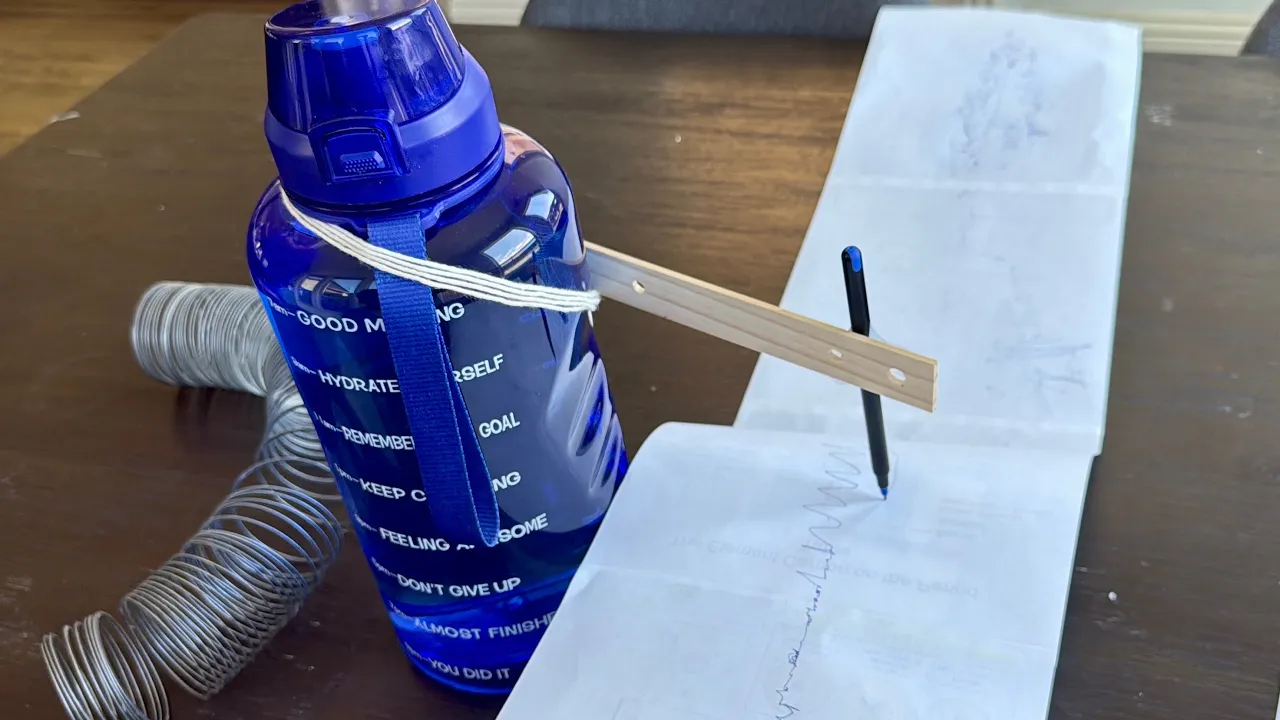



A slinky can model seismic P-waves (compressional waves) by pushing it to create bunched coils that move together through the material, and S-waves (shearing waves) by moving it side-to-side; however, the model has limitations because friction between the slinky and floor causes P-waves to appear slower than they actually are in real earthquakes, whereas in reality P-waves travel faster than S-waves through the Earth.
Seismic Slinky: Modeling P and S Waves in Earth Science
Added:Basic understanding of mechanical waves, including definitions of medium, wavelength, and frequency.
The physical distinction between longitudinal (compressional) and transverse (shear) wave motions.
Fundamental causes of earthquakes, specifically how sudden energy release along geological faults generates seismic activity.
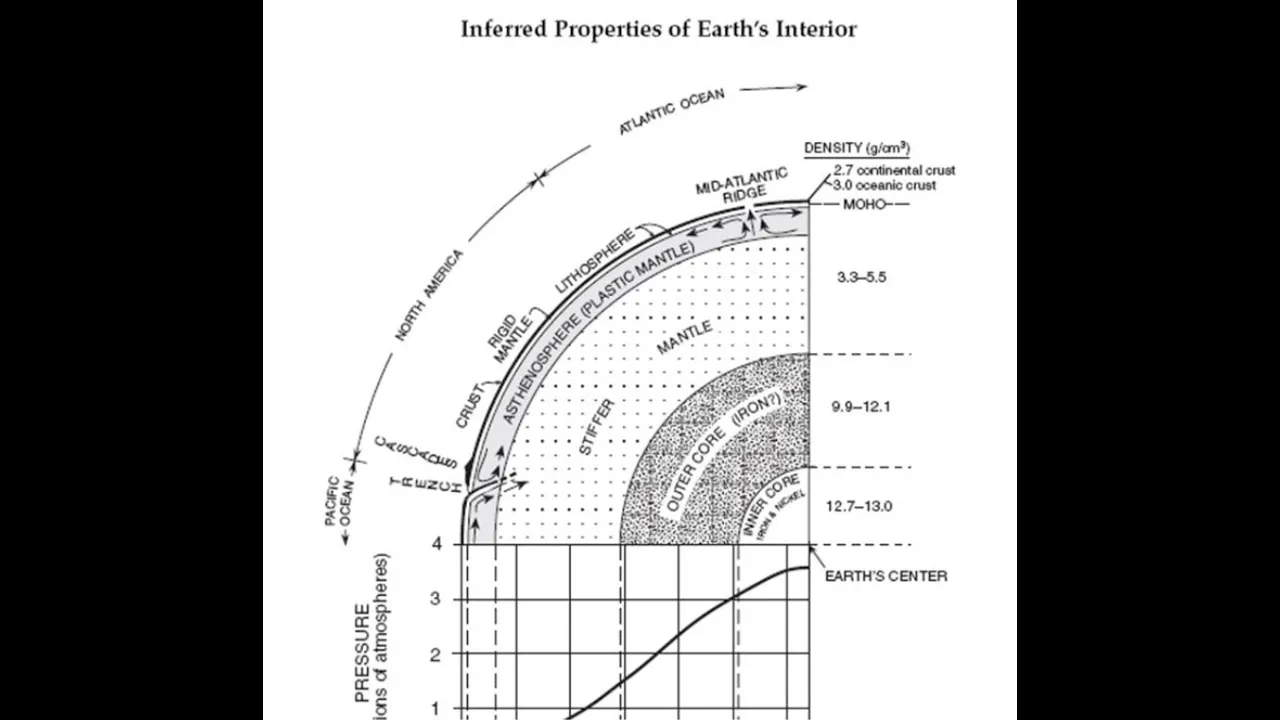
An introductory model of Earth's interior, recognizing that it consists of layers with different physical states (solid vs. liquid).
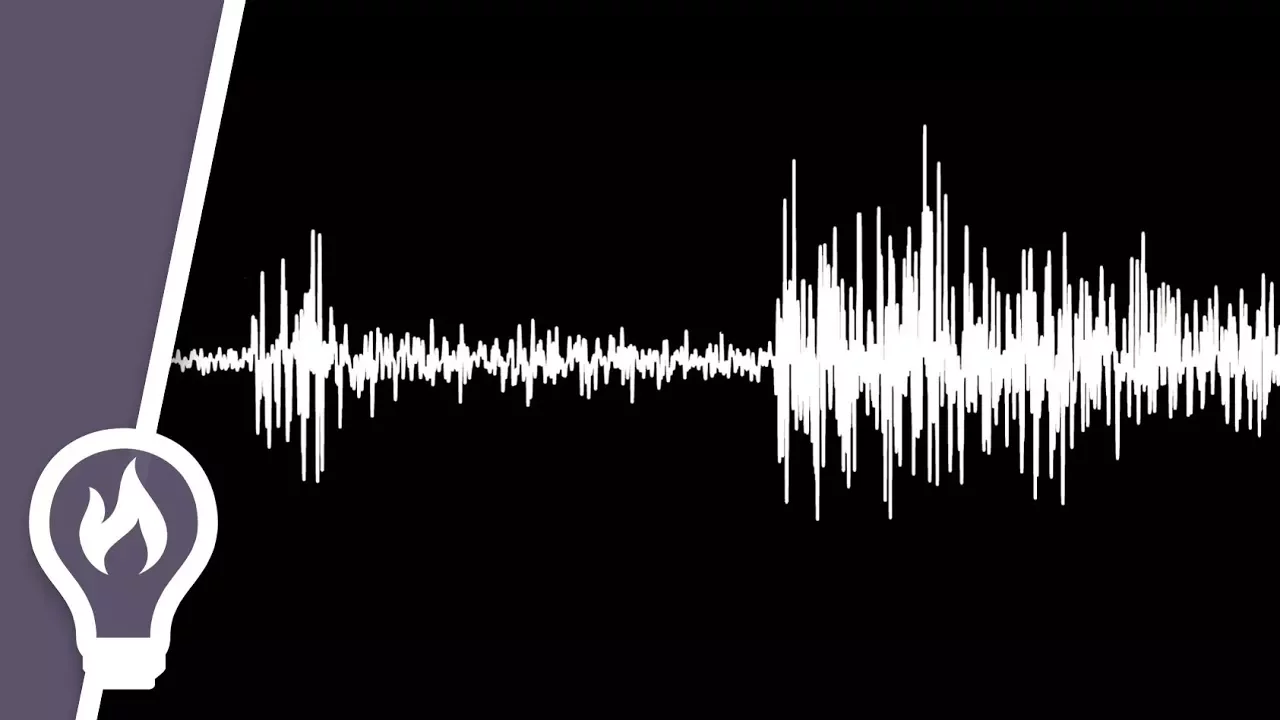
How the arrival time difference between P and S waves (the S-P interval) is used by seismologists to locate an earthquake's epicenter.
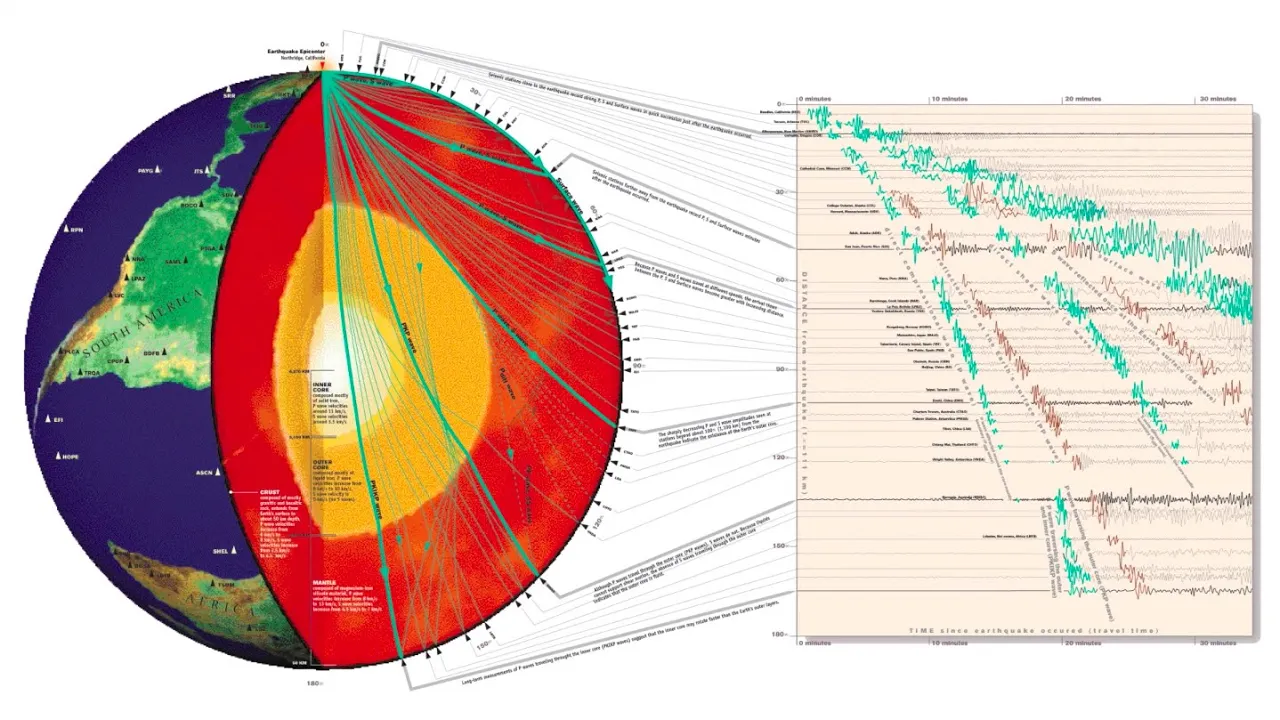
The phenomenon of seismic shadow zones and how the behavior of P and S waves proved that Earth's outer core is liquid.
An introduction to surface waves (such as Love and Rayleigh waves) and why they cause more ground deformation and destruction than body waves.
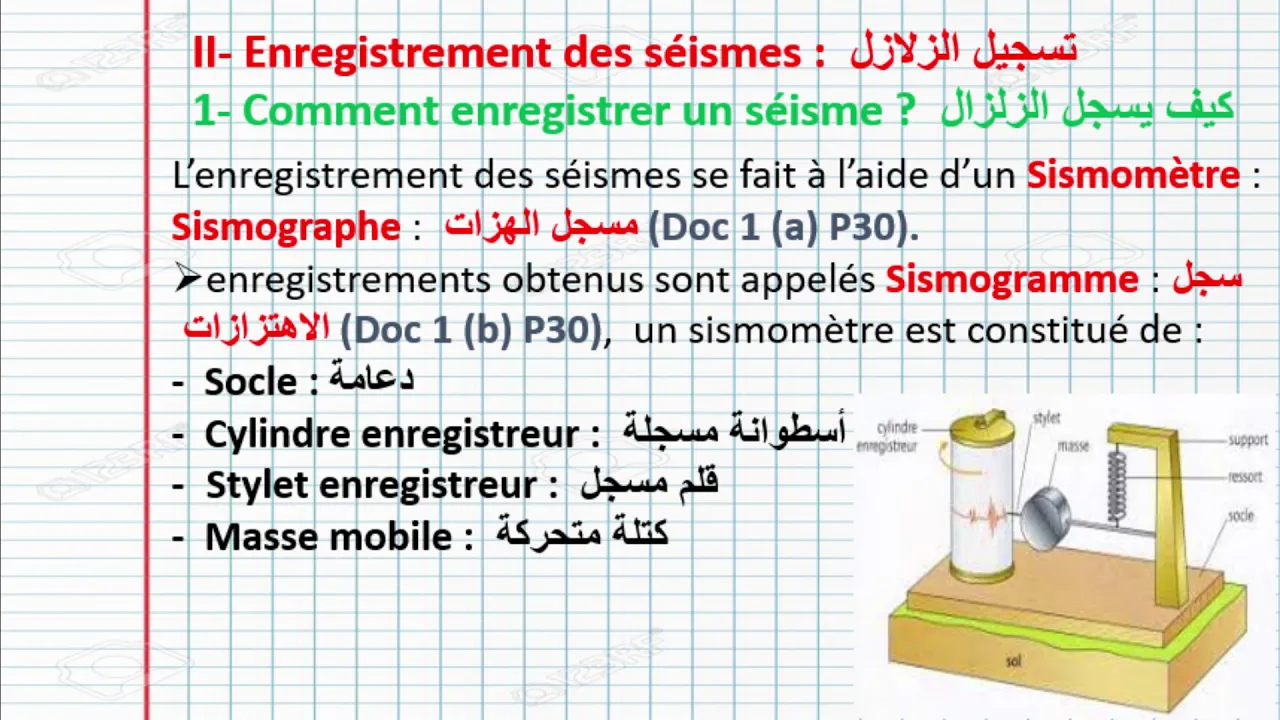
How seismometers are engineered to detect and record these different wave types on a seismogram.
258.7K views1.5Klikes5:17Original Release: 2013-07-13
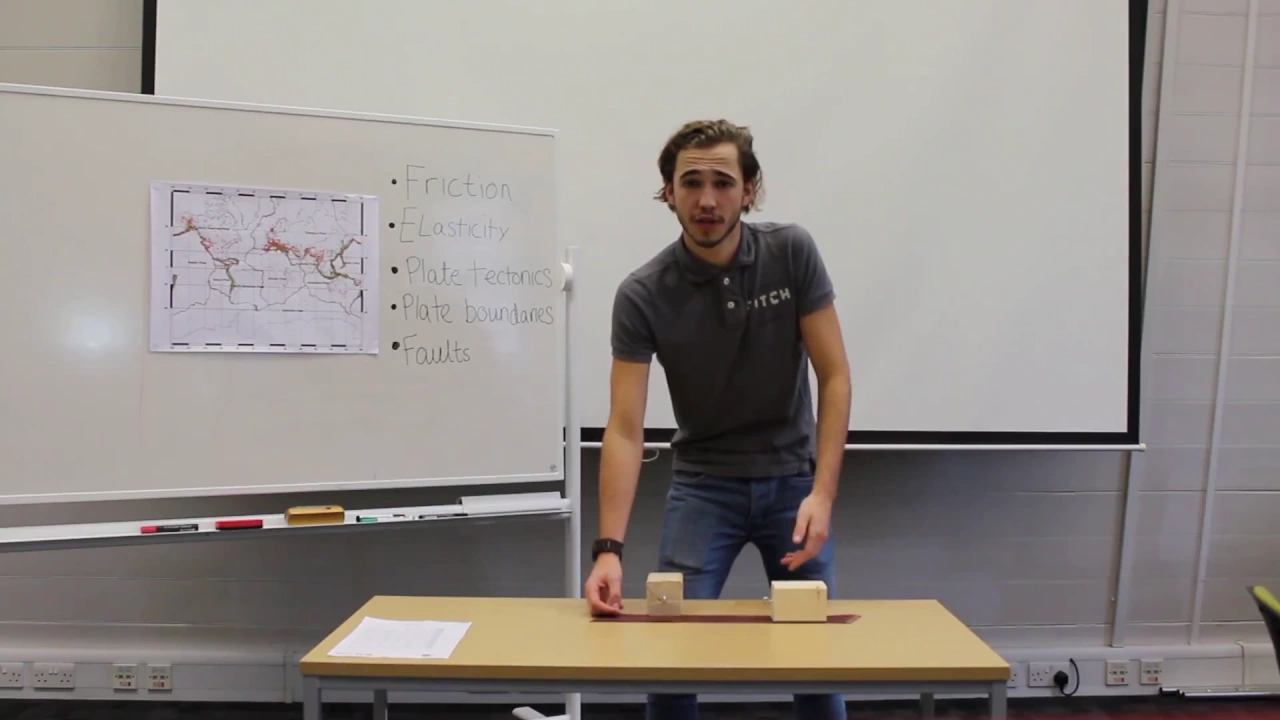
what I'm going to represent is an earthquake so I'm standing on the surface of the Earth and in class we talked about the whole idea that there's this idea of the fault so we can assume that the fault is relatively shallow compared to the length of the earth and so even though I'm not going to have the fault starting down here my the earthquake is going to start on the surface of the Earth and it's going to travel through the substance okay so here's how this works so p waves who can remind me what what what's important about p waves what did we just learned two things they're fast they're fast and number two they go through solids and they go through solids and liquids so this and p waves they and the other thing that they that we're going to add to those notes that we took in class is they bump into the thing next to them so this is how it travels so here's a p wve I'm going to simulate an earthquake by pushing the ground and this is how a p wve travels it bumps into the thing next to it watch it one more time just look at the rings of the slinky what happens to the rings of the slinky as I have the earthquake and you're about to raise your hand yeah they're like together bing up they get closer together everybody see that okay watch this one more time watch how the Rings get closer together okay so this so they get they bunch and then that Bunch that bunch of coils just kind of moves that bunching kind of moves all the way down and if it hit something else it bounces backward now S waves are a little different they move in a side to side motion so to model how an swaave travels with the slinky what I'm actually going to do is just take the earthquake and it's going to model a side to side motion Now watch how the slinky moves and here it is okay so you guys see how it kind of moves side to side so it's very different now now if there's a bit more energy to it it'll bounce back as well okay okay so do you think this Slinky is modeling solids liquids or both Dylan what do you think solids liquids both solid okay good it's solid so this is measuring solids okay so because S waves don't travel through liquids right so all models work to a certain extent at some point the model does doesn't work exactly like it's supposed to and that happens with every model okay and this is no different so here we have a model of size and qu of how they travel through the material using a slinky Slinky is very commonly used but it has some limitations to it so p waves are the fastest right we learned that in class so let's I want you to kind of compare the speed between a p-wave and an swave all right so here's my p-wave just watch how fast it it moves through the material one more time all right so there's our P now swi side to side watch how fast it goes okay so which one went back and forth way more times SES right now S waves are supposed to happen slower do you see a distinctive difference in speed between p waves and SES which one do you think happens faster p waves ah how many people think p waves happen faster according to this link how many people think S waves travel faster okay we know on the earth the p waves travel faster so I want you to think about this why why does the model with this linking not quite show that and I just want you to think about one word friction what is it about the friction of the slinky that makes it not work the way it's supposed to go ahead and talk really quick to the person next [Music] okay anyone willing to to give me what you got Quinton so when it's going that way it's got more friction because these are flat and not facing that that way okay but when it's going this way it's like uh flat and but it's easier to go back all right very good so if you were to look at the coil of the slinky it has to do with how the slinky shaped so here we have this really thin Edge and the thin Edge moving back and forth like this there's not a lot of friction it's this little tiny thin Edge moving back and forth but if you take that thin Edge and try to push it against the floor in the opposite direction there's way more friction in that and so even though the P wve if we were to measure the p waves traveling through the Earth they go way faster than way but because of the friction of the slinky with the floor it actually does not appear that way questions on that
Up Next

3:57
Surface Seismic Waves Explained: Love & Rayleigh Waves
@earthscienceclassroom
37.9K views•2022-02-01

12:53
21cm Hyperfine Transition in Neutral Hydrogen: Radio Astronomy Basics
@AaronRobertParsons
12.4K views•2011-10-13

34:26
Seismic Reflection Principles in Geophysical Interpretation
@IRISEarthquakeScience
39.8K views•2017-07-11

27:14
Entropy and the Second Law of Thermodynamics Explained
@veritasium
27.5M views•2023-07-01
Related Study Plans & Knowledge Roadmaps
Structured learning paths in Physics
physics
Nuclear Physics (Decay, Fission & Reactors)
01Atomic Structure and the Binding Force
02Radioactive Decay and Half-Life
03Nuclear Fission Mechanics and Chain Reactions
+ 2 more learning modules
12h5 modules
Explore Roadmap
physics
Soft Matter (Polymers, Colloids & Rheology)
01Foundations of Soft Matter & Thermal Forces
02Polymer Physics and Macromolecules
03Colloids, Surfactants, and Self-Assembly
+ 2 more learning modules
38h5 modules
Explore Roadmap
physics
Analytical Mechanics: Lagrangian & Hamiltonian
01Mathematical Foundations: Calculus of Variations
02From Newtonian Mechanics to Constraint Dynamics
03The Principle of Least Action & Lagrangian Mechanics
+ 3 more learning modules
28h6 modules
Explore Roadmap
physics
General Relativity (Spacetime & Cosmology)
01Foundations of Relativity: Special Relativity
02The Geometry of Spacetime: Equivalence Principle & Curvature
03Einstein's Field Equations: The Mathematics of Gravity
+ 2 more learning modules
55h5 modules
Explore Roadmap