













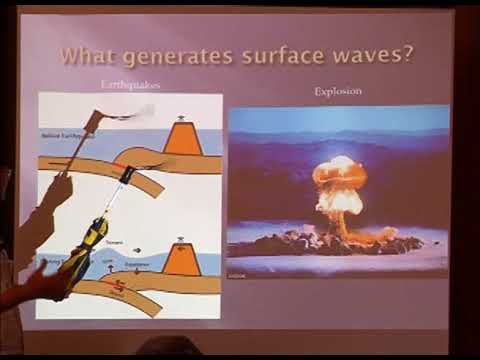





Surface seismic waves (Love and Rayleigh waves) cause the majority of earthquake damage due to their large amplitude ground motion; Love waves move in vertical up-and-down motion while Rayleigh waves create circular orbital motion, and these two types combine at the surface to produce complex ground shaking that destroys infrastructure.
Surface Seismic Waves Explained: Love & Rayleigh Waves
Added:Basic wave mechanics, including concepts of amplitude, frequency, wavelength, and propagation media.
The internal structure of the Earth, specifically the properties of the crust and upper mantle.
Fundamental earthquake terminology, including the concepts of focus (hypocenter), epicenter, and seismic energy release.
The distinction between seismic body waves (Primary/P-waves and Secondary/S-waves) and how they travel through the Earth's interior.
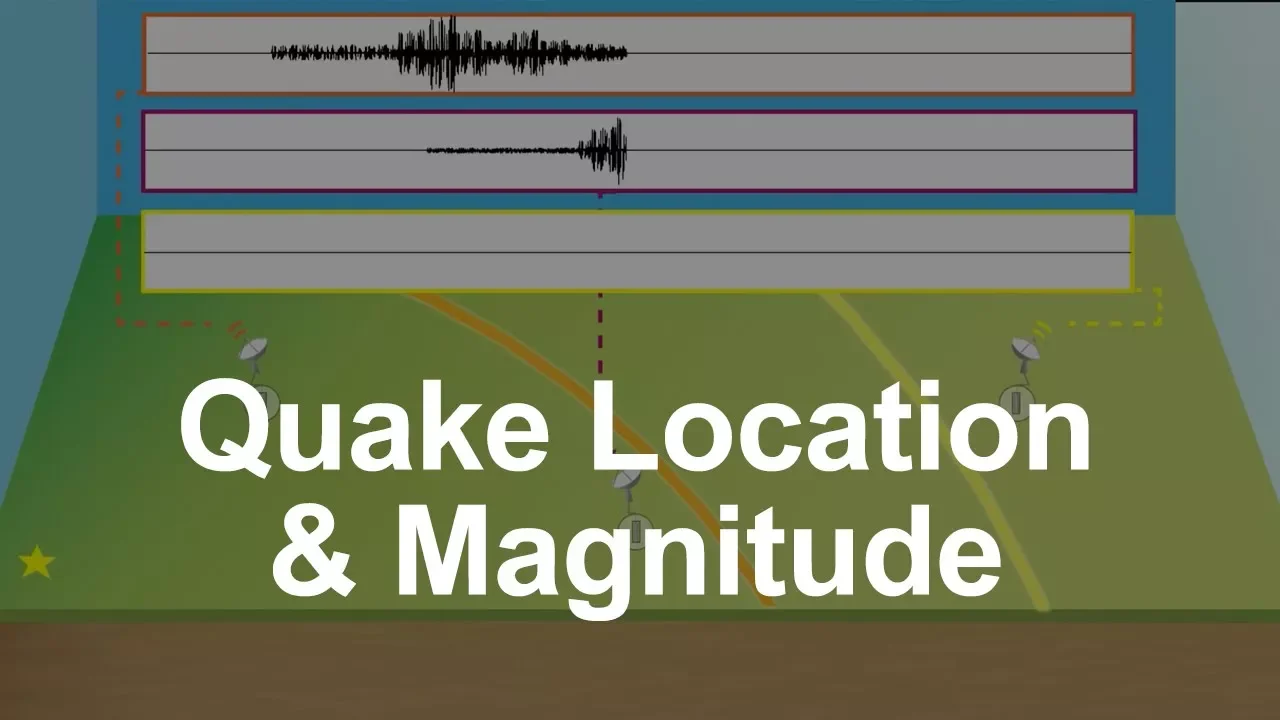
Analyzing seismograms to calculate earthquake magnitude and locate epicenters using the arrival times of different wave types.
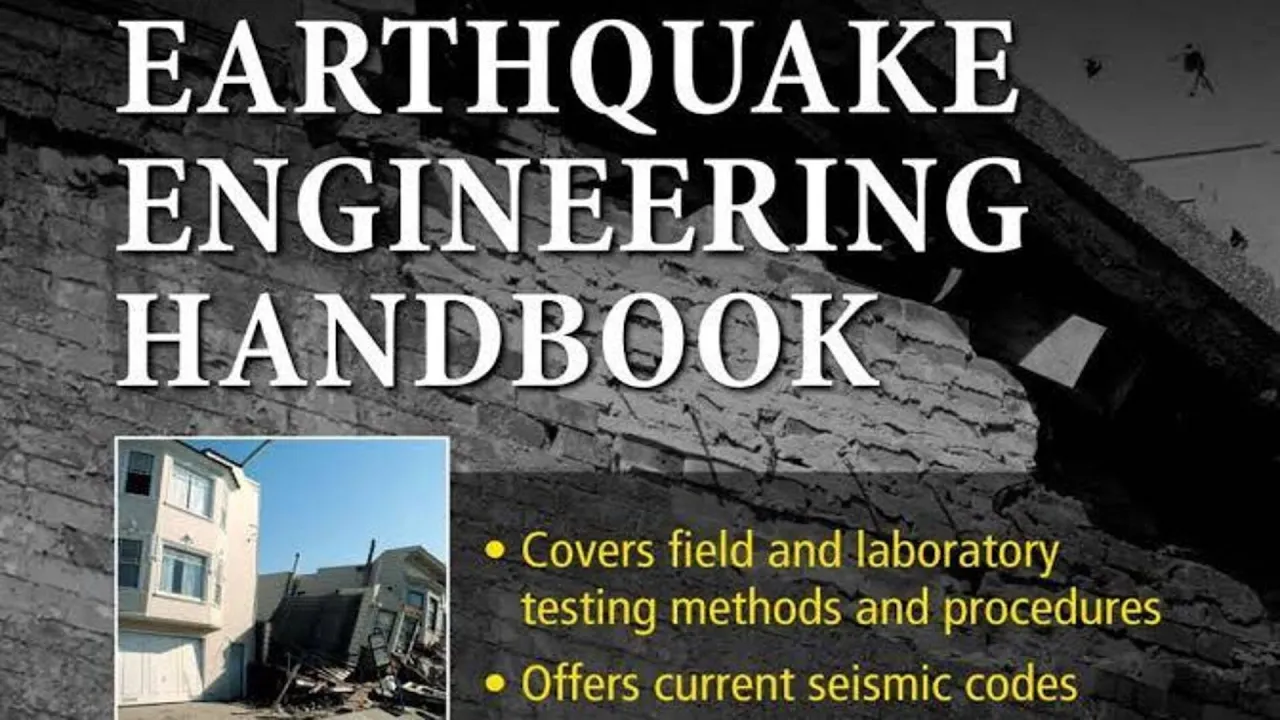
Geotechnical and earthquake-resistant engineering principles designed to mitigate damage from horizontal (Love) and elliptical (Rayleigh) ground motions.
The study of seismic dispersion and how it is used in seismic tomography to image the Earth's shallow crustal structure.
The phenomenon of soil liquefaction and site-effect amplification, where local geology intensifies surface wave destruction.
37.9K views457likes3:57Original Release: 2022-02-01
this is the earth science classroom welcome back to the channel this video is on surface seismic waves this is part of the seismology and earthquake playlist this video is going to look at the l and the r waves and look at the propagation and characteristics of these waves and how they create the majority of the damage that you associate with earthquakes both big and small and this is just a little taste of what some areas go through each year on various earthquakes and the damages based on infrastructure and roads and buildings so join me now [Music] all right guys we looked at both the p wave and s wave for earthquakes right those are the two waves that come out first at the fastest and you can record them on these stations first right and they're called body waves body waves because they go through the center of the earth right the next two waves we'll discuss are called the l and the r waves l stands for love after the guy that found it doctor love which is an awesome name right doctor love and the other one is the rally wave again another guy named raleigh so those two waves the l and the r wave they are called uh surface waves because they only go through the surface and the reason is because they have less energy and they're slower so they go from the earthquake foci straight to the surface and they move across and through surface so you can imagine if you're in the earthquake those surface waves are the ones that will cause the most damage they're the biggest amplitude displacement and they'll cause the ground to move the most because they are concentrated in the surface whereas the p and s wave go through the entire planet these ones go straight through the surface and really close to where the earthquake began the focus okay so this is the love wave the love wave pretty much goes up and down like this okay so you had the s wave going side to side this love wave is going up and down okay so you're having the the regular wave motion up and down like you see in ocean waves okay but these ones are very very uh concentrated on the surface so imagine the ground the road the surface with buildings on doing this up and down it's going to cause a lot of damage okay the next one is the r wave the rally wave this one's a bit more complex it goes in a circular orbital motion so if i'm going to do this i'm going to stand on the side all right great walking is you ready all right so i gotta i gotta do it from here actually okay and you hold the rope and you move it in a big circle like this and you twist it in a big orbital motion and the cool thing is with this r wave is exactly what it looks like when it goes through the surface the ground actually moves up and twists in a big circle and the even awesome thing is the l and the r wave they combine together when they go through the surface so the place where where the earthquake hits is not only getting the p wave hitting at first then the s wave but also the l and the r wave combining to move the ground up and down and in a circle motion at the same time so these huge earthquakes can cause a lot of damage because we can't build roads and bridges and houses to withstand that kind of ground motion all right guys hope this uh helped and you enjoy the video this is the earth science classroom thank you for watching i hope you enjoyed the content check out more videos on our channel and don't forget to subscribe thank you again
Up Next

54:49
Earthquake Waves: P-waves, S-waves & Earthquake Location
@iit
14.4K views•2013-06-05

12:53
21cm Hyperfine Transition in Neutral Hydrogen: Radio Astronomy Basics
@AaronRobertParsons
12.4K views•2011-10-13

32:32
NMR Spin Physics I: Zeeman Effect, Resonance Condition & Larmor Frequency
@nptel-indianinstituteofsci8064
2.3K views•2024-01-17

27:14
Entropy and the Second Law of Thermodynamics Explained
@veritasium
27.5M views•2023-07-01
Related Study Plans & Knowledge Roadmaps
Structured learning paths in Physics
physics
Nuclear Physics (Decay, Fission & Reactors)
01Atomic Structure and the Binding Force
02Radioactive Decay and Half-Life
03Nuclear Fission Mechanics and Chain Reactions
+ 2 more learning modules
12h5 modules
Explore Roadmap
physics
Soft Matter (Polymers, Colloids & Rheology)
01Foundations of Soft Matter & Thermal Forces
02Polymer Physics and Macromolecules
03Colloids, Surfactants, and Self-Assembly
+ 2 more learning modules
38h5 modules
Explore Roadmap
physics
Analytical Mechanics: Lagrangian & Hamiltonian
01Mathematical Foundations: Calculus of Variations
02From Newtonian Mechanics to Constraint Dynamics
03The Principle of Least Action & Lagrangian Mechanics
+ 3 more learning modules
28h6 modules
Explore Roadmap
physics
General Relativity (Spacetime & Cosmology)
01Foundations of Relativity: Special Relativity
02The Geometry of Spacetime: Equivalence Principle & Curvature
03Einstein's Field Equations: The Mathematics of Gravity
+ 2 more learning modules
55h5 modules
Explore Roadmap