














![GUÍA para evitar los Disruptores Endocrinos ❌ [LIBÉRATE DE TÓXICOS] ❌ Dr. Nicolás Olea](https://i.ytimg.com/vi_webp/R-evjt8Dj1o/maxresdefault.webp)




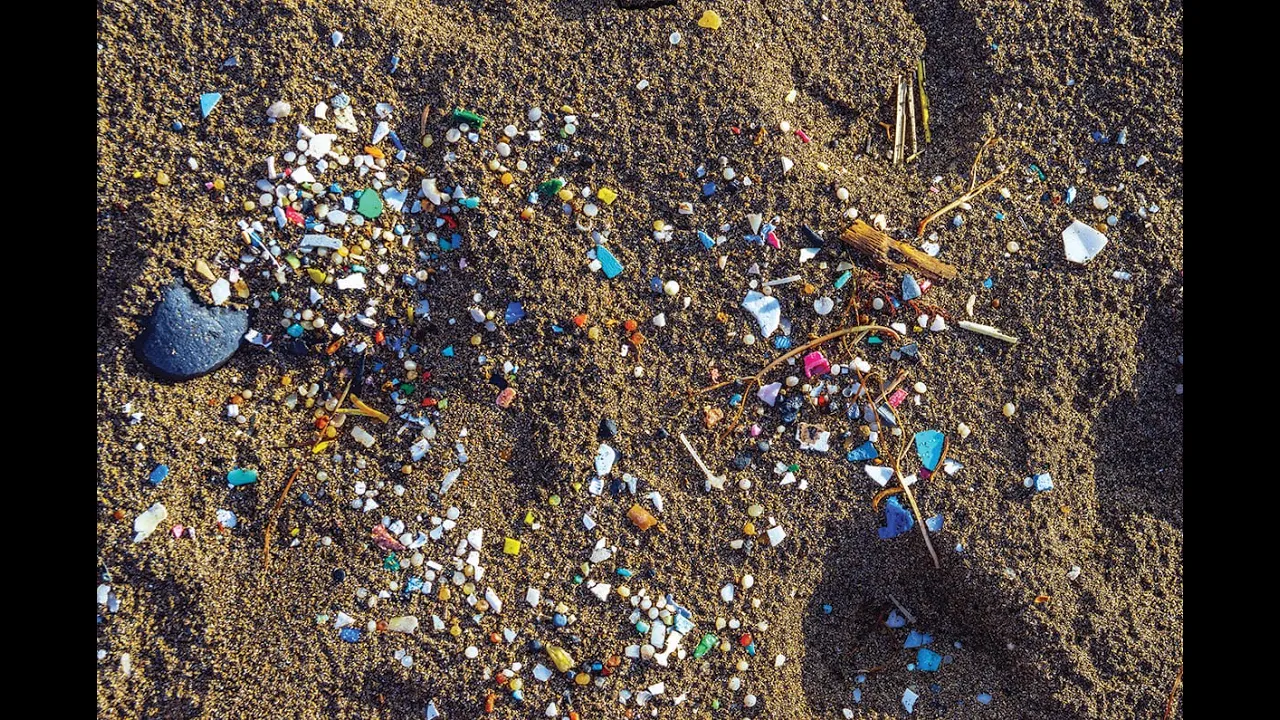
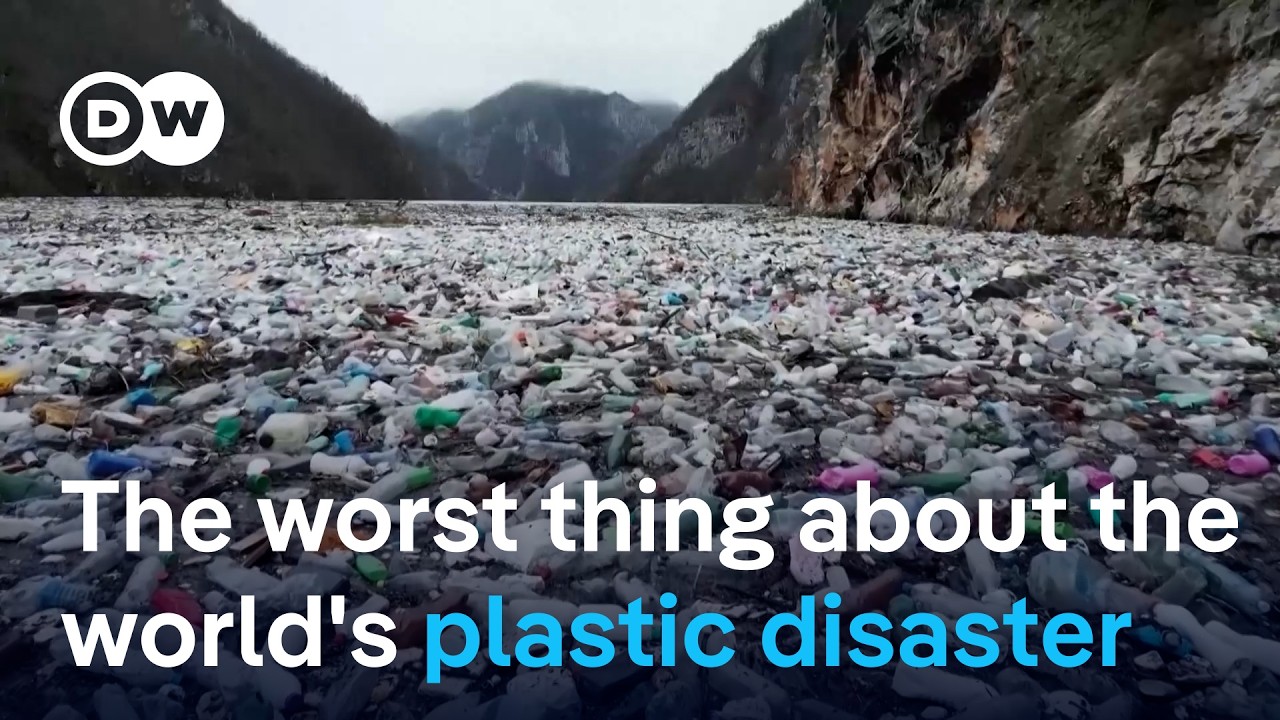


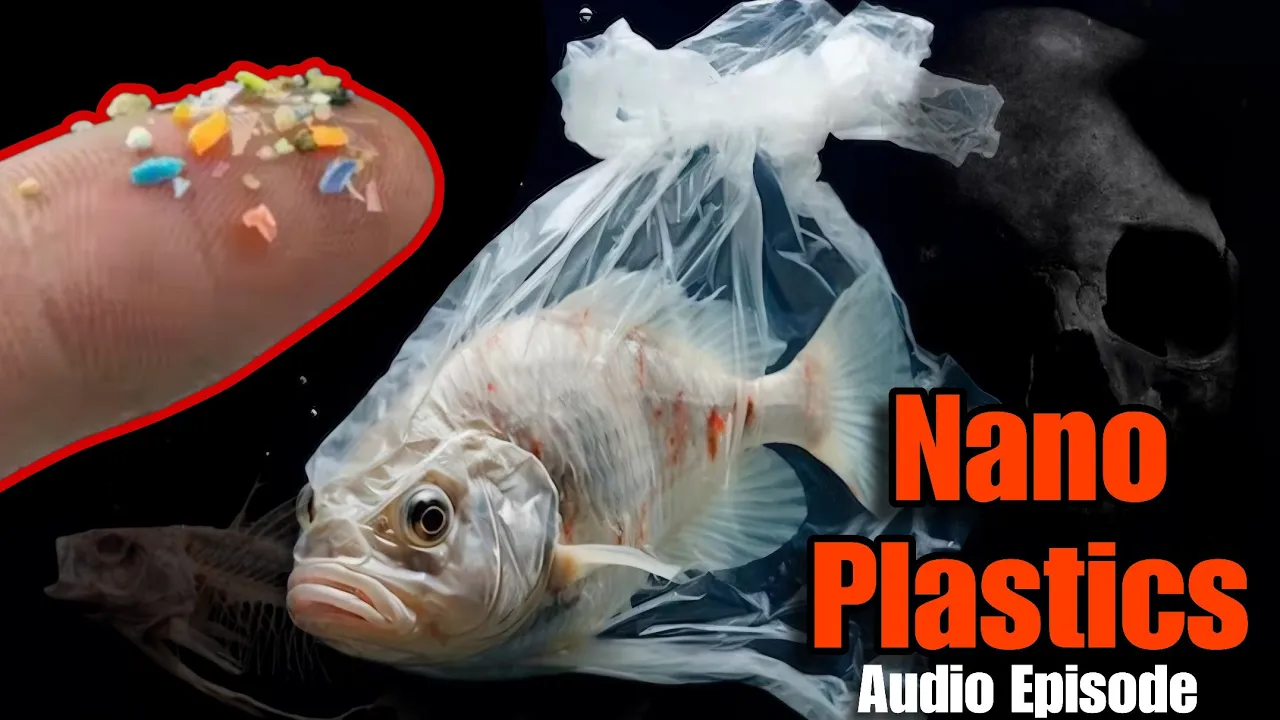


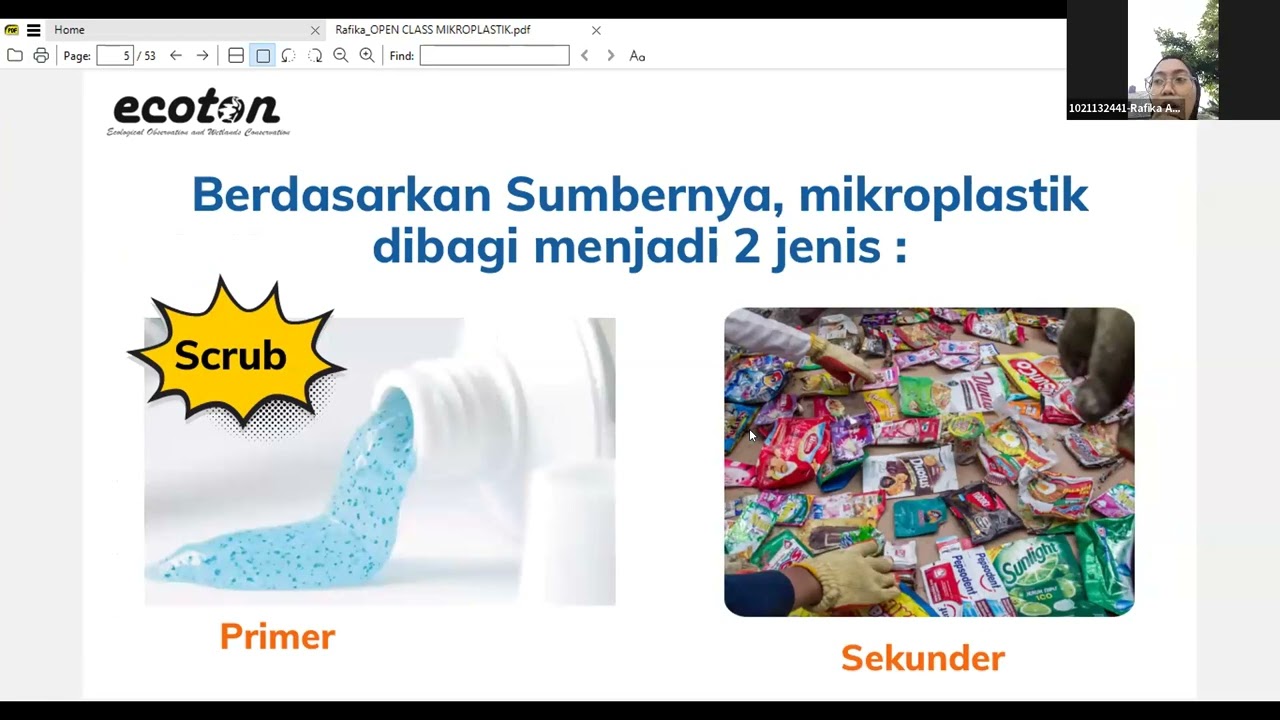
Microplastics are plastic particles less than 5 millimeters in size, categorized as primary (manufactured directly, such as microbeads in cosmetics and pre-production pellets called nurdles) or secondary (formed from larger plastic debris breaking down, including synthetic fibers from clothing and fragments from water bottles). Research conducted by Illinois-Indiana Sea Grant since 2012 has revealed that while initial studies expected microbeads to be the primary concern in the Great Lakes, subsequent research found that synthetic fibers from laundry are actually the dominant type of microplastic found in freshwater systems, including Lake Michigan where 14% of collected plastics were fibers compared to only 4% microbeads. These microplastics pose significant ecological risks including ingestion by filter-feeding organisms, transfer up the food chain, and the ability to adsorb persistent organic pollutants (POPs) at concentrations millions of times higher than ambient water, thereby amplifying toxic effects throughout aquatic ecosystems.
Microplastics in Aquatic Ecosystems: Sources, Impacts & Research
Added:I want to welcome everyone to today’s seminar. My name is Nancy Holm.
I am assistant director here at ISTC and seminar organizer along with Beth Meschewski.
We have the schedule for the other spring seminars on the table outside this conference room.
They are also listed on ISTC website for those listening online.
The next seminar will be on April 13th.
In case you cannot attend in person, all of the seminars are shown live via GoToWebinar.
and also archived on our website.
You will find the registration information for viewing the Webinars live on our calendar of events.
To begin the seminar I’d like to first ask everyone in attendance here to please silence your cellphones if you haven’t done that already and also we like to hold the questions for the speaker until the end and then I will come around with the microphone so that we can record those for the video.
For those of you viewing online, you may ask your questions by typing those in at any time and then we will answer those at the end also.
We are very pleased today to welcome our speaker Sarah Zack, who is a pollution prevention extension specialist for Illinois-Indiana Sea Grant.
Her office is at Loyola University Chicago.
Sarah develops and conducts extension programming, related to the prevention of aquatic pollution, addressing issues such as pharmaceuticals and personal care products in the environment, coal tar sealcoats, microplastics, and emerging contaminants.
Sarah has a dual bachelor’s of science degree in Zoology and Biological Conservation at the University of Wisconsin-Madison and has a M.S. in biology from Loyola University Chicago.
So please join me and welcome Sarah Zack as our speaker.
[Applause] [Sarah] Thank you Nancy. Hello everyone.
I'm going to be talking about microplastic today and as I’m in Chicago, a lot of the work that I do is more Great Lakes focused.
But I’ve been able to talk with some researchers so I have some research to present to you today about some microplastic studies that are being conducted around rivers too so that should be really applicable for people interested in this issue sort of on a state-wide basis.
I am an employee here of University of Illinois extension but I like to start all of my talks by making sure that everybody is aware of what Illinois-Indiana Sea Grant is and what we do.
Because in my experience, not everybody is always familiar with Sea Grant.
We are a joint program here at the University of Illinois and at Purdue as well.
We are also funded by NOAA, National Oceanic and Atmospheric Administration.
And our director and assistant director are also the assistant and director of the Illinois Water Resources Center here on campus as well.
The Illinois Indiana Sea Grant Pollution Prevention Program in terms of the microplastics work that I’m going to talk about really focuses on two things, research and outreach.
We participate in and fund research, looking at microplastics and anthropogenic litter on aquatic environment throughout both in Illinois and Indiana.
We also do outreach and we are embarking on full scale outreach program on microplastics to try to bring this research, which is as hopefully I’ll demonstrate, sort of an emerging science and try to educate the public about these issues and how they can contribute to reducing microplastics in aquatic environment.
This is an overview for today and the schedule we’ll keep.
First thing I’ll do is talk microplastic 101 and make sure everyone is on the same page with what microplastics are, what the sources of microplastics are, where they come from and then I’ll talk about what I’d like to call the history of freshwater microplastic research, which is little tongue-in-cheek, because as I’ll demonstrate, it’s a very short history, it’s a brief history.
Moving to talking about Great Lakes’ microplastic and then research that the Water Resources Institute and Sea Grant have funded and has participated in and then wrap up by talking about the outreach that we are doing.
Microplastics 101.
So there’re two different types of microplastics.
Primary microplastics and secondary microplastics.
Really what they have to do with is where they are in the production cycle.
First, primary microplastics are these two types right here.
Production pellets, or what they are referred to in industry as “nurdles”.
These are resin pellets that are used to produce plastic goods.
So they are pre-production product. And then we also have microbeads.
Plastics that are found in personal care products.
Typically made of polyethylene, polypropylene, sometimes nylon.
They are the little micro scrubbers that used to be in your face washes and toothpaste things like that. Those are Both primary microplastics.
Secondary microplastics are microplastics and I should have started, I apologize, Microplastcs are defined as plastic particles less than five millimeters in size.
Secondary microplastics are pieces of plastic generated from a larger piece of plastic essentially, hence secondary.
So we have fragments and film, which are small pieces of plastic water bottles, plastic food wrappers and things of that nature. Essentially garbage that breaks down either to the weathering or some other type of action into smaller and smaller pieces and then synthetic fibers, which are shed from our clothing.
Synthetic fiber based clothing. Things like fleeces, polyester clothing.
They shed small fibers and these are ubiquitous in the environment.
Since they are made of plastic, they don’t biodegrade.
This is what microplastic looks like when you take a water sample and filter it.
Here we have a blue fragment, this little right here is a piece of foam, right here, curved here, these are two fibers and then this is a nurdle of a pre-production pellet right here. It’s hard to see microplastics.
These are all fairly large in size. Microplastics tend to be around one millimeter range so at this scale, they are a little difficult to see but you can kind of get a sense for the size and shapes of these things and also for how difficult it is to identify them in a water sample when you have all this other debris.
At times you can look for the color, a lot of microplastics carry color, but microplastics that have been in the environment for a long time may be bleached out and lost their color. So they can be difficult to identify.
Often time researchers will use what’s called “Hot needle test”, if they don’t have chemical analysis at their disposal so they’ll hold a hot needle under a flame and then get it closer and closer to the plastic and if the plastic warps, bends or fiber curls, then they know it’s a non-natural element.
So where do these come from?
Microbeads come from cosmetics industry, as I mentioned before.
These are a problem because they are too small to be retained by the screens at wastewater treatment plants.
So these are the ones that the majority of you, I imagine, have heard about in the news already, are microbeads.
There has been federal action, which I’ll talk about, to remove these from products.
Clothing is the next thing that we’re going to start hearing about.
Fibers, we’re learning more about how ubiquitous synthetic fibers really are in all of our water bodies.
Again, these are too small to be retained by wastewater treatment plant screens, so they pass through and release effluent back into aquatic systems.
Pellets come from manufactured goods, often these are more of an oceanic problem than a fresh-water problem because cross-oceanic shipping of these pellets and accidental spillage results in dumping, sometimes a significant number of pellets into the ocean.
Coastal tourism is fairly ubiquitous in Illinois.
Anywhere you have a boat landing or a beach whether it’s fresh water or oceanic, there’s the potential for garbage to accumulate, because where people go, they bring water bottles, snacks and things like that.
Whenever you have those things generated by tourism, you have potential for them to get into water bodies and then break down into microplastics.
Secondary concern with coastal tourism is recreational and commercial fishing.
Commonly referred to as ghost nets in the commercial sense and monofilament line that gets either blown away or thrown into water bodies and breaks down over time and can both entangle organism as macroplastic and then cause other problems as it breaks down into microplastic.
And then natural calamities there’s been a lot of research that’s shown that after storm events, garbage increases by huge amount in water bodies that’s pretty common sense to most people, that after people get a storm drain after storm, it’s going to wash all that garbage and if it washes into storm drain, it’s probably washing some of it into natural water bodies as well.
And then again, this natural weathering and breakdown process turns these larger macroplastics, and what we term is marine debris even in the fresh water environment, into a microplastic.
So these plastics have a variety of fate. Once they hit the aquatic environment.
But first and one of the most troubling is accumulation.
This is where you hear about things like the great garbage patch in the Pacific Ocean.
This is a large accumulation of garbage, trash, and microplastics that we can’t see with the naked eye and it accumulates not only due to the sheer volume of garbage that is in this area, but due to the natural cyclic nature of the gyres.
Break down and decomposition is what turns macroplastics into microplastics.
There are some bacteria that can break down plastics but these aren’t widespread throughout the environment in sufficient quantities to breakdown the volume of plastics that we have in our waters.
And then ingestion.
We see this a lot of this in marine environments and there’s now being research done in the freshwater environment to demonstrate that this is a phenomenon that is occurring.
You hear about Beached Whales dying, being necropsied and having their stomachs full of plastic.
Birds with their stomachs full of plastic. Turtles with straws up their nose.
I could’ve put some gruesome pictures, unfortunately, in this but I chose to stick just with the one gruesome dead bird picture.
This shows the point that these plastics are mistaken for food very often.
If you are a filtered feeding organism, an organism that simply filters water across your gills and removes food in that capacity, you don’t have a chance to discern between what’s food and what’s plastic.
It is all going to end up in your gut. Then question becomes what happens to that plastic?
What effect does that plastic itself have? and are there any toxic effects associated with the consumption of plastics as well? Those are all questions that still need answers.
The ecological effects of microplastics have been fairly well documented although not always in freshwater.
We know that filter feeders, zooplankton and fish will consume microplastics, we know that when a predator eats a prey item that is a filter feeder, those microplastics are transferred up the food chain through the consumption of prey.
We know that eating microplastics can alter fish behavior and make them more vulnerable to prey. There’s a study done in Sweden that demonstrated the larval fish that consumed microplastics showed less predator avoidance.
Why? They don’t know but it was statistically significant study.
In addition, other studies have shown decreased reproductive success after consuming plastic.
This was a laboratory study where plastic beads were fed to oysters and those oysters showed reduced reproductive success.
One interesting thing that we know and I’ll talk about it a little bit more later on is that these microplastics select for very distinct microbial communities.
They become environment unto themselves.
We start to see these novel habitats form for organisms on plastics themselves.
So I think there are a lot of questions there that need to be answered as well.
That brings us to the toxicological effects of microplastics.
The real problem with microplastics and toxicity are persisting organic pollutants [POPs].
These are organic compounds that are resistant to be degraded into the environment, resistant to break down and they bio accumulate, and they have significant impact on human and environmental health.
In terms of what I call POPs, microplastics pose two distinct threats.
The first is that the microplastics themselves can leach chemicals.
A lot of these plastics have things like PCBs in them, which can leach out in the environment.
Second thing is that these plastics, readily, adsorb chemicals. So POPs, like DDT, PCBs, PAHs, Polycyclic Aerometric Hydrocarbons, which are carcinogen.
They all adsorb onto the surfaces of microplastics very easily.
At times, million time higher than you’ll find in the ambient environment.
This further exacerbates the problem of bioaccumulation up the food chain and causes prey species, which are the ones that typically find themselves in our diet to be bioaccumulating toxins at potentially a much more significant rate.
These are sort of issues associated with microplastics in a lot of ways that still need to be explored.
The history of microplastics in fresh water.
As I eluded to earlier, microplastics and marine debris In the oceanic environment, is a pretty well-known subject. People know about the great garbage patch. People have been talking about marine debris in the oceans 6 pack rings and things like that for quite a long time.
The North Pacific Gyre is infamous for this, because that’s where the pacific garbage is.
Some reports have it about the size of Texas, others have it to be twice the size of continental United States.
The range here is pretty wide and it is influenced a lot by the way that you sample for these plastics.
Many of these plastics can not be seen with the naked eye because microplastics in a lot of cases are at one millimeter in size and in an ocean, they are not going to be seen with the naked eye.
This garbage patch is ever evolving and ever changing with the currents as well.
But it is by all report, an enormously large area of ocean that is essentially uninhabitable and full of plastic debris.
It’s been pretty well studied. When you go to fresh water, things are a little bit different.
Most of the research done on microplastics and plastics in fresh water has been done since 2010 and really since 2011.
We’ve seen and demonstrated that there are microplastics in waste water effluent, that there are microplastics in the Great Lakes surface waters.
There’s been one published study that demonstrated that they are in tributaries of the Great Lakes, a handful of studies looking at inland rivers and lakes and then a couple looking at sediments.
We’re at the point in the research on freshwater microplastics now, where papers are still - some of the new research that’s being published about freshwater microplastics is original peer-reviewed papers that document what research still needs to be done.
When that’s the state of science, then there’re still a lot of science to be done.
What I’m going to do today is tackle these three issues.
I’ll talk about the work that’s been done in the Great Lake, sort of looks like a comprehensive list, but over the next 20 or 25 minutes, I’m going to talk about almost all of the research that's been done on these three things. So you will see it really doesn't amount to that many research projects.
Let’s talk about Great Lake surface water first, and talk about some research funded by Sea Grant and Water Resources Center on inland rivers and tributaries of the Great Lakes.
The Great Lakes, since we’re in central Illinois, I figured I'd start with quick primer on the Great Lakes.
It’s the largest freshwater system on Earth. Contains about 22% of all the freshwater that we have.
A 1/10th of the U.S. population approximately lives on the Great Lakes or around the Great Lakes, or in the basin.
There are about 40 billion gallons drawn off the Great Lakes daily, most of that to generate energy.
A lot of it gets put back after energy is generated.
About 35 million people rely on Great Lakes for drinking water and jobs.
It is an incredibly unique ecosystem that sustains seven billion dollar fishery And hosts thousands of species of organisms and plants.
Recognizing that there was a need for some research looking at, whether microplastics were an issue in the Great Lakes, there was a Great Lake survey conducted in summer of 2012, which was published in 2013 by a team comprised of researchers and activists from an institute called Five Gyres.
This research looked at three lakes.
Superior, Huron, and Erie. And you can see what they did was they Manta Trawled for plastics.
They drug this enormous net behind a large vessel filtering out a known volume of water, washing down the net and evaluating what plastics were left after filtering that water.
And you can see the size of the circle here indicates the particle count at these places.
You can see, in places like Buffalo, they’re getting on the order of millions of pieces of plastic in their trawls, which is a huge amount of microplastics.
This is the breakdown of the types, and the sizes of the particles that they found and they’re going to use the same system that I talked about earlier, fragments, film, foam, pellets, and line.
Pellets here refers to larger pellet or a microplastic but you can see if you look at the rough count, we’re looking at huge amounts of plastics and these pellets are the big ticket item.
430,000 pellets found less than a millimeter in size, 250,000 fragments found less than a millimeter in size.
Really a lot of plastics found.
We have that information and that’s all that study did was, “What’s here?” Now we know what’s here.
Taking that information, we turned to Lake Michigan, which hadn’t been studied.
I consider Michigan to be the greatest of the Great Lakes, that’s because I lived on it my whole life.
It’s the third largest in area, second largest in volume.
It’s the largest body of water that is found solely within the borders of any one country.
It is drinking water for 10 million.
Home to the Great Lakes Basin’s largest city, which is Chicago.
In August of 13th, Sea Grant accompanied the same group of researchers on a research vessel to evaluate microplastics in Lake Michigan.
The red dots represent the sites that Sea Grant participated in and the green dots are the additional study sites that were also sampled.
Same methodology, using Manta Trawl to trawl for plastics.
What they were doing was they were looking for was microbeads.
They assumed, based on the study in 2012, that they were going to find a huge amount of microbeads.
After that study had come out, it generated a fair amount of press.
Oh my gosh, we have all of these plastics in our water, what are we going to do?
State started talking about enacting legislation.
We wanted to get Lake Michigan sampled to add to that data set to have a real and informed set of data that can be used to make those type of decisions. Really they were expecting to find a lot of microbeads.
This is sort of the methodology. Those nets here are drug through and you can see right here is sort of the cap on the end of the net and that’s this end part right here that catches everything that goes through the net.
It gets washed off into screens, and then bottled up, later filtered and identified in the laboratory.
So you can see here, similar to the map that I showed you earlier, the size of the triangle indicates the total plastic abundance, the larger the triangle, the more plastic.
Chicago is right around here, so as expected, fairly high amount of plastic Also very high amount of plastic periodically throughout.
There really isn’t a great pattern as to where a high amount of plastic was found versus where small amount of plastic was found. Lake Michigan has its own currents and circular patterns.
They imagine that those contributed to the distribution of plastics throughout.
But that still needs to be looked at. These results were just published less than a year ago.
Let’s look at what they found.
Again, fragments were high, 79% of the total. But pellets, microbeads were only four percent of what was found.
Instead, 14% of what was found was actually fibers.
This was incredibly surprising.
Everybody expected to find fragments and microbeads. When they didn’t find microbeads, it was incredibly surprising to find out that these fibers were so ubiquitous and in such high quantities.
Based on this result, based on this information, they looked at a comparison of the two, taking this information.
You can see that this study found a lot more fragments and a lot fewer pellets.
No line, no fibers were found in the first study, on the first three lakes.
And then Lake Michigan, 14% of the plastic was fibers. Nobody thinks that plastic inputs to Lake Michigan should be any different than the plastic inputs to any of the other Great Lakes.
They all have industry on them, they all have wastewater treatment plants, recreational uses, it's fairly constant throughout the basin, the pressures, that are on these lakes.
So the switch from fragments and pellets and fragments and line was very surprising and it really kicked off a whole new need for microplastic awareness.
A whole new segment about microplastics’ awareness.
Nobody was looking at the fibers until the the study came out.
Now we are starting to see them more and more in the news.
We are seeing companies like Patagonia, who makes fleeces, taking an active role in outreach about plastic fibers because they recognize that their products are contributing to the problem.
Sea Grant and Water Resources Center funded the surveys.
I’m going to start with the Great Lakes, and talk about Tributaries and work my way out.
Tributary inputs to Great Lakes. There's a project going on right now.
This is currently ongoing research, they just started year two of this study.
So the results I’m going to present are preliminary results.
This is research, that's funded by Sea Grant.
John Kelly and Tim Hoellein in Loyola and Sherry Mason at SUNY Fredonia, who was involved in the Great Lakes studies previously, are working on this project.
They are looking at eight tributaries to Lake Michigan and the characteristics that might drive pollution.
Things like land use, location of wastewater treatment plants, watershed size, things like that.
They are expanding the samples that they are collecting. Not only are they collecting net samples, but they are also collecting bulk water samples. Essentially going in and collecting jar full of water and looking at how many plastics are in that.
They are also looking at sediment, fish, and macro invertebrates.
To start to get information about what these plastics are doing in the food chain because there really isn't a lot of information about that.
Here’s some preliminary results.
This is just a comparison of the plastic that was found in surface water with the net and in surface water in bulk samples just literally taking one liter jar and gathering some water and sediment as well.
You can see first of all that the concentration in the sediment is outrageously high compared to both surface water and bulk samples.
That likely is because these plastics will settle out over time, they’ll get pushed into sediments and the sediment levels of microplastics are the results of years and years and years of accumulation of plastic.
But then you notice the huge difference between surface water samples and the net samples.
That's something that is also begs a couple different questions about methodology and how we collect these samples and how standardized these samples are.
Unfortunately, the answer is that they are not very standardized at all.
There isn’t a standard method on how you collect microplastic samples.
You can standardize the samples that you collect based on the volume of water that you sample and then you can compare apples to apples that way but when you collect surface water sample and bulk water sample, your methodology is likely going to result in huge differences because the nature of these plastics.
Some of them float, some of them sink. It depends on how far down you go.
There’re a lot of different things that are taken into account.
You’re also passing plastics through a net. A lot of these plastics are so small and these fibers are so narrow at the long end that they may be passing right through the net.
It’s conceivable, that the nets are actually missing a lot of plastics.
When you see high numbers like this in the bulk samples, it’s a little bit disconcerting, because we don’t really know for certain that one is more reflective of the actual conditions than the another and that in it of itself is a little bit troubling.
So there's a paper that came out in 2016, looking at the difference between bulk water samples, and net trawl samples and talking about how the results based on data gathered in those two different ways are different and so researchers are starting to take note of this.
NOAA is starting to take note of this so I think that there’s going to be a more of a push in the future to try and standardize some methods around this.
Again looking at microplastic type present in this, you can see in their results show the trend that we sort of seen, the next sort of evolution of the trend that we’ve been seeing.
The first survey of the Great Lakes found no fibers, the second found some fibers, and now these in the tributaries are finding almost all fibers.
I think it’s worth keeping in mind that these rivers are the first kind of point of contact for anthropogenic activities.
These are what land is washing off into before it gets into the Great Lakes.
It’s likely that these high numbers of fibers are hitting the lakes and diluting, sinking out into the sediment. It’s concerning.
I should point out that this is one river, one sampling event.
There’s a lot more data that has been collected that still needs to be analyzed and that will be presented in the future.
They also have taken a look at some of the organisms that they collected.
They found that microplastic was in the guts of both the fish and the aquatic insects that they found.
The fibers were again the dominant microplastic type found in the guts of these organisms.
This drangonfly nymph had something in the order of 26 fibers in its gut.
We’re talking about something that’s the size of my thumbnail.
It has 26 pieces of plastic in its gut. That’s pretty significant.
These are prey item for a lot of different species. So again, moving these things up the food chain.
One of the other things that they found was the microbial community associated with these microplastics was unique.
It was of a reduced diversity compared to what you would expect to find in the natural environment.
It was unique to microplastic itself.
Supporting what we have already seen in other places as well.
This urban stream study is the next and the final group of research that I’ll talk about.
The impetus for this research, and this was funded by the Illinois Water Resources Center, was to look at the effects of wastewater on microplastic inputs to systems.
There have been some research done in early 2010s, that showed that wastewater treatment plants was a source of microplastic and that make sense.
Things that we do in our home as we wash our clothes, we wash our faces, and our bodies with potentially plastic containing personal care products, it goes down the drain, goes to wastewater treatment plants and we know that these things are often too small to be trapped by the screens so they pass all the way through the treatment and end up back with effluent, released into natural bodies of water.
We knew that that was true. Tim Hoellein and Amanda McCormick at Loyola University looked at wastewater treatment plant effluents' effects in urban streams in the Chicagoland area.
This is a figure that shows the different sites that they looked at ordered on the proportion of effluent in the discharge.
How much of this wastewater treatment water was, or I’m sorry, what percentage of the larger water body’s water was wastewater treatment plant effluent.
Higgins Creek's Water Reclamation Plant had a higher percentage of effluent than the DuPage river and their water reclamation plant.
So you can see that the proportion of effluent that was in the discharge didn’t have an effect on how much microplastic contributed to these samples.
What it did was whether you took a sample up or down stream of wastewater treatment plant.
The samples that were taken down stream wastewater treatment plant had significantly more microplastics in them than those taken upstream of a wastewater treatment plant.
We expect that because we know that these plastics are making their way through the screens and back into the water.
The majority of the plastics were fibers, as denoted by this line here.
Also a pretty high amount of fragments, pellets as well. Pellets, meaning microbeads This study was done in 2012, 2013.
Around the height of when people started taking notice of microbeads in personal care products.
Things that we were expecting to find, coming out of wastewater treatment plants.
Fibers from washing machines and microbeads from face washes and body washes and things like that are exactly what they were finding were being put back into waters from wastewater treatment plant effluent.
One of the interesting things that came out of this study was the examination of microbial community on these plastics.
They took a look at what was - what type of richness there was on these.
I’m not a microbial ecologist so I can’t explain the majority of this.
But what I can tell you is that two of the things that were found on microplastics, campylobacter and Pseudomonades are gut bacteria so plastics were creating an environment by which human gut bacteria was allowed to travel through wastewater treatment plants without treatment.
So it was providing a method to move these things through treatment plants without killing them at all. That’s a problem for human health.
Because these are the type of things that can make people sick.
Microplastics are providing an environment for them that allows them to survive treatment at a wastewater treatment plant.
I think that's very interesting and worth continuing to look into.
Okay, so outreach. Right on schedule Sea Grant in the past couple of years has tried to ramp up the outreach they’re doing on microplastics.
One of the things that we pride ourselves on at Sea Grant is that we try not to get ahead of science.
We try to let the science get finished, see what the results tell us and then choose a course of action based on what the science tells us.
Is this really a problem? Yes?
Well then we should go do some outreach on it.
It’s not really a problem, then maybe that’s not a role for us.
One of the interesting things about microplastics is that a cart has gone ahead of the horse a little bit.
Illinois passed a Microbead Ban in 2014 that required all manufacturers of personal care products that contained microbeads and plastics in them to remove that from their products by December 2017, by the end of this year.
This was done, before any research had been done, indicating whether these plastics were really a problem.
We know that it does not sound good to have a fish with gut full of plastic.
Just inherently that does not sound good to us. We do not really have any information about the long-term effects on the food chain on any of these plastics.
That said, Illinois took action and then federal government took notice as well.
In 2015, Microbead Free Waters Act passed, which cemented the fact that microbeads were no longer going to be part of our personal care products any longer.
Which is great.
There are already plenty of microbeads out in the ocean and in the waters that we probably can’t get rid of anyway so it’s good not to put any more of them back in.
But what the research is telling us is now is that fibers are more of a problem than we initially thought.
It’s great that we've removed microplastics from the market place.
At least for the most part. But there are still other ways that these plastics can get into environment that these two pieces of legislation don’t address.
So we do think that there is a need for outreach and also need to continue to try to facilitate more research on this topic and to work with researchers to make sure that their results get put into informed outreach extension programming. To make sure that people are aware of these issues.
In April 2016, Illinois-Indiana Sea Grant co-hosted a Great Lakes Marine Debris Training Workshop for Sea Grant staff. We brought in a number of researchers John Kelly, Sam Mason, who have been working in this field number of years, to speak about their research, to educate Sea Grant specialists so that they could start incorporating some of this information into their extension and outreach programming as well.
In October 2016, we co-hosted a workshop at Sea Grant week, which is a week-long series of meetings and workshops for Sea Grant staff that focused on emerging contaminant and microplastics was one of those contaminants in addition to pharmaceutical and personal care products and coal-tar sealcoats.
We’ve started talking about that.
We’ve done some articles that have caught national attention.
In the winter edition of the Helm, we talked about the plastic fibers that were found in Lake Michigan study and tried to start talking with people and starting a conversation about these fibers and what can be done about these fibers and how we should address the fact that while we thought microbeads were this huge problem, in fact it turns out that real problems might be fibers instead.
Started to get the word about that as well.
Working with partners around the Great Lakes, Sea Grant Network, we started putting together some outreach materials.
This is an example of a brand new display that was just put together for use around the Great Lakes.
This gets at - It addresses the issue and sort of the get the challenge of talking about microplastics.
You can’t talk about microplastics without talking about essentially garbage in a lot of ways.
Fragments and things like that don’t get the press that fibers and microbeads have gotten, but there's still a real problem and every water bottle that blows out of a garbage can and into a body of water, that’s hundreds of fragments right there being added to the environment.
So talking about litter and beach cleanups is a key element of doing outreach about microplastics.
In addition, the fibers, as I mentioned, Patagonia has really ramped up doing outreach to people about proper care of fleece garments, which I think is very interesting.
They have acknowledged commission to study and they’ve acknowledged that their garments are part of the problem and they are actively working towards the solution, which I think is great.
This is Illinois. We are going to wear fleece.
It is cold here.
I don’t think that we are going to get people to stop wearing fleece.
Then the questions becomes, "Do we trap these fibers before they get into water body?"
There has been some kick starter projects looking at wash bags, similar to a delicates bag, where you put your fleece garments in, throw them in the wash and then pull them out of the wash, and wipe out the fibers out from the inside of the bag.
The bag traps the fibers. That might be a solution that we start to see take off.
Patagonia, sometime this month is going to offer them for purchase on their website at cost.
They are not making money off of this. They are partnering, it’s called a Guppy Friend.
I don’t know what that means but that’s what it’s called.
So you can kind of keep eye out for that.
Filters for your washing machine will run you a couple hundred dollars, and you need to know how to install it so I don’t know if people are really going to do that.
It’s kind of a sticky wicket a little bit, trying to address all of these issues.
We are collaborating with NOAA on the Great Lakes Land-based Marine Debris Action Plan, which is a big mouthful. What this is, is essentially a collaboration by number of Sea Grant programs in the Great Lake area and some other great partner organizations. Plastics industry is part of this as well.
We are all collaborating.
We all sit down in a room together couple times a year and work on the types of tasks that we want to do to reduce loading of marine debris and microplastics into the Great Lakes.
Hopefully those best management strategies that come out of this can then be applied to river ecosystems and other places as well.
I don’t think this is an issue or problem that is unique to Great Lakes in any way shape or form.
I think this same exact pressures are on all of our bodies of water.
So the strategies that come from something like this have state-wide implication.
If you’re more interested in more information about this, marinedebris.NOAA.gov.
For the federal government purposes, even if it’s in fresh water, we still call it marine debris, they wanted one term to refer to everything.
And marine debris program already existed, we got lumped into marine debris program, which is a little bit of a misnomer but the end results is the same.
Reduction of litter, reduction of microplastics into the waters of the United States.
Our next steps, these are couple of shameless plugs, we are facilitating a session at the upcoming International Association of Great Lakes Research on microplastics research with the goal to bring together the people who are working on this.
Get everyone in the room, get outreach people in a room and see if we can figure out where there might be some research gaps.
See if we can put some partnerships together to keep this moving forward, and to keep educating people who need to get out to the public and to keep researchers honest to the degree in addressing the issue that exist.
The real need of finding out what the long-term effects of these microplastics are going to be.
Because we don’t know the long-term effects, especially to the food chain, of which we are in a lot of cases, the top of this food chain.
How are these things going to impact us in future.
There's people that are working on just evaluating whether microplastics are in certain systems.
There are people evaluating the toxins attached and associated to these microplastics, which I think is really great. Then a lot of outreach and citizen, science people all come in together, hopefully in one room to get on the same page for moving forward. Here on campus, with ISTC, we’re hosting “Emerging Contaminants in the Aquatic Environment conference” in May.
There is a keynote speech from Dr. Tim Hoellein from Loyola University, talking about his research. Some of which I already spoiled for you but majority of which I left to him and then some other microplastics talks as well.
With that, I’ll just acknowledge the people who worked out the surveys.
Because it was not me, I’m presenting other people’s work and thank them for their help. And then I can take any question that you might have.
[Nancy] Thank you very much, Sarah.
[Applause] [Nancy] Do we have some questions here in the audience for Sarah?
[audience member 1] Why aren’t non-plastic fibers from non-plastic clothing a problem?
Do they break down? [Sarah] They do. Yes. That’s a great question.
If you have cotton fibers, those things are organic and over time they will break down.
Plastic is a synthesized material and the only thing - it wears down.
It doesn’t break down in the same sense. That’s a good question.
[Moderator, Brian] Online, we have a question asking about, 'Could you send us copies of the prevent plastic pollution outreach hand out and proper fleece care instructions out?'
[Sarah] Absolutely, I can send it to… we can post them with the Webinar on ISTC website.
[Nancy] Any other questions here in the audience?
[audience member 2] Just recently here in Illinois, I noticed some Legislation that had been introduced about Exceptional Biosolids that they would have special privileges and I was concerned about that because I’ve never really liked the idea of sludge being put on farmers’ fields because of problems with crops. I tried to figure out, "What are Exceptional Biosolids?" Because it wasn’t in the legislation.
I found that Chicago sewage district, they store it for a longer period of time, like 18 months, instead of around here, it’s only few months before it’s put on the fields, before it dries out.
I was wondering, would there be a larger plastics that would be trapped by the nets and then would go in? Would that be a problem?
I guess, it seems to me there’s heavy metals, and pathogens, and all kinds of other things in there.
Have you heard of this? Exceptional Biosolids?
[Sarah] I haven't. No, but I can surmise a little bit.
but this isn’t really my area of expertise but I can take a stab at it.
I would say, yes. There’s certainly going to be plastics.
The screens at wastewater treatment plants do capture some plastics.
They do fairly good job on capturing plastics, which should give you an indication of just how much plastic actually goes through wastewater treatment if we are still seeing such high numbers in the water in the effluent.
Actually, there are number of people… There’s a paper came out may be a month ago, looking at gap analysis of what was needed and one of the things that was highlighted was the effect of these things on terrestrial environment.
Things like earthworms and things that are necessary for soil health, particularly in farm fields and farm lands, more Biosolids are being applied.
I think this is… While I can’t comment on Exceptional Biosolids themselves, I can acknowledge your concern.
It has been highlighted that these are areas where we do need more research and there’s more information to be learned.
[Nancy] I think there are some studies going on looking at microplastics in the sludge to see how much is trapped and then is that washing off into the environment.
Or like you have mentioned, with other contaminants holding on to other contaminants.
[Nancy] Questions?
[audience member 3] Just a simple methodology question. To identify different types of microplastics, is it done by microscope and counting or is there an Automatic technique actually...?
[Sarah] No it’s very rudimentary.
The Loyola, I can tell you that the Loyola lab that’s working on the tributaries project right now, employees a ridiculous number of undergraduate students to come in and sit at microscopes and count microplastics and then post-docs working on the project has to come in and verify.
Number of them get sent off for chemical analysis to verify that they are in fact plastic. Yes, very tedious process.
[Nancy] Other questions from here?
[Nancy] If not, thank you again Sarah for interesting presentation. [Sarah] Thank you.
[Nancy] Hopefully, if you’re interested in further talks about microplastics, or emerging contaminants, please do register for our "Emerging Contaminants in the Aquatic Environments" conference, May 31st and June 1st [2017].
Thank you very much. [Sarah] Thanks.
Up Next

How to Reduce Plastic in Your Diet and Protect Ocean Health
@CHEFAJ
3.1K views•2021-11-04

Triumph of Orthodoxy Icon: Byzantine Art & History Explained
@BenCallan
2.1K views•2024-08-06

FastAPI vs Flask vs Django: Choosing the Right Python Web Framework
@TechWithTim
302.5K views•2024-05-26

Game of Thrones Opening Credits: A Cinematic Analysis
@gameofthrones
46.3M views•2011-04-18
Related Study Plans & Knowledge Roadmaps
Structured learning paths in General & Interdisciplinary Studies