
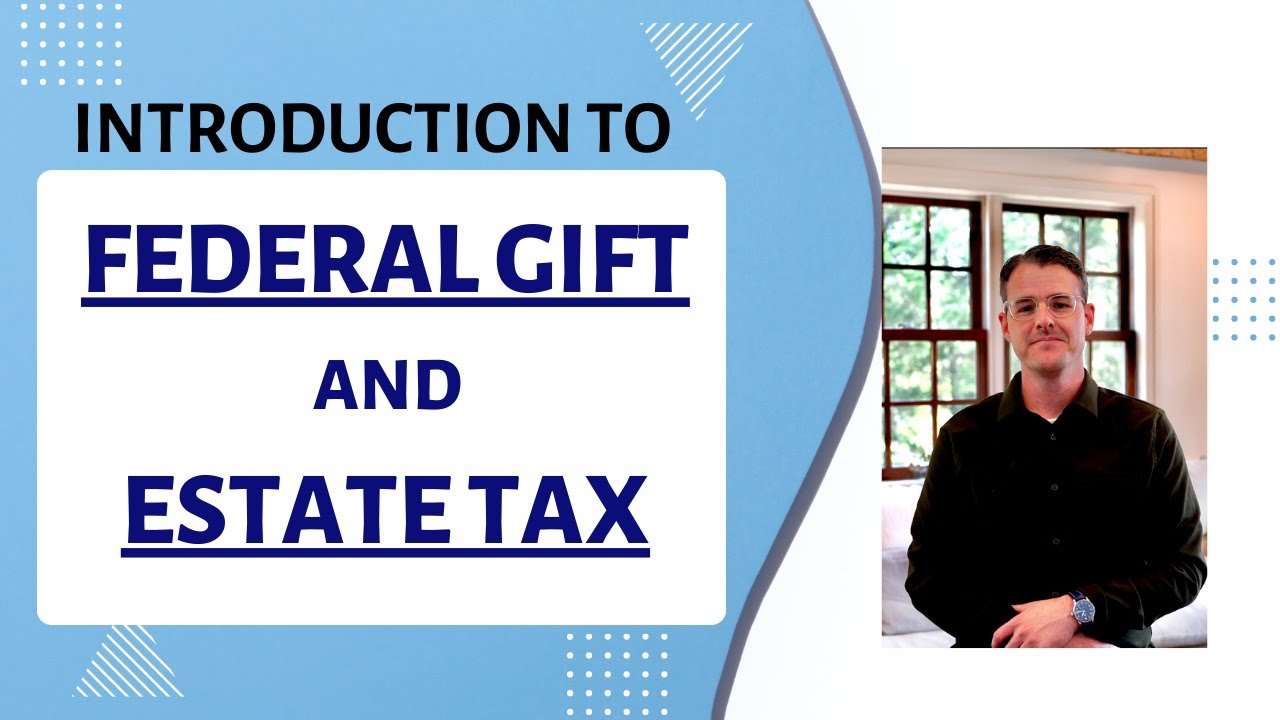














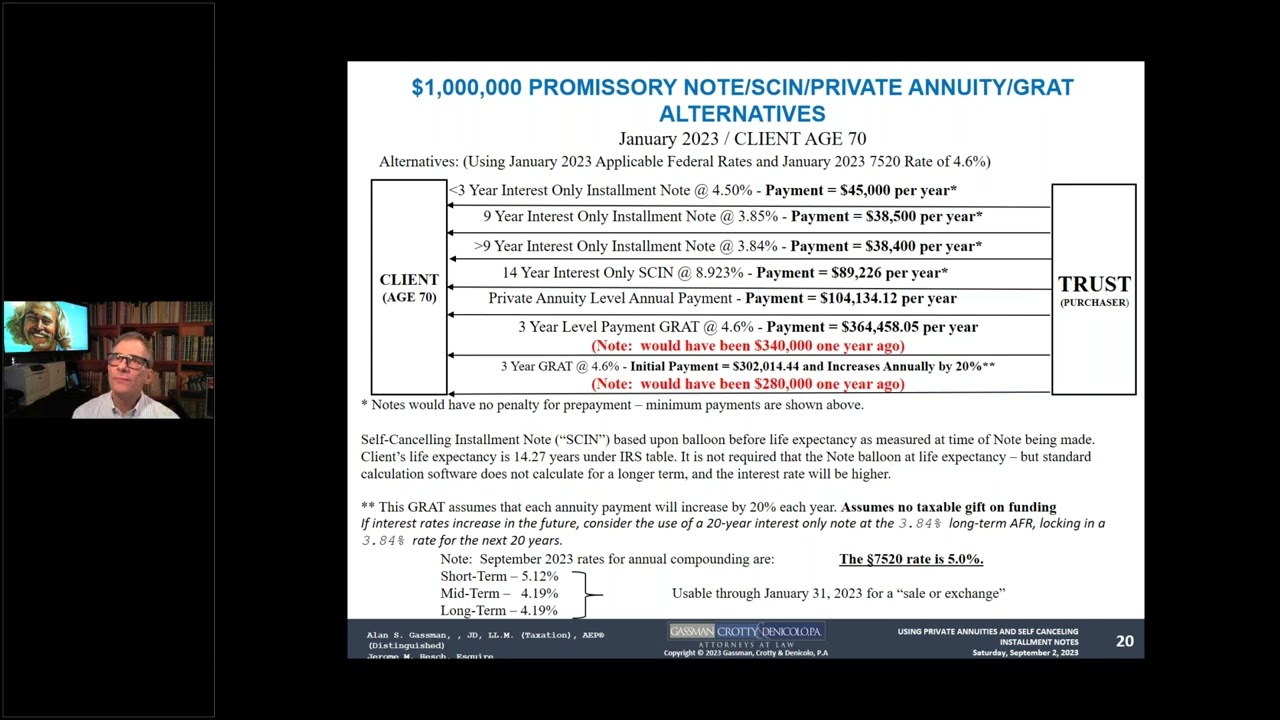


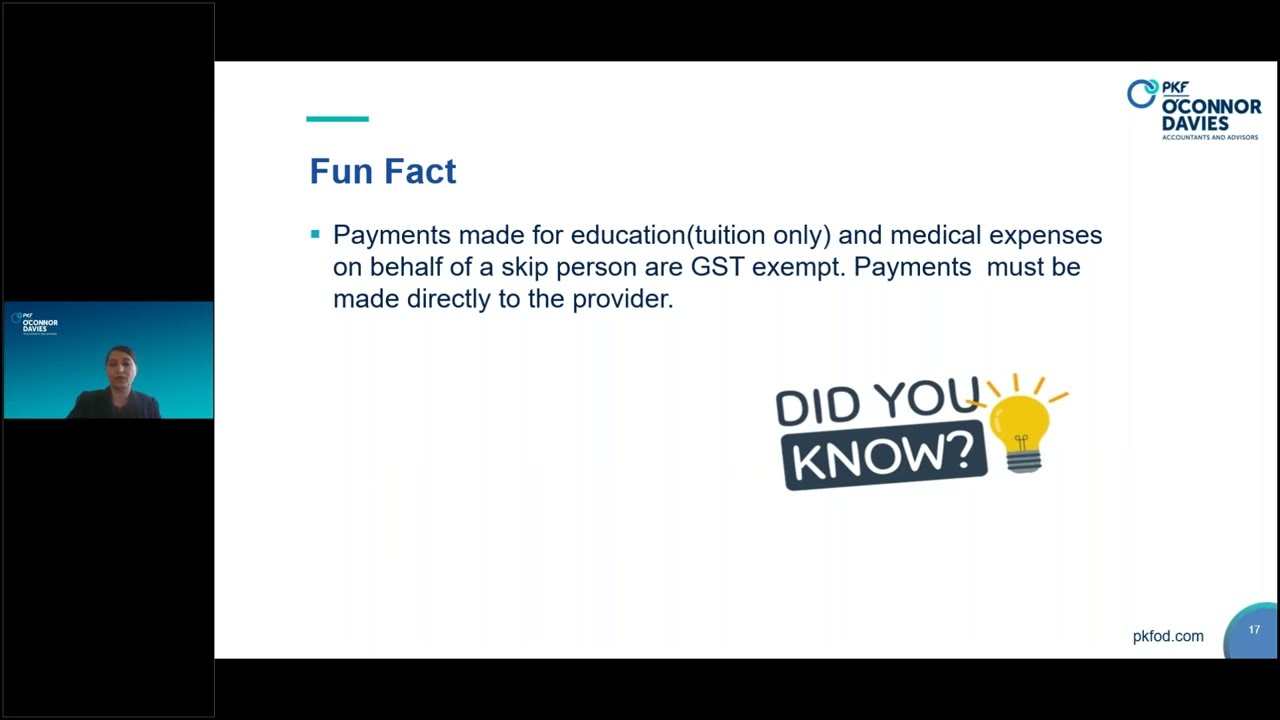


High net worth estate planning can be simplified into three key strategies: 'Squeeze' uses family limited partnerships with valuation discounts for lack of control and marketability to maximize the federal estate tax exemption (currently $13.6 million, scheduled to halve in 2026); 'Freeze' involves selling assets to an Intentionally Defective Grantor Trust (IDGT) to remove future appreciation from the estate while the client retains income tax benefits; and 'Please' addresses remaining estate tax liability through life insurance or charitable giving, including the 'washing machine' technique of a testamentary charitable lead annuity trust (TCLAT) that returns assets to beneficiaries tax-free after a 15-year charitable income period.
Estate Tax Elimination: Squeeze, Freeze & Please Strategies
Added:Fundamentals of the federal estate and gift tax system, including current lifetime exemption limits, tax brackets, and how they apply to high-net-worth individuals.
The concept of valuation discounts, specifically discounts for lack of marketability (DLOM) and discounts for lack of control (DLOC) in closely-held businesses.
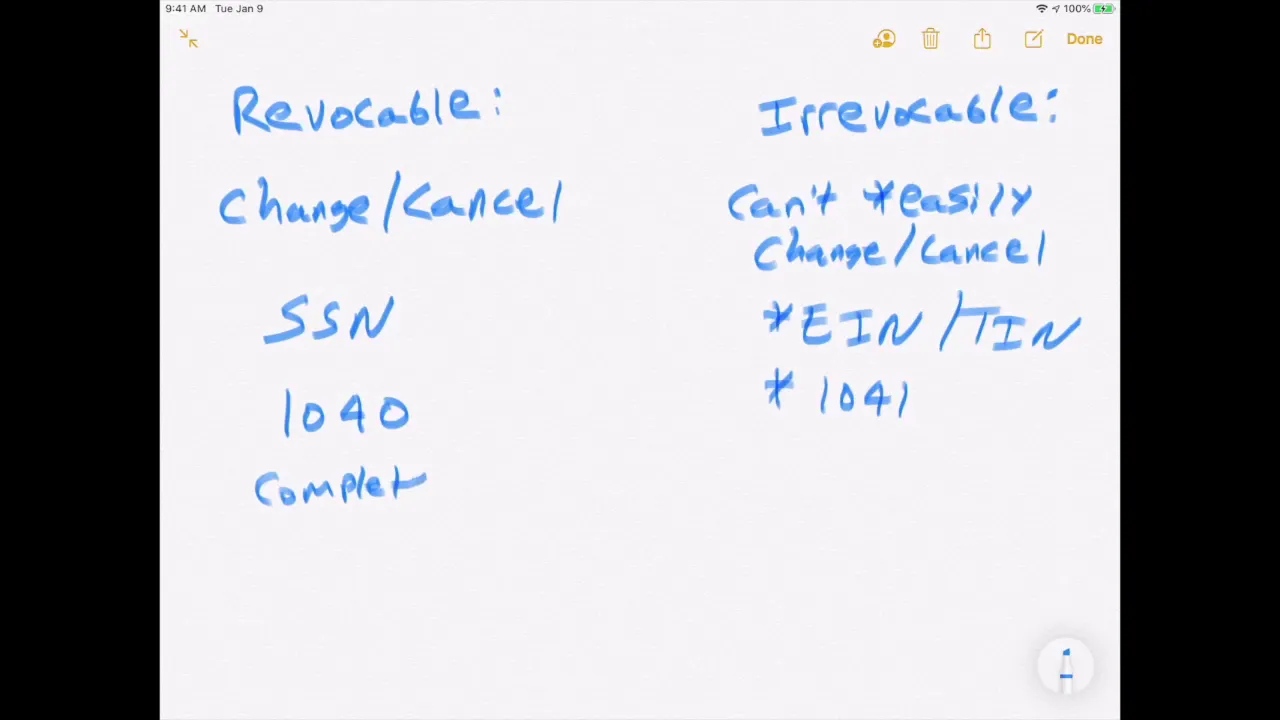
Basic distinction between revocable and irrevocable trusts, and how assets are treated for estate tax purposes within each.
The financial concept of asset appreciation and how future growth compounding inside an estate compounds tax liabilities.
Advanced mechanics of 'Freeze' techniques, such as Grantor Retained Annuity Trusts (GRATs) and sales to Intentionally Defective Grantor Trusts (IDGTs).
Structuring Family Limited Partnerships (FLPs) and Family LLCs to legally optimize the 'Squeeze' discount strategies.
Implementing philanthropic 'Please' strategies using Charitable Remainder Trusts (CRTs), Charitable Lead Trusts (CLTs), and Private Foundations.
Analyzing IRS audit risks, anti-abuse regulations, and key Tax Court precedents regarding aggressive estate valuation write-downs.
Integrating Generation-Skipping Transfer (GST) tax planning and dynasty trusts to preserve multi-generational family wealth.
2.6K views50likes36:04Original Release: 2024-08-12
welcome everybody I'm Matt Dana of Dana Whiting law and I have my partner Trevor Whiting good morning Trevor hey Matt good morning are you ready to talk a little tax law I love talking about tax law we know that uh it's going to be good subject if Trevor starts a drool all over the table and we might get him to say a code section or regulation here it might happen the drool the code sections it all might happen well today Trevor we're going to talk about a topic that I know that's uh high up there for both of us and uh I I'll give Tre Trevor credit he's been with me for over 15 years and we've developed three words that embodies all of high net worth estate planning right Trevor what are the magical three words we've got squeeze freeze and please wow so those and they all rhyme all we have to do is teach our client those three words and literally they will know all the tools that are available in high net worth Estate Planning and you listen to this video you'll know what squeeze freeze please means and and you'll remember it and you know our clients remember it and it's a easy Trevor I have to say that I think that's really the advantage of our Law Firm is because a lot of attorneys want to you know get puffy and talk about code section and regulations where we just want to talk about Concepts they understand make these simple words I think we have to lay some Foundation of why we feel that we're experts in this field uh I'll I'll I'll I'll talk about myself first and I'll let you talk about your credentials but first of all I've been doing this for over 4 40 years second of all I'm a CPA as well as an attorney and third of all I have a master's degree in NYU and llm in taxation not to mention I'm also a charter life underwriter in life insurance and a few other things but uh you know I've been studying tax law for 40 years now Trevor I'll let you brag on yourself for a minute yeah I've been uh you know since law school or before law school I did an MBA and then went to law school and then did the NYU them as well and uh you know studied Taxation and estate tax and gift tax and transfer tax all the taxes we like to talk about and then I've been doing this with you you know partnered for 15 years or so and uh with a high focus on on these Concepts and teaching them to clients teaching them to other professionals and you know the public and things like that so well and I also say Trevor you you have just a phenomenal ability to read a court case or a code section or regulation and it sticks and I think that's what's really impressive and you know when we're when we're really trying to dive into the detail you know some of these Concepts you I think our listeners need to understand tax law when you get up to this high level it's not necessary black and white you know we we have to take sometimes a regulation over here or a court case over here and merge them together to get a result that that that maybe hasn't been tested and as we go throughout this video I think we should try to talk about things that that have been tested that are black and white and then maybe talk about things where you're getting out out there you know I hate to use the way word Shades of Gray because it sounds you know uh you know devious but uh there are things out there that aren't code section and regulation or they just haven't been T like you say tested in the in the tax court or in you know some of the other courts where we know for sure that when you do it a certain way that it works or you do it a certain way it doesn't work yeah and and I think the way the the the code section works is we would actually have liability if we recommended a strategy where there wasn't a reasonable basis for it that's right and so I would say first of all we're never going to say anything that's illegal and we're never going to recommend anything that that doesn't have in our opinions a reasonable basis I did a seminar last week up in Sedona and one of the questions was was was uh basically I was talking about uh a state tax reduction by you know gifting assets and talking about the limits of what you could give away and what you have to report and one of the questions was was how's the IRS going to know basically asking me well you know if they're not going to know we're not we're not going to tell them but that's that's not our business is it Trevor that's not we we do the strategies that we believe have a reasonable basis and then you know most of those are reported to the IRS we report them on a gift tax return or some type of of return and and so the IRS is going to know about it and we're going to lay out what our reasonable basis is for taking that position okay thanks trevors we talked about the word squeeze and you know I'm I'm proud to say you and I we developed these three words right and and now I I I'm I'm writing articles on it and when you talk about a squeeze I'm going to lay out kind of a broad picture and then I'm going to have you kind of jump into a little bit more detail but when I think about a squeeze the way I would s summarize it is right now everybody's got a federal exemption that's just south of of 14 million Trevor what is it 13 13, 610,000 see I told you he' know that 13, 610,000 that's how much we can give away with with with with no with no tax consequence right it's a it's a free gift it's a free transfer but the squeeze basically is trying to squeeze 1819 million into a 13 million it's it's kind of like getting down into that girdle Trevor you wear a girdle anymore you that up not anymore yeah I've given that up all right so we try to squeeze that 1819 into that girdle and then and then we're going to we're going to make a gift somewhere so the elements I'm going to get into was when you think about this the question is first of all when you talk about gifting how much can I give well that's the exemption and then with with with discounts and valuation things we're going to get into a minute you're going to get 18 and 20 million into that exemption so how much can I gift who can I give it to and we're going to talk a lot about giving we don't like to give to people we like to give to trust for different reasons and and and you know those are the and then you know what kind of reporting requirements but let's talk about first of all what's particularly important right now about this you know $13 million exemption what's what's what's in the news and why is this a very important topic right now yeah the big issue is that this the the exemption is scheduled to be cut in half in 2026 so there's an index for inflation and so every year since 20111 that that exemption has crept up a little bit uh in 2016 president Trump passed his tax reform and he doubled the exemption and so that's why we have this historically High 13, 610,000 exemption and we'll get another little bump for inflation next year in 2025 but in 2026 it's scheduled to be cut in half yeah and so you know the IRS has said though that if you use your exemption right now while it's high then you'll be grandfathered in and you'll lock it in and and so we tell clients that you can use your exemption either at death or during life through these gifts and so that's where we talk to them about making a gift to a trust like you were talking about yeah and so when we talk about this you know using that exemption the way you use it is you have to make an irrevocable transfer somewhere and we'll get in a minute where we're going to make the transfer too what type of trust we're going to make the transfer to but what I what I want to get into is part of this squeeze and getting down into that girdle I I referred to valuation discounts and elaborate a little bit on what how do we get 1819 million and convince the IRS it's worth 13 million where where's the squeeze coming in the squeeze comes in you know our our of our best tools and Matt I know you wrote wrote an article you know years ago about the family limited partnership being the goat of estate planning right the greatest of all time and that the family limited partnership or a lot of times we use an LLC these days but um that that entity is is what gives us that squeeze and what I tell clients is all we're doing is we're trying to say on paper that you that the client has less than they actually have right we're not actually taking assets away from a client or anything like that and so we we structure the that partnership with voting and non- voting interests or a general and limited partners and when we make an irrevocable transfer of a limited partnership interest or a nonvoting interest then we go out we actually H hire an appraiser to tell us what types of discounts ought to be applied apped to the value of that non-voting interest and when we we get the report back from that appraiser they come back and they say well one there's a discount for lack of control because they don't have a vote and they can't direct when distributions are made or anything like that and two there's a discount for lack of marketability that partnership it's it's created within the family you know we don't have outside investors it's not listed on the stock market so there's not a a market where you can go out and just sell your interest in that partnership and so there's a lack of marketability and the appraiser will say well because you can't just go out on the street and sell it to somebody else very easily then there's going to be a discount if I was in Partnership and and Matt I was selling you an interest and the interest you were going to buy says that you can't turn around and sell it without consent of some other parties and you don't have control and things like like that you're not going to pay me full value for that you're going to say well Trevor I might pay you you know 50 cents on the dollar or something like that but uh with so those discounts are what gives us the squeeze and make that girdle and and you know we got a new name now girdle we'll start using the girdle but uh we can we can get that you know 182 million down into what looks like on paper something only worth 13 million that we can give away talking about this squeeze you know that in the '90s I had a case that that really showed me how valuable family limited partners were and back in the 90s it wasn't really a a wellth thought out idea that you could get these discounts but as it started to emerge that you could claim these discounts for lack of control and lack of marketability it was thought that you could only do that with things like real estate that really do look like they're un they're ill liquid and unmarketable and so in the '90s it was thought that you couldn't you couldn't put stock in a partnership and claim discounts on stock and I had a case where I had a client that had $1 million worth of Abbott laboratory stock and when the stock I remember it selling for $50 a share when we started working with this client it you know was worth 50 million by the time the client died the stock was selling at $90 a share and it was worth 90 million but we used we created the partnership and put the stock in there and when the the the the client you know did this squeeze technique like you're talking about and he created these trust for the kids and he transferred uh a non- voting limited partnership interest into these trusts uh the client died a few years after we' made these transfers and we made these gifts and we filed the gift tax return and we claimed a 33% discount on that and the IRS came in obviously audited because you know you're talking about a 33% % discount now in a partnership that's worth $100 million we're claiming a $30 million discount on on a 40% tax we're talking about saving that client $12 million and of course they came in with guns blazing and as as we went through the audit and fought the audit and dealt with the audit we ended up set settling that case for a 30% discount it was just a very thin shaving and this was back in the 90s and that's what prompted me to write the Artic the family limited partnership in my mind is the greatest estate planning tool of all time to be able to make you know 30% of value disappear just like that and so that's critical part of the squeeze is this girdle we're talking about and then just quickly Trevor who do we like to make that gift and that transfer to and then we'll finish up the squeeze yeah the the gifting we always like to gift into irrevocable trusts and there's a lot of different types of ir vcable trust that we'll use but usually it's some sort of trust that we create maybe for a spouse uh maybe for the children and Grand children uh but we we like to give it into an irrevocable trust because that type of trust gives benefits related to asset protection and exemption from estate taxes for future Generations it's a multi-generational trust it's multi-generational and so the assets are gifted in and then when the beneficiaries pass away it rolls on to the next generation and and so it's multigenerational a kind of a dynasty type trust that some clients may have heard of and uh and so we we always want to make a gift into those types of trust and uh so so that we get those benefits as that wealth is transferred down yeah and you know Trevor one of the other articles I'm proud of I I wrote an article called Simply Red Box green box and that article green box talks about the different types of trust that we can make this transfer into and so uh I think this is a great conversation and I appreciate your time today yeah thanks Matt we just got into a lengthy discussion of what a squeeze is and now we're going to talk about a freeze and Trevor I want to lay out this hypothetical of of this particular client this would be a husband and wife and let's just say they have a total net worth of a $100 million and that 100 million and I'm just do that make Matthew you're right Trevor but we do have a lot of clients that are worth 100 million plus but those particular clients they they'll usually have a it's interesting to me that sometimes these clients are real estate driven and you know 80% of the portfolio is real estate they might be stocks and bond driven 80% stocks and bonds but these Concepts we're talking about it doesn't really matter what the asset is we we work with value the asset may be a value of a business right so we talked about earlier in in our squeeze video where with this $100 million client he's going to be able to squeeze uh you know probably 40 million maybe 45 million into the exemptions between him and his wife we know the exemptions about 13.6 million a piece this is call it 27 million a husband and wife can give away in the squeeze we talked about with valuation discounts the amount we're giving away could be in that $40 million range right so we're off to a pretty good start $100 million client we did the we did The Squeeze technique we've got 40 million into a green box we're off to a good start now a lot of people would say well that's all you can do you know you used up your exemption there's no more gifting you know go home and just get ready to pay the IRS a big check but we don't say that do we Trevor no we don't like writing those checks no we're we developed the concept we call it a freeze and there again this is a term that we develop Ved and it's a term that embodies a couple of complicated strategies that we're going to talk about here we're going to talk about these two main strategies we're going to talk about you know selling assets to a green box with an intentionally defective green box so this strategy you can Google it it's called an installment cell to an intentionally defective grantor trust Trevor what's the acronym for that we call it an idit an igit ID GT yeah lot written out there on this I mean we didn't make up the idit but we understand it right right and then kind of the the the the twin sister to the idit is a grat the granor retained annuity trust the grat and we're not going to talk a lot about the grat here because we think the 's a lot better so we're going to spend our time talking about an idit but I'm going to Tee It Up For You Trevor this way so I IRS after you have used up all your exemptions it is true you can't gift anymore more without paying a gift tax that is true but what the IRS is very very lenient on is I can give away future appreciation and value tax-free now let's let that soak away I'm telling you you can give away future appreciation and value tax-free so how long do you think it's going to take this $100 million client Trevor to be a $200 million client how long do you think that's going to take Yeah in our experience it's you know s to 10 years it's they're going to double it's quick is quick Yeah the more wealth somebody has it doubles and triples much quicker and I think everybody's you know familiar with the rule of 72 but with the rule of 72 when you're dealing with these bigger numbers you know an average guy if he gets an an annual rate of return of six to 7% they're thrilled with these guys with their kind of wealth they don't seem happy unless they're getting into the 20 to 25% rate of return so their wealth does double and triple very quickly and we're not going to just sit back and watch them go from 100 million to 200 million and watch their problem get worse we're going to implement the freeze and the freeze is going to allow that growth from 100 to 200 that next 100 million it's going to allow it to be in a green box taxfree is that what we're saying that's what we're saying all right tell me how to do it so you know that that's exactly why we call it the freeze we're going to freeze the value that's counted in the client's estate right and so what we're going to do is we're going to use our friend the family limited partnership and we're going to have a limited partner interest or a non-voting interest and then we're going to have our clients sell a a limited partner interest to one of these green boxes he not gifting it not gifting we're not using exemption not reporting we we already used the gift tax exemption and so so he can sell assets to a green box but he can sell it and that's where you know we pair the greatest tool that limited partnership of all time with the greatest Revenue ruling of all time for a state tax purposes going to get to the rat I might not mention the rat go ahead I'm going let you give give me a quote section Revenue we're going to throw out Revenue ruling 885-3854 says that a client can sell a piece of their you know some of their assets so this limited partnership interest to an irrevocable defective grantor trust that idit without triggering any capital gains tax okay let me get this straight so you're creating a green box for estate tax purposes is taking assets out of the estate and you can't you can't give to that trust but you can sell Assets Now I'm a CPA Trevor you're not going to trick me here not no tricks when I sell assets I'm triggering capital capital gains why not here that that's the default rule when you sell assets you trigger capital gains but in Revenue ruling 8513 the IRS said the grant the the that client that's making that sale is treated as the owner of the assets that are inside that that green box inside that grantor trust and so it's like he's selling those assets to himself and the IRA said well if you're selling assets to yourself that's not a real transaction do you have a trust that's recognized for estate purposes but doesn't exist for income tax purposes that's why we call it defective and and you know clients sometimes like raise their eyebrows when they hear that word and we say don't worry the trust is very effective for this estate tax freeze that we're wanting to accomplish but it is defective for income tax purposes meaning it's ignored and so it doesn't give any income tax benefit there's no income tax downside including when you sell assets to that trust there's 's no trigger of capital gains what a country what a country okay now where where does the freeze come back to play then so what does he have in his estate when he dies so because it's a sale that and that trust it might not have $100,000 to pay right now to the to the client and so what our what happens is our client takes back a promisory note yeah and so it's an IOU where it says that that that defective grantor trust owes 100 $ million to the client yeah this in our example you know we we've given away 40 million on the squeeze let's talk about doing another 40 million on the freeze so so we're selling 40 million the IOU says the trust owes $40 million back to the client and and that we're going to we amortise it or maybe it's interest only but we make it a a a a regular promisory note and that promisory note is going to start shrinking in value and instead of appreciating and that's in the red box and that's in the r box that's the freeze we've got the appreciating growing Assets in the irrevocable trust the next 40 million and they're going to grow in value double from 40 to 80 million and 80 to 100 million someday but what's happening in the red box is that promisory note is being paid down and it's shrinking in value over time yeah it's a it's a great technique and and then back to what you're saying this is the the installment sell to an intentionally defective gror trust the idit right phenomenal strategy and and and and Trevor what would you say is uh the the the risk level in this strategy you know what it it used to be higher but over the years these types of transactions have been challenged in tax court and so these are these are strategies where we can go to clients and say you know we're we're fairly confident that if we structure it properly and when we analyze those cases we see what works and what doesn't work and so we Implement what works with our clients then we can we can tell a client this is a good sound strategy and as we implement it properly then we've got a lot of confidence that it's going to work right yeah and you said you hit the nail on the head the payment back to the client we need to have we need to match that with the income the assets are going to generate and then we can have that flow into the green box then out to the client and generally speaking you know uh whether we make that a 20year note or a 15-year note what interest rate we put it and what interest rate we put is really immaterial because we said for income tax purposes it doesn't exist right okay Trevor on this on this freeze technique so the example we're using in the squeeze we gave $40 million to a green box and and we we got that down into the exemptions now we're talking about in the freeze we sold $40 million to a green box you took back a promisory note for $40 million so the next day after after we've done this you could argue we haven't really done anything to shrink the estate further although we would argue yes we have because we're using discounts and valuations and so we're we're we're getting the squeeze we're using a squeeze on the freeze as well right that's right we're selling $40 million to this trust that's what we report to the IRS but really on paper we might be selling 50 or 60 million right that's right and now I've got $80 million in this green box and those 80 million that stock and bonds and real estate and it's generating Revenue who pays the income tax on that green box yeah so our client pays that that tax so the person who sold the assets to the trust or who gifted the assets to the trust P continues to pay the income tax on it which is a good thing right because our we're we're doing these transactions because the client has too much wealth they're above these exemption amounts and so as we allow the assets in that trust to grow even income taxfree because the trust doesn't have to pay that tax our client pays that tax and as they pay that tax their Red Box shrinks as they write checks to the IRS and it doesn't change the amount of tax that's going to be paid and so it's it it's a good result from an in from an estate tax standpoint to have the client got the money to pay the tax because he's getting the payment on the promisory note and the payments on the promisory Note replicates the income he's lost and I'm going to I'm going to put that in as the last advantage of a freeze technique because in you you know in most of these trusts that we set up one of the Forbidden fruits is you can't create a trust transfer something to that trust call it a gift but still retain an economic benefit you can't retain the income and the use and enjoyment well here we really can we create the green box we sold assets to it we didn't retain an inter we we we sold assets with got the promisory Note coming back right so I think it's the best of all worlds it is thanks Trevor I think I understand it now wipe the dro off the table all right have a good day all right welcome everybody uh I'm Matt Dana a managing partner of Dana Whiting law and I'm here with my partner Trevor Whiting Trevor welcome thanks Matt so we've already done two segments we talked about the squeeze that was exciting wasn't it we loved it got got the freeze now we love that one too now what's this last one we're going to do now we're going to talk about please squeeze freeze and please all right so you know Trevor I'm I'm not exaggerating but by the time you do by the time you do those first two techniques there's only a few things that are left over I'm just telling you we've been doing this for a lot of years th those the squeeze and the freeze are two powerful techniques and for 99.99% of America it's going to solve all their problems right but that little tiny piece that $100 million client plus he he may still have something that's red that's going to cause an estate tax and we were using the example earlier of a $100 million client with the squeeze we got $40 million into a green box with the freeze we sold $40 million to a green box and let's just say that client lived for another you know 10 years that green box that we gave 40 and we sold 40 that green box that had 80 in it now has 200 million in it we got that appreciation out that's green what he has left over that's red is maybe 20 or 30 million and so now he's going to die and he's got this last 20 or 30 million piece that's going to cause a 40% tax and this just for discussion purposes say he's got I'm going to say 40 million that's red 40% of 40 million he's going to pay 16 million in tax right so the first please is just please the IRS I mean we fought a good fight we've got 200 million that's green right we did pretty good did pretty good paying 16 million not a bad gig right right we wouldn't do that right we don't want to pay them anything right we're tax attorneys we love our country but we also love the tax rules and we know the tax rules and we don't want to pay if we don't have to pay so the next please would be the guy that is selling a life insurance policy and I'm not knocking those guys I was one of those guys right I'm a clu I used to sell life insurance for Northwestern Mutual I understand life insurance and I do understand there certain clients it makes a lot of sense if their estate tax liability is going to be $16 million all right let's go out and buy a $16 million life insurance policy right let's put that in the green box we use that to pay the tax right and that's that is a good technique especially I would say Trevor for an unsophisticated client that doesn't want complication and maybe a a younger client that's more insurable where you know the the insurance is more affordable too you know I mean there's different factors that'll go into it and and that might be what we decide to do is hey let's let's let's call up the insurance guy and let's let's write a policy yeah there's you know with with premium financing now and you know all these techniques yeah I I don't want to say that's not a polic that's not something the client should take a look at but if they want to go to a situation where you know yeah I really don't want to pay that much in premium uh what else you've got what's what's the last please out there Trevor yeah so the the last one is we can please charity yeah and when we get when we talking to clients at this level you know they frequently already want to help charity right they they want to give to charity they're they've got 200 million in this example set aside for the kids and the grandkids and they think man that's that's a pretty good amount there you know how much do the kids need kids are gonna be fine the kids are going to be fine maybe we can give some more to charity and so we talk to clients about that and we tell them there's two primary options the first one is they can just say whatever piece that is and we can word the document properly where we just say whatever piece is causing us this issue on the estate tax that that can go straight to maybe it's a private foundation for that client that client CS their own Family Foundation dump this $30 million in our example into that Foundation get a terrible deduction and be done with it that's right you know or or to a public charity maybe they have their favorite charity out there but the the private Foundation The Family Foundation allows the kids to be involved in that philanthropy and in those decisions year to year going forward and so you know that's that's kind of the first option we just give it straight out to the to th those Charities so the second option is to do to send that charitable component to a washing machine or what we call a te clat a testamentary charitable lead annuity trust maybe we're washing the girdle maybe maybe it's the girdle that's being washed but with the the washing machine we came up with that because we've got this this piece of the estate that's that's dirty it's causing us this headache because it's it's subject to aate tax and so we run it through the cycle in this washing machine and the washing machine clean cleans of it cleans it of any estate tax liability and and what happens is we we take that amount we put it into this charitable lead trust and the cycle is usually about 15 years that we set it up for and over that 15 years that that washing machine is sending payments out to charity and again it can be to that private Foundation or it can be be out to public Charities that we like but it's sending out uh amounts to charity each year but what's left over at the end of the year after those assets inside of it have been invested and are growing in value and things like that what's left over comes back to the kids free of any estate tax and so they they receive their inheritance when Mom and Dad pass away and they've got that 200 million but then 15 years later if there's leftovers in this washing machine then that's going to come back as a second inheritance back to the kids Yeah so basically you're saying the kids get two inheritances right when when when mom and dad die we've got the 250 million in the green box already right we got the 30 million that's tainted with the state tax throw that into the washing machine it washes out over a 15year period and 15 years later they get the 30 million back right yeah and what's the what we call that the washing machine there again that's our label to make it easy for clients to understand what's the technical terms if somebody wants to Google this the technical term is testamentary charitable lead annuity trust all right wipe the drill off yeah I got to get that off but the uh or the acronym we use is tlat yeah and so you could you could Google that you can see it uh one of the famous uses of it is uh Jaclyn Onasis had that in her estate plan so sometimes you'll hear it called The Jackie O trust yeah U but it's a it's a charitable trust that's set up after Mom and Dad have passed away that receives that $30 million piece it's subject to estate tax washes it for that 15-year cycle and then gives it back to the kids phenomenal phenomenal strategy and and Trevor you know that some of our biggest clients have come just from that strategy one of one of the biggest clients we have in our firm even today is a client where I I emailed him a flowchart of how the washing machine worked and I just said I I called it the zeroed out estate plan and I said why don't we get together for lunch and talk about this and it was it was a breath of fresh air and I think our our wealthy clients really like that and the the thing is why why isn't Trevor you know I always get from clients well why isn't everybody talking about this I mean speak to that point yeah you know these are these are complicated topics you know which is why we use terminology like washing machine and squeeze freeze and please to try to simplify it for our clients and so not not everybody's willing to stay up on top of you know the how these work and the rules associated with them and things like that you're saying that the people that practice in this High netw worth are is a small circle it's a small circle and you know with our uh education and our focus on this practice area for years you know we we we're very comfortable in that area we love practicing in that area and so we enjoy talking to clients about it well the potential client pool this you know 99.999% of America doesn't won't ever need a washing machine so right I think the fact that the people that practice in there very narrow the the the client that's interested in this is very narrow and I would also say that even you know even people you know you know you know CPAs I mean they're really good at the income tax side and it's just really good to be good at the in income tax and the estate tax side but everything we're talking about here people can Google if these are techniques uh I I think that uh who's the found ER of Walmart was it Sam Walton Sam Walton didn't he use the same technique and I think the IRS actually challenged it in that particular estate and the IRS lost right right yeah so there again on a on on a risk level what do you say the risk of doing a t clad is not not very high it's it's a mainstream uh you know IRS code sanctioned strategy and and we do it when you do it properly it's it's an excellent tool well thanks for your time today you're got to go get me a tea class yeah go grab a washing machine thanks
Up Next

22:21
The Rise and Fall of America's Smokestacks: Urban Legacy
@ITSHISTORY
136.2K views•2023-08-19

12:54
Triumph of Orthodoxy Icon: Byzantine Art & History Explained
@BenCallan
2.1K views•2024-08-06

9:49
FastAPI vs Flask vs Django: Choosing the Right Python Web Framework
@TechWithTim
302.5K views•2024-05-26

1:42
Game of Thrones Opening Credits: A Cinematic Analysis
@gameofthrones
46.3M views•2011-04-18
Related Study Plans & Knowledge Roadmaps
Structured learning paths in General & Interdisciplinary Studies
general-studies
Elevator Engineering: History, Physics & Cities
01From Hoists to Safety Brakes: The Dawn of Vertical Lift
02Hydraulic vs. Traction: The Engineering Physics of Elevators
03Modern Speed, Safety, and Algorithms
+ 2 more learning modules
12h5 modules
Explore Roadmap
general-studies
Rubber: Material Science, History & Geopolitics
01Origins of Natural Rubber & Mesoamerican History
02The Chemistry of Natural Rubber & Vulcanization
03The Geopolitics of the Rubber Boom & Colonization
+ 2 more learning modules
12h5 modules
Explore Roadmap
general-studies
Containerization: Evolution, Logistics & Trade
01Ancient Trade & Bulk Cargo: Amphorae to Barrels
02The Industrial Revolution & Cardboard Packaging
03The Containerization Revolution: Malcom McLean
+ 2 more learning modules
12h5 modules
Explore Roadmap
general-studies
Textile Tech: Evolution, Labor & Global Impact
01Pre-Industrial Textiles: Handloom & Cottage Industry
02Mechanization: The Spinning Jenny to the Power Loom
03The Factory System & Global Labor Transformation
+ 2 more learning modules
10h5 modules
Explore Roadmap