












![[공중보건] 감염병의 진단 기준- 다제내성균(문제은행-497P-234번~236번/495P-221번)](https://i.ytimg.com/vi/CSSWMpuylm8/maxresdefault.jpg)
The emergence of antibiotic-resistant superbugs, driven by overuse of antibiotics and economic disincentives in pharmaceutical research, poses an existential threat to modern medicine, as evidenced by cases like Addie Rasecich (who required a lung transplant after her infection became untreatable) and David REI (who contracted NDM-1 during his travels), highlighting how the post-antibiotic era is arriving faster than new treatments can be developed.
When Antibiotics Fail: Investigating Superbugs and Drug Resistance | FRONTLINE
Added:Fundamental differences between bacterial and viral pathogens, specifically why antibiotics are ineffective against viral infections.
The principles of natural selection and evolution, particularly how genetic mutations and environmental pressures drive rapid adaptation in microbial populations.
The mechanisms of horizontal gene transfer (conjugation, transformation, and transduction) by which bacteria share resistance genes.
Basic mechanisms of antibiotic action, such as the inhibition of bacterial cell wall synthesis, protein synthesis, or nucleic acid replication.
Alternative antimicrobial therapies currently under research, such as bacteriophage (phage) therapy, CRISPR-based antimicrobials, and monoclonal antibodies.
The principles of clinical 'antibiotic stewardship' and public health policy interventions aimed at regulating antibiotic use in both healthcare and agriculture.
The economic and regulatory challenges in the pharmaceutical industry that disincentivize the research and development of new classes of antibiotics.
Global epidemiological surveillance strategies and hospital-acquired infection (HAI) prevention protocols designed to contain multidrug-resistant organisms (MDROs).
3.6M views40.9Klikes53:16Original Release: 2021-12-22
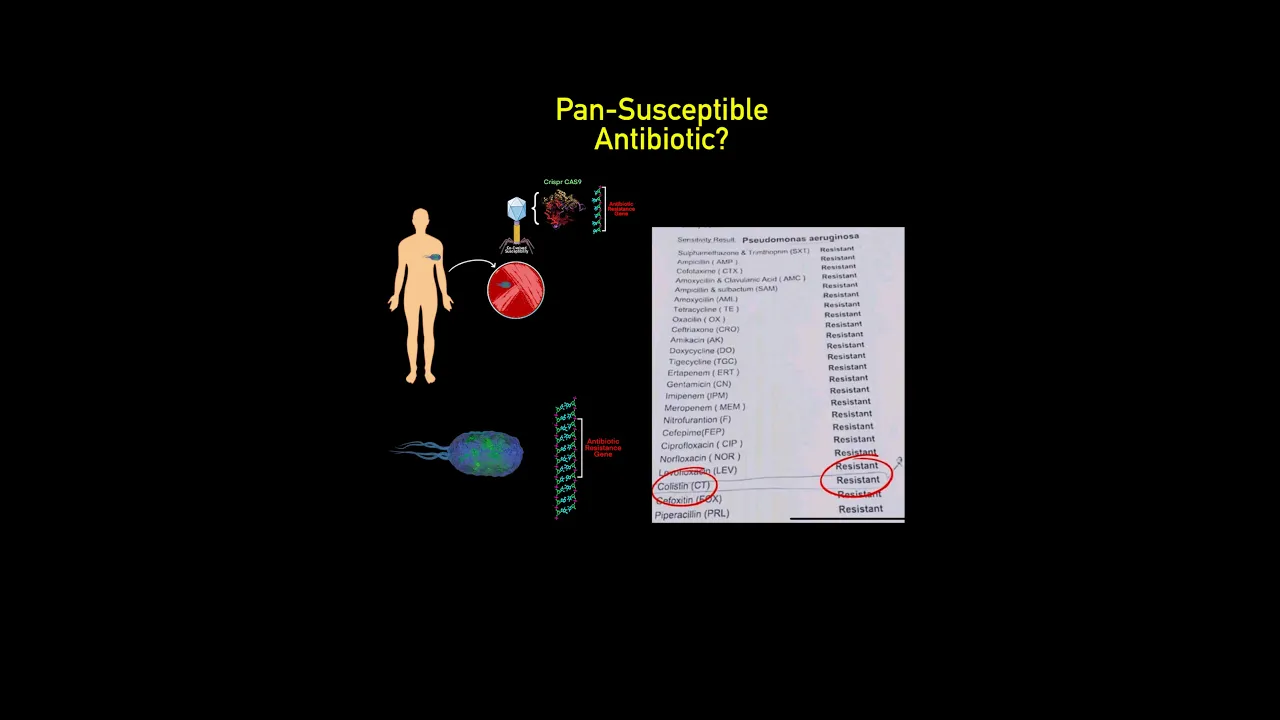
[Music] we are seeing now the emergence globally of some forms of bacteria that are effectively untreatable each year at least 2 million people are infected with drug resistant super bugs they had asked me to sign the papers to let her go and I did and at least 23,000 die from them he had some bugs that they had never seen before we immediately went on high alert the equivalent of Defcon no matter what we did the bacteria was still spreading Frontline continues its reporting on how we got here then overusing these antibiotics we have set ourselves up for the scenario that we find ourselves in now we're running out of antibiotics the newest threats where did it come from we don't know exactly where this bacteria came from the economic realities there is an increasing recognition that antibiotics are not a good thing to run off a pure capitalistic market and what happens now a lot of what we're doing requires resources if there is less money there are tough choices that have to be made it could happen to your next door neighbor could happen to your child could happen to anybody those bacteria are out there hunting the nightmare [Music] bacteria this is the story of three seemingly disconnected events beginning at the same time what they each have in common is a type of infection that is becoming impossible to treat a type of infection that has triggered deadly outbreaks even at one of our most prestigious hospitals it is a crisis that is spreading alarmingly fast threatening everyone even the healthy [Music] our first story starts in Tucson Arizona in May 2011 when I think about that time I think about spring and just how you know how busy it was and how beautiful she was she was 11 and 1/2 years old and just physically perfect beautiful from head to toe Slim you know white blonde hair from being out in the sun a little bit of freckles across her nose bright blue eyes paying attention to what her clothes looked like and her hair never stopped talking talked a mile a minute that was Addie at that just you know in the month before she got [Music] sick journalist David Hoffman started reporting on the threat of super bugs for Frontline more than 4 years ago there's a warning from the CDC new and extremely dangerous covering what government officials have called a nightmare it's a deadly nightmare bacteria but the CDC has called it a nightmare a kind of dangerous bacteria that is increasingly resistant to the strongest antibiotics morning hi I'm DAV that's what brought us to Tucson Arizona in 2013 to find out what happened to Addie rasich after she complained to her mother about a pain in her hip I thought well you know she's just finishing up softball she had been to the track meet you know it all kind of well it could have been an injury I gave her some ibuprofen as the night wore on her pain got worse she didn't sleep much that night woke me up a couple of times asking if she could take a hot bath or have another ibuprofen the next day Tanya rasich a nurse for 16 years took Addie to a local hospital where they said she had symptoms of a virus but over the next few days the pain spread and the fever got worse I was afraid at that point I remember being very afraid and so I packed a bag and we went to another hospital that had um specialized in children's care I remember thinking she looks bad this is bad something's really really wrong they put her on antibiotics they were her blood pressure was dropping they you know we're making space in the ICU for her the next morning cheating at oxygen via mask they looked at part of her lungs and diagnosed her with pneumonia I remember sitting there watching the sun come up and thinking how did she get so sick how did this happen so fast I met Addie in a hospital bed in the Intensive Care Unit she was lying there breathing quickly she was scared um she had uh little infected boils all over her body what really looked most likely when I saw her was a staff bacteria causing septic shock and Addie fit a pattern that I recognized with Community Associated Mera when you say community I mean this is what you mean that a kid picks it up in a playground with a scrape to the knee right correct a spread of Mera a staff bacteria that causes infections resistant to many antibiotics has long been a big problem inside hospitals but over the last two decades it's also been found outside in the community in Addie's case she was a skin picker she she as do many kids picked at her little scabs um and that was likely what introduced the staff infection but the staff was just a start of Addie's troubles she already had evidence of an early pneumonia and it looked like she was about to get a lot sicker I asked him what were the odds of her making it getting well what did he say he said 30% but he had to think about it for a minute and I knew he was lying to me I Knew by the time your blood has bacteria in it you're in real trouble the staff infection had so damaged her lungs the doctors had no choice to save her life they put her on a long bypass machine called emmo I remember saying emmo with a squeaky voice like no really you're not really talking about emmo this was total life support it's got huge tubes that are put into an artery in a vein and the patient's blood comes out of their body runs through the machine and the Machine does what your lung does the tubes presented a whole new set of dangers those tubes can Harbor bacteria and one of the dilemmas of modern medicine good J the interventions that can save you can also put you at serious risk you did great any patient we put on ECMO has a much higher risk of having additional infections that's just the nature of the Beast is that what happened here correct and she got a particularly nasty one what was it called stenotrophomonas stenotrophomonas is an entirely different kind of bacteria from staff found in hospitals it can live inside breathing tubes and it's extremely difficult to treat the problem with stonis is even at the outset it's already a very resistant bacteria there are only four or maybe five antibiotics normally that are able to treat that particular bacteria Addie was confronting the frightening new face of antibiotic resistance a group of bacteria called called gram negatives so can you explain to me why these gram negatives are so stubbornly nasty gr negative bacteria um it's a medical term and it really references the armor that surrounds the gr negative bacteria that armor makes it very difficult for normal antibiotics to get into the bacteria and to kill it so catonis is incredibly difficult to treat uh because it has that that serious body armor surrounding it are you guys going to come out and go that way okay the ability of gram negatives to aggressively fight off antibiotics was now playing out in Addie hold theone she was first put on one antibiotic that's good for stenotrophomonas and it worked for a while and then guess what the antibiotic doesn't work anymore let's give her a different one well and then it would you know work a couple weeks three weeks and then the stenram monus would sort of like Bloom back up rear its ugly head so to speak and you're doing great you are finally one day they said something I never thought I would hear the stenotrophomonas is pan resistant pan meaning resistant to everything like a pan Pama Addie and her mother had entered the postantibiotic era I had to go to her and say I I don't have I don't have options based in medical science I've run out of options I don't see a way out of this I remember a long weekend went by and they had asked me to sign the papers to let her go and I did there was only one hope left of saving Addie's life to surgically remove the infection I remember asking the doctors then about long transplant they said no that it couldn't be done that it would be too dangerous the problem was that she was too sick to be transplanted that sounds a bit strange because you think of a transplant as the final life-saving thing you've got um but because of that resistant stenotrophomonas the expected survival of transplanting her uh was not good in fact he might say close to zero you're not going to blow bubbles doctors faced a question of medical ethics whether to risk such a valuable Resource as a young set of lungs when add's chances of survival were so low what tipped the balance I think it was Addie's mom Tanya who was such a strong Advocate um and didn't give upy birthday to you and it was also the fact that this was not an unresponsive body lying in the table this was a young girl who was communicating with us and had temper tantrums and Sparks of Life which we could all see on the ECMO apparatus I mean the how how can you say no to this you know living alive human being who's communicating with you I need a high five that's awesome but Addie would still have to wait in the Intensive Care Unit hoping to get a new set of lungs as Addie was fighting for her life a 19-year-old American named David REI was about to face another threat on the streets of India so after 30 hours on a train we finally ended up in kataa here gram negatives were spreading in frightening ways and coming from unexpected places I wanted to uh experience another culture and put myself in an environment where I was serving where I was helping people I think uh India ended up changing me a lot more than than I could have ever changed India he had come here with a mission group to work in [Music] orphanages one morning the group headed off to work at one of those orphanages a Mother Teresa home it was in the slums of the slums really where this orphanage was so we had to walk through all of these these narrow streets that I'd never walked through before and we basically uh took a shortcut through the train station so you crossed over the tracks and then we were walking adjacent to the train tracks and as we were going under an overpass I was in the very back walking and uh all of the sudden you know out of nowhere a train went by and I noticed I just remember thinking in my head that it went by wow that went by really quickly the momentum the speed hooked my sleeve and ran me over and dragged me underneath the Train the wheel ran over my leg and I started losing a ton of blood I just start bleeding everywhere REI was pulled from under the train lucky to be alive he was rushed to a local hospital a doctor came in he reached up on on the top shelf and he pulls out this this leather bundle and then you know he takes out a big knife you know big machete type looking so knife and uh and they he just starts telling all you know the nurses to hold me down to hold me Steady and then he just started cutting my leg off just hacking it off we were standing outside and we could hear him screaming the whole time and then I passed out within 24 hours Richi was moved to another hospital and his condition deteriorated quickly hey everybody I talked to the doctors they said I don't have that much longer but I'll put in a good word for you Richie was barely hanging on miss you all and by the time his family reached India there were new complications they were just telling us we need to take them back in for another surgery another surgery and we didn't understand why um he he almost had a surgery every day and they they said um you know we've got to clean up the infection and and so you know I just thought it's just an infection you know um I I really didn't realize what they meant by infection what Richi and his family didn't know was that they were on the front lines of a superbug crisis that was just beginning to unfold the study which found the NDM one super buug in delhi's water samples is making the Indian Health establishment see red researchers had discovered a new danger bacteria carrying the gene that produces this ndm-1 enzyme are resistant to very powerful antibiotics it absolutely was a bombshell it was it was unexpected the Lancet infectious diseases Journal found that n M1 enzyme in 11 different types of bacteria ndm-1 isn't bacteria it's actually a resistance Gene that can turn bacteria into Super bugs ndm-1 is resistant to almost all antibiotics even more frightening it is promiscuous the resistance Gene can jump from bacteria to bacteria making treatable infections suddenly untreatable but there was more ndm-1 wasn't just in hospitals to everyone's surprise it was found out in the environment too first from a scientific standpoint we didn't realize that this could be done quite so easily it meant that in places where water and sanitation was poured where there was going to be lots of bacteria sitting next to each other that you could have very rapid spread of resistance information across unrelated bacteria uh just out there in the environment which is a hugely greater risk than if it were only to happen within the bodies of patients who had um these infections so you're saying that the bacteria were uh swapping this information just out there on the street without being in a person that's correct so they could transfer resistance genes uh even when they were in the same puddle of water with the spread of ndm-1 a much wider popul po ation is put at risk and what has Health officials around the world especially worried is that ndm-1 is hearty and it [Applause] travels after 2 weeks in an Indian Hospital David Richi was flown home to Seattle and taken to the trauma unit at Harborview Medical Center I first heard about David's C in July of 2011 I was sitting in my office uh doing some work and one of my colleagues an orthopedic surgeon Dr Doug Smith gave me a call and ask me if I had known about a patient up on one of our Q care floors with a number of drug resistant pathogens I brought up as medical record and saw a huge amount of drug resistance drug resistance we don't typically see all these RS mean that the bacteria is resistant to that antibiotic knowing that David had come from India I was immediately concerned even before seeing David about bacteria in the wound containing this new type of drug resistance lab results confirmed Lynch's worst fears Richi had brought ndm-1 into the United States it was one of the first cases to ever be identified here and Lynch had little to go on there's not a lot of clinical experience with treating these bacteria anywhere in the literature there's no books there's no things on it so we have had to figure out what to do for David right then and there I get this knock on my on my door and they open up the door and there's these doctors they tell me we need to isolate you we need to put you on your own and quarantine you making sense to you REI was in the throws of the NDM one nightmare the gene was spreading resistance to other infections in his leg they showed us um the list of them there were about five bu and they said all these infections are resistant to antibiotics and and when they said that that's what worried me because I'm I'm like how's he going to get rid of them Lynch tried several powerful antibiotics but they didn't work have you done any the and rampin combinations he had only one option left a 1940s antibiotic called kistin we went away from it because of his toxicity and the ability to use antibiotics the problem now is we don't have a lot of new options and we're going back to some of our older antibiotics the hardest part was watching to see what the antibiotics did to him started to eat away at my organs on the inside you know I I could just feel it just just this poison rushing through my blood the treatment was too toxic we had to stop the only drug we had left to treat the grab negative rods they were uh in his wounds you're telling me he had these bugs and you had nothing left to treat him with at this point we had nothing left to treat him with I just couldn't believe that there wasn't an antibiotic that would fix it to tell you the truth they would have to cut out more of the infection by cutting off more of Richie's leg but it would be months before they knew whether all of the ndm-1 was gone [Music] a decade ago hospitals in the New York City area became the epicenter of another highly resistant and deadly type of gram negative bacteria this superbug didn't come from overseas this one was homegrown it lives in the digestive system and like ndm-1 it's a gene that can spread its resistance to other bacteria it's called KPC no one knows exactly how many patients in the New York City area have been infected with KPC or how many have died from it nationally most hospitals aren't required to report outbreaks to the government and most won't talk publicly about them but as part of frontline's Investigation one of the nation's most prestigious hospitals the clinical Center at the National Institutes of Health the NIH agreed to recount how it dealt with a major KPC outbreak it began in the summer of 2011 when a woman carrying KPC was transferred from a New York City Hospital here to the NIH in Bethesda Maryland talking about Hospital infections is really difficult for a hospital because what you are saying is that we all know that when you come to the hospital there are certain risks but we've now laid bare what are those [Music] risks the NIH had never treated a case of KPC before and as the patient was brought into the ICU the staff was determined to keep the KPC from spreading to other patients we immediately went on high alert the equivalent of uh Hospital epidemiology DEFCON 5 tried to implement as many things as we could think of uh at the time uh to prevent any further spread of the organism in the hospital they called it KPC and so we learned later that was KSAL and pneumonia carbon penes and that's a mouthful but we really didn't know what that meant the patient was placed in what we call enhanced contact isolation which means everybody who went in the room including visitors had to wear gloves and gowns the room was at the end of the hall separate from other patients let me just check your blood sugar okay but this was the Intensive Care Unit where patients are very sick and highly vulnerable and that presented heightened risks it's a kind of place where the bacteria can spread with ease people are very busy and there are a lot of things going on patients get very sick very quickly and require intervention the bacteria can be spread on the hands they can be spread on pieces of equipment uh that might go from Patient to Patient so you have to be really cautious their efforts to contain the KPC appeared to work when other ICU patients were tested for KPC we found nothing so at that point we thought that there had not been spread of the bacteria the New York patient ultimately recovered and was discharged after 4 weeks in the hospital we really felt like we had dodged a bullet but then a big surprise 5 Weeks Later unexpectedly could you do me a favor could you get me a just a a tube fixator for out of the RT closet a KC bacteria turned up in a respiratory culture and and with it a mystery how this could have spread from the first patient to the second patient they were not in the ICU at the same time they didn't have the same caregivers they didn't have the same equipment so initially we thought that it might be possible that this was a second introduction of yet another KPC organism I was extremely concerned because the infections with these bacteria had a high mortality rate as they began to investigate search ing for KPC on equipment and testing the patients yet again they realized the problem was much bigger we started finding other patients in the Intensive Care Unit to whom the bacteria had spread they had an outbreak the KPC was spreading the patients were getting sicker and antibiotics weren't working and we tried combinations of five six antibiotics we tried making oral antibiotics into intervenous antibiotics we even got an investigational antibiotic from a pharmaceutical company an experimental one a test one an experimental antibiotic and that also did not work desperate to contain the outbreak the hospital took unprecedented steps they created a separate ICU for KPC patients brought in robots to disinfect empty rooms had monitors here reminding us to wash our hands built a whole wall up in in the other side we moved every patient in the ICU completely cleaned it moved patients back in um and no matter what we did the bacteria was still it was still spreading we didn't know what was going on okay so with the hospital in crisis genetic researchers in building 49 next door were scrambling to figure out how the KPC was spreading we had now gotten to the point where they were identifying a patient a week and it was not clear how these patients might be related to each other Julie segr and her colleague Evan snitkin started to compare the DNA samples of the KPC taken from the patients are these all the DN then yeah these are all the DNA each patient had a number so this shows you based the DNA sequences how we think the bacteria spread throughout the hospital by matching the DNA they discovered something none of them knew 3 four and8 were all silent carriers and what's scary about that is they can be transmitting to other patients without anyone knowing that they even have the bacteria themselves so this this bacteria seemed to have been all over the hospital before um they had come up positive and the hospital didn't know that they didn't know because this this bacteria has the capacity to live in the stomach of patients without causing infections for me the data were stunning why why was it stunning because the it became very clear that we had missed the transmission sequence the high-tech genomics revealed a disturbing truth the outbreak would be much more difficult to contain and to stop it they needed to figure out exactly how the KPC was moving through the hospital was it on the hands of workers or visitor or on hospital equipment and then as they urgently searched for silent carriers throughout the rest of the hospital their worst nightmare came true the outbreak had spread beyond the ICU that's a very scary moment suddenly it's in the general patient population I'm going to go ahead and turn it off the staff was in a panic as they looked on helplessly patients began to die [Music] we felt responsible for we are responsible for the patients you go into a room and maybe there's a hole in your glove very complex environment alarms are ringing did you miss something did you forget to tell the doctor something did I forget to wash my hands between Mr X and Mrs Y is that why Mrs y got KPC there were few options left Dr gallon asked me if uh we needed to close the hospital or if we needed to close the hospital to admissions ultimately we decided not to close the hospital uh but it was a possibility absolutely instead they expanded testing Hospital wide and isolated all those found with KPC finally 6 months after patient one first arrived the outbreak subsided almost as suddenly as it had begun by then 18 patients had been infected with KPC and the ultimate tragedy six people had died from it many inside NIH continued to be concerned you think KPC is now gone from your hospital oh no absolutely not I think that that we have to be extremely Vigilant in the the coming years um because of the increasing rise the increasing prevalence of kpcs in the United States the increasing prevalence of threats like KPC became the focus of a 5-year study at the world's largest Medical Center in Houston using cuttingedge genomics researchers analyzed infections from nearly 1,800 patients and in May 2017 announced a startling Discovery we were surprised uh greatly surprised when we found a new type bacterium that had never been described in great abundance anywhere in the world this new type is called kbella CG 307 and it can be deadly has it killed people people die with this organism sometimes yes excuse me the rare superbug was found in a third of the samples Tak from patients now the question that we don't know the answer to Is Why is it abundant but it's clearly been abundant here and undoubtedly in other Houston hospitals as well and there was a more troubling mystery where did it come from we don't know exactly where this bacteria came from but probably many patients brought it into the hospital and we now know that this is a common organ ISM in our community the Houston study brings it clear and it puts it there in black and white the threat of antibiotic resistance is dynamic and ever evolving not only at stake are people's lives but as more resistance occurs and I mean nationally not just in our Hospital there's more of a probability of creating an organism that is now resistant to every antibiotic the prospect of life without antibiotics is barely imaginable for a world that has had a cheap and plentiful supply of them since the end of World War II they are a staple of modern medicine it's hard to recall a time without them when an infected cut could kill a healthy young person in a matter of days but it's now clear that we are heading back in that direction that the miracle of these drugs is slipping away antibiotics are unique drugs they're not like any other class of drugs 50 years from today the cholesterol drugs we have now will work just as well as they work today the Cancer drugs we have now will work just as well as they do today that's true of all the other drug classes antibiotics are the only class of drugs that the more we use the more rapidly we lose when you use it it becomes less effective for me and vice versa that is the essence of antibiotic resistance the more you expose a bacteria to an antibiotic the greater the likelihood that the uh resistance to that antibiotic is going to develop so the more antibiotics we put into people we put into the environment the more opportunities we create create for these bacteria to become resistant but people forgot about the danger of resistance because the drugs were so effective and what they had forgotten was the warning that Alexander Fleming himself the man who discovered penicillin gave us in 1945 that resistance was already being seen and the more we wasted penicillin the more people were going to die of penicillin resistant infections bacterial resistance is largely inevitable but it's also something that we uh have certainly helped along the way we have fueled this fire of bacterial resistance um these drugs are Miracle drugs these antibiotics that we have but we haven't taken good care of them Public Health officials estimate that onethird of all antibiotic use in the US is either unnecessary or inappropriate and in overusing these antibiotics we have set ourselves up for the scenario that we find ourselves in now where we're running out of antibiotics but the growing scarcity of effective antibi biotics isn't just a problem of overuse it's also been driven by what's happening inside the drug industry itself the place where it started to turn really challenging I'd say would be in the 80s and the 90s when we began to see occasional bacteria that were very hard to treat and it would became less obvious that you were able to invent new antibiotics and the brand new things just weren't coming at the same pace and then in the '90s in the first part of this Century we began to see resistant bacteria for which we really didn't have very much or anything at all and we had nothing coming to treat them that's because most major drug companies were pulling out of the antibiotic research field just as the gram negative threat was worsening one of the last companies to stay was fiser which had made its name on antibiotics by the mid 2000s it had set its sight squarely on the gram negative problem we thought there was medical need that's really matters um and we thought that given our history in being able to develop uh penicillin the antifungals um you know antibiotics that in fact if we put our minds to it um that uh we we would succeed but this is a highly risky and unpredictable Enterprise despite the risk fizer built a worldclass research team in Grotton Connecticut and brought in a veteran in Graham negative research John Quinn in 1983 when I finished my training almost every pharmaceutical company had an antibiotic development team and by the time I landed at fiser in 2008 we were really down to three big guys and some smaller companies biotechs and so on and I think all of us felt that you know we had a moral obligation to continue to work in this area there was a a pressing clinical need most companies had abandoned the field and we were still in the game we were proud to still be in the game Quinn and his team believed they were on to something big several different compounds to treat gram negatives the potential breakthroughs got the attention of the company's science advisers including Brad spelberg I felt that their pipeline was probably the most comprehensive and important antibacterial pipeline in the world focusing on the types of bacteria that we're really having severe problems with right now which are the the the highly resistant gram negative bacteria these would have solved problems and saved lives had they been successfully developed but bringing these drugs to Market faced the economic Paradox of antibiotics if you need an antibiotic you need it only briefly indeed that's the that's the correct way to use an antibio we use it only briefly and from an economic standpoint of a developer that means you're not you're not getting the return on the Investments you've made because you've spent between 600 million and a billion dollars to bring that new antibiotic to Market wait you mean it cost up to a billion dollars to bring a new drug to Market it can easily cost up to a billion dollars to bring a new drug to the market and the initial reaction to it is that's great and we're let's not use it let's use it as little as possible so here's a large company saying I have I can make billions off cholesterol drugs blood pressure drugs drugs arthritis drugs dementia things that I know patients are going to have to take every day for the rest of their lives why would I put my R&D dollar into the antibiotic division that isn't going to make me any money when I can put it over here so here's the deal that's going to make a lot of money for the company I answered his shareholders that was the problem facing fizer in 2011 don't kid yourself talk to your it stock had plummeted on Wall Street and its Blockbuster cholesterol drug lipor was about to lose its patent I received an email on my BlackBerry that there was a mandatory emergency meeting in two hours can't be good so I called in for the meeting and was told that the announcement had been made that the gron facility was going to be closed the company ended 70 years of leadership in antibiotic development leaving its search for a gram negative cure unfinished the external people who I spoke to many of whom are personal friends said to me well fizer's just doing what other companies have done there's nothing particularly wrong with that it's not immoral we are a capitalist Society in 2013 we asked fizer to explain the decision I get the sense that you have to make some very ruthless decisions about where to put the company's Capital about where to invest where to put your emphasis and when you pulled out of gram negative research like that and shifted to vaccines um do you look back on that and say you know we learned something about this these are not ruthless decisions these are you know portfolio decisions about how we can serve medical need in the best way we want to stay you know in the business of providing new Therapeutics for the future our investors require that of us I think Society wants um a fiser to be uh doing what we do in 20 years we make portfolio management decisions in 2016 fiser decided to re-enter the antibiotic market and bought several drugs under development like other large Pharmaceuticals though it is still not investing in research there is an increasing recognition that antibiotics are not a good thing to run off a pure capitalistic Market okay we need to switch from an entrepreneurial business model where you maximize sales to other pay mechanisms where the goal is society can say we want these kinds of antibiotics developed and we're going to help you out we're going to decrease your cost and risk in return on the back end we're going to have some say in how it's used so it doesn't get abused in Washington the federal government has been ramping up its involvement in the superbug Fight 2 years ago the Obama Administration unveiled a national plan coordinated by the Department of Health and Human Services the point person for the effort now is Christopher Jones under the national action plan for combating antibotic resistant bacteria which was released in 2015 we now have an overarching framework and structure for addressing this issue across the federal government we have a plan we have a plan that has specific actions that are being worked on every single day and I think it's reflective of the Investments we've been making um around surveillance stewardship developing new products developing new Diagnostics and increasing International collaboration on the issue for a long time people have been warning that the pipeline of new antibiotics is running dry how's that going we're investing $250 million over five years for the early stage development of antimicrobials I think the next phase as we start to think about products that really show promise in early phases is how do we continue to support their development and I don't think we've fully landed on what that strategy looks like but we do have to rethink how we reward companies and that's again ongoing conversations but some say the government should be playing a larger role is there more that needs to be done where we need to focus on now is using less antibiotics we need to create policies and regulations if we publicly reported antibiotic use attach requirements to hospitals you have to report that public shaming effect will drive antibiotic use down and these are all the m28 yes sir even as the government's strategy is taking shape the Trump Administration has proposed funding cuts of up to 20% to programs and agencies that combat antibiotic resistance what would be the significance and the impact of new budget reductions in antibiotic resistance to your point yes a lot of what we're doing uh requires Investments it requires resources if there is less money to spend there are tough choices that have to be made things that can't be done I'm very concerned about it and I think we all should be I think the gains that we have made have been largely because of investment and uh if we cut back you're going to see an even faster evolution of resistance and spread of resistance and way fewer counter measures being developed to combat it last year the warnings became even more dire drug resistant bacterial infections are on track to kill more people than cancer One International report predicted by 2050 super bugs could kill 10 million people a year now we are seeing bacteria that are resistant to the absolute Last Stop on the train kisten and so for those patients there are no options left so those patients are truly have gone back in time they are back in the pre-antibiotic IC era and they will recover from those infections or will die from those infections and there's nothing we can do for them as we reported in 2013 NIH never did fully rid itself of the deadly superbug KPC a year after the outbreak a young man came to the hospital because of complications from a bone marrow transplant while he was there he contracted KPC and died the seventh victim of the outbreak I guess if I if I had a major message it would be that it's never going to end so this organism and organisms like this are going to be with us till the cows come home and we have to learn how to deal with them we have to change our culture in the hospital KPC has been found in hospitals in all but two states and that's just the hospitals that are voluntarily reporting [Music] it as for David REI it took three surgeries and another round of Highly toxic antibiotics before doctors believed they had removed all the ndm-1 from his leg [Music] you know there's there's no muscle left on it and uh I only got about 6 in left and and the bone stops there and so far REI has remained healthy though not entirely free from the fear of ndm-1 you know my doctors were pretty straightforward with me they were very honest and said you know there is a good chance that this infection might not go away might not ever go away yeah yeah they said you know we we don't have enough experience to know what's going to happen ndm-1 has now spread to at least 70 countries and here in the US more than 200 cases have been reported so David was actually sort of a harbinger of something to come David was an example of something that's already here so there are entire continents that have this major problem Health public health problem already David was simply a sample of that population in New to us and that's key because hospitals in uh any city in the country are going to have patients from all over the world that that globalization that Mobility is going on now this is already here all right Addie let their be light this is the day that the Lord has made Addie rasich was finally able to return home yeah but it's like not fun let there be no light whatsoever she received the double lung transplant she'd been waiting for it was like bringing home a premature baby yeah we brought home monitors and she couldn't do anything for herself um she couldn't even turn over in the bed she couldn't turn side decide that's how weak and contracted and debilitated she was so how are you doing now um basically I'm fine uh nothing seems out of whack right now I seem pretty I feel pretty good I um I look pretty much like I did before I have all my friends back did you understand what was happening to you or mm-m no did anybody talk about infection and what that what infection no basically what I was told is I'd say I want to go home and she'd say um she'd say I couldn't make the drive home ever like I was too sick to go home okay everything's hard for Addie now everything's a battle um prescriptions she has to take a handful of pills twice a day we have to worry constantly about you know picking up a bacteria or a virus she's said pneumonia five times bacterial pneumonia that had to be treated with antibiotics and every time I wonder is this the time that we're going to come up against the bacteria that they don't have anything to treat it with [Applause] I think for lung transplants the survival rate about 80% make it a year and about 50% make it 5 years and every year after that the risks just go up let's bow our head PR but people might say the story of Addie is horrible but that won't happen to my daughter is this could this happen to anybody it happened to Addie she was healthy it could happen to anybody could happen to your nextd door neighbor it could happen to your child it could happen to anybody now I'm not here to practice doomsday thinking but those bacteria are out there and they're out there in healthy people in the community you don't mind standing up you can walk around please each other any price the average person thinks oh I have an infection I take an antibiotic I get better yeah it's not that simple anymore morning Caleb how you doing sweetheart I'm good thank you Addie didn't get better did you no she never did get better really she didn't she had to have surgery and take the infection out but may have saved her life mhm for now B her time that's what happened we bought her some time and I am grateful for every minute of it nice to meet you hi I'm Addie I don't think we ever met I remember you I know I've seen you somewhere before yeah me too were you my nurse [Music] for more on this and other Frontline programs visit our website at pbs.org [Music] Frontline front lines hunting the nightmare bacteria is available on DVD to order visit shop pbs.org or call 1 1800 playay PBS front line is also available for download on iTunes oh [Music]
Up Next
7:49
Broad vs Narrow Spectrum Antibiotics: Key Differences
@BiologyProfessor
42.6K views•2019-10-11

48:47
Graphic Medicine: Comics for Collaborative Healthcare Communication
@nationalpatientadvocate
189 views•2023-12-04

10:28
Neuroanatomy: Central and Peripheral Nervous System Divisions Explained
@AKLECTURES
136.2K views•2014-09-20
3:05
Stages of Labor and Vaginal Birth | Childbirth Animation
@nucleusmedicalmedia
52.1M views•2017-08-18
Related Study Plans & Knowledge Roadmaps
Structured learning paths in Medicine
medicine
Abnormal LFTs: Diagnostic Workup & Pathology
01Liver Anatomy and Basic Physiology
02Introduction to Liver Function Tests (LFTs)
03Hepatocellular vs. Cholestatic Patterns
+ 3 more learning modules
12h6 modules
Explore Roadmap
medicine
Analyzing Blood Smears: RBC, WBC & Platelets
01Introduction to Blood Components & Smear Preparation
02Normal Morphology of Blood Cells
03Erythrocyte Pathologies & Morphological Variants
+ 2 more learning modules
12h5 modules
Explore Roadmap
medicine
Mechanical Ventilation: Waveforms & Alarms
01Anatomy and Physiology of Breathing
02Introduction to Mechanical Ventilation & Core Modes
03Ventilator Settings and Waveform Interpretation
+ 2 more learning modules
12h5 modules
Explore Roadmap
medicine
Neuro Exam: Localization & Stroke Syndromes
01Foundations of Neuroanatomy and Vascular Supply
02The Neurological Examination: Step-by-Step
03Principles of Neurological Localization
+ 3 more learning modules
18h6 modules
Explore Roadmap