


























Early childhood educators can effectively identify and address developmental delays by systematically tracking milestones, comparing observations between school and home settings, and following established protocols to involve parents and healthcare professionals; early intervention significantly improves outcomes for children with developmental delays.
Case Study: Using Milestones to Identify Developmental Delays
Added:Understanding of the core domains of child development, including cognitive, physical, language, and social-emotional growth.
Familiarity with the concept of 'developmental milestones' as age-specific functional skills and behaviors.
Basic knowledge of the role of early childhood educators in ongoing, naturalistic observation of children.
A foundational understanding of what 'early intervention' means and why early detection of developmental delays is critical.
Strategies for initiating sensitive, strength-based conversations with parents and caregivers regarding suspected developmental delays.
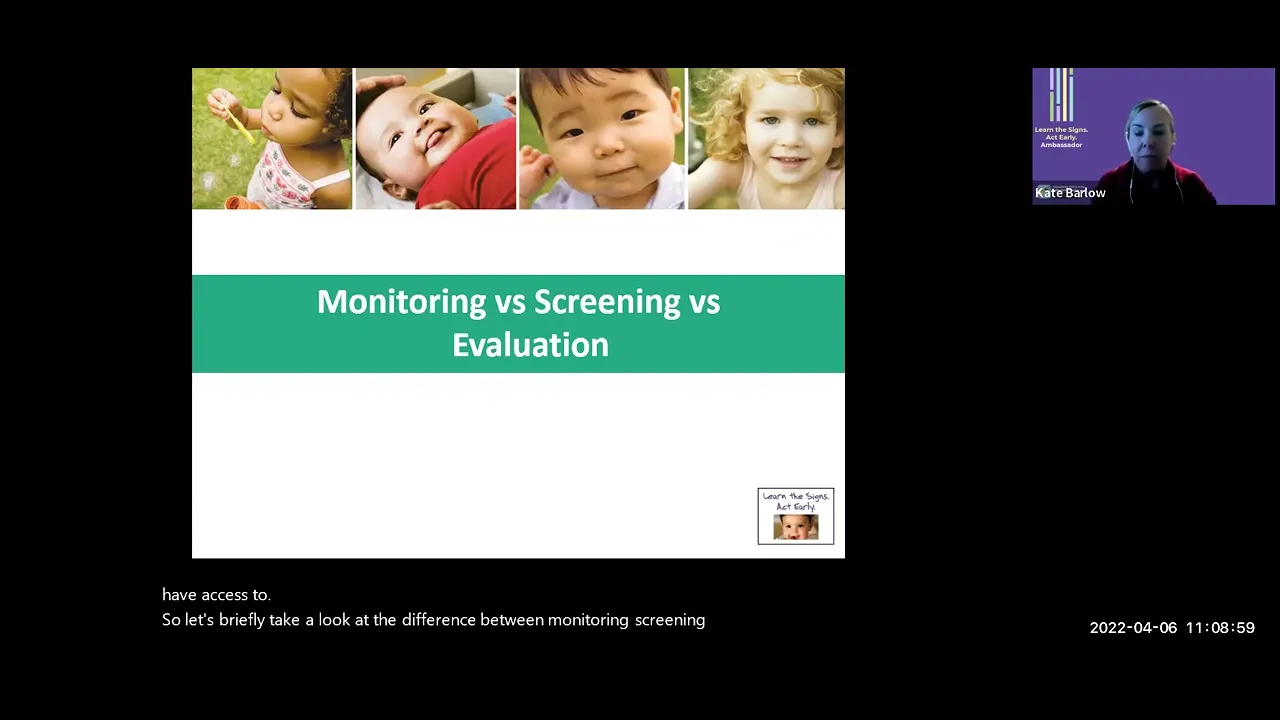
The distinction between developmental monitoring (e.g., using CDC milestone checklists) and formal developmental screening and assessment tools.
The legal and structural processes of referral pathways, specifically navigating Individualized Family Service Plans (IFSPs) under IDEA Part C.
Methods for adapting curriculum, classroom environments, and daily routines to support toddlers with diverse developmental needs.
49.9K views52likes7:41Original Release: 2021-08-02
♪ Now I wanna tell you about an experience I had last year when the Learn the Signs, Act Early information really helped me.
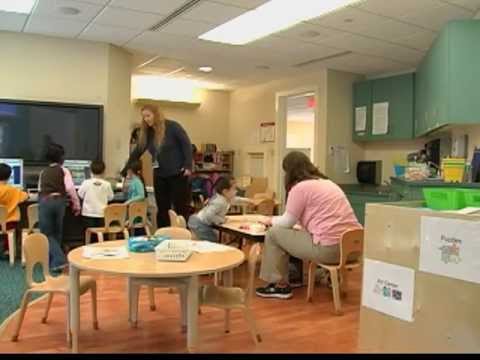
As I've mentioned, I've been teaching two-year-olds.
Last year, I had fraternal twin boys in my class.
They were adorable little guys.
For the sake of their privacy, I'll call them Jacob and Tyler.
As I got to know the boys, I realized they were very different from each other, much more different than any other set of twins I've taught.
The boys were new to the center, so I waited about a month before I started tracking their milestones to make sure they were comfortable in their new surroundings.
I also wanted to get to know them.
I'd been tracking milestones using the milestone checklist you saw earlier for several years at this point, so I didn't have to do anything different except make the twins a priority in my scheduling.
And as I suspected, Jacob was meeting his milestones on time or ahead of schedule, and Tyler was missing quite a few.
Since I talked about development with all the parents pretty frequently, I knew the twins' parents thought the boys were different, but I didn't think they had realized that Tyler might be behind in his development.
Once I saw that Tyler was missing milestones, I went to talk to my center director.
Our center's policy is very clear on the steps we need to take in a situation like this and talking to the center director is step one.
My director was extremely supportive.
He listened to everything I had to say, asked a few questions, looked at the milestone checklist, and asked me to schedule a meeting with the two of us and the boys' parents.
I know different centers handle this differently, but at ABC, with the director's approval, I'm expected to take the lead.
Because of my experience, and because I'm using the Learn the Signs, Act Early materials, my director didn't hesitate to ask me to lead the meeting.
He would be there to support me and to help me with resources and questions.
In the days before the meeting, my director came into the classroom several times to play with the twins, so he would know them better.
I scheduled a meeting for the next week.
Before the meeting, I gave the boys' parents a blank milestone checklist for each child and asked that they fill them out and bring them to the meeting.
I found this to be really helpful, even when I'm not concerned about a child's development.
Some children behave differently at home and at school.
So, by comparing milestones from both places, the parents and I get a more accurate picture of the child.
To get ready for the meeting, I went to the Learn the Signs Act Early website and printed three fact sheets.
How to help your child, how to talk to your doctor, and developmental screening.
I'm so glad I can get all the information I need to give them free.
All I have to do is print them.
I also brought some other information: copies of the checklists I did on both boys.
I brought enough copies so that each of us could look at one, and the boys' parents would have extras to take to their doctor.
The phone number to contact our local Early Intervention program, since Tyler is under three, a website address for how to find a doctor if they need one, a Learn the Signs. Act Early. parent kit.
Since I can order them free, I keep a couple on hand for parents in situations like this, where the growth and development tips come in extra handy, and a couple of notepads and pens in case the parents want to take notes.
I like to make sure I'm prepared so parents don't have to wait for me to get back to them with information they need to help their child.
I admit that right before the meeting, I got a little nervous that the boys' parents might get upset, but I knew that what I was doing was in Tyler's best interest.
And once the meeting started, I was fine.
We talked about Jacob first which was easy.
And then we moved on to Tyler.
I started out talking about the positive and fun things I've seen in Tyler.
I really wanted them to know that I care about their little boy, and that I enjoy having him in my class.
Then, I asked them about Tyler at home.
I did my best to listen closely to what they had to say.
I wanted them to know that I was just sharing my observations, and they were the ones who know their child best.
Having the parents fill out the checklist was really helpful, because they had already realized that Tyler wasn't reaching all of his milestones.
We went through the checklist for home and school and could see how much our observations matched.
It was obvious that Tyler's parents were concerned, but they didn't really know what to do.
They immediately wanted to know what I thought was wrong and what they should do.
I always tell parents that putting a label on a specific problem isn't really our area of expertise here at ABC, but that I can help them figure out what to do next.
They had only lived in the area for a few months, so they hadn't taken the boys to their new pediatrician yet.
Since the twins had just turned two and it was time for a check-up anyway, I suggested they schedule an appointment.
I recommended they tell the scheduler they had concerns about Tyler and request that both boys get developmental screens.
The American Academy of Pediatrics recommends a general developmental screen and a screen for autism at the two-year-old check-up.
I also suggested that they share copies of both boys' checklists with the doctor, and that they contact the local Early Intervention program.
I gave them the resources I mentioned earlier, and we scheduled a follow-up meeting for two weeks later.
Because of their concerns, the doctor was able to see them about a week after they called for an appointment, so we were able to talk about what the doctor said at our follow-up meeting.
They had an appointment with someone from Early Intervention in another couple of weeks.
The doctor suggested seeing a psychologist or a developmental pediatrician and having genetic testing done to rule out any type of problem in that area.
Now, let's fast forward six months.
Tyler just had an appointment with the psychologist who diagnosed him with autism.
Starting next month, he will be in our center for half the day and in a program for children with special needs for half the day.
He's been getting speech therapy through Early Intervention for several months, and he's already communicating more.
The speech therapist comes to the center and sees him in the classroom.
So, I've been able to watch her and do some of the same activities with him so he gets more practice.
I'm so glad his parents acted so quickly.
I think he's going to do really well.
I know acting early makes a big difference.
I'm really happy I found the Learn the Signs Act Early materials.
They've helped me to know what milestones to look for, given me an easy way to document them, and given me more confidence when talking with parents, even when there's no concern.
If you're not using these free materials, you should really check them out.
There are a lot more Tylers out there who need you to help their parents act early.
♪
Up Next

29:03
NEET PG 2022 Pediatrics Recall Questions with Dr. Meenakshi Bothra
@PrepLaddermedpg
41.9K views•2022-05-28

12:54
Triumph of Orthodoxy Icon: Byzantine Art & History Explained
@BenCallan
2.1K views•2024-08-06

9:49
FastAPI vs Flask vs Django: Choosing the Right Python Web Framework
@TechWithTim
302.5K views•2024-05-26

1:42
Game of Thrones Opening Credits: A Cinematic Analysis
@gameofthrones
46.3M views•2011-04-18
Related Study Plans & Knowledge Roadmaps
Structured learning paths in General & Interdisciplinary Studies
general-studies
Elevator Engineering: History, Physics & Cities
01From Hoists to Safety Brakes: The Dawn of Vertical Lift
02Hydraulic vs. Traction: The Engineering Physics of Elevators
03Modern Speed, Safety, and Algorithms
+ 2 more learning modules
12h5 modules
Explore Roadmap
general-studies
Rubber: Material Science, History & Geopolitics
01Origins of Natural Rubber & Mesoamerican History
02The Chemistry of Natural Rubber & Vulcanization
03The Geopolitics of the Rubber Boom & Colonization
+ 2 more learning modules
12h5 modules
Explore Roadmap
general-studies
Containerization: Evolution, Logistics & Trade
01Ancient Trade & Bulk Cargo: Amphorae to Barrels
02The Industrial Revolution & Cardboard Packaging
03The Containerization Revolution: Malcom McLean
+ 2 more learning modules
12h5 modules
Explore Roadmap
general-studies
Textile Tech: Evolution, Labor & Global Impact
01Pre-Industrial Textiles: Handloom & Cottage Industry
02Mechanization: The Spinning Jenny to the Power Loom
03The Factory System & Global Labor Transformation
+ 2 more learning modules
10h5 modules
Explore Roadmap