



















This video presents 21 recalled Pediatrics questions from NEET PG 2022 exam, covering key topics including West syndrome (ACTH as drug of choice), vitamin A deficiency (Bitot's spots, treatment doses), newborn care (urination by 48 hours), high-risk infants (maternal/social factors), osteogenesis imperfecta (collagen defect, crumpled paper cells), McArdle disease (muscle phosphorylase deficiency), Gaucher disease (glucocerebrosidase deficiency), Henoch-Schönlein purpura (glucocorticoids for severe cases), HIV testing in infants (PCR on dried blood spot), open vial policy for vaccines, rheumatic fever prophylaxis (benzathine penicillin), sickle cell disease (HPLC showing HbS peak), congenital hypothyroidism (thyroid scan for etiology), intussusception (claw sign on barium enema), celiac disease (HLA-DQ2/DQ8 positive), dehydration assessment, foreign body aspiration (unilateral hyperinflation), bladder exstrophy, vesicoureteral reflux, and minimal change disease (steroid-responsive nephrotic syndrome).
NEET PG 2022 Pediatrics Recall Questions with Dr. Meenakshi Bothra
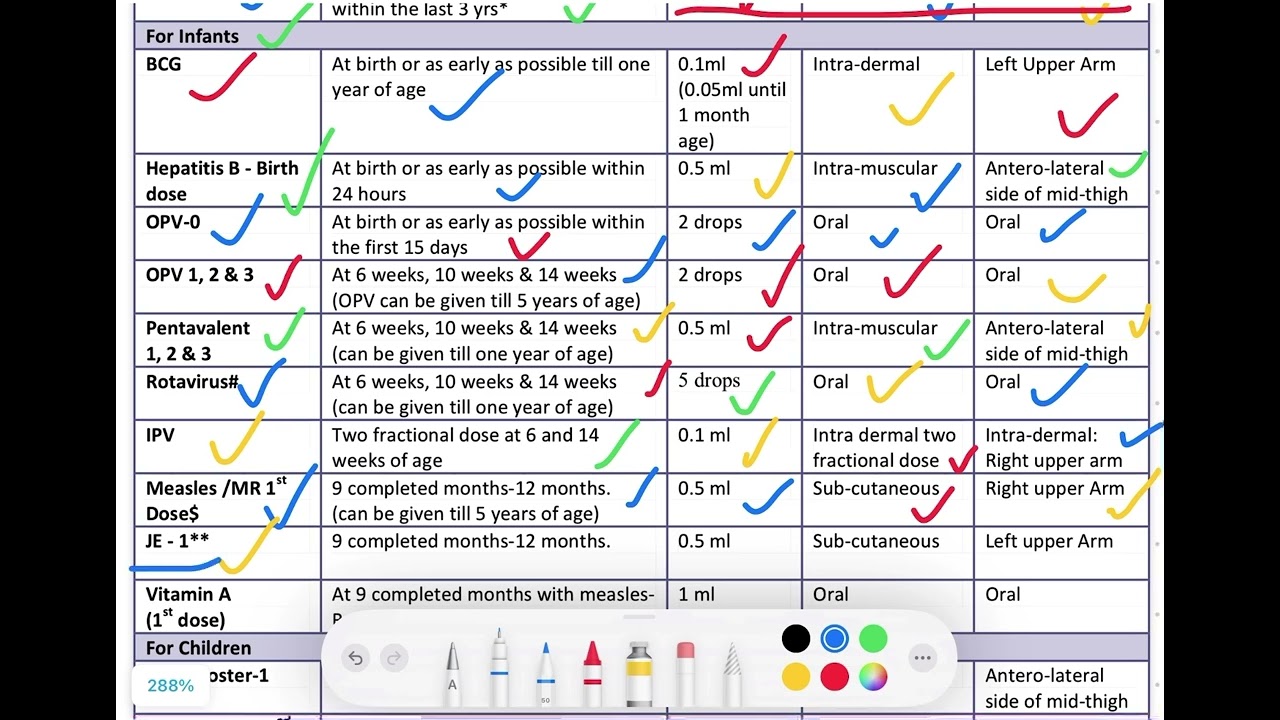
Added:[Music] hello friends welcome to this video where we are going to discuss the recalled questions from pediatrics in this neat pg 2022 exam so this time you know there were more than 21 questions from pediatrics and the questions were pretty straightforward so if you you know your basics are clear and your concepts are clear if you go on through the important topics i'm sure you must have been able to answer all these questions so let's discuss the very important topics from pediatrics so an infant is admitted to icu with complaints of recurrent jerky movements okay of the limbs and the eeg showing hips arrhythmia and we know this hips arrhythmia on eeg is suggestive of a condition known as best syndrome so what will be the anti-epileptic drug of choice so we know for west syndrome the drug of choice is injection acth or adrenocorticotrophic hormone so that is the best answer out of the given options here now this we have also discussed in our pediatric videos as well as notes you can see that hips arrhythmia developmental and infantile spasms is a triad that is seen in west syndrome and the drug of choice is insect injection ac th while if there is infantile spasms in a child with tuberous closes the drug of choice then becomes bigger bacteria moving on to the next question which vitamin deficiency gives rise to the following picture this friends you can see clearly is a bite spot okay which is a triangular shaped lesion like this with a base towards the cornea so this biter spot is a feature of vitamin a deficiency so vitamin a again we have discussed in detail in our videos as well as notes you can see the earliest symptom of vitamin a deficiency would be night blindness while the earliest sign would be conjunctive cirrhosis and there's a who grading to it also and what we saw here was x one b stage that is the presence of bite or spill another very important often asked question in this regard is what is the dose of treatment for vitamin a deficiency so we need to know the treatment or therapeutic dose of vitamin a deficiency so it depends on the age if the age is less than six months then the dose is 50 000 units if it is 6 months to 12 months it is 1 lakh units and more than one year of age the dose is two lakh internationals and you give need to give a dose at the diagnosis and repeated those 24 hours later and then repeat another dose two to four weeks later okay moving on to the next question what you have here is a mother who reported that the baby did not pass urine on postnatal day one what will be the next step now friends for this we need to know the normal physiology of newborns so this is what lower tea the newborn care in the latest edition says that each urine and stool output so you know uh the baby's first urination should occur by so if you can see clearly the first urination should occur by 48 hours of age and first passage of meconium is expected by 24 hours each okay so till 48 hours if the baby has not passed urine then this delayed urination or stooling will be a cause of concern and must be investigated but friends in the given question that it has been mentioned that baby has not passed urine on postnatal day one so day one we need not do anything else continue breastfeeding and observe and mostly the baby is going to pass urine within 48 hours if it doesn't then of course we need to take the baby inside the nicu and investigate okay moving on to the next question this is a repeat from aims november 2019 question so regarding high risk infant which of the following are correct weight 2.5 kgs or birth order more than three or single parent or artificial feeding or birth weight less than 85 percent time so before going to the options so we've already discussed what are the factors to define high risk infant in our video where we've discussed the ames november 2019 questions okay so there are some maternal or social factors so high-risk neonate means any neonate who has more chance of morbidity or mortality as compared to any other normal newborn okay so there are some maternal factors like if the mother's age is too less less than 16 years or more more than 40 years or illicit drug use like alcohol cocaine smoking and all if there is poverty if it is an unmarried mother that means a single mother okay short inter pregnancy time that means the birth spacing is not there properly too many children at small intervals and maternal diseases like diabetes hypertension rheumatological illnesses are this factor related to previous pregnancy if there has been an interest rate death or neonatal death or iugr prematurity high drops or congenital malformation iem in the previous pregnancy related to present pregnancy during pregnancy mother has vaginal bleeding twin or triplets or quadruplets or preeclampsia premature rupture of membrane poly or oligohydramnios during labor if you have premature or positive labor if there is fetal distress or breach presentation meconium cell like assisted delivery or cesarean section these all are risk factors making the baby high risk okay and related to that unit if the birth weight of the baby is less than two thousand grams or more than four thousand grams or if the baby is prep term or post term or small for date or large for date and if there is pretty distress congenital malformations or parallel so coming back to our question so what are the high risk factors here let us see so weight 2.5 kg we know is not a high risk factor because less than 2000 grams we saw makes a baby high risk birth order more than three again is not mentioned as a high risk factor though birth spacing if it is less then it again is important so a single parent yes unmarried mother we saw was a risk factor artificial feeding though not mentioned in this list but we know breast feeding is protective and it has you know so many advantages for the baby so if a baby is not breastfed then definitely the baby is at risk of having complications like sepsis and many other conditions okay now birth weight less than 85 percentile again and is not a risk factor we saw a baby if it is small for date what is small but it means birth weight less than 10 percent of expected according to gestational age that baby will become high risk and not with a birth weight less than 85 percentile okay so the best answer out of the given options is choice three and four that is single parent and artificial feeding okay so moving on to the next question multiple fractions detected in antenatal ultrasound scan what can be the diagnosis now out of the options achondroplasia we know is a condition where the baby is you know there is short stitch and there is short limb dwarfism but there is no increased risk of fracture as such in achondroplasia osteogenesis imperfecta we know is a collagen defect and collagen is very essential for bone formation if collagen effect is their bones are fragile and yes there is increased chance of fracture in this condition and in some severe types of osteogenesis imperfecta even antenatally in utero you can find fractures in the baby okay marfan syndrome we know is a condition where you know the fibrillin gene is affected and you know there is tall stature and there can be some skeletal abnormalities arachnodactyly is there you can get pectus cavum or excavatum or you can get you know in mafin syndrome you can get the lens dislocation of the eye and so on cretinism is again a condition where there is hypothyroidism there can be short stature but there is as such not much increased risk of fracture so out of the given options clearly osteogenesis imperfecta is the best choice again we've discussed it in our videos and in our notes you can see it is a collagen defect and you know there is a triad of blue sclera deafness and bony deformities and this bony deformities friends is due to the record fractures that happens in this condition okay so you can see in this antenatal ultrasound can you appreciate that the bone is broken there is the broken femur and the broken humerus and there's a 3d reconstructed view okay so clearly you can see the broken bones here moving again to a very straightforward question which we've discussed any number of times which of the following diseases is autosomal recessive inhibitors we already mentioned osteogenesis imperfecta has autosomal dominant inhibitors pressure choline syndrome also has autosomal dominant inheritance achondroplasia is also classically example of autosomal dominant inhibitors so cystic fibrosis is the best of the given options which has got autosomal recessive inheritance okay now autosomal recessive disorders we've already seen there's a pneumonic abcdefgh so albinism beta thalassemia cystic fibrosis deafness and physima frederick's ataxia gaucher some diseases with autosomal recessive inheritance moving to the next question what you have here is a child with exercise fatigue who presented to the opeti they were feature session of mcardle syndrome so you know there you can get myoglobinuria and you know muscle weakness in my cardio syndrome which is a type of glycogen storage disorder where predominantly muscles are involved which of the following enzymes is deficient we know in mcardle disease muscle phosphorylase is deficient another name for muscle phosphorylase is myophosporolase so that is the best choice out of the given options glucose 6 phosphatase we know is deficient in bond jrk disease lysosomal glucosidase or alpha glucosidase and bombay disease phosphor fructokinase and taro disease okay so these are the muscle glycogenosis you can see pumper disease we already mentioned mcardle disease muscle phosphorylase and tyloe disease possible for fructokinase okay and most common jse in children is wanjiyaki violin adolescence it is mcardle disease moving on to the next question a child presented with hepatospherically mental retardation and bone pains bone marrow biopsy showed crumpled paper appearance which enzyme is deficient now classically we all know friends so many times we've discussed that crumpled paper appearance is seen in the gaucher cells because of the deposition of glucose glucose cerebroside in the cytoplasm you can get this crumpled tissue paper appearance of the cytoplasm so in gaussian disease the enzyme deficient we know is glucocerosidase so that is the best answer here we know glucose 6 phosphatase deficiency arc disease hexosaminidase and tesac and beta galactosidase and even ganglion gm1 gangliosidosis okay so the best answer is glucocerebrosidase gaucher disease you can see this is the gaucher cell where the cytoplasm has got the typical crumpled paper appearance and efficiency of glucose hypocytes is there classical clinical features are splenometromegaly you can get bone pains of pathological fractures pan cytopenia because you know the normal bone marrow elements are replaced by gaucher cells and neurological features may or may not be present okay moving on to the next question eight-year-old male presented with other opeti with papura over the lower limbs and buttocks he also reported having arthralgia that means joint pains are there and abdominal pain is also there there was a previous issue of upper respiratory tract infections was the treatment option so friends here are the diagnosis what do you think is the diagnosis so this appears super popular there mainly on the lower limbs also associated with joint pain and abdominal symptoms and there's a prior issue of a respiratory direct infection so this is a disorder that is hinok sean and papura so henoch only popular you know most of the cases are going to resolve on its own some cases very little 10 to 20 of cases we do not resolve or which have severe manifestations including severe abdominal manifestations so in those cases we might need to give glucocorticoids while in a very small number of patients because of the renal mass for you know renal involvement which is there in oxygen and papilla glomerular nephritis may be seen in up to one third of cases there you may need to give other disease modifying agents like you know azathioprine or methotrexate or cyclosporine or cyclophosphamide but here so most of the case of hsp will result spontaneously if not then glucocorticoid is the drug of choice especially if there are abdominal manifestations or any other manifestation of severe illness okay so in australian popular again we have discussed the diagnostic criteria already palpable papilla with presence of any one of the following including abdominal pain arthritis arthralgia any biopsy showing ij deposition or renal involvement and remember even though it is a popularity is due to vasculitis and thrombocytopenia is usually absent here okay so moving on to the next question what you have here is a four month old child of an hiv positive mother presence with recurrent diarrhea what will be your next investigation whether you'll check for grd assets or check for hiv p24 or you will stop breastfeeding and start heart that is highly active anti retroviral therapy in the baby or hiv rna pcr on dried blood spot so friends here the baby we know don't know the status of a baby the mother is hiv positive but basically we need to know whether the baby is also hiv positive and is having hiv disease or not so because that if that is present could be contributing to the recurrent diarrhea and needs treatment so check for the grds is no rather if there is recurrent diarrhea in a baby with hiv we will suspect you know infection by atypical organisms like cryptosporidium isospora and so on check for hiv p24 no we know antigen based tests are not very accurate in infant babies babies less than 18 months of age we will rely only on pcr stop breastfeeding and start hard no we know especially in developing countries the benefits of breastfeeding far outweigh the risks that it confers okay so stop breastfeeding we will not advise in this situation and you know starting the antiretroviral therapy without knowing the hiv status of the baby again is not a very viable option so hiv rna pcr on right blood spot is the best answer of the given questions and friends in our video and notes we've already discussed the preferred tests in infants on units are in born and in breastfed babies we need to do re-testing later once breastfeeding has been stopped and profile access point fans born with their you know to mothers with hiv we know we need to give never pin or zero within for at least six weeks and so on okay and anti-retroviral therapy should be initiated in any baby who is hiv positive ideally moving on to the next question again a very very important often repeated topic okay so pentavalent vaccine so recently only it has been repeated in the ionic ct also it was their pentavalent vaccine and mr vaccine vials were open and cold chain was maintained and vaccines were not expired what will you do with these open vials whether you will discard both or discard pentavalent use mr or discard mr and use pentavalent or use both mr and pentavalent so for this friends we need to know the open vial policy which is very very important which allows the reuse of the partially used multi-dose bias in subsequent immunization sessions provided the expiry date has not reached the cold chain is maintained date of opening the violence clearly mentioned aseptic technique has been followed to take out the vaccine vaccine while septum has not been submerged in water and open vial policy we need to know is applicable for certain vaccines only like the t series vaccine the hepatitis b pneumococcal vaccine pentavalent and the polio vaccines while open valve policy is not applicable for measles containing vaccines bcg rotavirus or japanese encephalitis so moving back to our question what we have to do here is we have to discard the measles rubella vaccine because open vial policy is not applicable for it and we can use the pentavalent vaccine so c is the best answer of the given options okay so next question friends was a question on pneumatic heart disease there was a 11 year old girl who presented with sore throat and streptococcal infection 20 days ago followed by fever was their arthralgia and elevated esr is no evidence of carditis or residual heart disease what is the correct option with regard to prophylaxis so here friends you have you know the modified jones criteria is being satisfied because there is arthralgia is there which is a major criteria in countries with high prevalence of rheumatic heart disease and two minor criteria that has fever and elevated esr is there so this is a case of pneumatic fever and you need to start secondary prophylaxis in the form of injection benzathine penicillin you also have the antecedent streptococcal infection mentioned here okay so now this secondary profile axis is to be given a with injection benzathine penicillin which is given every three to four weeks and you know the dose for children less than 27 kgs body weight would be 6 lakh units more than 27 kg body weight would be 1.2 million units so here this 11 year old girl the ideal weight would be more than 27 kgs but i was told by the students that in all the options there was only 6 lakh units and not 1.2 million units okay so if the girl is malnourished and her weight is less than 27 kgs then we can take six lakh units okay and the duration of prophylaxis because there is no carditis or residual heart disease then in that case the duration of prophylaxis would be for five years or till 18 years of age whichever is later so this is the best option out of the given options present here single injection of benzene penicillin can be used for the treatment of streptococcal infection but not for the secondary prophylaxis here okay and if carditis is present or residual heart disease is present cardiac is present then we need to give prophylaxis for 10 years or till 21 years of age if residual heart disease is present then even lifelong may be required okay so moving on to the next question what do you have here is a six year old male with a history of recurrent blood transfusions that means some anemia is there chronic anemia is there with pain in hands and feet as hemoglobin hplc high performance liquid chromatography shows increased hbf hba2 and a peak is seen in the s window so if you are getting a peak in this window that means the child is having sickle cell disease so sickle cell anemia or sickle cell disease is the best answer out of the given choices okay so this friends is a picture of the hemoglobin hplc you can see the hbf here you can see the hb a2 peak here and the hbs peak is so high that it is not getting accommodated in this sheet so hbs peak is here and this is diagnostic of the sickle cell disease okay so diagnosis of sickle cell disease and on the pepfal smear you can get an evidence of hemolysis sickle cell and however the body so this is from our video and the notes so sickling tests can be done screen vibes can show gamma gandy bodies hemoglobin electrophoresis or hplc is going to show you the hbs peak well the confirmatory thing you can do the gene defect where the beta globin gene we know six position of the beta global energy in the glutamate is replaced by valine you can demonstrate that okay next question a neonate was found to have a tsh thyroid stimulating hormone level of more than 100 units per liter on day 4 of life so that means the baby is having congenital hypothyroidism there's no doubt about that the tsh level is so high usd so shows utopic thyroid gland that means thyroid gland is present in its normal position there is no ectopic thyroid gland there is no absence of thyroid gland or this genesis of thyroid gland is not there so usd is showing a proper thyroid gland in its proper position tsh is more than 100 what would be the next investigation whether it will be ura iodine concentration trab is the tsh receptor antibody thyroid nuclear scan the fourth option i could not get friends if you remember and if you remember the port option of this question please write in the comments below so thyroid nuclear scan is the best answer out of the given options because you know in this case we need to know what is the underlying defect that has caused congenital hypothyroidism for that the thyroid nucleus scan is going to help ideally it should be done using the radioactive radiolabeled iodine if radiolabel iodine is not available you can also use technician okay and ideally it should be done as soon as possible after the diagnosis within one week of starting thyroxine or if it is not done at that time then you know maybe later at around three years of age you can give a trial of stopping thyroxine and then do so ultrasonography and technician 99 or if iodine 123 is available then that thyroid scan should be done for all babies with congenital hypothyroidism to know get an idea of the etiology okay so if the gland is utopic or thyroid scan is normal it engages the possibility of temporary ch so as you mentioned at three years of age you can give a trial of stopping the treatment and do the parameters once again okay now first we do the ultrasound of thyroid gland here we have already done that we've seen that there's eutopic thyroid and then we do the thyroid scans preferably using radiolabel iodine if not available then then technician if there is increased uptake then you we get evidence of endemic iodine deficiency okay if there is reduced uptake maternal anti-thyroid drugs is a possibility okay normal uptake then we need to do a perchlorate discharge test to diagnose this hormoneogenesis okay so thyroid scan is very important to come to the ideological diagnosis and is the best answer here moving on to the next question again a very important topic which you've discussed so many times that 11 month old baby was brought with a history of incess and crying on examination a tender mass was powerful in the right lumbar region and image of the barium enema study that was done as shown below what is the diagnosis so friends can you appreciate a claw like thing here so this is called a claw sign or a coil spring sign and is suggestive of interception and this is a typical case scenario in our videos and notes again we've discussed discussed interception when the clinical scenario where you suspect it will be sudden onset severe peroxism or policy pain and baby of course is not going to say that the baby has pain so there can be excessive crying and you can get current jellies tools and you can get a tender sausage shaped parable mass in the abdomen and you know the barium enema shows the coil spring sign or the claw side the next question a 12 year old male presents with bloating recurrent loose tools and features of malabsorption his hla dq2 is positive so hla dq2 and dq8 we know can be positive in celiac disease and there are features of malabsorption also like bloating is there recurrent loose tools are there so this child if is a case of celiac disease needs to be started on a gluten fluid diet and that has to be given lifelong so celiac disease friends the risk factors or the etiology are environmental factor due to glydin which is there in the wheat genetic factors associated we mentioned as we have discussed in our video and notes also hldq2 and q8 increase the risk of celiac disease immunological factors you can demonstrate the antibodies like anti-ttg anti-endomysal antibody or anti-dgp antibodies okay and lifelong gluten free diet is the treatment of choice next question a child presented to opd with multiple episodes of loose tools and repeated vomitings okay he was lethargic and not able to drink breast milk skin pinch was going back very slowly which grade of dehydration so again we've discussed it n number of times in our videos in our notes in the you know mcq marathon everywhere very very important is diarrhea in children so we know when it is no dehydration the child is going to be well and alert the eyes will be normal tears present mouth and tongue moist and you know the child will drink normally and the skin pinch goes back quickly while in some dehydration the child is going to be restless irritable eyes will be sunken the child will be thirsty and drinks eagerly and goes back slowly the skin pinch severe dehydration the child is lethargic like we had in the case scenario here the eyes may be very sunk in the child drinks poorly or is not able to bring so in this case scenarios child was not able to drink breast milk remember and the skin pitch goes back very slowly taking more than two seconds so this friends the given case scenario is a case scenario of severe dehydration and here to correct it we need to give 100 ml per kg fluid and that has to be given intravenously ideal fluid would be erl with five percent dextrose okay so the next question a two-year-old pre-morbidly normal well thriving child presents with sudden onset breathing difficulty while playing okay chest texture of this child shows right sided hyperinflation with normal left lung so sudden onset thing and unilateral findings are the unilateral hyperinflated lung the other lung is normal which of the following statements is true so this appears to be a case of foreign body aspiration from the given case scenario so child has developed acute larynge bronchitis is not true this is not a case of group where you will get a you know the low grade fever can be there a viral program can be there strider can be there so this is not a case of group focal area of decreased air entry will be suggest your foreign body yes if there is a focal area where you know you are not getting air entry properly that can suggest point body in complete obstruction ball valve mechanism leads to such condition no you know in a partial obstruction partially obstructed bronchus what happens air goes inside the bronchus so partially obstructed bronchus what will happen the ball valve or trap valve mechanism will be there where air can go inside the bronchus but cannot come out so in this case they can be hyper inflation okay so complete obstruction will not lead to this condition and flexible bronchoscopy is the management of choice no if such a foreign body has lodged in the bronchus then rigid bronchoscopy is the management of choice so best answer out of the given options is focal area of degrees and entry will be suggestive of point body okay so foreign body aspiration again we've discussed in detail in our videos and the notes and you can see unilateral hyperinflated lungs due to obstructive emphysema hysteresis to point body the case scenarios under nonsense choking or cuffing episodes and you know prompt removal by rigid bronchoscopy is the management of choice okay next question identify this abnormality in a newborn baby what you can see here this is the umbilical cord attachment and this looks like the urinary bladder so this is the trigone area and these are the attachments of the ureters here so this is the urinary bladder mucosa exposed to outside so this is urinary bladder extrophe this is not a case of omphalocele where you'll get from the umbilicus a protruded mass covered with sacs will be their gastroschisis also known and painted by the intestinal duct again so urinary blood extrusive again we have discussed in detail in our videos so urinary bladder protrudes from the anterior abdominal wall like you see here and its mucosa is exposed umbilical attachment is displaced downward pubic ramaya widely separated rectus muscle separated complete epispadias and males is there and you know these babies are going to have you know total urinary incontinence is going to be there in the long run there's a increased risk of bladder and no carcinoma so you need to cover this area with a plastic film and so that it doesn't get dehydrated remains moist and then surgery is the treatment of choice of course next you have a child with a registry of recurrent urinary tract infection who presented to the opeti x-ray finding is given what is the probability diagnosis so this friends appears to be a case of you know what you can see here the blood is distended and both the ureters are you know tortuous and distended okay so this appears to be a case of vesicle uric reflux okay and visible energy reflux we know is a very important cause of recurrent urinary tract infection children bladder diverticulum does not appear like this in bladder diverticulum you can see a protrusion from somewhere from the bladder ectopic kidney again will show kidney present elsewhere and the normal anatomy of the urinary tract like bladder the position of the kidneys will get altered okay vesico colic fishula will also not show a picture like this so this is vesico electric reflux so vur is usually discovered during the evaluation of uti this again is a snapshot of the nodes of the videos that we have discussed in prep so and that it can remain asymptomatic or they can be isolated fever or they can be features of recurrent uti bladder bubble dysfunction can be associated and you know you can see it on a contrast vcug or a radionucleotide cystogram so here the mcu the maturating system euthrogram is showing you the picture okay the last question that we are discussing here a 10 year old boy with generalized edema and massive protein yulia he was diagnosed as a case of minimal change disease so we all know in children the nephrotic syndrome most common causes minimal change disease true about this diseases light microscopy shows the placement of foot plate of photocytes no we know on light microscopy it is absolutely normal finding in minimal change disease electron microscopy can show this binding but not light microscopy good response to steroid yes it is correct and we know the drug of choice is prednisolone more common adults no minimal change in disease more common in children non-selective protein urea no non selective protein is not this mainly the albumin which is coming out so the best answer is good response to steroids so again we've discussed nephrotic syndrome n number of times in detail in our videos also in notes also previous year questions also so most common cause of nephrotic syndrome in children is minimal change disease okay and in minimal change disease kidney biopsy as such is not indicated but if you do a kidney biopsy on light microscopy there will be absolutely normal finding well electron microscopy can show a placement of the food process of the podocytes okay and the drug of choice for nephrotic syndrome initial episode we said is prednisone to mg per kg daily for six weeks followed by 1.5 mg per kg alternate day for six weeks okay and you know there is the treatment of the subsequent treatment of nephrotic syndrome will depend upon the the course of the disease so infrequently relapsing crypt nephrotic syndrome you just treat each episode okay so in frequently relapsing nephrotic syndrome or you know steroid dependent nephrotic syndrome if the steroid threshold is low you can continue low dose alternate day pennies alone for a long time well if the steroid threshold is high or there are features of steroid toxicity then you can use levoamizol or oral cyclophosphamide or mmf instead or rest nephrotic syndrome again in a number of times it has been asked the drug of choices calcium urine inhibitors like cyclosporine or techrolimus okay when refractory cases you can even use retoxima okay so friends these were the 21 questions recalled from pediatrics in the need pg 2022 exam again highlighting the fact that pediatrics is you know a very upcoming and very very important subject which is going to be a game changer in your need pg exams and in the upcoming competitive exams you can see the questions were pretty straightforward and i'm sure if your concepts are clear your basics are clear and if you've read and revised your important topics you'll surely have answered all these questions so friends please type in the comments below if you have any other questions which are there from pediatrics which i have missed or if there is any change in any of the options or any of the questions please mention in the chat box below and i'll be happy to resolve all your queries thank you very much all the best for your results keep working hard god bless you thank you you
Up Next

Infant and Child Choking First Aid: Prevention, Recognition and Response
@cprkids
3M views•2020-07-15

Hollywood Fantasy Orchestrator RPG Expansion Pack Tutorial Walkthrough
@HighResolutionJapan
1.1K views•2024-03-08

FastAPI vs Flask vs Django: Choosing the Right Python Web Framework
@TechWithTim
302.5K views•2024-05-26

Game of Thrones Opening Credits: A Cinematic Analysis
@gameofthrones
46.3M views•2011-04-18
Related Study Plans & Knowledge Roadmaps
Structured learning paths in General & Interdisciplinary Studies