



![[7/9] BIOQUÍMICA BÁSICA E METABOLISMO (Resumo) - UNIDADE 3 - TÓPICO 1](https://i.ytimg.com/vi_webp/Vds7gEIXPUY/maxresdefault.webp)








![Oxidative Decarboxylierung / Pyruvatoxidation [Zellatmung, 3/6] - [Biologie, Oberstufe]](https://i.ytimg.com/vi/jaNxYWGjgAA/sddefault.jpg)





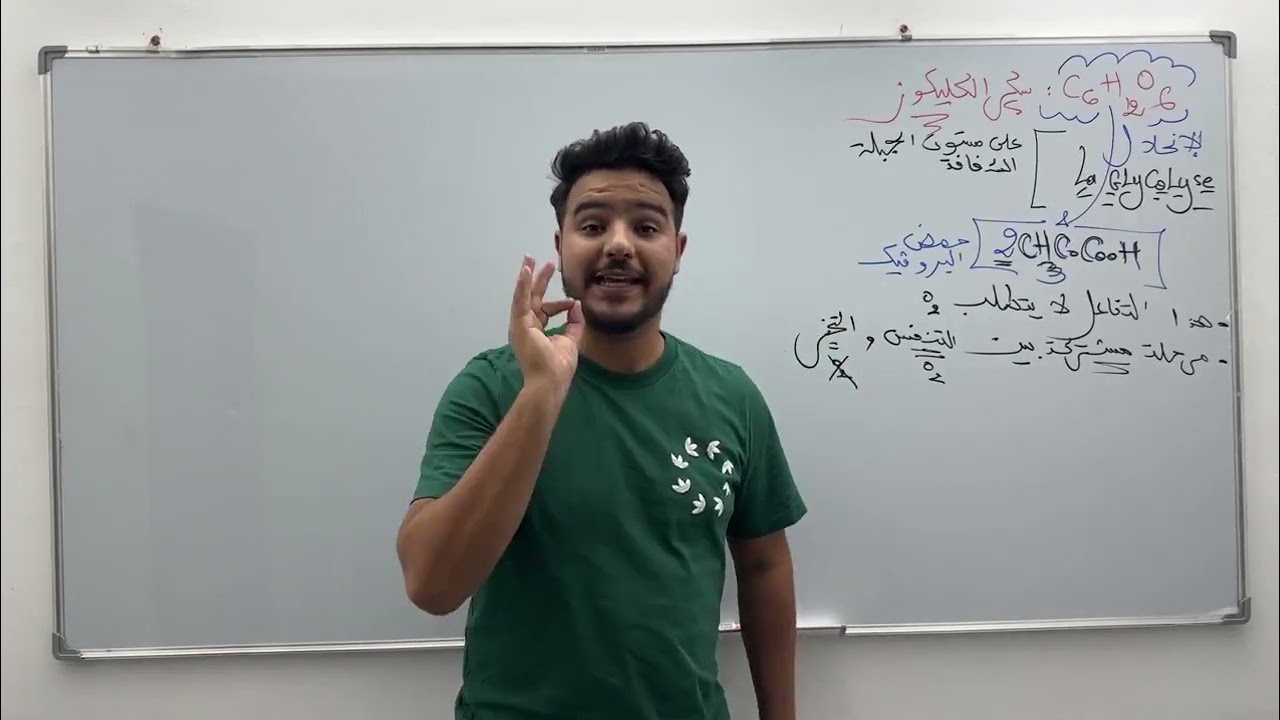


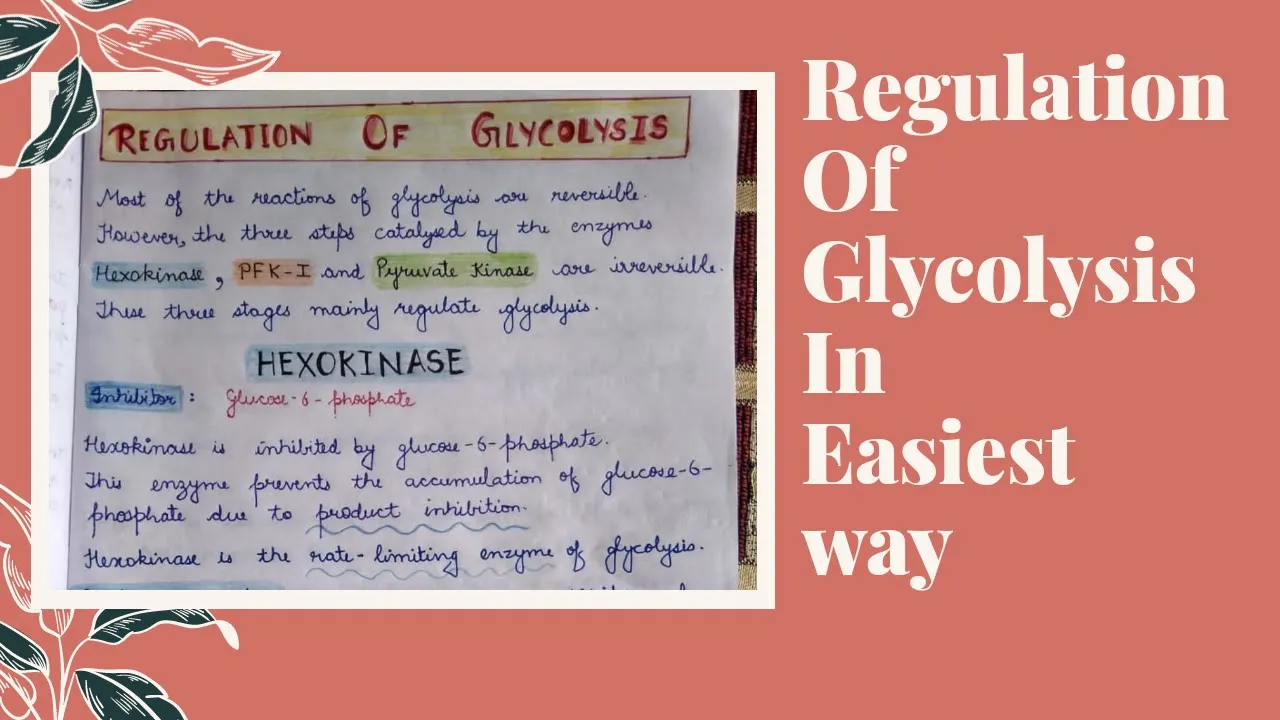
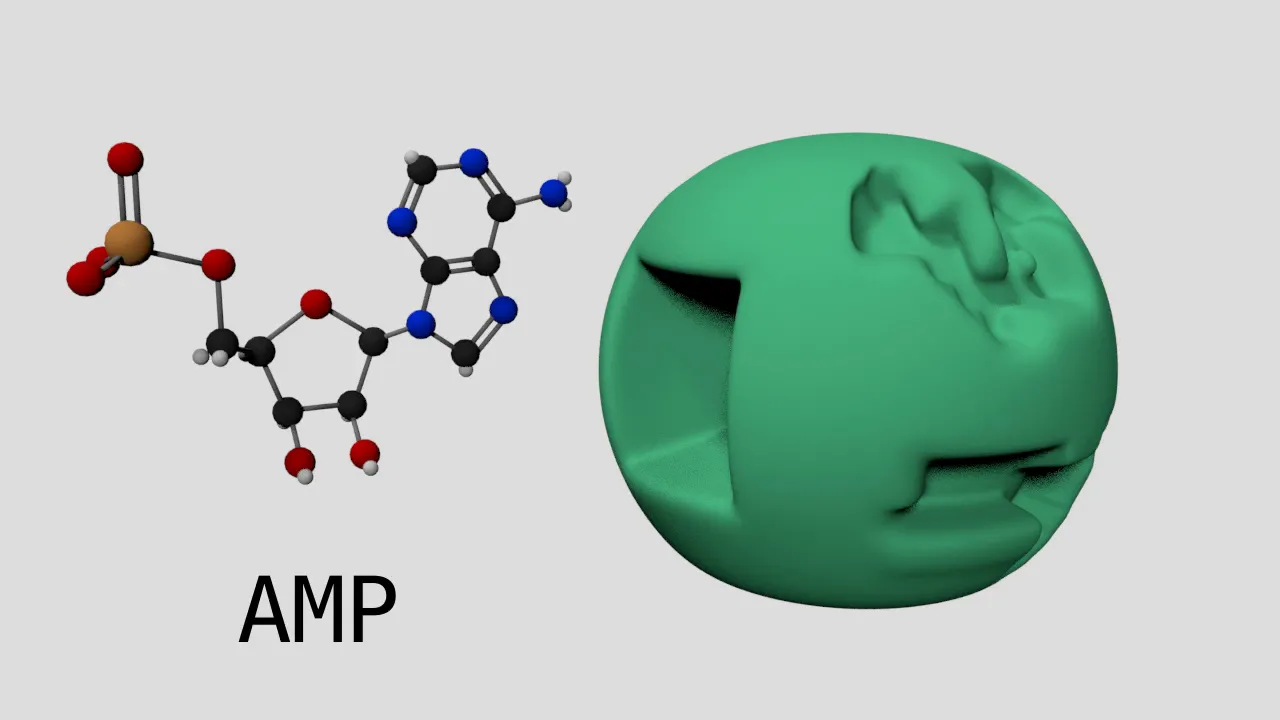
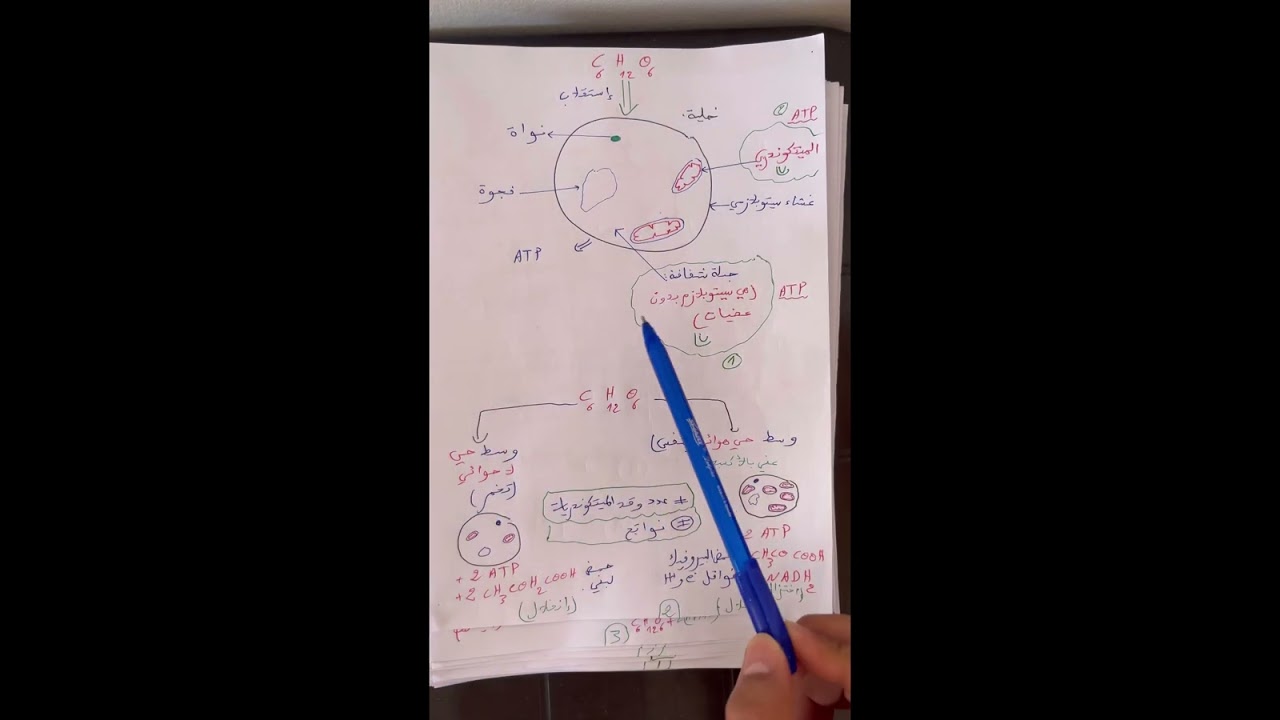
Glycolysis is the first phase of cellular respiration where glucose (C6H12O6) is broken down into two pyruvate molecules through two main phases: an investment phase that uses 2 ATP molecules to split glucose into two 3-carbon phosphoglyceraldehyde (PGAL) molecules, followed by a payoff phase where each PGAL generates 2 ATP molecules and 1 NADH molecule, resulting in a net gain of 2 ATP molecules and 2 NADH molecules per glucose molecule; this process occurs in the cytoplasm and does not require oxygen.
Glycolysis Overview: Cellular Respiration Step-by-Step
Added:The basic structure of carbohydrates, specifically glucose as a six-carbon sugar.
The role of ATP (Adenosine Triphosphate) as the primary energy currency of the cell, including how phosphorylation stores and releases energy.
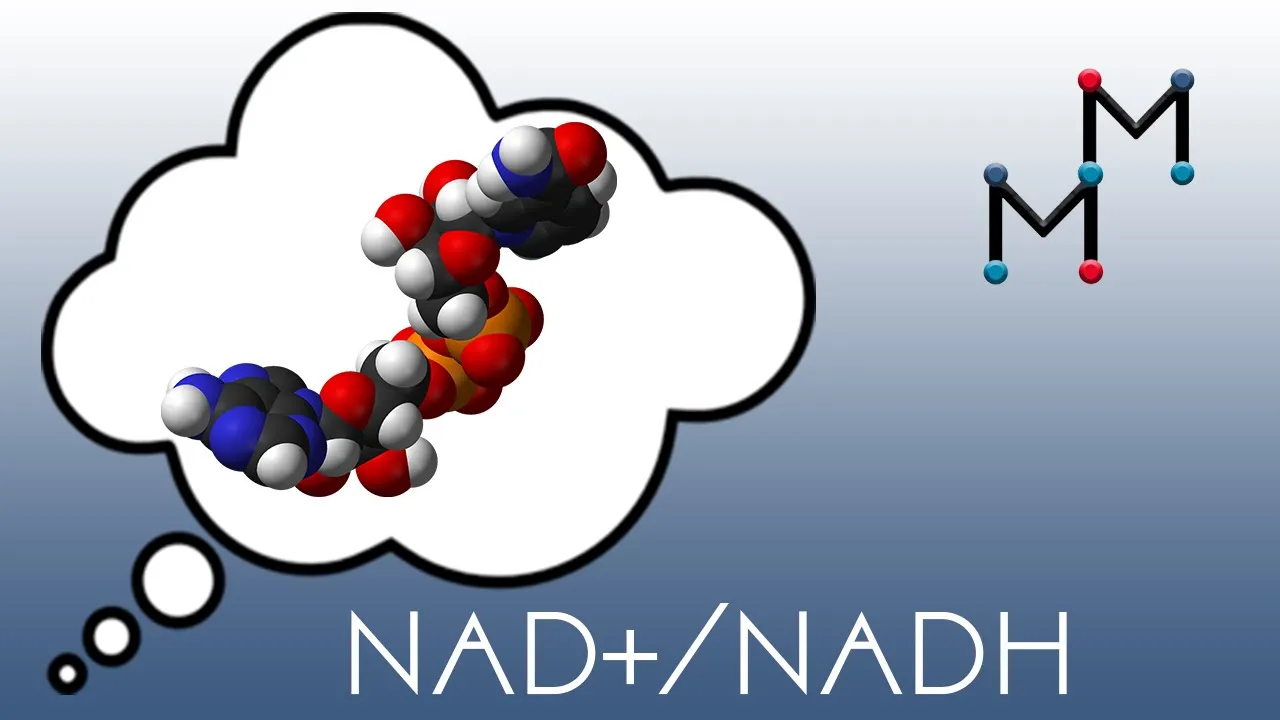
An introduction to redox reactions (oxidation and reduction) and the role of coenzymes like NAD+ and NADH as electron carriers.
General cell structure, specifically the distinction between the cytoplasm (where glycolysis occurs) and the mitochondria.
Pyruvate Oxidation (the Link Reaction) and how the products of glycolysis are prepared for the Citric Acid Cycle.
The Citric Acid (Krebs) Cycle and the Electron Transport Chain, completing the process of aerobic cellular respiration.
Fermentation pathways (lactic acid and alcoholic fermentation) which cells use to regenerate NAD+ in the absence of oxygen.
The regulation of glycolysis, including how key enzymes like phosphofructokinase (PFK) are controlled by cellular energy levels.
2.4M views9.8Klikes13:30Original Release: 2009-12-10
We've already learned that cellular respiration can be broken down into roughly three phases.
The first is glycolysis, which literally means the breaking down of glucose.
And then this can occur with or without oxygen.
If we don't have oxygen, then we go over to fermentation.
We'll talk about that in the future.
Go over to fermentation and in humans it produces lactic acid.
In other types of organisms it might produce alcohol or ethanol.
But if we have oxygen-- and for the most part we're going to assume that we can proceed forward with oxygen-- if there is oxygen, then we could proceed forward to the Krebs cycle.
Sometimes called the citric acid cycle because it deals with citric acid.
The same thing that's in orange juice or lemons.
And then from there we proceed to the electron transport chain.
And we learned in the first overview video of cellular respiration that this is where the bulk of the ATP is actually produced.
Although it uses raw materials that came out of these phases up here.
Now what I want to do in this video is just focus on glycolysis.
And this is kind of-- it's sometimes a challenging task because you can really get stuck in the weeds.
And I'll show you the weeds in a little bit, and the actual mechanism.
And it can be very daunting.
But what I want to do is simplify it for you so you can have the big take-aways.
And then we can appreciate, and then maybe when we look at the weeds of glycolysis we can make a little bit more sense of it.
So glycolysis, or really cellular respiration, it starts off with glucose.
And glucose, we know its formula.
It's C6H12O6.
And I could draw its whole structure; it would take a little time.
But I'm just going to focus on the carbon backbone.
So it is a ring, or can be a ring.
But I'm just going to draw it as six carbons in a row.
Now there's two kind of important phases of glycolysis that are good to know.
One, I call the investment phase.
And the investment phase actually uses two ATPs.
So you know, the whole purpose of cellular respiration is to generate ATPs, but right from the get-go I actually have to use two ATPs.
But I use two ATPs and then I'm essentially going to break up the glucose into two 3-carbon compounds right here that actually also have a phosphate group on them.
The phosphate groups are coming from those ATPs.
They also have a phosphate group on them and this is often called-- well, there's a lot of names for it.
Sometimes it's called PGAL.
You really don't have to know this.
Or phosphoglyceraldehyde, really challenging my spelling skills right here.
That's not that important to know.
All you have to know is in this first phase you use two ATPs.
That's why I call it the investment phase.
If we use a business analogy, investment phase.
And then each of these two PGAL molecules can then go into the payoff phase.
So in the payoff phase, each of these PGALs turn into pyruvate.
Which is another 3-carbon, but it's reconfigured.
But the process of it going to pyruvate-- and let me write pyruvate in blue, because this is something that, at least it's good to know the word.
And I'll show you the structure in a second.
Pyruvate.
Sometimes it's called pyruvic acid.
Same thing.
And that's essentially the end product of glycolysis.
So you start off with glucose in the investment phase.
You end up in this phosphoglyceraldehyde, which essentially you broke up your glucose and you put a phosphate on either end of it.
And then those each independently go through the payoff phase.
So you end up with two molecules of pyruvate for every molecule of glucose you started off with.
Now you're saying, hey, Sal, there was a payoff phase, what was our payoff?
Well our payoff, we got, for each-- let me write this down as a payoff phase.
This is our payoff phase.
And I apologize for the white background.
I did it because, the mechanism I'm showing you, I copy-and-pasted it from Wikipedia, and they had a white background so I just ran with the white background for this video.
But I, personally at least, like the black background a lot better.
But this is the payoff phase right here.
And so when we go from the phosphoglyceraldehyde to the pyruvate or the pyruvic acid, we produce two things.
Or I guess we could say we produce three things.
We produce, each of these PGALs to pyruvates produce two ATPs.
So I'm going to produce two ATPs there, I'm going to produce two ATPs there.
And then they each produce an NADH.
And I'll do it in a darker color.
NADH.
And of course they're not producing the whole molecule in a vacuum.
Essentially what they're doing is they're starting with the raw material of an NAD plus-- so they start off with an NAD plus-- and they essentially reduce it by adding a hydrogen.
Remember, we learned a couple of videos ago that you could view reduction as a gain in hydrogen.
So the NAD gets reduced to NADH.
And then later on, these NADHs are used in electron transport chain to actually produce ATPs.
So the big take-away here, if I were to write the reaction that we get for glycolysis, is that you start off with a glucose.
And you need some NAD plus.
And actually, for every mole of glucose, you're going to need two NAD plusses.
You're going to need two ATPs.
So I'm just writing all the ingredients that we need to start off with.
And then you're going to need-- well, let me say, these guys are going to be ADPs before we turn them to ATPs.
So I'll write plus four ADPs.
And then, after performing glycolysis-- and let me write it here.
Let me write also-- sorry that was ADPs.
Let me just rewrite that part right there.
Four ADPs.
And then you maybe need two phosphate groups.
Because we're going to need four phosphate groups.
Plus four-- I'll just call them, sometimes they're written like that.
But maybe I'll write it like this.
Four phosphate groups.
And then once you perform glycolysis, you have two pyruvates, you have two NADHs.
The NAD has been reduced.
It gained a hydrogen.
RIG.
OIL RIG.
Reduction is gain an electron.
But in the biological sense, we think of it gaining the hydrogen.
Because hydrogen is very non-electronegative, so you're hogging its electrons.
You've gained its electrons.
So two NADHs and then plus these two ATPs get used in the investment phase.
That's why I kind of wrote them a little separately.
So these two get used.
So then you're left with two ADPs.
And then these guys, essentially, get turned into ATPs.
So plus four ATPs.
I guess we didn't need four.
We only needed a net of two phosphate groups.
Because two jump off of here.
And then we need a total of two more to get four jumping on there.
But the big picture is, you start with a glucose, you end up with two pyruvates.
You use up two ATPs.
You get four ATPs.
So you have a net of two ATPs formed.
Let me write that very big.
Net, what you get out of glycolysis, is two ATPs.
You get two NADHs that can each later be used in the electron transport chain to produce three ATPs.
You get two NADHs and you get two pyruvates, which are going to be re-engineered into acetyl-CoAs that are going to be the raw materials for the Krebs cycle.
But these are the outputs of glycolysis.
So now that we have that big picture, let's actually look at the mechanism.
Because this is a little bit more daunting when you see it here.
But we'll see the same themes that I just talked about.
We're starting with a glucose right there.
It is a six chain.
It's in a circle, in a ring.
One, two, three, four, five, six carbons.
I could write it like that, just to make a huge oversimplification.
It goes through a few steps.
I use an ATP here.
So let me do that in a color.
Let me do it in orange whenever I use an ATP.
I use one ATP there.
And just like I told you, they have a slightly different name for it.
But this is the phosphoglyceraldehyde right here.
They call it glyceraldehyde 3-phosphate.
It's the exact same molecule.
But as you can see, just when I drew it very roughly before, you've got one, two three carbons there.
And it also has a phosphate group on it.
The phosphate group's actually attached to the oxygen.
But for just for simplification I draw the phosphate group just like that.
And I showed that right here.
This was the phosphoglyceraldehyde right here.
This is the actual structure up here.
But I think sometimes when you look at the structure it's easy to miss the big picture.
And there are two of these.
They kind of say that you can go back and forth with this, with this other kind of isomer of this.
But the important thing is that you have two of these compounds that are now 3-carbon compounds.
Glucose has been split.
And now we're ready to enter the payoff phase.
Remember you have two of these compounds right here.
That's why, when they drew this mechanism, they wrote times two right there.
Because the glucose has been split into two of these molecules.
So each of the molecules are now going to do this right here.
And for each of the glyceraldehyde 3-phosphates, or PGALs, or phosphoglyceraldehyde, we can look at the mechanism and say, OK look here, there's going to be an ADP turning into an ATP there.
So this is plus one ATP.
And then we see it again happening here on our way to pyruvate.
On our way to pyruvate right, there then we have another plus one ATP.
So for each of the PGALs, or the phosphoglyceraldehydes that were produced, we're producing two ATPs in the payoff phase.
Now there were two of these.
So total for one glucose, we're going to produce four ATPs in the payoff phase.
So in the payoff phase, four ATPs.
In the investment phase we used one, two ATPs.
So total net ATPs directly generated from glycolysis is two ATPs.
Four, gross produced.
But we had to invest two in the investment phase.
And then the NADs and the NADHs, we see right here.
For each phosphoglyceraldehyde, or glyceraldehyde 3-phosphates or PGALs or whatever you want to call them, at this stage right here you see that we are reducing NAD plus to NADH.
So this happens once for each of these compounds.
And obviously there are two of these.
Glucose got split into two of these guys.
So two NADHs are going to be produced.
And later these are going to be used in the electron transport chain to actually each produce three ATPs.
And then finally, when everything is said and done, we're left with the pyruvates.
And it's nice, at least that they made it nice and big.
We can take a look at what a pyruvate looks like.
And just as promised, we can look at all the oxygen bonds and all that.
But it's a 3-carbon structure.
It has a 3-carbon backbone.
So the end result is that the carbon, that the glucose got split in half.
It got oxidized.
Some of the hydrogens got stripped off of it.
As you can see there's only three hydrogens here.
We started off with 12 hydrogens in glucose.
And now it has its carbons bonding more strongly with oxygen.
So it's essentially having its electrons stolen by the oxygens, or hogged by the oxygens.
So carbon has gotten oxidized in this process.
There's going to be more oxidation left to do.
And in the process we were able to generate two net ATPs and two NADHs that can later be used to produce ATPs.
Anyway, hopefully you found that helpful.
Up Next
6:20
Plastic Biodegradation by Microorganisms: Key Steps Explained
@LifeScience-fk1rw
415 views•2025-03-25
50:12
Bacterial Communication: Quorum Sensing and Biofilm Formation Explained
@JHUAAP
12.6K views•2011-06-28
5:10
Mendelian Genetics: Alleles, Genotypes & Punnett Squares
@khanacademymedicine
648.4K views•2014-06-16
7:08
Bacteriophages: Earth's Deadliest Killers and Future Antibiotics
@kurzgesagt
34.6M views•2018-05-13
Related Study Plans & Knowledge Roadmaps
Structured learning paths in Biology
biology
RNAi: Biogenesis, RISC & Gene Silencing
01Molecular Biology Foundations: DNA to Protein
02Introduction to RNA Interference (RNAi)
03Molecular Biogenesis of miRNA and siRNA
+ 2 more learning modules
10h5 modules
Explore Roadmap
biology
Mycorrhizae: Signaling, Biophysics & Ecology
01Foundations of Mycorrhizal Symbiosis
02Molecular Signaling and Root Colonization
03Biophysics and Bioenergetics of Nutrient Exchange
+ 1 more learning modules
11h4 modules
Explore Roadmap
biology
Circadian Clocks: TTFL, SCN & Periphery
01Foundations of Molecular Biology & Gene Expression
02Introduction to Chronobiology and Actograms
03The Core TTFL: Molecular Architecture of the Clock
+ 3 more learning modules
14h6 modules
Explore Roadmap
biology
Population Genetics: Math, Drift & Selection
01Genetic & Probability Foundations
02The Hardy-Weinberg Principle and Baseline Models
03Mathematical Modeling of Natural Selection
+ 3 more learning modules
18h6 modules
Explore Roadmap