









![[ENG] 2021 P4G Seoul Summit|Green Future Sessions|GREEN NEW DEAL](https://i.ytimg.com/vi/YBUkQk5uIkc/maxresdefault.jpg)








This research demonstrates that environmental regulation fundamentally alters optimal patent length decisions: when the EPA is present and asymmetrically concerned about pollution relative to the patent office, optimal patent lengths decrease because the EPA's emission fees internalize environmental damage, reducing the need for patents to provide pollution savings; however, when agencies are symmetric in environmental concern, the patent office can delegate to the EPA and ignore pollution, resulting in shorter optimal patent lengths than when the EPA is absent.
Optimal Patent Length in Polluting Industries | Environmental Economics
Added:The economic trade-off of patents, specifically how they balance the incentive for innovation (dynamic efficiency) against the deadweight loss of monopoly power (static efficiency).
The concept of negative externalities in microeconomics, particularly how industrial pollution represents a market failure that requires regulatory intervention.
Common environmental policy instruments, such as emissions taxes, cap-and-trade systems, and technology standards used by regulatory bodies like the EPA.
Basic game theory and strategic interaction, specifically how firms anticipate and react to government policy announcements.
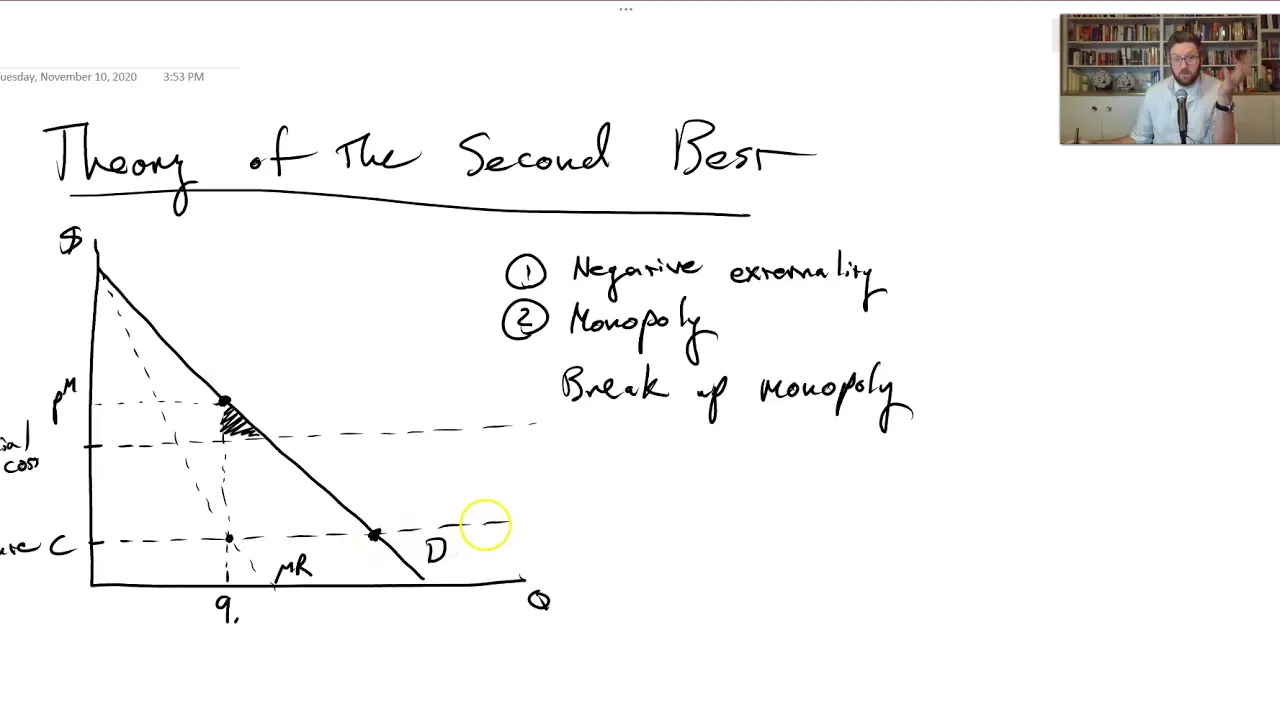
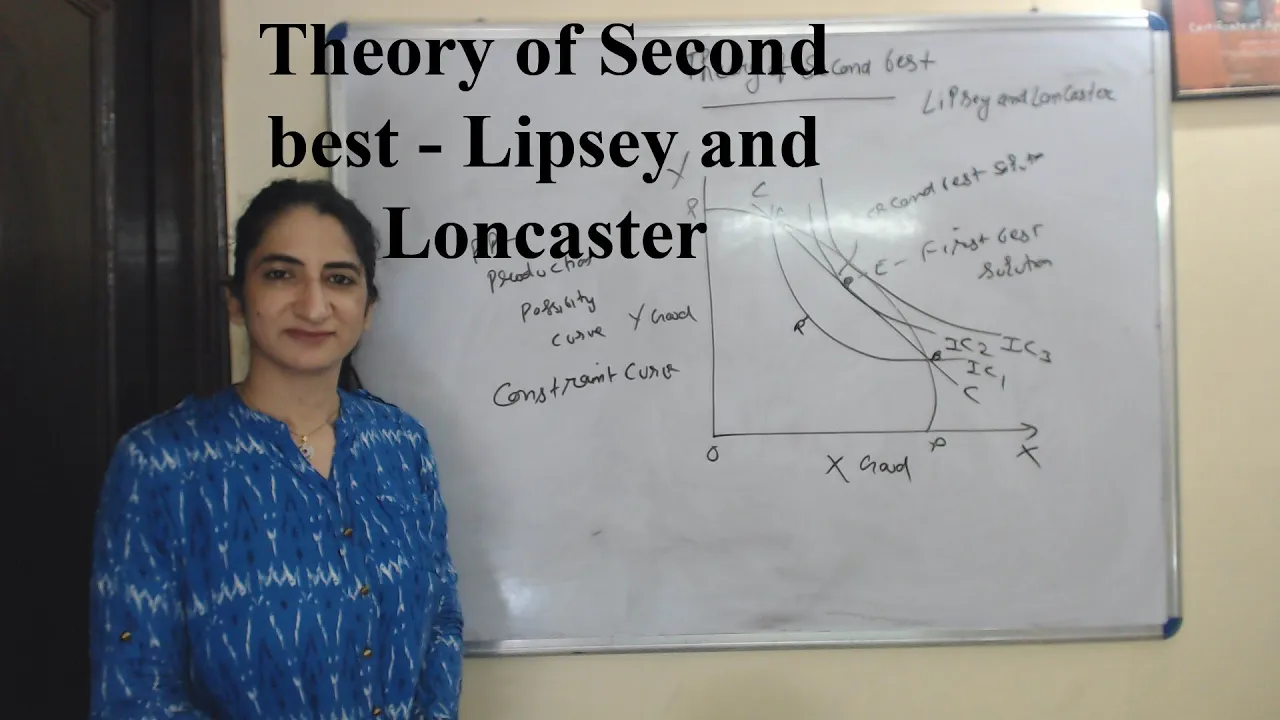
The 'theory of the second-best' in public economics, exploring how to design optimal policies when multiple market failures (pollution and knowledge spillovers) coexist.
Green technology diffusion, studying how patent strength and licensing terms affect the international transfer of clean technologies to developing countries.
The political economy of environmental regulation, looking at how lobbying, political cycles, and regulatory capture influence agency preferences and policy durability.
Empirical analysis of green innovation, analyzing real-world patent data to measure how environmental regulations stimulate or deter clean R&D.
162 views3likes56:43Original Release: 2023-05-17
foreign [Music] Washington State University he's an expert in iOS applications to environmental economics and connected with environmental economics yeah and he has published in the journals sort of environmental economics like for example and okay thank you for coming thank you you can stop yeah thank you everyone for the invitation it's an honor to make you finally here in rails um so um the uh the title of the paper is Optimum pattern length in polluting Industries this is a joint work with paxin Choi he was a former PhD student in our program he's now at National Central University in Taiwan foreign and he actually came just one semester to our PhD program like an exchange student and he's now an assistant professor at the University and of course with Anna you met her last week um so the paper is about patents patterns as we know seek to balance this trade-off that we are going to to talk about in a moment when we get into the literature basically the north house is uh trade-off where if you provide one more year of patent you are essentially accepting the monopolization of the industry for one more year that's basically the the cost the loss for welfare but in return the the longer pattern provides more incentives to firms to invest in order to be a monopolist right for a longer time and once the pattern expires that technology that cost reducing effect that we are going to see spreads into every one because the pattern becomes public so that's supposed to be the gain the marginal Dynamic gain of the pattern this has been a very long debate right whether the patterns are currently too long too short whether they should be shorter or longer in some Industries so this is a very large body of the literature we'll mention some of the papers in a moment but it generally assumes that production then it doesn't generate any environmental damage and as a consequence firms are facing no environment of evolution our mission fees no quarters so what the goal of the paper is to relax these assumptions allowing for the for an EPA Environmental Protection Agency to be president or absent to see what is the effect of of the in case present into elongating or shortening patterns and also allowing for the patent office to ignore or consider pollution normally pattern surface ignore pollution they just consider consumer and producer Surplus but what would happen if the if the patent office considered pollution right so the research questions are related with uh with what I just mentioned right how are pattern lengths affected by the presence of environmental regulation what if the PO ignores or considers pollution and then we measure what we call patent inefficiencies patent inefficiencies for instance are going to be whether um the path the length of the patent should be longer than what the patent office provides when ignoring pollution like when actually there is pollution there are like some more that we may talk about depending on time so I try to squeeze all the literature in one slide sorry about being with Jam so this only started with norhouse as I mentioned right identifying the trade-off kind of on a verbal way but not not so much into a game theoretic way but but he already understood and pointed out this uh is basically short-term loss and long-term gain right for Society of providing one more year of a pattern and it has been extended along several Dimensions right I mean here are some examples but we could cite many others but if the optimal height of the patent uh of the novelty requirements obviously if you bring an innovation to to the patent office how novel it needs to be in order for you to receive a patent it was like by one type and Donahue and many others which was also the optimal breath of a pattern by a Clem prayer and Shapiro and so on and the licensing to other firms rather than becoming uh like the patent owner you just license the technology to other firms by the Nicolo there is there is actually another people by the Nicola and galini but basically when it became really kind of ways here to to manipulate and and now game theoretic manner was by these people of takalo in 2001 and later on by Billy from page but this is basically the io literature no environmental damage or regulation ever then the few papers we have found about allowing for environmental damages in an i o paper with um with uh buttons right are these two there is actually one more by by langinir and but it's very similar to the one in 2019 so basically in Garland at all 2014 for instance they assume that the r d is in a pavement obviously you invest in order to make your production Greener right to produce the pollution intensity per unit of output but that's not cost reducing and that's exactly the opposite of what the pattern's literature considers most of the pattern literature considers that you invest in r d in order to decrease your costs and and that's not curologue at all this so we basically want to insert environmental regulation and pollution into the typical i o paper or path then langone and chaduri they assume fixed pattern lengths with me it's like the patent office is not a strategic player it's just if you receive a patent is if you enjoy this tea here right I'm not deciding how long or short the pattern should be and on top of that they assume exciting speeds and we don't like Industries we want to to make them endogenous in the models right so we'll be relaxing that assumption too okay so um the outline of the presentation as you probably suspected is that we will first talk about patterns without environmental regulation that will be basically the benchmark there will be a patent office considering or ignoring pollution but no environmental Revolution yet then we will redo the model that allowing for for environmental regulation in order to compare the first two bullets and then figure out what's the effect of the presence of environmental formulation rate of the APA and then we will go through a battery of extensions where basically we redo the model relaxing some of the assumptions one at a time one is what if the Innovation is green right reducing the pollution intensity of uh of the uh of the product right what if the APA is what we call bigubian you will see what we mean in really close to the end of the presentation you'll have to wait a little bit what the permission fees are uniform and by that basically what we mean in a nutshell is that um the APA is operating in a kind of rigid administrative setting and cannot revise the mission fees very rapidly like we will see you know what we mean and what if we have fixed button lengths as in garlock's paper right um instead of or and we'll conclude okay so the model as as you can see it's uh it's very straightforward uh uh linear demand and constant marginal costs get things will get kind of hairy in a moment and the lnd cost is convex that is a typical RNG cost which is convex in X which is the investment in r d where gamma you know suddenly efficiency so a higher gamma means you are less efficient right that's basically increasing your marginal cost and a lower gamma means you are more efficient now this literature often assumes that the gamma is high enough to make X in equilibrium basically your equilibrium investment to lie between zero and one and that's what we do here too in order to be able to interpret X as essentially the probability of an innovation happen that's what we basically just this is kind of following very closely takao right then we have to consider three settings one without innovation then everyone's costs are still C and we're in a perfectly competitive market with no profits right and then if an innovation happens we are going to have a pattern period lasting 40 years and then after the pattern expires right so during the pattern period the innovators costs drop from C to C minus Alpha where Alpha is denoted is denoting the cost reduction effect right of the Innovation the file phase zero your cost don't decrease if Alpha AC your cost decrease all the way to zero and after the button expires the pattern becomes public your Innovation becomes public everyone's costs drop to C minus Alpha and everyone's called profit becomes zero okay so what's the time is structure of the game in the first stage the patent office chooses the button length T right with the following welfare function it's consumer suppress producer self-crust and environmental damage environmental damage is the standard one in number tennis papers and uh I mean the typical convex expression and where D is is going to matter a lot because basically that is the weight that the patent office assigns to environmental damage you could claim that in many countries D is zero right because the patent office doesn't care about the Monumental damage and that's a special case in our model right it is allowed to be zero but otherwise is is between zero and one half it's beat below one half because otherwise we can run into Corner Solutions where the EPA you know in a moment shuts down production altogether so um then in the second stage the innovator observes T pattern length and chooses how much to invest in Innovation X the third stage the ABA centimetion fees with this welfare function which is symmetric to the one of the PO right except for the fact that the environmental damage has this parameter B where B is greater than d right meaning the EPA clears the same or more about the environment than the PO does right but it allows for many special cases one is that the two agencies are symmetric one is another one is that D is zero while B is positive right and many others right so as you can suspect the asymmetry between the two agencies right between D and B is going to matter and dictate the results and in the fourth stage firms choose it up to level okay so let's get into The Benchmark case with no environmental regulation so we solve the game by backward induction this is just a complete information game so before the button expires the uh the innovators uh is receiving this patent and its output it's Monopoly output is this one right this is standard one in Monopoly with the corresponding price now the Innovation is a typical assumption in this register must be non-tradical right meaning that this PM is greater than C or otherwise Alpha is not too big notice that otherwise the patent the legal protection of the pattern would be irrelevant right basically if I could set a Monopoly price and yet my price was below the marginal cost of all my rivals I wouldn't need to be protected by law it is because my price under a monopoly scenario is higher than everyone's marginal costs that I need a legal protection on that right so then for the innovator to be the only seller we need that the patent price is equal to C so basically I know that the Monopoly price is higher but I will just set the price equal to C make sure Epsilon is converging to zero and that will give me these profits right in every pattern period after the button expires as we already said everyone's cars dropped from C to C minus Alpha interacting a perfectly competitive market and profits are still right nothing new there now we the backward induct in the second stage uh the innovator anticipates its profits during the patent period 5p and after the button expires I see and choose a sex in order to solve that aspective profit maximization problem so this is essentially my profits if I happen to innovate my profits if I don't and my certain costs from investing in not only so these are respected profits and the last term is certain questions now this term the profits in the case of an innovation are essentially the the stream the discounted the stream of profits from a patent right which is coming from the patent years from zero to T right IP and after the button expires IC which we know is 0.
so this gives us this expression this expression one one important thing to notice is that that is increasing in t right meaning that the longer the patent the bigger my profits right and the discounted system of profits and as we will show in a moment the bigger my incentives to invest that's confirmed in Lemma 1 in the paper where we sold that profit maximization problem and show that that equilibrium X is increasing and concavity increasing in Alpha and increasing in gamma and R so basically longer patterns provide me with more incentives to invest but at a decreasing rate and uh those more incentives to invest are sorry I have more incentives to invest if the Innovation is less costly right so basically if karma is lower or more effective if the drop in costs is bigger and then we'll get into the first stage first stage is the the PO anticipating the equilibrium X that will happen tomorrow and choosing T today right the patent length today notice that if you are in the shoes of the PO you know that if the Innovation occurs this is the social welfare that is going to to happen right during the patent years and after if there is no innovation this is the welfare that you will have without the Innovation and this is just the cost that you are internalizing as part of welfare from from The Innovation right from the r d i mean you could include that you know you but you can also Factor it down now one one uh important thing to notice before we solve for T here is that while profits are higher during the patent years than after right I mean this is positive and this is zero welfare doesn't necessarily uh have the same ranking well for doing the patent is higher than after the pattern expires if D is high enough or the intuition for that is the typical explanation where you have you are a regulator and you are trying to address two market failures at once right here the two market failures is the Monopoly system so sorry the monopolization of the market and the environmental damage right so if the environmental damage D is big enough you are better off in a monopoly right so in a polluting Monopoly then in a perfectly competitive market with very low cost right because the the pattern is now public right where everyone is polluting right If instead D is lower than that ratio then it will be the other way around right you would prefer basically the welfare will be higher after the button expires out of 10 otherwise of course that condition becomes more demanding when Alpha increases right making that that is less likely to our lives and if you differentiate with respect to t you obtain basically North houses uh trade-off here the trade-off is coming from the so-called marginal Dynamic gain of a longer patent on the marginal static loss of a longer cut right notice that the marginal Dynamic gain is coming from the fact that firms have more incentives to invest right X increases in t okay while the marginal static loss is coming from the fact that well that that r d investment is costly for the firms right and also for consumers because the patent is longer and that is basically allowing the Monopoly to exist for one more year then we in the paper we characterize the comparative Statics of this MDG and MSL curve right showing that the MDG is monotonically decreasing in t while the MSL increases and then decreases in t but really the important thing here I mean this this was basically if you go to takalo's paper and you could reproduce a similar results to this but then the question really is what happens when you introduce environmental damages right something that is completely ignored in that color screen well while we show in the paper is that both curves shift downwards and if you go back to the first order conditions the interaction of D decreases this term right this social surplus right while not changing this so MDG shifts down this is unaffected this is unaffected but this is actually increasing indeed the reason being that uh like a more polluting output makes the that extra a year right beneficial for society right because you are basically allowing the Monopoly to exist one more year which prevents pollution for one more year right so that's why the two curves are shift down of course that doesn't solve the problem because depending on how they shift downwards you could have that a longer patent or a shorter pattern exist right depending on where they cross and what visual also is that the MDG MSL sorry shifts downwards more significantly than MDG lengthening the pattern right so basically the the effect of of allowing for a longer Monopoly dominates right characterize the optimal patent is a function of the parameters including d right showing that it increases in the decreases in Alpha and C right so the intuition as we were already pointing out is like these longer patterns generate kind of a pollution savings and where the monopolies reduces output and pollution while the pattern is enforced this to our knowledge is a novel role for patterns that we haven't seen in the literature of course it's not a perfect policy tool right it doesn't correct for the externality completely right that will happen with the EPA in a moment but at least it it helps attenuate the patent right and then we can measure what we mentioned before as the patent inefficiency from the poignant pollution that will be the the difference between this where this is already that D and this optimal pattern derivative at zero right as if T was zero and we show that that's an Ambiguously positive by decreasing in Alpha that decreasing in Alpha is also important meaning that if you're a patent office and you ignore pollution you are going to generate really big inefficiencies if Alpha is small but small inefficiencies if Alpha is big right or in other words if you are the patent office and you are ignoring pollution well it's okay it's okay in terms of inefficiencies if Alpha if the cost reducing effect of the Innovation is substantial right okay then we jump into introducing environmental regulation the fourth stage of the game is very similar where now calls are augmented by Tau right right that's the mission fee that those are the profits during the pattern years and after the pattern expires everyone's costs dropped by this much um and profits are still wrong right so similar to what we had in the fourth stage before then in the third stage if you remember from the time structure of the game is when the EPA uh operates right in the paper we characterize the mission fees without innovation and then with Innovation both during the patent years and after right basically n p and C respectively and go through all the competitive Aesthetics but basically here I'm I'm trying to reduce the amount of formula and and as we get to the basics one of the results we show is that that's probably you could anticipate a mission fee satisfy this ranking meaning that if you are the EPA and you anticipate no sorry the more output you anticipate tomorrow right in the output stage the more astringent the emission field you need to set today right to curve punch that's why the emission fee after the button expires and everyone's costs are really low is the biggest it's the most stringent followed by the emission fee if there is no innovation and followed by a mission fee if there is a button which is basically a monopoly right and in addition we show that the emission fees become more stringent when pollution is more damaging right so higher B and uh when output is more costly a higher C or lower Alpha right or basically a higher C minus Alpha right the net cost they also show that these two emission fees are an Ambiguously positive but the mission field during the pattern years right in Monopoly is positive only when B is higher than a certain cutoff right which follows the same intuition as before right you are trying to tackle now it's APA trying to tackle two market failures Monopoly and environmental damage and if basically if B is high enough it means that the market failure coming from the environmental damage dominance otherwise you will be actually subsidizing right this will be negative right subsidizing it for instance b0 right or B is sufficiently low again backward indicting we get into the second stage where we find X and in here what that expression of X is this one relative to the one with no EPA in the paper again we go through the comparative Aesthetics but one part that we are interested in is comparing that productive to The Benchmark with no EPA right so what we show essentially in in that Lemma is that not only the Absolute Investment level is lower when the EPA is present and absence but also the marginal effect of a longer patent right into investment incentives is smaller when the EPA is present in an absence right vitamin math is this right and this basically this is just that I'm investing less when the EPA is personal absent and this is saying that if you give me one more year of patent I'm going to increase my investment in both scenarios with and without APA but I'm going to increase my investments more if the APA is absent and otherwise that's basically because I can I can reap more profits right if the EPA is is absent then president and that is decreasing in B and Gamma right if that is basically decreasing at the end of the day in the astringency of the of the emission fees then we get into the first stage the patent office decision right and first we show that the social welfare that will go into that long expected welfare maximization problem satisfies this condition right meaning that social welfare in every period right is going to be higher with than without EPA that is not really surprising right because the presence of the EPA basically induces a first test uh welfare right both before the pattern expires and after the button expires right thanks to the emission fees right basically those emission fees that we talked about were like a very fine tuning thing that the APA a tool right that the APA has in order to exactly induce the socially optimal output in every period it didn't matter if we were including the pattern after the button or if no innovation happens right uh lady leading to the first best welfare you never repeated now you are probably wondering what if the EPA Is Not So Sophisticated right what if they cannot revise Mission fees that quickly that's actually one of the extensions we'll go through in a moment but then once we have that we go through the first order conditional with respect to T and that gives us an MDG and an MSL curves similar to the ones we had in The Benchmark case but what we are interested of course is what is the the comparison of MDG and MSL with and without EPA right what we show is that both of them shift upwards and again the question is whether they shift out words in this way with MDG shifting less right and then T increasing relative to a setting with no EPA or like this and then the the pattern should be longer than in the setting width without EPA oh what we show we find the optimal T that T1 that's actually the largest impression I didn't even want to copy and paste here that's a proposition 2 in a paper but the bottom line is that it increases in B right in how much the EPA cares about the environment but it decreases in D remember that without EPA it was increasing indeed uh Alpha Sienna right so the the idea here with this uh let me see if I can kind of make sense of this figure so if we start in uh in this line right this is the case in which EPA and uh po are completely symmetric in the environmental damages right basically B is equal to d right and D is D which is in the x-axis right so by the way the x-axis is D how much the PO cares about the environment the y-axis is the pattern length and the first argument in the T1 is how much the EPA cares about the environment so first of all if the two are completely symmetric in their environmental concerns the a pattern length is just flat right I mean here is 27 but it you can do like a different simulation and it would be exactly flat not only flat is it is identical to pathology result right notice how kind of kind of sexy that that result is but basically that means is that from the PO and I know that the EPA tomorrow the EPA cares the same much same amount I care about the environment I can literally ignore everything and behave as if environmental damage was uh didn't exist right in other words I can delegate into the EPA in order to correct the externality tomorrow because I know they care the same much I do today right now what happens if that doesn't happen right if if there is an asymmetry between the preferences of the two players the two regulatory bodies well if B starts to grow right then you have this dotted line right with T1 decreasing in D but still reaching that level right when the two are completely symmetry so basically when D is exactly 025 this dotted line will continue flat all the way down here right what that means is that when we have an asymmetry between Po and and EPA as a PO I know that the EPA cares about the environment more than what I do right they are essentially going to to be very astringent tomorrow in the emission fees they set on firms have you seen a big drop in profits for the firms and as a consequence I kind of compensate that drop in in profits which ends up producing a drop in investment incentives right by providing longer patterns today and that keeps happening if the EPA cares even more about the Bible because we have an upward shift in that curve so the way we we see this it it's kind of reminiscent or helping us kind of uh yeah like related to an agency problem with a principle and an agent right so the principle in this relationship is the first mover that the PO setting a button length T to induce a socially optimal output according to its own environmental damage function right which was d right the little that has that uh labor responding to uh T by setting down the emission fee to induce its own social optimal output according to B right if B is equal to D really there is no agency problem right if you are the PO and you know that the EPA is acting later you have essentially a perfect representative of your own preferences that and then I can basically delegate into the APA to correct the pollution and the externality and I can behave as a latakao right so basically ignoring pollution altogether just in a standard i o setting with no with no environmental damage function if B is greater than this however the PO anticipates a senior visas we were mentioning lesson on the investment and and then sets the longer patterns then this difference would be the patent inefficiency due to the agency problem rate or due to the preference of symmetry right so basically if we were symmetric I would set this pattern length but because we are asymmetric I need to set this button length probably providing this is very long pattern patterns just just to essentially correct that preferences here then we go through different comparisons in the paper comparing for instance the patent the optimal pattern with and without EPA right T1 and t0 what we show as I kind of gave away at the beginning of the presentation is that when the two agencies are very asymmetric this is B and D in in the y and x axis so when we're in this Northwest region the two agents is already asymmetric and the um the patent is longer with than without EPA but when agencies are more symmetric right here opposed to 45 degree line then the patent is actually shorter when the API is pressed in an option so the intuition is kind of uh kind of repeating ourselves without a relation to was trying to solve two problems at the same time providing the right incentives to innovate Us in the typical pattern literature but also trying to correct for pollution yielding Q to be large for many bodies of d right you were kind of providing these pollution savings operating long patterns but with Revolution the PO can reduce tea relative to T naught t0 especially if agencies are symmetric which is exactly what happens here and that's why that's why salt otherwise it's the only way around so how are you doing in terms of time what time is it you still have five ten minutes okay so yeah what I try to to do in the last like three or four slices to try to summarize the each extension in one slide or so and so let's see if it makes some sense so the first extension I mean we in the paper we provide this kind of long appendices characterizing all the results again but then just summarize them verbally close to the discussion section so in the case of green Innovations right so so far Innovation uh was only reducing costs but in this extension we allow for innovation to also decrease um the pollution intensity right from B to B minus Lambda 1 that's for the APA and from D to D minus Lambda 2 for the PO of course we that also allows for the case in which Lambda 1 and Lambda 2 are identical right and the drop for both agencies is symmetric right well when when we introduce this extra benefit of investing in in r d what happens with the patents is that essentially in order to use the same figure as we we started with is that this is basically a lower B induces less stringent fees the lower B remember this is for the APA induces less string and fees for EPA increases your profits in every period inducing more investment in r d which means that the PO can provide shorter patterns right so basically that would be this arrow pointing downwards but a lower d right induces longer patterns right so basically you will be moving in a new uh pattern curve you will be moving left work along the curve right then the question of course is which effect dominates right the the effect of b or the effect of D and what we show is essentially that when when the two effects are very symmetric um or the one of Lambda 2 basically this one dominates right basically this one this second Arrow will dominate you are going to have this shaded area where the introduction of the new benefit introduction of the lambdas so to speak is going to uh lengthen the patterns right related to the setting of T1 without lambdas but otherwise right in here and the intellectual of these green Innovations is going to Shorter patterns right meaning that this effect dominates this second Arrow right the second extension is allowing for a figurine EPA like that basically we mean this so rather than considering the social welfare function we talked about before what we consider is this kind of Beast which allows for different special cases right so this is a typical uh functional form in the literature which if if you make data equal to one half all of these objective function reduces to the one we had in the paper right with just consumer producer Surplus and environmental damage if a beta is zero the objective function simplifies in expression right as as you can call a utilitarian regulator who doesn't care about the environment and if beta is 1 it reduces to this expression right not considering consumers or Surplus which is often referred as a behavior later right the quality tries to minimize pollution so then you can think of betas that an increasing beta makes the APA more Peruvian right more concerned about environmental damage alone so what we show as a suspected is that an increase in uh sorry more Australian fees even if beta is greater than one half right implying less pollution but that makes the POS Pollution Control via longer patterns as we talked before right to become less necessary so in other words so highlight more people in epas leads to Shorter patterns right extension number three is the one about uniform admission fees that I mentioned before right so imagine that you are in a in a administrative setting or a political setting where changing commission fees from one year to another is very difficult you need like a super majority in Congress or something cool so um so you cannot revise Mission fees after like before and after the pattern expires right so it's like you you have to commit to one part to one emission fee for the future then we characterize what that Tau U Is Right and showing that essentially it's a linear combination between Tau p and Tau C right that basically means that so you are you're setting a patent somewhere in between they're really lacks patterns you were fixing during pattern they're sorry fee that you were setting during patent years or Monopoly and they're really astringent fee that you are setting after the button expires and you said somewhere somewhere in between right and [Music] um so what that means is that the PO anticipates less stringent fees right um in here yes here and but more senior fees relative to the patent Peak years and that will be yielding more pollution right after the button expires and that ultimately means that the PO sets longer patterns to help curve a dissolution of pollution and one last extension we did was to say well what will happen if the PO was essentially an honest strategic player meaning that they would they just set a fixed pattern length t a capital like T bar right um which is often the case actually in many countries you go with a new innovation to the patent office and if you pass the novelty requirement they will give you like 15 20 years depending on the country right rather than saying well your Alpha was this or this and then you have only five years or 32 right so um so of course that's problematic because now with the paper we know what the optimal pattern length is still one so what we show is that in order for T1 to be exactly basically this is kind of a coincidence right equal to T bar right it only happens in this so-called ISO pattern curve so the isopotamic curve is essentially pairs of B and D for which the pattern length is exactly equal to T bar right just like you do in like 101 right with a with a preference with a different score right so the the idea is that we can show in in the paper that this ISO pattern curve is increasing in D and also lies above the 45 degree line what that means in words is that if the PO becomes more concerned about the environment right if you move a little bit leftward the concern for the environment of the PA needs to grow more than proportionally right for you to remain in the same ISO pattern curve right for you to to still provide the same pattern length right if it doesn't if it grows less than proportionally you would actually be dropping to an isopotamic curve in here right Associated to a lobe so then of course we compare whether the T1 is greater than T bar or vice versa and we show that when that happens as suspected when these two agencies are extremely asymmetric and otherwise the the optimal pattern length is actually shorter right so basically that that allows for these two scenarios notice that the first scenario is again in plain English is just saying that the patterns that you are providing with this non-strategic PO are too short and in here they are too long so that you are giving too large buttons to these innovators okay so time to summarize a little bit when the EPA is absent the optimal pattern increases indeed right this was the discussion of the PO trying to address these two market failures and they were doing that by by providing longer patterns relative to the column and alternatively appeal that it knows pollution sets insufficiently short patterns right so this is a regulator will be providing too short of a button but this inefficiency kind of the caveat of that is that this inefficiency is small and the cost reduction effects are substantial right so it's like well don't don't start revising po rules if your your Innovations are really dramatic right are are really low I mean they they help firms decrease their cost substantially when the EPA is present we show that the opposite happens the presence of the being uses longer patterns and when the APA is present in the labs an APA is present and poor asymmetric but shorter otherwise and not only that they are decreasing in D right so which is the opposite of what we had when the EPA was absent so that also matters because it it's basically saying look depending on whether the the EPA is present or absolute you should expect a different Behavior by the PO right then we went through these extensions and kind of to put them together with green Innovations and uniform fees patterns become longer it expanding the inefficiencies if the PO North pollution and when you have applicable EPA you found more Australian fees and that led ultimately to Shorter patterns so in terms of policy recommendations right when to revise po guidelines when is the most urgent right to revise po guidelines that they uh that's a pretty short summary when Innovations are green and the EPA is relatively utilitarian as opposed to people and when the regulation is rated in all of those settings the PO guidelines need to be revised because otherwise that patent inefficiency we talked about would be really big that's wrong okay okay I made some sense any questions yeah first of all thank you for interesting I have I know it's not possible in the framework you design but it would be interesting to know in an environment with product differentiation and so on that the film that receives the pattern after the expiration of the pattern still has is still more cost effective effective than the rest I mean there are productivity gains which stick after the button and if this also affects the length and the process in the long term so it's like allowing yeah that's that's what the researcher often refers as the patent ability uh and required so so it's like a yeah it's like I have a part of my Innovation that is patentable and that part uh ultimately becomes public but there is a non-patentable portion that that remains in the know-how of the firm and that I don't lose it yeah I mean the the issue with this literature is that they all often assume that in the long run that know-how ends up basically spreading into the whole industry if we know how to do something in a factory that is not patentable because it's just some process we know how to do and eventually you are going to work for another company or someone who worked for our company for a year is going to work for another company and then that know-how will spread to everyone but but you started the question with product differentiation but then you ended up going to college according to this every time that one film is more cost effective they will get well the cream will get a more ability position yes so this hour for Heidelberg yeah well yeah I don't know if we are talking about the same when you started the question with Trump differentiation I thought that's a an excellent idea for a for another extension or a short like uh like an extension paper where where all firms would be having product differentiation then then I mean that that complicates the analysis a little bit because then you don't have zero profits after the pattern expires or in the event of no innovation um but it but it opens the door to what happens right yeah you know I I also think about the product differentiations anymore yeah that's a good good idea yeah yeah so that was very interesting thank you so this is about uh cost Innovation so you invest in order to reduce the production costs but many in Innovations and product Indonesian right you interact you try to design new products which in some case might be greener for example if you think about chemistry electric class or something like this so that's that's something totally different right uh can you accommodate this setting in all Naruto analysis kind of uh question what should be the optimal patent links there and it's it's sent to products of course they are not perfect they are not homogeneous products they are someone like substitute so you have electric cars which are not exactly the same as that's the type of cars but yes I mean in one way we can accommodate that it's imperfect I mean one way would be that in the green Innovation extension right imagine that Alpha is very low because I I invest in this electric car the decrease in my costs is negligible right the alpha is very low but the Lambda the the production in pollution intensity for the EPA and the PO is super dramatic right both of them both consider this product super clean but that still assumes that the product is homogeneous yes so they will give me the patent I will be able to sell that electric car for a number of years as a monopolist that's a legal monopolist and once the pattern expires the technology I was using with the battery and everything becomes public knowledge and everyone can imitate that technology if I don't invest in product differentiation with advertising or any different features my car has relative to other competitors then we will be having a homogeneous product but this is kind of connecting back to his question like what happens if you have a product differentiation and you allow for the extension of green Innovation yeah yeah yeah I mean it's uh that's one way to accommodate that that concern and the the other ways to say throw that entire model of the window and go back to the literature I cited the langone papers uh where what they consider is is an innovation where I invest only to a vet or to make my production cleaner without affecting my costs at all right and I'll go I'll do what what I remember from her case they they assume homogeneous products too so yeah but in fact it's a new product right that you have yes if it's on your brother yeah yeah but the question is other than clean right what feature does it make it new right um yeah I mean you could say well an electric car doesn't provide the same mile range right I think that's mileage as a typical car there are all of these other features that distinguish the two or differentiate the two so yeah you know it's um oh that's a that's a good point actually you could even do like that would be a completely a different paper where you start from a setting where all products are homogeneous and your investment not only helps you decrease your costs not only decreases your B and D right because it makes it cleaner it also creates that parameter beta as in inside and leave this type of demand function right where now your product becomes also differentiated relative to the rest so by the time the the pattern expires you are still protected by problem differentiation uh even if they have your technology and but then the question and I know it's kind of we are divigating here but um but if they have my technology what what kind of differences in my product I can provide okay what I mean my car is going to say the same it's going to be the same as your car if we are using the same machines and everything because if you see from a monopolistic competition point of view I mean Instagram has the market it's less likely that another freemanders the market that one cream has already so I think I mean Innovation because Innovation it creates a Prestige that maybe you a consumer is more prone to buy a print price than another frame but then you then one of the monopolize the competition we have to talk about vertical product differentiation where where that Prestige basically they they know that this guy is a Tesla right rather than set or something or and they have way more experience with batteries and that will be vertical problem differentiation and then you'll have basically to tweak the demand function in order to say that there is a this typical Theta uh intercept right that makes one one demand higher than the other I mean the horizontal and vertical differentiations are are things we haven't considered and it's uh it's important it's like good now in the kind of the the story with this paper is that we we knew takalo and some of these papers before and we initially we thought this must have been done as usual right but you start some research and we realized no one did and and then we thought well this is just going to be like a Nikon letters paper something very short where you just show how their results the typical results in the literature change but no it's uh I think it's 47 Pages now so it's a it keeps going on and on with the extensions yeah that's uh something will happen to only like before five of you and a few years you start with something thinking it will be something easy and dual in a few months and a year later you keep adding things thank you
Up Next

77:16
Mechanism Design for Pandemics | Eric Maskin | Jerusalem School
@iashuji
671 views•2021-07-01

67:20
Globalisation and the 21st Century Enlightenment | Joseph Stiglitz
@EdinburghUniversity
44.8K views•2009-02-10
10:33
Behavioral Economics Explained: Rationality, Nudges, and Risk
@crashcourse
1.1M views•2016-03-12

113:18
The Age of Easy Money: Fed & Inflation | Full Documentary
@frontline
21.2M views•2023-03-15
Related Study Plans & Knowledge Roadmaps
Structured learning paths in Economics
economics
Intellectual Property: Innovation vs Monopoly
01Foundations of Market Power: Monopolies & Deadweight Loss
02The Economic Trade-Off of Intellectual Property
03Patents: R&D Incentives vs. Market Monopolization
+ 3 more learning modules
12h6 modules
Explore Roadmap
economics
Sovereign Debt: Defaults, IMF & Restructuring
01Introduction to Sovereign Debt & Government Bonds
02Debt Sustainability & Credit Ratings
03Anatomy and History of Debt Crises
+ 2 more learning modules
12h5 modules
Explore Roadmap
economics
Market Design: Matching Theory & Gale-Shapley
01Introduction to Market Design and Price-Free Markets
02Two-Sided Matching & The Gale-Shapley Algorithm
03School Choice Systems and Mechanism Design
+ 2 more learning modules
10h5 modules
Explore Roadmap
economics
Impossible Trinity: Forex, Capital & Policy
01Introduction to Monetary Policy and Central Banking
02Exchange Rates and International Capital Flows
03The Mundell-Fleming Model
+ 2 more learning modules
8h5 modules
Explore Roadmap