




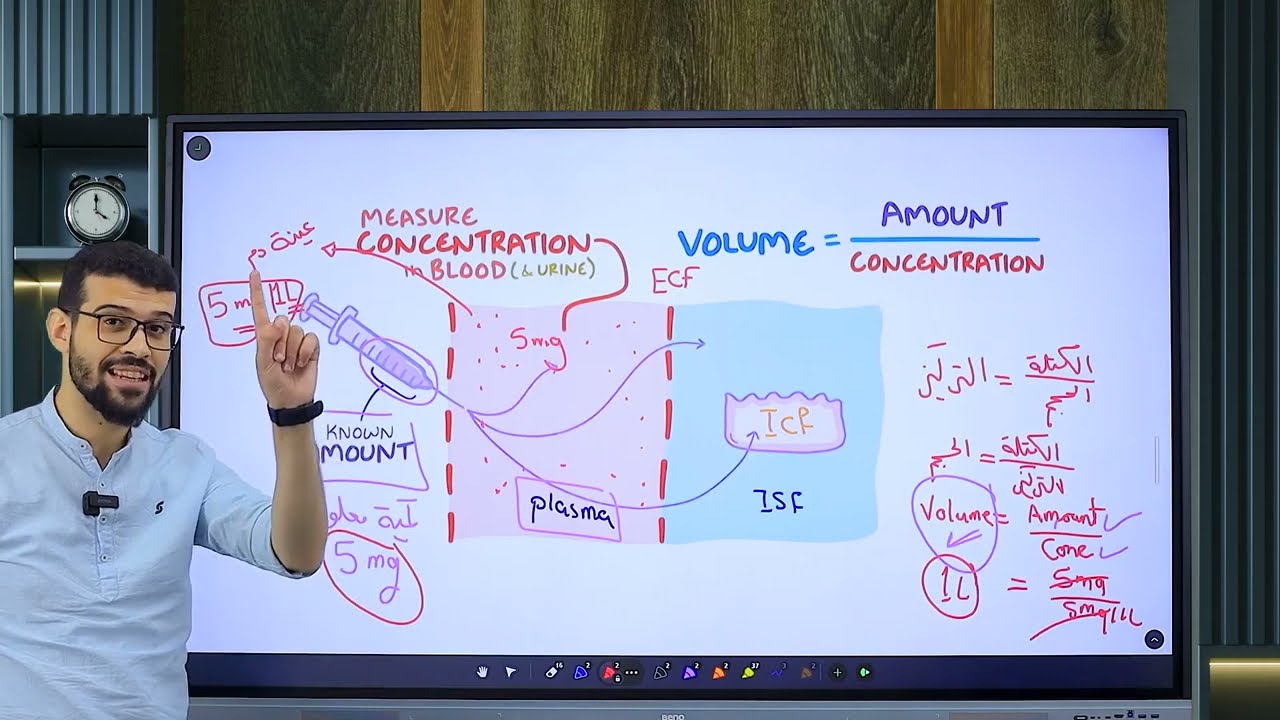


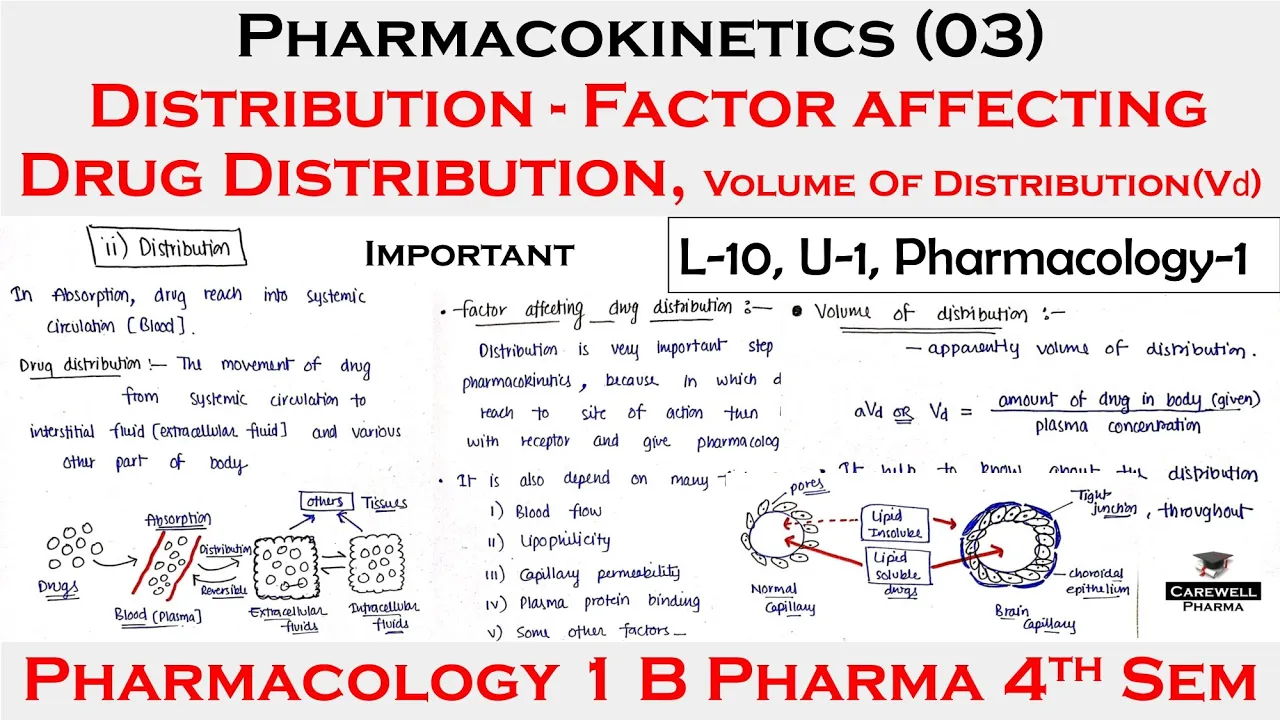
















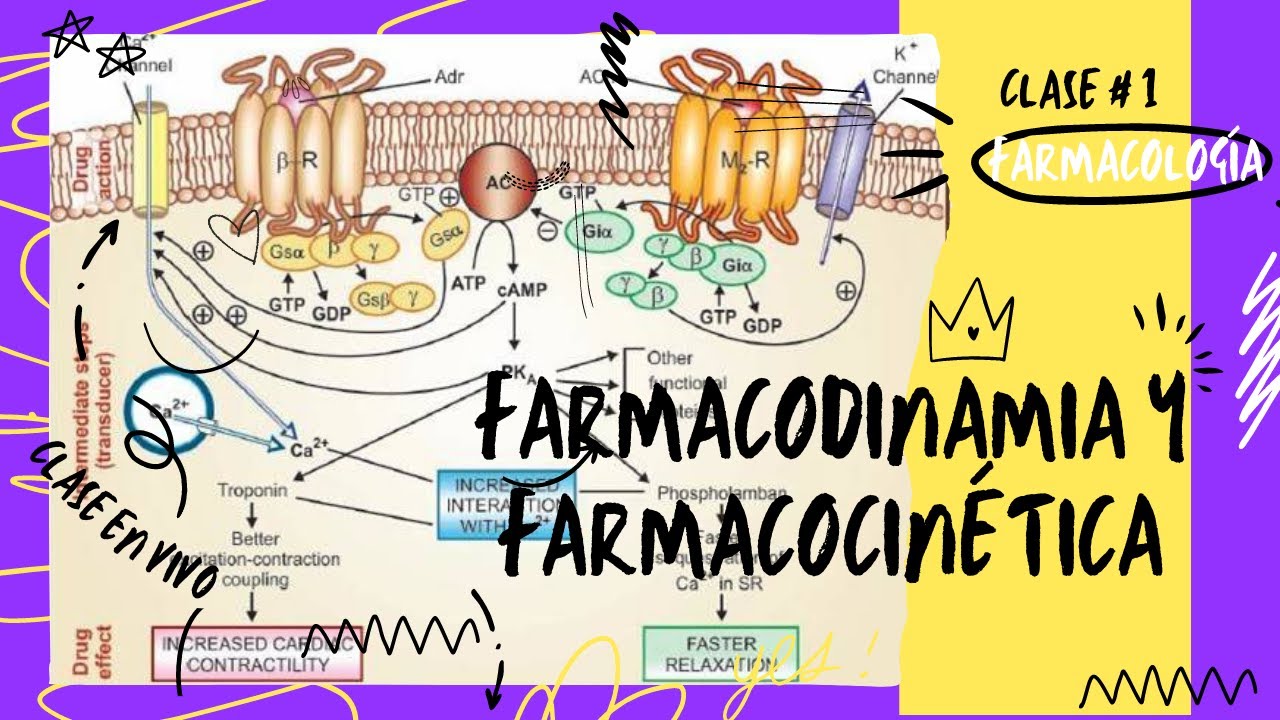



Volume of distribution (Vd) is a mathematical factor that converts the administered drug amount to its measurable plasma concentration immediately after intravenous dosing, assuming even distribution throughout the body; however, since drugs distribute differentially into various tissues and organs based on their affinity, Vd does not represent a real physical volume but rather indicates how extensively a drug distributes beyond plasma into body tissues.
Volume of Distribution Explained: Pharmacokinetics Made Simple
Added:Basic understanding of pharmacokinetics and the ADME (Absorption, Distribution, Metabolism, Excretion) framework.
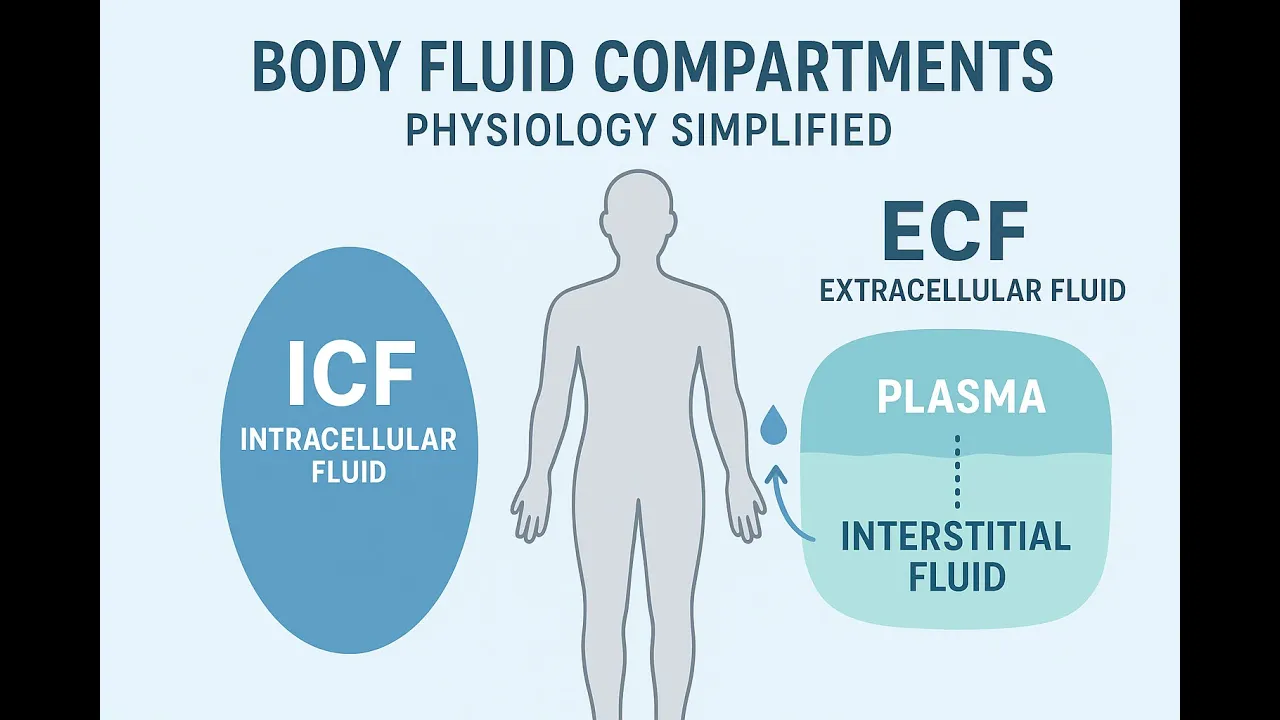
Knowledge of human body fluid compartments, including intracellular, interstitial, and plasma volumes.
The concept of drug-protein binding and how binding to plasma proteins like albumin affects drug distribution.
Fundamental algebraic relationships between dose, volume, and concentration (Concentration = Mass / Volume).
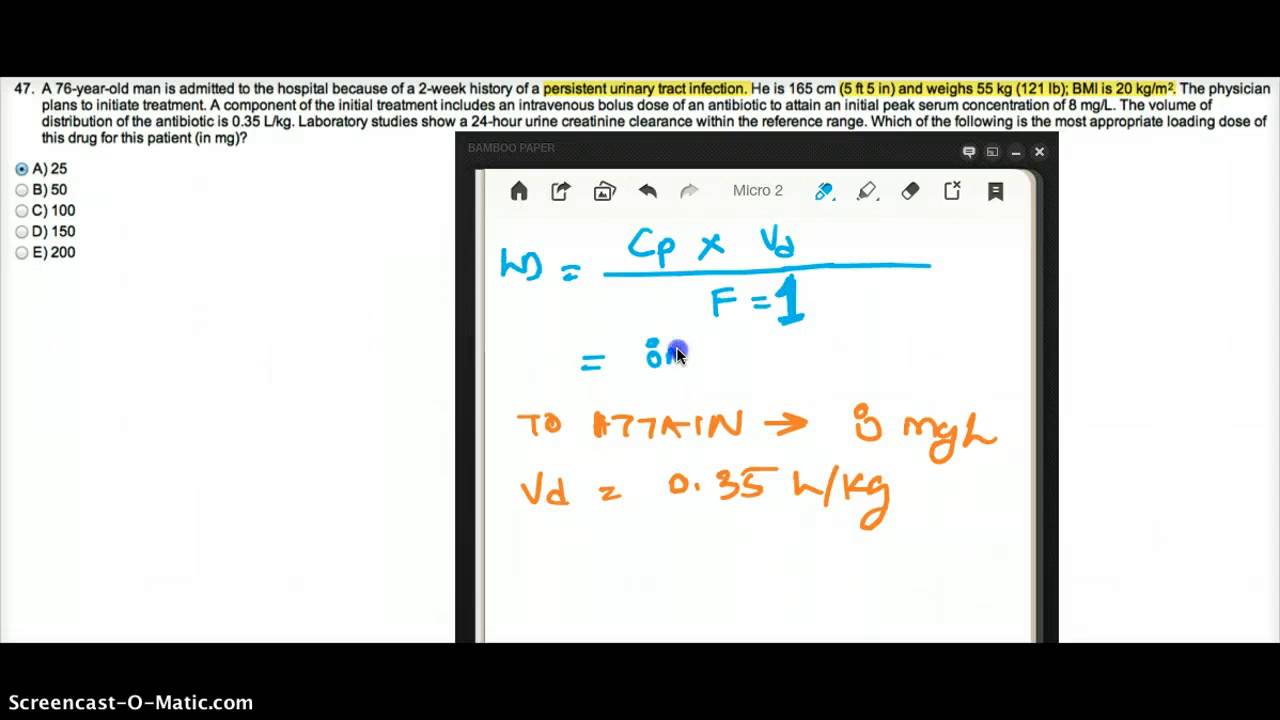
How to calculate a drug's loading dose using the volume of distribution and targeted plasma concentration.
The mathematical relationship between volume of distribution, clearance, and drug half-life.
Clinical implications of high versus low volume of distribution, such as the feasibility of using hemodialysis for drug overdoses.
Advanced multi-compartment pharmacokinetic models, representing rapid and slow phases of drug distribution.
How physiological alterations, such as pregnancy, obesity, and renal or hepatic disease, change a patient's volume of distribution.
42.9K views648likes4:12Original Release: 2017-04-04
many students actually have a problem trying to understand what the volume of distribution really is the trick here is to understand that it is not a real physical volume that we are talking about but it's merely a volume factor that converts the administered amount of a drug to the measurable concentration of the drug before any elimination of the drug has taken place the following analogy will actually help you understand this better now imagine there's a young man Mr Tan who had recently inherited a very funny and oddly shaped shopping mall he needed to know the floor area of the mall but he couldn't find any of its floor plans because it was so old so he devised a very ingenious method in estimating its floor area what he did was he brought 500 students to the mall who were all wearing very bright yellow University t-shirts and he allowed them to be distributed throughout the mall next he St stationed himself in the atrium of the mall which he can easily measure to be about 1,000 square m in size and then he made the simple headit count of the number of students that he could see present in the mall when he was in the ATM of the mall he observed an average of about five students present there and since the atrium is 1,000 square meters he reason that the 500 students would have been accommodated in approximately 100 * 1,000 square m and therefore he estimated that the mall was approximately 100,000 square m to be more certain about this data he repeated the experiment over the next two weeks the following week however he observed an average of only one student in the atrium this led him to estimate the mall to be 500 * 1,000 square m or 500,000 Square met and then the week after that he observed 20 students The Atrium and this led him to estimate the size of the mall to be only 25,000 square m so what's happening Mr Town realized that he had assumed wrongly that the students had distributed evenly throughout the mall his method for estimating the size of the mall would only be accurate if the HM accurately represented every other part of the sprawling Mall this unfortunately was not true on the first two occasions there were attractive sales and promotions which Drew many of the students away from the atrium and corridors into the smaller shops on the second occasion particularly there were two large and very attractive promotions in the shops on these occasions there were relatively few students in the mall leading perhaps to an overestimate of the mall size on the third occasion however there happened to be a food fair in the atrium this resulted in an extraordinarily High presence of students in the atrium and consequently an underestimate of the mold size now in Pho kinetics the understanding of the volume of distribution is pretty much the equivalent of Mr Tan's estimate of the mold size The observed drug concentration immediately after intravenous dozing may be used to estimate the total volume into which the administered drun distributes now is it important to realize that this actually does not indicate the physical volume of the body as it makes the assumption that the drug is evenly distributed throughout the body and that the plasma accurately represents every other part of the body this clearly is not true as the drug will distribute differentially into cells tissues and organs thus the volume of distribution will be large if the drug has a higher affinity for tissues than plasma conversely the volume of distribution will be small if the drug has a higher affinity for plasma and tissues
Up Next

10:35
Drug Clearance and Rate of Elimination | Pharmacokinetics Lecture 12
@areosaf
216K views•2012-11-17

48:47
Graphic Medicine: Comics for Collaborative Healthcare Communication
@nationalpatientadvocate
189 views•2023-12-04

10:28
Neuroanatomy: Central and Peripheral Nervous System Divisions Explained
@AKLECTURES
136.2K views•2014-09-20

3:05
Stages of Labor and Vaginal Birth | Childbirth Animation
@nucleusmedicalmedia
52.1M views•2017-08-18
Related Study Plans & Knowledge Roadmaps
Structured learning paths in Medicine
medicine
Abnormal LFTs: Diagnostic Workup & Pathology
01Liver Anatomy and Basic Physiology
02Introduction to Liver Function Tests (LFTs)
03Hepatocellular vs. Cholestatic Patterns
+ 3 more learning modules
12h6 modules
Explore Roadmap
medicine
Analyzing Blood Smears: RBC, WBC & Platelets
01Introduction to Blood Components & Smear Preparation
02Normal Morphology of Blood Cells
03Erythrocyte Pathologies & Morphological Variants
+ 2 more learning modules
12h5 modules
Explore Roadmap
medicine
Mechanical Ventilation: Waveforms & Alarms
01Anatomy and Physiology of Breathing
02Introduction to Mechanical Ventilation & Core Modes
03Ventilator Settings and Waveform Interpretation
+ 2 more learning modules
12h5 modules
Explore Roadmap
medicine
Neuro Exam: Localization & Stroke Syndromes
01Foundations of Neuroanatomy and Vascular Supply
02The Neurological Examination: Step-by-Step
03Principles of Neurological Localization
+ 3 more learning modules
18h6 modules
Explore Roadmap