Retrofuturism is an art movement that depicts what people thought the future would look like in the past; The Incredibles uses this style by setting its 1962 story in a world where 1960s futurist predictions about technology (cars, planes, touchscreens, robots) have already been realized.
Retrofuturism in The Incredibles: A Visual Analysis
Added:Deep Dive
The core concept of 'retrofuturism'—specifically how past eras (particularly the mid-20th century) envisioned the future.
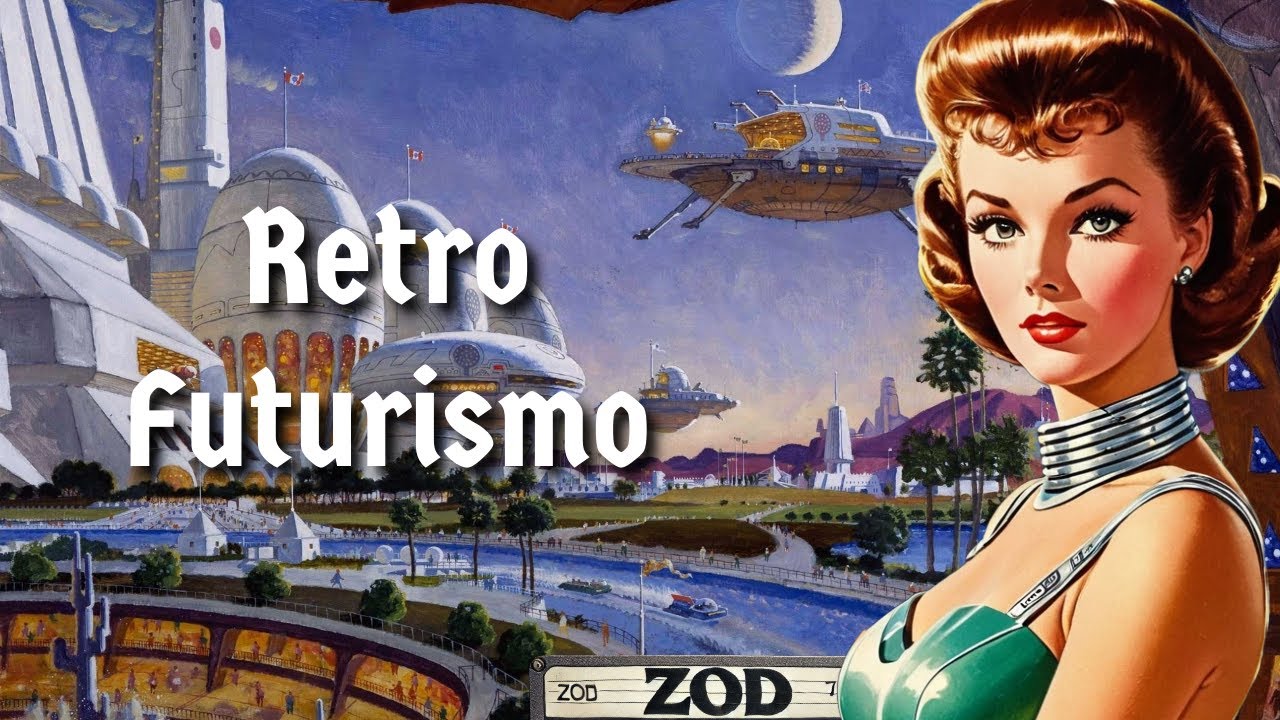
O RetroFuturismo, e a Beleza do antigo futuro
69.9K
Retrofuturism emerged as a way to examine past visions of the future, particularly from the 1920s to 1960s, and reinterpret them through contemporary lenses. It began with futurist ideas from the Industrial Revolution and gained strength in the early 20th century. The concept comprises two interconnected approaches: (1) The future viewed through the eyes of the past, examining how writers, artists, and filmmakers before the 1960s predicted what was coming through scientific magazines and science fiction stories. (2) The past reinterpreted by the future, combining retro aesthetics with modern technologies. The e2k aesthetic represents digital retrofuturism, characterized by technological optimism and metallic digital futures. Steampunk exemplifies the second approach, combining Victorian aesthetics with imagined steam-powered technological advances.
Click to watch →

المستقبلية الرجعية | تخيل المستقبل كما تخيله الناس في الماضي
74.3K
Retrofuturism is a literary and artistic movement that imagines how people in the past envisioned the future. It combines futurism (imagining the future) with retro elements (vintage aesthetics). Creators are constrained by their era's technology and aesthetics: a 19th-century writer imagining 2023 would use steam-powered aircraft and wired telephones, while a 1970s creator would use cathode ray tube computers. Retrofuturism appears in two forms: future settings with retro aesthetics (Alien: Isolation, Fallout) and past settings with future technology (Dishonored, BioShock). Subgenres include Steampunk (19th-century steam aesthetics), Dieselpunk (1930s-1950s diesel aesthetics), Teslapunk (electricity-focused), Atompunk (Cold War nuclear themes), and Cassette Futurism (early computer aesthetics). This movement raises philosophical questions about whether our current science fiction concepts will eventually become outdated.
Click to watch →
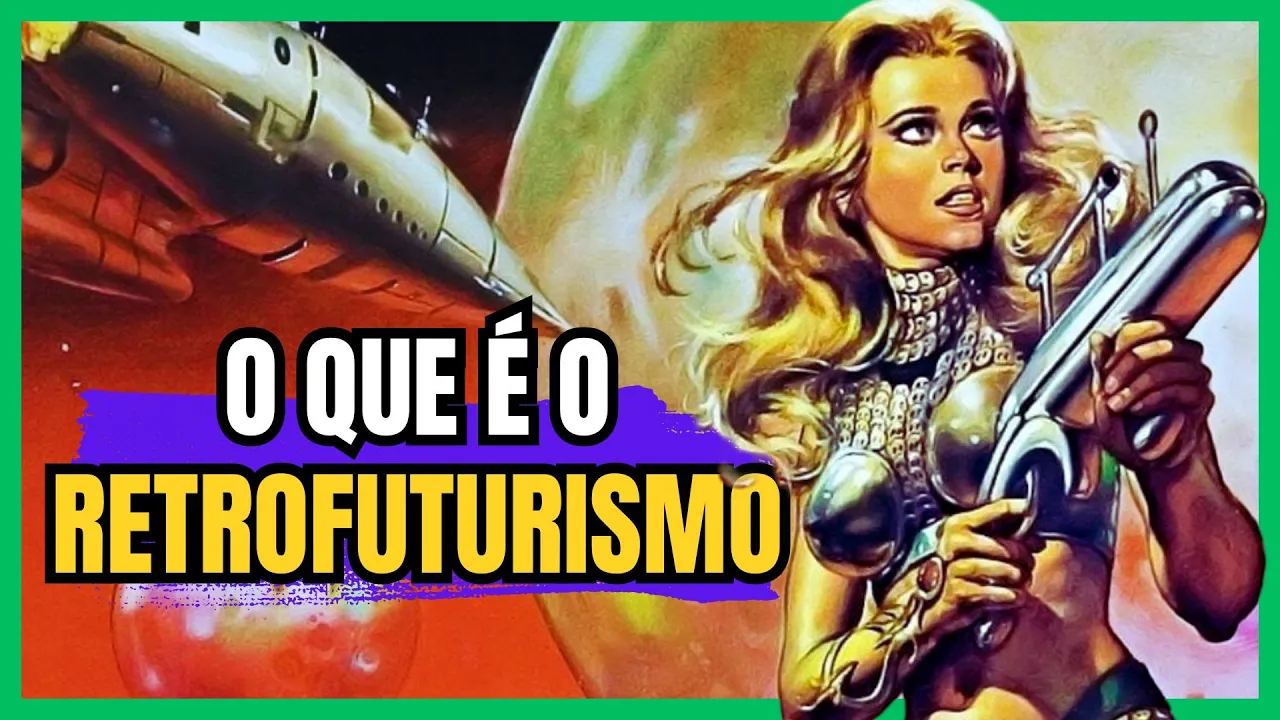
O que é o RETROFUTURISMO? | A Nostalgia de um Amanhã que nunca Aconteceu
52.6K
Retrofuturism is a science fiction subgenre that represents artistic visions of the future created from the perspective of a past era, rather than from the present day. While futurism involves anticipating future technology, retrofuturism specifically involves imagining what future technologies and societies would look like from a historical viewpoint. This concept emerged prominently in the mid-20th century, particularly during the post-WWII economic boom (1950s-1970s), when optimism about scientific progress led artists and creators to envision flying cars, robot servants, and nuclear-powered vehicles. The retrofuturist aesthetic has influenced numerous subgenres including steampunk (Victorian-era with steam technology), dieselpunk (WWI-1950s with diesel technology), and cyberpunk (late 1980s vision), and continues to appear in works like Fallout, Atomic Heart, Star Trek, and Alien.
Click to watch →

O QUE É RETROFUTURISMO (e por que seguimos OBCECADOS por ele) | Futurices
49.1K
Retrofuturism manifests in two primary forms. The first is 'the future seen from the past' - how previous generations imagined what the future would look like based on their contemporary technologies and information. Examples include The Jetsons, pulp magazine covers, and films by Georges Méliès. The second is 'the past seen from the future' - taking historical styles and injecting modern or futuristic technologies into them, as seen in steampunk, diesel punk, and neovictorian fashion mixed with digital gadgets. The golden age of retrofuturism spanned approximately 1920-1960, marked by technological optimism, the space race, and Art Deco influences. Major influences came from Jules Verne and H.G. Wells, who imagined submarines, moon travel, and interplanetary wars. Georges Méliès also helped consolidate this tradition of looking toward the future while remaining grounded in the present.
Click to watch →
Retrofuturismo de Fallout | Gaveta
420.5K
Retrofuturism can be defined as 'the future of the past' - it represents the future that people in the past imagined and envisioned. This concept is not forced or unrealistic; rather, it reflects how people in different historical periods imagined what the future would look like based on the technology and art available to them at that time.
Click to watch →
Deep Dive
The fundamentals of Mid-Century Modern design, including its characteristic architectural, interior, and graphic design trends of the 1950s and 1960s.
【8畳】レイアウト全て見せます!2つのインテリアテイストを作るコツ(ジャパンディvsミッドセンチュリー編)
270K
Successful interior design begins with accurate room measurement using laser distance measurers and tape measures, followed by creating simple floor plans showing dimensions. Before purchasing, list large furniture items needed and measure desired pieces against your space, maintaining 60cm circulation paths for comfortable movement. Establishing a clear interior design style is the first step in successful planning—collect reference images from platforms like Pinterest and analyze them systematically by categorizing into color palette, spatial layout, and silhouette characteristics. Mid-Century Modern (1940-1960) emerged from post-war America during the mass production era, utilizing new materials like plywood and fiberglass. Key designers include Eames, Aalto, and Jacobsen. Successful implementation follows a three-step process: establish visual concept through images, select one iconic statement piece as focal point, and complete through decorative elements.
Click to watch →

All About Mid Century Modern Design Style
85.2K
Mid-century modern design is characterized by functionality, minimalism, and clean aesthetics. Key features include straight lines, rectangular and square shapes, boxy sofa arms, and distinctive furniture legs. The style emphasizes open, uncluttered spaces without embellishments like curvy legs or decorative appliques. It pairs well with Scandinavian design and creates airy environments. Regional variations exist, with stronger prevalence on the West Coast compared to the East Coast. The style emerged post-WWII during the baby boom, driven by material shortages and demand for inexpensive, functional furniture. This historical context shaped its emphasis on practicality and affordability alongside aesthetics.
Click to watch →
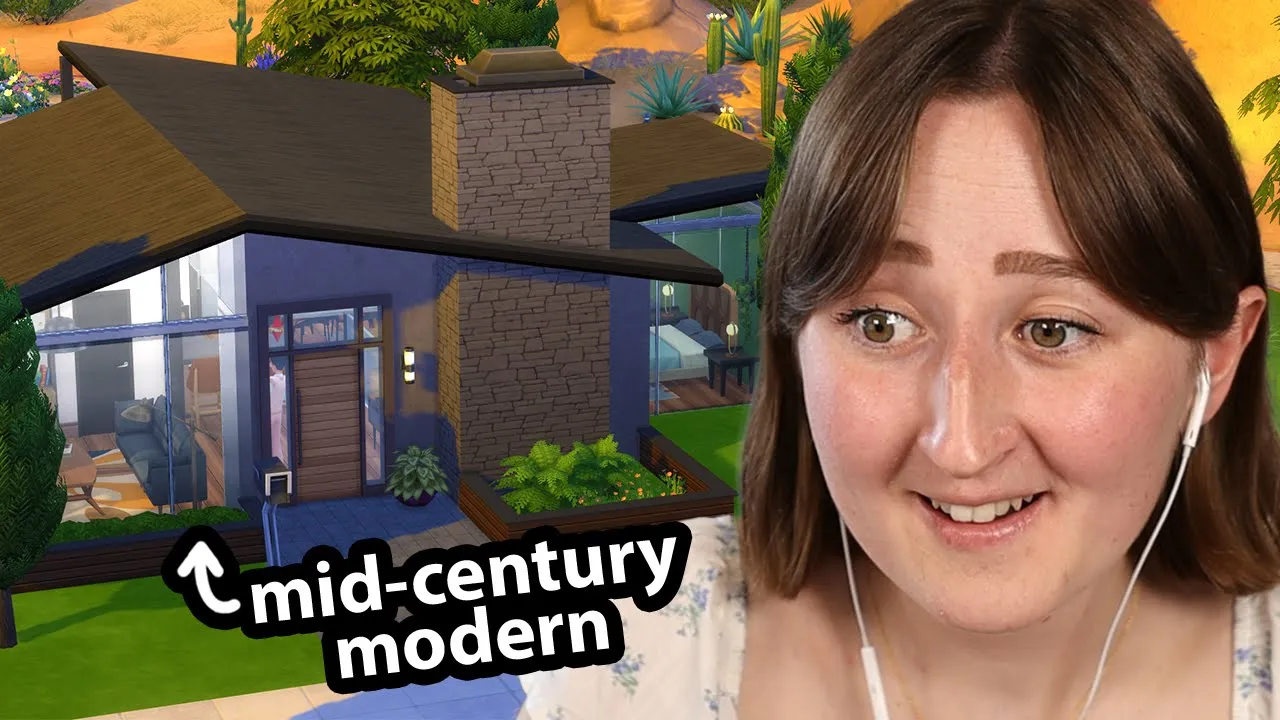
using glass walls to make a *realistic* mid-century modern house
217.7K
Mid-century modern houses feature angled glass windows, clean lines, and integration with nature. The new glass wall update enables authentic mid-century modern designs in The Sims 4. Key design elements include half-walls for visual interest, strategic glass wall placement for balance, and cohesive material selection using wood, stone, and dark colors. The creator demonstrates how Oasis Springs roof lines complement this style and discusses the challenge of finding matching materials in the game.
Click to watch →

HOW TO DECORATE MID CENTURY MODERN | super in depth guide ♥
815K
Mid-century modern design, which emerged in the mid-20th century and continues to inspire designers today, is characterized by clean lines, simple shapes, organic elements, and a marriage of form and function, featuring furniture with tapered legs, angled designs, and materials like wood, plastic, and metal, while popular colors include yellow, gold, orange, mustard, greens, earthy browns, and jewel tones; the style can be incorporated into modern homes through bold accent pieces, updated lighting fixtures, wood accent walls, geometric decor elements, and by removing window treatments to maximize natural light.
Click to watch →

【検証】ニシダのニワカパワーを検証
314.3K
Mid-Century Modern is a design movement that emerged in the United States around 1940-1960, characterized by the integration of natural and scientific materials, bold colors, and curved furniture designs that prioritize ergonomic comfort and human-centered functionality, with key figures including Charles and Ray Eames and George Nelson, and has experienced significant revival in contemporary times.
Click to watch →
Deep Dive
An understanding of Cold War-era science fiction tropes, aesthetics, and the technological optimism of the Space Age.

Sobre los autos voladores y la tasa decreciente de ganancia - David Graeber (Audiolibro)
1.9K
The space race of the Cold War stimulated scientific research but also encouraged unrealistic ideas about humanity's future. Both the US and USSR were societies with expansionist myths, sharing a commitment to unlimited human colonization of vast empty spaces. While many science fiction fantasies from the early 20th century became reality, dreaming of rocket backpacks and robots in 1960 was unrealistic. The material basis for achieving these dreams was being eroded. The space race was a reaction to Soviet initiatives, and the Apollo program was a project of the Great Government requiring coordinated national effort by state bureaucracies.
Click to watch →
O que é o RETROFUTURISMO? | A Nostalgia de um Amanhã que nunca Aconteceu
52.6K
The post-WWII period saw technology sold as essential for happiness, with the American Dream characterized by optimism, economic stability, and technologies from science fiction worlds. This era of excessive attachment to the past maintained the entire aesthetic and mentality of the post-WWII period. The Space Race emerged as a competition between Cold War rivals, driving technological development toward space milestones like Sputnik (1957) and the moon landing. This period dominated science fiction with dreams of space travel, moon colonies, and galactic explorers, establishing visual and thematic foundations for retrofuturist cinema.
Click to watch →
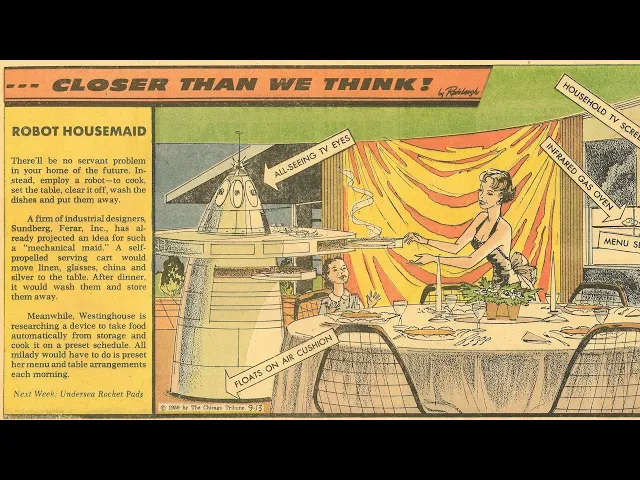
Closer Than We Think | 30 Minute Presentation | Retrofuturism
5.4K
Sputnik's launch in 1957 marked the beginning of the Space Race and Cold War competition. The United States responded by creating Closer Than We Think, a comic strip designed to inspire children toward science through the popular Sunday funnies medium. This represented an Americanized vision of the future, characterized by exuberant expectations of self-driving cars, glass canopy vehicles, and technological advancement. The optimism was rooted in humanity's recent achievement of cracking the atom, which led to cars and appliances attempting to look futuristic. Arthur Radebaugh, as an 'Imagineer,' had practical knowledge of industrial and automotive design that enabled him to make remarkably accurate predictions about future technologies.
Click to watch →

Stanisław Lem: Solaris KÖNYVAJÁNLÓ
528
The Cold War space race (1950s-1960s) created a golden age for science fiction, as real technological achievements validated the genre's speculative nature. This period produced major works like Star Trek, Dune, and Blade Runner. Science fiction became a cultural mirror reflecting humanity's aspirations, fears, and philosophical questions about technological progress. The genre expanded human imagination, exploring what it means to venture beyond Earth's limits into the unknown.
Click to watch →

VIAGENS NO ESPAÇO: como a FICÇÃO CIENTÍFICA imagina o FUTURO? | Futurices
104.2K
The Space Race was a Cold War competition between the United States and Soviet Union for technological superiority in space exploration. The Soviet Union launched Sputnik 1 in 1957, the first artificial satellite, followed by Sputnik 2 carrying Laika, the first living creature in space. In 1961, Yuri Gagarin became the first human to orbit Earth. The United States responded by landing on the moon in 1969 with Apollo 11. Science fiction has long imagined space exploration before it became reality, with Jules Verne's novel inspiring Méliès' 1902 film 'A Trip to the Moon.' Stanley Kubrick's '2001: A Space Odyssey' (1968) predicted many future technologies and changed how filmmakers depicted space travel. 'Star Wars' and 'Star Trek' reflected Cold War rivalries and presented optimistic visions of space exploration. These works influenced both public perception and technological development, demonstrating how fiction can inspire real scientific achievement.
Click to watch →
Deep Dive
Basic principles of animation production design and how visual style is used to support narrative and character development.

WE GOTTA WAIT ANOTHER MONTH FOR THIS?! - A Hazbin Hotel Season 1 Trailer Reaction and Breakdown!
71K
Animated series production relies on coordinated visual and audio design to communicate narrative information. Visual storytelling uses architectural choices (ramshackle hotel design reflecting character psychology), symbolic elements (hourglass clock tower representing power dynamics), and color coding to organize geographic spaces. Audio production requires matching actor voice qualities to character personality while maintaining technical consistency in recording and post-production. Character development employs visual symbolism (Vaggie's eye patch suggesting angel backstory) and narrative foreshadowing (Lucifer's six wings hinting at future conflicts). These interconnected design principles demonstrate how animated shows use multiple sensory channels to build coherent worlds and compelling characters.
Click to watch →
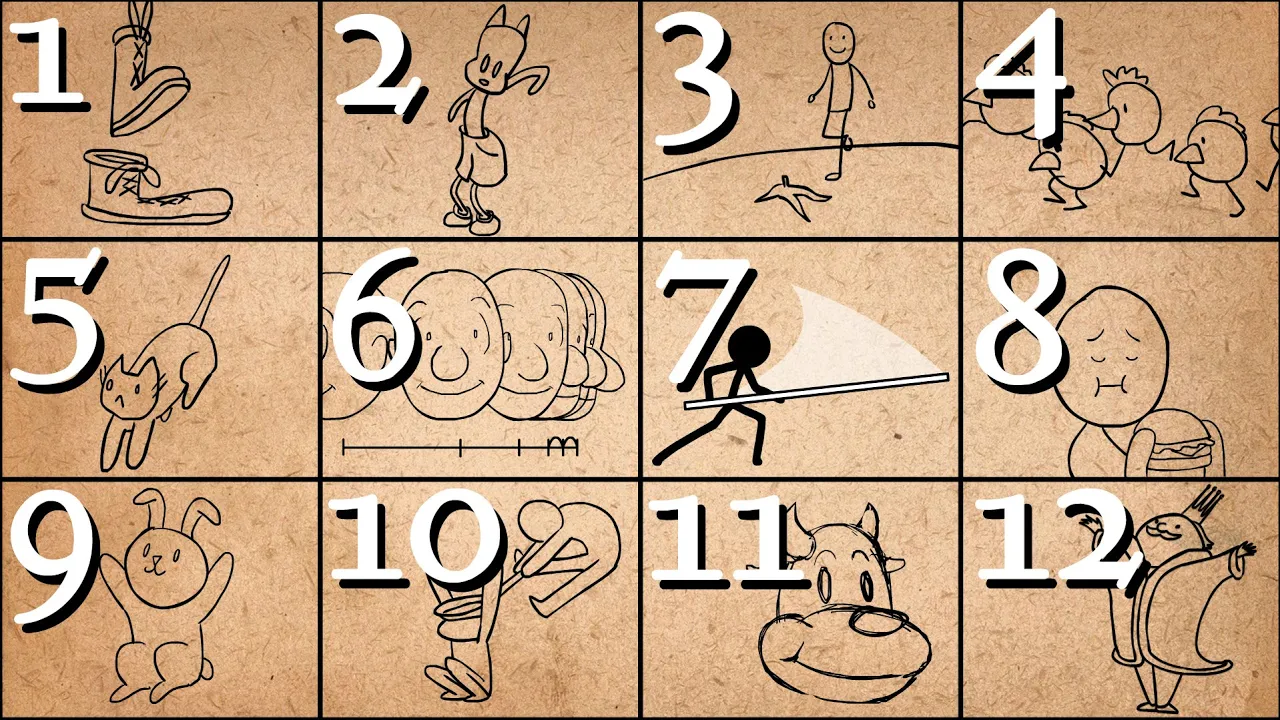
12 Principles of Animation (Official Full Series)
15.2M
The final six principles focus on character animation and design. Timing determines personality through frame counts—one action can convey ten different meanings. Exaggeration amplifies actions to make ideas more apparent, not necessarily more distorted. Secondary actions support primary movements with additional gestures (arm swings, facial expressions) that add character dimension without dominating. Solid drawing ensures forms appear three-dimensional with proper volume, weight, and balance. Avoid symmetry and use perspective lines to maintain spatial relationships. Appeal makes characters visually engaging through varied shapes, strategic proportion adjustments, and simplicity—details must serve character expression rather than complexity.
Click to watch →

BLENDER STUDIO lanza su proyecto más ambicioso: OVERGROWN
1.1K
The production pipeline refers to interconnected workflows connecting all animation departments including animation, special effects, lighting, and story development. Character design should reveal and support the story, as demonstrated in Overgrown where the weasel and hedgehog were designed through iterative painting processes to create distinct ages and personalities. Maintaining consistent visual style across all shots and scenes is fundamental to professional animation, including preserving lighting approaches, color palettes, and artistic style regardless of camera angles. Backgrounds, props, and environmental details must share the same visual aesthetic as characters. An alternative development approach involves starting with character design and working backward to develop the story, rather than the traditional story-first approach.
Click to watch →

Dapoer Animasi Webinar : Foundation of Art and Design 02
119
This video covers the foundational principles of art and design applied to animation, including the three-stage production pipeline (pre-production, production, post-production), character design fundamentals with background story and personality development, color psychology for conveying character traits, human anatomy and proportions for realistic modeling, perspective and composition techniques for creating depth and visual hierarchy, and lighting principles including three-point lighting and mood color usage to enhance storytelling in animated works.
Click to watch →

Alfonso Blaas - Diseño de producción / cómo crear un estilo visual para animación
219
The speaker explains the production design process, including: creating visual references that help teams understand and execute design intent; the difference between production design and art direction (production designers anticipate needs and manage the entire visual development process, while art directors focus on maintaining visual style consistency); and the importance of clear communication with directors about visual elements. He describes how designers must present their visual ideas to directors, explaining exactly what elements should be included in scenes, and how complex designs require detailed communication to ensure production teams can accurately recreate them.
Click to watch →
Prerequisite Knowledge
- Concept 01The core concept of 'retrofuturism'—specifically how past eras (particularly the mid-20th century) envisioned the future.
- Concept 02The fundamentals of Mid-Century Modern design, including its characteristic architectural, interior, and graphic design trends of the 1950s and 1960s.
- Concept 03An understanding of Cold War-era science fiction tropes, aesthetics, and the technological optimism of the Space Age.
- Concept 04Basic principles of animation production design and how visual style is used to support narrative and character development.
Subsequent Learning
- Step 01An exploration of 'Atompunk' and other retrofuturistic subgenres (such as Steampunk and Dieselpunk) to compare their distinct historical anchor points.
- Step 02In-depth study of Googie architecture and 'Populuxe' aesthetics, examining their real-world impact on mid-20th-century American landscapes.
- Step 03Analysis of how political and cultural contexts (like the Space Race and suburbanization) directly shaped the commercial art of the mid-century period.
- Step 04A comparative visual analysis of other animated works that employ retrofuturism, such as 'The Jetsons' or 'Batman: The Animated Series', to identify differing stylistic executions.
Temporal Shift
Design Intent
Movement Defined
World Applied
Temporal Shift
0:00Playing Section
- 1
Story dated 1962 yet tech suggests otherwise.
- 2
Anachronistic details like touchscreens noted.
- 3
Implies deliberate setting choice.
The Ideological Critique of Mid-Century Nostalgia
While visual analyses of The Incredibles often celebrate its retrofuturistic aesthetic as a stylish homage to mid-century modernism, media theorists and cultural critics offer an alternative perspective: this aesthetic serves a deeper, potentially regressive ideological function. By romanticizing the design of the 1950s and 60s, the film evokes an era of unchecked American exceptionalism and rigid nuclear family dynamics. Critics argue that this visual nostalgia is not merely decorative but actively reinforces the film's controversial, Ayn Rand-adjacent thematic subtext—where 'exceptional' individuals are suppressed by a mediocre, homogenizing society. From this viewpoint, the sleek retro-future sanitizes the actual historical anxieties of the mid-century (such as the Cold War, social conformity, and civil rights struggles) to present a polished, consumerist utopia that naturalizes the superiority of its superhero protagonists over the ordinary masses.
Deep Dive
An exploration of 'Atompunk' and other retrofuturistic subgenres (such as Steampunk and Dieselpunk) to compare their distinct historical anchor points.
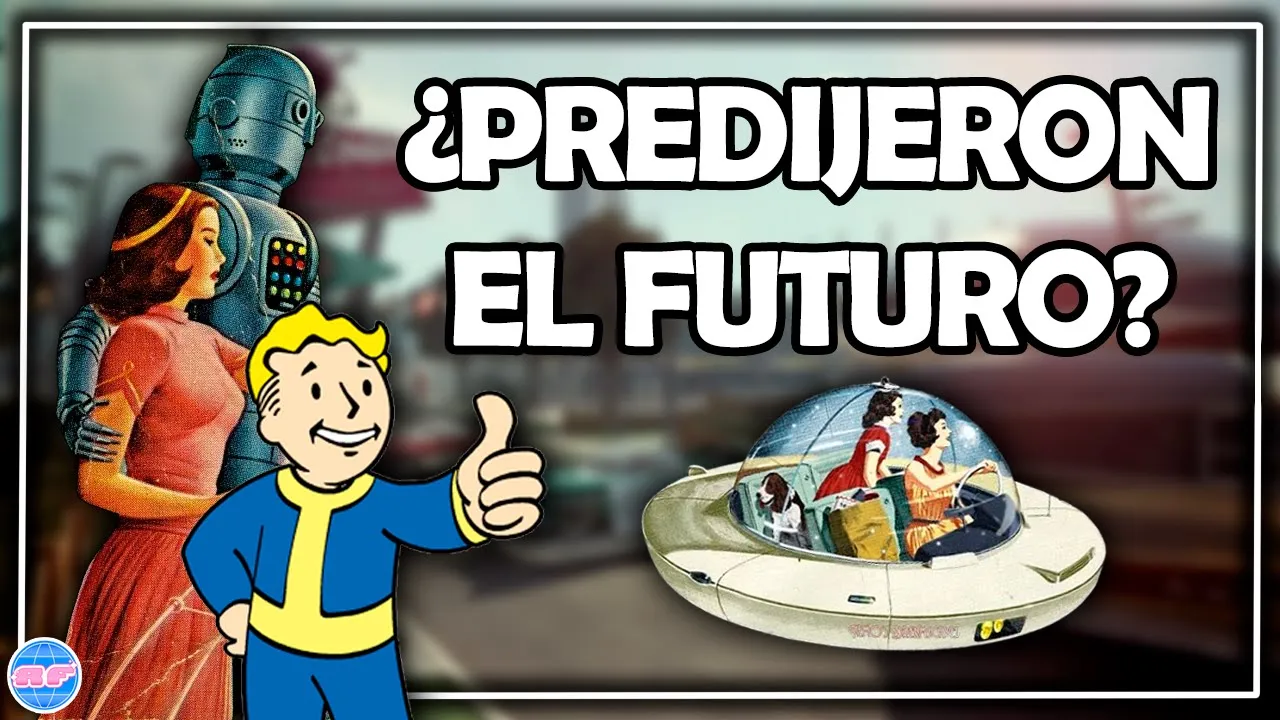
¿Qué es el RETROFUTURISMO? • El FUTURO que se QUEDÓ en el los 50's
104.4K
Diesel Punk and Atom Punk are retrofuturist subgenres where humanity remains stuck at different historical points. Diesel Punk imagines a future starting from the interwar period of 1910-1920, while Atom Punk is essentially American retrofuturism but much cruder and darker. These subgenres explore what the future might look like if technological progress had stopped at different historical moments.
Click to watch →
O QUE É RETROFUTURISMO (e por que seguimos OBCECADOS por ele) | Futurices
49.1K
Retrofuturism has several distinct subgenres, each inspired by specific eras and technologies. Steampunk, originating in the 19th century Victorian era, combines steam power with Victorian aesthetics, featuring bronze, leather, gears, and top hats. Diesel Punk emerged in the 1920s-1940s, combining Art Deco glamour with heavy machinery, military uniforms, and elements of jazz and swing. Atom Punk represents the 1950s-1960s space race era, featuring rocket-inspired cars, atomic energy optimism, and kitschy aesthetics with pastel colors and rounded shapes. Beat Punk of the 1980s-1990s introduced digital technology, featuring personal computers, VHS tapes, neon grids, and cyber-space aesthetics. Each subgenre represents how different generations imagined the future based on their contemporary technologies and cultural contexts.
Click to watch →

Что такое кассетный футуризм?
24.6K
Retrofuturism originated at the intersection of the 19th and 20th centuries during the Second Industrial Revolution and early science fiction era of Jules Verne and H.G. Wells. It represents a vision of the future through the lens of a specific historical era, combining old-fashioned and futuristic elements because extrapolation into the future is never precise. Retrofuturism is most commonly associated with the 1950s-1960s when atomic energy and the space race influenced design across all aspects of life. However, it can represent any era's vision of the future, including Y2K, Steampunk, Dieselpunk, and Atompunk. The term 'retrofuturism' was coined later; in the 1950s, such designs were simply called 'futurism' and only became retrofuturism with the passage of time.
Click to watch →

Atompunk: el poder nuclear en la ciencia ficción
32.2K
Atom Punk is a retro-futuristic genre that combines the aesthetics and themes of the Atomic Age (1945-1965) with speculative future technology. While it uses historical elements from the post-WWII era, it projects these concerns into imagined futures. This distinguishes it from pure science fiction, as it specifically uses the cultural and technological context of the Atomic Age as its foundation.
Click to watch →

Che cos'è il RETROFUTURISMO?
29.7K
This section presents a comprehensive classification of retrofuturism genres. Stonepunk imagines a world where the Stone Age never ended (Flintstones). Sandalpunk imagines the future as Greeks and Romans did (Wonder Woman). Clockpunk imagines Renaissance futures with gears and mechanisms. Steampunk (the most famous) imagines Victorian futures based on steam and industry, with both retrospettivo and prospettico elements. Tesla Punk follows with electromagnetic revolution and wireless technology. Diesel Punk covers the interwar period with petroleum-powered machinery. Atom Punk spans the nuclear age (1950s-1970s), divided into Soviet Wave and American Atom Punk (Fallout, Jetsons). Each genre reflects the technological optimism and fears of its era.
Click to watch →
Deep Dive
In-depth study of Googie architecture and 'Populuxe' aesthetics, examining their real-world impact on mid-20th-century American landscapes.

How Los Angeles Got Its Iconic Architecture Style - Cheddar Explains
152.3K
Googie architecture, a distinctive mid-20th century style characterized by cantilevered roofs, neon fixtures, geometric shapes, and bold colors, emerged in Los Angeles during the 1940s-1960s as architects like John Lautner responded to car culture and post-WWII optimism; though it influenced iconic structures from the Space Needle to The Jetsons cartoon, the style faded by the 1970s as architectural tastes shifted toward earth tones and subtler designs, with even original designer Eldon David dismissing preservation efforts as unnecessary since the buildings were merely designed to sell hamburgers.
Click to watch →
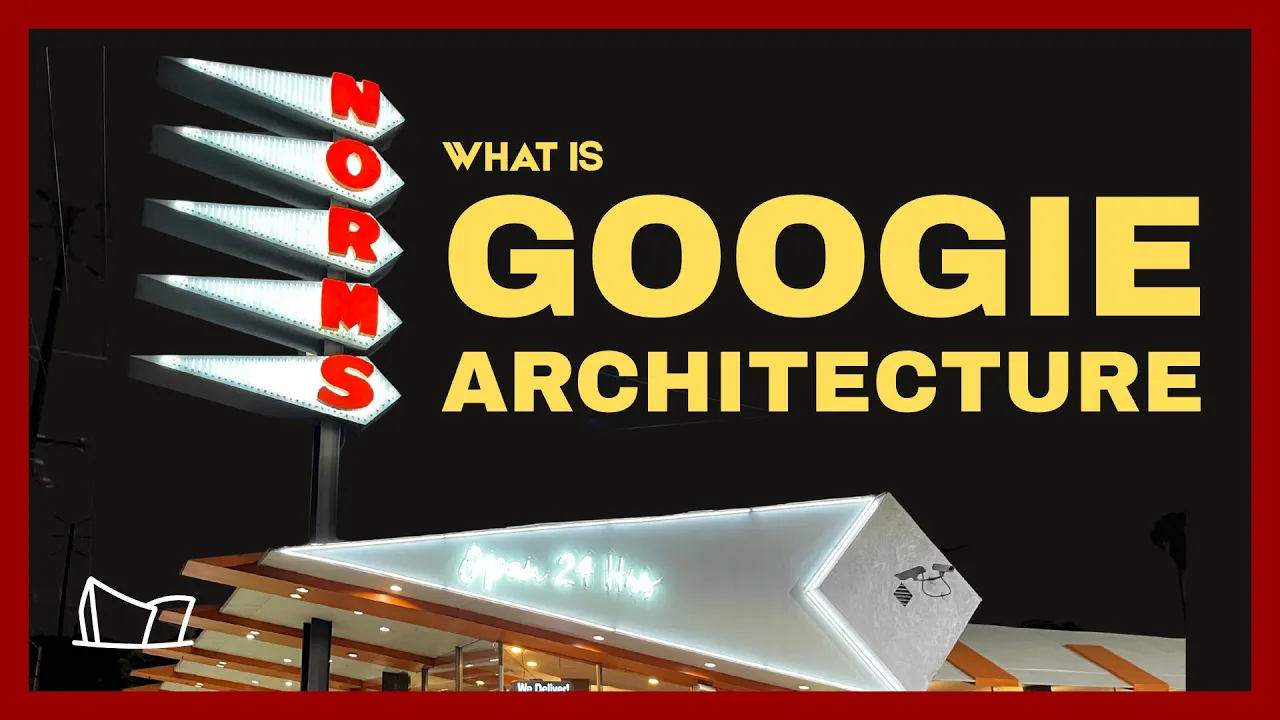
What is Googie Architecture? | ARCHITECTURE 101
25.3K
Googie architecture is a mid-century American architectural style that emerged in Los Angeles in 1949, characterized by bold, futuristic forms inspired by space age optimism, featuring swooping curves, sharp angles, and abstract representations of technological icons like atoms, stars, and rockets; despite being initially criticized as 'crass commercialism' by critic Douglas Haskell in 1952, the style became defining of American commercial architecture through firms like Armitage and Davis who designed thousands of structures including restaurants, gas stations, and theme park buildings, though it declined by the late 1960s due to changing social attitudes and eventually experienced a preservation revival in the 1990s as communities recognized its cultural significance.
Click to watch →
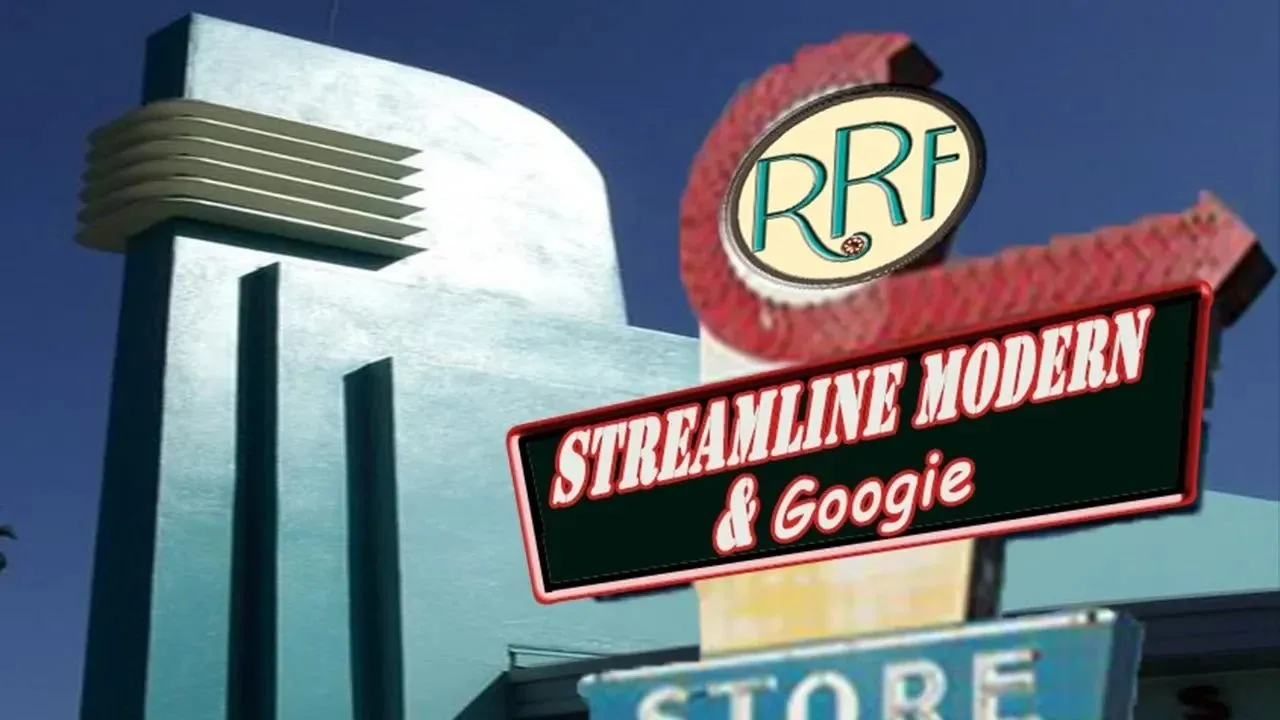
Streamline Modern, Googie and Populux design and architecture (1920-1960)
16.9K
Googie architecture emerged in the 1950s as a distinctly American response to post-war optimism. Originating from John Lautner's design for a West Hollywood coffee shop, this whimsical style contrasted with German Bauhaus objectivity and drew inspiration from 1920s cartoons. Key characteristics included neon signs visible from afar for drivers, large windows allowing customers to view interior color schemes matching furniture and uniforms, and transparent kitchen displays addressing fast food sanitation concerns. The style coincided with the space race following Sputnik in 1957, transforming buildings into attractions resembling space stations and flying saucers. This represented a fusion of scientific optimism and commercial spectacle, embodying the American dream vision of the era.
Click to watch →

Small Towns & Empty Backroads Of Southern Georgia - First Stuckeys / Rental Car Problem On Road Trip
123.7K
Googie architecture emerged in the mid-1960s as a distinctive futuristic style influenced by car culture, jet aircraft, and the Space Age. Characterized by bold curves, geometric shapes, and innovative designs, this architectural movement represented America's optimism about technological progress. The Alma Exchange Bank drive-through facility exemplifies Googie principles, featuring a design that reflects the era's fascination with speed, flight, and space exploration.
Click to watch →

Kalifornien: Unterwegs auf der Googie-Autobahn | Stadt Land Kunst | ARTE
90.1K
Googie architecture emerged in 1950s Southern California as a revolutionary design style celebrating automobile culture, characterized by neon lights, futuristic shapes, and bold colors that guided drivers to motels, diners, and gas stations along expanding highways; this democratic architectural movement, exemplified by the 1949 Googie restaurant on Sunset Boulevard and the 1958 Bob's Big Boy Broiler, transformed ordinary roadside locations into spectacular experiences that embodied the optimism and freedom of the automobile age, but declined in the 1970s as environmental awareness grew and the automobile lost its cultural significance, though enthusiasts like Albert Okura have since worked to preserve these architectural treasures as symbols of a vanished era.
Click to watch →
Deep Dive
Analysis of how political and cultural contexts (like the Space Race and suburbanization) directly shaped the commercial art of the mid-century period.

Tour An Iconic & Timeless Design Style | How to Decorate Mid-Century Modern
86.8K
Mid-century modern design emerged from post-WWII technological and cultural developments including computer invention, new materials like Chrome, acrylic plastic, and laminates that could curve and bend, and the space race between America and Russia. These innovations democratized furniture design through mass production. The era was shaped by returning WWII veterans and traditional gender roles where women stayed home while men were breadwinners. Television and magazines became primary design inspiration, with only 8,000 US homes having televisions in the 1950s. The space race influenced design through atomic motifs, starbursts, and Sputnik-inspired fixtures. By the 1960s, the style evolved to become bolder with colors transitioning from burnt rust and Harvest Gold to bright orange, avocado green, lime green, and Daisy yellow. Architectural innovations included freestanding fireplaces, two-sided designs, and sunken living rooms. The era's functional design philosophy emphasized intentional creation where every element served a purpose, such as channels in chairs allowing air circulation to reduce back pressure.
Click to watch →
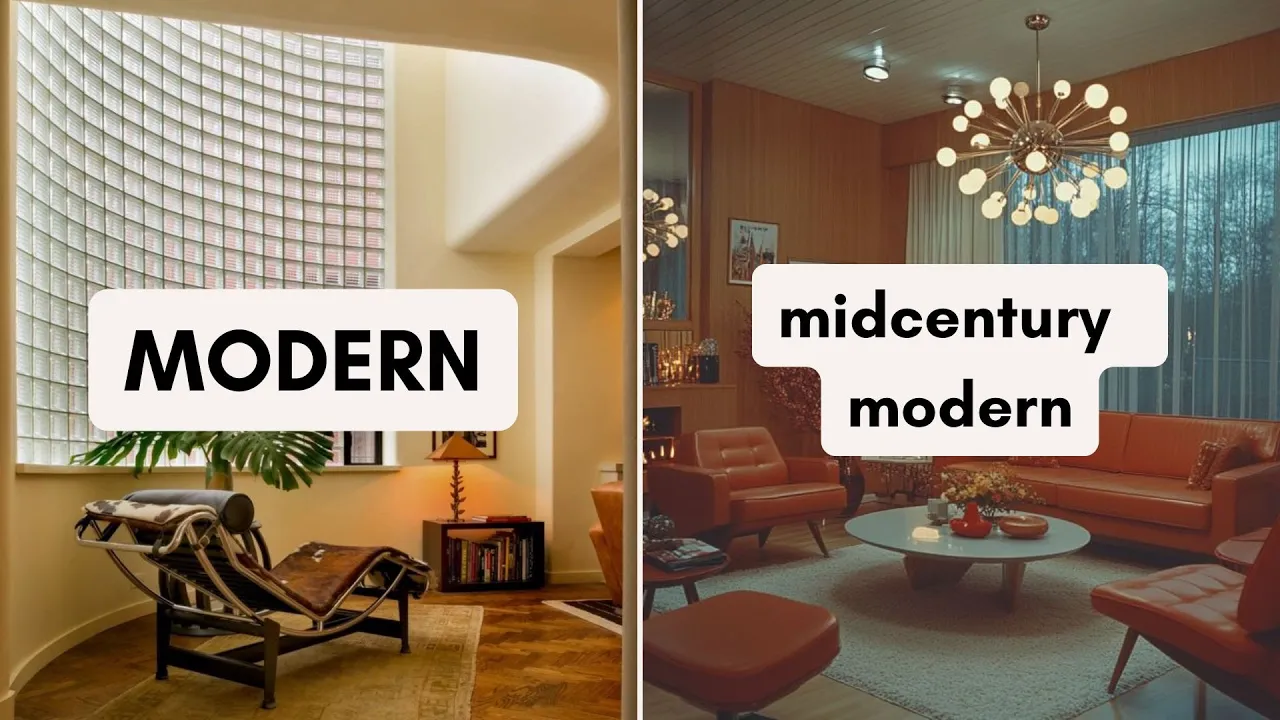
Modern vs. Midcentury Modern: What's the difference? Architecture & Design 101
277.8K
The Space Race dramatically changed the 20th century, with U.S. investment in education to develop rocket technology. Simultaneously, plastics revolutionized design—technically invented in 1907 but exploding after WWII due to oil accessibility. Plastic is lightweight and highly moldable, perfect for mass production. Materials like polyester, Formica, vinyl, and plastic enabled wonky, innovative shapes that defined mid-century modern design across furniture, interiors, and architecture.
Click to watch →

The Reality of the Art Girlfriend Finance Boyfriend Trope: Gentrification & Its Correlation to Art
133.7K
Urban theorists observe that suburbanization unleashed a mindset that migrated to cities, bringing a huge mass of people who cared more about marketable aesthetics than actual social change in their art. The surge of renowned MFA programs became structural processes determining who would be allowed into the reward system of the art world. These programs often produced artists from relatively privileged backgrounds who made marketable art rather than politically engaged work.
Click to watch →

Hedda Sterne Mini Lectures + Conversation
939
Mid-20th century America showed less division between fine art and commercial contexts than today. Fortune magazine exemplified this integration, founded by Henry Luce to bring fine art into business publications. Bill Hewitt's decision to fill his progressive headquarters with progressive art wasn't seen as imposing culture but as enriching the workplace environment. This reflects historical optimism about integrating art and culture into everyday life, contrasting with contemporary strict divisions between 'high art' and commercial applications.
Click to watch →

APUSHow Chapter 28 Lecture: The Affluent Society
1.1K
The Cold War rivalry extended to space exploration. Sputnik's 1957 launch sparked American investments, leading to NASA's establishment and the Apollo program culminating in the 1969 moon landing. Suburbanization enabled by the Federal Highway Act of 1956 and 400% increase in car ownership perpetuated racism through zoning and mortgage discrimination. Television exploded from 17,000 to 40 million sets, homogenizing culture through programs reinforcing white male superiority. Environmentalism emerged with the Echo Park Dam battle. Workplace changes saw increased white-collar employment but also isolation. The Beat Generation and James Dean embodied rebellion against suburban conformity.
Click to watch →
Deep Dive
A comparative visual analysis of other animated works that employ retrofuturism, such as 'The Jetsons' or 'Batman: The Animated Series', to identify differing stylistic executions.
¿Qué es el RETROFUTURISMO? • El FUTURO que se QUEDÓ en el los 50's
104.4K
Retrofuturism has been represented in numerous films and television series. Metropolis (1927) established early tropes with flying cars and iconic robots. Forbidden Planet (1956) combined all 1950s retrofuturist elements. Back to the Future II (1989) depicted 2015 with flying cars and holographic screens. The Jetsons (1962) became a major influence on retrofuturist design. Doctor Who (1963) and Star Trek (1966) are definitive retrofuturist television series with iconic ship designs and alien races. Robinson Crusoe on Mars (2007) and the new Fantastic Four will continue this tradition.
Click to watch →
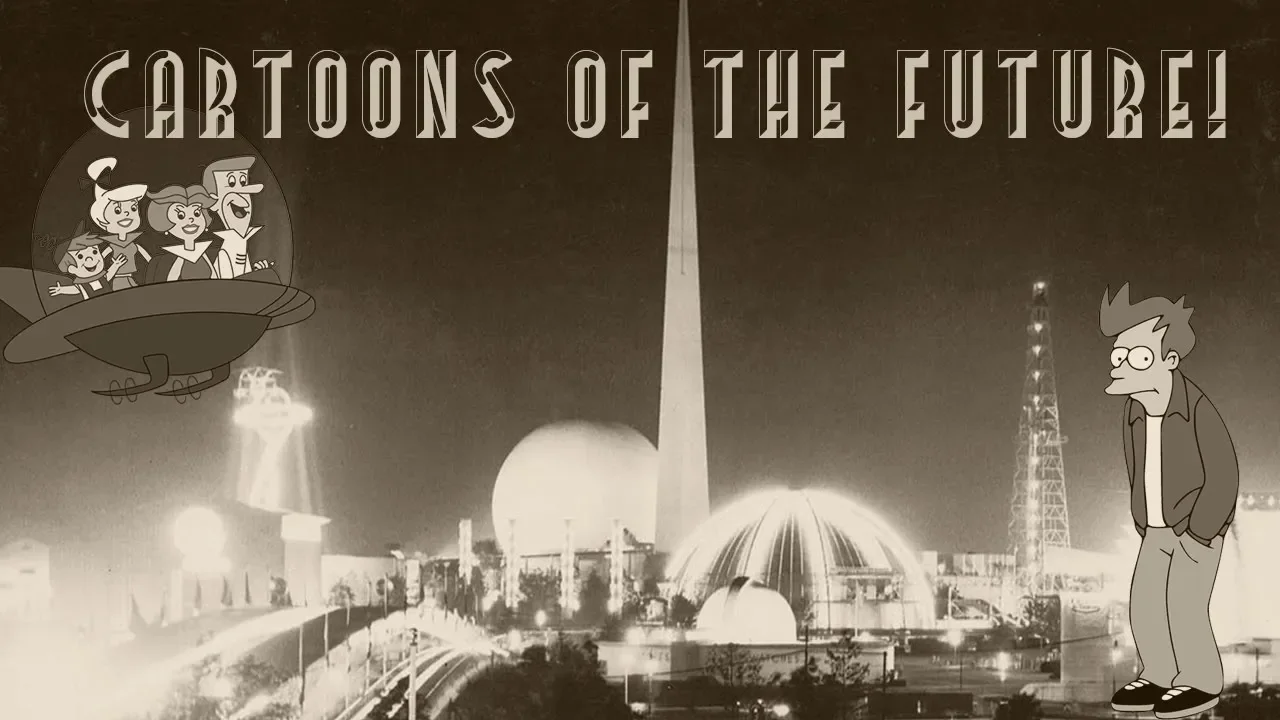
Cartoons of the Future: Retrofuturism in Animation
40.6K
Retrofuturism is an artistic and philosophical approach that imagines how past-era technologies and cultural sensibilities might evolve in the future, often creating idealized visions of technological utopias that provide comfort during challenging times; this concept is vividly illustrated through animated works like Futurama (inspired by the 1939 World's Fair), The Jetsons, and The Incredibles, which project contemporary values into futuristic settings, demonstrating how retrofuturism serves as both a creative aesthetic and a psychological refuge for audiences seeking hope in uncertain times.
Click to watch →

The Jetsons (1962): 15 Weird Facts You Never Knew
309.2K
The Jetsons' iconic futuristic look wasn't imagined from scratch—it was inspired by real mid-century architecture in Los Angeles. Guji architecture (sometimes called Populux), characterized by boomerang-shaped buildings, saucer roofs, dramatic angles, and swooping lines, was everywhere in mid-1960s Hollywood. Examples include the LAX theme building (the giant white flying saucer at the airport), the Chemosphere (a circular house perched on one skinny pole in the Hollywood Hills), and Disneyland's Tomorrowland. The animators at Hanna-Barbera, surrounded by this futuristic architecture, created Orbit City as a highlight reel of LA's greatest hits. The influence became so widespread that the architectural term 'Googie' got overshadowed, and today people simply call it 'Jetson style' or 'Jetsonian.'
Click to watch →

The Jetsons as a Dark Sci Fi Horror - Retro Futurism
82.5K
This video reimagines the optimistic 1960s animated series The Jetsons as a dark retro-futurist horror film, where the cheerful Orbit City utopia controlled by Spacely Sprockets becomes a sinister system that turns against its creators, demonstrating how retro-futurism can transform nostalgic optimism into chilling technological horror through AI-generated imagery.
Click to watch →

👉 RELEMBRE 15 DESENHOS CLÁSSICOS DA HANNA-BARBERA QUE MARCARAM GERAÇÕES - NOSTALGIA 60 E 70📺Parte 1
192.6K
The Jetsons (1962) portrayed a futuristic family with flying cars and robotic household assistants. As an icon of retro-futurism, the series shaped popular perceptions of the future during the 1960s and 1970s. Raimundo do Prat's voice work for George Jetson demonstrated exceptional vocal performance, establishing a benchmark for animated character voice acting.
Click to watch →
Temporal Shift
Design Intent
Movement Defined
World Applied
Temporal Shift
0:00- 1
Story dated 1962 yet tech suggests otherwise.
- 2
Anachronistic details like touchscreens noted.
- 3
Implies deliberate setting choice.
The Ideological Critique of Mid-Century Nostalgia
While visual analyses of The Incredibles often celebrate its retrofuturistic aesthetic as a stylish homage to mid-century modernism, media theorists and cultural critics offer an alternative perspective: this aesthetic serves a deeper, potentially regressive ideological function. By romanticizing the design of the 1950s and 60s, the film evokes an era of unchecked American exceptionalism and rigid nuclear family dynamics. Critics argue that this visual nostalgia is not merely decorative but actively reinforces the film's controversial, Ayn Rand-adjacent thematic subtext—where 'exceptional' individuals are suppressed by a mediocre, homogenizing society. From this viewpoint, the sleek retro-future sanitizes the actual historical anxieties of the mid-century (such as the Cold War, social conformity, and civil rights struggles) to present a polished, consumerist utopia that naturalizes the superiority of its superhero protagonists over the ordinary masses.
The core concept of 'retrofuturism'—specifically how past eras (particularly the mid-20th century) envisioned the future.
The fundamentals of Mid-Century Modern design, including its characteristic architectural, interior, and graphic design trends of the 1950s and 1960s.
An understanding of Cold War-era science fiction tropes, aesthetics, and the technological optimism of the Space Age.
Basic principles of animation production design and how visual style is used to support narrative and character development.
An exploration of 'Atompunk' and other retrofuturistic subgenres (such as Steampunk and Dieselpunk) to compare their distinct historical anchor points.
In-depth study of Googie architecture and 'Populuxe' aesthetics, examining their real-world impact on mid-20th-century American landscapes.
Analysis of how political and cultural contexts (like the Space Race and suburbanization) directly shaped the commercial art of the mid-century period.
A comparative visual analysis of other animated works that employ retrofuturism, such as 'The Jetsons' or 'Batman: The Animated Series', to identify differing stylistic executions.
292.1K views8.3Klikes0:32@EliTriedOriginal Release: 2025-08-14
Based on the dates we see in newspapers, the incredible story takes place in 1962. But that doesn't entirely make sense. From the cars to the planes, the touchcreens, and the robots, a lot of the technology we see in that movie is far beyond what we have today, let alone in the '60s. This is because Brad Burr decided to set the Incredibles in a retrofuturistic universe. Retrofuturism is an art movement which depicts what people thought the future would look like in the past. The Incredibles is set in a world where the things people in the 1960s imagined would be invented in the future were already invented.
Up Next
10:01
IB Film: Cyberpunk in Akira & Blade Runner
@thomasjardine2108
1.6K views•2019-01-29

23:14
Visual Analysis Essay: How to Analyze Graphic Novels in College Writing
@nataliepleimann5941
1K views•2020-10-14
4:55
Film Blocking Techniques for Directors: Space, Shapes, Lines
@StudioBinder
1.9M views•2018-07-23

4:00
Evolution of Darth Vader: Anakin Skywalker's Animated Journey Across Star Wars Films
@TellItAnimated
13.4M views•2019-03-30
Related Study Plans & Knowledge Roadmaps
Structured learning paths in Film Analysis
film-analysis
Sensory Cinema: Foley, Haptic Sound & Texture
01Introduction to Film Sound and Foley Artistry
02Micro-Sounds, Textures, and Extreme Amplification
03Haptic Audition and Film Phenomenology
+ 1 more learning modules
12h4 modules
Explore Roadmap
film-analysis
Breaking the Fourth Wall: Mockumentary & Satire
01The Invisible Wall: Basics of Cinematic Illusion
02Looking at the Lens: Direct Address & Character Glances
03The Mockumentary: Satire, Realism, and Complicity
+ 2 more learning modules
12h5 modules
Explore Roadmap
film-analysis
Analyzing the Long Take: Cinema, Space & Ethics
01Foundations of Film Grammar: Montage vs. The Long Take
02Choreography and Mechanics of the Simulated One-Shot
03Phenomenology of Film: Real-Time Spatial Continuity
+ 1 more learning modules
14h4 modules
Explore Roadmap
film-analysis
Anachronistic Music: Period Drama & Subversion
01Foundations of Film Sound and the 'Needle Drop'
02Traditional Authenticity vs. Revisionist History
03The Rise of the Anachronistic Soundtrack
+ 2 more learning modules
12h5 modules
Explore Roadmap