






















![[UFMS Digital] Blockchain e suas Aplicações - Módulo 4 - Unidade 2](https://i.ytimg.com/vi/MG2N0XHnYJs/maxresdefault.jpg)
The 2008 Financial Crisis was caused by a combination of factors including the securitization of mortgages into mortgage-backed securities and collateralized debt obligations (CDOs), which were rated as safe investments by credit rating agencies despite containing risky subprime loans; this led to a housing bubble that burst when borrowers defaulted on their mortgages, causing home prices to collapse and triggering a chain reaction throughout the financial system, ultimately requiring government intervention through programs like TARP ($700 billion) and the stimulus package ($800 billion), as well as regulatory reforms like the Dodd-Frank Act to prevent future crises.
The 2008 Financial Crisis: Causes, Government Response, and Lessons
Added:Understanding of basic macroeconomic principles, specifically the role of the Federal Reserve and monetary policy in setting interest rates.
The fundamentals of the housing market, including how traditional residential mortgages work and the concept of credit risk.
Basic knowledge of financial markets and securities, particularly the concept of securitization (how individual loans are pooled into sellable financial assets).
The distinction between commercial banking (deposit-taking and consumer lending) and investment banking (underwriting and trading securities).
An in-depth analysis of the Dodd-Frank Act, including key provisions like the Volcker Rule and the establishment of the Consumer Financial Protection Bureau (CFPB).
The study of unconventional monetary policies implemented post-crisis, such as Quantitative Easing (QE) and forward guidance.
A comparative study of the 2008 Financial Crisis and other major economic downturns, such as the Great Depression of 1929 or the 2010 Eurozone Debt Crisis.
The exploration of Basel III capital accords and modern macroprudential regulations designed to mitigate systemic risk and prevent 'too big to fail' scenarios.
The evolution of alternative financial technologies (Fintech) and decentralized finance (DeFi), which emerged partly in response to the lack of trust in traditional banking post-2008.
4.8M views80Klikes11:24Original Release: 2015-10-21
Jacob: Welcome to Crash Course Economics. My name is Jacob Clifford.
Adrienne: And I'm Adrienne Hill. And today we're going to do something a little different.
We're going to explore one moment in history in depth. We're going to talk about how the 2008 Financial Crisis happened and the government response to it in the United States.
Jacob: So let's get started.
[Theme Music] Jacob: The 2008 Financial Crisis was a big deal. Ben Bernanke said it could have resulted in a 1930s style global financial and economic meltdown with catastrophic implications. But what happened? Why did it happen? And why aren't we all huddled around burning trash cans forming a raiding party to go steal gas from other tribes in the wasteland?
By the way, if you're actually doing that, you probably didn't hear we survived the financial crisis. Things got better. Seriously. Put down your crossbows.
Adrienne: To explain what happened, first we have to do a quick explainer about mortgages.
And you might already know this, but basically someone that wants to buy a house will often borrow hundreds of thousands of dollars from a bank. In return, the bank gets a piece of paper, called a mortgage.
Every month, the homeowner has to pay back a portion of the principle, plus interest, to whomever holds the piece of paper. If they stop paying, that's called a default. And whomever holds that piece of paper gets the house.
The reason I'm saying whomever holds the paper, rather than the bank, is because the bank, the original lender, often sells that mortgage to some third party. And the reason I say often is because this happens all the time. I've had my house for nine months, and three different banks have had the mortgage.
Traditionally, it was pretty hard to get a mortgage if you had bad credit or didn't have a steady job. Lenders just didn't want to take the risk that you might "default" on your loan, but all that started to change in the 2000s.
And before we go further, a quick aside here. The story gets complicated fast, and it's a fascinating story. But we're trying to keep it relatively simple. So, I've asked Stan if we could put some additional resources in the YouTube description. And Stan said "Yes." Thanks Stan!
Anyway, back to our story. In the 2000s, investors in the U.S. and abroad looking for a low risk, high return investment started throwing their money at the U.S. housing market. The thinking was they could get a better return from the interest rates home owners paid on mortgages, than they could by investing in things like Treasury Bonds, which were paying very, very low interest.
But big money, global investors didn't want to just buy up my mortgage, and Stan's mortgage.
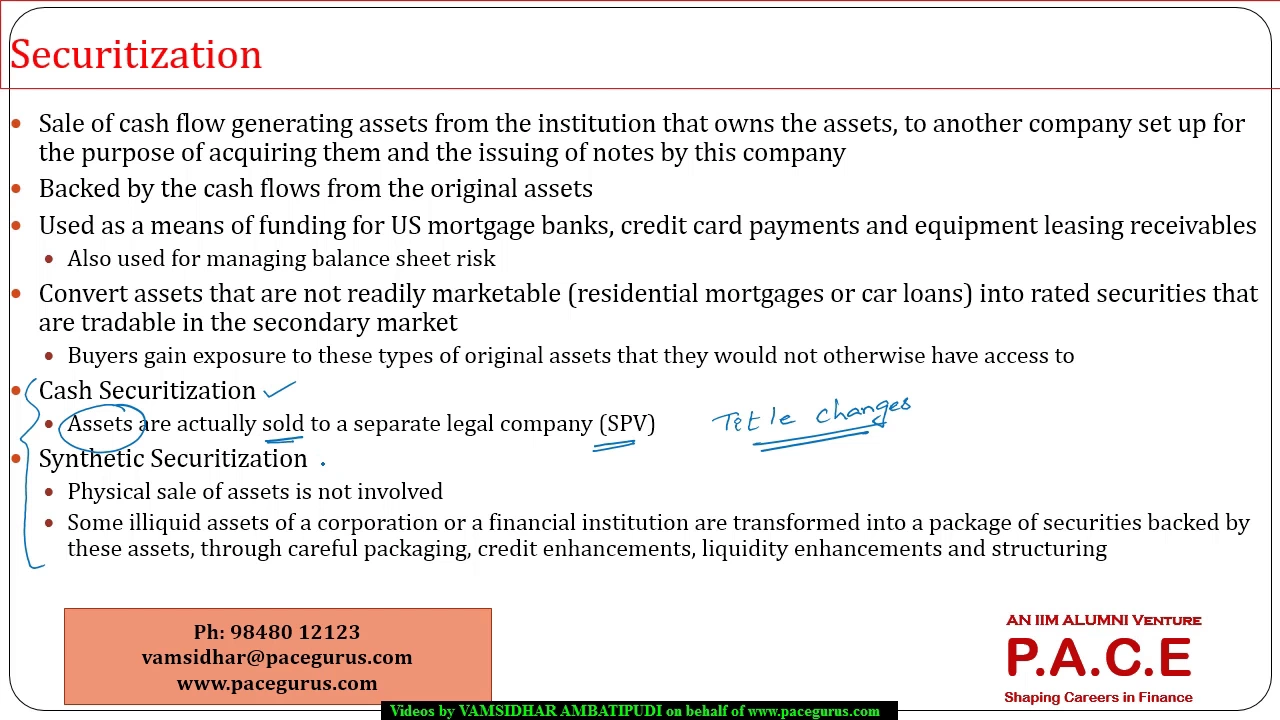
It's too much hassle to deal with us as individuals. I mean, we're pains. Instead, they bought investments called mortgage backed-securities. Mortgage backed-securities are created when large financial institutions securitize mortgages. Basically, they buy up thousands of individual mortgages, bundle them together, and sell shares of that pool to investors.
Investors gobbled these mortgage backed-securities up. Again, they paid a higher rate of return than investors could get in other places and they looked like really safe bets. For one, home prices were going up and up. So lenders thought, worse case scenario, the borrower defaults on the mortgage, we can just sell the house for more money.
At the same time, credit ratings agencies were telling investors these mortgage backed-securities were safe investments. They gave a lot of these mortgage backed-securities AAA Ratings--the best of the best. And back when mortgages were only for borrowers with good credit, mortgage debt was a good investment.
Anyway, investors were desperate to buy more and more and more of these securities. So, lenders did their best to help create more of them. But to create more of them, they needed more mortgages. So lenders loosened their standards and made loans to people with low income and poor credit. You'll hear these called sub-prime mortgages.
Eventually, some institutions even started using what are called predatory ending practices to generate mortgages. They made loans without verifying income and offered absurd, adjustable rate mortgages with payments people could afford at first, but quickly ballooned beyond their means.
But these new sub-prime lending practices were brand new. That meant credit agencies could still point to historical data that indicated mortgage debt was a safe bet. But it wasn't. These investments were becoming less and less safe all the time. But investors trusted the ratings, and kept pouring in their money.
Traders also started selling an even riskier product, called collateralized debt obligations, or CDOs. And again, some of these investments were given the highest credit ratings from the ratings agencies, even though many of them were made up of these incredibly risky loans.
While, the investors and traders and bankers were throwing money into the U.S. housing market, the U.S. price of homes was going up and up and up. The new lax lending requirements and low interest rates drove housing prices higher, which only made the mortgage backed securities and CDOs seem like an even better investment. If the borrowers defaulted, the bank would still have this super valuable house, right? No. Wrong. Let's go to the Thought Bubble.
Actually, let's go to the Housing Bubble. You remember bubbles, right? Rapid increases, driven by irrational decisions. Well, this was a bubble, and bubbles have an annoying tendency to burst. And this one did. People just couldn't pay for their incredibly expensive houses, or keep up with their ballooning mortgage payments.
Borrowers started defaulting, which put more houses back on the market for sale. But there weren't buyers. So supply was up, demand was down, and home prices started collapsing.
As prices fell, some borrowers suddenly had a mortgage for way more than their home was currently worth. Some stopped paying. That led to more defaults, pushing prices down further.
As this was happening, the big financial institutions stopped buying sub-prime mortgages and sub-prime lenders were getting stuck with bad loans. By 2007, some really big lenders had declared bankruptcy. The problems spread to the big investors, who'd poured money into these mortgage backed securities and CDOs. And they started losing money on their investments. A bunch of money. But wait. There's more.
There was another financial instrument that financial institutions had on their books that exacerbated all of these problems--unregulated, over-the-counter derivatives, including something called credit default swaps, that were basically sold as insurance against mortgage backed securities.
Does AIG ring a bell? It sold tens of millions of dollars of these insurance policies, without money to back them up when things went wrong. And as we mentioned, things went terribly wrong. These credit default swaps were also turned into other securities -- that essentially allowed traders to bet huge amounts of money on whether the values of mortgage securities would go up or down.
All these bets, these financial instruments, resulted in an incredibly complicated web of assets, liabilities, and risks. So that when things went bad, they went bad for the entire financial system. Thanks Thought Bubble.
Some major financial players declared bankruptcy, like Lehman Brothers. Others were forced into mergers, or needed to be bailed out by the government. No one knew exactly how bad the balance sheets at some of these financial institutions really were--these complicated, unregulated assets made it hard to tell.
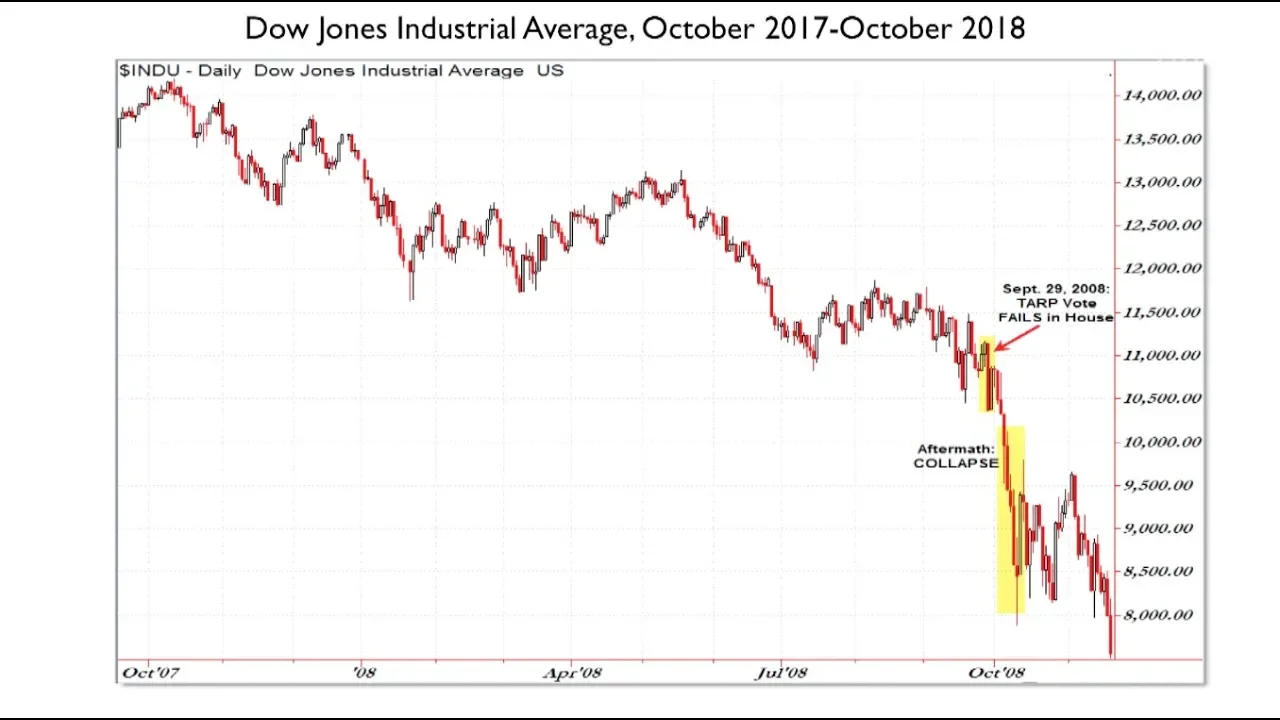
Panic set in. Trading and the credit markets froze. The stock market crashed. And the U.S.
economy suddenly found itself in a disastrous recession.
Jacob: So what did the government do? Well, it did a lot. The Federal Reserve stepped in and offered to make emergency loans to banks. The idea was to prevent fundamentally sound banks from collapsing just because their lenders were panicking. The government enacted a program called TARP, the troubled assets relief program, and which the rest of us call the bank bailout. This initially earmarked $700 billion to shore up the banks. It actually ended up spending $250 billion bailing out the banks, and was later expanded to help auto makers, AIG, and homeowners.
In combination with lending by The Fed, this helped stop the cascade of panic in the financial system. The treasury also conducted stress tests on the largest Wall Street banks. Government accountants swarmed over bank balance sheets and publicly announced which ones were sound and which ones needed to raise more money. This eliminated some of the uncertainties that had paralyzed lending among institutions.
Congress also passed a huge stimulus package in January 2009. This pumped over $800 billion into the economy, through new spending and tax cuts. This helped slow the free fall of spending, output and employment.
Adrienne: In 2010, Congress passed a financial reform, called the Dodd-Frank law. It took steps to increase transparency and prevent banks from taking on so much risk. Dodd-Frank did a lot of things. It set up a consumer protection bureau to reduce predatory lending.
It required that financial derivatives be traded in exchanges that all market participants can observe. And it put mechanisms in place for large banks to fail in a controlled predictable manor.
But, there's no consensus on whether this regulation is enough to prevent future crises.
Jacob: So, what have we learned from all this? Well, one key factor that led to the 2008 financial crisis was perverse incentives. A perverse incentive is when a policy ends up having a negative effect, opposite of what was intended. Like, mortgages brokers got bonuses for lending out more money, but that encouraged them to make risky loans, which hurt profits in the end.
That leads us to moral hazard. This is when one person takes on more risk, because someone else bears the burden of that risk. Banks and lenders were willing to lend to sub-prime borrowers because they planned to sell mortgages to somebody else. Everyone thought they could pass the risk up the line.
The phrase "too big to fail" is a perfect example of moral hazard. If banks know that they're going to be bailed out by the government, they have incentive to make risky, or perhaps unwise bets.
Former Fed Chairman, Alan Greenspan summed it up really nicely when he said, "If they're too big to fail, they're too big."
Adrienne: When something terrible happens, people naturally look for someone to blame.
In the case of the 2008 financial crisis, no one had to look very far because the blame and the pain was spread throughout the U.S. economy.
The government failed to regulate and supervise the financial system. To quote the bi-partisan, financial crisis inquiry commission report, "the sentries were not at their posts, in no small part due to the widely accepted faith in the self-correcting nature of the markets, and the ability of financial institutions to effectively police themselves."
The report placed some of the blame on the years of deregulation in the financial industry.
And blamed regulators themselves for not doing more. The financial industry failed. Everyone in the system was borrowing too much money and taking too much risk, from the big financial institutions to individual borrowers. The institutions were taking on huge debt loads to invest in risky assets. And huge numbers of home owners were taking on mortgages they couldn't afford.
But the thing to remember about this massive systemic failure, is that it happened in a system made up of humans, with human failing. Some didn't understand what was happening.
Some willfully ignored the problems. And some were simply unethical, motivated by the massive amounts of money involved.
I think we should give the last word today to the financial crisis inquiry commission report. To paraphrase Shakespeare, they wrote, "The fault lies not in the stars, but in us."
Thanks for watching.
Crash Course Economics is made with the help of all of these nice people. We're able to stave off our own financial crisis each month, thanks to your support at Patreon. You can help keep Crash Course free for everyone, forever, and get great rewards at patreon.com.
And given today's subject, be exuberant, but keep it rational.
Up Next

15:52
The Collapse of Silicon Valley Bank and Silvergate: Causes and Fallout
@ThePlainBagel
1.4M views•2023-03-11
5:07
Impact of Yuan in Indo-Russian Trade Amid Sanctions
@WION
261.9K views•2022-07-01

7:31
Deficits & Debts Explained: Economics of Government Spending
@crashcourse
1.5M views•2015-09-23

113:18
The Age of Easy Money: Fed & Inflation | Full Documentary
@frontline
21.2M views•2023-03-15
Related Study Plans & Knowledge Roadmaps
Structured learning paths in Economics
economics
Sovereign Debt: Defaults, IMF & Restructuring
01Introduction to Sovereign Debt & Government Bonds
02Debt Sustainability & Credit Ratings
03Anatomy and History of Debt Crises
+ 2 more learning modules
12h5 modules
Explore Roadmap
economics
Market Design: Matching Theory & Gale-Shapley
01Introduction to Market Design and Price-Free Markets
02Two-Sided Matching & The Gale-Shapley Algorithm
03School Choice Systems and Mechanism Design
+ 2 more learning modules
10h5 modules
Explore Roadmap
economics
Impossible Trinity: Forex, Capital & Policy
01Introduction to Monetary Policy and Central Banking
02Exchange Rates and International Capital Flows
03The Mundell-Fleming Model
+ 2 more learning modules
8h5 modules
Explore Roadmap
economics
Healthcare Economics: Market Failures & Systems
01Introduction to Healthcare Markets and Market Failure
02Asymmetric Information and Adverse Selection
03Moral Hazard and Insurance Design
+ 2 more learning modules
12h5 modules
Explore Roadmap