![Social model vs medical model of disability: What's the difference? [CC]](https://i.ytimg.com/vi_webp/mL9I96jPK84/maxresdefault.webp)

![On Being Disabled: It's Not a Dirty Word, But Society Sucks [8/08/20 Twitch Stream]](https://i.ytimg.com/vi/LN9OBBn_1Jo/maxresdefault.jpg)













Virtual worlds like Second Life provide transformative spaces where people with disabilities can create avatars that represent their authentic selves, offering liberation from physical limitations, emotional expression, community connection, and opportunities for self-discovery that may be constrained in physical reality; this research demonstrates that inclusive virtual environments serve as augmentative tools that benefit all users by challenging ableist assumptions and expanding human potential.
Digital Identity & Disability in Virtual Worlds: Documentary
Added:The social model of disability versus the medical model, which explains how societal structures disable individuals rather than their physical impairments.
The fundamentals of virtual worlds and MMOs (massively multiplayer online games), specifically how avatar creation and digital environments facilitate social interaction.
The concept of digital identity and online self-presentation, emphasizing how individuals construct and project their identity in virtual spaces.
A basic definition of ableism and the historical barriers to physical and social accessibility faced by marginalized groups.
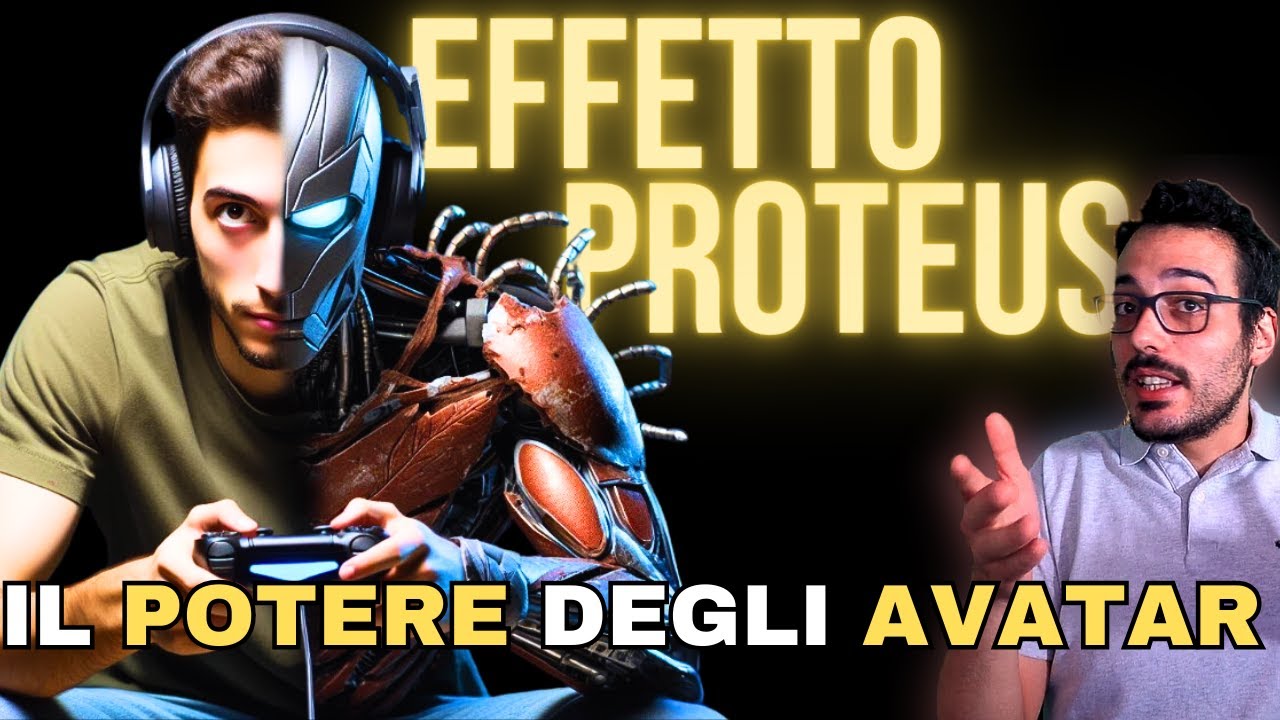
The 'Proteus Effect' in media psychology, which examines how the visual characteristics of an avatar influence a user's real-world behavior and self-perception.
Inclusive design and accessibility guidelines in Human-Computer Interaction (HCI), focusing on how VR developers create assistive technologies and adaptive interfaces.
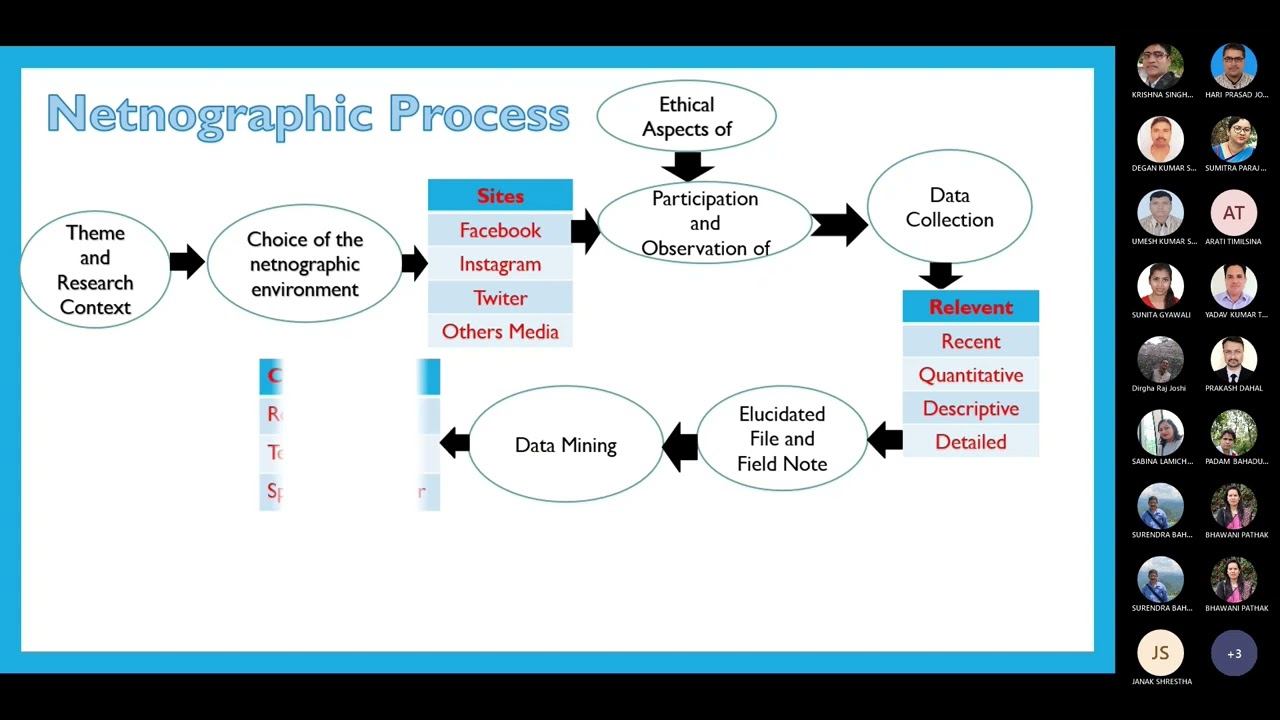
Digital ethnography, exploring how sociologists and anthropologists study human relationships, communities, and cultures formed within digital platforms.
The policy and legal implications of identity, digital ownership, accessibility mandates, and user protection in emerging metaverse spaces.
90.1K views1.1Klikes1:14:12Original Release: 2018-05-18
(birds chirp) (Shyla) You know, I think that's another thing about being disabled, like, people are like, 'Well, just hold your chin up!' or 'be strong!', and I'm like, 'okay, well, YOU come sit in my chair most of the day, and YOU be strong, and YOU hold your chin up.'
It took a long time for me to say, 'I'm pretty disabled,' but (laughs) that's the truth. I'm pretty disabled.
(background voices) You know, don't set Olympian expectations of my emotional and mental ability to deal with my life day to day.
I mean, this is the other part. I've had to reinterpret when people say these things.
They're not saying it to be degrading or condescending or assumptive or anything.
They really wish they could fix my situation.
My name in Second Life is "Shyla the Super Gecko."
(upbeat music) (Shyla) Do you get we all have blood, we all feel, we all matter... we are all different.
(background music continues) There isn't a mold, there's no book... life is scary shit when it's like that, isn't it? There's not even answers, just one day at a time, one experience at a time, one moment at a time, and then we decide what to do, in that moment, for good or bad, better or worse, right or wrong, and sometimes it is SO WRONG.
We can't take it back.
(Tom asks) You volunteered to go first, Shyla. Any thoughts you have about what your avatar means to you?
(Shyla answers) You know, when I first came to Second Life, when I began to spread out a little bit, and I began to realize there were a lot of disabled people here, and...um... I don't know if this is a game. But it certainly is sustenance.
To be able to come here and to be in a place where there's only a hurricane if I want a hurricane, and even if the hurricane takes me out, I just get up and start walking again.
(Drax) Hey there, I'm Draxtor, also known as Bernhard Drax in the physical realm.
Before we let the story of "Our Digital Selves" unfold, let me make a few clarifications.
This documentary is based on research conducted by Donna Davis and Tom Boellstorff, made possible by a grant from the National Science Foundation.
I will pop in as my avatar embodiment every once in a while --here he is-- to ask follow-up questions and provide additional context.
But for the most part I tried to stay in the background and leave the field to our researchers and protagonist.
So without any further ado, let's dive right in.
Take it away, Tom.... (Tom) Thank you, Drax!
My name is Tom Boellstorff. With my colleague, Donna Davis, we've been focusing specifically on the experiences of people with disabilities in Second Life, and so the basic way we framed this research project was to look at disability experience in Second Life, with a real interest in the body and embodiment, but not limited to that.
(Donna Davis/ Tredi Felisimo) Disabilities and abilities come in lots of different sizes, shapes, and flavors.
The people in our community, they don't like to think of themselves as disabled.
They think of themselves as ability diverse.
What we look like IS the way people treat us.
And we find that so many of the people in our community have created avatars that are this symbolism of who they are.
(Tom) One thing that makes Second Life interesting for research is that it's a case where you have a lot of control over what your avatar looks like.
If you're playing a military game like Call of Duty, you can't appear as an elf, you can't appear as a Klingon, right? There's limits!
You might be able to change your camouflage or your gender but not much more.
Second Life is one of those virtual worlds where you can change it as often as you want, you could change it every hour if you felt like it, and you can change everything from clothes to your entire embodiment -- you can be a refrigerator if you want to -- and so that has really interesting implications for embodiment, 'cause that's really different than physical-world embodiment.
A key lesson around virtual worlds is that "embodiment" is always "emplacement." This is one reason why, for our research project, we really wanted to have these islands, because we wanted it to be about the relationship between that and PLACE, and in my experience, in some ways, avatars come second, because without a place, you can't have an avatar anywhere.
I mean, the avatar has to be in a PLACE, or it's not an avatar, it's a screenshot.
(Donna) In our community, we currently have 30 people on parcels and have given them to anybody who identifies as having a disability.
The really wonderful thing about the National Science Foundation grant is that they are looking at this from an anthropological perspective, trying to understand digital culture.
(Jayden) My name in Second Life is Jayden Firehawk.
I've sometimes called Second Life my substitute career, because my career is something that I lost due to my disability.
I basically crashed and burned under the demands of a major research institution.
The "publish or perish" kind of environment there, the pressures, were overwhelming for me.
Second Life helped me at that time because a great big aspect of it is that it's a support group!
The other thing, which I didn't know until I started doing it, was that building was, for me, a very meditative process.
People with mental illness sometimes refer to it as "invisible disability": I'm in a doctor's office, and the nurse is making small talk with me, and then she asks, 'Well, what do you do for a living?' and I say, yeah, I say, 'I'm -- I'm on DISABILITY,' and I just become very aware that a person might be looking at me and saying, 'Hey, she doesn't look disabled,' you know, or 'She has bipolar disorder? Well, she's talking to me perfectly fine.'
I made something in Second Life, I call it a "brain sling."
It's kind of a bandage that goes around my head, and I pass it out to people.
Y'know, when somebody wears a sling on their arm, nobody asks them to lift a heavy object.
A "brain sling" or something, some equivalent of it, it IS a way of wearing a sign.
You do NOT walk around in real life wearing a sign, and it might be nice if we could!
(Tom) So Jayden, she's been able to do some interesting stuff in Second Life that is sort of related to her earlier academic life, but a lot of stuff she does in Second Life has NOTHING to do with her earlier life experiences, where she's become this master builder who teaches people about building, and it's this whole set of skills and creative abilities that she has really come to embrace.
(Jayden) It is important to make a place in Second Life that is special to you.
There is a word in the field of cultural geography, "topophilia," which means love of place, and it is something that everybody has-- in some ways, your "place muse," the place where you feel a sense of peace, inspiration-- a place that lifts you UP.
(soft guitar music) (Jayden continues) One of my happiest memories of childhood had to do with being in Yosemite.
It's a place I just feel very very connected to.
(music continues) (Donna) I used to change up the environments of my home, so that was as important to me-- MORE important to me even-- than my "look."
You know, in the winter, a long cold wet winter in Oregon, I needed to go to the beach, and I could have a beach house, and I could sit and meditate on the beach and watch the sun come up and listen to the birds and the waves!
My soul was aligned, and off I could go to the day.
(Tom) If I have Second Life on my computer, and I turn my computer off, it's still there.
So it's a persistent place where I can build something, and I can log off, and someone can come and look at it or add to it, and that persistence of place allows for social relations and other kinds of things to happen that couldn't happen otherwise.
(iSkye) My name is iSkye Silverweb.
In Second Life, I can have a sense of space where I can go, and I can express my memory.
My family, other people, they knew I was deaf, could not hear, so I became a part of the scenery for them.
And for me, it just gave me the opportunity to notice the world around me.
If I was still-- being deaf, I could not do that.
They are absolutely flabbergasted to find out that I have quite a vocabulary.
This is my gallery, right here.
(Tom) The invisible/ visible thing doesn't go away; it shifts, so if you're deaf, and people are using voice, all of a sudden, you're left out, unless you reveal that you're deaf.
(iSkye) I am a text-enabled avatar. In my Second Life profile, you will see a description right up front that I am deaf.
I am in a foreign country in real life!
I am NOT [that way] in SL, because I can communicate that.
(Slatan) My name is Slatan Dryke.
I suffer from a post-traumatic stress disorder, and the main effect on me was a shut-down to the world around me.
I am an ex-soldier, 19 years in a army.
Like every other soldier would come back, I started having nightmares during my night, like a big big stone, pushing on my heart, and pushing on my --let me say the word-- soul.
My art on "Ethnographia" represents my feelings relative to my disability: isolation and sometimes fear about the world.
For example, you can see these disks, like different windows that you can open or shut down.
My partner in Second Life is iSkye Silverweb.
(iSkye) Slatan and I were mentors in SL, and the more I saw of him, the more I liked him.
(Slatan) For me, to have a partner means to have someone very close to you, and with this person, you grow yourself.
(iSkye) He had shown himself in 100... 300 tiny avatars that he has.
From that, I got the sense that he really did have a good sense of fun.
(Slatan) It's funny, but me and iSkye, we have the same age exactly: we were born the same day, month, and year in real life.
(iSkye) I don't think we ever would have met in the physical world, even if we were in the same city, and it is because I am deaf.
Communication IS an issue for me; I would always be concerned about it, with meeting anyone.
(Slatan) We are not a replica of ourselves, because we are different.
You have the chance to repair your software in Second Life, because you can upgrade through the experiences.
(soft music) (Donna) People choose their avatar to represent the circumstance they're experiencing in the virtual world.
(Tom) The way it's phrased, over and over again, is that 'Disability is part of who I am, but it is not ALL of who I am.'
(Donna) Is that deceptive? Or is that liberating? The screen just opens up infinite possibilities when you get to jump in it.
(Daisy) I am quite happy to say, you know, I’m a dwarf, I'm a little person.
Of course, until I came online, you know, I didn't have that choice (laughs) about "disclosing or not disclosing."
(light music with beat) My name in Second Life is Daisy Gator.
I’m Elinor Caiman Sands in the physical world.
I write science fiction and fantasy, mostly science fiction.
They’re set on Jupiter’s moon, Europa, and it stars a community of disabled people who’d been stranded.
(Daisy reads) “The Margarita Sushi Bar is awash with seaweed beer. I find myself sandwiched between acquaintances.
One is an old drinking buddy with leg stumps and 16 fingers that dance like a cockle picker’s; the other’s a former colleague, Trixie, I think her name is, blind and bi-gendered with major neurological damage.
She shakes incessantly like a demented jellyfish.
We all have something, here on Europa, what with the radiation from the crash and maybe a little inbreeding….” (Drax asks) Now, I wonder, is your Gator persona in SL an accurate mirror of your real-life self, or who does Daisy represent?
(Daisy answers) She's my childish side. The other thing that she may be is, it's the idea of the writer's muse.
I mean, she's basically a sort of emotional creature in that sense, who just reacts!
I wasn't too sure about this film when we started.
After all, pretty much every little person knows that you deal with documentary makers and journalists at your peril.
Disabled people are overwhelmingly presented poorly.
Most include awful stereotypes like disabled characters who sit around all day thinking about how horrible their disabilities are; whereas in fact, disabled people just don't think like that.
We just don't think about our disabilities on a daily basis... or not until some insensitive blockhead points at us and reminds us we're supposed to be this thing called "disabled."
(Fidget) I've been called a "high-functioning person," and let me tell you, that kind of label is really disturbing, 'cause what the heck does someone mean by "high functioning"?
My name in Second Life is Fidgets. I am multi-disabled. I am... (laughs) "capability diverse," whatever you want to call it.
Embodiment to me means that an aspect of your persona is allowed to be expressed.
As you see me as a “Dinkie,” one of the things that is expressed in that is, I’m cute! (laughs) And I'm not necessarily cute in the physical world, depending on who you are and what you're looking at.
But here, people are much more friendly to me because I'm less threatening.
(atmospheric music) (Fidget continues) I believe that people come here to connect with each other.
(Melyna) My name in Second Life is Melyna Foxclaw.
I wear my fangs almost as much as possible, and I have her in a dark skin because I really liked my father's really dark skin.
(mellow music) With the avatar, I feel like I can reflect more of my heritage, my Mexican lineage.
But I have lots of other avatars, like an Android.
(music continues) I've got lots of "furries."
I do have a male avatar, so I can dress him up for blogging purposes.
(Drax’s interrupts) Sorry, Melyna, we are 17 minutes into the film, and the audience may ask, how come that some of the protagonists are seen in their physical self and others only appear in avatar form?
How come we don't see the person behind Melyna Foxclaw?
(Melyna sighs) Well, I do feel like my SL and my RL should be separate.
I just don't like being in front of a camera. I just prefer to use my avatar as the representation of myself, and that's it!
(Drax) Got it -- and I fully accept you as the real you, just like I am the real Drax.
(Melyna) I know my daughters have said -- I was on a conversation with my best friend, talking about Second Life, over the phone, and my daughters will look at each other, and they'll be like, 'they talk about that like it's real!' (laughs) And I was like, ‘well, it kind of is!’ (laughs again).
(Donna) and maybe they don't want their physical world identity known, for any number of reasons.
Whether it's they don't like the way their voice sounds, they've been teased about the way they look, people turn to Second Life to be able to share very intimate conversations, in a way they never would with a person in the physical world, because they feel they safely can.
(Tom) Our current era of big data and surveillance and Facebook and tracking and Amazon and wearables and all this -- not only do I know you're a dog, I know your favorite dog food, your breed, I probably know your DNA.... When you think of a rural village, like, you know, where my family grew up in Nebraska, everyone knows everything about everyone, (laughs) and one attraction with urbanization often, of people moving to cities, was to have some control over what they would reveal to people, and that was never necessarily seen as deception, it was more of having control over what you reveal to whom and when.
(Donna) Think about what's happening today, in social media.... Pick a platform, any platform, and you will find real, and you will find authentic, and you will find deception and...strange. It doesn’t require the internet and a mediated platform for that to happen.
We do that in the physical world, the way we present ourselves all the time.
(Tom) You could certainly find a subset of people for whom the label 'deception' might apply.
But then you have all of this role-playing, which is also not about deception, but is really about self-discovery and sort of alternative ways of being, in alternative social networks... role-playing in a Medieval village or 1920s Berlin -- to call that 'deception' is really missing the point.
(1920s vocal music) (Kath) My name in Second Life is Kath McGill.
I'm 57 years old. I have a variety of different disabilities.
I've been through cancer twice; a series of medicines that the doctor gave me has caused somewhat of a cascade failure of some of my internal organs.
I have been through a series of avatars, but I really wasn't happy, because the majority of the human-looking avatars were... the same.
(1920s jazz music) This is what they call a "tiny" avatar, I guess you would say it could be a black leopard cub.
I am upright, wearing a little dress with a bustier, a little pillbox hat, and pearl necklace.
Being a "tiny" avatar, it's easier for me to build, because I have literally a different perspective.
('20s music fades) (Kath continues) On my build, I try to demonstrate the effects that I had endured during my journey through pain management.
('crazy' saxophone jazz notes) The first medicine I was on was Soma, which has now been pulled from the market, because even very very small amounts were highly addictive.
It was after my melanoma surgery.
They detached my right arm and went into my chest cavity.
(dissonant jazz music) This is the Darvocet, which was one of the other pills that they put me on.
I had been misdiagnosed with thyroid cancer.
Darvocet was very very trippy.
I saw halos. I wasn't able to walk. I wasn't able to function.
You're going to bounce around when you're on this. This is not a stable drug.
(synthesized jazz 'crazy' music) This went on for 6 months, 9 months, and I have no memory at all... (mechanical background sounds) This is Prozac. At this point, the doctors are just saying, 'We're just going to give you this, and it's going to RELAX you.'
(strange noises, 'crazy') (Kath continues) The Oxycodone, which was the last pill that they put me on when I had my knee surgery.
Now, you can see the difference. Oxycodone? I understand why people abuse it. Your whole body... (speaks slowly) feels...very...nice….
(weird synthesized music stops) (quiet single string music) (Kath continues) This is a very very difficult floor for me to go onto, so if I go quiet for a while, it's okay.... (quiet music continues) (Kath continues, crying, then stronger) My dad's been gone since 2003; my mom died last year.
She died on the day that I finished this build.
Basically, my father had lung cancer, and It was misdiagnosed. And the nurse took the decision to overdose my father on Morphine, to end his life.
My mom, she just went to sleep, and they gave her another medicine that she could be relaxed, but still lucid.
That was a difficult decision for us, but we would make sure that she had comfort measures.
(sad string music) There are people who are in such tremendous pain that death is the only answer, and I do not condemn people who have made that decision.
(avatar flying sound) (Drax asks) So Kath, it's been awhile since we last spoke. How have you been?
(Kath speaks with difficulty) I’m slowly losing my voice, and understanding how to get onto disability payments or Social Security -- it’s beyond me right now. I would basically be homeless without my husband.
(Drax) I’m so sorry, Kath.
I...wanted to showcase the books for kids that you produce in Second Life, before we move to the next chapter in the film.
We’re here on the set of book 3 of your "Annie Hedgehog Series."
(Kath) This construction took me weeks to do.
(Drax) And the hedgehogs play out typical family dynamics like sibling rivalries, challenges of being a parent, the anxiety of being left alone at the beach... (Kath) Every kid deserved to have some story that they could talk about and say, to their parents, 'I feel like this person in the book.'
(Drax) You built the sets -- They can be manipulated to fit the photograph.... People can then get these books inside Second Life?
(Kath) The e-books are available on Amazon.
(Drax) Thank you, Kath, and good luck. This is very inspiring.
(Alumnia) My name in Second Life is Alumnia Autumn.
I am a student of social and cultural anthropology at the University of Vienna.
My avatar, it is me, how I would look, if I had a chance to create my own body once again.
For example, she has elven ears, she is tall, she is-- yes --skinnier and maybe a bit prettier, she has more freckles than I do.
There is the physical body that we can feel, and there is the body that we have in our mind.
The thing that is in there that looks different.
(slow beat music) (Alumnia continues) Peer pressure in Second Life means just what it means in real life, you have to be able to tell yourself, like, ‘Am I okay the way I look?'
'Am I okay... that I might not spend all of my money on getting an updated avatar, as others will say it?'
Therefore they somehow turn to, I'm sorry to use this, "less updated avatars," which they pity-- ‘Oh my God, they must be really poor’ -- as a sort, a form of shaming, yes.
(mid-tempo band music) (Alumnia continues) I was diagnosed when I was 24.
My parents had never ever heard about ADHD, or that it can happen to girls as well, mostly to boys.
It feels like you can barely walk.
Everybody else is running by you Sometimes people can see me crawling, but I’m so good at -- and so many other people with ADHD are good at this -- that we can become very confident, and people think that we actually levitate, but we are still crawling like heck.
Sometimes I like to think about it just like any superhero super power: they do not choose it, they get it, and they have to deal with it, at being awesome and being miserable at times...or sometimes at the same time.
There’s a lot of role-playing in Second Life. Some people play children.
They sometimes play because they had an abusive relationship.
Or maybe there is nothing going on, they had the perfectly idyllic childhood, they just want to relive it.
I have been hitting some blocks in my trauma to repeat, so I created a child avatar.
I dressed her up like a younger version of my own avatar. She doesn’t have elven ears, but that doesn’t matter.
It just looks like a little... child, with blue eyes, red hair, and a lot of freckles.
I wanted to hold myself, just like the very strong symbolism of creating my own body and being in control of what is happening.
Do we need her to run around and just let her hyperactivity be wild, without anybody saying anything about her?
Can we just say that she can sit down and read a book without feeling like she has to be 100 percent, without hearing her parents fighting in the background?
(Alumnia continues) My therapist, when we are trying to go over a traumatic experience, or just like the memory of it, she asks me that, ‘What would you do to your childhood self to help her suffer less?’ As my homework, I sometimes log into Second Life.
I can pick who is around her, I can pick where she is, and I can see that she is safe.
(Donna) We have somebody in our community, she has 6 babies in Second Life.
She is the first to say, 'I know people think this is weird... but you know what? It gives me joy.'
(Mrs.Di/ Lady) My mother turned 92, and she just found out because my sister with dementia told her, ‘Did you know that she’s on this game, and she’s married to a white man and she’s got 6 babies?’ -- and my mother -- (laughs) I felt bad for her! But now she knows!
(pleasant electronic music) (Tom) Lady is someone for whom Second Life has been a very valuable way to create kinds of family.
(Mrs.Di/ Lady) I was married once for a short period of time, but I could not have babies.
So when I was able to have babies in Second Life, I just really thought that was something.
(Tom) It’s not about creating a baby, it’s about creating a sense of care, and people who have babies like that are perfectly clear about that distinction.
(Mrs.Di/ Lady) I have a total of 7 children.
The oldest is Bobby, then 2 sets of twins, Ella and Emma, Axel and Alicia, then there’s Cassandra, and our newest baby is Devon Jr.
(Tom) The pleasure in caregiving, and to have that kind of reciprocity, even if it's in a small way, that agency of taking care of something because others are taking care of them so much, and many of them are parents or caregivers for elderly parents.
(pleasant music) (Donna) We’ve lost that sense of -- how do we define -- 'joy'?
and I think for a lot of people who live in isolation, because they have social anxiety, when they can open a door to a social community, they have tapped into a source of 'joy,' connection, and support that their physical world has not provided them, for whatever reason.
(Tom) Withholding judgement is a really important thing to learn about culture in general, and, y’know, the classic term in anthropology is ‘cultural relativism.’ That is often misunderstood to mean, everything is okay because if someone does it, it’s all relative, and that's not what it means at all.
It means that if you just stop and LISTEN for a little bit, you might find out that something that you thought was wrong is actually another legitimate way of living a human life.
(Donna, as Tredi) This is NOT escapism; it’s augmentation.
(Mrs.Di/ Lady) I didn’t want to choose "the black body," I just wanted to choose the body and then turn it into me.
My avatar has been very thin, when I first came in, because I wanted to be the OPPOSITE of what I really am in real life.
(questioning tone) But I didn't feel like I was really treated any different?
because men always treat women like they're a piece of meat?
So I changed until I got where I am now, and I probably been wearing this size avatar for maybe about a year.
To me, I feel like this avatar is ME.
The other avatars-- I was just in 'em trying to figure out who I was.
(Drax asks) Now Lady, you are aware that many people will see this finished film, and you’ve shared a lot of very personal information.
How do you feel about that?
(Mrs.Di/ Lady answers) I was so afraid of talking, and I’m still afraid, because I have no idea what I’ve said to you, and I’ve revealed so much (laughs) of myself.
But I'm not gonna worry about it. I'm gonna just go out on a limb and live with whatever happens.
I am 61 years old. I deserve to express myself and be heard.
It’s who I am.
(upbeat electronic music) (dog growls and barks) (upbeat music continues) (Drax) Cody! Hey! How are ya?
(Tom) Welcome, Cody! Welcome everyone to this week’s meet and greet and thank you so much for coming today.
This is a very special meeting, so Cody, it’s your turn to talk around the circle, sort of coming out of some things people were talking about last week, could you tell us a little bit about what does your avatar mean to you?
(thoughtful silence) (Cody) Uhmmm... (male voice, difficult to understand) (female caregiver speaking for him) It means everything to me.
(Cody, clearer) It means that I can do whatever I want.
(Cody speaks) Hey, guys, I...I have an idea.
If you want to hang out at my house, I’ve got a pool, I've got everything.
(caregiver’s voice echos; Cody adds) Hey, guys, I have an idea. If you guys want to come and hang out at my house, I have a pool, I have a lot of room to sit down and talk and do whatever you want.
(Tom) That’s a great idea, Cody, that’s cool!
If people are up for that, we can all teleport over and check out your house!
(Cody) All right (Pooky Anderson song plays, “I’m Too Busy To Date Your Avatar” 𝆕 Do you want to date her avatar, she’s a star 𝆕 𝆕 Do you want to date her avatar, she’s gone too far, and that’s for sure 𝆕 𝆕 I’m too busy to date your avatar, I’m a star 𝆕 𝆕 She needs time to unwind… 𝆕 𝆕 She’s too busy to date your avatar! 𝆕 𝆕 She’s a star! 𝆕 𝆕 is that quality time? 𝆕 𝆕 For my love, you’ll have to wait, I just have no time for a date! 𝆕 𝆕 She’s too busy to date your avatar! 𝆕𝆕 (Cody and caregiver) I was born a regular baby.
And then on my first birthday, I decided to go for a swim, and I didn’t know how to swim, and NOW, I’m like this. (laughs) (Drax asks) How old are you?
(Cory, caregiver echos) I’m 30.
(soft music) (Cory continues) My mom and the nanny were getting ready to go to the waterpark. (laughs) What is the irony in that?
(soft music continues) (Cody) I see myself as somebody who has a little bit different abilities.
(caregiver echos, Cody corrects) I see myself as somebody who has a little different... abilities.
(Cody; caregiver echos) I don’t see myself as disabled.
(soft music continues) (Drax asks) Okay, Shyla, so where are we going tomorrow?
(Shyla answers) We’re going to try to drive in towards the city, at least as far as we can.
(Drax asks) What city?
(Shyla answers) Chicago (Shyla) I think more and more, I’m really grateful that I had an active life, that I did a lot of things, that I had a bucket list that I started on at a young age, and there’s a lot of things crossed off, and if I was going to tell an able-bodied person anything, I would tell them what my grandmother told me: don’t wait until you’re old; you won’t be able to fulfill your dreams then.
Do it NOW!
(Shyla) There’s my skyline.
(Drax) It’s coming in!
(upbeat music) (traffic sounds) (Shyla) My *heart* wants to go on to the city.
(Drax) Oh, you want to turn back now?
(Shyla) Yeah, we need to turn back because this traffic is too slow, and I'm running out of time here.
(Drax) Okay.
(Shyla) The traffic going back’s not bad so we’ll be able to make it back.
(music 'puffing' notes - frustration, uphill feeling) (Shyla) I don’t think I ever remember, as an able-bodied person, being told “no” so many times.
It’s so easy to become angry.
('puffing' music mellows) (Shyla) My goal was to see the skyline... right? That was really my goal, but then, in my heart, my heart went, 'Well, maybe if you get to the skyline, you can get to the city.'
(Drax) So we tried it, right?
(Shyla) We tried it. And you gotta keep trying.
('puffing' music, oboe and piano, returns) (Shyla) It’s a grief that never completely ends, especially because in my case, it’s a product, it’s degenerative, it’s progressive.
My situation continues to get worse, so what I’m able to do today, a year from now, I may not be able to do all those things, and I will be grieving the things that I'm no longer able to do.
My life in the real world -- I sit in a specially made chair that a guy makes for people just like me.
It’s a welded behemoth, but in it, I’m in about as little pain as I am at any moment of the day.
I spent years finding acceptance of my situation, learning how to love myself again, like, how crazy is that?
My spirit is not my body.
I can’t avoid whether or not my situation or... just inherently make people uncomfortable.
My favorite interaction ever with my disability in real life was from a little boy.
I was going into a movie theater.
I had all my braces on: knee brace, ankle braces, back brace, especially if I have to sit for an extended period.
So I have all my braces on, and this little boy comes and he points at my braces and he says, “Do those hurt?” And I said, “Oh no, they actually make it hurt less, they’re really a good thing.” And he put on a big grin, and he said, “That’s good, because you look like Tron!” and I thought, that’s awesome!
The thing is, I’m not broken, and it’s this ableism of the world that thinks I am.
You don’t have to fix me.
(Drax) Shyla, you have appeared many times already throughout the film, but there are a lot of protagonists and their various embodiments.
Your main alter-ego in Second Life is… (Shyla) I’m a super gecko. (Drax) Why? (Shyla) Because I wear a cape. (laughs) I tried on all these avatars. I went around as a cardboard box, I went around as somebody trapped in a sack of potatoes... y'know, I did all these things, and... and when I put on the gecko... it was OKAY.
The gecko doesn’t really have, like, a 'Superman' super power.
I think the power the gecko had... was transformation.
You ask me who the gecko is.
I mean, the gecko is kind of ME.
(Shyla, singing tune, “Alouette”) The children sing, “Armageddon, this is Armageddon, ♪ Armageddon, the game I like to play.” ♪♪ I’ll stand to the side. I’m confused about this value on life: don’t prevent its birth.
Don’t legalize early termination.
Yet such deep desire for the end.
Neocons invade our great halls, screaming, 'War will bring peace, embrace Israel, so that Armageddon can begin.'
The populace goes crazy, jumping, yelling a frenzy of glee that Armageddon might come to be.
In mob fervor, they blame disabled for disability, impoverished for poverty, religious without charity, or clarity, or integrity.
The children sing on, (Shyla sings) ♪ “Armageddon, this is Armageddon. Armageddon, the game I like to play.” ♪♪ (slow piano music) (Shyla continues) Sometimes I just need to cry.
It creates serotonin and endorphins that make me feel better.
And when I’m down, sometimes I just can’t cry, and the gecko never makes me want to cry.
The gecko is always the sunbeam.
And I have, seeing myself as a woman, who needs, you know, to be loved, and needs some compassion and needs to be held and told it’s okay.
It’s not a bad thing to cry, it’s not a bad thing to have pain, it’s not a bad thing to be sad or happy or crazily joyful. It is so *of the moment.* To me, disability becomes a spiritual journey.
(Drax) And on this journey, what role does Second Life play?
(Shyla) I’m learning more and more, it’s my mental and emotional world.
You know, this whole thing of calling... calling what I do outside of Second Life “Real Life,” in MY head, is a bit bizarre.
So what do I do?
I lay here, typing words and changing this bastardized world.
This world that thinks that loving is hoarding, gorging, sucking the life out of everything that’s weak.
Go for it, World, you got a Super Gecko to deal with.
I’m cute, but I’m punchy, have a long tongue, a gargantuan bite, and -- don’t laugh dude -- you think this is a game.
This poem was addressed to my former therapist (Drax questions) And he said something… (Shyla) He was concerned about the time I spend in the virtual world.
You know, that this is a game and that I need to be a part of the real world.
(Drax) Tom would get upset at this.
(Tom) Second Life is not a game.
I’ve talked about, it's like a soccer stadium isn’t a game.
You play a thing in it, right, that comes from Richard Bartle, that like, the Pasadena Rose Bowl or a soccer stadium is not a game; you play a game IN it.
But you could also have a rock concert in it.
(Shyla, continues) Y’know, and then my therapist talked to me about “the screen generation” and that I shouldn’t become a part of the “screen generation,” and I’m like, you’ll never see me at a restaurant looking at a screen... (Tom) It’s a SPACE, and Second Life is like a soccer stadium; it’s not the game itself.
(Shyla) uh... ‘cause I don’t actually eat in restaurants very often, so the odds of you seeing me at one are limited, and if I’m there, I’m there with a human being, and I’m going to be interacting with them.
(Drax) Hi, Poppy-- (response) Hi!
(Drax asks) You think virtual worlds are strange?
(boy’s voice) In..uh...What type of virtual world are we talking about here?
(Drax) Well, I’m talking about Second Life, which is the only relevant universe.
Not sure if you’re familiar with it… um... What say you about this universe?
(Varahi) Drax, let the kids eat in peace. You really can’t put that camera down, can you?
My name in Second Life is Varahi Lusch.
I am part of the Ethnographia group, but I do a lot of other things in Second Life, for example, I run the Companions Guild, a grid-wide network, and weekly get-togethers, open meetups, and we explore roleplays and all sorts together.
(Varahi talking to group in Second Life) So today we’re talking about dedication. This is an important topic and a great thing to both understand and have in our toolkit.
'Rejoicing' is like buying something we like; 'dedicating' is like making sure we find a safe place to keep it.
(to Drax) I'm personally a Buddhist, so at these classes we often talk about things that affect our personal growth.
There's Tredi and Melyna and Daisy and Tom and Shyla, yeah.
Today, the Ethnographia group are here, and that makes it slightly more fun and easy because I know who they are, and I know that they have disabilities and understand what’s going into this.
(Varahi to group) Okay, so remembering we are after ultimate happiness, we need something that is not just something that happens in our external conditions.
(Varahi to Drax) In terms of my avatar, I wanted to manifest a body that could make a difference to people, so I picked the name Varahi because it’s actually part of the name of my personal deity, Vajravārāhī.
(Drax asks) Are we all deities?
(Varahi answers) Avatars can be gods if we choose them to be.
The only thing that is stopping that from happening is the obstruction in the human mind, really.
(pleasant string music) When I created my avatar I wanted her to look like me as much as possible.
Because I’m an epileptic, I have quite a bit of doubt in relationships, so during that time, I’d rather feel someone’s developing affection for a being that looks similar to me rather than some other being that is unrelated to who I am in real life.
She's a celebration of MY form.
(Varahi continues) My parcel on Ethnographia starts off with just a heart floating in the air and the sounds of waves.
My expression with this is that it’s a… my epilepsy is a hidden disability, so the heart is kind of like me, and the closer we get to it, the more complexity there is in the waves, and the louder the waves are.
From there, you can teleport up to 'The Woods between the Worlds,' as I call it, so you can explore my various activities on the grid.
My epilepsy is part of who I am. I’ve had seizures since I was 8 years old.
They’re really carved my personality into what it is.
My husband is 21 years older than me. With my disability, it slows me down to a point where we have similar energy.
I'm not sure I would enjoy having a relationship with a man my age, because I think they would just get very frustrated with me, unless he were really kind.
(single note music) I think being brought up to recognize that there are disabilities and struggles in the world, is... it can actually be quite a good thing, because it makes you aware that everyone has struggles, so you, when struggles or difficulties come up, they’re not some alien thing to panic about.
My kids had to grow up early, because they are young carers.
One time, I was in the country and started to have a seizure.
My eldest was about 10 or 11 at the time...?
I was kind of frozen. The seizure had kind of passed, but I just hadn’t come back to myself enough. She noticed.
You know, she said, “I think we need to go home,” and she knew that we’d come on the bus, and she knew where we got the bus, so then she’s like, (casually) “Go on, Mum,” and she kind of led me there.
When I have a seizure, it’s a little bit like a computer suddenly rebooting. And y'know, when you’re in the middle of something and your computer does that, sometimes you’ve saved things and sometimes you haven’t, So when I come back to it, I can't really be sure what I’ll be working with.
What most able-bodied people don’t understand, that normal things take more energy, so, if that disabled person is acting normally with you, they’re providing you with a gift.
Okay, I think that’s enough detail now, Drax, I’m really quite tired. So we ought to stop now and drink tea.
(Drax) Just one more tiny question, please.
So we are in a time of 'Next-Generation Immersive VR'... What do you think of the current development in that technology?
(Varahi) What matters to me most is emotional intelligence.
And I haven’t seen that developed enough yet for there to be any need for more technological advancement.
If people are having an embodied experience with a headset, where they’re actually experiencing something that helps them to think about their relationship to the world, and their relationship to others... fair enough.
But if it's just more fairground rides... It's a bit of a low aim for, y'know, if we consider ourselves to be an intelligent species.
(Drax) So where are we going, Tom? (Tom) We’re going to San Francisco. (Drax) And what are we doing there?
(Tom) We’re gonna go to Linden Lab, and we’re gonna go to High Fidelity, and we’re gonna bring some cool people with us.
(Drax) A long drive up north, all across California, right?
(Tom) That’s right, road trip!
(light reggae beat music) It's not a coincidence that in the early years of Second Life, and when they would make new land, it would always be to the west, that all the continents are always expanding to the west, right? Go west, yeah?
One way that people would extort money [in SL] is to purchase a piece of land right next to the wonderful home that you had built in Second Life, and then they would put a very ugly sign or billboard, and this happened to me one morning, I looked out of my window to look down on my beautiful view of the canyon and the water, and I saw a big ugly billboard literally about 1 meter from my window, and it gave me a very helpful notecard, saying, 'I’m your neighbor,' basically, 'I’ve put this on my property, which I have the right to do because I own the land.... 'For the very reasonable price of...' --I can’t remember what it was-- 100 Lindens, so about 50 cents U.S., if you pay this box that money, it will turn invisible for 1 week.
(Drax) On another note, in the physical world, we’ve been driving for many hours.
What are we doing next?
(Tom answers) We're going to pick up Solas, who is part of the Ethnographia community.
(Drax) Solas lives in a rural setting... (Tom) It’s looking pretty rural, I have to say.
You've got to be able to drive.
So, ways of connecting online, like virtual worlds, can be something really valuable for people with disabilities, if the disability is one that impacts their mobility.
(Solas) My name in Second Life is SolasNaGealai...and I create!
(pleasant acoustic guitar music) (Solas) I had a successful career as a fashion designer for over 25 years, until I was diagnosed with Young-onset Parkinson’s, and the stress was making me very symptomatic.
And I had quite a few years of depression, because I felt lost. I mean, when you’ve wanted to do something since you were 5, and you made it possible, and then it started to make you really sick, it’s a hard thing to deal with.
With a disability or an illness, you’re limited on time, and that was the hardest thing I had to accept and learn to manage, because all my life, I had always been the person that would push through it, push through it. With Parkinson’s, the more you push, the more symptomatic you get.
So to actually have to learn to back up and say, “Okay, I have 3 hours this morning where I feel good.
What I am I going to do to make a difference?” (slow quiet music) (Solas continues) The disease, it takes from you, but it gives back too.
I remember my son, he was 5 at the time, when I finally retired, he basically said, “Mommy, I’m so glad you have Parkinson’s,” and I’m like, okay, this is interesting, and I go, “Why’s that?” and he’s like, “Well, because you’re home with me all the time now.” So I got to raise my son.
(song "Date with Myself" plays) ♪ Every once in awhile, ♪ ♪ the world is beige and plastic-looking. ♪ ♪ I wonder if you noticed it too? ♪ (Solas continues) My avatar look is important to me, BUT having a house and having a home that totally represents me is even more important.
(song swells to chorus) ♪ Tonight, I go out on a date with myself. ♪ (Solas) Y'know, some people laugh about it, but if you think about, especially people who are in relationships or marriages, everything’s a compromise, which is good And that's how a good marriage should be or a good relationship should be.
But how often do we get to go someplace that is totally you... totally YOU.
(song continues) ♪ I’ll buy some flowers to make it good. ♪♪ (Drax) Alright Solas, just wanted to say that our physical selves are now on the way to you.
(Solas asks) Are you driving up 5?
(Drax answers) Yes, we are indeed.
(Solas) See, I live 2 hours from San Francisco, but on Highway 5, you drive right by my house.
(Solas) You better not have that camera on! (laughs) (Tom and Solas) How are you doing? (laughs) Just fine! You guys found it!
(Drax) We came all the way from Hollywood! (Solas) How did I know?
(Drax) We don't have a lot of time. San Francisco, next stop... you ready?
(Solas) Yep! Let's go!
(auto GPS speaking) "Use the right 3 lanes to take Exit 433 B."
(car radio plays episode of "Majority Report" with host Sam Seder) And um...well, 'Singularity'.
(Donna) We have found a number of people in our community that are ABLE to use these technologies because they have the wherewithal to have the computing power.
It's like, let's understand these technologies from YOUR perspective.
(Drax) There he is! This is Cody.
(Cody and Philip) Hi! Hi! How are you? Good to meet you!
(syncopated jazz music) (group sounds fade in) (Drax) If you could only ask him one question, what would be that question?
(Cody starts) Uhm... (Drax jokes) Cody wants a bigger house on the mainland.
(all laugh) (Cody) Yeah, can you do that? (Philip) Can I get you a bigger house on the mainland? (Cody) Yeah!
(Philip) Man, that’s a tough call! Y'know, I’m not the boss any more. (Cody) I know.
(Philip) They don’t let me just move… (Cody) I know, I know... (Tom) You know from your own experience in Second Life that people with disabilities have been pioneers in these spaces.
How do we think about how we can make these virtual worlds and virtual reality more accessible and keep including and learning from these experiences?
(Philip) Well I think, as I was saying before, I mean, from a pragmatic perspective -- let’s give the pragmatic answer -- you need to build highly extensible, probably open-source, systems that enable those who would provide varied forms of access and accessibility to the system to do so quickly, so if somebody wants to write a plug-in today to extend the x-box controller, like, that work can be done in parallel with our own, outside of this office, and you can submit a pull request and we get it, and we accept it, and it’s in, right.
It’s one thing to make the software fundamentally an open system so that somebody, if they want to make a completely different set of assumptions and designs that are focused on a certain disability, for example, they can do it.
It's just a question of, what we want to do, is make it so that you could control, like the pointer on the tablet... like, I was showing you, this?
The tablet, right there, what we want to do is, we want to figure out how to let YOU -- how to map your hand or your foot onto here, so that you could basically control this thing with... with your hands, so they'd... (Tom) Like you do with your outfits in Second Life! (all laugh) (Drax) Somebody has to formulate that job on the work list and put it out there. Would you be willing to do that?
(Philip) Yeah! I would do that.
(Philip) If I make voice work perfectly, then people who don’t want to use their voice are impaired by that choice.... ('right,' others agree) (Philip continues) I don’t have easy answers to that, as I think that we still want to use our voices, because we can communicate with great subtlety with them.
(Cody) What if a girl wants you to complete sentences?
(caregiver asks) a girl? (Cody) Yeah. (caregiver asks) wants complete sentences? (Cody) Yeah.
(laughter) (Philip) One of the gender bias discoveries of the whole dating world, right, is that women now can demand complete sentences. (laughs) (light guitar music) (Tom) It's hard, because I've gotta like be your arms... (voices) (as if conducting orchestra) (Cory sings) ♪ Mmmm, mmmm... ♪♪ He's dancing. Good dancing, Cory!
(song, male vocal, Drax, upbeat) ♪ Life, Let me know, if I can be of any help ♪ ♪ Life, you and I, let's try a fresh start today ♪♪ (Cory) Hey, I have boobies!
(caregiver asks) You have...? (Cory answers, indistinctly) oooobies!
(Tom questions) He has what? I'm trying to think what he might... (caregiver) You have... I don't get that.
(Drax) Boobies! He said he has boobies! (all laugh) Oh, he does!
(Tom) People sometimes think it’s like, oh, you’re trying to escape your physical body, you’re trying to deny who you are, and people are very clear: I’m NOT trying to deny who I am, I could do it any way I want, but this is another part of who I am.
(Philip to Drax) So now look around, look down at your hand, right here?
See that? There we go.
(Cecii) It was about almost a year ago I started working here with Cody.
Before that, I had never seen or... anything like that.
I would call it a game, but he would get mad and say, "It's not a game!"
(voices of players) slowly! Yeah! oh! (Philip) If this is what it feels like to be inside.... (Cecii) My BRAIN -- it knows I wasn't there -- but what I was looking at made me feel like I WAS there.
(Philip to Cecii) Your character does the same thing... See that? Isn't that cool? That's actually kind of a copy of you.
(Cecii) To be honest with you, I even kind of thought, 'I'm gonna look stupid, like, I'm kind of dumb putting it on,' 'How am I gonna look putting that on, and, you know, everybody's here staring at me!'
() I mean, that is an interesting question for you, Cody, like what is your ideal avatar, like, what...?
(Cody) Like ME. Because I’m so full of myself… (caregiver Cecii) 'Cause I'm so full of myself. (all laugh) (Drax jokes) So is High Fidelity Second Life 2.0?
(Tom) Oh, Drax. (Philip) Yeah, it is true, like, Second Life I didn’t think about that whole Second Life 2 thing, and how funny that would be and how everybody would make fun of me about it.
(Cody; Cecii repeats) You should have done it.
(Philip echos) I should have done it.
Second Life 2? Well, Sansar is definitely Second Life 2.
(upbeat band music) (Drax) Ebbe, is Sansar Second Life 2.0?
(Ebbe) No, Sansar is a different product from Second Life.
You expect a 2.0 product to be linear in its progression. You expect a lot of functionality, a lot of capabilities, a lot of purposes to be... sort of the same, and it also would somehow suggest that it would be some sort of end to Second Life, which it's not.
(spacey music) (Ebbe continues) VR, I think, is easy for people to reject right now, because of price, comfort... It's such an early beginning of this ecosystem, but it's an equalizer, when your physical appearance and... functionality.... It becomes less of a handicap. (Donna) Right.
(Tom) 'Disability' is a category any of us can enter in a heartbeat or an accident.
(Ebbe) Most of us have some...constraints -- physical or psychological-- just not comfortable doing something, or afraid of something, or not capable of something. In virtual space, we, you can sort of eradicate some of those.
(Tom asks Cecii) What if we try putting one of these controllers on his foot?
Because this is smaller, and it's like a circle, and then it would move the avatar arm.
(Tom) There we go! High 5!
High 5!
(Cody and all laughing) (light background music) (Donna) Your avatar can walk, but your human can't.
Getting down to the basics, y'know, the importance of these spaces to people who have the ability to break out of whatever bind they've been living in.
(Tom) I think one of the most damaging misunderstandings that often shows up is when people will say, y'know, "in real life" colloquially, but take that seriously, as if what's online isn't real.
(Ebbe)' Yeah, I don't like the saying of 'real versus virtual'; it's all real.
Yeah, it's all real (Tom) I was first in Second Life and had this light bulb moment, where I was doing an interview.
Someone just turned to me and said, 'you know,' 'in the physical world, you get to know people from the outside in, but in Second Life, it's from the inside out.' (Ebbe) Yes.
And I was like, that's just like poetry -- like, that's it.
(Donna) This question comes from our community member, iSkye, who is a deaf woman, and she asks, 'Can Linden Lab develop simultaneous automatic real-time speech-to-text and text-to-speech, available for anyone and everyone to choose to use or not to use it?'
(Ebbe) We don't have it currently on the roadmap.... The good news is that, between Google and Amazon and Microsoft and Apple, there's a huge amount of investment in making text-to-speech, and even speech-to-speech, real-time translation.
Partnering with one of those to integrate that capability WILL HAPPEN so that we can create software and tools that allow people to sort of be part of this and makes us active participants in what these virtual lives will be rather than just passengers.
(street sounds) (Drax asks) So what have you learned about the inclusion of people with disabilities?
(Donna) I think we've learned that there is an interest, a dedication, a commitment, a desire to be inclusive.
They are...in developing their technology, they've got to get it where everybody can get access *first*, um, with the idea that they understand the needs and are listening, and that's probably one of the most important pieces.
(Tom) Yeah, there's definitely good intentions, and when we look at the history of these things, there's one thing we know: it's that when you are Inclusive and accessible, it benefits everyone, not just folks who are disabled.
(Drax) Let's go into Sansar and discuss it further, shall we?
Because we have to wrap up the movie pretty soon.
Can you guys teleport over here?
(Drax, in Sansar) You are being customized here to resemble your Second Life avatar.
Is that something you can live with?
(Tom) After 13 years --I think it is-- in Second Life, in some ways, this is my 'real' virtual body.
(Donna) Customization is really important, and if you can't afford those things, then it creates a certain hierarchy.
'Ableism' is a huge issue of privilege that we don't normally think of as privilege.
(Drax) So we're here in a so-called 'Next-generation Virtual World' with headset compatibility, and just like Second Life, Sansar is trying to solve problems that may or may not have hindered mass adoption of Second Life.
Now, a lot of people in this documentary really don't care about visual fidelity as sort of the number one reason why they keep coming back.
(Tom) A virtual world is a different thing than 'virtual reality.'
Virtual reality is about an interface, and you can go to a movie theater with 3D glasses, and you can see some stuff that a director could do that they couldn't do with a regular movie.
But if it's a bad movie, the 3D glasses are not gonna save it.
(Donna) When you're asking about what makes these great for the people that we have been working with for the last 3 years, is: accessibility.
So for a person, for example, who is homebound, room-bound, or bed-bound, when they can put a laptop on the bed, or on their lap, or on their belly, or mount it on a phone that's strapped to their wheelchair, they have access to a social world that the physical world has prohibited.
(Tom) When accessibility is an afterthought, over and over again, we see bugs, we see problems, we see NEW forms of exclusion -- (Donna) Some people cannot wear a headset!
Some people cannot HOLD hand controllers.
(Drax) Right. Final question now, because you know, I mean, this movie was supposed to be, I think, 10 or 15 minutes long.
Can you believe it guys? I don't know what happened.
(laughing, Drax asks) When did it go off the rails? Whose fault is this?
(Tom) Hey, you're the director!
(Donna) You. (laughs) You, you, you.
(Drax) As a filmmaker, I'm always concerned that people might say -- the audience might say -- 'I...I...I... understand that disabled people, they have to fill a void, so y'know, that's why they engage with these platforms, but I don't have that void in my life, so I'm not interested in it.'
Do you guys encounter that?
(Tom) All the time.
And I think there's, for me at least, there's sort of two responses to that.
The narrow response, in a sense, is that disability experience is valid in its own right.
Disabled folks are part of the human journey.
They're a part of every human culture, and it is valuable and worthy for us to understand and appreciate their lives.
But then there's a 'bigger picture' kind of answer as well, which is that, it's NOT that there's a hole in the ground, and the hole gets filled.
If you listen to the stories that you see in this film, you will see people doing something new that they never imagined they could have done, before they encountered these virtual worlds.
And we see, over and over again, that when able-bodied folks come into these virtual worlds, it's the same story: They think they're gonna come in to hang out with their friends, and then they discover they can do music, they discover they can build things, they discover a new community of people that they can hang out with, (Donna) When it's augmenting your physical world or supplementing something that's missing, if somebody can come in here and DANCE, and they cannot do that in the physical world, who would anybody be to judge that person for wanting to dance?
(Tom) If you want my best clue for what the future is going to look like, talk to someone who's disabled.
Listen to their stories.
Watch what they're doing.
Because we know, in the history of technology, what they do often ends up being what we all do.
(Drax) Alright!
Thank you guys!
That was wonderful.
I think the movie is a wrap It was wonderful to tag along and document all this.
Let's hope we have an impact.
Draxtor out. Please roll credits!
(quiet electronic music builds to rock) ♪ There's a disturbance, can you feel it, too? ♪ ♪ It's more than me, more than you ♪ ♪ A little trouble, that's right outta the blue ♪ ♪ Beauty falls out of the sky ♪ ♪ Beauty falls out of the sky ♪ ♪ There's a force now, and it's blowing free ♪ ♪ It's touching you, touching me ♪ ♪ A mighty (indistinct) wants to make us see ♪ ♪ Beauty comes out of the sky ♪ ♪ Beauty comes out of the sky ♪ ♪ Any man can see the light in you ♪ ♪ Only you have got the right to choose ♪ ♪ Gravity is all you ever knew ♪ ♪ Beauty's learning to fly ♪ ♪ Beauty's learning to fly ♪ ♪ Beauty's learning to fly ♪ ♪ To fly, yeah, yeah, yeah, yeah ♪ ♪ It's pretty hard to see where beauty hides ♪ ♪ Got no form, got no size ♪ ♪ A changing temperature, a burning heat ♪ ♪ Beauty's awake when you sleep ♪ ♪ Beauty's awake when you sleep ♪ ♪ Any man can see the light in you ♪ ♪ Only you have got the right to choose ♪ ♪ Gravity is all you ever knew ♪ ♪ Beauty's learning to fly ♪ ♪ Beauty's learning to fly ♪ ♪ Beauty's learning to fly ♪ ♪ To fly, to fly ♪♪ (other voice) Ha ha, in the wall.
(CRACK!) (voice gasps) (laughs) (voice) OK, wait.
(Shyla) Did I break it?
Up Next

13:19
The Psychology of Phone Addiction: Boredom, Attention, and Lost Social Rituals
@BackThenWithFrank
310 views•2026-03-20

12:54
Triumph of Orthodoxy Icon: Byzantine Art & History Explained
@BenCallan
2.1K views•2024-08-06

9:49
FastAPI vs Flask vs Django: Choosing the Right Python Web Framework
@TechWithTim
302.5K views•2024-05-26

1:42
Game of Thrones Opening Credits: A Cinematic Analysis
@gameofthrones
46.3M views•2011-04-18
Related Study Plans & Knowledge Roadmaps
Structured learning paths in General & Interdisciplinary Studies
general-studies
Elevator Engineering: History, Physics & Cities
01From Hoists to Safety Brakes: The Dawn of Vertical Lift
02Hydraulic vs. Traction: The Engineering Physics of Elevators
03Modern Speed, Safety, and Algorithms
+ 2 more learning modules
12h5 modules
Explore Roadmap
general-studies
Rubber: Material Science, History & Geopolitics
01Origins of Natural Rubber & Mesoamerican History
02The Chemistry of Natural Rubber & Vulcanization
03The Geopolitics of the Rubber Boom & Colonization
+ 2 more learning modules
12h5 modules
Explore Roadmap
general-studies
Containerization: Evolution, Logistics & Trade
01Ancient Trade & Bulk Cargo: Amphorae to Barrels
02The Industrial Revolution & Cardboard Packaging
03The Containerization Revolution: Malcom McLean
+ 2 more learning modules
12h5 modules
Explore Roadmap
general-studies
Textile Tech: Evolution, Labor & Global Impact
01Pre-Industrial Textiles: Handloom & Cottage Industry
02Mechanization: The Spinning Jenny to the Power Loom
03The Factory System & Global Labor Transformation
+ 2 more learning modules
10h5 modules
Explore Roadmap