

















![The Trendelenberg Sign [HD]](https://i.ytimg.com/vi/DkSTr7K-eAo/maxresdefault.jpg)






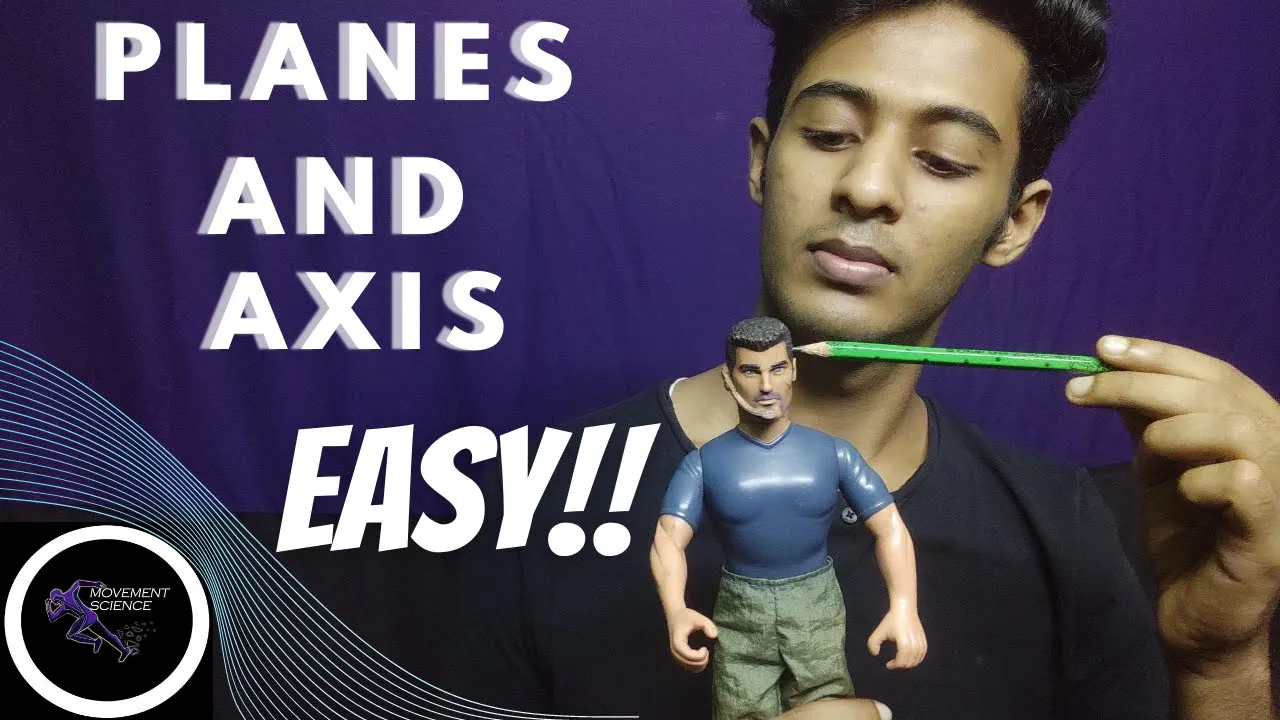
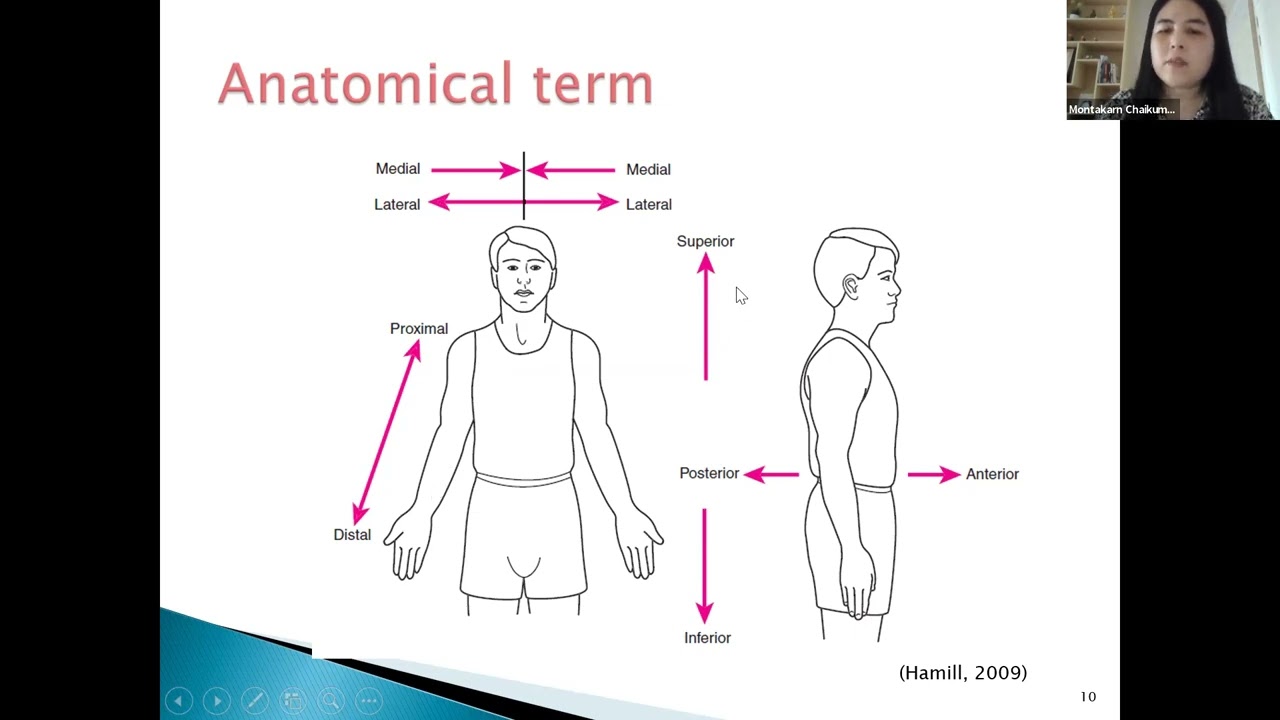
Biomechanics is the application of mechanical principles to the study of living organisms, serving as a sub-discipline of kinesiology (the study of human movement). It encompasses statics (no acceleration) and dynamics (with acceleration), with dynamics further divided into kinematics (description of motion using terms like superior/inferior/medial/lateral, joint angles, velocity, and speed) and kinetics (study of forces including ground reaction forces). The anatomical reference position (standing erect, facing forward, palms forward) serves as the foundation for directional terminology. Three planes of motion govern human movement: the sagittal plane (forward/backward movements like flexion/extension), the frontal plane (lateral movements like abduction/adduction), and the transverse plane (rotational movements like supination/pronation). Each plane has a corresponding axis of rotation (medial-lateral for sagittal, anterior-posterior for frontal, longitudinal for transverse). Understanding these fundamental concepts enables clinicians and practitioners to analyze and apply biomechanical principles in real-world settings such as performance enhancement, injury prevention, and rehabilitation.
Biomechanics Lecture 1: Introduction to Key Concepts and Terms
Added:how's it going everybody dr tom walters here from rehab science um some of you might not know this but uh for eight years i served as an undergraduate kinesiology professor at a local college here in town and i have since left that position but i have all these lectures that i used to use during the courses that i taught and so besides providing some of the sort of applied rehabilitation content that i mainly put on my social media channels i thought some people might be interested in some of the more academic information um that i have experience with so this will be the first lecture that basically covers the semester-long uh basic biomechanics course that i taught to undergraduate kinesiology major so there would be somewhere around 15 lectures and basically go from an introduction and then i would you know each lecture went through a different joint area in the body so there's a spine lecture knee hip shoulder like that so basically look at the biomechanics of those regions and how it might actually apply you know if you're somebody in an applied setting you're a trainer pilates instructor a pt a chiropractor whatever it is we'd take this biomechanics information and then work to apply it and look at how it would apply in the sort of real world so that's kind of the goal that's how i always taught biomechanics as a clinician i was a little unique in that i'm not just obviously the straightforward academic biomechanist so anyways that's kind of the plan so if that's of interest to you um follow along and i'll post these lectures uh week to week so this is the first one it's going to look at kind of intro to biomechanics some definitions uh sort of around biomechanics important anatomical and directional terms which some of that might be already familiar to you or maybe you have heard it you just want to brush up on it so anyways sort of that introductory material as if you were taking a college course so having said that let's jump into it so basic biomechanics if we look at biomechanics it is this uh this study that has that's influenced from a number of different areas mainly we would think about biology and physics when we think about biomechanics but you know medicine engineering again physics and biology these all play into this discipline of biomechanics and of course biomechanics as we'll see is a sub-discipline or sub-branch of kinesiology the study of human movement so and then underneath biomechanics we'll look at these definitions there's statics and dynamics we can break biomechanics down into those two areas and then underneath dynamics we'll have kinematics and kinetics and this is where we spend really this whole semester-long course that i teach is mainly focused in this area of dynamic this dynamics area and looking at kinematics and kinetics very little in the statics realm uh dynamics is you know what we see in most of life so we spend more time there so just a quick breakdown of biomechanics what is kinesiology just in general is the study of human movement and again biomechanics is a sub-discipline of kinesiology biomechanics if we break down that word we're basically again taking biology and i mentioned before it's really biology and physics so we've got the bio part uh they're in that image thinking about you know the bones the skeleton uh the muscles and tendons ligaments how these things that biological how those biological components uh work into the picture and then mechanics so then we can take that same image and break it down into a mechanical diagram and think about maybe for example in this picture the elbow flexors their origin their insertion and how that affects a joint like the elbow so combining those two areas really breaks down this word biomechanics and as the definition says it's an app the application of mechanical principles in the study of living organisms and it's not just humans right some biomechanists study other animals plants so there's there's and it can be more macroscopic like muscles and tendons it can be micro microscopic and looking at how blood flows through the body so biomechanics you know there's quite a bit a pretty large area of study within this field so some branches again of biomechanics we've got statics which just basically means that there's constant motion without acceleration so that could be something that's uh sitting still so again constant motion or zero motion just no acceleration so something sitting totally statically uh you know you imagine a car just sitting still on the road or a car that's got perfect cruise control where it's at the exact uh constant motion there's no change in acceleration those would be static situations so in real life we don't see you know many situations where there's zero acceleration there's always tends to be some acceleration especially when we're talking about the human body we have people jumping and landing and there's constant changes in acceleration uh unless maybe something's totally static and even then if a person is trying to statically balance right there's still perturbation and movement and so you know we'll mostly think about this dynamics area which is uh situations where acceleration is present the subject is uh experiencing changes in acceleration so again we'll spend most of our time in the dynamics realm and then again underneath uh dynamics we have kinematics which is the study of the appearance uh or description of motions this is where we see a lot of our anatomical terms come into play superior inferior medial lateral we'll see things like velocity and speed uh joint angles you know a really common one in biomechanics and kinesiology we might say that elbows flex to 140 degrees something like that so that all those sort of descriptors of movement and then kinetics uh basically involves forces so then we're going to start talking about newtons of force it could be ground reaction force maybe somebody's running and we're looking at how much force they're imparting into the ground and how much then equal and opposite force is going back into their body so uh we'll look more at forces but basically we've got we can kind of describe motion with all these other uh descriptors and then we can look at the forces and you know in biomechanics this is typically studied with a force plate so you may have seen those in labs i used to have one in the lab that i owned for a period of time where you know it sits in the floor and we could have people land and jump and do various things we use it a lot for return to sport testing with uh individuals who had acl reconstructions and we'd look at you know just get an idea of force you know how much force are they putting into the ground how much is coming back and that would help us sort of understand their movement tendencies and how we might modify things over time so again kinematics and kinetics are the two sub disciplines uh sub branches underneath dynamics which is where we'll spend most the time in each of these lectures so just some kind of basic definition type material and then anthropometrics so you may have heard of anthropometrics especially when you're looking at the size of body segments the shape of a body segment so you might look at the thigh versus the lower leg upper arm versus the forearm and you can find charts and tables out there that kind of break the human body down based on these segments and their attributes i'm not going to talk about a lot about anthropometrics over these lectures but that is another area it's really important for biomechanics so what are some goals of sport and exercise biomechanics well if we're thinking about performance improvements we might bio-mechanists are involved quite a bit in technique improvements we might think about one example is really common is how the high jump has changed over the years it used to be that individuals would go over perform the high jump stomach down and then later on it was discovered through biomechanical research that going over what the back down and creating the extension the spine allowed people to improve their performance so just one example from a technique standpoint you can think of i'm sure lots in different sports golf tennis you know the list just goes on and on and then equipment improvements those are you know equipment's changing all the time it's really interesting actually to look back at how shoe wear and you know things again like golf clubs golf balls baseballs baseball bats you know uh just how this equipment has changed basically from biomechanical research so we have that performance side and then we have a side that's more relevant to my line of work and probably a lot of people who are going to watch this but injury prevention rehabilitation so the same types of things looking at technique and and equipment and how we can improve function slash reduce injury through biomechanical research so it might be looking at gait techniques maybe somebody's rehabilitating from a stroke and we're looking at different techniques to improve their gait cycle and so to study gait and look at maybe the best techniques for improving that person's gait cycle maybe it's looking at equipment like walkers canes wheelchairs you know just so much biomechanical research that goes on in the injury prevention and rehabilitation world and again we may touch on it here and there but most of our focus is going to be a joint by joint type of lecture and looking at the mechanics of specific joints and hopefully that will give you new information to apply with your you know patients and clients so okay so qualitative versus quantitative just some other definitions here again qualitative we think of without numbers right so we might when we're describing human movement we might say that a particular area a joint is flexed uh maybe it's rotated you might be feeling a joint kind of moving somebody passively and you might be describing enfields like something maybe is rigid maybe it feels springy or soft or hard so all these qualitative descriptors and then obviously quantitative are the ones that involve numbers so time distance speed uh force we could you know with newtons of force so mass all these things that come up in biomechanics often acceleration velocity so all of those would obviously fit into the quantitative where there's a number value on the uh item in question anatomical reference position this is super important as we go along especially because i'm going to describe things and talk about things like anterior posterior medial lateral superior inferior so these you really want to have down so that things make sense but basically anatomical position is this erect position standing up uh facing forward and the forearms are supinated so the palms face forward and this is our starting point so you really when you're naming things on the body you want to mentally go back to this starting position otherwise if you don't then you'll be incorrect and where you're how you're naming something so if you were thinking about you know somebody's standing facing forward like this like the gal here uh where her her face is towards us you know if you were talking about something like the triceps relative to the biceps right you would look think back to this you think well in anatomical position the triceps are posterior to the biceps they're farther behind the biceps so or you might think about maybe in this position you would say the thumb right the thumb is lateral to the fifth finger the pinky finger so you just want to make sure you go back and have this really locked into your mind as you think about directional terms and i'll define each of these uh here so you know you've got you can look through here you've got right and left that makes sense uh you've got medial lateral you've got a distal and proximal and then anterior posterior over on the guy here so front and back and again our proximal distal superior inferior so those are gonna be uh the main ones that we'll think about the other one that's not on here is superficial and deep so if something's closer to the surface of your skin it's superficial if it's down deeper then it's deep so another one that's not labeled here so definition so just to keep these straight superior just means closer to the subject's head inferior that means farther away from the head these and you want to keep these straight because sometimes people mix these up with proximal and distal so make sure you keep this straight superior inferior relative to the head okay anterior is towards the front of the body again like the the bicep muscles are anterior uh as compared to the triceps triceps are posterior they're on the back side of the arm and then we've got medial which is towards the midline of the body and lateral which is away from the midline of the body so if you think back to anatomical position if we're here and you're thinking about the radius and ulna on the gal there so the radius is on the thumb side and the ulna is on the pinky side so again you might say that the ulna is medial to the radius if you were thinking about the bones in the forearm so just another example right or if you're in the lower leg you would say the fibula the the smaller bone in your lower leg is lateral to the tibia that larger bone so again just some examples there so we've got those medial lateral proximal again proximal and distal sometimes people confuse with superior inferior so again superior and inferior are relative to the head proximal and distal are relative to the trunk so they mainly are talking about things on your arms and legs so you would say you know my shoulder is proximal to my wrist right my shoulder is closer to my trunk as compared to my wrist or you could say the ankle is distal to the knee right the ankle is farther away from the trunk than the knee so again just a lot of you probably are super familiar with these directional terms but they're you know they're uh where we start when we teach biomechanics and a lot of people don't know them well and if you don't know these well it makes everything else more difficult so and then again i mentioned superficial and deep so superficial is towards the surface of the body deep is deeper inside the body so if you had two things that were sort of stacked on top of each other you could describe their position based on how close they are to the surface so you know you might say pec major is superficial to pec minor right it's on top of pec minor so it's closer to the skin you could say gluteus max or you could say gluteus piriformis is deep to gluteus maximus right the piriformis muscle in the poster posterior hip region is deep to gluteus maximus it's underneath it so just some examples there uh planes of motion uh three planes of motion so sagittal plane is the one that most of us move in throughout our lives and throughout the day it's forward and backward movement okay so it's all that movement in the forward and backward direction it's all the movements that tend to include flexion extension so elbow flexion elbow extension shoulder flexion all the things you can do in that forward and backward movement hip flexion extension knee flexion extension and then we have the frontal plane which are our lateral movements so those are all of our abduction adduction kind of movements side bend of the spine side bend of the neck all those kind of things and then the last one is transverse plane this is our rotational movement so spine rotation neck rotation forearm supination and pronation again an anatomical position they're rotating in that that rotational plane uh hip and shoulder internal external rotation of the hip and shoulder so they're all of those rotational movements you just want to make sure not to forget about forearm supination and pronation those are also occurring in the transverse plane and then with each of these planes there's going to be an axis so again here's just a picture you can imagine these planes cutting the body into different sections and i think sometimes this is pretty abstract for people what i like to think is that if you imagine that transverse plane cutting the person into top and bottom halves that would allow the person the top section of the body to rotate from the bottom section so it would create rotation in the spine so you want to think about movement happening parallel to that plane the sagittal plane is cutting the body in right and left halves so it would allow flexion extension all these movements that could go parallel to the body and then the coronal which is another name for the frontal plane cuts the body into anterior and posterior sections so everything you could do there is side to side you'd move parallel to the plane imagine you're back against a wall that's sort of like that plane of motion so you could do abduction adduction all the things almost like snow angels and things you could do in that frontal plane so i know it can be a little abstract but hopefully those make sense again a wall is a really useful tool if you put your side against a wall you know up against your then that allows you to do all the sagittal plane motions everything that can slide along the wall whether it's your hip or shoulder or your spine moving through flexion extension if you're thinking about the frontal plane you put your back against the wall and you can move everything that can move kind of out to the side is in that frontal plane and then each of these planes has an axis that goes with it so the medial lateral axis is the around which sagittal plane movements would occur so if we think about the axis is always going to run perpendicular to the plane so the sagittal plane is this one that cuts us in right and left halves and it's allowing these forward and back movements it's cutting through us like this then the axis has to come from the side so if you imagine you know i with this the students i'd always try to imagine have them imagine a joint like the shoulder so say your shoulder is moving through flexion extension well for your shoulder to be able to pivot like that on a pendulum there'd have to be a rod coming from the side and going through that joint and out the other side so that that joint could spin so this is kind of anterior posterior movement flexion extension which is in that sagittal plane so i'd have to have a medial lateral axis running perpendicular to that plane to allow myself to move through that movement so that's the medial lateral axis then we have the anterior posterior so if i'm moving in the frontal plane if my shoulder is going through abduction adduction along this frontal plane i'd have to have an axis going from anterior to posterior at a perpendicular 90 degree angle to allow that joint to rotate around it so you think about a big male going through your joint or a rod or something how would it have to go through that joint to allow that movement so these aren't going to change the axis the anterior posterior axis always goes to the frontal plane the medial lateral axis always goes to the sagittal plane so if it's tricky for you to mentally visualize this just memorize it for a period of time i was like this in the beginning and over time as you practice it i think it becomes easier to imagine and then the last one is the longitudinal or vertical axis and that goes with the with the rotational movements if you imagine the spine if i wanted to rotate my spine the axis would have to go straight through my head and down through my spinal column so you can think of that as vertical or longitudinal as it runs through so they would have to go through there for me to spin around it if you think about your forearm pronating and supinating you have to have this longitudinal axis that goes straight through your hand and up through the bones of your forearm so that they can spin right if your shoulder was going to go through internal extra rotation you'd have to have a big rod going straight through the humerus through that upper arm bone so you could spin around it so hopefully that makes sense it's a little hard to demonstrate these on a video lecture uh but again those axes are going to stick with their planes they're not going to change so once you know how they go together that will always be the case but it is helpful it is surprising how often these can kind of come up as i think about prescribing exercises for people i might think about well i want to give somebody an exercise in the sagittal frontal and transverse planes in our programs therapeutic exercise programs it's important to consider all those planes because again we tend to move mainly in the sagittal plane and you may want to think about those other muscles oftentimes they're stabilizers that are in the frontal and transverse planes and incorporating exercises for those to help the person be more stable and be able to control movement better so it does have a practical application so uh you know movements that occur in the sagittal plane i've talked a lot about these but it's our flexion extension hyper extension of the spine hyperextension the knee uh the ankle is really important to think about here dorsiflexion and plantar reflection of your ankle are in that sagittal forward and back kind of plane of movement so those are the big ones uh just you know pictures of those those movements and then the frontal plane we have abduction adduction you can think of the shoulder and the hip lateral flexion or sometimes we call it side bend of the spine elevation depression or like your scapula so if you shrug your shoulders at scapular elevation and depressions tucking them down and back that's all along that frontal plane inversion e version of your ankle kind of think about inversion sprain where your ankle rolls in or just moving your ankle in inversion e version that's the frontal plane ulnar and radial deviation of your wrist again going back to anatomical position but that side to side movement of your wrist either towards your radius or towards your ulna those occur in the frontal plane and images here of those and then lastly transverse plane we've got left and right rotation think about that mainly with the spine medial and lateral rotation or this is often called external i use external internal rotation more but depends on who you're talking to so that could be internal extra rotation the shoulder or medial lateral rotation supination and pronation of the forearm again and even when we think about supination and pronation of the foot there's going to be a transverse plane component and then horizontal abduction adduction that would be like if you bring your arm straight across your body like to reach the other shoulder that would be horizontal adduction horizontal abduct and those cut through like a sword through that transverse plane motion that transverse plane so those are some of the big ones there so again just sort of introductory material here in biomechanics again where we want to start out as you kind of embark on this human biomechanics sort of journey so this hopefully is familiar to a lot of you um and if it's not i hope this helps maybe clear up a lot of people have uh issues with planes of motion axes directional terms but again it's the biggest takeaway from this beginning section because it's going to come up in every other joint region when you work with people in the clinic or in the gym so having a good grasp on these will just will help as you mainly as you're talking to patients and clients and keeping sort of the mechanics of the body straight and clear in your head so so uh yep oh and then just those movements before i get going too much so just kind of some movement there to look at for the rotations you can see what medium lateral rotation of the hip pronation supination of the forearm and then that horizontal abduction adduction of the shoulder so that is uh wraps up basic biomechanics i went through that pretty quickly but again just introductory stuff and uh in the next section we'll start looking at uh tissue scale muscle bone and then we'll start jumping into joints so i hope you find this to be helpful and i will see you soon bye
Up Next

Force Plates in Locomotion: Running Biomechanics and Gait Analysis
@BiomechanicsMMU
18.2K views•2008-10-08

Triumph of Orthodoxy Icon: Byzantine Art & History Explained
@BenCallan
2.1K views•2024-08-06

FastAPI vs Flask vs Django: Choosing the Right Python Web Framework
@TechWithTim
302.5K views•2024-05-26

Game of Thrones Opening Credits: A Cinematic Analysis
@gameofthrones
46.3M views•2011-04-18
Related Study Plans & Knowledge Roadmaps
Structured learning paths in General & Interdisciplinary Studies