







![What is a Force & Types of Forces in Physics? - Gravity, Normal Force, Contact Forces - [1-5-1]](https://i.ytimg.com/vi_webp/HPfmSLDtP3c/maxresdefault.webp)













![Spider Veins in Legs & Varicose Veins Treatment [Causes & Symptoms]](https://i.ytimg.com/vi/la9MrZJuG-M/maxresdefault.jpg)
Force plates are essential tools for measuring ground reaction forces during human locomotion, but accurate data collection requires careful attention to several practical factors: (1) Speed of locomotion must be precisely controlled and recorded, as it directly affects the magnitude of ground reaction forces; (2) Timing gates with photoelectric cells positioned at appropriate heights (hip height for running, head height for walking) should be used to measure and regulate speed, with trials accepted within ±5% of predetermined values; (3) Participants must be adequately practiced to avoid targeting the force plate, which can alter natural running mechanics and produce distorted force-time traces; (4) Different footwear significantly influences ground reaction forces through material properties and changes in running mechanics, with barefoot running typically producing sharper impact peaks and higher loading rates compared to shod running; (5) Proper technique involves landing the entire foot centrally on the force plate without consciously modifying stride length, as over-striding or under-striding creates abnormal force patterns that do not reflect natural movement.
Force Plates in Locomotion: Running Biomechanics and Gait Analysis
Added:a common use of the force platform in sporting exercise is to record ground reaction forces during human locomotion this section investigates the following common practical considerations during walking and running recording or regulating the speed of locomotion using timing gates targeting the force platform the speed of locomotion and short versus barefoot running the speed of locomotion affects ground reaction forces as will be shown later therefore it is important when the recording force that the speed of the participant is also recorded speed of locomotion can be determined using timing gates these typically comprise a set of photoelectric cells and reflectors as shown here linked to a timing device the participant breaks the first beam to start the timer and the second beam to stop it average speed can then be calculated by dividing the distance between the cells by the time photoelectric cells are usually set equidistant from the center of the force plate typically at a hip height for running and head height for walking when using timing gates to regulate speed typically trials are accepted if the measured speed is within plus or minus 5% of the predetermined speed without adequate practice participants instructed to run or walk over a force plate will often miss the plate altogether or only land part of their foot on it adjustments are also often made to running or walking style in an attempt to make contact with or target the force plate the following sequences demonstrate both acceptable and unacceptable running trials the first sequence shows an acceptable trial where the participants running technique is not noticeably different from their normal running style and their foot lands roughly in the center of the force plate the forced timed race for this trial is also shown the next sequences demonstrate unacceptable trials where the participant targets the force plate first by lengthening their stride or over striding and then by shortening their stride or under striding in an attempt to land on the plate the final sequence shows another unacceptable trial where only part of their foot lands on the force plate in an acceptable trial as shown here the participant maintains their normal running technique and lands their foot approximately in the middle of the force plate the resulting force time trace includes impact and active Peaks as are typically seen during heel toe running in this example the participant lengthens their stride or over strides on their approach to the force plate to ensure that the whole of their foot lands on it the forced time trace includes a much larger impact peak than that observed during the acceptable trial here the participant shortens their stride or under strides on their approach to the force plate to ensure that the whole of their foot lands on it the force time trace has a much reduced impact peak finally the participant normal running technique but only lands part of their foot on the force plate because of this the force time trace no longer resembles that recorded from normal running the following section investigates the effect of walking and running speed on the magnitude of ground reaction forces three trials were recorded one with the participant walking one during slow running and a third during fast running the vertical FZ force time recorded from walking shows to characteristic Peaks that occur near the beginning and the end of the stands face the anterior-posterior FY forced time trace is negative during the first half of the stance phase and positive during the second half negative and positive FY forces are often termed breaking and propulsive forces both slow and fast heel-toe running result in characteristic vertical impact and active peaks and anterior-posterior breaking and propulsive peaks to aid comparison of forces between walking and the two speeds of running the x-axis on this graph displays the percentage of the stance phase rather than time in seconds comparison of vertical force time traces from walking and running shows that the two peaks that occur during walking are much lower than those recorded during running this is partly due to the contralateral foot being in contact with the ground during part of the stance phase the magnitude of impact and active Peaks also increases from the slower to the faster speed of running the magnitude of braking and propulsive Peaks are similar between walking and slow running but increase with running speed another factor that affects the magnitude of ground reaction forces as well as runners technique is Footwear to demonstrate this a trial was recorded with the performer running barefoot as shown here this graph compares the vertical or F Z component of ground reaction force from the barefoot trial with the previous trial in which the participant wore running shoes often when running barefoot the impact peak occurs over a shorter period or a sharper and has a greater magnitude than during short running as shown in this example the gradient of the vertical force curve before the impact peak is also often steeper in barefoot running than in short running as can be seen here this gradient is commonly referred to as the loading rate in this section some of the key factors that can influence forces recorded during locomotion of being considered steps should be taken to habituate participants to prevent them targeting the force plate or failing to make contact with it speed of locomotion affects the magnitude of ground reaction forces and therefore should be recorded and or controlled different Footwear also affects the magnitude of ground reaction forces due to both their material properties and the effect they may have on running mechanics therefore Footwear should be controlled when recording repeated trials
Up Next
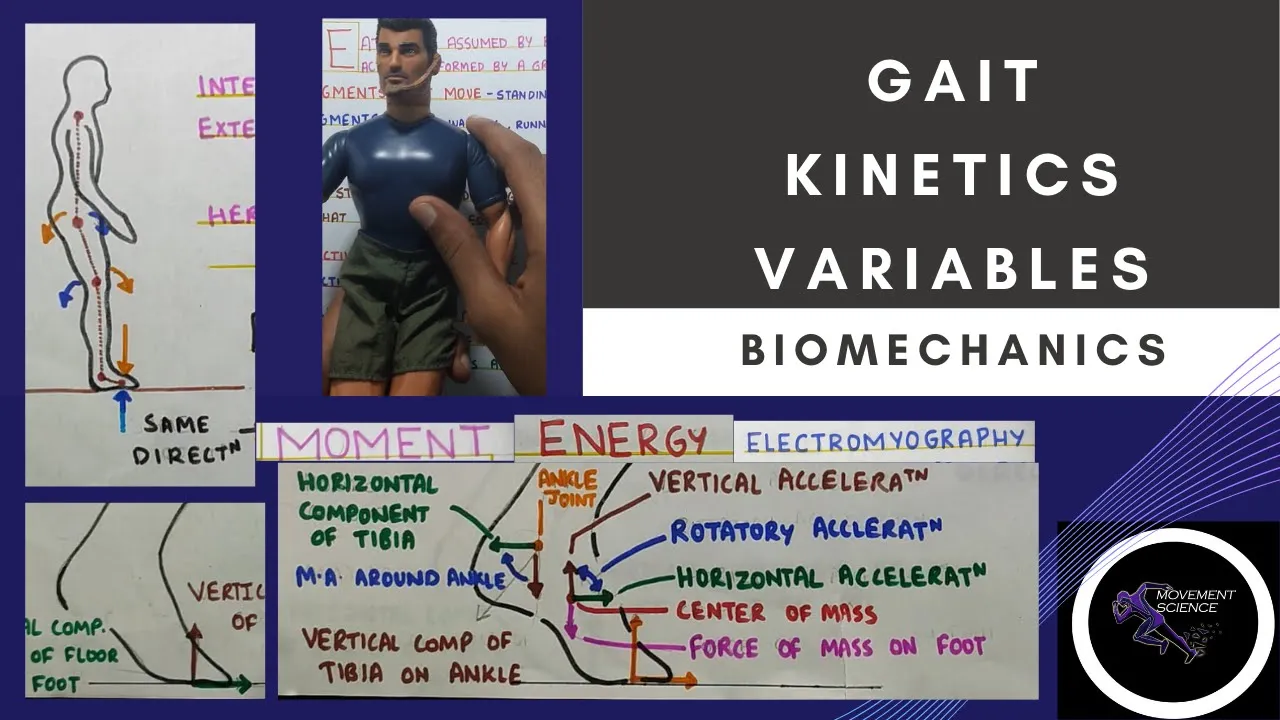
Kinetics Variables in Gait Biomechanics: A Physiotherapy Guide
@MovementScience8
19.1K views•2021-11-15

Triumph of Orthodoxy Icon: Byzantine Art & History Explained
@BenCallan
2.1K views•2024-08-06

FastAPI vs Flask vs Django: Choosing the Right Python Web Framework
@TechWithTim
302.5K views•2024-05-26

Game of Thrones Opening Credits: A Cinematic Analysis
@gameofthrones
46.3M views•2011-04-18
Related Study Plans & Knowledge Roadmaps
Structured learning paths in General & Interdisciplinary Studies