












![[Webinar] Explore Long Reads Sequencing with Nanopore](https://i.ytimg.com/vi_webp/QIXuqYXeYog/maxresdefault.webp)
Oxford Nanopore sequencing technology uses protein nanopores to directly read DNA and RNA molecules by measuring disruptions in ionic current as strands pass through, offering benefits including no PCR bias, direct detection of base modifications, read-length agnosticism from short to ultra-long reads, real-time sequencing capabilities, and scalable chemistry; the streamlined workflow involves four steps—sample preparation, library construction, sequencing, and data analysis—with flexible options tailored to specific experimental goals such as pathogen metagenomics or bulk transcriptomics.
Oxford Nanopore Sequencing: Sample to Answer Masterclass
Added:Fundamental molecular biology concepts, including DNA/RNA structure, nucleic acid extraction, and the central dogma.
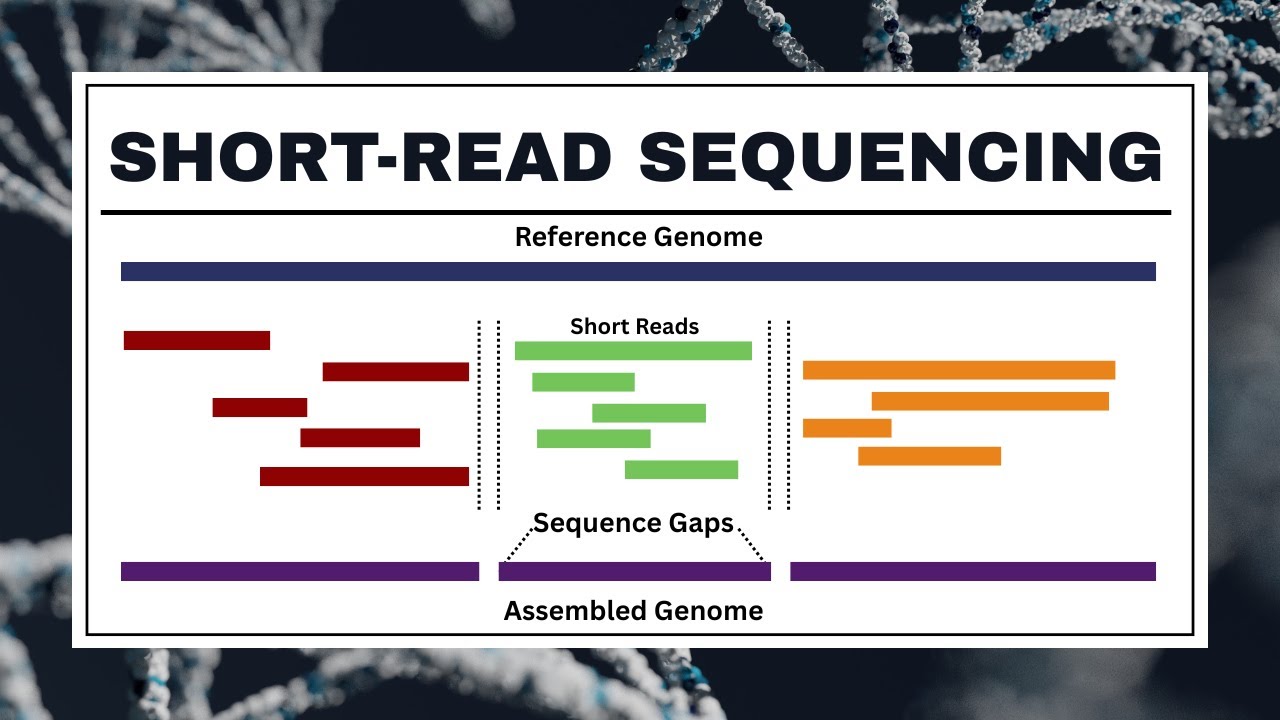
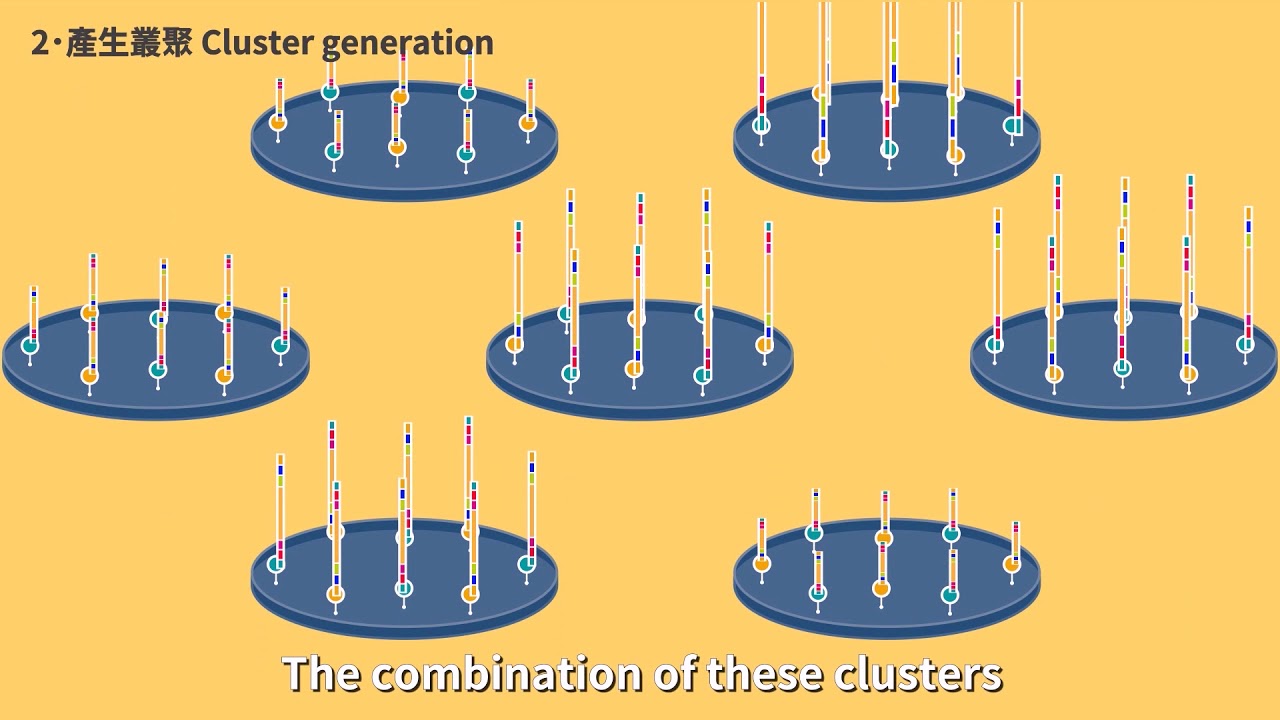
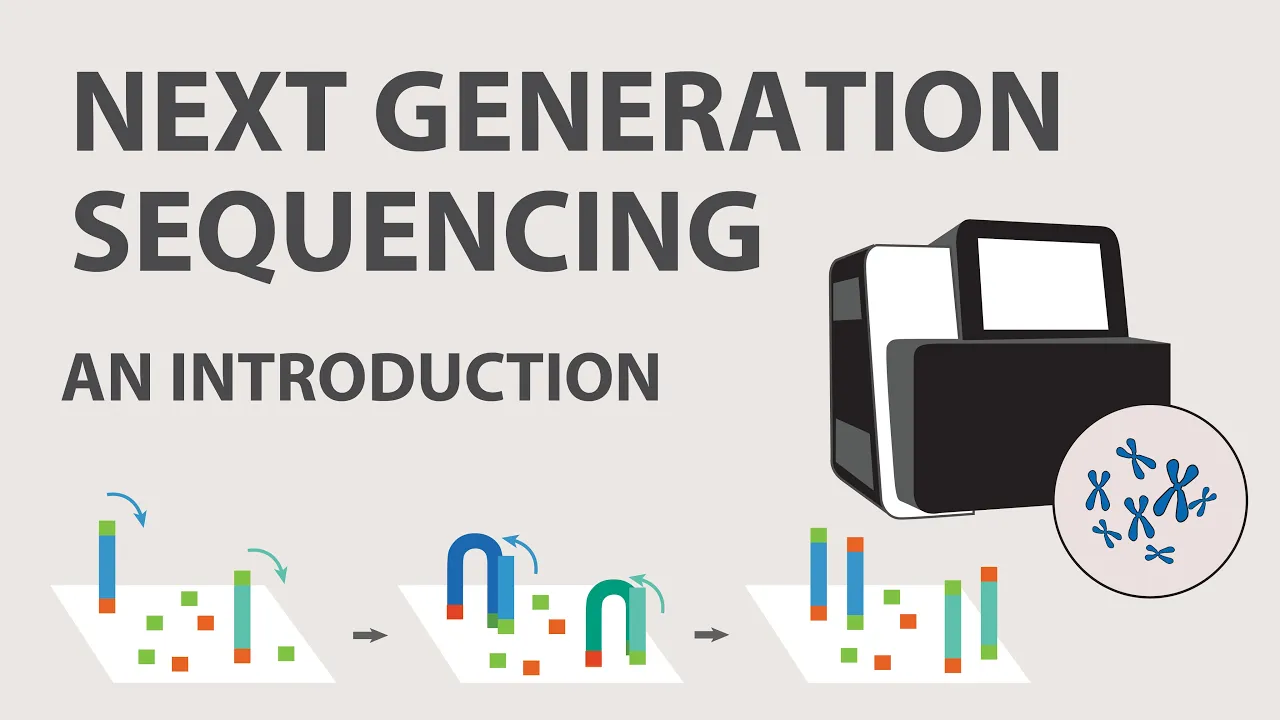
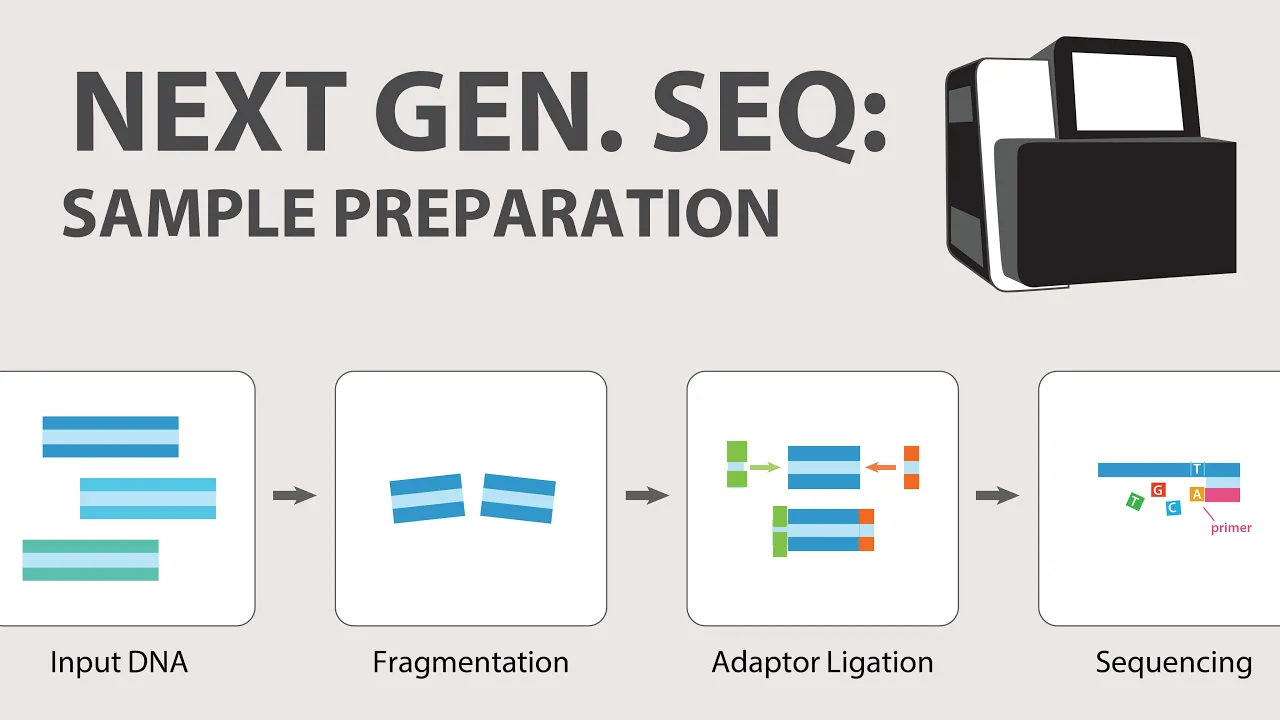
Basic principles of Next-Generation Sequencing (NGS) and how short-read technologies differ from long-read sequencing.
Core biophysical concepts, specifically how ionic current and membrane potential are utilized to measure biological changes.
An understanding of basic bioinformatics terminology, such as basecalling, alignment, mapping, and standard file formats like FASTQ.
Advanced bioinformatics pipelines tailored for long-read assembly, structural variant calling, and polishing (e.g., using Flye, Minimap2, and Medaka).
Direct RNA sequencing protocols and the identification of epigenetic modifications, such as DNA/RNA methylation, without bisulfite conversion.
Metagenomic profiling and real-time pathogen identification workflows for clinical diagnostics and environmental surveillance.
Scaling-up laboratory workflows from portable devices (MinION) to high-throughput sequencing systems (GridION and PromethION) for population-scale genomics.
1.9K views21likes21:57Original Release: 2025-08-19
Hi everyone, thanks for tuning in and welcome to the masterclass series. My name is Akquilia Wap Adumbo and I am the associate director for the technical applications team in the Americas here at Oxford Nanaport. Today I have the pleasure of kicking off this masterclass series. Throughout the series, my colleagues will take you through all aspects of our platform and best practices for running an experiment from sample to answer.
Our teams have curated specific topics within the masterclass series that will guide you through our streamlined workflow that is comprised of four steps. Preparation, sample and library, sequencing, and analysis. First, preparation, preparing the sample, and then the library. The lessons include this master class, guidance on how to extract highquality DNA and RNA, and selecting the right library prep workflow for your experiment. Second, sequencing. That master class provides step-by-step guidance to loading a Promethine flow cell that will highlight transferable best practices to keep in mind for loading any of our flow cells.
Third, the data analysis session discusses how to analyze your Oxford Nanopore data. And as a bonus, we have additional master classes that discusses how to sequence fulllength plasmids in your own lab and how to call varants and methylation across the human genome.
Let's get started.
Here are a few key learning objectives that will be covered in this master class. We'll begin with an introduction to how Oxford Nanopore sequencing works, followed by the benefits of this technology. We'll go through how to plan your experiment with sample to answer in mind and some key considerations.
Lastly, I'll share some online resources to provide additional support.
Let's start with how Oxford Nanopore sequencing really works. As you might already know, at the heart of the technology lies the nanopore.
A nanopore is essentially a very small hole that functions as a gateway between two systems, facilitating the transport of molecules from one side of a membrane to the other. In our system, we use protein nanopores that inherently have different shapes and properties that can also be enhanced through clever mutagenesis.
We have selected the pores with the best features for sequencing on our platform.
So let's dive into the details of the system. Here in blue you can see a nanopore embedded in a supporting membrane. When an electrical potential is applied to the system, ions can flow through the nanopore. The current produced by this ion flow can then be measured. In purple, that's the motor enzyme which is bound to a DNA molecule.
The motor enzyme is added during the library preparation stage and as you can see it unzips the doublestranded DNA molecule and controls the movement of one strand as it passes through a nanopore.
As the analyte DNA or RNA passes through the nanopore, it causes a distinct disruption in the flow of ions that is measured on our devices, captured as an electrical signal, and then interpreted by our base collar to determine the sequence of the DNA or RNA strand. As soon as a strand has passed through a nanopore, that nanopore becomes free to start sequencing another strand.
Now that you've seen how Oxford Nanopore sequencing works, what are some of the benefits? Well, unlike other platforms that rely on synthesis, our approach reads molecules directly by monitoring disruptions in ionic current as they pass through an nanopore, allowing us to avoid many common limitations of other platforms.
As a result, we can directly sequence DNA or RNA without the need for PCR. So there is no PCR bias. Moreover, it is possible to detect base modifications directly.
Oxford Nanopore sequencing is readlength agnostic, delivering reads from short to the ultra long. Additionally, real-time sequencing enables real-time base calling and analysis without having to wait until the end of a sequencing run for answers. Finally, the chemistry underpinning the technology is highly scalable.
The uniqueness of our platform coupled with streamlined and robust workflows facilitates diversity across investigations and techniques to address any of your sequencing projects. With Oxford Nanopore sequencing, you can access comprehensive genomic insights versus a limited view which is common to sequencing by synthesis platforms. As we are not a sequencing by synthesis platform, access to longer unbiased informationrich data that is vital for assembly, identification, variant calling, snips, SVS, and phasing, just to name a few, investigations, permits inquiry into a broader range of questions, and more importantly, uncovering solutions and insights that once seemed elusive.
Now, let's switch gears and talk about how to plan your Oxford Nanopore sequencing experiment.
At Oxford Nanopore, our sequencing workflow can be broken down into four consistent steps and we have flexible options to support each step. We start with extraction of highquality DNA and RNA. The samples are then prepared for sequencing using an Oxford Nanopore sequencing kit during library preparation. Next is real-time sequencing and last is data analysis.
Each step is explored in greater detail in the dedicated master classes that follow in this series.
While this masterass focuses on consideration at each stage of the Oxford Nanoore sequencing workflow, we also offer endtoend protocols or application workflows.
These application workflows provides tailored step-by-step guidance from sample to answer to help you achieve your specific experimental goals. So, if you're looking for a complete start to finish solution, these provide everything you need. You can access our application workflows within the documentation section of our website.
Currently our workflows include human variation sequencing from a range of sample types, single cell transcripttoics, nanopore only telmir to telmir assembly, nanopore only microbial isolate sequencing, rapid metagenomic sequencing for pathogen surveillance and whole plasmid sequencing.
When planning an experiment, we often start with our sample and how it should be extracted. We then envision a straightforward path where the extracted DNA is turned into a sequencing library, sequencing happens, the data is analyzed, and the scientific question is answered.
In reality, things are a bit more complex. Let's say it's like a two-way conversation and we recommend starting from the end and working your way back.
In most instances, the bioinformatics requirements of the experiment will dictate the data that is required. For example, throughput versus depth of coverage, which in turn dictates the way in which you prepare the library.
The requirements of the library prep could then dictate the type of extraction that you do. With that in mind, let's take a look at some additional considerations when planning your experiment.
First of all, what are the experimental goals?
This could be, for example, assembling a whole genome or species identification.
Perhaps you wish to characterize varants or even phase your data. Next, what are the sequences of interest? Is this a single genome or a metagenomic sample?
Will we be sequencing the whole genome or are we interested in a specific region of interest that might benefit from a targeted approach? The size of the targets or genome is also an important consideration.
Depending on the amount of data you need, you might wish to sequence a single sample or many in a multiplex fashion.
So then what does the sample look like?
We have solutions for DNA, native RNA and cDNA, as well as options for different input amounts and varied fragment lengths. And last but not least, what other practical considerations are there? Is a shorter turnaround time required? How much data is really needed?
Now that we have all those thoughts swirling around in our minds, let's look at the options we have at each step of the workflow so you can choose what best fits your experimental goals.
Step one, preparing the input sample.
This involves making a decision on what extraction method is best suited for your needs. Again with the data analysis in mind, fragmentation and size selection can be applied to optimize for outputs and read lengths you need. We have a growing repository of validated protocols to provide some benchmarking and to set some expectations for later steps in your experimental workflow. It is essential to properly qualify and quantify your starting input.
Step two, preparing the library. Here's a quick look at our family of sequencing kits. And as you can see, there's something for everyone. We recommend refining the kit options based on a few parameters, such as those shown here on the left to help you make the best choice. There are kits for targeted sequencing and barcoding kits for multiplexing. There are PCR free options, thus enabling the preservation of epigenetic signals. And for low inputs amounts, there's the option to use PCR.
Realtime nanopore sequencing also enables adaptive sampling which is a unique feature to our platform and allows you to enrich or deplete regions of interest within the sequencing run itself. So at the sequencing read level.
Additionally, you can unlock methylation sites without the need for any special library preparation modifications or steps.
Step three, sequencing. We have a robust fleet of sequencing devices that cater to the scope, scale, and throughput for your required projects. The device you choose depends on the data output your experiment requires and the number of runs you need to perform. The minion and grid ion devices run minion flow cells whereas the promethion devices run the higher throughput prime flow cells. The minion device can perform a single sequencing run at a time whereas the grid ion can run up to five independently or simultaneously running flow cells. The promethion family of devices has options for two or 24 also individually addressable positions.
Our goal at Oxford Nanopore is to enable the analysis of anything by anyone anywhere. Not only are our devices scalable, but we have also demonstrated their portability across diverse and even extreme locations around the globe.
From deep sea oceans to rainforests and even in space, researchers are using Oxford Nanopore sequencing to sequence in low resource settings with limited access to lab equipment as our devices can be set up wherever and whenever they're needed.
This has been critical in outbreak surveillance where our devices have been used in real world responses to outbreaks including influenza, Ebola, Zika and SARS Kovv2.
This enables public health organizations to continuously monitor other viruses in efforts to launch more expedient solutions.
And finally, step four, data analysis.
Similar to the other steps in our streamlined workflow, we provide a range of data analysis options, and finding the right one is easy. The Minnows software executes, monitors, and base calls your data. For further analysis, the Epitome platform provides easytouse preconfigured workflows for a wide range of applications.
These point-and-click workflows can be run locally or in the cloud via the intuitive user interface without the need for prior bioinformatics experience.
If you have more advanced experience, you can choose to run the workflows via the command line or build your own pipeline from our tools available on GitHub or developed within the Nanapore community.
Eliseion offers an all-in-one device with fully automated solutions ideal for a broad range of genomic applications with no previous genomics expertise necessary.
The streamlined automated workflows minimizes hands-on time while also reducing turnaround times.
Getting set up for sequencing is simple.
Within each of our protocols, we provide an experiment checklist to be sure everything is in place before you start.
Once you have all the items in place, you can start with the software installation and hardware check. Then move along to the flow cell check before really getting into the fun of things and preparing and sequencing your own libraries. If you're new or returning to Oxford Nanopore sequencing, it is highly recommended that you complete a control run. This will establish a baseline of performance within your hands, solidifying key nanopore sequencing steps and will give you the opportunity to get familiar with our protocols and our analysis options.
This all provides a better understanding of your existing computational needs and ensures best success for your actual experimental brunts.
Now that we have all of the pieces of the puzzle together, let's look at an example of an endto-end solution. The pathogen metagenomics workflow.
Metagenomic sequencing is a key technique used in the identification of potential pathogens providing important insights for outbreak surveillance that could inform public health measures.
However, metagenomic sequencing using legacy shortread technologies can limit confident identification of microbes as the shortread output makes it difficult to distinguish between closely related strains. Moreover, the need to batch samples results in a lengthy turnaround time. Oxford Nanopore offers a rapid endtoend workflow for the metagenomic sequencing of microbial pathogens, supporting reads of variable lengths.
Microbial genomes can be thoroughly characterized, delivering fast, accurate identification of bacterial, fungal, and viral pathogens from a single sample.
The approach enables rapid access to data which is critical for outbreak control.
Here's an overview of the end-to-end pathogen metagenomics workflow starting from respiratory samples. The protocol begins with extraction using a split approach to separately extract viral and ascellular nucleic acids and bacterial and fungal DNA. The viral workflow incorporates a reverse transcription step following RNA extraction. Next is library preparation using the rapid PCR barcoding kit. This provides a fast method of preparing multiple samples for sequencing on a single flow cell. For sequencing of up to 22 barcoded samples in multiplex plus two controls, we recommend a minion flow cell which is compatible with either our minion or grid iron devices. Finally, for data analysis, the metagenomics workflow in epitome produces accurate identification and abundance information for the microbes present in the sample.
Now let's take a look at the steps involved in a bulk transcripttoics experiment as a worked example of the Oxford Nanopore sequencing workflow.
Uncovering RNA diversity is key to understanding biological mechanisms.
Alternate transcript usage, for example, is a source of variation between normal and diseased tissues. However, short read sequencing techniques often cannot span RNA transcripts in full. This can lead to missed novel transcripts and impacts the precise identification and quantification of isoforms.
In contrast, the streamlined Oxford Nanopore cDNA sequencing workflow generates high outputs of reads that span fulllength transcripts, allowing you to detect and quantify complete isoforms and fusion transcripts and also measure poly tails.
This information enables differential isoform expression analysis, providing vital information for mechanisms of disease research that could be missed by legacy methods.
Here's the end-to-end workflow for bulk transcriptto analysis using cDNA sequencing. In this workflow, starting from from a blood research sample, the Kaiogen Pax gene blood RNA kit is used to extract highquality RNA. This is then prepared for sequencing using the cDNA PCR sequencing kit, which is optimized for high outputs of fulllength transcripts.
For sequencing, a promethine flow cell is ideal, delivering over a 100 million reads per flow cell for isoform level analysis.
Lastly, the epitome transcrytoics workflow enables isoform and gene fusion identification, assembly, annotation, and differential gene gene analysis.
Details on a direct RNA sequencing workflow is reviewed in the library prep masterass.
Before we end this session, let's take a look at some online resources.
Everything you need is available on our website from resources on the getting started page to our extraction and library preparation catalog within the documentation section and information on data analysis. Together, these will shape and refine all aspects of your workflow.
And with that, we've come to the end of this master class. To summarize today, we have learned how nanopore sequencing works and the sample to answer solutions available, both manual and automated. We looked at what to consider before starting your experiment and how best to prepare your samples. Always taking care to customize and/or optimize along the way. We next looked at a range of library preparation kits, sequencing devices, and data analysis options available to suit your experimental goals and putting it all together with one of our end-to-end workflows.
I hope that you have found the topics discussed in this master class beneficial as you continue on your Oxford Nanopore journey from sample to answer. Be sure to view the additional master classes within this series for further guidance and best practices.
Until next time, thanks for tuning in.
Up Next

31:49
Metagenome Assembly with MEGAHIT: A Step-by-Step Tutorial
@bioinformaticscoach
5K views•2023-01-07

12:54
Triumph of Orthodoxy Icon: Byzantine Art & History Explained
@BenCallan
2.1K views•2024-08-06

9:49
FastAPI vs Flask vs Django: Choosing the Right Python Web Framework
@TechWithTim
302.5K views•2024-05-26

1:42
Game of Thrones Opening Credits: A Cinematic Analysis
@gameofthrones
46.3M views•2011-04-18
Related Study Plans & Knowledge Roadmaps
Structured learning paths in General & Interdisciplinary Studies
general-studies
Elevator Engineering: History, Physics & Cities
01From Hoists to Safety Brakes: The Dawn of Vertical Lift
02Hydraulic vs. Traction: The Engineering Physics of Elevators
03Modern Speed, Safety, and Algorithms
+ 2 more learning modules
12h5 modules
Explore Roadmap
general-studies
Rubber: Material Science, History & Geopolitics
01Origins of Natural Rubber & Mesoamerican History
02The Chemistry of Natural Rubber & Vulcanization
03The Geopolitics of the Rubber Boom & Colonization
+ 2 more learning modules
12h5 modules
Explore Roadmap
general-studies
Containerization: Evolution, Logistics & Trade
01Ancient Trade & Bulk Cargo: Amphorae to Barrels
02The Industrial Revolution & Cardboard Packaging
03The Containerization Revolution: Malcom McLean
+ 2 more learning modules
12h5 modules
Explore Roadmap
general-studies
Textile Tech: Evolution, Labor & Global Impact
01Pre-Industrial Textiles: Handloom & Cottage Industry
02Mechanization: The Spinning Jenny to the Power Loom
03The Factory System & Global Labor Transformation
+ 2 more learning modules
10h5 modules
Explore Roadmap