


![[정병열재정학연습 47] 제7장 비용-편익분석(1) - 1. 개요 (p.266)](https://i.ytimg.com/vi/2lfn6ijRlO0/maxresdefault.jpg)

















When evaluating aging infrastructure like bridges, decision-makers must weigh the costs of ongoing repairs against the benefits of complete replacement, considering factors such as structural safety, capacity needs, and long-term sustainability; this is illustrated by comparing the Tappan Zee Bridge's $39 billion replacement project with the Brooklyn Bridge's $1.2 billion preservation efforts, showing how different approaches serve different purposes in urban infrastructure management.
Infrastructure Decision-Making: Repair vs. Rebuild NYC Bridges
Added:Basic principles of structural engineering, including structural fatigue, material degradation, and load-bearing capacities of different bridge designs.
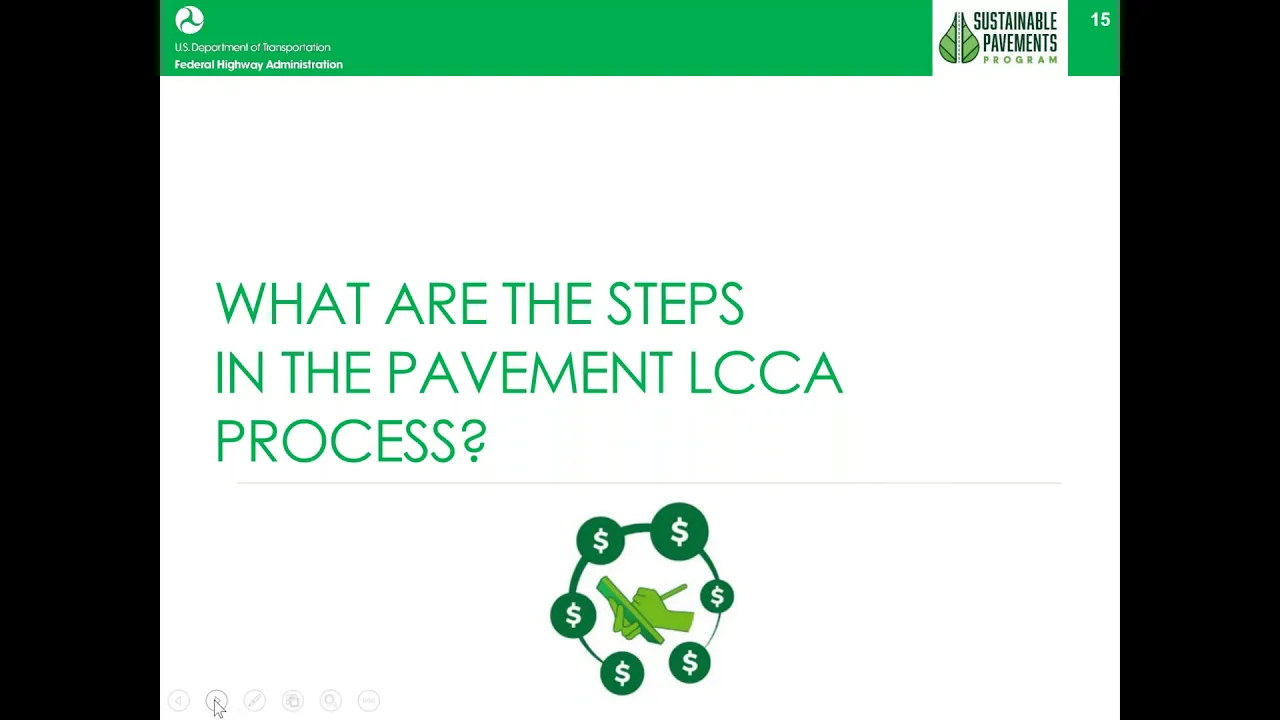
Fundamentals of public finance and economics, specifically Cost-Benefit Analysis (CBA) and Life-Cycle Cost Analysis (LCCA).
An understanding of urban planning and the governance of public infrastructure, including the roles of municipal, state, and federal transport agencies.
The historical and architectural significance of landmark infrastructure, distinguishing between historic preservation and functional modernization.
Advanced Structural Health Monitoring (SHM) techniques, including the use of IoT sensors and non-destructive testing (NDT) for predictive maintenance.
Infrastructure resilience and climate change adaptation strategies for coastal and metropolitan transit corridors.
Financing mega-projects through Public-Private Partnerships (P3s), municipal bonds, and federal infrastructure acts.
Comparative case studies of global bridge replacement and rehabilitation projects, analyzing failure modes and decision-making frameworks.
366.6K views4.8Klikes7:20Original Release: 2014-09-18
[Music] the biggest threat to the safety of the traveling public today are these Bridges we've got more than 100,000 bridges that are old enough to qualify for Medicare should we just keep pouring money into them or maybe should we think about building new [Music] Bridges water Keeps Us Alive the Subways will take us back and forth to work but the bridges is the outward appearance of what connects Us in the mid 1800s travel in New York City was very very difficult there were these These Quiet Little burgs that people never moved from in in a whole lifetime it would have stayed like that it would never have been very interesting it never could have been New York the way we know it now without these Bridges it changed the the whole social perspective it moved whole groups of people out of slums that changed their economic life because they could work in one place and and live in another the truth is that nowhere only becomes a somewhere when the bridge opens and people run across the bridge [Music] now behind me is the old tapen SE Bridge it carries a lot more traffic than when it was built back in 1955 at times you can see the river through the cracks in the pavement I'm not an engineer but I figure that's not good I Al flag United States Amica hey how's everybody doing tonight in 2010 an average of 138,00 Vehicles cross the existing tapenz Bridge every day but it was only designed to handle up to 100,000 maximum so it is well over what they call its design capacity well I hear things I hear things I don't like what I hear when I cross that bridge they're monitoring that very carefully very carefully every time I cross that thereo please don't let this be the last time the existing happen Z Bridge has no emergency breakdown Lanes no shoulders and double the average accident rate of the entire New York State throughway system and it has had about $750 million in repairs over the last decade or so and it just got too expensive to maintain it and the decision was made to replace the bridge this is an enormous project $39 billion it is the largest single infrastructure contract in the history of New York State this will have mass transit capability emergency breakdown Lanes dedicated express bus lanes even a bike and pedestrian pathway on it I think the tapen bridge is going to be a sensation when it opens because a cable State Bridge is a very very beautiful Bridge it's almost the the bridge dour of this century [Music] the Brooklyn Bridge serves the human soul of New York and the world it is New York's icon if somebody asked me would you tear down the Brooklyn Bridge I would tell them they were crazy it's New York it's who we are think about the history of that bridge it was built for trolleys and horses and Buggies and now we're putting 140,000 cars on it they identified that the approach spans had elements of it that had fracture critical aspects the project that we've been asked to do is to reconstruct the ramps and approaches to both the Brooklyn and Manhattan side replace 600 Bridge bearings and take the lead paint off you can never really shut down the bridge for any length of time which makes it difficult they've now spent several years upgrading so that the Brooklyn Bridge will be taken off the category that is both structurally deficient and Fracture critical the decision to restore vers rebuild is easier if you can build a new bridge completely next to the old bridge like they're doing at the tapenz but it is part of our Legacy it just takes maintenance it takes renovation and it takes work I mean there's there's no other way around it but it can stand forever New York City governmental administrations have represented some of the most enlightened recognition of the importance of infrastructure what we have had is a declining number of dangerous bridges in the New York area as opposed to most parts of the nation [Music] this is how powerful these bridges are it is a monument to the human mind and yet we walk right by them we drive by them we ignore them we abuse them we take them for granted but we don't really stop and look what they really mean to us [Music] [Music]
Up Next

13:22
Implementing Braitenberg Vehicles in Python for Webots Simulation
@KajalGada
4.3K views•2021-03-12
30:32
Ultrasonic Transducers: Resonant Frequency Measurement and Horn Design
@imajeenyus42
229.9K views•2017-02-22
54:16
Polymer Environmental Degradation: Mechanisms & Stabilization
@iit
1.8K views•2012-07-10
33:39
How a Student's Question Saved a NYC Skyscraper from Collapse
@veritasium
22.8M views•2025-04-26
Related Study Plans & Knowledge Roadmaps
Structured learning paths in Engineering
engineering
Building Acoustic Levitators: Physics & Arduino
01The Physics of Sound and Standing Waves
02Piezoelectric Transducers and H-Bridge Drivers
03Arduino Programming: Generating 40 kHz Signals
+ 2 more learning modules
14h5 modules
Explore Roadmap
engineering
Building Peltier Cloud Chambers: Particle Tracks
01Cosmic Rays & Cloud Chamber Physics
02Thermoelectric Cooling (TEC) Fundamentals
03Custom Liquid-Cooling Loop Design
+ 2 more learning modules
18h5 modules
Explore Roadmap
engineering
Yagi-Uda Antennas: Modeling, Build & VNA Test
01Introduction to RF and Antenna Fundamentals
02Yagi-Uda Antenna Design Principles
03Antenna Modeling and Simulation in 4NEC2
+ 2 more learning modules
18h5 modules
Explore Roadmap
engineering
ECG Monitor Design: Op-Amps, Filters & Noise
01Electronics & Breadboard Basics
02Op-Amps and Instrumentation Amplifiers
03Bioelectricity and ECG Fundamentals
+ 2 more learning modules
18h5 modules
Explore Roadmap