![Phonology: Intro to linguistics [Video 3]](https://i.ytimg.com/vi_webp/1JYahvKUvPU/maxresdefault.webp)





![Phonetics: Intro to linguistics [Video 2]](https://i.ytimg.com/vi_webp/GLBsvdaR_ow/maxresdefault.webp)















To perform a basic phonological analysis of any language, follow these two essential steps: First, identify minimal pairs—word pairs that differ by only one sound but have different meanings—which proves that the contrasting sounds are different phonemes; second, if no minimal pairs exist, determine the phonological rule that explains the distribution of allophones by identifying the specific environments where each sound occurs. This systematic approach allows linguists to distinguish between phonemes (contrastive sounds that change meaning) and allophones (non-contrastive variants of the same phoneme).
Phonological Analysis Guide: Identify Phonemes & Allophones
Added:Understanding the basic distinction between phonetics (the physical production of speech sounds) and phonology (the cognitive system of sounds).
Familiarity with phonetic transcription using the International Phonetic Alphabet (IPA) to identify and represent speech sounds.
Knowledge of articulatory phonetics, specifically how consonants (place, manner, voicing) and vowels are produced and classified.
A conceptual understanding of what a 'phone' is compared to a 'phoneme' before learning the formal analysis process.
Formulating formal phonological rules (e.g., X becomes Y in the environment of Z) to describe the distribution of allophones.
Identifying 'natural classes' of speech sounds that undergo or trigger specific phonological changes.
Exploring advanced phonological processes such as assimilation, dissimilation, epenthesis, and deletion.
Analyzing phonotactic constraints (the rules governing permissible sound sequences in a specific language) and syllable structure.
4.1K views78likes9:18Original Release: 2020-10-18
hello everyone welcome to easy linguistics today's session will be about doing a phonological analysis of almost any language so in this tutorial i'm going to show you how to do a phonological phonological analysis of any language um so without further ado let's get started so when investigating the phonology of a given language it is important for linguists to identify certain sounds or phonemes as phonemes or allophones so in any question or any exercise related to phonological analysis you will be asked to look at a certain data from a language that you may never have heard of before and identify whether a given pair of sounds are other phones or phonemes so to do that or following the steps below you will be able to do an effective phonological analysis of almost um in a language so the first thing we have to do when performing a phonological analysis is look or identify minimal pairs so if you find any minimum minimal pair within the data given then automatically the sounds in questions are two different phonemes so what do you mean by two different phonemes or allophones or the same phoneme what do you mean exactly like that so when we have two allophones of this of the same phoneme when we alter these sounds the meaning does not change if on the other hand the sounds are phonemes then changing one with with the other may result results actually in change of meaning an example would be like and lake so the i sound or the a sound are allophones are different phonemes in english why because changing one with the other will result in change of meaning so like is different in meaning with lake uh the same with break and broke so the only difference in difference in difference in this pair of sounds or pair of words are this a sound or osan o sound so break and broke have two different meanings this means that a and o are two different phonemes another example is bao and pow so b and p in english are two different phonemes why because b and p occur in the same environment and changing one with the other changing b with p a sound occur um results in a change in meaning this means that these sounds or yes these sounds are different phonemes in english so in order to find or in order to figure out whether a set of sounds are two different phonemes or allophones of the same phoneme we have to look for minimal pairs so if you find minimal pairs two minimal pairs then it automatically follows that these sounds are two different phonemes if on the other hand you did not or you have not found any minimal pairs within the data given to you then the sounds given are allophones with the same phoneme so if the sounds are all phones of the same name so if on the other hand there are no minimal pairs then the sounds are allophones of the same phoneme so if they are allophones then you have to follow step b so what is that b so now you should see the phonological rule that accounts for the distribution of the different allophones so you found earlier so this means that you have to save the environment in which each holophone occurs so if the two sounds you found within the data are two different allophones this means that there is a phonological rule that accounts for this for the other distribution so if an allophone may not or should never occur in an environment in which the other allophone occurs this means that there are two environment environments in which these two allophones occur here's an example so the example of a language called cindy so consider the distribution of the sounds aspirated and given the data below determine whether these sounds are three different phonemes or other phones of the same phone name so if there are different phonemes save the minimal pairs that prove this if there are other phones of the same phone name state the phonological environment in which these sounds occur so here is a language and we have three sets of sounds aspirated and and so we have to figure whether this three different sounds are allophones of the same phoneme or are just three different phonemes to do that we have to look for minimal pairs so if we if if we found minimal pairs that would be it it means that these sounds are three different phone names if on the other hand there are no minimal pairs within this data then it means that these sounds are our phones of the same full name this means that we have to look for uh the rule that accounts for this for their uh distribution so let's first look at minimal pairs let's look whether there are any minimal pairs within this data set so this is step one so if you find any minimal pair within the data given then automatically the sounds in questions and question story are two different phonemes so we have to look for minimal pairs within this data so we have to look for words where the difference is in just one sound whether or aspirated or and they should occur in the same environment let's take this example we have this zero and pano so these are the same no they are not the same sorry so we have this this piano with and this piano with the aspirated so we have the same word the same sounds here and the meaning is different we have leaf and hood of snake it means that this sound and this sound are two different phonemes because this is a minimal pair now to have we have to look for another minimal pair with a d or a b sound here it is so this word bino and piano with aspirated pe and pino they are all the same word the only difference is in pe and aspirated and then and we have different meanings so we have leaf we have hood of snake and then we have forest this means that this is a minimal pair and the question whether these sounds are all the phones different different different allophones of the same phoneme or are just different phonemes and because we have a minimal pair here pinot pinot and bino this means that these sounds the aspirated and are actually different phonemes are not just um allophones to the same phoneme and in answering the question we should we we should say because we have a minimal pair and we should give the minimal pairs we should write this piano piano and bino because these are minimal pairs this means that the different sounds and aspirated and are actually different phonemes so this is how you answer the question if for example we have not found any minimal pairs within this data then we should say that these sounds are actually allophones of the same phoneme and so we have to give the rule that accounts for the their distribution this means that we have to say where exactly is a given sound occur we should give the environment in which a cert a given sound occurs so this is it for ophthalmological analysis so new see you next time with um exercises from previous um exams about phonological analysis so if you like the video don't forget to subscribe and hit
Up Next

5:47
Pidgin and Creole Languages: Key Differences Explained
@Langfocus
674.1K views•2015-12-21
36:52
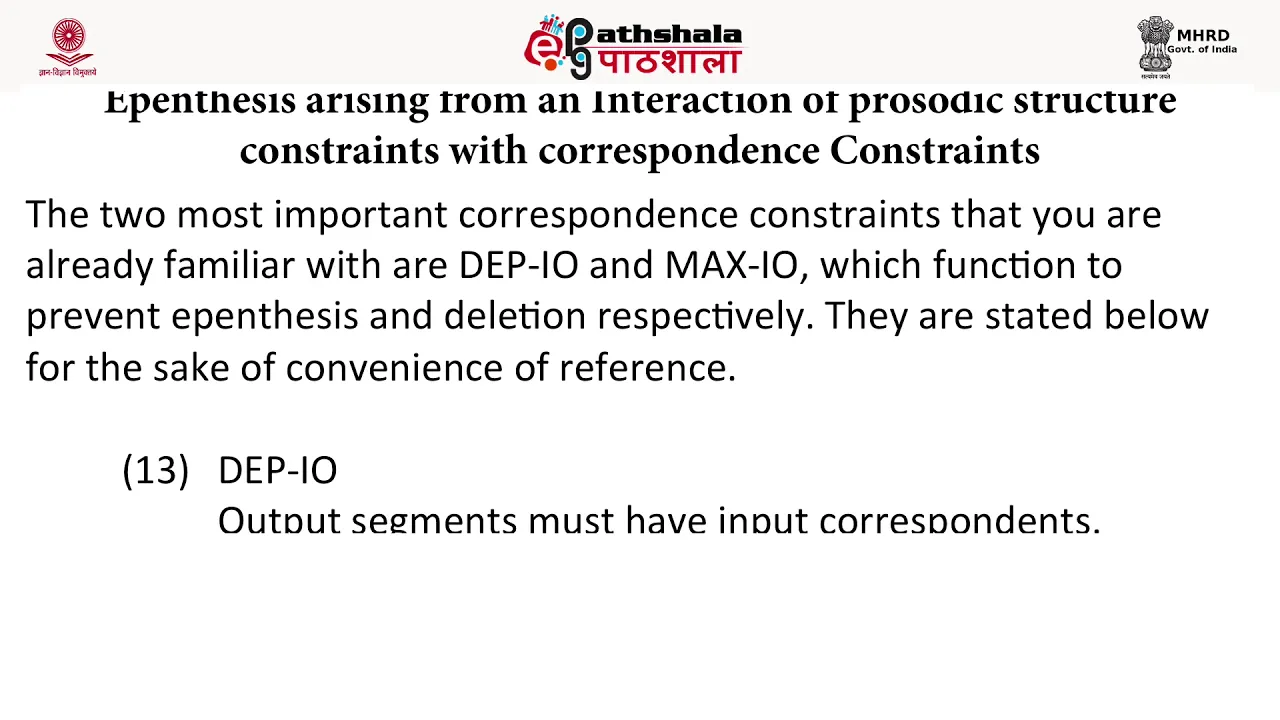
Constraint Interaction in Optimality Theory: Epenthesis & Deletion
@Vidyamitra
180 views•2018-08-20

8:59
Forensic Linguistics: How Language Solves Crimes | PBS
@pbsstoried
1M views•2024-01-25

21:32
Accent Expert Explains U.S. Regional Dialects | Part 1
@WIRED
9.3M views•2021-01-21
Related Study Plans & Knowledge Roadmaps
Structured learning paths in Linguistics
linguistics
Optimality Theory: Tableaux & Constraints
01Phonological Basics: Sounds, Syllables & Rules
02Foundations of Optimality Theory: GEN, CON, and EVAL
03The Constraint Inventory: Markedness vs. Faithfulness
+ 2 more learning modules
15h5 modules
Explore Roadmap
linguistics
Morphosyntactic Alignment: S, A & P Systems
01Foundations of Syntax: Transitivity and Arguments
02The Linguistic Variables: Mapping S, A, and P
03Nominative-Accusative Alignment
+ 3 more learning modules
12h6 modules
Explore Roadmap
linguistics
Analyzing Sign Language: Phonology & Syntax
01Foundations of Sign Language Linguistics
02Phonology: The Five Parameters of a Sign
03Morphology: Word Formation and Classifiers
+ 2 more learning modules
14h5 modules
Explore Roadmap
linguistics
Pragmatics: Speech Acts, Grice & Politeness
01Introduction to Pragmatics: Meaning in Context
02Grice’s Cooperative Principle & Implicature
03Speech Act Theory
+ 2 more learning modules
14h5 modules
Explore Roadmap