












![Unidade 4 [Stuart Hall]: Discurso, poder e sujeito](https://i.ytimg.com/vi/r1qvho0OqzE/hqdefault.jpg)












Revolutions occur in predictable waves and cycles, driven by what Hedges calls 'sublime madness'—a state of passionate commitment to fighting against overwhelmingly powerful and oppressive forces. This moral imperative of revolt emerges when systems that once enabled reform become corrupted by corporate totalitarianism, creating conditions where nonviolent mass civil disobedience becomes necessary to reclaim democracy and address existential crises like climate change. Historical patterns show that revolutionary success depends on internal security forces defecting from oppressive regimes, as demonstrated in the Velvet Revolution and other uprisings. The key insight is that resistance must be sustained and nonviolent to preserve moral authority and attract broader support, ultimately transforming society through collective action rather than violent confrontation.
Should We Accept the Recycled Metaphors of Our Oppression?
Added:please make welcome to North Troy Chris edges thanks the last three books that I wrote Death of liberal class which was kind of the breakdown of the pillars of the liberal establishment that once made incremental and peac meal reform possible in our capitalist democracy what happened why did they break down um and goes all the way back to World War I and I was just talking with a somebody here about Dwight McDonald a writer I like very much he's not read very much anymore he was a he was the influence on Chomsky he published uh for five years till his money ran out a magazine called politics that a young gnome Chomsky read never had a circulation above 5,000 um but he was publishing Bruno beheim Hannah Aron George Orwell uh and he's an amazing writer he's also a beautiful writer he was briefly a member of the trosky party trosky party until trosky threw him out um he actually mailed a letter from Mexico to the trotskyite party in New York and said everybody has a right to their own stupidities but comrade McDonald abuses the privilege um he would we didn't belong he wasn't a party person I'm not either um but he writes at the end of of uh about the end of uh World War I as ushering into this a period he calls The psychosis of permanent war and I think it's a kind of brilliant insight and he said none of the political theorists including Marx grappled with this phenomena of the psychosis of permanent War where you're constantly fiing out internal enemies in the name of anti-communism which has destroyed all of the populist and radical movements in this country and we stand now on the cusp of a very frightening corporate totalitarianism uh which has garnered for itself tools of control that no other totalitarian state has ever amassed and I covered the stazzy the collapse of the stazzy state in East Germany um and it is precisely those movements the old wobblies the old C the old Communist party which we've erased from our history uh and remember you know in the early 20th century if you an African-American the only party that you could join uh where you were treated as an equal was the Communist party which is why Paul Robson uh was a member of the Communist Party um and then I wrote wrote a book Empire of Illusion the end of literacy and the Triumph of spectacle uh totalitarian societies are always image based spectacle based societies um and I used popular culture of which I know nothing I don't have a TV I don't tweet I don't have a Facebook page I don't have a web page I try and read every night I just finished reading the gulag archipelago all three volumes which is amazing uh and I have another friend of mine who actually reads more than I do and I was trying to impress him and told him that I was going to now read gibbons's Decline and fall which I've never finished so of course he's always already read that um and that Severance from a print-based culture what it does in uh you know which just is anti-th thought it destroys the capacity for Thought um and has rendered most of our society illiterate not stupid but illiterate in the sense that they're not grounded in print which is very dangerous because that's where ideas come you cannot understand Capital if you haven't read Marx's first volume on Capital um uh you can't understand the configurations of power if you haven't read uh people like Sheldon Wen democracy Incorporated which is a book I never Tire of slogging but it's a very important book I did a um seven-part interview with Wallen who's 92 I think uh and he's not been interviewed in a long time in the 80s he he he's a beautiful writer and certainly I think our greatest living political philosopher his book politics and vision is uh a masterpiece um so he was living out in a retirement home and outside of uh Portland Oregon about an hour outside of Portland and uh we had he in the 80s he had kind of called out neoliberalism for what it was which was a con game and been pushed he'd been writing for the New York Review of Books he completely pushed out of the mainstream became a pariah even within the politics department at Princeton University where he was teaching and so I went out with a film crew to it's like you can watch it on YouTube I it's worth watching um but we didn't had no idea I mean I don't think he'd been given an interview in a decade or so and uh the film crew went in and he said well you can set up in the study you'll see a big white dog in there and they went to set the camera up there was a small white cat and they were very worried but as you can see the dog was actually having a walk with the house sitter so there was a big white dog but as you can see I went at that interview totally prepared and I could barely keep up with this guy um it's really stunning and I just did not dumb it down I I tried to keep it at the brilliant intell ual level um that uh only a person like Professor Wen is capable of um but he uses this term inverted totalitarianism which I think is correct that we live in a system that's not classical totalitarianism it doesn't find its expression through a demagogue or charismatic leader but through the anonymity of the corporate state that you have the facade of electoral Politics the Constitution the iconography and language of American patriotism and yet internally corporate forces have seized all of the levers of power including the systems of information to render the citizen impotent and uh that book was never reviewed uh by any mainstream publication not one and yet it was given to me by Ralph nater who a man I admire deeply I wrote his helped him write his major policy speeches in 2008 um which was it wasn't a popular time to be going around the country trashing Barack Obama and calling on people to vote for Ralph although I bet a lot of people regret it now um I was at the University I think of Wisconsin and some students said well yeah we like nater he's nice but his speeches are so boring but it was nater who gave me the book um as he gives me so many books nobody has fought corporate power longer or with more Integrity or courage or more effectively uh in this country than Ralph nater um and he truly is one of the great great great Americans and uh you know I I consider I cherish uh the friendship that I have with him I admire him deeply and I've learned a tremendous amount from him uh but I wrote about spectacle and I went to professional wrestling at Madison Square Garden and my longest chapter is on the porn industry or completely pornified Society um uh reality television because the values of of corporate capitalism are disseminated through popular culture so if you watch a reality television show what are the characteristics that it celebrates it celebrates uh manipulation uh aggressiveness uh deception the Primacy of the self over others as opposed to self-sacrifice and community and in the end you get money and fleeting fame um uh these values are just inculcated now at every level one of the things that uh was so uh surprising to me about I'd not been to professional wrestling before for was how emotional the crowds were people were weeping and yet I think on a certain level they knew it was fictitious or staged but the storylines very cleverly dovetailed with their own experiences so you had for instance a wrestler who was wearing an orange jumpsuit and had PTSD and had come out of prison and as some of you may know I teach in a prison in half for many years and he was wrestling the corrections officer who had abused him who would come out dressed like a SE Ian this kind of stuff um and uh then my last book was days of Destruction days of Revolt which I did with the cartoonist Joe Sako who uh I think is one of the most brilliant artists and cultural and political critics in America his book footnotes on Gaza is a masterpiece certainly one of the greatest books done on the Palestine Israel conflict um and we went into the poorest pockets of the United States uh I mean literally the poorest so Camden New Jersey which per capita is the poorest city in the country at the time was also the most dangerous um Pine Ridge South Dakota where uh a male the average life expectancy for a male is 48 that the lowest in the Western Hemisphere outside of Haiti at any one time on Pine Ridge 60% of the residents some of whom live in sod Huts have neither electricity running water uh we went to Southern West Virginia where we are destroying the Appalachian Mountains uh because they don't want to dig down for coal seams so they're blowing the top top 400 ft off the mountains huge billion gallon impoundment ponds filled with heavy metals uh the air is uh FedEd the water is toxic um uh people are having their gallbladders removed cancer is an epidemic you go into the elementary schools in the nurse's office they're just rows of little inhalers because the children can't breathe um uh that's what unfettered unregulated capitalism does um and we went to these sacrifice zones uh the um you produce fields in Florida where you find periodically uh instances of slavery these are uh Central Americans or Mexicans who are being held against their will behind bwire we interviewed a guy who had been chained with other workers every night in a truck um to say we've all become one big sacrifice Zone and it is incumbent upon you to look at what's happening in these sacrifice zones because we're next and you know Troy New York is a sacrifice Zone um but we're all sacrifice zones uh because unfettered unregulated capitalism as KL marks understood is a revolutionary force it does not have built within it any internal limits the external limits are gone uh it will do what unfettered capitalism always does which is is exploit until exhaustion or collapse and that's why the environmental crisis is twinned with the economic crisis so uh every new report from climate change scientists and we just went through uh the month of March where every single day in terms of carbon emissions was above 400 parts per million that's the first time since we've recorded weather that that's happened this year will be the is on record it looks like it will become the hottest in human history at least since we've recorded weather um all of the recent reports that scientists are giving us about the uh Arctic Ice that the old ice layers of melt are gone and these are new layers which is a whole different kind of configuration um and the response of global capital is to race up there as fast as they can and drop half billion dollar bits down in the Arctic sea to profit off the death throws of the planet um that's where we live and that you know we're we're they're talking now about um the the uh the ice summer ice being completely gone by 2020 uh and what that will do to crop yields and weather patterns um we're already seeing the migrations the droughts in California and yet we remain passive in front of our electronic hallucinations which is just how they want us to remain um we don't react to what is now the greatest existential crisis uh that the human species has ever faced and this book is different from the others in that it's not diagnostic anymore of the problem but begins from the belief that the systems that once made reform possible no longer work and that we are barreling towards catastrophe and that if we don't rise up and Revolt if we don't build movements of mass Civil Disobedience then um we will have to begin to contemplate the extinction of not only other species but finally our own species um and it it's a look at what it takes to Rebel what is it that triggers revolt and what does the state do when you do Revolt um and I spend a lot of time in the book speaking with figures that I admire who have risen up and paid the price uh Julian Assange uh in the ecuadoran embassy uh we were at Cornell West and I would drive down Cornell doesn't like to take public transportation not surprisingly since everybody recognizes Cornell and we have we have lunch in New York and 10 people come up and so we would get up at 3 in the morning and drive down to Fort me uh for the Chelsea Manning trial um and Cornell who's certainly I would say along with Susan sag and Nome Chomsky I would rank him with probably the three smartest people I've ever met who knows everything about everything also knows everything about classic soul and so he would drive down listening to classic soul and he knew the backstory of every single he'd go Bootsy Collins wrote that song for James Brown when he was 19 it was like I had that I had that I've had that Bo I've had that experience both with with that I've had with Cornell that I've had with both with Chomsky and with Susan where um in kind of intellectual frustration I would try and steer them into an area where I thought um I might be able to hold my own you know um I once did that with Susan sag on theology now I have a master of divinity from Harvard Divinity School and surely I thought I could teach Susan sonag a thing or two um and of course I just was decimated and then I could see her feeling kind of sorry for me and saying well I don't tell this to a lot of people but after I finished my PhD at Harvard when I think she was like 21 or something um I actually taught religion at Columbia for a little while so it was kind of making me I had dinner once with chsky on the Middle East and I was the Middle East beoch chief for the New York Times that spent seven years in the Middle East and chomsky's reeling off dates and names and I was there and I covered I didn't remember and the same with with Cornell one night we had we had dinner a little while ago and we got into a huge debate as to whether Czech off or Doki was a greater writer that occupied our entire I mean I took doki took check off although I I do think he's wrong on that one but uh one night I I I did uh I had done uh at Harvard in in addition to my Divinity degree a year of Classics and a year of English mostly Shakespeare and I remember one night uh getting Cornell off on Shakespeare and um uh you know he was making one kind of brilliant point after another and I surreptitiously was trying to take notes under the table until I finally just gave up and put it on the um um but we'd go into Fort me and uh uh you weren't allowed to get in to the only let 27 people into that courtroom um but we'd show up and uh all the MPS would recognize Cornell and uh they never even checked our IDs I mean we just came in so the rest huge crowds of people are waiting outside Fort me and it's like 8 in the morning Cornell are driving around looking for the Burger King to get a c we were always the first two people in line uh for the court and I got a letter from Chelsea Manning uh after she was sent to lenworth she wasn't allowed to turn around she had to keep and she wrote me a letter and said I uh when I when she was sentenced she said I I saw out of the corner of my eye you and Dr West and I want to thank you for being there and I used to kind of complain to Cornell because it's 3 in the morning and Cornell says no no we have to go because we're only we're going to be the only two public intellectuals there it's our duty duty to be there um yeah Cornell is certainly one of the people I admire most who's wedded his incredible Brilliance to a passionate championing of the marginalized which for me is what it means to be intellectual um rather than building a monument to yourself which is what most intellectuals do that's the Julian Benda school where you treason of the intellectuals written in the 1920s he said you have a choice between serving privilege and power or Justice and Truth uh the the those are your two choices and the more you compromise with those who serve privilege and power the more you diminish the capacity for justice and Truth uh Cornell and you know gnome and they've never they've never diminished that capacity um so I Cornell's in the book but I talked to mumia Abu Jamal a great revolutionary Jeremy Hammond I interview a lot of interviews in jail uh Julian of course in the embassy the great civil rights attorney Lynn Stewart to kind of look at what it takes to rebel and what the state does now the state understands very well what's happening um and they're preparing they uh have not only put in physical mechanisms such as militarizing police forces security wholesale security and surveillance were the most photographed monitored EAS dropped watched population in human history and when your government watches you 24 hours a day you can no longer use the word Liberty that is the relationship between a master and a slave um they have run scenario after scenario uh in terms of the effects of climate change the effects of the breakdown of global capitalism which as KL Marx understood is not sustainable ultimately um you can't keep expanding there isn't Limitless expansion and what happens as markx grasped in the later stages of capitalism is that in order to keep generating the profits Capital cannibalizes the very structures that sustains it so that's how you get big Banks luding the US treasury that's how you get the fossil fuel industry which worldwide has subsidies of 5.4 uh billion dollars maybe it's trillion I don't know it's a lot um that that uh the in the name of austerity your physical infrastructure decays and I just got a nice taste of that on Amtrak it's not the first time on Amtrak um uh schools are closed libraries are shut shuttered um and you have this giant military machine uh building the house just passed an Appropriations bill so we can build I think it's 12 new Ohio class submarines at a cost of 8 billion a piece in and they tell us that you know we're in the age of the war on terror I don't think Isis even owns a robo as far as I know uh but it doesn't matter of course um $345 billion dollar to renovate our nuclear warheads there's a good idea um and that's how Empires go down so what happens is you Hollow Empires out from the inside and then to maintain control you use the mechanisms of coercion and violence that are very familiar on the outer reaches of Empire where I spent 20 years as a foreign correspondent and you bring them back into the heart of Empire so a night raid in Oakland California for you know a nonviolent drug warrant let's say uh will entail militarized police units with long barreled weapons wearing Kevlar body armor uh with a maybe a command helicopter with a search light kicking down the door at 2 in the morning of course terrorizing everybody in the apartment it doesn't look any different from a night raid in fujia it's exactly the same and so increasingly Empire uh uses the mechanism that it uses to hold uh captive populations hostage in places like Iraq or Afghanistan uh to hold its own population hostage and what we've seen is a um rewriting of the Constitution by judicial Fiat to accompany the physical mechanisms by which the state intends to keep us under its heel and that's how you get this absurd notion courtesy of citizens united that uh unlimited corporate cash is the right to petition the government or free speech that's how you get an utter completely a misinterpretation of the 2001 authorization to use military force act as giving the Executive Branch the right to order the targeted assassinations of US citizens now it doesn't matter what these people did once you set that precedent um you're finished because once you the state acres to itself that kind of power when the state feels threatened it will use it and the person who kind of helped me understand that process was Hannah erant in uh the origins of totalitarianism so erant uh gets out of the University of heberg will forgive her for her relationship with haiger and um she writes in one of her essays that she had to unlearn everything that she had been taught at the University to become a moral human being and she she was not a Zionist and and she was quite in 1950 was writing quite critically of uh of Israel in the sense that she said that you know the the wrongs that were committed against Jews are not justified by committing wrongs against Palestinians but she wants to engage in some kind of uh a movement that is fighting back against fascism and so she works with a Zionist group that is trying to smuggle German Jews to Palestine until she's picked up by the gestapo and she almost doesn't make it out it was quite serious uh and she's stripped of her passport stripped of her citizenship ends up in France stateless and she writes about that quality of being stateless and if you walk out this door you probably don't have to walk very far to find stateless human beings undocumented workers who are suffering exactly what she suffered stripped of All rights as Citizens all protection essentially you can't even call them second class citizens because they have no rights at all virtually and she said that as soon as a society creates a group of people who are stateless who have no rights it does two things it builds a legal mechanis M by which everyone in the society can be stripped of their rights and it it it builds a physical mechanism which she calls omnipotent policing and she said those two elements become toxic at a moment of disintegration because while they may be confined as they are in depressed communities like Troy in the name of drug laws where police essentially can act with utter impunity and we are watching now uh you know every 28 hours an African-American in this country is being murdered man or woman uh often children uh unarmed I mean we have it on film I mean think about it we have film of police officers murdering unarmed citizens choking them to death shooting them in the back and yet the state doesn't respond and this of course is extremely dangerous um and I'll I'll get a little bit I'll talk a little bit about that notion of paralysis but Aon said that that omnipotent policing uh coupled with that legal mechanism means that it's almost with a flick of a switch if the society begins to unravel that that can just be become pervasive throughout the entire Society so we've watched our own legal system devolve um the fact that our court system takes such black and white issues as wholesale surveillance and refuses to Outlaw it and don't be fooled by the refusal to extend the Patriot Act by the way they're still in business um section 1021 of the National Defense authorization act um and as some of you may know I sued Barack Obama in federal court over section 1021 section 1021 uh allows the US military overturning over 150 years of domestic law to seize American citizens who substantially support now that's not Material support that's not a legal term that's open to very broad legal interpretation substantially support Al-Qaeda the Taliban or Associated forces another nebulous term strip them of due process and hold them indefinitely in military facilities including our offshore our penal colonies our black sites uh when judge Katherine Forest ruled in our favor and issued a temporary injunction which was amazing given the history of the Court since 911 it was fascinating to watch the response of the Obama Administration and let's be clear Obama's assault on civil liberties is far worse than the assault on civil liberties under George Bush um and we haven't even gotten into the use of the Espionage Act to kiraku Sterling all of these figures who have stood up to expose criminal activity Chelsea Manning inside our government and those who have committed Fraud and Abuse and criminal acts remain unpunished and those who Expos those acts are often sitting in prison or in the case of Edward Snowden in Exile um so the Obama Administration sent not just federal attorneys but attorneys for the NSA the intelligence communities and demanded in the name of National Security that that section of the ACT be reinstituted until the appeal could be heard by the second circuit and judge Forest to credit refused to do it and I have to say in the in the degradation of media and it's been pretty pronounced um the one uh journalistic uh entity that covered the trial and wrote about it well was my old employer of the New York Times um and wrote an editorial praising judge forest's decision and her opinion which is worth reading um she says that this law opens the way for the government to criminalize not just a person but an entire group of people and she brings up the internment of 110,000 Japanese uh during World War II so I think that was on a Friday Monday morning the government attorneys go to the second circuit and demand that the law be put back into effect which in the name of National Security everything's in the name of National Security which they do and the lawyers uh Bruce afron and Carl May mayor and I wondered why why were they so aggressive and I think our feeling was that the reason uh is because they're already using the law that most likely there are Pakistani us dual Nationals in places like bogram and if they could get out and get legal redress then the government if that law had been allowed to stand would be in contempt of court now what happened there is a kind of classic example of how the courts have been used to strip us of our constitutional rights by reinterpreting them uh so here you have a clear violation of constitutional law the use of the military to stand on the streets of American cities and in essence carry out acts of extraordinary rendition against American citizens at least you think that this is some kind of wild interpretation this lawsuit lasted two years we contacted uh the Democratic Leadership Pelosi's office and we said look all you have to do is insert into that section that it does not apply to US citizens and we'll drop the suit but of course they didn't do it because it was designed for US citizens and I was um also a plaintiff before The Supreme Court I teach in a prison I think I mentioned and everybody in a prison has about three names and so when my students all found out that um I was involved in all these cases um my name in the prison became LS for lawsuit so LS was my street name um so I'd been involved in U Clapper versus I was a plff and Clapper versus Amnesty International where before this was before the Snowden Revelations we had challenged the FIS Amendment act the wholesale surveillance and wiretapping and government lawyers I got to the Supreme Court and government lawyers got up and said first of all it's pure spe speculation that there's any kind of surveillance and then uh piling it on they added that if I or any of the other plan ifs were being watched the government would tell us the Supreme Court bought it and threw the case out said we didn't have standing so that's what happened the second circuit had waited months the case was called Hedges versus Obama and waited months to rule waited months and finally after the Supreme Court ruling on Clapper versus Amnesty International they said oh well Hedges doesn't have standing in Clapper versus amnesty therefore he doesn't have standing in Hedges versus bomb and they threw the case out and his law this gets right back to what Aaron nailed that when they create physical mechanisms of Oppression and they create legal mechanisms of Oppression it's by Design and any govern that acrs to that itself that kind of power will use it I think that there's you know we we we're we're probably living in a period what a period Antonio grami defined as an inter regnum this period where we know something's wrong there's a kind of angst I mean across the political Spectrum so when they ran polls on the ndaa it was had a 97% disapproval rating but it passed anyway in the same way that the bailouts when the the bailouts were being proposed for the big Banks the speculators remember in the 17th century in Europe speculators were hung um now they run the government and the political system um constituent calls were 100 to1 against the bailouts but it passed anyway it doesn't matter what we want they'll Hillary Clinton I hope none of you are fooled anymore by the clintons uh is running a campaign where she's going to sound like you know Eugene Debs um but all you have to do is go back and look at 2008 they they they you know they they run focus group and poll they know what we want to hear and they they even know how to package it in a way that we want to hear it but once power you know once the this this kind of corrupt political class takes power they serve the centers of power which isn't us and if they don't serve those centers of power they won't be there I in some ways you know I'm angrier at Barack Obama than I am at George W bush as venal as I find Bush because bush was an idiot I don't think Bush understood very much uh Barack Obama understands everything he's extremely intelligent um and you know I think there's a level of cynicism on the part of Obama that I find quite disturbing uh and it's very clear that he's going to walk out of the White House like the clintons and amass for himself tens of millions of dollars uh from the Masters that he has served uh I just spoke to some young Ferguson activists uh who were really impressive two young one A hip-hop artist named T Duo 27 and um a young woman I think she's 21 so after the Ferguson unrest they invited tdo Obama was invited a small group of Ferguson activists including tdo to the White House and he told me that Obama asked him if he voted for him and and T's answer was no you haven't done anything for black people voting for you because you were black would be shallow now there was a level of political sophistication that the liberal class in America didn't get at all um the whole idea that gender or personality and all of these political personalities are manufactured is how we should choose our leaders as anti-politics there's nothing to do with politics and I think that there's uh you know this as I said this this internum this moment when people know something's wrong they don't trust the leadership I think Congress has an approval rating of about 7% but they don't quite know what to do they don't quite they haven't articulated another Vision um but there's that kind of angst uh Alexander burkeman has an essay called The Invisible Revolution where he talks talks about how there's this period where the old ideas lose their potency their efficacy and and so that all of the super structure both the ideological and the physical superstructure appears to be intact but underneath it the the ideas that sustain it no longer have their hold on the popular imagination and yet we haven't yet articulated a response and he Likens that invisible Revolution to a water pot that's boiling you don't see it you don't see it until the steam suddenly arises and I think that's where we are I think that we are at a moment when uh you know sometimes I give talks and I'm no friend of the Libertarians uh I'm I'm not obviously you know what I think of the Christian right I wrote a book once called uh um American fascist the Christian right and the war on America I was trying to reach out to him and um and yet I will sometimes pull people from this radical right who are dealing with the same kinds of anxieties and fears and frustrations Unfortunately they are channeling what I think is a legitimate anger into a Proto fascist movement fascist or Proto fascist movements rather than directing that anger where it should be directed towards the vulnerable Muslims undocumented workers uh homosexuals intellectuals [Music] feminists uh and that's a very powerful undercurrent in American society and I have a chapter in the book called vigil antiviolence uh and there's a a quote from a really powerful essay was the last thing Richard hoffstead wrote in the introduction to his book on violence uh but it is as almost everything hofstead wrote brilliant uh but he talks about how you know we have all these weapons uh we are you know the most weaponized population you know probably certainly within the industrialized world but Americans don't have a tradition of turning those weapons against the government it is primarily white vigil anti violence that's turned against the weak and the vulnerable going all the way back to the slave patrols to the reign of terror that African-Americans endure I mean what is it that is happening on the streets of Ferguson and Baltimore but a lynching um the labor Wars America had the bloodiest labor wars in the industrialized World hundreds of American workers were murdered by vigilante groups Pinkerton Baldwin Felts gun thugs even if you look at the wars of Westward Expansion many of the worst massacres were carried out by Rogue vigilante groups like Covington out of Denver who carried out the San Creek masser where black hle and all of his tribe were killed um that's always been a long tradition in American society and it remains current um and you see it in the tea party uh The Lunatic Fringe of the Republican party maybe they're all lunatics I mean we do have to hand it to Bill Clinton um he turned the Democratic party into the Republican party and he drove the Republican party so far to the right it became insane um so but those groups are powerful and I lived in France the Democratic party in Europe would be a far-right party uh and you know this is part of my problem with Bernie running uh he should run but is an independent because the Democrats are part of the problem uh and you know unfortunately he's not going to get into the debates unless he promises to endorse the candidate I mean this whole Spectre of Hillary Hillary Clinton wandering around like Cen Elizabeth and refusing to talk to the press and all these journalists begging her you remember she went to Chipote and for like weeks it was like what did she order on her sandwich or something um I mean she's going to raise $2.5 billion to but of course she has to raise that kind of money because in these campaigns it's the only thing they have to sell you is fear if you're on the right wing it's fear that you know there'll be an abortion clinic opened in your Baptist Church and homosexuals will take over your kindergarten and if you're on the left wing it's you know the fear that you know all the yahoos will descend on but but it's fear I mean they don't really off what they really the super structure remains completely the same whether it's on Wall Street security and surveillance Imperial War um there is no difference I mean it's the or as Freud said it's the narcissism of minor difference [Music] um and the whole kind of fictitious figures that they use in terms of masking unemployment um which are probably well known known to all of you I mean all of this is is creating a very explosive moment now I covered the Revolutions in Eastern Europe I covered both of the Palestinian uprisings or inas I covered the street demonstrations that brought down slad mosovich and the thing about that kind of cauldron of discontent is that as a reporter you know it's there but you never know what will ignite it and what ignites it is often something relatively benal um the problem is that when you live in a state that has been seized by a tiny cabal of oligarchs or tyrants um uh which removes itself from day-to-day reality I mean remember these people they have no concept of what our lives are like the people who have absolute power um they never ride on commercial airlines um uh they're certainly not stuck on Amtrak somewhere uh they live in I think a writer in New York called it richistan um and they they they they live in this false kind of bubble I mean these people commute to work in helicopters and um so they create they replicate what all dying Elites do you know the Versa or the Forbidden City and and they make decisions based no longer on on real it but their bizarre perception of reality which is that why do we want public health because everybody can go to an emergency room I mean I'm sure you've heard this kind of stuff um and and so they can't respond as the crisis within the country deepens so if you look at the Occupy Movement and I spent a good bit of time in zucati there you had the some the mostly white college educated Sons and Daughters of the middle class crippled by debt massive debt um my son my older son did his graduate degree in Paris in France and I said you know if you went if you walked around French universities and told French students they had to pay $50,000 a year to get an education they would shut the damn country down um they got out into the wider society and they found there was no place for them they suffered or you know it was tepid compared to Ferguson or Baltimore but they suffered from mistreating by the police and that was a crucial moment on a couple levels one that class constitutes what bakunin calls day class intellectual ual and he bakunin and Marx who hated each other uh but and bakunin was wrong on a lot but he wasn't wrong on that in that um markx didn't see those day class say intellectuals as important butan said they're vital for revolt um and I think he's right it's the Tinder of the day class a intellectuals uh who walked out into the unemployed journalists the unemployed lawyers the unemployed teachers who walk out into the wider Society I mean look at our professors 35% of professorships are now 10-year track and you can be pretty certain that those 10e all the people who have those 10e tracks are building robotics for the defense department they're not teaching Classics anything that has to do with the capacity to teach you how to think rather than what to think that is part of the assault on the Arts is wiped out in any totalitarian society and ours is no exception so those day class a intellectuals uh be you know become a vital kind of Tinder and uh and exposed I think the failure of the liberal class especially the white liberal class who while the poor and the working class were being stripped of their jobs evicted from their homes suffering indiscriminate police brutality were busying themselves with multiculturalism and identity politics which in the eyes of Corporations just create more consumers um and forgot the Primacy of Justice and the response of the state is key in the sense that when you have an aifi state or a state that is controlled by a narrow oligarchic in this sense Global corporate Elite it cannot respond rationally so all of the demands and you know we're talking about a nonviolent mostly middle class movement Sons and Daughters of the middle class asking for work asking for a rational Health Care System I.E uh the public option or Universal Health Care for all asking that we respond to the destruction of the ecosystem on which we depend for Life by the fossil fuel industry and let me not forget the animal agriculture industry the response of a state that no longer has any connection with its popul is to phys attempt to physically eradicate the movement and that's precisely what happened and the longer that goes on the more dangerous the situation becomes so you have African-American men and women marching through the streets of cities where they have been terrorized now with [Music] indiscriminate lethal Force used randomly by militarized police and the state is deaf films of people being murdered circulate through the entire country films of people being choked to death and we don't the state doesn't respond and what happens when the state refuses to respond is and attempts essentially to crush remember we had tanks we had tanks on the streets of Ferguson Missouri against unarmed protesters who were asking their city police to stop killing them when the state uses all of the mechanisms at its disposal to shut down legitimate descent then it drives that descent underground and it makes it more radical and I'm sure you've been watching as I have in the last month two police officers shot dead in Mississippi a police officer shot dead in New York and we just had was it two police officers who were shot I'm hoping that these are isolated incidents but I know from covering disintegrating societies that the longer the state refuses to react the longer the state refuses to react rationally to legitimate grievances by the citizenry the longer the state uses the mechanisms of control to shut down legitimate descent the more they create the very Anarchy which in many ways they want because the only language discredited States or totalitarian systems can speak better than we can is violence and I you know spent many years abroad and I've seen what they can do 60,000 Special Forces members of our special forces and let's be clear these are death squads and you saw it from the murder of Osama bin Laden um I covered War for 20 years and if someone's unarmed even if they're Osama Bin Laden you're not allowed to shoot them um and they have the capacity to bring all of those forces back I mean they already are 80% we have 16 intelligence agencies and 80% of that intelligence is now done by private corporations there's a complete Fusion of corporate and state power on every level including the levels of intelligence and on the levels of of military force including the rise of course of of mercenary forces itself I'm not a pacifist I was in Saro during the war um we were surrounded by trenches they the besieged city had built trenches 3 and 1/2 years we were being shelled by the serbs uh two up to 2,000 shells a day uh 155 howitzers 90 mm tank rounds this was not small stuff koua Rockets constant sniper fire uh we knew that if the serbs broke through that trench system a third of the city would be slaughtered and the rest would be driven into displacement and refugee camps we knew that from what they' done in the Drina Valley what they' done in vukovar wasn't supposition and at that point when you face the possibility of your own Annihilation um it's perfectly understandable that you would use violence to defend yourself but it doesn't save you from the poison of violence uh and once uh movements of resistance and movements of power begin to speak to each other through violence then I would posit that almost everyone probably everyone in this room including myself is out of the equation um because those who rise up in moments of extremity have access to weapons and a pension for violence and they use those mechanisms to control their own that's why revolutionary movements that use violence consume each other in the way that Lenin destroyed the Soviets destroyed the menix um and that's why coming out of 20 years of war I'm so fervently nonviolent but I'm not naive about where we are um we have no time left climate change alone you know I have four children and uh where's the guy we were arrested together somebody here in front of the White House um I don't like going to jail I mean going to jail is more time than I care to donate to my government um but I I'm I'm out because even if I fail I want my children to say that their dad tried um and I think we have I speak of my generation stolen the future of the Next Generation and succeeding generations and it's morally incumbent upon us to put our bodies on the line um um and there's really no excuse left uh and there's no time left uh and that means sustained acts of mass Civil Disobedience that discredit the state and I talk in wages of rebellion about the great revolutionary theorists crane Britain and Davies and they make the key point that no system is overthrown until until the mechanisms of internal security defect or at least large sections of them and I think in that sense revolutions are fundamentally nonviolent so when the cacs go in to break up the bread riots in petrograd uh and they refuse to shoot the riers and begin to uh fraternize with the crowd the Zar is finished he last he doesn't even make it back to petrograd he has to abdicate on a railway siding I covered the Revolutions in Eastern Europe and uh in the September of 1989 Eric huker the Communist dictator who had been in power for almost 19 years sends out an elite paratroop division to leig to fire on the crowd that paratroop division refuses to fire on the crowd Hanukah doesn't last another weakened power the same thing was true in Iran when the forces defected from the shaw Samosa Nicaragua and and I think this gets to that great resistance figure of VAV havl and I covered the Velvet Revolution I was in the magic lantern theater every night with hav um who wasn't a particularly gifted speaker of course a brilliant writer he wasn't a particularly charismatic but he had that moral authority of having resisted since the founding of Charter 77 um and and when they walked out into the streets the foot soldiers of the elite would not use force and coercion to crush those movements and those regimes are finished and I think that if you read read H's 1978 essay the power of the powerless that he calls living in truth I think as I mentioned at the top of this talk there is a truth about what's happened to this country about the destruction of our democracy about the theft of all of our institutions by the most rapacious and retrograde forces of corporate capitalism that truth is there but it's not going to be Amplified and it's not going to be heard unless we stand up and make it heard and I think the state is terrified of that truth in the same way that they were terrified of the truth that havl spoke so courageously throughout all of his life in and out of jail a nonperson none of his plays are essays ever published And yet when that Velvet Revolution came that country knew who to turn to because he had stood fast that moral imperative of revolt and we are at that moment in history and it that that moment is essentially waiting for us it is waiting for us to stand up with nonviolence and speak that truth and if we can do it in time we might not only save the United States but we might save the planet but finally to end Revolt is in moments of extremity of what Kant or Hannah erant who uses kant's term would call a moment of radical evil is a moral imperative and that finally we're called to revolt and stand up and resist not for what we can achieve but for who we become and in a sense it's an Act of Faith and I say this to people of Creeds or no Creeds the faith that the good draws to it the good or at least the good in so far as we can determine it and then of course we have have to let it go faith is the belief that it goes somewhere the Buddhists call it karma and I think that what Odin calls those ironic Points of Light those figures who stand up in moments of extremity and distress and speak that truth do resonate and can overpower the untruth that lies like a miasma over a society I was in wiela square in Prague 500,000 checks were there every night the walls of that City that winter were covered with posters of a young Charles University student named Yan Pollock who in 1968 to oppose the Soviet invasion of his country had gone to wiah square lit himself on fire and died 4 days later from his Burns students from Charles University marched with his corpse never reported in the state media the funeral procession was broken up by police when his grave became a shrine his body was exhumed his ashes were given to his mother and she was not allowed to reberry them a week after the communist government fell 10,000 people marched to Red Army square and renamed it Yan Pollock Square I was in wiela square when Marta kubasa who in 1968 as the Soviet tanks were rolling in to overthrow dupe had gone on the radio to sing an Anthem of defiance known as the prayer for Mara and once dup was overthrown and the pro Soviet forces were back in power her entire recording stock was destroyed she was banned from the airwaves and in the intervening years she'd worked on an assembly line at a toy factory I was there when she walked out on that balcony and began to sing the prayer for Marta and every check in that crowd knew every word that is the power of resistance that is the power of living in truth that is the moral imperative of revolt and all it requires is for all of us to stand up up thank you okay we'll just do Q&A so we'll do a few questions I have to I'm old I got to get back and sleep I got a full day tomorrow I got to get that what's it called the micrus or something what's it called Mega Bus anything's better than Amtrak I'm ready to go okay oh do you want to go for the they want you to stand by the mic anybody who wants to ask a question please just come stand in line here and I'll just I just wanted to ask you about President Obama do you feel that President Obama is really sort of like a figurehead for uh some corporate banking or group governmental some hidden entity that he came to power promising Us in the nation that he was going to do all these things for the common folk the working class he wound up working more for the classes that already have well after Obama was elected he won advertising ages annual award which is top marketer of the year um because the he beat Nike Apples oppos because the professionals knew just what he'd done um and the tragedy of the 2008 election is that he did have a mandate but Obama also understood where power lay and that he would never be president if he did not serve those centers of power which he did thank you so much for your uh inspirational speech um and I agree uh so strongly and this city is a testament that goodness attracts goodness and there's a lot of exciting things here and hope um but I have to stand here and say today that for others and especially for the crowd here I think that uh large scale nonviolent direct action could be extremely effective I think if more people who police aren't used to arresting go and get arrested it could be very powerful but for people my age and in general we don't need a movement we need to be free we're all addicted to oil and to be honest the entire infrastructure that we live by is not ours it is just something that is given to us as a dadle and a play thing to keep us hooked we need to get free we need to be able and I'm not talking about solar panels because if the only way a solar panel works is that there's oil to rip it out of the ground and ship it here and make it we need to learn how to catch our own energy from the Sun we need to learn how to farm again we need to learn how to be happy without a standard of living that could never exist well you know there other people but I think you're right and I think that you know it is about a radical reconfiguration of how we relate to each other and how we relate to the Earth you're right and and as long as we remain trapped in this consumer Paradise um it we're just tying The Noose around our neck uh you know I'm with benda I'm an kind of anarchist I think power is always the problem and uh Carl poer in the open society and its enemies writes that the question uh is not how do you get good people to rule that poer says is the wrong question um he said most people who are attracted to power at best mediocre or venal the question is how do you make the power elite frightened of you and and that's Zin in the people's History of the United States so our last liberal president was Nixon not because he was a liberal or because he had a conscience but because he was frightened of movements and there's a moment in Kissinger's Memoirs do not buy the book where uh they're standing at a window it's like 1971 or something and and Nixon's taking buses city buses end to end as a barricade all around the White House and he's ringing his hands going Henry they're going to break through the barricades and get us and that's just where we want people in power to be that's our job it's it's not it's not our job to take power that's what we forgot it's not our job to take power it's our job to build powerful movements that hold fast to moral imperatives that hold power in check that's our job Chris again thanks very much we appreciate your work uh most of the situations you you mentioned in your your um address tonight were Regional or within a country what do you see is maybe the one of the last Nails in the coffin when you've got the implications of the trans-pacific partnership and it's sister in Europe uh right CA look I mean this is a classic example of how we don't live in a democratic system even elected representatives are told they you know the insanity of this they they go into the room and they they can't take notes or if they take notes they have to turn them over I mean you would think this was the blueprint for finishing off Isis Al-Qaeda and uh but of course they don't because it is a further weakening of the nation state a further ability on the part of corporate predators to Prey Upon Us especially the working class which is driving labor down essentially to the level of surom um and yeah that's and and Obama has been pushing this as hard as he can so that's just one more symptom of the fact that we do not live in a functioning democracy we live in what Sheldon wolen calls inverted totalitarianism or corporate totalitarianism and um and these people are dangerous hi um I wanted to bring out that uh there's hardly a difference between somebody who says they're taxed enough already or versus somebody who's had their food stamps reduced I think when we eliminate sectors of the population from legitimacy um we're cutting the effectiveness of a group voice um I personally think that there have been actions on on the part of the uh right in particular the Bundy Ranch we had two welln for hes there were probably uh paid mer mercenaries at that situation and there was a Restraint of trigger pulling right well that but that gets to my point of vigil antiviolence these were white men with guns and if imagine if um Everybody shown up at the Bundy blanch was black or imagine if it was Earth first um they would have sent the 82nd in Airborne in there you know so uh there has always been a kind of tacid alliance between largely racist white vigilantes in the state going back to the times of slavery and because what happens in a system of totalitarianism is that those vigilante groups carry out the excesses you saw it under Nazism with the brown shirts Hitler comes to power in 33 he's trying to woo the German public to his policies of repression and anti-Semitism and so the brown shirts are sort of beyond my control and even there were moments when Hitler would apologize for the brown shirts that's what vigilante that's the function of vigilante groups um because they are ostensibly not part of the state structure and yet they have been integral in American history to repression against minorities oppressed dissidents Union agitators radicals Communists it's l the violence the worst violence has largely been carried out lllo were carried out by Vigilantes and that's why all these idiots can go up there with their weapons on the Bundy Ranch and essentially walk away it's cuz they're white and they're male we get into white male Supremacy Chris thank you for your work I want to ask you do you know anything about this document uh the learn Elders of what is it uh the learn Elders of Zion the protocols of the yeah the protocol yeah it's a forgery created by the Zar to justify pograms against Jews yeah hi um it's an honor um I do a lot of work with dismantling oppressive systems and you were talking about um computers and phones and I was thinking about how um widely spread information is now whereas the most effective work seems to be done personally on a one-on-one level and just like your thoughts on the topic well you're right I mean the only if you're sitting alone in your room in front of your Facebook page writing angry diet tribes about corporate capitalism you're still sitting alone in your room which is just where corporate capitalism wants you to be um where they don't want you to be as in a room like this building a communal structure and and that's the only way I mean we're we're we're it's only going to be by walking out into the street together and I mean I get my I'm empowered by this stuff I'm empowered by teaching in that prison I walk in that classroom and the level of political sophistication among my students dwarfs anything I taught it I've taught of Princeton I've taught of Princeton I've taught of Columbia I've it dwarfs any of those schools those people have such a sophisticated understanding of power the nature of Injustice corporate capitalism because of course they're prayed upon inside that system and so are their families um yeah I think the internet and you know those kind of elect social media and all it's great to tell you where to be at what time you know but it's it's as crippling as it is empowering um uh because we have to come together and you know that's what zucati did and it was so one of the things after the NYPD destroyed zucati you know we had the the people's library with 5,000 books and you know as an act of just kind of wanting cruelty they threw those books under big garbage trucks and drove over them to destroy them and after in the weeks after I found the people that I would speak to the Thing They Mourn the most was that library was it was organized by retired New York City school librarians because what it was is we were recreating a community a language we were beginning to share ideas we were beginning to speak with each other where's the guy who went who we were arrested in front of the White House what's your name yeah I mean I'm sure you'll agree with me it was deeply moving yes you know so there we are in the snow we didn't stop the wars in Iraq and Afghanistan we didn't think we were going to stop the wars watermelon slim plays Taps on his armonica Vietnam vet they fold the flag from a kid who' just been killed in Afghanistan 132 mostly vets in their uniform STS line up completely silent in the snow someone's beating a drum and they walk to the fence and are arrested that's my church and you know when a lot of us were cuffed including myself it turns out those cops were in the National Guard and they were in Iraq and Afghanistan and they would whisper keep protesting the wars and you can be sure the state is terrified and that's why nonviolent ENT resistance is so important because it speaks to what is best among us even what is best among those who are tasked with carrying out control for the state um and it is havs living in truth uh and so those moments marching on Goldman sax and I've long ago given up trying to look hip and so I look like this and I'm marching off to Goldman Sachs Cornell West and I had just held a people's hearing of Goldman Sachs we're marching off to block the entrance there's a picture of us walking towards Goldman Sachs and I'm in the middle and everybody around me is pierced tattooed with Mohawks and I have my Brooks Brothers button down shirt um but boy I tell you that's where my hope lies is with those kids they get it and they were out there and they were on that street and they were struggling and they were paying homage to voices that they knew the wider Society had excluded um and we can criticize occupy as we can criticize anything um but it was a seismic event in American history um that Occupy Movement which was a tactic has spread its tentacles into black lives matter into jet Jubilee into the attempt to raise the minimum w wage to $15 an hour um and if the if the state thinks that these people have gone away um uh then they're very naive and very stupid I uh I I thought your vision of of Revolution was was very interesting but it also seemed very general do you have any more specific Vision about how such a thing would start how it would expand how it would reach the goals you're looking for the day after the climate change March about 4,000 I was there went down to Battery Park for flood Wall Street now uh what we did on flood Wall Street is unlike the climate change March which kept within the police barricades look there are streets it's not their streets it's not their streets they can't tell us where to go on our streets they can try and they can make it painful for us but we can't let them and flood Wall Street without a permit walked onto those streets and we didn't know if it was Bloomberg we wouldn't have gotten a block we didn't know what Deasia was going to do but we walked under those streets and we shut that street down in front of the stock exchange for the day and that's what we got to start doing but not just one day we got to start crippling the entire system um sustained acts of mass Civil Disobedience this is what happened in Europe once you start pulling 500,000 people they start getting scared and I know because I unfortunately have family members on Wall Street and in real time all through occupy they were getting tweets every few minutes they have puppets they're going down the street oh they're turning on Bond Street up you know they have a p and so all the titans of the universe were like eating lunch at their desk and not going outside I mean occupy was basically white college educated dumpster diving kids who do yoga um and and and I know because my fames got connected that they were really really frightened because they thought they'd been found out they because nobody knows how corrupt the system is I mean or or the people who most know how cor are them they know how rotten it is and they are cynical and they are looing as much as fast as they can on the way down and it's all about greed we Obama if I hear Obama giv me another speech about education I mean the people who got us into this mess are the best educated people in the country Larry Summers the problem is greed and um and and internally the system itself has no aee Decor it has no it's rotten it's rotten in every single way including ideologically and those New York City cops who get $37 an hour to stand in the lobbies and watch these guys go by in their $88,000 suits and they know how rotten it is the system is very fragile systems that collapse collapse instantly the monolith it appears the super structure appears intact but it is exactly what burkeman or grami wrote about the ideological underpinnings the will to power all of that is being sucked out of this system which means it's actually very weak and that's why it keeps resorting to force because it doesn't have anything else hi so you've said a lot about how citizens can reclaim power within the United States um I'm wondering when it comes to Foreign Affairs clearly the US government has a lot of coercive influence all over the world um but a lot of commentators have suggested that that is in Decline and one example I've seen is the fact that there's now a um a china-based infrastructure bank that a lot of us allies are joining even though the US forbid them from doing it and so what I'm wondering is do you think that US foreign course of influence is actually in decline or do you think that's still largely in the future we're dying the way all Empires die we're expanding beyond our ability to sustain ourselves um we've lost the war in Iraq Iraq as a unified country is never coming back I mean everybody kept saying what's worse than Saddam Hussein you know what's worse Isis um we've lost Afghanistan it's over uh we've lost those Wars and we squandered what's it up to7 trillion imagine if we had spent that on green energy alternative en the real crisis that faces the planet and this is how Empires die they're led by idiots like Dick Cheney uh you know or a military establishment I mean the most dangerous institution in America is is the military industrial complex which is killing us all um you know you're not allowed by the way to measure carbon admissions from the military uh yeah it's not measur um and uh and we have squandered resources we should have spent saving ourselves on utterly feudal illegal Wars um you know preemptive War under post nberg laws is an act a criminal act of aggression uh and that you know unfortunately is what happens when Elites seize control because the fact is the population doesn't want Wars but who wants the wars rathon halberton northr Grumman because it's you know as Smedley Butler said war is a racket and they're making a fortune off it they don't care how many it's why they want to bomb Syria because every cruise missile is another million dollars um they don't care how many Iraqis or afghanis or they don't even Americans they don't care how many Die their stocks have quadrupled since 911 and they'll just keep it going and that's the only reason these the longest wars in US history it's the only reason they're still going on there's this cabal is making big money at it and it's our money so get rid of them thanks
Up Next

Why Authoritarian Regimes Rise and Fall: Stephen Kotkin
@dartmouthdickey
125.8K views•2025-03-18

BRICS Pay and de-dollarization: A New Financial Order Emerges? | 55 chars
@DannyHaiphongYT
164.6K views•2024-10-22
Government Surveillance Methods: 10 Ways You May Be Watched
@BeAmazed
1.6M views•2017-04-09
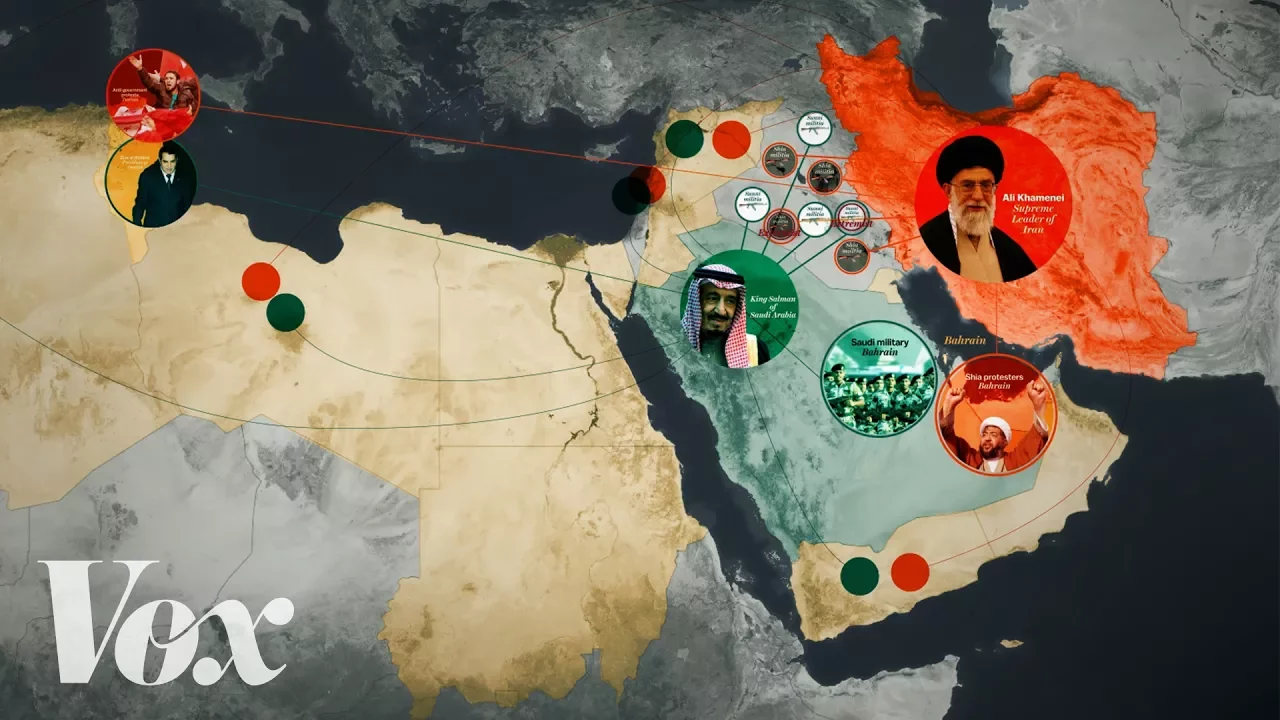
Explaining the Saudi-Iranian Proxy Conflict in the Middle East
@Vox
18.2M views•2017-07-17
Related Study Plans & Knowledge Roadmaps
Structured learning paths in Political Science