




















![Agotados [Docu Completo] - Documentos TV](https://i.ytimg.com/vi/WfesJiOZ2ps/maxresdefault.jpg)
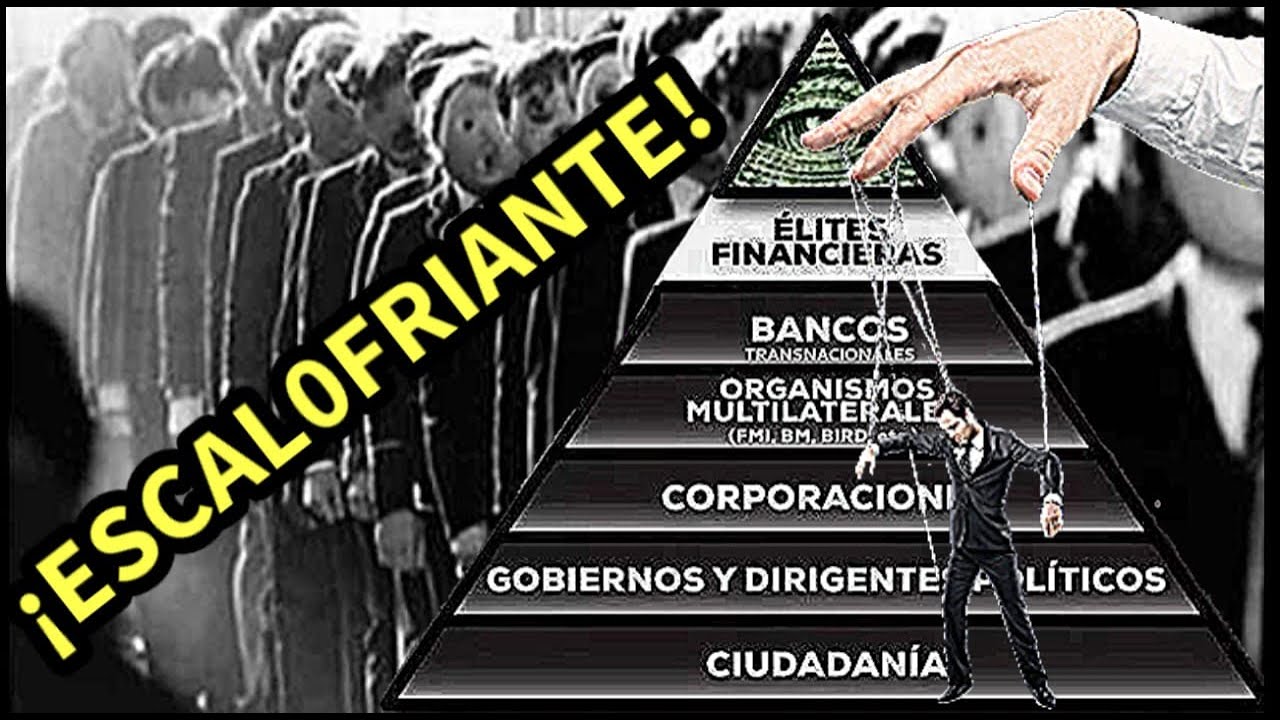



Late capitalism, a concept coined by German economist Werner Sombart around 1900, describes a societal stage where capitalist ideals become so entrenched that they dictate how people live, perceive value, and morality, creating vast wealth inequality and tying self-worth to employment. Media like Severance critiques this system by depicting corporations with unchecked power that exploit workers through dehumanizing practices, psychological manipulation, and systemic control, ultimately arguing that collective action and unionization are necessary to resist corporate exploitation and reclaim worker autonomy.
Severance, Late Capitalism, and Media Critique | Video Analysis
Added:An understanding of Karl Marx's theory of alienation, specifically how workers become decoupled from their labor, identity, and humanity under capitalist systems.
Familiarity with the concept of 'Late Capitalism' as popularized by theorists like Fredric Jameson, describing the post-WWII, highly globalized, and consumer-driven phase of capitalism.
Basic tenets of Critical Media Theory and the Frankfurt School, focusing on how cultural products analyze, reflect, and critique societal power structures.
A foundational knowledge of the premise of the television series 'Severance', particularly its central metaphor of surgically separating work memories from personal memories.
An exploration of Michel Foucault’s concepts of 'Biopolitics' and 'Panopticism' to analyze how modern corporate environments monitor, discipline, and regulate employee bodies and minds.
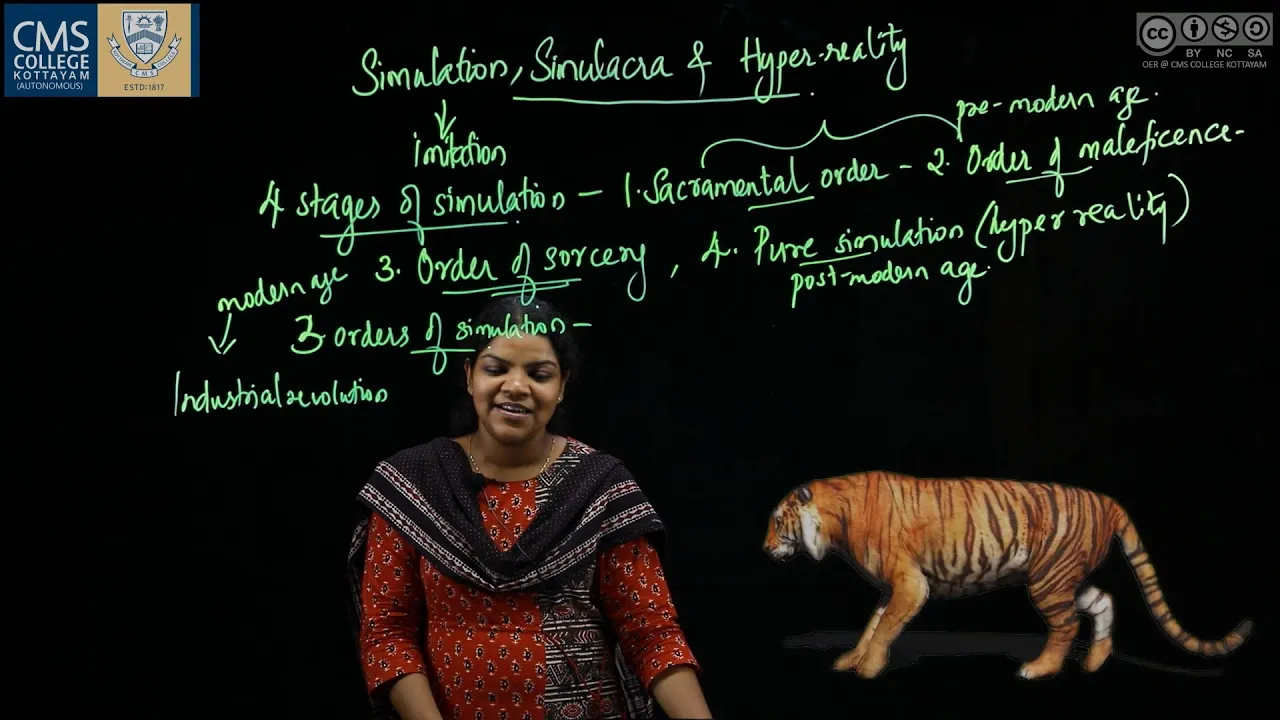
An investigation into Jean Baudrillard's theories of 'Simulacra and Simulation' to understand how corporate spaces construct hyperreal, artificial environments that replace authentic human experiences.
A real-world sociological analysis of modern 'hustle culture', corporate wellness initiatives, and the systemic obstacles to achieving true work-life balance in a neoliberal economy.
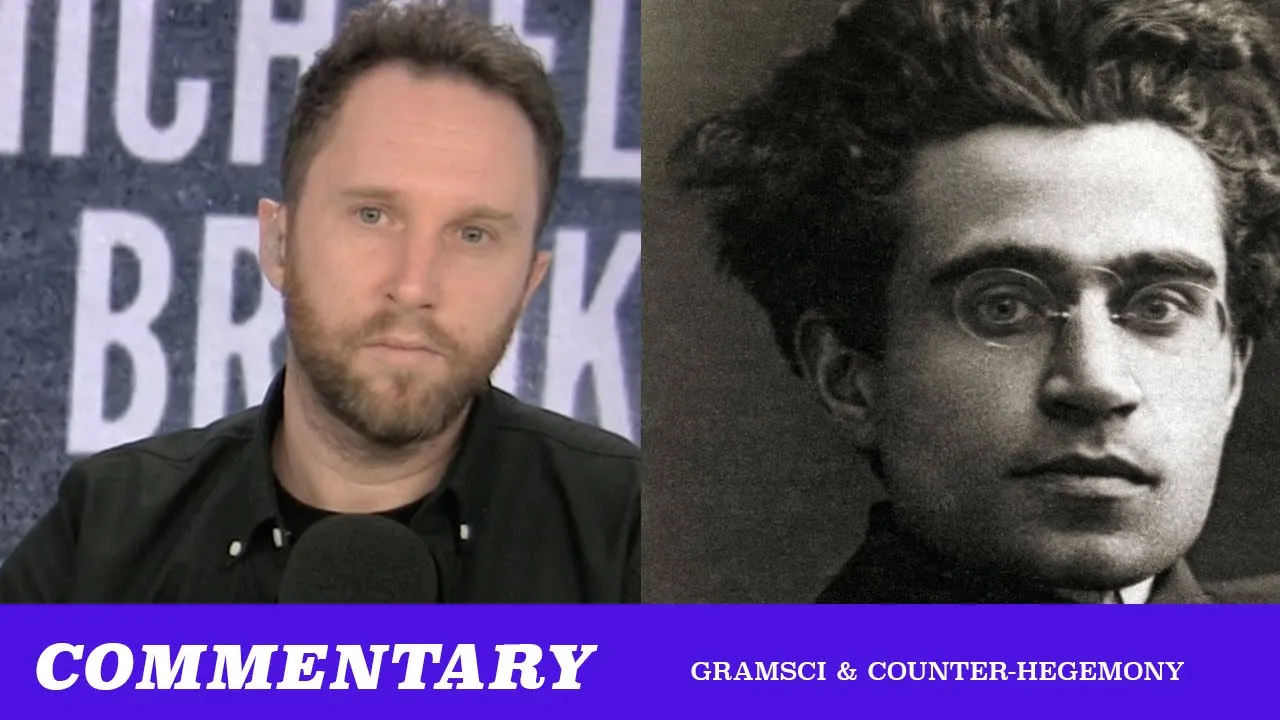
An examination of Cultural Hegemony (Antonio Gramsci) to evaluate the paradox of media conglomerates producing and profiting from anti-capitalist critiques.
395.3K views15.6Klikes30:34Original Release: 2023-02-25
[Music] This video is brought to you by my patrons. In the fifth episode of the show Severance, there is a moment when the main character is reading from a self-help book. It's a book that many of us would see as mostly useless dril written by a hack using nothing more than pop psychology phrases that he's regurgitating to fill space. Bullies are nothing but bull and lies.
But to the main character, Mark, that book is everything. They are the only words that he has ever read that haven't been spoonfed to him by a company that wants nothing more than to use him for his labor and drain him like leeches, then cast him away when his usefulness has run out. Yet, however silly this montage is throughout, it ends on a rather poignant line, one that seems to be directed just as much at us, the viewers, as it is to Mark. Should you find yourself contorting to fit a system, dear reader, stop and ask if it's truly you that must change or the system.
In a previous video, I mentioned the phrase latestage capitalism. It wasn't a part of some long-winded diet tribe. It was a brief passing phrase that I uttered once and then moved on from. The video really had nothing to do with it.
Despite that, I have gotten numerous comments on the video arguing against my usage of the term and just a general disagreement of the term's validity. I'm sure many of you have heard this term before, but for those of you who haven't, or for those of you who left one of those comments, and we'll surely leave one under this video where it is the main topic, latestage capitalism or just late capitalism is an idea that was coined around the turn of the 20th century by the German economist Verer Sombart. Sombart argued that capitalist economies go through different stages throughout the life of the nation.
First, there is protocism which in his estimation began somewhere in the early middle ages and lasted up until 1500 AD.
Next was early capitalism which lasted from then until about 1800. Then the quote heyday of capitalism which was from 1800 to the first world war and finally late capitalism which has been since then. Later, the term was adopted by European Marxists who saw the downfall of Western economic stability and capitalism as a whole as an inevitable truth. But I'm not here to argue that point. In a more modern context though, the term late capitalism refers more to the distortions created by a society in which the ideals of capitalism are so entrenched that they begin to dictate how we live our lives and the lenses through which we perceive value and morality and even reality. In common usage, it's a catch-all term to describe the onw wee of living in a system with vast wealth inequality never before seen on the planet where our self-worth is so tied up in our jobs that it is basically the second question we ask someone when we meet them. Yes, I already used that line in another video.
Sumi, where we are taught to see wealth as being equivalent to intelligence, cleverness, or even flatout superiority.
where we suffer through a worldwide pandemic, climate change, and the contradiction of famine with a surplus.
Yet, the biggest concern on many people's minds is how fixing these things will affect the economy. It's the result of companies seeking the almighty profit at the expense of everything else to exploit the dwindling natural resources of the planet while operating within the theoretical framework of an infinitely expandable system. It's the effect of assuming the economy isn't a zero- sum game. That nobody gets to take your slice of the pie because we can always just make the pie bigger, right?
Even when the evidence to the contrary, finite natural resources stare us directly in our face. And it's the inevitability of just shrugging it off and going back to work because what the else are you going to do? That is latestage capitalism, in case you were wondering. In the last few years especially, critiques of late capitalism have been invogue in all forms of media.
Though it's not a truly new phenomenon.
Originally, this video was going to be a bit different, less focused. I was going to look at the different ways that these various forms of media choose to frame their criticisms and the different angles they take. However, once I tried writing that script three times and failed and then watched Severance, I knew I had to pivot. So, instead, let's take a brief tour through some of the best examples I've seen. In television, my favorite aside from Severance has been Agretzko. It's an anime by Sanrio, which is pretty iconic considering that they are one of the biggest names in anime horizontal integration with their ownership of Hello Kitty, a brand that has spawned all sorts of media offshoots, merchandising, etc. However, that didn't stop the creator, Retro, sorry if I mispronounced that, from absolutely skewering the practices of large corporations and the woes of living in a late capitalist society through the protagonist, RSCO. She works as an accountant by day, getting the worst of office abuse, and then channels it all into heavy metal screaming karaoke at night. While it's a very cute show, don't let the look fool you. It does not pull its punches when exploring things like workplace sexism, corporate fraud, and other topics. There is even a main character who basically dreams of creating a world where people receive a universal basic income, and it isn't laughed off as some fantasy. Though, it is basically an Elon Musk type trying to be a savior. So, take that for what it's worth. I feel like Squid Game and Succession don't really need much of an introduction as basically everybody's watched them. They are two of the biggest shows in streaming at the moment. So, we'll just touch on them briefly and move on. The former looks at a dark, very near future when income inequality is so severe that the wealthy are able to get away with having contestants sign their lives away to play in deadly games for their amusement. The latter is just a look into the lives of the modern 1% and is a clear criticism of the Murdoch family specifically, who run the Fox Media Empire. They prioritize profit over journalistic integrity, which naturally leads to a more conspiratorial right-wing style reporting. However, while succession is really a cutting look at the absolute debasement of the ultra wealthy, I feel like sometimes it veers too close into the glorification of wealth, even if that isn't the intent. Or at least that's how some people will see it anyways. Just look at the people that thought the Colbear report wasn't a parody. In video games, there have been a ton of examples recently, so we'll just pick out a few.
Cyberpunk 2077 is probably the biggest name in this. The title is a look at a grim future where corporations rule everything. While I did enjoy the main story of this game, setting aside all the performance issues and the abuse of the devs during the development cycle, I feel like it fell too much into the realm of satire for it to say anything real, which I mean, granted was probably the intent, but it definitely is a dark look at what our nation could be like in the distant future, but I feel like a lot more could have been done with the premise. Knight of the Consumer is an indie game that somehow says more while trying to do way less. It's a satirical take on the life of a retail worker.
There is so little to this game, yet it is extremely powerful in the emotions that it evokes. If you've ever worked retail or in the restaurant industry, then you know exactly the type of dread that they play on here, of trying to juggle needy customers and the various stocking jobs that need to be done seemingly simultaneously. That's exactly what you do in the game, except it's set to a very John Carpenter-esque score, and the customers resemble zombies, mindless consumers who will turn into a Karen if you're too slow to help them.
It's really successful in evoking that horrible dread mixed with adrenaline that you get in those jobs. Say no more, not Say No More, is another excellent indie title that is all about workers self- advocating and feeling empowered.
Basically, the only game mechanic is to say no to any request around the office.
Oftent times at our jobs, we feel forced to say yes to any request from our superiors for fear of being punished or even fired if we refuse. We are left feeling helpless like we have no autonomy. This game deals with that directly. It is a literal office power fantasy mixed with some silly humor. I love it. So, anyways, severance, that's what this video is about, right? Uh, how am I going to tie this back into the intro? Do you even care? I mean, have you even seen the show? It It's on Apple TV, which basically nobody owns because there are like a hundred other platforms, and most people don't treat them like Pokémon. Whatever. I've already written the script, so we're doing it anyways. Just a heads up, I'll be spoiling some of the concepts and some other bits of the show, so be aware of that. However, I will not be doing a full episode byep episode breakdown as this isn't an unpacking video and I'm not spoiling the ending. Regardless, the show is really amazing and I highly encourage you to go check it out first.
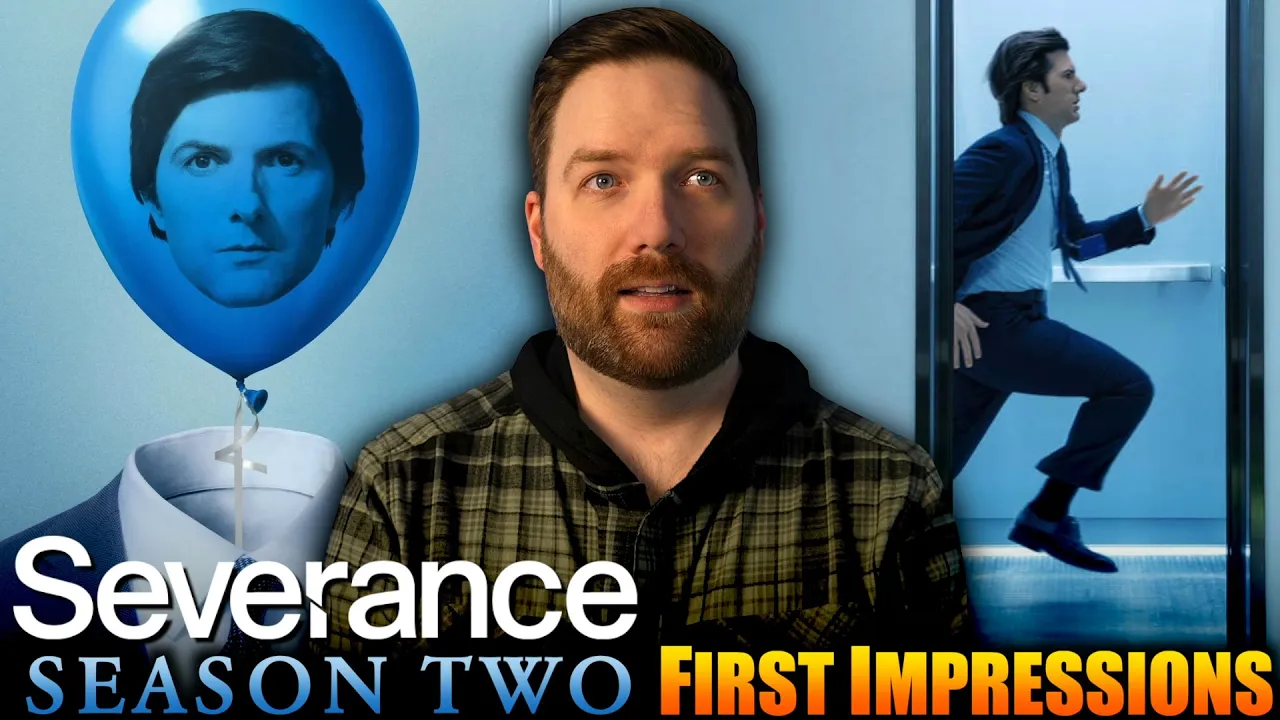
Severance is a show about the power of a corporation operating within a late capitalist America left unchecked to do basically whatever it pleases. It is a treatise on the unimaginable power that these companies wield, both on the world at large, but also more specifically on the employees that make up the organization. It was created by Dan Ericson with episodes directed by, and again, I'm sorry if I mispronounced this, Epha Mardle. And huh uh yeah, I would have never believed it if his name weren't at the end of most of the episodes, but Ben Stiller did indeed direct many of them. The name severance comes from a medical procedure within the fiction of the show in which a person has their mind separated into two basically autonomous units. For our protagonist, this is done as part of their employment. When an employee undergoes the procedure, their personal and professional lives are kept separate, literally. They wake up and drive to work all as themselves, as their outer selves, or Audi as they call them. However, once they enter the elevator to go down into their department, a brain implant switches their brain to the innie, the person that is actually aware of working. 8 hours later, the Audi regains consciousness, not even aware that any time has passed since they started their elevator trip. This might not seem that bad. It might actually seem kind of cool. But think about it from the inny's perspective.
[Music] They wake up on an elevator, go to work for 8 hours, go back to the elevator, only to wake up and repeat the process.
Add infinitum. To them, life inside the office is the only thing they know. They have no knowledge or memory of their lives outside and are basically born a new on a conference room table. Now, this brings into light some interesting philosophical questions about what the self actually is. If all of our memories and relationships were suddenly stripped away from us, would we really still be us? Am I memorphic? My thoughts and aspirations and personality all the sum of the experiences in my life. And who would I be without those? It's truly thoughtprovoking stuff. But honestly, that's not why I made this video. And in fact, that video already exists. Link in the description. No, I am more interested in what the show has to say about the follys of unchecked corporate greed. and yes, the late capitalist society they exist within. But first, let's talk about what severance the show is actually about. It centers around four main characters. Mark, Heli, Irving, played by the great John Turo, [Applause] Bumblebee, stop lubricating the man.
And Dylan. These four are all macro data refiners or the MDR team. It's an enigmatic position at an enigmatic company called Lumen. The story shows their struggle to come to terms with their existence as innies stuck inside an office for their entire lives and what that life looks like. While Mark is arguably the main protagonist who has the most screen time, it is actually Heli that serves more as the audience insert. She is the newest member of the MDR team, filling the opening left by the previous department chief. Each of the four in the MDR team serve as a different archetype of an employee.
Dylan is the jaded realist in denial.
Irving is the true believer. Mark is the opportunist. And Heli is the newbie outsider who sees through the As the viewer, we immediately identify with Heli. Up until the end, we only ever see her any. This is 100% emotional manipulation on the show's part. As if we only saw it from the Audi's perspective, we would probably see the severance procedure in a different light. It would also be probably boring as hell. Severance. The show is meditative, often very quiet and reflective. It uses a lot of imagery and is absolutely lousy with symbolism. The creators could have just as easily made a documentary following around a menial worker in an actual cubicle farm. But instead, they chose to make a much more thoughtful narrative that simultaneously shows what America could look like if corporations continue to grow more powerful while also being only a slight exaggeration of the conditions that already exist. And the exaggerations are only there to highlight the fact. Yet at the same time, the writers could not have been more clear with their message.
Severance is a lot of things, but subtle is really not one of them. Unless you're an absolute potato, the meaning behind the show should stand out like a red cap at a BLM protest. It begins with a woman waking up on a conference room table.
This is Heli, the newest member of the macro data refinement team. Mark is taking her through orientation, which is basically just rubbing her face in the fact that she has been severed and has none of her memories.
To start, imagine yourself as a seessaw.
Ow. On the same day, the previous chief of the MDR team, Petey, suddenly and mysteriously quit without any notice, making way for Mark to take the lead on the team. Hence why he is the one to take Heli through orientation. When someone leaves the company, all communication is cut off due to the realities of the severance procedure.
And if they quit or otherwise leave suddenly like Pety did, they are treated as excommunicant, as heretic, where employees are even dissuaded of any discussion of them within the company.
Pety was just gone. I mean, I I don't know if he's at some new job or or dead.
That's enough, please.
This may sound familiar to you. When someone blows the whistle at their company for bad practices, labor related or otherwise, they are immediately shunned as management scrambles to close ranks. Meanwhile, the remaining employees are told over and over again that the treatment they receive from the company is the best they could hope for and that they should just be thankful.
They're like an abusive boyfriend. From the start, Ellie does not like the situation she finds herself in. She is, for all intents and purposes, a captured slave held against her will to work a job, destined to never see the compensation for her labor. Both the company that they work for, Lumen, as well as the actual job that the macro data refiners are doing throughout are mysterious. We have no idea what goods the company produces or what services they render. Similarly, even though we see the work that the MDR team does, even being shown their screens and witness them explaining their job, it is totally inscrutable. It's just a large array of seemingly random numbers that they put in digital bins. But even they have no idea what the numbers mean or what the bins represent.
My job is to scroll through this spreadsheet and look for numbers that are scary. It sounds dumb and Mark said it dumb. I've seen some think pieces and listicles talking about the secrets behind the show, speculating that the meaning behind their job may be revealed in season 2, but to me those articles are missing the forest for the trees. It's not important what exactly their job is, at least not for the story. The important part is that it's menial, that there is no true satisfaction of finishing a job apart from a kitsy lowres 24-bit DOSs picture of the founder with a pre-recorded message.
That was absolutely a deliberate decision by the writers as the feeling of doing a job which holds no intrinsic or visible value is something that I think many workers feel. Even though they are constantly told that the job is important, the refiners never actually experience that importance themselves.
They are going completely on blind faith which is not enough for most people.
Throughout the first few episodes of the show, Mark and the others in management try their damnedest to break Hel's will to leave as they have all others. It seems to be a classic case of a middle manager drunk on what little power is given to him. In fact, throughout the first part of the series, Mark is not only unlikable, he's kind of invariably a bootlicker piece of Ultimately though, it is the executives setting all the others below them against each other as it's in their best interest to do so.
The more the peasants fight each other, the less they think about their actual situation. And those at the bottom of the hierarchy are constantly reminded of their place through a number of different dehumanizing means. For instance, the refiners and their peers in the other departments are not even allowed full names. Their only identification being a first name and last initial. Simply put, they are seen as less than human, only as valuable as the work that they are able to produce.
Meanwhile, management is given more freedom. They are not severed. They have their full names and are even referred to by their surnames exclusively, all perks of the job and clear markers of hierarchy. It allows them to view themselves above the menial laborers and therefore do unconscionable things that you might not convince a person to do otherwise. If you think this is all fiction, I would argue that it happens all the time, if maybe in a less dramatic fashion, and in companies all around the world, even the US. In the show, management is constantly scrutinizing and micromanaging frontline workers. It is infantilizing, making them feel less than. Just as their title and power sets them against those people, so too they set those below them against one another. They start rumors about the cruelty or savagery or sheer alieness of the other departments in order to foster hostility and suspicion.
More on this in a bit. The only real rewards for the work the employees do are meaningless trinkets like finger traps, caricature drawings, or if they're really lucky, a dance party that lasts for a single song, or a weird waffle ritual in which they stay the night in the replica of the company founder's childhood home. Meanwhile, Hel's escape attempts escalate, becoming more drastic as she is constantly rebuffed. Her outside self refuses to her demand to be set free. I am a person.
You are not.
Eventually, she snaps and hangs herself in the elevator. It seems that while she's prepared to die, she is primarily doing it in order to send a message to her Audi that she is willing to do anything to escape. The event is sort of the catalyst that changes any mark.
Between that and finding the book I talked about in the intro, he finally begins to wake up and realize the situation that they're all in. But that's just Mark. The others have their own motivations. Irving spends most of the show as a true believer, pious in his worship of Lumen and its founder, and his admiration goes far beyond what would be considered normal under any circumstances. The Lumen founder Kier Egan is worshiped like a god within the company. His words are enshrined in the employee handbook, which is for all intents and purposes a Bible. I mean, just look at it. The creators knew exactly what they were doing when crafting the look of this tome.
Passage 31, page 110. Be content in my words, and dally not in the scholastic pursuits of lesser men.
No books except the handbook. I know the book isn't just a code for being a good employee. It is a code for life to these people. Remember again that their entire life is a Lumen employee. There's even an entire wing to the Lumen facility dedicated to Kir and his successors called the perpetuity wing.
There are sculptures of each of them enshrined in a room dedicated to their greatness like they were conquering Roman emperors or something. Deeper within is a full recreation of Kier's childhood home that I mentioned before.
All of it is really bizarre, just offkilter, and it was pretty clearly intentional. We are meant to see this bizarre cult of personality as unnatural and wrong. Now, I've worked at a few different large corporations in various roles, including a Berkshire Hathaway company, and I can attest that this depiction is not entirely fiction.
Granted, I never saw a wax statue of Warren Buffett or read a bible of his words. However, I definitely spent time in my training learning about these various CEOs and why they're these super awesome individuals that started from nothing, pulled themselves up by their bootstraps, which is a saying that literally doesn't make physical sense, by the way, and why you should totally respect them. Anyway, as the story progresses, Irving finds somebody else to care for, an employee from a different department, played by none other than Christopher Walkan. I got to say, seeing a gay relationship between Jesus Quintana and the deer hunter is something I never knew I needed before I had it. Regardless, Walker's character Bert ends up retiring, which means that he will forget that Irving ever existed.
This is the last straw for Irving.
Let's burn this place to the ground.
Finally, we have Dylan. As I mentioned, Dylan is the jaded realist of the group.
Although I'm using that term in heavy quotations, he seems to see through a lot of the of Lumen. He pretends to not have drunk the Kool-Aid like Irving and Mark, though he still has major blind spots. He tries to act above it all, but he still winds up getting manipulated by the childish rewards and some of the propaganda from management. Of note is management's pretty blatant attempt to set the different departments against one another. Along with the company Bible, there are paintings all around the facility depicting different scenes from either Kier's life or some important event from the company. These are all created and distributed by the optics and design department of which Bert is the leader. That's Christopher Watkins character for those of you playing at home. Management uses these drawings to manipulate the employees emotions, none more so than the painting titled The Grim Barbarity of Optics and Design.
See, there is this lore within the MDR team that optics and design once staged a coup against them, slaughtering many in the process. And that is exactly what the painting depicts. Right from the start, the entire idea is totally nonsensical. How would attacking another department with the same amount of power constitute a coup? What possible motivation would lead to large-scale murder among employees? It's pretty clearly an attempt by management to instill a sense of distrust between the departments even before it's made explicit. Later on, we find out that there is another painting, the macro data refinement calamity, which is basically the same one as the first, but with the badges swapped out to make it look like the MDR team is perpetrating the slaughter on OD. What the management team is doing here is something that once again is practiced often in real corporations. They are sewing the seeds of distrust between the two departments and likely between the others that we haven't seen. Why, you may ask? Because the more time and energy that the MDR team spends worrying about O and D, the less they pay attention to how they are being treated by management and vice versa. It's the classic move of setting your enemies against one another rather than wasting your energy constantly stamping down rebellions. But rather than stories about slaughter, employees in the real world are often told or otherwise discouraged from discussing salaries, among other things, workers are completely in the dark about how much the person next to them is making.
And this creates a sort of silent distrust between them. Management doesn't want employees to know how unfair the system actually is and that you're getting paid less to do the same job as your friend. My entire point is though that Dylan, despite his above all attitude, falls for this tactic, hook, line, and sinker. He is constantly suspicious of Bert and the rest of the O and D team, even going so far as to temporarily lock him up in a room to prevent fratinerization with Irving. The thing that eventually wakes Dylan up is, well, Dylan waking up. Lumen up to that point had been pretty clear on the fact that the severance procedure was completely location dependent. But when the need arises, they use what is called the overtime contingency to wake up Dylan's innie when he's at home. This reveals that Lumen's insistence of those geographical limits were complete and that they have the power to wake up employees at any time they so choose. By electing to become severed, they are truly putting a loaded gun into the hands of the company and praying that they don't pull the trigger. You ever had a company phone that rings when you're about to go to sleep? You ever felt anxiety about not doing work when you're supposed to be off the clock?
Have they ever tried to get you to use your personal phone and then abuse their contact with you after the fact? Anyway, these are the situations that eventually lead our protagonist to finally decide enough is enough. I'm going to hold off on the specifics of their plan because I really do want you to watch this show and I've left a lot out. Generally though, they realize that each of their individual attempts to affect change within the company have been feudal and that they must come together. Hint, freaking hint, unionize. Heli tried to break herself free, to quit, but she was rebuffed at every turn, even when she tried to unalive herself. Mark tried to advocate for his employees and his former manager, but was shut down and told to get his team back in line. Dylan just wanted a better work life balance.
He wanted to know his kid's name, godamn it. And Irving, well, he just wanted to get it on with Christopher Walkan. And if that's a crime, then lock me up and throw away the key. Individually, they are weak. But they all realize that they don't have the ability to do any of this alone. And as soon as they were able to get over their fear of D, they have them as well. The company, like many real companies, does everything in its power both proactively and reactively to bust up any whiff of a union. Yet, despite their best efforts, their manipulations, their rules, their physical barriers, ultimately they were helpless against the overwhelming, pissed-off labor force. And if we learned anything from Amazon, it's that while things are pretty bleak, while the odds are constantly being stacked against us, victory can still be had. Just look at the JFK8 facility, which successfully beat back all of the union busting tactics that the nearly trillion dollar mega corporation could throw at them and made the first ever Amazon labor union.
Things can be changed for the better.
Don't let anyone convince you otherwise.
Should you find yourself contorting to fit a system, dear reader, stop and ask yourself if it is truly you that must change or the system?
[Music] In a sense, we are already severed when we work for a company like this. There's no real need for a physical procedure.
We are of two minds, two personalities, one at work and one away. We are made to accept the idiosyncrasies, both benign and malignant, at work, to mold ourselves into the ideal employee when that person may not really be who we are. Maybe we aren't literally forced to work as Heli is, but by virtue of living in a capitalist system, we are certainly coerced to do so at the penalty of homelessness and starvation. And I can see you now. I can see you going to your keyboards and beginning to type.
But that's how it's supposed to be. How do you expect to survive if you don't work? It's certainly how we've always known things to work, but we are going to have to shift our paradigms to use a little corporate speak. With the advent of automation looming on the horizon, we are already at a point where there aren't enough jobs paying livable wages for everyone in society. And so, we have to make that choice. Do we let those people just die or do we act collectively and help them? If we choose to stay in our own departments and stay afraid of those around us, if we don't put limits on companies like Lumen, then they will make those decisions for us.
No matter how much a corporation tries to gaslight you into thinking that they are looking out for you, the employee or you the consumer, ultimately the company only does what is best for the company.
And if those interests don't align with your own, they will take care of themselves 100% of the time. In an interview with Writer Digest, Dan Ericson describes his thoughts on the show. One thing that we talked about a lot was that you're never really outside of Lumen. Like you can be outside of the building, but their tentacles are still everywhere. And it's in a slightly more insidious way. It's in the same way that a lot of corporations or institutions will insinuate themselves into culture in a way that's not often obvious. So, it's like if you're watching the show and you've seen both sides of it, you can see that all the companies have the same name as the CEOs. You know, the Egan CEOs that you see in the perpetuity wing, but that's not something that might be obvious to somebody on the outside who's not super familiar with the company. So, we tried to have this sort of creeping sense of dread with the company that it's always there. Even if you can't see it watching you, it's probably watching you.
Thank you so much for watching this video.
I I love you. It really shouldn't have taken as long as it did to make, but I kept going back and second guessing myself on what exactly I wanted it to be. I wrote the script multiple times and scrapped it, but I'm pretty happy with how this turned out, and I hope you are, too. If you enjoy this content and the other stuff that I'd make, also, please do think about joining and becoming a patron. Thanks very much to my patrons for helping this be possible and to waiting yet even longer for this shorter video to come out. Thanks especially to Gay Vary and Freedom for becoming my latest patrons.
Up Next

10:49
Computers in Retro Sci-Fi Cinema: The Hidden Arbiters of Imagined Futures
@theSiliconSiren
51.7K views•2026-01-17

12:54
Triumph of Orthodoxy Icon: Byzantine Art & History Explained
@BenCallan
2.1K views•2024-08-06

9:49
FastAPI vs Flask vs Django: Choosing the Right Python Web Framework
@TechWithTim
302.5K views•2024-05-26

1:42
Game of Thrones Opening Credits: A Cinematic Analysis
@gameofthrones
46.3M views•2011-04-18
Related Study Plans & Knowledge Roadmaps
Structured learning paths in General & Interdisciplinary Studies
general-studies
Elevator Engineering: History, Physics & Cities
01From Hoists to Safety Brakes: The Dawn of Vertical Lift
02Hydraulic vs. Traction: The Engineering Physics of Elevators
03Modern Speed, Safety, and Algorithms
+ 2 more learning modules
12h5 modules
Explore Roadmap
general-studies
Rubber: Material Science, History & Geopolitics
01Origins of Natural Rubber & Mesoamerican History
02The Chemistry of Natural Rubber & Vulcanization
03The Geopolitics of the Rubber Boom & Colonization
+ 2 more learning modules
12h5 modules
Explore Roadmap
general-studies
Containerization: Evolution, Logistics & Trade
01Ancient Trade & Bulk Cargo: Amphorae to Barrels
02The Industrial Revolution & Cardboard Packaging
03The Containerization Revolution: Malcom McLean
+ 2 more learning modules
12h5 modules
Explore Roadmap
general-studies
Textile Tech: Evolution, Labor & Global Impact
01Pre-Industrial Textiles: Handloom & Cottage Industry
02Mechanization: The Spinning Jenny to the Power Loom
03The Factory System & Global Labor Transformation
+ 2 more learning modules
10h5 modules
Explore Roadmap