


















![Design is [Sci-Fi] – How Design in Sci-Fi and the Real World Influence Each Other](https://i.ytimg.com/vi_webp/YPAd2SCnsRQ/maxresdefault.webp)
In retro sci-fi films, computers serve as crucial world-building tools that establish credibility, power dynamics, and technological fears, often using real or realistic machines rather than futuristic props to ground the future in believable technology.
Computers in Retro Sci-Fi Cinema: The Hidden Arbiters of Imagined Futures
Added:The history of mid-20th-century computing, specifically the transition from massive mainframes (like ENIAC and UNIVAC) to early microcomputers.
Basic cinematic theory of mise-en-scène, specifically how background props, set design, and visual aesthetics establish realism and narrative tone.
The socio-political anxieties of the Cold War era, including technophobia, fear of automation, and the threat of centralized control.
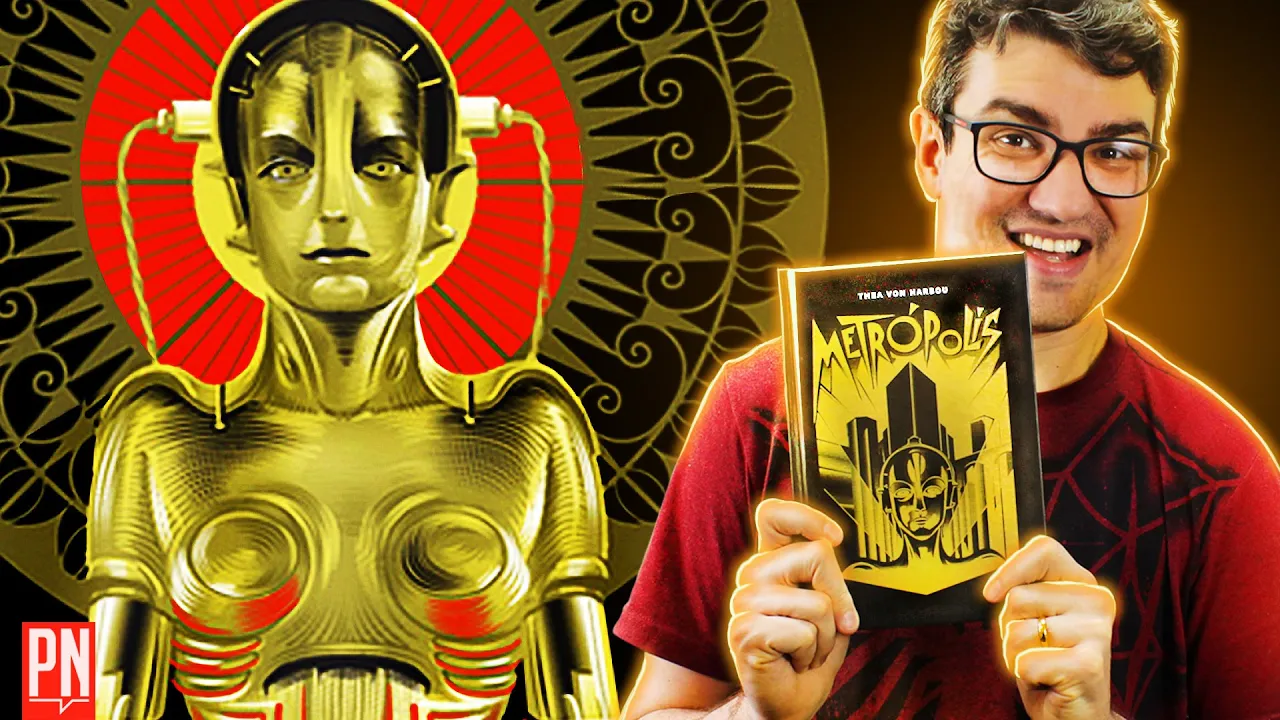
Familiarity with foundational classic sci-fi cinema and literature (e.g., Fritz Lang's 'Metropolis', Arthur C. Clarke, and early space-race films).
The study of Fictional User Interfaces (FUI) and how sci-fi screen designs historically influenced real-world Human-Computer Interaction (HCI).
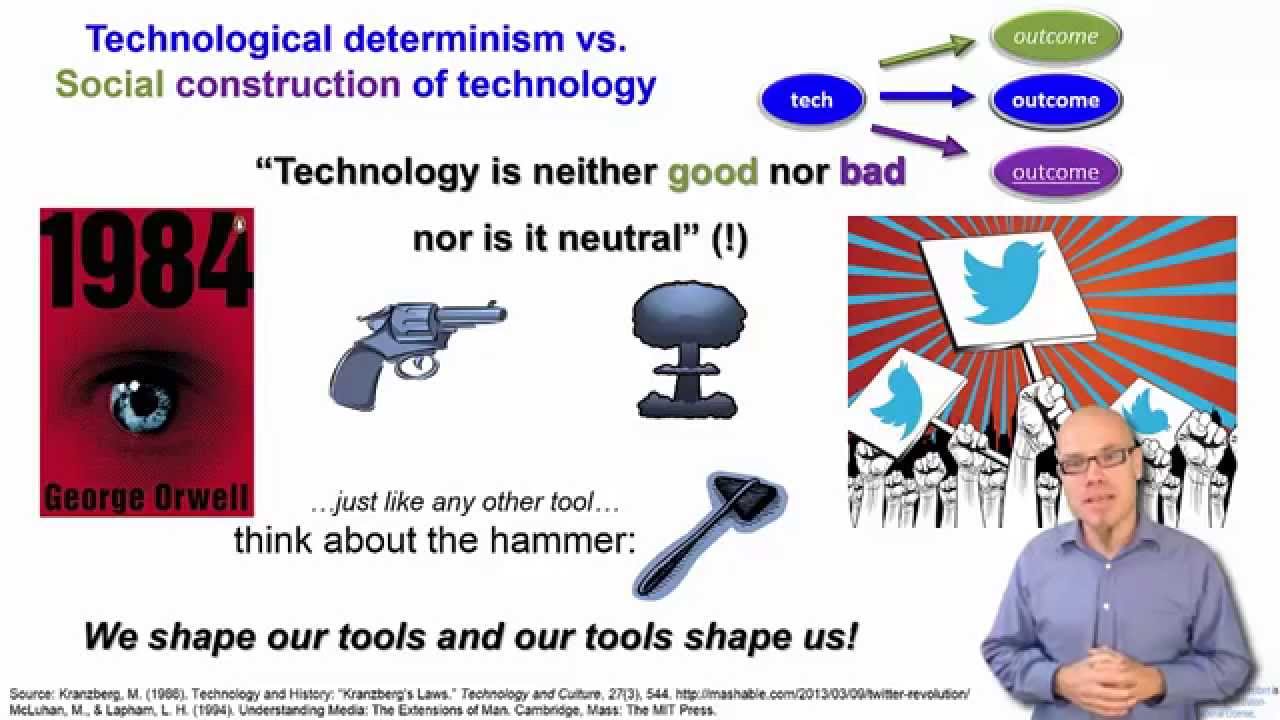
An exploration of technological determinism vs. social construction of technology (SCOT) in media studies.
The evolution of the 'sentient computer' trope from physical mainframes (like HAL 9000) to modern, decentralized, and cloud-based AI (like Samantha in 'Her').
Analysis of modern sci-fi design as a tool for speculative design and design fiction to critique current technological developments.
51.7K views3.6Klikes10:49Original Release: 2026-01-17
When people talk about classic sci-fi movies from the '80s and '90s, they remember the icons, the DeLorean, KITT, flying cars cutting through neon rain.
But those weren't the technologies that quietly reshaped how we imagine the future.
The real future sat on desks. It hummed, it blinked, and most of the time, it didn't say a word.
Today, we're re-wiring nostalgia by looking at the computers of retro-tech cinema.
>> [music] >> The machines you barely noticed, but absolutely believed.
Sci-fi lives or dies on credibility, not realism, credibility. And nothing grounds a futuristic world faster than a believable computer interface. [music] These machines weren't just props. They established power, control, intelligence, and who owned the future.
A glowing terminal in the background could tell you more about a world than pages of exposition.
And the best part? Most of these computers weren't invented from scratch.
[music] They were real machines, or very close cousins, repurposed to quietly suggest, yes, this future could happen.
Alien doesn't give us sleek sci-fi tech.
Instead, we get industrial computing, chunky keyboards, monochrome CRTs, text-only interfaces.
The Nostromo's computer systems feel closer to a 1970s mainframe than a futuristic AI.
And that's exactly why they're terrifying.
The Mother 6000 central AI system isn't friendly. She doesn't explain herself.
She doesn't care.
This is computing as bureaucracy, cold, corporate, and unquestionable.
The computer isn't helping the crew survive. It's enforcing policy.
And just like that, Alien teaches us something fundamental. The future isn't dangerous because it's advanced. It's dangerous because it's indifferent.
Blade Runner famously avoids the clean future. Instead, it gives us an analog world layered with computing power.
Deckard's Esper machine isn't sleek.
It's physical, buttons, knobs, switches.
The act of computing is tactile, deliberate, almost ritualistic. The machine doesn't guide him. It waits.
This reinforces the film's core theme.
Technology doesn't make moral decisions.
Humans do.
And by keeping the interface grounded and mechanical, Blade Runner makes the computer feel like an extension of authority, not intelligence.
Before Tron takes us inside the computer, >> [music] >> it spends a surprising amount of time showing us the outside.
The early ENCOM systems aren't futuristic fancy machines. They're recognizably corporate computers of the late '70s and early '80s.
Large terminals, centralized systems, controlled access. These are machines designed to be owned, not explored.
ENCOM represents a very specific fear of the era, that computing power was becoming [music] concentrated, abstracted, and unreachable.
You don't sit down and experiment. You log in, if you're allowed to.
What Tron gets exactly right is that the danger isn't the computer itself. It's the structure around it.
Who controls the system? Who decides what runs?
>> [music] >> Who gets locked out?
The MCP isn't a rogue intelligence. It's a bureaucratic one.
>> [music] >> It consolidates power, absorbs competitors, and optimizes for dominance.
Tron doesn't just visualize a digital world. It visualizes what happens when computing becomes centralized, corporate, and unchallengeable.
And decades later, that might [music] be one of the most accurate predictions any sci-fi movie has ever made. WarGames might be the most honest computer [music] movie ever made, not because it predicts the future, but because it understands the present it was [music] made in.
There's no spectacle here, no visual metaphors for hacking, no magical interfaces.
What we see instead is process. David's bedroom setup looks exactly like what computing enthusiasts actually had access to in the early 1980s, a personal computer, [music] a modem, and just enough curiosity to be dangerous.
The film takes its time showing us [music] dialing, waiting, listening. The delays matter. The friction matters.
Because WarGames understands something that most movies miss.
Computing power wasn't scary. Access was.
The military systems in the film don't look futuristic. They look old, institutional, and completely unapproachable. Huge rooms, giant screens, operators who trust the system because they don't understand it. And that's the real tension.
The WOPR, or Joshua, isn't portrayed as evil. It's obedient, relentless, and unquestioning. The danger comes from automation paired with authority [music] and a complete lack of human context.
What WarGames quietly argues is that computers don't need malice to be dangerous. [music] They just need permission.
Or, as we saw recently in Tron: Ares, ambiguous directives.
And when you contrast David's tiny bedroom setup with the vast military infrastructure behind the WOPR, the message becomes painfully clear.
The future didn't arrive through innovation. It arrived through connectivity. A phone line was enough.
That idea, that systems designed to be isolated are only one curious user away from exposure, was genuinely terrifying in 1983.
And honestly, it still [music] is.
Hackers flips the script. This isn't computing as bureaucracy or fear. It's computing as identity.
The hardware itself is mostly [music] believable for the era, Unix workstations, laptops, and modems. But the presentation is mythologized.
[music] Interfaces become landscapes, data becomes architecture, hacking becomes performance art.
Is it realistic? Of course not. But Hackers does something incredibly important. It makes computers desirable.
This movie is why an entire generation wanted to touch a keyboard, not because it was powerful, but because it was cool.
Hackers doesn't predict the future. It inspires it.
Jurassic Park marks a turning point.
[music] Suddenly, the future isn't text-based.
We see advanced GUIs, >> [music] >> high-end Unix workstations, and systems that feel aspirational.
This wasn't fantasy tech. This was elite tech. If you recognize the Silicon Graphics workstation in 1993, you understood exactly how powerful and exclusive this world [music] was. The future had a price tag.
Stranger Things season 4 gives us one of the most quietly perfect computing moments in modern sci-fi.
Suzie's Amiga 1000 isn't treated like a joke. It isn't nostalgia bait. It's a tool.
When Suzie hacks into the Hawkins school system to change Dustin's grade, the scene is grounded, confident, and most importantly, respectful of the machine.
This isn't flashy hacking, no spinning 3D graphics, [music] no instant results. It's methodical, focused, [music] and believable.
The Amiga represents a very specific era of home computing, when power was personal, >> [music] >> not institutional.
Suzie isn't breaking into a military system, >> [music] >> not yet anyway. She's navigating bureaucracy, and that's exactly what makes it powerful.
This scene captures what early home computers really did for people. They lowered the barrier between users and systems that were never meant to be questioned.
The Amiga isn't portrayed as magical.
It's portrayed as capable. And that distinction matters.
Because this is computing as empowerment, not spectacle.
Skill over status, access over authority.
For anyone who grew up with machines like this, that moment isn't just accurate, it's emotional.
What we've talked about today is just a fraction of the machines that shaped retro-tech cinema and one modern take.
There are far too many important computers, too many terminals, workstations, home systems, and forgotten interfaces to fit into a single video.
And that's intentional, because this is only part one.
Retro sci-fi didn't just imagine the future once. [music] It revised it, argued about it, and warned us about it.
And the computers, [music] quietly sitting in the background, were always doing more storytelling than we gave them credit for. [music] So, the next time you re-watch your favorite sci-fi film, don't just look at the cars or the sexy sci-fi babes. Hard, I know. Look at the desks, the keyboards, the terminals softly glowing off to the side. Because that's where the future was really hiding.
And if you want to keep digging into these machines, the real ones, the forgotten ones, the ones that actually shaped how we think about technology?
Good, because this series is just getting started. [music] Thanks for watching. And if you'd like a peek behind the scenes and access to other exclusive content, make sure to support me on Patreon. I hope to see you there. And special shout out to all my current Patreon supporters.
Up Next
88:49
Modern Monetary Theory & Humanities: A Panel Dialogue
@mmtconference7907
408 views•2017-10-25

12:54
Triumph of Orthodoxy Icon: Byzantine Art & History Explained
@BenCallan
2.1K views•2024-08-06

9:49
FastAPI vs Flask vs Django: Choosing the Right Python Web Framework
@TechWithTim
302.5K views•2024-05-26

1:42
Game of Thrones Opening Credits: A Cinematic Analysis
@gameofthrones
46.3M views•2011-04-18
Related Study Plans & Knowledge Roadmaps
Structured learning paths in General & Interdisciplinary Studies
general-studies
Elevator Engineering: History, Physics & Cities
01From Hoists to Safety Brakes: The Dawn of Vertical Lift
02Hydraulic vs. Traction: The Engineering Physics of Elevators
03Modern Speed, Safety, and Algorithms
+ 2 more learning modules
12h5 modules
Explore Roadmap
general-studies
Rubber: Material Science, History & Geopolitics
01Origins of Natural Rubber & Mesoamerican History
02The Chemistry of Natural Rubber & Vulcanization
03The Geopolitics of the Rubber Boom & Colonization
+ 2 more learning modules
12h5 modules
Explore Roadmap
general-studies
Containerization: Evolution, Logistics & Trade
01Ancient Trade & Bulk Cargo: Amphorae to Barrels
02The Industrial Revolution & Cardboard Packaging
03The Containerization Revolution: Malcom McLean
+ 2 more learning modules
12h5 modules
Explore Roadmap
general-studies
Textile Tech: Evolution, Labor & Global Impact
01Pre-Industrial Textiles: Handloom & Cottage Industry
02Mechanization: The Spinning Jenny to the Power Loom
03The Factory System & Global Labor Transformation
+ 2 more learning modules
10h5 modules
Explore Roadmap