


















Modern Monetary Theory (MMT) offers humanities scholars a transformative framework for analyzing cultural and political phenomena by reframing money as a public governance tool rather than a private commodity, enabling new critical approaches to rhetoric, aesthetics, and historical interpretation that challenge orthodox economic assumptions and expand the possibilities for understanding social and political reality.
Modern Monetary Theory & Humanities: A Panel Dialogue
Added:Basic tenets of Modern Monetary Theory (MMT), including sovereign currency, fiat money, and the distinction between currency issuers and currency users.
Foundational concepts in humanities research, particularly how cultural studies, rhetoric, and film theory analyze texts and societal narratives.
The historical relationship between economic structures and artistic production, such as how patronage or capitalism influences cultural mediums.
Introductory critical theory, specifically how different philosophical frameworks (e.g., Marxism, post-structuralism) interpret the concept of 'value'.
Advanced exploration of 'New Economic Criticism,' an interdisciplinary field that applies economic theory to literary and cultural analysis.
Applying MMT frameworks to analyze contemporary media, examining how films, novels, or media narratives portray debt, scarcity, and public spending.
The rhetoric of public finance, studying how metaphorical language (e.g., treating a national budget like a household budget) shapes public policy and economic beliefs.
Investigating MMT-based policy proposals for the cultural sector, such as how a Federal Job Guarantee could support artists and humanists.
408 views6likes1:28:49Original Release: 2017-10-25
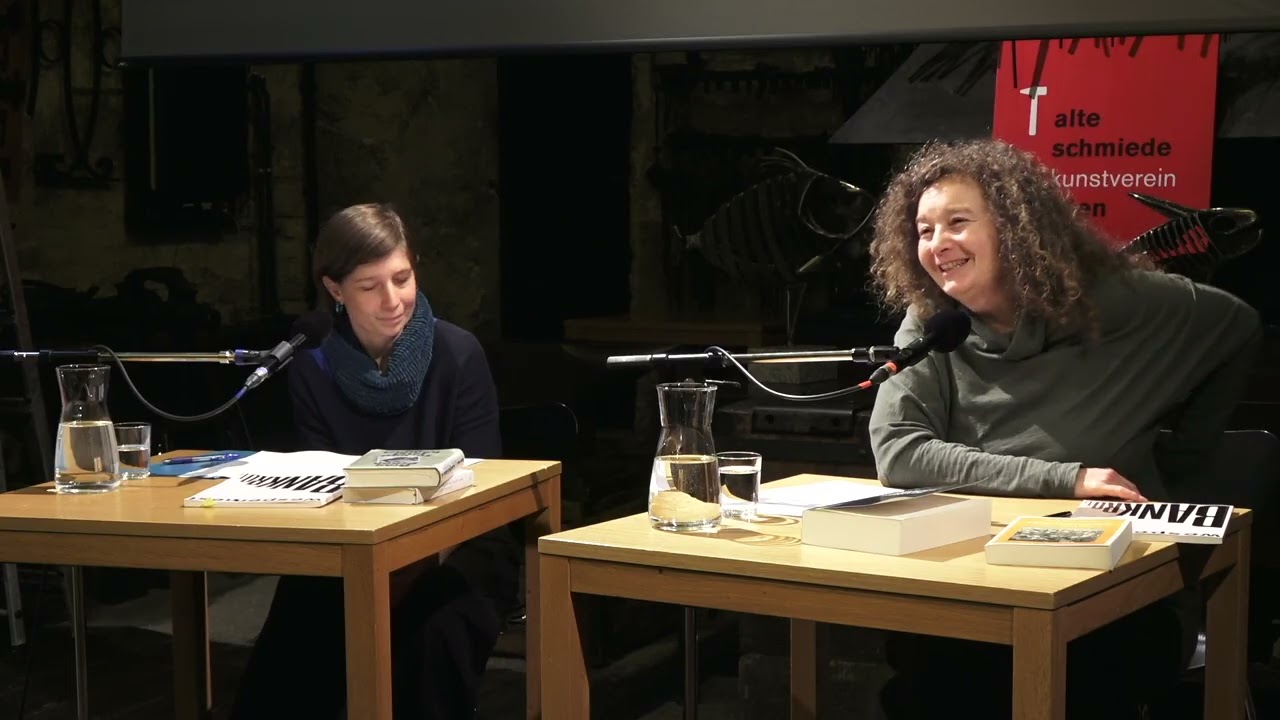
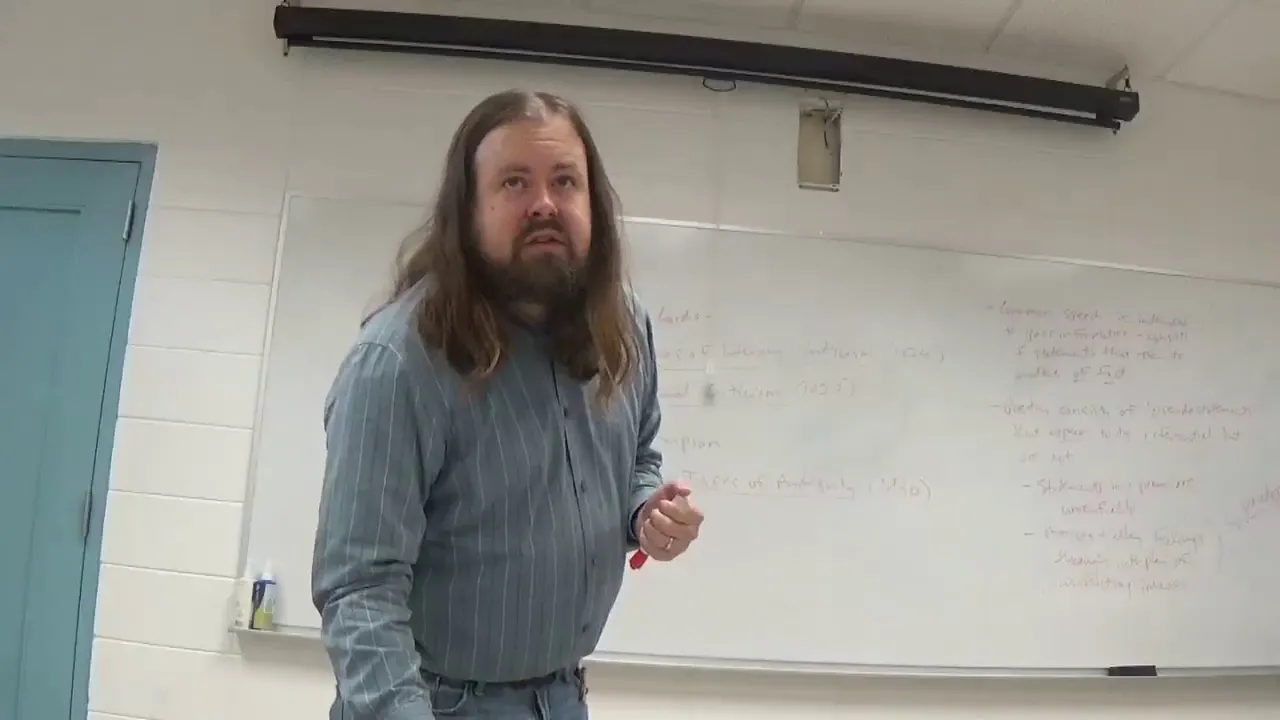
money and humanities I'm really excited about you know the work that's going on outside of economics and in an interdisciplinary way so we've got four presentations and we're going to go in order that is listed in the program on page ten and so first up Williams sauce Louisiana State University and the Gonzaga Institute is stained with prosperity rhetorical studies and MMT so good afternoon and thank you to Professor Forrester for moderating this panel thank you also to the organizers for making this conference happen to the Benziger Institute for sustainable prosperity for sponsoring this panel into Luisa Max and Scott look at that that's actually how it's arranged for their fellowship as we move forward to develop and deepen the connection between mmt and the humanities this is a very special event and I'm honored to have the opportunity to be here and share my ideas with you all so as noted in the program I'm a professor of rhetorical studies in the Department of Communication at Louisiana State University this means that I make my living down in Baton Rouge primarily by thinking writing and teaching about public arguments how they are instructed how they circulate across different contexts and how they shape popular attitudes I do so under the aegis of LSU's College of Humanities and Social Sciences in my published academic work I examine the ways that US presidents have leveraged the tremendous rhetorical resources of the executive branch in order to influence how citizens understand what is politically possible in this country in my current book length project I'm analyzing Barack Obama's efforts throughout his presidency to define the parameters of the United States fiscal situation now you might imagine that I found the work of several people at this conference and in this room right now very helpful in developing project and so I'm very grateful and if I can return that favorite in some small way in the book I'd be very pleased so this panel provides us with a unique opportunity to explore the numerous points of overlap and affiliation between modern monetary theory or modern money theory and Humanities to that end I can use my time to talk about how mmm tea has already made me a better scholar of rhetoric as well as what I think rhetorical studies has to offer mmm tea so as I'm sure is the case for several others here today I first encountered mmm tea by way of David grievers debt the first 5000 years a book that had been recommended to me by a friend and comrade during the time of Occupy Wall Street while I was riveted by that book sprawling and counterintuitive historical claims I was totally dissatisfied with what I took to be greater sparked to casual dismissal of chart ilysm at the end of chapter 3 so if you're not familiar with that book Graber spends the entirety of the first two chapters basically disabusing us of the ideas that we have about money and debt from neoclassical economics and then the bulk of chapter 3 outlining chart ilysm is a maybe more useful way to think about what money is and what that is at least until the end of the chapter where he sort of shrugs his shoulder and says it's all fairy tales anyway so I was somewhat annoyed but determined to know more so I followed waivers and notes to learn more about charter lists like a Mitchell Ennis and GF Knapp and that eventually led me to the so called neo charter lists people like well the entire economics department or most of the economics department and UMKC at the time I was floored by the apocalyptic implications of what turtle is amendment mmt had to say about money that money wasn't a thing or commodity at all but instead a vital apparatus of governance and a representation of a relationship of indebtedness or an IOU what's more mmm T's insistence that a sovereign government does not need to generate revenue in order to pay for anything but may at any time choose to channel at sovereign fiscal authority to provide for the full employment of all of the nation's resources resonated strongly with my political leanings in a way that David book did not so as I got further into the MMT literature I thought if money is an IOU and an IOU is a promise and it promises a rhetorical form and rhetorical scholars study rhetorical forms and surely someone in my field is already onto this stuff but a review of the rhetoric literature turned up nearly nothing in fact the more I learned about mmm tea the clearer it became to me that rhetorical scholars had Unruh flexibly imported all of the blind spots of Orthodox money theory and the big picture this means that pretty much no one discusses or analyzes the role of money in economic discourse in my field as a result we get some otherwise very sharp analyses of economic policy debates that uncritically accept and thereby reinforce faulty neoclassical assumptions about federal deficits national debt and Taxation and when rhetorical scholars do talk about money they tend to figure it in Hobart moss in terms as an apolitical quantitative instrument that is interesting or noteworthy only insofar as it interferes with or otherwise diminishes the possibility of meaningful communication if only we could somehow isolate or banish money and its corrupting influence from the public sphere some of this latter literature either advocates for or directly implies then we'd be able to talk and argue more rationally more purely to paraphrase sociologist Jeffery Ingham who noticed a similar trend in his field and the mistaken belief that is essentially an economic phenomenon rhetorical scholars appeared to have ad negated all responsibility for the study of money as such by either simply ignoring it or uncritically accepting Orthodox economic analysis so if nothing else then mmt has made me a better critic of rhetoric and political economy by furnishing me with the means to see what my colleagues have so far failed to notice that's an exhilarating position to be in and as my friend and trusty interlocutor Scott can attest I've been doing everything I can to address the money shaped blind spot in my field alongside my work on the rhetorical presidency I've also been developing an essay that attempts to leverage the work of mmt to argue that money is itself a rhetorical object and one that plays an indispensable role in delimiting the horizons of and economic possibility in the modern world my efforts have so far met with mixed results to summarize briefly I'll say that I found mmtb mmt to be a crowd favorite at my disciplines conferences while reviewers in my fields premier journals have proven to be a much harsher audience in the context of blind peer review nothing is quite so horrifying as having a Paul Krugman editorial used against you in a formal rejection letter frustrations of the heterodox indeed I'm sure that no one in this audience can relate so much like mmt I'm having my own troublesome encounters with the Orthodox frame in rhetorical studies but given the great and inspiring recent successes of some of my friends in the humanities as well as the amazing opportunities for collaborative research that have emerged in some of the five private Facebook groups like critique after MMT and law money and Finance I'm more than confident that mmt will break into the writer at journals soon I can also proudly report that I've invited esteemed professor and friend of mmt John T Harvey to deliver a keynote address to an audience of communication scholars at this year's meeting of my national professional association here's a shameless plug if you're in the Dallas area of November 15th you should come listen to professor Harvey talked about canes and communication at the economics communication and Society of pre-conference plug over in the meantime if we understand the enterprise of rhetorical criticism to be the study of how we use language to define political reality then it is also the case that many mm tears are already quite good at doing rhetorical criticism even if they don't call it that drawing primarily from the work of Lake often Johnson on metaphors and frames people like Louisa Connors bill Mitchell Randall ray stephanie kelton and several others have made plain just how foundational the faulty metaphors of neoclassical economics are to contemporary political life they've also used Lagos and Johnson to articulate useful new ways to speak and peek think econ and an mmt friendly frame we've got some new means to work with but I think that in order for emptied a more fully account for and overturned the bad assumptions and shady rhetorical strategies that horizon undergird mainstream economic discourse people need to go further than lake often johnson alone are able to take us and here's where I think that rhetorical studies can be of service to mmt but simply we have about 2000 years worth of rhetorical theory and method from Aristotle to the fella trysts to Kenneth Burke that can be mobilized to help mmt to advance its rhetorical project to develop new memes and perhaps is importantly we've got a bunch of very smart people in my field who'll be able to lend a hand once we get past the whole not talking about money thing so I'll close with the brief demonstration of how I think rhetorical studies can be of use to mmm tea now I'd wager that all of us in this room and probably most watching at home understand that the phrase taxpayer money has no place in federal public policy debates absolutely no insight into the operational realities of the US fiscal situation can be gleaned from the phrase only confusion and misguided policy outcomes and this is true no matter how we feel about Steve Newton's plans to charter a government plane in order that he might more luxuriously consummate his recent marriage or how much we may feel that a given foreign intervention is the wrong application of American military force as we know federal taxes serve three functions they drive money they prevent excess demand and the influence choice they resolutely do not pay for anything from the perspective of metaphoric analysis we can clearly see again as many mm tears have that the taxpayer money trope functions in federal public policy discourse to frame the federal government as a revenue as revenue constrained perhaps like a private household or a firm and so dependent on the revenue generated from tax collection to pay for stuff this is certainly what politicians tend to be up to when they evoke the phrase they'd rather enjoy speaking on behalf of the embattled taxpayer and her money especially when these efforts results in policies that disproportionately benefit some of their favorite constituents from this observation we might further conclude that we should abandon use of the phrase ourselves and to oppose its usage wherever we might find it the taxpayer is not an unduly oppressed figure we might insist and their money is not taste eres private resource people pay taxes for a number of reasons but in no sense to those taxes pay for anything but I think we're only seeing part of the story here if we look at the phrase from another angle from the bottom up say in a town hall meeting dust-up rather than from the top down and congressional budget debates we can see that there's something about the phrase that makes it worth perhaps holding on to and recuperating for MMT in fact what I Zara talk with critic find most compelling about the trope is the way that it calls an audience of taxpayers as opposed to people citizens or humans into being as it does so the phrase reifies the vital political fantasy of republican representation with taxpayers figured as those who are entitled to responsible responsive and responsible stewardship of federal fiscal authority by their elected representatives in washington and it does so in a truly capacious way insofar as many of those who qualify as taxpayers would not otherwise qualify as citizens that is the figure of the taxpayer functions in part to distribute a broader sense of democratic enfranchisement among the people and this seems to me to be the most decisive function of the phrase and contemporary political discourse when people object to minuchin x' government funded romantic getaway or the expenditure of trillions of dollars to finance our military adventures in the middle east or even government funding social welfare programs they are probably objecting first to the perceived bad behavior of their representatives and other officials in Washington rather than to the violation of some sacrosanct principle of home economics we're staking a claim about the nature of modern money they may get there but I don't think the concern for balancing the budget is the first or most grievous objection the average person has to perceived abuses of the power of the public purse rather I think they understand it as an abrogation of their rightful claims a responsible accountable may be transparent political representation and Lord knows that we are today rather short on reliable means to demand accountability from our political representatives rhetorical studies offers us a handy theoretical vantage from which we can critically account for the capacity of the taxpayer money trove to call a particular audience in to be indeed as a rhetorical scholar working from the perspective of mmt I think it is clear that the phrase counts as anything as an example of constitutive rhetoric insofar as it interpolates or calls into being a subject position that would not otherwise exist and simultaneously provides those subjects with the symbolic means by which they may find common cause with others as good Charter lists we also know that money is not much more than a claim on something so we might then observe that the phrase does two things for the average user of it it invites them to identify and find common cause with other taxpayers and it insists that they have a right to make claims and demands and their political representatives so what then is to be done with the taxpayer money trope I don't have a killer alternative phrase to offer you today but what I will say is that I think it's important as we move forward with developing a new economic grammar with mmt inside we need to do so in a way that is careful not to diminish or alienate people's claims to responsible representative governance and whether for good or ill I think it is clear that today the taxpayer and her money enjoy a more robust and inclusive claim on representative government than the diminished and fundamentally exclusive category of citizenship insofar the taxpayer money trope provides citizens with a reliable symbolic resource by which they may call into question the ways that their representatives engage with and exercise what mmt reveals to be the nearly boundless power of the public purse then perhaps the tax is not to dispose of the taxpayer but to further empower her thank you [Applause] thank you very much and the next paper is by Scott Ferguson who is from University of South Florida and Gonzaga Institute for sustainable prosperity and Scott today is speaking on maintenance part modern money in the future of the aesthetic I am although I have taken the the first part of the title away because I decided to focus on another part of the talk so now it's just called modern money in the future of the aesthetic and I'll say that this is is a theoretical talk of theoretical historical talk we were in an earlier panel and there's great desire for the for the bumper sticker and I'm all for the bumper sticker but we in the humanities we like to complicate things too so we have bumper stickers and then we have longer complicated engagements and so that's what I'm bringing to you today okay so in my forthcoming book declarations of dependence money aesthetics and the politics of care I inaugurate what I hope to be a long and fruitful dialogue between modern monetary theory and the humanities here I gesture to some of the results of that work focusing on what I think mmt brings to the humanistic study of aesthetics in particular aesthetics is an expansive and foundational category in the humanities organizing institutions and disciplines research and pedagogy typically I engage aesthetics through the lens of film and Media Studies in my book however I questioned the political and historical construction of the aesthetic more broadly I contend that the social and historical forms that organize modern aesthetic thought in practice are themselves thoroughly shaped by an impoverished liberal conception of money albeit in variegated ways liberal political economy imagines money is a private finite and decentralized exchange relation well socially constructed and utterly abstract liberal money is characterized by its seeming phenomenological immediacy or business and is thought to be alienable like a finite substance by contrast I claim that humanists need to rethink the history of aesthetics as one that is deeply contingent upon the boundless public money instrument that mmt makes visible from mm T's neo Charla's perspective money is a limitless and inalienable public utility which not only joins laborers at a distance but can always be made to serve social and ecological needs I argue not simply that governments can afford to create a world in which aesthetic practices thrive nor only that public spending ought to be used to promote - excuse me to promote the arts rather I insist that the story of modern aesthetics is conditioned as much by liberal ignorant negligence and violence as it is by sovereign monies funding and cultivation of aesthetic practices with this I we conceived the modern aesthetic project as a whole or at least I'm trying to a brief note on terminology by the aesthetic or the modern aesthetic project I referred not to the arts in particular arguably every human society practices art and integrate such forms into common life the modern aesthetic project however denotes a historically specific and originally Western philosophical and cultural category this category carved out sensuous experience as a relatively autonomous domain which was separate from everyday Commerce and promised to expand human experience it is this historical category that came to shape and give meaning to our modern sense of the arts and it is crucial to understand that the modern aesthetic project is irreducible to the history of artistic forms alone as I see it the problem with the modern aesthetic project is that since the Enlightenment belong enlightenment the aestheticians have set the aesthetic sphere against the monetary domain in an entrenched and ill-fated dialectical conflict initially bourgeois philosophy and culture position the aesthetic field against political economy that is in opposition to the world that money primarily organizes this is because an emergent bourgeois liberalism was intensely ambivalent about the monetary sphere on one hand the world of money was seen as a great site of production cooperation and wealth on the other hand it was understood to be a highly imperfect domain marked by homogenizing calculations private competition uncertainty risk deception and both material and social privation the aesthetic meanwhile was conceived as a domain defined by sensuous abundance and diversity individual and collective freedom and communions with society in nature in other words aesthetic mediation promised everything that monetary mediation left to be desired from Adam Smith's the Theory of Moral Sentiments to Immanuel Kant's critique of judgment the aesthetic field was posited as a refuge from an antidote to all things monetary thought of Zurich both in thought and cultural practice soon radicals from Karl Marx and William Morris to Andre Berto and Walter Benjamin dialect eyes the bourgeois opposition between money and aesthetics which of course for them was the opposition between the market and aesthetics but I'm not using that that term here and they did so towards socialistic and or communistic ends aiming to transcend or the fancy terms ablate the opposition between political economy and aesthetics such radicalism sought to move beyond money's apparent it inherent alien nations and replaced the monetary form with free associations Malo after the sensuous diversity known to the aesthetic sphere according to the conventional story we tell about modern aesthetics this radical gambit largely fell into ruin with the neoliberal or so-called postmodern term during the neoliberal era capitalist spectacle and simulacra increasingly subsumed aesthetic thoughts and production realizing radicalism 's longshots ablation of money and aesthetics on capitals terms today as the tissues readily acknowledged the aesthetic was always something of a myth and for better for worse most contemporary humanists concede that the modern aesthetic project has lost its totalizing utopian promise for this reason we tend to adopt a more modest set of critical hopes and goals still the dialectic between money and aesthetics lives on in humanities scholarship and certain critical bastions of aesthetic culture like some undead monster we estheticians know that the money aesthetics opposition provides less and less critical purchase on contemporary art and culture yeah when it comes to political the political economy of aesthetic production we seem unable to formulate problems and arguments in any other way this dolt dialectic must finally be laid to rest not merely because it's historically exhausted but more importantly I suggest because it naturalizes liberal political economy and constrains money and aesthetics alike indeed far from an antidote to or revolutionary overcoming of economic alienation the aesthetic as an inverted image of the liberal money forms own fetishized immediacy and ephemerality the aesthetic project mirrors liberal money's decentralized finite encounters only in a redeemed and apparently salutary form yet through this mirroring the aesthetic reifies liberal money's metaphysical commitment to finite and proximal relations and renders sovereign monies macro level structures and possibilities largely imperceptible what is more I argue the modern aesthetic projects very desire for a rich sensuous propinquity arose is a symptom of liberal money liberal political economies contradictions and failures a symptom Sigmund Freud tells us is a distorted compulsion to repeat a prior conflict or trauma paradoxically the symptom expresses a wish to overcome discord and suffering but it's incessant and disfigured search for pleasure in the very same pain forecloses any chance of genuine resolution or enjoyment such as the symptomatic character of the aesthetic playing the role of liberal money's utopian doppelganger the aesthetic unendingly repeats and reifies liberal political economies narrowness and austerity unfortunately however no matter how seemingly emancipated variegated or lush any political economy founded on modern liberalism's contracted ontology is bound to fail a large-scale community in this way the aesthetic project expresses at once the tragedy of liberal privation liberal modernity is desire for something better and a collective incapacity to imagine otherwise with this in mind then my message to contemporary humanists does this let us finally let go of the tie money aesthetics dialectic by embracing money as a boundless public utility let us also unapologetically affirm the fact that money is the primary medium upon which aesthetic thought and practice depend going further we might additionally learn to appreciate that money itself is a kind of aesthetic medium not a plastic art on the model of painting or sculpture but instead what I call a proto aesthetic instrument which plays an essential role in both cultivating and often alienating the shared sensuous life in which specific aesthetic forms takes shape humanities scholars ought to pay keen attention to money's proto aesthetic field and refuse the impulse to historicize aesthetic solely against the backdrop of private exploitation and alleged market crises to be sure aesthetic thought and practice ought to remain aside of critique and resistance exposing unjust systems that privilege capitalists over social and ecological well-being and forth however humanism us avoid conflating sovereign money and private exploitation while radically rethinking the bankrupt historical categories through which we approach the aesthetics problems and potentials humanistic inquiry needs mmt the future of the aesthetic depends on it thank you thank you very much and next we have maximilian saeho also from University of South Florida and his presentation today from freighter to Hitler tribalism and by Maher film and aesthetics hello everyone we are here at this inaugural conference on MMT because we recognize that mmt allows us to reorient public life in ways that reveal the potential for government expenditure to support and provide for us all yet this realization also gives us a methodological tool that that can be used to recontextualize and rethink our shared history mmm t is not just pivotal to understanding political economy and policy it is crucial to understanding a wide range of academic disciplines for example my research on vimar film and culture reorients the ways in which political and economic circumstances interact with the aesthetic of cinema the history of film is a story of mass media culture that was developed within the context of an orthodox understanding of money and economics film history takes for granted orthodox explanations for unemployment hyperinflation and the apparent scarcity of public funds and this distorts aesthetic interpretation it is a field ripe for a redefinition and as chart ilysm is applied to the events of film history previously uninterpreted into insights begin to reveal themselves to understand the aesthetic of cinema we must first understand its historical political and economic context it begins with the Treaty at Versailles the effects of this treaty are best described by our friend John Maynard Keynes in his 1919 book the economic consequences of the peace he writes it was a policy of France to set the clock back and to undo what since 1870 the progress of Germany had accomplished by loss of territory and other measures her population was to be curtailed but chiefly the economic system upon which she depended for her new strength the vast fabric built upon iron coal and transport must be destroyed the result of the destruction of both German productive capacity and German political sovereignty was the infamous vimar hyperinflation negative effects of the relation area period persisted until the adoption of the Dawes plan in 1924 which returned a modicum of economic sovereignty back to the German state austerity followed and the deflationary stabilization of the German centre party led directly to the rise of Hitler and the end of the vemma Republic meanwhile the history of film in the vimar period is a history that is most notably been interpreted and formulated by the German intellectual and Marxist Siegfried Kracauer his book from Calgary to Hitler is one of the foundational works of film criticism and is concerned with in his own words the psychological pattern of a people at a particular time he uses the book to establish a psychological history as a particular type of history it is meant to be an additional history that is not removed from an economic or political history and despite Cracow as unawareness of the Chartists intellectual framework from Calgary to Hitler is a canonical work that persuasively maps German psychology through the film aesthetic from the chaotic inflationary period into the period of stabilization during the inflationary period he sees Germany's collective psychological retreat into a shell and argues that this retreat serves as a precursor to the evolution of German psychology into a more politically polarized retrenchment after stabilization he demonstrates this retreat with an analysis of the interplay between the mass medium of film and German collective psychology I intend to introduce chart ilysm into his analytical structure and to implicate the von Maur political economy as the center upon which Krakauer psychological history sits this adjustment in scope illuminates a critical point Krakow misses where Germany teetered Germany teetered on the brink of a better path with the help of an understanding of the unshackling power of tribalism we can see where he did not the cabinet of dr. Caligari directed by Robert Vienna in 1920 and least in the midst of the chaotic post-war era is one of the foundational films of the horror genre Siegfried Kracauer describes the film's central exposition as a wandering soul that is well suited for its historical context he writes Caligari exposes the soul wavering between tyranny and chaos and facing a desperate situation any escape from tyranny seems to throw it into a state of utter confusion the confusion that Krakauer describes is evident in the meson sin of the film you can see how the irrationality and randomness of the set design reinforces the chaotic and confusing nature of the narrative this confusion for which cracka our place is quite a bit of his analytical wait upon should be viewed within the historical context of 1920 Germany in this context it is an apt description of both German internal psychology and the state of I'm Armani the cabinet of dr. Caligari a villainous tyrannical entity that seeds confusion doubt and death upon its citizenry portrays a villainous - radical entity and when this description of the film is reapplied to the historical economic context we can see a relatively Charla's understanding of the period the Treaty of Versailles tyranny significantly diminished German economic sovereignty and created a deadly state of confusion that permanent permeated into nearly every institution of the Republic most notoriously the money next came monetary stabilization and Krakauer describes the concurrent aesthetic shifts of this period just as astutely as he did the inflationary context he writes with the commencement of the Dawes plan period the character of German film changed markedly now that life had resumed resumes normal aspects and social revolution was no longer impending the fantastic figures in unreal settings of the post-war screen dissolved into thin air like the vampire Nosferatu to be sure studio minded products persisted long after 1924 but on the whole films of a stabilized period turned towards the outer world shifting the emphasis from apparitions to actual appearances from imaginary landscapes to natural surroundings they were essentially realistic as the Dawes plan hard and currency and returned a modicum of economic sovereignty back to Germany German art and consciousness turns its eyes away from erratic villainy of abstraction to annoy otaku kite or new realism as gravity pulled money back within its means the aesthetic became overwhelmingly overwhelmingly concerned with reality this late 20s auto greevil work is an example of annoyed soxhlet kites obsession with reality given crack ours astute criticism of the cabinet of dr. Caligari as well as his description of the initial effects of the monetary stabilization it is notable that as he moves towards analyzing some particularly unique films in this period his insights enter a more uncertain or meandering mode particularly when he approaches Fritz Lang's Metropolis in his analysis of metropolis Krakauer misses a key moment where the political future of Germany could have taken a different or and more optimistic path similarly to the way in which the German Left held itself back in the lead-up to Nazism Krakauer lets his Marxism and its liberal assumption about money and capitalism distort his view of metropolis and it's foreshadowing of social potential metropolis directed by Fritz Lang in 1927 a full three years after the Dawes plan is an/fo super spectacle centered around class structure and the inherent alienation of capitalism here are a few examples of the aesthetic of the film the plot of the film which is often maligned for its seeming incoherence places Freder the son of a wealthy factory owner as a sympathetic third-party that can bridge the differences between labour and capital Siegfried Kracauer and other notable film theorists don't so don't show much affection for this film their concluding interpretation of metropolis is that it is a sort of a tech demo that makes some calls to Marxist ideals but that doesn't really cohere into a compelling story or concluding message Krakauer writes in Metropolis the decorative not only appears to be an end in itself but even belies certain points made through the plot similarly noted film theorist Tom gunning echoes this sentiment when writing in his book the films of Fritz Lang about a conversation he had with Berkeley film theorist Anton case Anton kaise has also proposed to me another approach that metropolis has conceived basically as a series of sensations a film of disparate attractions rather than narrative integration and that Lang simply didn't care that much about pulling it all together into a final satisfying coherence the final tableau would be a cinematic equivalent of the Looney tune proc plucks proximation of the closure that's all folks I find that this view misses important elements of the way the narrative and aesthetic of the film interacts with the historic context of vimar circa nineteen twenty seven the polarised stagnancy of politics and the newfound stabilization of the economy coincides quite clearly with the rational and stabilized aesthetic of the film as well as the film's blatant narrative takeaway to focus on the aesthetic for a moment you'll notice that is there's a rational physicality to the set design from the from the boundary of the iron ball on the iron bars to the right angled edges of the buildings to the hyper focused attention on physical contact the film has an intense focus on aesthetic rationality and realistic physicality on the Left you'll find building as depicted in the cabinet of dr. Caligari where the image on the right is from metropolis notice just how realistic the building for metropolis is it looks like a modern skyscraper when compared to the building on the left from Caligari it is rational the rationality is a perfect representation of Germany's cultural shift away from more expressive style like in Caligari to a new realism that can be directly tied to the economic policy set forth in the Dawes plan of 1924 this leads me to the film's narrative conclusion the overarching moral of the plot centers around the idea of mediation when two zero-sum interests are at war with each other for power the only way to limit universal destruction is through a mediating force that can reconcile the discrepancy in interests between the groups this moral is so didactically represented in metropolis that Lang goes as far as to literally say the mediator between the head capital and the hand labor must be the heart the essence of what Lange is critiquing in Metropolis is a zero-sum conception of society the idea that we must either rid ourselves completely of a market economy or be or be completely oppressed by the surplus value draining force of capitalism the thing that makes Lange's critique especially interesting the things that are is is both at its narrative force contradicts its aesthetically hardened made up knees on sin and that he was also right to say that mediation could break through polarization Hitler famously appealed to both German business interests and the impoverished German worker he was the ultimate if devastating mediator to completely understand why these three esteemed film theorists theorists missed the seemingly obvious analysis of metropolis narrative we need to look toward the economic context of Hitler's rise to power in his paper entitled German socialism and the crisis of 1929 to 33 historian Robert Gates lays out two different antique depression strategies among the German left in the lead up Taylor's to power the Depression hit Germany hard and Heinrich Bruning the center party Chancellor of Germany from 1930 to 1932 preferred crushing austerity to welfare assistance and as it turns out austerity only exacerbated the economic pain that Germany was going through and crippled political sport support for German centrism this resulted in an inevitable election battle between the German left the SPD and the German right the Nazis in the lead-up to this election the inter left debate regarding the SPD's anti-depression policies could be seen to formulate two dominant interest groups the free trade unionists and the marxist intellectuals there were definitely some intellectual overlap between the two but with regards to political strategy the two groups differed quite a bit in 1928 the free trade union opened their Hamburg Congress with the following proclamation in the period when capitalism was completely free no other alternative to unorganized capitalism appeared conceivable than the socialist organization of the economy as a whole for this reason it appeared hopeless and senseless to change anything having to do with the despotism of the capitalist system until the violent overthrow of the social order took place everything would have to remain as it was that was the prevailing attitude then it gradually was seeing that the structure of capitalism itself was changeable and that capitalism before it is broken can also be bent the free trade unionists were offering an alternative to the rigidity of unilateral anti-capitalist revolution ISM in favor of a market economy that can be bent into a fairer system until that system itself can be dismantled more gradually this strategic position ended up producing the WTV plan of 1931 a sharp rebuke of the deflationary policies of Bruning and as German academic Michael Liebig describes it it was a concrete program for combating the crisis within the framework of the German economy the central feature of which the employment of one mill unemployed in public works is the employment of 1 million unemployed in public works projects it was a new deal for Germany but the SPD balked at it Fritz Naftali an SPD insider and economic adviser channeled to thinking that led to the SPD's opposition to the WTV plan I don't believe that we can do very much nor anything very decisive from the point of view of economic policy to overcome the crisis until it is run its course when prosperity had developed so far so dish purporting to so disproportionately and so unchecked as it is now normally allowed under capitalist conditions and as has occurred in recent years on a world scale then it is hardly possible to stop the crisis during its actual progress for then the crisis with all its destruction of the value of capital with its changes and shifts of perching of purchasing power is a means of correction which must necessarily be accepted the position of the SPD was that the Depression was a problem of capitalism and that any attempts to solve the economic crisis would ultimately be fruitless it must run its course and we will be even better off after the fact the Marxist int of intellectuals like Naphtali won this debate and the SPD ran on a policy of banking and heavy industry nationalization the Socialists of the crisis did not heed Fritz Lang's warning they didn't seek to mediate the negative effects of capitalism through a productive approach to the crisis they instead limited their political options and saw the suffering in the German economy as structurally mandated and that a problem that could not be fixed their failure as an opposition led to extraordinary levels of death and suffering in the Nazi era they failed to prevent a wound that affects our culture to this day why did Krakauer and others miss this narrative why did he not see metropolis as an important yet unheeded warning in his introduction of his canonical work on bime our cinema he writes this book is not concerned with establishing some national character pattern allegedly of elevated above history but it is concerned with the psychological pattern of a people at a particular time as he says himself he was not interested in the establishment of a national character pattern a guiding principle that can reorient the way in which we see historical aesthetic events from both above and within their contexts I am interested in doing just that I see chart ilysm and the codification of money as the centralizing as the central socializing tool as a method from which new historical and aesthetic insights can be revealed our new leftism needs cultural Canon a guiding aesthetic understanding let's focus this Canon around a new theoretical understanding of society modern monetary theory [Music] [Applause] okay and our fourth presentation from Louisa Connors co-authored with Bill Mitchell both of University of Newcastle and center of full employment and equity macroeconomics and popular corner the mandibles discover mm tea so thanks very much for having me on the MMT panel and the humanities on that and to my co-panelists my co-author Bill Mitchell and I are wanting to talk about this is me how to build capacity when it comes to mm tea affecting change and how books and culture in general should be excuse me it's been a bad flu season sorry and how books in culture should in general be part of this this relates loosely to our work in framing but also to some pretty radical transformations that we're seeing on our doorstep and the debates they're accompanying these changes so we're talking about this with reference to Lionel Shrivers the mandibles which was published last year to some acclaim Shriver is the author of some quite challenging novels probably most famously we need to talk about kevin and i have to say i had quite high expectations of the novel and was pretty disappointed so this is roughly the outline of the talk why we want to argue that these that cultural production matters some critical frameworks a bit of a summary of the novel what it gets wrong how we might fix it and what the implications of this would be so we're all too familiar with the misinformation that dominates public discourse about macroeconomics and public policy and the effects of this misinformation are not trivial it's not our intention to be flippant in talking about mmt and popular culture or cultural production we see it was absolutely critical and while there's some who argue that culture and fiction shouldn't be politicized we see the need for better economic literacy as is so important and that cultural production is contributing to the paradigm shift that needs to happen to achieve these improvements we also see cultural production as being a kind of litmus test as a good indicator of knowing when the word is finally getting out there that people are sort of understanding mmt and what it entails so I'll talk about the Australian context because that's where we're from on the understanding that's relatable we see the impact of economic illiteracy wherever we care to look and at all levels of government local state and national and it is very real consequences for our lives in terms of critical things like housing affordability health care education environmental sustainability accessibility and infrastructure the difficulty lies in getting people to join the dots and books like this one absolutely don't help so to provide some local context in Newcastle where we live the local government is extremely proud of the fact that the value of approved development has climbed from 462 million in 2013 to a billion dollars in 2017 but in our town around 30% of all households are in the lowest income quartile and in spite of the boom there is less and less affordable housing and homelessness is an increasing problem the city cities median house price is an hour now around $700,000 and where we come from that's quite expensive I'm not sure about else where were you and at the same time that there's been this housing boom we've seen crime increase so quarterly crime figures released by the state governments Bureau of crime statistics and research they've revealed significant increases in non domestic assaults shoplifting stealing and malicious damage specifically in the Newcastle area there mystifies the trend else we're in the state critical infrastructure like railways is being ripped out to make way for private land development and in a couple of months time a community including residents will be blocked from an entire suburb and local beaches so that a private company can host a car race it's being sold as an opportunity for jobs and growth so development housing and crime are all local and state government issues in Australia anyway and this is clearly not the usual domain of conversations about mmt but in the absence of any overarching macro framework we are sitting at seeing our cities transformed in radical ways that entrench inequality in large part because the national government has stepped away from any direct engagement in the issues that significantly impact on voters lives in Australia a local academic has called this the game of mates because of the extent to which it rewards a fairly closed circle of players people aren't happy about it but they don't have the information they need to join the dots without understanding the fundamentals people don't realize what is possible that by not demanding more of their federal government the currency issuer they are allowing profit not the public good to determine to determine almost everything that matters to our lived experience except in the case of Australia the federal government is intervening in who you can marry they are keen to to participate in so we were interested in thinking about the role fictional cultural production might play in developing economic literacy literary studies like economics is a contested territory lots of overlapping theories and influences but in general literary studies has shifted away from formalist approaches with a very narrow focus on texts towards an understanding of how relationships of power and control influence the way meaning is generated disseminated and challenged these approaches are significantly informed by the work of Marx and the analysis of the so and material conditions of cultural production and they promote the idea that in talking about books and culture we're talking about a kind of cultural poetics encourages to think about the economic and social realities that texts reveal so what we're talking about here and what Shrivers also talking about is the idea of the author is a kind of reformer this isn't new Dickens who was the most popular author of his time and allegedly Marx was also a fan wrote passionate social and political critiques he succeeded in making the public in Victorian England much more aware of the unjust social and economic conditions that workers faced his novels contributed to debates about burning issues at the time industrial conditions and safety pollution education urban planning and poverty Martha Nussbaum the other character who's represented on the slide has written extensively on Dickens and on the role of literature but in quite a different way to say the cultural materialists or new historicists Nussbaum argues that reading can be seen as a kind of exercise in developing empathy but it does bring about change but in a sort of different way Nussbaum suggests that reading books gives readers the opportunity to creatively inhabit the imagination of another individual real or imagined she suggests that reading a book like hard times which is ostensibly an attack on utilitarianism and the Manchester school of economics leads readers to understand that economic science should seek a more complicated and philosophically adequate set of foundations unfortunately Shrivers novel just pretty much the opposite it leads us towards a more vacuous set of economic understandings so more on that later I'll just run you through the book quickly so this is the family tree it traces the story the novel traces the store of a family through eighteen years of economic chaos after the US government is forced to default on its national debt because it's run out of money and the US dollar has been rendered worthless in international currency markets the patriarch Douglas mandible inherited huge wealth from his father who was an early industrialist Douglas and his wife had two children before Douglas left to marry the much younger Louella who has early onset dementia Douglas is children our Enola and author who has lived in France must have much of her adult life she's independent and eccentric travels the world with boxes of her novels and the draft material Douglas is son Carter is a not particularly successful print journalist who's sick of waiting for his inheritance he's married to Jane who has run various failed boutique businesses there's all types of judgment underpinning all these characters so they have three children a daughter Florence who's a humanities graduate with an unsatisfactory job in a homeless shelter she lives with Esteban who her sister describes as an undereducated Mexican tour guide they have a son Jared who's a bit of a drifter who buys a farm and then takes a survivalist turn and disappears to the free state of Nevada to escape the reach of government and another daughter Avery who has a fringy type therapeutic practice and is married to Lowell a left-wing professor of economics who the novel presents us struggling with his own irrelevance they have three children Guk who becomes a really irritating bureaucrat Savannah who becomes a prostitute and being who's a nerd florence has a son willing who's a precocious teen and is basically Shrivers economic mouthpiece the two heroes are the shady-looking French Resistance type characters on the Left willing and Enola they saved the family well the family members worth saving so that's the ones who aren't old or sick by escaping across the border to live with in the free state of Nevada which is the kind of anti paradise with a flat tax of 10% no welfare net and a currency that is backed by gold so Shriver has made it pretty clear in many interviews that the motivation for the book was to present a kind of parable a cautionary tale about today she spoke at a number of times about the crisis of 2008 and how it brought about a kind of urgency in which she decided to need to know more about economics which had previously considered boring but has since in her view become an apocalyptic science if you dig a little there response to the book is varied but in the mainstream press the reviews praised Shriver for her scholarship and insight The Guardian describes the book as chillingly plausible Australia's s MH saw Shriver is well informed about the eloquence of risk and image what that means and the New York Times describes her as the cassandra of American letters Shriver locates her work in the realm of the possible or even the inevitable but the narrative depends on a number of common macroeconomic myths mostly about how terrible debt is so the government will run out of money government deficits will leave a burden for children and grandchildren the nation will go broke the profligate state turns on its people and becomes oppressive and you'll never be free and health care and pensions are unaffordable however the economic assumptions that underpin the novel are as my co-author notes a potpourri of fiscal scare mongering drawn from disparate economic camps and then presented as if they belong to a unified and accepted body of theory and practice the signs of financial doom appear at the outset of the novel so there are water shortages which lead people to do runs on supermarkets and employments hi because robots have taken on so much work Barclays goes bust and Ed Balls government can't bail it out can't roll over a tranche of maturing debt the u.s. bond markets start behaving strangely the bitter ratio be to cover ratio is described as weirdly poor and the yield on a 10-year note goes 28.2% smart characters move their money out of move their money and their investments out of the country they transfer cash into a foreign garrote currency as the government implements an asset freeze and all gold must be forfeited hedge funds in zurich and brussels Redoute reduce their dollar positions to zero and move into gold and Putin introduces a new reserve currency the bank and foreigners starts selling off the US dollar so where to start some of the basic misc on misconceptions that Shriver has Drive the NOI narrative just listed there the consequences for the mandibles are serious they lose absolutely everything they become destitute and the entire extended family joins thousands of other displaced residents sleeping in a shantytown in the local park after being evicted from their home the family patriarch shoots himself and his wife so that the younger generations of mandibles are unencumbered the surviving family members eke out an existence until we flash-forward nine years to 20 47 by this time willing has made it back to the family home he has an unsatisfying job and a chip in the back of his head that the government uses to tax residents all newborns get one of these within an hour of their breath life is so unbearable that willing and nolle hatch a plan to follow Jared and escape to the free state of Nevada even though defection is the only crime that remains a capital offense to cut a very long story short they succeed nollie hauls her box of writing materials with her and revealed that underneath the layers of paper the box is filled with gold bars which Shriver tells us nollie earned the hard way in contrast in contrast to the welfare lazy welfare cheats so in one sense it all ends well but it's actually a pile of neoliberal propaganda so we wondered about how you might go around about fixing it the trouble is the idea of an unlimited public purse doesn't produce a lot of dramatic tension so we imagine Jereme Sanders elect is elected to government and implement sweeping economic and political changes willing finishes high school goes on to university takes advantage of new and well remunerated career opportunities in laboratory research Florence willings mother doesn't die when she scratches herself on a barbed wire fence because a well-funded public research and education sector has developed effective way to deal with antibiotic resistant bacteria and the USA has introduced universal health care Louella is cared for until her death by well-trained and compassionate staff Douglas dies peacefully in a library surrounded by books and Florence gets to use her liberal arts degree her student debt is waived and she finds satisfying work in a research center estaban does much the same Lowell the economist becomes a celebrity talk-show host that's what he's always secretly wanted and savanah becomes a congresswoman her colorful past is known about but this doesn't hinder her career progression being is still being so we just left him in charge of taxation so this book could and should have been different and it's reception ideally should have been more critical Shriver like many people is hostage to a set of moral assumptions about debt and mythical assumptions about economics she takes all of these things to their illogical conclusion and the novel becomes another voice in a misleading chorus in doing so she adds to the rhetoric of fear and furthers a paradigm that we know to be false and it's powerful fuel because it amplifies basic fears and prejudices the harms that arise from these sort of this sort of misinformation are real even though they're but even though they're he's very concrete outcomes like the ones I mentioned earlier in my for the most part we think in very disconnected and abstract ways about government the economy policy particularly if you're not economists our key point is that we need to be hearing macroeconomic truths from a range of channels literature and cultural production more generally should absolutely be part of the MMT plan writers and artists should be allies in the MMT project cultural workers are after all the group that stand to benefit significantly from the potential policy frameworks that would flow most logically from a full understanding of the macro economy and how it functions and as Nussbaum says culture works in subtle ways which is why the errors that are bound in this particular text is so potentially harmful but subtlety can also be a strength working at a level that politics and its with its many conflicts in the same way that academic arguments are also conflictual cannot [Applause] and I'm going to call myself first some questions the comments for everyone but um I'd like to start with rhetoric so my I was wondering if they're familiar with McCluskey's rhetoric of economics and the kind of cottage industry you know following and critiquing you know rhetoric of economics of so just wonder what you thought of that and then there's also a was a tradition but there's a in metal ISM of viewing money as a language Steve Horowitz as a as a whole book where he kind of does that he's a sort of hermeneutics trien guy in rich Adelson also tried to do the same kinda thing but you know it's metal ISM right and then of course we've got Adam Smith besides it lectures on rhetoric we've got you know the weather truck barter and exchange is one of the innate propensity or as is more likely derived from faculties of reason and speech you know that doesn't so thank you for the question up I'll say that we have some some very smart people who've written a lot about Adam Smith's work on rhetoric specifically it's this work reviewing to McClaskey in the cottage industry of producing in that that tradition and then critiquing that that that tradition I think in a recent talk Deirdre McCloskey a book called the rhetoric of economics and a night published a book called the rhetoric of economics in 1985 and and was educated as an economist at the University of Chicago came at that book with an attitude of you know sort of like introducing rhetoric to economists and using for pointing out that economists use metaphors and kind of improving the discourse between economists but not really interested in critiquing the principles and assumptions that informed her way of viewing the economy and yeah Phil Murawski and other folks after that came with their own critiques of the neoclassical education that I think most recently she's published a series of books on bushwa values booze law virtue and in a c-span two book talk that she gave she liked toward the end she she said like giving government the power to make more money is like giving whiskey to a teenage boy that sort of for me very nicely encapsulated like offered up like a you know a nice quote for me to use this is how this person views say after that in rhetoric flowing from thoughtful McCloskey we have lots of lots of folks who have done kind of like really good metaphoric analysis of economic discourse and specifically in the context of like presidential for sports so Lyndon Johnson's war on poverty David's resti rhetoric scholar his written classic book talking about how that program was conceived and unfolded and why it succeeded for a bit and then why it maybe fail and and several others have written useful analyses of economic discourse without really thinking about money so in those books you can come in there there are moments that they say something like you know Reagan in the 1980s was able to you know do certain positive things but the economy was precarious because of high levels of deficit so I would say Marx has also been a featured in the throttle studies both from like a kind of historical materialist you know there is no outside of discourse we don't really can't really access to exercise rational judgment kind of to to more ideological videos you party at the guyline Mormon so yes McCloskey had a a foundational impact on like sort of fill menteng interest in studying economic discourse and really providing a prompt for a lot of people to get upset without she she presented it as just a better way a way for economist to talk more clearly to like amongst themselves well it's all storytelling's and it's just whoever tells the best story which may be you know yeah he unless America I mean one of the criticisms was that there was no analysis of power relations and so you know assuming that in your tradition you know rhetoric is not you know power is not absent no no yeah right right and that's where the the materialists and kirkland Marxists in my field come in shortly at you know in the conduit government class this book specifically sounds like a market can we take two or three yes right here and then back there I'm gonna ask the question we all hate but I guess have you all thought of a habit and process of building a new aesthetic how do we finance or how do we fund some of these things if anyone has thoughts on avenues like a catch-22 in response respond I'm not trying to reclaim or to claim the taxpayer identity is I'm saying that there is there's an impulse there for someone to identify themselves as a taxpayer to assume that and to sort of figure their taxpayer money as a claim on their representatives that I think is is worth being sensitive to what you're talking about is absolutely maybe not it's a provocation I would say more than something two levels they do but it's a it's a narrative it's contradictory in any result and it still removed from that conversation of all those people who are citizens insofar as broadly speaking taxation is what drives money and grounds unemployment as a problem I still think that there's something there there's a nonzero-sum way of figuring the taxpayer you know if we if we have a certain constitutive understanding all of taxation that's absolutely not neoclassical and not liberal I would say I've talked to people to sort of say what you say like your text your text money doesn't actually fund anything right you know there's a similar kind of trouble there if you bring you up if you pay your taxes in cash to the government they will count it and that's if you're talking about a rhetorical device right that captures that it's pretty good I I could address this question in the back I appreciate the question I can't I'm neither do II expert Nora John burger expert I guess I would say that this opposition is articulated a number of ways some more explicitly and strongly some less so I guess I think of Dewey as a progressive liberal so money's not going to be so much a problem it's gonna be a kind of he's gonna be ambivalent and he's gonna want to you know he doesn't my sense is you know he's not a revolutionary and yes and so there might be some rhyming between what we're doing but I think maybe the difference is I insist on going through the macro through the through text driven money and an unemployment as a relationship between a people and a government that I'm not sure that as wonderful as doing them a great resource he's approaching it in that way even if we're maybe trying to meet right and and so in a certain way I want to redeem the aesthetic project because I want lush diverse open free sensuous relationships between everyone right but I think that you have to go through the macro and a demonize money which is essentially a public obligation as the as the antithesis of what you're aiming for to say something about sort of Billie's talk in the discussion I think we can separate the idea of the tax in the impulse that is that that drives the taxpayer kind of rhetoric that we know is of course wrong but this impulse right this this will forever you know our representative government to actually express our wants and our needs instead of their corrupt or wasteful and wants our needs is something that perhaps should give us hope because you know if we can convince them of the error of their structural argument perhaps then we can convince them because they already care that we should have all the things like a job guarantee universal health care that we want to have absolutely and when we imagine collectively that it's that it is the private sector that is the cause of unemployment there's there's no one who's responsible nobody owes anybody anything so there's something about this move the ability is making about politicizing that obligation in a in an mmt macro you know power relationship but there's something to it but I agree with you that there's some danger in terms of the bumper sticker maybe we're not there at the bumper sticker sticker but at least the level of thought and and you know furthering our thought I think that there is something there so people like Ruskin and William Morris they come up in your yeah sure you're a part of it right and you know I place them in this trying to this attempt to you know radicalize the you know whatever you want to call it the bourgeois that a project where we're it's about you know reimagining political economy on the terms of the aesthetic right and so Ruskin and Emily Morris are they they give us a lot but they also tend to fetishize this like a kind of immediacy the singularity of experience in a way that I think is is limited that it doesn't actually give us a true a true to macro politics or let's say macro aesthetics sorry bill the reality is that we are taxpayers who we are dinner fo of that fact in reality but we also in a metaphorical sense you know sort of more resulting in a metaphorical sense that that's a bad once you're trying to do winning is is read reroute that thinking but the problem and what we know by in linguistics and the cognition and construe you can do but you need to associate it so you can convert a bad metaphorical conception into a good outcome by linking metaphors and linking linking a metaphor that's typically construed as bad to a causation as typically construed as good and reverse the metaphorical intent but the problem is it comes back to here so you could say you can you can do that rerouting do that really routing by the way you're trying to do it by requires asserting this taxpayer has some sort of legit legitimacy in a different way not to fund governments but to assert a right of citizenship or you know a right of authority over the state as our agent but then you encounter the problem in doing that of dislocating those who don't pay taxes who have the same right of transparency and accountability and discipline over the state as their agent that she died that's sort of where I was gonna go I think a to my interpretation of what Lauren says and what what mmt offers us in terms of taxation where we create a list we say taxation ties fines right it's it's art are you do you have an obligation and are you bound to this system to this political and economic system I understand taxation in that way in that in that large sense rather than individual stipulated taxes citizenship [Music] you've got the lump rhetoric and on the mandibles a lot of people have a sense that neoliberal instruction doesn't work but many of them then immediately gosh was I heeded the gold-bug because that's really easy it wasn't just about the garden that that was appointed Louise and I it wasn't just a golf park appeal she was appeal and she was mixing all of the sort of and he got mad red bag collection of things so you know a new keynesian DSG modeler in an academic economic department mainstream she was using their sort stupidity as well it was a really unclean critiquing a wife because she was mixing things that could because the DSG modeler is a would hide a golf bag version so just it was just a pop period of nonsense it's written a step along the way to doing that being you step along the way further listen you talk about what what is what's what might be the next you know the sort of analysis that needed to come here one of the things that I stumbled across while looking at this was the there a few sort of blog where people list books for economists so there's science fiction economists and I wonder great stupid and do economics for people who know something that kind of where they can be a number of different analyses of the way economics has talked about in popular culture you know I was reading he was Raymond Chandler maybe and it brought up Upton Sinclair's campaign and California to wipe out poverty you know during the Great Depression and I mean it was not mmt but it had the it had some resonance of you know someone trying to come up with public policy to address you know the problem basically I guess it was tax the rich to to you or it's a good thing but max I I'm not an expert on this but the rentenmark you know currency you know they sort of end the hyperinflation I mean that was based on kind of a mythological idea that the currency was backed by the land and I don't know it just seems like something about that yeah right and it starts with the French Revolution that whole land back that's right and the very interesting thing about the specific volume or kind of currency crisis situation right is that right is that there's an easy way to say right okay you know it starts with Versailles but there's also like you said mythological psychological metaphysical relations that kind of help create this situation of immense hyperinflation so you know it reminds me of kind of the you know the different types of you know the different categories of of inflation in the way that we talk about it is to homogenize it's to you know whether we're talking about you know supply side or demand side or psychological inflation all these things are different effects just different different kind of interactions so when we look historically the using mmt is just so valuable when we kind of approach the cultural reasons for these economic events
Up Next
46:05
Fallout Cast on Staying True to the Game and Hidden Easter Eggs
@RottenTomatoesTV
284.5K views•2024-04-10

12:54
Triumph of Orthodoxy Icon: Byzantine Art & History Explained
@BenCallan
2.1K views•2024-08-06

9:49
FastAPI vs Flask vs Django: Choosing the Right Python Web Framework
@TechWithTim
302.5K views•2024-05-26

1:42
Game of Thrones Opening Credits: A Cinematic Analysis
@gameofthrones
46.3M views•2011-04-18
Related Study Plans & Knowledge Roadmaps
Structured learning paths in General & Interdisciplinary Studies
general-studies
Elevator Engineering: History, Physics & Cities
01From Hoists to Safety Brakes: The Dawn of Vertical Lift
02Hydraulic vs. Traction: The Engineering Physics of Elevators
03Modern Speed, Safety, and Algorithms
+ 2 more learning modules
12h5 modules
Explore Roadmap
general-studies
Rubber: Material Science, History & Geopolitics
01Origins of Natural Rubber & Mesoamerican History
02The Chemistry of Natural Rubber & Vulcanization
03The Geopolitics of the Rubber Boom & Colonization
+ 2 more learning modules
12h5 modules
Explore Roadmap
general-studies
Containerization: Evolution, Logistics & Trade
01Ancient Trade & Bulk Cargo: Amphorae to Barrels
02The Industrial Revolution & Cardboard Packaging
03The Containerization Revolution: Malcom McLean
+ 2 more learning modules
12h5 modules
Explore Roadmap
general-studies
Textile Tech: Evolution, Labor & Global Impact
01Pre-Industrial Textiles: Handloom & Cottage Industry
02Mechanization: The Spinning Jenny to the Power Loom
03The Factory System & Global Labor Transformation
+ 2 more learning modules
10h5 modules
Explore Roadmap