![[15분 완독] 자꾸 고독 속에 숨기만 하는 당신이 봐야 할 고전 - 가브리엘 가르시아 마르케스의 ‘백년 동안의 고독](https://i.ytimg.com/vi_webp/TJVhwzlY1oM/maxresdefault.webp)














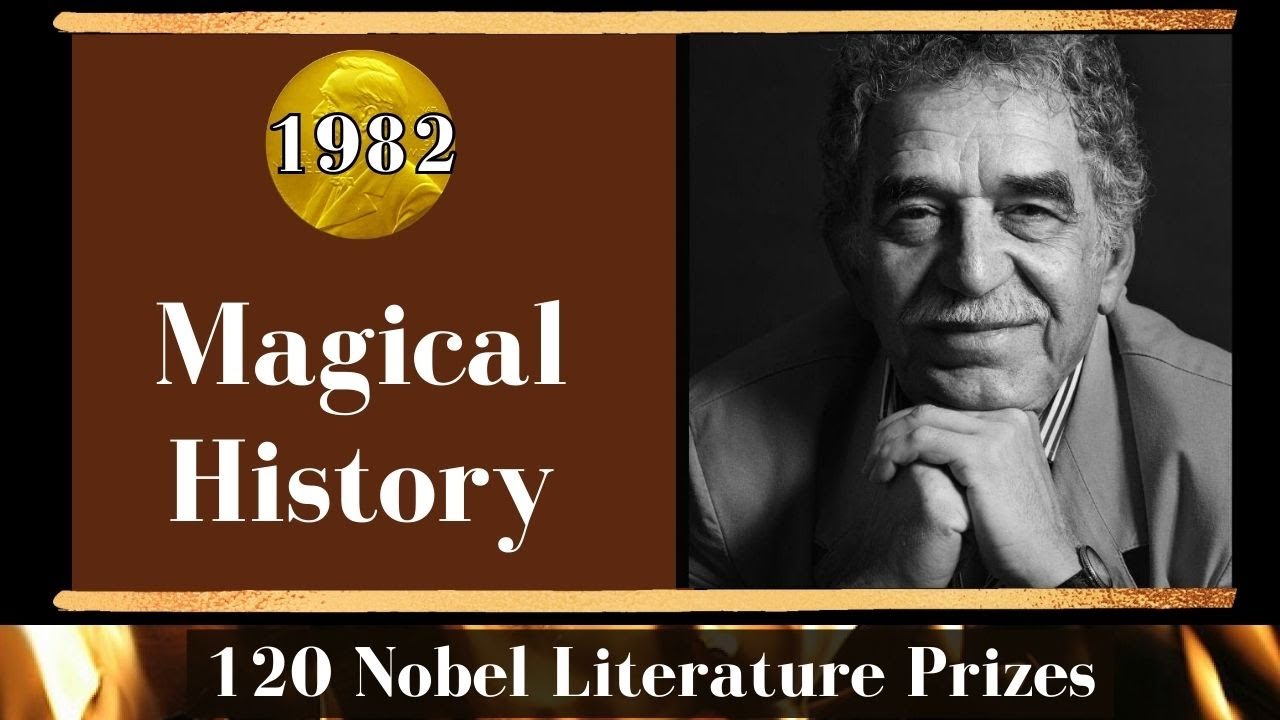










Gabriel García Márquez's One Hundred Years of Solitude uses magical realism—a literary technique that blends documentary realism with mythological language—to represent the historical trauma of Latin American colonialism and neocolonial exploitation, particularly the 1928 Banana Strike Massacre in Colombia, thereby demonstrating how creative fiction can ethically engage with difficult historical events that traditional historical narratives fail to adequately convey.
Latin American History in 100 Years of Solitude | Crash Course Literature
Added:Familiarity with the basic plot, characters (the Buendía family), and setting (Macondo) of Gabriel García Márquez's novel 'One Hundred Years of Solitude'.
An understanding of Magical Realism as a literary genre, specifically how it integrates fantastical elements into realistic settings without explanation.
A foundational knowledge of 19th and 20th-century Latin American history, particularly Colombia's civil wars (such as the Thousand Days' War) and the impact of foreign imperialism.
The concept of neocolonialism and how economic, political, and cultural pressures are exerted by global powers on developing nations.
Analysis of the real-world historical event of the Banana Massacre of 1928 and its depiction versus official government narratives.
Exploration of the 'Latin American Boom' literary movement and comparative studies of contemporary authors like Carlos Fuentes and Julio Cortázar.
Application of postcolonial literary theory to analyze how marginalized societies use narrative to resist cultural erasure and historical amnesia.
In-depth study of the relationship between collective memory, state-sanctioned violence, and the construction of national identity in modern Latin America.
405.9K views9.4Klikes12:17Original Release: 2016-08-18
Hi, I'm John Green. This is Crash Course Literature.
And this week we're continuing our discussion of Gabriel García Márquez's 100 Years of Solitude.
It isn't just the story of all those Buendias we talked about last time.
Today we're going to zoom out a little and look at how this novel can be read as a fictionalized history of Latin America's struggle to emerge from colonialism.
Mr. Green, Mr. Green! No no no no no, this is a made up book about, like, alchemy and raining flowers and stuff. There's no history!
OK, Me From The Past, I'm not going to get into a debate with you about what constitutes realness.
I'm just going to point out that there is a television show that has just debuted in your world in 1994.
It's called The Real World.
That show doesn't meet every definition of realness because, you know, the people participating in it are aware of the fact that there are cameras.
And yet the show The Real World in 1994 does have something to say about real life in 1994, albeit not as interesting as 100 Years of Solitude.
So yes, today we are talking about magic, but we're gonna get real.
[Theme Music] So let's begin today with a quick look at the history that Gabriel García Márquez lived through and, in some ways, was writing about.
Gabriel García Márquez was born in 1922 in the small river town of Aracataca, located in the northern region of Colombia, near the Caribbean sea.
But decades before that, at the end of the 19th century, several companies that would later combine into the United Fruit Company, which later became Chiquita, began to cultivate the region.
The American writer O. Henry coined the term Banana Republic in 1904 in a collection of short stories set in Honduras called Cabbages and Kings.
And since then the term has become shorthand for any unstable Latin American country whose economy is tied to exporting a single agricultural product.
Many historians consider Banana Republics to be examples of exploitative neocolonialism, like when a developed county uses it financial and political power to manipulate a developing country's internal affairs.
And if that sounds a lot like regular colonialism, it is, but the difference is that in neocolonialism, it's business entities that do the colonizing, and there's no annexation of territory to a colonizing nation.
So it worked like this: foreign investors arrived, often offering improvements to infrastructure, like railroads, roads, and ports, in exchange for land, and the investors also offered employment opportunities for local people.
But in most cases, these were not good employment opportunities, and the companies usually had a tendency to underpay and mistreat their agricultural workers, and when the workers complained, investors would often resort to violence to keep order.
Sometimes these foreign companies even funded military coups or established new governments.
And foreign companies used these tactics in García Márquez's home town of Aracataca.
The banana workers didn't have written contracts.
There were no restrictions on their work hours.
They were partially paid in scrip, which are vouchers to company-owned stores.
And when the workers went on strike in 1928, hundreds of men, women, and children gathered in the town square, thinking the governor would address these problems.
But instead the Colombian army, apparently at the behest of the United Fruit Company, set up machine guns on rooftops and blockaded streets leading away from the square.
And when the soldiers opened fire, hundreds were killed.
So in 100 Years of Solitude, García Márquez memorializes the Banana Strike Massacre by combining documentary realism with fiction.
As a genre, documentary realism attempts -- and I emphasize ATTEMPTS here -- to document the "truth" of events, whether they be large historical narratives or intimate portraits of individual lives.
Like, in 1926 the film critic John Grierson described documentary film as the "creative treatment of actuality" and that's a good way of thinking about it.
Our understanding of the past is always filtered through the lens of a witness or a writer or a photographer, et cetera.
It's never entirely objective.
The lenses through which "true stories" are told are usually privileged lenses.
For instance, stories are usually told by those who survived them, and also by those who have access to distributing the story, whether it's a printing press or a TV station.
But in 100 Years of Solitude, Gabriel García Márquez tries to tell the story of the colonization of Macondo through the lens of its inhabitants.
And these locals do little as the outskirts of their town are transformed "into an encampment of wooden houses with zinc roofs inhabited by foreigners who arrived on the train from halfway around the world."
The language used to describe the foreigner's arrival is, at first, realistic, even journalistic.
Like, they build a "separate town across the railroad tracks with streets lined with palm trees, houses with screened windows, small white tables on the terraces, and fans mounted on the ceilings, and extensive blue lawns with peacocks and quails."
And that closely resembles the actual documented events that occurred in García Márquez's hometown.
In other words, they're believable.
And yet unbelievable -- that is unbelievably horrible events also took place, and as García Márquez evokes those events he replaces straightforward documentary with the language of mythology.
And the changes here can be subtle.
Like, the narrator describes the foreigners as being like gods.
"Endowed with means that had been reserved for divine providence in former times, they changed the pattern of the rains, accelerated the cycle of harvests and moved the river from where it had always been."
And this invocation of mythology has some precedent.
Like, the anthropologist Claude Lévi-Strauss described mythology as providing imaginary solutions to real social contradictions.
In his 1955 essay, The Structural Study of Myth, he writes that, "The kind of logic which is used in mythical thought is as rigorous as that of modern science, and that the difference lies not in the quality of the intellectual process, but in the nature of the things to which it is applied."
So García Márquez uses magical realism to merge the logic of the visible world with myth in order to integrate multiple realities: the perspective of the colonizers and those of the colonized.
And often the transition from documentary to fiction is marked with a moment of humor.
Like, "'Look at the mess we've got ourselves into,' Colonel Buendia says at that time, 'just because we invited a gringo to eat some bananas.'"
The levity of these moments makes 100 Years of Solitude a lovable, memorable, human, and also approachable novel, but something very not funny is about to happen.
After Colonel Aureliano Buendia announces that he is, "going to arm my boys so we can get rid of these shitty gringos," 17 of his sons are summarily hunted down and executed.
And if you are more upset with the fact that I just said "shitty" than by the events of the novel, then there is something profoundly wrong with your world view.
17 of his sons are killed and the violence that follows is even more unbelievable.
After workers protest "the lack of sanitary facilities in their living quarters, the non-existence of medical services, and the terrible working conditions" and complain that they are not being paid in real money but in scrip, lawyers hired by the gringos dismiss their claims.
The lawyers argue that the workers were not in the service of the banana company because they had been hired on a temporary and occasional basis.
These "sleight-of-hand lawyers" are sinister magicians who use logic to deny the humanity of the local workers and they succeed in proving that these humans, as García Márquez writes, did not exist.
I mean, consider the implications here.
If you can use scientific reasoning and logic to prove that human beings don't exist, then you need some kind of effective counter-logic to represent, you know, the truth.
And García Márquez demonstrates how this might work in his description of the massacre.
Like, once again, he begins by having the narrator present a logical series of events based on historical facts.
Let's go straight to the Thought Bubble.
After the workers strike, they are summoned to the plaza by the train station under the pretext that the provincial leader will make an important speech, and machine gun encampments are positioned on top of the station.
The narrator first notes the unreality of the event, describing it as a kind of hallucination, and then he evokes the language of comedy.
"The captain gave the order to fire and fourteen machine guns answered at once."
"But it all seemed like a farce."
This gets to how difficult it is to convey the magnitude of the tragedy and how language, in a way, kind of fails in the face of such tragedy.
Ultimately, it's language that the sleight-of-hand lawyers have used to prove that people are not people and here, language kind of falls apart in the face of human reality.
And then there's the unlikely detail that there are only two witnesses to this massacre.
One is a young boy whose "child's privileged position allowed him to see the machine guns opening fire."
It's worth noting that García Márquez was six in 1928, the year the Banana Strike Massacre took place in his hometown.
Years later, when that boy recounts what he observed, he's thought of as a crazy old man.
The other witness is José Arcadio.
Although his body is thrown into the pile of corpses, he is not dead.
He escapes, returns home, and spends six months isolated in a room.
Eventually, he emerges.
"There were more than three thousand of them," was all that José Arcadio Segundo said.
"I'm sure now that they were everybody who had been at the station."
He is also thought to be crazy.
The madness attributed to these witnesses doesn't result from them being dislocated from reality, but rather from the rest of us being dislocated from it.
The real madness in the novel is the violence, or pretending that it didn't take place, or using logic to prove that humans aren't humans.
Thanks, Thought Bubble.
But what are we meant to do with this knowledge of a massacre that took place nearly a century ago?
And furthermore, are we even meant to care about the characters in this novel?
It sure isn't easy.
There are so many of them, and they have the same names, and they have these unreal, supernatural qualities, and make terrible decisions.
I mean, given that the Buendia family enacts a catalog of sins and vices, including, but not limited to: pride, greed, lust, envy, gluttony, wrath, sloth, jealousy, meanness, child abuse, pedophilia, incest, suicide, murder, we might even find it pleasurable to observe their downfall.
It really is like a smarter, better version of MTV's The Real World.
But my point is that we feel distant from the historical events represented in the novel and distant from the characters who lived them, but I still think that we have a lot to learn from the story.
Because I think, on some level, 100 Years of Solitude is a book about how to remember, and maybe even forget, ethically.
The story clearly associates too much remembering with a kind of living death.
Like, consider Rebecca, the child bride and eater of whitewash and damp earth who may or may not have shot her husband in the head.
After the funeral, Rebecca locked herself in her house and "buried herself alive, covered herself with a thick crust of disdain that no earthly temptation was ever able to break."
And that's pretty much the last we hear of Rebecca.
She becomes fully-engrossed in the solitude of her memories.
The town forgets about her and she has no impact on her community's future.
But the novel also associates too much forgetting or amnesia with madness and futility.
Like, consider Colonel Buendia, the former warrior who loses his memory and devotes his golden years to making tiny golden fish.
He then melts them, remakes them, and melts them again.
This might be a peaceful thing to do, but it's pretty useless.
So how do we strike a productive balance between remembering and forgetting?
Well, if the form of the novel is any indication, one possibility is to adopt a sort of speculative approach to history.
This means combining the facts that we acquire from documentary sources with an understanding that springs from more creative works.
And it also means including more voices in the "true story" of what "happened."
Knowing that 300 or 3,000 people died in a massacre doesn't really mean anything.
Numbers don't really penetrate our defenses and often neither does language.
But for me, at least, this novel's combination of realism and myth gets through my defenses.
It is a story, to paraphrase William Faulkner, concerned not so much with the facts as with the truth.
Lastly, I just wanna turn to the consolations and risks of solitude.
So reading 100 Years of Solitude is a solitary act.
Like the enormous Spanish galleon that José Aracadio Buendia discovers in the jungle, this novel seems, "to occupy its own space, one of solitude and oblivion, protected from the vices of time and the habits of birds."
But you emerge from that reading experience exposed to voices that you never heard before and you never would have heard otherwise.
That makes you less alone, or, more precisely, more aware that you were never alone.
In fact, you are deeply connected to the people, both past and present, who experience various forms of violence and exploitation on behalf of your interests.
It is difficult and rare to hear those muted voices, especially those from the past, and that awareness is García Márquez's gift to you.
What you do with it is your choice.
Thanks for watching. I'll see you next week.
Crash Course is filmed in the Chad and Stacey Emigholz Studio here in Indianapolis and it's made by all of these lovely people.
It's made possible by you and your support at Patreon, a voluntary subscription service that allows you to support Crash Course directly.
You can also get lots of great perks so please check out the Patreon at patreon.com/crashcourse.
Thank you again for watching, and as we say in my hometown, don't forget to be awesome.
Up Next
11:39
Beloved by Toni Morrison: Slavery, Ghosts, and Memory | Crash Course
@crashcourse
870.3K views•2014-05-29

13:43
Formalism in Literary Criticism: An Academic Lecture Overview
@mattalberhasky9952
39.1K views•2015-08-05
12:38
Frankenstein, Part 2: Romanticism and Critical Readings
@crashcourse
1.1M views•2014-04-03

15:25
1984: Orwell's Dystopian World and the Mechanisms of Totalitarianism
@AlternateHistoryHub
7M views•2017-03-04
Related Study Plans & Knowledge Roadmaps
Structured learning paths in Literature
literature
Graphic Memoirs: Visual Art, Trauma & History
01Foundations of Sequential Art and Visual Language
02Autographics and Processing Historical Trauma
03Visualizing Personal Trauma, Grief, and Graphic Medicine
+ 2 more learning modules
14h5 modules
Explore Roadmap
literature
Campus Novels: Evolution, Themes & Critique
01Introduction to the Campus Novel Genre
02Mid-Century Satire and the Post-War Academy
03Dark Academia and the Critique of Privilege
+ 2 more learning modules
14h5 modules
Explore Roadmap
literature
Theater of the Absurd: Philosophy & Plays
01Postwar Existentialism & Historical Roots
02Dismantling Narrative: Esslin & Absurdist Conventions
03Samuel Beckett and Tragicomic Existentialism
+ 2 more learning modules
12h5 modules
Explore Roadmap
literature
Revenge Tragedy: Justice, Madness & State
01Foundations of Early Modern English Theatre
02Anatomy of Revenge: Structural Conventions
03Psychological Complexity: Madness and Melancholy
+ 2 more learning modules
15h5 modules
Explore Roadmap