






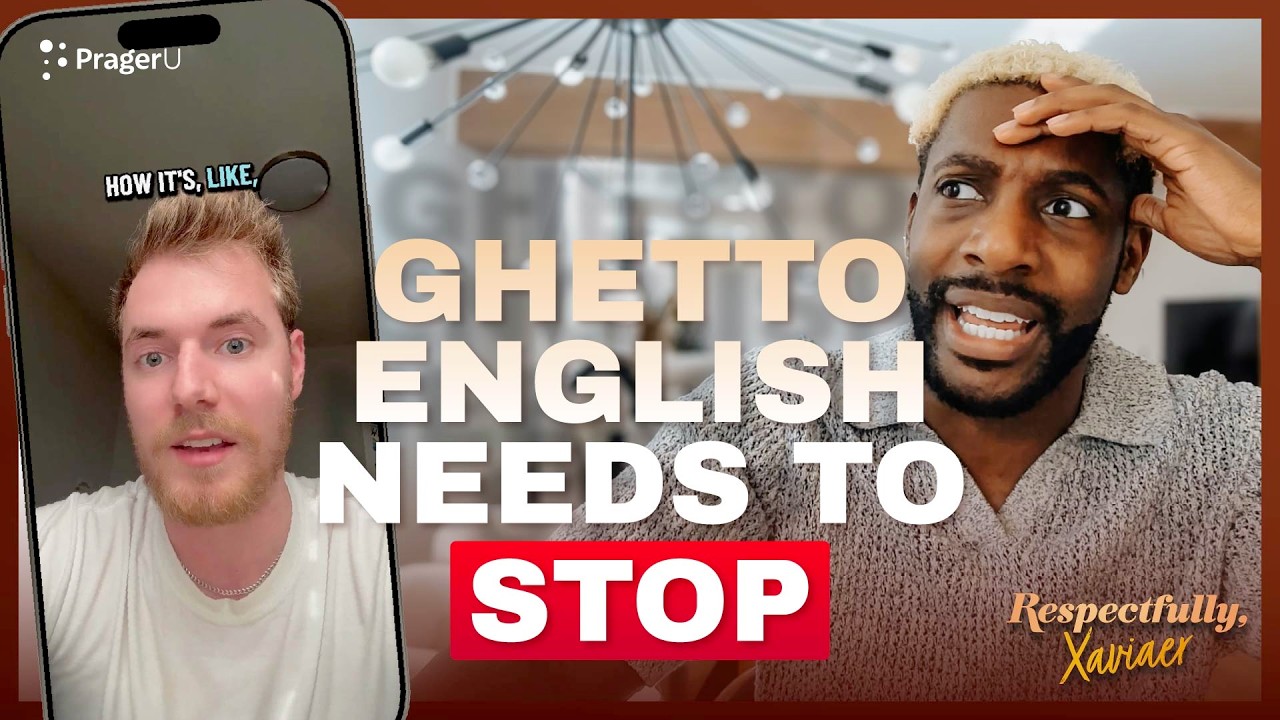






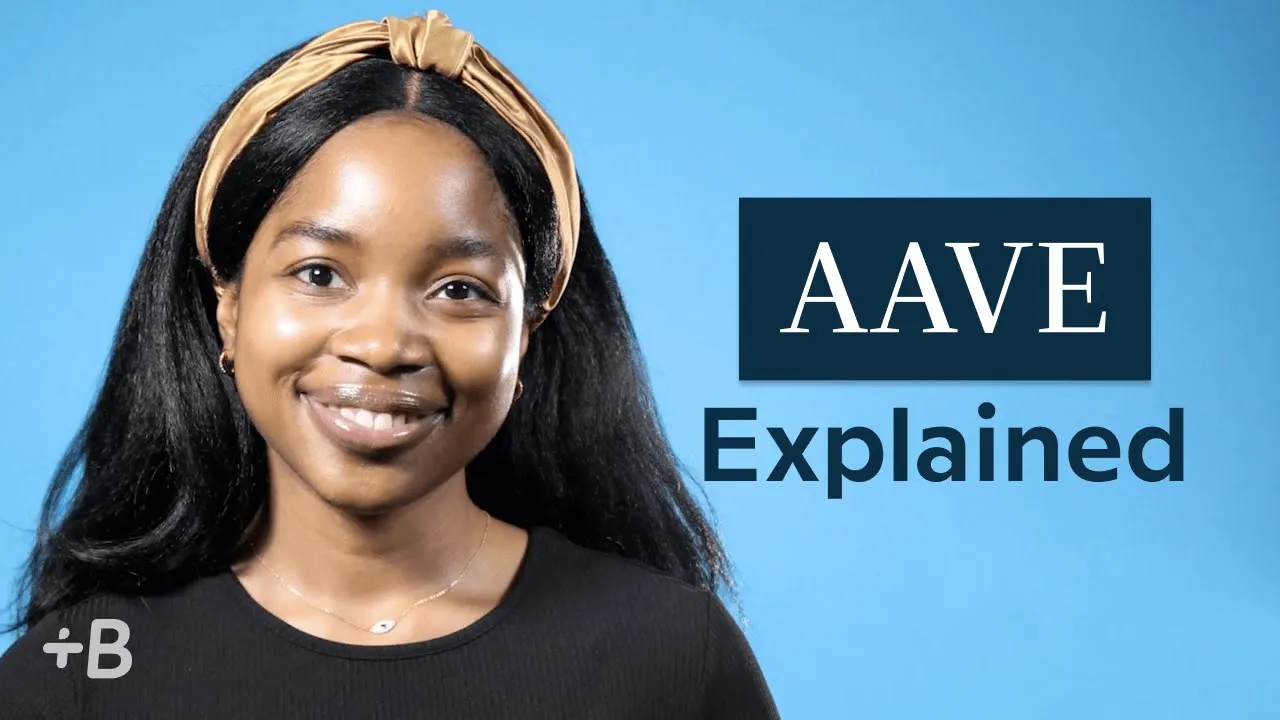
African American Vernacular English (AAVE) is a zero copula language, meaning it typically omits the copular verb 'to be' (is, are) in present tense sentences; for example, 'he is learning' becomes 'he learning' and 'they are teachers' becomes 'they teachers,' though exceptions exist including the contraction 'I'm' (am), questions like 'who you' and 'who they,' and location questions like 'where they at.'
AAVE Zero Copula: Understanding African American Vernacular Basics
Added:Understanding the grammatical function of the copula (the verb 'to be') and auxiliary verbs in Standard English.
A basic familiarity with sociolinguistics, specifically the concept that dialects are systematic, rule-governed language systems rather than 'broken' or 'incorrect' English.
Knowledge of basic grammatical terminology, such as subject-verb agreement, present tense, syntax, and ellipsis.
Exploration of other advanced grammatical features of AAVE, such as habitual 'be' (invariant 'be'), remote past 'BIN', and aspectual 'done'.
Study of the major linguistic theories regarding the origins of AAVE, including the Creolist hypothesis and the Anglicist/Substrate hypothesis.
Analysis of code-switching, style-shifting, and how speakers navigate linguistic expectations in professional, academic, and social contexts.
Examination of sociolinguistic bias, dialect discrimination, and the educational and legal implications of recognizing AAVE in institutional settings.
284K views15.4Klikes4:53Original Release: 2021-09-14
what's on y'all coming over i'm coming over at six but we driving separately all right cool we eating at 6 30. um you bring us something that needs to go in the oven nah but my mama bring the cake though all right i'll see y'all when you get here what's up everybody what's good my name is ek and welcome or welcome back to what's good english the channel where i focus on colloquial english slang and african american vernacular so you can understand how english is really spoken and today i'm going to actually revise something that i spoke about in the very first episode of african american vernacular we're going to go back to the basics and revisit how african-american vernacular is a zero copula language a copula or in our case a copular verb is just a fancy way of saying it is a verb that links a subject to a predicate and in english that verb is to be and all of its conjugations now as we see here in these sentences is and are represent the copular verbs he is a teacher he is learning they are teachers they are learning now in african-american vernacular we ain't got time for all this nonsense we remove the usage of the verbs is and are from most of the present tense and if you're only familiar with standard english it might sound like bad grammar when you see a sentence like he is learning and they are learning become key learning and they learning however i have to ask you what work are is and are doing in these sentences that isn't already being done by the presence of the word learning because to me they ain't doing nothing but signing a name at the end of the group project after the other word already did it hey what you cooking right now imma see no one of them chicken bakes i got last week this rule applies to every sentence that can be contracted so something like she's my sister becomes she my sister now you might have noticed in some of my sketches that i'm still using the word i'm that is because am is an exception to this rule we still use it and it still functions exactly the same in african american vernacular as it does in standard english so a sentence like i'm running late is correct and i running late is incorrect the rule also extends to our combination words like gonna gone fitna and bauta are y'all hungry i'm in order to take out at this dim sum place now we're about to leave in a few man we just gonna get something on the way home now there are a few grammatical situations in which we cannot completely remove a copula and we are forced to hey um not um we we don't need both of y'all we ain't got enough work for both of y'all we're just gonna take him because he already covered like everything that we need him to do and like we will keep our application on foldo cause like i mean we might got some use for you later on in the future is is occasionally used as a question word it's not necessary but it can help to add a little bit of stress you just don't pretend like you hear somebody knock out that doughboy you just gonna pretend like you ain't hit somebody knocking that dough boy you will also hear questions like who she who they and who that and they are capable of standing on their own as well as who you although you are still likely to hear who is you something strange in your neighborhood [Music] however we don't say who he it sounds kind of weird so you're going to see who is he except for when you're using it as part of a bigger sentence like who we going to the movies with [Music] who you think you is coming home at this hour why are you just sitting there darkness like you're the boogeyman or something in the present tense we also can't make a sentence like do you know where they there has to be more information now we are much more likely to say something like do you know where they at as opposed to do you know what it is however both responses are correct that does it for this video thank you all so much for watching if you liked it hit the like button let me know what you thought of it in the comments i just want to say i appreciate y'all so much i've been going through like super impostor syndrome recently because there are so many more of you now here and on other social media than there were a month ago but i'm gonna get through it because the message that our language is beautiful and deserves to be respected is important and i want to get that message out there so again thank you all very much i would not be here for one for y'all and i will catch you on the next one ciao [Music] right
Up Next
2:12
Understanding Habitual Be in AAVE: Black English Grammar Explained
@sunnmcheaux
158.5K views•2025-07-09
36:52
Constraint Interaction in Optimality Theory: Epenthesis & Deletion
@Vidyamitra
180 views•2018-08-20

8:59
Forensic Linguistics: How Language Solves Crimes | PBS
@pbsstoried
1M views•2024-01-25

21:32
Accent Expert Explains U.S. Regional Dialects | Part 1
@WIRED
9.3M views•2021-01-21
Related Study Plans & Knowledge Roadmaps
Structured learning paths in Linguistics
linguistics
Optimality Theory: Tableaux & Constraints
01Phonological Basics: Sounds, Syllables & Rules
02Foundations of Optimality Theory: GEN, CON, and EVAL
03The Constraint Inventory: Markedness vs. Faithfulness
+ 2 more learning modules
15h5 modules
Explore Roadmap
linguistics
Morphosyntactic Alignment: S, A & P Systems
01Foundations of Syntax: Transitivity and Arguments
02The Linguistic Variables: Mapping S, A, and P
03Nominative-Accusative Alignment
+ 3 more learning modules
12h6 modules
Explore Roadmap
linguistics
Analyzing Sign Language: Phonology & Syntax
01Foundations of Sign Language Linguistics
02Phonology: The Five Parameters of a Sign
03Morphology: Word Formation and Classifiers
+ 2 more learning modules
14h5 modules
Explore Roadmap
linguistics
Pragmatics: Speech Acts, Grice & Politeness
01Introduction to Pragmatics: Meaning in Context
02Grice’s Cooperative Principle & Implicature
03Speech Act Theory
+ 2 more learning modules
14h5 modules
Explore Roadmap