The habitual be in AAVE (e.g., 'she be singing') denotes an ongoing or habitual action, often used with verbs ending in -ing, and its meaning depends on the text, context, subtext, and pretext of communication; this grammatical feature originated from Old English and persists in some Scottish, Irish, and English dialects before being adopted and adapted in Black English.
Understanding Habitual Be in AAVE: Black English Grammar Explained
Added:Deep Dive
The definition of African American Vernacular English (AAVE) as a systematic, rule-governed linguistic system rather than slang or incorrect grammar.

Real English Conversation about AAVE (BLACK ENGLISH) with E.K. Powell\Part1
30.7K
AAVE (African American Vernacular English), also known as Black English or Ebonics, is a systematic dialect of English with its own grammatical rules, not merely slang or incorrect grammar; it is learned through natural context and usage rather than formal instruction, and while non-black people can learn and use it authentically, they must avoid performing caricatures or stereotypes, as this perpetuates harmful racial assumptions about Black speech patterns.
Click to watch →

백인 교과서 영어에는 없는 흑인영어 말투의 특이점 | 🍪빠삭한수다 EP.35 | 제이 타일러 니디 | 한글과자
697.7K
African American Vernacular English (AAVE) is a complete, systematic language with its own grammatical rules and vocabulary, not merely incorrect English. For example, 'she be angry' indicates a habitual or ongoing state (like 'she is always angry'), while 'she angry' indicates a specific moment. This linguistic system originated within African American communities and has its own logical structure, demonstrating that language variation reflects cultural identity rather than deficiency.
Click to watch →
What is AAVE?
29.1K
African American Vernacular English (AAVE), also known as African American English or Black English, is a rule-bound dialect of English with systematic grammatical features including copula deletion, habitual aspect markers, and negative concord, originating from the historical context of chattel slavery in the United States; despite being a legitimate linguistic variety comparable to British or Australian English, it faces significant social stigma due to racial prejudice, as evidenced by the 1996 Oakland school board controversy that misrepresented AAVE as a separate language rather than a dialect of English.
Click to watch →

The Linguistics of AAVE
1.6M
African American Vernacular English (AAVE) is a legitimate dialect of English with its own consistent grammatical rules and phonological patterns, not a form of broken or incorrect speech; it developed through historical processes including the divergence from early modern English due to social isolation during slavery and the Great Migration, and it features distinctive characteristics such as TH-sound substitutions, word deletions, and the habitual 'be' tense, which are systematic rather than random errors.
Click to watch →

America's 🇺🇸 Secret English Language | "A.A.V.E English/ Black People's English AKA (Ebonics)!"
57.1K
African American Vernacular English (AAVE), also known as Ebonics, is a legitimate dialect of English with its own systematic grammar, vocabulary, and pronunciation patterns that originated from the language of enslaved African-Americans and has evolved over time; it is spoken by African-Americans born in the United States and migrants from Africa and the Caribbean, and features unique expressions such as 'finna' meaning 'about to' and 'on fleek' meaning 'perfectly done,' along with the versatile contraction 'ain't' which can express negation for various verb forms including 'is not,' 'are not,' 'has not,' 'have not,' and 'am not.'
Click to watch →
Deep Dive
The distinction between grammatical tense (when an action occurs) and grammatical aspect (the temporal flow of an action, such as habitual, ongoing, or completed).
Prof Elghazi, Syntax EP7, Syntactic Categories: Inflectinoal Categories TAM
2.5K
Tense is the grammatical term for when verb actions occur, distinguishing past, present, and future. Unlike natural time, grammatical tense is always established by reference to the present moment. Perfect tenses (past perfect, future perfect) indicate actions completed before other past or future actions. Aspect differs from tense by focusing on action types rather than timeline position. The two fundamental aspects are perfective (viewing events as complete actions) and imperfective (viewing events as processes, repeated, or habitual actions). For example, 'John is explaining' uses imperfective aspect (continuous), while 'John explains' uses perfective aspect (habitual).
Click to watch →

Master all English Tenses:A New way to learn
196
Aspect refers to how an action, event, or state described by a verb unfolds over time. While tense tells us when an action happens (past, present, or future), aspect tells us how it happens—whether it is ongoing, completed, repeated, or habitual. Understanding aspect is essential for learning tenses, as it provides the 'muscles' to the grammatical 'skeleton' of tense.
Click to watch →

Verbal Reasoning Part 2 by CHAPS (M.R. Torres) April 2026 NAPOLCOM
4.2K
Tense indicates when an action occurs: present (I eat), past (I ate), future (I will eat). Aspect describes the manner of action: simple (habitual), progressive (in progress), perfect (completed), perfect progressive (completed with duration). Together, tense and aspect provide complete information about when and how an action occurs.
Click to watch →

01강. 현재, 과거, 미래 & 진행형
3.6K
English grammar distinguishes between tense (when something happens) and aspect (how something happens). Tense includes present and past, while aspect includes progressive (ongoing) and perfect (completed). These are separate grammatical concepts that work together to convey complete meaning.
Click to watch →

ENGLISH TENSES and Aspects | Course 1.0 | EBEC | Session 3
4.5K
Tense indicates the place of an action in time (when it happens), while aspect indicates how an action, state, or event is related to the flow of time. Tense answers the question 'when?', while aspect answers 'how?' regarding the timing and duration of actions.
Click to watch →
Deep Dive
How the copula and auxiliary verb 'to be' functions in Standard American English (SAE) to serve as a baseline for comparison.

Copula 'Be' & Subject-Verb Agreement
5K
The copula 'be' verb (am, is, are, was, were) serves as a linking verb that carries tense and subject agreement, with different forms for each subject pronoun: first person uses am/are, second person uses are/were, and third person uses is/are; additionally, 'be' functions as an auxiliary verb in progressive tenses (is taking), future constructions (is going to), and passive voice (is able to).
Click to watch →

Real Body and Blood?: Kingdom Feast with R.C. Sproul
40.6K
The verb 'to be' functions as a copula, which is a grammatical term derived from the Latin word for 'couple.' As a copula, the verb 'is' serves as an identification between the subject and predicate, functioning essentially as an equals sign. When something is said to be something else using this construction, the relationship can be reversed without loss of meaning. For example, 'A bachelor is an unmarried man' can be reversed to 'An unmarried man is a bachelor' because both statements express the same identity relationship.
Click to watch →
English Copula | Linking Verbs | Adjectives and Adverbs
53.1K
The verb 'to be' is the most common example of a copular verb when used in its main verb form, not as a helping or modal verb. In sentences like 'I am a teacher,' the verb 'am' links the subject 'I' to the noun 'teacher,' providing more information about who the subject is without transferring any action. This linking function is why 'to be' is also called a linking verb.
Click to watch →
English Grammar: Linking Verbs (Copula)
310.5K
Linking verbs (copula) such as 'be,' 'seem,' 'look,' 'sound,' 'taste,' 'smell,' 'feel,' 'become,' and 'get' connect the subject of a sentence to a subject complement (adjective or noun) rather than taking an object; unlike action verbs, they show no physical action and are always followed by adjectives or noun complements, never adverbs, with the key distinction being that 'be' states facts while 'seem,' 'appear,' and 'look' indicate possibilities, and 'become' and 'get' specifically indicate change in a situation.
Click to watch →

AAVE Zero Copula: Understanding African American Vernacular Basics
284K
African American Vernacular English (AAVE) is a zero copula language, meaning it typically omits the copular verb 'to be' (is, are) in present tense sentences; for example, 'he is learning' becomes 'he learning' and 'they are teachers' becomes 'they teachers,' though exceptions exist including the contraction 'I'm' (am), questions like 'who you' and 'who they,' and location questions like 'where they at.'
Click to watch →
Deep Dive
Basic sociolinguistic concepts, such as dialect variation, language attitudes, and the relationship between language and identity.

Core Sociolinguistic Concepts (HEL 27)
247
Sociolinguistics studies language in relation to society, examining how cultural norms, expectations, contexts, and social networks shape communication while recognizing that language simultaneously shapes these social dimensions. Language is not uniform or constant in actual use—every individual possesses their own idiolect. William Labov pioneered variationist sociolinguistics, discovering code-switching through research on department store employees who adjusted speech based on audience. Five core concepts define the field: language variation, language attitudes, language contact, language and identity, and language policy.
Click to watch →
Sociolinguistics (and the basics of language attitudes)
61.8K
Sociolinguistics is the study of how social norms and social context influence language use, examining phenomena such as language variation across groups (regional dialects, age groups, social classes), the role of language in signaling group membership, and how different language varieties trigger stereotypical perceptions and attitudes about speakers. Languages encode social hierarchies through various mechanisms including pronouns, verb forms, and politeness strategies, and understanding these connections reveals that language attitudes are socially constructed rather than inherent properties of any particular language variety.
Click to watch →

Sociolinguistics: Study of Language Variation and Social Identity
175.8K
Sociolinguistics studies language in society, focusing on variation in pronunciation, vocabulary, and grammar. Every speaker belongs to multiple language varieties based on geography (regional dialects) and social factors (class, ethnicity, gender, age). Language reflects social identity and carries attitudes, though these are socially constructed norms, not objective facts. The term 'dialect' is problematic because it carries false connotations of inferiority; instead, we use 'varieties of language.'
Click to watch →

Introduction to Sociolinguistics: Culture and attitudes in language studies.
3.3K
Sociolinguistics examines how society influences language and vice versa. Language attitudes are settled ways of thinking about someone's language, typically reflected in behavior. People hold strong positive and negative attitudes about different languages worldwide—Italian as aggressive, British English as sophisticated, Spanish as formal, German as threatening. These attitudes exist even among non-speakers. Within any language, multiple dialects exist based on geography and social factors. A dialect encompasses lexicon, syntax, and pronunciation. Regional dialects are geographically constrained, but social background also influences language use. Sociolects are varieties used by social groups regardless of location, influenced by gender, age, occupation, education, race, class, and hobbies. AAVE exemplifies this with consistent grammatical rules. No dialect is superior; attitudes reflect judgments about speakers. Each individual has a unique idiolect—their personal language style.
Click to watch →

Sociolinguistics: Language and Social Identity
314.5K
Sociolinguistics studies how language forms part of our identity and how social factors influence speech. Everyone has an accent shaped by who they grow up with and where they live. Dialectology maps regional language variations, revealing that denser linguistic variation occurs where communities have lived together longer. Languages spread through colonization show broader regional variation (Arabic, Chinese, English, Spanish), while isolated languages like Swiss or Papua New Guinean languages show village-level variation. Beyond geography, age, education, class, race, ethnicity, gender, and sexuality all influence how people speak and identify linguistically.
Click to watch →
Prerequisite Knowledge
- Concept 01The definition of African American Vernacular English (AAVE) as a systematic, rule-governed linguistic system rather than slang or incorrect grammar.
- Concept 02The distinction between grammatical tense (when an action occurs) and grammatical aspect (the temporal flow of an action, such as habitual, ongoing, or completed).
- Concept 03How the copula and auxiliary verb 'to be' functions in Standard American English (SAE) to serve as a baseline for comparison.
- Concept 04Basic sociolinguistic concepts, such as dialect variation, language attitudes, and the relationship between language and identity.
Subsequent Learning
- Step 01Other unique syntactic and morphological features of AAVE, such as copula absence, remote past 'been', and the perfective 'done'.
- Step 02The phenomena of code-switching and style-shifting, examining how speakers navigate between AAVE and Standard American English in different social contexts.
- Step 03The real-world impacts of linguistic discrimination and bias against AAVE speakers in educational, legal, and professional environments.
- Step 04The historical theories regarding the origins of AAVE, specifically comparing the Dialectologist (Anglicist) hypothesis with the Creolist hypothesis.
Habitual Be
Habitual Be
0:00Playing Section
- 1
Explains the habitual be in Black English denoting ongoing actions.
- 2
Highlights its origins in old English and Scottish, Irish dialects.
- 3
Applies text, context, subtext, and pretext to interpret its versatile meanings.
The Anglicist Hypothesis of AAVE Origins
While many linguists attribute the grammatical structure of 'habitual be' in African American Vernacular English (AAVE) to West African or creole languages, the Anglicist Hypothesis presents a major alternative theory. This perspective argues that AAVE's unique grammatical features did not originate from African languages, but were instead adopted from regional British and Irish dialects spoken by white settlers in the colonial American South. Proponents of the Anglicist (or dialectological) view point to historical evidence of habitual verb forms in older Scotch-Irish and English dialects to argue that 'habitual be' is a preservation and adaptation of British dialectal grammar rather than a creole development. This ongoing linguistic debate contrasts the creolist and Anglicist views, offering a different lens through which to understand the historical roots of Black English grammar.
Deep Dive
Other unique syntactic and morphological features of AAVE, such as copula absence, remote past 'been', and the perfective 'done'.

Southern American English & African American Vernacular | Dialects Explained
356
AAVE exhibits distinctive phonological features including vowelization of /r/ and /l/ (dollar → dollar, toll → toe), /v/ → /f/ in medial position (them → dem), and reduction of consonant clusters (fast → fas, soft → sof). Vowels show fronting (/ɪŋ/ → /n/ in nothing) and pin-pen merger. Verb morphology uses 'be' for habituals, 'been' for progressives/perfects, and 'done' for past tense. Double negation is standard. These features reflect creole-like structures shared with Jamaican and Gullah, demonstrating how AAVE functions as a fully legitimate language system.
Click to watch →

ENG506_Topic175
921
African American Vernacular English (AAVE) exhibits unique morphosyntactic features including the use of non-finite 'be' for habitual states, 'done' as a perfective marker replacing 'have done,' and 'been' for non-recent perfect, which should be recognized as legitimate linguistic varieties rather than imperfect standard English from a World Englishes perspective.
Click to watch →

HHU - Reanimating African American Oral Histories of the Gulf South
365
African American English is a systematic, rule-governed linguistic variety, not a flawed or slang version of Standard American English. Decades of research by Black linguists have documented its systematic nature. African American communities speak multiple varieties including Standard American English, regional varieties, and African American English. Single speakers often use multiple varieties. Key features include: (1) Absence of third person S (e.g., 'a person do something' instead of 'does'), (2) Habitual be (e.g., 'it always be in the paper'), (3) Remote perfective been (e.g., 'he been asked about me'), and (4) Multiple negators (e.g., 'I ain't never had nobody').
Click to watch →
AAVE Zero Copula: Understanding African American Vernacular Basics
284K
African American Vernacular English (AAVE) is a zero copula language, meaning it typically omits the copular verb 'to be' (is, are) in present tense sentences; for example, 'he is learning' becomes 'he learning' and 'they are teachers' becomes 'they teachers,' though exceptions exist including the contraction 'I'm' (am), questions like 'who you' and 'who they,' and location questions like 'where they at.'
Click to watch →

Discussions about African-American Vernacular English: TheDIALECT
471
African American Vernacular English (AAVE) is a complete language variety with systematic phonological, lexical, and grammatical structures, not merely incorrect speech. Phonologically, it features vowel shifts (e.g., 'meal' with high front vowel), consonant variations (voiced alveolar stops for 'this/that'), and deletion rules (pronouncing 'test' as 'text'). Culturally specific vocabulary includes terms like 'actually' referring to skin patches and 'kitchen' describing nape hair. Grammatically, AAVE uses zero copula ('people crazy'), deletes third-person singular verbs ('the dog live'), employs perfective 'done' ('they done fool up'), and omits possessive 's' ('that girl house'). Approximately 80-90% of speakers are African American, with regional variations across the country. The concept of 'standard English' is problematic as it marginalizes other varieties. Media historically perpetuated harmful stereotypes through shows like 'Mr. Lee's' during Jim Crow era, depicting Black people as stupid and docile using exaggerated or incorrect AAVE speech.
Click to watch →
Deep Dive
The phenomena of code-switching and style-shifting, examining how speakers navigate between AAVE and Standard American English in different social contexts.
Code-Switching
135.3K
Code-switching, the practice of shifting between different dialects or styles of speaking based on context and audience, is a common linguistic strategy among African Americans that reflects both personal identity and social navigation; approximately 90% of African Americans use some form of African American English, and many middle-class speakers code-switch between vernacular and Standard English depending on the situation, though geographic assimilation into predominantly white suburban areas can cause speakers to lose this linguistic flexibility as they no longer have communities to switch to.
Click to watch →

INGLÊS NEGRO x INGLÊS "BRANCO"
65.3K
African American Vernacular English (AAVE) is a legitimate dialect of English with its own grammatical rules, not a 'wrong' version of English; it originated from the Southern United States and spread through the Great Migration, and many African Americans code-switch between AAVE and Standard English depending on social context, with AAVE becoming a source of cultural pride rather than shame.
Click to watch →
Talking Black In America
696.3K
Code-switching is the practice of shifting between different language varieties depending on social context. Many African Americans code-switch between African American Vernacular English and Standard English, using vernacular in comfortable settings like home and family interactions while using standard English in professional or formal situations.
Click to watch →

Black English, sotaque nativo e pronúncia do inglês | Speaking in Brazil #8
36.9K
Second-generation African Americans often develop bilingual competence, being native speakers of AAVE while simultaneously learning Standard English. This dual competence enables code-switching—the ability to shift between dialects depending on social context. Code-switching represents sophisticated linguistic flexibility rather than language deficiency. It allows speakers to navigate different social environments appropriately, using AAVE within family contexts while employing Standard English in professional or formal situations.
Click to watch →

INSANE MAGA Kid Thinks P*dophiles Should Be FORGIVEN
78.7K
Code-switching is the practice of adapting speech patterns based on social context, driven by systemic bias against African-American Vernacular English (AAVE). Many Black Americans use AAVE comfortably among peers but adopt standard English in predominantly white settings to avoid negative stereotypes. This adaptation is a survival strategy, not rejection of cultural identity. The debate reveals how critics misunderstand this practice as inauthenticity, while supporters recognize it as strategic navigation of discriminatory environments. Understanding code-switching requires acknowledging how systemic racism shapes communication choices and how cultural preservation competes with social survival.
Click to watch →
Deep Dive
The real-world impacts of linguistic discrimination and bias against AAVE speakers in educational, legal, and professional environments.

The Impact of Linguistic Bias in Education | Camille Byrd O’Quin | TEDxLewisUniversity
76K
Linguistic bias in education occurs when educators incorrectly label African American Vernacular English (AAVE) as an error or disorder rather than recognizing it as a legitimate dialect with consistent linguistic rules; this bias contributes to disproportionate special education referrals for Black students, who are 2.5 times more likely to receive such services, and educators must learn to distinguish between genuine language disorders and dialectal differences to promote educational equity.
Click to watch →
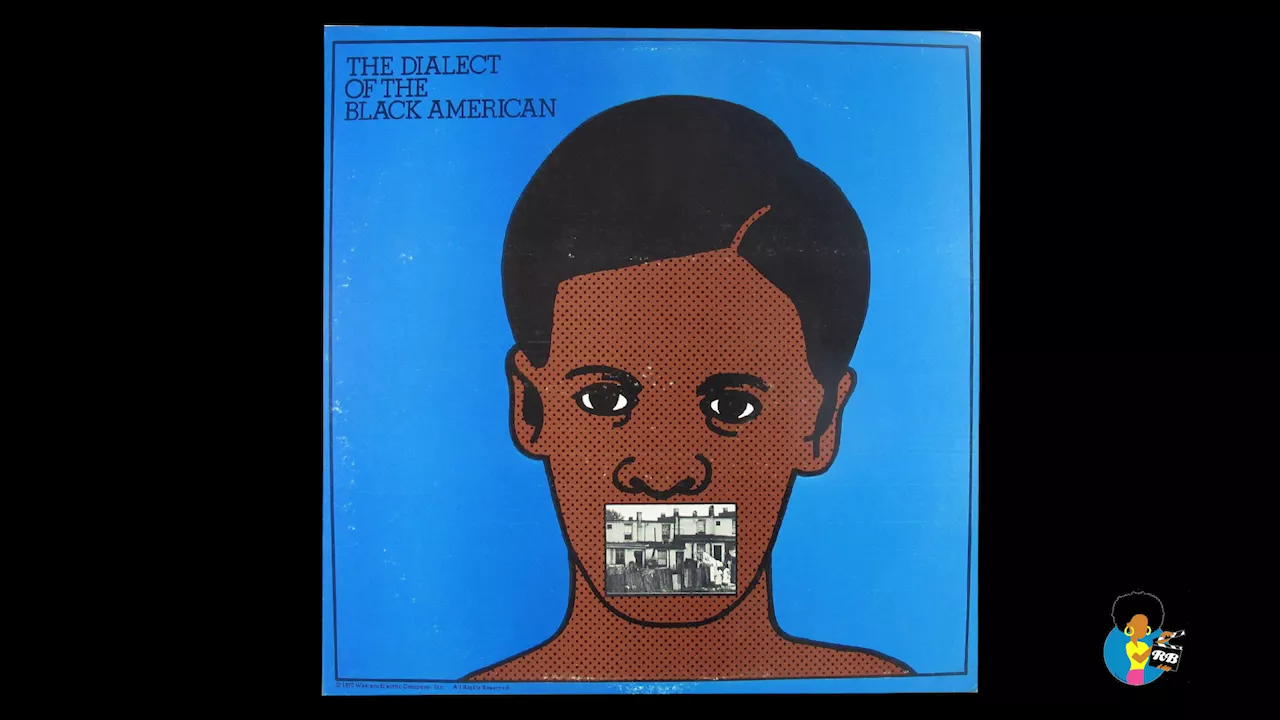
The Dialect of Black Americans (1970)
184K
African American Vernacular English (AAVE) is a legitimate dialect of English with its own systematic grammar, vocabulary, and pronunciation rules, not a form of broken or incorrect speech; educational systems that reject AAVE and force Black children to abandon their native language create unnecessary barriers to learning standard English, as teaching standard English through the lens of AAVE—using techniques like dialect translation of texts—proves more effective for literacy development than traditional methods that pathologize non-standard speech patterns.
Click to watch →
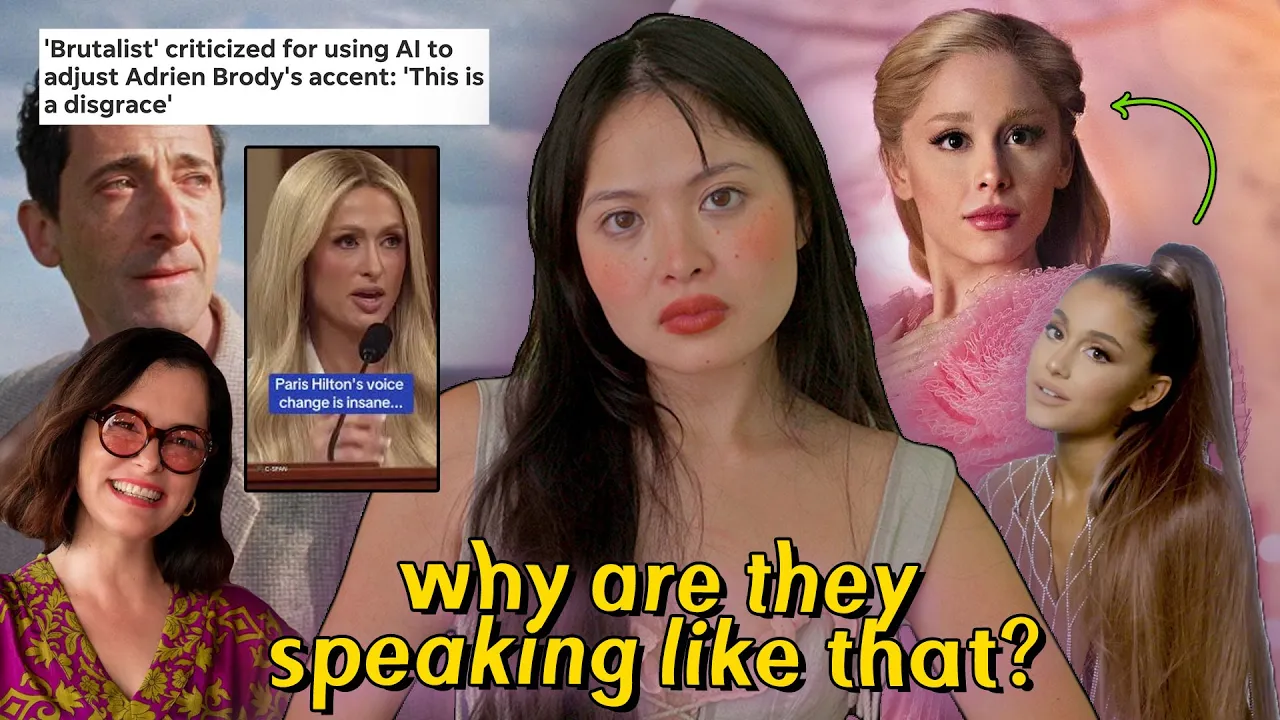
The Problem with Accents
745.7K
African American Vernacular English (AAE) is not an accent but an English dialect with its own vocabulary, grammar structures, and syntax. Despite being a recognized and complex linguistic system, Black people who speak AAE face negative impacts such as losing academic and employment opportunities because their speech is deemed improper by white America. Linguist John Ba conducted experiments calling landlords about apartments and found he was much more likely to hear yes when making his voice sound white rather than black. This context explains why audiences may have distaste for white performers adopting AAE, regardless of artistic intent.
Click to watch →
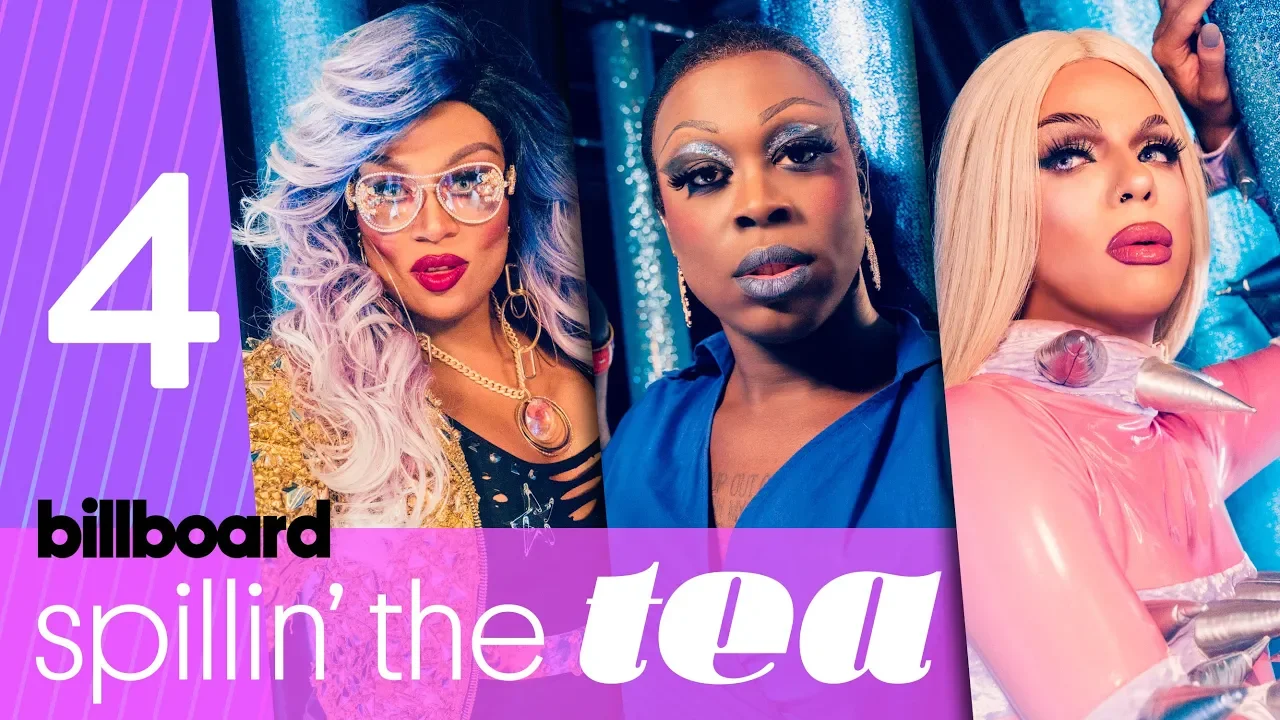
Spillin' The Tea: Racism in Drag Fandom & Cultural Appropriation vs. Appreciation | Billboard
289.5K
Black people have been historically taught to feel shame about their natural appearance, including their hair, names, and traditional foods. This internalized racism causes people to hide aspects of their Black identity in professional or public settings. Additionally, African American Vernacular English (AAVE) developed as a response to historical oppression and segregation. Despite common misconceptions linking AAVE to uneducation, speakers can fluently switch between formal and colloquial speech patterns. Criticism directed at marginalized communities for using their natural dialect while praising similar speech from privileged groups represents a form of linguistic discrimination.
Click to watch →
Real English Conversation about AAVE (BLACK ENGLISH) with E.K. Powell\Part1
30.7K
AAVE (African American Vernacular English), also known as Black English or Ebonics, is a systematic dialect of English with its own grammatical rules, not merely slang or incorrect grammar; it is learned through natural context and usage rather than formal instruction, and while non-black people can learn and use it authentically, they must avoid performing caricatures or stereotypes, as this perpetuates harmful racial assumptions about Black speech patterns.
Click to watch →
Deep Dive
The historical theories regarding the origins of AAVE, specifically comparing the Dialectologist (Anglicist) hypothesis with the Creolist hypothesis.

African American Vernacular English Pt 1: Origins and History (HEL 36a)
1.2K
African American Vernacular English (AAVE) is a speech community language that emerged from the convergence of West African linguistic features and English, developing through historical processes including slavery, isolation in plantation communities, and continued linguistic evolution; major theories explaining its origins include the anglicist theory (which views AAVE as an offshoot of early working-class English that continued evolving in isolated Black communities) and the creolist/substrate hypothesis (which proposes that AAVE developed from the synthesis of West African grammatical and phonological features with English vocabulary), with the pre-linguistic deficit hypothesis representing a discredited racist theory that claimed Black people lacked cognitive ability to speak standard English properly.
Click to watch →

"A LINGUISTIC WALKTHROUGH: A GLANCE AT SOCIOLINGUISTICS "
648
AAVE (African American Vernacular English) refers to the distinctive speech pattern used by the African American community. The term 'AAVE' was chosen for its aesthetic qualities - euphonious, sonorous, and evocative, combining 'ebony' (referring to black color) and 'vernacular' (referring to everyday speech). Four main theories explain AAVE's origins: (1) Anglicist theory - enslaved Africans acquired English through contact with white workers; (2) African theory - connections to West African languages with similarities in verb tenses and aspects; (3) Creole theory - AAVE emerged from creole languages developed when European and African communities were forced to cohabit; (4) Neo-Anglicist theory - combines Anglicist and Creole views, acknowledging English base with subsequent African and creole influences. AAVE is the most distinctive English variety, showing greatest differences across all linguistic levels: phonological, morphological, syntactic, and lexical.
Click to watch →
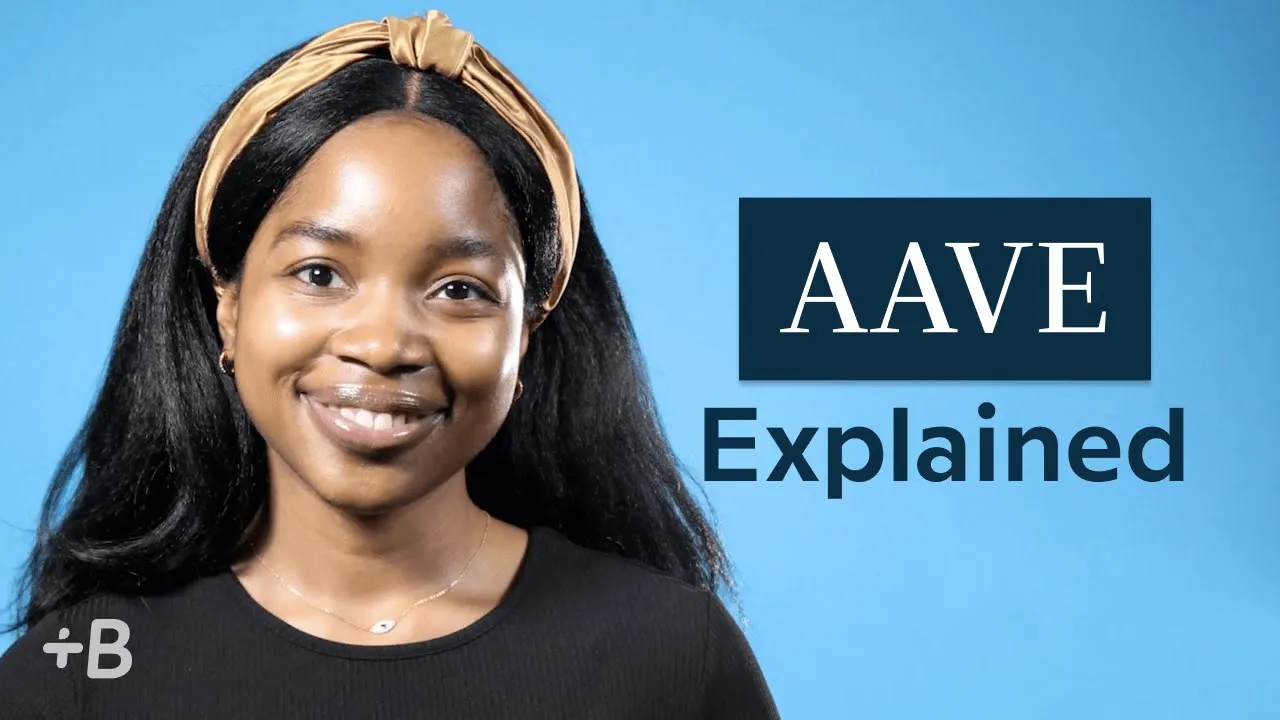
AAVE Explained: A Dialect That Transcends Internet Culture
349.4K
AAVE (African-American Vernacular English) is the way many Black Americans communicate, evolving over centuries. It differs significantly between regions—Detroit's AAVE sounds different from New York's. The dialect's origins trace back to enslaved Africans brought to North America over 400 years ago. Scholars debate whether AAVE is a variant of Germanic American English or an independent creole from English-West African language contact. The creole theory holds because AAVE shares structural similarities with African-based creoles globally, though it is closer to Standard American English than Gullah or Louisiana Creole.
Click to watch →
What is AAVE?
29.1K
AAVE (African American Vernacular English) is a full-fledged rule-bound dialect of English, not bad grammar. It features unique grammatical innovations including copula deletion, habitual aspect markers, negative concord, and specific verb tense usages. Originating from chattel slavery, two competing hypotheses explain its formation: creole origin (contact creating new language) versus dialect divergence (Southern English splitting). Despite linguistic validity, AAVE suffers extreme stigma due to America's racial history. The 1996 Oakland controversy misrepresented it as a separate language, triggering racist backlash. Approximately 30 million people speak AAVE, with regional accents and code-switching abilities. Speakers range from Black Americans to rare non-Black individuals, challenging simplistic assumptions about dialect ownership.
Click to watch →

The Validity of Black English in America | Patrick Pinchinat | TEDxUpper St Clair Youth
891
AAVE is a systematic dialect with consistent rules in pronunciation, vocabulary, and grammar. Pronunciation features include dropping final -er sounds (brother → Khloe), simplifying consonant clusters (bath → Bev), and reducing -ing to -n. Vocabulary draws from Black communities, ballroom culture, and queer communities, with terms like 'flex,' 'slay,' and 'throw shade' carrying cultural histories. Grammar includes omission of 'to be,' flattened verb conjugations, double negatives, and the habitual 'be' construction. Two theories explain its origin: creolization from African-English mixing during slavery, and British English dialects carried by indentured servants. Stanford linguist John McWhorter studied schools attempting to teach AAVE as a separate language.
Click to watch →
Habitual Be
Habitual Be
0:00- 1
Explains the habitual be in Black English denoting ongoing actions.
- 2
Highlights its origins in old English and Scottish, Irish dialects.
- 3
Applies text, context, subtext, and pretext to interpret its versatile meanings.
The Anglicist Hypothesis of AAVE Origins
While many linguists attribute the grammatical structure of 'habitual be' in African American Vernacular English (AAVE) to West African or creole languages, the Anglicist Hypothesis presents a major alternative theory. This perspective argues that AAVE's unique grammatical features did not originate from African languages, but were instead adopted from regional British and Irish dialects spoken by white settlers in the colonial American South. Proponents of the Anglicist (or dialectological) view point to historical evidence of habitual verb forms in older Scotch-Irish and English dialects to argue that 'habitual be' is a preservation and adaptation of British dialectal grammar rather than a creole development. This ongoing linguistic debate contrasts the creolist and Anglicist views, offering a different lens through which to understand the historical roots of Black English grammar.
The definition of African American Vernacular English (AAVE) as a systematic, rule-governed linguistic system rather than slang or incorrect grammar.
The distinction between grammatical tense (when an action occurs) and grammatical aspect (the temporal flow of an action, such as habitual, ongoing, or completed).
How the copula and auxiliary verb 'to be' functions in Standard American English (SAE) to serve as a baseline for comparison.
Basic sociolinguistic concepts, such as dialect variation, language attitudes, and the relationship between language and identity.
Other unique syntactic and morphological features of AAVE, such as copula absence, remote past 'been', and the perfective 'done'.
The phenomena of code-switching and style-shifting, examining how speakers navigate between AAVE and Standard American English in different social contexts.
The real-world impacts of linguistic discrimination and bias against AAVE speakers in educational, legal, and professional environments.
The historical theories regarding the origins of AAVE, specifically comparing the Dialectologist (Anglicist) hypothesis with the Creolist hypothesis.
158.5K views19.4Klikes2:12@sunnmcheauxOriginal Release: 2025-07-09
peace. If you are not into social linguistics, language education, or black English, this post is about to be boring. And I wouldn't be offended if you just kept on scrolling right now.
I'm not even going to bother to put an interesting title above my head in order to captivate your attention cuz I'm going to need that for my whiteboard.
Yeah, it's about to get real word nerdy up in here. Let's begin. In my head, I'm having like this little conversation with a coworker. Um, and we're talking about Ave. So the way I tried to explain how we used the word be was to use the phrase she be singing.
The linguistic term for black people saying I be doing I be this and I be that is the habitual be. And as you can tell from the word habitual, the habitual be denotes an ongoing action.
Which is why we often use it with verbs that end with the ing suffix. She be singing. She be doing. She be going, which can also be communicated in standard English with the letter s at the end of the verb. She sings. She goes, she does. It should be noted that the habitual be didn't necessarily start in black English. It's a carryover from old English that you can still find in some Scottish, Irish, and English dialects. Leave it to black folks to sprinkle a little seasoning on it. But your question is more about the versatility.
It is who you are at your core, right?
And so she's such a song bird can be a similar way to say that in a traditional more traditional way. I wonder if I'm on to something or if I'm completely off base. We out here. Where you at? To understand the versatility of the habitual bee, bear in mind that we typically communicate in four modes.
Text, context, subtext, and pretext. The text is what was said. Context is the circumstances or the background around what was said. Subtext is the deeper meaning beneath the surface. Hence, subtext of what was said. Pretext is the purpose or the reason for what was said.
So, she be singing can mean she be singing as in she sings very well or she be singing as in she often sings or she be singing as in she's the one who's singing. What the habitual be means when we use it all comes down to the text context, subtext and pretext between us when we say it. We out here.
Up Next
13:05
Why Black English Is More Grammatically Complex Than Standard English
@languagejones
1.1M views•2024-07-03
36:52
Constraint Interaction in Optimality Theory: Epenthesis & Deletion
@Vidyamitra
180 views•2018-08-20

8:59
Forensic Linguistics: How Language Solves Crimes | PBS
@pbsstoried
1M views•2024-01-25

21:32
Accent Expert Explains U.S. Regional Dialects | Part 1
@WIRED
9.3M views•2021-01-21
Related Study Plans & Knowledge Roadmaps
Structured learning paths in Linguistics
linguistics
Optimality Theory: Tableaux & Constraints
01Phonological Basics: Sounds, Syllables & Rules
02Foundations of Optimality Theory: GEN, CON, and EVAL
03The Constraint Inventory: Markedness vs. Faithfulness
+ 2 more learning modules
15h5 modules
Explore Roadmap
linguistics
Morphosyntactic Alignment: S, A & P Systems
01Foundations of Syntax: Transitivity and Arguments
02The Linguistic Variables: Mapping S, A, and P
03Nominative-Accusative Alignment
+ 3 more learning modules
12h6 modules
Explore Roadmap
linguistics
Analyzing Sign Language: Phonology & Syntax
01Foundations of Sign Language Linguistics
02Phonology: The Five Parameters of a Sign
03Morphology: Word Formation and Classifiers
+ 2 more learning modules
14h5 modules
Explore Roadmap
linguistics
Pragmatics: Speech Acts, Grice & Politeness
01Introduction to Pragmatics: Meaning in Context
02Grice’s Cooperative Principle & Implicature
03Speech Act Theory
+ 2 more learning modules
14h5 modules
Explore Roadmap