














The US healthcare system is fundamentally misaligned because it prioritizes acute medical interventions over preventive lifestyle medicine, despite evidence that lifestyle modifications (diet, exercise, stress management) could prevent over 50% of chronic diseases that currently consume 20% of GDP in healthcare costs; this misalignment stems from economic disincentives, physician training limitations, and systemic barriers that make prevention less profitable and more time-consuming than acute care, leaving patients without adequate tools or support to take responsibility for their own health outcomes.
US Healthcare Crisis: A Doctor's Insider Perspective
Added:Understanding the basic structure of the US healthcare system, including the distinction between private insurance, Medicare, and Medicaid.
Familiarity with fundamental health insurance terminology such as premiums, deductibles, co-pays, and out-of-pocket maximums.
The concept of 'fee-for-service' versus 'value-based care' and how reimbursement models influence medical decision-making.
An overview of the primary stakeholders in the US healthcare market, including providers, insurers, pharmaceutical companies, and patients.
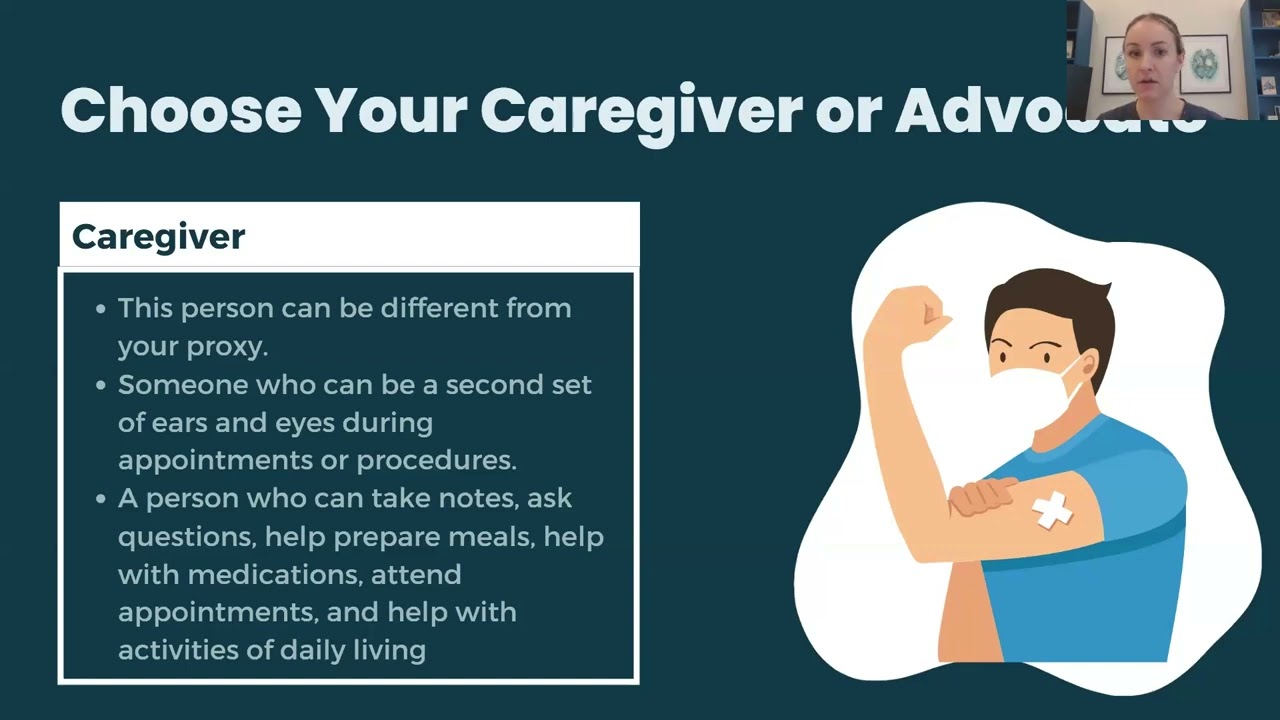
Advanced strategies for patient self-advocacy, medical billing navigation, and auditing healthcare costs.
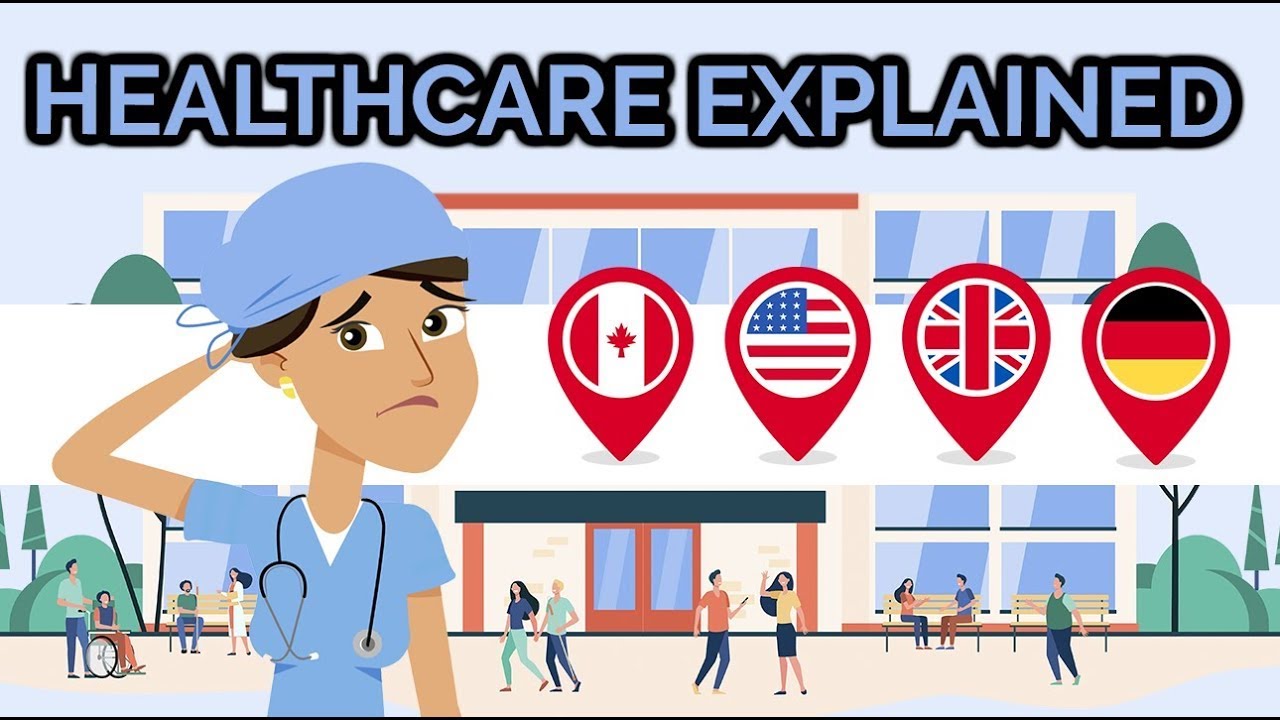
Comparative analysis of global healthcare models (such as single-payer or multi-payer universal systems) to evaluate reform viability.
The study of recent US health policies and legislative proposals aimed at price transparency, prescription drug pricing, and insurance reform.
Exploring the 'social determinants of health' (SDOH) and how systemic socioeconomic disparities compound the issues within the medical system.
270K views8.5Klikes47:06Original Release: 2021-06-27
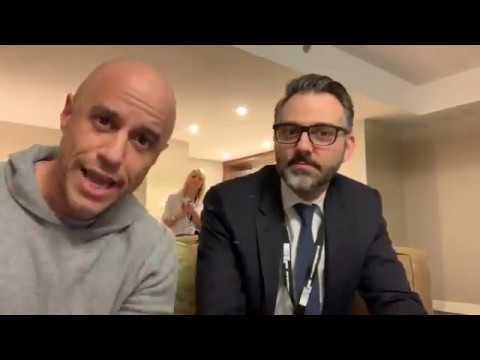
Good morning, guys! Here with Anthony Kaveh, he's an anesthesiologist here in the San Francisco Bay area and you're also a…?
Integrative medicine specialist.
Integrative medical specialist.
So, today, guys, we're gonna talk about the medical world and I’ve seem to find there's a big gap between us, citizens, and what's going on behind the closed doors in hospitals.
So, we're gonna talk about let's say, some of the disconnect, some of the challenges, some of the things that aren't going so well at the moment.
I can’t think of anything!
Brave Anthony's here with us to do so, but it's not all doom and gloom We're gonna talk about some of the ways all of us: you, me… Anthony's seems to have it figured out so far, but how we can implement things in our lives to make them much better during these COVID times and just life in general.
So, Anthony, what's the biggest problem you're seeing right now?
That's a wide question, but what are you seeing behind those closed doors that we don't see?
And as an anesthesiologist, you're seeing people on the line of life and death, right?
Every day.
Every day we see people right on the line and yet, our society has been looking a lot like a pennywise pound foolish kind of story.
Okay.
What do you mean by that?
So, imagine trying to save a couple pennies here and there but then, in the long run, losing pounds, and pounds. and pounds or… We look at, for example, masks right now.
We look at, for example, masks right now.
Right. We recognize there's a very real benefit to masks in the correct situation and we recognize that the risk of transmission situations can be very low.
We focus on the things that might save “pennies” like masks in outdoor settings where the risk for transmission is low.
But we're unfortunately very mute about the “pound”. Okay.
About what are the underlying risk factors that increase the risk for severe COVID infection for example.
Okay. So, why do you think there's no attention on these overall factors?
These, you know… There's sort of some big themes here but overall health in society is the better society, right?
Why is there a lack of attention on that?
A healthy society is good for you, it’s good for me, it’s good for every single person because we’re all investing in the health care system.
If someone can't pay for it, you and I have to pay for it at the end of the day.
And money is to find that resource people forget: if somebody is using too much of it, unfortunately that might mean less for somebody else.
What are you seeing, Anthony, when people are on that line, you know, between death, life and death… You're that guy holding them there, which is gotta have a lot of stress and obviously and obviously responsibility.
What are you seeing in the health of society or what can we learn from that?
I'll let you take that one.
How did we get here?
How did we get here?
How did we get here?
Something that people need to recognize is that in the operating room, in the emergency room, in acute medical settings we do a phenomenal job with Western medicine.
Okay. We save lives.
When you get hit by a car on the highway if you're unfortunate to have a gunshot wound, you have a bad accident, we will do the best job with our cutting-edge medical devices and all those things.
Undoubtedly.
But this is the minority of what costs us as a society and what costs us as a medical care system.
The heartache.
Essentially, we see the sick people out there and it's rarely from these types of acute conditions.
It's usually from the consequences of high blood pressure from poor nutrition, from obesity, from diabetes.
When people get their amputations from their bad diabetes when they don't have eyesight from their diabetes, when their kidneys fail, this is what constitutes a lot of what we see.
And when they end up on the OR table cuz they need their limb amputated or they have an aortic aneurysm or they have an aortic aneurysm cuz they've been smoking their whole life… How did we get here?
What happened for the years and decades we had to intervene to help prevent this from happening?
It breaks my heart!
Hot dogs in schools aren't helping for kids?
Well, I mean, maybe the Doritos help sometimes, I don't know, but… I don't know if I can say brand names like that but… Yeah, the vending machines to the kids, the targeted advertising of unhealthy habits to our children does not help!
So, what do you think: you're in the medical world.
The reason these things are not being talked about at a… you know, there's not a lot of volume on this topic is because where's the money to be made?
It’s not on prevention.
I’m gonna throw you under the bus a little.
Oh boy! But say whatever you want obviously but it's not prevention, right?
Yeah… Unfortunately, an ounce of prevention is a pound of treatment but… We’re disincentivized.
It's the plain, unfortunate truth, and if people don't know, they should know.
You're disincentivized as a medical worker, as a hospital, what?
Well… Pharmaceutical company?
Dude, you're epicly famous.
You are awesome!
Hey, thank you for great work you're doing.
Thank you! Great work.
You're a very health-conscious individual.
I am! I can tell. I am, I am.
I'm jealous of you, I wanna be doing what you're doing.
Do it! Grab a GoPro!
This guy! Serious… YouTube?
Anything we do, there's always a risk and benefit.
Anytime someone's having surgery for example, yes, you might take out the appendix and they might be just fine, they probably will be fine, but they could also die on the operating table from complications of anesthesia.
They could die from infection. Right.
Can I tell you one the experiences I had in the medical world?
Go for it.
And I've been to the doctors very, very few times.
I've had very few injuries luckily.
Good for you!
So I was on a mountain, I was mountain biking.
Crashed the bike, broke my finger.
Got splinted up, healed up fine.
Few weeks later, I was getting this tingling like this tingling down my arm when I was sleeping.
And so, I went to the doctor and I said: “Doc, I'm getting some of this tingling, is there anything I can do?” And he did this… Do you mind?
Go for it.
He's like: “See, Peter, what we can do is, what we'll do is we'll just take out this top rib here.
So, we remove this, it will free…”, I forget how we said it but like “The nerves will become unpinched”, blah, blah, blah.
“We just gotta… just gotta remove that part”.
Yeah… And I felt like I was talking to an auto mechanic about my suspension not working and I said: “Doc, is there… what about yoga or acupuncture?
Is there anything else I could do?
I'd rather not start dismantling my body over some tingling at night?” and he's and he's like, he assured me: “No! That won't work. Not gonna happen!”, And I didn't follow his advice, thank God.
You still have all your ribs in place?
I still have all my ribs.
2 weeks later, it went away!
Went away.
And I haven't felt it since.
We call this “the tincture of time” in medicine.
“Tincture of time”. Oh my God, it’s got a saying?
Oh, of course! Because this is what you just said: things are on a spectrum and the body has an incredible potential to heal itself, Undoubtedly!
Nobody makes money when the body heals itself, we need to face it.
So, he’s making a sale?
I do wanna be careful, I wasn't there, I don't wanna speak for the surgeon… Okay.
I don't know what your symptoms were.
But traditionally the truth is that when we go to medical school in the United States we are trained to deal with acute situations which we do very, very well.
We are not trained for wellness.
We're not trained for health optimization, we are typically not trained for low-risk interventions.
So, who is trained for that and who is, you know, giving us that information in society?
It's not the CDC, right?
We're not having our big organizations telling us how to live?
I mean, I'm sure there's stuff on their websites but… I don't feel like there's some… especially this year, you think they’d be like: okay, the best thing you can do for yourself is getting a really good health.
I've failed on that a little bit this year.
I've doubled down on my chocolate intake, I've doubled down.
Go for the dark chocolate, 100%!
Nah, I’m not a purist like you.
It's not… there's not as much dopamine in it because let's face it: sh*t food gives you a rush, right?
But did you know that you can retrain your body?
Did you know that the dopamine rush can be trained?
No, no, we don’t talk about it.
Let’s go right here, let's check this out.
The pallet adjusts!
The pallet adjusts.
I don't know, that’s… that's a big sale, Anthony.
How does my palette adjust?
Because sugar is the dopamine, it's the quick hit.
It is but there's more than just sugar that can do it.
But see, that once you get there, there's no… What incentive does anyone have to try to explain to you how your lifestyle can fundamentally change your physiology?
It's just not what we're trained to talk about because and it's not a fault the doctors: we have 15 minutes maybe with the patient.
Maybe 20-30 minutes for a first-time encounter.
You guys are pressured hard these days, right?
We are pressured hard.
It's not a sub story, it’s the reality.
Right, right. We have very limited timing cuz do you wanna be late for your appointment?
No. I mean, sorry, you don't want the doctor to be late to see you, right?
Right. Well, then if you can't take extra time with your doctor, I have the next patient be late, right?
I mean, it wouldn't be fair. Right.
So, we need to be on a timetable to keep everyone happy.
It's really mission impossible.
That's what primary care is in the United States: mission impossible.
They ask way too much from primary care docs and there's no way they can deliver.
Who's gonna sit down with you for an hour to talk about how your body can heal itself?
Who's gonna sit down and do that? Right. Who?
We're not trained, we don't make money because we don't get compensated as much for preventive things as we do for acute fixes.
Okay. And I'm not gonna comment on the right or wrong and so far as to say that you can tell me, if you would rather have somebody spend an hour talking with you about your lifestyle and how you can prevent it versus being on the OR table 20 years later because your cornea arteries are filled with junk from the lifestyle light up to that?
Okay, what percentage of your patients are there because of bad choices in life?
Recognizing that we don't have the absolute truth number, it's probably gonna be well over 50% fine to 75% percent fine. Okay.
But it depends on many factors and I gotta say this to be complete here: there are gonna be some cancer centers that look at only specialty care in pediatrics, the child with a glioblastoma in the brain, it's very difficult to say what led to that Yeah, sure. The child has got a tumor in their eyeball - difficult to say that it was a lifestyle choice, Yeah. Versus the older woman with uterine cancer with risk factors that we know revolve from elevated BMI and obesity.
Gotcha. So, what do you want people to know?
You reached out, you said, there's sort of an information gap these days in your industry.
I hate to call it an industry but that's what it's called, right?
Well, it is. It's an industry, okay.
There’s an information gap between the public and your industry.
I mean, in a nutshell, these are all like five-hour-long conversations we could have on everyone of these topics, but what is What needs to be fixed in this sense?
Like, what would be some remedy, quick fixes, I hate to say that and I don't wanna say “band-aids”, we need deep dives, right?
We need deep dives. Structural deep dives?
But it starts Yes, the organizational level in terms of community structure and public health.
Of course, this is gonna be the bedrock, it's unequivocal how important this is. But!
There’s also personal responsibility in agency and this is the beauty, the elegance of the human body, it can heal itself with the right empowerment.
And to answer your question of what is the single most important thing is - patient empowerment.
Everybody can heal themselves to an extent, but Their environment may not enable them to do so which is why it's a too pronged approach.
Of course, the community and the environment has to be optimized but we can never forget that the patients themselves has incredible potential to heal their body.
How is that… how is that approach now?
It's approached that the patient doesn't have incredible control over their destiny or what do you think on that?
No, absolutely, you're correct because the message is that you see commercials for anti-depressant medications, for erectile dysfunction medications instead of addressing the underlying cause.
What we forget is that all these drugs that that are pushed out there have side effects.
This is why what I said earlier: Western medical approaches we unfortunately forget the risk benefit of every recommendation we make.
Okay. Everything as benign as any medication may have potential, tremendous potential for benefit but also has potential for problems.
Right.
And this is the opposite of patient empowerment where we look at lifestyle where you nearly unanimously have tremendous potential for benefit without the side effects.
And with less cost.
When we look at 20% of GDP going to health care costs, the lifestyle modification components don't contribute to the 20% number that we're talking about.
Right, right.
Oh, let's go up here.
Here we are in Golden Gate park, guys.
Such a beautiful park in San Francisco.
Okay, so… There's a lot we can do on an individual level but it's hard.
I’m not in my optimum shape right now.
I've been in much better shape before.
Why do you stay in prison when the doors are wide open?
We know a lot of… I don't know, how… No, it's good How? How do you do it?
It's nice, it sounds good, Anthony, like, I'm empowered.
But I'm also empowered right now, I have a craving to go get that, you know, that cookie after this talk. Right, so… You're empowered, yes. Okay.
But give me a little more on that.
Like you're a strong, you're a strong-willed guy.
Yeah. And you're seeing it, I guess you have an advantage too: you're seeing every day at work the fallout from bad habits.
We all are but yeah, yeah.
No, you more so, people are… And anybody who's sending a check to the IRS, who knows that where their taxes.
Yeah, but there's a disconnect, there's a disconnect, like you're not connected, you're up close and personal.
A little bit but yeah.
You're in those hospitals you're seeing people dealing with type 2 diabetes, which you just scared me about because that comes from eating too much sugar, right?
Multi-factorial but yes, lifestyle and refined sugars Yeah… are one of the strong contributors we believe to developing and particularly in children.
And when children develop type 2 diabetes, it's the worst case scenario for us all Yeah Because they have a whole life ahead of them.
They're on the system their whole life, They're in the health care system.
And their whole… and not to mention their own personal life, it breaks my heart!
I was telling you the other day, I had a patient in the operating room 12 years old… Let's go down here.
Who weighed over 200 pounds! 12? 12 years old. 200 pounds?
12?
12 years old.
200 pounds?
Over 200 pounds!
So what's his chances in life?
Well, there's unfortunately a trajectory that is not fixed but is likely, it’s all about probabilities, and unfortunately when that happens, that patient still has the potential to turn things around, the human body can recover but it takes all the more willpower and acceptance of responsibility.
Okay. So, is it fair to say that… elements of the system look at that as a perfect patient because there's a lot of money that's going to be spent on his life throughout his life?
If it doesn't change?
You know, it's funny you say it that way because it's in some ways money to be gained from the treatment that comes from long-term insulin, from anti-diabetic medications that one may take, but it's also moral injury to the health care system because we're human beings!
As doctors, it breaks our heart. It hurts!
We don't wanna see that child sick.
We don't wanna see their parents sick.
Right. But what tools do we have when we're constrained in the system when we have 15 minutes with the child and their parent To talk about the lifestyle modifications?
You ask: what do we do?
Well, it starts with education.
Empowerment starts with education and awareness but it's difficult to give these tools to patients when the cards are stacked against them.
The cards are stacked against us all in this type of… Okay, one way to unpack it, I would say easy food choices, fast food.
That's an easy example.
That's cards are stacked against you, right?
And I was just in Southern California and so, commercial real estate, right?
We all think in California, commercial real estate or maybe across the nation is in the gutter.
Like downtown San Francisco “for lease” signs everywhere, commercial properties, but I was talking to a commercial agent down there.
I'm like, “How's the industry?”, thinking the answer is gonna be “terrible”.
He said, “Oh, my work is great right now!”.
I'm like, “Wow, how's that?” He's like, “Fast food restaurants opening up left and right”.
Because of the pandemic, I guess, right?
Cuz it's easy to go in and get takeout?
And yet While masks have a role, their role is “pennies” compared to the “pounds” of that type of lifestyle nudging people. Right.
So, okay, how about this Anthony?
What the irony: everyone has a mask on here outside as we're talking about “pennies” and “pounds” with masks.
What's your take on that?
Everyone has a choice to do what they want.
Okay.
I will respect their choice.
It is inconsistent however to place so much importance on a 0.01% risk versus a 1% risk, and the 1% or 10% risks come from an accumulated lifetime burden of fast food and unhealthy lifestyle choices that far overshadows the 0.01% risk.
Recognizing these are somewhat arbitrary numbers but orders of magnitudes difference versus what we saw, and comparing what we saw earlier to what most people are subjecting their bodies to on a daily basis.
Wearing a mask can be super… it is very important… Yeah, give us the low down on that, please.
I have my theories, here's how I operate: outside, if I'm not close to people, there's ventilation, UV light, from all the doctors I've talked to, outside that risk is so low.
They told me, “Don't wear a mask”.
Around people, up close and personal, inside - definitely, I wear a mask.
Are you at liberty to say this or is that too controversial from your… That’s very reasonable approach, I carry a mask with me because I might run into somebody.
Yeah, and I have one with me.
We both have a mask on hand. Yes.
When we're looking at the 0.01% risk, my personal risk profile is that I try to optimise everything but even I don't believe that 0.01% or you know roughly with this if you wanna calculate it however you want - an outdoor setting is very low.
It is very low? It is low, it’s undeniably low.
Yeah.
And there's realistically more things that are gonna kill us than being in an outdoor setting not wearing a mask, recognizing that we have a mask with us should the environment change, cuz hey, we might go into a cafe right now and that's a different risk.
So, what this leads to also is what you're saying earlier is fear, right?
And so we're not… If we're in this constant state of like on the heels instead of on the toes, worried, worried, feeling in fear mode, in panic mode, that also hurts overall well-being and health, right?
It's risk-benefits. It's hard to measure that though?
Well, it's yes and no, yes and no.
Because like I was saying earlier, everything is a risk-benefit.
Every decision we make in life has a risk and a benefit.
The risks of fear a continual state of concern and worry is actually not that difficult to quantify: we have heart rate variability measurements, there's so many ways of quantifying the burden of persistent unmitigated stress, elevated cortisol levels etc., that have very negative impacts. Okay.
And living in a state of fear, particularly in childhood, can result in long-term psychological and physical, physiological problems.
And I've seen it in many ways like being in the hoods, you know, there's this uh… People are worried about safety and they're always on edge.
You know, when I did this video in Miami, in the hoods of Miami.
The guys I was with - really cool guys, but when they got in there (‘cuz when in Miami Beach they're chill), when we got in there, it's like their guard ramped up.
it's like their guard ramped up.
If you're too relaxed, it's actually a danger for survival, Meaning, you're an easier target.
So, you have to have that fear mode up to exist, which has to be unhealthy, right?
It's unequivocal. This is not controversial that living in a constant state of fear, not only hurts your psychological well-being but very much of your physiological well-being.
Undoubted, there's no question.
So, why is this message not out there?
On a like a macro level?
At least in the US right now I don't see it, I don't hear it.
Why is there not an overall well-being approach?
You think there would be because like we said, an ounce of prevention is a pound of treatment.
Right. Yet, we don't have that type of incentivised public health structure.
Looking at the macro scale, we don't incentivise these things.
And in your training, in med school?
The public health system doesn't do it as well as it could.
It does a good job in many ways and we're not downplaying it, there's a good job but there's much more.
There's always room for improvement, right?
Always a room for improvement.
Sure. At the individual doctor level it’s partly not our responsibility the same way as it is a public health message because we deal, like I said, we deal with acute people.
We are trained to save lives.
When someone collapses right here, we know how to do CPR, defibrillate, then we save lives in the moment very well.
When we go past that we drop off very quickly in our cost effectiveness of prevention and treatment.
We can do it but not cost effectively, because we have 15 minutes at a time, what are you gonna do?
If a patient lives 99% of their life at home, at their school, at their work, whatever.
What is 15 minutes in the office realistically gonna do other than manage medications, trying to talk about smoking cessation, trying to talk about lifestyle, and then gotta see the next patient cuz… we don't and then gotta see the next patient cuz… we don't wanna get a bad Yelp review if we're late to see patients.
Right. Let's face it: we're under so much scrutiny.
What are we gonna do?
Is it getting harder in your industry?
Undoubtedly it's getting harder!
It's getting harder for doctors what, in the last five years, ten years?
It's been longer but… Oh, you're young, you haven't been in it for forty years.
But we have personally has social media that is escalating and it's very difficult when we're trying to do what is right from our training, from the decades we spend in school from the decades we spend in school, getting licensed and then having people with perhaps less training and less education in our field Trying to review us is a difficult situation to put us in.
Who’s trying to review you?
Patients. Okay, okay. It's a little Okay, okay.
It's a little bit… it's a little bit challenging.
Medicine is a little bit different than a random industry because the customer's always right. It's a typical business. The patient It's a typical business.
The patient may come and if common example, they want antibiotics.
They want opioids for pain.
They want… “I want my Tramadol, doc!” “I need my Percocet!”.
Tramadol, what's that? Tramadol.
What's that? Um it's a synthetic opioid, it’s kinda like… it's a weak type of opioid if you will.
So people who wanna… and this is very real.
And these are the struggles that we have.
Cuz we cannot get out opioids liberally.
We are in opioid epidemic because pain was fed as a fifth vital sign.
Many people will say because of industry influence that help doctors be more concerned and more receptive to prescribing opioids for patients in pain and at a fear of being negatively reviewed.
And it's easy too.
If you have to keep a volume of clients and you have to be on time, the easy way out would be just a med.
Give the antibiotic, give the Percocet, give the Xanax.
And that's “band-aid” stuff, right?
This is all, this is nearly always band-aid.
There are always exceptions but by and large, we're talking about band-aid solutions.
They're gonna, you know, as an example, they're gonna be patients with cancer terminal, they might need Percocet.
They might be in their last 5 years of life, their last 6 months of life, yeah, they might need Oxycodone.
But these are the minorities.
That stuff’s terrible, I took that. Oh!
It is horrible. It was like a… I had like crazy dreams and it was like a… it was like a psychedelics or something but not in a good way.
And yet, why do we prescribe more Oxycodone in this country than any other country in the world?
This is getting really depressing, so, Anthony, bring this ship around.
No, it's not.
Give us a Hollywood ending.
No, not the Hollywood ending, but give us something to go for or hope for.
Let's go up here, this is a cool little trail system.
Look at how fit people are here though.
You gotta say… This is the way to go!
This is the way to go.
It's a nice environment.
People taking responsibility over their own health. Yeah.
In the context of them having the ability to do so.
An area where the weather is amendable, there is a park, there are sidewalks.
We're not worried about crime.
We need to recognize we are in an environment that facilitates this.
The system, everything's set here for it.
A lot of places don't have this. Yeah.
And we never want to blame.
Blame games are not how we do things in medicine.
But empowering is what we need to do more of.
Okay, so this is the solution?
This is where we're gonna get out of this thing?
This is one of the solutions.
Okay, so, break it down for us, Anthony.
Empowering.
Other than making good conscious, sober decisions, which I'm even having a hard time with myself.
Seriously, with the sweets.
That's my one thing.
I don't drink. I don't do any drugs.
You know, sweets.
That's good for you.
But see you've already, you gotta focus on the bright things.
How did you cut those things out?
The drinking - ayahuasca.
Okay. I don't know if that's a positive thing in your world, but it was a very powerful psychedelic that brought me out of it.
Well, then, I think it’s… it was worth it. For sure!
There's a point there where you have, you've changed a lifelong habit. Yes.
Through one experience that's a very… it's hard to argue against that, let's put it that way.
Yeah and I never thought I was an alcoholic.
And until you stop completely… It was like was always a refrigerator humming in the background.
Like, you know, those old refrigerators that would always make that noise?
You don't notice it most of the time but it's always there.
And so every time I was at the, you know, a start of a vacation or the end of a long day, go to the beer.
And it was nice and it was relaxing.
And I'm not… I'm not like looking down on that or anyone that drinks, it’s not my point, but for me removing it was like… it opened like this light.
This light came into my life and by having a… I'm a addictive personality so it's either all in or nothing!
A lot of high functioning people are like that.
So, by having nothing, there's never a choice, it doesn't take up any mind space, I never have to think about it, I don't battle over it I don't battle over it - that sort of thing.
So… So you would just provided a part of the answer: how people feel when they're healthy?
People have from childhood oftentimes lived their life unhealthy and they believe that's the status quo.
When they get a taste of what a healthy life is like it can be life changing.
The example that I like to use in patients is that imagine a tennis ball that's soaked wet.
It can't tell if a drop of water comes on it cuz it's already saturated with water.
If you let the thing dry out, they have a dry tennis ball and now a drop of water comes on it then you can tell, “Oh! There's something's different, but people… We live our lives in a state of chronic stress, chronic unhealthy behaviours from diet, lifestyle, stress from our environments, all the other issues we talked about.
It's more than just the patient, it's the environment they live in.
But it's hard for them to see what, as you said, the light is like when you live your whole life in the inflammatory environment.
Yes.
But when people realize what it's like, some, not all, but some will never want to go back.
That was your experience, it was personally my experience as well.
So… The realistic approach or the cold hard truth is nobody can do it for you, you have to wanna do it yourself, is that is that fair to say?
That's part of the solution.
Because… I mean kids can be educated obviously that is one thing and they need good examples.
But when you're an adult?
You need to have the cards not stacked against you as much as they are now.
And our society makes it difficult to be healthy, and to be responsible, and to accept responsibility for your health.
Why does it make it difficult?
There's money!
You need to follow the money when it comes to our health decisions.
We think we are in control of our health and we can be in control but that's not the message that we are given when we are bombarded from every angle by advertisements, trying to pedal unhealthy behaviours.
When people make a buck off of our health, it's hard.
When people know what makes our dopamine rush, it's hard for us to resist that.
And when we target our kids for this, what chances our kids have?
It's mission impossible!
Like, I just remembered growing up with the cartoon, I mean, a commercials for Captain Crunch.
Oh! And Trix Cereals. Yeah.
And that's just pure crack cocaine for kids, right?
There is nutrition…it's just almost like smoking: some will consider it to be like smoking where there is no benefit and only harm.
Okay. Cuz the nutritional value of all those things you're talking about is nearly zero and the harm is incredible.
And it's marketed in a fun, jovial, positive way.
It's all manipulative. It's all manipulative.
But we're manipulating the health of our kids!
This is the health of the future!
What chance do we have?
And then we're surprised that our healthcare expenditures are approaching 20% of GDP.
That number, we can't understate that number.
When we're talking about stimulus checks, all these things going on.
$1,9 trillion is a huge number yet we spend so much unfortunately on futile medical care every year!
Okay, I was gonna say where's the, where's the good way out of this?
But the whole system needs to change in some way, shape, or form?
Well, you're saying the emergency care or the like the very, you know, what's deemed as Western style of treatment is nailed down pretty rock solid here?
If I need brain surgery, this is the best place to be, right?
Yeah. Fair to say? Very.
Preventative - not at all? No.
And so how does that turn around?
It starts by educating and raising awareness and by recognizing what cards are stacked against us.
When people realize what they're being fed through advertisements and can start to look through the veil that's trying to manipulate them, they get better insight into what their tendencies are and how they're being manipulated to begin to counter those.
Okay. Would you say other doctors share the same frustrations, you know, like you're talking about today?
Is that a normal thing?
We all do. We're humans like you, we have hearts!
We don't wanna see people suffering.
Absolutely!
But we are also suffering from a really challenging situation where at the end of the day, we only have so much candle we can burn before a week goes out.
Yeah. And there's a reason why physicians commit suicide at the rates they do.
It's a high rate? It is a high rate.
I didn’t know this.
Physicians burn out.
They have moral injury like anyone else, if not more because we are faced with this incredible burden that we can't do as much as we want about.
Cuz like I said, we're limited to such short encounters. It takes a toll on us.
So, you must be pushed between the industry that's basically the machine and then the humanity and when you're seeing that… Yeah. And then when we talk about… A reporter once told me, he said, “Doctor, you can't die from stress, right?” And I just… I didn't even know how to respond.
People die from stress all the time and suicide is one of the most overt signs of that but did you know that you can go into heart failure from physiologic stress?
Have you heard of broken heart syndrome?
No. Yeah, it's a very, very real phenomena that we doctors have seen all the time.
I've seen it. My wife is an ER doctor has seen it.
When people have strong emotional feelings, their heart go into failure and they can die.
If you wanna be an even better example, before surgery, what we see, classic, classic example about how strong what our thoughts are and how they control the rest of our body.
When people see blood like when an IV goes in, you know that people can faint to the sight of blood?
Yeah. That is your brain reducing circulation to the brain itself causing you to pass out.
Your brain is controlling your heart, your blood vessels causing you to pass out.
That is how direct and how fast that relationship is between what you're thinking and the rest of your body.
These are examples of bad, right?
Without, you know, people fainting and losing consciousness and having heart failure but you can do the same thing as well!
You can train your body to be healthier, as well to reduce the inflammatory burden.
This is where the non-western approaches are so powerful.
This is where we have tai chi, and yoga, and acupuncture, mindfulness-based stress reduction. Right.
This is the good side.
There's a way out of this.
There's absolutely a way out of this and the best part… Let’s check this out, this is cool.
The best part is what? It's cost effective, and there's fewer It's cost effective, and there's fewer side effects, and it's cheap, and it's available to everyone.
It's available to everyone!
You don't need to go to the pharmacy to buy a chill pill.
But you know, who loses out? Ahhh!
And I'm not against capitalism, I love capitalism and I love investing but the shareholders lose out of that equation.
If you don't count the patients as the shareholders, yes.
If you count the patient as a shareholder, Peter, they win.
Yes, true.
So, this is the question: who is the shareholder in your health?
And in my health, and everyone in this park's health?
Who is the shareholder?
Well, it's also other people, an industry that may not have the same incentives that you and I have.
Yeah, yeah.
And we need to recognize that at the end of the day, we're the advocates for our health.
So, we need to bring that power back.
As cheesy as that sounds, right?
We need to bring that back to ourselves?
And I hate to say it's life and death.
At the end of the day, when patients die from a lifelong burden of diabetes or hypertension, you know, that person lost their life.
And it might sound cheesy but it's true: it is a life and death situation where we need to advocate for our own health.
We need to be in charge. Yeah.
If we're not in charge, who else is gonna do it?
Your docs, they love you… You know, I love my patients but I can't do everything.
We can't. I appreciate that truth.
I cannot export the responsibility of my health to you.
You have a wife that's in medical, do you have kids? No, not yet.
Okay. So, you'll have kids eventually, I'm sure you'll have a family.
There's no way that, dozens and dozens of people, I don't know how many people you see or your wife sees, you can’t take care of their, be responsible for their health.
It's just not gonna happen.
So, that will never happen.
And what is one way distracting yourself?
I ain't cutting the cord!
If you're not bombarded by those messages?
But isn't it like a whack a mole, it pops up somewhere else in life, you know what I mean?
A lot of times… Okay, we're gonna get in deep and and this is a whole another conversation but I'll leave it very short.
A lot of times you're going to something to cover up some other pain.
It could be psychological pain, it could be physical pain, right?
So… Finding healthy alternatives to that which doesn't sound too fun.
No, this is a serious issue.
Adverse childhood experiences are one of the… difficult to prove cuz it's difficult to quantify but they appear to be a very large contributor.
Are you familiar with adverse childhood experiences?
Well, I can understand what you're saying traumatic experiences kids have in their early years?
And by traumatic, we're talking about things as major as sexual trauma, physical violence, they could even be more benign. Abandonment?
Abandonment, it is very extreme, correct, absolutely.
But even more benign things, like Katrina.
I mean maybe that's not benign but you're displaced.
If we're looking at maybe COVID, not being in school, not being around kids, being around parents that are arguing because they don't have the same income and they need to… economic burdens cause.
Right, they lost their business and that comes home.
Absolutely! These things affect the brain and they’re developing child in ways that are not bening And this is well accepted in the psychiatric literature.
This is unequivocal.
However benign they may sound to us as adults for a child they're very different and these increase the risk of certainly alcoholism, drug abuse, but also heart disease, lung disease.
I mean, the whole spectrum of your health for the rest of your life is colored when you experience an adverse childhood experience.
And I gotta say, I don't remember the exact number right now, but it's in the order of at least 50% of the United States population of adults have experienced one childhood adverse experience and it's an unbelievably high number.
Okay, so you can't go back and change that once you grow up, so how… But because you said earlier, but you were saying how we have pains that we try to cover up. Yeah, yeah.
Yeah, yeah.
This is not… it's not just Oxycodone pain.
We're talking about pain… Pain is not only physical pain, it’s psychological.
Yes. And pain is in the brain 100% cuz you don't need to be pinched or to have a knife at you.
People experience pain without necessarily an obnoxious stimulus.
Meaning, pain is 100% in the brain.
It's real but it is in the brain.
Cuz you can have a painful experience, I can… Some people can get caught with a knife and not feel pain. Yeah.
Pain is in the brain.
So, no matter what that source of the pain is, we try to cover it up because we’re humans and there is a cost.
One of my teachers once at medical school said, “The body keeps count”.
“The body keeps count”.
No matter how old you were, no matter what you're trying to suppress, the body does not forget.
You can't outage it.
You know, it's not like, okay, I'm 10 years older now, it will go away.
It does not go away. Until you deal with it.
And this is where… it is empowering to recognize that you can change your relationship with that pain.
Yeah. You may not be able to cure it.
When patients have terminal cancer, they may not be able to cure the pain, but they can address it.
When I have patients around the time of surgery, if they knew how powerful their expectations in their brain were for managing their post-operative pain, it would be a whole different ball game.
Pain is in the brain and you can change your relationship with the pain, and if you just want one easy example - the placebo effect.
Yeah. People know the placebo.
You know, somebody of my colleagues write off, they say, oh, it was quote, “Just placebo”.
Just placebo! I ask you, what does it mean to be just placebo?
Does that mean that you have a treatment with no side effects that is cheap?
Cuz that sounds like a really good deal to me!
What more do you want?
You know, we have the opposite.
We call the “nocebo effect” where instead of the placebo we think of as confirming a benefit, the nocebo is conferring a detriment.
Classic example, classic example: when we're doing epidurals for women who are laboring we first numb the skin over the back we first numb the skin over the back where we're gonna do the epidural, colleagues used to say, “Babe, you're gonna feel a little bee sting”.
A little bee sting!
This is a tiny, tiny needle to just inject a little bit of lidocaine to numb up the skin so when the bigger needle goes in, it's not as painful. Okay.
Sometimes, the doctor or the nurse would say, “Oh, you're gonna feel a bee sting”.
How do you think that preps the nervous system of the patient who's in labor?
I mean, for goodness sakes, this woman's delivering a baby.
They're already in pain.
They are legitimately concerned if not freaked out.
They need to tell them they're gonna feel a bee sting.
Peter, last time I had a bee sting, I didn't like it, alright?
Yeah. What if you're allergic to bee stings?
Then, I don’t know! What's gonna happen?
Oh my god. So, this is… this is the power of our thoughts and the messages we are fed.
What would you say?
Oh, I have so many tricks, I don't even… I tell them to cough.
I place IVs every day for a living, right? Okay.
I say, “Cough”.
Do you remember seeing earlier distraction?
What did the people do at the moment?
Yeah, yeah. You tell them to cough and you gotta concentrate on coughing.
And patients almost nine out of ten, if not ten out of ten, “The IV's in? What? What happened?” What? What happened?” Yeah, I can attest to that.
I'm a baby with needles.
It's distraction.
I'm at my weakest point when I see a needle.
There you. If you can distract for a hot second!
Yeah. But then we have messaging like this and we're going a little off topic but what does that mean?
Does everyone must wear a face covering?
Does that mean if you're far from people?
If you're close to people?
Stay six feet apart - okay, got that.
And I don’t know… “This business is required”, it might be a little bit unclear because… It's a bit unclear. I find it arbitrary because if we're out sitting in the field, does this sign… Getting exercise and all the other positive things that go with it.
“Everyone must wear a face covering”.
So, if you're following the rules and like my wife for example, she's always gotten the A+, she always did well like… This is hard for her!
My wife is the same way. Right?
So, you're so are you supposed to… you're throwing a baseball with a friend and nobody's around you.
Do you need that? Yeah.
And if you are not doing that, are you doing wrong?
And this is a big problem.
I think we'll finish it on this, is the messaging is very difficult that being from big corporations, the advertising, all the social media stuff we see, then going to doctors, learning a little bit about your perspective of it, you have to push a certain amount of patients through.
You cannot look out for my best interest, spend hours of your day worrying about that, it’s just impossible.
It's insanity to expect that, right?
You're not with a mask, it's okay.
We’ll live. And you had your vaccines.
I had my vaccines.
What are the low-risk, high-yield benefits we can do every day to improve our health?
Masks are great in the right setting but they're addressing like a 0,01%.
What are the 1%? What are the 10%?
More than 50% hitters that we can control with our life to not have to be on the OR table one day.
To not hopefully need chemo.
We don't wanna see you.
You know, if I didn't have to see another patient ever again, I might lose my job but I am happy for that.
If I wasn't an MD from Stanford and Harvard who practice acute care medicine, no one would listen to me, right?
But I do it on both sides.
You have the big title so people will.
Well, and if that's what it takes to help show people as close as we can get to the truth about what the truth of medicine is, how much we have in our own agency, the possibility of changing our health outcomes around In ways that aren't pushed out to the mainstream.
Well, then, if that's one step closer to to the truth, let's do that.
Love it! You got me fired up.
Where do I march? Where do I run on?
What flag do I hold?
We haven't even… you're scratching the surface here.
He’s fired up! This is nothing.
This content guys, you know, we're touching many things.
I really think Anthony needs to start a podcast.
He does have a YouTube, and Facebook channel, and a website. Couple. Yeah.
So, I'm gonna leave the links down below.
Here, let's walk this last bit here.
Hope you got something out of that.
I definitely did.
I feel healthier just by being around your orbit.
Put yourself in the right environment and the body will heal itself.
I'm fired up!
You change enough days, you change a year.
You change enough years, you change a life.
Alright, guys! Who's life is worth changing more than your own?
Yeah, fact and by doing so, you bring those up around you and you're a good inspiration and role model.
We all are role models for everyone and that's why we need to practice what we preach.
As a doctor, what would I be doing if I wasn't living what I was saying?
Okay, I'm gonna get fit starting today.
Guys, I'm gonna do better.
And all of your viewers out there are gonna take this and it's gonna vibe in them.
Right, right.
Great. Thanks for watching.
Anthony, you're awesome. Thank you.
Alright. Until the next one.
Up Next
23:36
Car Dependency, Suburbs, and Walkability: A Critical Analysis
@tiffanyferg
296.5K views•2022-03-22

5:07
Impact of Yuan in Indo-Russian Trade Amid Sanctions
@WION
261.9K views•2022-07-01
10:33
Behavioral Economics Explained: Rationality, Nudges, and Risk
@crashcourse
1.1M views•2016-03-12

113:18
The Age of Easy Money: Fed & Inflation | Full Documentary
@frontline
21.2M views•2023-03-15
Related Study Plans & Knowledge Roadmaps
Structured learning paths in Economics
economics
Sovereign Debt: Defaults, IMF & Restructuring
01Introduction to Sovereign Debt & Government Bonds
02Debt Sustainability & Credit Ratings
03Anatomy and History of Debt Crises
+ 2 more learning modules
12h5 modules
Explore Roadmap
economics
Market Design: Matching Theory & Gale-Shapley
01Introduction to Market Design and Price-Free Markets
02Two-Sided Matching & The Gale-Shapley Algorithm
03School Choice Systems and Mechanism Design
+ 2 more learning modules
10h5 modules
Explore Roadmap
economics
Impossible Trinity: Forex, Capital & Policy
01Introduction to Monetary Policy and Central Banking
02Exchange Rates and International Capital Flows
03The Mundell-Fleming Model
+ 2 more learning modules
8h5 modules
Explore Roadmap
economics
Healthcare Economics: Market Failures & Systems
01Introduction to Healthcare Markets and Market Failure
02Asymmetric Information and Adverse Selection
03Moral Hazard and Insurance Design
+ 2 more learning modules
12h5 modules
Explore Roadmap