





















Car dependency in suburban design creates significant social, economic, and environmental problems, as suburbs built primarily for automobiles discourage walking and public transit use, leading to isolation, higher transportation costs, reduced accessibility for disabled individuals, and environmental harm; however, walkable, mixed-use neighborhoods with accessible public transportation can provide more affordable, sustainable, and inclusive living options for all community members.
Car Dependency, Suburbs, and Walkability: A Critical Analysis
Added:The history of post-WWII suburbanization and the rise of the automobile-centric economy.
The concept of 'Euclidean' (single-use) zoning versus mixed-use development.
Basic transportation concepts, distinguishing between active transit (walking, cycling) and private vehicular infrastructure.
An understanding of the socioeconomic factors that shaped modern housing patterns, such as urban flight and federal highway acts.
The '15-Minute City' framework and the design principles of the New Urbanism movement.
Policy mechanisms for urban reform, including the elimination of mandatory parking minimums and implementing upzoning.
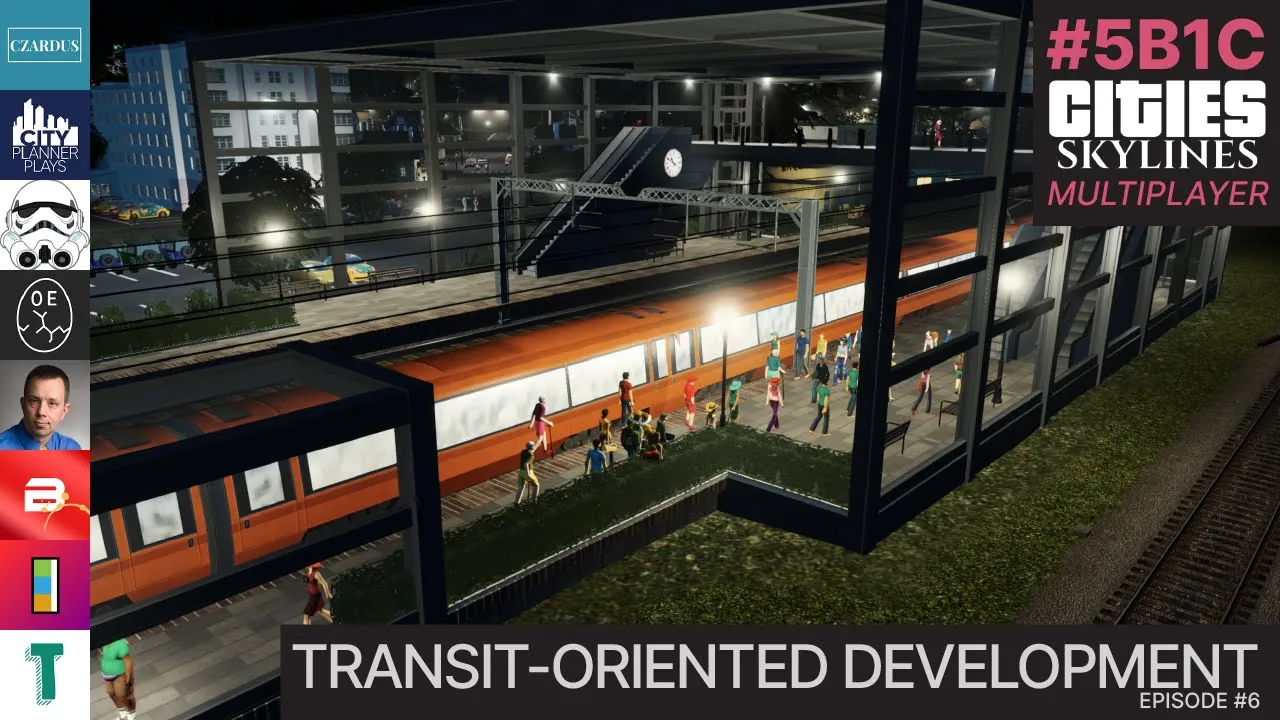
Transit-Oriented Development (TOD) and how to successfully integrate mass transit networks with high-density communities.
The financial and municipal sustainability of infrastructure, specifically comparing the long-term maintenance costs of sprawl versus dense urban areas.
296.5K views18.3Klikes23:36Original Release: 2022-03-22
Hello my dudes, my name is Tiffany! Welcome back to my series, Internet Analysis, where I like to research and discuss things relevant to social issues and media. Today's video is like, an intro to the intro on the topics of walkability, suburbs, car dependency, and I'm going to be recommending many resources as we go along.
A few weeks back, I shared a Google form asking you all about your experiences with walkability and car dependency, and I got over 6,000 responses, most of them essays; It was incredible, I've never received feedback like that on any topic!
So, I know that a lot of us have a lot to say about these issues.
This video certainly won't be comprehensive; There are entire videos, channels and books dedicated to each of these specific topics - plus, there are many angles to look at everything from: environmental, health, socio-economic, racial disparities, and more. So in this video, I'm mostly focusing on the very general questions of: how are people's daily lives affected by their environment, and what roles do walkability and transportation play? Initially, I wanted to go through all the different places I've lived, to compare and contrast those environments: New Orleans, Aix-en-Provence, New York... But even just this first section expanded enough to be this entire video, so if you want a part two, let me know!
Let's start with the suburbs. The suburbs are described by some as a clean, safe utopia; The ideal place to raise a family, everything you need in a convenient 15 minute drive away. And there's always plenty of parking! What could be better than cul-de-sacs and white picket fences?
A more critical view of the suburbs might say: the suburbs are boring, devoid of any culture or history. They're a depressing, expanse of sameness. bland cookie cutter homes, and tacky McMansions, surrounded by dying malls, filled with nothing but chain restaurants and stores. A Stepford Wives kind of eeriness. Cursed suburbia!
I think both versions can be somewhat true. But there are many different types of suburbs and everyone can have vastly different experiences.
I personally grew up in the suburbs of Orange County, California.
It was common to complain about living in the bubble, and how boring and same everything is.
But the biggest problem I experienced was the cost of living. It's extremely expensive, and it's very hard to enjoy where you live when you're worried about paying your rent every month.
So, even though my white family had an overall positive experience living in the suburbs, it's very important to mention that suburban development here in the US has been built on racist and discriminatory foundations.
Here are some videos that help explain the history of housing segregation, and redlining.
"The HOLC created residential security maps, and these maps - they're where the term 'Redlining' comes from. One of the most consistent criteria for redlined neighborhoods is the presence of Black and brown people. Redlining made it difficult, if not impossible, to buy or refinance. Discrimination in housing is the major reason that Black families, up and down the income scale, have a tiny fraction of the family wealth that white families do, even white families with less education and lower incomes... White people flee to the brand new suburbs popping up all over the country. Many of those suburbs institute rules called covenants, that explicitly forbid selling homes to Black people - and all of this was perfectly legal."
"The Fair Housing Act put "an end" to redlining in 1968, but we know it ain't going down like that. Banks across the country have been caught using redlining maps as recently as 2015 - and get this, most redlined areas are still low-income Black and brown neighborhoods."
I highly recommend watching those videos in their entirety.
Those parts of history are definitely not taught enough in US schools.
In addition to the racist and discriminatory past and present, the suburbs are also known for environmentally harmful sprawl, low efficiency, low density housing, thanks to restrictive zoning laws that prioritize single family homes and often make it impossible to build anything else. And this sprawl creates more car dependency, more parking lots and wider roads for all those cars. I recommend this video by Climate Town, great channel! Later in this video we'll be discussing car dependency and walkability... but first, let's give a shout-out to the sponsor of this portion of today's video: Vessi.
Speaking of walking, I recently adopted a dog, so we've been walking a ton, and my Vessis have been my go-to shoes. They are 100% waterproof and snow-proof, perfect for dog walks, unexpected puddles, or rainy days. Vessis are vegan and made from a material called Dyma-Tex that helps keep water out, while still releasing heat and moisture, and being very breathable.
I love that they're so easy to pull on, they're lightweight and extremely comfy.
These are my go-to shoes for any walks or hikes. It's just comforting to know that no matter what, I'm not going to end up with sad, soggy socks and shoes. And sometimes I go out of my way to stick them in water, just because it's fun to watch it slide off, it's kind of mesmerizing. So, I now have two pairs. This is the Women's Everyday in midnight black, which I love as like, a workout or a little gym shoe. And this pair, the Women's Weekend in oak brown, looks great whether I am running errands or going to the park. If you are looking for comfy, everyday sneakers that are 100% waterproof, look no further, I highly recommend Vessis! You can click the link in the description and use my code to get $25 off each pair of adult Vessi shoes. Thank you, Vessi!
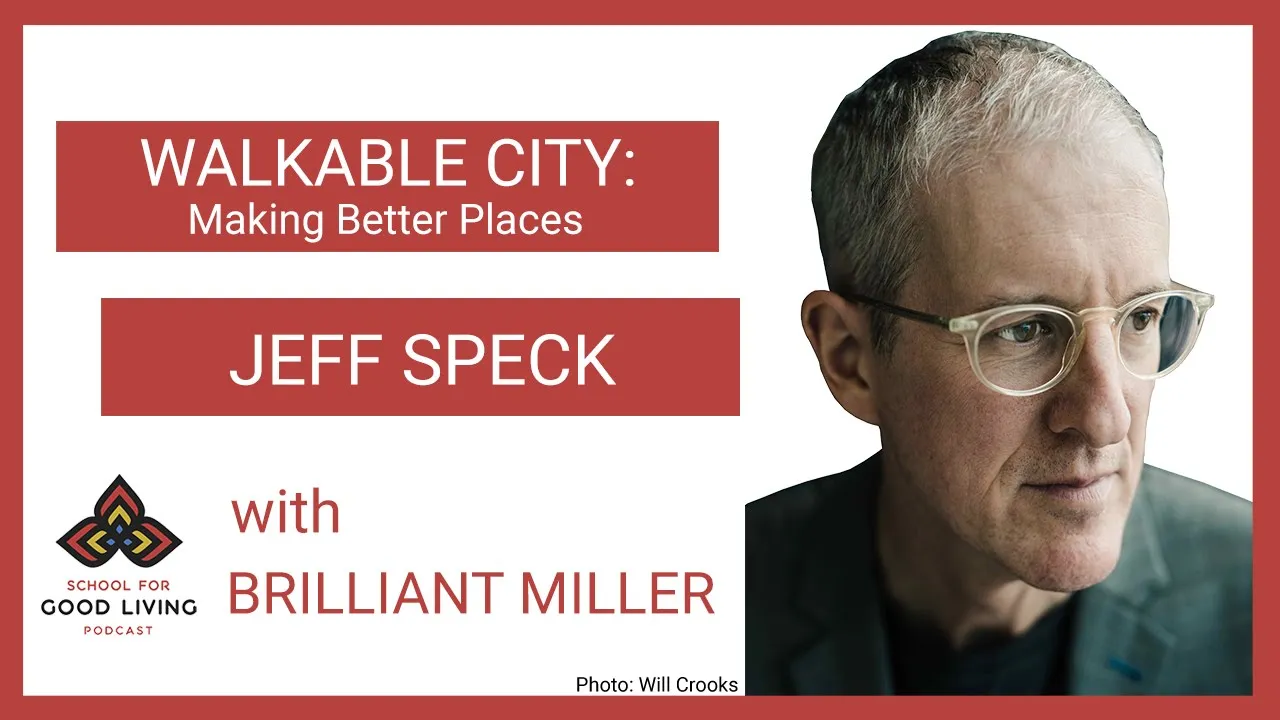
And now, let's get back into why walkability matters. To quote the book Walkable City, "The General Theory of Walkability explains how, to be favored, a walk has to satisfy four main conditions: it must be useful, safe, comfortable, and interesting."
Walkability is basically a measure of how easily one could navigate an environment without needing a vehicle; And by the way, when I mention pedestrians and walkability throughout this video, I'm not just referring to able-bodied folks literally walking, I'm talking about everyone who walks or rolls to get around. Being able to safely and comfortably navigate streets and sidewalks is a major disability and accessibility issue. So, in a walkable place, you could go down the street, pick up a coffee, go to the grocery store, stop by the bank, all within say, 15 to 20 minutes. Compare that to a less walkable place, maybe the closest store or restaurant is like, a 40 minute walk away.
Often, in the suburbs, especially, it seems like things are designed to discourage pedestrians.
"In a better planned town, these would connect with the shopping center. But unfortunately, these paths are blocked by an eight foot tall fence, and the people that live on the street suddenly have to go from having a 200 meter walk to having a 1.2 Kilometer walk - or about, three fourths of a mile - around the entire neighborhood just to get to a store in the first place. And this is on top of the fact that the strip mall and the surrounding infrastructure is so auto centric, that even walking there in the first place feels wrong and somewhat dangerous."
I can't tell you how many times I've seen something like that where I go, oh, that shopping center's right there, but I have to walk all the way around to go to it; or, oops, there's a freeway in between and there's no access. Oh, it's a two minute drive and a 40 minute walk, how does that add up?
The vast majority of suburbs in the US have been designed for cars, not for people. Here's a quote from this article, I've Seen A Future Without Cars and It's Amazing: "In most American cities, wherever you look, you will see a landscape constructed primarily for the movement and storage of automobiles... endless wide boulevards and freeways for cars to move swiftly, each road lined with parking spaces for cars at rest. In the most car dependent cities, the amount of space devoted to automobiles reaches truly ridiculous levels. In Los Angeles, for instance, land for parking exceeds the entire land area of Manhattan, enough space to house almost a million more people at Los Angeles's prevailing density."
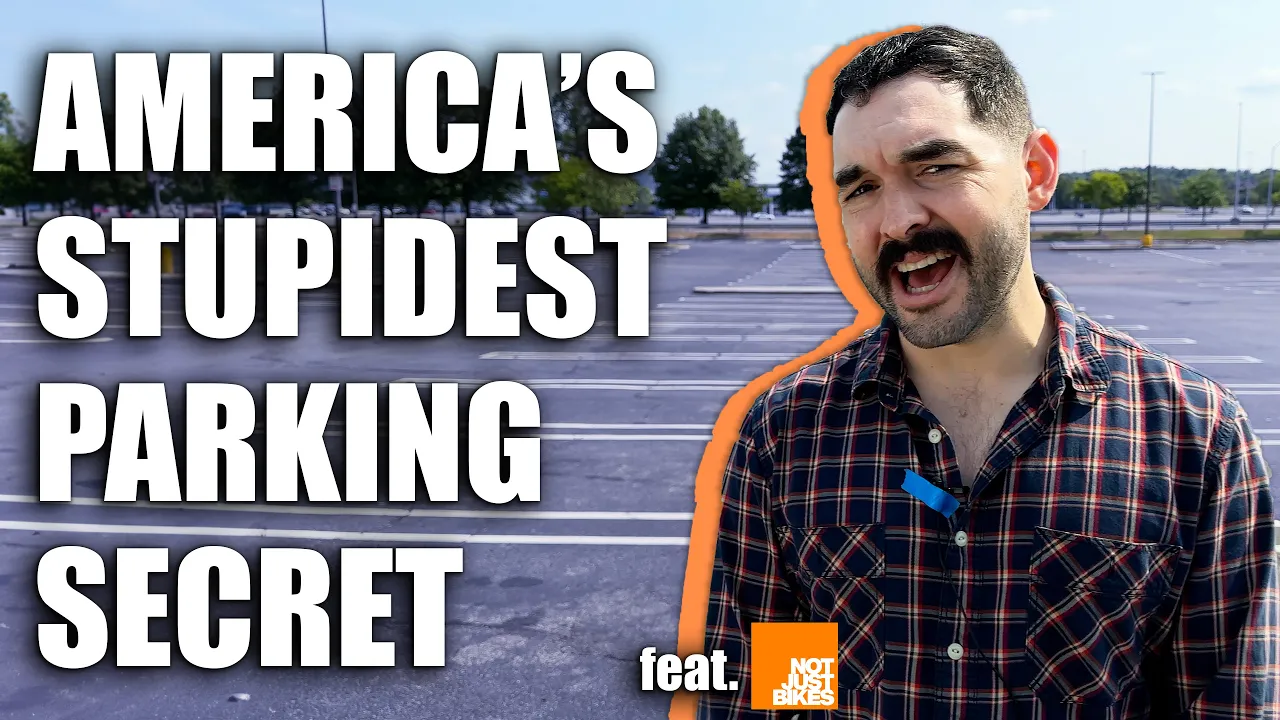
The frustrating thing is, a lot of people tend to think that the solution to traffic is to simply expand the roads, add more lanes, or build more parking lots; but those do not fix congestion and often make the problem worse, because the added space invites even more cars. I want to show part of this video about stroads, from Not Just Bikes, which is a channel that I've been watching for months; It's one of the ones that got me into this whole city planning rabbit hole.
Stroads are the ugly, dangerous and inefficient combination of street and road, that are just terrible for cars and pedestrians.
"Wide, highway sized lanes, giant signs, traffic lights, parking lots, lots of driveways and side streets with traffic merging in and out, at a place that's nearly impossible to cross as a pedestrian. There isn't even a sidewalk here.
Stroads are hostile to people outside of a car. There are lots of motor vehicles and speeds are high so walking or cycling feels uncomfortable and dangerous."
Another factor of walkability is how friendly the roads are to pedestrians - and unsurprisingly, most streets in the US are actually quite hostile to pedestrians. As mentioned in the stroads video, sidewalks are a major issue and it's something you might not even think about if you drive a lot.
Most of the US is shamefully bad at designing and maintaining sidewalks to be safe and effective.
Let's highlight some issues that make sidewalks unsafe or even unusable, such as: broken, cracking sidewalks, with tripping hazards, lack of shade, lack of street lighting, lack of buffers between the sidewalk and speeding cars, inadequate or missing crosswalks... and sometimes, you're making your way downtown and the sidewalk suddenly ends, or there's no sidewalk to begin with.
"This is what it's like to be a pedestrian on an arterial road without any sidewalks.
There are still zero provisions for people walking, rolling, biking or getting to the bus. When I get up to this next intersection. There are no crosswalks, there's no place to stand on the corner, there's not even a button to get the light to change.
Even walking in the shoulder is tough as the snow pushes me out closer to traffic."
These problems are horrible for all pedestrians and especially so for disabled folks.
"Since no one knows how to fucking shovel a sidewalk in this entire place.
I have to bring my groceries in the road because I can't get my walker through the fucking ice."
"Where am I supposed to go? Why does this exist?"
"Wheelchair users like myself can be vulnerable pedestrians. When you park on the sidewalk, you force us onto the street at risk of being run over or force us to go all the way around the block."
I had considered some of these issues before, but some of these are brand new to me, so I hope that this is helpful, or at least a good reminder, to be considerate about not only how we behave on the sidewalks, but what we expect from our cities and our neighborhoods in order to make sidewalks usable for everyone.
This is a disability issue, a class issue, a racial disparity issue.
"Detached sidewalk with mature trees and shade and relaxation... And now on a broken sidewalk, budding up to an arterial street. So we're coming from a wealthy neighborhood. This is a class issue. This is the reality here that people who have no choice but to be walking or using a wheelchair, this is what they face."
Whoever does not or cannot drive or get a ride is completely screwed and forgotten about; Their needs, comfort and safety are neglected. I'll talk more about this in the car dependency section, but basically, a lot of city planners seem to literally forget that not everyone drives! For comparison, let's look at an example of a good sidewalk from the TikTok account PedestrianDignity - which, by the way, great account, really informative.
"Good examples. Quality directional ramps, good updated paint at the crossing, a raised crossing for oncoming cars to the busy arterial street. Detached wide flat sidewalks that are off the main road, bike racks, bus stop with all the walls, benches inside the bus shelter, and then we've also got benches outside the shelter as well for optional additional seating. This is touching dignity. This says all right, my experience is valued and seen."
Suburbs as transit deserts. Some might say, "Oh, if it's so hard to walk, why not just take public transportation? Duh!" When I was in middle school, my friends and I walked a lot. I lived in an apartment complex that was pretty close to the main shopping center, so the area was pretty walkable for me. But it would still take me a while to walk across town to visit my friends' houses that were in the further-out neighborhoods. If we needed to go somewhere further away, we would basically beg our parents to cooperate with our carpool. "Please drive us one way, McKenna's dad's going to pick us up!" But once in a blue moon, we would take the bus somewhere.
Honestly, living in a car-dependent suburb, we had very little experience with public transportation, and going on a bus felt like an adventure. I know, that's a very sheltered, suburban kid thing to say; But to be fair, there weren't a lot of buses, the routes weren't very convenient, and the stops were infrequent. Let's say we wanted to go to the beach; That was about a 15-20 minute drive, but by bus, it could take two hours. The bus we needed would only come once an hour- if we were late and missed it, too bad! And sometimes, we'd be waiting for a scheduled bus that never arrived; It would be inexplicably canceled, then we would just be stranded.
And that is a very common problem in places without adequate public transportation. For us, just some kids trying to get to the beach, the stakes were very low. However, many people have no choice but to rely on their local bus system, no matter how unreliable it may be. And for them, a missed, late, or cancelled bus could mean being late to work and getting fired, or missing an important doctor's appointment; The ripple effects can be catastrophic. The assumption, in a car dependent place like the suburbs, is just that people need cars to get around, therefore, everyone must have a car, right? The catch-22 is, people buy cars, because the public transportation system isn't good and you need some way to get around, but then the transportation systems never improve because of low ridership. But, hello! If you build it, they will come!
Now let's get into car dependency; The freedom of driving myth. Many teenagers growing up in a city don't learn to drive right away, because they don't need to. But for teens in rural or suburban places, driving can be both an exciting rite of passage and a necessity to drive themselves to school or work. In the US, turning 16, getting your license, and if you're very lucky, a car, are the ultimate forms of freedom. I worked my way through high school in order to get my license and buy my own first car, pay for all of its expenses... And my car was my absolute favorite thing, it was my favorite place, it was my safe haven. Why am I tearing up about my car?
Teenage memories. But really though, especially for my friends, and I know this is a common experience - in high school, driving, or just hanging out in our cars, was one of our primary forms of entertainment. Though driving may be fun and exciting sometimes, being reliant on cars is not freedom.
Here's another quote from Walkable Cities: "Younger people today no longer see the car as a necessary expense or a source of personal freedom.
In fact, it is increasingly just the opposite. Not owning a car and not owning a house are seen by more and more as a path to greater flexibility, choice and personal autonomy."
I don't agree with the thought that lots of young people don't want to own a home. Some people aren't interested and I get that, but I think for most people, the problem is affordability, obviously. But I do agree that many young people would prefer to live in a walkable area, where it's possible to live and exist comfortably without needing a car.
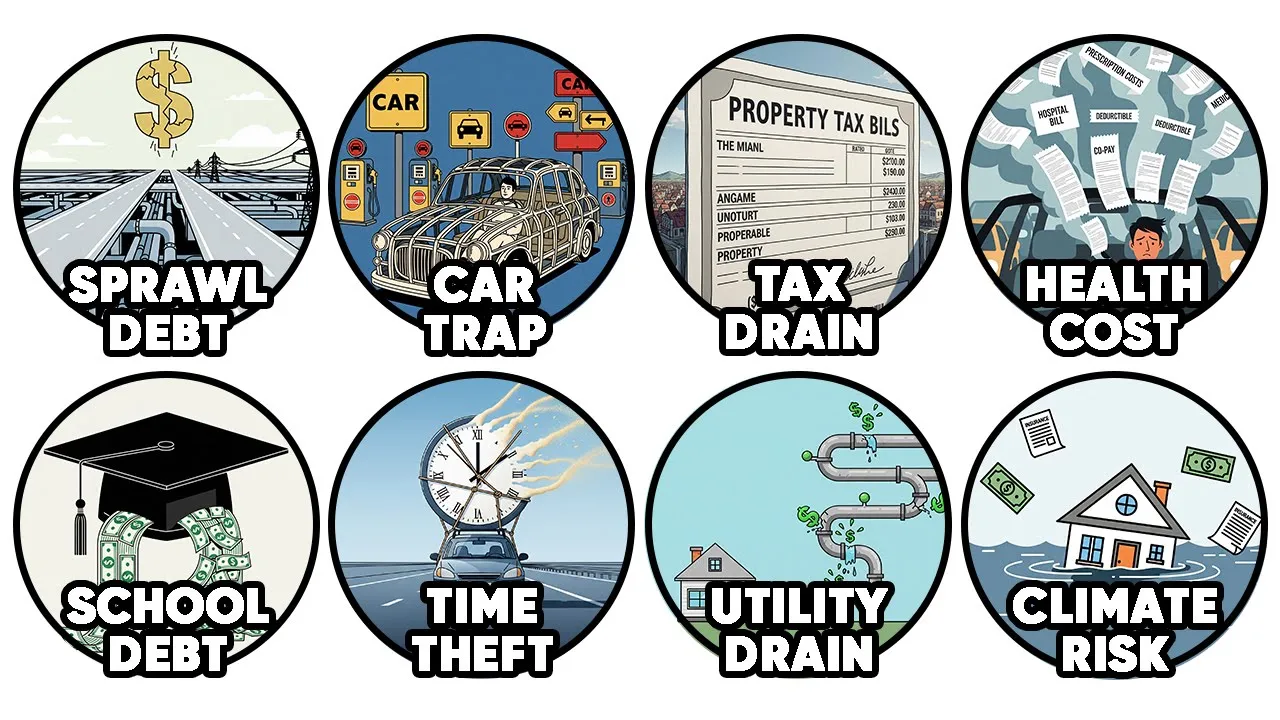
Cars are so expensive; Car payment, gas, insurance, registration, maintenance, repairs - it adds up! Many people tend to move further out, further away from cities, in order to find more affordable housing, but then those longer distances mean longer commutes to work. And again, living further from a city center means that there's probably not great public transportation, so you're gonna need a car. Many people feel stuck in the trap of needing a car in order to get a job and go to work, but then spending so much of their paycheck on driving, and any money you may have saved in housing from living further away is often negated by the increased cost of transportation.
For a typical household, transportation is often the second largest expense after housing. Jeff Spec states that, "while transportation used to only absorb 1/10th of a typical family's budget in 1960, it now consumes more than 1 in $5 spent." And, as is true with the cost of everything, the cost of transportation hits harder the lower your income is. Lower income households have less money to work with, so their transportation expenses eat up an even bigger chunk of their overall budget.
Many people who are low income cannot afford a car at all, and if you can, it's probably going to be a cheaper, less reliable car, that's going to require lots of costly maintenance. As always, it is extremely expensive to be poor.
Let's discuss the environmental impact. This is another huge factor of car dependency that I haven't even mentioned yet. I won't get too far into this, because I think most of us have a basic understanding of the harm, but to name a few issues that cars contribute to: air pollution, water pollution, we are paving over more and more land to create roads and parking lots. we're destroying precious ecosystems. car emissions contribute to our rapidly worsening climate crisis... And then when we're talking about that sweet, sweet gasoline, the harm of fracking and other extractions of fossil fuels. We've seen the horrific environmental disasters that come from oil pipelines and oil spills, and these pipelines are conveniently placed away from white, wealthy suburbs, and instead run through and near BIPOC communities.
As we've seen with the Dakota Access and Keystone XL pipelines, these disastrous projects completely disregard treaties meant to protect the lands of indigenous peoples; And it's a matter of WHEN, not IF, these pipelines will burst and pollute the local water supply.
I'm sure there are plenty of things I missed, but climate science is not my specialty, and I highly recommend checking out these groups if you'd like to learn more.
Another element is the isolation of car dependency. Whether you walk, roll, bike, or take public transit, even if you're rushing on your commute, you tend to interact more with the people around you. Something that I really liked about taking the subway in New York was just people-watching and enjoying the mix of different people around me, all different income levels, just coexisting. Not to like, over-romanticize it, because sometimes taking the subway is absolute hell, but there are those moments where you're like, wow, this is kind of sweet. I think we tend to feel more connected to our neighborhoods and where we live, when we are closer in proximity to other people. You know, saying our 'hello's and our 'oops, sorry, let me scoot past you real quick'. In a car though, you are in your own bubble.
In the responses to my Google Form poll, many people mentioned these feelings of isolation, so I've collected a lot of these common replies; and quite a few people mentioned that rural communities are often completely ignored or left out of these conversations - it's not just a matter of city vs suburbs. So I want to give a shout out to all of my country, mountain, or otherwise rural viewers. Rural communities have similar isolation and car dependency problems as suburbs, but often those issues are even more pronounced. In many rural places, there is no public transportation, there are no Ubers or taxis, you must rely on your own car or on someone you know. And again, regardless of the specific environment, this isolation can make a big impact on socializing or finding work; it's also a big factor in accessing health care, or even just getting your everyday essentials, like groceries.
This article is from 2011, but makes some still-relevant points about food deserts and car dependency in the US. "This map illustrates the concentration of food deserts, where large numbers of people don't have access to fresh food. The USDA considers households more than a mile from a supermarket and without access to a car, to be in food deserts. In 2009, the agency found 2.3 million of these households. Here, Slate shows the preponderance of these households in Appalachia, the Deep South, and on Native American reservations."
Again, I think sometimes when we're talking about car dependency, some people just think, 'oh yeah, we have to rely on cars, but oh, well'.
But there are many people who cannot drive for various reasons, including disabled or elderly folks, so that whole idea of like, 'Oh, you just have to drive' doesn't work.
Some of the responses in the forum were disabled folks describing how they have waited for hours for public transportation in extreme weather, which can be really dangerous. And another issue is the fact that, even if you did have plenty of public transportation around, often these systems are not ADA compliant, and therefore many people with disabilities cannot actually use them. As we've seen in countless examples, the people that are often harmed the most by the lack of infrastructure, resources, or community support include: lower income folks, BIPOC communities, disabled folks, and the elderly.
So, to try to wrap this video up, suburbs don't have to suck. All the issues I've raised in this video are very complex, and I'm not going to pretend to know the solutions necessarily, but I can say from all the city planning content that I've been watching in the last few months, most of those creators seem to advocate for similar things: more walkable and bikeable mixed-use neighborhoods, meaning more of a mix of residential and business buildings, higher density housing, plus much improved and accessible public transportation. To end this, I want to show some clips from another Not Just Bikes video. This one is about a suburb in Toronto that doesn't suck!
"Time and time again, people misunderstand the issue. I like the suburbs, they'll claim. I want a backyard. They'll say, not everyone can live in cities. Suburbs have existed almost as long as cities have existed, and there is nothing inherently wrong with them. The problem is car dependent suburbs. And that's what I mean when I talk about suburbia. As the name suggests, streetcar suburbs are suburbs built around streetcar lines.
These were designed as self contained places, mixed use neighborhoods with residential, commercial, and offices in the same area. But despite the high population density, it doesn't feel like a dense urban environment, because the parks and treelined streets.
They also have just about everything you could need within walking distance. Take for example, this large grocery store chain, it has a parking lot for cars, but because you don't need a car to get there, it doesn't have to be that big. Here's the size of the store. And here's the size of the parking lot. Here's the grocery store in car dependent suburbia, and here's the size of the parking lot; significantly larger than the store itself."
and honestly, watching this video makes me jealous, because it seems like a really great place to live. But anyway, whether you are in a city, a suburb, or somewhere more rural, improvements can be made. We can move away from car dependency, instead of continuing to worsen the problem. Walkable neighborhoods with reliable ADA-accessible public transportation can help everyone live more affordably, safely, and comfortably.
So, that's today's video, I really hope you guys enjoyed it. I had a lot of fun researching this one; I bought three or four books on city planning and walkability. This is something I'm very passionate about, because I've just been analyzing again, the places I've lived, or if I'm looking at where I would like to live, you know, the ideal place for me - walkability is absolutely a big factor.
So anyway, thank you so much for watching. I want to give a shout-out to my Patrons, you can get access to bonus videos and monthly live streams. Extra special thank yous to: uwu face, Abby Hayden, Geoff, Jaden, kaesi luck, Mardi Schmeichel and VivianOlodun.com.
(and a brand new patron, megkat33! shouts out!) And one final thank you again to VESSI, for sponsoring today's video. Click the link in the description, use my code for $25 off each pair of adult VESSI shoes! Stay tuned for future Internet Analysis videos! 'Kay, thanks, bye!
Up Next

10:27
Keynesian Cross & Multiplier: Fiscal Policy Effects
@khanacademy
218.5K views•2012-04-05

5:07
Impact of Yuan in Indo-Russian Trade Amid Sanctions
@WION
261.9K views•2022-07-01

10:33
Behavioral Economics Explained: Rationality, Nudges, and Risk
@crashcourse
1.1M views•2016-03-12

113:18
The Age of Easy Money: Fed & Inflation | Full Documentary
@frontline
21.2M views•2023-03-15
Related Study Plans & Knowledge Roadmaps
Structured learning paths in Economics
economics
Sovereign Debt: Defaults, IMF & Restructuring
01Introduction to Sovereign Debt & Government Bonds
02Debt Sustainability & Credit Ratings
03Anatomy and History of Debt Crises
+ 2 more learning modules
12h5 modules
Explore Roadmap
economics
Market Design: Matching Theory & Gale-Shapley
01Introduction to Market Design and Price-Free Markets
02Two-Sided Matching & The Gale-Shapley Algorithm
03School Choice Systems and Mechanism Design
+ 2 more learning modules
10h5 modules
Explore Roadmap
economics
Impossible Trinity: Forex, Capital & Policy
01Introduction to Monetary Policy and Central Banking
02Exchange Rates and International Capital Flows
03The Mundell-Fleming Model
+ 2 more learning modules
8h5 modules
Explore Roadmap
economics
Healthcare Economics: Market Failures & Systems
01Introduction to Healthcare Markets and Market Failure
02Asymmetric Information and Adverse Selection
03Moral Hazard and Insurance Design
+ 2 more learning modules
12h5 modules
Explore Roadmap