
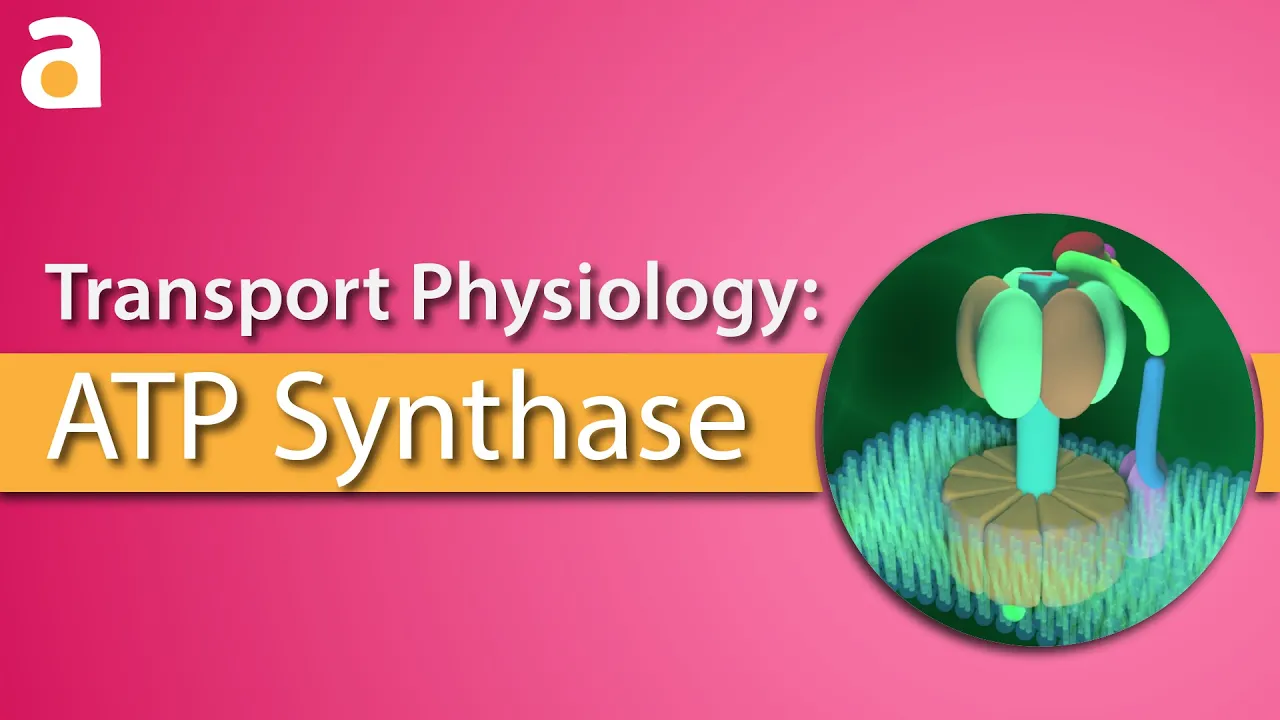
















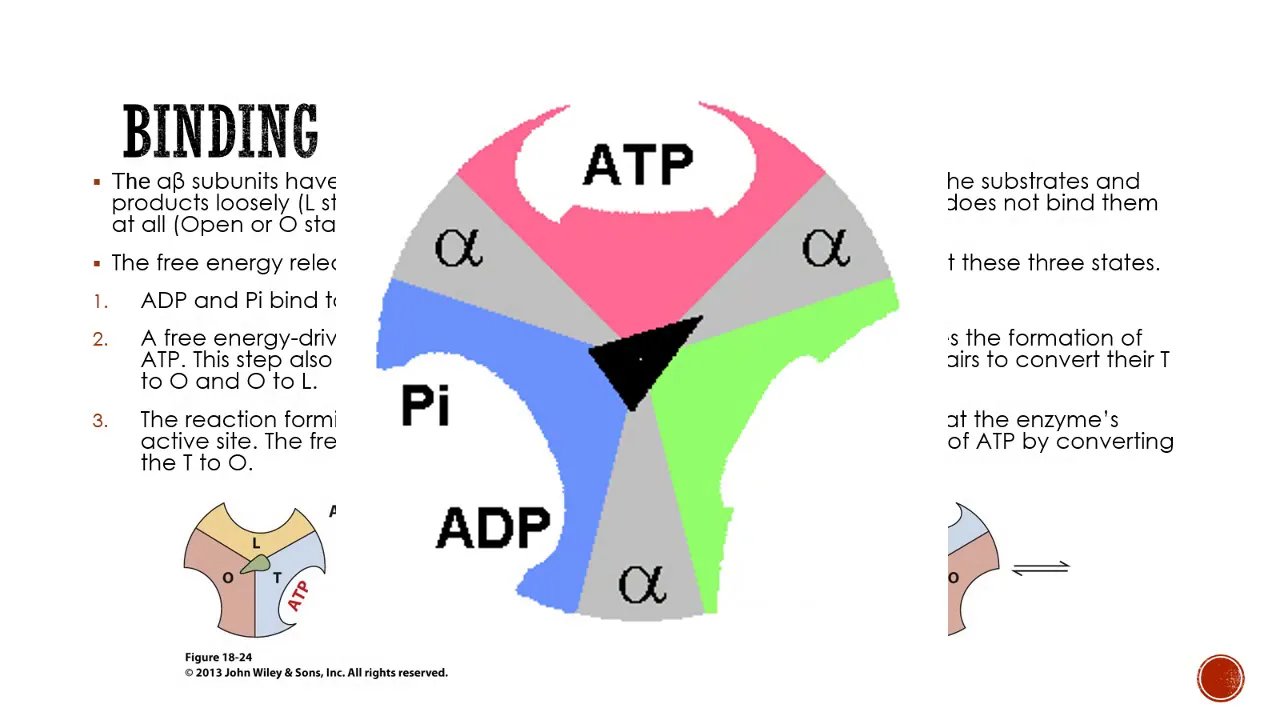




ATP synthase generates ATP through a binding change mechanism where the gamma subunit rotation within the alpha3beta3 hexamer causes beta subunits to cycle through three conformational states (Tense, Loose, and Open), enabling sequential ATP synthesis and release; the Tense state brings ADP and phosphate together for catalysis, the Loose state traps them without reaction, and the Open state releases synthesized ATP, with the proton motive force driving gamma subunit rotation to complete this cycle.
ATP Synthase Mechanism: Binding Change Explained
Added:The concept of the electrochemical proton gradient (proton-motive force) established by the electron transport chain.
Basic structural anatomy of ATP Synthase, specifically distinguishing the Fo (membrane-embedded) and F1 (catalytic) domains.
The thermodynamics of ATP synthesis, including why the condensation of ADP and inorganic phosphate requires energy input.
General principles of enzyme catalysis and how protein conformational changes affect substrate binding affinity.
The experimental methods used to prove rotational catalysis, such as the classic fluorescent actin filament rotation assay by Noji et al.
The physiological effects of metabolic uncouplers (like DNP and thermogenin/UCP1) that dissipate the proton gradient and bypass ATP synthase.
Regulatory mechanisms of ATP synthase, including the role of the natural inhibitor protein IF1 during ischemic or hypoxic conditions.
Comparative biochemistry of other rotary molecular motors, such as vacuolar-type H+-ATPases (V-ATPases) and the bacterial flagellar motor.
260.5K views3.1Klikes15:31Original Release: 2015-06-10
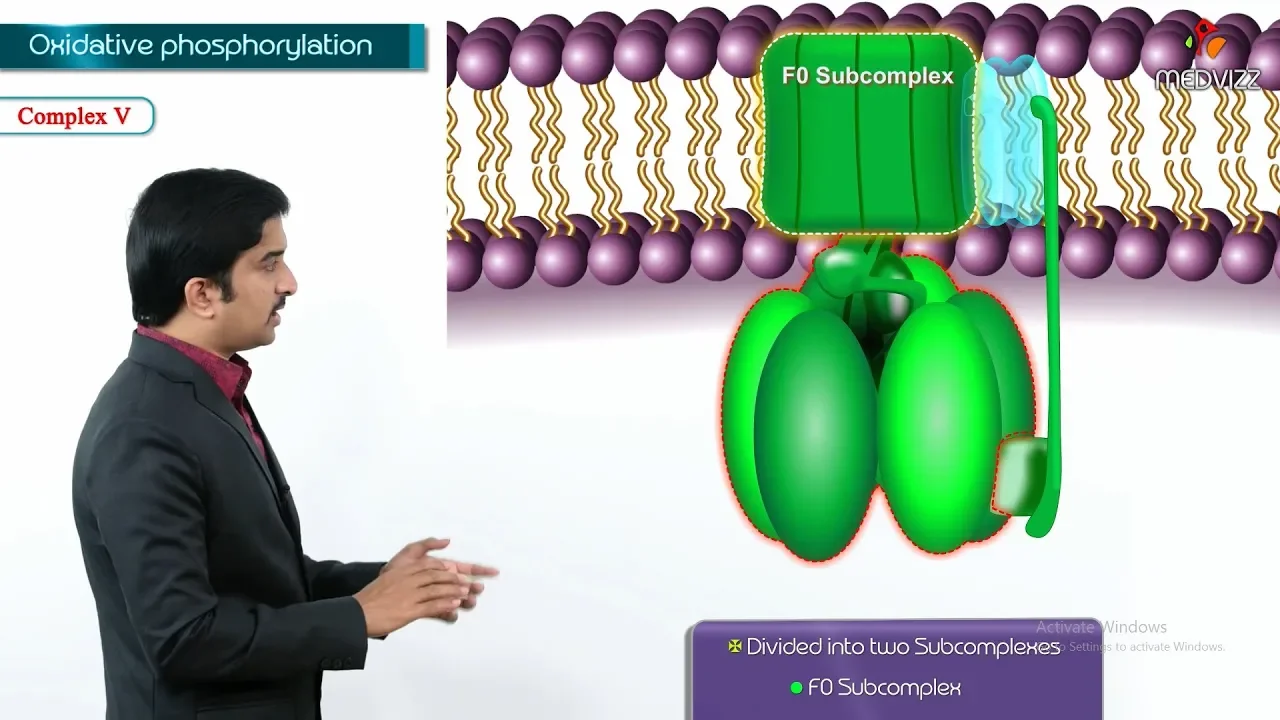
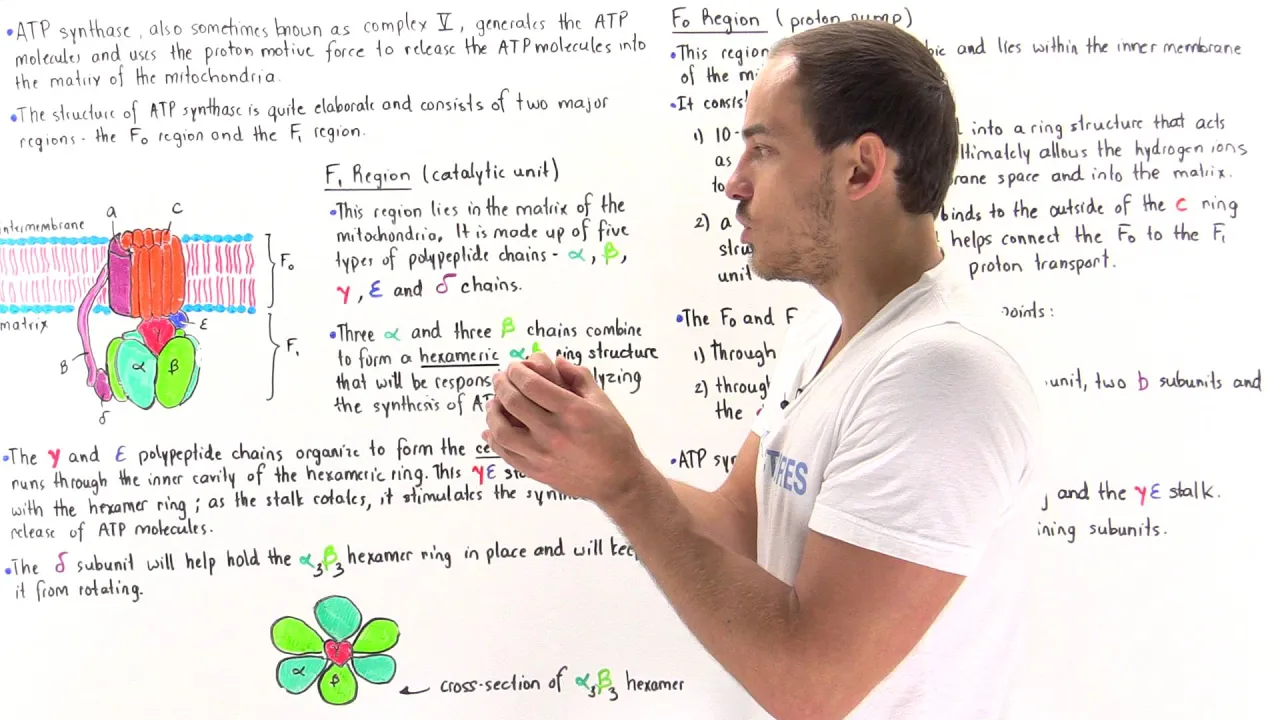
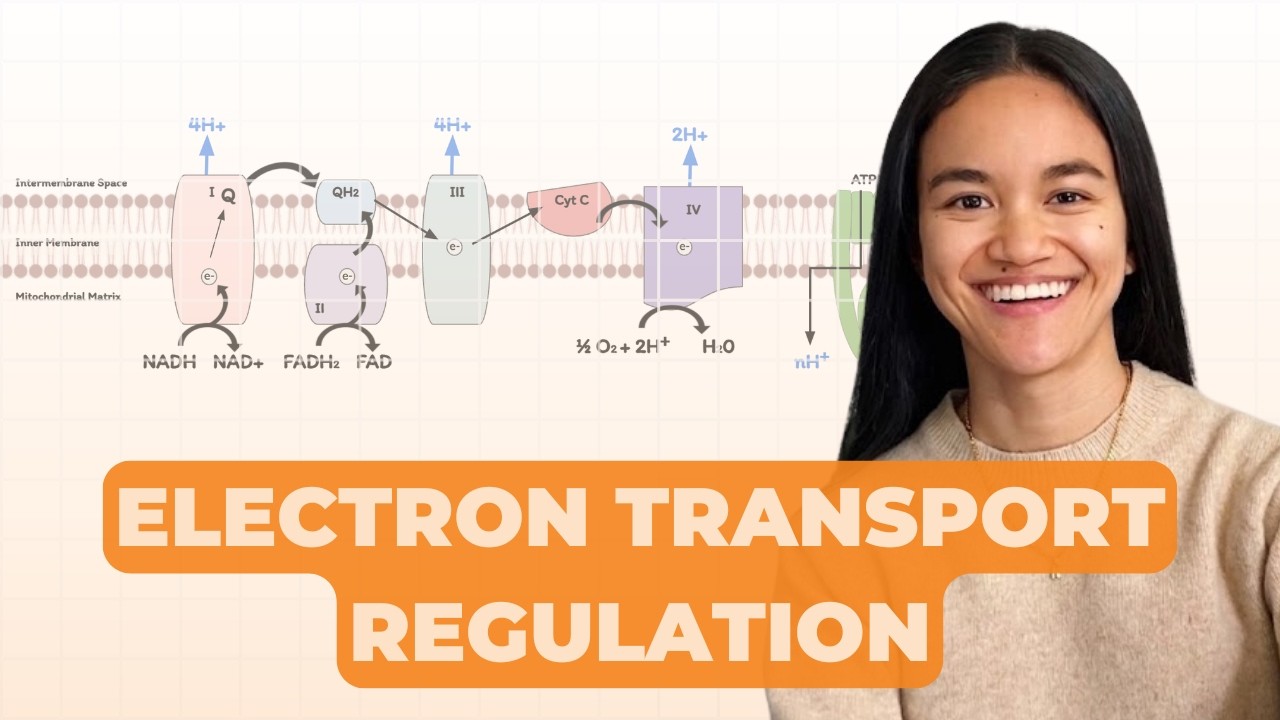
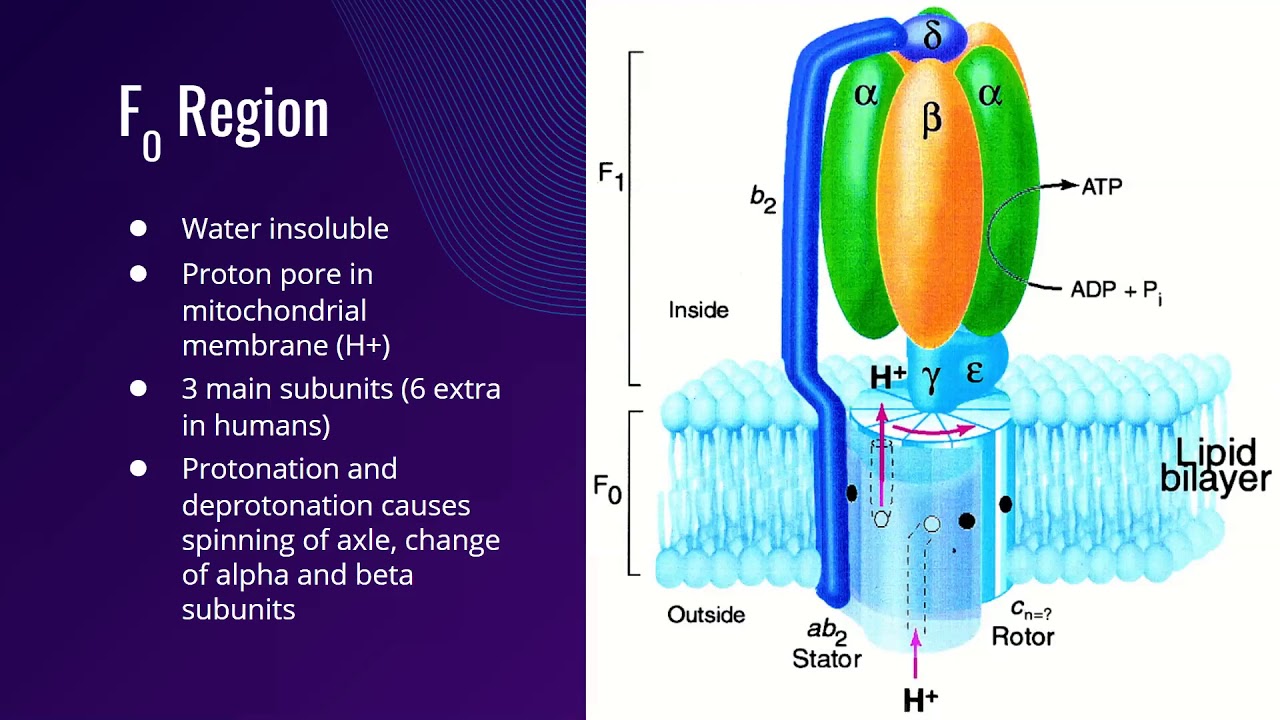
so now we know what the structure of ATP synthes is complex 5 electron transport chain let's actually discuss the mechanism of how ATP synthes carries out its function so remember the function of ATP synthes complex five is to actually use that proton motive Force the proton electrochemical gradient established by complexes 1 3 and four to actually generate the high energy ATP molecules and and so what I'd like to focus on in this lecture and the next lecture is how the ATP synthes actually carries out its function the mechanism of its function now in this lecture I'd like to focus on the catalytic subunit the catalytic structure of ATP synthes so remember in our previous discussion of the structure of ATP synthes we said that ATP synthes can actually be broken down into two regions one of the regions is found in the actual inner membrane of the mitochondria this region here and this is known as the fnot region and the fnot region actually contains that proton channel that rotates and we'll talk about that much more detail in the next lecture in this lecture I'd like to focus on the other region the F1 region because it's the F1 region that contains the catalytic structure the catalytic structure is is known as the alpha3 beta3 hexamer rine so the F1 region of ATP synthes contains that hexam Marine the alpha 3 beta3 structure that actually catalyzes the formation of ATP molecules and this and it does this in three different steps so in Step One it basically binds the reactant the ADP molecules and the inorganic or the phosphate molecules in step two it actually catalyze their combination to form the product molecule the ATP and in Step number three the ATP is actually released into the Matrix of the mitochondria now I have to emphasize the following important point so this hexamer structure this hexamer structure here can actually carry out each one of these steps but step one and two can take place in the absence or in the presence of the proton modor 4 so what that means is step one and two can be carried out in the absence or presence of that proton electrochemical gradient so step one and two can take place regardless of whether or not we actually have this FN region present within ATP synthes so regardless of whether or not we have that proton electrochemical gradi in the hexamer can bind the ADP and orthop phosphates and can actually convert them into ATP but for the ATP synthes to actually be able to release the synthesized ATP molecule there has to be a proton electrochemical gradient that must exist between the two sides of the inner membrane of the mitochondria because only when the fnot structure actually rotates when the c ring rotates will the gamma ring will the gamma structure rotate and only then then will that structure be able to actually release the ATP molecule and we'll talk about that in much more detail in the next lecture so let's take a look at the following structure so this is our Alpha 3 beta3 hexamer ring and let's take a cross-section of that structure and examine it from top to bottom this is basically what we're going to see so we have our three Alpha units so we have Alpha unit here Alpha unit here and Alpha unit here and we have our beta units the beta unit here beta unit here and beta unit here so let's begin by focusing on these Alpha subunits now the alpha subunits even though they're part of the hexam Marine they don't actually play a catalytic role and even though these Alpha units can in fact Bond ATP molecules and they will have ATP molecules bound to them they will not actually release the ATP molecules nor will they carry out any useful process so although the alpha subunits of the hexam Maring do contain ATP molecules bound to them they do not release these ATP molecules nor will they actually carry out or participate in some reaction some useful reaction on the other hand the beta subunits actually are the ones that will play that catalytic role they have the ability to actually undergo these three reactions they are the ones that bind the ATP and orthop phosphere reactants they're the ones that catalyze the synthesis of the ATP and they're the ones that release that ATP molecules once a rotation actually takes place as we'll see more detail in just a moment in fact notice that we have three different confirmations that is the beta subunits can actually exist in one of three different states and that's because we have three different reactions that have to be Carri carried out by this Alpha 3 beta3 hexamer so we have the 10 state or simply the T State we have the loose state or simply the L State and we have the open state or simply the O State now in the open state in the open State once the at ATP molecule is formed only when that beta subut is in the open State can the ATP molecule be released from that beta subun and likewise only in the open State can the subun actually bind the ADP and orthophosphate reactants now in the loose state it actually has the ADP and the orthop phosphate bound to it but because in the loose state they're not bro the reactants are not brought close enough they will not be able to react to form the ATP molecules but in the 10 State the structure is constrained and the ADP and the orthop phosphate are brought close enough to actually synthesize that ATP molecules and I have to emphasize the following important points in the tense state or in the loose State these two states will not release the ATP molecules or the ATP and orthophos State molecules they're only released in the open confirmation so we see that the beta subunit however unlike the alpha subunit can actually buy the ATP and orthop phosphere reactants synthesize the ATP and release the ATP into the Matrix and at any given moment in time the beta subunits can exist in one of three distinct States we have the 10th state in which the ADP and orthop phosphate are brought close so that they can be combined to form that ATP molecule and once the ATP is formed only once the subunit is in the open State can the ATP actually be released from that structure now in the loose State the bound ATP and orthop phosphate become trapped but they're not close enough to actually Rea react and form the ATP so these are the three states now the next question is what determines the actual state of that particular subunit so let's take a look at the following diagram so what we see happening in the following diagram is as we go for for instance from this particular structure to this particular structure the actual Alpha 3 beta3 hexamor ring does not rotate but this middle portion the gamma structure shown red actually rotate so remember remember as we discussed previously it's this gamma structure that actually rotates as a result of the rotation of the c ring as we'll see in the next lecture that causes a change in confirmation of the beta subunit so this is what we see in this diagram so to see what we mean let's begin with this diagram which is basically this diagram here and notice I've omitted the ATP molecules in the alpha subunits because the alpha subunits don't participate in this catalysis reaction only the beta units do and so in this particular confirmation this particular beta subun exists in the 10 State this exists in the loose State and this exists in the open State now only in the 10th state are the ADP and orthop phosphate molecules brought close enough for them to actually react and form the ATP and so we see that there's an equilibrium that exists between the reactants and the products but once this C structure actually rotates will this structure actually rotates so this remember is that gamma structure that creates that Central stock that basically moves through the central cavity of that hexam marine and so this is what we see here and so if that Central stalk that gamma unit actually rotates let's say 120° in the counterclockwise Direction so that this pointer instead of pointing here basically moves 120° in this direction it will now point the arrow the points are here will Point here and what that means is this will no longer exist in the 10 State this will exist in the 10 state but this will no longer exist in the open State this will exist in the loose state so all of these beta subunits basically switch their confirmations their States this will now exist in the open this will now exist in the T and this one will exist in the loose and so once we synthesize the ATP once this rotation takes place only then will the ATP will actually be able to leave this uh this structure here so once this rotation takes place this is in the open State and in the next process step two this ATP model molecule will be released from this structure and it will travel into the Matrix of the mitochondria while when this goes from the loose state to the 10 State these two reactants are brought close enough for them to begin producing the ATP molecules and this structure in the open State these reactants can easily leave and enter the this structure but once this confirmational change takes place and we enter the loose St these two reactants are now trapped in this confirmation but even though they're trapped they're not close enough to actually carry out that catalysis reaction and transform them into ATP molecules so once we go from this structure this structure the ATP molecule actually leaves and now we have this empty spot and so in the final step what happens is once the ATP leaves the ADP and the orthophos fate can actually enter this location and the cycle can basically repeat itself again so we see that the rotation of the gamma subunit that basically lies within the inner cavity of the hexamer Ring basically allows the interconversion of the beta subunits from one state to another state and notice that at any given moment in time all the beta subunits exist in a particular distinct State and that implies that any given two subunits two beta subunits will never exist in the same identical state so we have three of these different subunits and they exist in different states and that's a and that's a result of the orientation of this Central gamma structure that exists uh um in the central cavity of that hexar rine so once again let's summarize the following diagram and this this entire mechanism by which this takes place is known as The Binding change mechanism so in reaction One a rotation of the gamma subunit of 120° in a counterclockwise Direction so when this Arrow basically moves here 120° what happens is this structure here in the 10th State changes into the open confirmation the open state so we see the rotation basically converts the beta subunit in the 10 State into the open State and the other units are also transformed so this one becomes the tense and this one which was open becomes loose now this relaxes the beta subunit and now that ATP that was synthesized in the 10 State can be released in process two so in process two the ATP is actually released and in process three once the ATP is released a new set of ADP or the phosphate will enter that open Beta subunit And once they enter if we have another rotation so if this structure rotates 120° again this way then this open will become a loose State and once in a loose State these two reactants will become trapped within this beta subunit so another rotation of 120 degrees in a counterclockwise Direction which is not shown in this diagram will lock the reactant the ADP and the pi in this state and they will not be able to leave this structure and so this mechanism is what we call the binding change mechanism now what we're going to focus on in the next lecture is how the third step actually takes place so we actually didn't discuss why the ATP molecule is actually able to leave because what ultimately allows that ATP molecule to actually leave is the fact that this structure is in the open State and what creates that open state is the rotation of that gamma unit in the next lecture we're going to focus on what causes that gamma unit to actually rotate we're going to discuss the rotation of the c ring in the fnot region of the ATP synthes molecule
Up Next

10:19
ATP Synthase Mechanism & P:O Ratio | Oxidative Phosphorylation
@fundamentalsofbiochemistry9572
30.2K views•2014-06-11
50:12
Bacterial Communication: Quorum Sensing and Biofilm Formation Explained
@JHUAAP
12.6K views•2011-06-28

7:47
Post-Translational Modifications Explained: Types & Functions
@AKLECTURES
136.8K views•2014-09-11
7:08
Bacteriophages: Earth's Deadliest Killers and Future Antibiotics
@kurzgesagt
34.6M views•2018-05-13
Related Study Plans & Knowledge Roadmaps
Structured learning paths in Biology
biology
RNAi: Biogenesis, RISC & Gene Silencing
01Molecular Biology Foundations: DNA to Protein
02Introduction to RNA Interference (RNAi)
03Molecular Biogenesis of miRNA and siRNA
+ 2 more learning modules
10h5 modules
Explore Roadmap
biology
Mycorrhizae: Signaling, Biophysics & Ecology
01Foundations of Mycorrhizal Symbiosis
02Molecular Signaling and Root Colonization
03Biophysics and Bioenergetics of Nutrient Exchange
+ 1 more learning modules
11h4 modules
Explore Roadmap
biology
Circadian Clocks: TTFL, SCN & Periphery
01Foundations of Molecular Biology & Gene Expression
02Introduction to Chronobiology and Actograms
03The Core TTFL: Molecular Architecture of the Clock
+ 3 more learning modules
14h6 modules
Explore Roadmap
biology
Population Genetics: Math, Drift & Selection
01Genetic & Probability Foundations
02The Hardy-Weinberg Principle and Baseline Models
03Mathematical Modeling of Natural Selection
+ 3 more learning modules
18h6 modules
Explore Roadmap