
















The Dardenne brothers' 1999 film Rosetta demonstrates how cinematic minimalism—through sparse dialogue, handheld camera work, and repetitive physical actions—can powerfully communicate profound emotional experiences, using ordinary details like Rosetta's Wellington boots to create deep empathy and highlight the weight of poverty and exclusion without resorting to manipulation or sentimentality.
Rosetta (1999): Dardenne Brothers' Minimalist Portrait of Poverty
Added:Understanding the principles of Social Realism in cinema, particularly its focus on working-class struggles and authentic representation.
The concept of film motifs and how recurring objects or visual elements can carry symbolic and thematic weight.
The basics of cinematography, specifically how handheld camera work (cinéma vérité style) influences audience perception and emotional intimacy.
An introduction to the Dardenne brothers' filmmaking background, transition from documentary to narrative film, and their signature humanist approach.
Analyzing the real-world political impact of the film, specifically the enactment of Belgium's 'Rosetta Law' aimed at protecting young workers' rights.
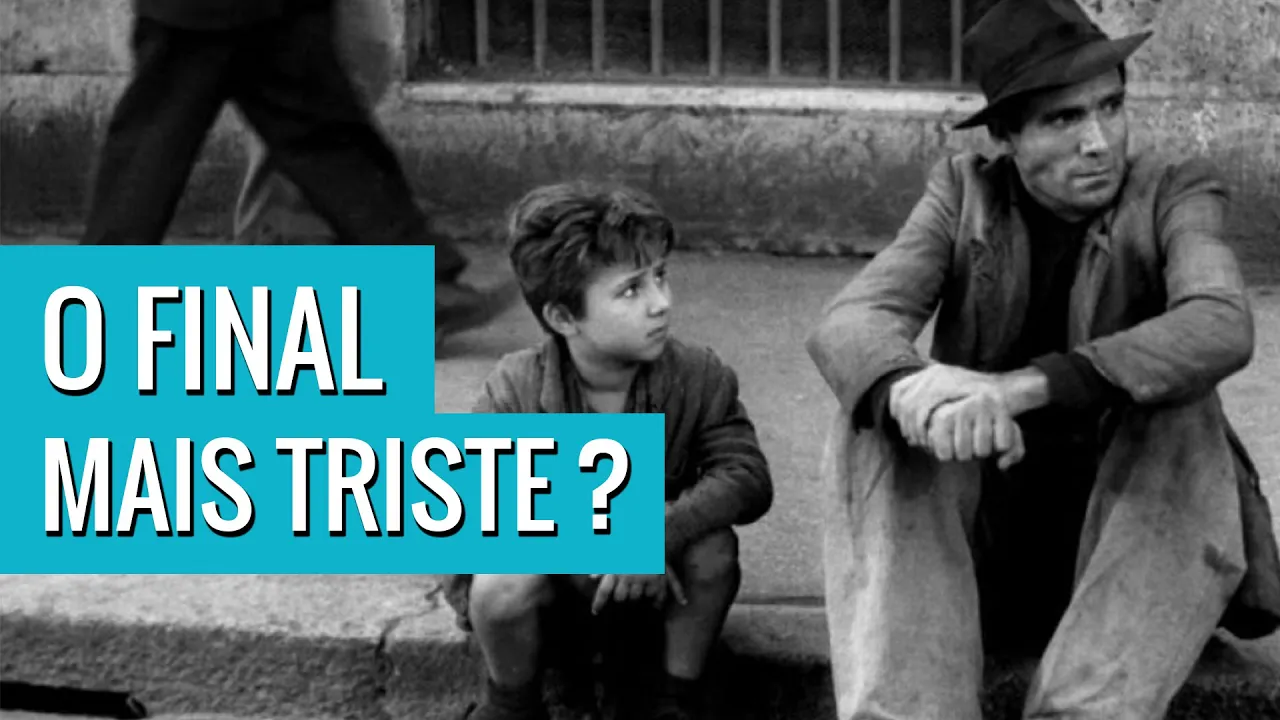
Comparing the Dardenne brothers' style with Italian Neorealism (e.g., Bicycle Thieves) to trace the evolution of poverty and survival motifs in European cinema.
Applying Marxist film theory to analyze how material labor, commodification, and economic alienation are depicted through minimalist aesthetics.
Exploring the ethics of the camera gaze in social realist films, focusing on the boundary between observation, empathy, and exploitation.
170 views5likes6:29Original Release: 2025-09-21
Hello and welcome to Cliff Reviews Art House. This time I'm reviewing the 1999 film Rosetta directed by Jean-Pierre and Luke Dardan.
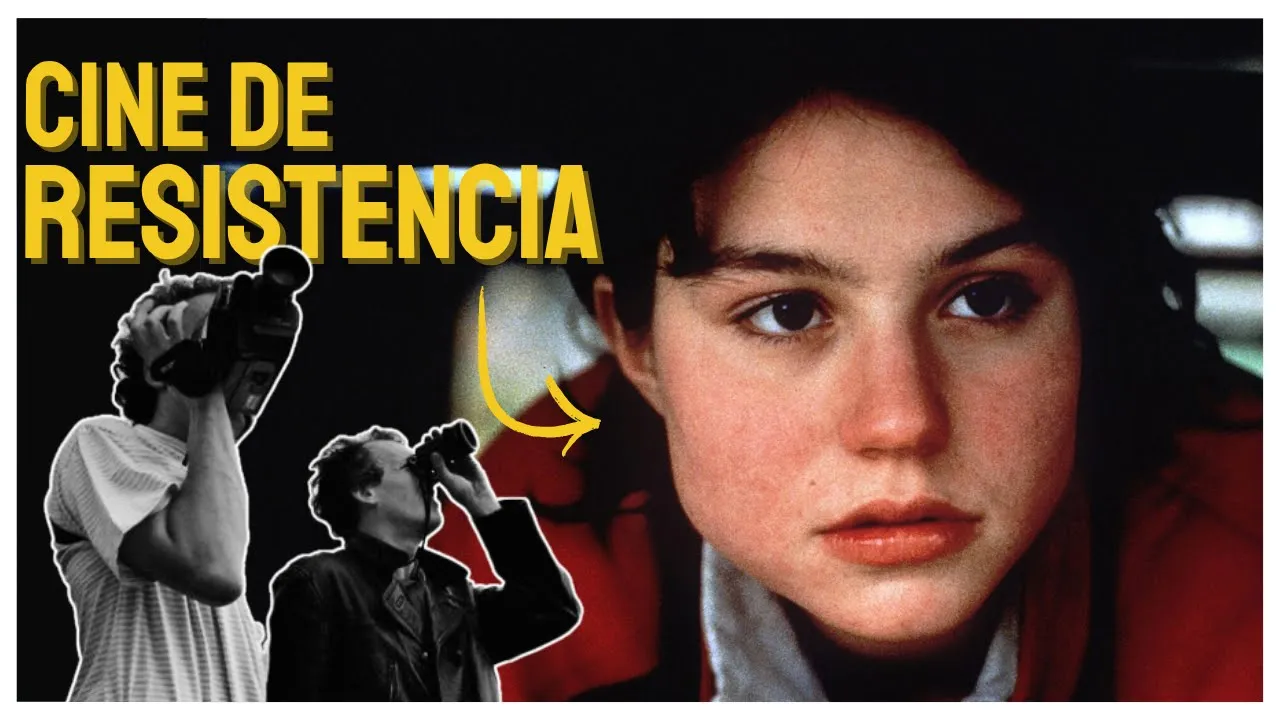
Rosetta is one of those films that feels almost like an experiment in how much you can say with how little. The Darden brothers strip everything down to the bare essentials. almost no music, a threadbear story, handheld camera work that stays right up close to the characters. At first, it can feel sparse, even bleak, but the more time you spend with it, the more you realize how much they're managing to communicate through this minimalism. The story itself is disarmingly simple. Rosetta, played with extraordinary intensity by Emily Dquen, lives with her chaotic alcoholic mother in a trailer park.
She's desperately trying to find a job.
And what becomes clear very quickly is that her unemployment is not for lack of effort. Her life is a permanent struggle. We hardly see her smile. There is one moment when she seems to find a fragile kind of happiness. She has a job, a place to sleep, and a friend.
That night, she whispers these things to herself as she falls to sleep, like a mantra. It's poignant because it's so little. And yet, for Rosetta, it's everything. And of course, it all slips away. The Dardens highlight the mundane, the repetitive, the trivial, but they make it really meaningful. One striking motif in this film is Rosetta's Wellington boots. Each time she returns to the trailer park, she retrieves them from a hiding place in the woods, swapping them for her shoes. We watch her doing this several times. At one point, when she notices another pair of boots in a junk filled room, she asks if she can have them. It's intriguing what the significance of this is. It's not obvious. The boots become part of her ritual of survival, a symbol of her poverty and marginality, but also of her stubborn resistance. I think they literally ground her in the mud and cold of the campsite, reminding us that life for Rosetta is a physical battle as much as an emotional one. By showing us this act repeatedly, the Dardens almost force us to put the boots on with her to inhabit her struggle through the most ordinary of details. The camera work is handheld and intimate, almost claustrophobic. When there's a fight or a scuffle, we're not watching from a safe distance. We're inside it being shoved around with her. The film never lets us relax. It's relentless in showing us the difficulties Rosetta faces and the chaos of her life. Yet, it's done with such sparness and restraint. It never feels manipulative.
Unlike a Yorgos Lanthamos film, for example, where characters are often tortured almost for effect. The relentlessness here feels honest. We don't know Rosetta's backstory, but we don't need to. The repetition, the sparness, the physicality, it all makes us become her. I can understand that some people might find Rosetta too bleak, too thin, even exploitative in its focus on misery, but I don't think this is the case. For me, the repetition and minimalism are the point. The film has a certain grace to it. It communicates the weight of poverty and exclusion not through grand statements but through small mundane actions which somehow become deeply profound. I did feel that there are echoes of Breon's mouset in Rosetta. Both films center on teenage girls trapped in bleak domestic circumstances hemmed in by poverty and hostility. and both find a way to communicate suffering through repetition and the smallest of physical acts. Like Mouset, Rosetta is surrounded by figures who dismiss or abuse her. And like Mushette, she rarely knows kindness. The scraps of comfort she finds are fleeting. But whereas Breon gives his heroine an untouchable inner beauty, a grace that shines even as she's brutalized, the Dardens immers uses in a raw survival. Rosetta's grace is not ethereal, but physical. The repeated act of her pulling on her hidden Wellington boots, trudging through mud and cold becomes her ritual of persistence. If Mushette ends with a tragic transcendence, Rosetta leaves us with a more ambiguous resilience, sparing us consolation, but forcing us to feel the weight of her struggle. Even Rosetta's name seems to carry meaning. It inevitably recalls the Rosetta Stone, the key that unlocked hidden codes. In a way, Rosetta herself functions like that. She's the figure through who we're forced to confront the realities of poverty, translating them into something we can no longer ignore. At the same time, Rosetta means little rose, which adds a poignant irony. Her life is full of mud, cold, and harshness. Yet, there is a fragile beauty that persists in her. One other interesting point, Emily Dquen died of cancer, aged 43 earlier this year. Of course, her death has no connection to a film made 26 years ago, but there's something about watching Rosetta now that feels even more poignant. Her performance carries a stubborn grace in the mud and chaos. And knowing her life was cut short only makes that grace shine more brightly. As with all the Dardan films I've seen, there's no neat resolution here, just ambiguity. But the restraint, the refusal to offer easy sentiment. This is what makes the film so powerful in showing us the benality of Rosetta's struggle. The mud, the cold, the wellies. The Dardans creates something deeply moving. A film that lingers not because of what it tells us, because of what it makes us feel. I highly recommend this film. Thanks for watching and I'll see you next
Up Next
3:59
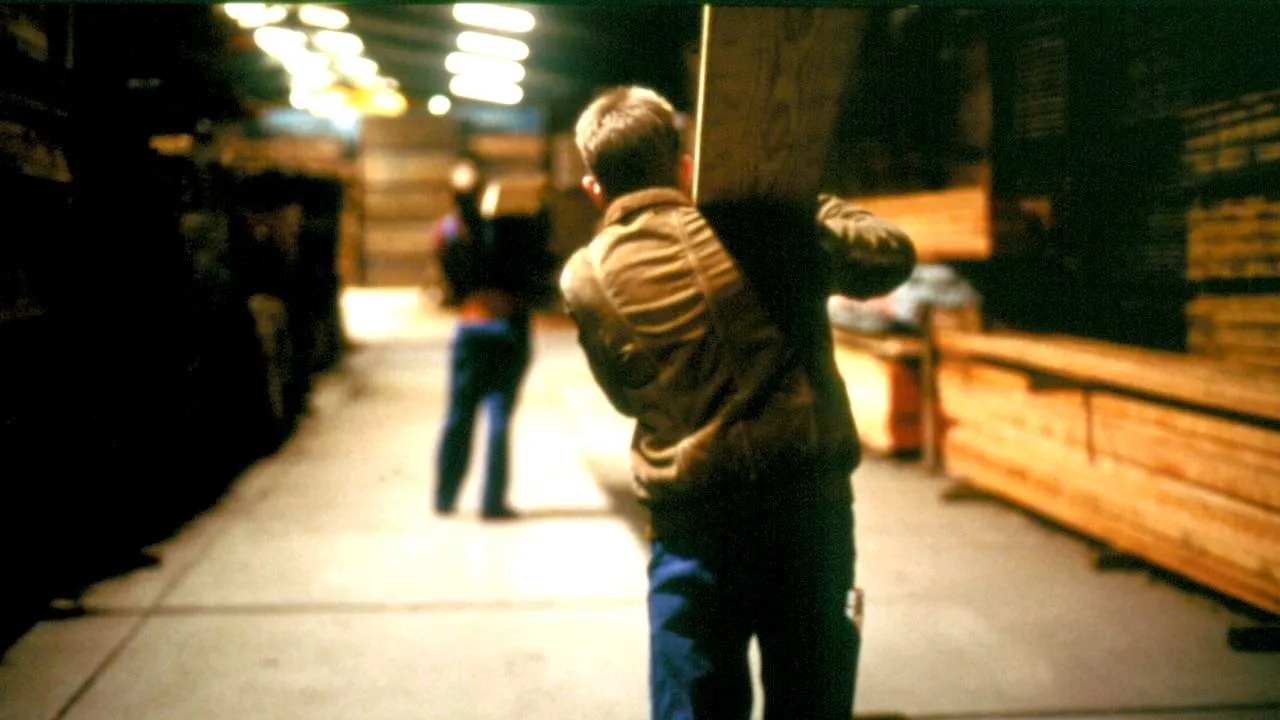
The Son (2002): Dardenne Brothers' Film Analysis
@trailersfromhell
861 views•2025-12-19

23:14
Visual Analysis Essay: How to Analyze Graphic Novels in College Writing
@nataliepleimann5941
1K views•2020-10-14

4:55
Film Blocking Techniques for Directors: Space, Shapes, Lines
@StudioBinder
1.9M views•2018-07-23

4:00
Evolution of Darth Vader: Anakin Skywalker's Animated Journey Across Star Wars Films
@TellItAnimated
13.4M views•2019-03-30
Related Study Plans & Knowledge Roadmaps
Structured learning paths in Film Analysis
film-analysis
Sensory Cinema: Foley, Haptic Sound & Texture
01Introduction to Film Sound and Foley Artistry
02Micro-Sounds, Textures, and Extreme Amplification
03Haptic Audition and Film Phenomenology
+ 1 more learning modules
12h4 modules
Explore Roadmap
film-analysis
Breaking the Fourth Wall: Mockumentary & Satire
01The Invisible Wall: Basics of Cinematic Illusion
02Looking at the Lens: Direct Address & Character Glances
03The Mockumentary: Satire, Realism, and Complicity
+ 2 more learning modules
12h5 modules
Explore Roadmap
film-analysis
Analyzing the Long Take: Cinema, Space & Ethics
01Foundations of Film Grammar: Montage vs. The Long Take
02Choreography and Mechanics of the Simulated One-Shot
03Phenomenology of Film: Real-Time Spatial Continuity
+ 1 more learning modules
14h4 modules
Explore Roadmap
film-analysis
Anachronistic Music: Period Drama & Subversion
01Foundations of Film Sound and the 'Needle Drop'
02Traditional Authenticity vs. Revisionist History
03The Rise of the Anachronistic Soundtrack
+ 2 more learning modules
12h5 modules
Explore Roadmap