








![[Conférence] A. VARSHAVSKY - Lecture](https://i.ytimg.com/vi/s_wasmk4lwM/hqdefault.jpg?sqp=-oaymwEmCOADEOgC8quKqQMa8AEB-AHUBoAC4AOKAgwIABABGHIgVig8MA8=&rs=AOn4CLBUM_OE4UkoBdV2MN7dCywbPlpPAg)









![[대한기능의학회] 단백질 항상성, 자가포식과 노화 / 녹십자아이메드 강남센터 가정의학과 이상훈](https://i.ytimg.com/vi/G_fjkdEqbWQ/maxresdefault.jpg)
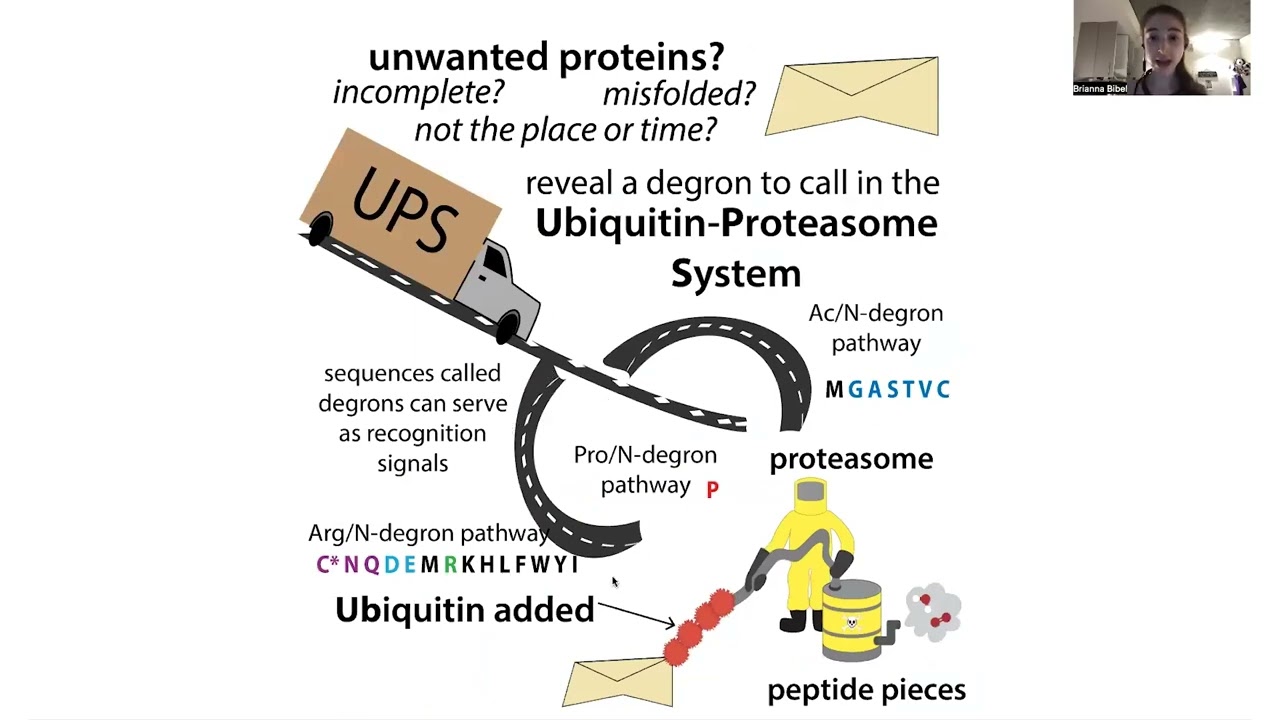
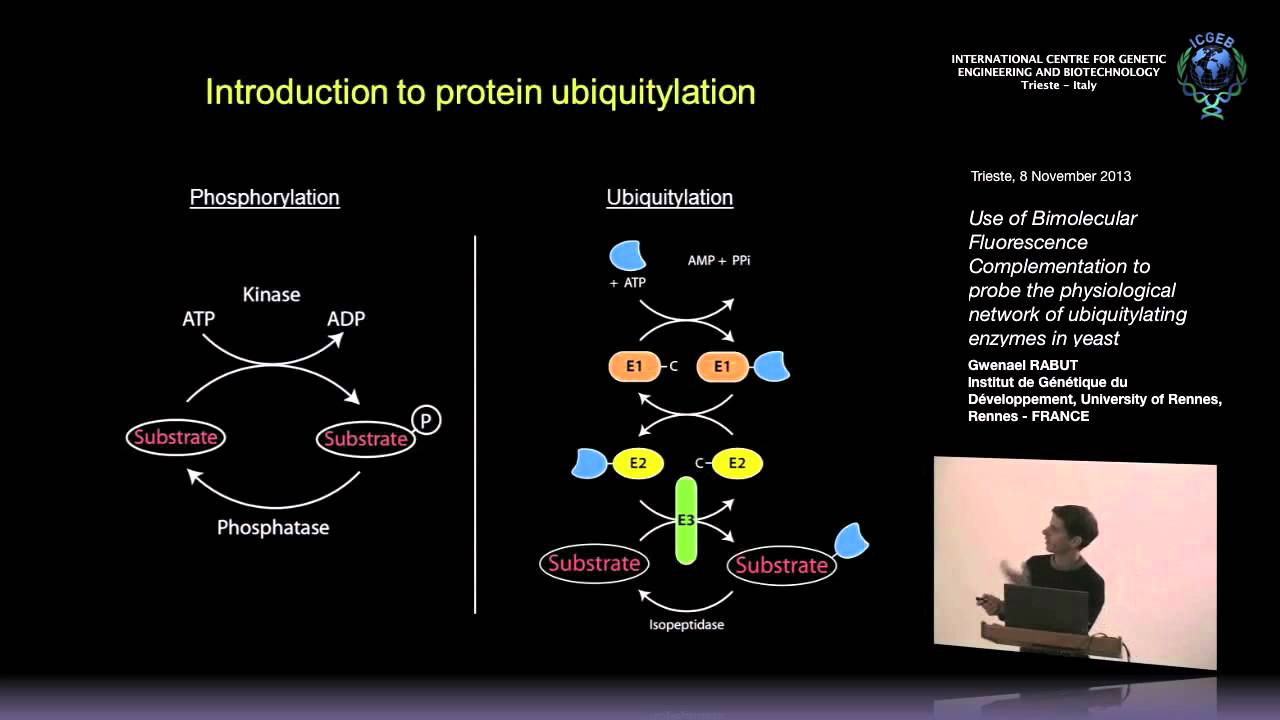
The ubiquitin-proteasome system is the principal mechanism for degrading misfolded, mutated, or unwanted proteins in eukaryotic cells, playing a critical role in maintaining cellular proteome diversity and function. This system involves a multi-step enzymatic cascade where ubiquitin (a small 76-amino acid protein) is activated by E1 enzymes, transferred to E2 conjugating enzymes, and then attached to substrate proteins by E3 ubiquitin ligases. The type of ubiquitin linkage (particularly K48 and K63 linkages) determines whether the modified protein undergoes degradation by the proteasome or experiences functional changes like altered localization or activity. With approximately 600 E3 ligases in humans, this system provides remarkable substrate specificity. The proteasome recognizes ubiquitinated proteins through its 19S regulatory caps, unfolds them using ATPases, and degrades them to amino acids while recycling ubiquitin. This system is essential for rapid cellular responses, as unstable proteins achieve new steady states much faster than stable ones, enabling quick adaptation to changing conditions. It also serves critical quality control functions by eliminating misfolded proteins that could cause cellular dysfunction. Dysregulation of this system contributes to various human diseases including cancer, neurodegeneration, and cardiovascular disorders, making it an important therapeutic target.
Ubiquitin-Proteasome System: Protein Degradation Primer
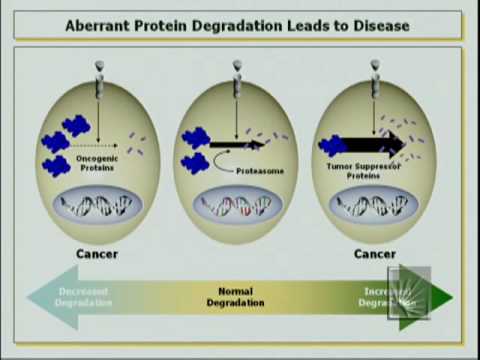
Added:hi my name is Ray Dees I'm a professor of biology at Caltech and an investigator of the Howard Hughes Medical Institute today I'm going to give you three talks and they relate to how eukaryotic cells degrade proteins and why that's important and how that may relate to therapy of human diseases including cancer and nerd degeneration now in my first talk I'm going to give you a primer on the ubiquit and protome system and important for this part of the talk is the idea that protein degradation is an essential function in eukaryotic cells and so what I've depicted here are two different cell types I have a neuron and a muscle cell and these cells are distinguished by the fact that they have a different set of proteins at steady state that's what's referred to as their proteome and they have a different set of proteins because they are producing different proteins and they are degrading different proteins and so protein degradation plays an important role in sustaining the different proteomes that these cells have and it is the proteomes that makes them different you can see obviously from looking at them that a nerve cell has a very different morphology than a muscle cell it also has a very different different biochemistry as well as performs a very different biological function and and at the root of those distinctions are the fact that these two cell types have very different proteins due to different rates of protein production and protein degradation even though they have the same set of genes in their nucleus now uh as I've said uh you have different rates of production and degradation this is just showing a hypothetical cell and when you look at a cell you might think gee you know that's a relatively static object and there's not much going on but in fact new proteins are constantly being made and to make room for them existing proteins have to be degraded and I just have a little animation here showing proteins coming and going and this is really what's going on in a Cell It's not static at all now if you block the degradation process what would happen is you'd upset this balance and unstable proteins would differentially accumulate and that's shown here where the red proteins are unstable and so they accumulate to a much higher level when all of a sudden you now upset this balance of protein synthesis and degradation by blocking degradation now people always ask me why is it that there's so much protein degradation in cells why can't you just uh you use some other mechanism to control things it seems very wasteful and this slide which I've cribbed from the Albert's textbook makes what I think is a very important argument for why protein degradation is such a common feature of eukaryotic cell biology and what this was intended to show in the textbook is why second messengers are unstable but the same idea applies to proteins and so what's shown here is how fast you achieve a new steady state if you have a tenfold repression in the production of something or a ten-fold induction in the production of something and what you can see is that the attainment of a new steady state is a direct function of the halflife and so if you reduce the synthesis of a protein by tenfold and it has a 200 minute halflife you can see it would take a very long time to achieve the new steady state down here whereas if it has a one minute halflife you achieve the new steady state very rapidly and although it's it's maybe less inative the same is true if you abruptly induce the production of a protein by 10 fold and so if you want to use regulation of transcription or translation to control a biological process and you want that to happen quickly it's important that the protein that you're regulating in that manner be unstable so that it can achieve a new steady state quickly and uh perhaps then it is not surprising that many of the key Regulators in cells including transcription factors signal transduction proteins cell cycle control proteins proteins that regulate cell death and apoptosis many of those key Regulators are highly unstable proteins which then allows for changes in gene transcription and protein synthesis to affect rapid changes in their level now the way in which proteins are degraded in cells there's multiple different mechanisms but within the cytool within the cytoplasm and nucleus of cells the key mechanism is known as the ubiquit and prosome system okay and this is a vast system so in every one of the nuclei in every cell in your body you have about 22,000 or so different genes well of those 22,000 fully 1,000 of them so about 5% are involved in creating a ubiquit signal in reading the ubiquit signal or in erasing the ubiquit signal and you'll see what I mean by that in the next slides so ubiquit in itself is a small protein 76 amino acids and it gets coal attached to other proteins and for that to happen it has to be activated and it's activated by an enzyme known as the E1 enzyme and once it is attached to the E1 enzyme it is then transferred to an E2 enzyme which is also known as a uquid and conjugating protein the E2 enzyme then collaborates with an E3 enzyme also known as the ubiqutin ligase to transfer ubiqutin to a substrate protein and the way that works is the E3 grabs the E2 uh ubiqutin uh complex and it grabs the substrate protein and it holds the two of them in proximity so that ubiqutin transfer can occur to the substrate protein now once you have ubiqutin on a protein the reaction can stop there and in that case it's very much like phosphorilation changes the function of the protein in some way either its association with other proteins or its localization in the cell or its activity but the reaction can continue with repeated cycles of E2 E3 action and now you can have multiple ubiquit transferred down to the protein and that can occur in multiple different types of configurations I've uh Illustrated one here I'm sorry where you have a ubiquit and chain being built upon the protein where the ubiquit in itself becomes the target for subsequent ubiqutin additions and uh in addition to attaching ubiqutin just as is the case for protein phosphorilation there's a back reaction and the back reaction is carried out by enzymes they're referred to by different names a common one is dubs for deubiquitinating enzyme and they can either trim chains down to a smaller size or they can remove single ubiquit and modifications and it's highly analogous to protein phosphorilation where you have kinases putting phosphate on and you have phosphatases taking the phosphate off now you can get when you have a chain of ubiquitin again that can alter the function of the protein um but in addition it can also specify degradation of the protein by a complex cellular structure known as the proteosome over here and uh in that case the protein is destroyed to its component amino acids and the ubiqutin is recycled now what determines whether you have signaling or degradation well there's a set of proteins in the in the cell known as ubiquit and binding proteins which I've abbreviated here is ubp and those proteins recognize the ubiquit modifications and they're specific for different types of ubiqutin modifications and they they determine the final biological outcome of the ubiqutination now I've just depicted down here the number of genes in the human genome that are devoted to these various functions in the pathway and I'd like you to note a couple of things first of all uh the most abundant member of the family in terms of number of genes are these so-called E3 enzymes so there's about 600 of those encoded in the human genome and that makes sense because those are the enzymes that confer specificity on the system right because they bind the substrate and the E2 and therefore they determine what proteins are being modified they are also most frequently the targets of Regulation and we'll talk more about that later on in the talk now in addition there's about 300 ubiqutin binding up proteins with ubiquit and binding domains there's 15 different domains that bind ubiqutin and they're spread out over 300 different proteins so you can see how you can have many many different biological outcomes of these ubiquit and modifications because you have so many of these proteins that read the modification but again uh the outcome that we'll talk about we'll focus in this talk is a proteolysis by the proteosome now uh this system as befitting its size remember a thousand genes in the human genome uh it's terribly important for human biology and Physiology and as a result when things go wrong in this system due to mutation it predisposes to a number of different human diseases and here I've just sketched out some uh instances where there are direct causal links between the ubiquit and proteosome system and human disease and this is due to mutations that are known to occur in human that predisposed to these diseases so for cancer we have mutations in several different E3 ubiquit and liases and a mutation in a deubiquitinating enzyme uh that give rise to a predisposition to a whole range of different cancers as indicated over here in addition neurodegenerative disease there are mutations and ubiquit and conjugating enzymes and a ubiquit and chaperone protein that we'll hear about in part three and these give rise to different neurodegenerative diseases including uh ALS which is L garg's disease uh anglan syndrome uh and and others and finally cardiovascular disease it's known that mutations in one of the Cullen ring ligases which will be the subject of part two uh give rise to a disease characterized by hypertension and this is not intended to be a comprehensive list of diseases these are just a subset of the ones that we know but it illustrates the importance of this system to human physiology and human health now I mentioned earlier that ubiqutin becomes conjugated to proteins in a Cove valent linkage and this shows the linkage right here so ubiqutin at its C Terminus has a glycine glycine 76 which is shown right here and that residue forms an amide linkage with the amino group on the side chain of a lysine residue in the Target protein so here's the side chain of a lysine residue there's the amino group right there and this is the amide linkage that forms with the c Terminus of ubiqutin so essentially A protein that has Ubi liquid and conjugated to it now has two amino termin and it's a branched polypeptide now once you have ubiqutin attached I mentioned that subsequent ubiqutin can be attached to the first ubiqutin and I've shown here at the bottom ubiqutin and then the numbers refer to different lysines in ubiqutin so L ubiqutin has seven different lysines so for example lysine 29 and lysine 33 and so forth and it also has an aminoterminus and all of those positions can accept a ubiquit molecule so you can make eight different types of ubiquit and chain linkages Each of which has has a distinct biology okay this just shows some of the linkages so I mentioned earlier you can get mono ubiqutination that's all the way on the left and that has been shown to be important in processes like endocytosis protein transport and DNA repair you can also build chains on the uh lysine 63 of ubiqutin and those have been prominently Associated again with protein transport DNA repair now for protein degradation by the proteosome the linkages that have been shown to play a very important role are the lysine 48 and the lysine 11 linkages and lysine 48 in particular seems to have a dedicated role for protein degradation now there's further complexity here that I haven't touched on yet and that is that there's recent evidence that you can form branched ubiquit and chains where you have a ubiquit in the chain that has one linkage let's say k11 and then a second linkage like k48 and that that creates a branched structure and there's now data to indicate that those branched structures also have unique biological functions although those studies are in their very early days so there's a great deal that needs to be done uh and needs to be understood but if you think about it adding the idea of branches really explodes the potential complexity of this system now I mentioned we're going to focus on protein degradation by the proteosome and so here is the proteosome itself this is a very very large protein complex it has 30 different polypeptide subunits and they break up into two separate complexes known as the 20s core that's right here and the 19s cap that's right here now the 20s core is a cylinder it's an empty cylinder and on the inside it has two copies each of three different proteolytic active sites that's the degradative chamber proteins get inserted into the 20s core and then destroyed by those six proteic active sites now to get in the 20s core normally uh the ends of the the 20s core is sealed and uh to open them up you have to have a 19s cap that binds and the 19s cap has several different important components so first it has a ring of ATP Aces they're right here and those atpases sit up against the 20s and they open it's like opening the uh diaphragm of a camera they open up the 20s so that proteins can be inserted inside there are also ubiquit and receptor proteins there's one of them shown up here at the top of the proteosome and those bind the ubiquit and chain and hold the substrate there so that it can be degraded by the proteosome and now uh normally the proteosome would have a cap on each end but for Simplicity I've only shown here a cap on one end and this is an image uh that was uh graciously given to me by uh Dr Andreas Martin at UC Berkeley now this is going to rotate just so you can see uh the protome from different angles and now I'm going to step through what happens when a substrate comes to the proteosome so here we have a substrate protein in red it's got a ubiquit and chain on it in blue of k48 linkages and they're attached by that yellow at that yellow lysine in the middle of the red polypeptide so the first thing that's going to happen is this substrate is going to Dock and it's going to dock by binding a ubiqutin receptor around the proteome that's known as rpn1 right here and so here's the substrate it's going to come in it's going to dock the next thing that'll happen is the substrate is going to engage by inserting its tail into the uh ring of ATP Aces this is the ring of ATP Aces down here the tail is going to move and it's going to insert itself into that ring and they're going to begin grabbing onto that tail and pulling it down to pull the protein into the M of the proteosome so that it can be degraded the next thing that's going to happen as that pulling starts is the protein is going to move downwards towards this green protein rpn1 and rpn1 is a protease and we'll hear about it in part three that removes the ubiquit and chain because otherwise the ubiquit and chain would sterically interfere with insertion of the Rin into the proteosome and so that ubiquit and chain is going to be cut off by rpn1 it'll diffuse away so that it can be recycled for further use and there's the uh cleavage event occurring the chain dissociate uh dissociates diffuses away and now the rest of the substrate is dragged into the pisome and destroyed now now that we know how the protein is degraded I'm going to Focus extensively on the ubiquit and conjugation by the ubiquit and ligases now I mentioned earlier that this is part of a dynamic where you have the uh E2 and E3 enzymes that are busily putting ubiqutin onto substrates but in addition you have deubiquitinating enzymes that are removing the ubiquitin and this is a dynamic balance that plays an important role in controlling what proteins are degraded and the rates they are it at um however I'm going to focus in the remainder of my talk on these E3 ubiquit and ligases uh and equally long discussion can be made about the deubiquitinating enzymes themselves but I would just like to mention that many of the regulatory Concepts that I lay out for the E3 enzymes are shared by the deubiquitinating enzymes so there's many different ways of controlling their activity as well so i' said earlier that there's about 600 three enzymes and in the human genome there's two different domains that control the vast majority of ubiquit and ligases and those domains are the so-called HEC domain and the ring domain so there's 28 HEC domain genes in the human genome there's about 300 ring domains you'll hear in part two that two of those 300 ring domain proteins are used in a combinatorial fashion to assemble another roughly 250 or so ubiquit and ligases known as Cullen ring ligases and so if you add everything up you get to around 600 ubiquit and ligases now these two classes the hect and the ring ubiquit and liases work by very different mechanisms so they both share in common that they recruit a substrate and they recruit an E2 enzyme okay but then in a hect domain liase the uh E3 itself has a catalytic site that accepts ubiqutin from the uh from the E2 over here and then transfers that ubiquit into the substrate meanwhile with a ring domain ligase you bind the substrate and the E2 but then the ubiqutin is transferred directly from the E2 to the substrate without an intermediate on the E3 enzyme now that may sound Arcane but the important point is that in the case of the HEC domain liases it's the E3 that determines the linkage because that's where the last step of the reaction is happening on the surface of the E3 that's where the chemistry occurs whereas with the ring domain liases it's the E2 that determines the linkage because the chemistry is occurring on the surface of the E2 and that's critical because if you remember from earlier the linkages end up determining the resulting biology of the ubiquit anation event now another thing that's important especially when thinking about building ubiquit and chains is that for a ubiquit and chain to be built there must be multiple cycles of E2 recruitment to the E3 enzyme and that's because after you transfer your first ubiqutin you would have to recharge so now we have an E2 here and the E2 is uncharged so you'd have to restore ubiquit on that E2 and that requires E1 however E1 and the ubiquit and ligase the E3 they recognize the same surface on the E2 which I've denoted here as the dark blue part of the Shaded oval and so for the recharging to occur the E2 has to come off the E3 and then a new E2 molecule from the cellular pool that's already been charged can bind and once one of these binds it can then transfer its ubiqutin onto the substrate and in that matter you could start building ubiquit and chains now this just shows a little bit more detail what I've told you and so if you have an E3 enzyme here at the top in part A it will bind the substrate and ubiquit and charge D2 simultaneously in Part B and then the substrate lysine this is a ring domain enzyme I'm showing you here so the substrate lysine directly will attack the ubiquit and Link on the E2 and you'll get ubiquit and transfer shown in part C the E2 then has to dissociate and a new molecule of charge D2 combined that's in part e and then it will transfer its Cargo in this case onto a lysine residue of the first ubiqutin that was attached and now you'll have a chain of two ubiqutin this can continue for multiple Cycles until the substrate dissociates so in the end the length of the ubiquit and chain that forms on the substrate is really a function just of the relative kinetics of the different processes of how fast the substrate dissociates versus how fast the E2 binds transfers its ubiquit and dissociates to allow a new E2 to come in so the longer a substrate is bound the more ubiquit it can receive it's a just a very simple idea now these reactions as I mentioned earlier are highly regulated and there's many many different types of Regulation that can occur I'm not going to cover them all I'll just give you a flavor for the types of Regulation that have been most highly studied and so one of the most intensively uh studied forms of regulation in the ubiquit system is via protein phosphorilation and so we know that uh e3s and substrates are both regulated so on the left I show you an example that's prominent with the so-called SCF ubiquit liases we'll hear about them in part two where phosphorilation of the substrate creates a signal and that signal then allows the substrate to bind directly to the E3 and so uh in that case phosphorilation is switching on the substrate now there's also a role for phosphorilation and turning on the enzyme that's seen with the apcc which is an important cell cycle control enzyme where phosphorilation creates a binding site for a substrate recruiting Factor here known as cdc20 bound to its substrate allowing them to dock on the enzyme so the substrate can be ubiquit lated and uh phosphorilation also has an inhibitory role once again with the apcc where you phosphorate the adapter the orange protein here and that phosphorilation blocks its binding to the E3 and therefore prevents the substrate from being degraded so both positive and negative roles for phosphorilation there's other types of Regulation as well one of my favorites was discovered by ning xang at University of Washington where he showed the way oxen signaling works in the plant so oxin is a very important hormone in plant photomorphogenesis and it works by binding a ubiquit and liase known as tur one tur one has a set of substrates and those substrates can't bind on their own here's an example the substrate up here because they don't have perfect complementarity with the binding site but oxen in a in in effect makes them whole it rounds out the configuration so now you have a nice binding of the substrate uh to the enzyme in the presence of oxin and in that matter oxin is a cigan that stimulates degradation there's also pseudo substrate Inhibitors that uh mimic a substrate but they don't have a lysine so they can't be ubiquit delated they're not degraded so they can just clog up the enzyme and there's also examples of alisic Regulation where a small molecule in this case this uh purple uh box down here that small molecule can bind an autoinhibitory part of the liase shown here and cause it to undergo a confirmational change and move out of the way to allow substrate to bind and there's some examples of that form regulation as well and there's many others that I'm not going to describe here but just give you a flavor of how complicated the regulation can be now I'd like to go through examples of how different signaling systems can work together and how the ubiquit system can work to control a complex biological output and uh this example here was uh derived from work that my lab and a number of other labs indicated down below here uh did uh about 15 or so years ago and trying to understand how a yeast cell goes from the G1 phase of the cell cycle to the S phase of the cell cycle where it's going to replicate its DNA now a key factor in replicating the DNA is an s-phase cycl cdk complex that's going to activate the replication proteins that's produced in G1 phase but the minute it's produced it's shut off and it's shut off by binding of a cdk inhibitor that's known as sic1 or sck one now there's at that same time there's a different cycl cdk complex the G1 cycl cdk and that complex is active and it's not subject to inhibition by S1 in fact quite the opposite the G1 cycl cdk phosphorites the S1 protein and that phosphorilation is depicted up here as these yellow spheres and once the SI one is phosphorilated the phosphates are epitopes if you will for an SCF ubiquit and ligase that then binds those phosphates and elaborates a ubiquit and chain on the S1 protein the proteosome then does this remarkable feat of gymnastics where it can grab that ubiquit and chain and strip the sick one off the cyclin cdk complex without harming it at all in fact it releases the cyclon cdk complex in an active form and destroys the sick one and in this manner phosphorilation and ubiqutination collaborate hand in hand to drive an essential transition in the cell cycle and a very similar process occurs in human cells with a similar set of proteins now another example and this is uh very critical in human physiology concerns how your tissues sense oxygen and this is very important because if you have insufficient oxygen two things need to happen first of all you need to induce the production of more red blood cells and second of all you need to induce the production of more capillaries more blood vessels to supply oxygen to the tissues that are deprived of oxygen and the way this works is there's a key transcription Factor there's actually two I'm just showing one here here hiff one alpha and hiff 2 Alpha hiff stands for hypoxia inducible Factor now these transcription factors normally are barely detectable in a typical cell that's well oxygenated and the reason they're barely detectable is that there's an enzyme known as prol hydroxylase that uses molecular oxygen to hydroxate a ProLine on those uh transcription factors on hif 1 Alpha and hif2 Alpha Alpha that hydroxy Proline which I've denoted here serves as a direct ligan for a ubiquit and liase known as the vhl ubiqutin liase that then transfers ubiqutin onto the hydroxylated protein and then the hydroxate protein is destroyed by the proteosome now what happens if you have a cell in your body that's experiencing an oxygen deficit because it's too far away from a blood vessel well in that cell the oxygen concentration is very low and it turns out that the prol hydroxylase enzyme has a lousy km a lousy michis constant for oxygen so at low oxygen the enzyme is no longer saturated and it can no longer operate efficiently so the proline on hiff protein is not hydroxy and if it's not Hydrox lated the protein now becomes stable it rapidly piles up it translocates to the nucleus and it binds to the promoters of genes that are involved in production of red blood cells and in angiogenesis which is the building of new blood vessels and so in that manner your body can mount an appropriate response uh to oxygen deprivation now it's interesting to note that vhl is a very prominent tumor suppressor protein and that's because as a tumor starts to grow in your body once it achieves a diameter of about a millimeter already the cells aren't getting enough oxygen to sustain them and so if they lose vhl they can now very efficiently promote the formation of blood vessels because the hift proteins are no longer being degraded and so uh people who are born missing one Al of vhl are prone to having uh cancer in particular kidney cancer now there's other Pathways there's many many Pathways in the cell that are controlled by the ubiquit system I've just listed some of them here and one thing I didn't draw attention to yet but in the two examples I gave you ubiqutin is used in very different ways in the first example activation of degradation is used to achieve signaling Right Where You degrade the sick one and signaling you go from G1 to S phase and the second example with hiff it's the inhibition of degradation that achieves signaling when you have low degradation you get hypoxic signaling via the hiff proteins and in these Pathways it's no different the ones in Gray here those are cases we signaling where the degradation occurs constitutively and signaling for example by wi shuts off the degradation in this case of beta cenin the one I've mentioned at the top of the list the other examples NF Campa B and oxen are cases where degradation activates signaling so in the case of nfca it's inhibited by I capab when you have signaling you destroy I Capa so NF Capa B switches on now I've ex focused exclusively on regulation so far but that's really only half the story so indeed the ubiquitum protome system plays a very important role in regulatory biology as exemplified by the degradation of cyclin to uh inactivate cdk at the end of my is but the ubiquit and protome system also plays a very critical role in uh protein quality control so you're constantly producing new proteins as I mentioned early in my talk uh and degrading existing proteins when you produce new proteins a certain fraction of those are bound to misfold and they misfold either because uh they they just don't achieve the right confirmation uh because they fail to find their Partners if they need to assemble a complex or because of mistakes in Translation and at some level the entire proteome is subject to this kind of uh defective production and so the ubiquit system plays a very very important role in cleaning up after those mistakes to prevent them from accumulating and just as mutations in these regulatory Pathways can lead to cancer mutations and these quality control Pathways can lead to neurodegenerative disease and so these are really the two major important functions of the pathway uh that are commanding a lot of the attention of researchers in the field thank you for your attention and in my next talks I'll cover Cullen ring ubiquit and ligases and uh using the ubiquitum pathway as a target for developing drugs to treat human disease thank you e
Up Next
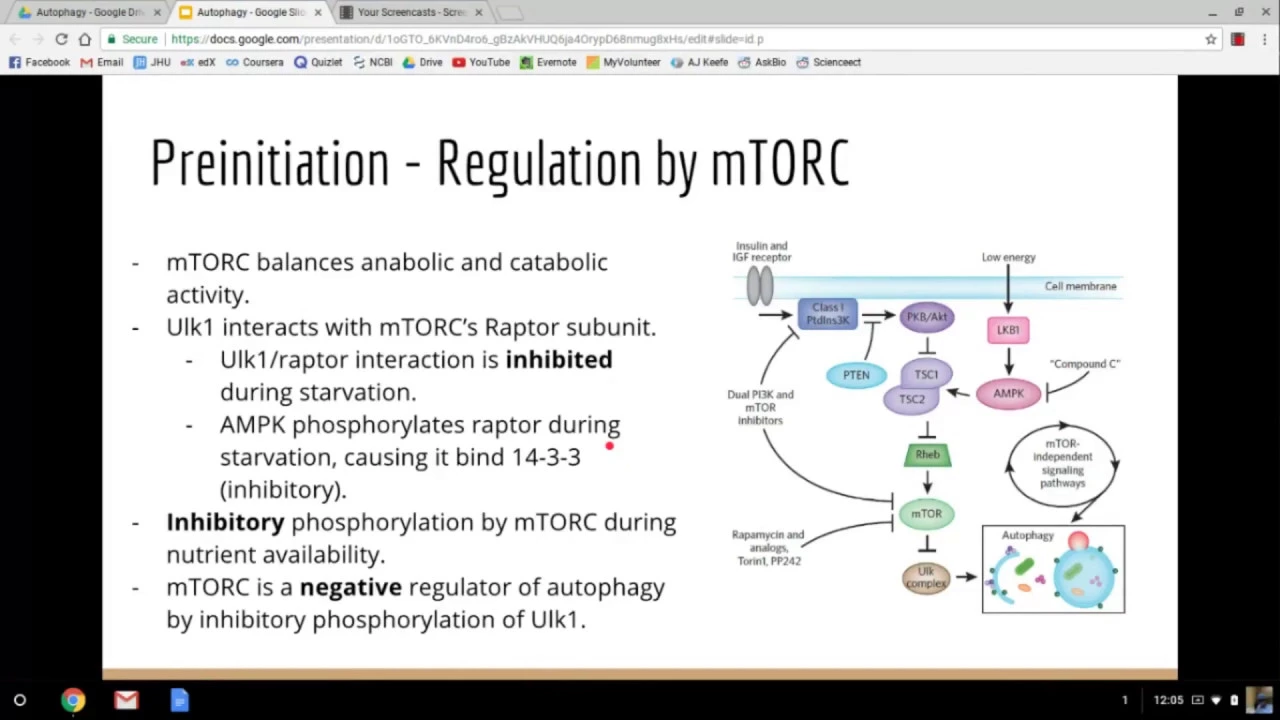
Autophagy Lecture: Molecular Mechanisms Explained in Depth
@AJKeefe
26.2K views•2017-07-10
Bacterial Communication: Quorum Sensing and Biofilm Formation Explained
@JHUAAP
12.6K views•2011-06-28

MicroRNAs: Gene Regulation Explained by David Bartel | iBiology
@scicommlab
233.1K views•2014-03-24
Bacteriophages: Earth's Deadliest Killers and Future Antibiotics
@kurzgesagt
34.6M views•2018-05-13
Related Study Plans & Knowledge Roadmaps
Structured learning paths in Biology