The Space Race ended because the Apollo program consumed 5% of the US budget at its peak, leading to budget cuts after the first successful moon landing; the Soviets then shifted focus to space stations for long-duration research, while Americans developed the reusable Space Shuttle to make space access cheaper, ultimately leading to the International Space Station as the largest human spaceflight engineering project in history.
Apollo's End: Why NASA Stopped Moon Missions and Shifted Focus
Added:Deep Dive
The history of the Cold War and the geopolitical dynamics of the Space Race between the United States and the Soviet Union.

Гонка вооружений СССР и США / Холодная война / Уроки истории / МИНАЕВ
787.2K
The launch of Sputnik 1 on October 4, 1957, marked the beginning of the Space Age and transformed Cold War competition from an arms race into a space race. The Soviet Union launched the world's first artificial Earth satellite, less than a meter in diameter, transmitting signals at announced frequencies. The shock in America was compared to Pearl Harbor, with media frenzy and public nervousness over newfound vulnerability. The Soviets could now spy on America and deliver nuclear strikes via ballistic missiles. The Americans eventually launched their Vanguard rocket, which exploded shortly after liftoff—a blow to U.S. prestige. In January 1958, Explorer-1 entered orbit, leading to NASA's creation. The Soviets launched Luna-1 (first artificial satellite of the Sun) and Luna-2 (crashed on the Moon). Both superpowers examined scientific breakthroughs through a military lens, asking if they could be used as weapons. The U.S. followed 'massive retaliation' doctrine while the Soviets pursued peaceful coexistence. The Kitchen Debates of 1959 showcased ideological competition, with Nixon showcasing American consumer goods while Khrushchev countered that American generals talked about missiles, not kitchenware. At the UN in 1960, Khrushchev famously placed his shoe on the podium when accused of colonial behavior toward Eastern Europe.
Click to watch →

USA vs. Sowjetunion: Das „Space Race" im Kalten Krieg
169K
During the Cold War, the United States and Soviet Union competed not just militarily but across all domains including economics, science, technology, culture, sports, and music. Both superpowers sought to prove their political system was superior by achieving technological milestones first. This competition drove rapid advancements in space exploration as each nation aimed to demonstrate its ideological and technological superiority to the world.
Click to watch →
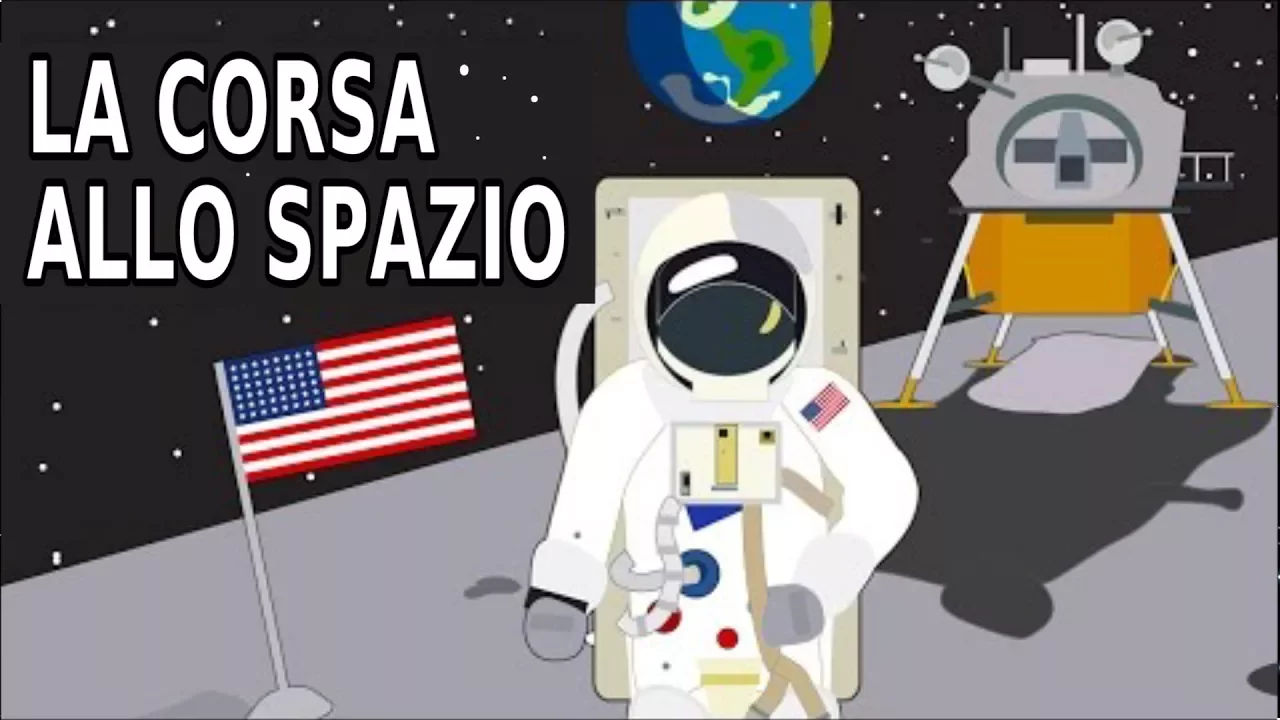
La STORIA della CORSA allo SPAZIO (1955 - 1975)
170.4K
The Space Race was a Cold War competition between the United States and the Soviet Union, where both superpowers raced to achieve milestones in space exploration; the Soviets won early victories by launching Sputnik 1 (first satellite, 1957) and sending Yuri Gagarin as the first human in space (1961), while the Americans responded by committing to land a man on the Moon through President Kennedy's Apollo program, ultimately succeeding with Neil Armstrong's moonwalk in 1969, which ended the competition and led to improved US-USSR relations culminating in the 1975 Apollo-Soyuz joint mission.
Click to watch →

UPSC EDGE for Prelims 2020 | Science & Tech by Sandeep Sir | 10 Basic Concepts
24K
The Cold War was a period of geopolitical tension between the United States and the Soviet Union from approximately 1950 to 1991. During this time, both superpowers engaged in strategic competition, including the Space Race. The Space Race began when the Soviet Union successfully launched the first human into space with Yuri Gagarin in 1961, which was a significant achievement for the Soviet Union and a setback for the United States.
Click to watch →

ウラジミール・コマロフ|死ぬと分かっていながら宇宙へと旅立った男の話
3.9M
The Space Race was a competition between the United States and the Soviet Union during the Cold War, where both nations raced to achieve space milestones. The USSR initially led by launching Sputnik 1 in 1957, followed by Yuri Gagarin's first human spaceflight in 1961 and Valentina Tereshkova's first woman in space in 1963. The USSR also achieved the first multi-person spaceflight in 1964 with Vladimir Komarov as commander.
Click to watch →
Deep Dive
The primary objectives and key achievements of the Apollo Program, specifically the Apollo 11 lunar landing.

Предполётная конференция экипажа Аполлон 11 / APOLLO -11. Preflight Press Conference
134
The primary objective of Apollo 11 was to deliver a human to the Moon and accomplish a successful landing there. While there were secondary objectives including scientific experiments and exploration activities, the main goal was to demonstrate that humans could successfully perform this type of work. The mission aimed to prove that humanity could achieve lunar landing capability, which would have profound implications for future space exploration. The success of this mission would establish a foundation for subsequent lunar missions and demonstrate the feasibility of human spaceflight to another celestial body.
Click to watch →

Висадка на Місяць. Геніальність NASA чи вигадки спецуслужб?
86.4K
The primary objective of Apollo 11 was to fulfill President Kennedy's national goal of landing a human on the Moon. The mission's main challenge was not just landing on the Moon but safely returning to Earth. Additional objectives included exploring the lunar module, deploying television cameras for signal transmission to Earth, collecting rock and dust samples, and installing a laser retroreflector. These operations aimed to establish American leadership in space exploration and advance scientific understanding of lunar materials.
Click to watch →

The rescue of the Apollo 11 capsule
369
The primary objective of Apollo 11 was to complete a national goal set by President John F. Kennedy on May 25, 1961: to perform a crude lunar landing and return to Earth. This mission represented the culmination of years of planning and development to achieve the first human Moon landing.
Click to watch →

Historions-nous #Emission 3
113
Apollo 11's primary objective was to achieve a successful extravehicular activity (spacewalk) on the lunar surface and return safely to Earth. The mission was designed to fulfill President Kennedy's goal of landing a man on the Moon and returning him safely before the end of the 1960s. Scientific objectives were secondary to this primary goal, with the mission focusing on demonstrating human capability to land, walk, and return from the lunar surface.
Click to watch →

UP HOME GUARD GK CLASSES | UP HOME GUARD 2025 GK CLASSES | UP CONSTABLE GK CLASS BY NEERAJ SIR
324
The primary objective of Apollo 11 was to land humans on the Moon. This historic mission, launched in 1969, successfully achieved this goal with Neil Armstrong becoming the first human to walk on the lunar surface.
Click to watch →
Deep Dive
The basic structure of federal funding in the United States and how public opinion influences NASA's congressional budget allocations.
![DAVI CALAZANS [+ SERGIO SACANI] - Flow #150](https://i.ytimg.com/vi/kyF2O4QDsAA/maxresdefault.jpg)
DAVI CALAZANS [+ SERGIO SACANI] - Flow #150
446.2K
NASA's budget and operations depend on public support and congressional funding. The agency needs to demonstrate value to justify its budget allocations, which creates an incentive to share discoveries and maintain public engagement. This relationship between public support and funding creates both opportunities and challenges for space exploration programs.
Click to watch →
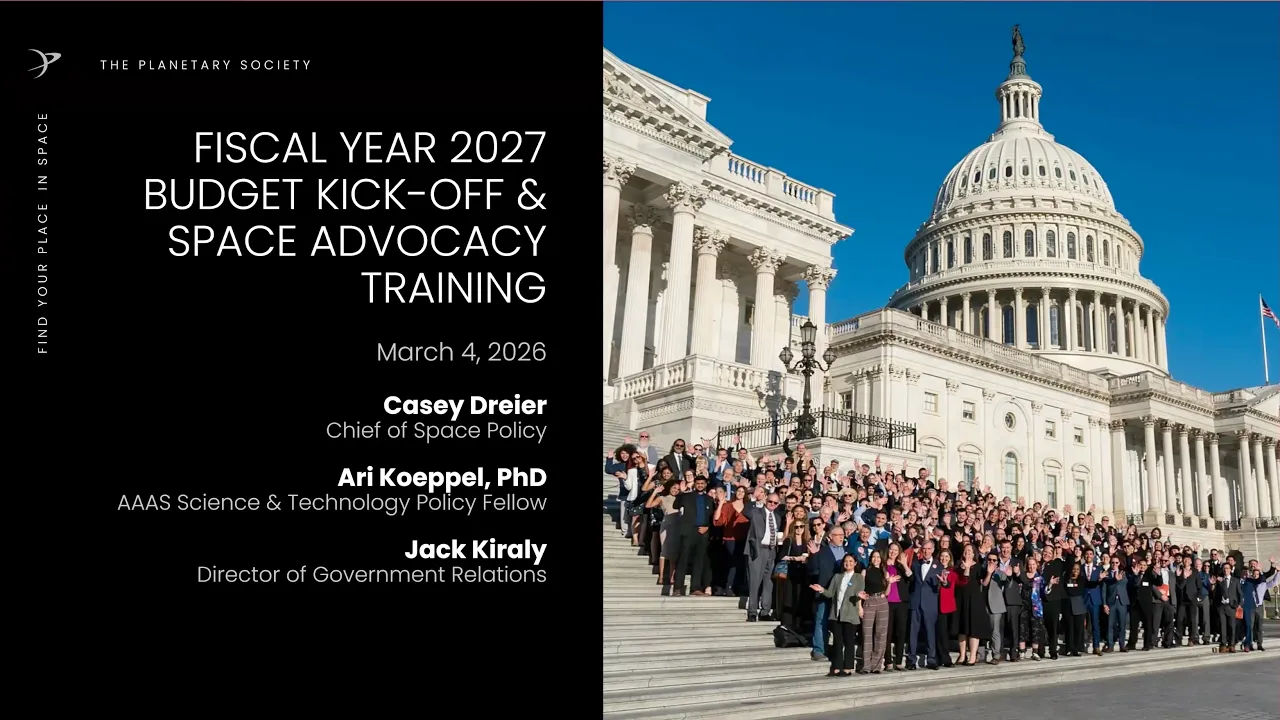
Webinar: Getting ready for the FY 2027 NASA budget
169
The U.S. federal budget divides into mandatory spending (Social Security, Medicare, Medicaid) and discretionary spending ($1.8 trillion requiring annual Congressional approval). NASA receives approximately $25 billion from non-defense discretionary funds, with about one-third allocated to science missions including heliophysics, Earth science, planetary exploration, astrophysics, and biological/physical sciences. NASA supports approximately 10,000 U.S. scientists and awards about 3,000 competitive grants annually. The Constitution grants Congress the power of the purse, giving it final authority over federal spending despite the President submitting budget requests. NASA falls under the Commerce, Justice, and Science appropriations subcommittee. Citizens can influence federal science funding through multiple channels: the House of Representatives issues Appropriations Request Guidance allowing constituents to submit funding requests to member offices, typically with tight deadlines. Organizations provide tools integrating NASA contract and grant data with AI assistance to help constituents craft compelling arguments. The FY2026 budget demonstrated successful advocacy when citizens opposed a proposed 24% NASA cut, leading Congress to maintain stable funding with overwhelming bipartisan margins (397-28 in the House, 82-15 in the Senate).
Click to watch →

Is Space Exploration Worth The Money? How Much Do We Spend Anyway?
230
Public opinion surveys reveal shifting attitudes toward space funding. In 2016, 45% of Americans believed the nation was spending about right on space exploration, while 23.9% thought too much was being spent and 20.7% said too little. By more recent surveys, the percentage believing too much is spent had risen to 39%, while those thinking too little remained around 19%. However, when asked whether NASA should receive more than 0.5% of the federal budget (which it currently does), 41% supported increasing funding, demonstrating that public support exists but requires proper framing of questions.
Click to watch →
An Evening with Apollo 13 Astronaut Fred Haise: A WAA Special Event
195
Space exploration funding comes through congressional administrative support and the general public. The general public does not have the same fervor for space as those with Kennedy Space Center in their backyard. This enthusiasm feeds from the bottom up to Congress and senators. Many people do not realize that NASA has to fight for funding through every year's budgeting cycle, similar to the defense department, rather than having unlimited funds. Fred Hayes fought for space station funding for four years. One year, Senator Proxmire zeroed NASA funding on it, and another year in the House committee. If one vote had shifted, there would be no space station today. He had to attend many breakfasts, lunches, and dinners with staffers and congressmen to sway votes. The Russians joining the program saved the space station because it was a joint agreement with the State Department, and it would have been embarrassing for the US to back down.
Click to watch →

The Real Reason Humans Haven't Returned to the Moon
1.1K
A survey conducted in 2018 found that Americans, when asked to estimate NASA's share of the federal budget, guessed an average of 6.4%. When the actual figure was approximately 0.5%. 85% of respondents said they believed NASA's budget should be increased while simultaneously overestimating it by a factor of roughly 12. The gap between public perception and fiscal reality is its own kind of structural problem. There is genuine popular support for ambitious space exploration, but that support is not calibrated to what ambitious space exploration actually costs. And when the true figures become politically visible, the support tends to erode. China's space program, by contrast, operates under a 5-year planning system that does not reset with elections. The targets set in one planning period carry into the next. The engineers who design a rocket in 2020 are still working on the same rocket in 2025, and the institutional knowledge accumulated in one program carries directly into the next. This is not an argument that the Chinese political system is preferable—it comes with very different and serious costs—but it is an accurate description of why a program structured that way is better suited to the specific challenge of long-duration space infrastructure development than one that resets priorities every 4 to 8 years.
Click to watch →
Deep Dive
The technological and logistical limitations of 1960s and 1970s spaceflight technology regarding long-duration missions.

The Greatest Journey Ever Taken: How Two 1977 Machines Escaped the Solar System Forever
207
Designing spacecraft for missions beyond Mars in the 1970s meant confronting a paradox: to survive for more than a decade in frigid darkness beyond Mars, battered by radiation near Jupiter and plunged into feeble sunlight where solar panels would be nearly useless, the spacecraft had to be robust, flexible, and semi-autonomous. Yet they also had to be lightweight and built with electronics that were by modern standards primitive, limited in memory and processing power. The main computer systems aboard each Voyager would have less memory than the simplest digital watch or novelty toy today, yet they would be expected to diagnose their own faults, switch to redundant backup systems, rotate cameras, point high gain antennas to an Earth that would shrink to the size of a star, and continue performing complex scientific operations for years without a single repair.
Click to watch →

This is Why We CAN'T Leave the Milky Way
66.4K
No human-made object has functioned for more than a few decades—Voyager probes are 46 years old and failing. Building something for millions of years is impossible: metals fatigue, circuits corrode, radiation damages electronics. The human body evolved on Earth in gravity, protected by Earth's magnetic field. Remove these conditions and humans break down: bone density loss, muscle atrophy, vision problems, immune system confusion. The longest space flight was 437 days. Generations living entirely in artificial environments for millions of years would become something unrecognizable.
Click to watch →
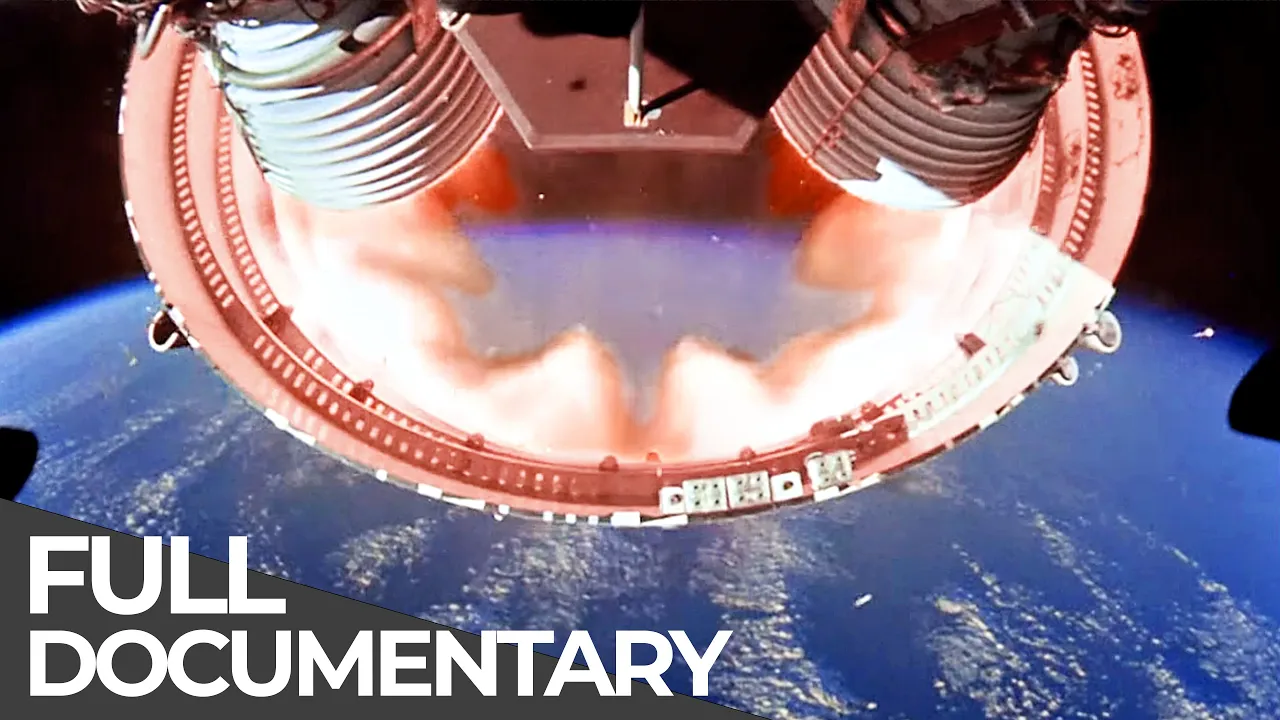
Space Race to the Moon | Free Documentary
3.6M
By October 1968, NASA had confidence in the new command module. Apollo 7 would launch to Earth orbit on a Saturn IB—the bigger Apollo capsule provided a more comfortable environment necessary for long-duration flights required to get to the moon. The crew could take off or put on their bulky spacesuits as required and didn't have to remain in their couches as in Mercury and Gemini spacecraft. One of four adapter panels had not opened fully on subsequent flights, separating completely from the upper stage. The spacecraft practiced docking using a visual reference target. Schirra came down with a cold that spread quickly in zero-gravity, making eating difficult. They had to fire the service module engine no less than eight times. Public relations reached new heights with TV broadcasts watched worldwide.
Click to watch →
How Are We Still In Contact With Voyager?
472
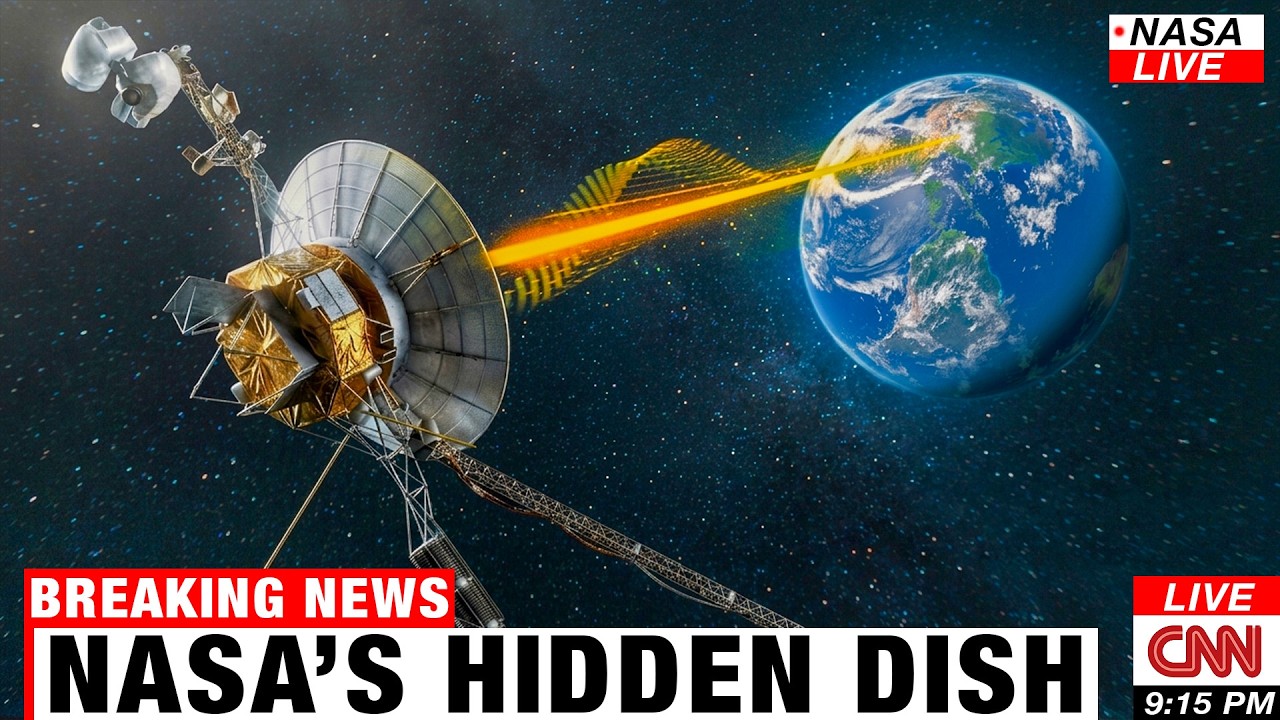
After completing planetary flybys, NASA extended the mission to explore interstellar space indefinitely. The 1970s technology (kilobyte memory, wristwatch-level processors) has outlasted all predictions. Documentation challenges exist as original engineers have retired, leaving current teams to work from decades-old records. The irreplaceability of these two spacecraft drives the mission team's efforts to preserve remaining functionality instrument by instrument, watt by watt.
Click to watch →

Открытый Космос / Open Space. 4 Серия. Документальный Фильм. . Babich-Design
5.1M
The development of life support systems and exercise equipment enabled progressively longer space missions. In 1978, cosmonauts Vladimir Kovalyonok and Alexander Ivanchenkov spent 139 days on Salyut-6. By 1986, the Mir station began operations, and in 1987, cosmonaut Yuri Romanenko completed a 326-day mission. In 1988, Vladimir Titov and Musa Manarov spent exactly one year in orbit. The absolute record was set in 1995 by cosmonaut Valery Polyakov, who spent 437 days in space. These achievements demonstrated that human spaceflight to other planets was technically feasible, though the high cost of Mars missions made international cooperation essential.
Click to watch →
Prerequisite Knowledge
- Concept 01The history of the Cold War and the geopolitical dynamics of the Space Race between the United States and the Soviet Union.
- Concept 02The primary objectives and key achievements of the Apollo Program, specifically the Apollo 11 lunar landing.
- Concept 03The basic structure of federal funding in the United States and how public opinion influences NASA's congressional budget allocations.
- Concept 04The technological and logistical limitations of 1960s and 1970s spaceflight technology regarding long-duration missions.
Subsequent Learning
- Step 01The design, objectives, and legacy of the Space Shuttle Program as NASA's transition to reusable low-Earth orbit transport.
- Step 02The evolution of space stations, starting from Skylab and Salyut to the construction and international cooperation of the International Space Station (ISS).
- Step 03The rise of commercial spaceflight (NewSpace) and its role in reducing the cost of orbital payload delivery.
- Step 04The Artemis Program and how modern lunar exploration plans differ from the Apollo era in terms of sustainability, international partnerships, and private sector involvement.
Lunar Triumph
Orbital Shift
Lunar Triumph
0:03Playing Section
- 1
Apollo missions explored the moon, transforming lunar and Earth science.
- 2
Program ended due to high costs and shifting political priorities.
The Sustainable Infrastructure and Robotic Exploration Perspective
This perspective challenges the narrative that the end of the Apollo program was a political failure or a simple retreat. Instead, it argues that Apollo was an unsustainable, geopolitically motivated 'flags-and-footprints' detour that lacked the foundational infrastructure needed for long-term space exploration. Proponents of this view suggest that halting Apollo was a necessary, logical pivot to build a sustainable spacefaring infrastructure in Low Earth Orbit (LEO)—using the Space Shuttle and space stations like Skylab and the ISS—before attempting deeper space missions. Additionally, shifting funds away from expensive human lunar missions enabled NASA to invest in highly successful, cost-effective robotic and astronomical programs (such as the Voyager probes, the Viking Mars landers, and the Hubble Space Telescope). From this viewpoint, ending Apollo was not a defeat, but a strategic maturation of space policy toward sustainable, scientifically productive exploration.
Deep Dive
The design, objectives, and legacy of the Space Shuttle Program as NASA's transition to reusable low-Earth orbit transport.

Todesfalle oder Wunderwerk? Das erste wiederverwendbare Raumschiff- 40 Jahre Space Shuttle
4.2K
The Space Shuttle (1981-2011) was NASA's revolutionary reusable spacecraft system, consisting of the orbiter, external fuel tank, and two solid rocket boosters. It transported 27.5 tons to low Earth orbit and 16 tons to the ISS while carrying 8 astronauts. Originally designed as part of a larger Space Transportation System including a space station and nuclear upper stage for Mars missions, President Nixon approved only the reusable shuttle, creating a vehicle designed for missions that never materialized. The shuttle achieved 453 seconds specific impulse (most efficient operational engines) and solid rocket boosters remained the strongest ever deployed. Despite a 16.7% total loss rate (Challenger 1986, Columbia 2003), it excelled at Hubble servicing and ISS construction. Costs were $450 million per launch ($76 million per seat), competitive with Soyuz. The shuttle's legacy includes inspiring generations and demonstrating that spaceflight could become accessible to everyone.
Click to watch →

Ao Vivo | Tensão no espaço: módulo de pesquisas russo pode estar em apuros | 23/07/2021 |
34.9K
NASA's Space Shuttle program (1981-2011) represented the first reusable spacecraft in history. Each shuttle weighed approximately 80 tons, carried seven astronauts and 27 tons of cargo, and featured three main engines plus two solid rocket boosters. The program performed 135 missions, placing the Hubble telescope in orbit and contributing to ISS construction. Two accidents (Challenger 1986, Columbia 2003) resulted in 14 fatalities. The program ended with Atlantis' final landing on July 21, 2011, marking the conclusion of one of humanity's most sophisticated space programs.
Click to watch →

Q&A Podcast: Mike Leinbach, Fmr. Space Shuttle Launch Dir. & Co-Author, "Bringing Columbia Home"
298
The space shuttle's legacy includes being the first reusable spacecraft in history, teaching NASA how to live and work in low Earth orbit for two weeks at a time. The shuttle retirement led to the commercial space industry, including companies like SpaceX and Blue Origin. NASA created a commercial crew program to transport astronauts to the International Space Station. The shuttle filled the gap between Apollo's two-week missions and the permanently manned International Space Station since 2000. President Bush stated: 'America's space program will go on. This cause of exploration and discovery is not an option we choose. It is a desire written in the human heart.' The shuttle program's legacy includes reusable spacecraft technology and the foundation for commercial spaceflight.
Click to watch →
60 anos longe da Lua: por que estamos voltando agora?
2.4K
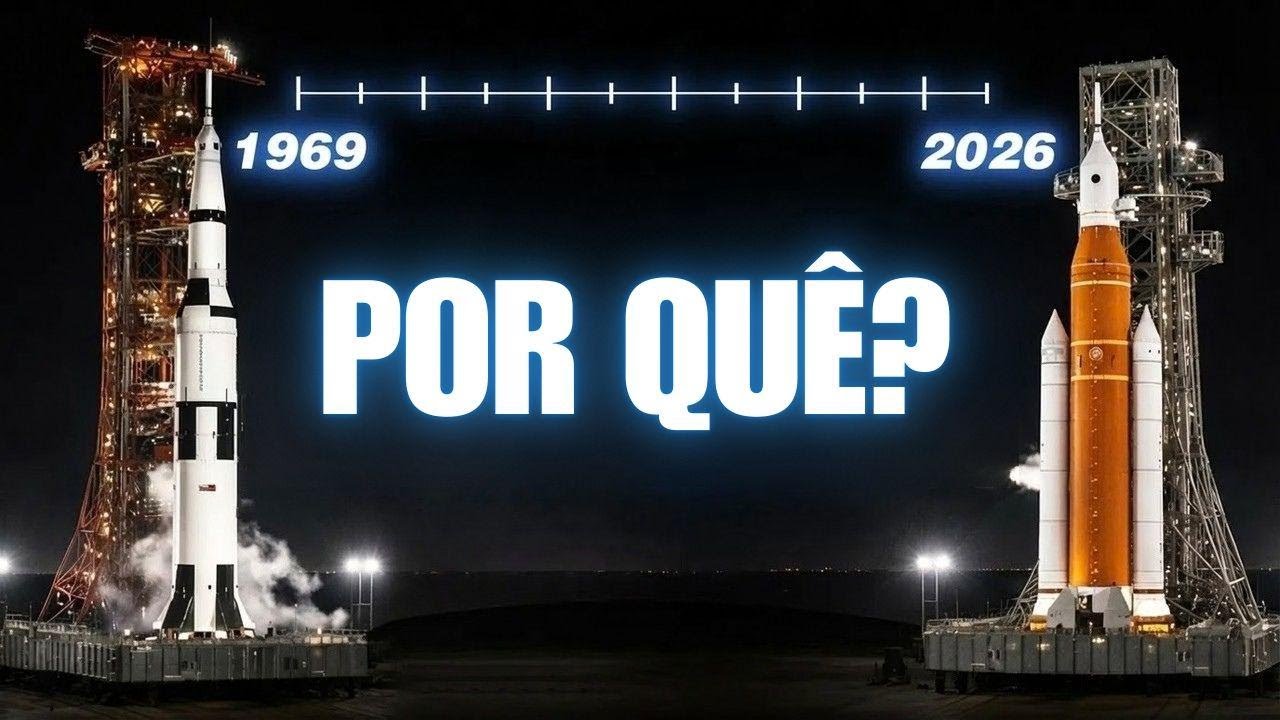
After Apollo, NASA sought a reusable spacecraft to reduce costs, as previous spacecraft were lost after single use. The Space Shuttle was designed with three main parts: the orbiter (where astronauts sat), an external fuel tank, and two solid rocket boosters on the sides. The orbiter was designed with an airplane-like shape to return to Earth and land like a glider. A typical mission began with the orbiter's engines and solid rocket boosters firing together at liftoff. About two minutes after launch, the solid rocket boosters separated and fell into the ocean for recovery. The external fuel tank separated and burned up in the atmosphere. The orbiter would then deploy its cargo bay to release satellites. Missions typically lasted one to two weeks, after which the orbiter fired its engines to decelerate and return to Earth, generating lift like an airplane. Six Space Shuttles were built, with Columbia and Challenger suffering tragic accidents. The program was canceled in 2011 because maintenance costs made it the most expensive way to put 1 kg into orbit.
Click to watch →
![Why I'm not a Shuttle Fan, Part 2: Dyna-Soar [Amy's Soapbox]](https://i.ytimg.com/vi/8X61hEFbZew/maxresdefault.jpg)
Why I'm not a Shuttle Fan, Part 2: Dyna-Soar [Amy's Soapbox]
93.8K
The Space Shuttle program was approved in 1972 and designed to be a reusable low-cost space transportation system. Each orbiter was intended to perform 100 flights. The Shuttle was designed to launch like a rocket, operate like a spacecraft, and land like an airplane. It was also designed to launch interplanetary missions, recover and refurbish satellites in orbit, and have a turnaround time of just weeks between flights. The initial proposal stated the Shuttle could fly up to 50 flights per year.
Click to watch →
Deep Dive
The evolution of space stations, starting from Skylab and Salyut to the construction and international cooperation of the International Space Station (ISS).
The Evolution of The Space Station! (Salyut to Tiangong)
106.1K
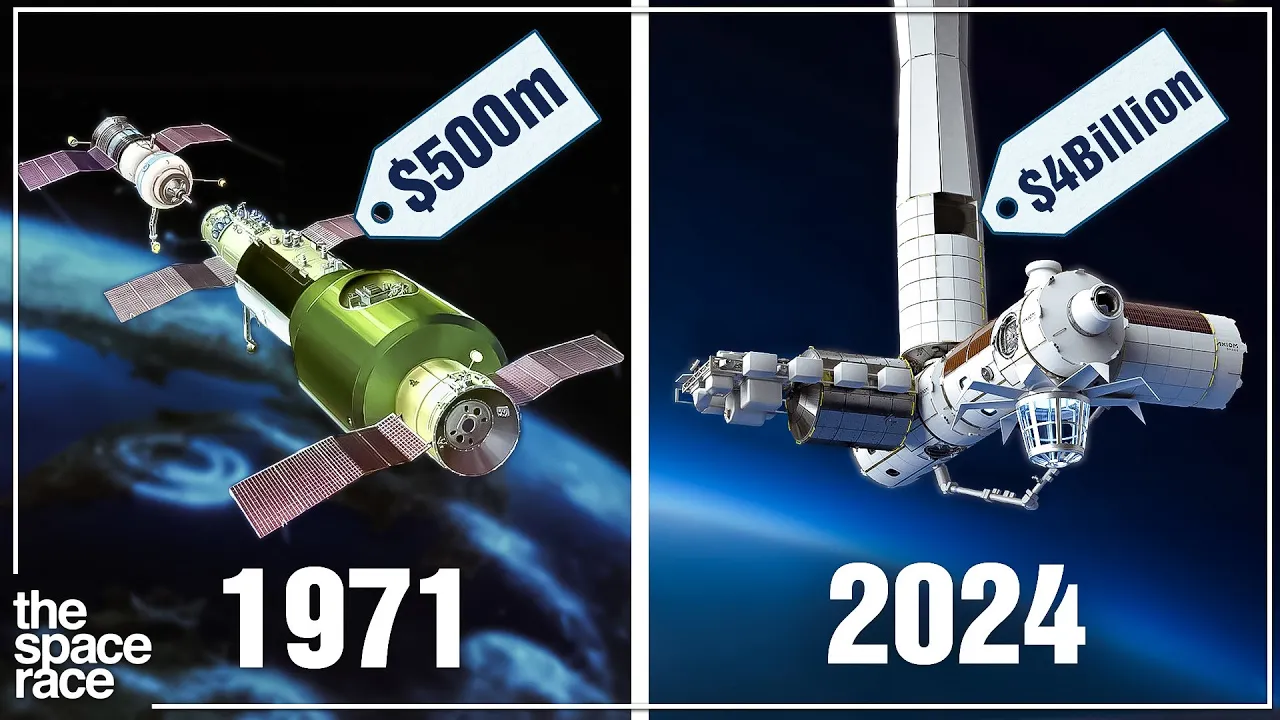
The evolution of space stations demonstrates a progression from early experimental modules (Salyut 1-7) through single-module stations (Skylab) to complex modular stations (Mir, ISS), with each generation building upon previous experience; the International Space Station represents an evolution of Soviet/Russian modular station design, while China's Tiangong marks a new era of space station development benefiting from modern electronics miniaturization and heavy-lift rocket technology like SpaceX's Starship, enabling much larger and more spacious orbital habitats than earlier generations.
Click to watch →

A História das Estações Espaciais | Nerdologia
69.5K
Space stations have evolved from Hermann Oberth's 1923 concept of an orbital platform for lunar missions to today's International Space Station (ISS), which has been continuously inhabited since 2000. The first manned space station was Salyut 1 (1971), followed by Skylab (1973-1979) and Mir (1986-2001). The ISS represents international cooperation between the US, Russia, Japan, Canada, and Europe, with China now developing its own Tiangong stations. Future developments include private stations like Axiom Space's planned station and the Gateway station orbiting the Moon, continuing the vision of orbital platforms for scientific research and human exploration.
Click to watch →
Life, Love And Sex In Space | SPACETIME - SCIENCE SHOW
243.8K
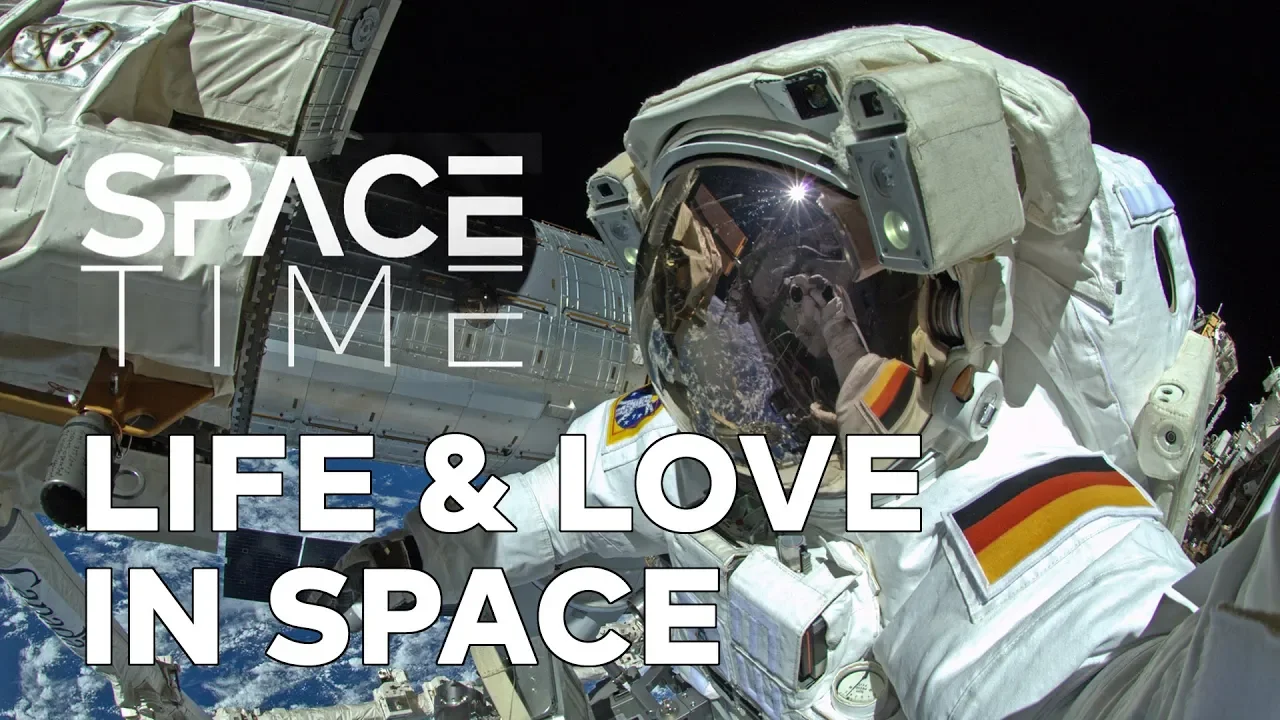
The development of space stations represents a progression in human orbital habitation capability. Salyut 1 (1971) was the first space laboratory, but tragedy struck when its crew of three cosmonauts died during reentry due to a premature capsule valve opening. NASA responded with Skylab (1973), conducting extensive weightlessness research. The Soviet Union then launched Mir (1986), the first permanent orbital outpost designed for long-term operation, hosting over 100 cosmonauts and astronauts from 15 countries. Mir symbolized Cold War cooperation when Americans joined in 1995. Finally, the International Space Station (1998) emerged as a multinational project involving 14 countries, weighing over 300 tonnes and spanning 2,200 cubic meters. This evolution demonstrates increasing complexity, international collaboration, and the goal of preparing humanity for deeper space exploration.
Click to watch →
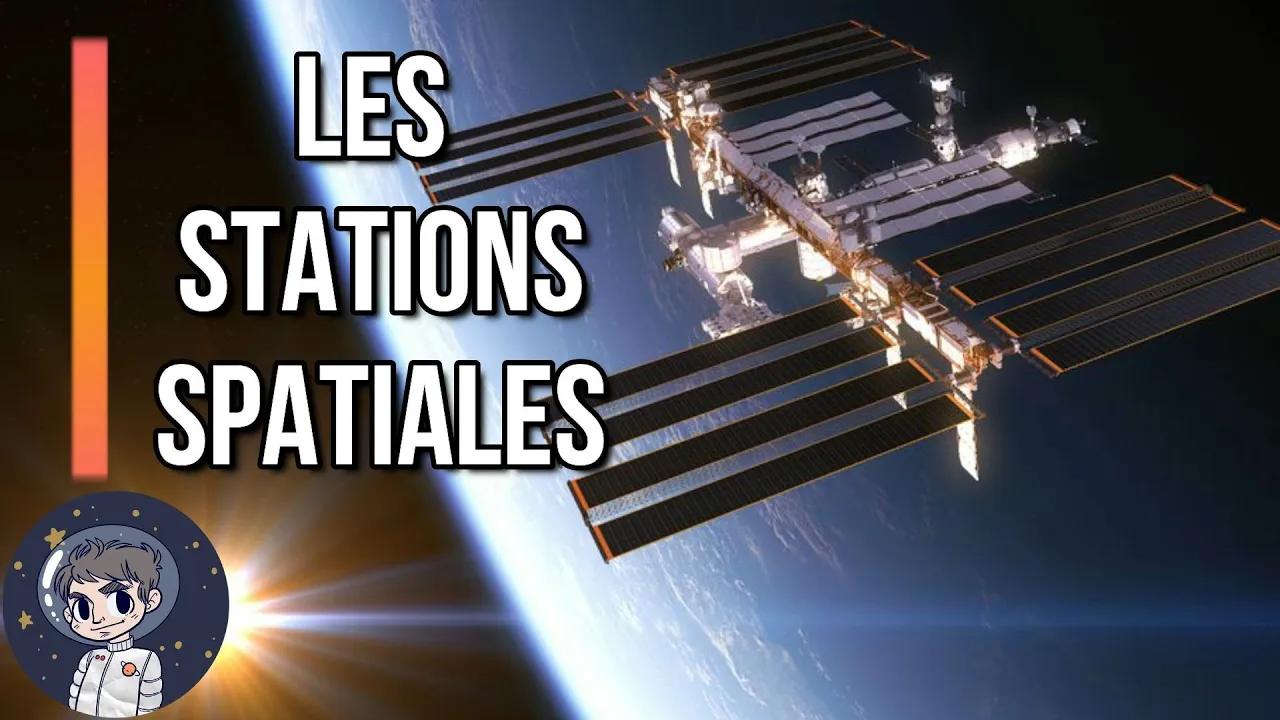
"Le Saviez Vous" : Les Stations spatiales - Le Journal de l'Espace - Culture spatiale
31.6K
Human space stations have evolved from monolithic Soviet Salyut 1 (1971) to the modular International Space Station (ISS), representing humanity's most ambitious attempt to colonize space through international cooperation. The first space station, Salyut 1, was launched by the Soviet Union in 1971 as a civilian orbital station secretly used for military reconnaissance. America responded with Skylab in 1973, followed by the Soviet Mir station (1986-2001), which was the first modular station assembled in orbit. The ISS, launched in 1998, is the largest artificial satellite in Earth's orbit, enabling thousands of scientific experiments on microgravity's effects on the human body. Living in space requires specialized adaptations including daily exercise to combat muscle atrophy, recycled air and water systems, and artificial circadian rhythms since astronauts experience 16 sunrises daily.
Click to watch →
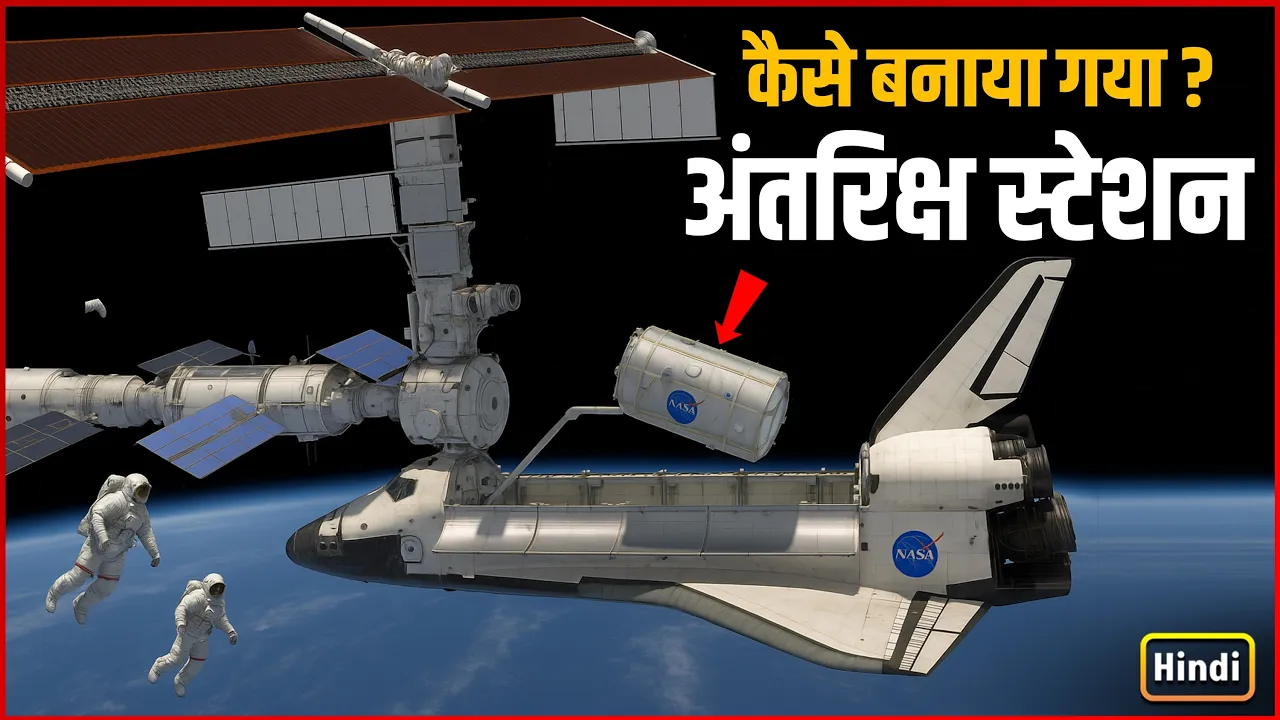
अंतरराष्ट्रीय अंतरिक्ष स्टेशन कैसे बनाया गया ? | How To Build International Space Station in Space ?
97.7K
The International Space Station emerged from Cold War space competition between Russia and America. Russia launched Salyut 1 in 1971, followed by America's Skylab in 1973, and Russia's larger Mir station. These early attempts revealed that working alone in space was impractical. Five space agencies (NASA, Roscosmos, JAXA, ESA, CSA) collaborated to build the ISS. Construction began November 20, 1998, with Russia's Zarya module, followed by NASA's Unity module two weeks later. The station was assembled through 136 launches between 1998-2011 using American, Russian, and European rockets, with most modules attached via Space Shuttles.
Click to watch →
Deep Dive
The rise of commercial spaceflight (NewSpace) and its role in reducing the cost of orbital payload delivery.

Spazio, intelligenza artificiale e robotica
108
The New Space industry represents a fundamental shift from government-controlled space exploration to private enterprise. Three key factors drove this transformation: the end of the Cold War allowing NASA to focus on scientific research while leaving commercial activities to private companies; technological improvements in electronics and launch systems enabling powerful satellites in small volumes like cubesats; and a natural learning curve where repeated production drives down costs. Early missions like Apollo cost $1 billion per mission, while today systems can launch payloads for $10,000-$100,000 per kilogram. This cost reduction is primarily due to SpaceX's rocket reusability, which allows the same rocket to be launched multiple times after landing.
Click to watch →

What is NewSpace? ft. Narayan Prasad with Sanket Suman Dash | 1/5 #ListenUp
140
New Space is an undeclared movement of entrepreneurs and companies aimed at reducing barriers to space access. Emerging 15-20 years ago, it sought to lower space access costs from approximately one million dollars per kilogram (space shuttle era) to 10-100 times less. This movement was enabled by technology proliferation in semiconductors and internet, making space another tool for societal services. The movement includes companies like SpaceX developing reusable rockets and smaller satellites. The goal is to democratize space access, enabling space-based internet, imaging, and other applications to benefit society broadly rather than being limited to government or military use.
Click to watch →

Serata sulla SpaceX
20.3K
The aerospace industry transitioned from government-dominated to commercially-driven approaches following the Space Shuttle Program's limitations. The United Launch Alliance (ULA), formed by Boeing and Lockheed Martin, dominated the market for approximately 15 years with Atlas V and Delta IV rockets. This duopoly created barriers for new entrants. Elon Musk, after achieving success with Zip2 and PayPal, founded SpaceX in 2002 with the goal of reducing launch costs. His motivation stemmed from frustration with NASA's lack of Mars mission plans and the high costs of space travel. The company hired Tom Mueller to develop Merlin engines and Grete Shotwell to secure contracts. This transition represented a fundamental shift in how space access was achieved, moving from government-dominated to commercially-driven approaches that could potentially reduce costs and expand human presence in space.
Click to watch →
SpaceX - Lançamento do Falcon 9 para a ISS. Ft Felipe Hime
57.7K
The cost of commercial spaceflight has decreased dramatically compared to government programs. The Russian Soyuz launch cost approximately $90-100 million per seat, while SpaceX's Falcon 9 launch costs approximately $50-65 million. This cost reduction is achieved through reusable booster technology, which allows the same rocket to be used for multiple launches. The economic model of commercial spaceflight is similar to the evolution of commercial aviation, where initial high costs decreased as technology matured and competition increased.
Click to watch →

The Entire History of Space, I guess
404.7K
Founded in 2002 with $100 million, SpaceX achieved orbital flight with Falcon 1 in 2008 after three failures. This success secured $1.6 billion in NASA contracts. The company pioneered reusable rockets, landing Falcon 9 first stages on land and droneships. The Falcon Heavy, carrying 64,000 kg payload at one-third the cost of competitors, demonstrates how reusability transforms space access economics.
Click to watch →
Deep Dive
The Artemis Program and how modern lunar exploration plans differ from the Apollo era in terms of sustainability, international partnerships, and private sector involvement.

NASA Experts Discuss Artemis I Splashdown and Next Steps (Dec. 11, 2022)
136.6K
The Artemis program marks a new era in lunar exploration, shifting from Apollo's demonstration-focused approach to establishing sustainable human presence on the Moon. Unlike the Apollo era when the US went to the Moon alone, Artemis involves extensive international and commercial partnerships, reflecting modern space exploration's collaborative nature. The program aims to prepare humanity for Mars exploration by the late 2030s, leveraging the James Webb Space Telescope's discoveries about our vast universe. This international cooperation demonstrates how space exploration has evolved from national competition to collaborative scientific endeavor.
Click to watch →

Artemis - Ep.03 - L'organizzazione - Chi parteciperà al progetto?
61.1K
Artemis employs extensive international collaboration and commercial partnerships to achieve sustained lunar presence. Japan's JAXA became the first major partner in 2020, contributing Gateway modules and developing HTV-X cargo spacecraft. Italy's space agency joined as the second partner, with potential billion-euro contracts for Gateway module construction. Canada contributes robotic arm technology; Australia develops excavation technologies for extracting lunar resources. The program employs a public-private partnership model with three commercial teams competing to develop human landing systems: Blue Origin, SpaceX, and a Boeing-Lockheed Martin consortium. NASA's Commercial Lunar Payload Services program allows private companies to deliver cargo, transforming NASA's role from developer to customer. ESA contributes Gateway modules and develops the reusable Heracles lander. Toyota partners with JAXA to create a modular rover that can dock with lunar bases.
Click to watch →

아폴로. 아르테미스. 화성탐사. NASA 프로젝트 싹 정리해드립니다. (NASA 태양계홍보대사 폴윤 교수)
118.4K
The Artemis program represents NASA's return to the Moon with international cooperation, involving 21 countries including Saudi Arabia. Unlike Apollo's single-nation approach, Artemis emphasizes commercial partnerships with companies like SpaceX for launch services. This strategy allows NASA to focus on scientific exploration while private companies handle transportation. The program aims to establish sustainable human presence on the Moon as a stepping stone for future Mars missions, with the Lunar Gateway serving as a hub for international collaboration.
Click to watch →
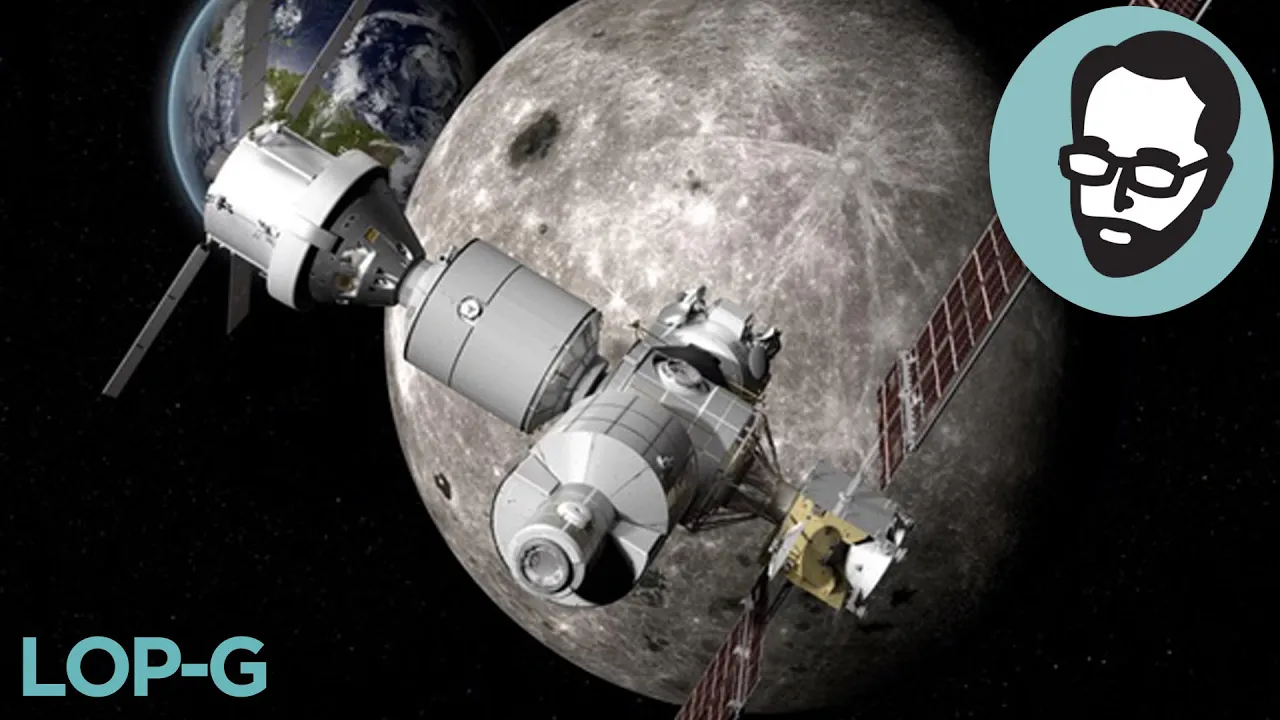
Let's Put A Space Station Around The Moon! | Answers With Joe
469.8K
NASA's Artemis program represents a comprehensive strategy for returning humans to the Moon by 2024, named after the Greek goddess of the Moon. The program follows a phased approach: Artemis I will be an uncrewed test flight around the Moon, Artemis II will carry four crew members in orbit, and Artemis III will achieve the first crewed lunar landing since Apollo. Beyond initial landings, NASA plans annual launches to deliver habitats and resources for establishing a permanent lunar base. The program involves international partnerships with ESA, JAXA, Roscosmos, and Canada, plus private companies like SpaceX and Blue Origin. This multi-year, multi-billion dollar initiative aims to create sustainable lunar presence while testing technologies for eventual Mars missions.
Click to watch →

SpaceX SHOCKED NASA and China with New Method to Build Moonbase Alpha.
94.4K
NASA's Artemis program represents the traditional government approach to space exploration—carefully planned, incrementally assembled, and relying on established engineering practices with multiple contractors. In contrast, SpaceX proposes a revolutionary approach using Starship as both transportation and habitat, leveraging rapid iteration and integrated design. Starship's 200+ ton payload capacity could reduce lunar delivery costs from $1 million to $100,000 per kilogram—a ten-fold improvement. The lunar variant lands vertically, tilts horizontally, and transforms into a livable habitat through robotic interior refitting, with a 5-meter regolith layer providing radiation protection. This eliminates years of surface construction. Each Starship serves as a self-contained habitat or links with others for expansion. The fundamental difference lies in philosophy: Artemis relies on pre-fabricated modules delivered individually, while SpaceX proposes an integrated reusable system designed from the ground up for scalability and speed.
Click to watch →
Lunar Triumph
Orbital Shift
Lunar Triumph
0:03- 1
Apollo missions explored the moon, transforming lunar and Earth science.
- 2
Program ended due to high costs and shifting political priorities.
The Sustainable Infrastructure and Robotic Exploration Perspective
This perspective challenges the narrative that the end of the Apollo program was a political failure or a simple retreat. Instead, it argues that Apollo was an unsustainable, geopolitically motivated 'flags-and-footprints' detour that lacked the foundational infrastructure needed for long-term space exploration. Proponents of this view suggest that halting Apollo was a necessary, logical pivot to build a sustainable spacefaring infrastructure in Low Earth Orbit (LEO)—using the Space Shuttle and space stations like Skylab and the ISS—before attempting deeper space missions. Additionally, shifting funds away from expensive human lunar missions enabled NASA to invest in highly successful, cost-effective robotic and astronomical programs (such as the Voyager probes, the Viking Mars landers, and the Hubble Space Telescope). From this viewpoint, ending Apollo was not a defeat, but a strategic maturation of space policy toward sustainable, scientifically productive exploration.
The history of the Cold War and the geopolitical dynamics of the Space Race between the United States and the Soviet Union.
The primary objectives and key achievements of the Apollo Program, specifically the Apollo 11 lunar landing.
The basic structure of federal funding in the United States and how public opinion influences NASA's congressional budget allocations.
The technological and logistical limitations of 1960s and 1970s spaceflight technology regarding long-duration missions.
The design, objectives, and legacy of the Space Shuttle Program as NASA's transition to reusable low-Earth orbit transport.
The evolution of space stations, starting from Skylab and Salyut to the construction and international cooperation of the International Space Station (ISS).
The rise of commercial spaceflight (NewSpace) and its role in reducing the cost of orbital payload delivery.
The Artemis Program and how modern lunar exploration plans differ from the Apollo era in terms of sustainability, international partnerships, and private sector involvement.
1.9K views27likes3:54@NSpaceCentreOriginal Release: 2020-05-01
so in the 1960s the space world was dominated by this space race and as the decade went on in the early years it looked like the Soviet Union were getting ahead in rehearsing all of the stages necessary to get a human being to the moon and back the world's first multi person spacecraft the world's first spacewalk but by 1964-65 it was clear that the Americans would their Gemini program were racing ahead and this culminated of course in the triumph of project Apollo in these four magical years between 1968 and 1972 the 24 astronauts who went to the moon and the 12 who walked on its surface became the only members of the human race to have ever directly explored an alien world and the science that they brought back transformed our understanding not only of the moon but also at the geological understanding of the earth itself but in 1972 after six successful landing missions the entire program stopped many people asked why well the answer was a combination of politics and also budgets because project Apollo at its height in the mid 1960s when spending was maximum it was taking 5% of the United States budget and people in America were questioning why are we spending all of this money well as always there was a race on that was justified but as soon as the first landing with Apollo 11 and return to Earth was completed people began asking why are we carrying on doing this well of course the later lunar missions were all about science and especially the last three missions Apollo's 15 16 and 17 where they took the lunar rover onto the surface where each mission spent three days doing geological investigations the science return was Mendes but by then the decisions were made that project Apollo would finish and instead from the Soviet Union's perspective having lost the race to the moon they decided to focus on space stations because the longest flight to the moon and back was only about 12 days long what would it take to keep a human being alive in space not for two weeks but for a month for three months for six months or longer still and so the Soviets began investing in space stations orbiting just a few hundred kilometers above the earth but as a platform on which their cosmonauts could do more and more science in the United States the focus was different how could we make space travel and access to space cheaper the answer was the development of the space shuttle because it was partially reusable some parts of it like the orbiter could be used for mission after mission unlike the previous spacecraft which were pretty much one use only and so after the triumphs of project Apollo what we saw was a bit of a retreat instead of looking at human exploration it was about how can humans use the environment much closer to earth in what should we call low Earth orbit and build our experience base and of course all of that work culminated in the largest human spaceflight engineering project in history the International Space Station
Up Next

30:08
Anxious-Avoidant Relationship Fix: Effective Communication Strategies
@brianamacwilliam.attachment
328.9K views•2021-10-06

12:54
Triumph of Orthodoxy Icon: Byzantine Art & History Explained
@BenCallan
2.1K views•2024-08-06

9:49
FastAPI vs Flask vs Django: Choosing the Right Python Web Framework
@TechWithTim
302.5K views•2024-05-26

1:42
Game of Thrones Opening Credits: A Cinematic Analysis
@gameofthrones
46.3M views•2011-04-18
Related Study Plans & Knowledge Roadmaps
Structured learning paths in General & Interdisciplinary Studies
general-studies
Elevator Engineering: History, Physics & Cities
01From Hoists to Safety Brakes: The Dawn of Vertical Lift
02Hydraulic vs. Traction: The Engineering Physics of Elevators
03Modern Speed, Safety, and Algorithms
+ 2 more learning modules
12h5 modules
Explore Roadmap
general-studies
Rubber: Material Science, History & Geopolitics
01Origins of Natural Rubber & Mesoamerican History
02The Chemistry of Natural Rubber & Vulcanization
03The Geopolitics of the Rubber Boom & Colonization
+ 2 more learning modules
12h5 modules
Explore Roadmap
general-studies
Containerization: Evolution, Logistics & Trade
01Ancient Trade & Bulk Cargo: Amphorae to Barrels
02The Industrial Revolution & Cardboard Packaging
03The Containerization Revolution: Malcom McLean
+ 2 more learning modules
12h5 modules
Explore Roadmap
general-studies
Textile Tech: Evolution, Labor & Global Impact
01Pre-Industrial Textiles: Handloom & Cottage Industry
02Mechanization: The Spinning Jenny to the Power Loom
03The Factory System & Global Labor Transformation
+ 2 more learning modules
10h5 modules
Explore Roadmap