




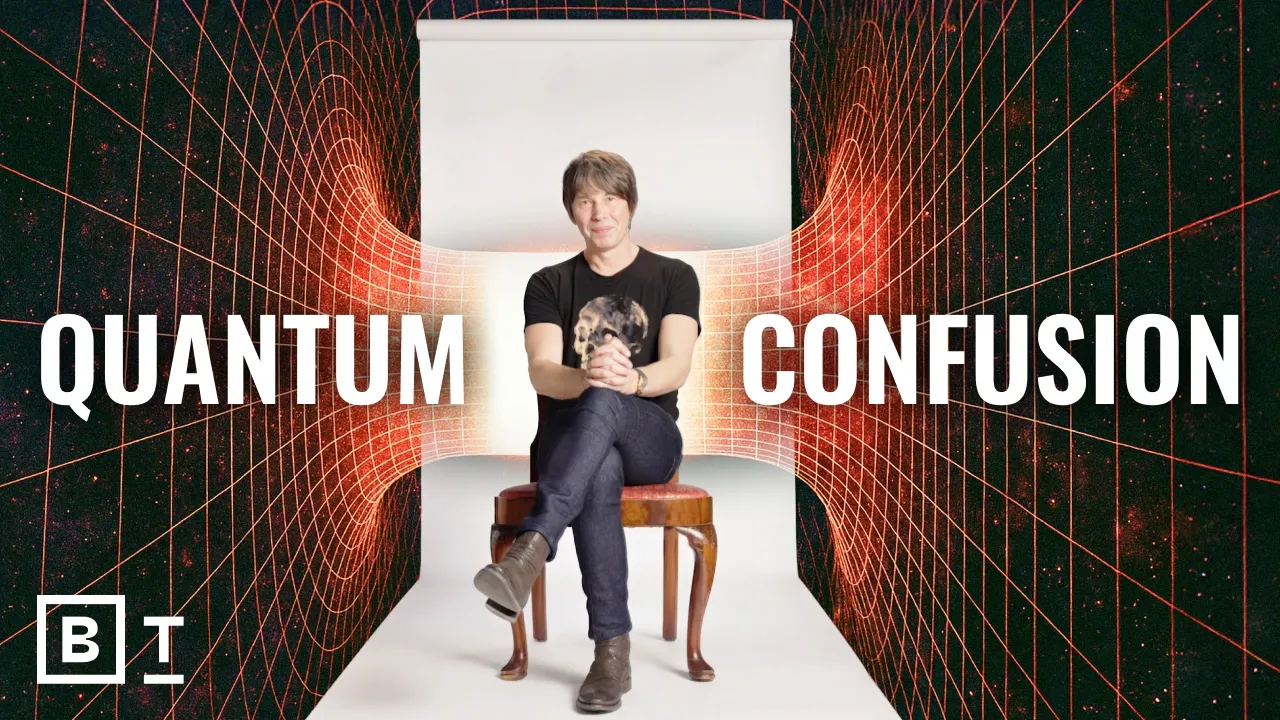








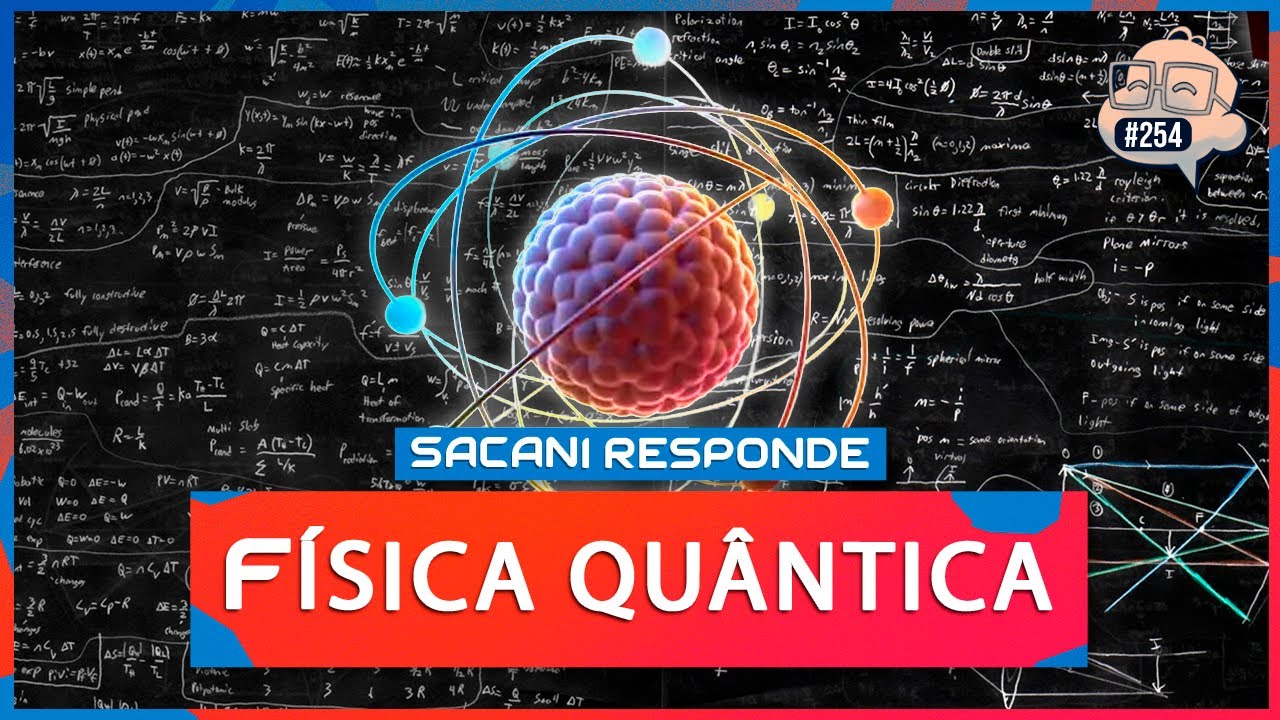





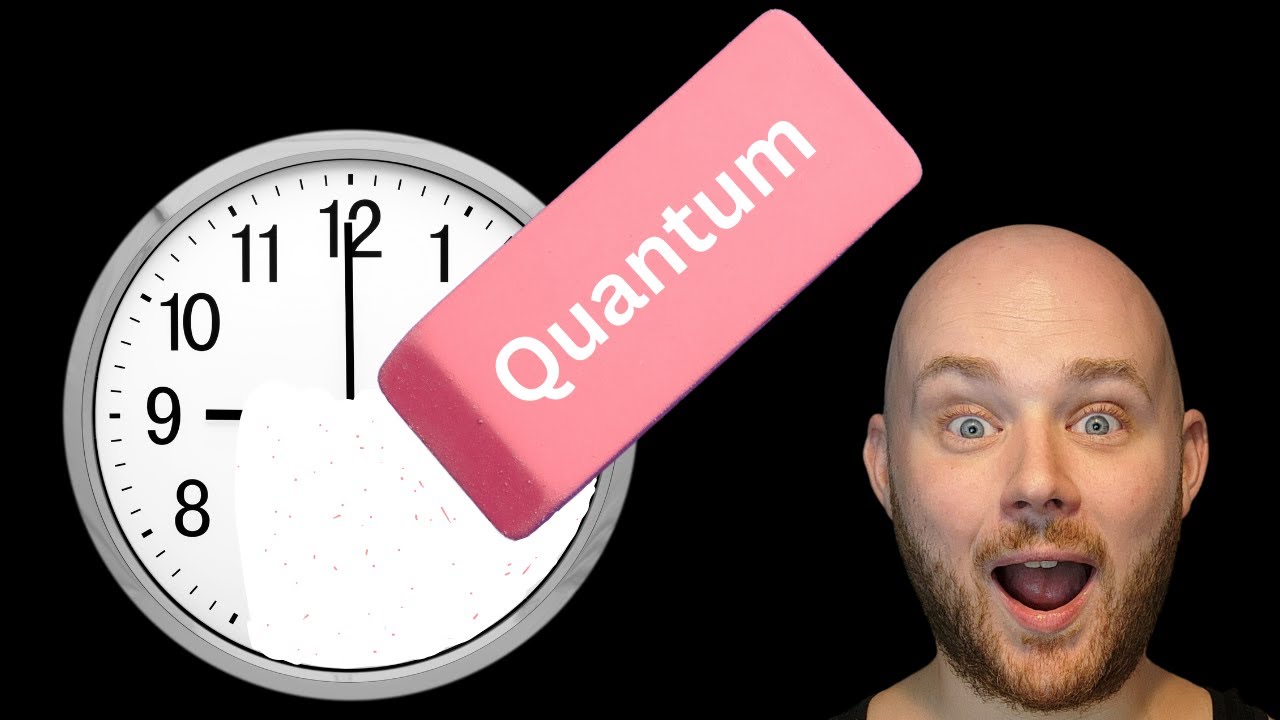

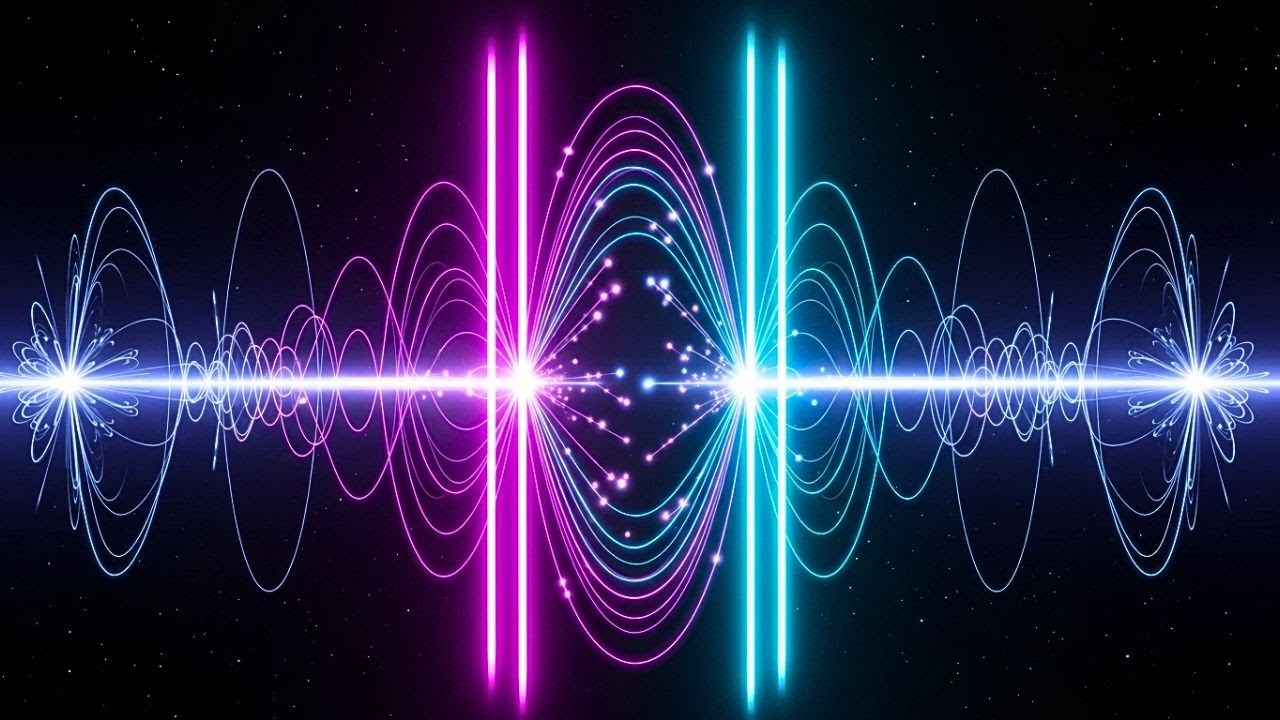





The Copenhagen interpretation, developed by Niels Bohr and his colleagues, proposes that quantum particles do not have definite properties until they are observed, existing instead as waves of probability that collapse into definite states only when measured; this interpretation was ultimately confirmed through John Bell's 1964 theorem and subsequent experiments by John Clauser and Alain Aspect, which demonstrated that quantum entanglement cannot be explained by local hidden variables, proving that reality is fundamentally non-local and that observation plays a crucial role in determining quantum states.
Quantum Physics Explained: Einstein vs Bohr Debate
Added:Basic understanding of classical mechanics vs. quantum mechanics, specifically the shift from determinism to probability.
The concept of wave-particle duality, including the historical implications of the double-slit experiment.
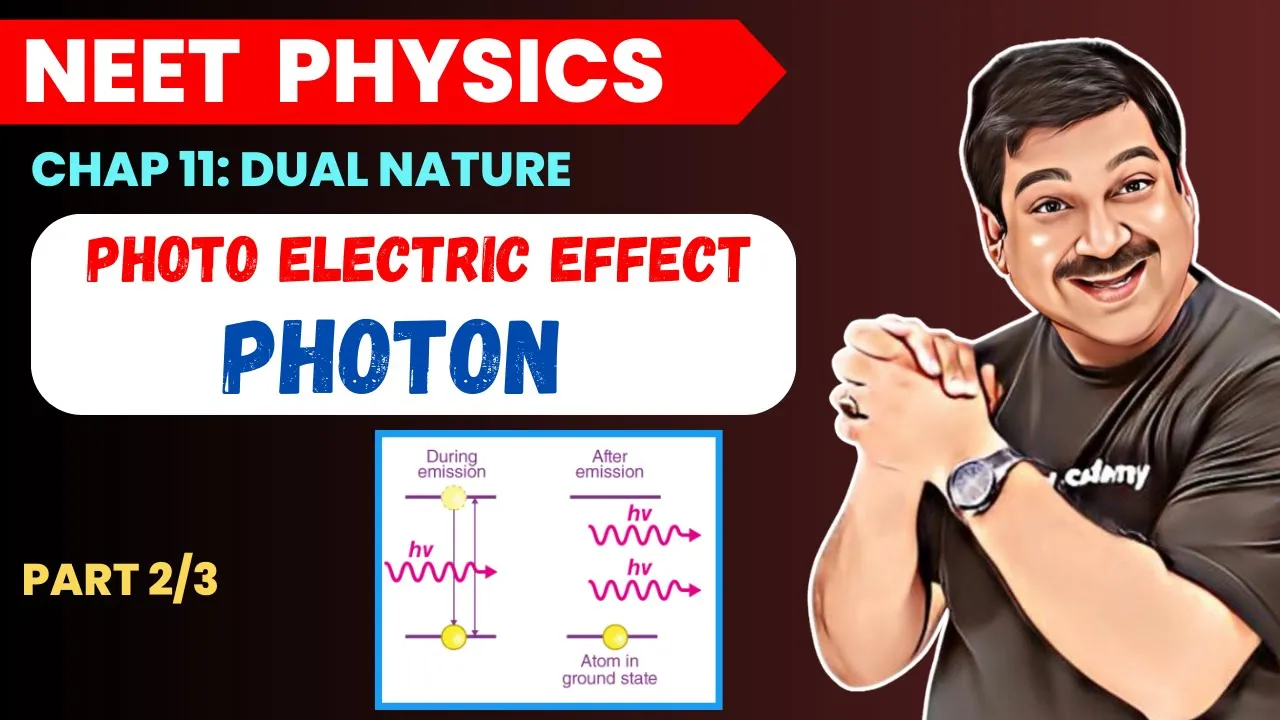
The Photoelectric Effect and the fundamental concept of energy quantization (photons) pioneered by Max Planck and Albert Einstein.
An introductory awareness of the Copenhagen Interpretation, which suggests physical systems do not have definite properties before they are measured.
Bell's Theorem and the experimental tests (such as Alain Aspect's experiments) that mathematically resolved the Einstein-Podolsky-Rosen (EPR) paradox in favor of quantum non-locality.
The Quantum Eraser and Wheeler's Delayed-Choice experiments, which further investigate the role of the observer and the nature of time in quantum measurements.
Modern applications of quantum entanglement, specifically Quantum Computing, Quantum Cryptography (Quantum Key Distribution), and Quantum Teleportation.
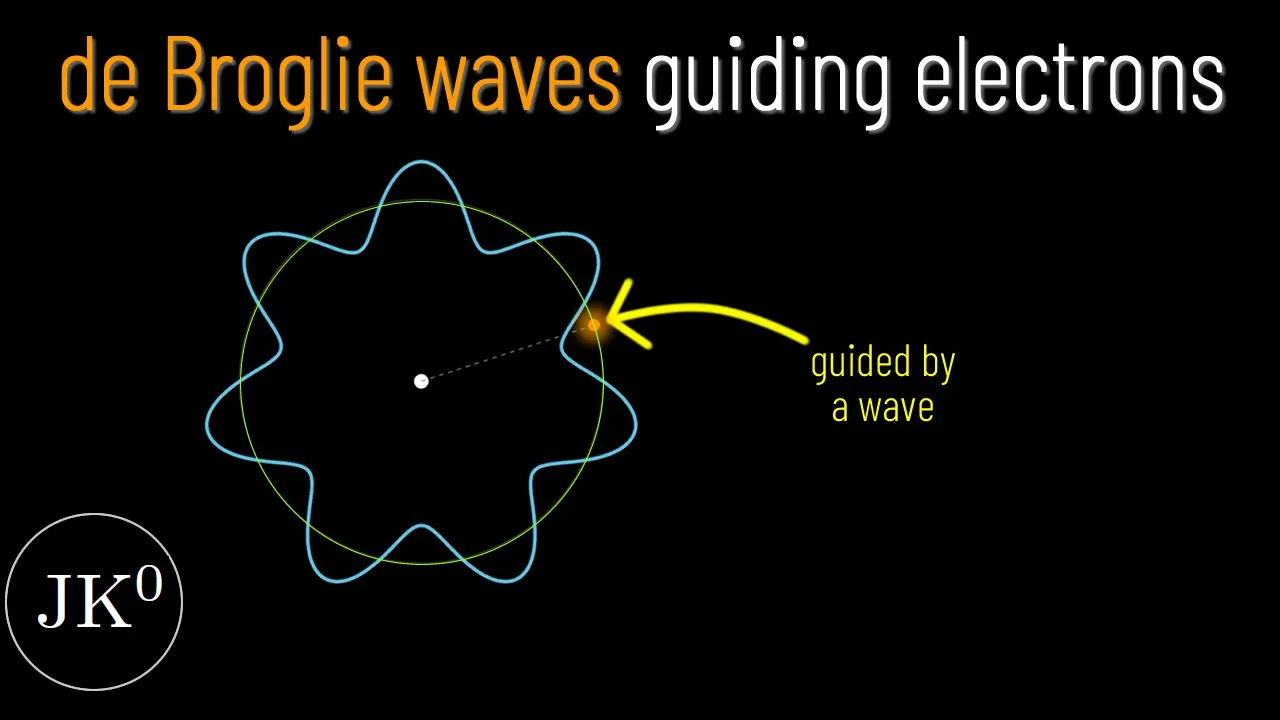
Alternative interpretations of quantum mechanics that challenge Bohr's view, such as Everett's Many-Worlds Interpretation and De Broglie–Bohm (pilot-wave) theory.
9.7M views81.6Klikes58:55Original Release: 2018-03-20
[Music] beneath the complexities of everyday life the rules of our universe seem reassuringly simple this solid bridge supports my weight the water flowing underneath always goes downhill and when I throw this stone it always flies through the air following a predictable path but as scientists peer deep into the tiny building blocks of matter all such certainty vanished they found the weird world of quantum mechanics deep down inside everything we see around us we found a universe completely unlike our own it's a paraphrase one of the founders of quantum mechanics everything we call real is made up of things that cannot be themselves regarded as real around a hundred years ago some of the world's greatest scientists began a journey down the rabbit hole into the strange and the bizarre they found that in the realm of the very small things could be in two places at once that their fates are dictated by chance [Music] and that reality itself defies all common sense and at stake that everything we thought we knew about the world might turn out to be completely wrong the story of our descents into scientific madness begins with the most unlikely objects Berlin 1890 Germany is a new country recently unified and hungry to industrialize in this newly unified Germany a number of new engineering companies were founded they've spent millions buying the european patent for Edison's new invention the light bulb the light bulb was the epitome of modern technology a great optimistic symbol of progress engineering companies quickly realize there were fortunes to be made building streetlights for the new German Empire but what they didn't realize was that they would also unleash a scientific revolution strangely enough this humble object is responsible for the birth of the most important theory in the whole of science quantum mechanics a theory that I've spent my life studying and that's because back in 1900 the light bulb presented a rather strange problem engineers knew that if you heated the filament with electricity it glowed the physics that underpinned this though was completely unknown but something as basic as the relationship between the temperature of the filaments and the color of light it produces was still a complete mystery a mystery they were obviously keen to solve and with the help of the new German state they saw how to steal a march on their competitors in 1887 the German government invested millions in a new Technical Research Institute here in Berlin the physicalist technician Russian stats or PTR then in 1900 they enlisted a bright if somewhat straight-laced scientists to help work here his name was max plank plank took on a deceptively simple problem why the color of the light changes as the filament gets hotter to get a sense of the puzzle facing plank I'm going to ride this bicycle with an old-fashioned lamp powered by an old-fashioned dynamo [Music] obviously the faster I go the brighter the light the more I peddle the more electricity the Dynamo produces the hotter the filament in the lamp and the brighter the light that the light the bulb makes isn't just getting brighter it's changing color too as I speed up the color shifts from red to orange to yellow right now I'm going to really belt it now the bulbs filament is getting even hotter but although it certainly gets brighter the color seems to stay the same yellow white why doesn't the light get any bluer to investigate Planck and his colleagues built this a blackbody radiator it's a special tube they could heat to a very precise temperature and a way to measure the color or frequency of the light it produced [Music] nowadays over a hundred years later the PTR still do exactly this kind of measurements just much more accurately the temperature inside here is 841 degrees centigrade I can feel the heat coming off and it's glowing with a lovely orange red color it's about the same color as my bike lights when I'm cycling slowly but I want to see something hotter still the temperature inside here is about 2,000 degrees centigrade and it's glowing with a much brighter whiter colored light to produce much of this intensity in color requires a power of about 40 kilowatts now that's equivalent to about 400 meson a bike cycling very fast or the combined output of the entire Tour de France although the light is whiter it's red white there's very little blue why is blue so much harder to make them red and further up the spectrum beyond blue the so-called ultra violet is hardly produced at all even when we look at things as hot as the Sun even the Sun at a temperature of five and a half thousand degrees centigrade produces mostly white visible light and makes remarkably little ultraviolet light given how hot it is why is this why is ultraviolet light so hard to make this remarkable failure of common sense so perplexed scientists of the late 19th century that they gave it a very dramatic name they called it the ultraviolet catastrophe Planck took a crucial first step to solving this he found the precise mathematical link between the color of light its frequency and its energy but he didn't understand the connection however it was another weird anomaly that would really put the cat amongst the pigeons in the late 19th century scientists were studying that their newly discovered radio waves and how they were transmitted and to do that they were building experimental rigs very similar to this one basically by spinning this disk they could generate huge voltages that cause sparks to jump across the gap between the two metal spheres but in doing so they discovered something very unexpected to do with lights they found that by shining a powerful light source on the spheres they could make the sparks jump across more easily this suggested a mysterious and unexplained connection between lights and electricity [Music] to understand what was happening scientists use this is called a goldleaf electroscope it's basically a more sensitive version of the spark-gap apparatus now first of all I have to charge it up what I'm doing is adding an excess of electrons that are pushing the two gold leaves apart now first I take red light and shine it on the metal surface and nothing happens even if I increase the brightness of the light still the gold leaves aren't affected now I'll try this special blue light rich in ultraviolet immediately the gold leaves collapse [Music] lights can clearly remove static electric charge from the leaves it can somehow knock out the electrons I added to them but why is ultraviolet light so much better at doing this than red light this new puzzle became known as the photoelectric effect the ultraviolet catastrophe and the photoelectric effect were big problems for physicists because neither could be understood using the best science of the time the science that said quite unequivocally that light was a wave [Music] all around us we see light behaving in a perfectly common-sense wavy way look at the shadow of my hand it's fuzzy around the edges we understand this as the light hitting the sides of my hand and bending and smearing out slightly just like water waves around an obstruction perfectly common-sense wave-like behavior and here's something else something rather beautiful look at these soap bubbles showing a light on them and gorgeous colored patterns emerge from nowhere and this was easily explained if you accept that light was a wave reflecting off the outer and inner layers of the thin soap film and breaking up into the colors of the rainbow rather like ripples on the surface of water light was simply ripples of energy spreading through space and this was as firmly accepted as the fact that the earth was round but although this wave theory works perfectly well for shadows and bubbles when it came to the ultraviolet catastrophe and the photoelectric effect the wheels started coming off the problem was this how could light do this through truly grasp how absurd this phenomenon was it might be useful to consider how waves in water behave [Music] this is the wave tank at the RN Allies headquarters in Dorset it's used to Train lifeboat teams to deal with a range of different kinds of water waves first small waves just 30 centimetres high the hand of the other but when the waves grow to over a metre and a half it's a very different proposition it's clear what water waves are telling us bigger more intense waves have more power they easily knock me and the cans around so if light was a wave more intensity should knock out more electrons but that's not what happened remember no matter how intense the red light was it still didn't budge electrons from the metal but weirdly weak ultraviolet worked within seconds so thinking of light as a wave just wasn't adding up to resolve this someone needed to think the unthinkable and in 1905 someone did you may well have heard of him his name was Albert Einstein [Music] this is the arnholt Sternbach observatory in berlin perched on top is a strange huge iron and steel construction but it's not a gun is actually a telescope built in 1896 the telescope was one of the largest of its kind in the world and made the observatory the go-to place to engage and astound the public in new science Albert Einstein gave a very famous public lecture here on his theory of relativity which is of course what he's most famous for but it's not the work that won him the Nobel Prize [Music] in 1905 he'd also come up with a new theory to explain the photoelectric effect and what he suggested was revolutionary and even heretical [Music] he argued that we have to forget all about the idea that light is a wave and think of it instead as a stream of tiny bullet like particles the term he used to describe a particle of light was a quantum to Einstein a quantum was a tiny lump of energy and although in 1905 the word wasn't new the idea that light could be a quantum seemed crazy and yet following Einstein's heretic a line of thought to its logical conclusion solved all the problems with light at a single stroke I'll try to explain how this helps using a rough analogy of course like all analogies it's far from perfect but hopefully it'll give you a sense of the physics to help you understand why thinking of light as a stream of particles solves the mystery of the photoelectric effect in this analogy these red balls represent Einstein's light quanta and those cans over there are the electricity held in the metal now in the original experiments they made electricity flow from the surface of the metal by shining light on it in my analogy I'm going to try and knock those tin cans over using these red balls [Music] absolutely no effect that's just like red lights [Music] according to Einstein each particle of red light carries very little energy because red light has a low frequency so even a very bright red light with many red light particles can't dislodge any electrons from the metal plate just like the red balls now I'm gonna use heavier balls like these blue and gold balls and I'm gonna try and knock off the tin cans with these they're like the ultraviolet lights in the experiment [Music] now each individual light particle carries more energy because ultraviolet light is higher frequency [Music] just a few of them like a deer molt revile at lights are enough to knock the electrons out of the metal plates and collapse the gold leaf so I stand idea that lights is made up of tiny particles or quanta is a wonderful explanation of the photoelectric effect I remember when I first learnt about this being blown away by sheer elegance and simplicity but what's more I'd steins nifty idea also helped solve Frank's mystery of the light bulb there was more red than ultraviolet because ultraviolet quanta took so much more energy to make about a hundred times more energy no wonder there are so few of them that moment at the beginning of the 20th century signaled a genuine revolution because it demonstrated that the kind of physical science of people were doing right back to Newton and Laplace of people like that that you needed a completely new approach physics has never recovered from that moment in the sense that it's built on that moment that's where modern physics really began but Einstein's theory also left physicists with a dizzying paradox defying all common-sense light was definitely a wave which explained shadows and bubbles and now it was definitely a particle to Einstein's quanta explaining the photoelectric effect and the ultraviolet catastrophe then just a few years after Einstein's brilliant crazy idea the paradox got a lot deeper and a whole lot weirder because what seemed to be a curious mystery about life was about to become a battleground about the nature of reality itself [Music] 19:22 the Western world is in the grip of a revolution a cultural revolution James Joyce's Ulysses is published Stravinsky is at the height of his powers and Chaplin has just released his first serious movie the Ottoman Empire collapses Europe is still recovering from the war to end all wars in which millions of men lost their lives Russia is newly communist meanwhile America is exporting jazz to the world thank you in arms politics literature economics there was an insatiable appetite for change this was the birth of modernism [Music] you are the can't see where you're going and I'm starting I'm tank [Music] is how well can be but and I might get this trouble for saying this I would argue that the upheaval that took place in physics at this time would Eclipse them all and have far longer lasting consequences it had begun with the discovery of the weird and contradictory wave-particle nature of light it ended up as an epic battle fought between the greatest minds and science for the highest possible stakes the nature of reality itself [Music] on one side a new wave of modernist revolutionary scientists and their leader the brilliant Danish physicist Niels Bohr on the other side the voice of reason Albert Einstein at the height of his powers and now world-famous a formidable adversary the battle raged for decades until in some ways it still does it was fought across the world in universities at conferences in bars and cafes it would reduce grown men to tears and it began with a deceptively simple experiment so uncertain but weirdly it was an experiment that wasn't even about light it was about the particles that make electricity in the mid-1920s an experiment was carried out at Bell Laboratories in New Jersey in America which uncovered something entirely unexpected about electrons now at the time it was accepted without question that electrons were these tiny lumps of matter small but solid particles like miniature billiard balls in the experiment they fired a beam of electrons at a crystal and watched how they scattered now that's entirely equivalent to taking a beam of electrons safe from an electron gun and firing it at a screen with two slits in it so that the electrons pass through the slits and hit another screen at the back what the bell scientists found shocked the physics world to the core [Music] to understand why consider a similar experiment with water waves I've set up a simple experiment I have a water ripple tank placed on top of an overhead projector I have a generator producing waves that pass through to narrow gaps the projector beams the image of the waves onto the back wall you can see as the waves come in from the left and squeeze through the two gaps they spread out on the other side and interfere with each other what this means is that when you get the crest from one wave meeting the crest from another they add up to make a higher wave but when the crest from one means to trough they cancel out this gives rise to these characteristic lines leading to the signature wave pattern bands of light and dark whenever you see these light and dark bands the signature wave packing you know without doubt that you've got wave-like behavior [Music] so guess what they saw in New Jersey now it seemed that firing electrons tiniest solid particles through the two gaps produced exactly the same kind of pattern bands of light and dark first light for a long time believed to be a wave was found to sometimes behave like particles and now electrons for a long time believed to be particles were behaving like waves but it was actually stranger than that the wave pattern wasn't merely some result of the entire beam of electrons more recently this experiment has been repeated in labs around the world by fahren one electron at a time through the slits onto the screen at first each electron seems to land randomly on the screen but gradually our patent forms the signature wave pattern let me be quite clear about just how weird this is remember from the wave tank experiment where the signature wave pattern only exists because each wave passes through both slits and then it's two pieces interfere with each other but here every individual electron each single particle is passing alone through the slits before it hits the screen and yet each single electron is still contributing to the signature wave pattern each electron has to be behaving like a wave to explain this strange result Niels Bohr and his colleagues created quantum mechanics the crazy theory of light and matter is an embraced contradiction and didn't care that it was almost impossible to understand as Niels Bohr himself said anyone who isn't shocked by quantum theory hasn't understood it so viewers I'm going to take our tiny electron and use it to delve deep into the heart of reality and yes prepare to be shocked because this is the only way to explain what we observe when a single electron travels through the slits and hits the screen the quantum mechanics says this we can't describe what's traveling as a physical object all we can talk about are the chances of where the electron might be this wave of chance somehow travels through both slits producing interference just like the water wave then when it hits the screen what was just the ghostly possibility of an electron mysteriously becomes real let me try and capture just how weird this is with an analogy if I spin this coin then all the time it's spinning it's a blur I can't tell if it's heads or tails but if I stop it I force it to decide and it's heads so before it was sort of not heads or tails but a mixture of both as soon as I've stopped it I've forced it to make up its mind this is what Bohr and his supporters claimed was happening with our electrons in a sense as it spins the coin is both heads and tails similarly the electrons wave of chance passes through both slits two paths at the same time our coin then stops at heads the ethereal wave of probability hits the screen and only then becomes a particle the quantum world was unlike anything ever seen before it's hard to overstate just how crazy this is Bohr was effectively claiming that one can never know where the electron actually is at all until you measure it and it's not just that you don't know where the electron is it's weirdly as though the electron itself is everywhere at once bear in mind that electrons are among the Communists and most basic building blocks of reality and yet here's Bohr saying that only by looking do we actually conjure their position into existence it's like there's a curtain between us and the quantum world and behind it there is no solid reality just the potential for reality things only become real when we pulled back the curtain and look and this you ladies and gentlemen became known as the Copenhagen interpretation persuasive as it might seem many people couldn't stomach Niels Bohr's outlandish ideas and they found a natural leader in the most powerful man in science Albert Einstein hated this interpretation with every fiber of his being he famously said does the moon cease to exist when I don't look at it he was very unhappy because it gave limits to knowledge that he didn't think should be final he thought there should be a better underlying theory over the next 10 years Einstein and Bohr would argue passionately about whether quantum mechanics meant giving up on reality or not then with two other scientists Nathan Rosen and Boris Podolsky Einstein thought they'd found a way to win the argument he was convinced he'd found a fatal flaw in the Copenhagen interpretation and it's claimed that reality was summoned into existence by the act of looking at it at the heart of Einsteins argument was an aspect of quantum mechanics called entanglement now entanglement is this special incredibly close relationship between a pair of quantum particles whose fates are intertwined for example if they were created in the same event let me try and explain this by imagining the two particles are spinning coins imagine these coins are two electrons created from the same event and then moved apart from each other quantum mechanics says that because they're created together they're entangled and now many of their properties are forever linked wherever they are remember the Copenhagen interpretation says that until you measure one of the coins neither of them is heads or tails in fact heads and tails don't even exist and here's where entanglement makes this weird situation even weirder when we stop the first coin and it becomes heads because the coins are linked through entanglement the second coin will simultaneously become tails and here's the crucial thing I can't predict what the outcome of my measurement will be only that they would always be opposite Einstein seized on this because it meant that something was happening between the two coins that was almost too crazy to imagine it's as if the two coins are secretly communicating communicating instantaneously across space and time even if the first clone was on earth and the other was on Pluto Einstein refused to believe this instantaneous faster-than-light communication his theory of relativity said that nothing could travel that fast not even information so how could one coin instantaneously know how the other would land he disparagingly called it spooky action at a distance and claimed it was a fatal flaw in the Copenhagen interpretation what's more he had a better idea Einstein believed there was a simpler interpretation that somehow the destiny of the two coins whether or not they ended up heads or tails was already fixed long before we observed them [Applause] he said that although it seemed the coin was deciding to be say heads at the moments of observation actually that decision was taken long before it was just hidden from us in Einstein's mind quantum particles were nothing like spinning coins they were more like say a pair of gloves left and right separated into boxes we don't know which box contains which glove until we open one but when we do and find say a right-handed glove then immediately we know that the other box contains a left-handed glove but crucially this requires no spooky action at a distance neither glove has been altered by the act of observation both of them were either left or right-handed glove from the beginning and the only thing that has changed is our knowledge so which is the true description of reality boar's coins which only become real when we look at them [Music] and then magically communicate to each other or Einsteins gloves which are hidden from us but are definitely left all right from the beginning in other words is there an objective reality as Einstein believed or not as Bohr maintained in the late 1930s as the world plunged into war there was no way to answer this question the battle to understand the nature of reality was deadlocked the war rolled across Europe and many of the leading scientists fled to the United States [Music] then as the Second World War led inexorably to the Cold War American science backed by dollar bills and a new vision of the future boomed remember after the war visitors came back raring to go and try to apply the ideas of quantum theory to two atoms the interaction between electrons and light and what have you you didn't need to worry about the philosophical side of things to make progress with that so as you say it really took a backseat quantum mechanics led to a profound understanding of semiconductors which helped create the modern electronic age it produced lasers revolutionising communications breathtaking new medical advances and breakthroughs in nuclear power quantum mechanics was so successful that most working physicists deliberately chose to ignore Einsteins objections it simply didn't matter to them because it worked they even coined a phrase for it shut up and calculate and the price for this success was that Bohr and Einstein's debate on the reality of the quantum world was simply brushed under the carpet [Music] Animists all this success and pragmatism there were few who still worried what it will meant but as the 50s rolled headlong into the 60s one lone dissenter worked out how to settle the argument once and for all John Bell I think it's fair to say isn't well known to the general public but to physicists like me he's well a hero he was an original thinker with real courage in his convictions and the story of his rise to become one of the greats of physics is made even more remarkable when you consider how he started he was born in Belfast in the 1920s into a poor working-class family his father was a horse dealer and they really struggled to get him into Queen's University Belfast to study physics that he was the only one in his family to even finish school this I believe made him insatiably curious fiery and stubborn I remember meeting John Bell in 1989 a year before he died we were both at a conference in America and we happened to be sharing a lift just after both attending a talk on quantum mechanics keen to say something to the great John Bell I said I thought the the speaker's conclusions were completely crazy he stared at me with his piercing blue eyes and for a moment I thought my fledgling physics career was going down the drain but as the lift doors opened and he was about to leave he said yes I completely agree with you haven't I heard of the helium problem to this day I'm not quite sure what the helium problem is but I was just so relieved that John Bell and I agreed for many of he worked here at Britain's Atomic Energy Research Center Harwell who built this early experimental nuclear reactor called Dido it was here that he started pondering the deep and worrying questions that quantum mechanics raised did the quantum world only exist when it was observed or was there a deeper truth out there waiting to be discovered in fact he was so troubled he began to wonder if there was a problem at the heart of quantum mechanics he famously said I hesitate to think it might be wrong but I know it is rotten and so in the early 1960s Bell decided to try and resolve the crisis at the heart of quantum physics it was an epic challenge after all how do you check if something is real if something is or isn't there all without looking how do you look behind the curtain without pulling it open but John Bell came up with a brilliant way of doing exactly that I think this is one of the most ingenious ideas in the whole of physics it's certainly one of the most difficult to understand and explain but I'm gonna try and have a go and yes I'm afraid I'm gonna use another analogy this time I'm going to play a game of cards but it's one for the highest possible stakes the nature of reality itself the card game is against a mysterious quantum dealer the cards he deals represent any subatomic particles or even quanta of light photons and the game will play will ultimately tell us whether Einstein or Baal was right now the rules of the game are deceptively simple the dealer is going to deal two cards facedown if they're the same color I win if they're different colors I lose so I have a red so I need another red to win as black I lose again opposite colors I've lost both those as four in a row bar that's six pairs in a row that I've lost okay I think I know what the dealer's doing here clearly the deck has been rigged in advance so that every pair come out as opposite colors but there's a simple way to catch the dealer outs so what we can do now is change the rules of the game this time if they are the opposite color I win [Music] but once again every time my evil quantum opponent beats me but again I can see what the crafty dealer could have done maybe while I wasn't looking he's switched the pack and and rigged it so that it always lands in his favor now every pair is the same color rigged X remember were what Einstein thought was really happening in the entanglements experiment he said that just like the gloves were already placed in the box so the evil dealer stacked the cards before we played but Niels Bohr's idea was very different he said red and black don't even exist until you turn him over Bell's genius was that he came up with a way of deciding once and for all who was right Einstein or Baal this is how he did it I'm now not going to tell the dealer which game I want to play same color wins or different color wins until after he's dealt the cards now because he can never predict which rules I'm going to play by he can never stack the deck correctly now he can't win or can he so now the rules are different wins I say okay same color wins this gets to the very heart of Bell's idea if we now start playing and I win as many as I lose then Einstein was right the dealer is just a trickster with a gift for sleight of hand reality may be tricky but it does have an objective existence but what if I lose well then unforced to admit that there is no sensible explanation each card must be sending secret signals to the other across space and time in defiance of everything we know I'm forced to accept that at the fundamental quantum level reality is truly unknowable [Music] Bell reduced this idea into a single mathematical equation that tells us once and for all what seemed unanswerable how reality really is John Bell published his idea in 1964 and the extraordinary thing is at the time the entire physics community ignored him total radio silence it seems the world simply wasn't ready perhaps it was because his equations seemed untestable or just because nobody thought it was worth investigating but that was about to change and the change would come from a very unexpected place [Music] [Music] America was in crisis over Vietnam Watergate feminism the Black Panthers and while all this was going on a small group of hippy physicists were working at the University of Berkeley in California they did all the hippy things they smoked dope they popped LSD they debated things like Buddhism and telepathy [Music] and they loved quantum mechanics in it's weird version of reality they saw parallels with their own esoteric beliefs [Music] their hippie new-age style physics also caught the attention of the public who read their crazy hippie books that mixed quantum mechanics with Eastern mysticism books like The Tao of physics the dancing rouille masters and my personal favorite space-time and Beyond towards an explanation or the unexplainable but more importantly for our story the story of quantum mechanics these hippy physicists also turn their attention to i'm Stein's now famous thought experiment and what it told us about the nature of reality they saw Niels Bohr's secret signalling as proof that physics supported their own ideas because if two particles could spookily communicate across space then ESP telepathy and clairvoyance were probably true as well if only they could prove it really existed then in 1972 they realized that with a bit of mathematical sleight of hand they could take Bell's equation and experimentally test it one of their group John clauser borrowed some equipment from the lab he was working in and set up the first genuine and ultimate test of quantum mechanics this is a picture of that first experiment built of leftovers and stolen equipment over the next few years it was improved by a team led by Allen aspects in Paris making its results more reliable over 10 years after Bell first proposed his equation finally it could be put to the test this is a modern version of the experiment first carried out by John clauser and then Alan aspect here a crystal converts laser light into pairs of entangled like quanta photons making two very precise beams these photons are passed round and bent back again until they pass through these detectors the two photons are like the two cards the evil dealer places in front of me will measure a property of the photons called polarization which is equivalent to the color of the playing cards in my game so for instance winning with two matching red cards might be the same as two photons with matching polarization but because this is quantum mechanics it's more complicated than my simple card game and these dials here allow me to measure a second property of the photons as well now that's equivalent to me not only trying to guess the color of the face of the cards but also try to guess the color of the back of the cards okay so we're now going to switch on the laser and start the experiment so this number here gives me the number of photon pairs coming through the experiment that's equivalent to the pairs of cards in my game the graph here dropping down gives me the probability that I can win that I'm guessing right the more photons the more accurate it becomes I'll stop as an uncertainty of about one percent and the final answer is point five six so if I put that into my equation I now need to run the experiment three more times corresponding to the four different settings of these dials each run is now like a different set of rules for the quantum dealer and when I add them up and get the answer if it's less than two then I Stan was right if it's greater than 2 then Bohr was right ok so now for the second setting just remember what the experiment will show if the numbers come out less than two then it's proof the dealer has been stacking the deck this was Einstein's view okay so the number I get this time is naught point eight two now reset for run three but if the result is greater than 2 then the deck cannot be stacked and something else is at work ok so the run 3 result is minus 0.5 9 and finally run for this last number will finally reveal if the world follows common sense of something much more bizarre ok so our final result is in and it's naught point 5 6 so if we turn the laser off right I better just work out the answer and there we have it 2.53 it's a number greater than two absolute proof that Albert Einstein was wrong and Niels Bohr was right the significance of this result is simply enormous just remember what it means Einstein's version of reality cannot be true no amount of clever jiggery-pokery with our experiment can cheat nature the two entangled photons properties couldn't have been set from the beginning but are summoned into existence only when we measure them something strange is linking them across space something we can't explain or even imagine other than by using mathematics and weirder photons do only become real when we observe them in some strange sense it really does suggest the moon doesn't exist when we're not looking it truly defies common sense no wonder towards the end of his life Einstein wrote all these 50 years of conscious brooding have brought me no nearer to the question what are light quanta every Tom Dick and Harry thinks he knows it that he is mistaken the experiment only confirms this whatever is happening we just don't understand it but it doesn't mean we should stop looking while it's true that Einsteins dream of finding a reasonable common-sense explanation was shattered for good my own personal view is that this doesn't necessarily banish physical reality like Einstein I still believe there might be a more palatable explanation underlying the weird results of quantum mechanics but one thing is clear whether there are physical spooky connections whether there are parallel universes whether we bring reality into existence by looking whatever the truth is the weirdness of the quantum world won't go away it'll rear its ugly head somewhere a hundred and twenty years ago the greatest scientific revolution ever was brought about by a light bulb and scientists are still using powerful light sources like x-rays to unlock nature's mysteries this is the diamond light source it's Britain's single largest science facility the x-ray is produced here are 10 billion times more powerful than a hospital x-ray with that sort of power scientists can slice into matter and glimpse those quantum secrets inside researchers here are using this powerful light beam to investigate new materials which may have the potential to bring about an electronics breakthrough as great as any before just as the quantum pioneers of the 20s and 30s ended up bringing about a scientific and technological revolution so this generation of physicists are set to usher in a new quantum era an era where Einstein hated quantum entanglement now produces unbreakable computer security new kinds of communication systems superfast computers and other advances we can't yet even imagine and this is why quantum mechanics thrills and frustrates me is capricious is counterintuitive and even sometimes feels just plain wrong and yet it still surprises us every day and I for one believe that our knowledge of the quantum world is still far from complete that there are greater truths about nature yet to be discovered and that's still what keeps me awake at night next week join me as my journey into the quantum world gets even more surprising I investigate how it's weird rules are crucial for life and how the bizarre behavior of subatomic particles might even influence evolution itself [Music] you change your behavior so I'm stuck here
Up Next
10:11
Quantum Wavefunction Explained | Quantum Physics | Khan Academy
@khanacademy
491.9K views•2018-06-25

4:32
How Tuned Mass Dampers Stop Structures from Shaking
@MinutePhysics
573K views•2018-08-28

32:32
NMR Spin Physics I: Zeeman Effect, Resonance Condition & Larmor Frequency
@nptel-indianinstituteofsci8064
2.3K views•2024-01-17

33:44
The Blue LED: A Decade-Long Scientific Challenge Explained
@veritasium
46.5M views•2024-02-08
Related Study Plans & Knowledge Roadmaps
Structured learning paths in Physics
physics
Medical Physics: Imaging, MRI & Radiotherapy
01Foundations of Radiation and Matter Interaction
02X-Ray Imaging and Computed Tomography (CT)
03Magnetic Resonance Imaging (MRI) Physics
+ 3 more learning modules
15h6 modules
Explore Roadmap
physics
Nuclear Physics (Decay, Fission & Reactors)
01Atomic Structure and the Binding Force
02Radioactive Decay and Half-Life
03Nuclear Fission Mechanics and Chain Reactions
+ 2 more learning modules
12h5 modules
Explore Roadmap
physics
Soft Matter (Polymers, Colloids & Rheology)
01Foundations of Soft Matter & Thermal Forces
02Polymer Physics and Macromolecules
03Colloids, Surfactants, and Self-Assembly
+ 2 more learning modules
38h5 modules
Explore Roadmap
physics
Analytical Mechanics: Lagrangian & Hamiltonian
01Mathematical Foundations: Calculus of Variations
02From Newtonian Mechanics to Constraint Dynamics
03The Principle of Least Action & Lagrangian Mechanics
+ 3 more learning modules
28h6 modules
Explore Roadmap