


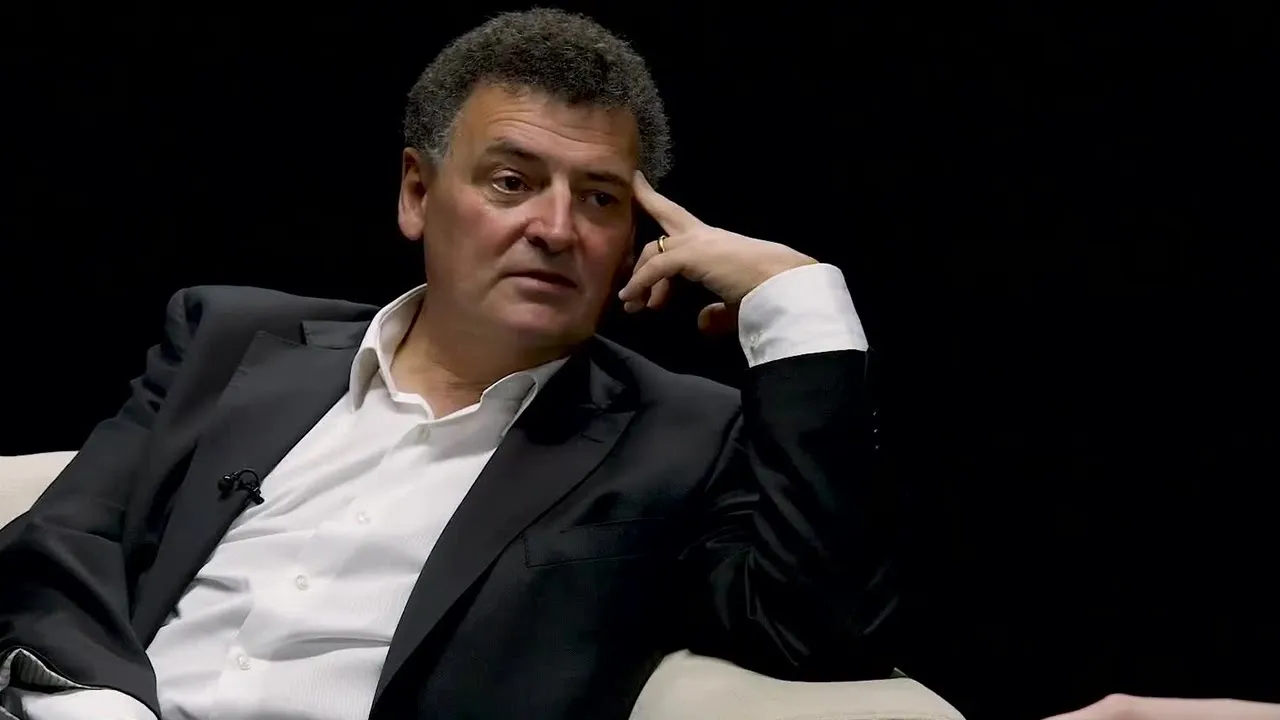








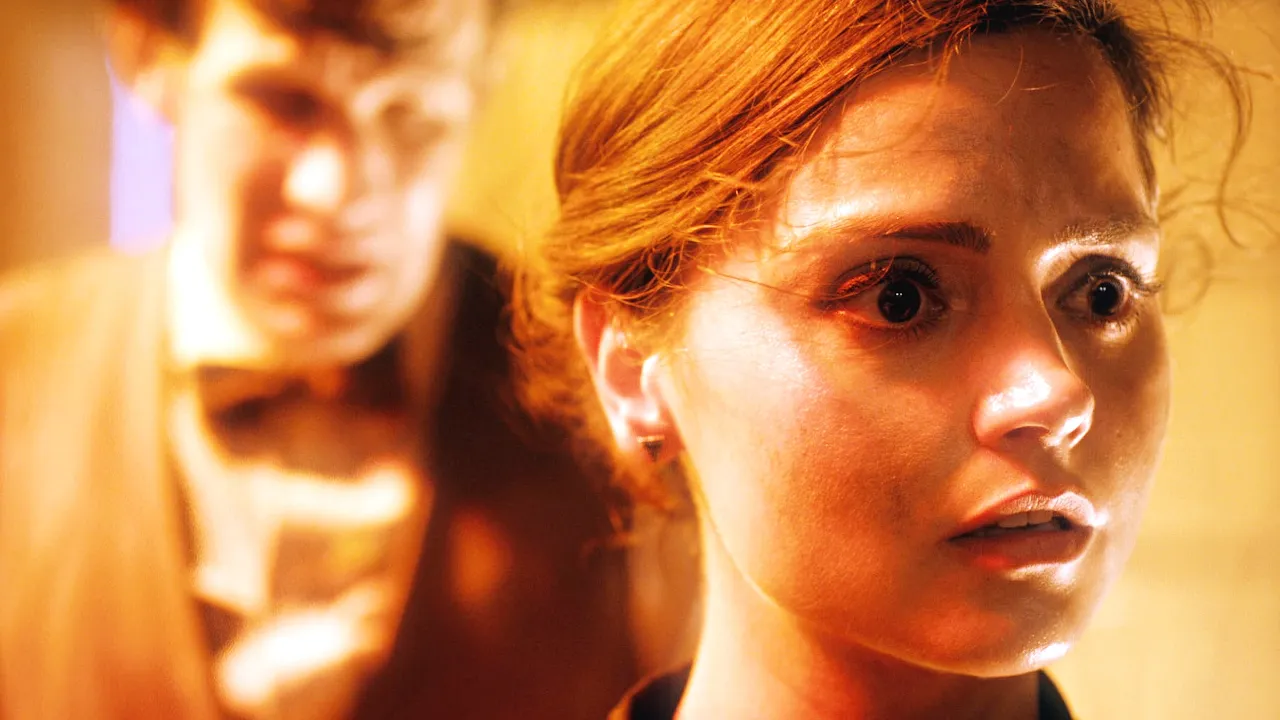
This video essay examines the tension between appreciating exceptional art and condemning problematic artists, using Steven Moffat's controversial tenure as Doctor Who showrunner alongside Peter Capaldi's acclaimed performance as the Twelfth Doctor as a case study. The essay explores how collaborative creative processes can produce remarkable work despite problematic individuals, and presents a nuanced approach to media consumption that acknowledges artistic merit while recognizing the importance of ethical considerations in supporting creators.
Art vs. Artist: Analyzing Doctor Who's Twelfth Doctor
Added:The concept of 'Death of the Author' (Roland Barthes), which argues that a literary work's meaning is independent of its creator's identity or intentions.
The fundamental philosophical debate of 'Art vs. Artist', exploring how the moral character or actions of a creator should or should not impact the evaluation of their work.
A basic understanding of the production history of Doctor Who, specifically the role of the showrunner (Steven Moffat) and the transition to the Twelfth Doctor (Peter Capaldi).
The concept of television as a collaborative medium, where creative control is distributed among writers, directors, actors, and producers rather than a single auteur.
Auteur theory in television studies, examining how individual creative vision is asserted or compromised within highly collaborative production environments.
The ethics of cultural consumption and 'cancel culture', exploring real-world case studies of how contemporary audiences and industries respond to controversial creators.
Reception theory and audience agency, focusing on how marginalized communities reclaim, reinterpret, and subvert mainstream media texts despite the creators' original intents.
A deeper thematic analysis of the Steven Moffat era of Doctor Who, focusing on meta-narrative, the nature of heroism, and the evolution of the Doctor's morality.
327.9K views15.6Klikes52:42Original Release: 2019-07-18
A quick warning: This video will contain some discussion regarding the actions of problematic figures in the literary and entertainment industries and just a general spoiler alert for pretty much all of Capaldi's run on Doctor Who and As always I just want to remind everybody that I am just expressing my opinions here And not stating hard facts about the quality of stuff. You can agree or disagree to your heart's delight. Also I am by no means a Doctor Who expert I can't tell you about every alien William Hartnell ever faced, I've not dug into the 30-plus years worth of Doctor Who that predates Christopher Eccleston run.
I've seen a few episodes but yeah, I am NOT carrying over 50 years of Canon knowledge of my noggin.
And sidebar I wonder if every video now Is gonna start with these disclaimers like, some people open their videos with a nice logo while I remind you all that I don't know hot diggety shit So the internet doesn't unhinge it's snake jaws and eat me alive.
Who am I kidding it's the internet you'll do that anyway so let's get a move on.
[Doctor Who theme plays] Doctor Who is a television series that's been around for over 50 years. It has its highs.
[9th Doctor] "I'm the doctor by the way, what's your name?"
[Rose] "Rose." [9th Doctor] "Nice to meet you Rose. Run for your life!"
And its lows [Elton] "It's a relationship...of sorts" Everybody has a favorite doctor from Tom Baker to Paul McGann to David Tennant.
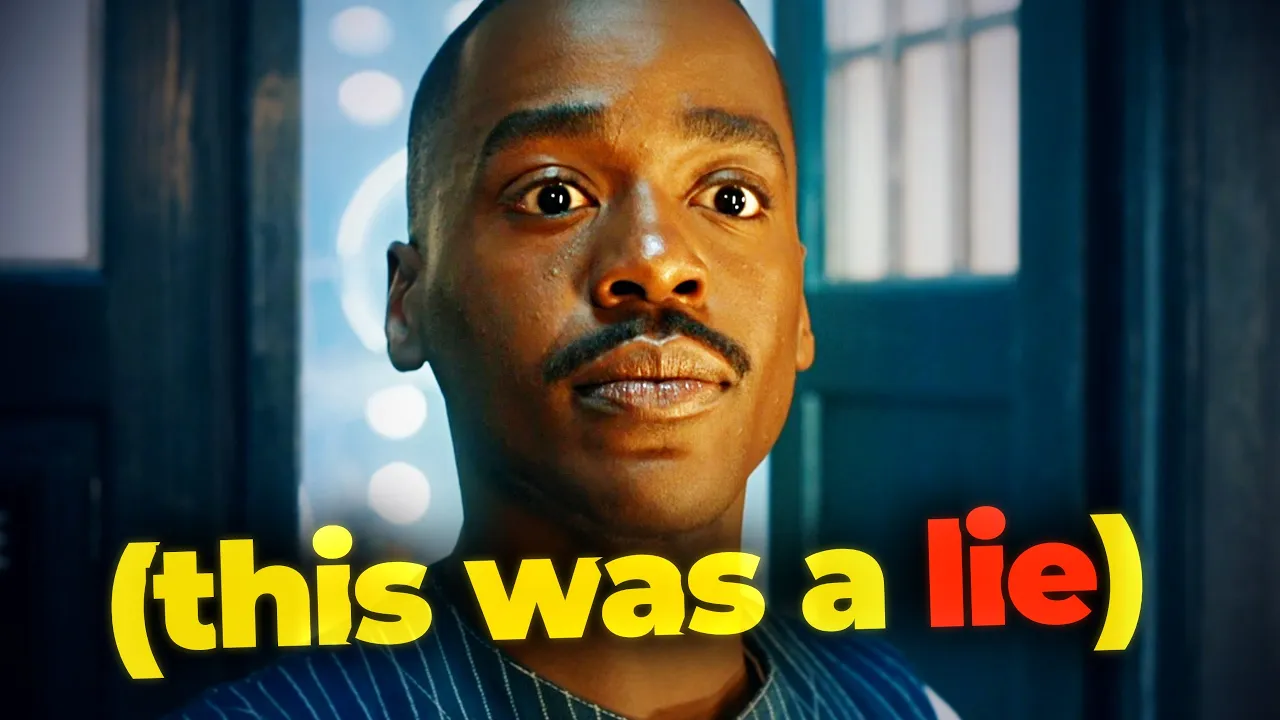
And I have some particular favorites but the one that's at the top of my list is the twelfth doctor as played by Peter Capaldi And I'm kind of mad about it. Not because of anything to do with Capaldi himself But more to do with...well [12th Doctor] "And this...is my spoon."
[sword fighting and dramatic music] And also: [Steven Moffat] "It's just a shame that she's so wee and dumpy."
So uh...strap in kids it's gonna be a bumpy ride.
So for the uninitiated what is Doctor Who?
[Jackie Tyler] "What do you mean that's the Doctor? Doctor Who?"
[Dalek] "Doctor Who?"
[Clara] "Doctor Who?"
[Clara, again] "Doctor Who?"
[Dorium] "Doctor...Who?"
[Bill] "I can't just call you Doctor....Doctor what?"
Well the television series began in 1963 and over the ensuing 50 or so years there have been 851 episodes over 37 seasons and one movie. The initial premise was that a funny old man would travel around space and time with a couple of companions in his ship that looks like a police box [11th Doctor] Yes its a spaceship. Yes its bigger on the inside."
[Martha] "Its bigger on the inside."
[12th Doctor] "GOD. It's bigger" [River Song] "Yes." [12th Doctor] "On the inside."
The show was mainly meant to be educational in the beginning. A way to get kids in a history with the Soctor traveling back in time to teach children about the Aztecs or what have you. But the show would grow beyond that to encompass aliens and evil robots and at the heart of it all is this figure who doesn't die, instead they regenerate into an entirely new person every few seasons.
This allowed the BBC to bring in a new actor when the old one wanted to move on to other projects. And that simple premise is one that allows the show to be constantly shedding its skin and becoming something new. It's a show in a near constant state of flux always on the verge of the next evolution.
The cast rarely stays the same for more than a few seasons. The Fourth Doctor played by Tom Baker is the one who stuck around the longest from 1974 to 1981. *And yikes this regeneration tho Then in 1989 the show had a hiatus with the end of Sylvester McCoy's Seventh Doctor.
There was a brief attempt to revive the series in 1996 with Paul McGann as the Eighth Doctor in a single made-for-tv movie. Then in 2005 the series was successfully resurrected with Russell T Davies at the helm as showrunner and then in 2010 he handed off the reins to Steven Moffat.
[11th Doctor] "Legs! I've still got legs!"
The new series of Doctor Who alone now spans five doctors and eleven seasons the latest iteration is played by Jodie Whittaker and I'll just say that while I loved her performance and that of her fellow actors, I had some issues with the writing and I'll leave it at that. Over the years we've had all sorts of doctors funny doctors, proud doctors, playful doctors. We had this: [9th Doctor] "Hello!" [10th Doctor] "Wibbly wobbly, timey-wimey" And we had this [11th Doctor] "Yeah its cool. bow ties are cool."
And then we got this [General] "All twelve of them." [Androgar] "No sir, all thirteen!"
So before Moffat took over a showrunner, Russell T. Davies gave us two doctors and about five years worth of solid to excellent television. Some of it was Some of it was pretty ridiculous.
[William Shakespeare] "I say to thee..." [10th Doctor] "Uuuh" [10th Doctor] "Expelliarmus!" (Like the Harry Potter Spell) Or cheesy [Robot Host] "You are the weakest link."
But some of it was so excellent, so achingly good, all you need to do is say 'I don't want to go,' and inevitably somebody will start weeping. Both Christopher Eccleston and David Tennant are beloved as doctors because even if they're runs weren't always perfect, they were brilliant in all the right places, and we could debate the pros and cons of the Davies era but that's not what we're here for. So in 2010 Davies and Tennant finish off their run with the two parter 'The End of Time.' In the final scene the Tenth Doctor regenerated and we got our first taste of Moffat at the wheel.
[11th Doctor] "Legs! I've still got legs!"
And now we need to talk about Steven Moffat I'm gonna do my best to not retread ground that Harris Bomberguy already covered in his very good 'Sherlock is garbage and here's why' video. But let's start here: Moffat made his start with a well-received sitcom called Coupling then he made a, by all accounts, not very good show that reimagined Dr. Jekyll and Mr. Hyde called Jekyll, and he wrote a few one-off episodes of Doctor Who including some fan favorites like Blink, The Empty Child and The Doctor Dances [9th Doctor] "Just this once Rose, everybody lives!"
And then in 2008 when Russell T. Davies announced he was stepping down a showrunner Steven Moffat was brought on board. And around the same time it was announced that Moffat and co-writer Mark Gatiss were going to be developing a modern reimagining of Sherlock Holmes and uuuh...we have to talk about Sherlock because over four seasons and thirteen episodes there is a trajectory that is uh.... Not very good you guys.
Or more accurately the show was extremely enjoyable if occasionally flawed for two seasons, pretty bad for a third season, and then a travesty and it's fourth.
And in many ways it's an exhibit for a lot of Steven Moffat flaws as a writer [Magnussen] "I could phone them and tear your whole life down."
"And I will...unless you let me flick your face."
In season two they did their own version of Arthur Conan Doyle's famous short story the final problem where Sherlock Holmes and Professor James Moriarty fall to their death from the Reichenbach Falls. In Sherlock that episode was called the Reichenbach Fall and in it Sherlock is forced to commit suicide off the roof of a hospital building otherwise his friends will get shot.
Except somehow he survives the fall And I should just mention here I was very into Sherlock back in 2012 when this aired. I along with hundreds of other fans were absolutely broken up by this episode. Of course we knew Sherlock wasn't dead but his best friend Watson didn't and therein lay the tragedy that we all sat with for two years waiting for season 3. Also there were hundreds of theories about how Sherlock survived that fall. Tumblr was practically overrun with lengthy detailed essays on how he used the tennis ball to stop his pulse, and there was a rope we didn't see breaking his fall, and a fake body, and so on.
And then in season 3, what did Moffat decide to do? Well first off all your theories were stupid and it doesn't matter how we survived.
There is literally an in-fiction group of Sherlock fans theorizing how he didn't die.
And it is made very clear that these people are objects of scorn. We aren't supposed to identify with them, we're supposed to find them funny and stupid. Because how dare you want an answer to a mystery on a mystery show about solving mysteries?
And then the show would ignore what was arguably its greatest strength.
The growing relationship between Sherlock and John and their growth as individuals for... A bunch of dumb jokes. Like yeah, John thought his best friend was dead for two years, Let's all roll out the red carpet and slip on some banana peels.
I'm not even going to get into the queerbaiting right now? but yeah they did that too.
[Sherlock] "Gay."
And that was all pretty cringy, and the show felt like it had gotten mostly dumber, [Face flicking sounds] but the real travesty came in season four, when the show flew right off the rails And into the stupidest plot twist in history, where Sherlock had a secret sister He'd forgotten about and a dead childhood friend who he remembered as a dog And the secret sister was evil and also maybe gay because, thanks Steve, And at one point Sherlock tearfully karate chops a coffin and that's just Steven Moffat's writing. You see I don't personally know Steven Moffat And I think it's probably harmful to make grand statements about a person I only know through his writing and his interviews, but I am going to do that.
Feel free to take all of this with a grain of salt if you want but.... Basically I don't think I like Steven Moffat very much. By all accounts he seems overly smug about his own abilities, which are quite frankly spotty [Moffat] " wasn't it great when Paul McGann, who had previously you told he was definitely not involved" "In any way popped up in your screen wasn't that fun?"
"Yeah! Thats why we do more of that, let's just..." [Thank god we have Steven Moffat to explain the concept of being surprised to us] "That's why....That's why we wind you up a bit sometimes...In a nice and loving..." "Lovely way, so that you'll hopefully be a little bit more entertained." [No idea whats making that ringing sound by the way] The man can write well when he isn't trying to be clever.
But he kind of sucks at writing women. They're generally either plucky sidekicks or evil matronly types And every woman in the world is entirely obsessed with the main male characters [Missy] "Consider the doctor." [Madam Vastra] "He has walked this universe for centuries untold," 'He has seen stars fall to dust." [River Song] "You don't expect a Sun set to admire you back!"
On Sherlock when Mary, John's wife, dies for dumb reasons, she had the foresight to record a message for John. That message is not really about their relationship and how much she loves him and whatever? It's about John and Sherlock You would think a wife might just want to talk to her husband about their loving marriage and their child that John will have to raise alone now.
But instead her death is all about John and Sherlock. Right down to her final message.
On Doctor Who it's not much better. In 'The Magician's Apprentice' the season 9 opener, we finally get to spend some quality time with a lady version of the Master, Missy, played delightfully by Michelle Gomez in a piece of perfect casting.
Missy and Clara sit and have a talk, while Missy is threatening the world with a lot of stopped planes and stuff? Don't worry about it.
So when they sat down to talk, I expected it to be a tense negotiation for the safety of earth. But it mostly devolves into an argument over who the doctor likes more.
[Missy] "What have you got to do with it? I'm his friend. You're just..." [Clara] "Just what" And sidebar I kinda wanna ban Stephen Moffat from using the word 'sexy' [Idris] "I think you call me...sexy?"
[Irene] "Definitely the new sexy."
[River] "It's a little bit sexy." [12th Doctor] "Why is everything sexy now?"
Then there's how Moffitt's run would handle LGBT characters. Jenny and Vastra do okay, As do Bill and Heather.
Clara and River Song are canonically bisexual considering they both have male boyfriends and make multiple references to romantic incidents with other women [Clara] "Jane Austen and I prank each other. I love her."
"Take that how you like."
[River] "You know who you remind me of?"
[12th Doctor] Probably a chap with a big..." [River] "My second wife!"
But two men being in love is only a joke or something to be scorned The queerbaiting on Sherlock really was next level.
[John] "I'm not his date!"
And on Doctor Who.... [Jack Harkness] "But you got an excellent bottom too." [Audible smack] Jack Harkness was introduced in a Steven Moffat pen two-parter, where he makes flirtatious references to liking both men and women, and it's mostly played as a joke.
Jack wouldn't get to do stuff like this, or this Until he was written by somebody else.
Then the only other gay man I could think of on Moffat's run was.... Canton Everett Delaware played by Mark Sheppard from the opening two-parter of series 7 In his final moments on screen was President Nixon, Yes President Nixon DID. I. STUTTER.
He says he wants to marry a man and it's played as a fun joke when Nixon says no because Hahaha being gay was considered a mental illness back then and Nixon with homophobic hahaha so funny!
By the time we get this scene [12th Doctor] "She was my man crush" [Bill] "Sorry?"
[12th Doctor] "I think she was a math back then. I'm fairly sure that I was too" It's genuinely hard to tell if this is an earnest attempt Or just Moffat trying to be cute. Like I honestly can't tell if he's learned anything because he since said a nice thing about representation being important But like...He also wrote four seasons of the gay supervillain who says shit like this: [Moriarty] "But the flirting's over Sherlock. daddy's had enough noooow" And if you're not quite understanding the fuss I'm making over this, it's mainly that... A lot of men find the idea of women getting down with other women to be a turn-on [Two Claras] "We've got to share a bed." [He's done this joke twice] But only letting women be queer for the sake of male entertainment while gay men are either evil, a joke, or both is BAD.
But that's still mostly just his writing I wouldn't make assumptions about the person if it weren't for quotes like this from an interview he gave in the scotsman magazine.
Wow Steve *I understand that interview is 15 years old but he was 43 at the time and old enough to not be a douchebag I'm so glad you've graced us with your knowledge and wisdom. Also this: *I understand that interview is 15 years old but he was 43 at the time and old enough to not be a douchebag [Moffat] "And well I thought she's really good. it's just a shame that she's so wee and dumpy."
He's talking about Karen Gillan here Have you seen Karen Gillan??? Weee and dumpy...Your FACE is wee and dumpy Steven.
I mean I could go on. That time he defended his decision to not cast a woman as the Doctor, Even though he's been making references to the fact that the Doctor can regenerate as anybody or anything since the start of his run.
How has the Doctor managed to regenerate into a white guy twelve times in a row?
Why does casting a woman have to be this huge political risk? Women also exist in the universe. It's not political for women to exist.
Also Doctor Who has a pretty massive viewer base both in the UK and internationally So I think you don't actually need to cater to assholes when making casting decisions on a TV show And when they did cast a woman they still cast a white lady so it's not like they took that big a risk I could go on about the man, his tendency to buy into his own hype which leads to things like him reusing his own joke so many times they're past dead [11th Doctor] "Its a fez. I wear a fez now. Fezzes are cool."
"Stetsons are cool."
"Glasses are cool."
"Bow ties are cool."
But this isn't an essay about Steven Moffat. This is an essay about how I love the 12th Doctor, In spite of the man who wrote him. So let's talk about the 12th Doctor So in June 2013, Matt Smith announces he's leaving Doctor Who with the 50th Anniversary Special set to air in a few months, and his final Christmas Special premiering in December. In August Peter Capaldi was announced as the next man to step into the TARDIS. Capaldi was an interesting choice for many reasons.
The Doctor had been skewing younger over the last few iterations. Matt Smith was 26 when he was cast, making him the youngest doctor to date, and now they cast this 55 year-old character actor with years of toiling in the industry.
He'd even played a minor character in season 4 of Doctor Who already.
And WHOO BOY they made a thing out of that don't you worry.
[12th Doctor] "Who frowned me this face?"
Also there's the little detail that before Doctor Who his most well known role was... [Malcolm Tucker] "You breathe a word of this to anyone, you mincing fucking CUNT!"
"And I will tear your fucking skin off and I will wear it to your mother's birthday party," "And I will rub your nuts up and down her leg was whistling Bohemian fucking Rhapsody right?"
Malcolm Tucker from 'In The Thick Of It' was foul-mouthed, cruel, and abrasive Not necessarily the first person one might consider for the lead on a family-friendly TV show.
I mean he's a great actor and by all accounts a good egg, Who might occasionally have wandered off set for snacks at inopportune moments.
[Jenna Coleman] "Anyway he comes back and he's soaking wet like...eating a pasty."
"And I look at him and I said, 'What happened?' and he said he went for a walk and he found a red button," "And he pressed it, and it was an emergency shower." [Audience laughter] also he's been a fan of Doctor Who since he was younger And was at one point head of a Doctor Who fan club so like... This casting really was delightful on many levels.
Personally I knew he was going to be good because, I remembered his excellent turn on the short-lived series 'The Hour,' where he had me in tears over a scene where he rearranges his desk.
So Capaldi was announced that we got our first glimpse of the 12th doctor during the 50th Anniversary Special in a scene where all the doctors from throughout time, appear at Gallifrey to do an impossible task.
[General] "All twelve of them." [Androgar] "No sir, all thirteen!"
And every fan collectively lost their minds.
Also don't worry why there are 13 doctors but 12's the latest one just...don't worry about it okay?
[EXTREMELY DRAMATIC MUSIC] uuuuuugh So Matt Smith would have his final send-off in The Time of The Doctor and like...it kind of sucks I really am sad that Matt Smith didn't get better material but oh well.
Finally after what feels like a year he regenerates and... [12th Doctor] "I've got new kidneys! I don't like the color" Capaldi's first proper episode, 'Deep Breath' premiered in August of 2014, and...it's kind of a mixed bag.
There are scenes like this which go on for way too long.
[Vastra] "He has seen stars fall to dust!." And also really nail-biting moments like this one: [Clara] "If the doctor is still the doctor...He will have my back."
Also the doctor steals a coat from a homeless man which...is not good.
But at the same time 'Deep Breath' gives us one of my all-time favorite post regeneration scenes.
[12th Doctor] "I'm not on the phone. I'm right here. Please just...Just see me."
The vulnerability and sweetness these two actors bring is so good and wonderful and the writing is damn near perfect.
[Doctor Who Theme] [Sigh] Now the rest of series 8 is by and large is not very good. There are funny moments here and there.
Other parts are fairly interesting [12th Doctor] "Am I a good man?"
[Clara] "I...don't know."
But series eight also gave us this: [12th Doctor] "And this, is my spoon!"
And this: [Ahmed] "Not the president of America sir, the president of Earth."
[12th Doctor] "There isn't one." [Kate] "If you say so Mr. President."
Probably the best episode of the season is called 'Flatline.'
It's funny and has an interestingly creepy monster for the Doctor to face off against. But more importantly 'Flatline' is the first episode since Clara was introduced as the souffle girl in series 7 that actually utilizes her characters potential. See, this show never really knew what to do with Clara Oswald. It only sort of knew what to do with Amy Pond.
But even she felt a little lost by the time she left a series.
I said Moffat had a women problem and nowhere is that more obvious than the character of Clara Oswald, The Impossible Girl.
First she's introduced to us as a Dalek, and then an 18th century nanny, and then as a modern-day nanny. There's a reason for that but it kind of sucked and the concept of The Impossible Girl was abandoned by series 8.
Also Clara becomes a teacher out of nowhere, with no previous mention of studying to become a teacher, Or anything that might indicate she's going through the massive amount of training that it takes to become a teacher. She just suddenly is one in the 50th anniversary special and then...that's that now.
Also one time she knew jiu-jitsu [So I'm about to get this next bit wrong and I'm too lazy to re-record one line] But don't worry she'll never know jiu-jitsu again. [Its Tae Kwon Do not Jiu-Jitsu It's a useful skill that could come in handy quite often when facing dangerous aliens but no... she'll never know jiu-jitsu again. [She'll never know TAE KWON DO again] So it's safe to say that for most of Clara's run on the show it seems that Moffat and Co. sort of made her.... whatever the episode needed her to be. One second she's apparently a needy egomaniac.
[Clara] "Nothing is more important than my egomania."
The next, she's the mature peacemaker while the Doctor and her boyfriend bicker like children.
And then finally we get to 'Flatline' and the first real glimpse of who Clara would become: [Clara] "I'm the Doctor," "But you can call me Clara." *I recognize that having Clara's entire character development be totally defined by a man in her life also sucks In 'Flatline' Clara poses as the Doctor while he's trapped in a shrinking TARDIS *But I do think it leads to a lot of cool and interesting stuff for her so I let this slide.
She plots and makes decisions like she thinks he would. It's cold and calculating and dangerous.
In the end it turns out she's very good at being the Doctor for better and for worse.
[12th Doctor] You were an exceptional Doctor Clara. [Clara] "Thank you."
[12th Doctor] "Goodness has nothing to do with it."
Then series 8 ends with the show killing off Clara's boyfriend, Danny Pink, Who was a delightful character that was largely squandered.
It's not a good look when the show predominantly filled with white actors kills off the one black man in the main cast, but also it was stupid.
He got hit by a car, because apparently the former soldier doesn't look both ways before crossing the street. Then he gets turned into a Cyberman, because that was the season long MacGuffin, and then he gets fixed by LOVE, but dies anyway because Reasons. Also Clara betrayed the Doctor and they reconciled with this line: [Clara] "Then why are you helping me?
[12th Doctor] "Do you think I care for you so little that betraying me would make a difference?"
Which is so interesting and they just sort of breeze on past it.
They introduced a cloud network full of dead souls being downloaded into Cybermen. And they officially introduced Missy as the lady version of The Master. It was a messy finale to say the least [Seb] "Permission to squeeeeee!"
Series 9 began on equally rocky footing with the aforementioned scene where Missy and Clara argue who the Doctor likes more as they're sent off to give the Doctor his Confession Dial, something that must be presented to a Time Lord before their death in order for them to confess and find peace.
Also the Doctor has sonic sunglasses now which really adds to the midlife crisis vibe in a bad way But just try not to think about it too hard about it.
[Upbeat techno music] All of series 9 was built around two-part episodes for some reason, with the exception of the forgettable one-off 'Sleep No More' and the absolutely unforgettable 'Face the Raven.'
Overall series 9 was an improvement on series 8. Some episodes weren't great but it wasn't bad. In fact some of it was quite good.
[12th Doctor] "No on else will ever have to live like this. No one else will have to feel this pain!"
"Not on my watch."
The season moved well and also we finally had a good grasp on the dynamic between Clara and the Doctor, where he stopped making weird comments about her appearance [12th Doctor] "You're not a young woman anymore."
[Clara] "Yes as I am."
[12th Doctor] "Well you don't look it." [Clara] "I do look it!"
[12th Doctor] "That's right, keep your spirits up."
And just genuinely cared about her very deeply.
[12th Doctor] "I'm not a hugger..." [The Doctor laughs and Clara squeaks] Also we got an incredible two-parter starring Maisie Williams, where the show interrogate the morality of the Doctor. Because he goes around fixing thingsand saving worlds but what happens after he leaves?
In this case case it leaves behind the Lady Me [12th Doctor] "I saved your life." [Me] "You didn't save my life Doctor, you trapped me inside it.
Yes season 9 has another MacGuffin because Moffat can't seem to let go of that.
[12th Doctor] "The Hybrid" [Me] "The Hybrid" [12th Doctor] "The Hybrid...is Me!"
But you decide right off the bat that The Hybrid doesn't matter in spite of it being referenced at least once per episode, series 9 is actually quite good.
And then we get to 'Face the Raven' and it goes from quite good to borderline excellent.
This episode is penned by Sarah Dollard and it's the beginning of the end for Clara Oswald.
In this episode, Rigsy, a character we met in 'Flatline' calls up Clara and the Doctor to ask for help with a mysterious tattoo that seems to be counting down to something [Rigsy] "The tattoo...it's a number and it's counting down to zero."
So Clara and the Doctor assist him and eventually the trio discover a 'trap street.'
[Rigsy] "We're looking for a trap street?" [12th Doctor] "We're looking for a trap street."
The street is hidden from view and it contains aliens and monsters who seek asylum and live in harmony.
And governing over all of them and keeping the peace is Me.
She's an immortal now, thanks to the doctors meddling, and a somewhat amoral one at that?
She does have a code of honor though, which maintains peace on the trap street.
Any law that is broken is an automatic death sentence. A chronolock is placed on the offender and it counts down to the time when they must face The Raven, No matter how petty the crime. In the case of Rigsy, he's accused of killing someone.
[Rigsy] "What if I freaked?"
[12th Doctor] "You were called here at 6 AM. By a number from a mystery phone."
[Clara] "There is no way you did this."
We find out that he didn't and oh hey!
look it's Shuri from Black Panther.
But before they can completely crack the case Clara makes a fatal mistake.
See, she found out that the tattoo and thereby the death sentence can be passed to another If both parties are willing. She thinks this will trick Me and the others, to give them enough time to solve the case and thereby save Rigsy's life [Clara] "I'm under the mayor's personal protection...and it's absolute!"
"Look she controls The Raven so I will never have to face it. This. Is. Clever."
They do solve the case. The whole thing was an elaborate ruse by Me To get to the Doctor and get a teleport bracelet on his wrist. And then Me goes to remove the chronolock tattoo but... [Me] "No..." [12th Doctor] "Clara you didn't!"
By changing the terms of the contract, and passing the tattoo on to Clara, Me is now helpless to stop The Raven.
[The Raven caws} [Clara] "We can fix this can't we?...We always fix it..." It's something out of a Shakespearean tragedy really...Its hubris.
Clara was too much like the Doctor but she was still a human.
[Clara] "Why shouldn't I be so reckless...You're reckless all the bloody time!"
"Why can't I be like you?"
[12th Doctor] "Clara there's nothing special about me, I am nothing."
"But I'm less breakable than you, I should have taken care of you!"
[Clara] "I never asked you to."
And so Clara has to die.
And maybe the editing sucks a little in her final moments, And Clara becomes yet another woman in media to die perfectly posed.
But the power of this scene: [Clara] "I know it's gonna hurt you, but please...Be a little proud of me."
Can't be ignored.
So Clara faces The Raven...as bravely as she can...and she dies.
[Whooshing sounds] And The Doctor is forced to go wherever this bracelet takes him.
[Bracelet clattering] And so we get to what might be in my opinion the best episode of Doctor Who.
God damn it.
In the 11th episode of series 9, 'Heaven Sent,' We find the Doctor in a death trap.
A torture maze designed with him in mind.
[12th Doctor] "So who's been stealing my nightmares?"
And this episode perhaps encapsulate the 12th Doctor best.
Because this is a man who would rather be burned alive than give whoever trapped him here the information they want. And spoiler alert It's about The Hybrid which still doesn't matter.
But what Does matter that this hour of Peter Capaldi monologing is captivating from start to finish.
[12th Doctor] "Come on! Chop, chop! The Doctor will see you now! Show me what you've got!
"I just watched my best friend die in agony. My day can't get any worse. Let's see what we can do about yours!"
The Doctor just watched his best friend die, and now he's trapped in this maze with no way out, and nothing to distract him from his grief, other than solving this mystery.
He even talks to Clara in the privacy of his own mind, Where he imagines her standing at a chalkboard asking him questions, and spurring him onward.
[12th Doctor] "What would you do?"
[Chalk writing sounds] [12th Doctor] "Yes. Yes, of course you would. Which let's be honest is what killed you."
At his lowest point she comes to him directly, Either as another figment of his imagination or possibly as a true spectre of his friend encouraging him to keep going.
[Clara] "Get up...Off your ass...and win."
Eventually the Doctor discovers that his only option is to literally punch his way out.
And when that doesn't work? He resurrects a fresh copy of himself to do it all again.
[Smoking sounds] [The Shepherd's Boy by Murray Gold plays] [The Doctor coughing and gasping for breath] [Flowing sand sounds] [12th Doctor] "I'm the Doctor. I'm coming to find you, and I will never, ever stop."
And he does that for four and a half billion years.
Over one, 5 minute sequence, we watch the Doctor put himself through hell over and over again, And it's practically insane as we watch him realize the ever-increasing passage of time.
[12th Doctor] "If I didn't know better, I'd say I've travelled 7,000 years into the future."
[Reverberating spoon clatter that also sounds like a clock striking the hour] "Twelve hundred thousand years into the future."
[Door creaks] "Nearly a billion years."
But in the end...The madman actually does it.
And of course, he does it with a little story.
"How many seconds in eternity?"
"The Sherpherd's boy says..." [Gasping sounds] And we're left with the Doctor standing in the desert of his home planet Gallifrey, A tribute to determination and defiance, Who spent four and a half Billion Years trapped in a maze of his own people's making.
But he's finally come home...The long way round.
And sure we could poke holes in this episode like why does everything in the castle reset except the clues the Doctor is leaving for his future self, Or how about the fact that Steven Moffat said the Doctor painted this picture of Clara, But where the hell did he find art supplies and a canvas?!
And I said before The Hybrid doesn't matter but they do spend a lot of this episode talking about it anyway.
And I just have to take a minute to just talk about Mr. Peter Dougan Capaldi. [Popping sound] His middle name is Dougan? Alright then.
His ACTING in this episode...I mean his acting is always phenomenal, even when the material isn't? This guy has always been delivering in spades, but in these 55 minutes it's just his acting carrying the entire show!
"Why is it always me?"
"Why is it never anybody else's turn?"
"It's not fair! Clara, it's just not fair! Why can't I just lose!?"
It's the Peter Capaldi Power Hour And it's so good? I'm not sure there are many actors that could quite pull this off.
Basically I just love this episode so much and everything it shows us about the Doctor.
About his raw, stubborn endurance and resilience. It's beautiful, and tragic, and sometimes it's even funny.
"I can't wait to hear what I say. I'm nothing without an audience."
It is in my opinion one of the best episodes of Doctor Who. Ever.
[The Doctor screaming] [The wall cracking and breaking] "Personally, I think that's a hell of a bird." [Music crescendoes] Then in the series finale 'Hell Bent,' we learn why he put himself through four billion years of That.
Why he didn't just give up and tell them what The Hybrid is.
[Clara] "But what were you bargaining for?" [12th Doctor] "What do you think?"
"You."
The episode opens with the Doctor finding a diner in the desert And talking to a waitress who looks like Clara, but acts like she doesn't know who he is.
Queue the titles, and the Doctor is back on Gallifrey.
We learn a lot of stuff in a short span of time, but the main takeaway is that the Doctor brings Clara back from the dead by hoodwinking his own people, using Gallifreyan technology, And he shoots a guy.
I mean he regenerates into this lovely lady, but still. The Doctor has definitely gone too far.
And this is why I didn't bring up fridging when I talked about Clara's death.
Because it's Clara who puts her foot down.
Clara who says that what they're doing is wrong and they need to stop.
Even as she learns he spent four and a half billion years trapped in a confession dial, Just to get the chance to bring her back.
[Clara] "I was dead and gone. Why? Why would you even do that to yourself?"
[12th Doctor] "I had a duty of care."
And can we just take a second to talk about Jenna Coleman?
She didn't always get the most coherent character development but man she is so freaking talented.
I love watching her in this scene where she is so mesmerizing and utterly heartbreaking.
And so by the end of this episode, it's Clara who's taken control of an out of control sitution.
The Doctor tries to erase her memories without her consent so she can live, Even though her remaining alive creates a dangerous and destructive paradox.
So instead, Clara turns the tables on him.
[12th Doctor] "Tell me what you did." [Clara] "What else? What else do you think I did?"
"I reversed the polarity! Push that button, Doctor, and it will go off in your own face!"
[12th Doctor] "You were trying to trick me?"
[Clara] "What are you trying to do to me?"
[12th Doctor] "I'm trying to keep you safe!" [Clara] "Why?
"Nobody's ever safe. I've never asked you for that, ever."
And that is enough to finally get him to stop and think To realize just how far he's gone wrong, although he did it for the right reasons.
[12th Doctor] "What am I doing? You're right."
He finally understands that this can't continue and one of them has to stop. So they both activate the device, knowing it's going to affect one of them, erasing their memories of the other.
[Clara] "I don't think I could ever forget you [12th Doctor] "Clara, I don't think you're ever gonna have to."
Turns out Clara did reverse the polarity, and so the device backfires and erases his memories of her instead.
Their goodbye is tragic and heartfelt, and then we realize that the woman that the Doctor's been talking to in the cafe since at the start of the episode...Really is Clara.
And it's the Doctor, who doesn't recognize Her.
She's watching over him, even now. Having reclaimed her agency and deciding to go out on her own terms.
The diner they're in is actually a second TARDIS the Doctor stole from Gallifrey, and with it, Clara will traverse the cosmos with Me as her companion.
Eventually she'll have to return to Gallifrey, to the time of her death, But she says she's taking the long way 'round.
And that's the end of series 9.
I could talk about how 'Hell Bent's opening is a little bit extra in the way where everything revolves around the doctor to the point of absurdity, which is a [This many people willingly stand around to watch the Doctor eat soup] Which is a problem throughout Moffat's run. [Why are they applauding him? Are you okay Gallifrey??]
I could talk about how the whole Clara reclaiming her agency and erasing the Doctor's memory might not be so much a feminist move? As it might be Moffat trying to be clever referencing something the Doctor did in the past and turning it on its head.
And like...they literally say they don't know who or what The Hybrid is. The Doctor thinks it's Me.... [12th Doctor] "The Hybrid...is Me!"
Because she's now a hybrid of a human person and alien technology.
Me thinks that it's the doctor and Clara which...okay... [12th Doctor] " I went too far...I broke all my own rules. I became The Hybrid." [Are you sure about that Doctor??????]
I told you that The Hybrid doesn't matter, but if you just know that at the start, There's so much good stuff in series 9 then I'm willing to let the McGuffin be stupid and move on After series 9 we got some specials including a fun romp with an American superhero, and a really sweet one-off with the Doctor and River Song.
[12th Doctor] "Hello sweetie."
And from there series 10 is possibly even better with the Doctor finding new companions in Matt Lucas's Nardole And Pearl Mackey's, Bill Potts. And by the way Bill is a black lesbian and possibly one of the most delightful companions in New Who's history. I fell in love with her instantly.
[12th Doctor] "And how does that explain why you keep coming to my lectures?"
[Bill] "Yeah it really does it? I was hoping something would develop."
She is so wonderful I cannot stress this enough. so the Doctor, Bill, and Nardole face Cybermen and emoji robots and some evil brainwashing monks?
The only criticism I could really lob it series 10 is that one or two of the episodes are a little forgettable, and the three-parter with the monks has one or two crappy scenes. But by the end the 12th Doctor goes out on a high note with a bombastic and gut wrenching series finale.
[12th Doctor] "I'm not trying to win. I'm not doing this because I want to beat someone," "It's not because it's fun. It's not even because it works, because it hardly ever does."
"I do what I do, because it's right! Because it's decent! And above all, it's kind."
On the whole the Twelfth Doctor's run is marked by incredible growth from a bitter, lonely, angry man to a tired, but gentle soul, who is unafraid to express affection for those he cares about. And he's able to face his end and a new beginning with bravery and wit in a remarkably sweet and contemplative final Christmas Special.
Fucking hell.
So now that we've discussed the bulk of the Twelfth Doctor's run on Doctor Who and why I like it in spite of the main creative force behind it. Let's take a minute to talk about... Was a 1967 post-modernist essay by Roland Barthes, a French literary critic And it argued that the only true way to critique a work of literature was to divorce it from its author and their inherent biases, or to liberate the text from: In essence once the creator makes something and puts it out into the world then their authorial intent no longer matters. Viewers and readers can draw whatever interpretations they like because the author's intent is dead and gone.
Takes a somewhat different approach.
The word literally means author.
The theory came into being during the 1950s and 60s With the French New Wave movement happening in cinema and the 'Cahiers Du Cinema' magazine where directors like Francois Truffaut and Jean-Luc Godard would write articles praising directors like Hitchcock and Howard Hawks For their distinct cinematic visions.
Basically Auteur Theory, which is ussially applied to film, Says that a director with a singular vision and cinematic style is the one true artist creating this work of art.
Their vision is what influences every frame and every line of dialogue.
Today one might hear the term applied to directors like Wes Anderson or Quentin Tarantino Oddly, I've never heard it once used to describe a female filmmaker even though directors like Lynne Ramsay and Julie Taymor exist and are equally distinct in their visual styles and thematic preoccupations. Now I think there are arguments to be made for both theories. There are directors with distinct styles; like Julie Taymor, like Lynne Ramsay. Hell, if you watch my last video on Russian Doll, I spent half of it quoting Natasha Lyonne and Leslye Headland Because I found their authorial intent to be very interesting when interpreting that show. At the same time there are other works of media where I think Death of the Author might suit me more.
[Me doing an impression of a sad horn] See the problem with JK Rowling as far as I can tell is that she wrote seven great to reasonably good books, oversaw eight movie adaptations, and a theme park opening, and like...still wasn't ready to let it rest. I mean in fairness, of the non Harry Potter books she's written the one that she published under her own name 'Casual Vacancy' got middling to not good reviews while the 'Cormoran Strike' series written under the pen-name Robert Galbraith seems to be much better received but...like I doubt Rowling is doing this for the money. It's just that she spent a lot of years with this series and won't let it go. Of course it would be nice if she would stop this particular nonsense. I love how Dumbledore is extremely gay we promise except for every scene he's in where he never once references it, beyond Jude Law looking mildly wistful once or twice. But these are all somewhat extreme examples. And where does all this sit when we want to talk about the Twelfth Doctor's three-season run.
[12th Doctor] "This didn't happen by the way."
Weeelll...All of this is just another way of addressing the elephant in the room. You see there is a pretty big conversation happening right now around the idea that we can separate the art from the artist, or if we should try to, and it kind of factors into my thoughts on Moffat. So strap in kids we have to talk about the #MeToo Movement.
[Ellen DeGeneres] "Me Too." [Daily Show Correspondent] "Me Too" [Rachael Ray] "The MeToo Movement."
Actually began in 2006 when Tarana Burke began using the phrase to raise awareness about the pervasiveness of sexual abuse and assault in society, then in 2017 the movement got a lot bigger as we began learning about the despicable actions of well-known figures of the film and literary world from Harvey Weinstein to Kevin Spacey to James Dashner. Which leads us to the question that spawned a billion think pieces And moreover In a New York Times article actor Colman Domingo spoke on this phenomenon of boycotting works based on their creators. He said: Domingo starred in the 2016 film 'The Birth of a Nation,' which disappointed at the box office after writer director Nate Parker was accused of raping a woman twenty years ago.
Parker was acquitted and the aforementioned woman later committed suicide.
Roman Polanski director of 'The Pianist,' and 'Rosemary's Baby' was convicted of sexually assaulting a thirteen-year-old and has a new movie called 'J'accuse' starring Jean Dujardin from 'The Artist' set to release this year. Alfred Hitchcock was a well-known creep who abused and assaulted Tippi Hedren during their time working on 'The Birds' and 'Mamie.'
Stanley Kubrick traumatized Shelley Duvall During the making of 'The Shining' and Quentin Tarantino physically choked Uma Thurman and Diane Kruger in 'Kill Bill' and 'Inglorious Bastards' respectively for the sake of 'authenticity.' His newest movie 'Once Upon a Time in Hollywood' is set to release this year. There is no shortage of gross and horrific actions taken by powerful men in the name of genius. By comparison Moffat slightly veiled misogyny might seem trifling, but I feel it's part of a larger conversation as we decide how to take in media created by problematic figures. How do we ethically consume new media if buying tickets, or tuning into a new episode of a TV show, might benefit powerful and terrible people. Well the simplest answer is don't buy tickets. Don't watch the shows. It's easy to abstain from something you haven't already seen. I don't feel a lot of loss over the fact that I didn't see the last Woody Allen movie. although even that is maybe an oversimplification. You see a lot of people saw and liked 'Bohemian Rhapsody in spite of the allegations made tow'ards director Bryan Singer of sexually assaulting four underage boys in the late 90s. A fair amount of people saw the most recent 'Predator' in spite of the registered sex offender in the cast. *His scenes were cut after Olivia Munn kicked up a justifiable fuss And now this is going to be entirely my own personal opinion and not some that I think everybody needs to follow because these are not easy questions to answer. Especially when there are so many victims of assault in the world who might not want to watch a movie made by a rapist or abuser. I'm not out to force anybody to think like me, but for myself: I tend to take the attitude that where it's possible I won't buy a ticket, and I won't sit at my TV to watch something when it first airs. Because as far as I can tell viewer numbers and box office returns are the only things that higher-ups in the entertainment industry take seriously and so if a movie made by a bad person bombs because I and others abstained from buying a ticket? Cool!
If a TV show made by terrible people gets canceled due to a lack of viewers? Awesome. *Technically I think they just cancelled this one after the allegations about Louis C.K.
I say when possible because with a production as big as say, 'The Incredibles 2' I still saw that movie in spite of John Lasseter's involvement as the head of Pixar. And if you didn't know, he screwed over director Brenda Chapman on 'Brave' and regularly harassed his female employees to the point that they had a move called 'The Lasseter' to avoid being groped. He's since been fired from Pixar and hired at Skydance because Hollywood never learns. And in spite of all that I still saw 'The Incredibles 2,' because it was a sequel to a beloved movie from my childhood and I too am sometimes a slave to trends. But when it comes to the older stuff?
To stuff that I've already seen and loved? and how much some might want to remove certain works from history due to their creators?
I still like movies such as 'L.A. Confidential' in spite of Kevin Spacey's role I still like the first two 'X-Men' movies in spite of Bryan Singer directing them I still liked 'Good Will Hunting' in spite of Harvey Weinstein and well. I don't know if Weinstein got some residuals when I last watched 'Shakespeare in Love' on Netflix and I don't know if Kevin Spacey got something when I rented 'L.A. Confidential' from the library/ I know Alfred Hitchcock can't benefit from my buying a used copy of 'Notorious' on DVD because he's dead.
Basically it's my own personal feeling that these works of art, films, shows, and books that I love? They're mine now. They belong to me either as a physical copy, or a fond memory to quote Josephine Livingston of the New Republic when she discussed her personal affection for the works of Woody Allen and Roman Polanski There's been a move lately to argue either that we must separate art from the artist or only consume media created by nice people ever. Both angles are looking at the situation as black and white, when I think an individualistic approach is probably the best. Each person deciding where they draw the line \. Overall I do feel that erasing the art from history could be a detriment to future generations. feminist scholar Camille Paglia said in a New York Times article So when it comes to separating the art from the artist? Choosing whether to apply Auteur Theory or Death of the Author I tend to go for both, and neither. I acknowledge the bad that these artists have done because it would be irresponsible to ignore it and context matters. But I choose to consume the art anyway.
So where does that leave us with Doctor Who and Steven Moffat? Well from the previous section you might have already guessed Steven Moffat might be a misogynist with spotty writing abilities, but he also just happened to write some shit that's practically perfect. I don't like him as a person but the thing that Auteur Theory and Death of the Author tend to forget is that movies, TV shows, music, and books are not made by a single entity. R.Kelly works with sound mixers and engineers and people who assist in the instrumentation of his music. Brian Singer works with screenwriters and cinematographers. Even authors like Junot Diaz worked with some kind of literary editor before their work is published. In the case of Steven Moffat, he worked with many directors like the excellent Rachel Tallalay who directed some of my favorite episodes including 'Heaven Sent.' he worked with other writers like Sarah Dollard and Catherine Tregenna, and he worked with the actors. Capaldi, Coleman, Mackey, and Lucas made choices as actors which often elevated the material and they might have even had some input on the story - Capaldi said in an interview with Digital Spy magazine that he sometimes disagreed with Moffat on the direction of the series. He added: And we'll probably never know when and where Capaldi felt the need to make such sentiments known and to what degree stories changed because of his input, but a showrunner is not an island, and perhaps some of the improvements to the show came through collaboration. I know some moments could only happen as they did due to the stellar performances of the actors onscreen.
[12th Doctor] "Hello sweetie."
So it's not hard to imagine that collaboration made him better and that brings us to series ten and Bill Potts.
[Bill] "We're trapped in here!" [12th Doctor] "Nothing gets through these doors."
[Bill] "But they're made of wood. They've got windows!"
Following Clara's absence, the Doctor begins working as a professor at a university.
it's not completely explained why because that's another MacGuffin. But he's there and he's teaching and he seems resolved to no longer travel in the TARDIS. Then he meets Bill Potts and pretty quickly throws away that resolve in favor of more adventures.
[12th Doctor] "Time And Relative Dimension In Space." and bill [Snaps fingers & door creaks open] [12th Doctor] "It means...what the hell?"
And Bill Potts as played by Pearl Mackey is a revelation with none of the waffling in writing that plagued Clara Oswald.
[Clara] "Nothing is more important than my egomania."
Bill gets to be a fun and interesting character from page one.
[12th Doctor] "Humanity is doomed to never learn from it's mistakes."
[Bill] "Why d'you put up with us then?"
[12th Doctor] "In amongst seven billion, there's someone like you."
I honestly wonder if Stephen Moffat wrote a woman well by accident. I sort of doubt he's truly aware of what makes her character great. I mean she's a gay Woman of Color who gets to be the kindest, most good-hearted person in practically every room she's in. The Doctor aspires to being a good person, but he doesn't always manage it. And so by the end of the series, he's often looking to her for guidance.
[12th Doctor] "Because it can't be up to me. Your people, your planet."
"I serve at the pleasure of the human race right now that's you. Give me an order."
[Bill] "Save her."
Bill is strong and funny and has the capacity to withstand the mental onslaught of living under the brainwashing monks for months without losing her grasp on the truth.
[Bill] "You saved them." [12th Doctor] "You did. You gave the order, boss."
And then in the penultimate episode of series 10, 'World Enough and Time' she's turned into a Cyberman but she's a Cyberman who still retains her sense of self, something Cyberman never do. Which leads to heartbreaking moments like this [Cyberman Bill] "I am not upset."
In the series finale 'The Doctor Falls,' Bill and the Doctor, and Nardole are trapped on this ship that is so big, that as it nears a black hole, time passes differently on the different levels, and the Cybermen are coming.
So the Doctor makes one final stand with Bill. they win but at the cost of their [12th Doctor] "You sure?"
[Bill] "You know I am."
They win but at the cost of their lives. Well almost. Bill's spirit is plucked from the Cyberman by Heather. You see Bill met Heather in her first episode 'Pilot' and instantly fell into a bit of a crush. Heather was then taken by a race of aliens and turned into this watery specter who followed Bill through eons of space and time because... [Bill] "Promise you won't go?" [Heather] "Promise."
[12th Doctor] "Never underestimate a crush."
Heather leaves when Bill asks her to, but in her absence there's a tear on Bill's cheek.
[Bill] "I don't think they're mine."
And so in the present, Heather returns to Bill in her final moments and provides her a sort of resurrection.
Now Bill and Heather can travel all of space and time together on this new plane of existence. It's kind of an out of nowhere twist, but compared to the alternative? Killing off another character of color and this time a black lesbian? Yeah I'm totally okay with this. And as for the Doctor? Well Bill and Heather bring him back to the TARDIS where Bill says her goodbyes and the Doctor begins to regenerate.
[12th Doctor] "I...will not change!"
But instead of letting it happen, he tries to hold back the inevitable, leading to his final episode 'Twice Upon a Time,' where he comes across a previous version of himself. The First Doctor, originally played by William Hartnell, here played by David Bradley. See the First Doctor's regeneration back in 1966 just sort of happened? The writers of Doctor Who had not fully fleshed out the regeneration process yet, So Moffat decided to do a little retconning to allow the Twelfth Doctor to get a little perspective by looking back.
[1st Doctor] "I think I'm ready now. Are you?"
[12th Doctor] "You'll find out."
He also gets to spend time with a version of Nardole and Bill.
Not the real ones, they're long gone. But a version of them made from memories and glass by Testimony, the entity the Doctor faces in this episode.
It's touching to see just in this one thing how much this Doctor has grown over the last three seasons To go from this. [12th Doctor] "I don't think that I'm a hugging person now."
To this "Thank you both, for everything that you were to me."
And then he goes into his TARDIS and gives one final speech to his future self.
He's decided to accept the change to come, but he wants to get the last word in.
"I've got a few things to say to you. Never be cruel, never be cowardly, and never ever eat pears!"
One actor said that art suffers when we only consume the art that was created ethically and erase the rest and while I don't think that's true, I do think it's true that we can choose what art we wish to consume and we can choose how we consume it.
I think classes could focus film history on more worthy figures [Look up Alice Guy-Blaché guys] and only introduced the DW Griffith's and Alfred Hitchcock's of history with the appropriate context.
Sometimes shitty people can make beautiful art that innovates the form and sometimes a misogynist can write some of the best lines of Doctor Who ever.
[12th Doctor] "Personally, I think that's a hell of a bird."
People who know me in real life might know that I don't handle change well, Despite the fact that my life along with that of most humans is rife with it.
It gives me anxiety sometimes to move to a new place, or start a new job, and sometimes I find even the smallest change is hard to handle.
At least for a little while. Doctor Who is a show that embraces change.
It will hold the hand of the viewer and walk them through loss, and grief, and joy, and wonder, and discovery, over, and over again. Every time we get a new Doctor, the old one has to die, and along the way they will lose friends to time, or fate, or circumstance. But then they'll make new friends, or get a new face. And well... [12th Doctor] "Everything ends, and it's always sad. But everything begins again too and that's always happy. Be happy."
There's a line in the Broadway musical Hadestown, A reimagining of the Orpheus myth by way of the Depression era and New Orleans jazz, That I think sums up what draws people to this story.
The narrator Hermes says: 'It's an old song, and a sad song, and they're going to sing it anyway. Again and again.'
Fiction is a powerful tool that allows us to understand and reckon with the world and sometimes it helps us cope. You might be aware that in the real world right now there is a never-ending stream of bad news coming from every corner of the world. And it's hard to take sometimes. It can be stressful and depressing. And in the face of that, I find Doctor Who and this Doctor in particular, with his tale of resilience, and defiance, and friendship, in the face of terror, and uncertainty to be powerful in the way that only fiction can be.
So the fact that this show and this particular arc of the Doctor spearheaded by a very good actor in a smug asshole decided to hold my hand through some joys and some tragedies? Well, I can only be grateful to them for giving me this gift.
It's mine now and I carry it with me. I may like parts of this show against my better judgment, and I may dislike the man who wrote it, but nevertheless I find it to be inspiring and I think of it often [12th Doctor] "Laugh hard," "Run fast," "Be kind."
'Doctor..." "I let you go."
Also Class was actually really good and the BBC shouldn't have canceled that K thanks byeeeeee Alright friends here we are at the credits.
This one took a while. As far as announcements go I got distracted during the making of this by 'Fleabag' and I've already started writing a script about that so expect a 'Fleabag' video in the future. Other than that I know I handled some sensitive subjects in this video and I tried my best to handle them tactfully, so I hope I threaded that needle and yeah...thanks everybody for watching, see you on the next one.
Up Next

13:04
Analysis of the Reincarnation Scene in Vertigo | A Level Film Studies
@laurabarbey
2K views•2023-04-29

20:12
Unfriended (2014) Screenlife Horror Film Analysis and Review
@theboredcyborg
372 views•2019-08-20
53:30
A Knight's Tale: Medieval Rock, History & Film Analysis
@Ladyknightthebrave
232K views•2020-05-16

4:00
Evolution of Darth Vader: Anakin Skywalker's Animated Journey Across Star Wars Films
@TellItAnimated
13.4M views•2019-03-30
Related Study Plans & Knowledge Roadmaps
Structured learning paths in Film Analysis
film-analysis
Sensory Cinema: Foley, Haptic Sound & Texture
01Introduction to Film Sound and Foley Artistry
02Micro-Sounds, Textures, and Extreme Amplification
03Haptic Audition and Film Phenomenology
+ 1 more learning modules
12h4 modules
Explore Roadmap
film-analysis
Breaking the Fourth Wall: Mockumentary & Satire
01The Invisible Wall: Basics of Cinematic Illusion
02Looking at the Lens: Direct Address & Character Glances
03The Mockumentary: Satire, Realism, and Complicity
+ 2 more learning modules
12h5 modules
Explore Roadmap
film-analysis
Analyzing the Long Take: Cinema, Space & Ethics
01Foundations of Film Grammar: Montage vs. The Long Take
02Choreography and Mechanics of the Simulated One-Shot
03Phenomenology of Film: Real-Time Spatial Continuity
+ 1 more learning modules
14h4 modules
Explore Roadmap
film-analysis
Anachronistic Music: Period Drama & Subversion
01Foundations of Film Sound and the 'Needle Drop'
02Traditional Authenticity vs. Revisionist History
03The Rise of the Anachronistic Soundtrack
+ 2 more learning modules
12h5 modules
Explore Roadmap