















Anachronistic period films intentionally blend historical settings with modern elements like contemporary music and dialogue to make older stories accessible to modern audiences, as demonstrated by 'A Knight's Tale' (2001), which uses rock music and modern humor while exploring themes of class mobility and found family; however, such films often reveal limitations in character development, particularly in how women are portrayed, highlighting the importance of diverse perspectives in screenwriting to create more nuanced and authentic characters.
A Knight's Tale: Medieval Rock, History & Film Analysis
Added:The definition and artistic function of anachronism in historical fiction and cinema.
The basic social hierarchy of the High Middle Ages, including feudalism, knighthood, and the cultural significance of jousting tournaments.
Fundamental concepts of film analysis, such as how directors use music (diegetic vs. non-diegetic sound) to establish tone and theme.
An overview of traditional medieval gender roles and courtly love, contrasting historical realities with modern cinematic representations.
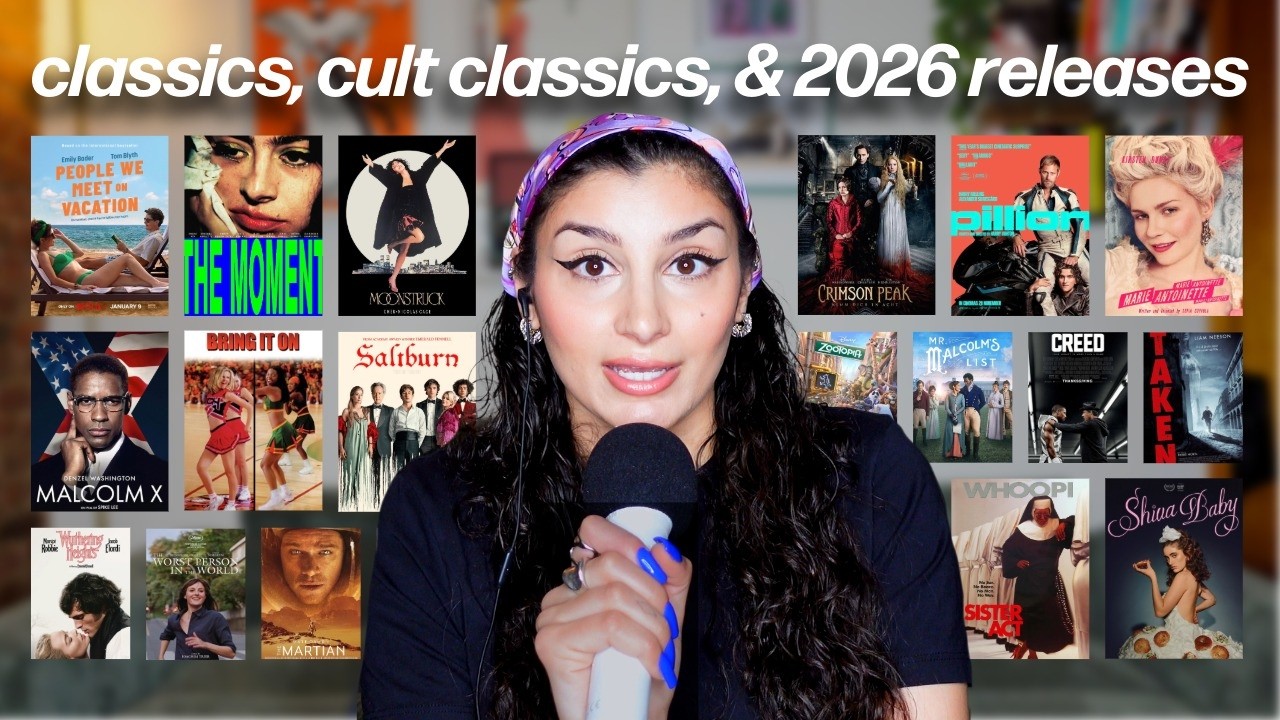
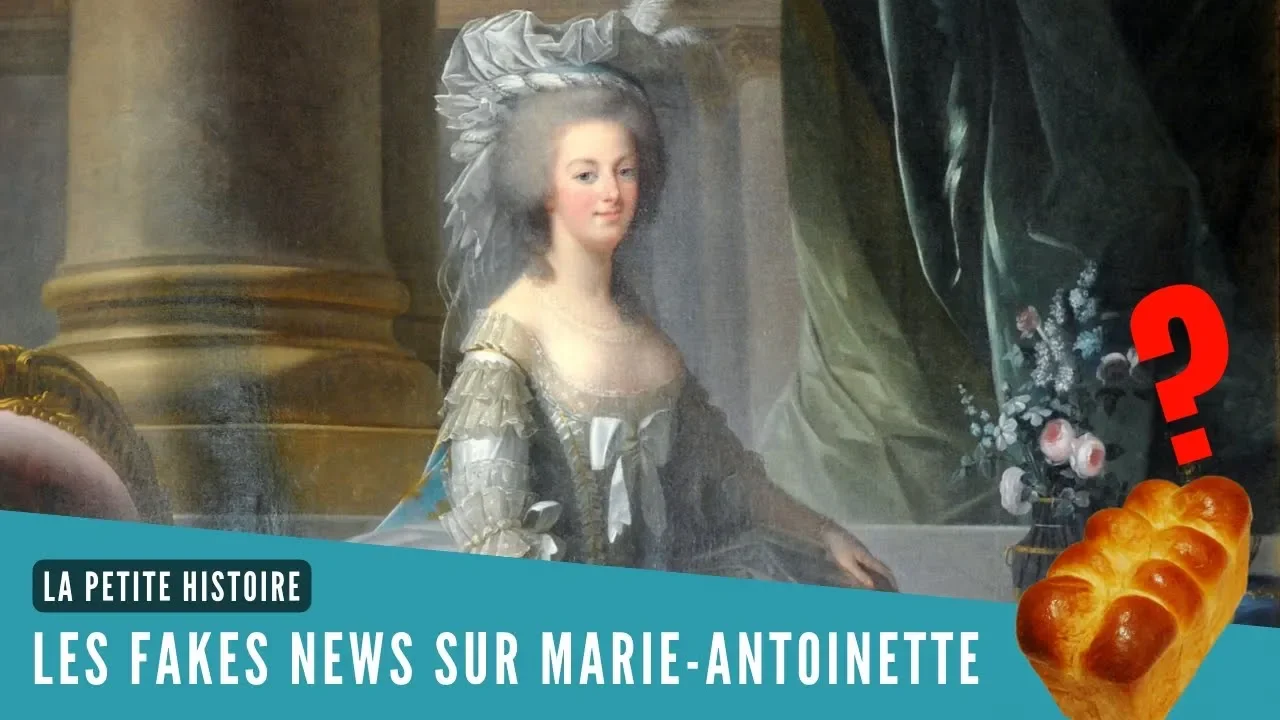
Comparative analysis of deliberate anachronism in other historical films, such as Sofia Coppola's 'Marie Antoinette' or Baz Luhrmann's 'The Great Gatsby'.
The academic field of 'Medievalism'—the study of how post-medieval societies, particularly modern media, reconstruct and romanticize the Middle Ages.
Advanced narrative theory exploring the evolution of the 'found family' trope in cinema and how it challenges traditional biological and institutional power dynamics.
The ongoing critical debate surrounding historical accuracy versus creative license in biographical and period-piece filmmaking.
232K views12.7Klikes53:30Original Release: 2020-05-16
Spoiler alert for A Knight's Tale and the original Canterbury Tales, I guess, if it's possible to spoil something that is 600 years old, and content warning for just nudity, I guess.
You're going to see Paul Bettany's butt several times.
Here's the usual warning.
These videos are just my opinions and artist subjective.
Now then, ["We Will Rock You" plays] What do you think of when you think of A Knight's Tale?
Do you think of the music or how cute Heath Ledger was, or the cool action sequences, or do you think of this?
Well, I guess it's time to talk about A Knight's Tale.
["Fat Lip" by Sum 41 plays] Let me take you all back to the distant era of 2001, a year after Y2K didn't happen, the first year of George W. Bush's presidency, 9/11 would happen that September, and there was an economic recession that lasted from March until November.
In music, Missy Elliott released 'Get Ur Freak On' that year, NSYNC and the Backstreet Boys were in the peak of their popularity, Beyonce was still a part of Destiny's Child, and there was a band called the A-Teens that largely covered hits by the band ABBA.
In the world of film, it was the tail end of the Indie film boom that started in the '90s with the rise of popular independent filmmakers like Danny Boyle, Robert Rodriguez, David Fincher, Quentin Tarantino, and Kevin Smith, among many others.
Filmmakers made these smaller budget films that exploded onto the landscape.
Movies like Pulp Fiction made for $8.5 million, grossed over $213 million at the box office.
David Fincher's Seven was, ironically, the seventh highest grossing film in 1995, with a budget of $33 million and a box office gross of $327 million.
Many of these films would go on to become cult classics that remain in the cultural consciousness to this day, whether we wanted them to or not.
This boom would largely die out with a few notable exceptions by the mid-2000s, making way for the big-budget spectacles, aided by the move away from shooting on physical film stock to the less expensive digital, and the rise of more sophisticated special effects, as well as that post-9/11 tilt away from the more wacky and starry-eyed genre films towards gritty, cynical realism.
Also, there was that YA novel film adaptation trend that began in the 2000s.
The 'Lord of the Rings: The Fellowship of the Ring' came out that December, and the first 'Harry Potter' Film, 'Harry Potter and the Sorcerer's Stone,' was released the month before.
Also, those movies were hugely successful franchises and studios are trying to recapture that particular magic to this day.
There were also movies like Shrek coming out in May of that year, making huge innovations in animation.
I love to poke fun at it, but this... was technically a big step in what animation could do.
My personal favorite, 'Atlantis: The Lost Empire,' also came out in June of that year.
They did a lot of work blending 2D and 3D animation, which was a fairly new concept at the time.
I imagine this...may have in some fashion paved the way for this.
In the middle of such a tumultuous and buck-wild time, A Knight's Tale was released on May 11th, 2001.
It was a slightly more modest film compared to the giants of the time.
A Knight's Tale cost 65 million to make and made back roughly twice its budget with a box office gross of 117 million.
I'm going to get a bit more into all the weird and interesting shit this movie did, but first, let's do the usual rundown.
A Knight's Tale was written and directed by Brian Helgeland.
You might not know his name, but you've probably seen one of his films, or at least one of the films he wrote.
He got his start as a screenwriter and wrote a few horror comedies, but in 1997, he co-wrote 'LA Confidential.'
From there, he wrote films like 'Mystic River,' 'Man on Fire,' and the remake of 'Taking Pelham 123.'
He's also taken a few turns at directing.
His first go was the 1999, Mel Gibson film, 'Payback.'
His next time writing and directing was for A Knight's Tale.
He also wrote and directed a 2003 film called 'The Order' with Heath Ledger, Shannyn Sossamon, and Mark Addy, which is deeply uneven in spite of some good performances.
He wrote and directed the 2013 Jackie Robinson bio pic called '42,' which was pretty good, as well as the 2015 film 'Legend,' starring Tom Hardy and Tom Hardy that I found mostly unwatchable.
[Ronnie Cray] "A shootout is a fucking shootout!...Like a Western."
This year, he wrote 'Spenser Confidential' for Netflix, which was.
[Cissy] "Who's riding point on this shitshow?"
"Get that fucking sword out of my face. Where do you work? At a Brazilian steakhouse?"
Helgeland's had an interesting and storied career to be sure, but I do think A Knight's Tale is a highlight.
Now, of course, the lead of the film is the late, great Heath Ledger, and we'll talk about him a bit more later.
But it suffices to say, he was an enormously talented actor who never ever phoned in a performance, no matter how ridiculous or strange the movie was.
Looking at you, 'The Brothers Grimm.'
[Jake] "Well the barbs were like..." [unintelligable sounds] "And the trees, the forest was sweeping down!"
Now, in A Knight's Tale, he plays the lowborn William Thatcher who wants to be a knight, and when his liege lord, Sir Ector, dies unexpectedly.... [Roland] "The spark of his life is smothered in shite."
"His spirit is gone, but his stench remains."
He finds his chance at glory [Roland] "You have to be of noble birth to compete."
[Will] "A detail."
With him, there is Roland, played by Mark Addy.
[Roland] "If the nobles find out who you are, they'll be the devil to pay."
[Will] "Then pray that they don't."
It seems Roland and Will have been traveling with Sir Ector since they were children and Roland is honestly the group dad.
He's the one everybody else seems to look to and listen to for guidance.
[Roland] "If I'm going to all this effort, you best learn to dance. Now, ask her nicely."
Also, it's fairly low key, but he has a bit of a crush on Jocelyn's lady-in-waiting, which is cute.
Then there's Wat, played by Alan Tudyk, who you might know from his role here.
[Wash] "Aah, Curse your sudden but inevitable betrayal."
"Now die! Ooh! Oh no god!"
Or here.
[K-2SO] "Would you like to know the probability of her using it against you? It's high."
[Cassian] "Let's get going."
[K-2SO] "It's very high."
Or here.
[Chicken sounds] [Alan Tudyk] "I went to Juilliard."
Wat is the third member of their little group.
He joined Roland and Will following Sir Ector sometime between here and here.
[Watt] "You've waited your whole life for Sir Ector to shite himself to death."
He's hot-tempered and very fond of saying this to people.
[Watt] "I will fong you until your insides are out, your outsides are in," "your entrails will become your extrails."
By the way, according to Helgeland to fong means to kick, although some sites say it means to seize or grab.
[Watt] "Pain, lot of pain."
So that's fun.
Then there's Paul Bettany as Geoffrey Chaucer.
[Geoff] "Geoffrey Chaucer, the writer."
Yeah, that Chaucer.
The character enters the film with a salty swagger that immediately tells a story.
He's grandstanding, world weary, cynical, and generally on the verge of getting his ass kicked because he can't stop running his mouth off around short fuses like Wat.
Chaucer also has a gambling problem and likes a drink with his friends and when he's finally grown close to this group of renegades, Chaucer has an unbearable sincerity that just.
[Geoff] "You would come to see him rust? For shame."
Wrecks my shit.
This is my favorite character, always has been.
When he says things like, [Geoff] "I will eviscerate you in fiction. Every last pimple, every last character flaw."
"I was naked for a day; you will be naked for eternity."
I, as a kid who got bullied and like to write, was like, "Hell yeah!"
I'm going to talk about Chaucer more. Just you wait.
From there, we have The Farris, Kate played by Laura Fraser.
[Roland] "Are you a woman or a blacksmith?"
[Kate] "Sometimes I'm both."
So in medieval times, women could be blacksmiths, but it generally happened if they were married to a blacksmith.
When their husband died, the widow was allowed to inherit the trade and a Farris or a Farrier specifically worked on horseshoes and stuff.
I didn't do a ton of research on this, but in the commentary, Helgeland said that women didn't usually get to make armor, hence this line.
[Will] "No, they said you were great with horseshoes, but shite with armor."
We don't really learn much about Kate's husband other than a passing line.
But initially, Kate isn't too hot on this rowdy band that crosses her path.
[Kate] "Your problem, not mine."
Of course, she eventually warms to them and joins their merry troupe for the journey around Europe.
She's a really fun character who's a little romantic and a little impatient with bullshit.
I'll talk about her more later too.
[Roland] "Women eh?"
Then there's Shannyn Sossamon as the Princess Jocelyn who knows what she wants and isn't afraid to ask for it.
[Jocelyn] "Do not shhhh me and spare him. Now be gone! Go!"
Then we have Rufus Sewell as our antagonist Adhemar, who is just constantly seething and smoldering, and a good antagonists for all the little shakes and twitches Sewell adds to him.
Rounding out the main cast, there is James Purefoy as the Black Prince of Wales, and just all around good egg who is here to cheer for his new buddy, William.
According to the commentary, Purefoy was voted the sexiest man in the cast, and also I really like the way he says this line, [Prince Edward] "LANCE!"
Awesome. So okay...what's the story?
I mean, it's 'Rocky' with lances.
No, seriously, it is.
[Helgeland] "I almost, at one point, dedicated the film to the movie 'Rocky,'" "but I didn't, I decided to keep all the credit for myself."
"Any similarities that people see between this story and 'Rocky' are purely coincidental, I didn't steal anything."
Apparently, I'm the one heathen that doesn't love 'Rocky,' but just know, Brian Helgeland knows, and I know, and now you know, it's 'Rocky' with lances.
The story is that William Thatcher, son of John Thatcher, is out there serving as late lord Sir Ector, who dies suddenly from.
[Roland] "The spark of his life is smothered in shite."
So Will jousts as Sir Ector, and it's mostly for the money because he and his friends are literally starving.
[Wat] "Brie Tart. Tansy cakes with peppermint cream!"
But then he sees an opportunity for glory.
Of course, Roland and Watt take some convincing.
[Will] "A man can change his stars, and I won't spend the rest of my life as nothing."
But eventually they sign up and help him train too.
[Wat] "I think he's getting worse." [Roland] "He is getting worse."
[Wat] "Glory and riches, glory and riches!"
And after a good training montage, he's ready for tournament.
They invent a new character for him to inhabit.
Sir Ulrich Von Liechtenstein of Gelderland and then they discovered this man out for a naked jaunt.
[Will] "Oi sir? Were you robbed?"
[Geoff] "More involuntary vow of poverty... really."
Turns out this man is Geoffrey Chaucer, the writer.
[Geoff] "Probably read my book. 'Book of the Duchess?'"
"fine, well, it was allegorical."
He joins their crew on the promise of clothes and food and in exchange, he will forge Will's, patents of nobility which the tournament are requiring.
So they get to the tournament and Will starts jousting.
He's good, if a little rough around the edges.
[Germaine] "His technique...rudimentary style, nonexistence still...He is fearless."
He also meets this girl and he spends a while just trying to find out her name.
[Will] "Tell me your name woman."
[Jocelyn] "Call me a fox, for that is all I am to you."
[Will] "Well then, a fox you shall be until I find name."
"My foxy lady."
But eventually the two of them start, medieval dating.
Will talks to her about the Bible.
They dance, it's fun.
Also, Will's armor is old and breaking, so Kate comes in to help fix it and eventually she just joins the band.
[Kate] "Just take me as far as Paris."
From there, the five of them travel around and joust in tournaments.
There's one tournament where the other guy gets badly injured.
[Prince Edward] "I'm through. I have never not finished before," "I wish to keep my honor intact."
Later we'll find out that of course, this is the Black Prince and Will jousts against him anyway.
[Geoff] "You knowingly endanger, a member of the royal family."
[Will] "He knowingly endangers himself."
[Prince Edward] "You knew me, but still you rode?"
[Will] "It's not in me to withdraw."
[Prince Edward] "Nor me."
Also Will continues pursuing Jocelyn and one time he lost really badly to Adhemar and that was a whole thing.
[Will] "Next time I face you Count Adhemar, you will look at me from the flat of your back."
[Adhemar] "You have been weighed, you have been measured, and you have been found wanting."
I told you this is 'Rocky' with lances.
The story on the outside is very simple.
So with that, let's talk about an anachronism.
[Wat] "It's called a lance, hellooooo."
A Knights Tale is that sort of accidental oddball that just happens to be in keeping with another trend of this era, the anachronistic period film.
So real quick, anachronism means There's more than one kind of anachronism in film.
Sometimes it's the accidental sort, like slightly inaccurate period details.
A friend of mine who was very into history stuff was appalled by the wall paneling in an episode of 'Doctor Who,' because it was apparently wrong for 1651 and while that is the funniest nitpick ever, this could technically be considered an anachronism.
On the other end of the spectrum, you have the intentional kind of anachronism, like in 'Jojo Rabbit,' where we have characters saying things like.
[Jojo] "I'm massively into swastikas."
Anything can be anachronistic by choice or by accident.
From the dialogue to the music, the costumes, the hair, and makeup.
There are many reasons to handle things anachronistically, but it usually comes down to stylistic choices or attempts to bring audiences into a different time period with more recognizably modern touchstones or sometimes it's just whatever this is.
[A crowd of people and This character sing 'Smells like Teen Spirit' by Nirvana] "Here we are now, entertain us!"
Now, when A Knights Tale came out, a lot of critics made comparisons to the 1998 film, 'Shakespeare in Love,' which does like to wink at the audiences a lot with moments like this.
[Philip Henslowe] "The show must...you know..." [Shakespeare] "Go on!"
But it actually shares a lot of DNA with another film that came out that same year.
[Harold Zidler singing] "Because we can-can-can!" [Crowd chants back] "Because we can-can-can!"
[Zidler] "Because we can-can-can!" [Crowd] "Because we can-can-can!"
Sometimes little sub-genres spring up when people completely independently come to a similar idea, like in 2006, when there was the intense magician thriller genre with Christopher Nolan's, 'The Prestige,' starring Hugh Jackman and Christian Bale, and Neil Burgers, 'The Illusionist,' starring Edward Norton and Jessica Biel.
For whatever reason, anachronistic historical films with pop music became a weird little sub-genre that may have mostly died out by the mid 2010s.
Other movies of this genre would include 'Pan,' 'Shanghai Noon,' 'Inglorious Bastards,' 'Django Unchained,' the 2013 'Great Gatsby,' 'Emperor's New Groove,' 'The Book of Life' and 'Marie Antoinette.'
Sometimes it's less of a genre and more of a choice for one or two scenes, but some movies really commit.
Also, it is fun to note that while 'Moulin Rouge' is a musical, A Knight's Tale often acts like a musical.
Helgeland himself made references to the works and Vincent Minnelli with how much the musical moments often work in the film to drive the story or express inner feelings, which is how musicals work.
Also, sometimes the music even seems diegetic.
[David Bowie's 'Golden Years' plays] "Angel" [Queen's "We Will Rock You" plays] "We will, we will rock you!"
There's the big dance number, so...that's fun.
Of course, the music isn't the only anachronism.
There's the costumes, which were specifically tailored to appeal to a more modern audience when realistically, a lot of these people would have been wearing tights.
[Helgeland] "We talked about that they should look like The Rolling Stones in the 1972 tour."
[Caroline Harris] "You see they're young, so they have to look a little bit sexy and accessible."
There's also the dialogue, which includes lines like,.
[Will] "My foxy lady."
And everybody's favorite.
[Wat] "It's called a lance, hellooooo."
All these touches were intended to help a modern audience connect with an older story.
'Moulin Rouge' has dancers doing the can can to Lady Marmalade and A Knight's Tale has a jousting audience cheering To the tune of We Will Rock You.
In a New York Times article, Helgeland said, [Helgeland] "My attitude was the '70s have always been the '70s."
So we have a royal court dancing to David Bowie And a jousting match set to Bachman-Turner Overdrive.
It's a great and fun way to set a tone.
I'll never take issue with this choice, and I'm guessing neither did Colombia.
In fact, I do think it's very possible that executives at Columbia Pictures might have looked at the script and whatever pop music was in the original draft and then observed the success of some other historically revisionist movies like 'Shakespeare in Love,' which posited that Shakespeare's Romeo and Juliet was inspired by a lot of William Shakespeare's personal drama at the time, and it has many knowing winks to a modern audience like this one.
[Shakespeare] "We are in desperate want of a Mercutio, Ned."
[Ned] "And the title of this piece?"
[Shakespeare] "Mercutio."
And it won best picture that year.
or 'Ever After,' which came out the same year, taking the story of Cinderella and setting it in actual Renaissance history with historical figures like Leonardo da Vinci making an appearance and also allowing Drew Barrymore to kick ass in a way that women probably couldn't have or rarely would have in that time period.
It grossed $98 million at the Box Office with a budget of $26 million.
I'm just saying this movie is wacky, but it did happen to fit with some popular sensibilities at the time.
So with that out of the way, let's talk about the ladies.
[Roland] "Women eh?"
So...how can I put this politely?
I've talked before on this channel about how sometimes men write women in a certain way, a way that is not necessarily good.
Unfortunately, since male screenwriters are so much more common in the industry, you're going to see women written badly by men a lot more than you might see men written badly by women, although it does happen from time to time.
Part of the problem is that women are encouraged to watch and read stories by and about men.
Most of my required reading in high school, aside from Harper Lee's, 'To Kill a Mockingbird,' were by male authors.
All throughout film school, I was encouraged to seek out the works of Woody Allen, Roman Polanski, and so on.
But men are so rarely asked to do the same, and so many seem to find it hard to identify with or write women.
Said a Vox article that explored men's disinterested in the 2019, 'Little Women' adaptation by Greta Gerwig.
Gerwig was snubbed for the Best Director nomination at the Oscars and all over the Internet, I heard men say the movie was hard to follow or boring.
It was neither of those things.
But apparently, a story by and about women was just too complicated in spite of the fact that I'm sure many of those same folk lapped up the likes of 'Memento' or 'Inception,' without batting an eye about the complexity of the narrative.
With A Knight's Tale, this is not a misogyny thing.
This is not a 'Doctor Who' situation where parts of the show are so broken there's just no fixing them, so characters are just whatever the episode requires them to be until we can find some character development for them.
[Clara] "Nothing is more important than my egomania."
In the case of A Knight's Tale, it's more of that benevolent sexism that you see when a male screenwriter isn't accustomed to trying to identify with women, but they don't hate them or anything.
They just maybe could have gotten feedback from a woman or two before producing the screenplay.
In these pieces, women are more like...tools for the story rather than people.
They are a love interest first and a character second.
Their personality, if they can be said to have one, can be summarized with one or two words like sultry or spunky, or maybe just pretty.
Sometimes it just means the writing of the character might be wildly inconsistent. This happens a lot.
Even good movies will do this.
This is a very common problem.
With A Knight's Tale, I wish it was a little less.
[Roland] "Women eh?"
And a little more.
[Jo from 'Little Women' says in a loving tearful way] "Women."
You know what I mean? Some woman could have looked at any of these screenplays and asked, "Why is she doing this? When before she said this?"
"Why does she like him?"
I asked my male classmates these questions a lot when I was in school, and the response was quite often, "Wow, I never thought of that."
One of the best things you can do when writing is to get feedback from other people.
It really helps you to see any holes you might have missed in your screenplay or story.
I thought it was really interesting listening to the commentary for the 2019 film, '1917,' which if you haven't been on my Twitter, this movie has become a bit of a hyper fixation for me lately.
Don't ask me why, but writer director, Sam Mendes, co-wrote that screenplay with a lady named Krysty Wilson-Cairns.
He calls out a couple of key moments when she thought of a really heart wrenching line or moment that he never would have thought of.
Then he says this.
[Sam Mendes] "He asked Schofield to write to his mum, which is a line that Krysty wrote".
"One of the very good reasons why you need a co-writer who doesn't think like you" "and is not the same sex as you or the same age as you, is they come at it from a totally different perspective."
"One of the many wonderful addition she made to the script was a line like that," "which I suspect I would never have written myself."
That's just a sentiment I wish more male screenwriters took to heart.
Other perspectives are important in stories, all sorts of other perspectives.
Going beyond gender, your stories will be better if you listen to people from other ethnicities, religions, sexualities, and I do mean really listen.
I'm not saying white male writers need to be canceled, but since they are still the dominant group, they need to be listening to other viewpoints to write more well-rounded characters that don't look like them.
Now, A Knight's Tale is not That Bad when it comes to writing women, but it's also not that great.
Jocelyn's character is a little thinly written.
Aside from being a lady who knows what she wants and wanting a man to prove their love to her the right way, what can you tell me about Jocelyn as a character?
Shannyn Sossamon puts a lot of life into her and so she is not totally flat.
But other than headstrong and I don't know, a romantic, can you describe her character?
I had a paragraph of adjectives for Chaucer earlier in this video, not to mention some personality quirks like the gambling in the general grandstanding, but I really can't tell you a lot about Jocelyn.
She likes poetry.
She has weird taste in hats.
She has a lady in waiting.
In one scene when the two of them are alone and talking to each other, it's about Will and Count Adhemar.
So like we're not passing the Bechdel Test here.
Most of my favorite moments with Jocelyn are more down to Sossamon's delivery than the writing of her. Moments like this one.
[Jocelyn] "Do not shush me and spare him, now be gone! Go!"
Or this one.
[Adhemar] "I myself, Jocelyn, have never been unhorsed."
[Jocelyn] "Nor have I."
Or this one, which Sossamon came up with herself.
[Jocelyn] "Oh that is lovely!"
Honestly, my least favorite bit with Jocelyn is the Will proving his love bit.
The setup is that Will is cranky and the two of them have a fight where Ledger pulls no punches in showing you how childish Will is being right now.
[Will] "You're just a silly girl, aren't you?"
I do love this bit where Jocelyn stands up for being a woman who likes girly things like nice dresses and stuff.
[Jocelyn] "A flower is only as good as its petals."
"Better a silly girl with a flower than a silly boy with a horse and a stick."
So the two of them are fighting and the gang helps Will write a letter to apologize.
They meet in Paris to reconcile and have another fight because Jocelyn wants him to really prove his love.
[Jocelyn] "Losing is a much keener test of your love."
"Losing would contradict your self-love and losing would show your obedience to your lover and not to yourself!"
[Will] "Really?"
The next day at the tournament, we get this.
[Roland] "What are you doing?"
[Will] "Losing."
[Roland] "I don't understand."
[Will] "Neither do I."
Like, this montage is very funny.
I particularly love this gag, but this is hurting Will.
He's literally hurting himself a lot and very badly in order to prove his love.
[Wat] "And your love, have your proven that yet?"
Now, this comes from a lot of research Helgeland did.
He read these ye olde treatises on courtly love, and there's this 12th century French poem by Chretien de Troyes called 'Lancelot The Knight of the Cart.'
And it's about Lancelot and Guinevere with this exact scenario of Lancelot proving his love by losing in a tournament.
I think Helgeland probably read it based on this bit.
[Geoff] "Guinevere comes to Lancelot."
Basically, the ideas of courtly love and proving your love are based on real historical, cultural things.
But also this movie picks and chooses where to be historically accurate.
They dance to David Bowie and say things like.
[Wat] "Helloooooo."
So we didn't need to keep this.
Later, the film reminds us just how much Will hurt himself for Jocelyn.
[Will] "Damn girl."
[Jocelyn] "You need a surgeon."
[Will] "He's been, he says I would live though doesn't feel that way."
[Jocelyn] "William, this pain is my doing."
[Will] "Yes, it is."
I appreciate Jocelyn's point here.
[Jocelyn] "Losing would contradict your self-love" "and losing would show your obedience to your lover and not to yourself."
[Will] "Really?"
But I wish he could have taken one hit, maybe two, and then we could have gone straight to this.
[Christiana] "She says that if you love her, you will win this tournament."
[Geoff] "There she is, the embodiment of love, your Venus."
[Will] "And how, I hate her."
I just don't think it's cute to show somebody getting hurt this badly just so Jocelyn can go.
[Jocelyn] "He loves me."
Yeah, he sure does my lady.
Now, please tell him to stop.
But on the other end of the spectrum, there's Kate.
I actually really like Kate and how this movie handles her.
[Kate] "Did they say I couldn't do it because I'm a woman?"
[Blacksmith] "You might try The Farris."
[Will] "A woman?"
"No, they said you're great with horseshoes but shite with armor."
"The fact that you're a woman wasn't ever mentioned."
You're the dumb bitch who said a minute ago you didn't want to go to her because she's a woman, you IDIOT I actually really appreciate that she is never, ever a romantic interest for Will because she's already been married once and she just isn't interested in this dipshit.
She is simply accepted into the group as one of the boys if you will.
[Wat] "Say something about her breasts."
[Kate] "Her breasts were not that impressive."
Kate actually has some of the sweetest moments in the film.
Moments like this one.
[Kate] "With hope. Love should end with hope."
Or this one. Look at this queen.
She's ready to beat some people with her hammers to protect her friend.
I love her.
Also, we have this truly excellent line during the dumb Will hurting himself montage.
[Late] "It is very romantic though."
[Roland] "Are you a woman or a blacksmith?"
[Kate] "Sometimes I'm both."
Overall, this movie is not irreparably broken, but every piece of media you love has room for improvement.
And this is where A Knight's Tale could stand to grow a little.
Kate's great. Jocelyn is pretty good, but could be better.
[Roland] "Women weaken the heart. Without your heart you cannot win."
Hey what kind of bullshit is that? Shut up Roland.
I wish I could give you all some easy answers on how to write women well, but there isn't some standard criteria that can apply to all films.
Every story is its own thing.
Every story has its own needs and pace and tone.
With A Knight's Tale, I just wish it was a little less.
[Roland] "Women eh?"
But this movie was written in 2001 and our standards were a little different then.
I'll still always appreciate this movie for this.
[Kate] "Sometimes I'm both."
With that, let's talk about 'The Canterbury Tales.'
[Geoff] "I'm going to have to write some of this story down."
So this movie has a very, let's just call it loose historical underpinning.
I mean, there are details like The Farris or having the Black Prince of Wales show up.
I mean in real history, Chaucer actually served the family of Prince Edward, so they probably would have recognized each other, but it's Tuesday, don't worry about it.
Then there's author and father of English literature, Geoffrey Chaucer.
So Chaucer did a lot of stuff in his life.
He served in the king's army in 1359 and the army of John Gaunt in 1369.
He also served again in France in 1370.
He was married with three or possibly four kids.
There's actually a deleted scene in The Knight's Tale where we met Chaucer's wife.
[Philipa] "Oh, that must be a Wat," "and you're Kate, and Roland. Geoffs told me all about you."
And somewhat infamously, there was about six months around 1372 when Chaucer appear to be missing.
Historians can't really account for his whereabouts, although some guess he was in Italy.
Brian Helgeland decided that maybe for those six months he was the herald to our William Thatcher, which is a fun detail.
Then there's 'The Canterbury Tales.'
So Chaucer was, according to some historians, a man of the people.
His work seem to be highly critical of the church as an institution, although he himself was Christian.
His stories were bawdy tales written in English or Middle English when the nobility and the church wrote and spoke either Latin or French.
Some say his works helped to standardize our modern concept of the English language.
Paul Bettany loves to reference in interviews that time Chaucer wrote a story about a talking penis.
Or who could forget the classic, 'The Miller's Tale', which ends, well, let's just say this is the climax of the story.
I'm going to put the Middle English up on screen and read the translation for you all.
"Nicholas had gotten up to piss, and thought he would surpass the joke, Absolon would kiss his arse before he left.
He opened the window quickly and put out his arse secretly over the buttock to the thigh bone and then said, the clerk Absolon, 'speak sweet bird, I know not where you are.'
Nicholas then let fly a fart, as great as if it had been a thunderclap that with the stroke Absolon was almost blinded."
So Chaucer, father of English literature, who also wrote a story about people farting out windows.
'The Canterbury Tales' is just a series of short stories like this one.
The first story in it is called 'The Knight's Tale.'
It bears very little resemblance to the story in the film.
Two knights, Arcite and Palamon in Ancient Greece, fight for the love of a woman named Emily.
Theseus, the Duke of Athens arranges a tournament for them, and the one who wins will get to marry Emily.
Arcite dies in the tournament and everybody is very sad, including Emily and Palamon.
Everybody mourns Arcite for a long time and finally, Theseus tells them all that everybody lives and dies and basically to move on.
So Emily and Palamon and get married and live a long, happy life together.
The film, A Knight's Tale, is more of a named reference rather than an adaptation.
The movie has references to 'The Canterbury Tales' with characters like Peter the Pardoner and Simon the Summoner, who.
[Geoff] "I will eviscerate you in fiction."
Well, considering how those characters go in 'The Canterbury Tales,' this is pretty on the mark.
Also, there's this fun line here.
[Geoff] "I'm going to have to write some of this story down."
[Wat] "The part about the prince and the knights?"
[Geoff] "No, no, no. All of it. All human activity lies within the artist's scope."
Implying that all of this inspired 'The Canterbury Tales' somehow.
So it's not 'The Knight's Tale," it's A Knight's Tale, and all human activity lies within the artist scope.
[Geoff] "Maybe not yours."
Alright, so let's take a minute and talk about the end of the movie.
So after this, [David Bowie's 'Golden Years' plays] "Angel."
and this.
[Wat] "Helloooooooo."
And also this.
[Jocelyn] "He loves me."
The gang returns to London for the final tournament championship.
It's the sports movie, big game time.
But first we learned that William hasn't been home in 12 years.
[Young WIll] "I'm afraid."
[John Thatcher] "Of what?"
[Young Will] "That I won't know the way back home."
[John Thatcher] "Don't be foolish William, you just follow your feet."
So Will is back home now and Adhemar is here too.
He was off fighting somewhere and was such a bad person on the battlefield that the Black Prince called him back.
[Geoff] "They were reveling the night pillaging town after town."
"robbing and murdering and ransacking churches," [Adhemar]committing the oldest sins in the newest ways.
Also there's this.
[Adhemar] "A real thoroughbred trophy."
[Will] "You speak of Jocelyn like she's a target."
[Adhemar] "Isn't she?"
[Will] "No, she is the arrow."
[Adhemar] "I've entered into negotiations with her father."
"She'll be saddled and placed on my mantle. I will have her."
Basically it's the final bout and Adhemar is the big bad, so we've got to beat him.
[Will] "As I promised you before Adhemar, you will look up at me from the flat of your back."
But before he can compete in the regionals, he goes to see his dad for the first time in 12 years.
[Will] "I wonder if you remember a man who was as tall as a knight."
"His name was John Thatcher."
[Little Girl] "Of course I remember him, he's blind sir."
We get this extremely touching reunion.
[Will] "I have word, word of your son."
"He wanted you to know that he changed his stars after all."
[John Thatcher] "And has he followed his feet?"
[Will] "Yes."
"Father" [John Thatcher] "Oh William" We also discover that Adhemar followed him to Cheapside and saw his father.
So the next day this happens.
[Roland] "Somebody die?"
[Geoff] "Sir Ulrich von Liechtenstein."
[Will] "What?"
Will has been found out.
His true identity finally unmasked.
[Geoff] "Will, they asked me for your papers."
"They're waiting for you in the lists. They are going to arrest you."
The first thing he does is confront Jocelyn.
[Will] "So what do you think?"
[Jocelyn] "Right now you've got to run."
"There's nothing else to do."
"Run and I will run with you."
I do actually appreciate this little argument between Will and Jocelyn.
Because just for a second, they're both right here.
She's probably right that he should run since the alternative is like I'm assuming death.
But he is also right that she's never lived in poverty and starved the way he has.
[Will] "But you will see me run, no!"
[Jocelyn] "Damn your pride, William."
From there, Will tries to plead with his friends.
[Will] "Roland you would you want me run?"
He's a knight with honor and chivalry and he doesn't want to run.
{Will] "And you Geoff?"
[Geoff] "Yes, I wish it too with all the pieces of my heart."
[Will] "Wat... you and I, we aren't runners."
[Wat] "William, today we are."
[Kate] "Run William."
And he actually convinces them.
[Will] "I'm a knight."
They all understand that he doesn't have it in him to run.
Even Jocelyn understands.
Then Roland says: "All the things must come to an end, let's end them together."
And we get this gorgeous shot of our team, which the director says he totally stole from 'The Right Stuff,' but I love it.
And Will gets arrested.
Adhemar comes to his cell to gloat.
[Adhemar] "You have been weighed. You have been measured. You have been found wanting."
Fun fact, that line is the Bible thing.
I always wondered, it's from the book of Daniel, which in Judaism is part of the Ketuvim, and in Christianity is grouped with The Major Prophets.
The actual line according to the Ketuvim is, So that's some trivia for you all.
But anyway, in the film Adhemar is a big meany, so he literally beats Will while he's chained up in a cell and then we come to the scene where Will is in the stocks.
[Will] "Move Roland, let them have me."
[Roland] "God love you William, so do I."
All of his friends come to stand by him in the moments before he might literally be put to death.
This bit always got me.
Watching his friends rally around him.
[Geoff] "Listen to me."
Then the Black Prince comes to his rescue.
[Prince Edward] "Your men love you."
"If I knew nothing else about you, that would be enough."
"But you also tilt, when you should withdraw."
"And that is knightly too."
"If I may repay the kindness you once showed me, take a knee."
Let me just take a second here to say, again, how much Ledger was absolutely stellar in this role.
There's a level of vulnerability to his performance in moments like this that is really understated and lovely. But anywho.
[Prince Edward] "I dub thee, Sir William."
This is the bit that kind of wrecked my shit and I'll tell you why.
I said Chaucer was my favorite character.
I found him instantly appealing for his humor and wit and saying shit like, [Geoff] "We walk in the garden of his turbulence."
Just after Geoff had joined their group, we learn about the gambling, and yeah, it's kind of a funny bit.
[Geoff] "These people, they'll quite literally take the clothes off your back."
But then it gets less funny.
[Will] "What would you do to him, if I was to refuse?"
[Simon the Summoner] "We, on behalf of the Lord God," "will take it from his flesh so that he may understand that gambling is a sin."
Yeah, they just met.
At this point, Geoff can only appeal to him as another human being for help.
[Geoff] "Please, Will...please will you help me Sir Ulrich?"
This is probably the moment that cemented Geoff's relationship with Will.
[Will] "Release him. And for God's sake, give him back his clothes, and you'll get it."
From here, they spent the rest of the movie actually becoming friends.
By the time we get to here, [Geoff] "Yes, I wish it too with all the pieces in my heart."
This is a really tight-knit group.
Geoff loves and cares deeply for William, and Will cares just as much for Geoff.
They all care about each other a lot.
It's wholesome.There's actually a deleted scene here that I'll always be sad they cut.
I actually discovered it because my sister owned the published screenplay.
I sat and read it one day on a lark and discovered this scene where Geoff tried to calm the bloodthirsty crowd that had gathered to see Will put to death before the Black Prince showed up.
[Geoff] "You're cut from the same cloth, you and he."
"Is my mother here? I'd recognize this cooking anywhere."
"Mother, please, you at least go home. I'll tell you tonight how it turns out."
"I hope I can tell you that I managed to convince these good people to leave my Lord William unharmed."
I cried the first time I read this scene.
I think I teared up the first time I got to watch it too.
Bettany was really fond of this scene, and so was the director.
But Helgeland had thought it undercut the Black Prince coming in to saved the day, which, I don't know, maybe it did, but I really missed this bit.
[Geoff] "My lord, it's true, was born poor, in Cheapside London, and so what?"
"For he is as true as steel, no, truer."
"For he is like gold, to me."
"He is like gold. And you and I, are merely iron," "and yet you people, you would come to see him rust.
And even without that, the sheer relief that we see in him in this moment, knowing that Will is saved, it just gets me.
I can't even really explain why, but this gets me every time.
I love this character, and how much he cares, and how willing he is to just stand up and yell it to the heavens.
But the movie isn't over yet.
So, from there, the question is whether or not Will still wants to joust against Adhemar, which who are we kidding, of course he does.
[Will] "No I'm fit."
[Prince Edward] "I shall have your opponent informed of it."
Adhemar tries to cheat by breaking off the coronal which blunts the sharp tip of the lance.
[Attendant] "Its nothing but spun sugar and boot black."
This badly injures Will on the first round to the point that he can't even grip the lance.
[Kate] "He's tipped it."
[Wat] "Dirty son of a bitch."
Once again, Will has to look to his friends for support.
Roland does what he can, getting this hunk of wood out of Will's shoulder and giving him advice.
[Roland] "You must unhorse him or kill him. It's the only way to win."
Wat ties the lance to his arm [Will] "Lash it to my arm. Wat? Lash it to me arm."
Chaucer, seeing they need another minute or two to get Will ready for this last bout.
[Geoff] "Good people, I missed my introduction."
And Jocelyn went to get Will's father and brought him to sit with her at the tournament, which is very sweet, and the emotional boost that Will needed.
[Geoff] "Excuse me, my lord. Here he is," "one of your own."
"Born a stone's throw from this very stadium," "and here before you now, the son of John Thatcher."
"Sir William Thatcher!!!!"
[Crowd cheers] And Wat has this little nice moment.
[Wat] "That's your name, Will; Sir William Thatcher. Your father heard that."
So Will and Adhemar face off one last time.
Of course, Will wins, and he does it yelling his own name, which I always thought was wild, but Ledger sells it.
We get this moment that is intended to be a sort of vision or hallucination that Adhemar has in the seconds before he hits the ground.
[Wat] "You have been weighed."
[Roland] "You have been measured."
[Kate] "And you absolutely," [Geoff] "Have been found wanting."
[Will] "Welcome to the new world."
I've wondered for years why the dirt looks so weird beneath him.
It's because he's literally suspended above the ground. That's a nice detail.
From there, we get to celebrate Will's victory.
Will gets to kiss the girl, and his shoulder is fine now, don't worry about it.
After a whole movie of Geoff and Wat razzing each other, [Wat] "I will fong you until your insides are out, and your entrails will become your extrails."
[Geoff] "Wat doesn't lead he follows like a girl."
[Punch] We get this nice little moment.
[Geoff] "All human activity lies within the artist's scope....Maybe not yours."
[Wat laughing] I like that their issue was resolved and they are friends now.
That's warmed my heart since I first saw this, and that's the movie.
So there's two threads running through A Knight's Tale.
One is like, yeah, all right, cool, I guess.
The other is everything to me. The first is, [Helgeland] "Its a film about identity."
[Will] "A man can change his stars."
I do enjoy this thread, particularly as an attack on class structures, which we still have to this day.
Will has to literally lie and luck himself to the top, and then at the end, he's just been conveniently royal all along.
That's either a funny bit of satire or like, okay.
It sounds nice.
[Will] "He changed his stars after all."
But also, I feel like people could mistakenly be like, "Yeah. He worked hard and pulled himself up by his bootstraps. He's a self-made man."
I'm just not here for that take.
It was luck and some skill, but more importantly, it was his friends.
It was Jocelyn, and his dad, and the Black Prince, hell, even Sir Ector taught him a few things before.
[Roland] "The spark of his life is smothered in shite."
Will couldn't have done this alone.
Not without Roland and Wat helping him train.
Not without Kate making his armor.
Not without Chaucer forging his patents of nobility.
Not without Jocelyn, and the lessons his father taught him spurring him on.
At the end of the movie, he wins, thanks to Geoff stalling for time, thanks to Roland and Kate taking care of him, and Wat tying the lance to his arm.
It all adds up to a victory born of love and friendship, like the found family trope is my shit.
It's always my shit.
Whether it's a found family saving Atlantis or blowing up a Death Star, or piloting giant robots with the power of friendship, I love stories about people being friends.
Okay, listen, right now as I write this, we all live inside, but nobody is in this alone.
Tell your friends you love them some time.
Tell your mom or your dad.
Call your grandma, or hug your significant other, if you happen to live with them, or your dog or something.
Everybody keeps saying it, but it's true.
We're in this together and we won't make it on our own.
So reach out to the people in your life that matter.
Because, to quote one of my favorite musicals.
Or a favorite song by The Beatles.
For you that might mean giving a roommate a hug, for this movie, it means this.
[Wat making unintelligible sounds] [Wat] "Pain. Lot's of pain."
This movie does come with an unfortunate footnote.
The sudden death of Heath Ledger in 2008 at the age of 28 from what I believe is considered to be an accidental overdose.
He was a talented actor, just beginning his career.
His death was a very tragic one to many.
There's actually an interview with Helgeland from 2011, talking in retrospect about A Knight's Tale.
Ostensibly, Helgeland and Ledger got along quite well because after A Knight's Tale, Ledger came back to work with him again on the 2003 film, 'The Order.' And well, [Helgeland] "He told me once that when he watched it," "he said it was like a photo album of how much fun he had making the movie," "and he'd always have that great photo album of that great time he had," "and uh...that's what it is for me."
It's a photo album of...of a great guy and uh..." "...Great time."
Ledger would receive a posthumous Oscar for his performance of the Joker in The Dark Knight, which is now held up as the gold standard for portraying that character.
But sadder stuff aside, this movie has some of the funniest and strangest behind the scenes details that we can dig into as well.
Like for instance, Helgeland and Bettany were quite good friends.
I would guess they still are based on Bettany's bit part in Helgeland's film, 'Legend.'
Helgeland basically wrote the role of Geoffrey Chaucer for Bettany.
It took a while to convince the studio that he could be funny, since the actor was at the time mostly known for some stage work and a gritty British crime drama called 'Gangster No. 1' And Bettany did zero research for this part.
[Paul Bettany] "Chaucer was in actual fact an enormously fat, bald-bearded dwarf," "and I'm clearly none of those things."
"So I did what any self-respecting actor would do," "which is throw any pretentious of doing any research whatsoever straight out the window, and hope for the best really."
And also didn't watch the WWE clips Helgeland sent him since the character was somewhat based on television wrestling announcers.
Instead of watching those clips, he made the soft-spoken director imitate those announcers because Bettany thought that was very funny.
Also, Helgeland lost a tooth when he and Ledger were I guess play-jousting with some lighting stands on set.
Oh! and since the film was shot in Prague, most of their extras didn't speak English, so this bit here.
[Geoff] "We walk in garden of his turbulence!"
Was a genuine moment.
They didn't know he was done or that they should cheer.
So Mark Addy doing this... [Roland] "Yeah."
Actually prompted them to cheer.
And most of those really terrible hits and falls you see throughout the film are planned and choreographed, although this one here was accidental.
Ledger's stunt double took that hit to the head when he wasn't supposed to and he fell to the ground unconscious.
They later decided to use it in the prologue bit.
What else is there?
Well, they spent a fair bit of money adding this ye olde version of the London Eye to this shot, just cause.
Also in this shot, that is a real stunt person being hung back there, like for no reason.
There's no close-up on the body or anything, it could have been a dummy.
Oh, there was Barney, the wonder horse.
Barney was the only horse that was good at staying on his marks and not fidgeting around.
And in this shot, the horse, who was mainly ridden by Ledger, got spooked when all the guards came rushing at him.
Oh, and when the lances break and splinters fly everywhere, the lances were made of balsa wood and scored to break along specific lines, and they were filled with balsa wood splinters and also pasta.
No, really, it apparently hung in the air a little longer than the wood, which looked good on camera.
So in scenes like this, they're being showered in linguine.
Other fun facts.
Well, the cast gathered for two weeks of rehearsal, that really was just them getting together and drinking a lot.
This scene in the movie was filmed after a few drinks, according to Bettany.
Also, supposedly all during their time filming in Prague, Rufus Sewell threw the wildest parties.
This is strictly anecdotal, so maybe they're exaggerating, but it sounds like the cops were called more than once.
There may have been orgies, and members of the Russian mafia may have attended these parties.
Possibly, the funniest thing of all is that for as beloved as this movie is now, critics at the time were mixed.
It has a 58 percent on Rotten Tomatoes.
Roger Ebert liked it okay and gave it a three star review.
The Guardian liked it well enough, but the Washington Post review by Rita Kempley described it as a Canterbury tailspin in which they uh lance a lot.
Variety's Todd McCarthy described it as cravenly trying to appeal to a younger audience.
Yet since then, it's become a bit of a cult classic.
I don't really know a millennial who hasn't seen and loved this movie.
Okay, I've met one or two people who haven't seen it, but we fixed that, and it remains a popular film from our collective youth that we all look back on fondly.
My sister specifically requested this video.
She was a big Heath Ledger fan, and also we've been quoting this movie for years.
[Wat] "Hellooooo."
Maybe you like the film for the music or the humor, or the frankly kick-ass jousting sequences.
Maybe you like it for this, [David Bowie's 'Golden Years' plays] "Angel" or this.
[Will] "She...because she kissed...thats means she YES!"
But I'll always love it for this.
[Kate] "Sometimes I'm both."
And this.
[Geoff] "All human activity lies within the artist's scope."
And especially for this.
[Prince Edward] "I dub thee, Sir William."
Hello, all. Here's hoping I got my 13th century history right.
I did my best with that.
In terms of announcements, if you missed it on Twitter; I'm done postponing, and we're doing 'Jojo Rabbit' and 'The Book Thief' next.
I don't want to sit on this for a year until the world is normal again.
Other than that, if you've spotted those names earlier in the credits, those are my patrons, and thank you very much for your support in this difficult time.
I don't really have much else to say other than thanks for watching and I'll see you on the next one.
Up Next

16:34
How Rap Works in Hamilton: Musical Argumentation Analysis
@HowardHoMusic
469.3K views•2020-01-13

23:14
Visual Analysis Essay: How to Analyze Graphic Novels in College Writing
@nataliepleimann5941
1K views•2020-10-14
52:42
Art vs. Artist: Analyzing Doctor Who's Twelfth Doctor
@Ladyknightthebrave
327.9K views•2019-07-18

4:00
Evolution of Darth Vader: Anakin Skywalker's Animated Journey Across Star Wars Films
@TellItAnimated
13.4M views•2019-03-30
Related Study Plans & Knowledge Roadmaps
Structured learning paths in Film Analysis
film-analysis
Sensory Cinema: Foley, Haptic Sound & Texture
01Introduction to Film Sound and Foley Artistry
02Micro-Sounds, Textures, and Extreme Amplification
03Haptic Audition and Film Phenomenology
+ 1 more learning modules
12h4 modules
Explore Roadmap
film-analysis
Breaking the Fourth Wall: Mockumentary & Satire
01The Invisible Wall: Basics of Cinematic Illusion
02Looking at the Lens: Direct Address & Character Glances
03The Mockumentary: Satire, Realism, and Complicity
+ 2 more learning modules
12h5 modules
Explore Roadmap
film-analysis
Analyzing the Long Take: Cinema, Space & Ethics
01Foundations of Film Grammar: Montage vs. The Long Take
02Choreography and Mechanics of the Simulated One-Shot
03Phenomenology of Film: Real-Time Spatial Continuity
+ 1 more learning modules
14h4 modules
Explore Roadmap
film-analysis
Anachronistic Music: Period Drama & Subversion
01Foundations of Film Sound and the 'Needle Drop'
02Traditional Authenticity vs. Revisionist History
03The Rise of the Anachronistic Soundtrack
+ 2 more learning modules
12h5 modules
Explore Roadmap