
















![Zbigniew Preisner • Trois Couleurs: Bleu (Bande Originale Du Film) [1993]](https://i.ytimg.com/vi_webp/jGSr95ehWF4/maxresdefault.webp)







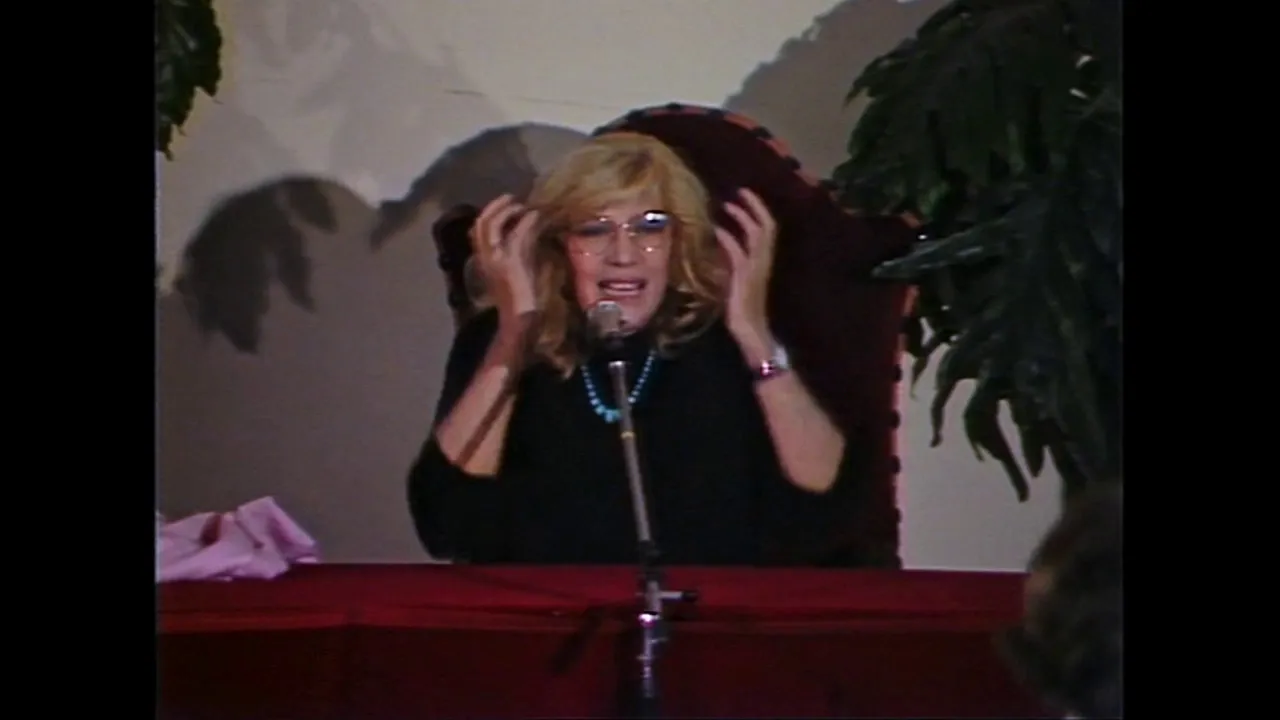
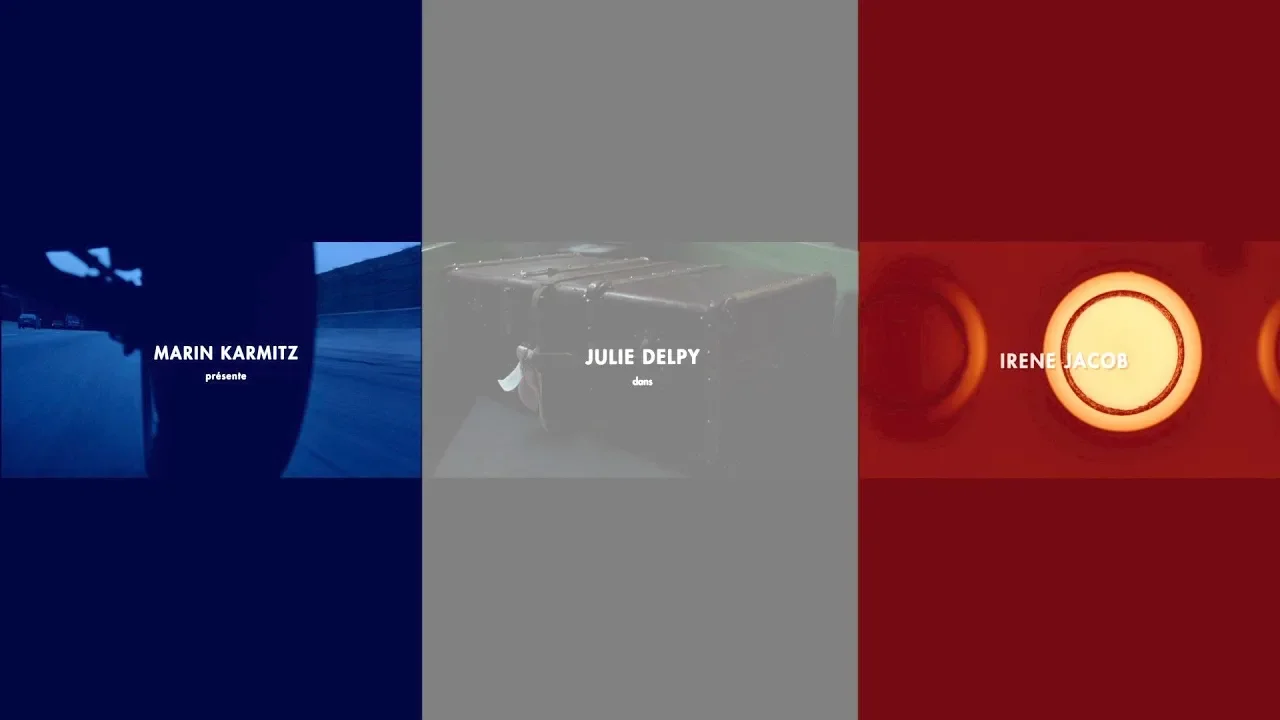
Krzysztof Kieślowski's Three Colors: Blue demonstrates how filmmakers use color symbolism, sound design, and cinematography to explore complex emotional states; the film employs recurring blue imagery and subjective sound techniques to convey protagonist Julie's grief and journey toward healing, illustrating how visual and auditory motifs can externalize internal psychological experiences in cinema.
Three Colors: Blue | Film Analysis & Grief | Crash Course
Added:Basic vocabulary of film analysis, including shot composition, camera movement, lighting, and editing techniques.
The fundamentals of color theory and color symbolism in visual art and literature.
An introductory understanding of the psychological stages of grief, trauma, and emotional detachment.
Familiarity with the thematic premise of Krzysztof Kieślowski's 'Three Colors' trilogy and its relationship to the French revolutionary ideals of liberty, equality, and fraternity.
Comparative analysis of 'Three Colors: White' and 'Three Colors: Red' to understand how the trilogy functions as a cohesive thematic unit.
Advanced study of film score composition, specifically how Zbigniew Preisner's diegetic and non-diegetic music drives the narrative of 'Blue'.
Exploration of European Art Cinema of the late 20th century, focusing on auteur theory and the works of directors like Andrei Tarkovsky and Ingmar Bergman.
Applied research on how modern directors use monochromatic color palettes and visual motifs to depict internal psychological states in contemporary cinema.
203.9K views5.9Klikes11:01Original Release: 2018-03-29
Films can do a great job of taking us inside the minds of characters.
Martin Scorsese burrows into the warped psyche of Robert De Niro’s vigilante in Taxi Driver.
In Safe, director Todd Haynes asks us to see the world through the eyes of Julianne Moore’s suburban housewife, who may or may not be going crazy.
And, of course, David Fincher’s Fight Club fractures a character’s mind so deeply that by the end we have to re-evaluate everything we’ve seen.
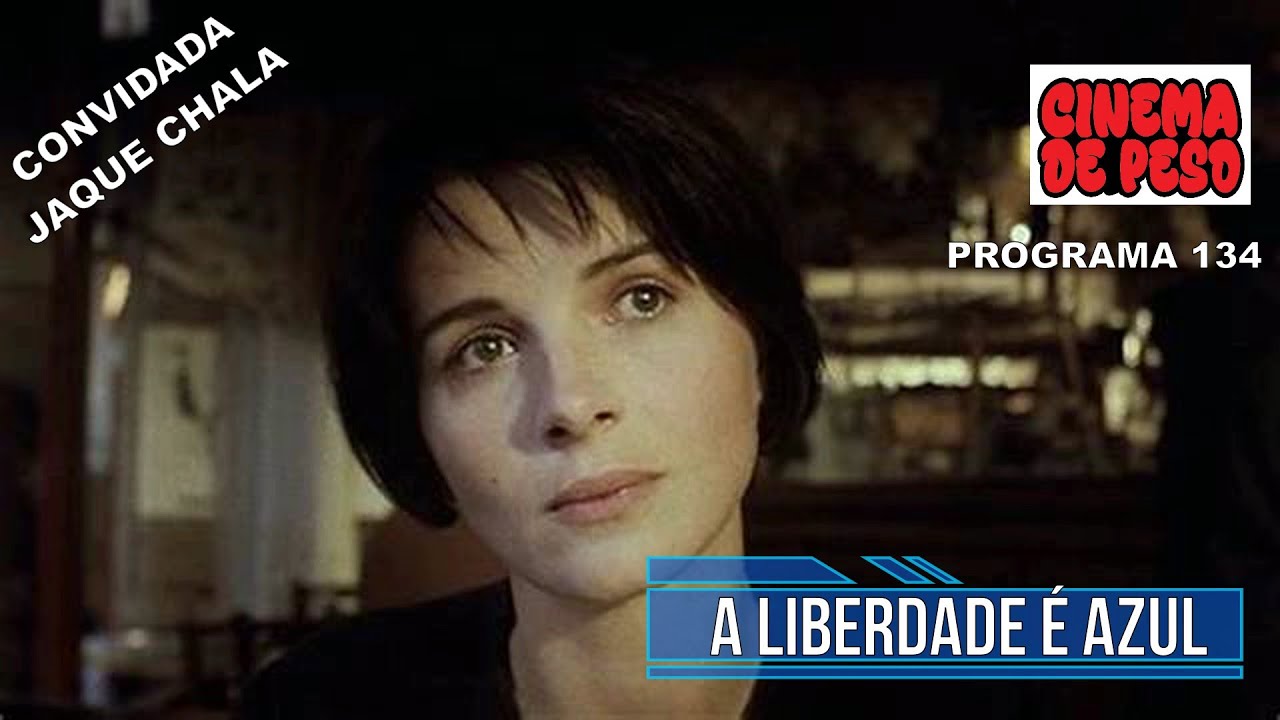
In 1993, the acclaimed Polish director Krzysztof Kieślowski released a film that explores the mental and emotional experience of a woman grieving her husband and young daughter.
It’s heavy material, but the filmmaking remains lyrical, expressive, and humane.
So let’s take a closer look at Krzysztof Kieślowski’s Blue.
[Intro Music Plays] [intro] Blue is actually the first film in a loose trilogy.
After making The Decalogue, a collection of ten short films inspired by the Ten Commandments, writer-director Krzysztof Kieslowski decided to make a series of feature films named after the three colors of the French flag.
He and co-writer Krzysztof Piesiewicz — and, yes, they’re both named Krzysztof — mistakenly believed that each color represented one of the three ideals of the French Revolution: liberty, equality, and fraternity.
They liked that framework so much that they stuck with it, even when they learned that the colors and the motto weren’t directly linked.
It didn’t matter much anyway, since Kieslowski wasn’t interested in making explicitly political films.
He’s a deeply humanist filmmaker, and all his films are notable for their patience, their emotional power, and their closely-observed characters.
The stories often examine how universal themes play out in the intimate moments and day-to-day lives of humans.
And Blue is Kieslowski’s movie about liberty.
He chose to focus on a character who, in the wake of a tragic accident, attempts to liberate herself from all ties to her past, her own desires, and even the world itself.
Juliette Binoche plays Julie, the protagonist.
Her husband, Patrice, and young daughter, Anna, are killed in a car accident within the first few minutes of the film.
The story then follows her attempts to go on without them.
And, at first, she almost chooses not to.
While recovering in the hospital from the accident, Julie tries to kill herself.
She stops, but we immediately understand the depth and power of her grief.
Back in the world, she resolves to strip all traces of her family from her life.
She just wants to exist, free from all attachments — physical, emotional, and spiritual.
She sells most of her possessions and puts her country estate on the market.
The only thing she keeps is a mobile made from blue crystals that hung in her daughter’s room.
She collects sheet music for an unfinished composition her husband was working on, and throws it into the jaws of a garbage truck.
And she moves to a nondescript apartment building with no children in it and finds a bit of peace in her solitary nighttime swims in the building’s pool.
Her isolation is almost complete.
And yet, the more she tries free herself from the past, the more it seems to grip her.
A boy who witnessed the crash tracks her down and attempts to return a necklace he took from the accident.
Caught off-guard, Julie appreciates the gesture, but tells him to keep it.
She doesn’t want another physical reminder of her family.
She’s also haunted by her husband’s unfinished symphony.
Pieces of it play over the soundtrack at emotional moments.
And sometimes Julie seems to hear it, as if it’s surging up from inside her own mind.
She also discovers Patrice has left behind a very tangible echo of himself.
He had been having a long-term affair, and his mistress is pregnant with his child.
As it becomes clear that Julie can’t actually free herself from her memories, she begins to wrestle with new ways to live in the world.
Reluctantly, she works to complete her husband’s symphony with his steadfast colleague Olivier, played by Benoît Régent.
She gives her country house to Patrice’s mistress, suggesting that her unborn child should have both Patrice’s name and his house.
And by the end of the film, she even seems open to a possible romantic relationship with Olivier.
Maybe.
Just maybe.
As the complete version of Patrice’s composition plays at the end of the film, we check in with each of our major characters, ending with a weeping Julie who gives a hint of a smile.
It’s one final indication that she might be healing, even if the hurt will never fully go away.
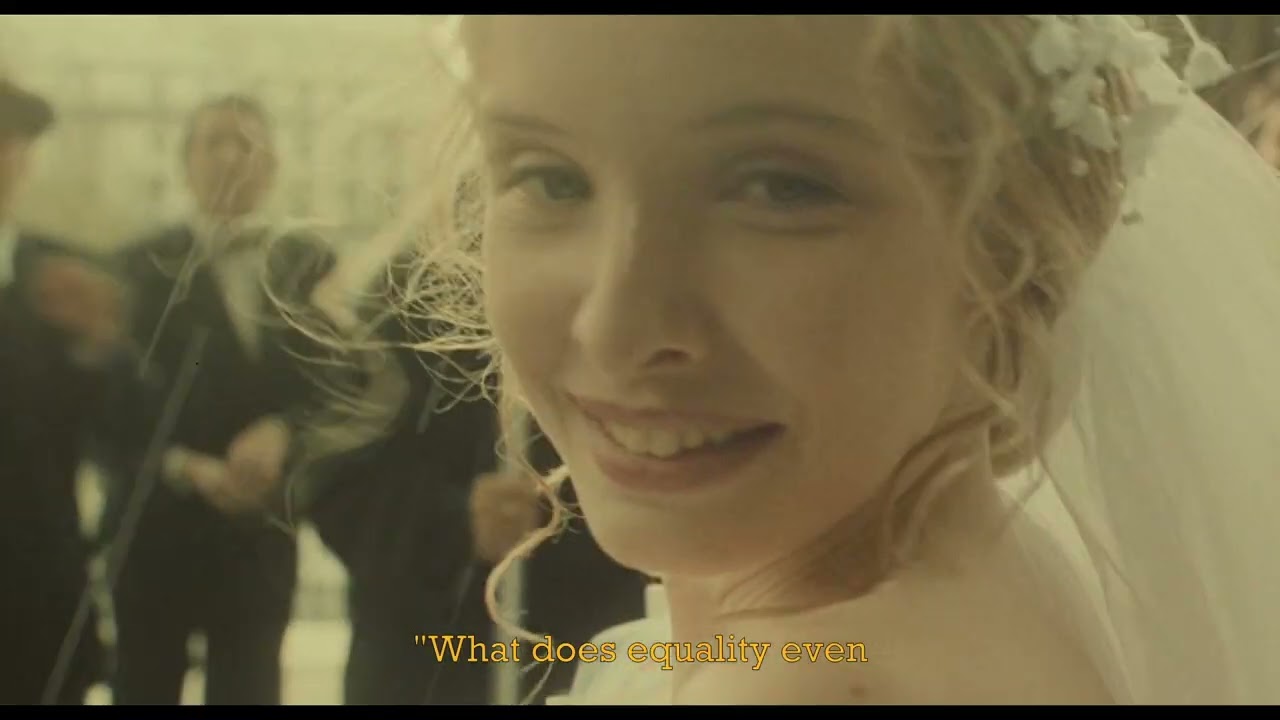
At the core of Blue is Binoche’s powerful performance as her character navigates grief.
She’s in every scene and rarely speaks more than a few lines at a time.
Kieślowski keeps the camera close to her face, tracking the emotions roiling inside her, from despair to tenderness.
And often she embodies more than one of those conflicting emotions at once.
In the scene where she confronts Patrice’s mistress, Binoche is somehow able to play Julie’s hurt and anger, but also her curiosity, determination, and maybe even envy.
She’s lost her child, and this stranger is carrying her husband’s unborn son!
Kieślowski and cinematographer Slawomir Idziak also flood the film with the color blue.
Not a huge surprise there… it’s in the title, after all.
And one way to critique a film is to analyze motifs that the filmmakers use again and again to try and understand some deeper meaning.
Whether it’s sunlight refracted through the blue mobile crystals, or the wavering hues of the swimming pool, the color seems to take on different meanings to match Julie’s emotions.
Writing in The New Review of Film, author and Kieślowski scholar Steven Woodward observes that despite the American association of blue with sorrow, the color is actually the least culturally defined of Kieślowski’s trilogy.
White commonly represents innocence, purity, and light, while red often signifies desire, heat, or anger.
But blue can be soothing or sad, distant or refreshing, scary or relaxing.
And that makes it the perfect color to illustrate Julie’s shifting emotions.
When she steps into Anna’s empty room, we discover its walls are all blue.
Overcome, Julie attacks the mobile, tearing off some of its crystals.
Here, blue is a prison, a stark reminder of what she’s lost.
Elsewhere, the color seems to haunt Julie.
Off-screen lights will inexplicably turn blue, making her look ghostly.
For some shots, Kieślowski and Idziak went so far as to wrap the entire camera in blue gels, which are those transparent filters used in lighting.
Beyond color, Kieślowski uses sound and music in sophisticated ways to give us a sense of Julie’s experience.
Most of the music in the film is non-diegetic.
That’s music added to the film to create meaning or heighten emotion, but it doesn’t have a source within the world of the film.
In other words, it’s music that the characters in the film can’t actually hear.
Even though we, the audience, do.
Kieślowski and composer Zbigniew Preisner play with the line between diegetic and non-diegetic sound to great effect.
When Julie first retrieves the score for her husband’s symphony, we hear pieces of the music.
And so does Julie.
Or at least she imagines it, and we get to listen into her imagination.
And when she throws the sheet music into the garbage truck, the song distorts as the trash compactor’s teeth tear the paper.
This extreme use of subjective sound puts us in Julie’s experience even more fully.
And the opening chords of Patrice’s symphony haunt Julie throughout the film.
In one early scene, Julie sits alone in a chair at night, shortly after watching her family’s funeral through a little TV set.
The opening beats of the symphony blare on the soundtrack as a bright blue light fills the room.
Julie looks almost directly at the camera with a vaguely terrified expression, watching us as we dolly away from her, and then back toward her.
Suddenly, Julie seems aware not only of the non-diegetic score, but also of the camera.
Are we inhabiting Patrice’s or Anna’s ghost, back from the dead to spook her?
Or are we her grief, threatening to overwhelm her?
Some critics have argued that this scene actually depicts Julie’s call to action.
It’s the first indication that her salvation will come through helping Olivier finish the symphony.
By the time she finally agrees to work on the composition at the end of the film, we can even think of the symphony as a metaphor for Julie herself.
Just like her, it’s a bit of a mess.
And only by bringing it to life is Julie able to find some measure of peace.
When she first starts working on the composition, Kieślowski gives us a close-up of the notes on the page.
As Julie’s finger moves along them, we hear the music indicated by the notes.
Then she starts suggesting changes and we hear the new musical arrangement.
It’s a remarkable moment that plays beautifully with this gap between diegetic and non-diegetic sound, as we hear the score that Julie imagines.
Not only that, we hear it getting better at the same time that Julie herself is getting better.
Georgina Evans, a film scholar at the University of Cambridge, has a unique reading of Blue that explores the film’s intense identification with Julie’s subjective experience.
Evans suggests that maybe Julie experiences synesthesia, a “neural condition in which a stimulus to one sense produces a response in one or more others.” In other words, maybe Julie sees music and hears color.
So when the symphony plays over emotional moments, or when a new shade of blue washes over her face, perhaps that’s how Julie processes the world around her.
This interpretation may also give new meaning to one of the most interesting shots near the end of the film.
When Julie finally gives in and helps Olivier complete the symphony, the sequence ends with a wide shot of them that goes out of focus, and then stays that way for a long time.
We hear Julie and Olivier, but we only see them as fuzzy shapes deep within the frame.
It’s as if Julie needs enter some sort of blurry mental state and let her senses fully merge in order to create.
Finally, it’s worth noting that this film links Julie to the music in a very literal way.
Music doesn’t really exist with only one note.
As a karaoke singing demon once said... Lorne: It's like a song. Now, I can hold a note for a long time.
Lorne: Actually, I can hold a note forever.
Lorne: But, eventually, that's just noise. It's the change we're listening for.
Lorne: The note coming after and the one after that. That's what makes it music.
And the same is true here.
Julie suffers, as a single person — or note — in isolation.
But as she collaborates on the symphony and connects with more people, more notes and more variations of those notes appear.
The score grows right along with Julie.
So Blue could be about isolation as a coping mechanism for grief, the ability of music to save us, or even a woman whose senses are scrambled.
Anchored by one of the great performances of the end of the 20th century, this film uses camera, lighting, and sound to tell a difficult story with compassion and resonance.
Next time, we’ll trade Paris for Mongolia to witness a real teenage girl’s attempt to master an ancient tradition and bear the title Eagle Huntress.
Crash Course Film Production is produced in association with PBS Digital Studios.
You can head over to their channel to check out a playlist of their latest amazing shows, like Origin of Everything, Deep Look, and Eons.
This episode of Crash Course was filmed in the Doctor Cheryl C. Kinney Crash Course Studio with the help of these nice people and our amazing graphics team is Thought Cafe.
Up Next

17:27
Diegetic vs Non-Diegetic Sound: Film Sound Design Explained
@StudioBinder
322.4K views•2022-11-07

23:14
Visual Analysis Essay: How to Analyze Graphic Novels in College Writing
@nataliepleimann5941
1K views•2020-10-14
12:06
Melodrama in 19th-Century Theater: Origins & Impact
@crashcourse
227.5K views•2018-09-07

4:00
Evolution of Darth Vader: Anakin Skywalker's Animated Journey Across Star Wars Films
@TellItAnimated
13.4M views•2019-03-30
Related Study Plans & Knowledge Roadmaps
Structured learning paths in Film Analysis
film-analysis
Sensory Cinema: Foley, Haptic Sound & Texture
01Introduction to Film Sound and Foley Artistry
02Micro-Sounds, Textures, and Extreme Amplification
03Haptic Audition and Film Phenomenology
+ 1 more learning modules
12h4 modules
Explore Roadmap
film-analysis
Breaking the Fourth Wall: Mockumentary & Satire
01The Invisible Wall: Basics of Cinematic Illusion
02Looking at the Lens: Direct Address & Character Glances
03The Mockumentary: Satire, Realism, and Complicity
+ 2 more learning modules
12h5 modules
Explore Roadmap
film-analysis
Analyzing the Long Take: Cinema, Space & Ethics
01Foundations of Film Grammar: Montage vs. The Long Take
02Choreography and Mechanics of the Simulated One-Shot
03Phenomenology of Film: Real-Time Spatial Continuity
+ 1 more learning modules
14h4 modules
Explore Roadmap
film-analysis
Anachronistic Music: Period Drama & Subversion
01Foundations of Film Sound and the 'Needle Drop'
02Traditional Authenticity vs. Revisionist History
03The Rise of the Anachronistic Soundtrack
+ 2 more learning modules
12h5 modules
Explore Roadmap