

















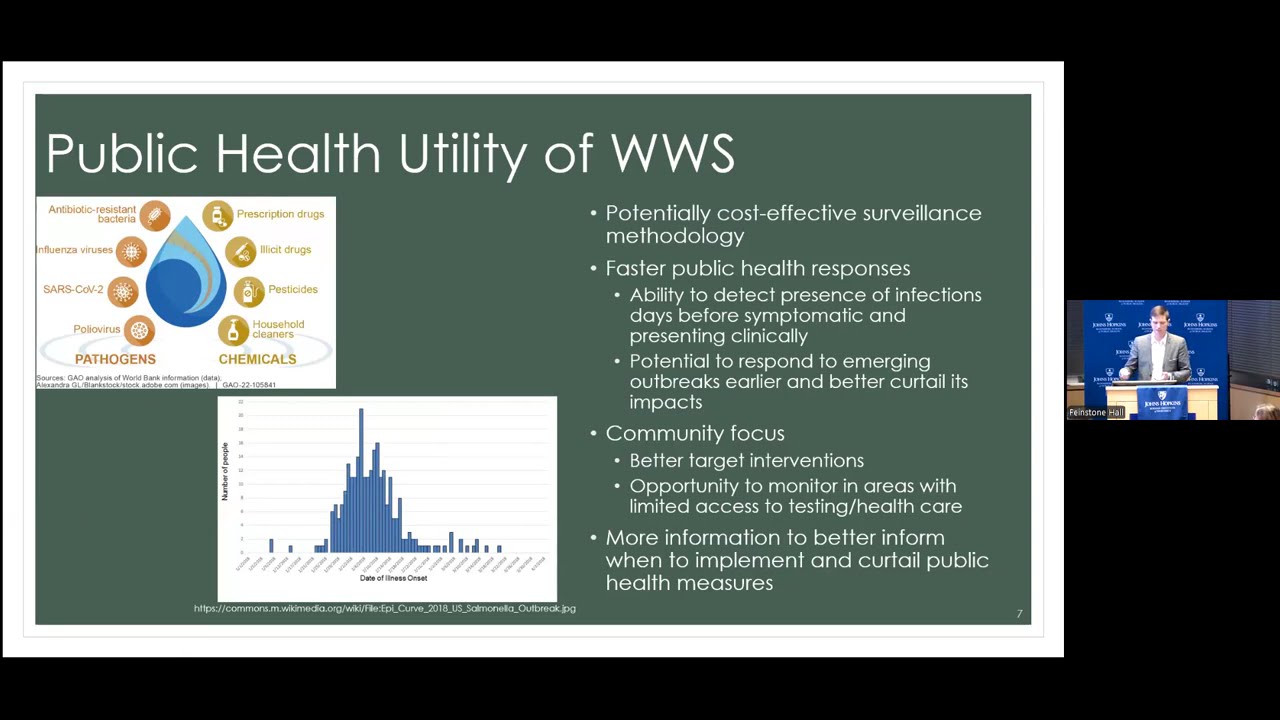










Wastewater surveillance is a public health monitoring technique that analyzes sewage samples to detect the presence of viruses and pathogens, allowing health officials to track disease outbreaks and predict future surges before individual cases are reported. This method has been used to monitor both SARS-CoV-2 (COVID-19) and monkeypox, with researchers collecting samples from entire communities to detect viral genetic material. The technique provides a population-level view of disease spread that can complement traditional case-based reporting systems.
The Water Crisis: A Living Study of Infrastructure Attacks
Added:Fundamentals of municipal water supply and wastewater treatment system operations.
Basic concepts of Industrial Control Systems (ICS) and SCADA systems used in utility management.
An introduction to public health epidemiology and the concept of wastewater-based epidemiology (WBE).
Elementary cybersecurity principles, including threat vectors like malware and unauthorized network access.
Advanced cybersecurity frameworks and zero-trust architectures for Industrial Control Systems (ICS).
The legal, ethical, and privacy implications of genetic and chemical surveillance in public wastewater systems.
National security policies and international regulations governing critical infrastructure protection (CIP).
Resilience engineering strategies for municipal water systems to withstand physical and hybrid warfare tactics.
15.9K views1.6Klikes1:06:42Original Release: 2022-08-18
i've got one that can see logic before authority hi guys this is daniel alexander cannon here on logic before authority well they're going after the water in this study we're going to take a look at that and i've called it the water a living study and monitoring of the attack on water reason i named it a living study is because i'm going to continue to add to this presentation to this slide show over time and uh so that we'll have a history these slides will be here at least fairly permanently and as i add to this story as we continue to watch this over time all those previous times will be still here for instance i've got this one dated august the 12th 2022 which is close enough and what i would do is i will add slides above this in the future so you'll always be able to reference back and i make these available on i'll be putting them on my patreon and i also shared this one particularly uh on my community page uh here on youtube as well if you're not familiar with the community page look for it there click on uh the tabs the different tabs you'll see one called a community page it's where i communicate with y'all guys outside of videos at least on youtube anyways okay so let's move on with this this study okay and i did mention one thing there is wormwood question mark and uh we'll see okay let's start this out we're talking about the water and this is gonna go much deeper than just talking about the hoover dam um this well all y'all guys can see who that is and you can see basically where they're looking right they're looking over there and where is that well it's the same spot where the transformer uh supposedly blew up right yeah very strange you know you see uh the reason why i say it's strange is you see how this these these water pipes up here are installed that are spraying on top of the equipment here okay the water pipes notice that there are no water pipes down here to spray on anything else just this one like it was they knew it was gonna blow up but i'm sure that's just a coincidence of obama going there and staring at the dam now i want you to notice and i'll tell you why later notice obama's dress he's wearing khaki pants right okay well we'll come back to that did you know that this was at the hoover dam this is the freemason symbol see it coming down here come down here and then this one across like that okay i could get into explaining to you what this means but i've talked about it in previous videos so i'm not gonna do it right now these this is one of the statues that you see there you don't think they're exalting themselves as gods or above human do you nah this is also located there and i wanted to show you this as part of this complete presentation secrecy over condition of u.s dams tied to security concerns missing data this was may 9th of 2022 okay says americans wondering whether a nearby dam could be dangerous can look up the condition and hazard ratings of tens of thousands of dams nationwide using an online database ran by the federal government but they won't find the condition of hoover dam which impounds one of the nation's largest reservoirs on the border of nevada and arizona nor is there any condition listed for californians orville dam the country's tallest which underwent a one billion dollar makeover or preparatory uh setup you might say after its spillway failed so hoover dam and bam just happened to be two dams that you cannot get any information now i i'll tell you why i'll show you why what they say here in a minute as to why they will not give us information onto the con as to the condition of the hoover dam or oroville dam okay it also mentions garrison dam which constrains the missouri river in north dakota to form one of the nation's largest reservoirs it's described that in the database as safe but high risk the courts say the dam's failure could trigger a cascading failure of downstream dams meaning one failure would run into the next one which would be another failure and so on right and uh instead resulting in swift deep and life-threatening flooding for numerous communities now some of you are wondering why i'm talking about the hoover dam damn conditions and and some of you are not wondering because you already understand okay now i'm just gonna read the bottom part of this okay says for much of the past couple of decades the u.s army corp of engine engineers declined to reveal the conditions of dams in the national inventory of dams which it maintains so why they're not telling us about hoover dam's condition or why you know for oroville well it says a citing security concerns still mean from the september one one two zero zero one uh and you can see that word you know that what went on that day so the reason they're not listing the condition and what's been done in the maintenance and things like that for these dams is because of what happened in new york okay what does that say to you all right let's continue on getting a little bit even more serious about the water here this is a this is not good um but you need to be aware of it and that's what i'm doing is making you aware of this because it can and will affect your life in the life of your children and the people around you if you do not listen to this by an administration launches usda epa partnership to provide wastewater sanitation to underserved communities you know because they love you and want to make sure that you have water historic funding from president biden's bipartisan meaning both sides went for it infrastructure law will help address lack of basic wastewater infrastructure in rural america yep they're coming for your water those are you own whales and things like that well they're coming for your water they want to make sure you have city water and they're going to bring it to you uh let's see how much of this do i want to read um well let me go and read august 2nd 2022 today an event in uh loundes county alabama where a significant number of residents lack access to waste water infrastructure the us department of agriculture and the u.s environmental protection agency you know enemies of the people uh announced the uh did i say that out loud i was just thinking and i didn't mean to say it out loud um announce the closing america's wastewater access gap community initiative closing america's web hmm so they're closing you get it right you can read between the lines now can't you the new initiative will be piloted in 11 communities across the country where residents lack basic wastewater management meaning they want to get your sewage and they want to give you your water and there's reasons for both which i'll get into uh waste water management that is essential to protecting the health and the environment you see they want to make sure you're safe and healthy yep let's go to the next one under the leadership of biden harris administration usda believes hard-working people in america small towns and rural communities should have the water delivered to the house that's coming from the wastewater plant they need to be healthy and to provide for their families we recognize that there are still people who have been going without the basics said uh agriculture secretary tom vosick access to modern reliable wastewater infrastructure is a necessity and the biden harris administration is committed to doing everything we can to ensure every family and every child in america has access to their poison water i mean gosh these things i'm thinking just keep popping out of my mouth instead of me filtering the truth oh that's right i'm not supposed to filter the truth okay no let's keep going by combining usda and epa resources and taking advantage of this historical bipartisan infrastructure law we can restore these communities to a sense of economic vitality and social dignity that the people living there deserve by delivering new water that they put anything they want to in it they can restore these communities to economic vitality and social dignity can you smell when you hear it i hope you can epa administrator michael s reagan added the america that we all believe in is a land of opportunity but for historically marginalized communities from alabama to alaska the opportunity is stolen when the basic sanitation doesn't work does a bear crap in the woods exposing adults and children to backyard sewage and disease i grew up in this when i was a child and it almost killed me not it didn't by partnering with the usda and leveraging funding through the bipartisan bipartisan meaning left and right wings of the same bird voted for this infrastructure law it's funny how when it comes out to all that big money and all these big plans both sides always agree yep epa is working to restore dignity and opportunity to rural communities here in alabama and around the country the white house infrastructure coordinator mitch laundry said president biden has been clear and of course we all know he's not clear on anything we cannot leave any community behind as we rebuild america's infrastructure with bipartisan infrastructure law this includes royal and tribal communities oh indian tribal communities are coming after you too if you're breathing they want in on your water who for too long have felt forgotten no the tribal communities have for too long felt like a a peaceful people that have been destroyed murdered genocided but nobody came to their rescue did they now they're coming after us who's gonna come out who's gonna come to our rescue oh i know who some of you think i know who some of you think uh let's see here uh the bipartisan infrastructure law provided 11.7 billion in loans and grants to communities for a wide range of water quality infrastructure projects including wastewater solutions an estimated 2.2 million people in the united states lack basic running water and indoor plumbing many more live with the wastewater infrastructure that is ineffective and puts people's health at risk oh my god they do love us they do love us uh no they don't many more live with wastewater infrastructure that is ineffective meaning that not getting the job done that they want done and puts people's health at risk yes it's called having good health versus genocide the closing america's wastewater access gap community initiative will help communities access financing and technical assistance to improve the wastewater infrastructure to close the gap see right here close the gap close the gap mathematically is 666.
and here's all the first towns they're going after first communities that they're going after under the biden harris administration role development provides loans and grants to help other economic opportunities create jobs and improve the quality of life for millions man it's amazing they're so [Music] in love with taking care of us in rural areas the assistant supports infrastructure improvements business development housing community facilities such as schools aka indoctrination centers public safety meaning cops robbing you and pulling you over and demanding money from you while they got their hand on their gun and health care you know where they're pumping things into your bodies like pharmakia pharmakia in scripture is a sin get off of it and high speed internet you know internet the net for your mind the web the web the net the internet the web for your mind access in rural travel in high poverty areas okay let's see is there a reason i wanted to read the last part down here i don't think so then here's an article from the uc san diego health you see san diego researchers add this thing to waste water surveillance you see they've already been monitoring the waste water for their covalent yeah they've already been monitoring that says the v word first detected in mid-july with levels rising steadily ever since of this first detected in mid-july rising ever since but whether data can be used to predict future case surges is an evolving question an ongoing program that monitors wastewater for the presence of s-a-r-s-c-o you know and which has effectively predicted subsequent surges in that thing there cases in san diego have been expanded to detect the president's the presence of the monkey yeah and guess what they're using the same tests to test for this as for this and the p-o-l-o or p-o-l-o yeah something like that can you imagine that since the first confirmed case of that of the monkey in california in late may reported cases have risen steadily risen in the state and across the country now up to almost 100 in san diego county and more than 1300 in uh california a on august 1st 2022 the state declared a public health emergency san diego county followed suit the next day on august 4th the federal public health emergency was declared with more than 7 000 cases of the monkey it is just the fifth such national emergency since 2000 you know when they when the buildings blew up two airplanes and three hot skyscrapers fell down and said again two airplanes hit two buildings and three buildings fell down that were three separate buildings one of them was a block away thing was called building seven 47 stories tall 47.
that's an interesting number and it'll come back into this video because it was a warning not only the other two buildings but building 7 47 stories tall was a warning 47. you'll hear it again in a minute let's hope my recorder is still working am i still working i think i am okay good all right let's keep going says monitoring testing for the monkey v is a relatively simple add-on to the current wastewater surveillance program for the cove said rob knight and director of the center of micro biome innovative innovation at university of california san diego but with a twist it's the same process as the cove monitoring except that we have been testing for a different uh v the monkey is a dna virus so it is a bit of a surprise that our process optimized for the cove it's a surprise wow just can you believe it which is an already it works so well and the other one too the polo that they found in new york it's the same test too and they're testing all the water around the country but are they just testing are they just testing think you should know the answer to that question they say they get less than basically a cup full of crap that comes from an entire city and they can tell every person in the city whether anybody's sick with any of these things right from a cup they explain and they show these things because they know also that anyone who is not completely asleep will see that this is absolute bs this is why they do it i want to point out they also called uh the thing they're doing the expedited cove identification environment they caught they've named it excite okay just so you know and also put in here where all this funding is coming from which is coming from the the cdc man they got a lot of money excited one of you guys john john gibson that may or may not be his real name i don't know but i appreciate your comment he said uh down here in florida all of the weld reelers were told in 2018 that they have to report all wells drilled even on private properties by 2023.
this is in florida you know the the exodus state where people are going to they're running to florida you know that big sandbar that runs out there is exposed on three sides by oceans and there's only one road basically or two roads out of there to the north better hope that nothing ever happens where all these people are trapped down there it is the perfect state to set it up to get all of the patriots the true patriots to run to florida because that's what's happening and run to florida to escape because desantis is down there he's going to save everybody he's making he's he's not following like what they want to do do i have to tell you what all politicians are politics poly is multiple ticks are bloodsuckers politicians are professional bloodsuckers you think they named it that by accident or do you think they were telling us the truth in the word thanks john for letting everybody know says the state is saying that they're going to gps their work trucks starting next year to see what's happening these were these are some more headlines around this the p-o-l-o was detected in new york just a couple days ago uh it's been taken to new york yep yep uh yes uh wastewater is trying to tell us something about the future of this that and the next pandemic to come like they know there's the next one i mean we got three right now right got the cove we got the monkey and we got the apollo or the p-o-l-o right uh-huh it says the polo was found in new york wastewater these are urged the vs are urged it's going to save you from all this the same these in the same wastewater and the the same tests anybody with simple common sense knows there's something wrong here simple understanding of life and how this world works newport received 6.1 million for wastewater facility upgrade great great great essential utilities pennsylvania subsidiary acquires anyways they're redoing their their water stuff the bad administration wants to launch is a big partnership like i just told you about and now we're going to get into something that's going to get me more people to unsubscribe from my channel one day there's going to be nothing left here but people actually understand the truth last time i did a video about this person that's human i guess um i had more people unsubscribe than i had subscribed which i mostly don't get people subscribing because my channel is shadow band why do you think it's shadow band why do you think i've been shadow band for five years let me explain to you what they're doing here says i'm at the raid passports they went in and they took a bunch of papers do you think national secrets are kept on paper documents so that it could be stolen do you think they print this stuff out and save it in their safe okay neither here nor there with that what they are doing is they're trying to anyone that believes that this man is their savior they know that those persons will take it personal with these so-called attacks that are not attacks but they know that the people will take it personal you know how i know this because i've seen it in some people around me they take it personal makes them fight mad that they did this to their savior or their believed savior i hope you can see that you see we're going to kind of transition in here a little bit into into some other information trump was president number 45 right he's 45 and we'll also be 47 47 yeah 47 47 from 2024 to 2028 and i told you this about three years ago that he would serve as eight years as a president or at least close to it give or take a few months days depending on how certain prediction plays out that's the prediction down here but i'm going to show you closer here in a moment and if you think i'm silly watch what i got to show you here and then tell me if i'm still silly trump will be the final u.s president he sees himself in the image of abaddon riding a white horse you know how i know this because in his penthouse on the 66th floor of the tip of the spear hotel he has in new york city you know trump tower um in there i put out a video just a few weeks ago showing you that he has a statue of apollyon or abaddon on his coffee table and on the ceiling above it he has a mural on the ceiling of uh of apollyon and a white horse and he has a painting on the wall in that same room of apollyon or abaddon on a white horse flying above it as an angel he believes he is abaddon and the truth is right there in that a bad dawn riding a white horse 47 is the number of perfection is a number of perfection and completion and is the key number associated with freemasonry and squaring a cornerstone on anything that is built they call it the 47th problem of euclid the squaring the beginning of cube worship we'll get more into that but let's take a look at this card closer here this card was printed it was out of a a card playing game it was called the illuminati card playing game it was produced by steve jackson games and printed in 1995.
the majority of the cards a lot of them have come true uh to this point for instance they were printed in 95 one of the cards was a card showing people going into post offices and shooting up the post offices hence going postal the cards were printed in 95 96 was the first year that someone went into a post office that worked there and went postal and the cards go on and on and on showing like the towers coming down the pentagon being blown up showing everything that's going on right now the cdc the lockdowns all of it and this card is one card in there now let's look closely at this card let's see what i think on my next thing here now what this card here see this is this is an image of trump you know yelling with his mouth open like you see in so many images of trump with his big old bushy eyebrows and everything this is trump and it says enough is enough okay and we're going to take a little closer look at this part right here because we want to see if it if there's anything else on this card that tells us is the it's about the timing is right it's about now are people shouting enough is enough yet are they okay now here's the image now we know the cove is and the images of the thing that they say looks like a crown right do you see any of them right here like here all these up here over here down here it's all image images of what they claim is the v right right on the card that was printed in 1995 within trump's image located in here him yelling and it says on the card at any time at any place our stoppers can drop you have a nice day now what's what is the subject line and the script of the movie that we're currently watching play out right now the stage act that we're watching what is the the script playing into right now what was it showing it's showing attacks on this man right and what is th for the first time their first actually mentioning in some of the news reports they're using the word assassination they're saying that that people are going so far at this point in attacking things that they're concerned for that they might actually assassinate mr t yeah look it up that is being said and here we have this i'm not going to call it a prophecy it's a forewarning it's predictive programming and let's read on what it says here it says play this card on your own turn before drawing any plots you may remove all that paralysis or attribute freeze cards that are that are uh affecting your power structure however preoccupied with your house cleaning you may draw no plots this turn so what it's saying here is that no matter what's going on if you play this card it's it removes all paralysis all freeze cards all zap cards in this game and allows for the ultimate uh goal to be achieved which is where it's referring to the however preoccupied with your house cleaning are they cleaning the house right now this is this card is predicting that someone is going to be assassinated i've went backwards and forth as to whether this is him that's going to be or whether it's the current uh whatever you want to call that man with the b man the guy that's biden time until this man comes back [Music] is it in the news right now people doing this talking about this enough is enough with and they're talking about guns enough is enough uptick in juvenile crime gun violence oops went too far i think there's tons of this out there right now enough is enough anaheim's edison community murder shootings and things going on and all of this is half of these things probably don't even really happen but some of them do because revelation 6 before horses the red horse says he will cause them to kill each other are the people divided over what's going on with this man are the people angry and really thinking about crazy things in their head a little bit like i wish i could stop this they're attacking my savior are they angry could they be easily provoked into doing something absolutely they could now i want you to remember and don't forget that this man is the same man that brought us this and this is still on the government websites you can go there this is all still there what you're looking at is operation warp speed this is a well i'll just read you what i wrote made in the image of a magic circle four stars on each side for a total of eight stars which eight is trump's number trump in mathematical gematria is 88 it equals 88.
donald j trump equals 888.
trump had 88 campaign stops trump had 88 campaign offices this was for the 2016 election trump had 88 generals come out and say he was a great guy trump's mother i believe it was died at 88.
um first time ever trump ever spoke about maybe running for president was in 1988 the the list goes on for a whole nother page of how this man is associated with the eight okay inside the second circle there are five stars that they are symbolically using warp speed to cut time short to get to the goal of the fourth beast the fourth beast the fourth beast of daniel is the fourth industrial revolution the great reset the mixing of clay with iron did you know that your human body is made up mostly of silicilla some people call it silicone when they make stuff for computers it's the mixing of what they use to make computers and what animals and humans are made of cila okay that's the clay and they're trying to mix that they're putting it in you via you know how operation warp speed and the stingers that are on the locusts the five stars stand for the 500 year empire or either you make it say the 500 year rise of the phoenix as well as the transhumanist agenda agenda being achieved via mrna dna altering methods the borg cube also symbolizes see this cube right here it's called warp speed this is from a nod to star trek right with the borg they were half human half cilla meaning computer parts the board cube also rip symbolizes the transhumanist agenda as well as the image of the beast and the uh geometry of the 47th problem of euclid the squaring the cube now here's a question for you what would anger god the most altering his codes aka his dna of humans or even animals that's number one and number two is copying god aka images of anything in heaven they're doing both they're doing both right now this for those of you that never seen star trek and don't know what the borg is this is an image of the cube borg and if you look all around this world you will find these black cubes like in new york city like at the vatican like in rome like in uh mecca they have a really big giant black cube in mecca and these are the half cila half man half machine borg people see this is a nod to what they are going to do to some of us no it might not look exactly like this but it will be like this and i do not want you to forget this man is who took credit for this and started the v summit and the operation warp speed don't forget this is not your savior here are the mathematics for operation warp speed okay 220 which is tied to the cube 1600 is as well then we have the exact same mathematics for operation warp speed we have the the c v plan dimmick i'm just not saying it the way it actually it's spelled correctly here c-o-r-o-n the v and then p-a-n-d emic right we reckon the coincidence that the mathematics of this are exactly the same also happens to be that revelation 13 is exactly the same the beast coming out of the sea this is that this was they supposedly took it down and moved it somewhere this was out front of the u.n united nations see the cubes in the feathers cubes within a cube see them cubes [Music] feet like a bear body like a leopard kind of thing [Music] why don't we take a look and read this let me have a little sip of water that was loud revelation 13 and i stood upon the sand of the sea and saw a beast rise up out of the sea having seven heads and ten horns and upon his horns ten crowns and upon his heads the name of blasphemy and the beast which i saw was like unto a leopard and his feet were as the feet of a bear and his mouth as the mouth of a lion and the dragon gave him his power and his seat and great authority and i saw one of his heads as if it were wounded to death and his deadly wound was healed and all the world wandered after the beast and they worshipped the dragon which gave power unto the beast and they worshipped the beast saying who is like unto the beast who is able to make war with him and there was given him a mouth speaking great great great great things and blasphemies and power was given unto him to continue forty and two months and he opened his mouth and blasphemy against god to blaspheme his name and his tabernacle which is you and them that dwell in heaven and it was given unto him to make war with the saints which is you and to overcome them and power was given him to over all kindreds and tongues and nations and all that dwell upon the earth shall worship him whose names are not written in the book of life of the lamb slain from the foundation of the world but that's you whose name is written in the book of life if any man have an ear let him hear he that leadeth into captivity shall go into captivity he that killeth with the sword must be killed with the sword he is here is the patience and the faith of the saints because if you know these things you will not participate in these things you will be an observer you will observe and you will make uh educated logical decisions about yourself and your life and your family and you will not fall by the sword or you will not go into captivity and i beheld another beast coming up out of the earth the earth meaning the cilla which is the majority content of the soil and of your body and he had two horns like a lamb and he spanked like a dragon and he exerciseth all the power of the first beast before him and caused the earth and them which dwelleth therein to worship the first beast whose deadly wound was healed and he doeth great great great wonders that he maketh fire come down from the heaven on the earth inside of men now there should be nobody here that does not understand what they are seeing when they see the things in the heavens the fire coming down from the heavens the what people like to call ufos and things like that that light up in the heavens you should know this because this has been explained in great depth on this channel through my work there are angels and deities some are good and some are bad when you see the stars falling those are the angels and the deities moving through the heavens engaging sometimes in battles 14 and to see them that dwell on the earth by the means of those miracles but we are not deceived which he had the power to do in the sight of the beast saying to them that dwell on the earth that they should make an image to the beast which had the wound by the sword and did live and he had power to give life unto the image of the beast that the image of the beast should both speak that the image of the beast should both speak and cause that as many as would not worship the image of the beast should be killed then say they would be killed and he calls us all both small and great rich and poor free and bond to receive a mark in their right hand or in their foreheads there should be nobody here on this channel either that does not know what the forehead is the spot right between your eyes that if you look up that location in your forehead you will find that you have something called a crystal galley there the crysta galli if you define those words and understand what it means you understand that god exists within us behind the veil in our foreheads near the crystal galley the galleys where everybody hangs out or where something hangs out and in this case it's christ the crystal galley 17 and that no man might buy or sell save he that had the mark or the name of the beast or the number of his name now how are they making all this come through they're doing it using scilla silicone chips to make cell phones to make all these things that allow the image of the beast to even speak does your cellular speak to you 18 here is wisdom let him that hath understanding count the number of the beast for it is the number of a man and his number is 600.
threescore and six there should be also no one here that does not know what six hundred when you start looking into the definition in greek what 603 score and 6 when you look into it you will find that 600 even though it is a number it is also a thing and the definition is a stick a prick a scar of servitude and what image does it show that as the letter x the most simplest form of the mark of the beast a few final important messages for this presentation this is a comment that i want to respond on here because it benefits everyone omega z said the question that boggles me is what a what is the point of survival if everything goes fully dystopian and i am one of the few survivors is life even worth living then how long can i survive and for what reason if life isn't worth living then anyways you may be prepared well again and you most likely i don't know why he called me ken maybe he was responding to somebody else and you maybe may most likely survive just to live for 10 or 15 more years in a dystopian hill unlikely to reproduce i mean it's a natural instinct to want to survive but seriously what is the point if it is not worth it anyways please don't take this personal it's just what goes through my mind when thinking about what's to come and omega's easy whoever you are my brother or sister i completely understand how you feel and it took time for me to understand this as well and here's my response you are missing the point of living it is to learn and gain knowledge to face challenge and defeated you will not be presented with a challenge that you cannot with proper choice defeat it this is about growing your principles and your ability to see and know what evil is also man throughout history has not had all the bs things we have now which is the fourth industrial revolution aka the fourth beast of the book of daniel we can happily we can live happily on the land by the land without outside help what do you think you are losing excuse me what you think you are losing is not worth having you see there is no material good on this planet of magazine that is worth your soul we were put here for this experience and when father sees it right he will take you whenever that may be but you are here in this class for a reason and you're here to learn you're here to grow principles you're here to learn the truth and in order for us to learn the ultimate truths we're going to have to move ahead in our life and experience what god has said in our path because he is the one that chooses but we have the decision and the choices we have to make in order to go through this don't we and you do this by educating yourself and i'm trying to do that uh help with that right now okay i love you and our father in heaven loves you thank you for your comment a couple other things here i've seen this and i shared it on my community page but i wanted to read it it says i'm so proud of you and you and you know who you are which is most of everybody who's listening to my voice right now if you understand what's going on and didn't take the poison you have survived the greatest psychological warfare in human history and it's not only i would say psychological because it can become physical if you had taken the poison but it says do you realize how much time resources money and effort they put into this they have tried to manipulate brainwash and force you they have been trying to scare you attempted to make you feel guilty they tried to bribe you with gifts they tried to confuse you to question your reality and also your own sanity they tried to make you abandon your principles your morals and your values they even managed to turn your loved ones and friends against you almost all of them and almost everyone fell for it but not you the saint you never gave up on yourself you stood up for yourself against all odds and persevered stay that way i don't know who wrote that but i pretty much agree with it 100 and i am so proud to have been able to be here for y'all guys through all this time and no i haven't always made all the right decisions or all the right calls on things but i've done my best and i'll continue to here's a couple things i wrote i just want to share with you okay it says how do how do you meaning me know these things you say to us you may ask if my job were to stand atop a mountain and i could see the enemy coming would you want me to blow the shofar meaning you know to warn you yes right you would of course but what mountain do i stand on to see these things so clearly i stand on 12 plus years of dedicated research study and prayer seven days a week every day all day and upon a lifetime of being an observer of this world i watch not what they say but what they do you don't listen to what these guys say because they're they're lies and they speak out so both sides of their mouth but if you watch what they do you can see the truth i stand upon the truth and the word of god which is truth and i would like to thank all of you guys personally thank you to every person every human every everybody that has viewed my videos shared my work donated to my work for my work is not mine it's god's work god's truth that you are supporting not mine i am simply a messenger for our father in heaven when you see my work thank god not me my rewards are in heaven awaiting my arrival another thing i want to share with you is something about thumbing videos up or down when you're watching videos it is similar to voting remember when you thumb a video up you are consenting to its content be an observer only and do not thumb videos up or down unless you truly consent and place your personal approval and have true understanding of the content when you vote for the next poly petition which i've already explained multiple bloodsuckers you will be consenting and agreeing to anything that they may be that they may do or will do just be an observer and watch watch what they do and watch their hands i realize this may cause my brothers and sisters to not thumb my videos up or down if that is the case then so be it i'm not looking for approval or validation to begin with my rewards await me in heaven given to me by my judge and yours god almighty you see my name daniel means in hebrew god is my judge it's interesting a little story and then i'm going to let you go years ago probably 15 years ago i had a tattoo put on my back i know i know but i had a tattoo put on my back the tattoo says only god will judge me it's from shoulder to shoulder on my back in large letters only god will judge me i did not know at that time that my name daniel meant god is my judge which is virtually the same as only god will judge me but it is and i found out later like a couple of years later so many ways and times and spots and places i can look back in my life and see turning points hang on a second my computer's acting up a little bit from time to time so with all that being said guys i hope that you take this knowledge and you'll share it with smothers and i hope you take heed to this knowledge and know that i love you and know that our father in heaven loves us too this life will be over with in a blink but what did we do with it did we learn the truth did we get set free you
Up Next

14:51
Future Cities: 10 Urban Innovations for Sustainable Living
@ToptenzNettop10
197.2K views•2015-05-06

26:22
Walking in the City: Urban Rituals and the Flâneur in Contemporary India
@PSBTIndia
1.9K views•2016-08-02

9:49
FastAPI vs Flask vs Django: Choosing the Right Python Web Framework
@TechWithTim
302.5K views•2024-05-26

1:42
Game of Thrones Opening Credits: A Cinematic Analysis
@gameofthrones
46.3M views•2011-04-18
Related Study Plans & Knowledge Roadmaps
Structured learning paths in General & Interdisciplinary Studies
general-studies
Artificial Light: History, Tech & Human Impact
01The Pre-Electric Era: Fire, Oil, and Gas Lighting
02The Incandescent Revolution and Grid Electrification
03Gas Discharge and Fluorescent Illumination
+ 3 more learning modules
14h6 modules
Explore Roadmap
general-studies
Elevator Engineering: History, Physics & Cities
01From Hoists to Safety Brakes: The Dawn of Vertical Lift
02Hydraulic vs. Traction: The Engineering Physics of Elevators
03Modern Speed, Safety, and Algorithms
+ 2 more learning modules
12h5 modules
Explore Roadmap
general-studies
Rubber: Material Science, History & Geopolitics
01Origins of Natural Rubber & Mesoamerican History
02The Chemistry of Natural Rubber & Vulcanization
03The Geopolitics of the Rubber Boom & Colonization
+ 2 more learning modules
12h5 modules
Explore Roadmap
general-studies
Containerization: Evolution, Logistics & Trade
01Ancient Trade & Bulk Cargo: Amphorae to Barrels
02The Industrial Revolution & Cardboard Packaging
03The Containerization Revolution: Malcom McLean
+ 2 more learning modules
12h5 modules
Explore Roadmap