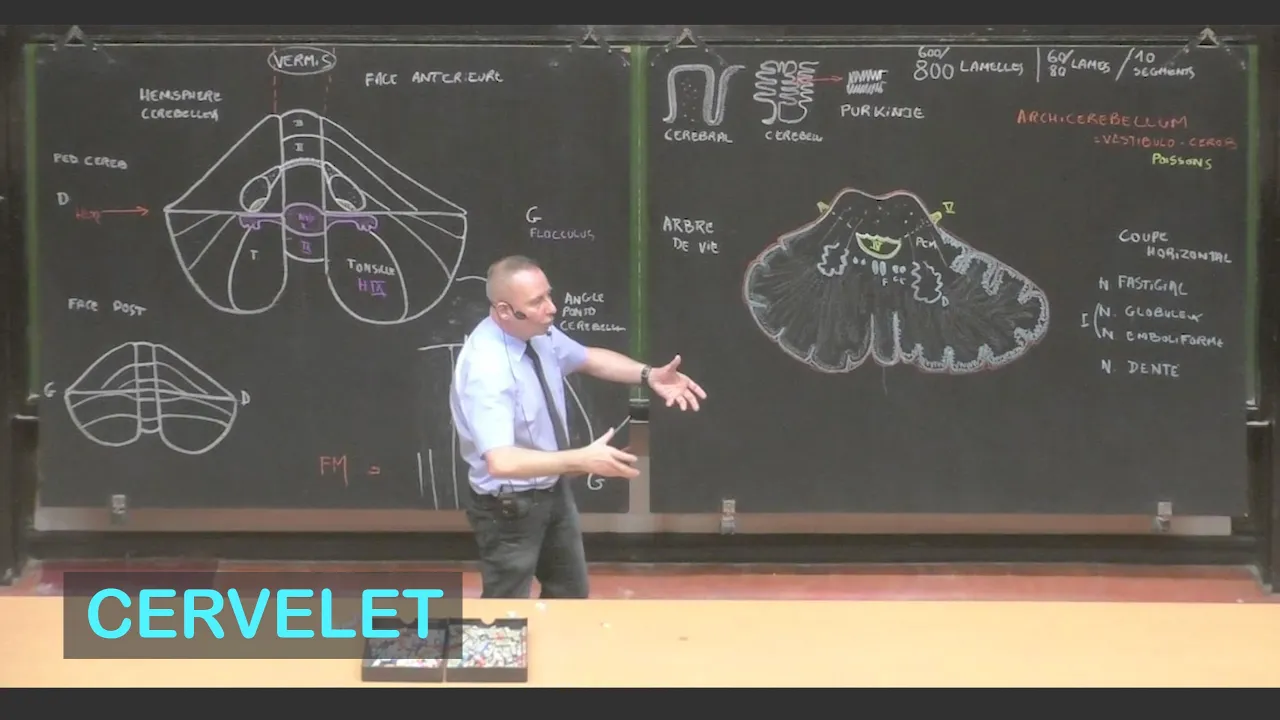







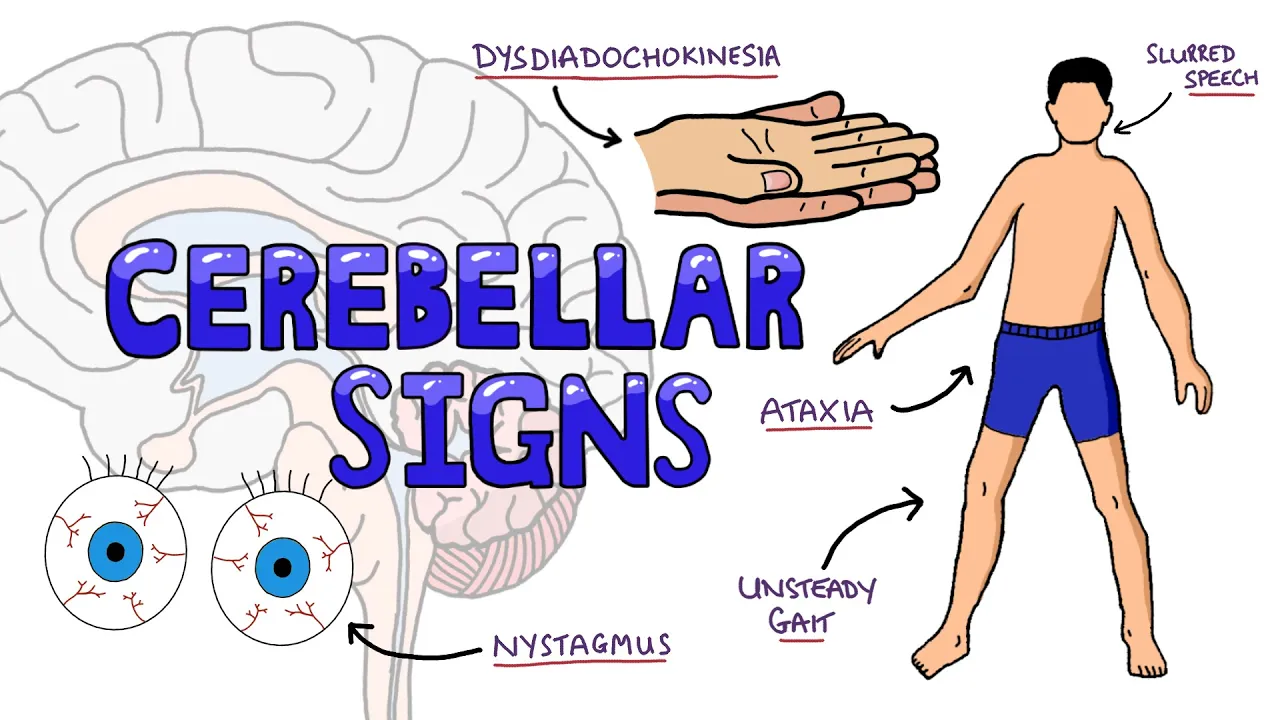







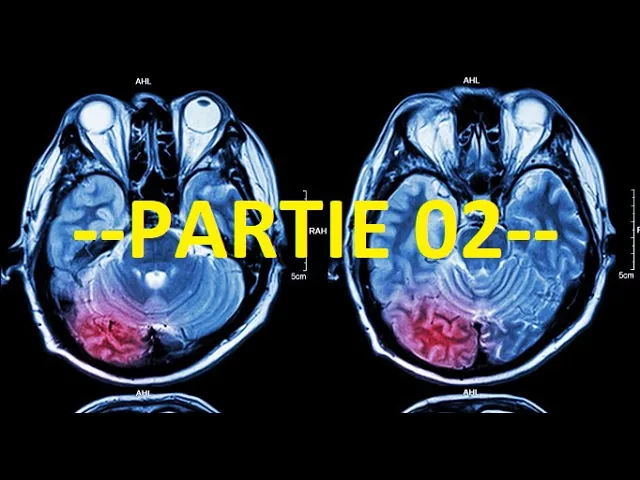

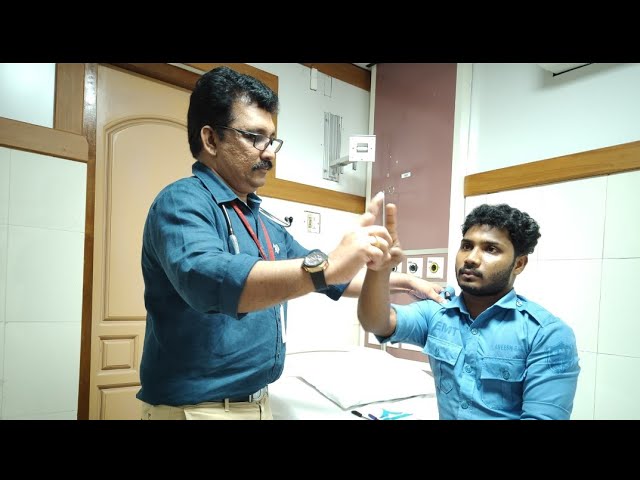
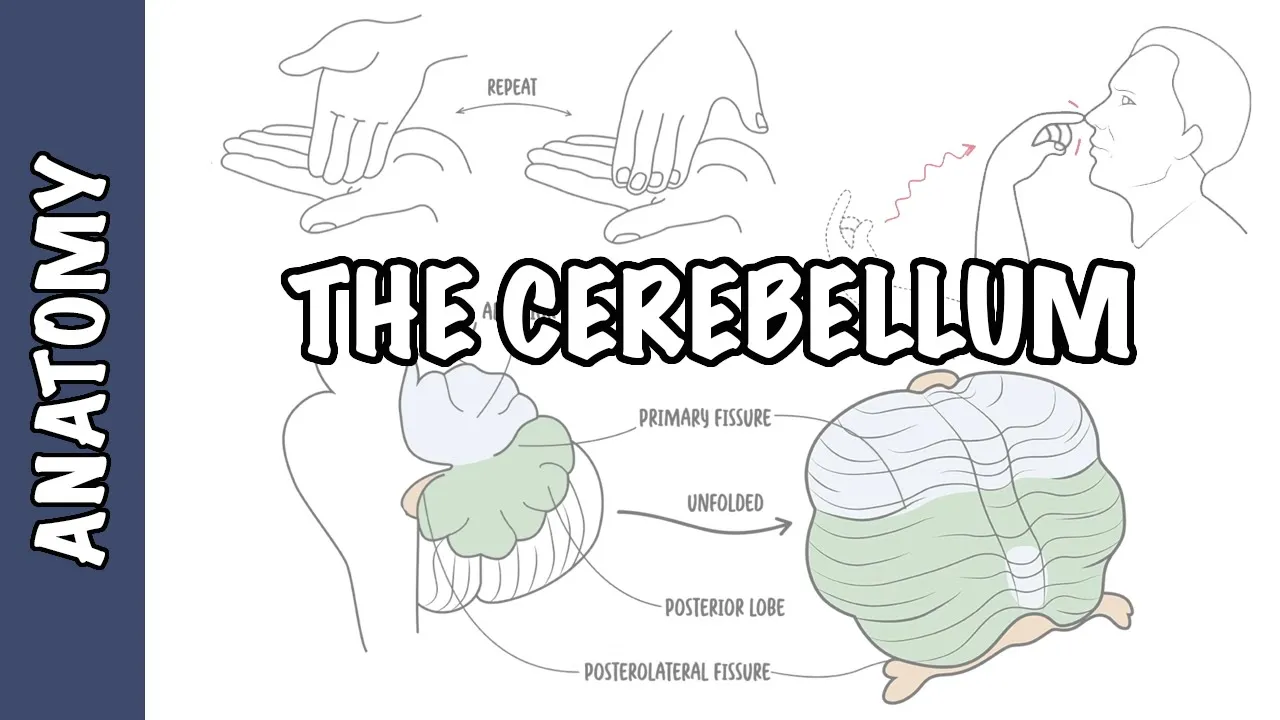



The cerebellum examination involves testing several key functions including scanning speech (broken, syllable-separated speech), nystagmus (involuntary eye movements with fast phase pointing to the lesion site), finger-to-nose test for coordination, rebound phenomenon (where the hand continues moving uncontrollably after release in cerebellar disease), rapid alternating movements (dysdiadochokinesia), pendular knee jerks, and cerebellar gait (broad-based, staggering quality with tendency to fall toward the affected side); importantly, the Romberg Test assesses proprioception rather than cerebellar function.
Cerebellum Examination: Stanford Medicine 25 Bedside Skills
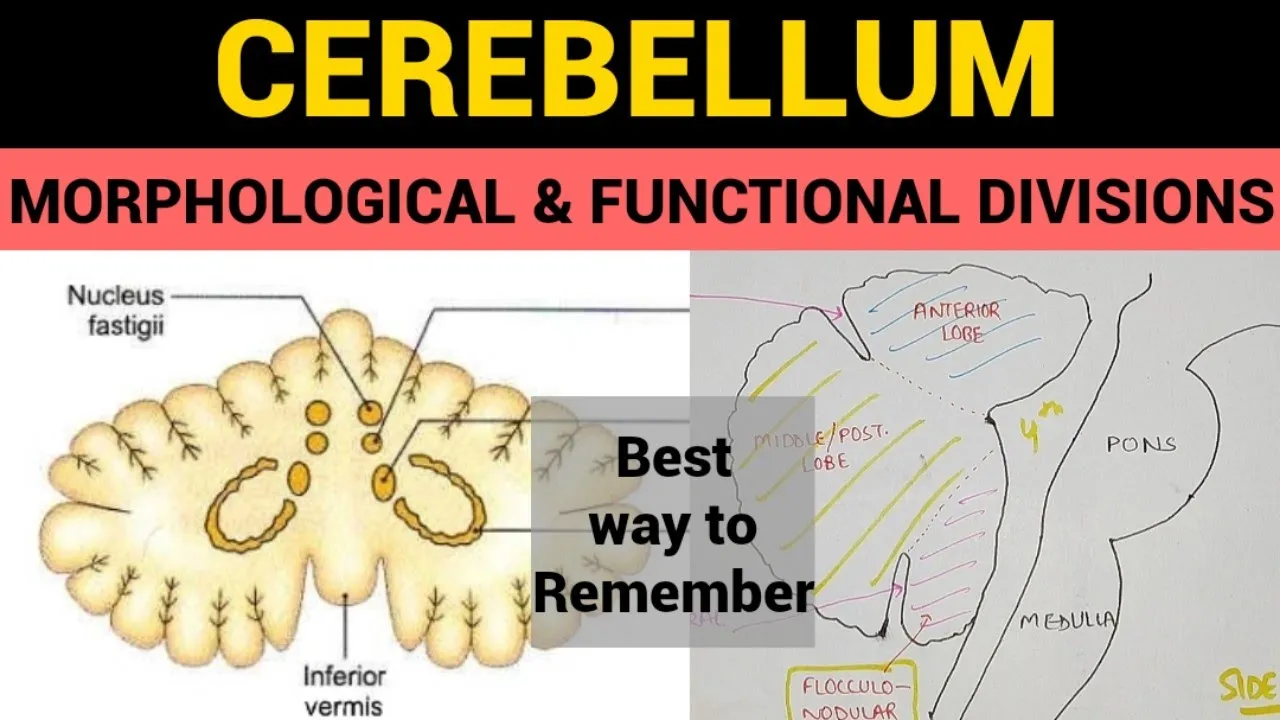
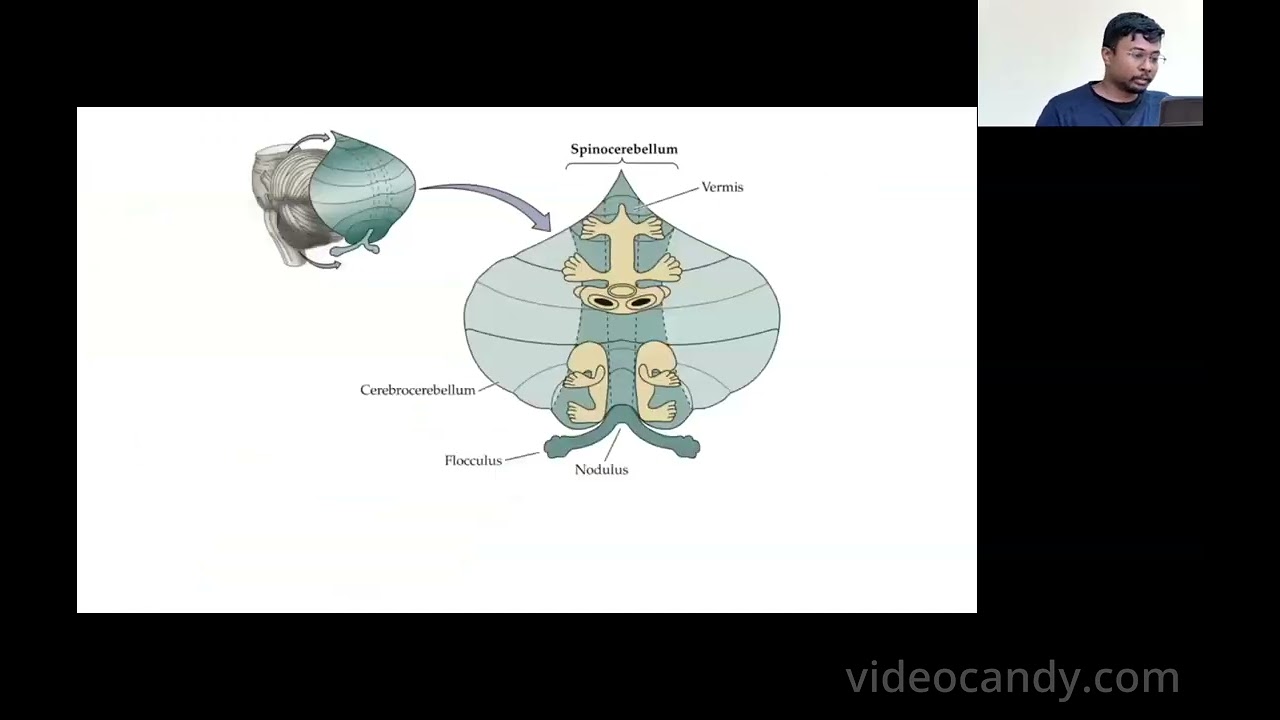
Added:Functional neuroanatomy of the cerebellum, including its major divisions (vestibulocerebellum, spinocerebellum, cerebrocerebellum) and their corresponding roles in motor control.
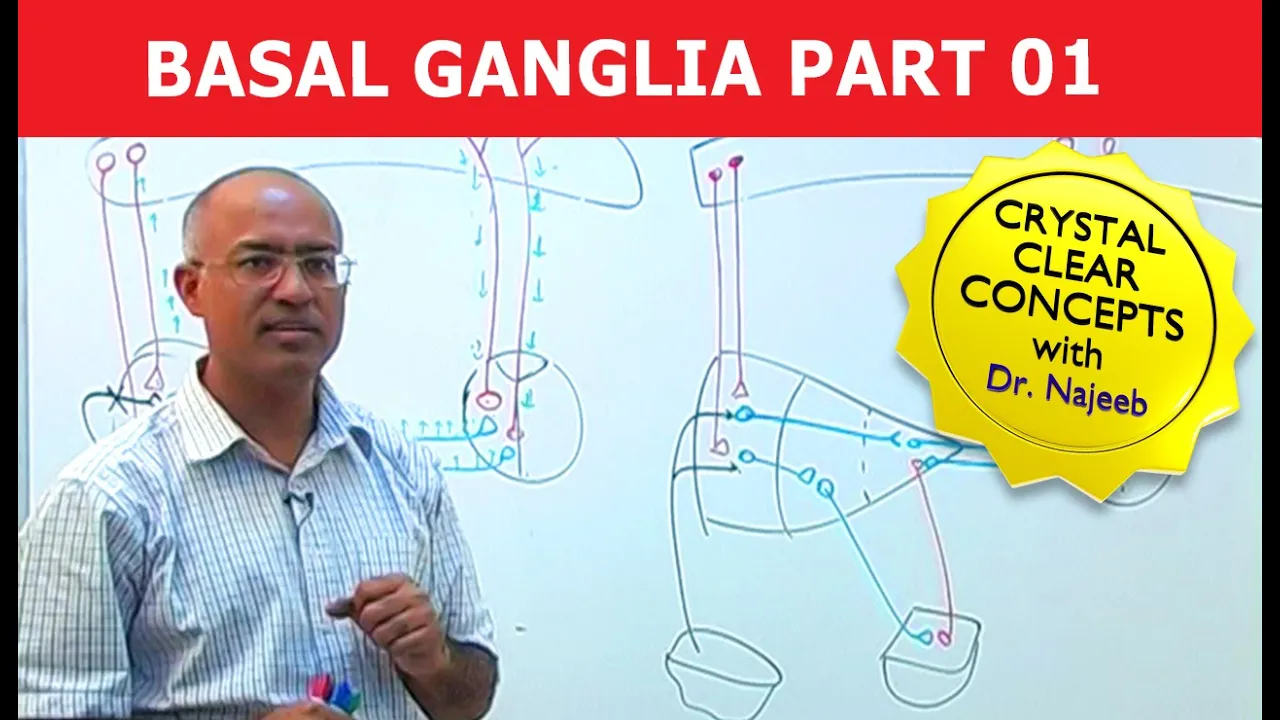
The physiological feedback loops between the motor cortex, basal ganglia, proprioceptive pathways, and the cerebellum that enable smooth, coordinated movement.
Introductory medical terminology related to motor dysfunction, such as ataxia, dysmetria, dysdiadochokinesia, and nystagmus.
Basic patient safety and physical examination principles, particularly how to safely guard a patient during balance and gait assessments.
Lesion localization within the cerebellum, specifically distinguishing midline (vermis) lesions causing truncal ataxia from lateral hemisphere lesions causing ipsilateral appendicular ataxia.
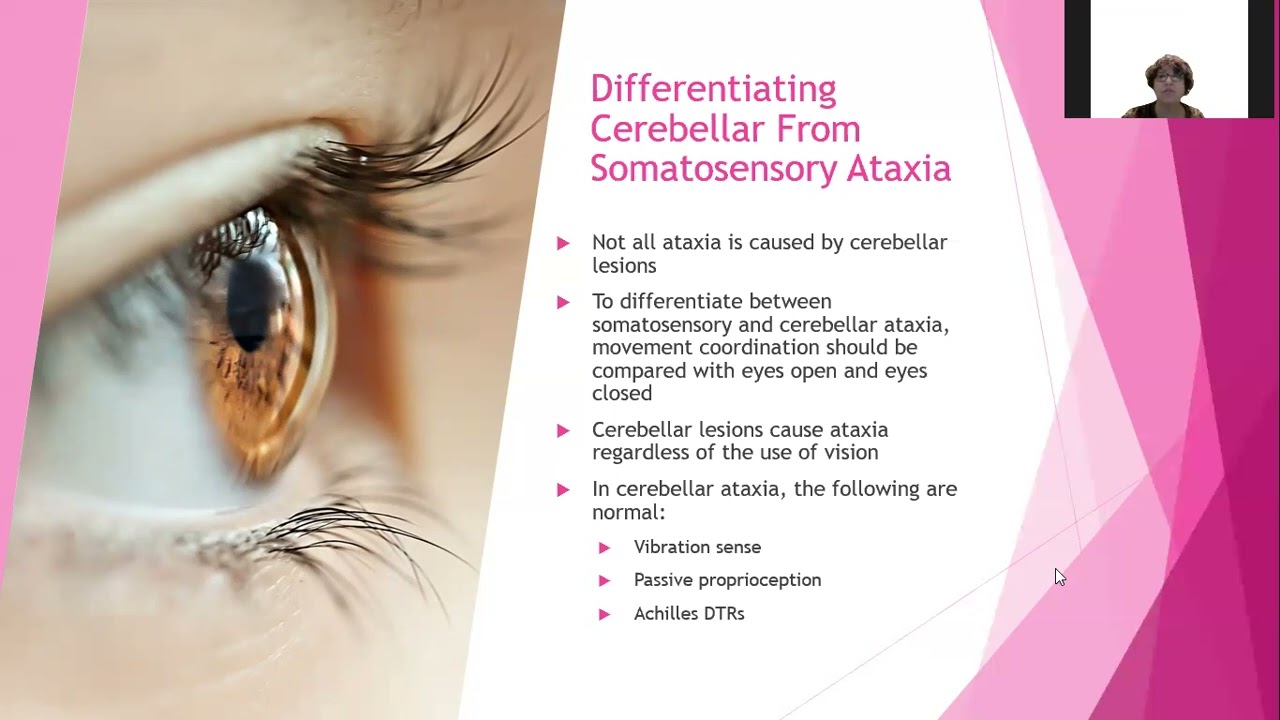
Differentiating cerebellar ataxia from sensory ataxia (using Romberg's test) and vestibular ataxia through targeted physical exam maneuvers.
The differential diagnosis of cerebellar syndromes, categorizing etiologies into acute (e.g., stroke, intoxication), subacute (e.g., demyelinating disease, nutritional deficiencies), and chronic (e.g., neurodegenerative or genetic ataxias).
Selecting and interpreting appropriate diagnostic workups for suspected cerebellar pathology, including neuroimaging (brain MRI of the posterior fossa) and specialized laboratory screening.
1.2M views13.7Klikes5:05Original Release: 2014-03-18
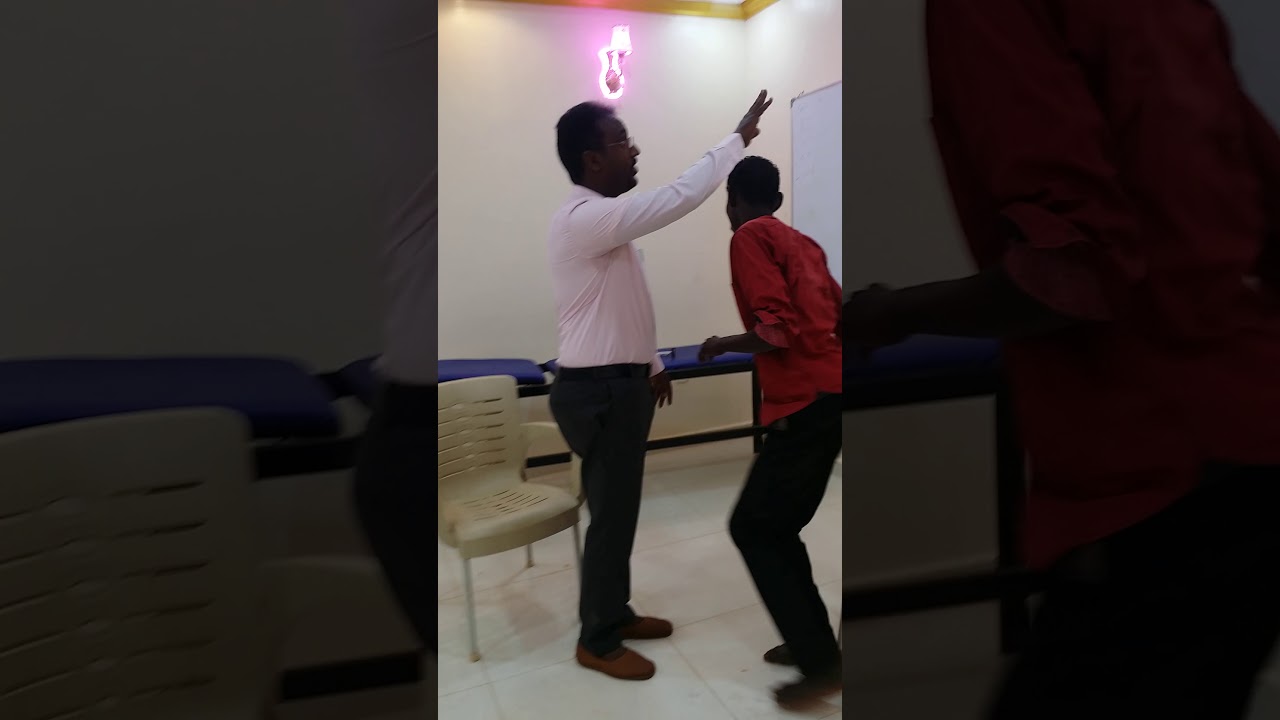
We are now going to demonstrate the cerebellar exam. The cerebellum can be affected in many of your patients, and you might not recognize that it's affected unless you test the cerebellum. The signs of cerebellar dysfunction from head to foot are scanning speech, so if you ask the patient to say something with many consonants in it, such as the British Constitution, they might say the Buh Ri Tish Con Sit Tu Tion. Scanning speech: breaking it out into individual syllables. They might have nystagmus, so if I ask the patient to follow my finger, they would have a nystagmus with the fast phase pointing to the site of disease. I should also say that if they have disease in the vermis and flocculonodular lobe, the patient wouldn't even be able to sit up. They would have truncal ataxia, and you would not even be able to get this far in the testing. Continuing after doing scanning speech and nystagmus, we would now look for dysmetria with the finger-to-nose test.
The whole idea here is to try and put as many joints in play as we can. Just count them 1 2 3 4 5 6. As many joints as we can where agonist and antagonist muscles are working together, and the great beauty of the cerebellum is that it's able to coordinate all of this in one smooth motion. And I'm going to now ask the patient to touch his nose as quickly as you can. Back and forth if you don't mind. Excellent. And now touch my finger and your nose. This task, which is not easy, comes about because of an intact cerebellum. Another test that you can do is called the rebound test. It's called the rebound phenomenon or tests of Stuart and Holmes. When I ask the patient to pull on my hand, pull on my hand if you would, when I let go, if I were to let go suddenly the hand doesn't go and hit him in the face because the antagonist muscle quickly stops the movement. But in cerebellar disease, that may not happen, so protect the patient by putting a hand across the chest. Pull on my hand please. One more time. And again, if the patient had cerebellar disease, the hand might go flying up there and that is why you need to protect them. I'm now going to test for rapid alternating movements, so if you can put one hand out like so and with your other hand, do this as quickly as you can. Do it on the other side. And this phenomenon if it's abnormal is called dysdiadochokinesia. The next thing we look for is pendular knee jerks. Patients with cerebellar disease might have hypotonia, but it may not be very evident because we're much more tuned to looking for hypertonia than hypotonia. And one manifestation is that when you do the knee reflex in a patient with cerebellar disease and hypotonia, the leg will keep swinging three or four or five times after you've done the reflex as an indication of their hypertonia. We're now going to step into the hall and do the gait. The cerebellar gait is characterized by a broad stand and by a wide staggering quality to it. People will tend to fall towards the side of their illness, so if the illness is in the cerebellar hemisphere on the left, they might fall in that direction. When asked to stand still, their trunk may sway like this and that is called titubation, and obviously they would have problems with all the other cerebellar tests. One caveat. Many people think of the Romberg Test as being a test of cerebellar disease. The Romberg Test has nothing to do with the cerebellum. The cerebellar patient is already swaying, and it gets a lot worse when you have them close their eyes, but the Romberg Test is really a test of proprioception. When you and I are standing like this with our eyes open, we are getting signals from our joints to tell us where we are in space. If however you have a problem with proprioception because of your peripheral nerves or posterior columns, then you're relying on your eyes to tell you where you are in space. And therefore the moment you ask the patient to stand still and close their eyes, the patient begins to sway and that is a positive Romberg Test. It has very little to do with the cerebellum.
The preceding program is copyrighted by the Board of Trustees of the Leland Stanford Jr University. Please visit us at med.stanford.edu.
Up Next
9:08
Upper vs Lower Motor Neuron Lesions: USMLE Neurology Review
@DirtyMedicine
658.6K views•2016-07-31

48:47
Graphic Medicine: Comics for Collaborative Healthcare Communication
@nationalpatientadvocate
189 views•2023-12-04
2:26
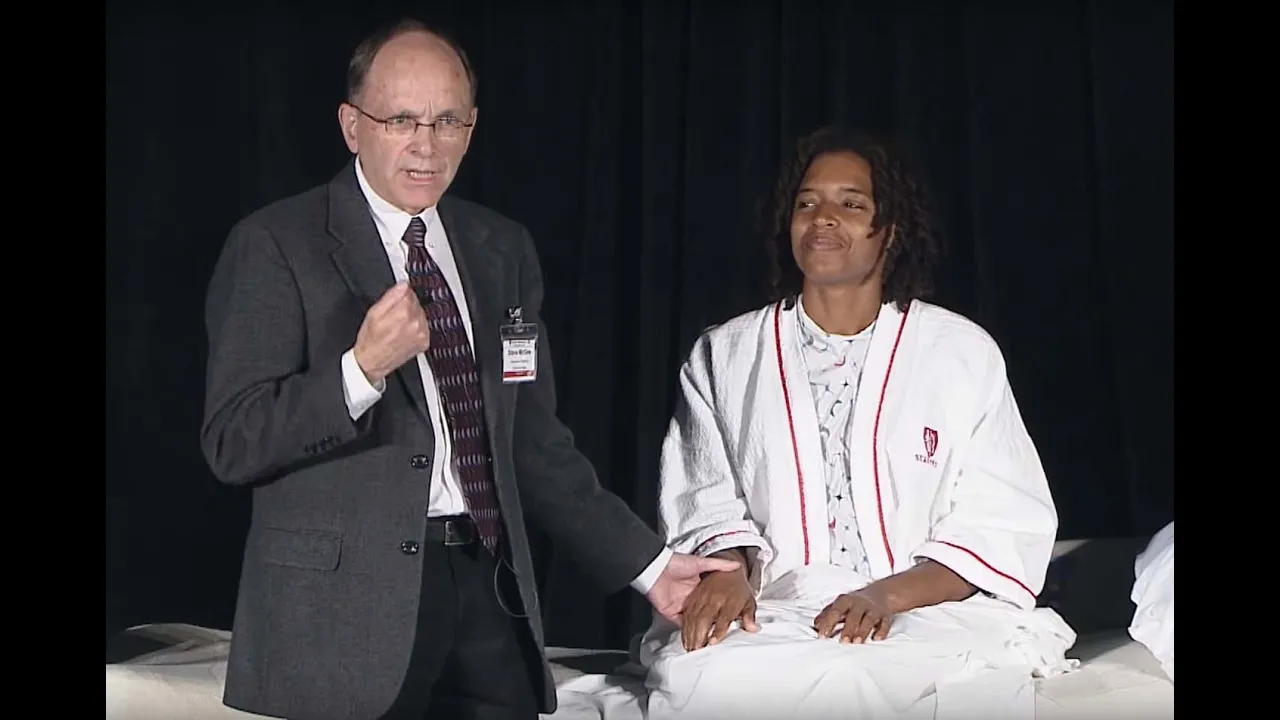
Distinguishing Spasticity vs Rigidity: Stanford Bedside Exam
@StanfordMedicine25
358.6K views•2016-04-05
3:05
Stages of Labor and Vaginal Birth | Childbirth Animation
@nucleusmedicalmedia
52.1M views•2017-08-18
Related Study Plans & Knowledge Roadmaps
Structured learning paths in Medicine
medicine
Abnormal LFTs: Diagnostic Workup & Pathology
01Liver Anatomy and Basic Physiology
02Introduction to Liver Function Tests (LFTs)
03Hepatocellular vs. Cholestatic Patterns
+ 3 more learning modules
12h6 modules
Explore Roadmap
medicine
Analyzing Blood Smears: RBC, WBC & Platelets
01Introduction to Blood Components & Smear Preparation
02Normal Morphology of Blood Cells
03Erythrocyte Pathologies & Morphological Variants
+ 2 more learning modules
12h5 modules
Explore Roadmap
medicine
Mechanical Ventilation: Waveforms & Alarms
01Anatomy and Physiology of Breathing
02Introduction to Mechanical Ventilation & Core Modes
03Ventilator Settings and Waveform Interpretation
+ 2 more learning modules
12h5 modules
Explore Roadmap
medicine
Neuro Exam: Localization & Stroke Syndromes
01Foundations of Neuroanatomy and Vascular Supply
02The Neurological Examination: Step-by-Step
03Principles of Neurological Localization
+ 3 more learning modules
18h6 modules
Explore Roadmap