























This MedEd PSA session teaches essential BNF navigation techniques (keyboard shortcuts, split-screen, and/or searches, appendix tables, treatment summaries) and key prescribing principles for elderly patients with renal impairment, including appropriate drug selection (e.g., unfractionated heparin over LMWH for renal impairment), avoiding confusion-causing medications (anticholinergics, benzodiazepines, opioids), and recognizing drug-induced electrolyte abnormalities (hypokalemia, hyperkalemia, hyponatremia).
PSA Elderly & Renal Medicine: BNF Prescribing Tips | Manchester MedEd
Added:Basic understanding of the structure and navigation of the British National Formulary (BNF), including how to access drug monographs and treatment summaries.
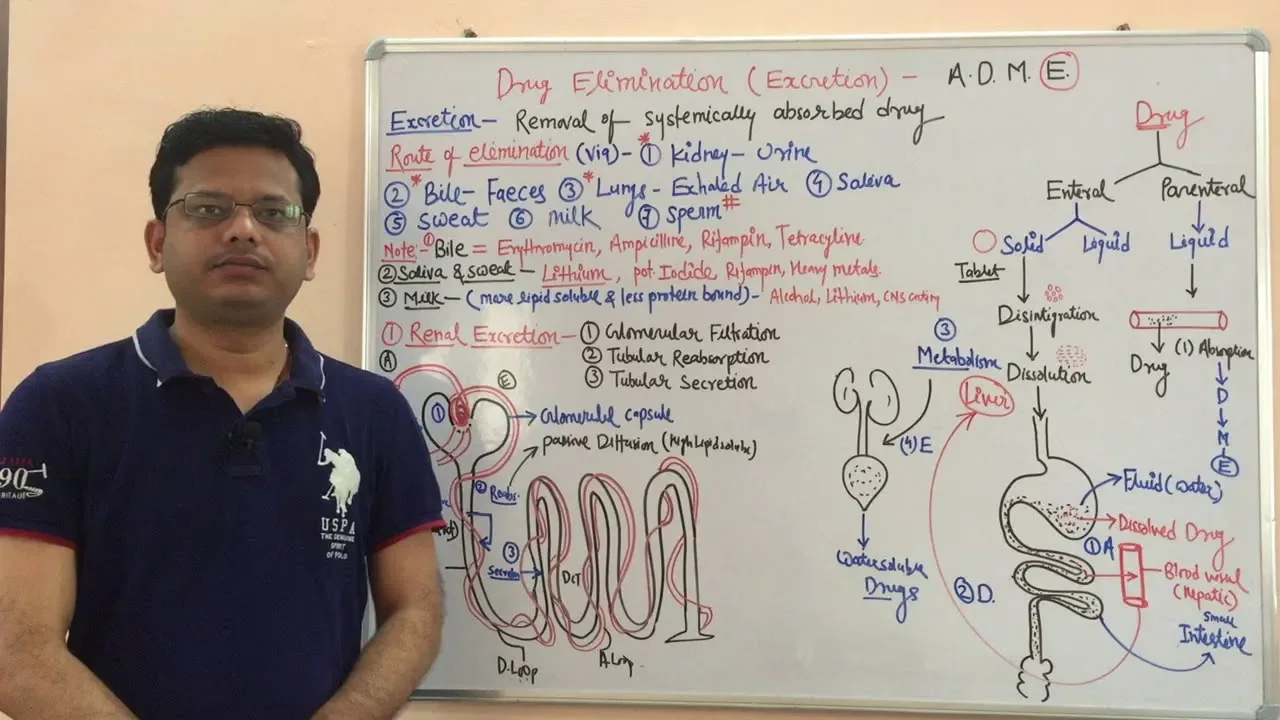
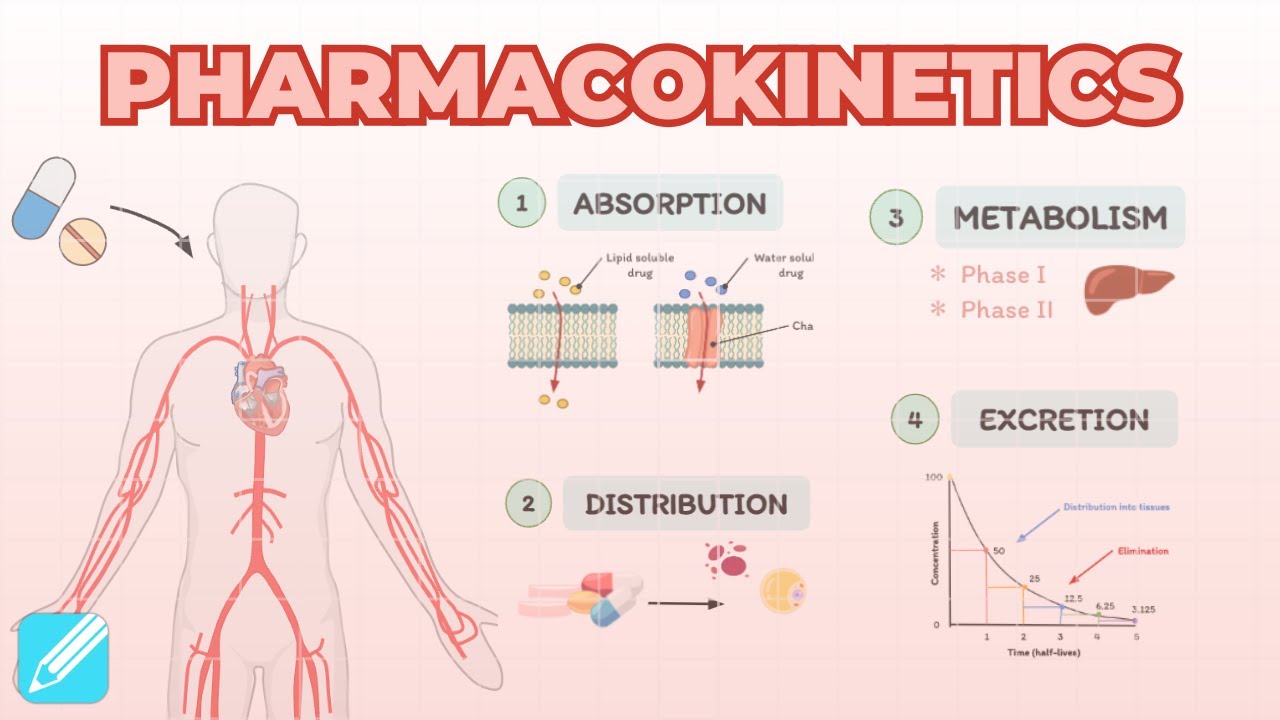
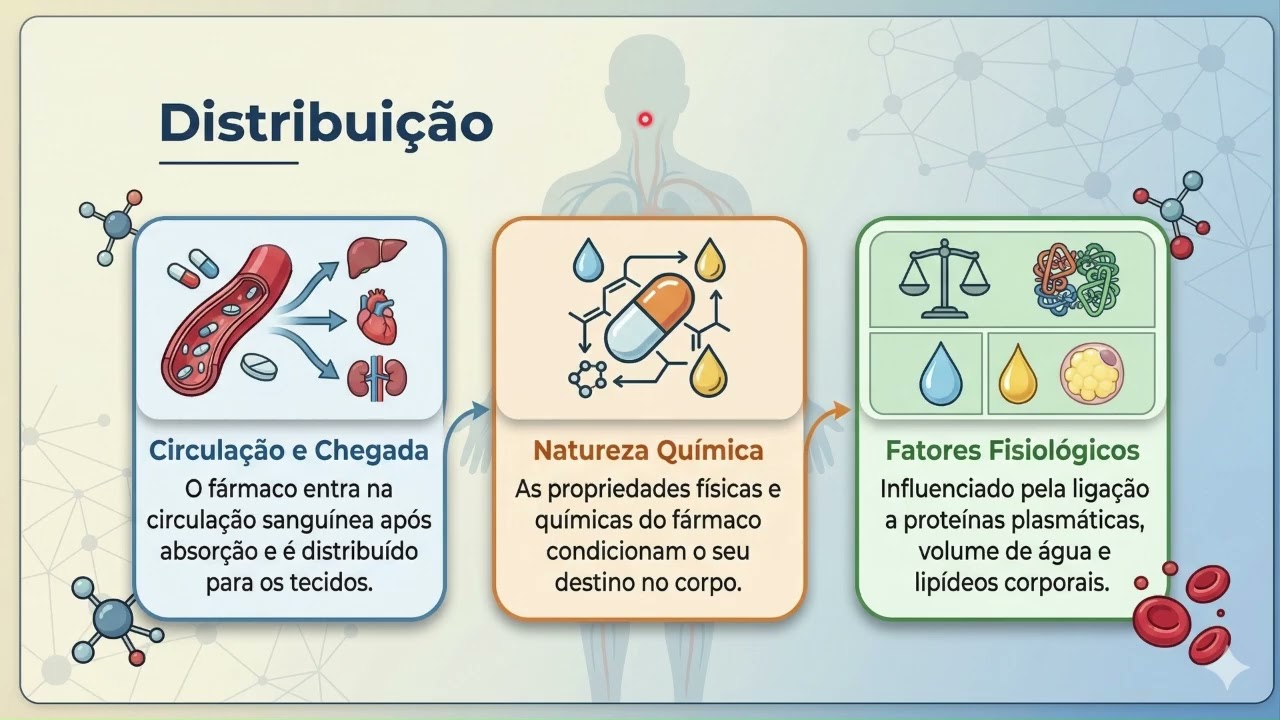
Fundamental concepts of pharmacokinetics, specifically how drug absorption, distribution, metabolism, and excretion (ADME) are altered by aging and decreased renal function.
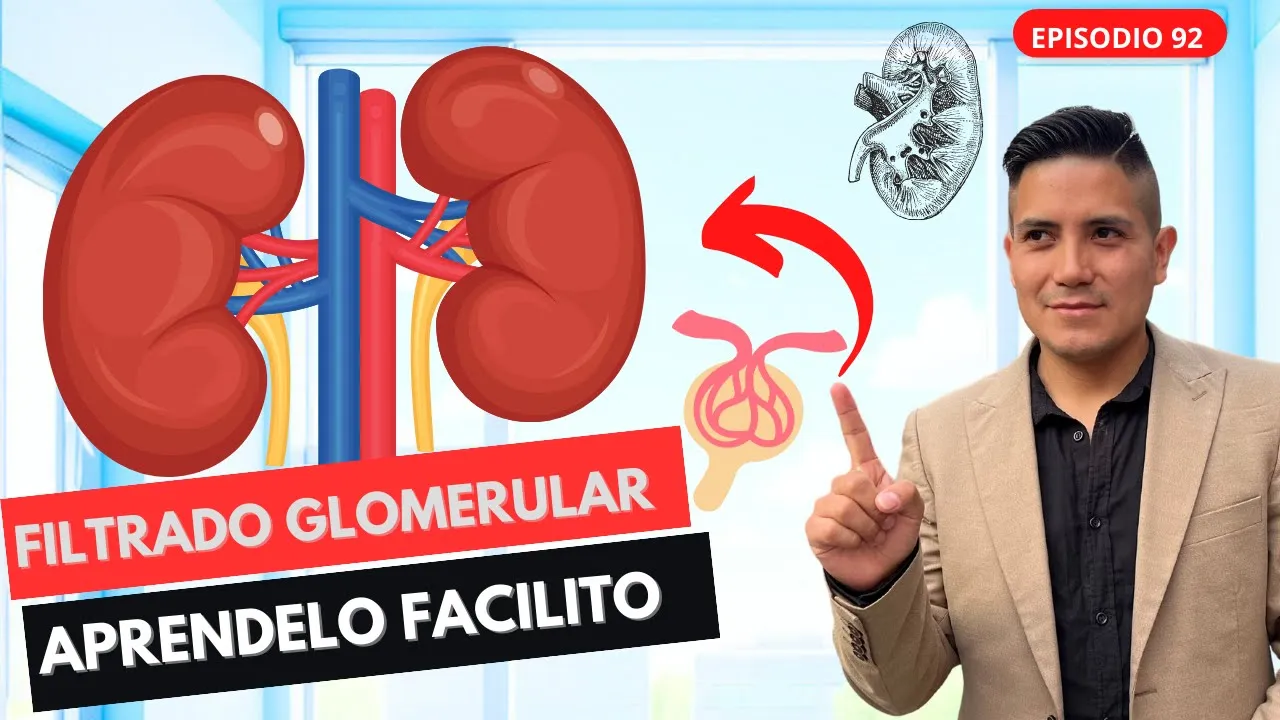
Knowledge of renal physiology, including how to estimate glomerular filtration rate (eGFR) and calculate Creatinine Clearance using the Cockcroft-Gault equation.
Familiarity with the general format and core competencies tested in the UK Prescribing Safety Assessment (PSA).
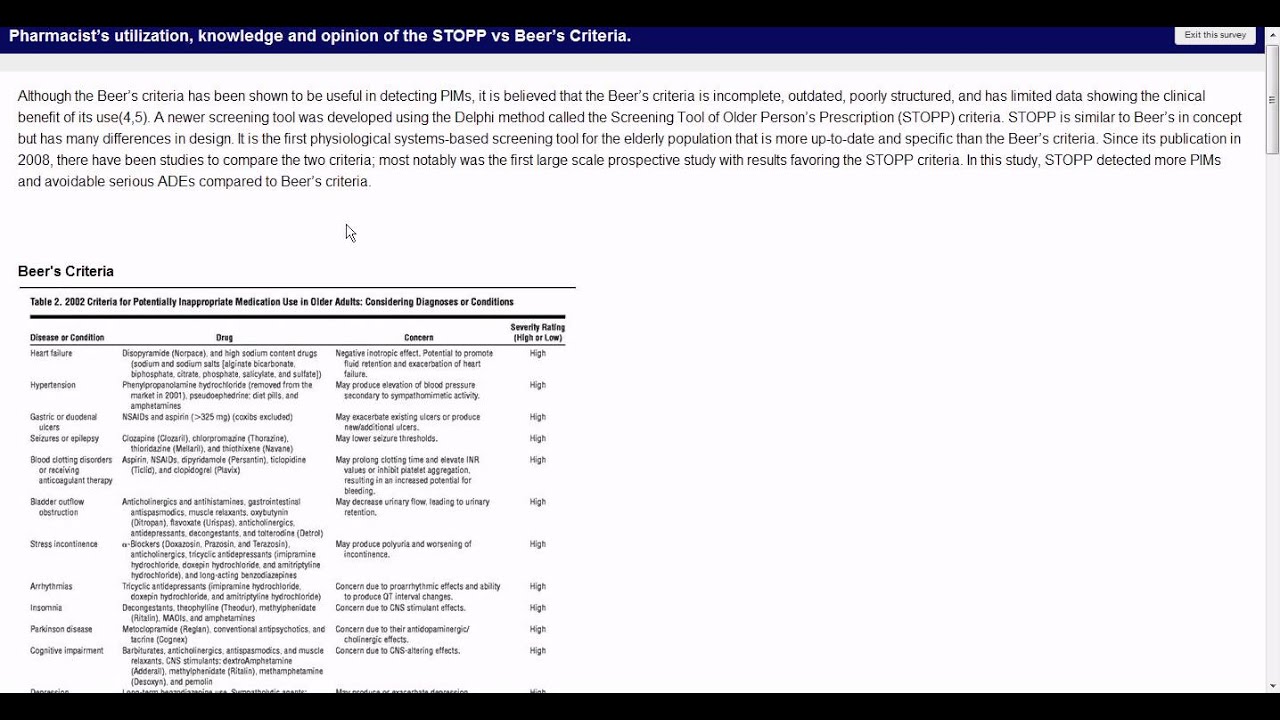
Application of formal clinical screening tools for elderly prescribing, such as the STOPP/START criteria and the Beers Criteria, to identify potentially inappropriate medications.
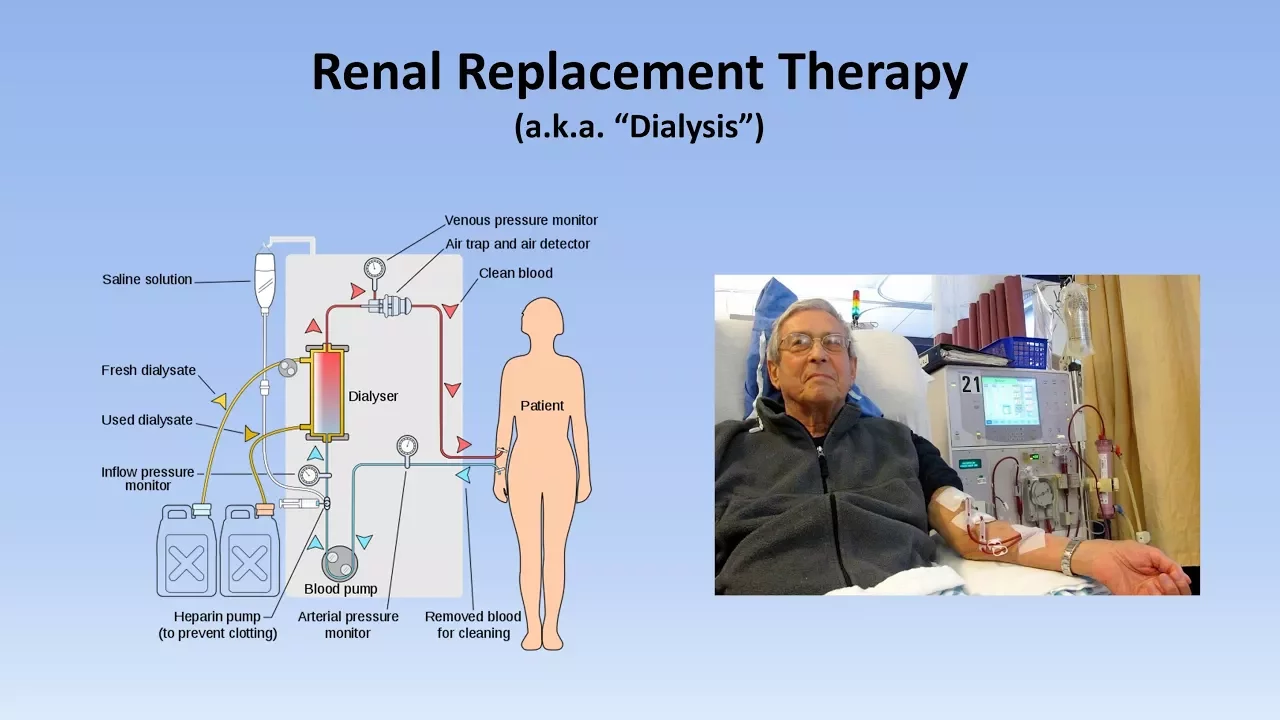
Advanced management of drug-induced nephrotoxicity and complex dosing adjustments in patients with acute kidney injury (AKI) or end-stage renal disease on dialysis.
The clinical frameworks and communication skills required for safe deprescribing and conducting structured medication reviews in multi-morbid patients.
Practicing full-length, timed online mock exams for the Prescribing Safety Assessment (PSA) to build speed and accuracy under exam conditions.
171 views0likes1:27:18Original Release: 2026-01-24
Okay, fantastic. So, it should be recording now.
>> You should give it a start.
>> Yeah, definitely. So, um, thank you everyone for joining us again for episode two in our road to the PSA series with Medad. Um it's really great to have Mosin with us today who's a doctor who's actually met some other UM students through placement and is just really keen on teaching and has very kindly come in to teach for us as one of the resident doctors at MFT. So thank you so much Mosin. Um and I hope you get a lot out of the session everybody. And before we start I've had a lot of questions about recordings and slides from last week. Um, I've been explaining to people that we've had sort of a ballpark 200 people making that same request. So, we're trying to find a way to sensibly distribute things and get the YouTube out, but also make sure we get fair feedback for the doctors that have put the work in for this and make sure that this is reflected as a national series that they've designed and delivered for their specialty training. So, that'll be done by the end of the week, but um, thank you for your patience. You will get the recordings, you will get the slides. It just might be another couple days if that's okay. So, thank you so much. And yeah, Mosen, over to you. Thank you.
>> Hi. So, hi everyone. Um, so my name is Mosen. I'm one of the F1s. Um, I work at the Royal Alden Hospital currently. Um, my current rotation is ortho geriatrics, so looking after old people with hip fractures and things like that. Um, quite complex comorbid patients often come in on lots of medications. Um so we'll do our session today on prescribing and elderly people um and people with renal impairment.
Um so hold on.
So I guess from feedback from our last session was that people wanted like tips uh and tricks and how to actually navigate the BNF um rather than just prescribing. So I'm just going to go through a few of the tips and tricks that I think will be very helpful to you guys.
Um, so first thing I'd say is get used to using keyboard shortcuts. Um, Ctrl C and Crl + V on your keyboard. Um, I'm sure most of you already know about this, but um, get yeah, get used to quickly copying and pasting things.
It'll save you a lot of time. Um, especially between the prescribing window and the BNF, if you're quickly pasting drugs into the search bar to uh, check them or check in the page. Um, I'm not sure if any of you know this, but you are able to split screen in the exam. So, you can have if you drag like the windows, um, you can drag the BNF to one side of your screen and, um, the BNF to one side of screen and the PSA exam on the other side of the screen. So, you can have them side by side. So, that'll save you time like rather than flicking through the windows. Um, F, that's another keyboard shortcut. So, that lets you find anything in the page. Um, so if you're searching for hyperclemia, it'll just bring up all the things that are like hypermia on the page and you can quickly search through rather than scrolling through um manually. That saves a lot of time.
This is another thing you can do is um and or searches and I'll demonstrate how this works. But what this essentially does is this word that's before the and it searches all of these pages. So aspirin, alipuranol, catalopram, whatever. if there's hypermia mentioned on that page somewhere, it'll bring it up in the search results. And sometimes that can be a quick way to confirm links.
So, what I'll do is I'll just uh hop out this window and go to the BNF and hopefully it should be able to show you how some of these work. Uh oh, actually, I'll just show you this quickly as well. Um, you can type appendix one interactions in the BNF search bar. So that'll bring up [snorts] um a lot of these tables. So like drugs that cause hypocalemia, hyperc calmia, hyponetriia, um bradic cardia, hypotension. So a lot of the drug side effects. Now it's important to note that these tables don't contain every drug. So sometimes if you can't find it in there, do go and double check inside the actual drug page for these for the side effects. But if you want like if you're doing prescription review and you quickly want to have a look if any of the drugs cause bradic cardia for example, you can go and have a look at these tables. So I'll show you that as well. Um and uh medicine guidance as well. Have it. I'll show you that now as well. Hold on.
Uh so can you can you guys see the BNF on my screen?
>> Yep. Yeah. Okay. So, this is what will happen when you open the BNF. Now, in the actual PSA, you'll get a choice of using medicines complete or BNF. Um, I've always used the BNF. I found it more simpler, but some people prefer to use the BNF. So, I'd say if you want to uh explore both and see what works for you, that'll be good. Um, and also have a good play around in in the BNF, find out where things are. Um, sometimes things are hidden where you might not expect them to be. um and it's just um quite useful to know where everything is. So just talking about this like and or search thing. So what you can do is you can go into the search bar here um and you can type in for example hyperc calmia calmia. There we go. And you can type in and and then inside the brackets you can put in whatever whatever drugs you want you want to search for. So you can put alurinol or ramride.
So if you click enter, you'll see that it highlights certain things. So hyperlas um highlighted there. It's highlighting other random pages, but it'll just be highlighted if it's mentioned in the page. And then once you go into the actual page, it'll take you to where it says, oh, um, ACE inhibitor RAM pill causes hypermia. Now, that's it might not work for all the drugs, but if you're doing prescription review, it can you can you can quickly uh very quickly go and search multiple drugs at once rather than going into every single drug monograph and having a look.
So you can do this with as many drugs as you want. So often in prescription review there's like seven or eight drugs and you can type them all in very quickly and um just have that ready to go.
Um if you want to access appendix one, you can just type in appendix one uh in in the search bar because um it doesn't really show as it is. And here it is. So if you scroll down you have all the tables here. So drugs that cause hippat toxicity um and there's there's loads here. So you can quickly ctrl f here uh for example and bring up the search bar and you can type in for example ramapril and you can search search up if it causes what different side effects it causes.
So you can come here and you can see it can cause hypertension and then it can cause hyperc calmia as well. Drugs that increase serum potassium. You can also if you on this page if you want to search up hypoc calmia for example you can search that up and it'll bring it up drugs that reduce serum potassium and you can quickly bring that up rather than scrolling to the actual table itself like this for example. Um yeah, sometimes in prescription review it might ask which drugs can prolong the QT interval and you can just have a quick look here and that'll save you a lot of time.
Uh additionally there's a section on here called medications guidance. So if you go to the main page of the BNF uh here it is med medicine's guidance.
So it has a bunch of um guidance bunch of guidance for prescribing in different scenarios. So there's a if you have some spare time, I'd highly recommend having a good read of these.
Um there's some stuff hidden in these that you might not expect. So prescribing and palative care, you'll have all your opioid dose conversions here. We go down all the way. Yeah. So you have all your opioid dose conversions here.
um if that's a question that ends up coming up.
[snorts] So there's a bunch here and you can just control F quickly what you're looking for.
Um additionally, uh in the BNF you can access your treatment summaries. So if you if you know the if you know what the condition is but you don't know like for example what the treatment is you could go to treatment summaries and you have a whole bunch of like [snorts] ACS um if you type in antibacterial it'll come up with the antibiotic therapies for different for example cardiovascular menitis might be under CNS um infective endocarditis might be under cardiovascular for example um um and all these different antibacterial therapies. So have a look through this page. Um there's some kind of hidden ones as well. So for like things like status epilepticus, you kind of need to like type in epilepsy and it'll be under here management for these conditions and it'll tell you what drug is indicated in in which scenario. Um, there's another good treatment summary that I highly recommend looking through. It's called poisoning and emergency treatment. So, here you can have like the manage management of all sorts of different overdoses, paracetimal overdoses, um, specifically um, tricyclic anti-depressants, that's another common one. Um, and you have there like management and what to do here. So, that's quite important.
So, I'll just go back to here and just jump back in.
There we go.
Um, sometimes it talks about medical emergencies in the community. So, in the in the treatment summary section, there is a section specifically for medical emergencies in the community. So sometimes um for example for menitiest the treatment in the community is different. So it's intramuscular benzel penicellin rather than keotaxim um and just keep a eye out on when you're doing doing your exam that sometimes it says what would you give in GP and sometimes the treatment is different and when you're on the actual BNF as well when you're looking for side effects it can be under different sections. So it can be under caution. It can be under important safety information, patient career advice. For example, if I just go back to the BNF and I just search up railro for example.
There we go.
So you see you can instead of scrolling all the way down, you can quickly jump to the section. So say you're looking for renal impairment. Um you're looking for side effects, interactions.
Um sometimes it's under different sections. So have a look through these sections and like know what is kind of under them. So where to find the information quickly for here you can see like dose adjustments for if you have reduced renal excretion would be here.
Um you can also click like interactions um and go here. And what you can do here is you can quickly type in drugs. So if you just type in and then just click enter. Then you can see like what the severity is um and if there is an interaction. So you can quickly type in a bunch of drugs for Ramoprill and see if there's an interaction with them. Sometimes multiple drugs will come up and you kind of have to just gauge based on severity or like if it's like a concrete link or if it's like anecdotal which one you have to go for. Um but that's that's rare. It's usually quite straightforward.
Um another tip I'd say if you're prescribing um antiimetics uh and patient is vomiting um you'll get higher score if you get the root correct as well. So in people who are sick you'd want to prescribe like either intravenously or intramuscularly because if you prescribe oral and they just bring it back up it's not going to be of many much benefit to them. Um and just be careful about antiimetic drugs. For example, in Parkinson's um like donerone is preferred um to metropomide because metacloromide can work worsen Parkinsonism.
Um, and in elderly people, um, there's a whole there's going to be a separate presentation about fluid fluid and fluid prescriptions, but in elderly people, um, emergency fluid bololises are usually 250 mil compared to 500 mil um to avoid fluid overload in the patient because elderly people usually have um, cardiac dysfunction. They might have heart failure or reduced systolic or diastolic function. Um, so you don't want to over risk overloading them with pain. Um, again, start simple.
Sticks stick to your WHO like pain ladder. Um, if you're prescribing like brief and make sure like PP sometimes might ask what you might prescribe beside it, make sure you prescribe PPI with NSAIDs.
um neuropathic pain. It'll be quite obvious in the description whether it's neuropathic or whether it's other pain but that's your drugs for your neuropathic pain. In treatment summaries there is a treatment summary for lower back pain. So it's um NSAIDs NSAIDs are better better for MSK type pain. In terms of antiimetics it's it's nice you can always look them up but it's nice to just have in the back of your mind um what kind of antiimetics you can just prescribe for. So cycllosine is always a safe option for most um most purposes.
So vertigo or vestibular or paliotative posttop on danzatron and then Parkinson's is one of the ones where it's done perodone cuz quite a few of the others are contraindicated.
Um so we'll start with some questions.
So I'll just go next. Um, and I'll give you guys 2 minutes and I'll just pop some answers into the chat once you're ready.
Um, there we go.
So, I'll just give you guys two minutes.
5 minutes actually. This is prescribing Does uh does anyone want to shout out before I reveal the answer what they think the condition or like diagnosis might be?
Sorry, Charlotte, I can't see the chat.
Is anyone >> There's no one in the chat right now, but um yeah, go ahead and pop answers in the chat, guys, if you're comfortable to [snorts] >> Yeah, we've got one.
>> Someone said um query pulmonary edema.
>> Yeah. So, yeah, you're on the right tracks basically. So it's most likely um pulmonary eda secondary to heart failure. Um in this case I'd look for other clues in the history as well. So sometimes like you'll have ECG changes or they might mention like um valid diseases such as iotic stenosis that can contribute to acute pulmonary edema.
um can be caused by like acute mio my cardial inffections or sometimes elderly people are just lying on the ward and they're just being prescribed bag of fluid after bag of fluid after bag of fluid and they just slowly get more and more and more fluid overloaded.
So does anyone want to hazard a guess at what drug might be used here?
Sorry, you've got someone saying fizmide um IV between 20 milligrams to 40 milligrams.
It's one answer we've got.
>> Yeah. Okay. Yeah. So, I'll just move on.
Yeah. So, correct. So ferismide um 40 40 milligrams um and yeah IV and frequency would be stat but yeah you're right so if you look on the BNF page uh for fiz go to edema h you can see but it's nally 20 to 50 um but so anywhere in that dosage range would be correct so you can put any any any of those doses but usually with um like acute heart failure or acute like flash pulmonary edema you usually just go with 40 millig grams of fruomide um IV. Now some you might not be able to find this like in the BNF. This is just one one of the ones that you might need to know like for acute like pulary edema usually just give freeze mind to offload that fluid um off the lungs.
So just move on to the next one.
Yeah, put your answers um in the chat once you're done.
Um and we'll just discuss discuss some of them.
>> Um someone did ask about the last one was just while people doing this question. Um does it matter if you give an oral or IV form of a ferment for the last question?
So if you look at the uh indication um it depends. So in an emergency situation um IVM works better um especially if they're breathless um and the daturating as well cuz they were on they're 90% on 15 lit. So you'd probably lose some marks for oral versus like um IV injection. Um, but I guess it depends on whether it's like an emergency or whether whether you have more time. It depends on the clinical situation. But in that case I would say that for the top marks IV would be the correct route and then we've got some answers for this one. Um first one is they want to give unfractionated heperin because they've got renal impairment. They want a subcut injection of 5,000 units per dose. Um but someone is arguing actually because the eGFR is above 15 should be fine to give a pixaban 2.5 mg BD. So >> jury's not or you've also got an oxipar in 40 milligrams sub.
>> Yeah.
>> Um >> okay. So many.
>> Okay, you got quite the range of answers. No, that's good. Um, so that's what these questions are designed for.
Um, to like just think of the sort of ways that they might catch you out. So, in this case, I would go for unfractionated heperin. So, well done to the person who said unfractionated heperin um 5,000 units subcut um twice a day.
Reason I would do this was yes there is an EGFR like cut off of 15 in some cases but in most cases with the renal with renal impairment it's safer to give them fractionated heperin rather than um in oxiparin. So with most cases for prophylaxis um I would go with low molecular weight hepin so in oxifarin um unless the question mentions like renal failure or renal impairment um in which case unfractionated heperin would be the safer bet. I'll just show you quickly on the BNF where you might find like this information if you are unsure. So if you go to treatment summaries and you go to I think here Venus throbo emolism you have a treatment summary for Venus thrombolism. So in this case um the question mentions prophylaxis. So just be careful when you're looking at prophylaxis versus treatment treatment dose. Um so if you go to prophylaxis and you go down to surgical patients you'll just find here that a low molecular weight hepin is suitable in all types of general and orthopedic surgery. However heperin is preferred in patients with renal impairment. So then you'd click on heperin and it'll just take you to the to the to to this indication where it says um throbo uh throbo prophylaxis in surgical patients and you'd get the 5,000 units every 8 to 12 hours um for VT prophylaxis.
Uh so yeah um in what so yeah so in in this case I would go for unfractionated heperin because of the renal impairment uh and for the PSA it's probably a safer bet to go for unfractionated heperin if like the question mentions uh renal impairment um one thing I'd make sure of just check like the indications so sometimes the medical like prophylaxis do can be different to like surgical especially when like the s surgeries something very high risk like orthopedic surgery. So just check the indication to make sure you get the correct dose.
Any questions on that one?
There was one question. I was going to save it for the end but um might as well give it now. It was just about as a general rule of thumb if you're giving heperin, do you give a low molecular weight heperin? Not just for this scenario but um generally for life >> doctor so generally in most in most scenarios you'd go for low molecular weight heperin. So yeah inoxipar and sodium would be fine for most cases. Um unless there's like a degree of like renal impairment in which case unfractionated hepin would be a safer bet.
>> Thank you.
>> No worries. I'll just move on.
So yeah, I've just got that screenshot there as well. But um you'll find if you're ever stuck on VT, there's a treatment summary. And you'll find for most things there there's always a treatment summary. Um like one thing about the PSA is like it's just really about how well you can navigate the BNF um effectively. So I would advise that in your free time just go through like BNF and especially the treatment summaries have a good look through them.
Uh, next Can you show to get the interactions check up? I'll show you. I'll show you afterwards um towards the end.
Oops.
Sorry. I think I accidentally revealed it. But does anyone want to guess what the condition was?
>> We've got two people saying giant cell arteritis, temporalitis.
>> So that's correct. Yeah.
>> Oh, four people.
>> Yeah. Yeah, that's Well done, guys. So that's correct. So um you've got quite a few clues um in this stem. So they've got like symptoms of like polygomatica um which temporal arthritis is also linked with. Um if [clears throat] you look at their bloons as well they've got a raised ESR um they've got tenderness when palpating over the temporal artery.
So that's correct. Uh yeah. Yeah she does have polymeratica as well. So there's quite a few clues there. Does anyone want to um guess what drug would be given here?
accidentally showed my face. You have one person saying 40 milligrams or a predisolone daily long.
>> Um yes, so that would be correct. So I'll I'll just move to the next page. So yeah, so um for GCA, you would use prediniscolone longterm. Um you can see like when you go on predisolone and you go down to the GCA um indication, you'd see that it says 40 to 60 milligrams daily um until remission, but you'd see the higher dose is only like mainly used if like visual symptoms occur um which they can in GCA.
Um so just check what dose you would use. So in this case I'd use a lower dose so 40 milligs um once daily in oral.
Where is GCA in treatment summary? So you might not find GCA in treatment some but what you can sometimes do is one second uh just go here.
I think in treatment summaries there's a section for cortical steroids.
Yeah. So cortical steroids inflammatory disorders and if you just scroll down uh you should be able to find like giant cell arthritis are always treated as cortical steroids. Sometimes what else you can do is if you know the condition um you can sometimes just type it in on the BNF search bar. Not sure this will work, but okay, maybe that didn't work. Well, sometimes you can type in the condition on the BNF and it'll bring up like where it's mentioned under indications um in the drug, right? just got any any any questions about this one?
You can you can type giant cell arthritis, temporal arthritis, and sometimes it'll bring it up. Um, sometimes if is if the exact thing if the exact term isn't like matching, it won't always bring it up, but you can try search it and sometimes it will bring it up for most for a lot of conditions.
Let's move on to the next question.
Yeah, I got a few answers in the chat there. So, yeah. So, Ramopril is the correct option. So, well done to all those who got that. Uh or any other ACE ACE inhibitor or andotensin receptor blocker would do here. Um yeah, just ma make sure like in questions like these you don't get caught out by like little things like the age might trick you into thinking it's a calcium channel blocker but if you look at the past medical history you'll see he has type two diabetes um and that would be an indication for given ACE inhibitor um rather than a calcium channel blocker you'll see that the dose range again um it says 1.25 25 to 2.5 any anywhere between there is fine. Um in elderly people usually we start with a lower dose um and titrate upwards. So that's why I put 1.25 um milligrams but uh 1.25 or 2.5 both equally valid answers um and would get you the full marks in this scenario.
So is the hypertensive flowchart on the BNF anywhere or is this just one? So um if you go to on treatment summaries uh there is a [clears throat] treatment summary for everything but there is one for hypertension.
Uh believe it's this one.
So yeah, if you go up here and you scroll down, um you'll eventually find find it where it is. So yeah, you'll see you'll find it here. So hypertension with type two diabetes in all patients any age. Um and you'll see like step one offering ACE inhibitor ARB and if you know what they are then you can just pick one and just go with it. You can pick any other. You can pick ramen.
You can pick any a and receptor blocker.
As long as it indications hypertension.
No little no worries. That's fine. So yeah, again if you're in treatment summaries just just if instead of scrolling to say save time, you can just control F and just go straight straight to it. Um that's why I say it's such a good shortcut to save time. [snorts] That's good.
Uh let's go to the next question.
So moving on to prescription review.
Can I just check what the EGFR was meant to be on this question? Mozen, I don't think it's there. It just says ms per min. Are we just assuming it's over 60?
>> Oh, yeah. Just assume it's over 60.
>> Thank you.
>> Yeah, sorry. My bad.
>> No worries. It happens.
got one answer. So I'll just move forward. Um so in this case so yeah so it's uh for confusion it's uh tramodol um daipan uh and oxybutin um for confusion and for the one prescription that's been prescribed wrong it's fuzzomide it's prescribed as nightly it should be um sometime during the day and I'll just go through why so oxyutin is usually like an antimuscerinic is usually given for like urinary incontinents. Um antimuscerinic drugs are notorious or can like causing confusion in the elderly and should be avoided if possible. Um tramodol is an opioid. Um it's like a opioid and an SNRI. Um and that's also known for causing confusion in the elderly. Dazipam is a benzodiaine. Um and benzodiaines are known for causing confusion in the elderly. Um uh and uh in terms of feruamite, fuismide being the wrong wrong prescription, it's not good to prescribe it at night just because it might lead to um like especially with elderly people like increasing the urge to urinate in the middle of the night. Um and often like when the old people are going to like urinate in the middle of the night, they often it's dark. um they're groggy and they're going and falling and it leads to like increased fiscal falls and then that leads to like more adverse outcomes such as like hip fractures and knots and all sorts of other things that would be avoided if they weren't getting up in the middle of the night to go pee.
Um yeah, one second.
So what you can do here is if we if you just want in term of prescription review. So what you if you want to look at confusion. So confusion is listed as a side effect um in these medications under their side effects. But you can use that and or thing here as well. So if I go to the BNF um when we go here, so you can just do confusion as a side effect and in brackets you can put in all these drugs.
Um I'll just do this quickly.
So if we do that, you can see that it brings up um confusion highlighted in oxybutin. And if you click on oxybutin and it'll take you to here um and it'll show you that confusion. It's although it's rare, it's more common in the elderly and it's listed there.
Um, and it comes up under other drugs as well. It comes up under traumadol. Um, and it comes up in dasopam as well. So, very quickly you can be sure like it's them three and none of the others I mentioned. So, you can be pretty sure it's them three. Um, alternatively, you could go into each each one um and check them individually, but that takes more time, which is why I often advise that like it's it's up to you. But I often left prescription review till the end just because it can be time consuming.
Um and in terms of like approach to like prescription review, I'd always try and go through in like a systematic uh so check the indication, check the dose. Um check the frequency, check when it's given, uh check if there's any contra indications, if they're like in renal impairment, is any of them not safe. So that's the way I'd kind of go through them.
Just go back here.
Just go to the next slide.
So yeah, just a few few um [clears throat] tips to give. So there's a few like drugs that it's good to just know know on the top of your head that'll just sorry how should we find that so it doesn't come up when you add.
So you so what you can do is you can go to the individual medication monographs and control F and type in sedation or confusion um and it should come up under the side effects the section B for prescription review.
Is there any shortcuts or way to speed that bit up? Not really. Um, so you kind of do have to look through like each drug, check if it's prescribed correctly. Sometimes just like knowing common doses and things like that might help you speed up a little bit, but it is a time consuming like question type.
Um, and there's not really like a shortcut or a way to speed that up. Um, so just in terms of some like information, so just check dose. or you so some of the prescription review questions it'll be like a dosage error.
Um it's good to know like a few drugs that are usually in um micrograms instead of milligrams. So leothyroxine is always in um micrograms rather than milligrams. So if it's in milligrams you know it's like wrong. Um tamsyloin deoxin nlloxxone those are usually in micrograms. Um check timings as well. So morning um diuretic steroids usually given in the morning. Statins are usually given at night because that's when most of your cholesterol metabolism happens. Um like insulin and cron which is given for pancreatic insufficiency.
That's usually given with meals. And then sometimes a really common one is like methtores given daily instead of weekly. Um and bisphosphinates as well.
So just check those as well. Um so in terms of drugs that are like likely to cause falls you've got your benzoazipines um anti-depressants so your tricyclic anti-depressants and um SNRIs monomine oxidase inhibitors um antiscychotics um opiates anti-hypertensives because they're dropping blood pressure um more likely to lead to like postural hypertension and anticolinergics with anticolinergics. It's one of those ones where one might not increase your risk of falls, but if you've got like many together, you can it can greatly increase your risk of falls. So, it's not that relevant to the PSA as per se, but um there's a great thing that you can use in practice called the anticolinergic burden calculator.
So, I'll just show you guys this uh Oh, there it is. So, yeah. So, what you can do is you can type in like different drugs. So, when you're like doing like prescription reviews and things and it'll bring up like uh what their like anticolinergic burden is and the more the more like the higher it is and the more like the patient is at risk of like confusion, falls, and death. So, we often use this a lot when doing like prescription reviews to just calculate like what medications are like um increasing like a patient's risk of falls or anything like that. So, it's just called um the ACB calculator.
Um again some of the ones that might be like most likely to cause confusion um opioids, sedatives, so like your even like Zed drugs like Zopicone and anticolinergics.
In terms of like drugs that are likely to cause constipation, opioids um so morphine um causes constipation. Iron people who are like anemic and taking iron can that can cause constipation.
Anticolonergics again can cause constipation.
Sometimes there'll be like continued like which drugs are continued if concurrent illness. So make sure like steroids are doubled. Um and which drugs like you stop when there's like concurrent illness. So metformin you stop, statins you usually stop and um SGLT2 inhibitors such as like dapagloin or I can't say it but kangloin and usually stop during concurrent illness in hospital.
in terms of like drugs that are like so you don't have to learn all these. It's just good to have a few like at the top of your head um when you're doing prescription review just so you can quickly rule rule those out or rule those in or you can just quickly tick them. Um hypocalemia um lucky diuretics those are your main culprits usually for hypocalemia.
steroids for hyperc calmia you got your potassium sparing diuretics and your ACE inhibitors so like ramipril very likely to cause hypercalemia terms of hyponetriia you've got your SSRIs um opiates and omerazol just watch out for drugs that are like likely to worsen Parkinson's so watch out for like antiscychotics or anti-imetics so like metropomide is a big no in Parkinson's and my senior gra it's like beta blockers is. But a lot of this information you can find in the BNF. But sometimes if you just have this on the top um at the forefront of your memory, it'll just save you a bit of time.
So yeah. So um you've got your like potassium spender spinolactone. So use use carefully in patients that also take ACE inhibitors as you can like precipitate hypercalemia.
Um you got your thide and thide like duretic. So your like bendflide or indapamide um those cause hypocalemia, hyponetriia and sometimes impaired glucose tolerance um cuz they usually Yeah. So that's them. And then you've got your loop diuretics or fuzzomide bumanide. um those can cause hypotension, hypocalemia, hyponetriia, hypo everything basically because they block the uh sodium potassium chloride transporter.
So I'll just move on to this question now. Planning management.
Yeah, Poppy answers um in the chat when when you're Okay.
>> Can you see the chat now, Mosen?
>> Yeah. Yeah, I can see it now.
>> Oh, brilliant. Fab.
>> Cheers. Yeah. Aspirin. Yeah. Aspirin 300. So this is one of those questions where it's careful to uh where it's important to just look at where the location is. So she's at her GP. So I think one of you said that one you said aspirin but you said may add antiplatment. So the usual like ACS pathway for STEMI would be like dual antiplatlet therapy and but in GP you might only have like aspirin available um before you call an ambulance to take them to a center that has PCI available.
So it'll be aspirin in this case.
Um, and just if you're unsure, you can just quickly look um as well at the uh at the bit page for aspirin and it'll just tell you what the management of STEMI is just aspirin 300 just through it. But can I move to SL? I'll come back to the slide at the end. Um, and I'll come back to that in Got another one here.
We got a few answers here. We've got people saying sodium bicarbon fusion. Um I may order on. I think this question is quite tricky. Um especially because you have to dig quite deep into BNF to find the answer, but I'll just tell you the answer. So the answer to this question is actually active monitoring.
Um so it'll this this will come under [clears throat] like a tric triccyclic overdose. Um so indications for like sodium bicarbonate infusion are usually like acidosis or like seizures or broad QRS uh complexes um on the ECG. If we want to like find where this information would be on the BNF, we would go to treatment summaries uh po poisoning emergency treatment and then we would go to I'll just type in sodium Scroll down to it.
Is it try?
Yeah. Yeah. So, I'll just go here second.
So, yeah. So um strongly advised in the hospital usually uh sodium bicarbonate infusions um is only usually given when there's like severe arhythmias or like you've got like prolonged QRS duration.
So it doesn't explicitly say that active monitoring is the correct choice. Um but at this point you kind of just go off this information and see what the best option would be. You can see like from the clinical information although the patient is slightly takartic he's mostly stable. he's just got a bit of blurred vision. Um, but otherwise he's relatively stable. Um, so in this case, you just monitor active uh actively monitor. So I I just made this question quite hard on purpose just to illustrate that the answer might not always be there and you might have to just use your like clinical reasoning a little bit um and just look at the other answers. So sodium bicarbonate is usually only given when there's like broad QRS complexes on the ECG. Um and it's usually avoided if possible because it messes up your acid base balance. Um DC cardio version wouldn't really be indicated here. Um and neither would amioderone.
Um and magnesium sulfate wouldn't really be indicated here either. So like the best option left is active monitoring.
And in this case it is the right answer.
I'll come back to that one at the end.
Um, in elderly people, uh, there's a thing called like stop start criteria. Um, you can have a look at it. Um, and it's basically a tool that you can um use to screen like elderly people for for uh for medication to stop or medication to start. Um, so it like basically flags inappropriate or risky medications. the long term like benzoazipines or like Z drugs such as Zopone like a risk of fracture like falls fractures confusion delirium um other things like that for anticolinergics um they lead to like con like confusion constipation dry mouth and urinary retention and um just use like a little like rhyme for that like can't see can't pee um can't spit can't [ __ ] it's a bit inappropriate but it works to remember like the side effects of anticolinergic drugs. Um, and then there's also like a screening tool to like alert doctors to the right treatment. Like some people are on heart failure, are they on ACE inhibitor and a beta blocker? Cuz a lot of the times these things are missed or they'll be being be a but not an appropriate anti-coagulation.
Um, and other things as well like PPIs, they're often like associated with a long-term increase in osteoporosis.
Let's go to the next Yeah. So in this in this case um the correct option would be if you notice blood in your urine um you should seek urgent medical attention. So in terms of drug counseling um the most important um thing with drug counseling is what is the most pertinent information to their patient. So some of some of the other things might be true uh some of them are just false but some of them might be true as well but it's a case of which is more important. So with warin um increases bleeding risk and if patient notices blood blood in their urinal stool they should see seek urgent and medical attention. That would be the most important thing to tell the patient in this case. If we just go through like the other options, you should take your waring at the same time every day. Yeah, it's not bad advice, but in this case, um the most important piece of information you'd want to tell the patient is that um it increases your bleeding risk. You must not drink alcohol whilst on warin. No, it's not a like true statement. Um obviously they advise not not to drink but um [snorts] if you stay under the recommended limit it's okay. You should avoid all foods containing vitamin K. Yes. So while eating some foods that are high in vitamin K that can affect like your warin metab um warin effectiveness. But like the blanket statement that you should avoid all foods containing vitamin K isn't probably the best um option thing to tell the patient. And if you require antibiotics you'll need to stop waring immediately. um for some antibiotics might react with warerin but the blanket statement that all like antibiotics will react with warerin and when of and when waring is being used um and they just stop it suddenly it might be dangerous to the patient so that's not very good advice so for drug counseling um just go with like the most pertinent advice Got a few got a few here. Option E is the correct one. Um so uh carbosol increases uh your risk of a granular cytosis. Um and sore throat is one of the indicative factors of that.
Um other like the other information is just go through the other information.
So you need your thyroid function test repeated in a week usually when you starting carbimazol. Thyroid function is usually reviewed like 3 months after a change in therapy. Um and you can find that information in the BNF um under the monitoring section for carbimazol.
Um folic acid supplementation isn't really required. Um for carbosol therapy you should know that carbosol may affect your liver whilst that statement might be true. Um in this case the more important information is the risk of a granuloscytosis with carbimazol um and you must not drink alcohol whilst on carbosol. It's not a must not drink alcohol. Obviously alcohol is better avoided um or you should keep to the recommended limits. Um but in this case uh carbosol causes a granular cytosis and you can find that on the BNF. One thing to note is that um sometimes it's not always under like patient advice. So if you go to I just go to the BNF quickly. Uh let me go to carb asol.
There's different sections here. Um, so there sometimes there's important safety safety information. Sometimes it's under patient and carer advice that sections under. So here it is here. So warn patients or car tell doctor immediately if sore throats, mouth ulcers, bruising.
So just check this section when you're going through like these drug counseling type questions. But sometimes that information can also be um under important safety information and sometimes it can be other under sections as well like side effects or it can be under um yeah so it can be under important safety information as well. So just have a look through these different sections or sometimes what you can do is when you're looking at this question for example you can just control F sore throat um sore throat and see if it comes up on the page and sometimes I'll just quickly get you to where you need to be.
So So just um a few common drugs that are seen in elderly people. Um so metformin is like a very uh common firstline treatment for type 2 diabetes. Um important thing to know about it is it's contraindicated if the um glomeular function um filtration rate is under 30.
Um and sometimes like the dose adjustment is recommended if there's renal impairment. Um with like metformin like the main side effect you obviously have your gastrointestinal side effects but the other side effect to be aware of is lactic acidosis.
Um with deoxin it's usually used for rate control um in atrial fibrillation but like a lower dose is recommended for elderly patients. for the PSA. Um, always check the blood results of hypocalemia before prescribing. Um, because hypocalemia can precipitate and like deoxxin toxicity and that can lead to like fatal arhythmias and um other symptoms like visual disturbances. So you get like yellow here in your vision SGLT2 inhibitors. So that's like a dapergloin, another diabetes drug. Um, it's like causes a risk of like glycemic decay. So in patients who are unwell in the hospital um we always like tend to withhold um like digos in for a few for a for a few days um until they get better um just because of the risk of DK. So sometimes they might ask like a counseling question about like digital and in terms of like important information like counsel patients on the signs of DK. So like rapid weight loss, like nausea, vomiting, pain in the tummy, like that fast and deep breathing and a like a ketones or like a sweet metallic taste in the mouth.
Um methotate again like when you're doing prescription review often they put it as like daily instead of weekly. Um and then folic acid as well um to like prevent mild suppression. Um and in terms of monitoring like it'll often be under the monitoring section but monitor like full blood count, renal and liver function as well.
um in metformin like we usually withhold it in patients with like acute illness, dehydration or if they're at risk of um AKI or like before like you administer contrast for CT scans.
Yeah, few people have popped that answer in chat. So, yeah, Dick Fenak is the right answer here. So, um Dick Fenax and entered in case you didn't know. Um and in so you've got uh AKI going on here is cranc increase from 110 to 178.
So just to remind yourself of like the criteria for AKI. So if you've got like an increase of 26 within 48 hours or like two times a baseline um then just keep AKI in the back of your mind. Um and in terms of like drugs um that like can cause deterioration in renal function. So you've got your damn drugs for AKI so diuretics um ACE inhibitors, metformin, um NSAIDs and opiates as well occasionally. Does the andor trick work for this question? It could work for this question. Um but it's hard to know like what the exact wording might be. So if you yeah might it doesn't it doesn't work for every single for every single question cuz the search term has to be quite specific for for some side effects like confusion um that's quite specific but if you just type in like renal and or impairment and um or AKI and then it might not like pick it up cuz all that andor thing does is it's if it's if that phrase is mentioned on the on the page anywhere not just under side effects So for veno, like every page has a renal impairment section. And so if you type in renal, then it'll just bring up every single drug if that makes sense.
Yeah. Drugs that cause nephrotoxicity and appendix one is it'll also be under there.
So yeah, that's a that's a good point actually, Muhammad. So if I just show you um appendix one quickly again. So you can just type it in here.
just type in.
So yeah, if you just go here, drugs that cost um nephrotoxicity, you can see that dlenax there. And then you can quickly just scroll scroll through and see if you can find anything else. Um so yeah, if you look at this table, you'd be able to quickly figure out that it was dicac.
And sometimes there might be like enters you haven't heard of. Um, and you'll just find them in this table.
We've got two two questions left after this one.
Any guesses?
Yeah. So in this case it would be given vitamin K by slow um IV injection.
Um so just look through the choices. So adinax alpha is for reversing doax. Um and the INR is above eight and they've got minor bleeding. So in this case you're supposed to stop waring and you're supposed to get vitamin K by slow IV. Um, and then repeat the dose of vitamin K. If the iN is still too high after 24 hours, um, and then restart warring when the iN would you would assume that warining has been stopped. Um, where is this in the BNS? So, you can find this in the treatment summaries.
So, in treatment summaries, there's a it's not on the poisonous monograph, it's under oral anti-coagulants.
So I'll just go to it quickly. So treatment summaries and it's under oral anti-coagulation.
Yeah. Yeah.
So you can just go go to vitamin vitamin K uh and you've got all your guidelines here um for reversal of uh warining.
Uh so in this case I above with minor bleeding. So uh stop wafferin and give vitamin K. Uh one thing just to be aware of sometimes you might be asked to prescribe vitamin K.
If you type in vitamin K on the BNF search bar, it will not come up. Um, and like no matter how how hard you try, it won't come up and it's caught like a few people out in the past. So, vitamin K is also known by phyto menadion. Um, and that's the name for it. So, if you just type in phyto, it should come up. Um, but yeah, this is how vitamin K would be prescribed.
Um, when you're typing it in, but if you just type in vitamin K, usually it doesn't come up.
Yeah. So, five to many that come up. So, that's vitamin K. That's just a little thing to be aware of. Um, and that's come up in previous um previous questions.
Yeah. So, we've got a few answers here.
So, we've got um CK for like Robinosis risk. Um which is good that you're thinking of that. Um but the answer in this case would be serum um ALT. So if you look under uh liver function on the auto at satin page you'll see that um like your ALT should be measured before starting treatment with statins um and then they should be repeated like 2 to 3 months after starting and changing treatment down at 12 months um just because at toastatin can be toxic to the kidneys. So if you just have a look at the autotovoatin BNF page um and you go to liver function um you should find it there.
Sometimes you can like you might be sure that it might be rubbed up but in this case if you didn't know that it was hippatto toxic then um you might not have known that you need to check the alt before starting treatment and if it's more than three times like the upper limit then you can't really start it.
So yeah, it's here under lower function I think sometimes under there as well. Yeah. So sometimes um for statins it can cause like a passive impairment and it might cause like a rise in um ALT as well. So yeah, just have a look um on the BNF page even if you're sure just double check cuz two things might be right at the same time. But in this case before starting treatment you need to check ALT.
Um rabdomosis would be something you'd be concerned of if they came into hospital with symptoms of it. But in this case, we're starting we're starting a to starting rather than um like an acute like an acute setting.
Yeah, we've got a few answers here. Well done. So, yeah, it would be serum, um, ura and electrolytes.
Um, so if you go to the BNF page, um, in case you unsure for, uh, rail, you'll see that under monitoring requirements, um, you'll have like monitoring of patient parameters and you can quickly check that it says there are renal function electrolytes.
um must be checked before starting ACE inhibits and warranted during treatment just because it can precipitate hypercalemia. Um if we just go through like the other answers, sometimes you can just do it by exclusion as well.
Serum ACE isn't really uh a relevant measure in the monitoring of ACE inhibitor therapy. Um measuring like you it says in the primary care setting measuring like urine output um wouldn't really be practical in like the primary care setting. um ACE inhibitors don't really affect heart rate, so that would really be relevant. And liver function tests don't have too much to do with um ACE inhibitors. So you can kind of if if you knew that ACE inhibitors cause hyperccleia, you can kind of guess that seruma and electrolytes would be something that need to be measured um during during treatment with ACE inhibitors.
So that's it for the questions. Um, thank you very much um for coming and I hope you guys all learned something um and learned some tips and tricks for navigating the BNF. Um, when we send out the slides, I'll be sending out I'll ask Charlotte to send out like a little PDF me and my friends made from uh before like with tips from the BNF. I'll try to send that out as well. I'll go back to some of the questions that you guys were asking about. Um, there was that bicarbonate one that you were unsure about. I'll just quickly go back to that um and just talk about the ECG findings for a second.
Sorry, someone wanted to go back to slide 17 as well.
Um you'll get the slides anyway if you fill out the feedback form. Um and I'll be sending like a PDF with all of this like information in in like table format just for you to quickly cross reference.
Uh, let me just find that question.
Yeah, if anyone has any questions, um, I'll be here for a while. Just let me know.
>> So, I think >> I'll keep recording answers as well, guys. So, this will be in the recording if any of you need to shoot off. So, whatever comes up next, we'll keep in the recording. Yeah. Um, so, uh, some of you were confused about runs of like non-sustained ventricular VT. So, non-sustained VT just literally means like it's there for like 10 seconds and it just self- terminates. Um, it's usually asymptomatic and requ doesn't require treatment, which is why the answer in this case is active monitoring. This question is quite a hard um question. And usually the questions in the PSA will be a little bit easier than this because you'll be able to find the information directly.
But this was just to illustrate um that sometimes you might get harder questions like this. Um, um, and in terms of I'd say like in terms of preparing for the uh, PSA itself, in terms of like questions, I'd say the the resource that's most like the actual exam are the official mocks.
Those I would say are the most like the actual exam. Um, there are two other mocks from the British Pharmacological Society. They do paid mocks. Um, but they're really good. They're really hard. They're quite difficult, a lot harder than the actual exam. Most people find them. Um, but they're really good for practice and getting you to lock in places that like you wouldn't think in the BNF. Um, and they're great practice as well. So, if you have like three or four of you, you can split between you and I think it's 30 quid. Oh, it becomes something like 8 n quid each and I'd say it's worth it for the practice, but otherwise the official mocks are more than enough.
Does anyone have any more questions?
Up Next
8:14
Deprescribing Guidelines: Managing Polypharmacy Safely
@deprescribing
39.8K views•2017-05-17

48:47
Graphic Medicine: Comics for Collaborative Healthcare Communication
@nationalpatientadvocate
189 views•2023-12-04

10:28
Neuroanatomy: Central and Peripheral Nervous System Divisions Explained
@AKLECTURES
136.2K views•2014-09-20
3:05
Stages of Labor and Vaginal Birth | Childbirth Animation
@nucleusmedicalmedia
52.1M views•2017-08-18
Related Study Plans & Knowledge Roadmaps
Structured learning paths in Medicine
medicine
Abnormal LFTs: Diagnostic Workup & Pathology
01Liver Anatomy and Basic Physiology
02Introduction to Liver Function Tests (LFTs)
03Hepatocellular vs. Cholestatic Patterns
+ 3 more learning modules
12h6 modules
Explore Roadmap
medicine
Analyzing Blood Smears: RBC, WBC & Platelets
01Introduction to Blood Components & Smear Preparation
02Normal Morphology of Blood Cells
03Erythrocyte Pathologies & Morphological Variants
+ 2 more learning modules
12h5 modules
Explore Roadmap
medicine
Mechanical Ventilation: Waveforms & Alarms
01Anatomy and Physiology of Breathing
02Introduction to Mechanical Ventilation & Core Modes
03Ventilator Settings and Waveform Interpretation
+ 2 more learning modules
12h5 modules
Explore Roadmap
medicine
Neuro Exam: Localization & Stroke Syndromes
01Foundations of Neuroanatomy and Vascular Supply
02The Neurological Examination: Step-by-Step
03Principles of Neurological Localization
+ 3 more learning modules
18h6 modules
Explore Roadmap