The Federal Rules of Evidence are organized into articles (such as Article 1 General Provisions, Article 2 Judicial Notice, and Article 3 Presumptions in Civil Cases), with specific rules underneath each article; each rule entry includes the rule text, publication dates, Advisory Committee notes for interpretation, and additional notes, and learners can access these rules through Cornell's free online resource to build confidence in applying them to legal situations.
Understanding the Federal Rules of Evidence: A Guide
Added:Deep Dive
Basic understanding of the US dual court system, specifically the distinction between federal and state jurisdictions.
Federal vs State Jurisdiction in the US
17.3K
In the United States' dual court system, federal courts have jurisdiction over cases where the United States is a party, diversity of citizenship cases exceeding $75,000, constitutional/federal law issues, federal crimes like mail fraud and drug smuggling, and bankruptcy/copyright/patent/maritime cases; state courts have jurisdiction over all other cases including those involving state constitutions, traffic violations, criminal offenses, contracts, torts, and family law, with some areas like securities law having concurrent jurisdiction between both systems.
Click to watch →

AP Gov: What is the Structure of the Judicial Branch? - Parts 1 & 2
5.4K
The US has a dual court system with federal and state courts. Federal cases involve constitutional questions, US law, treaties, or diversity between states. State courts handle most crimes like murder and shoplifting. Dual sovereignty allows both state and federal prosecution for the same conduct. State court cases can appeal to the US Supreme Court if involving constitutional questions. Federal courts include district courts (original jurisdiction), courts of appeal (appellate jurisdiction), and specialized courts. The Supreme Court is the highest authority with final say.
Click to watch →
Legal System 101
1.3K
The United States operates under a dual legal system consisting of federal courts (which handle federal law, the U.S. Constitution, and treaties) and state courts (which handle state constitutions and state laws), with jurisdiction determining which system applies to a case; federal courts include the U.S. Supreme Court, Circuit Courts of Appeals, and District Courts, while state courts vary by state but typically include trial courts, intermediate appellate courts, and a state supreme court, and these systems generally do not interact except in limited circumstances such as when a state case involves a federal constitutional question.
Click to watch →

Mr. Laubach - APUSH - The Judiciary Act of 1789 (and the Dual Court System)
390
The United States has a dual court system consisting of two separate court systems: federal courts and state courts. Federal courts handle cases involving federal laws, the US Constitution, treaties, disputes between states, or cases involving citizens of different states. State courts handle cases involving state laws such as criminal cases, family disputes, contract cases, and personal injury suits. This system reflects the broader federalism in the United States where both national and state governments have distinct but sometimes overlapping powers. Some cases can overlap, meaning both courts have jurisdiction in certain situations, which is known as concurrent jurisdiction.
Click to watch →
The Judicial Branch Narrated PowerPoint
7K
The United States has a dual system of courts consisting of federal courts and state courts. Federal courts deal with matters involving federal law, the US Constitution, and disputes between citizens of different states. State courts deal with state matters and are governed by state constitutions. This dual system means that both federal and state constitutions can apply depending on the nature of the case and the legal issues involved.
Click to watch →
Deep Dive
Familiarity with fundamental legal terminology such as 'admissibility', 'objection', 'litigation', and the 'burden of proof'.

UK Media Obsession - Stalking and Harassment included (AUDIO)
2.2K
Burden of proof is the obligation of a party who initiates a legal action (the plaintiff) to prove his or her claims. Litigation is the process of taking legal action, the process of suing someone or trying them for a criminal act. Miranda rights are specific rights to which any person taking into police custody is entitled, and police must advise each person arrested of each of these rights before any questioning can be done. These legal concepts are relevant when addressing harassment and stalking cases.
Click to watch →
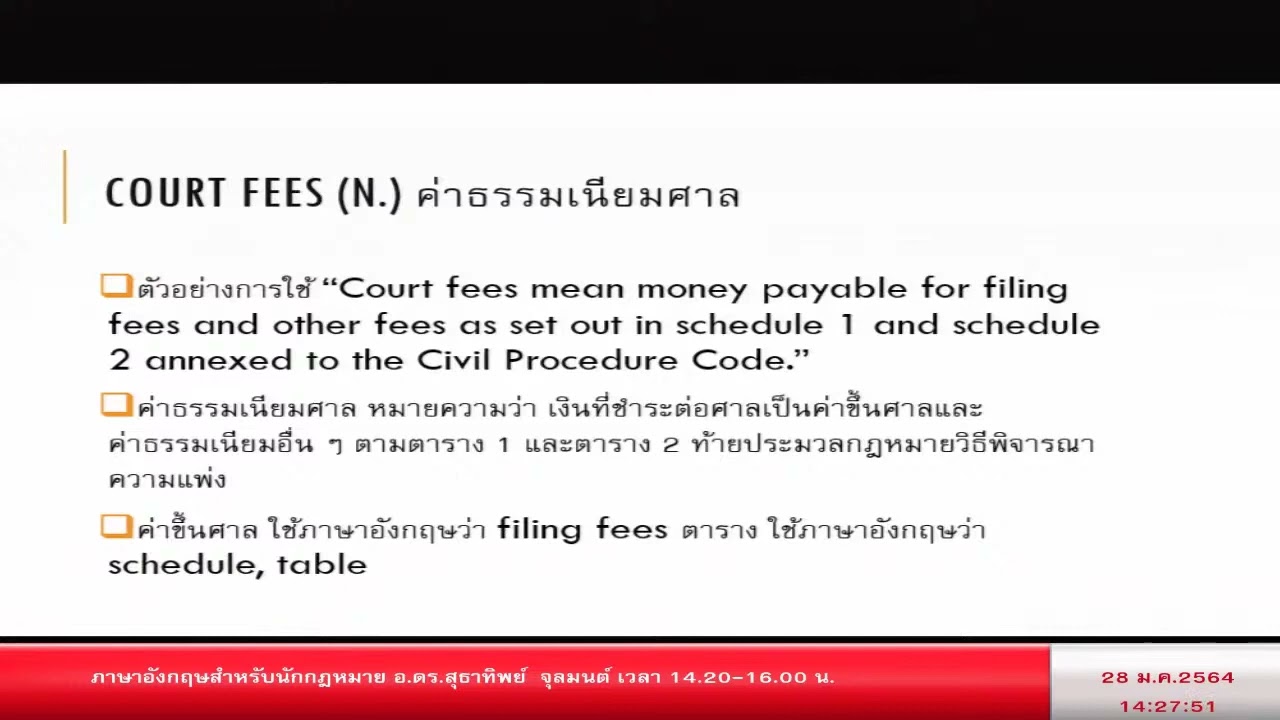
2 73 อังกฤษนักกฎหมาย อ สุธาทิพย์ ครั้งที่ 10
543
Key legal vocabulary: (1) Question of law - a legal issue requiring interpretation of legal principles; (2) Question of fact - an issue requiring determination of what actually happened; (3) Evidence - can mean either 'evidence' (proof) or 'evidence law' (the legal rules governing evidence); (4) Cite as evidence - a formal verb meaning to present something as proof in court; (5) Burden of proof - the responsibility to prove a claim; (6) Standard of proof - the level of proof required to establish a claim; (7) Admissible - in legal contexts, means that evidence can be accepted by the court; (8) Admissibility - the noun form meaning the quality of being admissible; (9) Inadmissible - the negative form meaning evidence cannot be accepted by the court; (10) No hearsay shall be admissible by the court - a legal rule stating that hearsay evidence cannot be accepted as proof. When translating legal texts, students should aim for elegant, formal language that matches the legal context.
Click to watch →
Basic Principles of Evidence Law
22.3K
Admissibility ensures only reliable evidence is presented. Section 16 permits hearsay but requires direct testimony; Section 64 mandates primary evidence for documents. Burden of proof rests with the person asserting facts (Section 101) and with the party who would lose if no evidence is produced (Section 102). In criminal cases, the prosecution bears the burden; in civil cases, the plaintiff bears it. An important distinction exists between overall case burden and particular fact burden—failing to prove a specific fact does not automatically determine the overall case outcome.
Click to watch →
English Law of Evidence
2K
Two core concepts govern evidence admissibility: relevance and weight. Relevance, defined by Lord Simon as evidence logically probative or disprobative of matters requiring proof, determines whether evidence should be admitted. Weight measures the probative value—how valuable evidence is in supporting factual submissions. These are deliberative issues, distinct from admissibility which is a matter of law. Courts may exclude relevant and admissible evidence under Rule 32 to secure overriding objectives. The burden of proof comprises legal burden (onus to prove assertions), evidential burden (presenting sufficient evidence), and standard of proof. Statutes or agreements can fix legal burdens, with courts applying the principle that burdens should fall on parties best able to discharge them with least difficulty.
Click to watch →
Robert Brooks Murder Former Marcy NYSDOCCS Michael Fisher Trial Begins
15.1K
This segment covers the rules governing evidence admissibility and the burden of proof in criminal trials. When a lawyer first refers to a physical object, it is marked with a number or letter for identification. Items marked only for identification are not yet evidence and are not available for jury inspection. To admit an object into evidence, the other lawyer is permitted to question the witness about whether the object can be admitted under the law. Throughout criminal proceedings, the defendant is presumed innocent. The defendant does not testify as a witness, and this is not a factor from which any unfavorable inference may be drawn. The burden of proof never shifts from the prosecution to the defendant.
Click to watch →
Deep Dive
An introductory grasp of the stages of a trial, including direct examination, cross-examination, and the role of the finder of fact.

Técnicas de Interrogatorio y Contrainterrogatorio en el Juicio Oral - Néstor Miranda Gutierréz
334
Interrogation and cross-examination are fundamental institutions of oral litigation applied in trials and investigative stages. Direct examination corresponds to the party offering evidence as their own, while cross-examination is conducted by the opposing party. The auto de enjuiciamiento determines which evidence will be admitted for debate. The oral trial has three phases: initial, probative, and decisive. The probative phase is most fundamental where evidence is examined viva voce. Witnesses and experts testify, and material evidence is examined. The party offering evidence conducts direct examination first, followed by cross-examination from the opposing party.
Click to watch →

Examination of witnesses in law of evidence / examination-in-chief cross-examination, re-examination
334
Witness examination consists of three stages: examination-in-chief, cross-examination, and re-examination. Examination-in-chief is conducted by the party who called the witness to establish relevant facts. Advocates cannot ask leading questions but can help witnesses recall details. Witnesses testify only about facts they personally know. Cross-examination is conducted by the adverse party to test credibility and bring out relevant facts. Only the adverse party can cross-examine, though the calling party may cross-examine if the witness gives a statement against their interests. Questions must not be scandalous or insulting.
Click to watch →
Michael Cohen Performs Well on Witness Stand, While Trump Lawyer Stumbles
296.9K
Criminal trials follow a structured examination sequence: (1) Direct examination by the party calling the witness, (2) Cross-examination by the opposing party, and (3) Redirect examination by the original party. This sequence allows each side to present their version of events and address any issues raised during cross-examination.
Click to watch →

LIVE - Impeachment Trial of VP Sara Duterte - DAY 9 (July 22) -Replay | GMA Regional TV
214.8K
In legal testimony, there are four stages of questioning: (1) Direct examination - the party who called the witness asks open-ended questions to elicit testimony; (2) Cross-examination - the opposing party asks questions to test the witness's credibility and testimony; (3) Redirect examination - the original party asks follow-up questions to clarify or repair any misleading statements from cross-examination; (4) Recross examination - the opposing party may ask additional questions to further challenge the testimony. This structured process ensures thorough testing of evidence.
Click to watch →

Introduction to Law Video 10: An introduction to Evidence
5K
There are three stages to the examination of witnesses giving oral evidence. First, evidence in chief is where the witness is questioned by the lawyer who called them, using only open questions (who, what, where, when, how, why). Second, cross-examination is undertaken by the opposing side, using closed or leading questions that suggest the answer. Third, re-examination allows the calling lawyer to clarify answers given during cross-examination, but only using open questions about matters raised in cross-examination.
Click to watch →
Deep Dive
Understanding the general purpose of evidence in legal proceedings to establish or dispute facts.
![THE BHARATIYA SAKSHYA ADHINIYAM, 2023 [Section - 3]](https://i.ytimg.com/vi/tPPu2iesVQo/maxresdefault.jpg)
THE BHARATIYA SAKSHYA ADHINIYAM, 2023 [Section - 3]
1.6K
Evidence is given in legal proceedings to settle matters in controversy and to establish the existence of facts in issue. The primary purpose of evidence is to prove or disprove the facts that are being contested between parties. Evidence is not admissible for its own sake but only for its relevance to establishing or disproving facts in issue.
Click to watch →

Le cas pratique sur la preuve
133
The purpose of evidence in legal disputes is to establish facts when parties have different versions of events. When both parties agree on the existence and content of a legal act (such as a contract), there is no need for evidence because there is no dispute to resolve. Evidence becomes relevant only when there is a disagreement about what actually happened or what the legal act contains.
Click to watch →

CPO,WCPO🎯INDIAN EVIDENCE ACT-1 | ഇന്ത്യൻ തെളിവ് നിയമം | Knowledge Factory PSC
19K
Evidence is used in court proceedings to establish facts and determine the truth of a matter. The primary purpose of evidence is to help the court understand what happened in a case. Evidence is presented during trials to help judges and magistrates make informed decisions about guilt or innocence. The evidence presented must be relevant to the case and admissible under the law.
Click to watch →

La carga dinámica de la prueba
1.4K
The fundamental purpose of evidence in civil, labor, penal, and administrative proceedings is to verify the truth of the facts alleged by the parties. Different types of evidence serve this common goal of establishing factual truth.
Click to watch →

نظرة عامة فى قانون الإثبات الغردقة أحمد ابوالمعاطى جمعة 📞 01001198303 جنة القيروان
139
Evidence (الإثبات) in legal proceedings serves to establish and prove claims (الدعوى). The purpose of evidence is not to prove the right itself, but to establish the right for the benefit of the party claiming it. Evidence is the means by which parties demonstrate their claims to the court. The court then evaluates the evidence to determine whether the claimed rights should be recognized and enforced.
Click to watch →
Prerequisite Knowledge
- Concept 01Basic understanding of the US dual court system, specifically the distinction between federal and state jurisdictions.
- Concept 02Familiarity with fundamental legal terminology such as 'admissibility', 'objection', 'litigation', and the 'burden of proof'.
- Concept 03An introductory grasp of the stages of a trial, including direct examination, cross-examination, and the role of the finder of fact.
- Concept 04Understanding the general purpose of evidence in legal proceedings to establish or dispute facts.
Subsequent Learning
- Step 01In-depth study of specific, highly-litigated sections of the FRE, such as Relevance (Article IV) and the Hearsay Rule (Article VIII) with its exceptions.
- Step 02Analysis of witness competency and the standards for admitting expert testimony, including the Daubert and Frye standards (Article VII).
- Step 03Practical application of the rules through drafting 'motions in limine' and practicing courtroom objections.
- Step 04Comparative analysis of the Federal Rules of Evidence against state-specific codes of evidence (e.g., the California Evidence Code).
Rule Basics
Building Confidence
Rule Basics
0:03Playing Section
- 1
Guides locating the Federal Rules of Evidence online, highlighting Cornell's free version.
- 2
Advises beginners to explore article groupings and headings for structure.
- 3
Explains rule layout: text, publication dates, and advisory committee notes.
The 'Free Proof' Theory and Critique of Evidentiary Formalism
While guides to the Federal Rules of Evidence (FRE) emphasize their role in ensuring fairness and efficiency, a significant counter-perspective argues that rigid exclusionary rules actively obstruct the search for truth. Originating from Jeremy Bentham’s 'free proof' theory, this critique posits that formal rules excluding relevant evidence—such as strict hearsay bans or character evidence limitations—unnecessarily withhold vital information from the trier of fact. Proponents of this view argue that judges and juries should be trusted to evaluate all logically relevant information naturally, as is common in civil law jurisdictions. Furthermore, legal realists and critical legal theorists contend that the FRE are not neutral; rather, the vast judicial discretion embedded within rules like Rule 403 (balancing probative value against prejudice) allows systemic biases regarding race, class, and credibility to influence what evidence is ultimately admitted.
Deep Dive
In-depth study of specific, highly-litigated sections of the FRE, such as Relevance (Article IV) and the Hearsay Rule (Article VIII) with its exceptions.

Overview of the Federal Rules of Evidence (Part 3 of 3)
452
Rule 804 contains five additional hearsay exceptions requiring declarant unavailability, added by Congress as compromise. Rule 805 permits hearsay within hearsay if exceptions exist for each layer. Rule 806 allows credibility of hearsay declarant to be attacked or supported like any other witness's credibility. The speaker recommends devoting four of five study days to Article 8 hearsay rules due to their importance.
Click to watch →
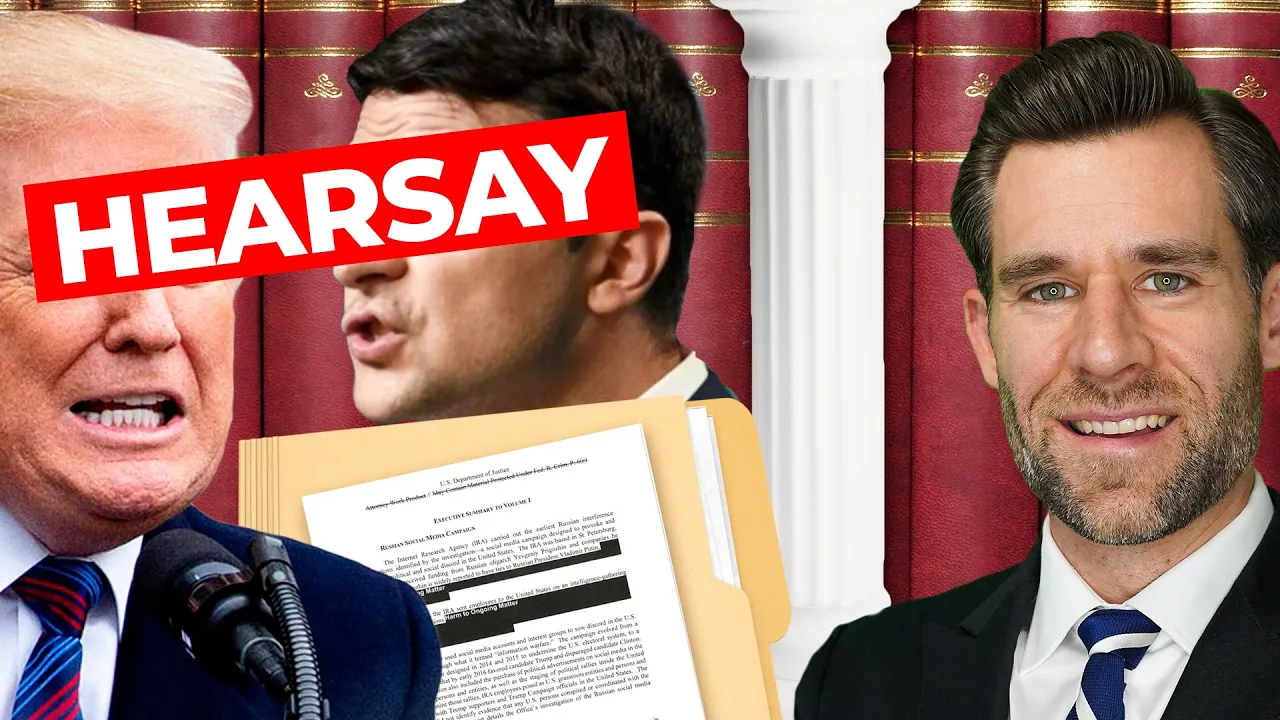
Is the Whistleblower Complaint HEARSAY? - Real Law Review
399.9K
The Federal Rules of Evidence contain numerous exceptions to the hearsay rule that effectively allow most hearsay evidence to be admitted. These exceptions are found in FRE 801, 803, and 804. Some exceptions classify certain statements as 'non-hearsay' rather than exceptions, which creates some conceptual confusion in practice.
Click to watch →

The Federal Rules of Evidence - Part 1
89.5K
Article 4 establishes the foundational philosophy of federal evidence rules. Rule 402 anchors the system: all relevant evidence is admissible except where rules say otherwise, and irrelevant evidence is excluded. Rule 401 defines relevance broadly as evidence having any tendency to make a fact more or less probable than without it—this is an extremely broad definition meaning nearly all offered evidence qualifies. Rule 403 grants judges wide discretion to exclude even relevant evidence if it is unfairly prejudicial, confuses issues, misleads the jury, causes undue delay, wastes time, or is cumulative. Common invalid objections include 'self-serving,' 'parole evidence rule,' and 'calls for mental operation.'
Click to watch →
Objection: Hearsay!
69.7K
Evidence law is governed by the Federal Rules of Evidence, which parallel state rules. The foundational principle is that relevant evidence is admissible unless overridden by constitutional provisions, federal statutes, or the Rules themselves. Hearsay is defined as a statement made by someone other than the person testifying, offered to prove the truth of what the statement asserts. Statements that are not hearsay include a declarant's own prior statements (when testifying), opposing party statements, and statements authorized or adopted by the party. Key hearsay exceptions include excited utterances (statements made under stress of excitement from a startling event), statements made for medical diagnosis or treatment (patients unlikely to lie to doctors), and public records like birth and death certificates (government officials have no personal stake). These exceptions reflect the evidence law's purpose: allowing relevant, reliable evidence while excluding unreliable hearsay.
Click to watch →
Hearsay Evidence Explained: Law School & Bar Exam Guide
625
Rule 803 exceptions apply regardless of declarant availability. Key exceptions include: (1) Present sense impression: statement describing event while perceiving it; (2) Excited utterance: statement made under stress of excitement; (3) Then-existing condition: statement about mental, physical, or emotional condition; (4) Statements for medical diagnosis: liberally construed; (5) Recorded recollection: witness wrote record and now cannot remember; (6) Regularly conducted activity: routine business records; (7) Public records: official government records; (8) Ancient documents: 20+ years old; (9) Treatises: substantive content; (10) Family records: statements about family history; (11) Marriage certificates; (12) Felony convictions: admissible in subsequent civil cases.
Click to watch →
Deep Dive
Analysis of witness competency and the standards for admitting expert testimony, including the Daubert and Frye standards (Article VII).
Part 5: Expert Witness Testimony: Frye, Daubert & FRE 702
1.8K
In American courts, expert witness testimony is governed by evolving standards: the Frye standard (general acceptance test from 1927) required scientific techniques to gain majority acceptance within the relevant scientific community before admission, while the Daubert standard (codified in FRE 702) shifts gatekeeping responsibility to judges who must evaluate reliability through factors including testing, peer review, error rates, and controlled standards, allowing minority scientific opinions to be considered if they meet these criteria; however, implementation varies significantly across states, with some continuing to use Frye and others adopting Daubert, creating inconsistencies in how scientific evidence is admitted in criminal and civil proceedings.
Click to watch →
Introduction to Forensic Mental Health Evaluation (2020 Update)
4K
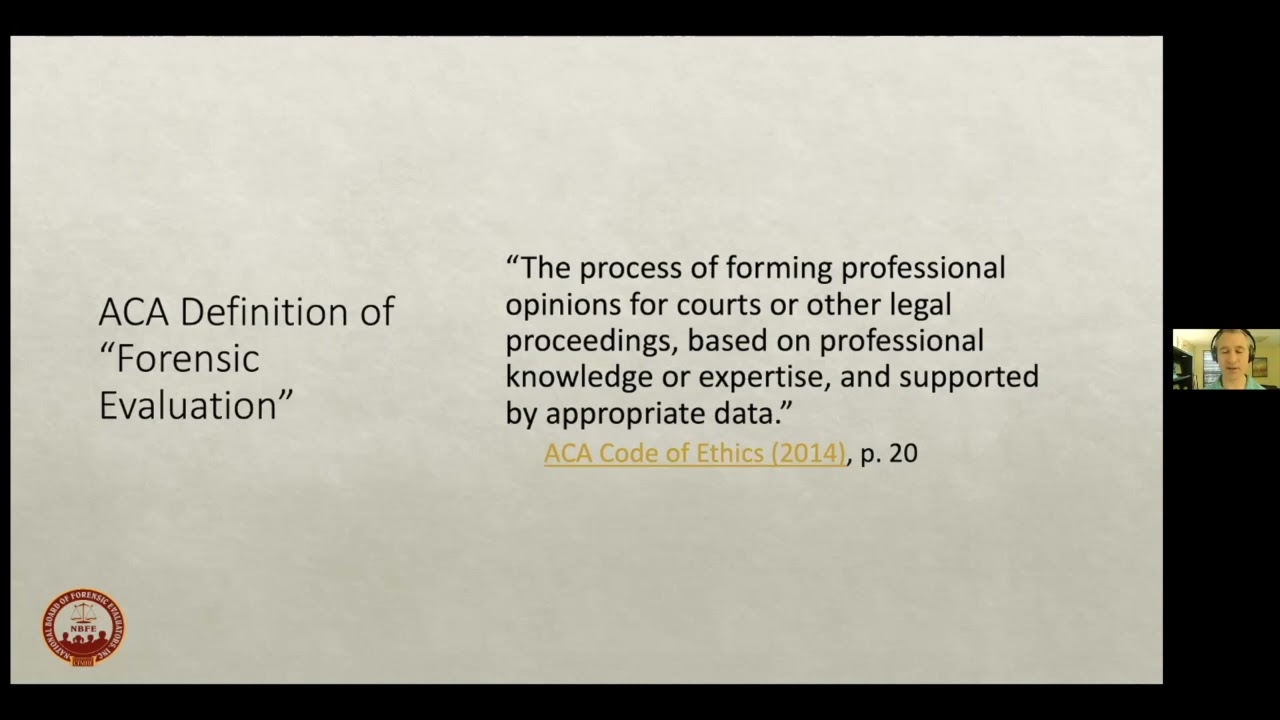
Frye standard requires expert testimony to be based on generally accepted principles and methods. Daubert standard, increasingly used in federal and state courts, requires judges to determine: (1) Whether testimony is based on reliable facts or data; (2) Whether it uses reliable principles and methods; (3) Whether the witness applied those methods reliably to the specific case. Judges ultimately decide expert admissibility under Daubert, making it essential for evaluators to understand these standards when preparing testimony.
Click to watch →
Angel Bumpass
2.2K
The Daubert and Frye standards are the two standards for what is acceptable for expert testimony in a court of law. They guide what science and what expert testimony can be admitted into courts. The Daubert standard is applied by federal courts and focuses on whether the scientific method was used, whether the theory can be tested, whether it has been peer-reviewed, and whether it has a known error rate. The Frye standard, used by many states, focuses on whether the scientific community generally accepts the methodology. These standards help ensure that expert testimony is reliable and based on sound scientific principles.
Click to watch →
Expert Testimony
22.5K
In Daubert v. Merrell Dow Pharmaceuticals, Inc., the Supreme Court held that the Federal Rules of Evidence implicitly overturned the Frye standard. The Daubert standard provides four factors for courts to determine admissibility: (1) whether the expert's theory or technique can be tested and has been tested, (2) whether the theory or technique has an acceptable known or potential rate of error, (3) whether there exist standards controlling the technique's operation, and (4) whether the theory or technique has attained general acceptance. Currently, 22 states in the US have adopted this standard for analyzing expert witness rules.
Click to watch →
Frye Vs. Daubert
2.5K
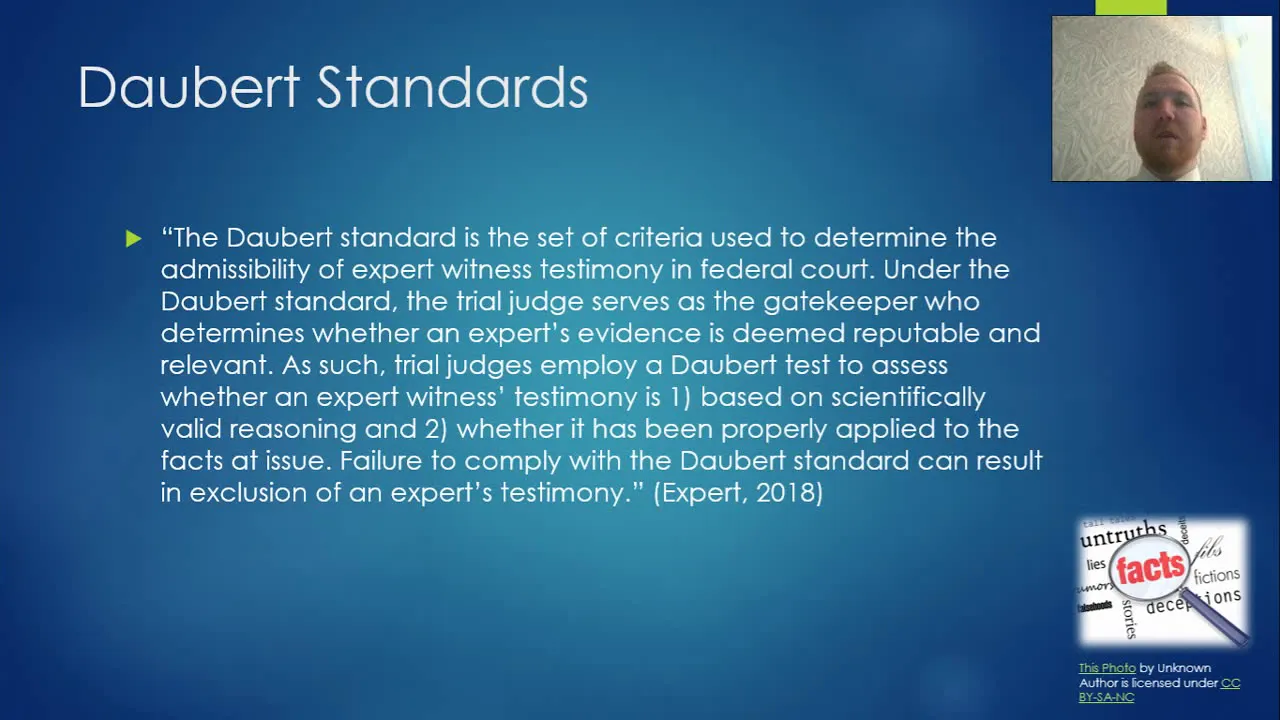
The Frye standard (general acceptance test) allows scientific evidence admissible only if it is generally accepted in the scientific community, while the Daubert standard (used in federal courts) requires judges to evaluate expert testimony based on specific criteria including testability, peer review, error rates, and scientific validity before determining admissibility.
Click to watch →
Deep Dive
Practical application of the rules through drafting 'motions in limine' and practicing courtroom objections.
![A Guide to a Motion in Limine [Tips + Definition]](https://i.ytimg.com/vi/3JDpqGNb7SU/maxresdefault.jpg)
A Guide to a Motion in Limine [Tips + Definition]
18.8K
A motion in limine is a pre-trial legal motion that prevents opposing counsel from introducing potentially inadmissible evidence or facts in front of the jury without first obtaining a court ruling on admissibility; unlike a traditional objection which occurs during trial, a motion in limine addresses facts that could unfairly prejudice the jury before they become part of the trial record, and when violated, attorneys must decide whether to pursue a mistrial or seek a jury instruction to disregard the improper evidence.
Click to watch →

Trial Objections - Procedures, strategies, and the 18 most common courtroom objections.
71.4K
Trial objections are procedural devices used to notify the court of improper conduct during testimony, serving two main purposes: keeping opponents following rules and preserving issues for appellate review; objections must be timely (made immediately at the moment of the infraction) and specific (stating clear legal grounds), and attorneys should have a cheat sheet of common objections ready for quick reference during fast-paced testimony, with the 18 most common objections including relevance, vague and ambiguous questions, speculation, leading questions, lack of foundation/personal knowledge, non-responsive answers, compound questions, hearsay, improper lay opinion, assumes facts not in evidence, misstates evidence, argumentative questions, narrative, repetition, undue prejudice, character evidence, and beyond the scope.
Click to watch →

Lively v. Wayfarer April 10 Filings Recap
13.7K
Motions in limine are typically filed in large numbers because parties want to exclude as much unfavorable evidence as possible. Parties know they won't win on all motions, so they file many to maximize the chance of excluding some evidence. This is standard practice in complex litigation. Judges typically handle evidence objections at trial rather than pre-trial, unless the evidence would so prejudice the jury that they couldn't make a fair decision. Parties raise objections during trial when evidence is presented, and judges make rulings in sidebar conferences or chambers. This allows judges to assess the actual impact of evidence on the jury.
Click to watch →
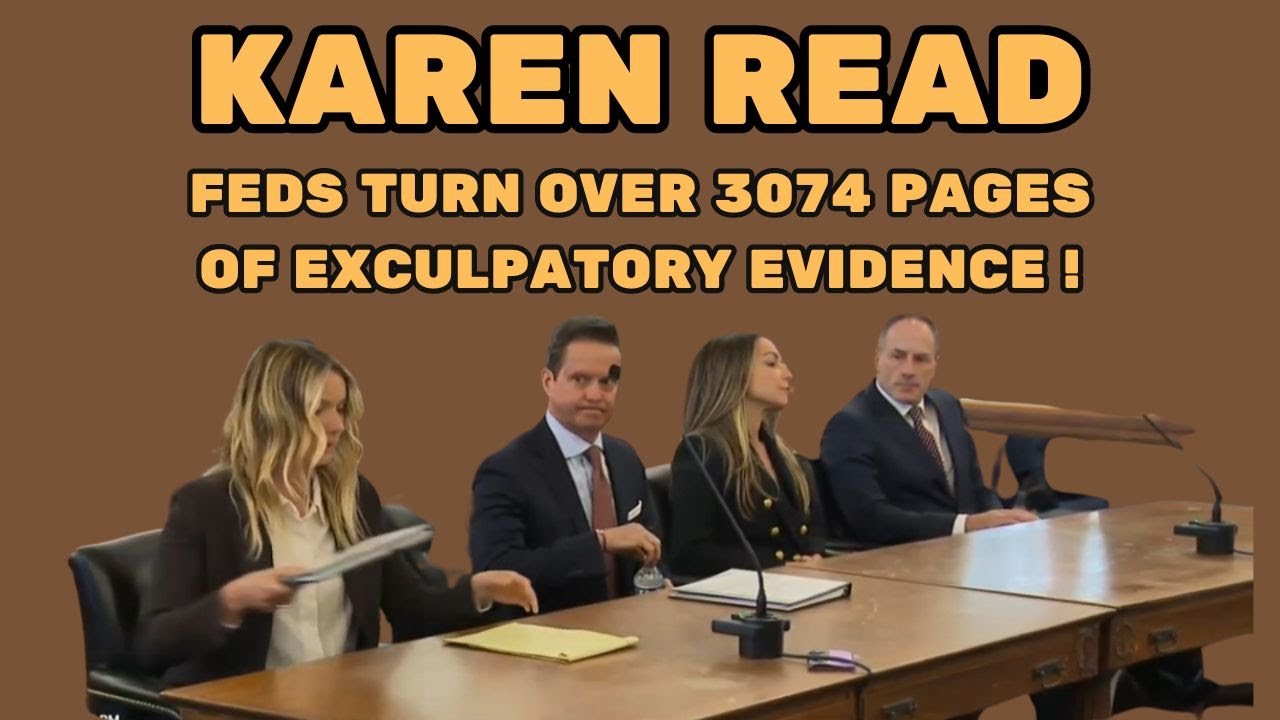
Atty Reacts: KAREN READ 2/26/24 Hearing - 3074 pages of exculpatory evidence received from Feds!
34.1K
Motions in limine are evidentiary motions filed before trial to either exclude or include certain evidence at trial. The defense may file motions to preclude references to prejudicial information (such as hearsay about events in Aruba or between Karen and Higgins) that would be more prejudicial than probative. The court rules on these motions outside the presence of the jury before trial. These motions help ensure that only relevant and admissible evidence is presented during the actual trial. The defense noted that the Commonwealth had made an additional TRO request to the US Attorney's Office on Friday, which could take 'another couple of weeks' to resolve, further complicating the discovery timeline.
Click to watch →

LIVE💥Karen Read Catch Up Part Deux💥'Til Tuesday...
46.1K
Motions in limine are pre-trial motions made to exclude certain evidence from trial or to include certain evidence. The host analyzed how the defense argued that certain evidence should not be admitted without proper chain of custody and metadata. The analysis examined how the judge serves as the gatekeeper for what evidence can be presented to the jury, and how motions in limine help establish the boundaries of what will be allowed during the trial. This demonstrates the procedural mechanisms for controlling evidence at trial.
Click to watch →
Deep Dive
Comparative analysis of the Federal Rules of Evidence against state-specific codes of evidence (e.g., the California Evidence Code).

California vs. Federal Evidence Rules: Key Differences Explained
522
California's Evidence Code differs significantly from the Federal Rules of Evidence in several key areas: (1) Relevancy standards—California requires facts to be in dispute, while federal rules accept facts of consequence; (2) Public policy exclusions—California bars expressions of sympathy and certain offers to pay medical expenses that federal courts may admit; (3) Character evidence—California allows specific instances of victim character while federal rules limit to opinion/reputation; (4) Hearsay exceptions—California has stricter requirements for dying declarations (actual death required) and broader exceptions for child abuse statements; (5) Authentication—California uses a secondary evidence rule instead of the federal best evidence rule; (6) Scientific evidence—California focuses on general scientific acceptance while federal courts apply the Daubert five-factor test; (7) Polygraph tests—Federal courts allow them under notice requirements while California prohibits them.
Click to watch →

Relevance & the Rules of Evidence
4.5K
Evidence is relevant if it has any tendency to make a fact more or less probable than it would be without the evidence, and that fact must be of consequence in determining the action; under both the Federal Rules of Evidence (Rule 401) and California Evidence Code Section 210, relevant evidence is admissible unless excluded under specific rules like Rule 403 (federal) or Section 352 (California), which allow courts to exclude evidence when its probative value is substantially outweighed by concerns such as unfair prejudice, confusion of issues, misleading the jury, undue delay, waste of time, or cumulative redundancy.
Click to watch →

Evidence Essay Approach
13.7K
When answering evidence questions, always include an introduction stating whether California Evidence Code or Federal Rules of Evidence apply. California distinctions are highlighted in red in the materials. If the question does not specify 'answer according to California law,' assume federal rules apply.
Click to watch →

Cops Say Man Called Them to Brag About Evading Them During Chase
47.4K
The Federal Rules of Evidence (FRE) are the primary rules of evidence used in federal courts, and most states have adopted similar rules. For example, Michigan uses the Michigan Rules of Evidence (MRE), which closely mirror the FRE. This means that evidence rules are largely consistent across different jurisdictions, making legal education focused on federal rules applicable to most state courts. Understanding these rules is essential for anyone involved in legal proceedings.
Click to watch →

Self Help Law - Using Evidence and Procedures to Win
17.5K
Most states use the federal Rules of Evidence, though states have their own rules. The federal Rules of Evidence are a very good starting point to learn Rules of Evidence. They are broken down subject by subject.
Click to watch →
Rule Basics
Building Confidence
Rule Basics
0:03- 1
Guides locating the Federal Rules of Evidence online, highlighting Cornell's free version.
- 2
Advises beginners to explore article groupings and headings for structure.
- 3
Explains rule layout: text, publication dates, and advisory committee notes.
The 'Free Proof' Theory and Critique of Evidentiary Formalism
While guides to the Federal Rules of Evidence (FRE) emphasize their role in ensuring fairness and efficiency, a significant counter-perspective argues that rigid exclusionary rules actively obstruct the search for truth. Originating from Jeremy Bentham’s 'free proof' theory, this critique posits that formal rules excluding relevant evidence—such as strict hearsay bans or character evidence limitations—unnecessarily withhold vital information from the trier of fact. Proponents of this view argue that judges and juries should be trusted to evaluate all logically relevant information naturally, as is common in civil law jurisdictions. Furthermore, legal realists and critical legal theorists contend that the FRE are not neutral; rather, the vast judicial discretion embedded within rules like Rule 403 (balancing probative value against prejudice) allows systemic biases regarding race, class, and credibility to influence what evidence is ultimately admitted.
Basic understanding of the US dual court system, specifically the distinction between federal and state jurisdictions.
Familiarity with fundamental legal terminology such as 'admissibility', 'objection', 'litigation', and the 'burden of proof'.
An introductory grasp of the stages of a trial, including direct examination, cross-examination, and the role of the finder of fact.
Understanding the general purpose of evidence in legal proceedings to establish or dispute facts.
In-depth study of specific, highly-litigated sections of the FRE, such as Relevance (Article IV) and the Hearsay Rule (Article VIII) with its exceptions.
Analysis of witness competency and the standards for admitting expert testimony, including the Daubert and Frye standards (Article VII).
Practical application of the rules through drafting 'motions in limine' and practicing courtroom objections.
Comparative analysis of the Federal Rules of Evidence against state-specific codes of evidence (e.g., the California Evidence Code).
372 views15likes2:18@wendyporter5365Original Release: 2016-10-06
the purpose of this video is to help introduce you to the federal Rules of Evidence so if you want to find the federal Rules of Evidence you can go to a search engine and type in federal Rules of Evidence and you might see results like the following personally I like to go to Cornell's website they provide a free version of the federal Rules of Evidence and if this is your first time looking at the federal Rules of Evidence I would recommend spending a little bit of time just exploring them I would focus in on looking at the headings for each grouping of Rules of Evidence these are called articles so for example we see article one General Provisions article two judicial notice article 3 presumption civil cases Etc and then rules that relate to those topics are underneath them now if you actually click on one of the rules let's look underneath Article 4 relevance and its limits and let's look at 402 general admissibility of relevant evidence if we click on this we're going to see a number of things first of all at the very top we're going to see the rule itself underneath the rule we will see notes regarding the dates on which the rule was published um if it's been revised Etc underneath that we'll see notes of advisory committee on proposed rules now these notes help people interpret the rules and just understand how they might apply to a specific situation down at the bottom you may see other notes those who are looking at the rules of evidence for the very first time sometimes feel overwhelmed but I want to assure you that as you spend time exploring ing these rules getting to understand them and then eventually applying them to a hypothetical or real life situations you're going to have a lot more confidence in how you use these rules and you'll be much more effective as a legal professional good luck
Up Next
37:52
Hearsay Evidence Explained: Law School & Bar Exam Guide
@PassYourBar
625 views•2018-10-24

4:27
US Secondary Sanctions Impact on EU Businesses and Blocking Legislation
@Bureauvandijk
1.6K views•2019-03-20
5:27
Forensic Phonetics: Speaker Identification in Legal Cases
@nptel-nociitm9240
539 views•2025-03-19

24:42
Police Interrogation Tactics: False Confessions & Legal Reform
@LastWeekTonight
7M views•2022-04-18
Related Study Plans & Knowledge Roadmaps
Structured learning paths in Law
law
Self-Defense Law: Imminence & Castle Doctrine
01Foundations of Self-Defense Law
02Imminent Threat & Reasonable Belief
03The Principle of Proportionality
+ 3 more learning modules
12h6 modules
Explore Roadmap
law
Defamation Law: First Amendment & Actual Malice
01Introduction to civil torts and the First Amendment
02Elements of Defamation: Libel and Slander
03Public Figures vs. Private Individuals
+ 2 more learning modules
8h5 modules
Explore Roadmap
law
Hearsay Rule: Trial Evidence & Exceptions
01Introduction to Trial Evidence & Courtroom Basics
02Demystifying Hearsay: The Core Definition
03Non-Hearsay: Exclusions Under FRE 801(d)
+ 3 more learning modules
14h6 modules
Explore Roadmap
law
Medical Malpractice: Law, Liability & Care
01Foundations of Tort Law and Civil Liability
02The Four Elements of Medical Malpractice
03Defining and Proving the Standard of Care
+ 2 more learning modules
12h5 modules
Explore Roadmap