



















Materials Recycling Facilities (MRFs) use a combination of manual, mechanical, and optical sorting technologies to separate mixed recyclables into marketable commodities; the process involves multiple stages including tip floors, star screens, magnets, eddy current separators, and optical sorters that work together to clean and categorize materials like cardboard, paper, glass, aluminum, and plastics before they are baled and sold to recyclers worldwide.
Inside Rhode Island's Materials Recycling Facility: A Virtual Tour
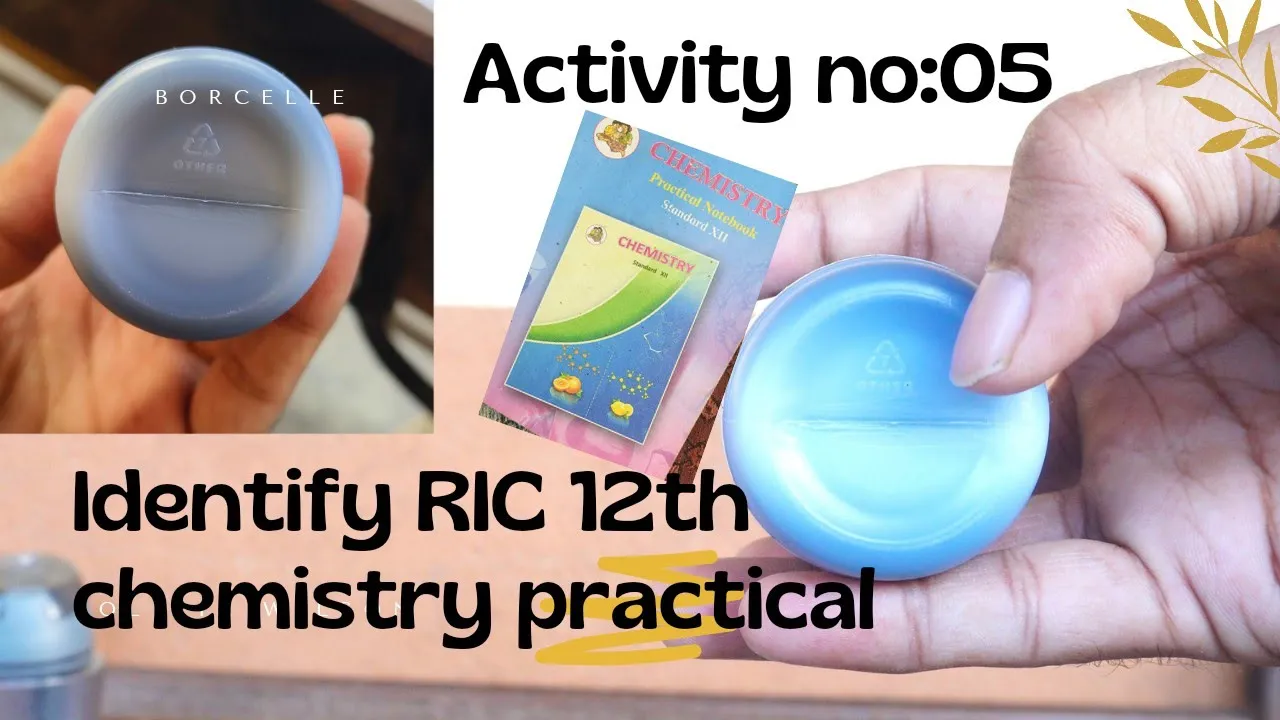
Added:Understanding the basic classification of recyclable materials, including different resin identification codes for plastics (1-7), paper grades, and metals.
The concept of single-stream recycling, where all household and commercial recyclable materials are mixed together in a single bin for collection.
Basic physical science principles used in industrial sorting, such as magnetism (ferrous vs. non-ferrous metals), density, gravity separation, and optical properties.
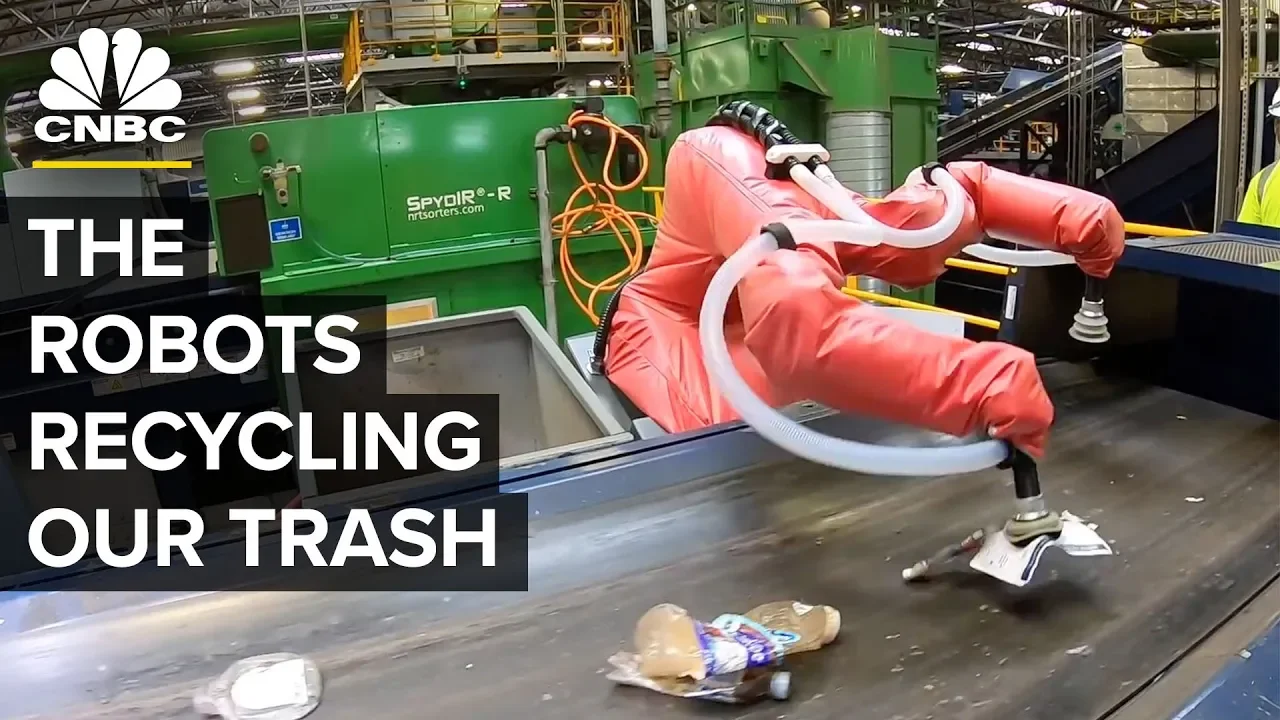
Advanced automation in waste management, including the integration of optical sorters, near-infrared (NIR) spectroscopy, and AI-guided robotic sorting arms.
The global economics of recycling, including commodity markets for raw recycled materials and how contamination rates affect the financial viability of MRFs (Materials Recovery Facilities).
Downstream reprocessing techniques, such as how sorted plastics are washed, shredded, and pelletized, or how glass is processed into cullet for manufacturing.
Sustainable packaging design principles, specifically 'Design for Recycling' (DfR), which aims to eliminate hard-to-separate multi-material packaging at the manufacturing stage.
180.9K views919likes11:44Original Release: 2012-10-23
(Music playing) Ever wonder what happens to your recycling when it leaves the curb?
In this video, you'll get an inside look at RI's new, state-of-the-art Materials Recycling Facility or the "MRF", for short.
All of RI's 39 cities and towns deliver their municipal recyclables to the MRF at the RI Resource Recovery Corporation's facility in Johnston.
Here your recyclables, which can now be mixed together, are sorted into separate commodities that are sold around the world as raw materials for new products.
So how do we do it?
Let's step inside and find out.
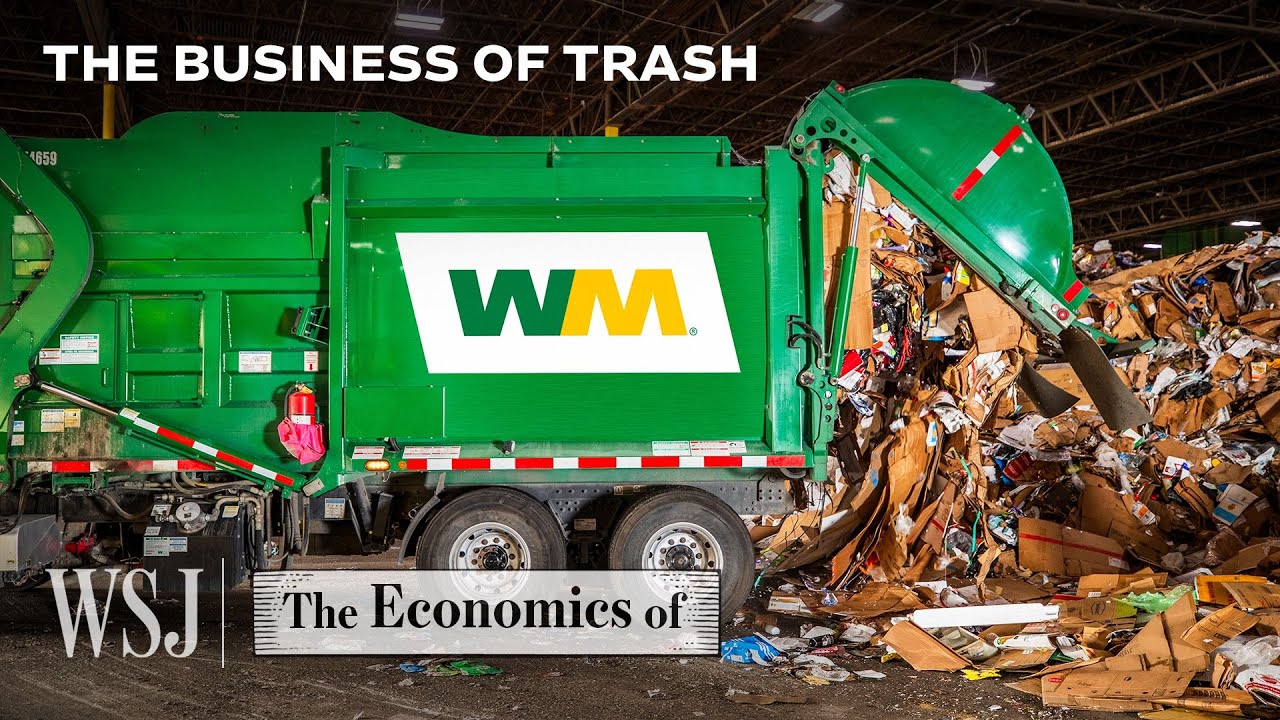
Trucks from across RI bring mixed recyclables to the MRF and their journey begins on the tip floor.
The tip floor is where trucks empty out all of their contents.
From the tip floor, recyclables are scooped up in a payloader and dropped into the first piece of sorting equipment: the drum feeder.
Inside the drum feeder a very large, fast spinning, steel rotor meters out the material, allowing just the right amount to pass onto the next conveyor.
It also loosens materials up, maintaining an ideal density for the next step in the sorting process: the presort.
In the presort area workers are responsible for removing those items that have been incorrectly placed in the recycling receptacles and ALSO have the ability to damage the system they are about to enter.
These items, including scrap metal large bulky plastics, plastic bags textiles, chains, pipes hoses, and rope can cause damage to the equipment injury to workers and a reduction in the quality of the materials we sell to recyclers.
The workers in the pre-sort area try to remove as many of these items as they can before the materials get to the next part of the sorting process: the first star screen.
The facility contains 4 different star screens.
Star screens are wide, steel boxes containing rows of steel shafts.
On each individual shaft is a series of star-shaped disks, and depending on the screen, these disks will vary in their composition, their size and their spacing.
These factors determine which items will surf over the disks and which will pass through the space between them.
The first screen uses very large, rubber, widely-spaced stars to separate out the bigger pieces of cardboard.
Sorters perform quality control on this stream of cardboard picking out any other items that managed to surf over and dropping them down a chute that will take them where they need to be.
Across the way on the commingled sorting deck workers are assigned to the rest of the mixed recyclables that fell through the first star screen.
They continue to pull out troublesome items like plastic bags and scrap metal but also pull out the smaller pieces of cardboard that didn't surf over the top of the stars.
The smaller pieces of cardboard they pick fall to a conveyor belt below that meets up with the one already carrying the large cardboard, bringing all the cardboard together before the mixed recyclables encounter the next set of star screens: the Fiber-Container and Commingled Screens.
The fiber-container screens are much different than the first screen for cardboard.
The stars are much smaller and the entire screen is positioned at an angle.
The screen is also double-stacked meaning there is a second set of identical screens just below the first.
Here, light, fluffy paper which we call newsprint is able to climb up the screens.
What can't make the climb are those items that have more bulk and dimension to them- in other words, all of the recyclable containers.
Containers succumb to gravity and roll backwards to the bottom of the fiber-container screens where a conveyor belt catches and moves them on to the next screen -- the commingled screen.
The commingled screen is also set at an angle, but the stars are extremely close together.
Here, aided by air blowing up from underneath newsprint and other types of mixed paper are able to climb up the screens and the containers roll back once again and make parting ways with remaining fiber.
The containers are then moved by conveyor belt to the other side of the facility.
Next up is the fiber sorting deck.
Here, sorters perform quality control on the paper that has just climbed over one or more of the screens.
Sorters continue to pull out improperly recycled plastic bags and film but also try to catch any cardboard or containers that made the climb.
Why would a container make the climb?
When people crush or stomp on containers until they are completely flat it essentially makes those containers act like paper in the sorting system.
For this reason, we ask our residents to refrain from completely flattening their containers.
Light compaction is OK.
We now we have three separate commodities on the fiber end of things with lines of cardboard, the light, fluffy newsprint, and the smaller scraps of mixed paper, but before we see how it all turns out in the end, let's pause and go see what happened to everything else: all those things that rolled back off the second set of star screens: the containers.
The first thing that the line of mixed containers encounters is a large, powerful, permanent magnet that is suspended over the belt carrying them.
The magnet itself is surrounded by a circular belt that continuously spins around, attracting those containers that contain iron - steel and tin cans.
The overhead magnet essentially pulls steel and tin cans off the conveyor belt running below, and then releases them at its non-magnetized end, away from other mixed recyclables and onto their own conveyor belt.
The remaining mix continues on its way until it reaches the glass breaking screen.
The broken glass is then transported by conveyor to the glass processing deck where a hammer-mill smashes them down to even smaller pieces.
Now back to the remaining containers that surfed over the glass breaking screen.
The next piece of sorting equipment is the Eddy current separator used to mechanically sort out aluminum recyclables from the mix.
While containers containing iron, like steel or tin cans, were picked up by our permanent overhead magnet, all the aluminum cans, foil, and pie plates that do not contain iron passed under that magnet untouched.
Now they meet their match with the Eddy current separator which rotates to create a changing magnetic field.
This changing magnetic field creates an electric current, called an Eddy current, in the aluminum, causing it to repel away from the conveyor belt, while other materials drop off at the end.
After some quality control to remove hitchhikers- those items that were swept up by the sheer force of the cans repulsion- it's time to get them to the opposite side of the facility.
Space is tight, so a large rotary fan produces a high velocity flow of air to carry the aluminum cans through a network of steel pipes, all the way across the plant to their storage bin.
So what's left in the container stream?
We've sorted out the steel, tin, glass, and aluminum.
What we have left is a mix of plastic containers.
But along with those plastic containers, there is still some film and some paper and we need to clean that up.
That brings us to our first optical sorter.
There are 4 optical sorters in the facility.
Using their ability to judge how light reflects off various materials differently, these devices can distinguish between different materials based on their type, shape, and color, all depending on how we set our controls.
Once a targeted item is recognized, an instantaneous blast of air will move it to where it needs to go next.
At this first optical sorter, paper is targeted and removed from the plastic container stream.
Remaining plastic containers will then drop below and into the ballistic separator.
Though it cannot be seen in action, this large machine is used to remove remaining plastic bags and film.
It contains a series of side-by-side, rectangular paddles that are stationed at an angle and move in such a way that plastic film walks forward while containers roll back and continue on to the remaining optical sorters.
These optical sorters will sort out the plastic containers into 3 separate commodities: clear bottles, natural plastic jugs, and colored jugs, leaving a 4th container mix.
One of the best features of the optical sorting system is our ability to change what it sorts for, depending on how recycling markets change over time.
Now we're almost to the end!
And, if you can recall, the containers are now in the same position where we left the fiber.
The final step in the sorting process is the last line of quality control.
Sorters on both the fiber lines and the container lines make sure everything is where it needs to be before each of these individual commodities falls into its own storage bunker.
Here, the recyclables remain until the bunker fills and we are ready to make the finished product.
Once ready, the storage bunker's door will open and its contents will move on yet another conveyor belt.
which brings us to the last machine in the process before materials are shipped to markets around the globe- the baler.
There are 2 balers in total -- one used for the fiber and one used for the containers.
The balers compact recyclables at very high pressures to produce large, dense cubes of material, which are then wrapped with wire so they stay intact while they travel.
Each bale can weigh anywhere between 1/2 and 1 full ton.
The bales are then moved to their waiting area so they are ready for pick-up and delivery to recyclers.
The sale of recyclables often results in a profit, and that profit is shared back with each of RI's 39 cities and towns, according to how many tons they deliver to us each year.
The more you recycle, the more your city or town earns and can reinvest back into recycling programs.
Recycling makes sense!
So there you have it.
Our state-of-the- art MRF uses a combination of manual, mechanical, and optical sorting technologies to produce separate bales of each product we sell.
The MRF is a technological marvel.
That means you don't have to lose sleep over making a recycling mistake; However, the more you know about what can and cannot be recycled, and the better job each of us does in correctly preparing our recyclables for pick-up, the better it is for keeping our system working efficiently, keeping our workers safe, and producing a higher quality product.
For everything you need to know about RI's program, please visit us at www.recycletogetherri.org.
This video has been brought to you by the RI Resource Recovery Corporation.
Working together to recycle more.
Up Next
59:33
The Economics of Waste Management and Recycling
@CNBC
1.2M views•2024-01-08

26:22
Walking in the City: Urban Rituals and the Flâneur in Contemporary India
@PSBTIndia
1.9K views•2016-08-02

9:49
FastAPI vs Flask vs Django: Choosing the Right Python Web Framework
@TechWithTim
302.5K views•2024-05-26

1:42
Game of Thrones Opening Credits: A Cinematic Analysis
@gameofthrones
46.3M views•2011-04-18
Related Study Plans & Knowledge Roadmaps
Structured learning paths in General & Interdisciplinary Studies
general-studies
Artificial Light: History, Tech & Human Impact
01The Pre-Electric Era: Fire, Oil, and Gas Lighting
02The Incandescent Revolution and Grid Electrification
03Gas Discharge and Fluorescent Illumination
+ 3 more learning modules
14h6 modules
Explore Roadmap
general-studies
Elevator Engineering: History, Physics & Cities
01From Hoists to Safety Brakes: The Dawn of Vertical Lift
02Hydraulic vs. Traction: The Engineering Physics of Elevators
03Modern Speed, Safety, and Algorithms
+ 2 more learning modules
12h5 modules
Explore Roadmap
general-studies
Rubber: Material Science, History & Geopolitics
01Origins of Natural Rubber & Mesoamerican History
02The Chemistry of Natural Rubber & Vulcanization
03The Geopolitics of the Rubber Boom & Colonization
+ 2 more learning modules
12h5 modules
Explore Roadmap
general-studies
Containerization: Evolution, Logistics & Trade
01Ancient Trade & Bulk Cargo: Amphorae to Barrels
02The Industrial Revolution & Cardboard Packaging
03The Containerization Revolution: Malcom McLean
+ 2 more learning modules
12h5 modules
Explore Roadmap