
















The global waste management industry has evolved from simple disposal to a sophisticated $208 billion business in North America alone, where innovative approaches like waste-to-energy conversion, landfill mining, and river cleanup technologies are transforming trash into valuable resources such as electricity, metals, and clean water, demonstrating that environmental sustainability and economic profitability can be achieved simultaneously through proper waste management infrastructure and circular economy principles.
The Economics of Waste Management and Recycling
Added:The economic concept of negative externalities, specifically how waste generation imposes costs on society that are not reflected in market prices.
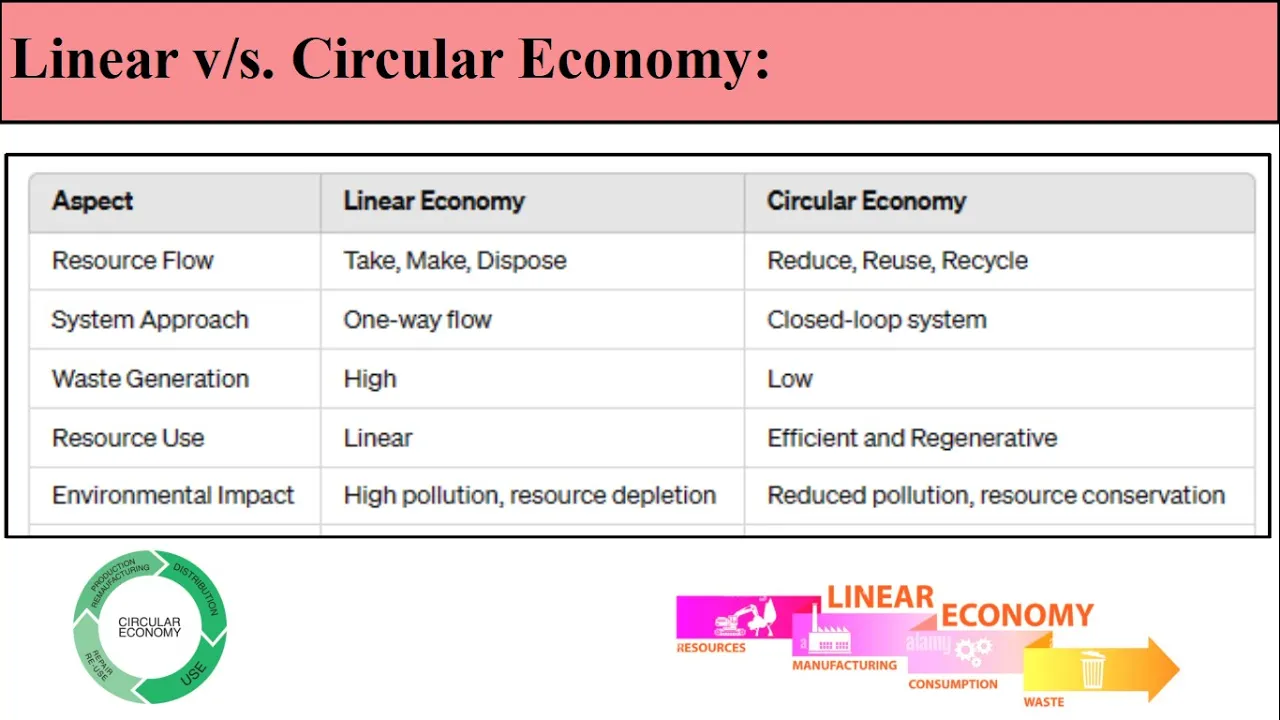
The fundamental difference between a linear economy (take-make-dispose) and a circular economy (reducing, reusing, and recycling resources).
Basic principles of supply and demand, and how they dictate the fluctuating market commodity values of recycled materials like paper, plastics, and metals.
An introductory understanding of traditional waste disposal infrastructure, including the basic operation and environmental challenges of sanitary landfills.
Extended Producer Responsibility (EPR) policy frameworks and how governments incentivize manufacturers to design products for easier end-of-life recycling.
The methodology of Lifecycle Assessment (LCA) to quantitatively measure the environmental impact of a product from raw material extraction to final disposal.
Advanced recycling technologies and chemical processes, such as pyrolysis for plastics and hydrometallurgical extraction for electric vehicle (EV) lithium-ion battery recovery.
The economics of 'urban mining' and how reclaiming valuable e-waste materials impacts global supply chain geopolitics for critical minerals.
1.2M views6.5Klikes59:33Original Release: 2024-01-08
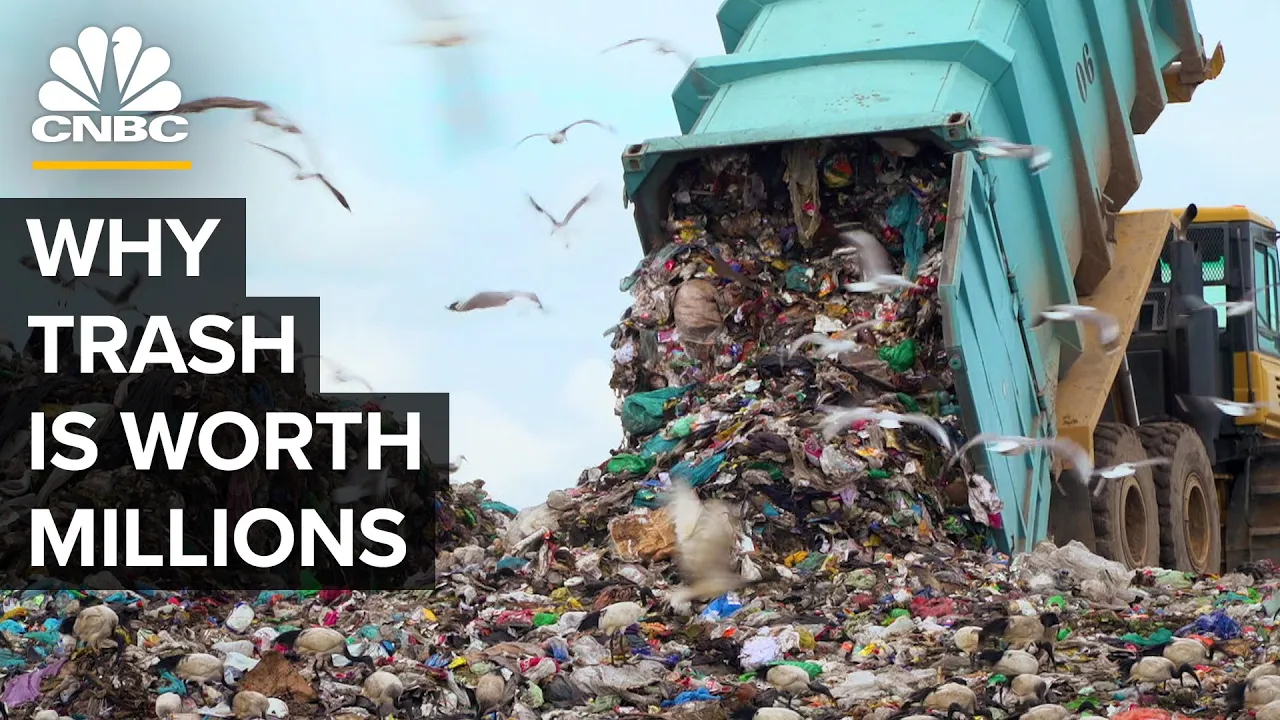
Anytime when I'm going to a landfill, I talk to my kids. I tell them, "you smell the trash and I smell money."
By 2027, the waste management market is expected to grow into a $229 billion industry.
There's an entirely different type of waste management facility that's burning trash instead of burying it.
This combustion is known as waste-to-energy or energy recovery because it's used to generate electricity.
I wouldn't be surprised if the amount of plastics in all the rivers around the world is much more than all the plastics that is in the oceans.
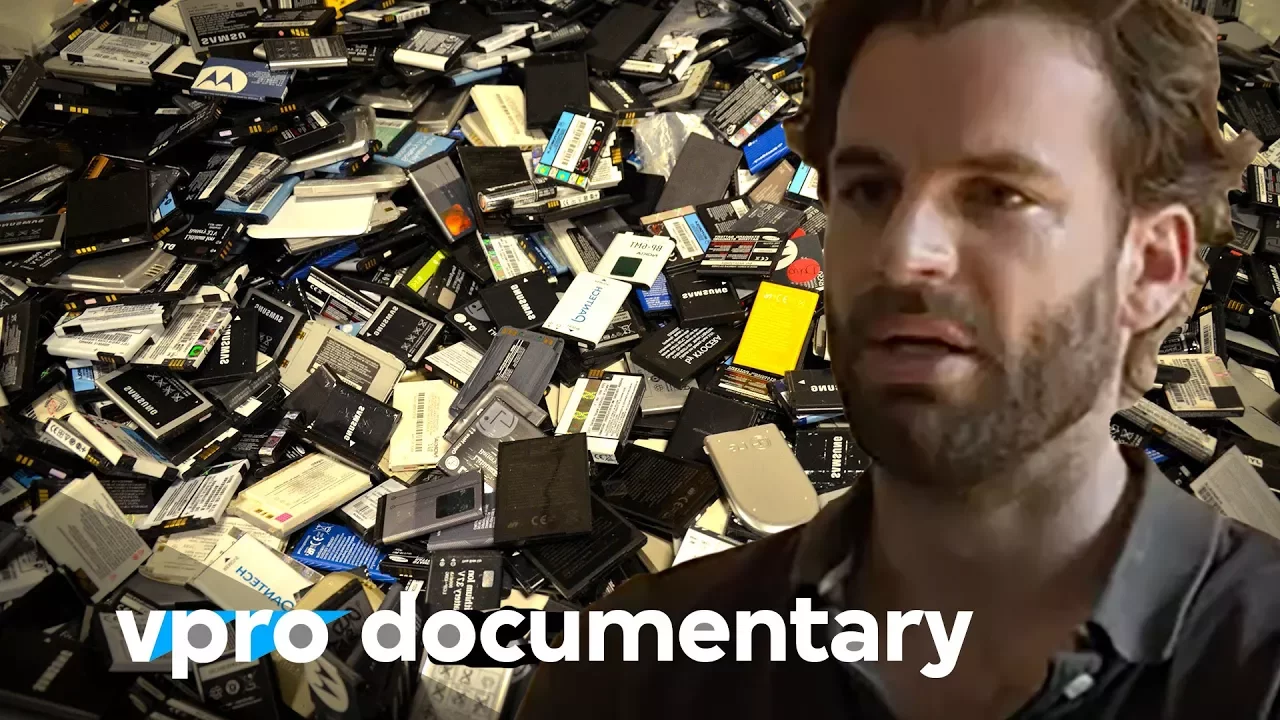
If you're going to call yourself a green company, you don't want your batteries piling up in junkyards.
The degradation of an EV battery pack is one of the biggest questions of the industry.
In 2019, the North American waste management market reached $208 billion.
Strict environmental regulations, as well as a surge in the amount of waste produced, is expected to expand the market even further.
By 2027, the waste management market is expected to grow into a $229 billion industry.
Anytime when I'm going to a landfill, I talk to my kids, you know, I talk to my son and daughter said, "yucky, you're going to come back as a smelly." I told them, "you smell the trash and I smell money."
America remains one of the most wasteful countries in the world, generating 239 million tons of garbage every year, about 1,600 or 1,700 pounds per person. While some view it as a threat to our environment and society, others see it as an opportunity.
It's a profitable industry. It's a difficult industry, but it is profitable if it's done right, and I think that is why there are so many private companies that are involved in waste management.
Thanks to advancements in modern chemistry and the support from the government, landfills have seen astonishing financial success in recent years, raking in millions of dollars in profit. Private solid waste management companies like Waste Management and Republic Services have shown significant growth over the last five years.
They've learned how to be best-in-class businesses, and as they did that, what you saw was this growth occurring in new customer growth, new business formation, linked with consumerism, consumer engagement, housing and the garbage industry, publicly-traded stocks outperformed the market handily between 2015 and 2019.
And underpinning it is a meaningful improvement in their free cash flow conversion.
So how exactly are landfills turning profit out of garbage and just how much money can be made? When people think of landfills, they usually imagine an endless field of garbage emitting a terrible odor and housing all manner of pests.
But modern sanitary landfills today are much more nuanced and a lot less smelly.
A modern landfill is a civil engineering marvel.
These are extraordinarily well-engineered.
They're designed to protect human health and the environment, and at the same time, contain and manage the waste that we generate at four and a half pounds a person per day in the United States.
If you walk past the landfill and there is a smell, that means they are doing something wrong.
Strict regulations and the work by the EPA have changed landfills to become more modern and sanitary than ever.
The Solid Waste Disposal Act of 1965, combined with the Resource Conservation and Recovery Act of 1976, dramatically expanded the federal government's role in managing waste disposal. Open dumps where garbage is dropped off without any protection are now illegal.
When waste is brought to a sanitary landfill, they are disposed into an open section known as the cell.
This cell is protected by a layer of reinforced plastic, known as the liner, that prevents any harmful liquids from leaking out.
Any liquid from the waste is collected at the bottom of the landfill and is removed via a series of pipes, gravels, and sand.
Meanwhile, above ground trash is constantly compressed within the cell, using bulldozers and other compaction equipment, using daily covers to protect the trash from sun, rain, and pests until the cell reaches its max capacity.
Once that happens, either a new cell begins on top or a final cover is placed over.
The site is then continuously monitored for up to 30 years to ensure everything is environmentally sound.
There is the potential for the liner system to leak, for example over long periods of time and probably more likely the cover system, you know, is just going to be subject to that settling and weathering and different things.
So there's the potential for gas emissions.
You want to be monitoring the landfill as long as there's the potential for gas or liquid emissions.
Landfills make a majority of their revenue, even before the garbage makes its way to the pile of trash. Through a tipping fee or a gate fee, landfills charged trucks dropping off their garbage based on their weight per ton.
This fee acts as the lifeblood of most landfills across the United States.
Tipping fee gets its connotation because the truck comes in and tips, if you will, and it literally tips up when the trash is driven out of the trailer through what's known as a walking floor. So tipping is it's your gateway, it's the price per ton, and that is the principal source of income.
In 2020, municipal solid waste landfills had an average tipping of $53.72 per ton.
That translates to roughly $1.4 million a year in approximate average gross revenue for small landfills, and $43.5 million a year for large landfills, just from gate fees.
And tipping fees have seen steady growth over the past four decades.
In 1982, the national average tipping fee sat at $8.07 per ton, or about $23 when adjusted for inflation. That's nearly a 133% increase in 35 years. Tipping fees vary widely depending on where the landfill is located. Hated. For instance, the south central region in the U.S.
has the lowest average tipping fee of $39.66 per ton, with some states like Arkansas reporting a fee as low as $30.53 per ton.
On the other hand, the average tipping fee in the northeast is almost double that at $68.69 per ton, with states like Delaware reporting a fee as high as $85 per ton.
There's a list of reasons, but at its simplest level, is scarcity. So that where tipping fees are the highest, I would venture that you have extraordinarily dense populations and very few disposal options.
The other difference is the cost of building in western Pennsylvania, dealing with rock formations at very shallow level, and literally go 50 miles west and go to Ohio.
The cost of building a landfill in western Pennsylvania versus Ohio are dramatically different.
While tipping fees make landfills sound like a risk-free business, they are still quite an expensive investment.
It can cost about $1.1 to $1.7 million just to construct, operate and close a landfill.
And there are financial obligations that must be met even after the landfill has been closed entirely.
There was a major regulatory change that happened in the '70s called the Resource Conservation Recovery Act. By 1994, every landfill that was in service in North America had to adhere to something called Subtitle D, which is the design operation, and then the lifecycle financial assurance obligations of managing and overseeing that site for 30 years after it closes.
So every business owner, whoever owns the business, they make money up to the time is working.
Then even after closure, they have to pay the maintenance fee, which is runs around $1 million without making money for 30 years.
That's part of their business operations, so they need to make money upfront.
Today, private companies have replaced municipal governments to own and operate the majority of landfills across the U.S.
In 1988, about 7,900 landfills were publicly owned. By 2009, that number had fallen to about 1,900. It's now estimated that more than half of all municipal solid waste landfills are privately-owned, with the industry controlling 85% to 90% of permitted capacity.
Landfills are often owned by private companies and I think it's because the trend has been to go larger and larger. So the small neighborhood dump, you know, can't exist because of the regulation and the sophistication of the design.
So we're tending to see large landfills, which we do require a lot of investment up front.
Two private companies, Waste Management and Republic Services, lead the solid waste management sector. Waste management says it owns nearly 300 landfills across the U.S., while Republic Service says it operates just over 180 out of the 2,627 landfills across America.
Together, the two companies have seen staggering performance in the market, with both companies stock prices doubling in the past five years.
If you take the Great Recession and sort of lay the framework of how to garbage perform post the Great Recession, what what you'll discover there's a five-year window up to 2014 where they did okay. They were, you know, they were in the green, matching or slightly outperforming the market. But the significant outperformance begins in 2014 through 2019.
They've learned how to be best-in-class businesses.
And as they did that, what you saw was this growth occurring in new customer growth, new business formation. Linked with consumerism, consumer engagement, housing and the garbage industry. Publicly-traded stocks outperform the market handily between 2015 and 2019.
And underpinning it is a meaningful improvement in their free cash flow conversion.
Some government jurisdictions have also transitioned to a hybrid ownership in places like Wake County, North Carolina. Landfills are owned by the county but operated by GFL Environmental, a private company.
So if you give it fully privatized, a private company will try to go through the regulation, but their main focus will be making money.
To me, the combination of both is the best choice because that way has certain control over the landfill company.
They will look at only for the profit, but city also needs to make sure that not only the profit, the environmental sustainability, environmental cases and people's life, everything is maintained in the right way.
Private companies have also discovered new ways beyond tipping fees to turn profit out of their garbage. Landfill mining and reclamation A process of extracting and reprocessing materials from older landfills is one of them.
Certainly, looking at waste as a resource is the best thing for the economy.
It's the best thing for the environment, for health. Putting metal in a landfill just makes absolutely no sense.
It's just going to sit in the landfill forever and ever and ever. It'll be some corrosion, but it's pretty much going to sit there. Whereas metals are so easy to recover and recycle, and save so much money and energy and so forth.
In 2011, a private scrap metal company contracted with a nonprofit landfill in southern Maine to mine precious metals.
In four years, they recovered over 37,000 tons of metal worth $7.42 million.
But it isn't always a success story.
In 2017, the city of Denton, Texas, ended their landfill mining program before it could even start. After realizing that the benefits weren't worth its $4.56 million price tag.
According to experts, economics is usually the biggest challenge to make landfill mining work.
There's virtually no way I can see how that makes money. The commodity values would have to be at such higher levels than they are today.
Whatever it is you're trying to get your hands on.
However, some experts claim that landfill mining can be profitable if done correctly.
That's because mining can often recover the most valuable asset of any privately-owned landfill: space.
You get new tipping fee, right?
You put the trash back into that little mined space so as if you build a new landfill without buying new space.
So that space gives you a lot of money when you start backfilling. Many people are mining, but they are not reusing the space.
So they are saying, oh, okay, we cannot make money out of mining. Yes, you cannot.
But if you do the operation right, you're never going to be involved. You will always make money.
Modern chemistry has also allowed landfills to be mined for energy.
When trash decays inside a landfill, it produces methane gas.
For decades, regulations have required landfills to suck out this highly flammable gas and dispose of it safely.
Landfill gas-to-energy projects, however, use the same gas to produce fuel and generate electricity for profit.
The landfill gas operations that are known as low or medium BTU, which are the predominant form of capture the gas policy a little bit, turn it into electricity or steam and then sell it.
Those are good return on capital projects.
According to the U.S. Energy Information Administration, landfill gas generates about 10.5 billion kilowatt hours of electricity every year.
That's enough to power roughly 810,000 homes and heat nearly 540,000 homes each year.
I just did a paper where I was looking at how much electricity you can generate from landfills, compared to how much energy we're using to produce electricity.
And it's like less than 1%, I mean it's a minor contributor to our heavy demands for energy in the U.S. But it's, you know, it's 1%.
So, you know, it's helpful if everything counts and if you're going to be attracting the gas for other reasons, you might as well go ahead and do that. If you know if it makes sense from an economic standpoint to generate electricity.
But it's also a big investment. Landfill gas-to-energy projects can cost over $5 million to build and operate.
While revenue from generating energy and fuel doesn't quite cover the cost, landfills do benefit greatly from generous subsidies.
Many cities went into that landfill gas to energy because they get the carbon credits and they get money from the federal government when they are producing the gas and capturing the gas.
They are converting that into electricity.
The amount you get is you are capturing your reducing the greenhouse gas emission.
That's why government was subsidizing not only for carbon credits, subsidizing because you're reducing the greenhouse gas emission pressure on the environment.
The tipping fee, combined with various mining techniques and government subsidies, have together transformed the landfill industry into a booming business.
It's a profitable industry. It's a difficult industry, but it is profitable if it's done right. And I think that is why there are so many private companies that are involved in waste management.
Solid waste management will only continue to expand, as long as there are those who view garbage as a resource rather than waste.
Because when it comes to landfills, one man's trash is quite literally another man's treasure.
Waste is not a waste, but it's a resource.
Because if you don't recycle the plastic, if we don't recycle the paper, if we don't recycle the paper, what we are going to do?
We are going to go and cut more trees.
If we don't recycle the plastic, we are going to go after more bio product from gasoline.
If we don't reuse the electronic material, we are going to keep mining virgin material.
World has limited resource.
If we don't reuse and recycle these, we cannot talk about circular economy.
That will always be a talk in the tabletop discussion.
Right next to a landfill in Northern California, just past a stack emitting methane from rotting garbage, there's an entirely different type of waste management facility that's burning trash instead of burying it.
That crane picks up about seven tons of trash with each grab, and it's slowly fed into the chute for combustion.
This combustion is known as waste-to-energy, or energy recovery, because it's used to generate electricity. The intense heat converts water in 21 miles of pipes around the combustor into steam that turns a turbine. It also creates carbon and toxic ash, but unlike landfills, it doesn't emit any methane.
2000°F. Very efficient burn.
They can 23 megawatts, and we only use about three megawatts to operate the whole facility.
Part of what's burned here is some 27,000 annual tons of waste from big companies like American Airlines, Quest Diagnostics, Sunny D and Subaru. They're part of a growing movement by companies and governments to send less to landfills.
You can see there some car seats and the like.
This actually comes from an automotive manufacturer that doesn't want to send these materials to a landfill.
Amazon and other retailers also use this combustion to dispose of returns they deem unfit to recycle, resell, or donate.
It is our absolute last resort, both economically as well as environmentally.
We went to a facility run by Covanta, one of the biggest U.S. energy recovery companies, to see the process firsthand and find out why big companies like Amazon and parts of Europe and Asia have embraced burning their waste, while most of the U.S. keeps piling it up in landfills.
With returns pouring in at record numbers, items like discarded clothes generate an estimated 5.8 billion pounds of landfill waste each year.
With an estimated return rate over 20%, online purchases are more likely to be returned than those bought in-store. Yet Amazon says they send no items to landfills.
We wanted to find out how that was possible.
There are a number of items that we can't recover or are not recyclable, and for reasons such as legal reasons or hygienic reasons or even product damage.
And in those cases, we do pursue energy recovery for those items.
While Covanta says it doesn't handle Amazon returns and Amazon wouldn't share who does.
Covanta says about 10% of its business comes from corporate clients like Subaru, which likes to advertise it's building cars in zero landfill plants.
For us, we want it to be zero landfill, because we want it to produce the car in a very environmentally friendly way. What's in it for us is we want to do the right thing.
When a major car manufacturer like Subaru says they're zero landfill, they have done the reduce, the reuse, the recycle and what's left over they send to a facility like a waste-to-energy facility.
It's the fastest growing part of the business because businesses are understanding sustainability, and they're understanding that one of the major elements of sustainability is waste management.
It's a corporate marketing trick to say we're going to make energy from this.
Well, that always sounds good, right?
We all need energy and people don't realize what it means is we're actually burning it.
But climate experts say the carbon intensive process provides a net reduction of greenhouse gases for three reasons.
It keeps waste out of landfills, which emit far more harmful methane.
700,000 tons of metal is recovered by the process each year, reducing the need for mining, and it replaces energy that could otherwise be made by burning fossil fuels.
For every ton of garbage that you burn, you save a ton of CO2 that you would otherwise create from, say, burning a fossil fuel or something.
When you compare that to a landfill, every legitimate study shows that the environmental impact of a landfill is more than sending to a waste energy facility.
Landfills make up 17% of methane emissions, and the global warming impact of methane is 86 times greater than carbon dioxide on a 20 year time frame. But the bigger problem is why do we have so much waste in the first place?
The U.S. is one of the most wasteful developed countries in the world, with some of the most trash generated per person per day.
Marco Castaldi of the City College of New York has been working in the combustion space for 20 years.
We produce about 4 pounds per person per day.
And to give you an idea of what that's like, that's, you know, your outfit that you're wearing today, instead of taking it off and put it in the wash, you throw it away in Europe.
In Japan, the amount of waste that's generated is about half that.
While it's indisputable that recycling and composting are far better, not all materials can go that route. So what do we do with the record 292 million tons of waste generated by Americans each year?
More than half is landfill, while about a third is recycled and 12% is incinerated at waste-to-energy facilities.
There are approximately 70 to 80 waste to energy facilities, compared to, say, 1,450 active landfills.
In parts of Europe and Asia, those numbers are flipped.
When you look at how much waste is actually combusted versus landfill, it's really kind of sad.
Countries like Japan, Denmark and Germany rely on energy recovery far more than landfills.
In the EU, waste incineration doubled from 1995 to 2019.
But critics like Neil Tangri of the Global Alliance for Incinerator Alternatives argue some countries have over added capacity for the carbon intensive process.
Denmark now realizes that it incinerates too much waste, and if it is going to meet its greenhouse gas emissions targets, it's going to need to reduce waste incineration.
Sweden overbuilt waste incineration and now imports waste from other countries to keep its waste incinerators burning because you can't just shut them down.
In the U.S., the first incinerator was built in New York in 1895, and by 1905 the city was using it to generate enough electricity to light the Williamsburg Bridge.
More than half of U.S.
states defined waste-to-energy as a renewable energy source, and unlike landfills, many governments and NGOs consider it a source of greenhouse gas mitigation, including the Environmental Protection Agency, where Susan Thorneloe leads research on materials management.
Is it better for clean electricity production to burn or bury waste?
And it was hands down better to combust it because you get energy value from it.
You get metals from it and you're not producing methane.
To understand why many environmental scientists and more and more companies prefer combustion with energy recovery over landfill, let's take a look at how it works.
In that big building is where the waste is combusted and steam is made from it.
The steam then goes to a turbine.
It spins because of the steam.
It's sort of like a jet engine. And that then turns the generator that makes the electricity.
Paul Gilman runs sustainability efforts for all of Covanta's 40 plus facilities, which he says produce enough power for about a million homes.
The Stanislaus facility was built in 1989.
At this facility, we process about 270,000 tons of waste a year for the county, and that's enough to really run about 18,000 homes.
This facility also recovers more than 5,000 tons of metal each year from the burned remains of the waste, like these chunks of unrefined, valuable metals that will be sold and turned back into things like aluminum cans and copper pipes.
You'd be amazed what people put in their garbage. It's everything from the occasional mattress, but we can go ahead and get the metal springs out and the like and recycle that something that if it went to the landfill, it'd be lost for good.
Tons of aluminum that's recovered from these facilities, tons of copper.
And instead of extracting it out of the ground, okay, that's already been done and now it's here to use again.
The steam can also be captured and used again, piped up to a mile away to heat or cool entire buildings.
There's a waste-to-energy facility that's in Minnesota that uses the heat to heat the Minnesota Twins baseball field, and they run it underneath the grass to keep the grass alive in the winter time.
In Paris, 50% of the city's heating needs are met, using three waste-to-energy plants.
Landfills can also harness energy from the methane produced by rotting organic material, but far less efficiently.
Landfill gas generates enough power for 810,000 U.S. homes per year, compared to 2.3 million homes, powered by far fewer waste to energy facilities.
We recover almost ten times more energy from a given amount of waste than is recovered from a landfill.
The EPA estimates that for every megawatt hour of electricity generated, waste-to-energy emits an average of just over half a metric ton of carbon dioxide equivalent gases.
Landfills emit six times that, and coal plants emit nearly double.
You don't see what people think might be soot or dark smoke, because that's what the air pollution control system manages.
Covanta's public data shows emissions coming out of the stack in Stanislaus are far below U.S. federal standards.
That's because Covanta cleans toxins out of its smoke and combusted gases, using an intense filtration process with activated carbon and limestone scrubbers before it comes out of the stack.
The air pollution control systems that weren't present on old-fashioned incinerators the object of a lot of people's ire.
But today, this facility contributes less than a percent to the particulate matter in this county.
Dioxin and mercury are some of the most dangerous emissions that concern critics like Gaia, who point to facilities like one in the Netherlands, which regulators found was emitting so much dioxin it was contaminating grass and chicken eggs in the surrounding area.
Despite the air pollution control equipment and the monitoring, there are still a lot of toxins in that smoke plume from particulates to heavy metals, lead, mercury, arsenic, cadmium.
And, you know, here in the U.S., our monitoring systems and our standards are much lower than in Europe.
But other scientists say air pollution technology has come so far in the last two decades that most common toxins have largely been eliminated.
Studies have been done that have shown the amount of, say, dioxin that's emitted from all waste to energy facilities in one year is less, is a fraction of what gets formed from forest fires.
But the incineration process does still produce a lot of toxic ash.
The environmental regulators require that we test our ash on a regular basis to see if we can leach out anything like a heavy metal, like a mercury or cadmium or LEDs.
And happily, we've always passed our tests.
In Europe, they separate the more toxic fly ash and use the safer bottom ash to make things like concrete for road construction. But in the U.S., the fly and bottom ash are usually mixed together, making it too toxic to be reused.
So it's buried.
So behind us is the ash fill that we use for all the ash that's come from this plant for the 30 years it's been in operation, it's all right there.
There's probably more municipal solid waste ash that we can use. But because of the negative connotation, I just don't see that occurring.
And waste to energy facilities, along with landfills, are infamous for being built in disproportionately poor communities.
Nobody wants to live next to an incinerator or really any waste facility. And wealthy communities and white communities generally have the political power to stop it.
People ask, is it safe?
And my immediate answer is yes.
People ask me, would you live near one?
My immediate answer is yes, I did for years before I knew anything about this industry.
My town that my kids grew up in was a town that had one of these facilities.
And yet the U.S. has only 76 waste-to-energy facilities, compared to 410 in Europe.
The Covanta facility we visited is one of only two in California.
There's a real question about why California and why most of the U.S., for that matter, are so in love with our landfills.
But it's a fact.
It happens that we have a lot of land, something Europe didn't have that luxury with.
It also comes down to the money.
Landfills in the U.S.
are big business.
While waste-to-energy is a $10 billion industry, the overall waste management industry is at $208 billion.
Landfill companies like Waste Management and Republic Services have outperformed the market since 2015, allowing them to keep prices down and keep business up.
For a ton of garbage.
How much does it cost to make it go away?
And if you send it to a landfill, the nominal average around the country is it somewhere between $50 and $70 per ton.
To send it to a waste energy facility, which is somewhere between, say, $85 and $120.
One of the reasons Europe is different is because they're imposing basically a tax on anything that would go to a landfill.
But waste-to-energy is also a moneymaker, with the EPA estimating revenues at $20 to $30 per ton of waste. Covanta was on a big upward swing before it went private last year, when a Swedish investment firm bought it for $5.3 billion.
In fact, incineration is one of the most expensive commercial ways to generate energy and to handle waste. So why, then, are companies like Amazon burning their waste instead of burying it?
If Amazon sends all of its returns to a landfill, somebody could go to the landfill and see them, and that would be a horrifying visual.
And when you burn something, you hide the evidence.
And in some scenarios, burning it for energy may be the better financial choice.
When we think about negotiated rates, the fees could be closer. And in other areas some cases the waste energy tip fees are reasonably competitive with landfill tip fees, in part because of that restriction on landfill airspace or the lack of available places to take that.
Another consideration is the carbon emissions from transporting waste.
Sending it to waste energy may be a 1000 mile transport proposition, the closest waste to energy facility. We've got to haul it by rail halfway across the United States to get it there, because you typically find most waste to energy facilities located in the northeast part of the United States, in Florida, in Minnesota.
The reality is both energy recovery and landfills are far less green than reducing, reusing, or recycling.
You're arguing for last place.
We know that the important thing to do is to keep as much material, and particularly organics, out of the waste stream.
If Amazon returns, or being repackaged and sold to people at a discount instead of being disposed of, then we wouldn't have to have this question about whether it's better or worse to bury plastic or burn it.
Amazon has indeed been adding programs to make sure more returns are resold as used, refurbished or liquidated, and says it's working toward a goal of zero product disposal, although it wouldn't give a target date for that lofty promise.
It also wouldn't share the breakdown for how many returns go to energy recovery.
If you look in nature, there is no waste.
Everything is used in some some way.
And so ideally that's that's the focus.
That's the direction that EPA would like to go.
But we're not there yet.
And so how can we best manage the different materials?
Until consumer behavior changes, waste-to-energy plants will continue to offer a landfill alternative for big corporations and local governments like Stanislaus County, where Covanta's most recent 15-year contract extends through 2027.
Would we want to see all of no waste generation?
Absolutely. But we're not there technologically yet and we're not there policy-wise yet.
So if I can make heat out of it and use it to to heat homes, or I can make electricity out of it and offset coal that's being mined, then that would be far better than that not happening at all.
In Baltimore, Maryland, these river cleanup devices have become local celebrities.
And we have Mr. Trash Wheel, Captain Trash Wheel, Professor Trash Wheel, and Glinda the Good Wheel of the West here in Baltimore.
These four wheels are powered by the sun and the waves, and they're one of an increasing number of systems working to remove trash from waterways.
Because while the public has become highly aware of the massive gyres of waste swirling in our oceans, we tend to hear less about how it all ended up there.
I wouldn't be surprised if the amount of plastics in all the rivers around the world is much more than all the plastics that is in the oceans.
Every year, it's estimated that up to 2.97 million tons of plastic enters the ocean through rivers, much of it originating from areas of the world that lack proper waste management infrastructure.
And then when it rains, it washes all of this trash through this water stream that ultimately ends up in the river, that ends up in the ocean.
And waste generation overall is only expected to increase in the years to come.
So in 2020, the waste that we generated was about 2.2 billion tons.
And we're estimating that by 2050, we'll be generating about 3.9 billion tons.
The ultimate solution to the waste problem depends on some combination of better waste infrastructure, more sustainable packaging, less consumption and public awareness around proper disposal.
But in the meantime, there's a host of companies around the world developing systems to capture wayward trash from rivers.
Been averaging about 30 tons a month, picking up trash from the waterways of Baltimore.
We currently have four types of interceptor deployed in nine rivers.
We cleaned a couple of rivers and maybe 10,000 tons of plastic stopped from reaching the ocean.
Heavy rains and winds often carry trash from the land to the rivers, a particular problem in low income countries, such as those in sub-Saharan Africa, where the majority of the waste generated is never even collected, especially in rural areas.
And even when that waste is collected, it doesn't mean it's being properly disposed of.
In those countries.
Nearly 40% of waste is being collected, but then more than 90% is just being openly dumped or burned. So there's still that disconnect that even when waste is collected, it can still be dumped in more informal dump sites.
Waste from these informal dump sites often migrates into rivers, and middle income countries like the Philippines, India and Malaysia actually contribute the most to oceanic waste as people have enough money to buy lots of packaged goods.
But waste collection infrastructure still lags behind.
So that's why in this middle ground is where you see most plastic leakage to the oceans, which tend to be areas in Southeast Asia, Central Africa and Central America.
Of all the plastic that enters the ocean through rivers, nearly 80% is transported through 1,000 hyper-polluting rivers.
That's according to a 2021 study funded by the Ocean Cleanup, the Dutch nonprofit founded in 2013 by then 18 year old Boyan Slat.
That's a lot more rivers than the ocean, Cleanup and other researchers had previously thought, as a 2017 study had indicated, that a mere ten rivers were the primary culprits.
The types of rivers that we now think contribute most to river plastic export into the ocean are smaller rivers flowing through urbanized areas, rather than the typical very large river systems.
Van Emmerik helped coauthor the 2021 study, and says that the other primary finding is that the grand majority of plastic pollution never actually makes it into the ocean at all.
So if the goal is to reduce the total amount of plastic in our environment, that makes it even more important to tackle plastic pollution closer to the source, as opposed to pulling it from the ocean after the fact.
That's something that Clearwater Mills, the Ocean Cleanup, and the India-based company Alphamers are all trying to do.
Baltimore's googly-eyed trash wheels, the first of which debuted in 2014, are one of the original efforts to address river waste.
Built by Clearwater Mills, the company's founder, John Kellett was inspired to design the wheels after years of seeing trash pouring into the Baltimore harbor after big storms.
Comes from land sources.
It comes from the streets, the parking lots, the alleys, the highways, and when it rains, it gets washed down the storm drains and into the small creeks and then into the rivers that feed the harbor.
Containment booms are set up in a V shape across the river, with rubber skirts that extend about two feet below the water surface, with weights on the bottom. This catches trash floating down river and funnels it towards the mouth of the rotating trash wheel, which is powered by the river's current and attached solar panels.
As the wheel turns, it powers a conveyor belt that lifts trash out and deposits it into a dumpster.
The dumpster is on a separate floating barge, and when that dumpster is full, we have another floating barge that we bring with an empty dumpster. Take the full one out, slide the empty one in, and keep picking up the trash.
The four wheels have picked up a total of about 2,000 tons of trash and debris, including organic material like sticks and leaves, which actually make up the bulk of the weight since plastic is so light. But that haul overall includes about 1.5 million plastic bottles, 1.4 million foam containers, and 12.6 million cigarette butts.
Everything is then incinerated in a waste to energy facility.
Installing a new wheel.
Costs anywhere from $400,000 to $1.5 million and up, depending on local river conditions, waste infrastructure and permitting expenses.
Operating costs also vary widely, from $18,000 to over $100,000 per year.
Though it can get pricey, Kellett says that solutions like this are cost effective compared to the massive externalities incurred from plastic pollution in our waters, like the impact on marine life and microplastic contamination of food and drinking water.
What we're doing, too, with plastics and the way we're dealing with them now, has costs associated with it. You can't really keep doing what we've been doing. So how are you going to fund a new way of doing things?
Three of the wheels are owned and funded by the Waterfront Partnership of Baltimore, an NGO, and one is owned by the state government. Additional trash wheels are planned for Texas, California and even Panama, where a local nonprofit, Marea Verde, has partnered with Clearwater Mills to build the fifth wheel in the family named Wanda Diaz.
This project is funded by the Benioff Ocean Initiative and the Coca-Cola Foundation, which together are supporting a portfolio of river cleanup projects around the world.
So we started the construction of the device of Wanda a couple of months ago.
Clearwater Mills, their team, and even the creator, John Kellett, they came down here to Panama to help us with the installation.
Wanda will operate on the Juan Diaz River.
As one of the most polluted rivers in Panama, it sees a much heavier trash flow than Baltimore's rivers, especially after the first rains of the season.
But Wattenberg is confident in the technology.
So we are very hopeful that this will be a very big success for our country.
But at the end of the day, this is not something sustainable. We cannot have thousands of projects like this running forever.
You know, the real solution to this problem is behavioral change education, changing the way we're consuming goods.
The Ocean Cleanup is probably best known for its efforts to clean the Great Pacific Garbage Patch, an endeavor the company's young founder, Boyan Slat, started pursuing in 2013 after a Ted talk he gave on the topic went viral.
Now, though, the company is pursuing a dual focus as it's built a series of river cleanup technologies.
Our goal is to to rid the oceans of plastic, and the reason why we look at rivers is because we believe it's the fastest and most cost effective way to prevent further plastic from from being emitted to the ocean.
The Ocean Cleanup's first river cleanup device, called the Interceptor Original, was released in 2019. It's a fully solar-powered barge that operates much like Baltimore's trash wheels, just on a larger scale.
Sitting at the mouth of a river, it funnels trash onto a conveyor belt and automatically distributes the waste across six giant dumpsters, which can hold over 17,000 cubic feet of trash.
Where the trash goes after that depends on the country and the infrastructure that it has. Some is sorted and recycled, some is burned in waste to energy facilities and some is landfilled. But since this giant interceptor doesn't fit in smaller rivers, the team developed another solution too.
That's why we also introduced now something called the interceptor barrier.
Essentially a barrier you put at the mouth of the river. We have an interceptor tender, which is a mobile conveyor belt, which then can scoop out the trash from these barriers, which we now applied in Jamaica, where the rivers are simply too narrow and too shallow to fit an original interceptor.
And for the most severely trash-choked rivers, the Ocean Cleanup is developing another solution called the trash fence, which it's piloting in Guatemala. The concept is simple: a 26 foot high steel fence anchored to the bed of the river stops the flow of trash during a big storm.
Then, after the water level recedes, excavators remove the waste.
But the onslaught of trash in one of the world's most polluted rivers proved too intense for version 1.0.
The force of the trash was so high that the trash fence failed, unfortunately, so we're now working on a version two that will hopefully be ready for the next rainy season.
Like Baltimore's trash wheels, costs are very location dependent, but Slat says that getting an interceptor up and running is generally a multi-million dollar project paid for by philanthropic donations, corporate partnerships and local governments.
Eight ocean cleanup interceptors are currently installed in Indonesia, Malaysia, Vietnam, the Dominican Republic and Jamaica. The trash fence in Guatemala is undergoing maintenance and more cleanup devices are in the pipeline, including one in Los Angeles.
Will be about 20 towards the end of the year, beginning of next year, and ultimately we hope to to scale this exponential trend.
India-based company AlphaMERS makes another version of a river barrier. With 34 installations in eight different cities, this barrier is relatively low tech and low cost.
It's much smaller than the Ocean Cleanup's trash fence and not designed for the same extreme trash flow, but it's still pretty heavy duty.
Made of stainless steel mesh, the AlphaMERS fence floats a couple of feet above and below the water level.
The hydrodynamics and the hydrostatics of this is very simple, but excellent for the job.
And it's made very rugged, very heavy duty with steel chains holding it on both sides so it's able to withstand the monsoon flows immediately after the rain.
Sekhar says his floating fence excels at stopping trash and rivers with fast currents, whereas designs that rely on a boom and a skirt might fail when currents pick up, since the water will instead run over the barrier bringing trash with it. Eight floating barriers were deployed at various points along the Cooum River in Chennai in 2017, at a cost of about $125,000, and in their first year of operation, Shaker says they captured about 2,400 tons of plastic.
The barriers are angled to direct trash towards the riverbank where, traditionally, excavators have been used to pluck the trash from rivers, a cost not factored into the installation expense.
But lately, AlphaMERS has been using conveyor belts as Clearwater Mills and the Ocean Cleanup do.
Now we have started with the conveyor belts for this. One end is floating, one end is on the land, and now it's run with electrical power, with portable generators.
But very soon we will run it with the flow of river water.
Shaker says the barriers are financed by municipal governments and corporations with social responsibility budgets.
Well, in the future, he hopes to use AI to identify the types of waste being collected and where it originates from.
For now, AlphaMERS is focused on its straightforward cleanup strategy.
We like to take the simplest solution and work upwards, and artificial intelligence and machine learning is a last priority in our scheme of things.
As these various wheels, barriers and fences are deployed in more locales around the world, it will become clearer and clearer what technologies are best suited to what environments. And given the magnitude of the waste problem, there's more than enough room for all the players in this space.
The goal is not to have a thousand interceptors in the world, but to solve the top 1,000 heaviest polluting rivers. And any river that anyone else solves is one river less for us to to worry about.
So the more the merrier.
But all these organizations are well aware that these river cleanup systems are not the ultimate solution to our waste problem.
One of the things we're looking forward to is when trash wheels are no longer needed, when we're addressing the problem upstream, to the extent where no trash is entering our waterway and we don't need to have a trash wheel.
Of course, financing, waste cleanup, collection, and management around the world is a challenge, and Casa says that the world Bank is always thinking about ways to incentivize citizens and governments alike to pay for long-term waste management solutions.
There are models where there's cross-subsidization, you know, wealthier communities pay a bit more than than lower income communities.
We've seen models where people pay based on the volume of waste they generate, and we've seen waste fees increase over time as services are proven. That was very effective.
Funding models aside, though, Wattenberg emphasizes that the desire for change has to first come from the communities themselves.
If we don't change our habits and if we don't work with communities, and if we don't look for alternatives and different solutions on land, this is not going to end.
So we need people to come together as a community, as a country, with authorities, without authorities. We need everything.
At the end of the day, funds are important, but we need to start with our will to do it.
This is no ordinary battery facility.
Inside are piles of used and faulty EV batteries, many of which will function again, reentering electric vehicles after Spiers' new technology rebuilds the ones they can and salvages critical minerals from the rest.
It's fantastic that you can drive an electric vehicle, knowing that the end of the life of that battery pack, the ingredients will be reused in a new battery pack and a new electric car.
And that we really want to play a role in.
Dozens of electric vehicles are scheduled to debut in 2024, and over 300 million EVs are expected to be on the world's roads by 2030.
Tesla, Volvo and GM are just a few companies leading the way towards electrification, but with any new technology comes new problems to tackle.
If you're going to call yourself a green company, you don't want your batteries piling up in junkyards.
The volume of recycling is hotly debated right now.
There's been billions and billions of dollars of venture capital that's gone into it.
The degradation of an EV battery pack is one of the biggest questions of the industry.
Every battery will reach end of life, and it's important that these end of life packs are recycled so they don't end up where they don't belong.
CNBC explores how used batteries will play a role in the future of electrification, and what one Oklahoma company is doing to help with the millions of used battery packs with nowhere else to go. The American EV market is small in comparison to operations in China and Europe.
In 2021, the U.S.
accounted for less than 10% of new global EV registrations, while China accounted for 50% and Europe came in at 35%.
When it comes to EV batteries, China accounts for over 70% of global production capacity, leaving the U.S. heavily dependent on imports from battery minerals.
The life cycle of an EV battery really starts when minerals are extracted from the Earth, and those minerals are used to produce an EV battery cell.
The critical minerals that go into EV batteries include lithium, cobalt, manganese, nickel, and graphite.
It has been clear since 2014 that China had a plan to lock up the bulk of the world's production of battery minerals. The world's largest battery company is now in China.
Now under President Biden's Inflation Reduction Act, EV manufacturers can qualify for a tax credit if 40% of its critical battery minerals are sourced domestically or with a free trade partner like Canada by 2024.
This is industrial policy of a sort that we have not seen in this country for a very, very long time.
In theory, a certain percentage of the battery minerals has to come from a small list of countries.
The battery, the cell, the processing, all of that has to be done onshore and the car has to be built in the U.S.
Sourcing minerals domestically is necessary to keep up with new regulations, but opening minds in the U.S. has been met with opposition from local communities concerned about environmental and health hazards.
Recycling and reusing used battery packs is one possible long term solution.
It's very early stages.
We're kind of talking about a business that is just forming now and won't really hit its stride, at least in the United States or North America, until like 2030, because that's when we'll start to see more and more EVs get to end of life, and more and more battery packs.
Both public and private commitments suggest that EV production will increase in the U.S., which means more American companies are likely to enter this space of EV battery manufacturing and recycling, too.
Companies like Redwood Materials, Li-Cycle and American Battery Technology have already developed processes to recycle lithium ion batteries.
We're building the infrastructure for something we expect to exist in several years that isn't really at a big scale yet.
If they can get the cost comparable to newly mined materials, the demand will be very significant because nobody really wants to be mining cobalt and nickel more than they have to.
There are a number of smaller players now who do this for hybrid batteries, and I fully expect them to expand into battery electric vehicle batteries.
They're correspondingly more valuable, and you can probably make more money servicing a dead battery electric vehicle than a dead hybrid.
Repairing, remanufacturing, repurposing and recycling of EV batteries.
That's what's happening here in Oklahoma City at Spiers New Technologies.
The number of battery packs we have here are in the hundreds. We make sure that they are clean, and then they go on the racks to be processed, taking them apart, testing them, building them back together, making sure that they are as good or better than what they replace.
And then they go back on the rack again, waiting for a dealer to need one of these, and then we send them out.
Dirk Spears is the founder and CEO of Spears New Technologies. His company specializes in the life cycle management of EV battery packs.
By extending its first life and reducing the need to mine critical minerals.
I've been in batteries for almost 15 years now, hence my gray hair. We believe that the world is going electric, and we wanted to extend the economic life of those battery packs and help the OEMs with their life cycle management, and we do that all under one roof on the one campus.
Spears New Technologies, or SNT, was founded in 2014 with just two employees.
In 2021, it was acquired by Cox Automotive, a subsidiary of Atlanta-based media conglomerate Cox Enterprises, which has other automotive brands like AutoTrader and Kelley Blue Book. The company now has over 400 employees and offers what it calls a one stop solution for use in faulty EV batteries.
We are like a diner of battery services, so you can come to us for a cup of coffee, but if you want to have a steak or a cup of soup or apple pie, we serve all these things.
SNT receives batteries directly from the dealership or original equipment manufacturer, for example Toyota or Porsche.
It then puts these batteries through its diagnosis system named Alfred.
Alfred assesses the health of the battery pack to determine whether it eventually can go back into a vehicle.
To get there, it can be repaired to operational conditions, remanufacture to original factory standards, or refurbished and upgraded to current factory standards.
Otherwise, SNT can repurpose it for a second life. Usually energy storage, and if the pack is truly at its end of life, SNT will recycle it as a last resort.
The results of our mechanical shredding process concludes with byproducts that are captured in these large super sacks here.
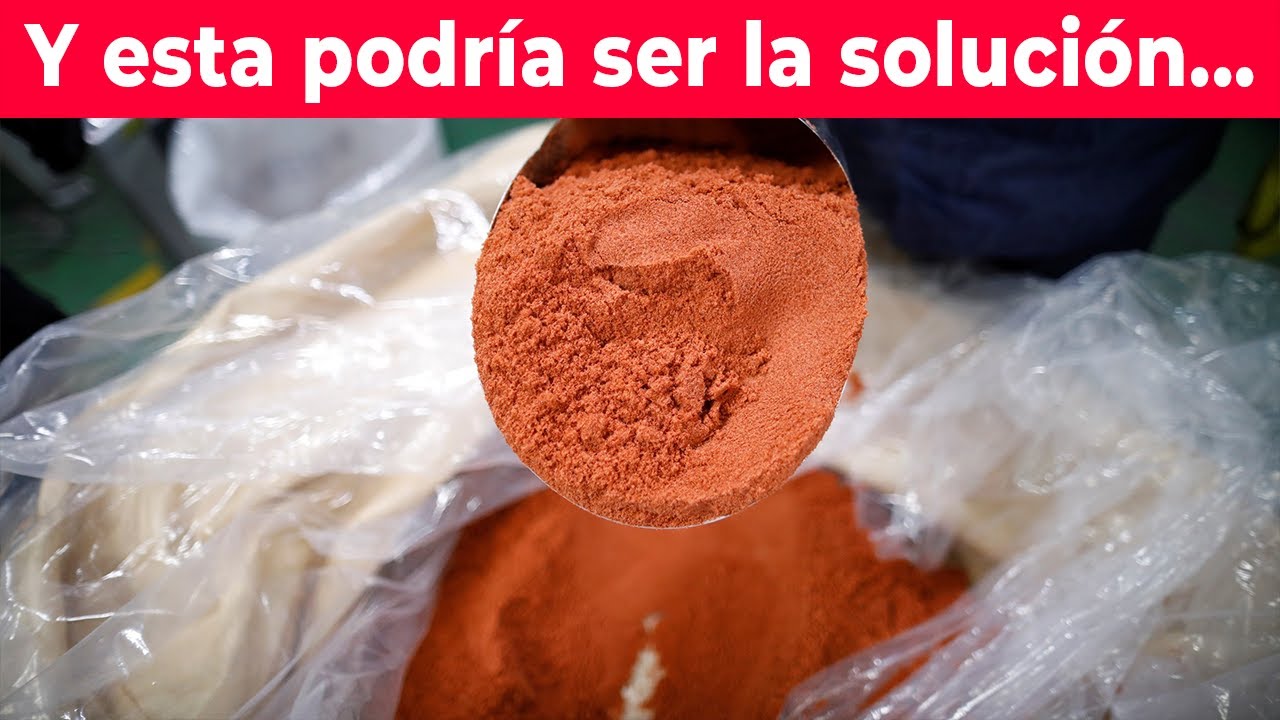
These super sacks contain the byproducts of plastics, aluminum, and copper foils, as well as black mass, and that black mass consists of critical minerals: cobalt, magnesium, aluminum, copper, graphite, and of course, lithium.
In addition to its headquarters in Oklahoma City, SNT has facilities in Las Vegas and Detroit, with plans to expand to the East Coast.
It also has operations abroad in the Netherlands and plans to open in the U.K.
soon. But being centrally located in the U.S.
is key for its business model.
We need to be where our customers are.
Being bang in the middle of the country helps.
We can reach either coast between 2 and 3 days.
We can ship by air, so if it really needed to be, we can have a battery pack the next morning by 10:00.
SNT does not work direct to consumer.
An EV owner brings their battery pack to a dealership, which then sends it to SNT to be serviced. That dealership swaps out the customer's battery with an operational one already in stock. If none are in stock, SNT will send a pack from its storage.
Meanwhile, SNT works on the customer's battery, then stores it to be sent out later.
SNT also works with battery manufacturers and carmakers, which can send faulty batteries to be repaired. The company says its facilities total over 800,000ft² of production space, and 500,000 of those are for battery storage.
It wouldn't disclose the number of battery packs it's capable of storing, but says it handles on average 15,000 battery packs and modules per month.
We get anything from, say, 50 to 100 battery packs per day, 80%, 90% can be refurbished, and that it's good enough to go back into a vehicle.
Recycling is maybe 5% to 10% and the rest is repurposing second life.
But those numbers will fluctuate.
Repurposed battery packs can be reused in non-vehicle applications, such as energy storage for solar panels and power grids.
Because the industry is so new, I think we're squarely focused on providing end-to-end life-cycle management for every battery that comes to our operation.
Since its inception.
SNT says it's serviced more than 240,000 packs and more than 50,000 have been repaired, refurbished or remanufactured.
It's recycled 3,000 packs.
If you look at the EV market and if you take Tesla out, we probably have 60%, 65%, 70% of that market of the non-Tesla electric vehicle OEMs.
So, that's a lot. GM.
Ford. Stellantis.
Porsche. Volkswagen.
Nissan. Toyota.
Volvo. We keep adding to the list.
And when asked why they don't work with one of the most recognizable brands in the EV industry.
No, they always do — they like to do their own stuff. You know, they're a little bit like Apple.
And also their, and maybe this is not politically correct, their payment terms are like really bad.
So I think we owe, the industry owes a lot to Tesla. They made electrification sexy.
When I think about the future of EV battery recycling specifically, I see it as an increasingly competitive space.
But at the same time, there is a bit of a mismatch of maybe more supply and capacity around EV battery recycling than demand, because we're just riding this first wave of electric vehicles who could be on the road for ten plus years.
The lifetime for an EV battery is estimated to be 12 to 15 years in moderate climates.
However, the estimated reuse lifetime of an EV battery can range anywhere from 5 to 30 years. By 2050, the demand for graphite, lithium, and cobalt is expected to increase by 500%, but extending the life of an EV battery can reduce the need for critical minerals.
So could battery refurbishment become a big business and how profitable is it right now?
A couple of years ago, there was a cost associated with recycling a lithium ion battery pack. Now it is a positive.
If you give me a lithium ion battery pack, I probably will give you money back for it.
And that's the beauty of it.
The intrinsic value of that battery pack is higher than the cost of recycling.
The world has a finite amount of minerals necessary for EV batteries. It's hard not to speculate. Could indefinite recycling and reuse be the future?
Absolutely. The circular economy is happening.
It's happening right now.
It's happening here in Oklahoma City.
Why would you get cobalt from Africa or lithium from South America if you can get it here in Oklahoma City? Critical minerals will always be reused and it's already happening.
But the volume is still small, but it will get bigger and bigger.
I think we will be mining metals for the balance of my lifetime. But indeed, the hope is as batteries get more powerful, smaller, lighter and cheaper, with luck, we will need fewer metals.
We could get to the point where maybe a significant majority of battery materials are recycled from old batteries, but we need to hit critical mass on EV penetration first.
There just aren't enough EVs out there yet, but maybe 10 or 20 years from now, there could be.
Some critics believe the EV battery recycling business could be booming too quickly, and that the current capacity outpaces demand for the service, at a time when most EV batteries have yet to reach the end of life.
The idea I think that battery recycling has boomed too soon or peaked too soon feels very shortsighted to me.
It's important to point out here that the auto industry works on 5 to 7 year product cycles.
The cars through 2025 are already locked down.
When we started, everyone thought that we were nuts and we were, but we made the right call on the market. We didn't get carried away.
We didn't have a lot of money to waste.
We always had a focus on making the business work and make it profitable, and that's what we did.
While SNT is one of the pioneers of the space, like-minded companies like American Battery Technology are not far behind, developing new ways to domestically source metals.
We're building in anticipation. I don't know if it's boomed too soon.
This is all new.
It is an emerging space we are all figuring out together how to do it.
Some ideas will be winners, some ideas will be losers. Some businesses will be winners. Some businesses will be losers.
But progress is happening very rapidly.
Iteration is happening very rapidly.
Up Next
6:29
How Recycling Works: Inside the Materials Recovery Facility | MRF Sorting Process
@CSWDVT
253.8K views•2015-07-21

12:54
Triumph of Orthodoxy Icon: Byzantine Art & History Explained
@BenCallan
2.1K views•2024-08-06
25:12
Why Food Deserts Persist: The Racial and Economic Divide in US Grocery Access
@CNBC
3.2M views•2020-08-22

1:42
Game of Thrones Opening Credits: A Cinematic Analysis
@gameofthrones
46.3M views•2011-04-18
Related Study Plans & Knowledge Roadmaps
Structured learning paths in General & Interdisciplinary Studies
general-studies
Elevator Engineering: History, Physics & Cities
01From Hoists to Safety Brakes: The Dawn of Vertical Lift
02Hydraulic vs. Traction: The Engineering Physics of Elevators
03Modern Speed, Safety, and Algorithms
+ 2 more learning modules
12h5 modules
Explore Roadmap
general-studies
Rubber: Material Science, History & Geopolitics
01Origins of Natural Rubber & Mesoamerican History
02The Chemistry of Natural Rubber & Vulcanization
03The Geopolitics of the Rubber Boom & Colonization
+ 2 more learning modules
12h5 modules
Explore Roadmap
general-studies
Containerization: Evolution, Logistics & Trade
01Ancient Trade & Bulk Cargo: Amphorae to Barrels
02The Industrial Revolution & Cardboard Packaging
03The Containerization Revolution: Malcom McLean
+ 2 more learning modules
12h5 modules
Explore Roadmap
general-studies
Textile Tech: Evolution, Labor & Global Impact
01Pre-Industrial Textiles: Handloom & Cottage Industry
02Mechanization: The Spinning Jenny to the Power Loom
03The Factory System & Global Labor Transformation
+ 2 more learning modules
10h5 modules
Explore Roadmap