






















![Patty Cantrell - UVM - Leading The Necessary[r]Evolution for Sustainable Food Systems AMPLIFIED](https://i.ytimg.com/vi/-Uj0DTeo8ZU/sddefault.jpg?sqp=-oaymwEmCIAFEOAD8quKqQMa8AEB-AH-BIAC4AOKAgwIABABGHIgYChCMA8=&rs=AOn4CLBr5zX3XlCcltACj022r8dyWmCqQg)






The fast food industry, which began with urban automats in the 1920s-1940s and was revolutionized by White Castle in 1921 and the McDonald brothers in 1948, has grown into a global phenomenon generating over $570 billion annually, but has also contributed to a significant public health crisis, with obesity rates in the US rising from 12% in 1950 to 23% by 1994, and worldwide obesity nearly tripling since 1975, while the industry continues to adapt to consumer demands through healthier options and plant-based alternatives.
Fast Food History: From 1950s Craze to Global Health Crisis
Added:An understanding of post-WWII socio-economic shifts in the United States, particularly suburbanization and the rise of car culture.
Basic knowledge of human nutrition, specifically how high-calorie, low-nutrient diets (rich in sodium, trans fats, and added sugars) impact metabolic health.
The economic concept of industrialization, focusing on assembly-line efficiency (Taylorism) and economies of scale in the service sector.
The study of food deserts, food insecurity, and how socioeconomic factors influence access to fresh, whole foods.
Analysis of public health policy and regulatory interventions, such as soda taxes, menu-labeling laws, and restrictions on marketing to minors.
The rise of sustainable food movements, including farm-to-table practices, regenerative agriculture, and the slow food movement.
Corporate social responsibility (CSR) and product reformulations by multinational food corporations in response to consumer demand for healthier options.
157 views4likes20:43Original Release: 2025-06-22
It's May of 2011 and Don, a retired American prison guard, reveals why he's probably McDonald's biggest fan. When I was 19 years old, I had eaten my first thousand Big Mac. I thought like, man, you know, how long before I hit 10,000, you know? 39 years to the day after eating his first Big Mac. He's just eaten his 25,000th, almost 14 million calories.
Well, I plan on eating Big Macs until I die. Don might be an extreme example, but he's far from alone in his love for fast food.
There are almost a quarter of a million fast food restaurants in the US alone.
Globally, fast food generates revenues of over 570 billion each year. That's more than the entire economy of Sweden in 2018.
and almost four times the amount NASA spent getting to the moon.
According to one survey, 96% of American children know who Ronald McDonald is.
The only character more recognizable is Santa Claus.
The rise of the fast food industry is one of the most remarkable stories of the past 80 years. But it hasn't always been pretty.
If we are what we eat, what does the enduring popularity of fast food say about us?
By definition, fast food is food made and presented to customers quickly, usually with preheated or pre-cooked ingredients, prepared in bulk, and sold in packaging.
The concept has been around since the urban automats that were a hit from the 1920s to 1940s.
Automats are cafeterias where customers drop coins in a slot and in return obtain food quickly.
You can get almost anything out of a machine these days. A drink before lunch and a good hot lunch as well.
[Music] They're obviously foolproof. Anyone can work them.
[Music] But the fast food industry as we know it today really starts back in 1921 in Witchaw, Kansas with White Castle, a burger joint that pioneers a faster, cleaner system for cooking burgers. But the idea doesn't take off yet.
Throughout the Great Depression and World War II, people still tend to eat their meals at home.
Wow. Does my mom cook 1,095 meals a year? That's a lot of meals. Well, that's just what she does.
But after the war, the way we eat starts to change.
With more disposable income, people start looking at dining out as a form of entertainment, especially if it's tasty and served up quick.
In 1948, brothers Dick and Mac McDonald used their speedy service system to offer tasty burgers for just 15, about the equivalent of $160 today.
Their restaurant is a hit, and over the next decade, new fast food chains start blooming across the country.
In-N-Out Burger also gets its start in 1948 with California's first drive-thru burger sand in a space barely 10 ft square.
Colonel Harlon Sanders opened Kentucky Fried Chicken in 1952 in Salt Lake City, Utah.
Burger King launches in 1954 in Florida.
The Whopper arrives 3 years later.
Dan and Frank Carney start the first Pizza Hut in Witchita in 1958 after borrowing $600 from their mother.
Many chains choose to franchise, meaning individual owners can buy into a proven system using standardized machinery and ingredients.
Owners pay a fee to the chain plus a percentage of their monthly profits.
[Music] Kentucky Fried Chicken is one of the first to franchise. In 1952, they start shipping their top secret premixed chicken seasoning all over the US.
The fast food revolution is on.
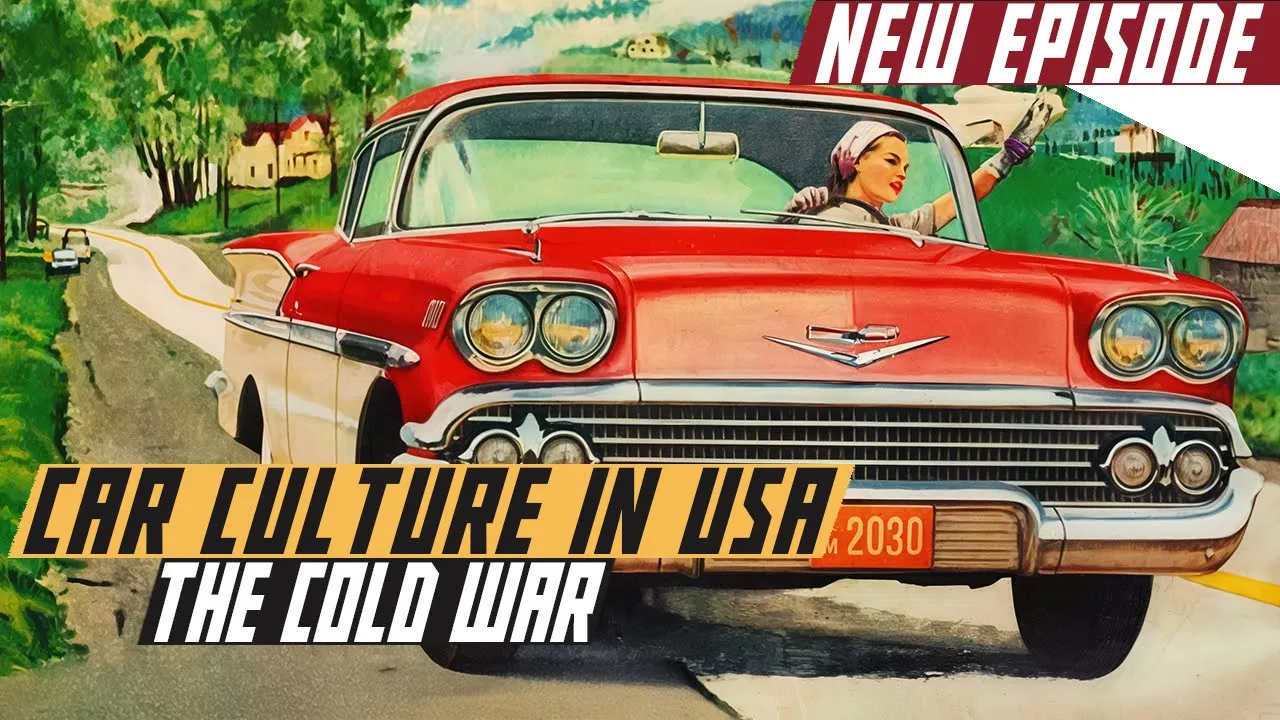
One reason for their success in 1950s America, car culture reigns supreme.
Drive-in movies and drive-in restaurants become all the rage, taking convenience to another level. You don't even have to get out of your car. I was glad I didn't have to get out. I'd forgotten which knob opened the door. The waitress was pretty automatic, too. A salad and a glass of milk, please.
[Music] In the mid60s, a new technology for quickly heating up food has everyone buzzing. When the customer chooses his meal, it's taken from the deep freeze and placed in a special oven. And here's the real breakthrough. The oven uses radio waves at the frequencies used in radar. This reheats the meal in an incredibly short time. The complete meal in around 45 seconds, a hot dog in 15.
Fast food quickly takes advantage of the microwave to thaw, cook, and sell food even more quickly while saving costs.
[Music] And that's when fast food really starts to take off.
In 1976, Wendy's, which only launched 7 years earlier, opened its 500th restaurant.
By 1978, around 60,000 fast food outlets are scattered across the US, and the battle for hungry mouths heats up. When you drive to Wendy's and order a single, you get more beef than the Whopper or the Big Mac.
[Applause] [Music] [Applause] The huge increase in stores starts having an impact on the way food is produced.
Chains centralize their processing centers, so every patty and nugget going out to franchises is the same.
It's not just good for cutting costs.
That consistency turns out to be one of the biggest appeals of fast food. In any given restaurant, you always know what you're going to get.
Meanwhile, as the US market becomes saturated with new fast food chains, the older ones start looking beyond America's borders for new mouths to feed.
[Music] Soon, fast food outlets are springing up in Australia, the UK, and Japan, becoming America's latest cultural export.
But they're not always welcome.
After a Kentucky Fried Chicken opens in Bermuda, the government there blocks any more foreign franchises from opening to protect the charm and economy of the island.
But in the rest of the world, fast food is welcomed with open arms and mouths.
Even in China, [Music] by the '90s, fast food has really gone global.
[Music] Chains start appearing in the most unlikely places.
After the Soviet Union declares its new policy of peristrika, allowing foreign businesses to operate on Soviet soil, the ultimate symbol of American capitalism opens its first outlet in Moscow. 25,000 people applied to work in the Moscow McDonald's.
Outside, inevitably a queue. Some have been waiting for 2 and 1/2 hours. And because this is Moscow, not everyone knows why. This woman joined the line knowing something must be on sale here.
She thought it was ice cream.
But in Soviet Russia, McDonald's has a problem. Finding a highquality, reliable supply of food products. So they operate their own processing plant and work with local businesses to shorten supply chains.
All over the world, the arrival of McDonald's has a huge impact on local businesses, igniting a massive demand for largecale food production.
When McDonald's opens its first restaurant in South Africa after the end of apartheid, 80% of the food is supplied by local farms and producers.
This is the 86th country opening for McDonald's.
And it's been a long road for us to get here, but we finally made it. I am here.
This is American food. South Africa.
This is the new South Africa right here, baby.
In the decades to come, American fast food chains can be found in almost every country on the planet.
McDonald's has nearly 38,000 restaurants worldwide.
But the prize for the most outlets in 2019 goes to Subway with over 41,000 stores, nearly 24,000 of them in the US, [Music] but just one in Croatia.
Every year, an estimated 3.6 million Japanese households celebrate Christmas with Kentucky Fried Chicken.
[Music] Fast food has even made it off the planet. In 2001, Pizza Hut became the first chain to deliver to the International Space Station at a cost of over a million dollars.
But even as fast food is going global, in the 1990s, it starts coming under increasing fire for a different kind of expansion.
In 1950, just 12% of Americans were obese.
But by 1994, it's catapulted to 23%.
[Music] And being overweight or obese is a major risk factor for diseases such as diabetes and cancer.
As waistlines expand, alarm bells start ringing among nutritionists and doctors.
And they point the finger at fast food loaded with high levels of sugar, fat, and salt. And we know that slim folks come to America and here they grow fat.
And that's not genetic. That's lifestyle. It's not only ridiculous, but it's irresponsible for the fast food industry to say that they don't contribute to obesity.
Worldwide, obesity has nearly tripled since 1975.
In the same time frame, the number of fast food restaurants has more than doubled in the US alone.
A 2016 study estimates that globally more than 1.9 billion adults are overweight.
That's 39%.
Over 340 million children and adolescents are now overweight or obese.
It's not just the high levels of fat, salt, and sugar that's the problem.
Awful lot of calories.
Critics also point out that to attract customers, fast food outlets have maxed out their portion sizes.
[Music] In 1954, an average hamburger is 3.9 oz.
In 2006, on average, they're three times bigger, a whopping 12 oz.
In 1955, sodas were served in 7 oz cups.
Now, you can gulp down up to 38 ounces in some places.
[Music] The average person needs 2,00 to 2,500 calories a day to maintain their weight.
But a double Whopper with fries and a chocolate shake will get you to over 2,000 in one sitting.
[Music] But despite the growing criticism about fast food's impact on people's health, the industry continues to boom throughout the '90s because those same unhealthy levels of sugar, fat, and salt also make the food delicious and addictive. People just can't get enough.
As for those huge portion sizes, they're extra appealing to those on a budget.
When McDonald's introduces the extra value meal in 1991, a burger, fries, and a soda are just $2.49.
It's a huge hit.
Still, by the 2000s, consumers start waking up to the health dangers of fast food and start looking for healthier options. So, the fast food industry starts obliging them, offering up not just healthier options, but their regular fast food made with healthier ingredients.
This is healthy fried chicken. It's steamed and then it's fried in a healthier alternative, rape seed oil, before being prepared and served to customers.
In 2002, Burger King becomes the first national chain to serve a veggie burger.
McDonald's ditches their superersiz menu in 2004 and introduces salads the same year. They also add sliced apples to the menu. And with their massive reach, they soon account for 10% of all sliced apples sold in America.
salads, yogurts, grilled chicken sandwiches. There's also corn and whole fruit, eight additions in part to address health concerns.
But despite more options, many still consider burgers, fries, and a soda to be a meal, especially kids.
The truth is that children being born today could become part of the first generation in American history to live shorter lives than their parents because so many are eating too much of the wrong things. Fried potatoes, including French fries, make up almost half the vegetables eaten by children between the ages of two and 19.
But parents especially remain drawn to fast food.
After all, it's still convenient, cheap, and the kids will always dig into it.
Hoping to educate consumers about their health risks, in 2018, the FDA starts requiring all fast food chains to publish their calorie counts. I had no idea how many calories were in it, you know, until I saw I was like, "Oh my gosh, that was a little bit of a surprise." Laws are also passed restricting the size of sugary drinks that chains can offer. People can now make wiser choices. Of course, that doesn't mean they do. I just don't care.
I just I love the food and I have one life to live, so I'm eating it.
This last decade has seen another push back against the fast food industry. Not just to save calories, but the planet.
2015, 16, and 17 were the warmest years on record.
One of the reasons for this are greenhouse gases like methane that trap the Earth's heat. And guess what? One of the largest producers of methane is cow herds.
America is the world's biggest beef producer.
Billions of burgers means millions of cows.
[Music] As a result, the fast food giants are being pressured to figure out a way to reduce the livestock industry's global emissions.
And that's not all.
Takeout orders account for around 269,000 tons of plastic waste polluting the oceans.
Now, environmentalists are calling for fast food companies to reduce their waste and use more eco-friendly packaging. Black plastic like this is really hard for recyclers. Plastic cutlery wraps in more plastic. None of this will get recycled.
McDonald's has phased out all its foam packaging.
And other companies like Starbucks are ditching their plastic straws.
One thing's for sure, fast food isn't going away. And for the economy, that's a good thing. Globally, fast food is a half a trillion dollar business. As of 2019, more than 3.7 million people work in the industry in the US alone. And because most franchises are locally owned and operated, they provide real economic opportunities, often in lowincome areas.
And the industry is quick to point out that it doesn't only provide important entry- levelvel jobs for young people, but that fast food franchises are increasingly providing part-time work for the elderly, which is important as the general population ages.
The reason fast food continues to thrive is that in pursuit of quick profits, the industry has always swiftly responded to shifts in how people eat.
With millions of vegans worldwide, Pizza Hut now offers dairyfree cheese. KFC is trying out meatless wings and nuggets.
And in 2019, White Castle, Cars Jr., and Burger King, all roll out versions of the vegan friendly Impossible Burger made entirely from plant products. No cows required.
We have created a burger that tastes like beef. The consistency is about the same. The color is the same. The texture is the same. And it bleeds and it sizzles, which is really revolutionary.
Fast food continues to put smiles on faces all over the world, but it's also very likely hammering our health.
And it's not exactly great for the planet either.
But the fast food industry has shown it's hyper responsive to consumer demands.
They watch what we buy and what we eat more carefully than we do. So what happens next is in our hand.
[Music]
Up Next

51:27
The Global Junk Food Industry's Double Standard | Obesity Documentary
@JavaDiscover
497.6K views•2021-09-19

12:54
Triumph of Orthodoxy Icon: Byzantine Art & History Explained
@BenCallan
2.1K views•2024-08-06

9:49
FastAPI vs Flask vs Django: Choosing the Right Python Web Framework
@TechWithTim
302.5K views•2024-05-26

1:42
Game of Thrones Opening Credits: A Cinematic Analysis
@gameofthrones
46.3M views•2011-04-18
Related Study Plans & Knowledge Roadmaps
Structured learning paths in General & Interdisciplinary Studies
general-studies
Elevator Engineering: History, Physics & Cities
01From Hoists to Safety Brakes: The Dawn of Vertical Lift
02Hydraulic vs. Traction: The Engineering Physics of Elevators
03Modern Speed, Safety, and Algorithms
+ 2 more learning modules
12h5 modules
Explore Roadmap
general-studies
Rubber: Material Science, History & Geopolitics
01Origins of Natural Rubber & Mesoamerican History
02The Chemistry of Natural Rubber & Vulcanization
03The Geopolitics of the Rubber Boom & Colonization
+ 2 more learning modules
12h5 modules
Explore Roadmap
general-studies
Containerization: Evolution, Logistics & Trade
01Ancient Trade & Bulk Cargo: Amphorae to Barrels
02The Industrial Revolution & Cardboard Packaging
03The Containerization Revolution: Malcom McLean
+ 2 more learning modules
12h5 modules
Explore Roadmap
general-studies
Textile Tech: Evolution, Labor & Global Impact
01Pre-Industrial Textiles: Handloom & Cottage Industry
02Mechanization: The Spinning Jenny to the Power Loom
03The Factory System & Global Labor Transformation
+ 2 more learning modules
10h5 modules
Explore Roadmap