















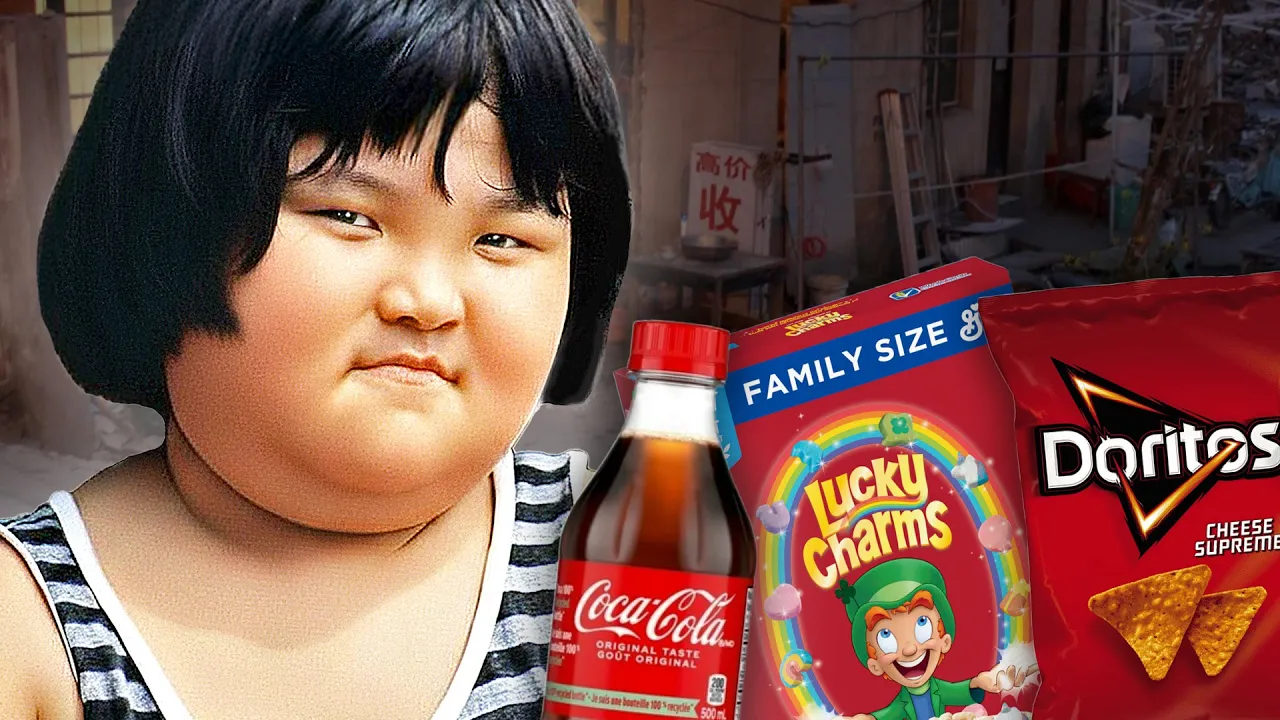









This documentary reveals how multinational food corporations employ significantly different marketing strategies in developing versus developed countries, offering ultra-low-cost products with higher levels of salt, sugar, and saturated fats in markets like India and Brazil where regulations are weak or absent, compared to stricter nutritional standards in Europe; the investigation demonstrates that identical products sold in different regions can contain dramatically different nutritional profiles, with Indian versions of McDonald's and KFC products containing substantially higher amounts of unhealthy ingredients than their European counterparts, raising serious concerns about corporate responsibility and the global obesity epidemic.
The Global Junk Food Industry's Double Standard | Obesity Documentary
Added:Basic Nutritional Science and Public Health: Understanding the physiological impact of excessive sugar, sodium, and saturated fats on the human body, specifically their link to chronic conditions like obesity, cardiovascular disease, and type 2 diabetes.
Globalization and Market Expansion: Familiarity with how multinational food and beverage corporations scale their operations and penetrate emerging markets in developing nations to sustain growth.
Food Regulatory Frameworks: Awareness of how food safety and labeling standards (such as those by the FDA or EFSA) vary between Western countries and developing nations, leading to regulatory disparities.
Marketing Ethics and Consumer Psychology: Understanding how advertising techniques target vulnerable populations, particularly children, to build early brand loyalty and shape dietary habits.
The Double Burden of Malnutrition: Investigating the global health phenomenon where developing countries experience the coexistence of undernutrition (wasting/stunting) and overnutrition (obesity) within the same communities.
Public Health Policy Interventions: Exploring policy solutions used to combat obesity, such as sugar taxes, restrictions on marketing to children, and mandatory front-of-package warning labels (e.g., Chile's warning seal model).
Corporate Social Responsibility (CSR) and Bioethics: Analyzing the ethical boundaries of multinational corporations and the concept of 'dumping' lower-quality, health-compromising products in markets with weaker consumer protection laws.
Food Sovereignty and Local Food Systems: Examining the systemic efforts of local farming movements and national policies to rebuild localized, sustainable food supply chains that counter the dominance of ultra-processed imports.
497.6K views6.5Klikes51:27Original Release: 2021-09-19
certain images can sum up a city the poor riversides of kolkata the undernourished children and its dilapidated buildings but for the last 20 years scenes from indian cities have been shaken by the arrival of american style shopping centers like this one filled by western brands [Music] the city mayor and a minister have come to the opening with one of the most famous actors on the indian subcontinent [Music] welcome to the paradise of shopping and gastronomy [Music] upstairs next to traditional foods three western fast food brands are about to open subway kfc and soon domino's pizza the brand's 600th point of sale in india how much is it 59 rupees sir 59 rupees okay 59 rupees 80 euro cents it's a western product at a very low price the main sales argument of the brand and there are some even cheaper this pizza is a starting range for dominoes and mom the main thing is like we are introducing this pizza is only at 49 that is the thing so that's why it's most popular the mania 49 is like it's a dream comes true i think so on for myself it's and for the guest also industrial food is still the stuff of dreams in developing countries and they are promising markets in france and europe this fairy tale is less of a success safety campaigns against junk food have been shown for 15 years by eating less sugar and fat you can help to protect your health in 2004 a law was voted to limit the effects of food marketing and the adverts for these products will have to contain health warnings by law in an effort to combat obesity for good health avoid eating too much sugar fat or salt under pressure industries reduced the quantities of sugar salt and fat in their products in france but they still find ways to get around this obstacle online where ads are less regulated they target new consumers in countries in the south brands go even further even going into schools and load their products with fat and sugar i don't know whether this has been checked by the body investigation into the new territories of the fast food giants in india we move to no food to bad food it is going to be disastrous for public health [Music] when you think of rio de janeiro some images always come to mind copacabana beach sculpted bodies easy living and a passion for sport these common themes are often exploited by western brands especially for fizzy drinks football favelas and sugary drinks but the reality in brazil is that one in two adults are overweight and one in seven are obese and according to this spokesperson for a consumer association fizzy drink brands cannot consider themselves blameless excessive marketing is one of the main reasons for the rise in obesity here children become addicted from a very early age and then it's much harder to wean them off it they drink a lot of fizzy drinks before the age of two even from their baby's body parents give this type of product to their children because they believe that if adverts and businesses promote them so much it can't be harmful brazil is the third biggest market in the world for coca-cola the truth is that i love fizzy drink i'm addicted we drink it nearly every day at home and also when i go out it's my grandson who likes them a lot the big bottles are for me and the little ones for him he takes them straight out of the fridge and it's exactly the size of his little hand crisps [Music] in brazil there is no law around food marketing so brands don't hesitate to canvas for clients from school age belo horizonte the sixth biggest city in the country these neighborhoods in the hills and this public college are not the poorest but it has no budget for extracurricular activities but everything could soon change thanks to a famous red brand let's go these 14 year old children will participate in a competition organized by coca-cola between schools of the city the school's festival general rehearsal the winning school gets 15 000 reals that's right and yes 5 000 reals that would be great we could buy elastic footballs equipment for volleyball [Applause] whatever the result it will be good for the school this teacher signed the children up she even has the official title of brand ambassador unthinkable in france [Music] [Applause] [Music] [Applause] college students joined four thousand other teenagers in the largest auditorium and of course the party begins with a coke of course we choose to drink coke they're the best have you given out a lot of water so far 20 bottles maximum and coke a lot all the refrigerators and how much is that about two thousand cans that day the brand is everywhere and yet it's a school event [Applause] you spend a lot of money on this operation yes we've invested a lot because the goal is to make the children dream which is the best gift that we can give them well i don't mean children but teenagers from 12 to 19 years and who are our public [Music] don't be stressed breathe [Music] it's time for the pupils of the region to go on stage thanks to the well-known fizzy drink brand they are able to get their moment of glory [Applause] [Music] are you aware that this is marketing yes well more or less because i don't think coke needs that [Music] you see the brand is already so well known everybody here knows [Applause] coke forever today tomorrow coca-cola forever the most powerful fizzy drink brand on the planet has guaranteed the lifelong loyalty of these brazilian school children this country is still young and manufacturers aren't waiting until high school to reach the children mcdonald's has been sending its clown ronald into playgrounds for 27 years a marketing practice that is legal but controversial in brazil last year a children's protection charity tried to have it banned but at mcdonald's they prefer not to talk about it [Music] you can't just answer two or three questions about your show unfortunately not sorry a schoolhead mistress helps us to find out more here are the children's lunches that's for ronaldo that's for julia in sao paulo anna marina fazzoli tries to prevent junk food from entering her school a daily battle to protect her pupils aged 3 to 14.
in brazilian canteens in general they serve crisps snacks often fried bread or fizzy drinks it's really difficult because it's not just the adolescents who want them the younger ones do too now we really need to make more effort to educate them in this area at our request the headmistress contacted mcdonald's by telephone to get ronald the clown to come and a few days later hey what's up kids everything going okay hello welcome wow what an honor we pass ourselves off as pupils parents hello hello here we go everybody is here i want everybody to clap their hands so i can make my entrance music the sketches are about the environment and sport no reference to the brand on the actor's costume the yellow logo has even been covered up by a red cloth so they can't be accused of advertising one two three it's off we all clap loudly but the children see all too well the link with the product [Music] [Music] does that make you want to eat at mcdonald's yes are you going to ask your parents yes what do you want i want nuggets fries a toy and a fizzy drink a big fizzy drink and you when you get out of here what are you going to ask your parents for fries and ice cream [Music] this type of show has already taken place in hundreds of schools does the brand accept that this is underhand advertising we asked mcdonald's brazil and we received this reply by email [Music] and who is that a clown which clown the clown from mcdonald's yes it's ronald he already came to the crash i was at before [Music] there is no law or regulation that prevents this practice in brazil however last year the association's complaint led the sao paulo prosecutor to act [Music] javier bardo sent a letter to the state authorities of sao paulo in charge of education to warn them [Music] as a precaution we recommend not allowing these shows in schools the most effective marketing is not the one that we see subtle and repetitive adverts are much more effective especially with children a child doesn't separate the message from an advert from another message here's what we filmed this morning if we collect the water we use to rinse the washing we can reuse it to water the plants and wash the floor right yes i feel completely helpless i've sent recommendations but apparently the secretary of state for health hasn't followed up despite two letters to the ministry in brazil the food giants count on the weakness of the public administration in other developing countries they offer products that are much worse for public health india 1 billion 300 million inhabitants a priority market for western brands looking for openings here street food is healthy and good value to compete european and american companies play on the majority of consumers lack of information in this huge shopping center in kolkata among the restaurants it's a brand of fried chicken that has the highest turnover the american brand has changed its recipe for its indian sauce spicy and it's worked the restaurant attracts 3 000 customers on average per day a record in india so what do you want i want that one the wall which there's a burger chicken or a wrap i want it all in europe or the united states menus include bottles of water not here only fizzy drinks or juices but the consumers don't complain to me it's clean hygiene i see i can see everything being prepared i haven't been sick ever that's why i trust it tastes very good it's healthy it's a little healthier [Music] it is less oily the managers are aware that their customers are lacking correct information but aren't authorized to say anything we record this conversation discreetly you don't have any customers asking you information about the fat or sugar thing like that we are health conscious but not up to like europe and u.s people so we are becoming a work but the level is still in in fantasy actually so the current paradox is that while some indians still suffer from malnutrition another part of the population the middle class is suffering from an obesity epidemic 30 percent of adolescents are overweight a figure that has doubled in five years suraj is 15 and at 5'5 weighs 15 stone 8 pounds spicy chicken the teenager is a fast food junkie we have like four days of it we go out with friends and family so we have all these pizzas and stuff and everything we enjoy our life would you say you're addicted to it i don't think so i'm addicted but the addicted is different thing like i'm not doing anything else like i'm not smoking i'm not drinking so that is called addicted this is not addictive but you know it's not good for you yeah i know but what to do now what do you know what to do what do you say now but you don't want to give up has an appointment in this clinic which specializes in stomach surgery serious operations for extreme cases 300 patients per month are operated on here more and more are adolescents last interview before the surgery so you have about 54 kg extra extra weight which you need to lose which will start from tomorrow after a month be very happy if you join your pt exercise and you can be a very tall handsome boy he's already pre-diabetic his hormones are changed we see that his estrogens in the body are becoming more prominent giving rise to gynecomastia and feminine type of deposition of fat in addition to that he has psychosocial comorbidities i tried everything but no control in my mouth so doctors are helping tv advertisement media also play a lot of role in promoting kids to see some film star some celebrity advertising for something which is ideally not correct and all this with some inclination to be advanced like a westerner probably could be a reason for a temptation okay [Music] i really want a mac potato tikki okay tv adverts offer more and more ultra low cost offers with one promise international [Music] when you take the freshest highest quality ingredients mix them with a 100 real chicken and add our secret herbs and spices to it what you get is just good food it's food that's finger licking good is this really true are the products sold in india the same as over here to find out we compared them we chose mcdonald's and kfc two brands that are very widespread in india here's what we found at mcdonald's a mcchicken in india contains two and a half times more sugar than the french sandwich the for little fish contains twice as much saturated fat same goes for the mcnuggets as for the indian fries they are off the chart nearly six times more saturated fat [Music] [Applause] the results are no better at kfc [Music] the fries in india contain 10 times as much salt the hot wings have three times as much fat in france such levels would be unthinkable because of nutritional commitments made by these multinationals we wanted to show these results to a pioneer in the fight against junk food he runs the center for science and environment a very respected ngo in india chandra bhushan wrote a damning report in 2012 criticizing the nutritional content of products destined for indian consumers is very simple if you are more salty more fatty more sugary it is more tasty people are going to eat more they know it okay and that is the challenge you know junk food will taste good okay but it is really really bad for your health we show him our comparison results these results are actually quite shocking that the same multinational company a selling product in in europe and india they have double standards for them uh you know having such a high amount of fat uh sugar and salt is not a problem in india whereas they will have to meet very strict regulations in france so this is shocking to say the least this is a very very shocking result we brought the sandwich with the most calories in mcdonald's in india the spicy paneer wrap a vegetarian cheese sandwich its nutritional composition can be found on the brand's website it has 51 grams of fat 25 grams of saturated fat and 5 grams of salt if you eat this one wrap then you shouldn't be eating anything in the day even a bread if you show it to a mother who is not about aware about these issues the mother will buy this for her child this is the worst kind of corporate responsibility you can think about where they give an image of healthy food but the food is not healthy [Music] it's not just to make consumers addicted that certain brands sell food that is so high in sugar and fats that's what this former consultant had domino's pizza the most developed fast food brand in india explains to us this former chef prefers to stay anonymous this also i made can we get one garlic bread he wants to show us products that illustrate the deceptive marketing of the brand garlic bread do you put butter in it oil okay it's for 20 rupees which is like nice and cheap yeah so it's basically bread with the filling and that's the sauce you know that's the sauce which and there's so much oil it's not the real mozzarella and inside it's supposed to be cheesy this is like a cream emulsified mayo like this now it gives you an effect of it of a real cheese but this is basically like a sauce so it's definitely no dairy why don't they use the wheat butter it's expensive after six months of working for the company the chef decided to resign second everything is superb to make money and as long as money is getting made so there is no right or wrong they had a lot of problems with me because um i used to give food as food not as chemical construction or something but all my ideas in all rejected because they were extremely expensive because i can't make a pizza for 30 rupees i mean i i can't which has to value people at the end of it it's not right you know because at the end of it you just it's a cycle which will come back to you so yeah in india domino's doesn't provide any nutritional information it's legal in india but would be illegal in france we had these products analyzed in a laboratory starting with a pizza filled with fake cheese it contains 52 grams of fat the equivalent of 5 soup spoons of oil and effectively not a single gram of cheese as for the 30 cents garlic bread it contains 11.6 percent saturated fats a nutritional nightmare [Music] we approached domino's mcdonald's kfc but to no avail none of them responded to our interview requests so we went to an event that was open to the press the general assembly of the association of indian restaurants in a trendy bar in new delhi all of the heads of the major brands were there having a drink including the director general of domino's pizza in india once again i have to ask you one question i'm out here i don't want the head of hr comes to the rescue my question is absolutely there are so many other other problems also yes it's not responsible not to publish any details see i'm not authorized to speak i'm not organized to speak but that's why i'm saying whatever questions you have you will get all the answers and we will we will send you all the respects obesity is just one problem among others to dominos we never receive a response despite trying multiple times only the american headquarters sent us an email redirecting us to the indian branch in countries in the south the junk food giants take advantage of the lack of legislation elsewhere where these rules exist others manage to get around them [Music] 5 30 pm in france the time when many families are having their after school snack for nathan and his sisters it always ends the same way everyone on their tablets while television usage is diminishing the internet is skyrocketing for children [Music] i put that there like that and like that so for 10 years businesses have created facebook pages and worked out how to make themselves popular of the 20 most followed brands in france half are from the food industry above all they've developed advertisement games on the internet to put forward their brand they're known as adver games oreo fanta haribo the products are the center of these games and unlike the tv adverts no health warnings neither is there any obligation to indicate that it is an advert only the nestle group state this for one of its games but it's written in very small type this is an advert why do you think they make these games in your opinion they added the game because they think it's fun for people to play do you think it's an ad the game no it's a game the mother comes to see what's happening so what are you doing you have to kill these bugs it's hard you have to click on them it's a bit idiotic as a game the deceptive side is that it doesn't look like an advert they don't say eat oreos buy fanta have x or y cereals for breakfast so i think it's a bit disguised now it's up to them to separate the two it's really a first for me i didn't know this existed what are the consequences of these games on children what are the differences from a television advert [Music] a researcher just wrote a report on marketing in the food industry destined for children and she focused on these advocates we eat with our eyes the images of the food make you want to eat it and the main thing with digital is that it's more interactive and fun the child isn't passive like in front of the television he's really the player in the game on the internet or when interacting on social media also we have worrying figures that show that up until the age of 15 children don't recognize that it's a brand that has created this game and they don't realize the marketing intention we show her some of the games that we have selected [Music] it's important to keep an eye on the time that the child spends on the game since they will be encouraged to play very often to improve their performance and it's a very fun world and all the time they are playing they are being encouraged to follow the brand and the product games to keep a close eye on especially as their effects on public health are worrying notably for those who are overweight in this hospital in the paris region an obesity specialist has to battle more and more with digital marketing hello adrian let's go how are you take off the shorts so we can weigh you 5 for 8 and 14 stone 13 pounds 15 has been followed for a year in his battle against his weight but he is constantly being solicited do you have games on your phone telephone with seven kilograms lost already adrian is on the right path well done enjoy the holidays others find it harder to resist temptation chloe is 11 and is slightly overweight as the appointment starts her little brother entertains himself with the mcdonald's games application no burger or fries to be seen but the happy meal mascot is very visible which gets the doctor's attention so have you finished the games no i'm just in the middle i'm in the middle of doing them all as soon as he wants to download an app i have to check so i've given the ok because mcdonald's is pretty harmless harmless it's just coloring and for you is it advertising no they already know mcdonald's they don't need ads does it make you want to go yes it makes me want to it can make you think we haven't been for a while why don't we go tonight targeting the weakest consumers however these brands had committed themselves to no longer do this in 2008 the 20 biggest food groups worldwide had signed the same promise that of limiting advertising aimed at children under 12 years old this commitment also applied to the advocates but no sanction was in effect however we discover that most of the games are available on itunes or google play for children over four free and with no mention of parental permission we contacted these brands some of them replied to us exclusively by email none of the companies or their communication agencies would reply to our questions on camera to understand their marketing strategy we had to do a little role play we passed ourselves off as a fizzy drink manufacturer we started by creating a fake brand with the help of a graphic artist a very sugary fruit juice called swag a little cutting and pasting workshop [Music] a first test to the target audience [Music] we're going to need an advergame to sweeten the pill we get in contact with several specialized ad agencies they've made some very popular games for well-known brands la shoot for the brand oasis downloaded two million times les aventura de bella which gives center stage to crisps in a world of cheese and the site for children tasty comics by kfc 2 million regular visits this game involves collecting the most fries to spice up the exercise we add sugar to the fruit juice the bottle is displaying a particularly high level we film with a hidden camera first agency hello we have a meeting with burp we show them our fruit juice we want to compete with oasis phantom we have the budget for the app the idea is to be in another world that is fun and can speak to a child okay children as in children children yes that's our main target okay that's very clear the ad executive shows us the last game created by the agency the client one of the top five food groups worldwide it's a very very simple game because it's children who will play it and you play with the hero who is on the packaging in a universe which is that of the brand the client of the agency had committed to not advertising to under-12s however the game is clearly aimed at small children what i'm telling you in the strategy we're not allowed to publish we can't say that we're targeting children [Music] in fact we can't target children that are under 11.
it's tea time no comment on the amount of sugar to find out more a second meeting with an agency that claims to be the leader in advertising games in france this company director has just created an app for a chocolate company that has been downloaded several million times they've increased their revenue by 30 percent on their biscuit range 27 i think do we know what age range this is for no but it's tea time for children so they're very chocolate flavored muffins really for kids so i think it matches with your target we are going to be given some trade secrets based on psychology [Music] generally we manage to put the brands in at places which give the most pleasure in the game they're going to be exposed to the brand 5 to 10 times per session it's thanks to the brand that you progress that you win a bonus and that generates pleasure hormones that make you happy and it's associated with the brand it's very effective we requested an interview on the marketing effectiveness of advocates with these agencies and their clients no response [Music] we want to show these images to dr fidalgo the child or obesity specialist [Music] [Applause] [Music] it's thanks to the brand that you progress and that generates pleasure hormones that make you happy it's impressive in its pertinence we know that video games are addictive for children so there's this connection of two addictions games and sugar and i think it's infuriating for us professionals we struggle daily trying to get across a message to the children that as soon as they get home and play a game it will probably make them disappear i hope that will manage to legislate against that and i'll support it as a health professional exactly that legislate in france food advertising is supposed to regulate itself through the regulation of advertising authority the arpp it's led by businesses and television channels stefan matzah is the general manager [Music] welcome it has just written a report that concludes that 99.8 percent of the ads broadcast in 2014 respected ethical obligations including those online but the advergames are not taken into account we show him the game created by the brand oreo so you get points by consuming yes but that's the principle of reward it's universal either with points or gold bars or if it's food the product so if i have a poster in the street i have to feature a health warning but not if i'm making a children's game [Music] nothing has been foreseen even though obesity levels continue to rise in france especially in poorer families [Music] nothing has happened simply because the public authorities know the economic impact of the food industry and there is currently a lack of political courage to change things but it's true that currently in the public sphere it's not a question that is particularly present in france and nothing in france will change soon there is no project to change the laws relating to advertising on the internet even though this is dramatically on the rise back in india the country where everything is allowed where disclosing what is in your product is concerned we find suraj the adolescent one hour before his operation to reduce his stomach good all the best morning to come to the theater yeah all the best not scared now very bold boy i'm excited oh my that fat will get loose loose enough general anesthetic the surgeon begins the operation [Music] this looks like the liver which has become so big it's all because it's fat lead and if i touch you can see a yellow discoloration which means the liver is fat laden and very large the doctor is going to entirely remove the adolescent's stomach before replacing it in the abdomen smaller and tighter it went very well he's doing fine nothing to worry about [Music] four months later we find out that suraj has lost more than four stone ten pounds this adolescent needed a surgical operation to get over his addiction to junk food a few months ago the 20 biggest food multinationals made an announcement nutritional standards that will apply worldwide but again there are no sanctions if the criteria are not respected and the companies are left to regulate themselves date of application 2018 until then in two years time obesity will have killed 5.6 million people worldwide you
Up Next

20:57
Spain's Military Aid to Ukraine: Leopard Tanks and Patriot Missiles
@TheMilitaryShow
1.8M views•2024-10-22

12:54
Triumph of Orthodoxy Icon: Byzantine Art & History Explained
@BenCallan
2.1K views•2024-08-06
54:29
Global Tomato Industry: Economics of Red Gold | Documentary Analysis
@JavaDiscover
1.4M views•2022-03-15

1:42
Game of Thrones Opening Credits: A Cinematic Analysis
@gameofthrones
46.3M views•2011-04-18
Related Study Plans & Knowledge Roadmaps
Structured learning paths in General & Interdisciplinary Studies
general-studies
Elevator Engineering: History, Physics & Cities
01From Hoists to Safety Brakes: The Dawn of Vertical Lift
02Hydraulic vs. Traction: The Engineering Physics of Elevators
03Modern Speed, Safety, and Algorithms
+ 2 more learning modules
12h5 modules
Explore Roadmap
general-studies
Rubber: Material Science, History & Geopolitics
01Origins of Natural Rubber & Mesoamerican History
02The Chemistry of Natural Rubber & Vulcanization
03The Geopolitics of the Rubber Boom & Colonization
+ 2 more learning modules
12h5 modules
Explore Roadmap
general-studies
Containerization: Evolution, Logistics & Trade
01Ancient Trade & Bulk Cargo: Amphorae to Barrels
02The Industrial Revolution & Cardboard Packaging
03The Containerization Revolution: Malcom McLean
+ 2 more learning modules
12h5 modules
Explore Roadmap
general-studies
Textile Tech: Evolution, Labor & Global Impact
01Pre-Industrial Textiles: Handloom & Cottage Industry
02Mechanization: The Spinning Jenny to the Power Loom
03The Factory System & Global Labor Transformation
+ 2 more learning modules
10h5 modules
Explore Roadmap