













![[지식만찬] 세계 1위 K9 자주포, 스페인이 뜯어고치라는 이유?](https://i.ytimg.com/vi/BA-1UEY34yA/maxresdefault.jpg)



![【Front Japan 桜】小泉・竹中構造改革の時のような様相を呈してきた / ネタニヤフ終わりの始まり[桜R7/5/28]](https://i.ytimg.com/vi/F9K7Ucp80mA/maxresdefault.jpg)




Spain has committed to delivering 19 Leopard 2A4 tanks, 12 Patriot anti-aircraft missile systems, and a €1 billion aid package to Ukraine, with a total commitment of €5.4 billion by 2027, representing a significant shift from its historically neutral stance toward Russia due to concerns about Russian aggression threatening European security.
Spain's Military Aid to Ukraine: Leopard Tanks and Patriot Missiles
Added:Understanding the geopolitical context of the Russia-Ukraine conflict, including the origins of the 2022 invasion and the international response.
Basic knowledge of NATO (North Atlantic Treaty Organization), Spain's membership, and the alliance's collective security framework.
Fundamental concepts of military hardware, specifically the strategic distinctions between offensive armor (like the Leopard 2A4 main battle tank) and defensive air shields (like the Patriot missile system).
An overview of how bilateral and multilateral foreign aid, military assistance, and defense budgets are negotiated and allocated by European nations.
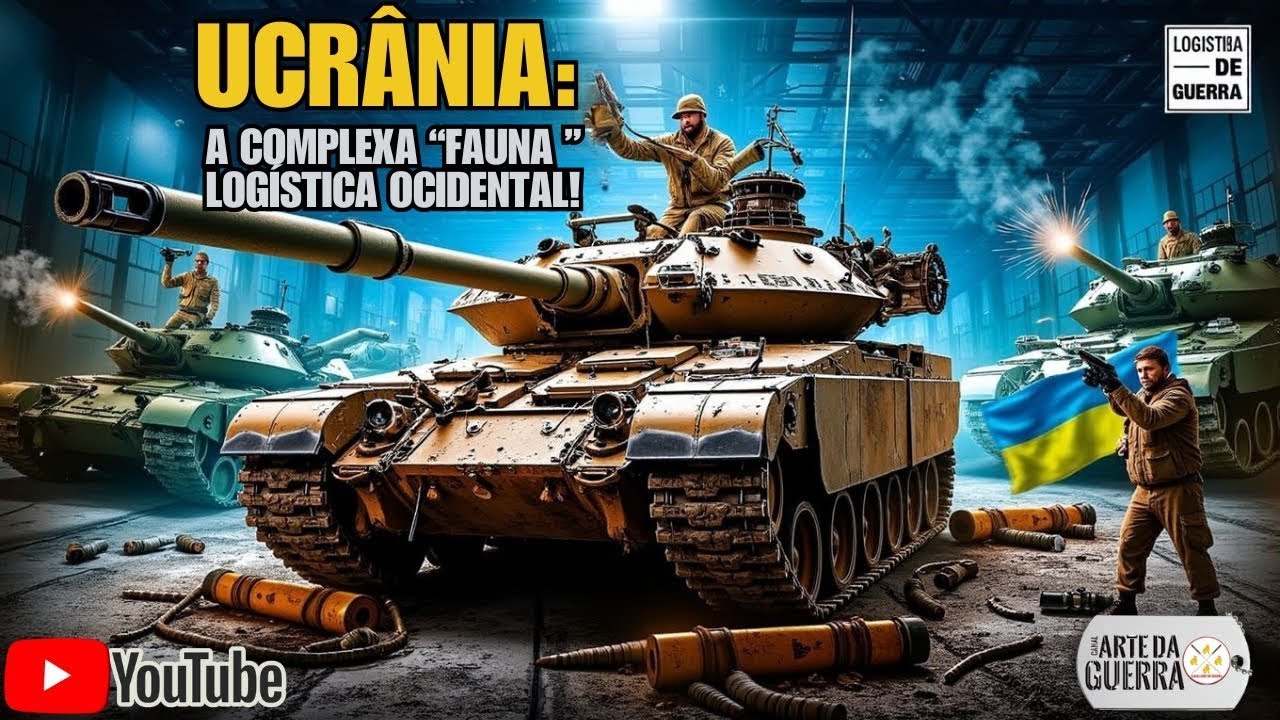
Analyzing the logistical and interoperability challenges of 'frazzled' logistics, where Ukraine must integrate diverse, multi-nation military hardware into a cohesive defense strategy.
Exploring the replenishment strategies of donor nations, examining how Spain and other EU countries modernize their own defense sectors after donating stockpiles.
Studying deterrence theory and escalation dynamics in international relations, focusing on how Western heavy-weaponry transfers impact diplomatic negotiations.
Investigating the shifting dynamics of Spain's foreign policy, particularly its transition from historically low defense spending to becoming a proactive security contributor on NATO's eastern flank.
1.8M views23.9Klikes20:57Original Release: 2024-10-22
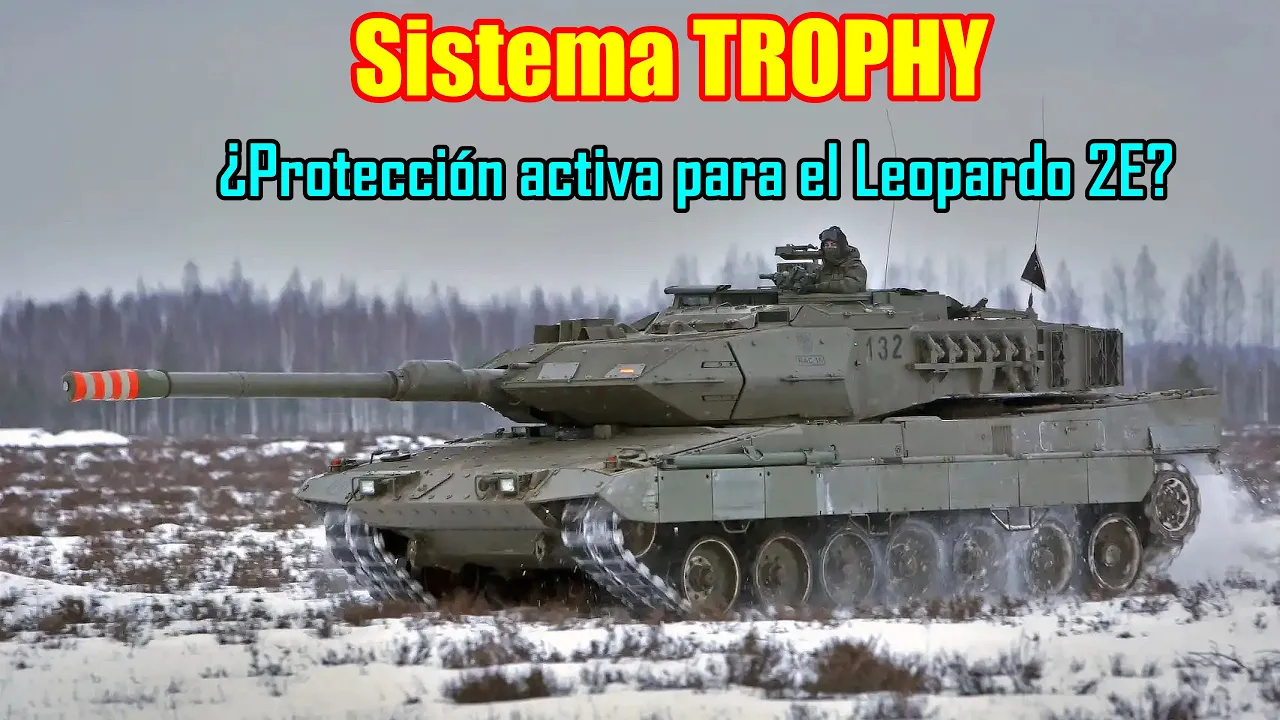
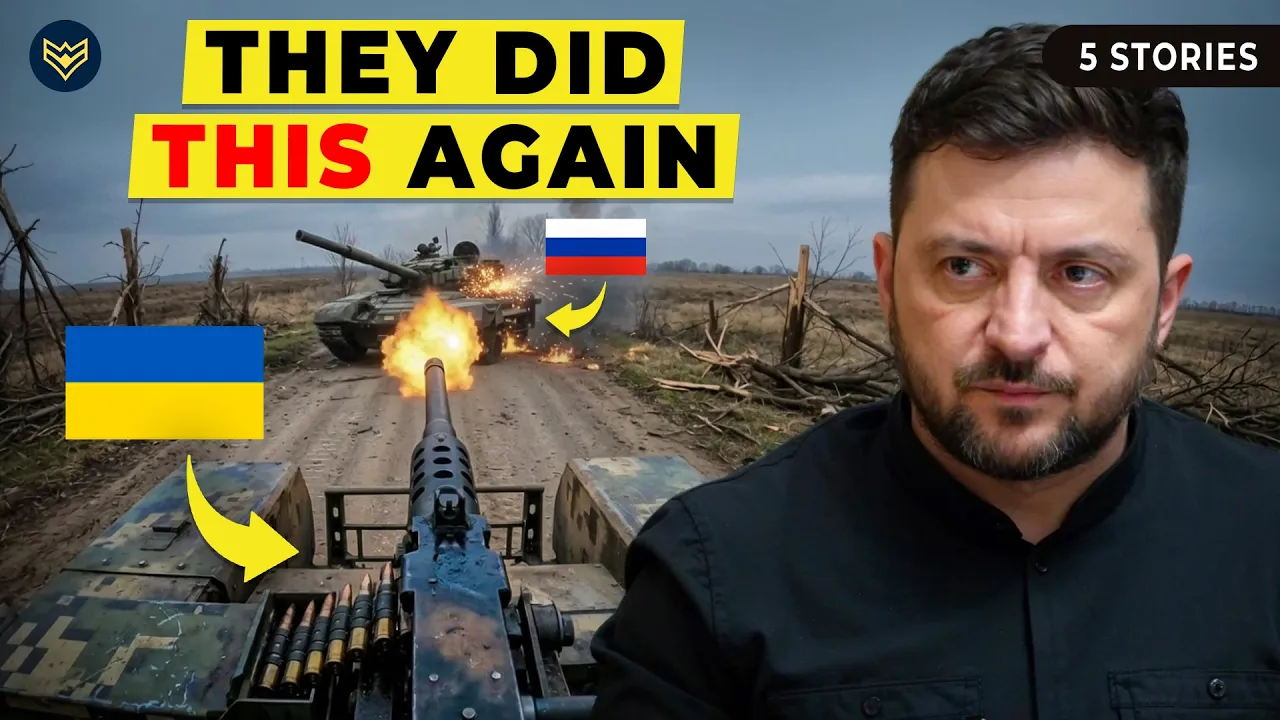
Spain has had enough. After watching from the sidelines while the West armed Ukraine, Spain has finally decided to take action – and it’s sending a brutal message to Russian President Vladimir Putin: GET OUT OF UKRAINE. This isn’t just a routine arms delivery. Spain’s new aid package is packed with weapons designed to crush Russian forces and push them back once and for all. The Kremlin is reeling, and Putin’s plans are in serious danger. Spain’s move could be the tipping point that turns the tide of the war, pushing Putin’s invasion to the brink of collapse. In this video, we reveal what Spain is delivering and how it’s going to help Ukraine deliver a crushing blow to Putin’s ambitions. Let’s get into it. On March 24, 2024, The Defense Post reported on Spain’s announcement that it intended to send 19 of its Leopard 2A4 tanks to Ukraine by September of the same year. The tanks wouldn’t simply be pulled out of storage and shipped over. Instead, Spain said it would contract General Dynamics European Land Systems to complete full commissioning services on every tank, giving each Leopard a full overhaul while replacing any defective parts to ensure each tank’s systems were fully operational by the time they reached Ukraine. The delivery would be the second Spain would send to Ukraine. The first came in 2023, with Spain donating six of its Leopard tanks. With this second batch, Spain would more than quadruple its tank support for Ukraine. Still, as impressive as this announcement was, it represented a fairly small amount of aid being delivered to Ukraine. Almost 20 Leopard 2A4 tanks would certainly be useful from a defensive standpoint, but they wouldn’t be enough to help Ukraine turn the tide against Russian forces that were making a heavy push in Donetsk. But more was to come. Two months later, on May 27, Spain decided to double down on this initial show of support. The country’s Prime Minister – Pedro Sanchez – sat down with Ukrainian President Volodymyr Zelensky to sign an agreement that would see Spain deliver an impressive €1 billion in aid – roughly translated into $1.08 billion – as part of a pact that sees Spain ally itself with Ukraine for the next decade. “It is more important than ever to redouble our support,” claimed Sanchez in a press conference following the signing. According to the agreement in question, Spain claims it will provide modern military equipment for ground, sea, aerial, and other uses, based on Ukraine’s key capacity needs at the time. Interestingly, Spain has also agreed to help Ukraine protect its maritime food export routes, ensuring the country can continue to be the “breadbasket of Europe” without fear of Russian interference preventing it from shipping through the Black Sea. The question from there was where would the $1.08 billion be spent. Newsweek offered some answers in a May 27 article, in which it detailed the various weapons systems Spain had committed to delivering. The 19 Leopard tanks pledged to Ukraine back in March were part of that list, as were a dozen of the powerful Patriot anti-aircraft missile systems that Ukraine has been using so well to keep Russia’s aerial bombardments at bay. Add ammunition and anti-drone gear to the package and you have a donation that covers most of the key areas of the war. But Newsweek also delivered a detail that wasn’t in the initial Reuters report: Spain had committed to sending a staggering $5.4 billion by the end of 2027, meaning the $1.08 billion in equipment being donated from May 2024 would simply be the first in multiple rounds of donations designed to help Ukraine defend itself and ultimately recover from its war effort. The question now is simple – why would Spain commit to such an extensive aid package? After all, its history with Russia isn’t quite as fraught as that of many other European countries that fear Russian aggression. Spain was never part of the Soviet yolk following World War II, as countries like Poland and the Baltic states of Estonia, Latvia, and Lithuania – all three being ardent supporters of Ukraine – were. If anything, you could argue that Spain’s recent history with Russia has been as close to neutral as it could be considering Russia’s actions in the 20th century through to today in Ukraine. Granted, Moscow played a role in the Spanish Civil War. The Soviet Union offered active support to Spain’s Republican factions at the time, sending military advisors, weapons, and “volunteer” soldiers in exchange for gold drawn out of the Bank of Spain’s reserves. However, Spain would eventually come to laud those Soviet volunteers. A monument to them was erected in Madrid in 1989 listing the names of 182 Russian combatants killed during the Civil War. There was just one problem – the Republicans lost the Spanish Civil War to the Nationalists in 1939, meaning all of the Soviet support was for naught. Now under Franco, Spain became an enemy to Russia, with Spain’s Blue Division of volunteers fighting against the Soviet Red Army on the Eastern Front for a short period until Franco decided enough was enough. He withdrew the Spanish soldiers, with Spain going on to remain neutral for the rest of World War II. So, conflict existed. But Spain and the Soviet Union tended to essentially stay away from one another following World War II. There were signs of tension, such as Nikita Khrushchev claiming that Russia’s relationship with Spain was “the worst, though hardly the most problematic,” when speaking in front of the United Nations General Assembly in October 1960, which followed Franco banning a soccer match between Spain and the Soviet Union earlier in that year. But direct conflict between the two was never really an issue. And toward the end of Franco’s reign, the relationship between the two countries was even starting to defrost. A trade agreement was signed in 1972, with a Soviet ambassador being appointed to Spain around five years later. As the Soviet Union gave way to the Russian Federation in the early 1990s, Spain and Russia continued to have a cordial relationship. Former Russian President Dmitry Medvedev and Spain’s King Juan Carlos I even worked together on issues such as Kosovo declaring its independence from Serbia. Putin would even visit Spain multiple times in the 2000s. There were a few hiccups along the way, of course. But as recently as 2020, a Russian representative was writing in the margins of the Gaidar Forum that he believed “there is no reason for our nations to be guided by the politics of others, and we trust that Russian-Spanish relations, with the current Government – or with any other – have a good future. Then came February 2022 and a true test of that statement. Russia invaded Ukraine, putting all of Europe on notice. Putin was no longer interested in playing politics or being diplomatic – he was going to take what he wanted by force. And, like most other European countries, Spain took this action as a direct threat, which has resulted in any true diplomatic ties between Russia and Spain going up in smoke. If you need any evidence of that, you need only refer to the comments made by Spain’s Defense Minister Margarita Robles in March 2024, the same month in which Spain committed its 19 Leopard tanks. Speaking to the Spanish newspaper La Vanguardia, Robles said the situation with Russia was extremely complex while making sure to point out something that is likely on every Spanish mind – “Right now, a ballistic missile could easily reach Spain from Russia.” She continued, calling the threat that Russia poses to the countries that neighbor Ukraine “total and absolute.” Many of those countries – such as the Baltic states mentioned earlier – are also NATO members, as is Spain. Reading between the lines of this comment, Robles is clearly stating that any threat to these NATO member countries is also a threat to Spain, not least because Article 5 of the NATO charter provides that all members of the alliance would come to the aid of any other member state should one be subject to an armed attack. If Putin’s ambition spreads to the likes of Estonia, Latvia, and Lithuania, for instance, any invasion he launched into those countries would leave Spain duty-bound to come to their defense. Robles made this even clearer when she said “You only have to listen to the latest statement from Putin, in which he talks about the possibility of nuclear attacks.” She points out that the countries close to Russia are already well aware of the danger that Putin poses, while those further to the West don’t have the awareness that they perhaps need. She went on to call Putin an “unscrupulous” person. So, the reasoning behind Spain delivering such a historic blow to Russia becomes clear. Spain feels threatened. Putin’s actions in Ukraine have shown that he’s a leader who will not stop in his quest to get what he wants. So, rather than leave Ukraine to fend for itself, Spain is making its military donations to bolster Ukraine’s defenses to the point where it can stop Putin in his tracks before he turns his attention to the rest of Europe. But let’s come back to Spain’s military aid to Ukraine. Just how much had it delivered before the announcement of this historic package? As it turns out, not that much. According to Statista, Spain has sent $1.35 billion in aid between February 2022 and June 2024 – a figure that includes the $1.08 billion announced in May 2024. So, prior to this announcement, Spain had only provided around $280 million, with much of that coming in the form of direct financial aid barring the 2023 delivery of a handful of Leopard tanks. This lack of aid puts Spain fairly low on the list of countries that have donated to Ukraine. It ranks 17th on that list, well behind other major European powers such as Germany and the United Kingdom, which have both cracked, or come close to cracking, the $15 billion mark. Granted, Spain is a member of the European Union, or EU, and various EU institutions have donated $43.67 billion since the war began. Spain could argue that it will have donated via those institutions, but the fact remains that, up until May 2024, it had been one of the few major powers to not make an extensive commitment to Ukraine. To expand on that point, we can also look to Statista to explain how much Spain has donated as a share of the country’s gross domestic product, or GDP. Then, it’s even lower on the list, coming in at 27 out of the 38 nations that have donated to Ukraine. Spain has spent just 0.09% of its GDP on providing military aid to Ukraine, meaning one of Europe’s richest nations has also been one of the continent’s stingiest when it comes to providing aid. For context, the U.K. has committed 0.45% of its GDP since the Ukraine war began, while the countries that are most under threat should Putin win contributing considerably more. Estonia’s donations when stacked up against its GDP come to 1.66%, for instance, with Lithuania landing on 1.43% and Latvia at 1.35%. That information offers much-needed context as to why Spain’s most recent donation announcements are such a devastating blow for Putin. For almost the entire Ukraine war, he had been able to rely on Spain to be cautious, at best, when it came to supporting Ukraine. The country outwardly backed Zelensky but wasn’t following up its verbal support with substantial amounts of money. That’s all changed. Over a billion dollars of equipment will be flowing from Spain and into Ukraine in 2024, with the promise of over $4 billion more to come by 2027. With that, let’s move on to an examination of the specific equipment that Spain is sending. We start with the Leopard 2A4 tank. The tank is the most common model of the Leopard 2, with its history dating back to West Germany in 1977. It was during that year – at the height of the Cold War – that West German contractor Krauss-Maffei Wegmann, working alongside Rheinmetall, fulfilled its promise to deliver a successor to the famous Leopard battle tank. A staggering 1,800 of the first Leopard 2 tanks were built in the late 1970s, with the design undergoing several upgrades in the years that followed. The Leopard 2A1 brought with it some minor modifications, including the addition of new ammo racks and a thermal sight for the tank’s gunners. As for the 2A2, it upgraded the thermal sight, added a deflector plate for the tank’s periscope, and bolstered the Leopard 2’s armor with a large cover plate designed to improve to Leopard’s protection against nuclear, biological, and chemical attacks. Next up came the 2A3, which implemented SEM80/90 digital radio sets, along with a new welding technique for the tank’s ammo hatches. Finally, we come to the 2A4. Though not the most recent model of the Leopard 2 – Germany released the 2A5 through 2A7 models in the years that followed – it is the most widespread and brought with it some wholesale changes to how Leopard tanks were designed. These changes included the installation of an automated fire and explosion suppression system, providing the tank with much-needed protection against the new crop of anti-tank weapons that were appearing in the later 1980s. An improved turret – protected by tungsten armor – was also added, as was a digital fire control system that made the tank capable of firing more types of ammunition. Let’s zero in on that firepower. The Leopard 2A4 kept the L44 120mm smoothbore main gun that was used in the tank’s previous iterations, though this older gun was bolstered by the new DigBal Digital FCS fire system. That system equips the 2A4 with a ballistic computer that uses motion and environmental sensors, along with a laser range finder, to identify and track potential targets. A handful of the 2A4 tanks produced – including the 200 built as part of the initial batch – included a PZB 200 night-vision camera. That was later replaced by a WBG-X thermal imaging system, with it being likely that the Leopard 2A4 tanks Spain has donated are tanks that use this system. The tank has a 1,500 horsepower MTU diesel engine, with five fuel tanks spread across the vehicle ensuring its operators can keep it running even if one of the tanks gets taken out. A nitrogen fire suppression system is in place – replacing the original HALON systems – to protect the tank from fires caused by explosions, and the 2A4 also has external smoke grenade launchers it can use to create a smokescreen when needed. Add a composite armor that makes heavy use of the previously mentioned tungsten and you have a tank that packs a punch while also being capable of taking a hit. By now, you may have identified a potential problem with this tank: It was made in the 1980s, or 1985, to be exact. That makes it a holdover from the dying days of the Cold War, leading some to speculate that the tank may not be able to match up to the more modern tanks Russia is fielding in Ukraine. That might have been the case, were it not for the fact that Russia is barely using its modern tanks. According to Pravda, Russia has only deployed around 175 of its ultramodern T-90M tanks to the frontlines in Ukraine since February 2022. The majority of its tanks are older, with Putin relying on Soviet-era T-72s and T-62s to establish ground control, even going as far as to pull T-55s that were made just after World War II out of storage. He’s also burning through these old tanks at an astonishing rate, with Ukraine’s Ministry of Finance claiming that Ukraine has destroyed 8,636 Russian tanks as of September 8, 2024. So, the Leopard 2A4’s Spain is donating may not have been able to stand up against Russia’s T-90Ms. But they won’t have to – they’ll be dealing with tanks that are even older. Better yet for Ukraine, Spain has committed to conducting full services and maintenance on the 19 2A4s it is sending, meaning they’ll be in far better condition than many of the old Russian tanks that have been pulled out of storage and sent straight to the frontlines with barely any maintenance being conducted on them. But perhaps more worrying for Putin than tanks will be the Patriot missiles Spain is sending to Ukraine. The Patriot aerial defense system has proven extremely helpful to Ukraine during its war with Russia. Though it only has two Patriot systems as of June 2024, with U.S. President Joe Biden saying in July that America, together with Romania and Germany, is preparing to send a further three at some point in the future, it has made very good use of them. It has managed to use Patriot missiles to shoot down Russian Su-34 fighter jets from ranges of nearly 100 miles, showcasing the system’s success against Russian aerial assets as well as the ballistic missiles the Patriot was originally designed to counter. For context, the Su-34 is claimed by some to be Russia’s top twin-seat fighter-bomber aircraft, meaning taking it out is important for Ukraine to prevent Russia from establishing aerial dominance over its territory. Back to the missiles. Spain has committed to sending 12 Patriot missiles to Ukraine, adding to the country’s slowly growing stockpiles. Each of these missiles is about 17 feet long and is equipped with a track-via-missile, or TVM, guidance system. That TVM is backed by a mobile engagement control center, which can transmit midcourse correction commands while the missile is in flight, allowing it to divert its course to ensure it hits its target. Behind this TVM sits a 198-pound high-explosive warhead capable of destroying everything from Russian fighter jets to ballistic missiles. The missile has the range to back that firepower up, too. It can travel for up to 43 miles, hitting a maximum altitude of 14.9 miles, allowing it to hit an aerial target before it reaches its location, and even before it has descended to the point where it can do serious damage. It’s fast, too. A Patriot missile can reach speeds of up to 7,700 miles per hour, or Mach 10, meaning the missile can move at 10 times the speed of sound. That’s why Ukraine has been able to use them to shoot Russian fighter jets out of the sky. The Su-34, for instance, has a top speed of Mach 1.8, meaning it’s no match for the sheer speed of the Patriot. This is a missile that can shoot practically anything Putin can launch right out of the sky. Still, there’s one small solace for Putin. Though it’s clear that Spain has had enough of the Russian President’s actions to the point where it’s finally committing substantial military aid to Ukraine, that aid comes with a caveat. Unlike many of its NATO allies, including France, Germany, the U.K., and even the U.S., Spain’s weapons have a condition attached: Ukraine can’t use them on Russian soil. Spanish President Pedro Sanchez made this clear on May 27, in the wake of making Spain’s new military pact with Ukraine when asked about Madrid’s stance on allowing Ukraine to use NATO weapons in Russia. Sanchez’s response was “We have neither such will nor such intention, and I certainly have no information about this.” In other words, Spain would not be joining its allies in permitting the use of its weapons outside Ukraine. That comment was reinforced in September 2024 when Defense Minister Robles told reporters after a meeting with several other EU Defense Ministers that Spain would hold firm on its stance – Ukraine could not use the weapons Spain provides in Russia. This stance may come as a surprise in the wake of Ukraine’s invasion of the Russian oblast of Kursk in early August 2024. By now, it’s clear that Zelensky has no intention of keeping the fight on Ukrainian soil – he’s taking it to Putin’s doorstep and Ukraine is taking control of Russian territory as we speak. Right now, it holds about 465 square miles in Kursk, with 93 villages falling under Ukraine’s control. Spain’s decision to only permit Ukraine to use the weapons it provides defensively seems to run counter to Ukraine’s new offensive strategy. Still, the stance shouldn’t come as a surprise given how slow Spain has been to act when compared to its European compatriots. The stance also shouldn’t be taken as a sign that Spain is limiting its support of Ukraine either – this military funding is still a clear slap in Putin’s face and a signal of intent from Spain. We see that in the officially released documentation of the agreement on security cooperation Ukraine has signed with Spain published on Zelensky’s official website. The document goes into greater depth on the sheer breadth of the pact made between Spain and Ukraine, kicking off with a preamble in which Spain reaffirms its complete condemnation of Putin and his actions in Ukraine. Spain has also committed to supporting Ukraine’s right to defend itself per Article 51 of the UN charter, as well as officially recognizing that Russia’s invasion of Ukrainian sovereign territory is illegal. Spain also says that Ukraine should remain independent per the borders it has had since 1991 while also broadening the cooperation and partnership between the two nations. Perhaps the key phrase in this agreement comes from its “Scope” section: “Spain is determined to provide support for Ukraine for as long as it takes, in coordination with its international partners and allies, in order to help Ukraine defend itself.” As long as it takes. This pact isn’t Spain giving a one-off donation to Ukraine. It’s a full-blown commitment to offer continued support for as long as it takes for Ukraine to reassert its independence. That means the 5 billion Euros Spain has pledged to provide up to 2027 may just be the start – if the war goes on for longer, Spain will make even more military donations. Yes, refusing to allow Ukraine to use Spanish weapons on Russian territory could be seen as Spain hedging its bets a little bit. That may be because Spain’s decision isn’t popular with everybody in Spain. On May 28, 2024, Euractiv reported that Sumar spokesman Ernest Urtasun has criticized Prime Minister Sanchez’s decision to sign the agreement with Ukraine. For context, the Sumar party currently forms a coalition with Sanchez’s PSOE party in Spain, with the part falling on the far left of the political spectrum. According to Urtasun, who also serves as Spain’s Culture Minister, the green light for signing the agreement was given without Sanchez consulting the PSOE party. “This lack of transparency is not serious when talking about an issue as important as defense,” Urtasun sarcastically quipped while also pointing out that Sanchez’s recent decision to increase Spanish defense spending so it hits 2% of GDP was also made without Sumar input. Internal politics are clearly at play here. But that won’t matter to Putin. Regardless of whether the Sumar party agrees with Sanchez’s decision, Russia’s leader has still been dealt a devastating blow. Diplomatically, Spain has made it clear that it wants Russia out of Ukraine so much that it’s willing to support Putin’s enemy for as long as it takes for that to happen. Spain has made a long-term commitment, with the first 10 of the promised Leopard 2A4 tanks having already arrived in Ukraine. The message is clear – regardless of internal strife, Spain stands behind Ukraine more firmly than it has at any point during the Ukraine war. That’s a slap in Putin’s face as it now means that every major European power has made it abundantly clear that they’re united in wanting Putin out of Ukraine. What do you think about the support that Spain has pledged to Ukraine with this latest round of military aid, as well as its ongoing commitment to provide more in the future? Will it have a positive effect on Kyiv’s ability to repel Russia’s invading forces in the long term? Let us know your thoughts in the comments and don’t forget to hit the like button and subscribe for more analysis of the Ukraine war. Now go check out Sweden Had Enough of Russia - GET OUT OF UKRAINE! or click this other video instead!
Up Next

29:06
Learn Hieroglyphs: Egyptian Alphabet & Writing Names
@TheGreatCourses
827.4K views•2016-12-12

12:54
Triumph of Orthodoxy Icon: Byzantine Art & History Explained
@BenCallan
2.1K views•2024-08-06

9:49
FastAPI vs Flask vs Django: Choosing the Right Python Web Framework
@TechWithTim
302.5K views•2024-05-26

1:42
Game of Thrones Opening Credits: A Cinematic Analysis
@gameofthrones
46.3M views•2011-04-18
Related Study Plans & Knowledge Roadmaps
Structured learning paths in General & Interdisciplinary Studies
general-studies
Elevator Engineering: History, Physics & Cities
01From Hoists to Safety Brakes: The Dawn of Vertical Lift
02Hydraulic vs. Traction: The Engineering Physics of Elevators
03Modern Speed, Safety, and Algorithms
+ 2 more learning modules
12h5 modules
Explore Roadmap
general-studies
Rubber: Material Science, History & Geopolitics
01Origins of Natural Rubber & Mesoamerican History
02The Chemistry of Natural Rubber & Vulcanization
03The Geopolitics of the Rubber Boom & Colonization
+ 2 more learning modules
12h5 modules
Explore Roadmap
general-studies
Containerization: Evolution, Logistics & Trade
01Ancient Trade & Bulk Cargo: Amphorae to Barrels
02The Industrial Revolution & Cardboard Packaging
03The Containerization Revolution: Malcom McLean
+ 2 more learning modules
12h5 modules
Explore Roadmap
general-studies
Textile Tech: Evolution, Labor & Global Impact
01Pre-Industrial Textiles: Handloom & Cottage Industry
02Mechanization: The Spinning Jenny to the Power Loom
03The Factory System & Global Labor Transformation
+ 2 more learning modules
10h5 modules
Explore Roadmap