Beginning in the 1st century AD, Roman glassmakers developed the mold-blown technique, which allowed mass production of glass vessels by blowing molten glass into multi-piece clay or metal molds; this method enabled workshops to produce multiple identical designs efficiently, with visible seams marking where mold pieces joined, and required careful temperature control, reheating, and rapid shaping before the glass cooled and hardened.
Ancient Roman Mold-Blown Glassmaking Technique | Art Institute
Added:Deep Dive
The fundamentals of glass composition (silica, flux, and stabilizers) and how glass behaves when heated to a viscous, workable state.
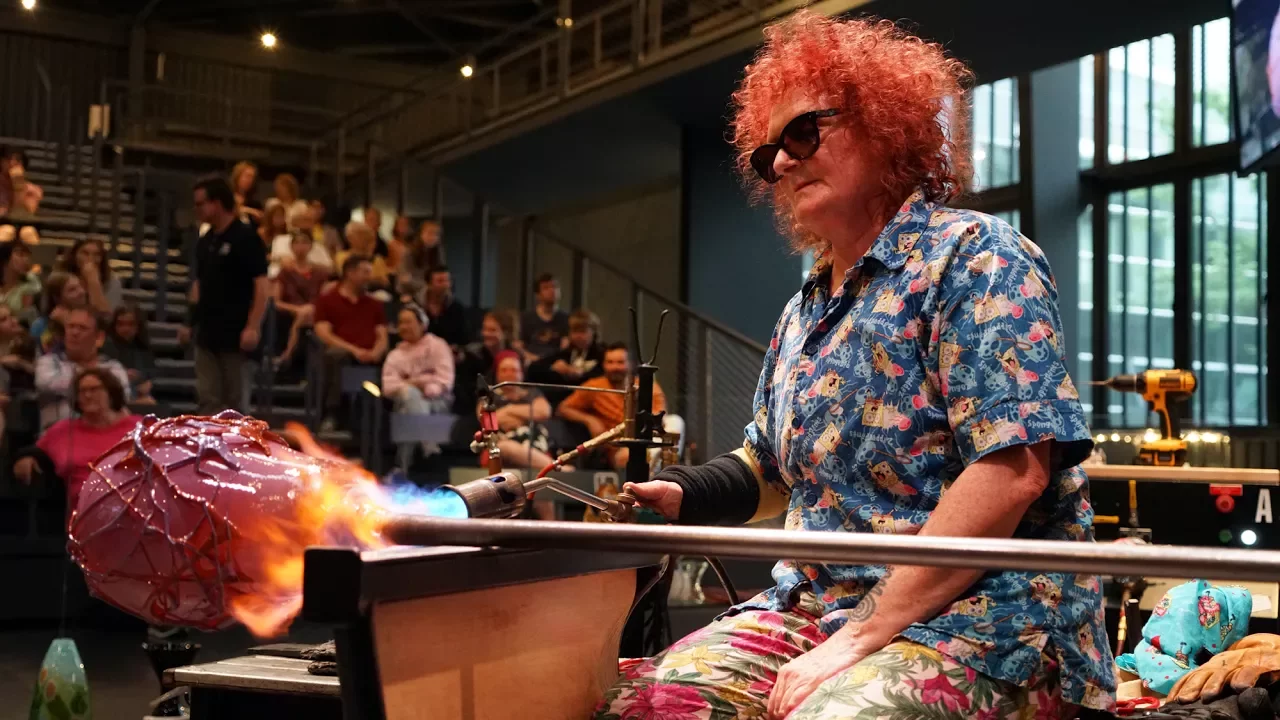
Laura Donefer Guest Artist Demonstration
23.4K
All glass contains silica (refined sand) as the common denominator. Pure silica requires 4,000°F to melt, but commercial glass melts at 2,000°F because fluxes are added. Soda ash (soda lime glass) lowers the melting temperature. Lead and boron can also be added as fluxes, each creating different working properties. Manufacturers tweak formulas for specific applications—bottles need faster setting, while artistic glass needs longer working time. Borosilicate glass has more thermal resistance and contracts less during heating and cooling.
Click to watch →

Shane Fero Visiting Artist on Spring Island
520
Glass is fundamentally silicate-based with additives creating distinct properties. Pure quartz has zero thermal expansion; borosilicate (Pyrex) handles heat for lab/kitchen use; soda-lime glass (~96 coefficient) is general-purpose; Japanese Satomi glass (130+ coefficient) becomes extremely soft when heated. All require stabilizers (potash, lead) to prevent dissolution. Glass colors interact chemically—different hues have varying viscosities when heated, affecting workability. Annealing removes internal stress through controlled cooling. Fuel technology ranges from traditional alcohol/bellows systems to modern oxygen-propane mixtures. The venturi effect—blowing breath over flames—can augment heat sufficiently to fuse glass with candle flames.
Click to watch →

FenomenosA Capitulo4Video b
974
Glass viscosity depends on composition and temperature. Silica forms a three-dimensional pyramidal structure with silicon at the center and oxygen at vertices. Adding oxygen atoms creates network separation, reducing viscosity. Network forming oxides like silica create the fundamental glass structure, while modifiers like alkali oxides disrupt this network. Temperature increases molecular mobility, reducing viscosity. Understanding these relationships is essential for controlling glass properties during manufacturing.
Click to watch →

Liquid Crystals & Glassy state | Physical Pharmaceutics | BP 302T | L~12
55.9K
Glass composition consists of three essential components: Formers (compounds that melt and convert to glass, primarily sand/silica), Fluxes (materials that reduce melting point, such as soda ash, potash, and lithium carbonate), and Stabilizers (materials that counteract flux effects, including limestone, alumina, and zinc oxide). Glass exhibits combined properties of crystals and liquids: mechanical strength of crystals with random molecular arrangement of liquids. Key properties include scratch resistance, corrosion resistance, thermal shock resistance, heat absorption and transmission, optical activity, and light reflection. These properties make glass suitable for windows, containers, and optical instruments.
Click to watch →

Comprendre l'émaillage en poterie en 25 min
1.6K
Glass formation requires three essential components: silica (the former), alkalis (modifiers/fluxes), and stabilizers. Pure silica melts at 1700°C, while pure calcium carbonate melts at 2600°C. However, the eutectic phenomenon allows these materials to combine and melt at approximately 1100°C, dramatically reducing firing energy requirements. Feldspar serves as both a flux (lowering melting temperature) and alumina source (strengthening glass). Cre provides calcium as a stabilizer that prevents devitrification and ensures long-term glass stability. Alumina from feldspar and kaolin slightly increases melting temperature while significantly enhancing glaze strength and durability.
Click to watch →
Deep Dive
The invention and basic mechanics of free-blowing glass using a metal blowpipe, which served as the precursor to mold-blowing.

LaunchPad: Ancient Glassmaking—The Free-Blown Technique
15.9K
Around 40 B.C., the ancient glass industry revolutionized through the free-blown technique, which involved gathering molten glass on a metal blowpipe, rolling it on a marver to create a perfectly round bubble, then blowing air to expand it into various vessel shapes; this method was faster and cheaper than previous core-formed or casting techniques, making glass accessible to wider markets and becoming the primary production method for vessels.
Click to watch →

GMALL Lectures - Forged From Fire: The History and Future of Glass
138
In free blown vessels, molten glass is gathered on a hollow blowpipe, inflated to create a hollow form, then shaped by rolling onto a marver and put in and out of the furnace until the desired shape is achieved. In mold blown vessels, the artist gathers glass on the blowpipe, inflates it in a mold (often made of wood or clay with a release coating), and the mold imprints its design into the glass. The mold may contain inscriptions that transfer to the glass surface.
Click to watch →

How Everything GLASS Is Made! | How It's Made | Science Channel
565.6K
The first hollow glass objects date back to 1500 BC. The invention of the blowpipe around 30 BC revolutionized glass craft. Before this, objects were carved from solid glass blocks or molded from molten glass. The blowpipe enabled glass makers to expand and shape glass, making fast, inexpensive production possible. This meant everyday items, not just luxuries, could now be made of glass, accessible to ordinary people rather than just the wealthy.
Click to watch →
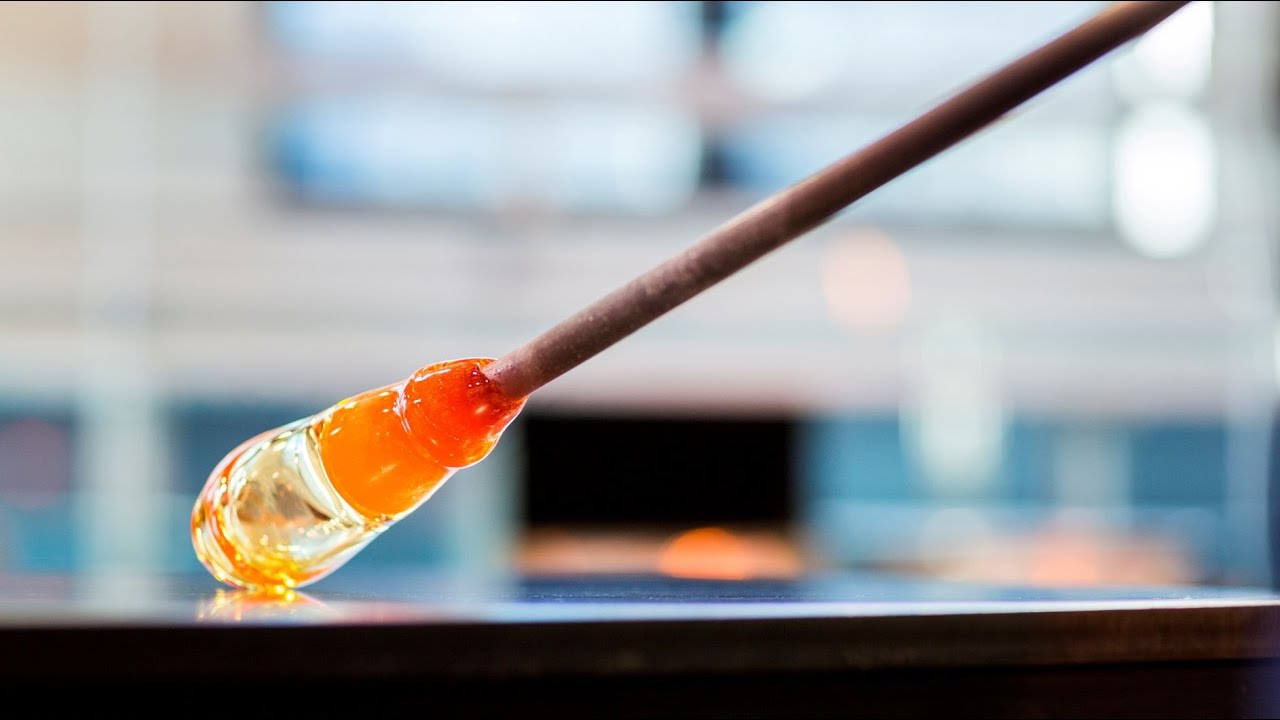
Watch with the Artist: Bill Gudenrath Studio Demonstration
11.1K
Glassblowing is divided into free blowing (no molds, relying on timing and centripetal force) and mold blowing (using various molds). A Roman bottle demonstrates free blowing technique. Full-size mold blowing began around 10-30 AD, with bubbles emerging in final shape. Dip molds (optic molds) are most common, including ribbed and pineapple varieties. Glass is a poor heat conductor, requiring multiple refeeds (heat treatment) to prevent collapse. When using thin fin molds, thicker points between ribs create decorative 'arcade effects' when spun quickly. This technique was common in late 16th and 17th century Venetian glass.
Click to watch →

Studio Demonstration | William Gudenrath
6.4K
Glass is a unique material that gradually loses resistance to flow as it heats, becoming infinitely stretchable above approximately 1100°F. Surface tension causes edges to close naturally, while poor thermal conductivity preserves shape during blowing. Glass blowing originated around 40 BC and spread throughout the Roman World by the first century AD, revolutionizing glass production. The technique exploits glass's natural properties using gravity and centripetal force. The free blowing process involves gathering glass on a blowpipe, marvering to cylindrical shape, blowing a bubble, elongating to form a tube, reheating and blowing to inflate the vessel body, creating a constriction for detachment, flattening the bottom, reheating the opening, and finishing the rim. This produces characteristic ring-shaped punty marks. Romans loved folded rims created by pushing rims upward and inward with conical tools. Full-size mold blowing began in the first decades of the first century AD using terracotta molds lined with soot, defining final geometry and decoration in about 45 seconds. The fundamental challenge of separating hardened glass from the blowpipe was solved by creating a narrow tube that breaks cleanly.
Click to watch →
Deep Dive
Basic manufacturing concepts of molds, including how multi-part clay or terracotta molds function and inevitably leave parting lines or seams.

THE EASIEST Way to make Multi-Part Molds!
277.8K
This segment covers the foundational concepts for creating multiple-part molds. First, understand undercuts—features that trap models in single-part molds, such as inward-sloping handles. Second, determine seams by examining models from all directions and marking them with permanent marker on non-precious objects. Third, create clay barriers to contain plaster and dig spaces for model halves. The first casting side requires careful preparation including plugging protrusions, establishing proper plaster height (about 1.5 inches), and agitating to release air bubbles. These initial steps establish the framework for successful multi-part mold creation.
Click to watch →
#3 NISSAN SKYLINE GT-R(ニッサンスカイラインGT-R)TAMIYA 1/24 なべさんnabe-sanのチャンネル【カーモデル】
8.5K
Mold lines (モールド) are the raised or recessed details on model parts that represent surface features. Parting lines (パーティングライン) are the seams where the mold halves meet during manufacturing, which inevitably appear on the finished model. These parting lines often get embedded into the mold details, creating imperfections that need to be addressed before proceeding with further work.
Click to watch →
Marvels of Injection Molding!
1.2M
In two-piece injection molds, witness lines or parting lines appear where the two mold halves meet. These lines are visible on the finished part and indicate the separation plane of the mold. The location and visibility of parting lines depend on the mold design and can be minimized with proper tooling but are inevitable in multi-piece molds.
Click to watch →

Pro Mold Maker REACTS | Watch How This PERFECT Plaster Bottle Mold Is Made!
2.6K
When making molds of rigid pre-manufactured shapes, seam lines serve as indicators for parting lines. Glass maintains true seam lines while ceramics may be distorted by handling. Mold makers must consider how finished pieces will be used, hiding seam lines in areas that sit on shelves. Clay parting walls can be built by lining up dividing lines and building a box, or faster by pouring liquid alginate up to the parting line, which sets in about 20 minutes. Clay should be built down initially because plaster will raise it and it needs shaving. Water-based clay is easier to work with than oil-based clay. Proper plaster mixing involves adding dry plaster to wet water first, then letting it slake for 3 minutes. A disc blade works better than a paint mixing blade, which foams the plaster. Buckets should be brushed with Vaseline before use for easier cleanup.
Click to watch →
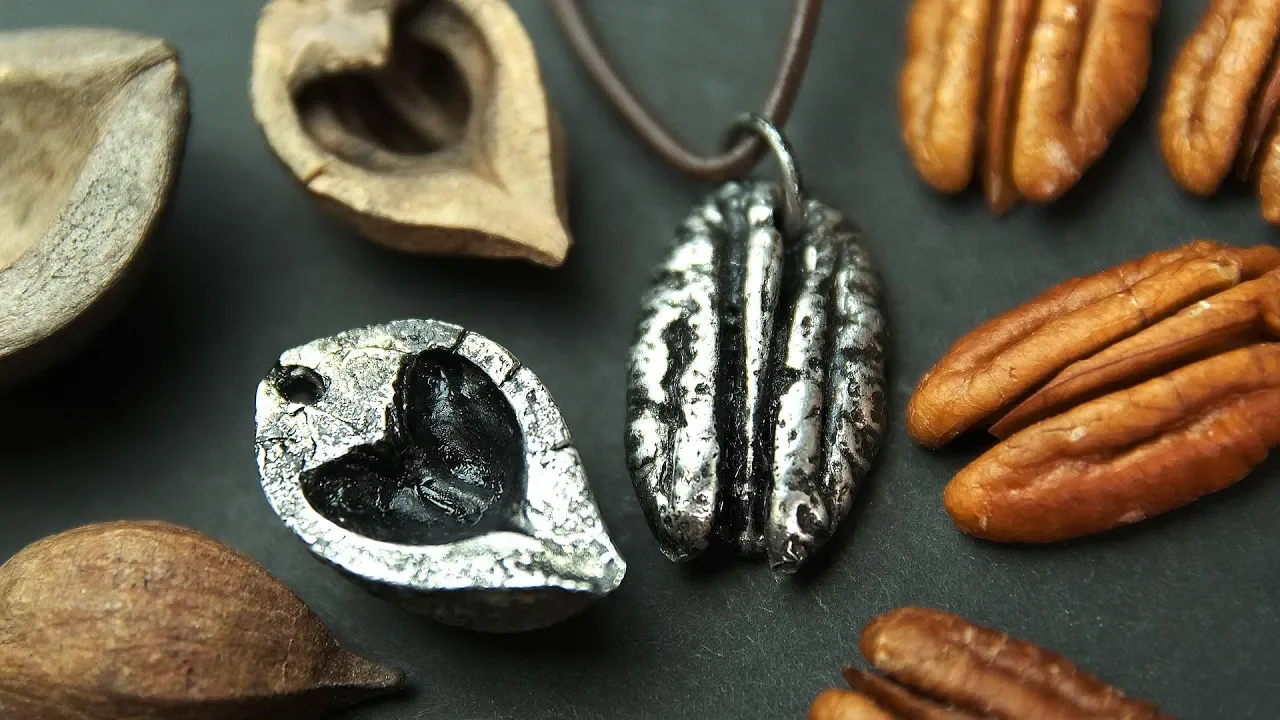
EASY METAL JEWELRY | Pecan Nut Necklace, Hickory Heart Pendant, Pewter Casting, Mold Making
365.2K
To create a two-part mold, first prepare clay in a flat surface, then press the object into the clay to create the first half. The depth of insertion determines where seam lines will appear in the final mold.
Click to watch →
Deep Dive
The socio-economic context of the early Roman Empire, particularly the shift from luxury, elite-only goods to standardized, mass-produced consumer products.

A Római Birodalom Bukása SOKKAL Rosszabb Volt, Mint Hinnéd
77.5K
Rome developed a sophisticated consumer society built on standardization and efficient logistics. The most famous example was Terra Sigillata pottery, a distinctive red, glossy tableware that became a status symbol and the first true mass-produced item. In Gaul alone, factories produced up to 45 million pieces annually in standardized forms. This pottery was distributed throughout the empire, from Britain to African deserts. Having such tableware marked you as part of civilization. This system demonstrates how Rome created a consumer economy where standardized products and efficient distribution networks sustained widespread prosperity.
Click to watch →

Ancient Economies - Panel Discussion - Emmanuel Mayer, Matt Stolper and Don Whitcomb
4.6K
A remarkable feature of the Roman economy was mass production of agricultural and daily-use items shipped hundreds of miles across the Mediterranean. Shipwrecks often contain hundreds of amphorae of garum (fish sauce), and regions expecting regular supplies of goods like olive oil or garum developed dependencies. This level of standardized mass production and distribution was unprecedented in earlier Greek and Indian eras.
Click to watch →

¿Sabías Por Qué Algunos Cascos Romanos Llevaban Máscara de Hierro?
156.8K
Economic analysis of the late Western Roman Empire reveals a crisis in the supply of high-quality bronze. The mines of Thrace had been repeatedly sacked by invading Goths, and the cost of producing individualized masks had become prohibitive for a bankrupt imperial treasury. Archaeology of the 5th century shows a radical change in military equipment—helmets became simpler, more standardized, and cheaper. The empire could no longer afford the luxury of creating warrior-priests and needed mass-produced soldiers to face endless waves of invaders.
Click to watch →

How Ancient Rome Became The Biggest Empire In History
12.7K
Roman red-gloss pottery represents one of the earliest examples of mass production in human history, with standardized vessels distributed throughout the empire from Britain to North Africa. While some pieces featured decorative scenes depicting mythological stories, most were plain utility ware designed for everyday use. This widespread distribution created a form of consumer culture where identical objects appeared across vast territories, analogous to modern globalization phenomena like identical trainers or fizzy drink cans found worldwide. The pottery demonstrates how Roman industrial capacity and distribution networks enabled unprecedented uniformity in material culture across the empire.
Click to watch →

Античные деньги. Часть 7
520
The early Roman Empire experienced significant economic transformation characterized by the development of commodity-money relations and commodity production. This led to deepening division of labor, increased product quality, and variety. New agricultural cultures were cultivated, and manufacturing expanded to include complex tools, weapons, clothing, shoes, and luxury items. Specialization emerged in jewelry, perfumery, fabric production, precious metalware, and artistic ceramics. Urban housing evolved through the insula system, with multi-story buildings where ground floors housed shops and tabernae. The population consisted primarily of free-born plebeians and freedmen working in various trades. The clientela system created complex social networks where wealthy or impoverished individuals entered the patronage of influential magnates to receive material support and career advancement. The upper classes accumulated vast wealth extracted from the provinces, investing in land or luxury goods. Land ownership remained essential for membership in the highest social circles, with Roman magnates' estates resembling sovereign principalities containing grand villas with extensive staffs numbering in the hundreds or thousands. The first decades of the principate were characterized by economic and cultural revival, with an intense passion for money becoming central to life. Speculative trading and usury became highly profitable activities undertaken by senators, equestrians, and freedmen. The Roman provinces were viewed as 'prey' of the Roman people, with the state personified in the emperor. Augustus established a permanent army of 25 legions, requiring fundamental reorganization of supply and financial systems. Provinces outside Italy were taxed double, with one-third collected in kind and the rest in money. This reform accelerated the transition from natural to monetary economy across the Mediterranean world. The increased circulation of coins created greater demand for money, forcing provincial populations to convert their agricultural products into currency, often through loans from wealthy Roman creditors. When Tiberius ascended to power in 14 AD, Rome faced a precarious and unstable situation. The final years of Augustus had been marked by the devastating defeat of three legions in the Teutoburg Forest and major rebellions in Pannonia and Dalmatia. The Pannonian-Dalmatian rebellion involved up to 800,000 people, including Roman auxiliary troops and cavalry. To suppress it, Rome mobilized nearly all available forces, including freedmen and slaves in special units, and raised new taxes. The rebellion's suppression forced Rome to abandon expansionist policies in the north and east. Tiberius's accession was complicated by dynastic crises, including the absence of a direct heir and complex family relationships. At 55 years old, he was of pure aristocratic descent from the Claudian family, with his mother Livia Drusilla ensuring his place in the imperial family from childhood. Tiberius felt like a stranger in the imperial family and spent much of his life away from Rome, primarily on the island of Capri. The hardships of his youth developed antisocial traits including misanthropy, hypocrisy, and extreme suspicion. Following Augustus's death, Rome's situation deteriorated rather than improved. The first major social movement under Tiberius was the Pannonian-Germanic legion revolt, resulting from deep dissatisfaction with harsh military service conditions. The Roman army was a constant source of unrest, with revolts often threatening the state's very existence.
Click to watch →
Prerequisite Knowledge
- Concept 01The fundamentals of glass composition (silica, flux, and stabilizers) and how glass behaves when heated to a viscous, workable state.
- Concept 02The invention and basic mechanics of free-blowing glass using a metal blowpipe, which served as the precursor to mold-blowing.
- Concept 03Basic manufacturing concepts of molds, including how multi-part clay or terracotta molds function and inevitably leave parting lines or seams.
- Concept 04The socio-economic context of the early Roman Empire, particularly the shift from luxury, elite-only goods to standardized, mass-produced consumer products.
Subsequent Learning
- Step 01The archaeological methods used to trace Roman trade networks and workshop distribution by analyzing mold-blown glass seams, shapes, and maker's marks.
- Step 02The chemical composition analysis of Roman glass (such as the sourcing of natron from Egypt) to understand ancient raw material supply chains.
- Step 03The evolution of mold-blown glass techniques into Byzantine, Islamic, and later Venetian (Murano) glassmaking traditions.
- Step 04How ancient Roman mass-production principles laid the technological foundations for modern industrial automated glass manufacturing, such as the blow-and-blow process.
Mold Blowing
Final Shaping
Mold Blowing
0:08Playing Section
- 1
Glassblowing into molds flourished in the ancient Mediterranean.
- 2
A three-piece mold shapes the vessel with raised designs.
- 3
Blowing expands the glass to press against the mold's interior.
The Mold Material Debate: Metal, Plaster, and Wood vs. Clay
While introductory museum texts often state that Roman glassmakers exclusively used clay molds to mass-produce vessels, many experimental archaeologists and glass historians challenge this consensus. They argue that clay molds are highly susceptible to thermal shock and rapid degradation, which would prevent the crisp, repetitive detailing seen on high-quality Roman vessels like the Pilgrim Jug. Instead, alternative theories propose that molds were more frequently made of metal (such as bronze), plaster, or even carved wood. Metal molds would offer much greater durability for true mass production, while plaster or multi-part wood molds could better explain the intricate, sharp relief designs that clay might fail to capture. This ongoing debate highlights that Roman glassmaking was likely far more technologically diverse and sophisticated than a singular 'clay mold' narrative suggests.
Deep Dive
The archaeological methods used to trace Roman trade networks and workshop distribution by analyzing mold-blown glass seams, shapes, and maker's marks.
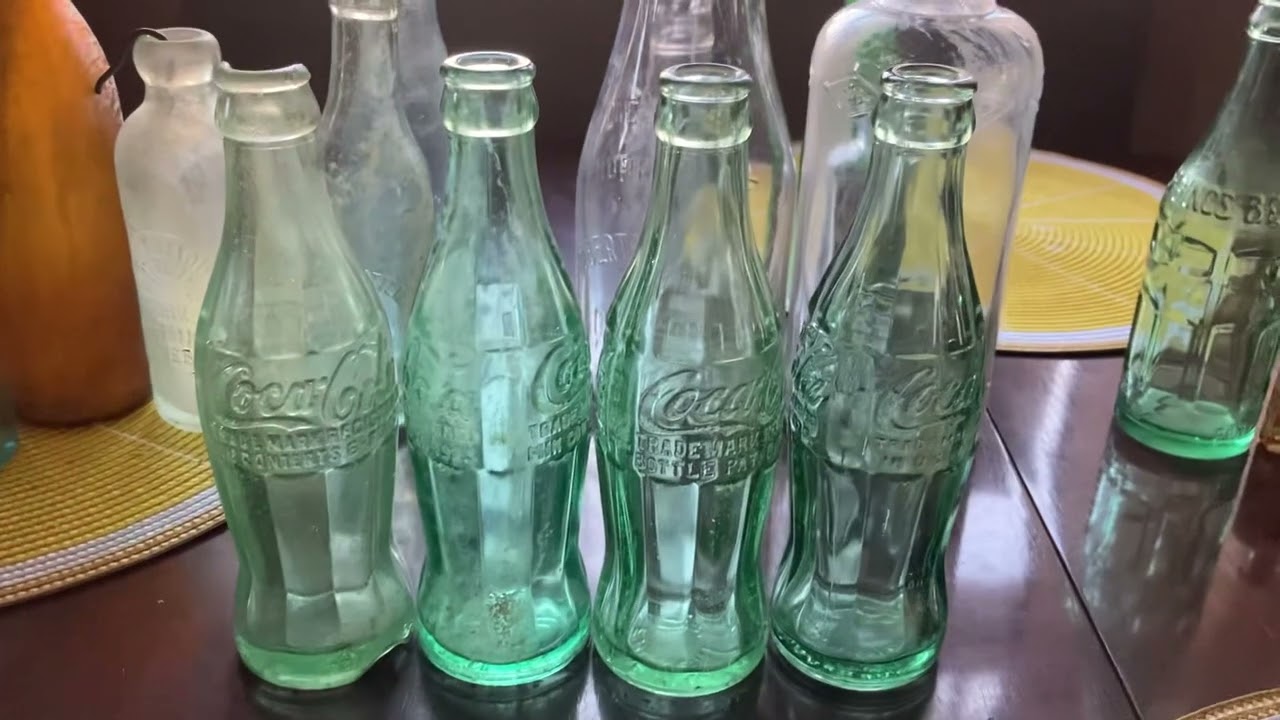
Determining an archaeology sites age based on the glass found
272
Glass bottle analysis provides comprehensive dating and site interpretation methods. Manufacturing techniques reveal age: hand-blown bottles (1860s-1870s) have no seams, while mold-blown bottles show complete seam lines. Bottle top styles indicate eras: blob tops (earliest), hutch tops (1879-1912), laptops (late 1910s). Dating methods include maker's marks, patent dates, date codes, and paper labels. Glass properties like color (black: 1600s-1800s, manganese: pre-1915) and sun exposure effects provide additional dating. Bottle components (caps, stoppers) indicate closure eras. These methods help archaeologists determine site age ranges, commercial activities, and occupation periods through bottle analysis.
Click to watch →
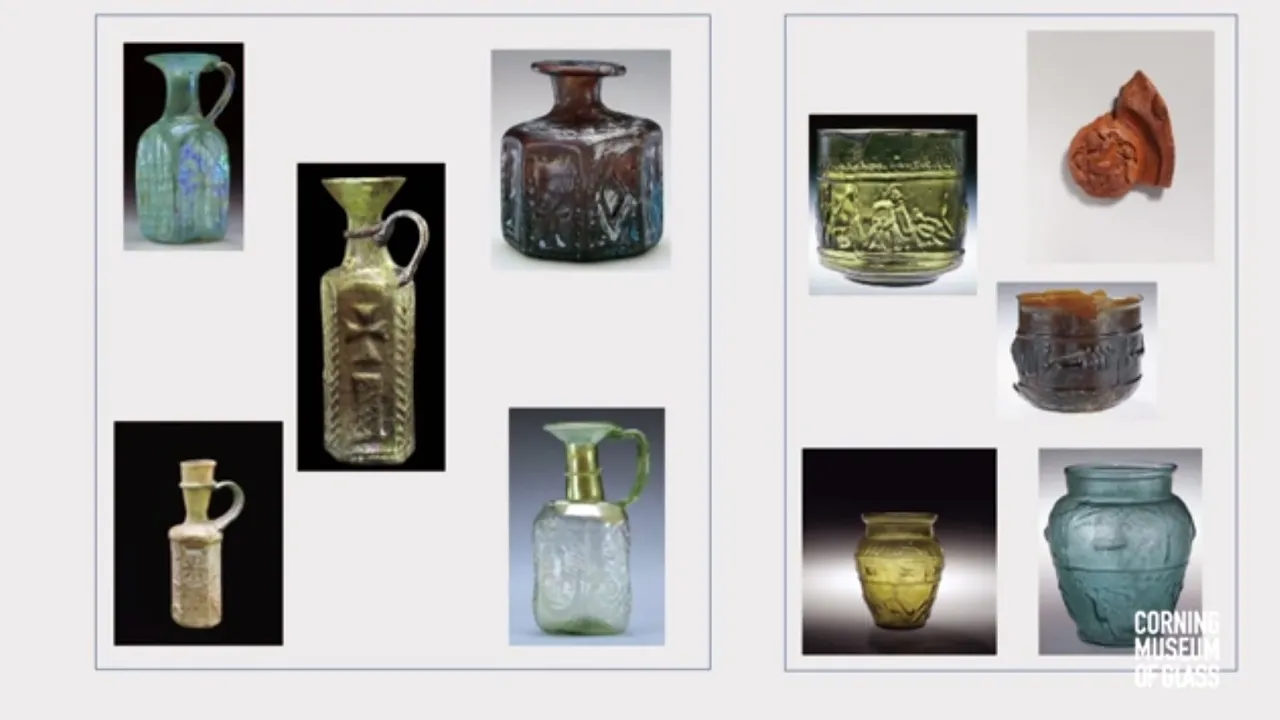
Ennion and His Legacy: Mold-Blown Glass from Ancient Rome | Behind the Glass Lecture
9.5K
Enion represents the earliest known named Roman glassmaker, identified exclusively through his signature incorporated into glass mold designs. Using a tabula ansata (rectangular pane with handles), he inscribed his Greek name on vessels, indicating Eastern Mediterranean origins. His four basic vessel shapes—flat-bottomed jugs, pedestal-footed jugs, cups (with 0, 1, or 2 handles), and six-sided flasks—demonstrate remarkable technical sophistication through complex multi-part molds requiring four or more sections. Archaeological evidence reveals his glassware was distributed across the entire Roman Empire from southern Spain to Crimea, from Belgium to southern Judea, primarily interred with their owners in graves. Despite extensive research, his actual workshop location remains unknown, though Sidon (modern Lebanon) is a leading candidate based on his Greek inscription. His work belongs to a broader corpus of Roman glass production alongside cameo glass, mosaic glass, ribbon glass, gold band glass, and trailed wares. The technical reconstruction of mold-blowing methods revealed extraordinary innovation: terracotta molds lined with soot, multi-part construction, handle addition through manipulated molten glass, and rim formation through controlled cracking. Enion was part of a small but significant group of Roman glassmakers who signed their work, including Aristas, Naos, Mees, and Jason, creating a documented artistic community that shaped the future of glassmaking.
Click to watch →

NEW | TIME TEAM - 5 Finds from Boden Fogou - Dig One (Cornwall) Series 21
58.3K
Roman Samian ware exemplifies industrial-scale production in the Roman Empire, manufactured in thousands of identical copies using molds in workshops throughout the empire. The manufacturing process involved creating clay molds with impressed designs, pressing clay into molds, drying, adding bases, applying slip coatings, and kiln-firing. Each workshop produced distinctive molds, enabling archaeologists to identify origins and sometimes locate maker's marks. Samian experts can date specific types within approximately 35 years; the example shown dates to AD 160-195 from the workshop of Paternus II. This standardized production reflects Roman economic organization and the distribution of luxury goods across the empire.
Click to watch →

Current Postgraduate Research at The University of Birmingham
116
The Romans used more glass than any previous civilization, creating widespread archaeological evidence across the empire. Glass survives long in the ground due to its stable chemical properties. Glass blowing introduced around 50 BC transformed glass from luxury to domestic items including vessels, containers, windows, and beads. Archaeological evidence shows furnaces in Egypt and Levant, with chemical and isotopic analysis confirming these as primary glass sources. The manufacturing process involved two stages: primary production at 1100-1250°C creating raw blocks, followed by secondary working at 750-850°C shaping finished products. Glass working centers expanded throughout the empire, with over 20 sites identified in Britain alone. Maritime evidence from shipwrecks demonstrates extensive distribution networks. Research hypotheses explore consumer culture driving local production expansion and industry resilience to political changes. Challenges include fragmentary archaeological evidence and the need for statistical analysis of form distributions across regions and periods.
Click to watch →
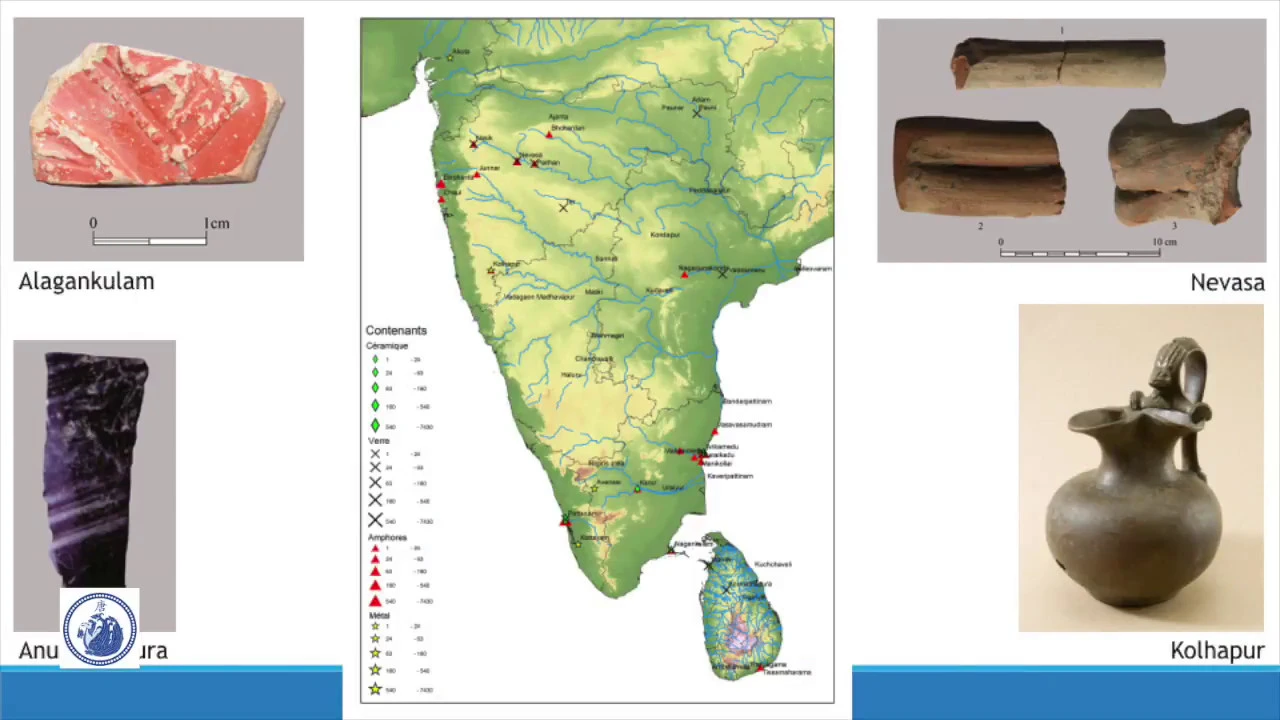
Panel 2: Across the High Seas: Cross-Cultural Encounters in the Indian Ocean Littoral Conference
403
This section presents the scientific methodology for analyzing Roman glass, including two-component manufacturing (silica + natron flux), coloration techniques using antimony, manganese, cobalt, and copper, and chronological dating through compositional changes. Trace element analysis distinguishes Egyptian from Levantine glass and identifies plant ash glass variations. Research on 6,000+ glass samples from Asia reveals 11% tested as Roman glass, with gold glass beads and cobalt blue vessels as most common types. Surprisingly, 90% of Asian Roman glass originated from Egypt, contrasting with Western Europe's 90% Levantine preference. Over 50% of samples date to the fourth-seventh century, demonstrating late antique glass production's enduring importance in Asian markets and the longevity of established maritime trade networks spanning nearly five centuries.
Click to watch →
Deep Dive
The chemical composition analysis of Roman glass (such as the sourcing of natron from Egypt) to understand ancient raw material supply chains.

Professor Ian Freestone, "The long 'Roman' glass industry" - Scientific Evidence
1.7K
The Roman glass industry, the largest pre-modern industry, produced soda-lime-silica glass using Natron (sodium carbonate) from Egyptian soda lakes as the primary flux, with production concentrated in the eastern Mediterranean and raw glass distributed throughout the Roman Empire; scientific analysis using strontium and neodymium isotopes reveals distinct compositional groups corresponding to specific production regions and time periods, while recycling of glass (particularly window glass and prismatic bottles) became dominant in the West from the 7th-8th centuries, explaining price anomalies in Diocletian's Edict and demonstrating how the industry persisted for centuries through continuous reuse of raw materials.
Click to watch →

The Oasis of Glass
8.9K
Archaeological excavations in Wadi Natrun, Egypt, have uncovered the largest tank furnaces of antiquity, capable of producing glass slabs weighing 15-20 tonnes per firing; these primary workshops, dating to the beginning of the Common Era, utilized natron (a natural soda ash) and quartz sand as raw materials, employing horizontal reverberatory furnaces that enabled mass production of raw glass for the Roman Empire's expanding glassware industry.
Click to watch →
Looking at Windows | Connected by Glass
2K
Glass is fundamentally composed of silica sand (silicon dioxide), soda (sodium carbonate/natron) to lower melting point, and lime (calcium oxide) to prevent water solubility. Ancient Roman window glass was soda-lime glass made from these basic ingredients, with natron sourced from desert deposits like Wadi Natron in Egypt. Remarkably, the fundamental composition of certain lime glasses has remained essentially unchanged since ancient times, demonstrating remarkable continuity in glass technology across millennia.
Click to watch →
Current Postgraduate Research at The University of Birmingham
116
Archaeological evidence shows glass making furnaces in the Eastern Mediterranean (Egypt and Levant). Chemical analysis by Ian Freestone and others confirmed that most Roman glass originated from these two regions. Carolyn Jackson's 2005 study of colorless glass confirmed the same origins for the first and third centuries. Isotopic analysis by De Grasse in 2014 using strontium (tracing calcium/lime) and neodymium (tracing sand source) confirmed Levant and Egypt as primary sources.
Click to watch →

Why Is This Lake PINK?
262.7K
Natron is not a single element but a mixture of four different compounds bonded to carbonate molecules: soda ash (sodium carbonate), baking soda (sodium bicarbonate), sulfate of soda (sodium sulfate), and table salt (sodium chloride). These compounds share the common element sodium, which is why the term 'natrium' evolved into 'sodium.' Both the Egyptian lakes in Wadi Natrun and Lake Natron in East Africa contain extremely high concentrations of dissolved salts and sodas, creating their characteristic hypersaline environment.
Click to watch →
Deep Dive
The evolution of mold-blown glass techniques into Byzantine, Islamic, and later Venetian (Murano) glassmaking traditions.
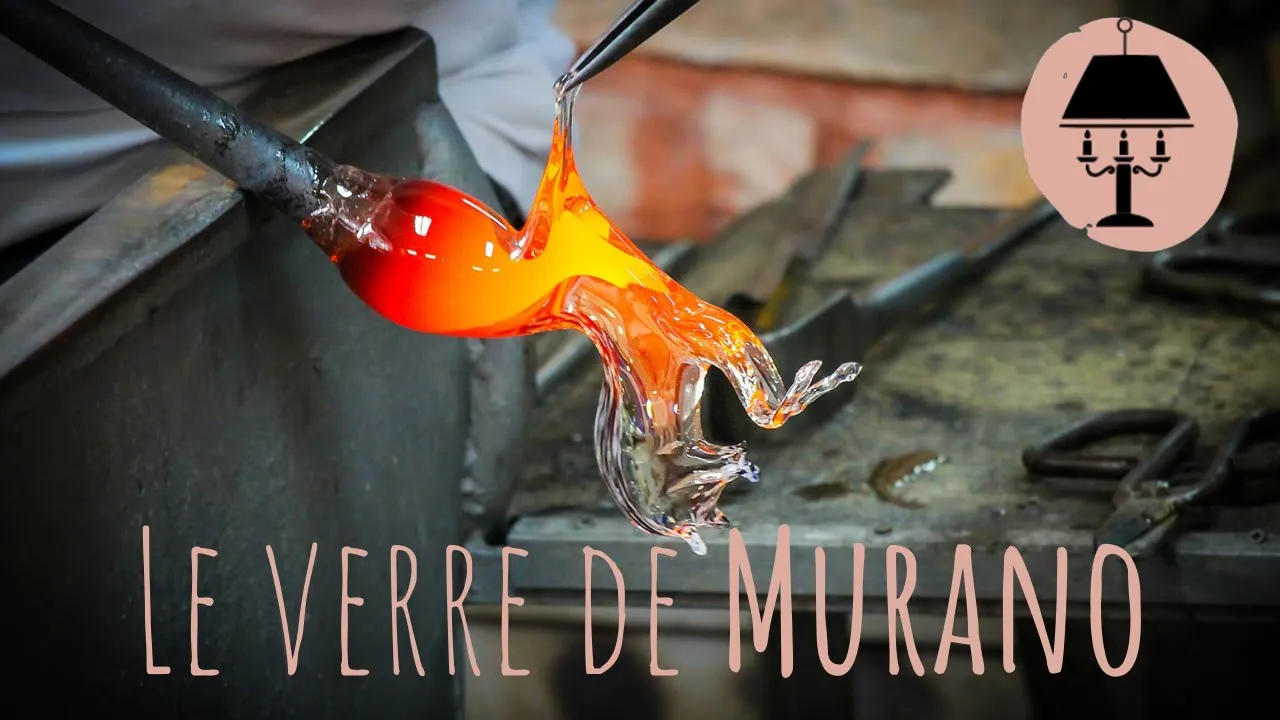
Le verre de Murano
373
Murano glassmaking, originating from the Near East around 3000 BCE and spreading through the Middle East and Roman Empire to Venice by the year 1000, evolved from practical daily objects into a prestigious art form through the Fourth Crusade (1204), which brought Byzantine artisans to Venice; the Republic of Venice relocated glassworks to Murano island in 1291 to prevent fires and protect secrets, granting artisans privileges while exiling those who worked abroad, leading to innovations like crystal glass, filigree, and lattimo, but the craft declined in the 17th century due to French artisans stealing secrets and new European competitors, before being revived in the late 19th century by families like Venini, Seguso, and Barovier who preserved the tradition.
Click to watch →
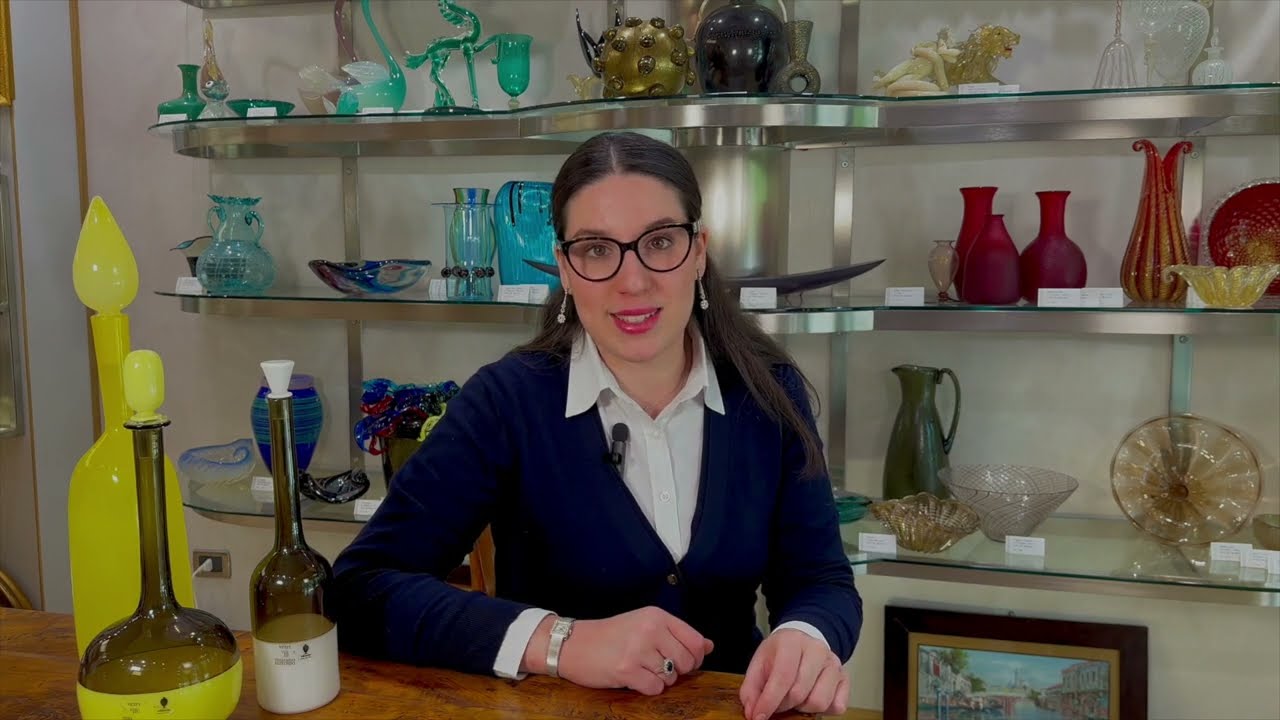
La Magia di un Soffio - di Passione Antiqua
168
Glass was accidentally discovered by the Phoenicians who fused silica sand with fire, creating honey-like consistency. Adding soda lowered the melting temperature. Production spread from Carthage to Egypt and Rome, where Romans began large-scale manufacturing. During the Middle Ages, Byzantium led glass production, then Venice. Venetians mastered blowing techniques for colored glassware. Doge Pietro Gradenigo relocated all glassworks to Murano Island in 1291 due to fire hazards, establishing it as the Glass Island. By the 15th century, Cristallo Veneziano (first transparent glass) was created by Angelo Barovier. After Venice's fall in 1797, Austrian domination and Bohemian competition caused crisis. By the late 19th century, Murano regained mastery with famous furnaces like Barovier, Salviati, Seguso, and Venini. Glassmaking is a collaborative team effort using four fundamental elements: silica sand, soda, calcium carbonate, and antimony. These melt at 1400°C to produce transparent glass. Colors are achieved through oxides: cadmium (yellow), selenium (red), cobalt (blue), manganese (green). Five major techniques include: Incalmo (16th century) - soldering two blown pieces along rims for multi-colored objects; Filigrana - using crystal rods with filaments to create lace-like patterns; Sommerso - immersing thick blown pieces into colored glass for layered effects; Foglia oro - placing gold leaf in glass mass for luminosity; Millefiori - using canes with concentric colored layers for intricate patterns.
Click to watch →

Kaca: Sejarah Menarik dan Penemuan yang Bikin Heboh
7.8K
Venetian glass blowers on Murano island perfected crystal glass in the 13th century, monopolizing the technique with pure quartz sand. Many fled to Northern Europe, establishing glass industries in Germany, Czech Republic, and Britain. George Ravenscroft invented lead crystal glass in 1674 by adding lead oxide. French makers developed plate glass for mirrors. In the 19th century, Americans created modern window and bottle glass techniques. Michael Joseph's automatic glass blowing machine (20th century) was the most significant 2,000-year innovation. The 1959 float glass process, discovered by an Englishman, revolutionized production by refining earlier Fourcault and Pilkington methods, enabling high-quality flat glass sheets.
Click to watch →

Claro como el cristal: breve historia del vidrio
32.9K
While Gothic France and Spain used stained glass extensively, the highest quality glass was produced in Venice, Italy. Venetians, who established themselves on lagoon islands in the 5th century to escape barbarian raids, had access to Eastern markets. In 1291, the Republic ordered glassmakers to relocate to Murano to prevent fires and protect secrets. They received special privileges, including the right to marry patrician children. Murano glassmakers developed 'cristallo'—completely colorless glass superior to Roman glass—named for its resemblance to pure quartz.
Click to watch →

Assim Era a Vida Dentro de uma Casa em VENEZA na Itália no ano de 1500 | Reconstrução com IA
33.2K
Since 1291, all glassmakers had been required by law to relocate to the island of Murano to reduce fire risks in Venice and protect trade secrets. By the 15th century, master glassmaker Angelo Barovier developed cristallo, a remarkably transparent glass that made Murano the sole producer of quality mirrors in Europe. By 1500, filigrana techniques using colored glass threads embedded in clear glass were being developed. Wealthy families displayed Murano glassware including goblets, jarrons, chandeliers, and mirrors as both practical objects and status symbols.
Click to watch →
Deep Dive
How ancient Roman mass-production principles laid the technological foundations for modern industrial automated glass manufacturing, such as the blow-and-blow process.
Art Break: Molten and Molded: Roman Glass and Contemporary Connections
1.5K
Roman glassmakers pioneered mold-blown glass within the first century of glassblowing, discovering that this technique enabled rapid mass production (20 seconds versus 45 minutes for earlier methods), consistent quality, and the ability to combine vessel shaping with decorative elements simultaneously; this innovation democratized glass ownership to middle-class citizens and allowed for the creation of intricate designs like palm fronds and inscriptions that would have been labor-intensive to produce individually, a technique that remains fundamental in contemporary glassmaking today.
Click to watch →

The Industrialization of Glassware
105
The mechanization of glass blowing was essential for producing volumes required by the American consumer economy. The press-and-blow process (1882) and blow-and-blow process (1885) enabled machine production. The suction-and-blow process (1895-1917) introduced automatic gob delivery, and the individual section machine (1925) revolutionized efficient production. Automation displaced child labor more effectively than laws, removing boys as young as eight from dangerous factory work. Worker organization emerged through unions like Local 300 Window Glass Workers of America (1880), establishing production limits and wage controls. Modern glass manufacturing operates 24/7 with furnaces holding hundreds of tons, producing 1-3 million containers daily for populations of 1-2 million people.
Click to watch →
Claro como el cristal: breve historia del vidrio
32.9K
Several technological advances enabled mass glass production: the cylinder method produced large sheets by blowing cylinders, cutting them lengthwise, flattening, and passing through rollers. In the 20th century, Pilkington developed the 'float glass' process, creating sheets of uniform thickness by floating glass on molten tin. Early automobile windshields were dangerous; French chemist Edouard Benedictus invented laminated safety glass (Triplex) with two glass layers and a polycarbonate layer, saving countless lives since the 1930s-1940s.
Click to watch →

Sabedoria e Antiguidade : Os Romanos
599
Roman glass production replaced clay vessels, which absorbed flavors and odors and allowed bacterial growth. Glass was odorless, tasteless, and hygienic. Glass blowing was discovered around 50 BC in a Roman colony in Syria, spreading throughout the Roman world in just 40 years. Romans introduced molds for glass production, allowing teams of glassblowers to produce large volumes at high speed, transforming glass production from individual craftsmanship to industrial manufacturing. This innovation enabled the transition from artisanal to mass manufacturing, centuries before the Industrial Revolution. Roman glass production centers like Cologne supplied glass throughout the empire, transforming Roman material culture and daily life.
Click to watch →

Őseink Tudománya A Rómaiak
62.1K
Roman industrial production demonstrated advanced manufacturing capabilities. Water-powered mills at Barbegal used 16 wheels in series, achieving eight times greater efficiency than traditional designs and producing enough flour for 12,000 people daily. Glass manufacturing evolved from hand-blown to mold-blown techniques, dramatically increasing production speed and consistency. The technology spread across the empire within 40 years. Engraved glass required diamond-tipped tools and months of practice to master. Since diamonds only came from India, Romans maintained extensive trade networks spanning thousands of kilometers. These innovations enabled mass production and supported urban populations.
Click to watch →
Mold Blowing
Final Shaping
Mold Blowing
0:08- 1
Glassblowing into molds flourished in the ancient Mediterranean.
- 2
A three-piece mold shapes the vessel with raised designs.
- 3
Blowing expands the glass to press against the mold's interior.
The Mold Material Debate: Metal, Plaster, and Wood vs. Clay
While introductory museum texts often state that Roman glassmakers exclusively used clay molds to mass-produce vessels, many experimental archaeologists and glass historians challenge this consensus. They argue that clay molds are highly susceptible to thermal shock and rapid degradation, which would prevent the crisp, repetitive detailing seen on high-quality Roman vessels like the Pilgrim Jug. Instead, alternative theories propose that molds were more frequently made of metal (such as bronze), plaster, or even carved wood. Metal molds would offer much greater durability for true mass production, while plaster or multi-part wood molds could better explain the intricate, sharp relief designs that clay might fail to capture. This ongoing debate highlights that Roman glassmaking was likely far more technologically diverse and sophisticated than a singular 'clay mold' narrative suggests.
The fundamentals of glass composition (silica, flux, and stabilizers) and how glass behaves when heated to a viscous, workable state.
The invention and basic mechanics of free-blowing glass using a metal blowpipe, which served as the precursor to mold-blowing.
Basic manufacturing concepts of molds, including how multi-part clay or terracotta molds function and inevitably leave parting lines or seams.
The socio-economic context of the early Roman Empire, particularly the shift from luxury, elite-only goods to standardized, mass-produced consumer products.
The archaeological methods used to trace Roman trade networks and workshop distribution by analyzing mold-blown glass seams, shapes, and maker's marks.
The chemical composition analysis of Roman glass (such as the sourcing of natron from Egypt) to understand ancient raw material supply chains.
The evolution of mold-blown glass techniques into Byzantine, Islamic, and later Venetian (Murano) glassmaking traditions.
How ancient Roman mass-production principles laid the technological foundations for modern industrial automated glass manufacturing, such as the blow-and-blow process.
60.5K views669likes3:42@artinstitutechiOriginal Release: 2013-04-16
in the first century ad glass makers began to blow glass into molds the technology became widely used throughout the ancient Mediterranean this vessel came from the cop Palestine region which was known for hexagonally shaped vessels no ancient mold survived but they were likely made of clay or metal and could consist of multiple pieces this mold is made of three pieces two for each side and one for the base the glass maker Begins by blowing a bubble into a wad of molten glass when the temperature is right the glass maker can then place it into the mold there are patterns and size on the inside of the mold that create a raised surface on the glass once placed in the mold the glass maker blows through the blow pipe so that the molten glass expands to press into the sides of the mold the artist must move the glass immediately to the furnace for reheating the artist evens out the bottom of the vessel feels a sck the right temperature must be maintained for shaping The Vessel but before adding any details the glass maker must change the orientation of the vessel he does this by attaching to the bottom a wad of molten glass and then breaking it from the blowpipe Jacks are a versal tool used to shape the mouth of the vessel The Vessel must be reheated in order to soften the glass for final shaping of the neck and lip of The Jug after finishing the neck and lip the glass maker uses a new one L of glass to make the handle first attaching it to the shoulder then quickly attaching it to the top of the neck the glass maker has limited time to shape the handle before the glass cools and hardens the finished vessel will have seams where the mold pieces came together this is one way of telling how ancient glass was made when the vessel is finished it needs to go to an enclosed area for cooling vessels are still hot to the touch and must remain in the insulated space where they can slowly cool this method allowed for mass-produced vessels like this design marketed to early Byzantine pilgrims in Jerusalem for
Up Next

6:57
Float Glass Manufacturing Process Explained | Pilkington
@pilkingtonnorthamericainc.6143
345.3K views•2013-10-18

12:54
Triumph of Orthodoxy Icon: Byzantine Art & History Explained
@BenCallan
2.1K views•2024-08-06
3:34
How Byzantine Mosaics Are Made: Ancient Techniques Explained
@artinstitutechi
225.7K views•2013-04-10

1:42
Game of Thrones Opening Credits: A Cinematic Analysis
@gameofthrones
46.3M views•2011-04-18
Related Study Plans & Knowledge Roadmaps
Structured learning paths in General & Interdisciplinary Studies
general-studies
Elevator Engineering: History, Physics & Cities
01From Hoists to Safety Brakes: The Dawn of Vertical Lift
02Hydraulic vs. Traction: The Engineering Physics of Elevators
03Modern Speed, Safety, and Algorithms
+ 2 more learning modules
12h5 modules
Explore Roadmap
general-studies
Rubber: Material Science, History & Geopolitics
01Origins of Natural Rubber & Mesoamerican History
02The Chemistry of Natural Rubber & Vulcanization
03The Geopolitics of the Rubber Boom & Colonization
+ 2 more learning modules
12h5 modules
Explore Roadmap
general-studies
Containerization: Evolution, Logistics & Trade
01Ancient Trade & Bulk Cargo: Amphorae to Barrels
02The Industrial Revolution & Cardboard Packaging
03The Containerization Revolution: Malcom McLean
+ 2 more learning modules
12h5 modules
Explore Roadmap
general-studies
Textile Tech: Evolution, Labor & Global Impact
01Pre-Industrial Textiles: Handloom & Cottage Industry
02Mechanization: The Spinning Jenny to the Power Loom
03The Factory System & Global Labor Transformation
+ 2 more learning modules
10h5 modules
Explore Roadmap