Byzantine mosaics required a sophisticated four-layer foundation system (statan, rudus, nucleus, and setting bed) made of brick, rubble, lime, and mortar, followed by meticulous planning using string, nails, compasses, and colored pigments to guide tessera placement, with artisans cutting marble and glass into precise shapes using hammers and chisels before leveling the finished surface with pumice stone.
How Byzantine Mosaics Are Made: Ancient Techniques Explained
Added:Deep Dive
Historical context of the Byzantine Empire, particularly its artistic departure from classical Roman realism toward stylized, spiritual Christian iconography.
MasterClass- Rosa Cruz e Maçonaria | Entenda a Diferença
11K
Following the Edict of Thessalonica in 380, Christianity became the official religion of the Roman Empire, causing a dramatic shift in art. The Byzantine period moved away from ultra-realism toward symbolic art designed to provoke internal reflection in viewers. Located in Ravenna, Italy, this era featured extensive Christian mosaics in churches like San Vitale and San Apollinare. The art became simpler but carried profound messages, representing a shift from 'divinity for man' (Greek) to 'man for divinity' (Roman) to 'Christ for man' (Byzantine).
Click to watch →

Arte Bizantino (resumen) - Artisteando
788
Byzantine art encompasses artistic manifestations from the Eastern Roman Empire (1st-15th century), emerging with Christianity's rise at the imperial court. Constantine's victory at the Milvian Bridge (312 AD) and Edict of Milan ended Christian persecution, establishing Christianity as state religion. The empire inherited Greco-Roman artistic traditions but adapted them for Christian worship, rejecting pagan temple concepts and sculptural imagery. Early Christians gathered in Domus Ecclesiae, sharing the word and celebrating Jesus's passion. Byzantine art progressively departed from classical naturalism toward abstraction and universality, featuring two-dimensional religious representations. From the 11th century, art became more expressive with detailed variations. Artists used brilliant stones, golden mosaics, intense murals, carved ivory, and precious metals to embellish buildings and books. The most enduring legacy is icons, which continue decorating churches today.
Click to watch →
Imperio bizantino ∆ /historia/documental/
140
The art of the Byzantine Empire represented a fundamental transformation from Roman classical traditions. While Roman art depicted heroic figures like Alexander and Caesar with emphasis on physical strength and heroism, Byzantine art became more introspective and spiritual. The new sculptures featured simpler, more realistic lines with carefully carved beards to emphasize transience and immateriality. Each person remained within their own mysterious interior space, contemplating the exterior from the soul toward the heavens. The solid marble mass and humanity were seen as illusions, reflecting the Christian belief that the material world was merely an illusion. The court attracted the brightest minds from across the empire, including mathematicians, lawyers, doctors, scientists, and alchemists. Between 520 and 530 AD, there was a remarkable flourishing of intellectual activity within this unique community.
Click to watch →

Haralampi G. Oroschakoff: „Wir sind mitten im Zerfall der Zivilisation“
36.5K
The speaker explains the spiritual principles underlying Byzantine iconography. Unlike Western art that creates the illusion of three-dimensional space, icons present a flat surface with color applied directly onto wood. This two-dimensionality forces viewers to engage their imagination and spiritual perception to perceive the divine presence within the image. The icon represents a deliberate rejection of visual realism in favor of transcendent spiritual communication.
Click to watch →

Earliest Depictions of Jesus in Art
5.9M
The Byzantine Empire (Eastern Roman Empire) developed distinctive religious iconography that became central to Eastern Orthodox Christianity. Icons—religious images used for worship—generated significant controversy, particularly during the 700s-800s when iconoclasts destroyed many early images. The Christ Pantocrator style, featuring a halo with a cross, New Testament in one hand, and a specific hand gesture representing I C X C (Jesus Christ), became a standard format. Some artists symbolized Christ's dual nature by painting two different faces on Jesus—one visible on each side. The survival of certain icons, like the one at Saint Catherine's Monastery in Egypt, depended on geographic location, as Muslim-controlled regions protected them from iconoclastic destruction.
Click to watch →
Deep Dive
Basic terminology of mosaic art, specifically the definitions of 'tesserae' (the individual pieces used to create the design) and 'substrates' (the backing surfaces).
What glue do I use Tutorial VISIT OUR NEW WEBSITE: www.artopiaspirit.com
356
In mosaic terminology, 'substrate' refers to the base material you are sticking your mosaic onto, such as wood, cement-based marmox, glass, metal, or plastic. 'Tesserae' refers to the mosaic pieces themselves, which can include glass, stained glass, ceramic tile, glazed tile, natural materials like marble, shells, wood, or mirror. Understanding these terms helps in selecting the appropriate adhesive for your specific materials.
Click to watch →

Mosaic Substrates
3.6K
A tessera (or tesoro) is any material used to create a mosaic that is attached to a substrate. This includes glass pieces, tiles, and even unconventional materials like Barbie dolls. The term refers to the individual pieces that form the mosaic artwork when arranged and adhered to a backing surface.
Click to watch →
DIY MOSAIC JACK-O-LANTERN VOTIVE | Easy Glass on Glass Tutorial Using Stained Glass
7.6K
Glass-on-glass mosaic (GOG) is a type of mosaic where both the substrate and tesserae are made of glass. The substrate serves as the base surface, while the tesserae are the individual pieces that create the design. Common materials for tesserae include vitreous glass, glass beads, glass tile, milly fiori, small tiles, and stained glass. This technique is particularly popular when the goal is to allow light to pass through the finished mosaic.
Click to watch →

CHẤN ĐỘNG với thử thách Nhận diện 28 TRIỆU ĐIỂM ẢNH | Siêu Trí Tuệ Việt Nam Mùa 2
555.8K
Mosaic art is a decorative art form that creates images from small pieces arranged together to form a unified whole. The small pieces, called tesserae, are typically flat and square-shaped materials such as colored glass, stone, tile, mirror, or glass. From a distance, the image appears complete, but up close, the individual small pieces are visible.
Click to watch →

Michael Kruzich-MKMosaics
3.3K
Mosaic is an art form where small pieces of material work together to create an image or impression. From a distance, mosaic appears as a painting, but upon closer inspection, it reveals thousands of small individual pieces called tesserae. These tesserae have no meaning on their own; they only gain meaning when placed in proximity and relation with other pieces, functioning together as a whole image.
Click to watch →
Deep Dive
An understanding of early medieval material science, specifically how 'smalti' (specialized opaque glass) and gold-sandwich glass tiles were manufactured.
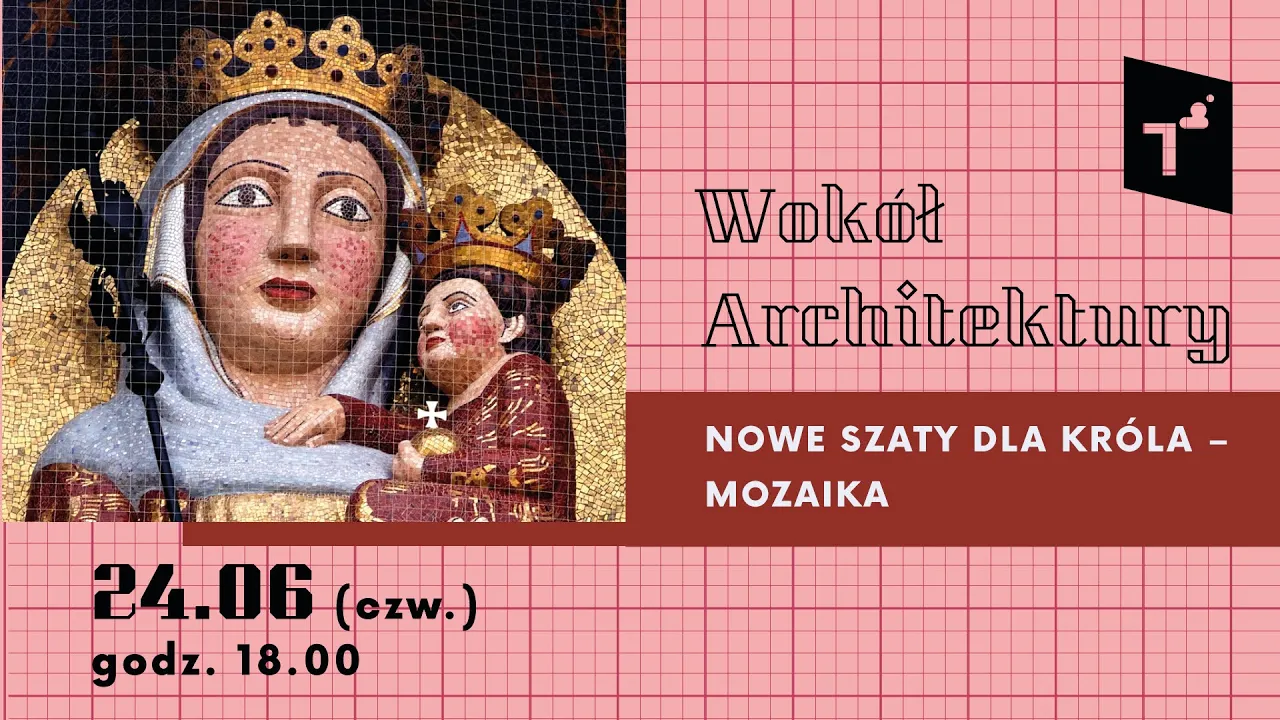
Wokół Architektury: Nowe szaty króla - prowadzi: o. Lucjan Bartkowiak
266
Smalti is colored glass produced by melting and coloring glass in its mass, then casting it into thin or thicker plates by Italians, who called them 'pizze.' These plates are then cut into rectangular tesserae. Gold has always been popular in mosaic, especially during wealthy empires like Byzantium, which incorporated large amounts of gold into their mosaics. The combination of colored glass and gold created the luminous effects characteristic of Byzantine religious art.
Click to watch →
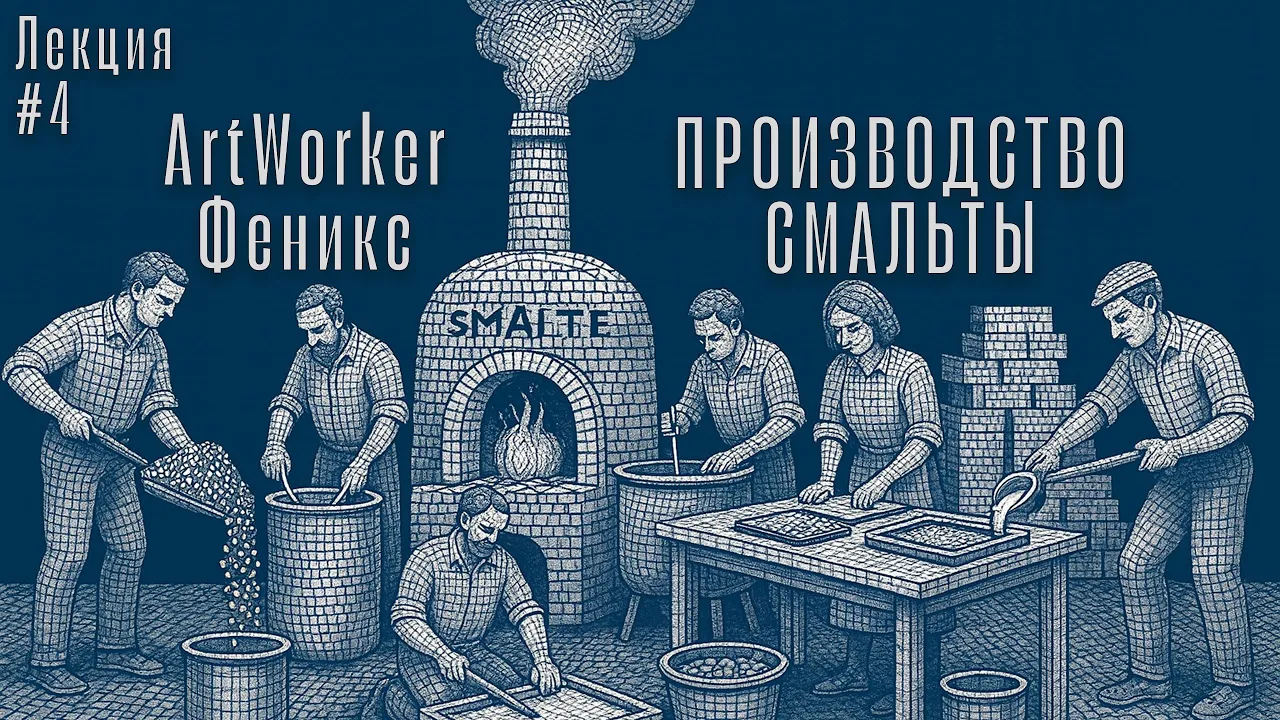
Как создаётся смальта ArtWorker и Феникс? Круглый стол Мастера мозаики
270
Smalt production has evolved through multiple technological stages: from small furnaces for melting glass tiles, to sintering, traditional boiling, and now to modern V4 technology. The manufacturing process involves grinding glass cullet, sieving to remove inclusions, mixing with pigments and fluxes, pressing tiles under 20 tons of pressure, and creating artistic variations by intentionally imperfectly mixing colors. JSG smalt represents an innovation, sandwiching smalt between glass layers to provide a glossy, durable surface at lower cost than traditional glass tiles. The palette development began chaotically during the Savva Serbsky project and evolved into systematic color stretching, resulting in over 1,000 colors currently available.
Click to watch →

Советские мозаики - остатки древней более развитой цивилизации \\ НА РУИНАХ
16.5K
Smalti is not simply colored opaque glass in the form of cubes or plates used for making mosaics; it is a product of hand production. Glass powder with added pigments is fired at temperatures around 1000 degrees. Known since ancient times, smalti is rare and expensive but always in demand and often made to order. Over time, entire factories for its production appeared in the USSR. Smalti is not only resistant to abrasive substances, household chemicals, and humidity, but also to temperature fluctuations. It is much stronger than glass mosaic, allowing it to be used for external walls, pools, and other surfaces subjected to intense environmental influence.
Click to watch →
Золотые Ворота: Зачем Ярослав бросил вызов великой Византии?
1.8K
The smalti from which the mosaics were laid is not merely colored glass. It is a specially manufactured material in which color and transparency are achieved by adding various metal oxides. Copper gave green and blue colors, cobalt gave blue, manganese gave purple. Golden smalti was made by baking a thin sheet of gold between two layers of glass, giving that unique golden brilliance that does not fade or darken over time. The golden mosaics of Kiev Sophia shine today as they did a thousand years ago. Each piece of smalti was inserted into wet plaster at a specific angle. This angle was calculated so that light would reflect from it in the right direction, so that the mosaic would glow rather than merely reflect light. This required incredible precision, incredible patience. One square meter of mosaic could contain tens of thousands of pieces of smalti, each of which had to be inserted by hand at the correct angle, in the correct place. This was work that required months, that required skill unattainable without years of practice.
Click to watch →
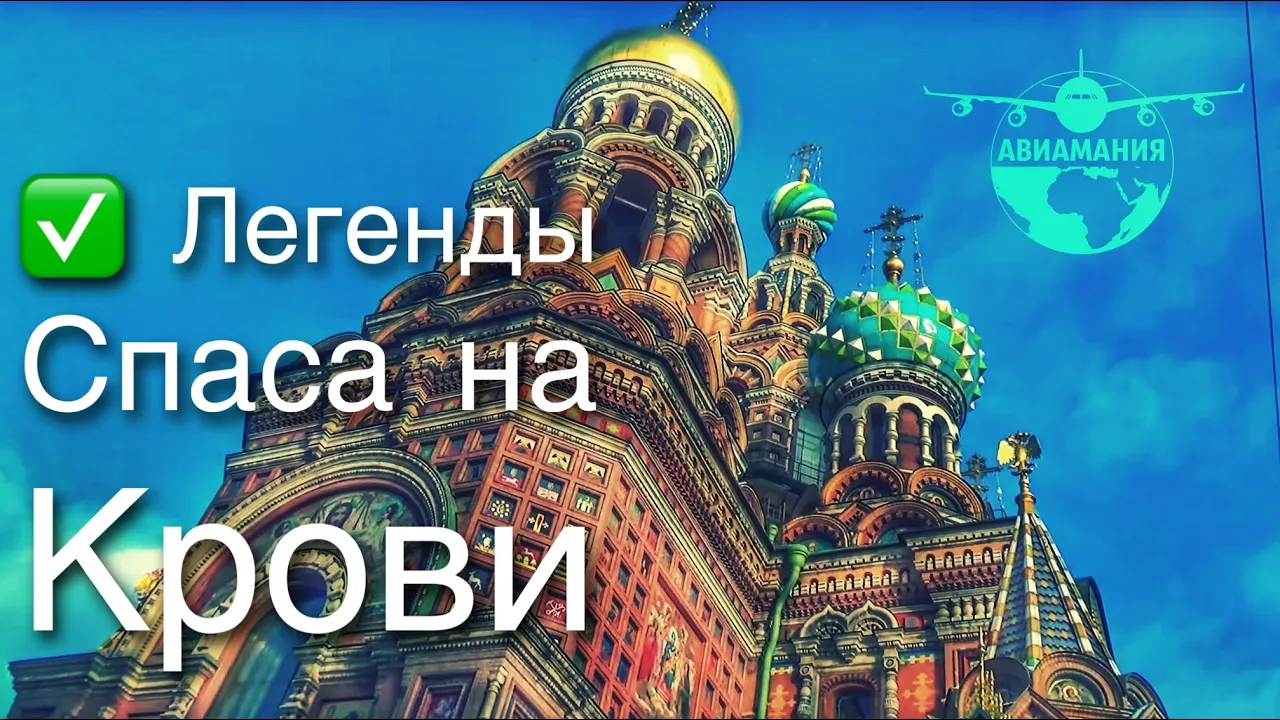
Собор Спаса на Крови в Санкт Петербурге #Авиамания
297.1K
The cathedral's mosaics use smalti, which is colored glass. The most expensive type is gold smalti, which contains thin sheets of real gilded silver in its composition. This explains its high cost and exceptional value. The cathedral also features 'stretched smalti,' created by pulling glass from a continuous mass into thin strips, then cutting them into small pieces for vertical mosaic placement.
Click to watch →
Deep Dive
The architectural function of mosaics in early Christian basilicas, acting as both structural decoration and visual theology for largely illiterate congregations.

Early Christian Architecture #EarlyChristianArchitecture #RomanBasilica #ArchitectureHistory
259
Early Christian architecture emerged by adapting the Roman basilica form—originally used for law courts and public gatherings—into sacred spaces that expressed Christian beliefs through symbolic spatial arrangements, including longitudinal plans oriented toward the East (symbolizing Christ's return), cruciform layouts representing Christ's sacrifice, and richly decorated interiors using mosaics and frescoes to convey theological concepts to largely illiterate congregations, creating an immersive spiritual experience that influenced Western church architecture for centuries.
Click to watch →

Kard. Ryś oprowadza po bazylice Santa Maria Maggiore I Oaza Rzymska 2023
94.6K
Santa Maria Maggiore represents the oldest Marian church in the Western world, founded by Pope Liberius in the 4th century on the site of a pagan temple dedicated to Juno. Early Christians strategically built churches on pagan sites, incorporating pagan elements like columns into Christian spaces. The Christian basilica adapted Roman architectural forms but made crucial modifications, replacing heavy barrel vaults with lightweight wooden beams to create spiritual lightness. The 5th-century mosaics represent the largest surviving early Christian mosaic ensemble, designed as 'Biblia pauperum'—visual scripture for illiterate believers—using typology to connect Old and New Testament narratives.
Click to watch →
РИМСКИЕ КАТАКОМБЫ. Новый документальный фильм митр. Илариона. Цикл «Библия в живописи»
35.4K
Since most ancient Christians were illiterate and could not read sacred texts, and only the wealthy could afford personal copies of scripture, biblical knowledge was primarily transmitted through oral hearing during worship services. Wall paintings in catacombs served as visual reminders of the biblical stories heard during services, functioning as a 'visual Bible' for the illiterate majority of early Christians. The fish (ichthys) was one of the earliest Christian symbols, serving as an abbreviation for 'Iesous Christos Theou Yios Soter' (Jesus Christ, Son of God, Savior). The anchor was one of the earliest symbols of the Eucharist, instantly recognizable to Christians while appearing as mere graffiti to non-Christians. The Good Shepherd, depicting Christ as a young man carrying a lamb on his shoulders, was based on Gospel narratives and was later removed from Christian art following the Sixth and Seventh Ecumenical Councils.
Click to watch →

The Secrets and Wonders of Santa Maria Maggiore
17K
Santa Maria Maggiore, one of Rome's four major papal basilicas, was founded in the 4th century following a miraculous snowfall on August 5th that outlined the shape of a church on the Esquiline Hill, as witnessed by Pope Liberius; this basilica exemplifies the fusion of architectural styles from early Christian, Renaissance, and Baroque periods, housing fifth-century biblical mosaics that served as visual scripture for an illiterate faithful, along with Renaissance artworks by masters like Pietro Cavallini and Giovanni Battista Salvi da Sassoferrato, and precious relics including the crib of Christ and a portion of the True Cross that have drawn pilgrims for centuries.
Click to watch →

1 Late Antiquity
942
Early Christian basilicas like Santa Sabina continued the Roman Basilica type with large central nave directing attention to the apse platform where priests conducted mass. The interior was lavishly decorated with colored marble and golden mosaics, while exteriors remained austere. The nave was twice the width of aisles (1:2 ratio). The flat entablature with Ionic columns created visual hierarchy. The mosaics formed a type of military Roman triumph, celebrating the triumph of the church with Christ as new Emperor. The wooden doors showed Christ crucified with thieves, symbolizing that through Christ and the church doors, salvation is gained.
Click to watch →
Prerequisite Knowledge
- Concept 01Historical context of the Byzantine Empire, particularly its artistic departure from classical Roman realism toward stylized, spiritual Christian iconography.
- Concept 02Basic terminology of mosaic art, specifically the definitions of 'tesserae' (the individual pieces used to create the design) and 'substrates' (the backing surfaces).
- Concept 03An understanding of early medieval material science, specifically how 'smalti' (specialized opaque glass) and gold-sandwich glass tiles were manufactured.
- Concept 04The architectural function of mosaics in early Christian basilicas, acting as both structural decoration and visual theology for largely illiterate congregations.
Subsequent Learning
- Step 01The concept of 'andamento'—the flow, alignment, and directional lay of tesserae that dictates the visual rhythm and form of the artwork.
- Step 02The optical physics of Byzantine mosaics, specifically how artists tilted tesserae at precise angles (often 15 to 30 degrees) to capture and refract flickering candlelight.
- Step 03Comparative analysis of Roman mosaic techniques (focused on flat, durable stone floor pavements) versus Byzantine techniques (focused on light-reflective wall installations).
- Step 04Modern conservation and preservation methodologies used to protect and restore ancient mosaics in sites such as Ravenna, Italy, and the Hagia Sophia.
- Step 05Practical application and mastery of traditional mosaic-cutting tools, specifically the 'martellina' (mosaicist's hammer) and the 'hardie' (anvil).
Foundation Layers
Tesserae Crafting
Foundation Layers
0:08Playing Section
- 1
Explains the four-layer foundation for mosaics as described by Vitruvius.
- 2
Covers statan, rudus, nucleus, and setting bed construction details.
- 3
Describes marking and planning the giraffe head on the setting bed.
The Plurality of Practice: Challenging the Singular 'Byzantine Method'
While demonstrations often present a standardized, codified 'Byzantine technique,' contemporary archaeological and material science research challenges the idea of a uniform historical method. Evidence suggests that Byzantine mosaic production was highly decentralized, pragmatic, and adaptive. Rather than strictly adhering to a universal 'master' recipe, workshops varied widely in their plaster compositions, use of underdrawings (sinopie), and tesserae application depending on regional resources, budget, and architectural constraints. Furthermore, art historians emphasize that modern studio-based reconstructions on portable panels fail to capture the critical 'in situ' dimension of the craft. Historical mosaicists dynamically adjusted the tilt and depth of tesserae on scaffolding to actively manipulate the specific, flickering candlelight and acoustics of sacred spaces. Viewing Byzantine mosaic-making as a singular, static formula overlooks the highly fluid, improvisational, and site-specific nature of the actual ancient practice.
Deep Dive
The concept of 'andamento'—the flow, alignment, and directional lay of tesserae that dictates the visual rhythm and form of the artwork.

Fundamento: Shape+Direction=Flow with Kelley Knickerbocker
234
Andamento (Italian for shape, direction, and flow) is the fundamental principle in mosaic art that governs how tesserae pieces are shaped and arranged to create visual movement and harmony; this video teaches three types of andamento—directional/linear, random, and circular—along with practical techniques like keystone shaping for curves, efficient material preprocessing, and direct-setting methods using nippers and mortar.
Click to watch →

Cómo Hacer un Mandala en Mosaico: Trencadís Paso a Paso
2.3K
An andamento is the disposition or arrangement of tesserae (mosaic pieces) on a support surface. All mosaics have an andamento, which is the specific pattern or layout chosen by the artist. The Romans named various andamentos, including opus regulat, which is a grid pattern where all tesserae are placed in order. The andamento is a fundamental concept in mosaic art that determines how the pieces are organized to create the final design.
Click to watch →
CÓMO COMIENZO UN MOSAICO: PRESENTACIÓN BÁSICA PARA PRINCIPIANTES
1.5K
El flujo (opus) es un término italiano que indica el flujo en que se colocan las teselas. Para crear sensación de movimiento (como viento), las teselas deben colocarse a determinada manera para que el espectador perciba ese movimiento. El opus se refiere a cómo se colocan las teselas para crear diferentes movimientos. En mosaico romano, siempre hay limitas que delinean la figura principal. Es importante que el mosaico tenga ese flujo, especialmente en mosaico artístico.
Click to watch →

Mosaic Arts Online LIVE featuring six artists doing demos and Q&A
5.5K
This segment explores andamento - the spacing and arrangement of mosaic pieces that affects how viewers perceive lines and composition. The demonstration shows how different spacing creates different visual effects: tighter spacing creates more regular, controlled lines, while wider spacing creates more organic, flowing lines. Artists can 'speak' different languages through spacing variations. The segment also covers how to relate spacing to artistic message - wider spacing can make lines 'scream' or be more prominent, while tighter spacing can make them 'whisper.' The demonstration uses clay as a temporary substrate for practice, allowing artists to erase mistakes and experiment. The concept extends to abstract mosaic, where artists use the language of lines and materials to represent ideas without pictorial representation.
Click to watch →
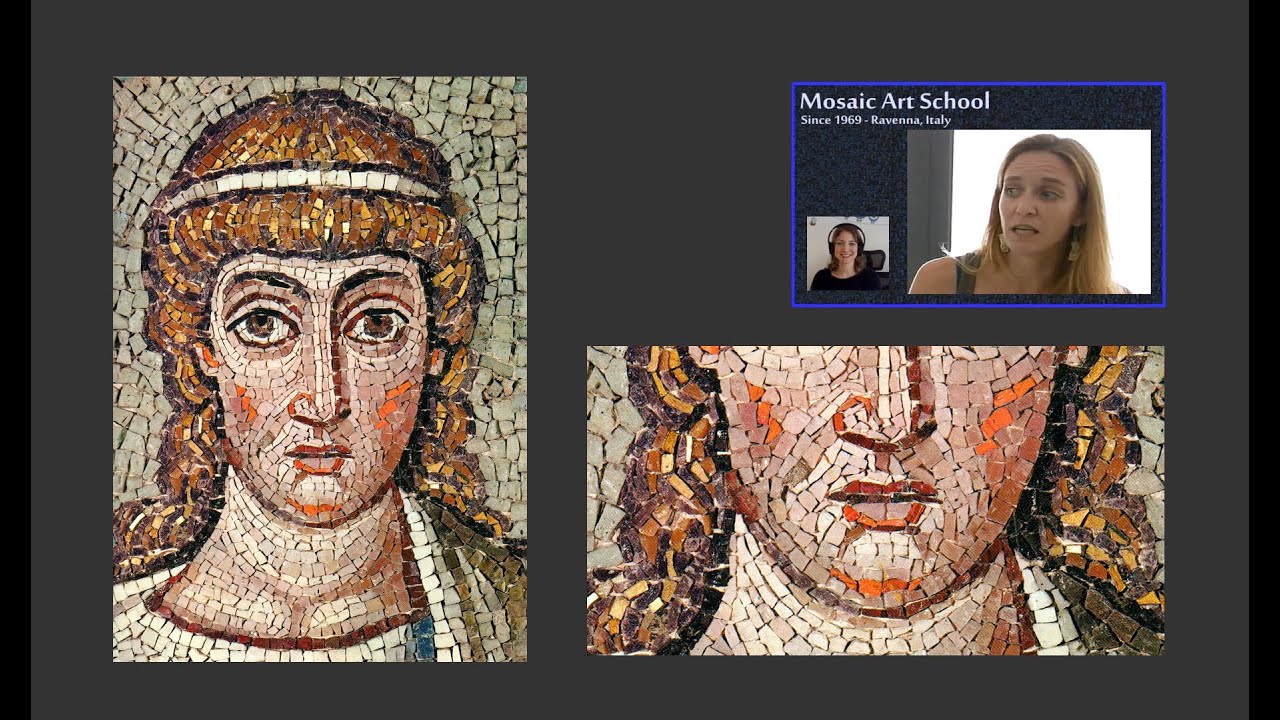
Mosaic Webinar: "What exactly is Andamento ?"
10.5K
In mosaic art, 'andamento' refers to the direction and flow of lines that guide the viewer's eye and create visual interest, which is more important than using many colors; ancient mosaicists achieved effective color gradation by manipulating the intensity (lightness and darkness) of colors rather than using numerous shades, typically requiring only 2-4 colors to create the perception of volume and depth when viewed from a distance.
Click to watch →
Deep Dive
The optical physics of Byzantine mosaics, specifically how artists tilted tesserae at precise angles (often 15 to 30 degrees) to capture and refract flickering candlelight.

A Brief History of Mosaics - with Marlea Taylor (updated)
3.5K
As Christianity replaced the Roman state religion, mosaics were adapted for Byzantine churches in Italy, Sicily, and Turkey. Byzantine mosaics decorated uneven surfaces in cramped spaces with dazzling efficiency. These mosaics often used gold and silver encased in clear glass and set at random angles so that flickering candlelight would seem to glow. Sicily has four outstanding examples of Christ Pantocrator, considered the pinnacle of mosaic art.
Click to watch →
In Conversation: Ellen Gallagher and Richard Shiff on ‘Jack Whitten. I AM THE OBJECT’
2.4K
Jack Whitten discovered that tesserae were meant to be seen by candlelight after visiting an Orthodox church in Greece. When candles were lit tier by tier, the wall mosaics came alive in ways he'd never seen under incandescent light. This revelation—that tesserae project light through different angles—transformed his understanding of how mosaics exist as sights of projection rather than static decoration.
Click to watch →

Unraveling the 5000-Year History of Mosaic Art: A Global Odyssey
80.6K
Byzantine mosaics often incorporated gold and silver along with glass. These metals were encased in clear glass and set at random angles so that flickering candlelight would create a glowing effect. This technique transformed static images into dynamic visual experiences dependent on environmental lighting conditions.
Click to watch →

Byzantine Mosaics: Moving Stories in Stone
624
Byzantine artists created lifelike, moving mosaics by carefully arranging tiny colored glass tiles called tesserai to catch and reflect light from flickering candles and windows, making saints' halos glow and robes shimmer as viewers walked by, transforming static images into vibrant, immersive experiences.
Click to watch →
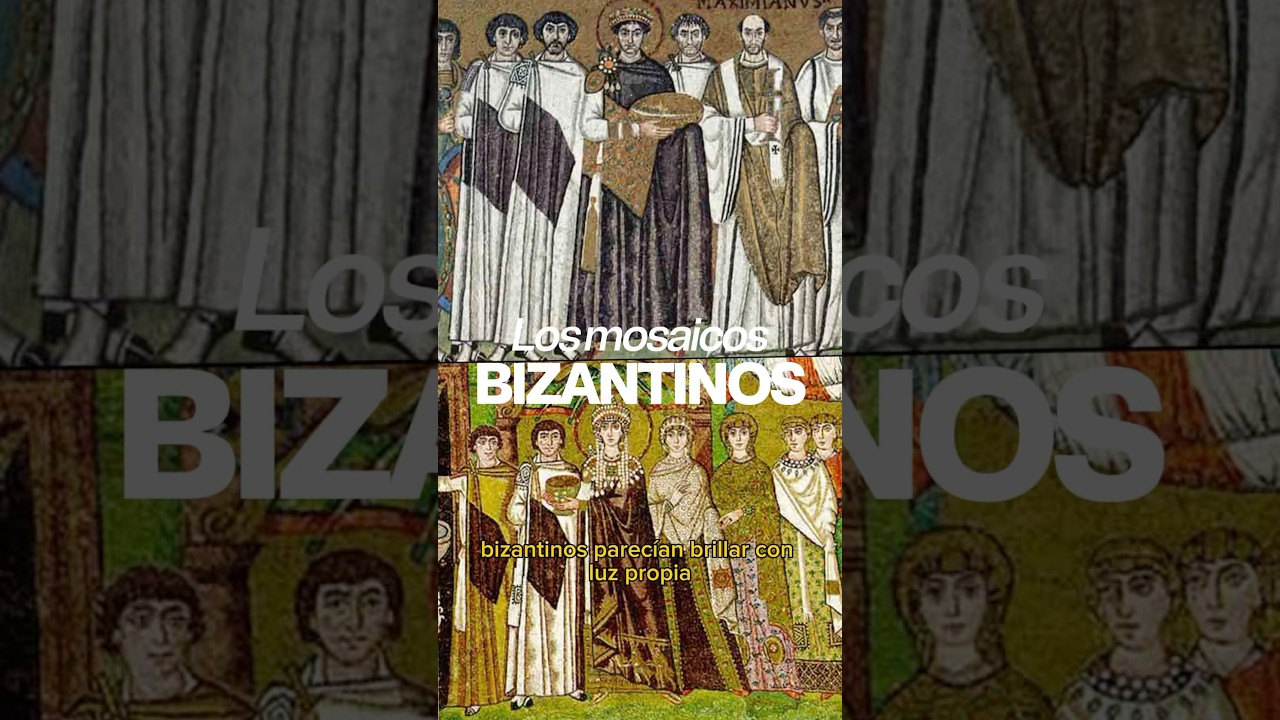
Los mosaicos bizantinos #arte #mosaicos #historiadelarte #artistas
29.1K
Byzantine artisans placed mosaic tesserae at precise angles to maximize natural light reflection, creating the illusion that the mosaics glowed with their own light; golden tesserae in certain figures symbolized the separation between the material world and the divine.
Click to watch →
Deep Dive
Comparative analysis of Roman mosaic techniques (focused on flat, durable stone floor pavements) versus Byzantine techniques (focused on light-reflective wall installations).

Armchair Travel Series — Guardians of Empire: Mosaics and Power on the Northern Adriatic Coast
1.1K
Mosaic techniques evolved significantly between Roman and Byzantine periods. Roman mosaics were primarily floor decorations using smooth, flat tesserae. Byzantine mosaics introduced wall decoration with tesserae inserted at specific angles so gold pieces could catch light and make walls shimmer. The only major technical change occurred in the late 19th-early 20th century when the reverse technique was invented at Aquileia's school of mosaic—fine work done in reverse then turned over. Otherwise, tools and techniques remained unchanged for centuries, as demonstrated by modern mosaic schools still practicing ancient methods.
Click to watch →

Iconografia Bizantina: Estudo sobre materiais e técnicas tradicionais | FASBAMLIVE
3.4K
Roman mosaics originated from ancient Mesopotamian traditions but were refined by Romans for floor decoration in houses, using colored glass paste tesserae embedded in mortar. The Byzantines innovated by creating a 'sandwich' technique with gold leaf between glass layers, producing a truly golden effect. They also moved mosaics from floors to walls and ceilings of churches, maximizing the effect of limited natural light. The gold surfaces reflected artificial oil lamps, illuminating church interiors and enhancing the spiritual atmosphere. This transformation from floor decoration to sacred wall art represents a fundamental shift in religious visual culture.
Click to watch →
Assembler les fragments - De la terre à l'oeuvre | À la croisée des chemins – Épisode 3
762
Roman mosaics used only natural stones (marbles and terracotta) with tessellae as the fundamental unit, creating flat, wave-like patterns on floors. Byzantine mosaics introduced glass paste and pâte de verre, creating luminous, three-dimensional effects meant to inspire religious devotion and were typically installed in elevated positions using scaffolding. Contemporary mosaic techniques incorporate all materials including glass, stone, and ceramics, allowing for greater artistic freedom and experimentation.
Click to watch →

Transfiguration Mosaic Icon Installation by Athopetra
294
Byzantine style mosaics are created for walls or domes in churches, unlike Roman floor mosaics which required perfect flatness. Each stone is tilted or slanted slightly so that when finished, the mosaic glitters and appears almost three-dimensional. This technique is particularly visible in gold sections where each piece reflects light differently depending on the angle of illumination, creating a shimmering effect.
Click to watch →

Mosaics of Antiquity: Rome to late Byzantium.
665
Mosaic art evolved from floor decorations in Roman villas using black and white tesserae (opus vermiculatum for figurative panels and opus tessellatum for surrounding areas) to polychrome wall mosaics in Byzantine churches using smalti glass pieces set at slight angles to create shimmering effects in candlelight, representing a fundamental shift in artistic technique and purpose.
Click to watch →
Deep Dive
Modern conservation and preservation methodologies used to protect and restore ancient mosaics in sites such as Ravenna, Italy, and the Hagia Sophia.

Mosaico: antico e moderno, restauro - Ravenna, Italy
33.5K
Mosaic art is a centuries-old technique where small tesserae (materials like glass, stone, or shell) are arranged to create images, with Ravenna serving as a prime example of this art form's preservation through restoration practices that combine traditional methods with modern artistic expression.
Click to watch →

Мозаики Большой мечети Айя Софии
125
The Hagia Sophia's 6th-century mosaics, created during Emperor Justinian's reign, survived largely intact due to Sultan Mehmed II's orders protecting sacred art and centuries of plaster covering, with later restorations by Sultan Abdulmejid I in 1847 revealing and partially preserving these Byzantine masterpieces that represent the pinnacle of medieval religious art.
Click to watch →

Св. София. Пощечина невесте Христовой. Проповедь 24.07.2020
35K
Through the efforts of Byzantine emperors, patriarchs, and numerous craftsmen, Hagia Sophia was restored to its former glory and beauty. Today, only small fragments of the original mosaics remain, including the image of the Theotokos in the 9th-century altar apse, a fragment of the liturgical service preserved on one of the choir balconies, and several images of Christ or the Theotokos with saints or emperors.
Click to watch →
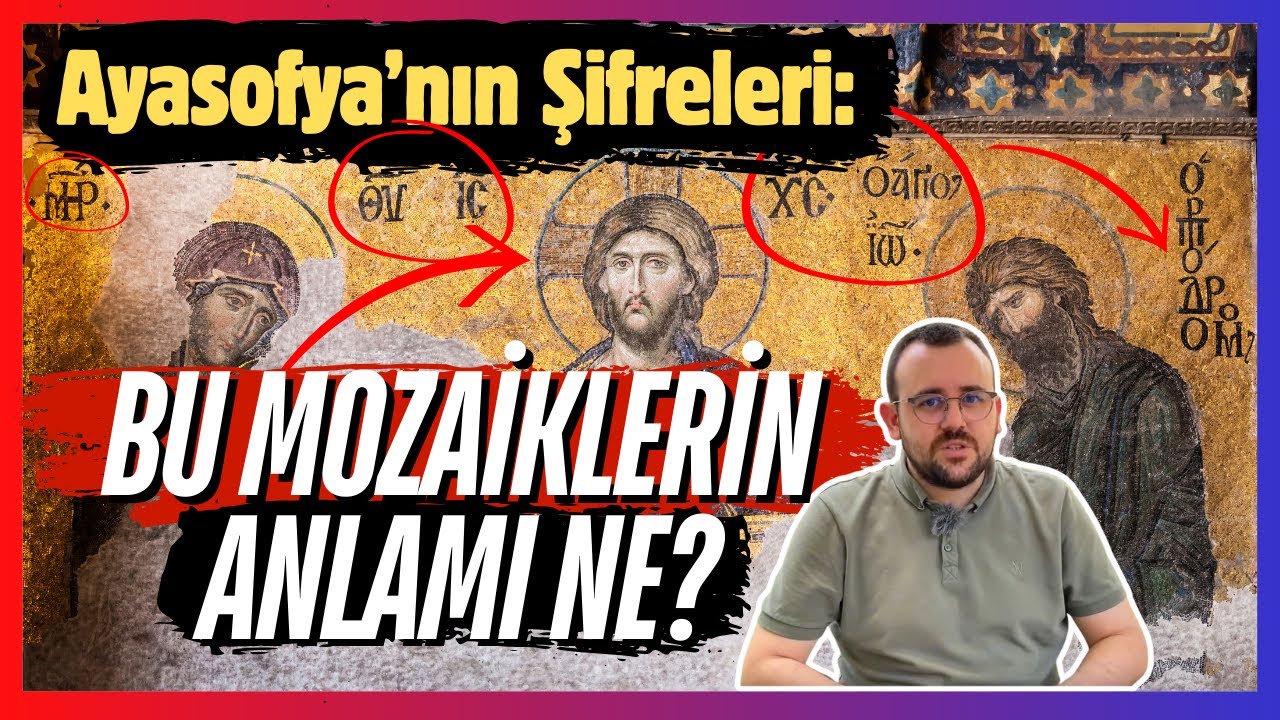
Ayasofya'nın Bilinmeyen Mozaikleri
271
The complete covering of Hagia Sophia's mosaics with plaster occurred in the mid-18th century. During Sultan Abdülmecid's reign (1839-1861), restoration took place in 1847-1849. Gaspare Fossati discovered the hidden mosaics and invited the Sultan to see them. After objections from some circles, the Sultan requested they be covered again in a way that could be easily reopened. American Thomas Whitmore began mosaic cleaning work in 1932. The first mosaic removed was from the Imperial Gate. Research continued intermittently until the 1970s. Whitmore reported that earthquakes and time had deprived the building of many mosaic works, but the remaining ones were protected by Turks for 500 years. The complete covering was not intentional but occurred gradually over time.
Click to watch →

ΤΑ ΨΗΦΙΔΩΤΑ ΤΟΥ ΝΑΟΥ ΤΗΣ ΑΓΙΑΣ ΣΟΦΙΑΣ ΚΩΝΣΤΑΝΤΙΝΟΥΠΟΛΕΩΣ. 11 ΑΙΩΝΑΣ
738
After the 1453 conquest, Hagia Sophia was converted to a mosque, and the mosaics were criticized due to Islamic prohibitions against images. In 1847-1849, the Swedish brothers Sphrantzes and Fossati were commissioned by Sultan Abdulmejid I to document the mosaics, creating drawings and archives in the Swiss National Library. The mosaics have survived earthquakes, including one in 1894. The Byzantine Institute of America revealed many mosaics in 1930, and in 2000, the National Technical University of Athens used infrared scanning technology. In 2010, with Istanbul as European Capital of Culture, restoration work began on most of the mosaics.
Click to watch →
Deep Dive
Practical application and mastery of traditional mosaic-cutting tools, specifically the 'martellina' (mosaicist's hammer) and the 'hardie' (anvil).

Mosaic Hammer and Hardie Beginners Guide
4.7K
A mosaic hammer and hardie is a traditional tool used for breaking down materials like marble, stone, glass, and tesserae for mosaic art; the hardie is a chisel set in a wooden block, while the hammer typically has dual sides for cutting stone and glass, with weights ranging from 450 to 950 grams depending on material hardness and personal preference, and can be set in hardwood logs or modern alternatives like 6x6 inch blocks, with steel versions available for space-limited studios.
Click to watch →
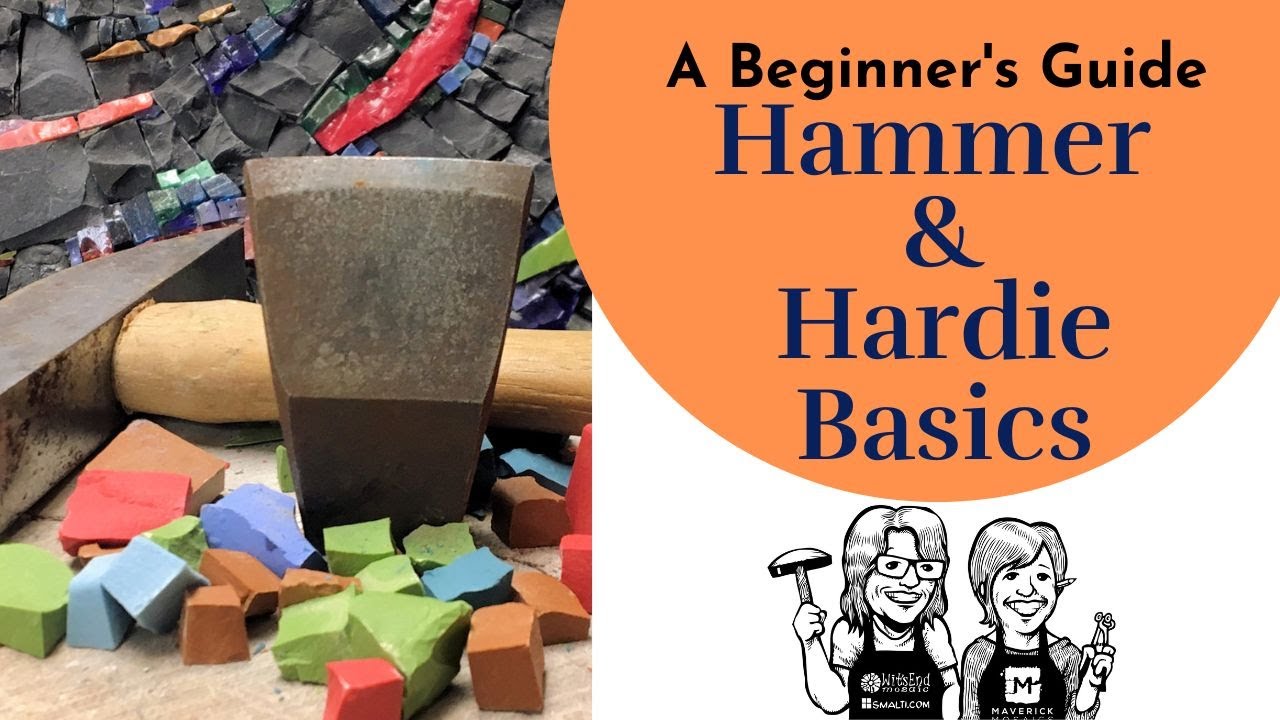
Mosaic Hammer and Hardie Cutting Basics
3.6K
Proper hammer and hardie cutting requires maintaining ergonomic body form with the hardie level to your elbow, using wrist action rather than chopping motions, positioning the hammer in the middle for balance, and placing the cut line over the hardie while striking so the hammer appears to go through the material; practice on cheap marble from tile stores to develop skills, and always wear safety glasses when cutting mosaic materials.
Click to watch →
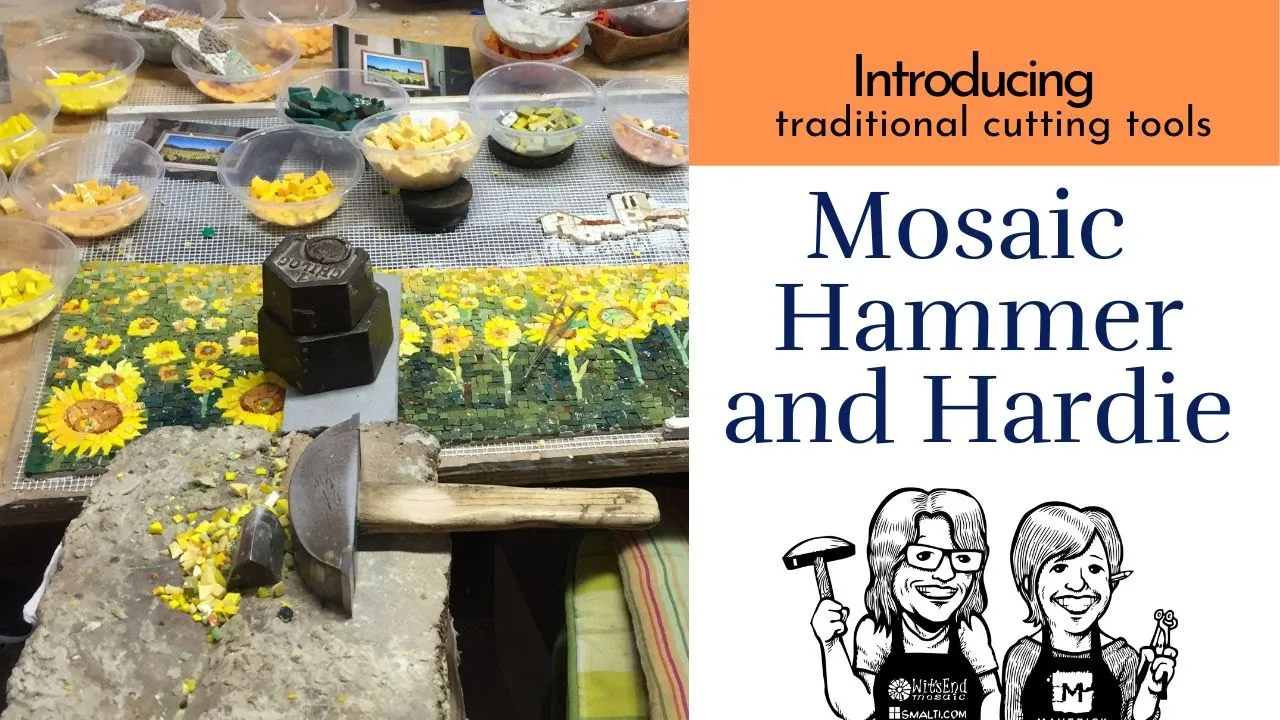
Mosaic Hammer and Hardie, Traditional Mosaic Tools
14.3K
Traditional mosaic hammers come in three types: glass-only hammers with carbide tips for cutting glass, steel-only hammers for cutting marble and slate, and combination hammers that can handle both materials; the carbide side must never be used on stone as it will damage the tool, and these hammers are used with a hardie (a thick chisel set in wood) to split tesserae for mosaic work.
Click to watch →
Italian glass smalti process of an art piece
2.4K
The hammer and hardie (martelina and taliolo in Italian) are two chisel-like blades used together to cut mosaic materials. When aligned properly and struck with a hammer, they send fractures down through the material, allowing artists to cut larger pieces into smaller, precise shapes needed for detailed mosaic work.
Click to watch →

Use of Hammer and Hardie
20.9K
The hammer and hardie are traditional mosaic tools used to hand-cut tesserae, where the artist's personal imprint is preserved in each cut piece; proper technique involves positioning the hardie at a slight angle, holding the hammer in a relaxed L-position, and using the hammer's weight rather than arm force to create predictable fractures in stone, while maintaining sharp tools through regular grinding with an electric grinder ensures consistent, precise cuts throughout the artist's lifetime.
Click to watch →
Foundation Layers
Tesserae Crafting
Foundation Layers
0:08- 1
Explains the four-layer foundation for mosaics as described by Vitruvius.
- 2
Covers statan, rudus, nucleus, and setting bed construction details.
- 3
Describes marking and planning the giraffe head on the setting bed.
The Plurality of Practice: Challenging the Singular 'Byzantine Method'
While demonstrations often present a standardized, codified 'Byzantine technique,' contemporary archaeological and material science research challenges the idea of a uniform historical method. Evidence suggests that Byzantine mosaic production was highly decentralized, pragmatic, and adaptive. Rather than strictly adhering to a universal 'master' recipe, workshops varied widely in their plaster compositions, use of underdrawings (sinopie), and tesserae application depending on regional resources, budget, and architectural constraints. Furthermore, art historians emphasize that modern studio-based reconstructions on portable panels fail to capture the critical 'in situ' dimension of the craft. Historical mosaicists dynamically adjusted the tilt and depth of tesserae on scaffolding to actively manipulate the specific, flickering candlelight and acoustics of sacred spaces. Viewing Byzantine mosaic-making as a singular, static formula overlooks the highly fluid, improvisational, and site-specific nature of the actual ancient practice.
Historical context of the Byzantine Empire, particularly its artistic departure from classical Roman realism toward stylized, spiritual Christian iconography.
Basic terminology of mosaic art, specifically the definitions of 'tesserae' (the individual pieces used to create the design) and 'substrates' (the backing surfaces).
An understanding of early medieval material science, specifically how 'smalti' (specialized opaque glass) and gold-sandwich glass tiles were manufactured.
The architectural function of mosaics in early Christian basilicas, acting as both structural decoration and visual theology for largely illiterate congregations.
The concept of 'andamento'—the flow, alignment, and directional lay of tesserae that dictates the visual rhythm and form of the artwork.
The optical physics of Byzantine mosaics, specifically how artists tilted tesserae at precise angles (often 15 to 30 degrees) to capture and refract flickering candlelight.
Comparative analysis of Roman mosaic techniques (focused on flat, durable stone floor pavements) versus Byzantine techniques (focused on light-reflective wall installations).
Modern conservation and preservation methodologies used to protect and restore ancient mosaics in sites such as Ravenna, Italy, and the Hagia Sophia.
Practical application and mastery of traditional mosaic-cutting tools, specifically the 'martellina' (mosaicist's hammer) and the 'hardie' (anvil).
225.7K views2.5Klikes3:34@artinstitutechiOriginal Release: 2013-04-10
to demonstrate how a Byzantine Artisan may have created the head of the giraffe depicted in this Mosaic a master mosaicist has invited us into his Chicago Studio every Mosaic starts with a solid foundation I create in this uh box a crosssection of what uh we will see if we look to the substrate under a mosaic the first century ad architect Vitus described the ideal Foundation as being made of four layers the first one called the statan was created just with big pieces of bricks or poy next came the rudus a mixture of rubble and lime beaten solid to a thickness of 9 in on top of the rudus it's called nucleus it's h created with a mix of lime and small pieces of brick finally this setting bed in which the tessai were placed was an even finer layer of mortar it's a mix created with lime and powder off briak here our artist marks the area on the setting bed that will become the head of the giraffe ancient Artisans would have used a sharp instrument to enzee guidelines into the mortar as they plan their Mosaic using string Nails compasses and calipers to help lay out their plans next he uses pigments of various colors to designate where the figure in the background will appear as he fills in the Mosaic these colors will guide his selection of tessai the pigment won't show in the final Mosaic to cut tessai from raw materials artists use a hammer and a chisel-like blade set into a block with the hammer it's possible to cut a very thick pieces of marble like this one with not a lot of force in experienced hands these tools can quickly and accurately produce tessive of exactly the desired size and shape even from fragile materials like glass as the artist lays the tesser into the setting bed he carefully chooses sizes and shapes to fit the subject with a lot of practice just rotating the piece in my hand I'm able to tell the size the shape and to choose the size I'm going to place without looking smaller tessai are used for more detailed areas he chooses materials and colors to fill in the background and others to outline the figure finally the surface of the Mosaic is leveled by grinding the tessari to an even height the pom Stone it's a very soft and light material which can make the top of the Mosaic very smooth and uh even
Up Next
13:31
Yeast Transformation Lab Tutorial: A Step-by-Step Protocol
@bioscienceinsight
14.3K views•2021-03-19

12:54
Triumph of Orthodoxy Icon: Byzantine Art & History Explained
@BenCallan
2.1K views•2024-08-06

3:42
Ancient Roman Mold-Blown Glassmaking Technique | Art Institute
@artinstitutechi
60.5K views•2013-04-16

1:42
Game of Thrones Opening Credits: A Cinematic Analysis
@gameofthrones
46.3M views•2011-04-18
Related Study Plans & Knowledge Roadmaps
Structured learning paths in General & Interdisciplinary Studies
general-studies
Elevator Engineering: History, Physics & Cities
01From Hoists to Safety Brakes: The Dawn of Vertical Lift
02Hydraulic vs. Traction: The Engineering Physics of Elevators
03Modern Speed, Safety, and Algorithms
+ 2 more learning modules
12h5 modules
Explore Roadmap
general-studies
Rubber: Material Science, History & Geopolitics
01Origins of Natural Rubber & Mesoamerican History
02The Chemistry of Natural Rubber & Vulcanization
03The Geopolitics of the Rubber Boom & Colonization
+ 2 more learning modules
12h5 modules
Explore Roadmap
general-studies
Containerization: Evolution, Logistics & Trade
01Ancient Trade & Bulk Cargo: Amphorae to Barrels
02The Industrial Revolution & Cardboard Packaging
03The Containerization Revolution: Malcom McLean
+ 2 more learning modules
12h5 modules
Explore Roadmap
general-studies
Textile Tech: Evolution, Labor & Global Impact
01Pre-Industrial Textiles: Handloom & Cottage Industry
02Mechanization: The Spinning Jenny to the Power Loom
03The Factory System & Global Labor Transformation
+ 2 more learning modules
10h5 modules
Explore Roadmap