

















Mosaic art has evolved continuously from ancient Mesopotamian clay cone mosaics (3,300 BC) through Greek pebble techniques, Roman imperial expansion, Byzantine religious innovations using gold and silver tesserae, Islamic architectural adaptations, Renaissance revival, and modern Art Nouveau resurgence, demonstrating how this versatile medium has been continuously adapted by different civilizations to serve diverse purposes from decorative floors to sacred wall art.
Unraveling the 5000-Year History of Mosaic Art: A Global Odyssey
Added:A basic chronological understanding of major historical epochs, particularly Ancient Mesopotamia, the Roman Empire, and the Byzantine Era.
Familiarity with foundational art history terminology, including terms like 'medium', 'substrate', and the distinction between decorative and functional art.
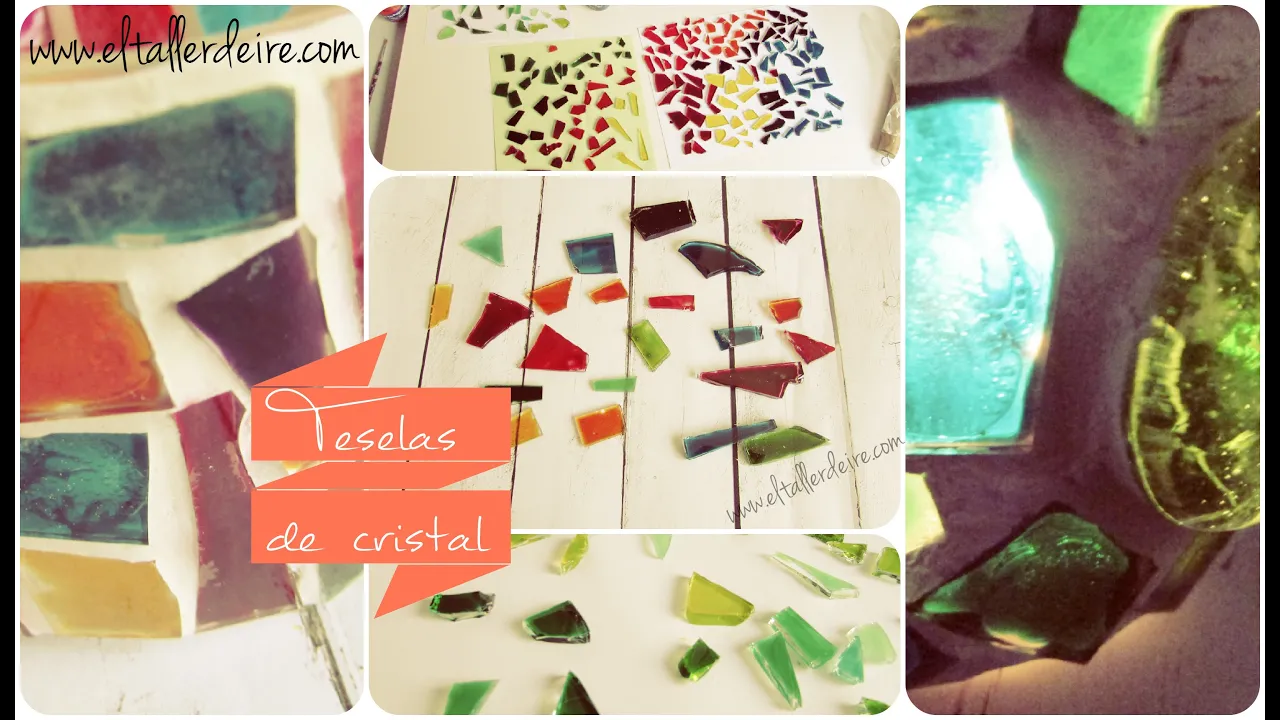
Introduction to the concept of 'tesserae'—the individual pieces of stone, glass, or ceramic used to construct a mosaic.
An understanding of how durable materials like clay, stone, and glass survive in the archaeological record compared to organic art mediums.
Advanced study of the technical fabrication methods of mosaic art, specifically comparing the 'direct method' and the 'indirect (reverse) method'.
In-depth iconographic analysis of Byzantine mosaics, focusing on the symbolic use of light, color, and gold leaf in religious spaces like Ravenna and the Hagia Sophia.
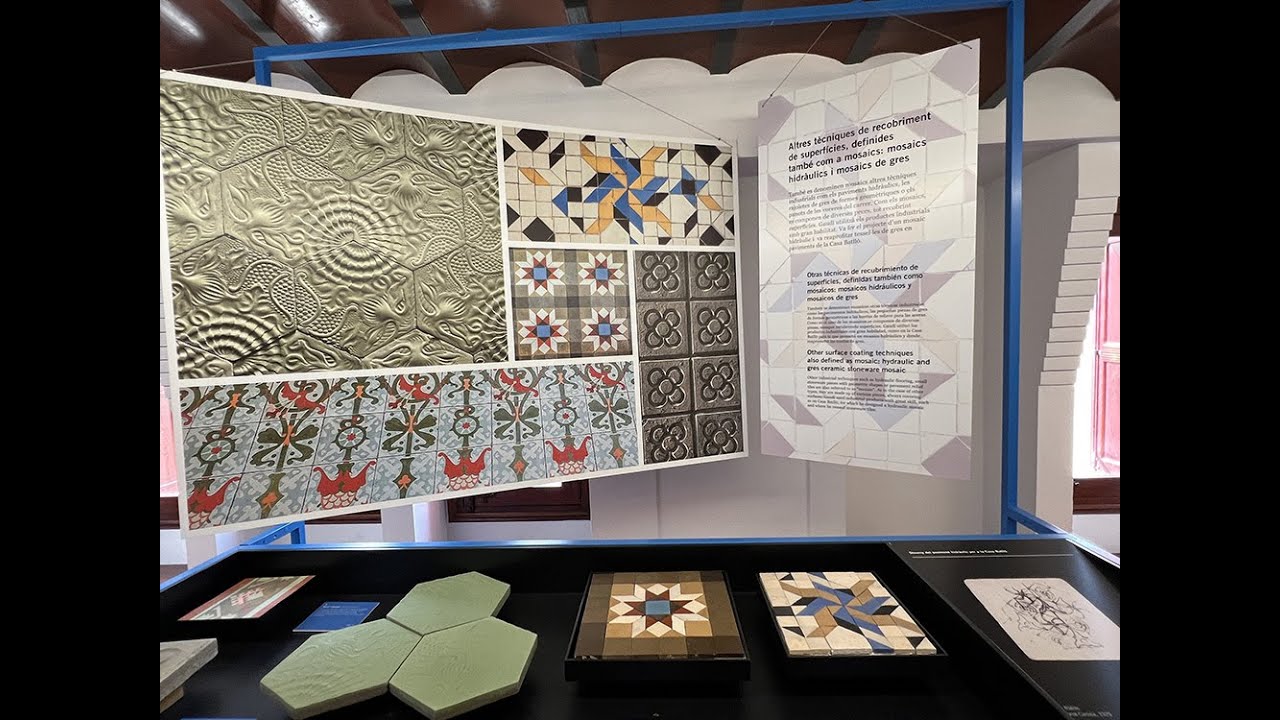
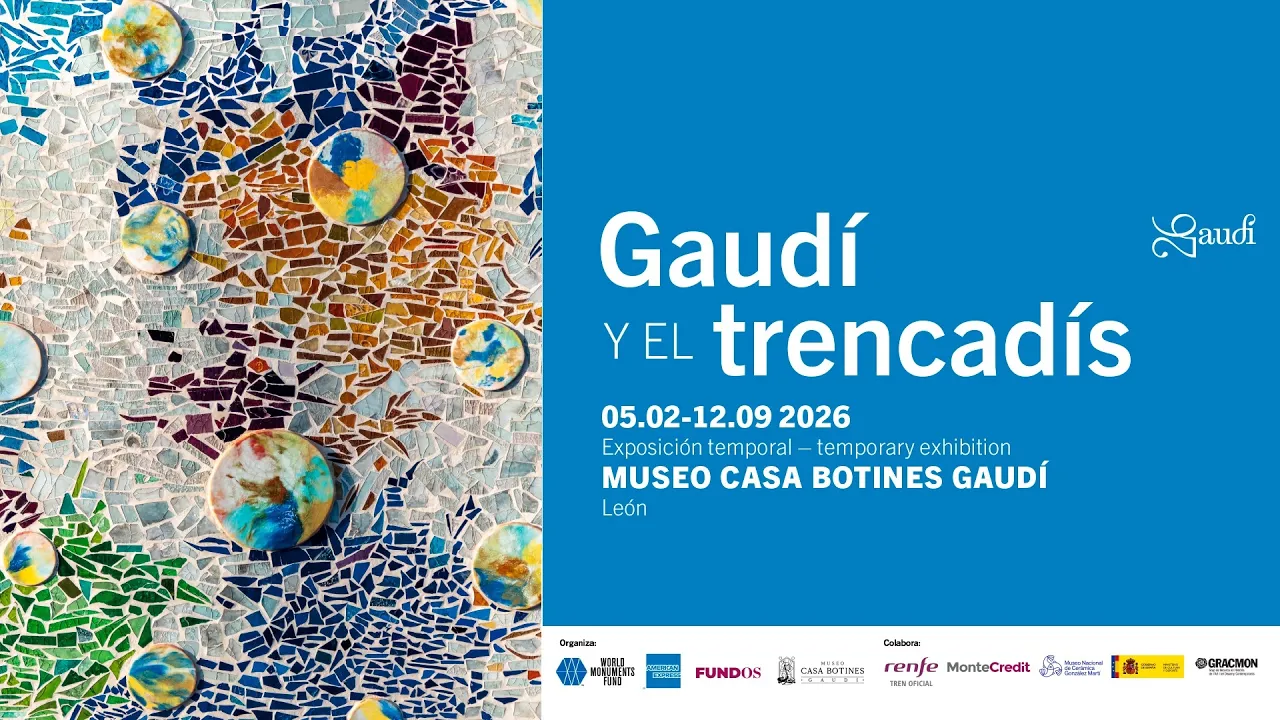
Exploration of Antoni Gaudí's 'trencadís' technique and how modernism revived and adapted mosaic art for 20th-century public architecture.
Investigation into the scientific field of archaeological conservation, focusing on the preservation and restoration of ancient mosaics in situ.
80.6K views691likes15:15Original Release: 2015-10-17
Heat. Heat.
[Music] Mosaics, an art form present at a civilization's zenith and present after its collapse.
[Music] Strong in some ways, fragile in others.
[Music] used to portray gods, reinforce patriotism, honor the dead, [Music] and decorate bathrooms.
[Music] It's ancient [Music] and oh so new.
[Music] The first western mosaics date from around 3,300 BC and are found in Uric, now in southern Iraq.
[Music] Made from clay cones embedded in mud.
They decorate the columns in a palace.
The standard of ore found south of Baghdad is made out of shell lapis lazuli limestone by Tuman is used as glue. It's on wood. It's 3000 BC. They figure it's 9 in tall and 20 in long.
There's two panels. They portray peace and war.
By 800 BC, colored pebbles were starting to be used as pavement.
[Music] The Greeks raised this pebble technique to an art form, making precise geometric patterns and detailed scenes of people and animals.
Rome adopted the Henistic art form and sent it throughout the Roman Empire.
[Music] They used it to honor their heroes and portray the domestic scenes as this one at the Roman villa Casale in central Sicily.
[Music] Roman floors would frequently have a center design called an emblematada.
This is a very complex piece of art and it would have an outline of a frame around it. The comic musicians in Pompei are an excellent example of this. A master artist would complete this piece while apprentices would work on the geometric patterns and borders around the outside.
[Music] Gladiators were another popular theme here found in the Libyan town of Slighton.
Pompei and Herculanium had their share of figurative mosaics preserved for us thanks to the volcano Vuvius.
[Music] The famous floor found in the House of the Fawn in Pompei is believed to be a mosaic copy of a Greek painting.
The mosaic dates from the 1st century BC and it portrays a battle of Alexander and the Persian king Darius in 331 BC.
Historians date that there were paintings made of this and that copies were circulated around the empire. This piece they think was moved from another place and put in Pompei.
Mosaics in the Bardau Museum of Tunis attest to the tradition in Northern Africa. Here Virgil is inspired by the muses as he is writing the Aniid.
This beautiful baptismal font portrays the divine work of salvation.
A large mosaic shows Ulysus tied to the mast resisting the song of the sirens.
In March of 2015, the Bardau was attacked by two terrorists.
They killed 20 people, mostly tourists, before being killed themselves.
Black and white mosaics found in Austia, the seapport for Rome, were made for a lively middle class merchant population.
The mosaics are extensive. They cover the plazas, the walkways, and the bath house floors.
The Vatican holds many beloved works such as this untidy floor and these wonderful fish.
Rome carried mosaics to their far-flung provinces, including this beautiful floor in London.
and the sea god in the British Museum, another treasure from the Roman occupation.
[Music] As Christianity replaced the Roman state religion, mosaics were made for walls.
The Byzantine churches in Italy, Sicily, and Turkey found that mosaics would decorate uneven surfaces in cramped spaces with dazzling efficiency.
These mosaics often used gold and silver as well as glass. The metals were encased in a clear glass and set at random angles so flickering candle light would seem to glow.
Sicily has four outstanding examples of Christ pentocr, the true pinnacle of mosaic art.
[Music] After the fall of Rome, the new Byzantine capital built the glorious Haya Sophia.
kept mosaic floors in the Roman palace and decorated delicate chor with Christian images.
[Applause] Ravena, Italy, the fifth century capital of the Western Roman Empire, has some of the finest Byzantine mosaics.
The big three, San Vitali, San Apollinaire Novo and the mausoleum of Gala Placidia are famous for their artistry.
San Vitali built in 546 AD has a wonderful freeze of the empress Theodora and her retinue and Justinian the emperor of the east. The tesser is made in uniform size and square in shape.
San Apollinaire Novo built in 760 AD boasts a procession of 20 virgins and the magi on their way to the Holy Virgin and then a procession on the other side of 26 martyrs led by St. Martin to the throne of Christ.
[Music] Jews during Roman and Byzantine periods included mosaics in their synagogues.
One in Jericho excavated in 1936 has images of the ark of the covenant, a manora, a chauffear and a lolav.
A Roman synagogue in a gedi also has a Byzantine era mosaic floor.
Islamic architecture used mosaic techniques to decorate religious buildings and palaces after the Muslim conquest of the eastern provinces of the Byzantine Empire.
The Dome of the Rock built in Jerusalem in 688 was decorated inside and out with glass mosaic.
Rich floral motifs follow the Byzantine tradition.
Non-religious mosaics decorated the palaces of the caiffs and other highranking officials. This is a Palestine bath house in Hisham's palace.
In 965, Moish Spain produced the central dome of the great mosque of Cordoba with its glittering nihab.
[Music] Mosaics in the Islamic world gave way to tile and carved plaster as seen in the Alhhamra of Granada.
[Music] [Music] Medieval mosaic work continued in Venice's St. Mark's Cathedral, the Vatican in Rome, and the Baptistry in Florence.
In the 16th century, a Roman mosaic school was established by the Vatican to complete the decoration of the newly built St. Peter's Basilica.
Instead of painted fresco in that great church, Pope Clement VI wanted mosaics because they're brighter, they reflect more light, they last longer, and can be decorated with jewels to heighten the majesty.
But in the Renaissance, artists seem to turn from mosaics to painting.
So, it's going to take a 300-year jump from the Renaissance to the 19th century art nuvo movement before mosaic returned to prominence, transforming walls and floors with color.
Catalan artist Antony Gaudy used mosaics for air vents in his apartment building, Kasama.
[Music] and medallions inspires for his now majestic Sagrada Familia.
Parkwell near Gaudi's home has a serpentine bench, a favorite stop for many Barcelona visitors.
Paris boasts many a turn of the century mosaic. The grand and petite palas built for the exposition of 1903 are a wash with fine examples of mosaic art.
[Music] The Melain Church just blocks from the plastic concord predates them. It was the meeting place during the French Revolution.
[Music] The tomb of chemist Louie Pastor was modeled after the mausoleum of Gala Placidia in Rovena. Pastor's wife directed that all the animals benefiting from his work be portrayed around his crypt.
[Music] So the mosaic tradition handed down through history now has a new resurgence, [Music] new materials, new ideas, [Music] new creators.
We get to watch, enjoy, and even participate.
[Music]
Up Next

35:19
Teaching San Vitale: Byzantine Art and Mosaics in Ravenna
@smarthistory-art-history
5.5K views•2022-03-02

114:18
Christian Iconography: History, Theology, and Meaning | Fr. Panayiotis Papageorgiou
@Trisagionfilms
58.8K views•2020-02-21
7:48
Ukiyo-e Art: History, Woodblock Printing & Influence
@japanathand
6.3K views•2023-06-08

16:34
Earliest Depictions of Jesus in Art: 10 Ancient Images Explained
@UsefulCharts
5.9M views•2022-06-03
Related Study Plans & Knowledge Roadmaps
Structured learning paths in Art History
art-history
Gothic Cathedrals: Engineering, Light & Society
01The Birth of the Gothic: Romanesque to Suger's Vision
02The Structural Triad: Pointed Arches, Ribbed Vaults, and Flying Buttresses
03Theology of Light: Lux Nova and Sacred Geometry
+ 2 more learning modules
14h5 modules
Explore Roadmap
art-history
Pre-Raphaelites: Realism, Symbolism & Critique
01The Victorian Art Establishment and Academic Formula
02The Founding of the PRB and Radical Realism
03Medieval Revivalism and Literary Symbolism
+ 1 more learning modules
8h4 modules
Explore Roadmap
art-history
Street Art: From Subways to Art Market
01Subcultural Origins in Philadelphia and New York (1970s)
02The Subway Era and Style Wars (Late 1970s - 1980s)
03The East Village Scene and Early Gallery Crossover
+ 2 more learning modules
10h5 modules
Explore Roadmap
art-history
Classic Maya Art: Iconography, Glyphs & Ritual
01Foundations of Classic Maya Visual Culture
02Deciphering Maya Hieroglyphs & Text-Image Integration
03Sacred Geography and Cosmological Architecture
+ 2 more learning modules
14h5 modules
Explore Roadmap