



![Historia Bizancjum | Część 1: Jak narodziło się Cesarstwo wschodniorzymskie? [Podcast historyczny]](https://i.ytimg.com/vi/TXnkkUXXWBs/maxresdefault.jpg)












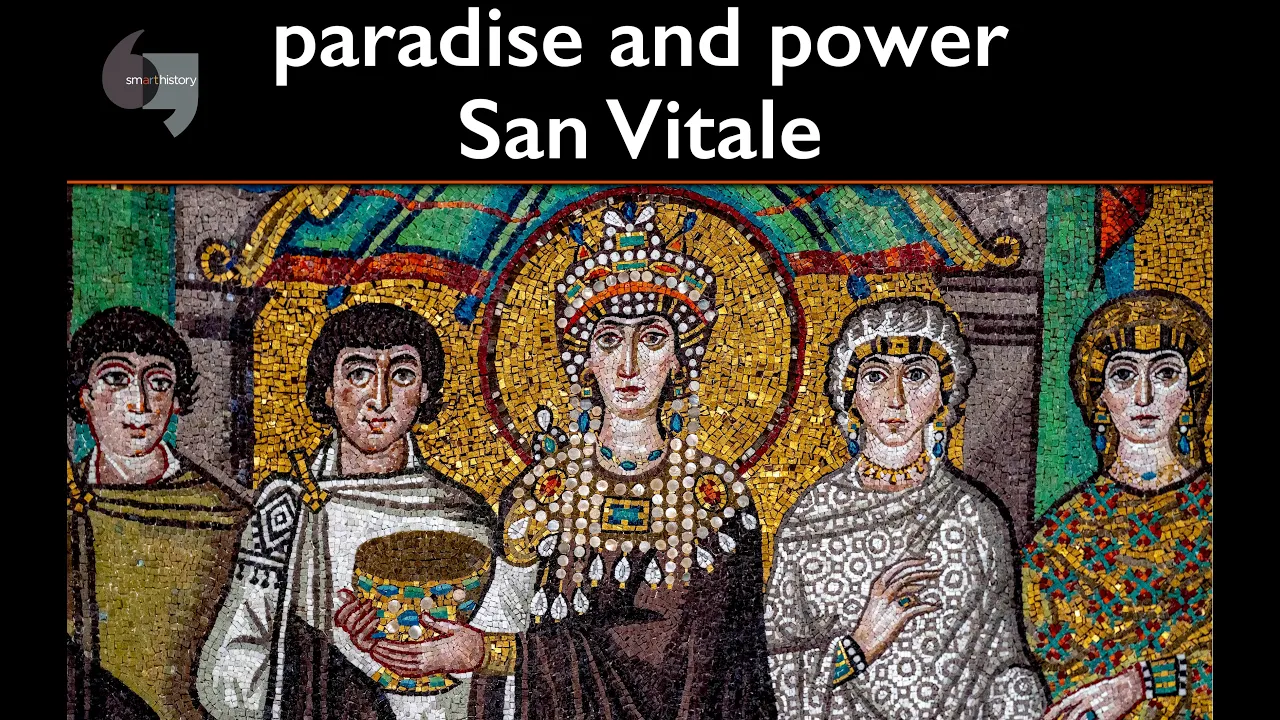


San Vitale in Ravenna, Italy, exemplifies how Byzantine imperial mosaics functioned as political statements rather than commemorative portraits, with Emperor Justinian and Empress Theodora depicted in frontal positions above the sanctuary not as visitors but as symbolic representations of divine kingship, using visual conventions like purple cloaks, halos, and the Chi-Rho symbol to communicate imperial authority; the church's centralized plan contrasts with Western basilical forms, and its mosaics demonstrate early Byzantine art's crossroads between Roman traditions and later medieval developments, while also serving as a case study for teaching critical analysis of primary sources and understanding medieval viewing practices.
Teaching San Vitale: Byzantine Art and Mosaics in Ravenna
Added:Understanding of the political division of the Roman Empire and the emergence of the Byzantine Empire (Eastern Roman Empire) with its capital at Constantinople.
Basic knowledge of Emperor Justinian I and Empress Theodora, their reigns, and their efforts to reclaim territories in the West, including Italy.
Familiarity with Early Christian art, particularly the transition from Roman classical naturalism to the symbolic, stylized, and spiritualized art of the early medieval period.
An introduction to central-plan architectural design in churches, contrasting it with the traditional longitudinal basilica plan.
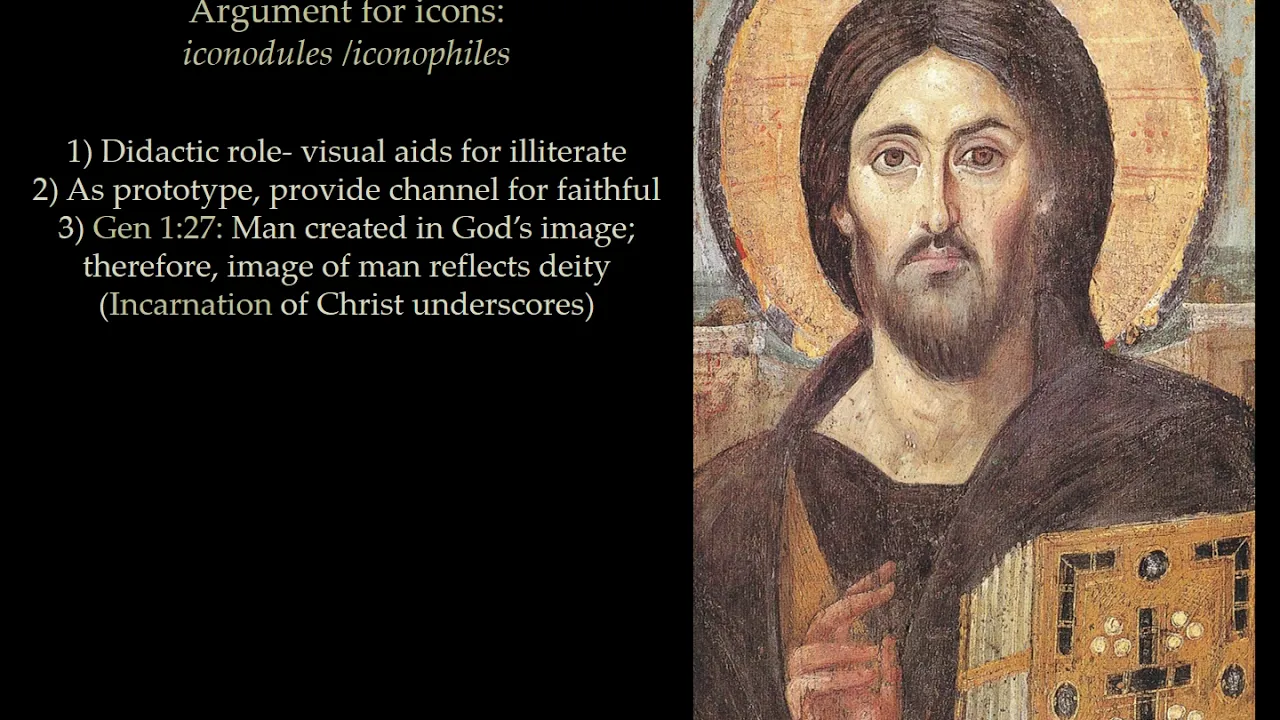
Exploring the Iconoclastic Controversy (726–843 CE) and how it shaped subsequent Byzantine artistic production, theology, and the survival of early pre-iconoclastic works like those in Ravenna.
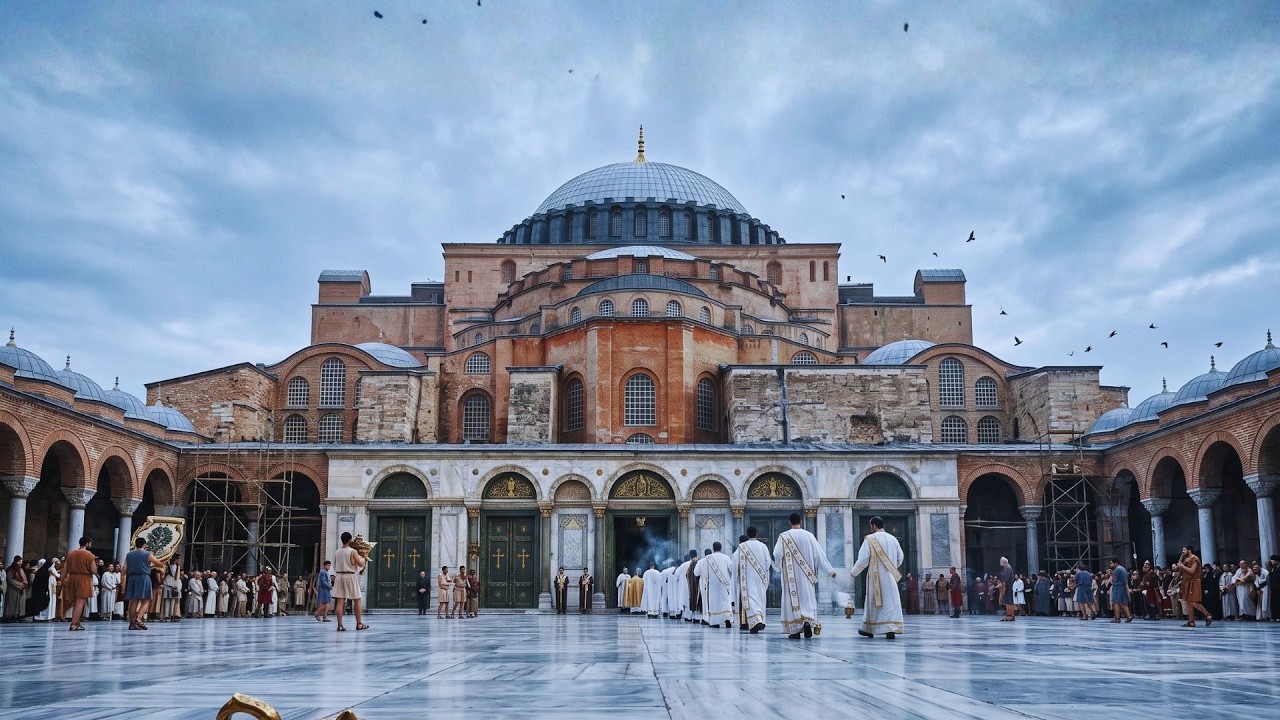
Analyzing the Hagia Sophia in Constantinople as the grandest architectural achievement of Justinian's reign, focusing on its innovative dome engineering and liturgical space.
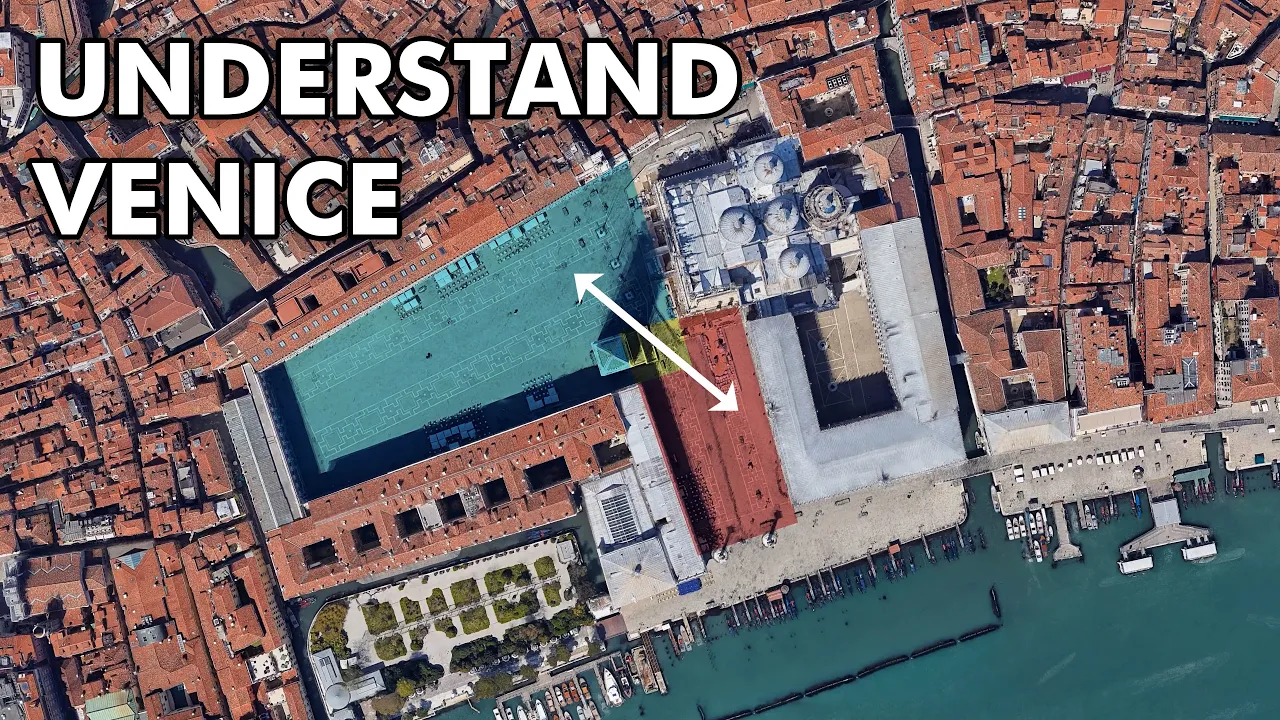
Examining the transmission of Byzantine artistic influence to the West, specifically in Norman Sicily (e.g., Monreale and Cefalù) and Venice (St. Mark's Basilica).
Investigating the political and gender dynamics represented in the imperial portraits of Justinian and Theodora, analyzing how visual propaganda asserted divine right and co-rulership.
5.5K views155likes35:19Original Release: 2022-03-02
- All right, so welcome.
And thank you again to everyone for joining us.
I'm delighted to introduce our speaker today, that is Dr. Anne McClanan who is a professor of art history at Portland State University.
It's very funny that we're in the same city, and yet here we are talking over screens.
She teaches broadly about Western medieval and Byzantine art history, and she is also very involved in the digital humanities.
So I'm very excited for her talk today.
She will be talking about teaching San Vitale and its mosaics, among other things, and I'm excited to see what she has prepared for us and how we can maybe rethink some of how we teach it.
If you have questions, just as a reminder to please put them in the Q&A instead of in the chat, it just helps me field questions at the end.
And I think I'm gonna turn over the screen to you Anne.
So I'm gonna mute myself and go behind the scenes.
- Great.
Well, let me just get started.
So I am just delighted to have a chance to talk today about one of my favorite buildings.
And I have tried hard as I pulled together this material to restrain myself from like teaching it going through the key facts and so on.
But instead just focus more in terms of things that are useful to you all, that is you know the facts, so ways you might be able to spin it, interpret it, connect it with other things within your survey classes.
So I begin with a map often, and one of the points I like to make is just reemphasizing to students facts of the realities of the geography, the early Byzantine Empires basically, a lot of the contour of the late Roman Empire still.
The capital, Constantinople, modern day Istanbul and Turkey is really far from Northern Italy where Ravenna is, and this will affect how we interpret the imperial portraits.
So we have to think about the fact that this area was Ostrogothic.
At the beginning of Justinian's rule, it had been reconquered by his generals around 540.
So we'll return to that in just a few minutes.
So I often just briefly discuss the outside of the church.
Talk about the use of regional, Northern Italian, you know, these thin bricks, that sort of thing, how that varies a little bit across the empire.
And then give a little more air time to the plan of the church, discussing the octagonal structure.
But mostly, I talk about how it's a centralized church.
So it's a little confusing for students because the UNESCO designation of it actually calls it a basilica, but it's not what art historians call basilicas.
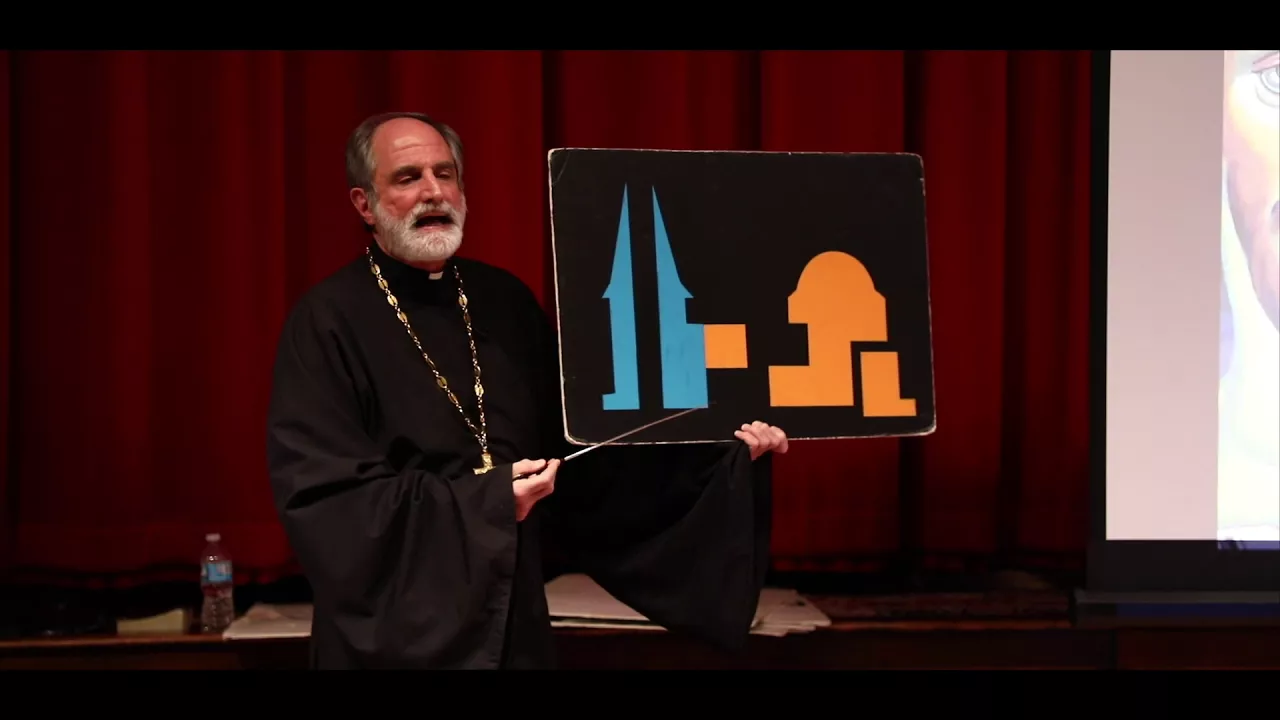
But I do talk about how there's this divide that emerges in the middle ages, you know, and the Western Europe where they prefer the basilical forms, that shoebox kind of shape in contrast to the Byzantine Empire where there's a strong preference for more centralized building forms.
But when we look at this image, it's clear, it's really the mosaics that makes San Vitale famed building, not really the architecture so much, which is, and one of the elements you might choose to point out is how this is admittedly an elevated view, but it is the view of kind of looking straight on at the area of the church, the sanctuary and apps that have the mosaics and the two imperial portraits that up a lot of the air time and conversations are really pretty obliquely viewed from the point of view in the center of the church.
So you would have to be in the apps itself to get that frontal view that you see on the survey textbooks.
And that is the perspective that only the people actually, only the priest who were the only people allowed in that area of the church at the time were allowed to see.
So here we have the emperor Justinian who was on the favored right hand side of the figure of Christ up in the app.
So it viewer left.
But we'll kind of dissect a little bit about his (speaks foreign language) You know, like the early Byzantine court, they loved their regalia and fine nuances in the hierarchy.
Even the deep purple color of his cloak, a clammy, it's a military garment that became an imperial garment carried special significance to the original viewers because there were actually Byzantine regulations that limited who could own garments of this color.
But I think one of the most interesting elements too about his portrayal is the halo 'cause students will often assume halos indicate sainthood, but in the middle ages, there was a notion of divine rule, divine kingship, where the ruler possessed two distinct identities.
And so here we have a depiction of this eternal king, not the Justinian who might have wandered around scratching his nose, that kind of banal person, but this other part of him.
Now to the side in this direction, we have two courtiers and some soldiers.
And we have that Chi Rho symbol that would've been associated with Christ from early Christianity.
But another really interesting piece to dissect over here is the fact that only one figure has a label.
And in early Byzantine art, there are many fewer figures with labels.
It becomes something much more common after iconoclasm.
And some careful work up on the scaffolding has suggested the reason is that, so here's the sequence.
The church was begun in the 520s, mosaics begun then too.
These mosaics though, we know probably didn't go up till at least 540, because that's when the Byzantines reconquered Ravenna, But the church was dedicated 547.
So we think that this panel was begun while a different person was Bishop, and then maximin Maximian who was the Bishop when it was dedicated, then had the prior, his predecessor's face removed and replaced with his own.
And then to emphasize his identity, he had his name added.
So facing Justinian across the apps is his empress, Theodora.
She too has the deep purple cloak, the clammies, and this theme of offering that carries throughout much of the imagery and the church is seen also, and that her holding the Eucharist chalice, you might have noticed he was holding the Eucharistic bowl, but even the three wise men on her hymn, you know, kind of really double down on that.
We also see that she has that halo of divine rule.
So to her left is an array of female courtiers with this fantastic range of patterning on their garments.
Which speaks to the really active international trade in textiles, you know, that's happening somewhat at this time continues throughout the middle ages.
One text suggests that Theodora masterminded a scheme to steal silk worms and started domestic production of silk.
So clearly it mattered, but you notice the rich textiles even in the context around them, now to her right, we have two figures who are requisite part of the female court, These are eunuchs.
This can be a really interesting topic to kind of explore issues of gender.
You know, there's some Byzantine texts that suggest eunuch were viewed as a distinct third gender, others that talk about the more as a variant of masculinity.
And just some elements we can talk, you might choose to go with there.
But another really interesting aspect of the Theodore mosaic that often in fact, I think has unfortunately kind of led to some fundamental misunderstandings of the figure depicted has to do with political pornography and conventions around rhetoric at the time, we actually have quite a few primary sources from this time period compared other periods in Byzantine history.
And Theodora is rendered as a prostitute in one of them.
And that has been uncritically adopted by many people.
So Theodora has more biographies than any other Byzantine ruler.
I won't recap all of the details, but there is Byzantine, there is a resource up here on Smarthistory you might wanna explore a little more if you wanna take that on in your classes and kind of encourage critical thinking with the use of primary sources, But looking at the two imperial panels, another important theme to consider that is another source of misunderstandings on the part of students is they'll often assume, one, that the emperor and empress visited Ravenna, and this is kind of like a commemorative portrait.
That's not the case, they were never there, but also they'll assume that they are the patrons of the church.
And that's definitely not the case either.
The patron was a local banker, man named Julian.
So what we're looking at then is something much more akin to the way ruler portraits turn up on coinage, right?
It's a way of kind of marking a allegiance and it would've carried all the more zing because of the way Ravenna had just been reconquered by the Byzantines.
To the initial audience though, standing in the church, it's actually this portrait of Christ that would've been the most prominent, right?
Thinking back to our initial view into the church.
And what we see is a very youthful beardless depiction of Christ wearing the garb of a philosopher in fact, he's sitting a top a globe, you know, students are often surprised to learn that medieval people, many medieval people didn't think the world was flat, they realized it was a globe.
But the figure of Christ also appears in a symbolic form as a lamb, but also in the same church of San Vitale as a mature bearded figure.
And this type of Christ is called an all ruler, Pantokrator.
Here's an icon made in the sixth century, sixth or seventh century that also had as the same type.
And if you teach iconoclasm in your survey class, this is an opportunity to explore a key divide between pre and post iconoclastic Byzantine art, because before iconoclasm, there's a real multiplicity of manner, of ways of depicting an individual, holy figure.
But part of the process of iconoclasm, which lasted over a 100 years, people died on both sides of the debate.
I mean, it was really a major upheaval in Byzantine society.
At the other side of it, to avoid heresy, to avoid confusion, there's only one way of depicting most holy figures.
So this is the form Christ that you see in middle and late Byzantine art.
Now looking at other imagery and the church, we see a range of images from especially Hebrew Bible that emphasize offering often, but there are a lot of Roman elements still, early Byzantine art is so interesting in that way.
You know, it's the crossroads between all of these Roman threads combined with lots of things that forecast later medieval development.
So this hand of God, the Manistee, you see on all sorts of Roman coins, other Roman depictions that are not Christian.
Looking at the overall mosaic program though, even though art historians love to talk about the figurative bits.
You see that a lot of the imagery is actually kind of abstract or vegetal.
And then stepping even further back, like, let's talk about that central dome in the building.
There's actually a broke painting up there.
It's from the 18th century, it does not get a lot of love.
And I don't talk about it very much, but it can be an interesting part of a conversation about how these buildings are not frozen in time.
You know, they have their famous bit, but they continue to be used by people.
I mean, this church is still used for weddings, even to this day.
So there are these many layers that give it context the meaning.
So of course, if you have a lot of studio art majors in your classes, it can be especially interesting to talk about materials and technique, this could be a great opportunity to talk about how mosaics were created, how in the Roman period, there were all these floor mosaics, but then it shifts in the early Christian art to more wall mosaics, which allows them to use gold tessera but there can be some other more surprising ways that materials inform meaning as well.
I think there's a broader conversation about medieval viewing practices that you can engage in by talking about the use of marble.
So in a number of these, most prestigious early Byzantine churches, you find this marble cladding that's kind of split open, such as here.
And we might view that as, oh, it's just a luxurious material, isn't it beautiful, whatever, but scholars such as Fabio Barry have uncovered the way that medieval viewers perceived animate figures in these.
And there's just a fundamental way that stone was considered living by the medieval audience.
And I think there's this broader conversation about alterity of medieval viewer experience, of both materials, but also just how they looked at things, right, that today we're so oversaturated with the number of images, but it seems like we, this is just one instance of many in which the medieval viewers brought a much more active way of looking at the images and materials around them.
Of course, a classic way to talk about this church is discussing it as part of a so-called golden age of Byzantine art, just kind of problematic, but you know, some times in a survey, it can be helpful to use phrasing like that.
I mean, even the term Byzantine is problematic.
It's just a question of picking your battles, I think.
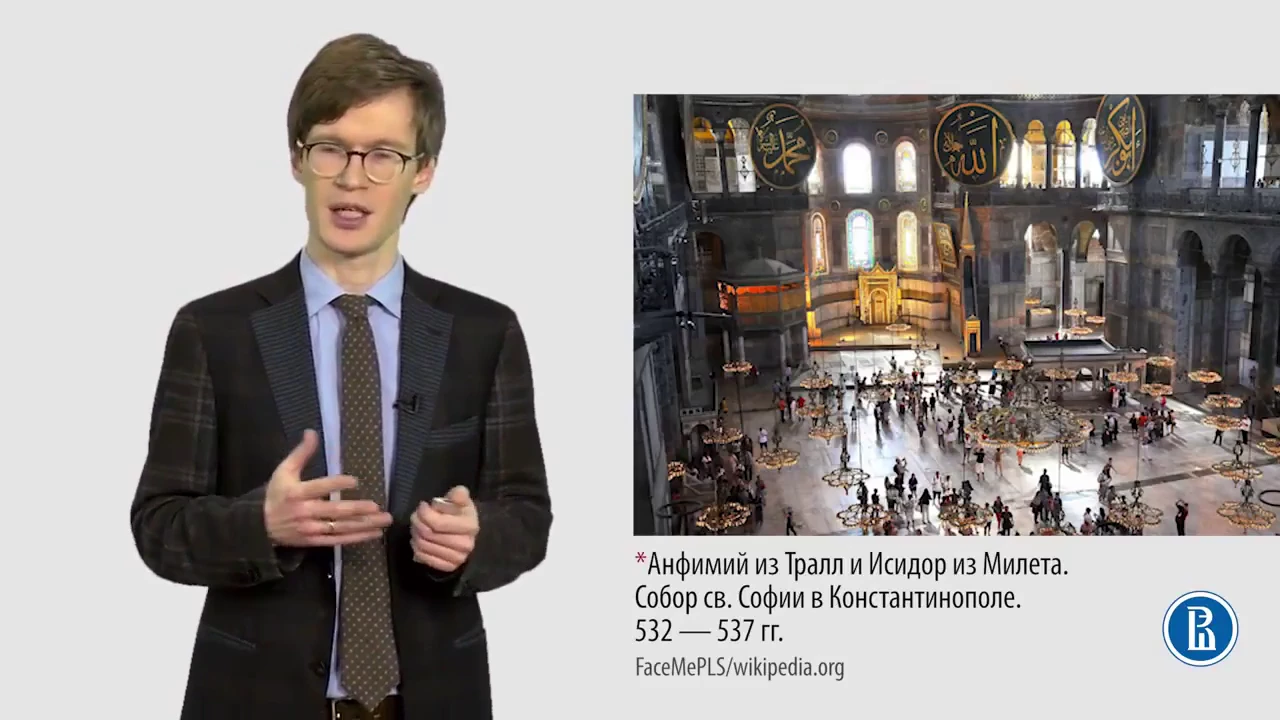
But just Justinian and Theodora, they were the active patrons of the church of holy wisdom, which was built in the 530s, by far the largest church in Byzantine art history.
This is a doctored image, kind of erases the Islamic minaret.
And you see the interior has likewise born many changes over time, but the reach of Justinian and Theodora extended to even the Sinai peninsula, this monastery, which is now dedicated to St. Catherine has a sixth century church that even has this roof beam discussing the death of Theodora.
And its own mosaics.
And of course that's where that icon we just looked at is located.
Another really interesting way to talk about San Vitale is to place it within a micro history of Ravenna.
So there are a number of really extraordinary mosaic programs in Ravenna including this one, which also kind of gives you a chance to talk about imperial women's patronage.
It's really close to the church's San Vitale.
They're two remarkable baptistry mosaic programs in Ravenna And even two churches dedicated to Sant' Apollinare, either in Ravenna or nearby.
So just to recap, it's really a choose your own adventure.
This church allows you a means to talk about any number of themes that are important and interesting in your classes.
And I look forward to hearing your questions.
- Right, thank you, Anne.
Let me add myself here.
Thank you so much, that was wonderful.
I myself have so many questions, but I will refrain from asking them all and encourage those who are here to ask questions, and I have a couple that have been sent to me from this side.
The first question is, could you discuss more the idea of the material, the stone and glass and how this might have been kind of activated by the medieval viewer?
Which was also a question that I had.
- Oh, that's a great question.
So, you know what, and there's so many layers to that.
So for example, in Greek, there are a lot more words that talk about reflectivity.
And so even words that get translated as color terms are more about the quality of light.
So for example, even going back to Homeric Greek, right, that term that gets translated as wine, dark, sea.
Like it's not about the color, I mean, that doesn't even make sense, right?
It's not like the Mediterranean is dark red, it's the way water reflects light.
So there's an argument to be made that the Byzantine use of gold, of these rich colors is much more about this preoccupation with qualities of light.
And so you'll see that, for example, the way the tessera are actually set, when they're not reconstructed, but they have the original setting is they're set so there are all these slightly different angles.
So it's an incredibly vivid and alive surface, and as you move, it becomes even more so.
And of course, if you experience at different times of day, you know, it's an entirely different place that you're experiencing and that you're seeing.
And so I think there's that way that, when you shift to the wall mosaics and you have luxurious gold mosaics, there's an intensity and a variety to the experience that it's really hard to kind of get at by looking at static images.
But I do think it's also interesting to kinda layer that in to an understanding of the marbles, which I had to bring in, because I do think there's this way art historians have often just seen that as, oh, that's just background, and it is a very active part of the experience.
People are in, that's the part that you are relating to at your level and the church, right?
And then you're kind of looking up and it's more removed to see the mosaics around you.
I would also say that, for example, when we talk about Byzantine icons, there's a lot of evidence of where that shows they were picked up, they were kissed.
There was a lot of like very direct engagement with them, and carrying over, and I'll say one more thing, 'cause I could talk for a long, long time, (chuckles) Is that when people talk about having visions of saints, (laughing) there will be often sometimes, there'll be this remark that, and oddly enough, it looked just like the image of the Saint in the local church.
So there's this way where it's kind of rattling around in their brain, right?
It becomes an act of part of their experience of these holy figures.
- No, I mean, those are all excellent points.
I mean, that's something that I constantly am reminding my students, right?
The actual sensory engagement with things and touching, kissing, looking, all those things is so important.
So thank you for expanding on that. - Yeah.
We have a question that I was hoping someone would ask just, I mean, I know 'cause of Evan and you, but can you explain a bit more why using the term Byzantine is problematic?
- Well, you know, so many of the terms we use are problematic, right?
Gothic, whatever.
I mean, you know, Romanesque, I mean we kind of, medieval is problematic, right?
No one felt that they were waiting for the Renaissance to start the next morning.
So the term Byzantine isn't something that they ever used for themselves.
The Byzantines for most of their history thought of themselves as the Roman Empire, it was just the Western part of the empire had fallen away through a set of unfortunate circumstances.
And of course a lot of the Eastern part had fallen away too, by the very end, like at the end, it's pretty much just Constantinople and suburbs.
But so, there's this way of, if we're trying to talk about, you use the terms that people use to identify themselves, we would call them Romans or the East Roman Empire, but I've chosen to use Byzantine in my teaching just for clarity of communication.
I mean, I feel like my students, especially in a survey class, like there are only so many issues I can kind of get into and I would much rather than carry forward with them, ways to think in a critical manner about images, about text, thinking about context in a rich way, rather than engaging with debates about nomenclature.
- It's so true.
You pick your battles.
- Right. (laughing) - Well, thank you for answering that.
We have a couple of questions about purple garments.
- Oh. - So could you discuss a little bit more the expense in creating them, but also, can you talk a bit more about the laws relating to actually wearing them?
- Yeah, yeah.
So it's really interesting.
So, and there's actually, as you would imagine with anything that's super expensive, they're fakes, so sometimes they're things that are that color, but so the standard interpretation is that they're made out of these crushed, tiny, tiny shells and it's an incredibly expensive process, but it does seem that there are, now that people have done more chemical analysis, like for example, the Abegg-Stiftung in Switzerland, which is a major center for textile research, came out with a really interesting book on color and textiles, medieval textiles a few years ago, that is kind of a nice manual to have.
But it kind of talks about how there were a number of things that we thought we're made out of that expensive purple, but were actually made out of other things.
So in any event, there are rules that were passed at different times in Byzantine history that would prescribe who we're allowed to have them.
And it kind of, and we know that they were enforced, for example, there was an Italian ambassador to Constantinople, Liutprand who wrote his account of his visiting, it's not all together flattering about the Byzantine Empire, but one of the things that happens is he was trying to sneak off with some purple textile.
He's caught, and then he says that, well, where I come from, in Cremona, like it's prostitutes who wear these.
So how would I know you have this silly rule, right?
But so we have both evidence of the rules and then also that it was enforced sometimes, but one of the things I'll throw out there about, well, we're talking about color and garment is that we might reflexively think that what made them look most imperial were things like the crown.
You know, I think we kind of think of queens and kings and crowns being the thing.
But when there was a incident in Byzantine history, when there was a usurper, what they grabbed first were the red shoes, like to them, that seemed to really be what was the king maker clothing item.
So that's another element of alterity, right?
Where we might have assumptions about what would've popped out to be people as the thing that was most distinctively royal, that doesn't really match what the medieval experience of it was.
And of course the red shoe tradition continues in the papacy today, right?
- I'm glad you read up the red shoes.
(chuckles) Students always love that.
It looks like we have a couple more questions here, and that is, can you talk a bit about the, just elaborate a little bit about the royal images and their connections to the sacred area of the church?
I mean, do you think that it was more of a religious or political statement or is it really just collapse of the two?
- Oh, my heavens, so there's a lot of scholarship on this topic.
And it can be very nuanced because so one of our main text for understanding court ceremonial is this 10th century compilation called the "Book of Ceremonies" in English translations.
Now we're talking about sixth century mosaics.
And we have to think about the fact that, like just looking at the Justinian mosaic, we have an emperor who is an never in Ravenna side by side with the Ravenna Bishop, right?
So already we're getting some signals that we're not really looking at a real thing that happened, right.
But it's reasonable to think because we know that Byzantine ceremonial involves lots of processionals, there're spatial clues, for example, Justinian is depicted against a more plain background, whereas the Theodora and her entourage are depicted, you know, there's a fountain, there're drapes, so they seem to be in a different place.
So anyway, there's one layer of scholarship that's super specific that debates which specific ceremony from the 10th century Book of Ceremonies is being depicted in the sixth century.
As you may gather from my tone, that doesn't seem compelling to me.
I do think it might well have been read as, not a group of people standing in a horizontal line, but as a procession, because that's just a very common way that ceremonial occurred.
And, but I don't think that, again, I don't know where, there are a lot of people who feel that it's helpful to kind of lock it in to the great entrance, the first entrance, you know, these different specific ceremonies, but that is all based on a 10th century source.
So that's 400 years later.
And it's also kind of like, I almost feel like it's a little bit of a temperament issue, right?
So there's also this issue of, to what extent do you identify members of the entourage as portraits?
So you can go through Procopius, I mean, he doesn't just talk about pornography, political pornography, he talks about lots of other things.
He talks about battles and, 'cause there's several texts that he's written.
So you can also go through the entourage and kind of guess like, oh maybe that's Belisarius the general or, and so on.
And it is possible.
But when we think about Roman in portraiture, for example, you know, there would be widely dispersed images of a ruler.
And we know there would be like a prototype that would be circulated and copied throughout the empire and it doesn't necessarily carry down to the entourage.
So they might be kind of more formulaic.
I mean just the ability of, and it seems like Maxsimian, you know, like he's inserting himself in it, but he is the local guy.
So that is a little bit different.
Now I know I sound maddeningly vague, but I feel like, to me that's sort of the level of knowledge and certainty we can really bring to that aspect of the mosaic, but there are other perspectives out there for sure.
- No, I mean, it's a good cautionary point when, and a good one to remind our students of that just because the years look individualized doesn't necessarily mean that it has to be a portrait, right.
- Mm-hmm. - That we can look at these artistic conventions and that transcends talking about, Ravenna and these particular images.
So, I mean, it's always a good reminder.
- Well, even details, for example, like when Roman men have that little bit of a stubble, I mean, that's part of a rhetoric of they work so hard, they don't have time to shave or, so even things like that we, again might assume our individual idiosyncrasies could have specific rhetorical surveillance.
- Very much agree.
And that's something that it takes a while, like at least with the way, in my classes, sometimes that really is a struggle for students to really think about that and reflect on that over the course of a semester.
So this is a great opportunity for that, considering as you mentioned, that these are the two mosaics that the textbooks and most people talk about instead of the larger program.
So. - Right.
- I think that was a very good reminder from the get go that you encouraged us to think about.
So to be sensitive to time, I thought I would round out, but I know there are a couple of lingering questions that I wanted to encourage people to either reach out to Anne directly or post them in our Facebook.
- Yeah, feel free to contact me or yeah, like post to Facebook. - Yeah.
And my colleague, Kayla posted into the chat, a link to Anne's wonderful essay on Theodora and rhetoric.
That's on Smarthistory, which if you have not had a chance to read is really great also about primary sources, and she raised some of those points.
So I just wanna thank you again, Anne, this is a great talk.
I feel like I learned a lot.
(laughing) - Oh, it's lot of fun.
Thank you for the opportunity. - Thank you.
- Take care. - Yeah, this is great.
And thank you everyone for coming and hopefully we'll see you next time.
So for now. - Okay, bye.
Up Next

56:41
Byzantine Art History: Eastern Roman Empire Masterpieces
@LaurenceShafe
1.3K views•2024-04-05

114:18
Christian Iconography: History, Theology, and Meaning | Fr. Panayiotis Papageorgiou
@Trisagionfilms
58.8K views•2020-02-21

10:26
Redgrave's The Sempstress: Victorian Social Realism, 1846
@smarthistory-art-history
3.2K views•2011-10-22

16:34
Earliest Depictions of Jesus in Art: 10 Ancient Images Explained
@UsefulCharts
5.9M views•2022-06-03
Related Study Plans & Knowledge Roadmaps
Structured learning paths in Art History
art-history
Gothic Cathedrals: Engineering, Light & Society
01The Birth of the Gothic: Romanesque to Suger's Vision
02The Structural Triad: Pointed Arches, Ribbed Vaults, and Flying Buttresses
03Theology of Light: Lux Nova and Sacred Geometry
+ 2 more learning modules
14h5 modules
Explore Roadmap
art-history
Pre-Raphaelites: Realism, Symbolism & Critique
01The Victorian Art Establishment and Academic Formula
02The Founding of the PRB and Radical Realism
03Medieval Revivalism and Literary Symbolism
+ 1 more learning modules
8h4 modules
Explore Roadmap
art-history
Street Art: From Subways to Art Market
01Subcultural Origins in Philadelphia and New York (1970s)
02The Subway Era and Style Wars (Late 1970s - 1980s)
03The East Village Scene and Early Gallery Crossover
+ 2 more learning modules
10h5 modules
Explore Roadmap
art-history
Classic Maya Art: Iconography, Glyphs & Ritual
01Foundations of Classic Maya Visual Culture
02Deciphering Maya Hieroglyphs & Text-Image Integration
03Sacred Geography and Cosmological Architecture
+ 2 more learning modules
14h5 modules
Explore Roadmap